Sandy Hook: Officers encountered 'several individuals' as they approached scene

CitizensforLegitGov

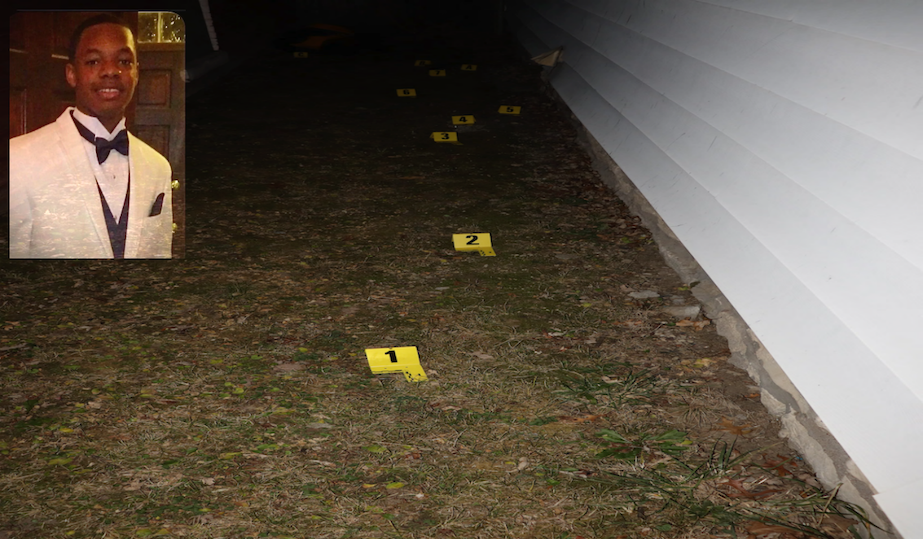
Investigative report into shooting will not be finished until 'at least June' [Right, say... 5:00 p.m. on a Friday afternoon, heading into the July 4th holiday weekend?] 26 Jan 2013 There are references to other people outside the school when the shooting started. One officer says at 9:41:22 that "I've got him proned out," indicating he is arresting someone. Other media reports have indicated this was a man who had a child at the school, wand he was headed to that class when the shooting started. [?] But the shooting was not over for long. About 50 seconds later, another caller indicates they can still hear shooting and that they saw "two shadows running outside past the gym," which is in the rear of the school. Newtown Police Lt. George Stinko said some people were detained initially as police got to the scene that was rapidly unfolding... At 9:51, the records indicate police found [Adam] Lanza's body. Police found his car at 10:05 a.m. when an officer asked a dispatcher to run the license plate 872YEO. The car, a black Honda Civic, belongs to Nancy Lanza, according to Department of Motor Vehicle records. Police later found a shotgun in the trunk. [So, the dead guy returned his (apparently unused) weapon to the trunk of the car. Ok, got it.

U.S. Income Inequality Worse Than Many Latin American Countries

HuffPost

Latin America has long been viewed as a region plagued by some of the worst wealth inequality in the world.

But in recent years, those figures have turned around, while in the United States income inequality is on the rise.

Adam Isacson, analyst for the Washington Office on Latin America, notes the change on his blog. According to recent figures on income published by the U.N. Economic Commission for Latin America and the Caribbean, the U.S. income gap now exceeds that of several countries in the Americas. As Isacson writes:

The United States (wealthiest 20% earns 16 times more than the poorest 20%) is now in the middle of the pack. In 1980, the U.S. number was 10.5.

Babylon Makes the Rules: Pay Still High at Bailed-Out Companies, Report Says

NyTimes

Top executives at firms that received taxpayer bailouts during the financial crisis continue to receive generous government-approved compensation packages, a Treasury watchdog said in a report released on Monday.

The report comes from the special inspector general for the Troubled Asset Relief Program, the bank bailout law passed at the end of the George W. Bush administration. The watchdog, commonly called Sigtarp, found that 68 out of 69 executives at Ally Financial, the American International Group and General Motors received annual compensation of $1 million or more, with the Treasury’s signoff.

All but one of the top executives at the failed insurer A.I.G. — which required more than $180 billion in emergency taxpayer financing — received pay packages worth more than $2 million. And 16 top executives at the three firms earned combined pay of more than $100 million.

“In 2012, these three TARP companies convinced Treasury to roll back its guidelines by approving multimillion-dollar pay packages, high cash salaries, huge pay raises and removing compensation tied to meeting performance metrics,” Christy Romero, the special inspector general, said in a statement. “Treasury cannot look out for taxpayers’ interests if it continues to rely to a great extent on the pay proposed by companies that have historically pushed back on pay limits.”

The report charges that Treasury has failed to rein in excessive pay at the three firms. It found that Treasury approved all pay raises requested for A.I.G., Ally and General Motors executives last year, with individual compensation increases of $30,000 to $1 million. It also faults the Treasury overseer for allowing pay packages above what comparable executives at other firms receive.

The report also accuses Treasury of failing to follow up earlier recommendations made by the special inspector general. A report issued a year ago made many similar criticisms, arguing that the Treasury officials “could not effectively rein in excessive compensation” because the most “important goal was to get the companies to repay” the government.

“Treasury made no meaningful reform to its processes,” it said in this year’s report. “Lacking criteria and an effective decision-making process, Treasury risks continuing to award executives of bailed-out companies excessive cash compensation without good cause.”

In a response letter included in the report, Patricia Geoghegan, acting special master for TARP executive compensation, disputed several of its assertions. For one, the compensation packages for A.I.G. and General Motors executives were comparable to those received by executives at other firms, Treasury said. Pay packages at Ally were higher than the median because of “unique circumstances,” it said.

Treasury also noted that the Obama administration had cut pay for executives at bailed-out firms and required that the companies pay top employees with more stock and less cash. Treasury “continues to fulfill its regulatory requirements,” the letter said. It has “limited executive compensation while at the same time keeping compensation at levels that enable the ‘exceptional assistance’ recipients to remain competitive and repay Tarp assistance.”

The Treasury is selling off its remaining shares of General Motors. In December, Treasury sold its final shares in A.I.G., bringing its and the Federal Reserve’s total profit on its investment in the company to nearly $23 billion.

Israel boycotts UNHRC rights examination session

CitizensforLegitGov

Tel Aviv has boycotted a UN Human Rights Council (UNHRC) review, which is taking place in the Swiss city of Geneva to examine Israel's violations of Palestinians' rights. The UNHRC is reviewing Israel's human rights records on Tuesday as part of the Universal Periodic Review process. Tel Aviv is not a member of the Council, but is required to undergo UPR like all UN members. The Universal Periodic Review (UPR), which is held once every four years, was established by the UN General Assembly in 2006 to examine human rights records of the United Nations' members.

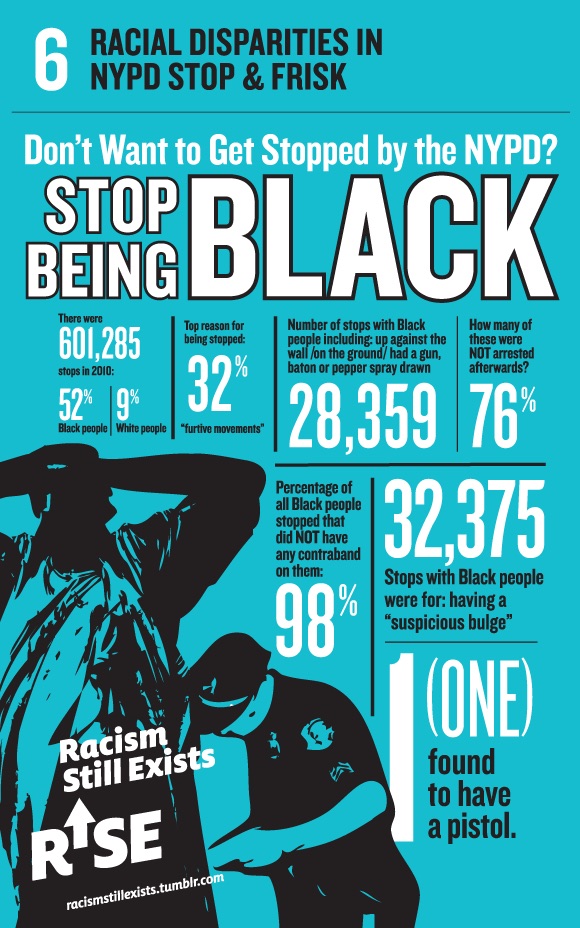
No 4th Amendment for Non-Whites in Arizona but Arizona Bills Require Public School Students To Recite Loyalty Oaths

This measure (see below) requires all Arizonians to swear under oath "to support and defend the Constitution." All Non-whites in Arizona are targeted by law enforcement as enemies by skin color due to the S.B. 1070 statute which is now in effect. From [HERESection 2(B) of the the law gives police too much discretion when stopping or detaining persons while “checking” their citizenship status. The National Association of Criminal Defense Lawyers (NACDL) and AACJ argued in their brief that Sec. 2(B) cannot be implemented without racially profiling Latinos in violation of the Fourth Amendment’s prohibition on unreasonable searches and seizures and the Fourteenth Amendment’s Equal Protection Clause. (That is, police stops and detentions of persons based on physical characteristics or persons who look Latino to the police are reasonable in Arizona -  any stop and detention of a non-white person). Even lawful detentions and arrests become unconstitutional when the detention becomes prolonged or unreasonable. If officers rely on profiling characteristics such as a person’s ethnicity in determining whether a person should be detained for an immigration check, Sec. 2(B) becomes an unconstitutional “stop-and-identify” law repugnant to all citizens.

ThinkProgress

Public high school students in Arizona will have to “recite an oath supporting the U.S. Constitution” to receive a graduation diploma, if a new bill introduced in the new session of the state legislature is passed and signed into law. The measure, House Bill 2467, was offered by Rep. Bob Thorpe (R), a freshman tea party members who also backs a bill preventing state enforcement of federally enacted gun safety laws. Here is the text of HB 2467:


As written, the bill does not exempt atheist students or those of different faiths from the requirement, though Thorpe has pledged to amend the measure. “In that we had a tight deadline for dropping our bills, I was not able to update the language,” he wrote in an e-mail to the Arizona Republic. “Even though I want to encourage all of our students to understand and respect our Constitution and constitutional form of government, I do not want to create a requirement that students or parents may feel uncomfortable with.”

A separate measure introduced by Thorpe’s colleague would also “require all students in first through 12th grades” “to say the pledge of allegiance each day.” Currently, “schools must set aside time for the pledge each day, but students may choose whether to participate.”

Constitutional experts warn that both proposals are unconstitutional. As American Civil Liberties Union of Arizona Public Policy Director Anjali Abraham explained, “You can’t require students to attend school … and then require them to either pledge allegiance to the flag or swear this loyalty oath in order to graduate. It’s a violation of the First Amendment.”

U.N. Drone Investigator: If Facts Lead to U.S. War Crimes, So Be It

CitizensforLegit Gov

Ben Emmerson wants to be clear: He’s not out to ban flying killer robots used by the CIA or the U.S. military. But the 49-year-old British lawyer is about to become the bane of the drones' existence, thanks to the United Nations inquiry he launched last week into their deadly operations. Emmerson, the United Nations' special rapporteur for human rights and counterterrorism, will spend the next five months doing something the Obama administration has thoroughly resisted: unearthing the dirty secrets of a global counterterrorism campaign that largely relies on rapidly proliferating drone technology. Announced on Thursday in London, it's the first international inquiry into the drone program, and one that carries the imprimatur of the world body... Accountability, Emmerson tells Danger Room in a Monday phone interview, "is the central purpose of the report." He's not shying away from the possibility of digging up evidence of "war crimes," should the facts point in that direction.

Django Unchained, Or, “Killing Whitey While Protecting White Power”

Tarantino Preserves A System Of White Power

In Django Tarantino creates the “exceptional” negro to fight all the bad, un-American Americans in order to protect the capitalist system of white power.

The evidence for this position can be found in the movie itself.

Dr. King (coincidental?) Shultz explains his non-slavery capitalist enterprise to Django thusly: “The way the slave trade deals in human lives for cash, bounty hunting deals in corpses.”

And elsewhere in the movie, “Like slavery, it’s a flesh-for-cash business.”

Other examples of Tarantino’s fidelity to capitalism, which clearly rests on a foundation of slavery, was King’s insistence on purchasing Django from a white slaver and securing a bill of sale, even after Django’s slaver had been wounded and was going to be killed.

The same happened with Django’s wife, Broomhilda, for whom a bill of sale (promissory note?) was taken from King’s dead body after her cruel “master,” Candie, had been killed and the “Big House” was in the process of being destroyed.

No attempt was made to help Django escape from slavery.

And the elaborate, dangerous ruse to purchase Broomhilda from Candie was one hundred times more problematic than an escape attempt could ever have been.

However, escaping would have been a serious breech of capitalist etiquette, even as it applied to slavery. It would have been bad business.

Escaping would have suggested the possibility of a Malcolm X “by any means necessary” solution, which the fictional bounty hunter, Dr. King, opposed no less than did his Civil Rights namesake of the 1950s and 60s.

In fact very few attempts to escape from slavery were made by the enslaved African masses in the movie. Escape was reserved for the “exceptional” negros, the “one in ten thousand” represented by Django and Broomhilda.

Even when escape was possible, the enslaved Africans had to be prodded by the beneficent Dr. King to go for it.

Of course Tarantino does much to expose the grotesque, violent treatment of Africans under slavery.

Django’s hunt for his wife is consistent with the historical record of many Africans who, once sold from their spouses, did every thing possible to rescue them, braving torture and death.

However, Tarantino, who had absolute control of this fictionalized history, denied his characters the ability to engage in self-motivated attempts to free themselves.

Also, with the historical examples of Denmark Vesey, Nat Turner and others, Tarantino also could have directed his characters to organize among themselves and strike out collectively for freedom and for power.

Instead, Tarantino made the liberal political choice to have Django function as an angry individual whose only interest was to free his wife and to exact revenge for wrongs done to her.

This is because liberals fear the masses of the oppressed just as much as their contending, “conservative” counterparts do.

Read More

Fearing Jail Cop will say anything: White Fresno officer admits draft police report inaccurate in Beating, Shooting of Unarmed Latino Man

FresnoBee

A former Fresno police officer admitted Friday in his federal criminal trial that he lied about some details in his initial police report seven years ago, but denied charges of police brutality and a cover-up.

Chris Coleman's October 2005 police report says he shot suspect Rolando Celdon with a bean-bag shotgun because Celdon was armed with a stick and a beer bottle.

Not true, Coleman said Friday.

He also testified that he told Celdon in English and Spanish to put his hands over his head. When Celdon didn't comply, he got shot, Coleman said.

But on cross-examination, Coleman backtracked, telling prosecutor Jared Fishman and a U.S. District Court jury that he wasn't sure whether he spoke Spanish to Celdon.

Coleman, however, was clear about why he shot Celdon. He said the domestic violence suspect posed a dangerous threat to him and fellow officers because he kept putting his hands near his waistband.

"He hadn't been searched," Coleman pleaded to the jury. "He could have had a weapon."

In his first full day on the witness stand, Coleman captured the attention of jurors with his candid account -- that included a few curse words -- of what led him and two other officers to punch and kick Celdon, shock him with a stun gun, and shoot him with a bean-bag shotgun on Oct. 10, 2005.

He admitted to violating department policy by not writing his account on the day of the incident. But he denied committing a cover-up. He told jurors his initial report was a draft that he fully intended to correct once he verified the information.

An indictment accuses Coleman and former officer Paul Van Dalen of using excessive force. Sgt. Michael Manfredi and former officer Sean Plymale are accused of concealing the alleged assault. All four are charged with falsifying an official report to obstruct justice.

If convicted, each faces up to 20 years in prison.

Celdon was deported after being convicted in December 2005 of stalking and striking his girlfriend. Because he can't be found in Mexico, the prosecution's case is built on the testimony of Fresno police officers Martin Van Overbeek, Tom Hardin Jr. and Beau Burger.

All three officers testified that the unarmed Celdon posed no threat when Coleman fired six or seven bean-bag rounds at him and Van Dalen kicked him in the side at least twice. They also said they never saw a weapon near Celdon when he was taken into custody.

On the witness stand, Coleman testified that he only remembered shooting Celdon four times. He also said he saw Van Dalen kick Celdon one time.

Coleman said he had to take drastic actions because police radio traffic indicated that Celdon had broken into his girlfriend's southeast Fresno apartment and hit her. He then left before police arrived.

A short time later, Plymale and his police dog, Tymo, confronted Celdon a few blocks from the girlfriend's home, and for a brief moment, Plymale lost radio contact with his fellow officers.

"I thought something went wrong," Coleman said.

While Plymale waited for backup, Celdon ran, but Tymo locked onto his ankle. Celdon then dragged the 70-pound dog over a 6-foot fence topped with three strands of barbed wire.

Coleman said that when he arrived, Plymale told him he had used a stun gun on Celdon but it had no effect. Plymale also told him what happened to Tymo.

"He took a freaking 70-pound dog over a fence. That had never been heard of before," Coleman said, telling the jury that he believed Celdon was under the influence of powerful drugs because he exhibited "super-human strength."

"Fruitvale," "Blood Brothers" win top awards at Sundance

Reuters

Drama film "Fruitvale" and documentary "Blood Brothers" won the top awards at the Sundance Film Festival on Saturday, giving them a big boost to reach independent movie audiences this year.

"Fruitvale," starring Octavia Spencer and Michael B. Jordan and directed by 26-year-old, first-time filmmaker Ryan Coogler," picked up the U.S. drama jury and audience awards for its "moral and social urgency."

The film is based on the true story of 22-year-old Oscar Grant, who was killed by police in Oakland, California, on New Year's Eve in 2008 and whose death sparked riots against police brutality. Movie studio The Weinstein Company purchased distribution rights for the film.

"This film had a profound impact on the audience that saw it ... this award goes out to my home in the Bay Area where Oscar Grant breathed, slept, loved, had fun and survived for 22 years," Coogler said in his acceptance speech.

Oscar-winning documentarian Davis Guggenheim awarded the U.S. documentary jury prize to "Blood Brothers," saying it shook the voting panel to their core.

The documentary follows an American man who moves to Africa and works with children suffering from HIV at an orphanage, and through his work, the children gain a voice.

"It is so encouraging for the kids ... their lives are so encouraging, and they die and no one remembers their name ... To take their story so that everyone sees it, it's so awesome," director Steve Hoover said."

Young actress Shailene Woodley, praised for her performance in "The Descendants" last year, and her co-star Miles Teller won the Special Jury acting prize in "The Spectacular Now."

Actress Lake Bell, who made her directorial debut in the U.S. drama category with quirky comedy "In A World," picked up the drama screenwriting award.

Hosted by actor Joseph Gordon-Levitt, who premiered his raunchy directorial debut "Don Jon's Addiction" this year, the Sundance Film Festival Awards pick winners at the top gathering for independent movies made outside of Hollywood's major studios.

"Sundance is a community of people of filmmakers and film lovers who all believe together that there's more to movies than glitz and glamour and money and the box office. In Hollywood, you can feel like a freak if you talk about movies as art, and here, you don't have that," Gordon-Levitt said.

WORLD CINEMA WINNERS

The Sundance Film Festival, now in its 35th year, is backed by Robert Redford's Sundance Institute. The 10-day gathering of the independent film industry is held in snowy Park City, Utah.

In previous years, films that win the top prizes at the Sundance Film Festival often go on to achieve Hollywood awards success as well.

Last year, mythological drama "Beasts of the Southern Wild" won the top prize at Sundance and is now nominated for four Oscars in major categories.

The award winners are voted for by special juries of industry professionals and by the audience for the audience favorite awards.

In the world cinema categories, South Korean drama "Jiseul" picked up the grand jury drama prize. The film, directed by Muel O, follows the residents of a small town who were forced to hide in a cave for 60 days after the military attacked their village.

Cambodian documentary "A River Changes Course," about three young Cambodians struggling with adversity in a country ravaged by war and debt, picked up the world cinema grand jury award.

"Events like these really bring our communities together to share in the beauty of the world and the beauty of our future," director Kalyanee Mam said.

"Pussy Riot: A Punk Prayer," which follows the story of three members of a Russian feminist punk band jailed for performing a "punk prayer" in a Russian Orthodox church, picked up special jury prize in the world documentary category.

Co-director Mike Lerner said the three members of the band had "started a feminist revolution that we hope will continue around the world."

Advocates Accuse Lewisville Police of Racial Targeting of Latinos

DallasNews

Two Hispanic advocacy groups are accusing the Lewisville Police Department of racial profiling.

The groups say that Hispanic residents have been subjected to harassment, excessive use of force and civil rights violations.

“It’s been a pattern for many years,” said Linda Leyva, founder of Angels to the Rescue, a San Antonio-based civil rights group.

Leyva and Abraham Ponce of the North Texas DREAM Team held a news conference Friday in front of police headquarters.

In response to the allegations, Lewisville Police Chief Russ Kerbow issued a prepared statement: “An investigator with internal affairs met with members of the community about their concerns and provided them with formal complaint forms. As of today, we have received no formal complaints to consider.”

Leyva said she and six Lewisville residents met with internal affairs in November and an officer documented their complaints.

“We never got any response, and the police retaliated against one of the complainants, who was arrested a week later,” Leyva said.

She said that police are targeting areas where Hispanic people live and that many residents are afraid to come forward.

One who wasn’t afraid was Juan Torres, 18, who spoke at the news conference.

He said he was treated disrespectfully when he was arrested Nov. 25 on suspicion of stealing from a Lewisville store.

The Lewisville High School student said he later was beaten up by another inmate at the Denton County Jail, and he blames jail officers for not protecting him.

Five complaints alleging racial profiling were lodged against Lewisville police in 2011, according to the department’s Annual Contact Data Report for 2011, the most recent report available.

One incident was determined to be unfounded; the other complaints could neither be proved nor disproved.

Of the 67 people arrested during traffic stops in 2011, 37.3 percent were Hispanic, 34.3 percent were white and 26.9 percent were black, the report showed.

Census data shows that Lewisville had 95,290 residents in 2010. Of those, 65.3 percent were white, 11.2 percent were black, and 29.2 percent claimed Hispanic ethnicity, according to the department’s data report.

ACLU Informs Clemency Board: Felon Disfranchisement Violates International Human Rights Agreement

ACLU

In letter to Board of Executive Clemency, ACLU warns that Florida felon disfranchisement could cause “national embarrassment” during UN Human Rights Committee review

January 24, 2013

FOR IMMEDIATE RELEASE
CONTACT: (212) 549-2666; media@aclu.org

MIAMI - The American Civil Liberties Union (ACLU) of Florida has asked the Human Rights Committee, an international body of human rights experts established by the United Nations to review states’ compliance with the International Covenant on Civil and Political Rights (ICCPR) to include Florida’s restrictions on restoration of voting rights for individuals with a felony conviction in the committee’s upcoming review of the United States.

In a letter sent today to the members of the Florida Board of Executive Clemency – comprised of Governor Rick Scott and the members of his cabinet – the ACLU of Florida informed the board that Florida’s lifetime felon disfranchisement violates the United States’ obligations under the ICCPR.

In March of 2011, the Clemency Board passed new restrictions on the ability of individuals to have their rights restored after serving the terms of a felony conviction. The result of these new restrictions has been the near complete end of rights restoration in Florida. Between March 2011 and March 2012, only 94 people had their rights restored, as compared to 115,000 between April 2007 and June 2008, 24,375 in 2009 and 5,582 in 2010.

In a submission to the Human Rights Committee, the ACLU and co-signers asked the Committee to consider lifetime disfranchisement among the issues for review when assessing the United States’ compliance with the ICCPR this March.

From the letter sent to the Clemency Board:

“As you are no doubt aware, Florida’s disfranchisement rate remains the highest among the 50 states.   As of 2010, Florida has disfranchised 1,541,602 citizens due to a felony conviction, or 10.42% of the voting age population.  Florida disfranchises African American voters at more than twice the rate of non-African American voters.  More than one in five Florida African Americans of voting age has been disfranchised.

“Florida’s record on felon disfranchisement has been singled out as one of the most restrictive in the nation.  In 2006, the Human Rights Committee expressed concern that approximately five million U.S. citizens cannot vote due to a felony conviction, and that this practice has significant racial implications. 

[…]

“In order to avoid our state’s all-too familiar role as a national embarrassment with regard to the protection of voting rights, we ask that you amend the Clemency Rules to comply with our human rights obligations.  Otherwise, Florida’s dissonance with the rest of the nation on voting rights may now draw international attention when the Human Rights Committee reviews U.S. compliance with its ICCPR obligations later this year.”

The submission to the Human Rights Committee was co-authored by the ACLU of Florida with The Florida Rights Restoration Coalition, Project Vote, The National Congress of Black Women, Florida Consumer Action Network Foundation, Organize Now, Florida Institute for Reform and Empowerment, and Dream Defenders.

A copy of the letter sent to the Board of Executive Clemency today is available here: http://aclufl.org/pdfs/2013-01-24-ACLUClemencyBoardICCPRLetter.pdf

Kwame Kilpatrick Back in Jail

Wonkette

If any Wonketteers happens to be in the vicinity of DC meat landmark “Benz Chili Bowl,” it would be really great if you could pick up an original chili half smoke for Detroit’s sexty ex-mayor Kwame Kilpatrick. What you’re gonna wanna do is hide a file inside the delicious pork treat and send it to Kwame care of the “Detroit Reentry Center,” where Kwame will be spending the weekend.

Kwame, who spent the majority of his mayoral tenure texting about R. Kelly songs and blow jobs, will be back in jail this weekend for hiding monies from his probation officer. All told, he committed 14 probation violations. READ MORE »

Racist Suspect Rush Limbaugh Angry Super Bowl will Have a Black Referee

Rush

RUSH: Do you know that name "Jerome Boger"? You don't? Okay, get ready.

Jerome Boger has been named the referee for the Super Bowl. Jerome Boger -- not that it matters; I'm just a believer in providing all the information possible -- is African-American. It turns out that a whole lot of NFL officials ("over a hundred") are really upset about this. There are a couple stories about this, one on the NBC Pro Football Talk blog. "Several officials told Eric Adelson of Yahoo Sports that they believe the league office first decided it wanted to give the game to Boger, then changed his grades so that he would come out as the top-rated referee in the league for the 2012 season and therefore earn the Super Bowl assignment."

In other words, the allegation is out there that Boger did not have a good year as a ref, that he had a lot of "demerits," if you will. The officials are rated every week. The thought is that the league, for some reason (I don't know what it would be), wanted Jerome Boger to ref the game. I'm just telling you what's being reported. Here's a quote for an official in this story: "It's disheartening, and you never think at this level that would happen." It's the NFL, the creme de la creme. You wouldn't think this kind of stuff would happen.

"It's the individuals running the show," i.e., the league office "that have created this mess. If you talk to 121 guys, there will be 100-plus who say the system is horrendous." So the allegation is out there that the league wanted Jerome Boger. I have no idea why. I couldn't possibly guess. 

The league wants Jerome Boger, but he didn't grade sufficiently well to earn the assignment, and so other people are alleging that the league went back in and gave him better grades than he actually had earned so that he would get the assignment.

Folks, it's just another slash at the NFL. I don't know if any of this is true. I'm just telling you what's out there in the news today. So you got the family of Junior Seau suing for the fact that nobody told Junior he could get hurt playing the game. And anybody else that played, they never told 'em they could get brain injuries, never told 'em that they could get hurt. They hid that from all the players.

All these players who have been playing this game never knew that they could get injured. So they got that lawsuit; you got thousands of other NFL players in a class-action lawsuit saying the same thing. Now you've got this Jerome Boger thing. I don't mean to pick on him. Look, folks, I didn't write the story. It's just out there. Oh, and then they got these two guys, Tim Brown and Jerry Rice, accusing the coach of the Raiders throwing the Super Bowl ten years ago.

They say the Bucs really weren't gonna win that game and Bill Callahan, the coach, threw it; sabotaged his own team. Now, this story at NBC, the blog, says, "In fairness to Boger, it should be noted that we don't know if these anonymous officials have an axe to grind themselves. And if it's really true that more than 100 of the 121 officials think the system is broken, then the officials themselves deserve some blame:

"They shouldn't have voted to ratify their Collective Bargaining Agreement at the end of the lockout in September if that CBA didn't fix a broken system. ... NFL spokesman Michael Signora, however, told Yahoo, 'There is no merit to the suggestion that Jerome Boger's grades were treated differently from those of any other official.' Right or wrong, it's clear that some officials don't believe that." (interruption) No, I'm telling you: I don't know why. I have no idea why the league would want to pick one official over any other to referee the game. I have no clue. I couldn't possibly tell you that.
BREAK TRANSCRIPT


RUSH: Okay, here's the latest on the Jerome Boger situation. Jerome Boger, he will be the second African-American official to referee the Super Bowl. I think Mike Carey was first. Wild guess. But I think it was Mike Carey, who is a great official, but the controversy is that Jerome Boger did not grade out high enough to win this assignment, and this allegation is being made by other officials in a Yahoo Sports story. These other officials are upset that Boger got it. They claim that his grades were revised upward after the fact by the league.

No, I have no idea why the league would want to put Boger in there over anybody else. How can anybody possibly know that? What possible reason could anybody come up with to explain that? Anyway, the league is saying, "No, we didn't go in after the fact and change Jerome Boger's grades." Now the league is saying, "Wait a minute, the top graded official does not always get the Super Bowl. That's something misunderstood by people. It's not true that the highest graded referee every season gets the Super Bowl assignment." So the plot is thickening on this story as details come out.

END TRANSCRIPT

Genocide Watch: "Fire in the Blood" -- Millions Die in Africa After Big Pharma Blocks Imports of Generic AIDS Drugs
DemocracyNow

The new documentary, "Fire in the Blood," examines how millions have died from AIDS because big pharmaceutical companies and the United States have refused to allow developing nations to import life-saving generic drugs. The problem continues today as the World Trade Organization continues to block the importation of generic drugs in many countries because of a trade deal known as the TRIPS Agreement. We’re joined by the film’s director, Dylan Mohan Gray, and Ugandan AIDS doctor Peter Mugyenyi, who was arrested for trying to import generic drugs, and is recognized as one of the world’s foremost specialists and researchers in the field of HIV/AIDS. [includes rush transcript]

"Gideon's Army": Young Public Defenders Brave Staggering Caseloads, Low Pay to Represent the Poor

DemocracyNow

The new documentary "Gideon’s Army" follows a group of young public defenders in the Deep South who contend with low pay, long hours and staggering caseloads to represent the poor. The film’s title comes from the landmark 1963 Supreme Court ruling in Gideon v. Wainwright that established the right to counsel to defendants in criminal cases who are unable to afford their own attorneys. We’re joined by "Gideon’s Army" director and producer Dawn Porter, and Travis Williams, a Georgia public defender who is featured in the film.

Obama's Promise to Close Guantanamo Prison Falls Short

NPR

In one of his first acts as commander in chief, President Obama in 2009 signed an executive order to close the U.S. detention camp at Guantanamo Bay, Cuba.

It was part of a campaign promise the president made, to close the camp and "determine how to deal with those who have been held there." But four years on, the controversial prison remains open.

The president and his administration believed Guantanamo was a symbol of the contentious counterterrorism policies of his predecessor, George W. Bush; ones that included harsh interrogation tactics, rendition and indefinite detention.

John Bellinger, a senior legal official in the Bush administration, says the new administration miscalculated how difficult it would be to close Guantanamo.

"I think part of it was that a number of officials in the administration had come to believe that a lot of innocent people were being held and that they could be released," Bellinger says, "[and those] remaining could be tried in federal court and that all this could be done easily in a year."

But Bellinger says the Obama administration quickly learned that it wasn't so easy to transfer some of the roughly 240 prisoners still held at that time to their home countries — or even to third nations.

A review by the Obama administration found that probably only two dozen of the detainees could be successfully prosecuted in a federal court, because of weak or little available evidence. They also found that about 50 prisoners were deemed too dangerous to ever release.

At about the same time, says Benjamin Wittes, a senior fellow in governance studies at the Brookings Institution, Congress began pushing back on plans to move some of the detainees to prisons on the U.S. mainland.

France sends troops to secure Niger uranium mines/defend the assets of a corporation

CitizensforLegitGov

 Barely two weeks after invading Mali with over 2,000 troops of the Foreign Legion [and committing war crimes], France has dispatched special forces troops to neighboring Niger to secure uranium mines run by the French state-owned nuclear power company Areva. The new French military intervention in northwest Africa was first reported by the weekly magazine Le Point and confirmed by military sources contacted by other sections of the French media. Le Point reported that French Defense Minister Jean-Yves Le Drian had quickly agreed earlier this week to a "major innovation" in ordering the Special Forces Command to send troops to protect the Areva uranium production sites in Imouraren, and 80 kilometers away in Arlit.

(the Vanishing 4th Amendment) TSA does surprise check at Lamar Boulevard Amtrak

CitizensforLegitGov

Random checks happen at stations across country --Once the train arrives, the dogs also sniff the cargo areas. 24 Jan 2013 Passengers catching the 9:30 a.m. Amtrak train from Austin to Dallas were met with an unexpected surprise when they got to the station. Transportation Security Administration agents, Austin police officers, and the Department of Homeland Security were all waiting for them. "These facilities are not necessarily protected as well," said George Robinson with TSA about bus stations and train stations that typically do not have the same security measures as airports. "We do impromptu visits at locations throughout the country."

Dallas DA: Texas should pass 'Racial Justice Act'

Galveston

The Dallas prosecutor who built a reputation for freeing wrongfully convicted inmates says he has an idea to advance criminal justice reform in Texas: allowing defendants to appeal convictions and sentences on the basis of race.

Craig Watkins, the Dallas County district attorney, said in a recent interview that he wants lawmakers to consider what he called the Racial Justice Act. Such an act might allow defendants to introduce evidence, either in their specific case or through general statistics, to argue that their prosecutions or sentences were influenced by race, he said. 

"The issue that we're bringing to light is to make sure that everything is fair, no matter what you look like, no matter where you come from, and you're treated just like anyone else," Watkins said. "And if you deserve a death sentence, then you will get it. If you didn't, then you shouldn't be on death row."

Watkins said he plans to discuss the idea with lawmakers and hopes to have a bill filed in the next few months.

It's unclear whether the bill could garner enough support to make its way through the Republican-dominated Legislature, expected by observers to be one of the most conservative in state history. In two states that have passed similar acts, the bills have had some impact and occasionally caused controversy.

At least one prominent advocate for criminal justice reforms, Innocence Project of Texas chief counsel Jeff Blackburn, said he was skeptical.

"I think the chances of getting something like that done are between slim and none," Blackburn said. He added, "I think that on a practical level, this kind of Legislature, you've got to be tightly focused."

State Sen. Rodney Ellis, D-Houston, a prominent criminal justice advocate, said he would consider a bill.

"I think it is a good idea that needs to be explored and I am going to talk with some other lawmakers to see if we can get bipartisan support for this initiative," Ellis said through a spokesman. Other lawmakers declined to comment or did not return messages.

Watkins, the first black district attorney elected in Texas, said he wants to raise issues that "in polite conversations are never mentioned," like the impact of race on the courts.

A number of academic studies have argued that a racial disparity in sentencing exists. One 2008 study by a University of Denver professor concluded that black defendants in Harris County, which includes Houston, were more likely to get a death sentence than white defendants.

Blacks comprise 40 percent of Texas' nearly 300 death row inmates while just 11 percent of the state's population is black. Researchers caution, however, that such raw numbers don't take into account a number of different factors.

Despite several reforms passed in recent years that have expanded DNA testing and compensated the wrongfully convicted, Watkins said Texas still comes up short. In Dallas County, 28 of the 33 people who have been exonerated of crimes since 2001 are black, according to Debbie Denmon, spokeswoman for the DA's office.

"I would imagine that there are individuals, not just in prison, but particularly on death row, that were convicted because of the color of their skin," he said.

Any racial justice act, Watkins said, would put the burden on defendants to prove they had been wrongfully sentenced or convicted due to race, either through statistics that show a disproportionate impact on other minority defendants or through actual evidence that prosecutors had threated them unfairly.

Kentucky's law, passed in 1998, allows a defendant facing the death penalty to seek a hearing under the act before trial. Only a tiny number of defendants have successfully taken the death penalty off the table, said Allison Connelly, a professor at the University of Kentucky College of Law who has studied the act.

The North Carolina Legislature passed a bill in 2009 that allowed defendants to use statistics and other evidence. But after Republicans won control of the Legislature the next year, lawmakers unsuccessfully tried to repeal the bill. The Legislature last year barred many statistics from being used, limiting defendants only to direct evidence that applied to their cases.

Officials with the Texas District & County Attorneys Association, the state prosecutors' group, said they weren't aware how prosecutors felt yet about a potential act. But Watkins said he wasn't concerned if the idea would be unpopular with other prosecutors.

"We don't make a determination on what we're going to do based upon what other DAs are doing in the state. We've never done that," Watkins said. "We're just going to keep pushing the envelope forward to make justice work for the state of Texas, and Texas has an opportunity to lead the country when it comes to what it means to be a prosecutor and what justice is."