GQ Publishes 'Hottest Women' List and Ranks Women By Ethnicity (the System of Racism Demands that there be Racial Classifications)

ColorLines and Video from Counter-Racism

There are still 987 years left in this millennium but the editors of GQ just unveiled "The 100 Sexiest Women of the Millennium."

Beyoncé Knowles tops the list and is followed by other notable actresses and models like Jennifer Lopez, Jennifer Aniston and Sienna Miller.

But here's where the list is creating a stir: a handful of women were categorized by their ethnicity or nationality.

  • "Hottest Indian Chick": Freida Pinto
  • "Hottest Pregnant Sri Lankan": M.I.A
  • "Hottest Italian Chick": Monica Belluci
  • "Hottest Chinese Chick": Zhang Ziyi (sometimes credited as Ziyi Zhang)

Interestingly enough, the magazine included black and Latina celebrities on the list but they were not identified by their ethnicity or nationality.

For example, Beyoncé was "Miss Millennium" but not "Miss African-American Millennium. Eva Mendez, Halle Berry, Penélope Cruz, Rosario Dawson and Shakira are also included on the list with no mention of their race.

But when it came down to Freida Pinto she was labeled by her race.

"If the magazine were saying, 'These are all the beautiful women from every country in the world', that would be a bit different; that's what the Miss Universe pageant is all about," Ruth C. White told Yahoo's "Shine" blog. White is an Associate Professor of Social Work in the Department of Anthropology, Sociology, and Social Work at Seattle University.

"But by calling out certain women's ethnicity and not others, what they're implying is that these women are not beautiful simply because they're beautiful; they're only attractive within the context of their own ethnicity. This is qualifying their beauty and dismisses the idea that beauty comes in many different forms."

South Sudan signs oil deal with Israel

UPI.com

South Sudan says it has signed an agreement with several Israeli oil companies, a potentially significant strategic move that will consolidate the Jewish state's relations with the fledgling, oil-rich East African state.

It will also bolster Israeli moves to counter Iranian inroads into the Red Sea and a major gunrunning route from the Revolutionary Guards base at Bandar Abbas in the Persian Gulf to the Gaza Strip via Sudan.

South Sudan, which became independent of Arab-ruled Sudan in July 2011 after a decades-long civil war, is locked in a frequently violent confrontation over its oil reserves with the military-run Khartoum regime, an ally of Iran, under President Omar al-Bashir.

Sudan has become a battleground in the mostly clandestine war between Israel and the Islamic Republic, which funnels missiles and other arms for Palestinian militants in the Gaza Strip through the Red Sea.

South Sudan's petroleum and mining minister, Dhieu Dau, announced the oil deal last week after he returned from a visit to Israel.

He said negotiations were ongoing with Israeli companies, which he did not identify, seeking to invest in South Sudan.

Dau indicated the southern government in Juba, ramshackle capital of the infant state, hoped to export oil to Israel, but observed that this could not happen before March.

He gave no indication how the landlocked south would achieve this, or what volume of crude would be involved. But it's a move Khartoum would do everything possible to wreck.

South Sudan sits on around 80 percent of Sudan oil reserves, which total 6.6 billion barrels, according to the BP Statistical Review.

This gives the south, which is overwhelmingly Christian and animist, immense economic leverage over the Muslim Arab regime in Khartoum, which depended on oil revenues to prop up its economy.

But Khartoum controls the only export pipelines from the landlocked south that run through the north to Port Sudan on the Red Sea.

Most of the oil fields lie along the border between the two parts of Sudan, and there have been repeated military clashes as both sides seek control of the reserves.

Israel made several large natural gas strikes offshore starting in 2009, transforming its economy, which since the state's creation in 1948 has depended entirely on imported energy.

It currently receives much of its oil from Azerbaijan, the former Soviet republic that lies on Iran's northern border, another arena in the covert war between Israel and the Islamic Republic.

The prospect of Israel actually getting oil from South Sudan remains uncertain, given Juba's difficulties with Khartoum.

There has been talk of building a 1,000-mile export pipeline from South Sudan across Kenya to the Indian Ocean that would free Juba from reliance on Khartoum's pipelines.

But no definite plans for the project, expected to cost around $2 billion, have yet materialized.

It may be that Israeli companies are seeking to help out in that regard -- if only to undermine the Islamic-oriented Khartoum regime and its alliance with Tehran, and to gain access to the Nile River, Egypt's primary source of water and a strategic target.

During Sudan's civil war, one of Africa's longest conflicts in which some 2 million people died, Israel provided the southern rebels with arms, training and funding, as it has done in other parts of Africa seeking to weaken its Arab adversaries.

That support began in 1967, and intensified after Bashir seized power in an Islamist-backed military coup in 1989. [MORE]

Indigenous Ecuadorian tribe gets reprieve from oil intrusion

BusinessInsider

An indigenous community in the Ecuadorian Amazon has won a reprieve after building up an arsenal of spears, blowpipes, machetes and guns to fend off an expected intrusion by the army and a state-run oil company.

The residents of Sani Isla expressed relief that a confrontation with Petroamazonas did not take place on Tuesday as anticipated, but said the firm is still trying to secure exploration rights in their area of pristine rainforest.

"We have won a victory in our community. We're united," said the community president, Leonardo Tapuy. "But the government and the oil company won't leave us alone. "

The Kichwa tribe on Sani Isla, had said they were ready to fight to the death to protect their territory, which covers 70,000 hectares. More than a quarter of their land is in Yasuni national park, the most biodiverse place on earth.

Petroamazonas had earlier told them it would begin prospecting on their land on 15 January, backed by public security forces.

Before the expected confrontation,the shaman, Patricio Jipa said people were making blowpipes and spears, trying to borrow guns and preparing to use sticks stones and any other weapons they could lay their hands on.

"Our intention was not to hurt or kill anyone, but to stop them from entering our land," he said.

It is unclear why Petroamazonas hesitated. The company has yet to respond to the Guardian's request for a comment.

Locals speculated that it was due to a reaffirmation of opposition to the oil company at a marathon community meeting on Sunday.

"They've heard that we are united against the exploration so they have backed off," said Fredy Gualinga, manager of the Sani Lodge. "We're happy they haven't come. Life is going on as normal."

The relief may not last for long given the huge fossil fuel resources that are thought to lie below the forest.

"It was a close thing, but we're not out of the water. The oil company has not given up. They will continue to hound us and to try to divide the community. But at least we have a few days respite," said Mari Muench, a British woman who is married to the village shaman.

The elected leaders of Sani Isla have pledged to resist offers from Petroamazonas for the duration of their term.

"This policy will remain in place during our period in office. We're committed to that and we will do what we can to make it more permanent," said Abdon Grefa, the speaker of the community.

The battle has now moved to the judicial system and the court of public opinion. Their appeal for an injunction went before a judge on Wednesday and they are calling on supporters to help them build a long-term economic alternative to fossil fuels.

"We hope people will write protest letters to Petroamazonas, come and visit our lodge, promote Sani, donate money to our school and projects, volunteer as teachers or provide funds to students to travel overseas so they can learn what we need to survive in the future," said the community secretary, Klider Gualinga.

Gun Control? Police officers ‘violating new gun law’ in New York

ABC News

A troubling oversight has been found within New York State’s sweeping new gun laws.

The ban on having high-capacity magazines, as it’s written, would also include law enforcement officers.

Magazines with more than seven rounds will be illegal under the new law when that part takes effect in March.

As the statute is currently written, it does not exempt law enforcement officers.

Nearly every law enforcement agency in the state carries hand guns that have a 15 round capacity.

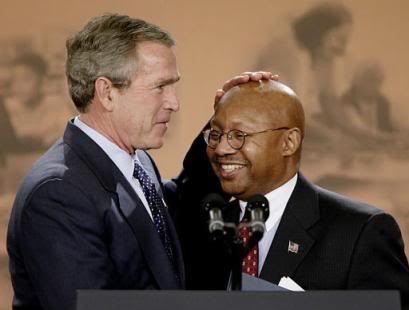
Ray Nagin, former New Orleans mayor, indicted on 21 corruption charges

CBSNews

Former New Orleans Mayor Ray Nagin has been indicted on 21 corruption charges including wire fraud, bribery and money laundering. 

The charges announced Friday come from a City Hall corruption investigation that already has resulted in guilty pleas by two former city officials and two businessmen.

The counts also include filing false tax returns and conspiracy.

Nagin, a former cable television executive, was a political novice before being elected to his first term as mayor in 2002, buoyed by strong support from white voters.

Hurricane Katrina in 2005 elevated Nagin to the national stage, where he gained a reputation for colorful and sometimes cringe-inducing rhetoric.

Deadline for Rep Johnson Letter is Today: Support the Rights of Afro-indigenous Communities in Honduras

Since Monday, January 7, U.S. Rep. Hank Johnson (D-GA) has been circulated a Congressional sign-on letter (found below) addressing ongoing human rights violations against Afro-indigenous communities in Honduras .  It highlights the need for full accountability in the 11 May 2012 for the murders of four Afro-indigenous civilians in a violent U.S. DEA drug raid gone wrong in Ahuas , Honduras .  The Honduran investigation was a whitewash.  No U.S. investigation has taken place.

The deadline to sign-on is this Friday, January 18!

Support the Rights of Afro-indigenous Communities in Honduras

From: The Honorable Henry C. "Hank" Johnson, Jr.

Sent By:  Sascha Thompson

Date: 1/11/2013


Dear Colleague:


Please join us in supporting the human rights of Afro-indigenous communities in Honduras by signing a letter to Secretary of State Hillary Clinton and Attorney General Eric Holder calling for the investigation of alleged abuses by Honduran security forces and the role of DEA forces in an May 11 incident that led to the tragic death of four indigenous villagers.  The letter also expresses concern regarding reports of threats and repression targeting Afro-Honduran leaders and intimidation of Afro-descendent and indigenous communities defending their historical land rights.


In recent years, the rule of law has gravely deteriorated in Honduras as a result of a 2009 military coup d'Etat and a steady increase in drug-trafficking activities throughout the country.  Afro-indigenous peoples, who are among the most impoverished and marginalized communities in Honduras , have been disproportionately affected by drug-related violence as well as targeted attacks allegedly perpetrated by Honduran police and military.


We are not merely distant observers of the human rights crisis in Honduras .  Our government has worked closely with Honduran authorities to combat drug-trafficking in the region and trains, funds and equips Honduran security forces.  Furthermore, armed DEA personnel have participated in controversial counter-narcotics missions that have resulted in fatal casualties, including the aforementioned May 11 incident in the northeastern Moskitia indigenous municipality of Ahuas .  It is therefore incumbent upon the U.S. administration to ensure that all possible measures are taken to protect the basic rights of Honduras ' most vulnerable communities.  


If you have any questions or would like to sign the letter, please contact Sascha Thompson in Rep. Johnson's office at sascha.thompson@mail.house.gov or ext 5-1966.

Sincerely,


Hank Johnson                                    Gregory W. Meeks             

Member of Congress                         Member of Congress


John Conyers                                     Karen Bass

Members of Congress                        Member of Congress


Dear Madame Secretary Clinton/ Attorney General Holder:


We write to express our concern regarding the grave human rights situation in Honduras , and in particular the dire situation of Afro-Indigenous Hondurans in the aftermath of the June 2009 military coup.   We request a thorough and credible investigation on the tragic killings of May 11 in Ahuas to determine what exactly occurred and what role, if any, was played by U.S. Drug Enforcement Administration (DEA) agents.  We also call for an immediate investigation into alleged abuses perpetrated by Honduran police and military officials in the country. 


We are troubled to hear of the threats and repression targeting Afro-Hondurans who have bravely voiced their alarm over the steady deterioration of democracy in their country.  We are also concerned regarding acts of violence and intimidation against Afro-Indigenous people defending their historic land rights.  We are particularly disturbed to learn of the effects of a militarized counternarcotics policy on Afro-Honduran communities, and the participation of U.S. agents in operations that have led to the deaths of Afro-indigenous civilians.


On May 11, 2012, four Afro-Indigenous villagers, including a 14-year-old boy, were killed during the course of a May 11 drug interdiction raid in Ahuas , Honduras .  Three others were seriously wounded.   At least ten U.S. Drug Enforcement Administration (DEA) agents participated in the mission as members of a Foreign-Deployed Advisory Support Team (FAST), a DEA unit first created in 2005 in Afghanistan .  According to the New York Times, Honduran police agents that were part of the May 11 operation “told government investigators that they took their orders from the D.E.A.”


We understand that this tragic incident has been extremely traumatic for the otherwise peaceful and tightly knit community of Ahuas.  Although Honduran human rights groups and international organizations such as Human Rights Watchhave demanded that U.S. and Honduran authorities conduct a thorough and impartial investigation of this incident, the investigation has not been properly conducted.   For instance, official inquiries into the matter have been perfunctory, and deeply flawed.  Credible testimony indicates that the victims were innocent bystanders and not drug traffickers.  As Honduran authorities have yet to address the issue, our government should press ahead with a full investigation to better determine exactly what occurred and what role was played by U.S. agents.  


On June 22, the Fraternal Organization of Black People of Honduras (OFRANEH), one of the most prominent groups representing Afro-Indigenous Hondurans, objected to what it views to be racially biased, "outrageous and dangerous” statements given to the New York Times and the Washington Post by U.S. officials following the May 11 killings.  OFRANEH claims U.S. officials made unsubstantiated accusations of drug trafficking against the entire Afro-indigenous communities in the Moskitia region of Honduras .


OFRANEH states that since the coup, drug traffickers have been increasingly targeting Afro-Indigenous communities, claiming their traditional lands, and killing those who stand in their way.  Human rights groups confirm that the Honduran judiciary has done little to defend the basic rights of these communities.  For instance, the Inter-American Commission on Human Rights of the Organization of American States has ordered the State of Honduras to cease and desist from approving any title transfers on land in the Afro-Indigenous community of Triunfo de la Cruz in order to protect its vulnerable population from attacks by drug traffickers anxious to secure access to the Caribbean .  Currently, many more Afro-Indigenous communities seek similar protection.  We note that, even in this context, Afrodescendent and Indigenous leaders assert that the U.S. -backed drug war in Honduras hurts their communities. 


In addition, since the country’s June 2009 military coup, according to numerous reports, the rate of impunity of alleged abuses perpetrated by state security forces has risen to unprecedented heights.  According to Honduras’ leading human rights organization, the Committee of Families of the Detained and Disappeared in Honduras (COFADEH), over the last three years, more than ten thousand complaints have been filed regarding police and military abuses, very  few of which have been investigated.  Furthermore, State security forces are also directly carrying out repression against government critics. For instance, Afro-indigenous leader, Miriam Miranda, president of OFRANEH, was physically attacked and arrested by a departmental police chief in May 2011.


Finally, we strongly recommend a review on the implementation of counternarcotics operations carried out by our government in Honduras taking into account the unique conditions and high vulnerability of Afro-descendent and indigenous communities, who are disproportionately affected by drug trafficking activities.


Sincerely,   


Cc Michele M. Leonhart, Administrator, Drug Enforcement Administration

Cc Lisa J. Kubiske, U.S. Ambassador to Honduras

Cc Denis McDonough, Deputy National Security Advisor

Cc Ricardo Zuñiga, Senior Director for the Western Hemisphere.  

 

Congressman Introduces Bill to Prod Administration on Fair Housing Enforcement

Propublica

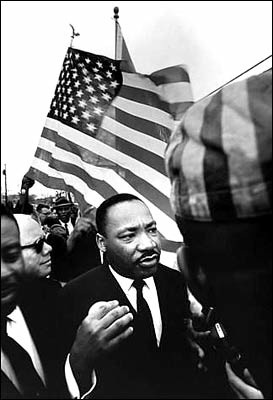
As the nation prepares to celebrate the Rev. Martin Luther King Jr.'s birthday Monday, Congressman Al Green, a Texas Democrat, has introduced a bill, for the fourth time, to fund a national program to test for housing discrimination.

Green introduced the Veterans, Women, Families with Children, Race and Persons with Disabilities Housing Fairness Act yesterday, on King's birthday. King strongly advocated for an end to housing segregation and it took his assassination to nudge a reluctant Congress to finally pass the landmark 1968 Fair Housing Act.

A recent ProPublica investigation found that the federal government has largely failed to enforce the pivotal law and America remains highly segregated. As we detailed, the U.S. Department of Housing and Urban Development does not test to see if landlords and banks may be violating the law. As a result, most discrimination goes unpunished.

Green's bill would, among other things, create a testing and enforcement program to be administered by HUD. The proposed cost: $15 million. HUD in the past has come out in support of the bill, though as we have previously noted HUD could start a testing program on its own.

Green's previous bills on the issue have all died in committee, without reaching a full vote in the House.

"I don't believe this is something we can ignore. I plan to keep introducing the bill as long as I am in Congress until we pass it," Green said in an earlier interview with ProPublica. "There are people who live in the streets of life, who don't live in the suites of life, who still have the discomforts of invidious discrimination."

Tell us your story: Though millions of instances of housing discrimination occur each year, only about 10,000 complaints are filed annually. Do you know firsthand about housing discrimination? Help us continue our investigation into fair housing by telling us about your experience.
Aaron Swartz: Prison State: Mass Incarceration

Crypttome pdf

The era of big government is over.1 Every culture, every class, every century, constructs its distinctive alibis

for aggression.2 It’s too soon to tell.3

The change began with little official notice or fanfare. There were no presidential speeches to Congress, such as the ones pledging to land a person on the moon within a decade or declaring war on poverty. No catastrophic event, such as the attack on Pearl Harbor or 9/11, mobi- lized the United States. No high-profile commission issued a wake- up call, as the Kerner Commission did in warning the nation that it was moving toward two separate and unequal societies and, decades later, as the 9/11 Commission did in exposing the country’s vulnera- bilities to terrorism. Indeed, to see the change of interest – the mas- sive buildup of the U.S. prison population that began in the 1970s – one has to look to the statistical record. There was little bark (at least at first), but a great deal of bite.

Beginning with modern record keeping in 1925 and continuing through 1975, prisoners represented a tiny segment of the U.S. pop- ulation. In 1925, there were 92,000 inmates in state and federal pris- ons. By 1975, the number behind bars had grown to 241,000, but this increase merely kept pace with the growth of the general population. The rate of imprisonment remained stable, at about 110 inmates per 100,000 residents.4 Indeed, during the early 1970s, two well-known criminologists argued that society kept this ratio (inmates over popu- lation) at a near constant to meet its need for social integration.5 As the

1

2 prison state

crime rate went up or down, like a thermostat, society would adjust its imprisonment decisions to ensure that the rate of imprisonment would remain close to 110. Then, in the mid-1970s, the thermostat was dis- connected. The imprisonment furnace was turned on full blast.

The number of prisoners shot upward and would continue on that trajectory for 25 years. By the end of the twentieth century, there were 476 prison inmates per 100,000 U.S. residents, or more than 1.36 mil- lion people in prison.6 And the furnace has not yet been put to rest. By year-end 2005, the number behind prison bars had risen even further, to 1.5 million.7 In the 12-month period ending in December 2005, for example, the prison population increased by 21,500 inmates, an annual growth rate of about 1.9%.

To add some perspective, if assembled in one locality, the prison population would tie Philadelphia for the fourth largest U.S. city. If “prisoner” could be thought of as an occupation, one in fifty male workers would have this “job”; there would be more people in this line of “work” than the combined number of doctors, lawyers, and clergy. For certain demographic groups, the proportion serving time in prison has become extraordinarily high. By year-end 2004, 8.1% of black males between the ages of 25 and 29 were in prison.8 About one-third of all African American males are predicted, during their lifetime, to serve time in a state or federal prison.9 In 1975, 241,000 inmates in state and federal prisons were serving 8.4 million inmate- days. By the end of 2005, 1.5 million inmates were serving more than a half-billion inmate-days per year and consuming 1.6 trillion meals.

Our topic is the prison population buildup. Why did the United States embark on this course? What were the consequences for society? This transformation did not occur spontaneously, and it has had conse- quences. There are a profusion of claims about this choice. Proponents of the buildup tend to see only virtue and necessity. We had to build more and more prisons, in this view, to stem the tide of disorder and crime on the streets. The buildup was a farsighted investment in our future, and we are now reaping the benefits. Critics tend to see only vice and human folly. The buildup has done far more harm than good. In one argument, putting more people in prison adds fuel to the fire by stigmatizing millions of low-level offenders as hard-core felons and schooling them in crime. Mass prison is not only a massive waste of

the buildup to mass incarceration 3

public resources, but it is also socially destructive. Hard-nosed realism requires something other than more prisons.

These points of view have been expressed on the opinion/editorial pages of newspapers and television talk shows, been the subject of numerous stump speeches by politicians seeking elected office, and, from time to time, been given serious study by scholars. Still, we may be no closer now to consensus over the “prison question” than we were halfway through the buildup. With the arguments well worn, both sides now play the common-sense card: everyone knows that more prison causes (or does not cause) less crime and that the motives behind the buildup were noble albeit tough minded (or ill conceived). The goal of this book is to get past these self-confident assertions. 

5 children killed as African Union peacekeepers mistakenly open fire on school

Rt.com

Five children and two adults were killed when African Union (AU) troops mistakenly shot into a religious school while pursuing militants, according to media reports.

­All five of the children killed were under five years of age, Somali legislator Dahir Amin Jesow told the AP.

The attack took place in a village about 120 kilometers west of Somali capital Mogadishu early morning Tuesday, when many students of Islamic schools in Somalia attend class. 

Jesow said that soldiers from the African Union Mission for Somalia (AMISOM) were attacked by militants earlier. 

But other residents of Leggo claimed there were no gunbattles between the troops and the rebels at the time.

"The AU forces opened fire indiscriminately on our homes," one of them told Reuters. 

Alabama appeals immigration law ruling to Supreme Court

[JURIST]

Alabama Attorney General Luther Strange [official website] on Tuesday asked [cert. petition] the US Supreme Court [official website] to overturn a recent decision striking down provisions of Alabama's controversial immigration law [HB 56, PDF]. Alabama is appealing a decision [JURIST report] issued last August by the US Court of Appeals for the Eleventh Circuit [official website] which struck down [opinion, PDF] several provisions of both Alabama's HB 56 as well as a recent Georgia immigration law [HB 87 text]. The petition for certiorari only asks the court to consider the constitutionality of a provision regarding the harboring or transporting of illegal immigrants without mention of other vacated provisions, including one which required public schools to check the immigration status of students and another which made it a crime for undocumented immigrants to solicit work. The Southern Poverty Law Center (SPLC) [advocacy website], which represented many of the plaintiffs in the suit contesting HB 56, responded to the news [statement] saying they are "deeply disappointed by the state's continued efforts to defend this immoral and reprehensible anti-immigrant law."

Immigration laws [JURIST backgrounder] have became a hot button issue over the past few years when many states, Arizona being the first, passed laws giving their state and local officials more power to crack down on illegal immigration. Last month a judge for the US District Court for the Northern District of Georgia [official website] lifted a preliminary injunction [JURIST reports] blocking part of a Georgia immigration law that allows law enforcement officers to ask about immigration status when questioning suspects in criminal investigations. In November a judge for the US District Court for the District of South Carolina [official website] upheld [JURIST report] part of South Carolina's controversial immigration law [SB 20 materials] that permits law enforcement officials to detain motorists on the side of the road for a "reasonable amount of time" while the officer checks the driver's immigration status. The US Court of Appeals for the Ninth Circuit [official website] in September denied a request for a new injunction against a controversial provision of Arizona's immigration law [SB 1070, PDF] which requires law enforcement officials to check the immigration status of persons they stop or arrest if there is a reasonable suspicion that the person is in the US illegally. In August the US Court of Appeals for the Third Circuit [official website] again heard arguments [JURIST report] on two anti-illegal immigrant laws enacted in 2006 by the city of Hazleton, Pennsylvania, which deny permits to businesses that employ illegal immigrants and fine landlords who extend housing to them.

The Difference Between the Treatment of Lance Armstrong and Marion Jones = White Supremacy

Independent UK

What now for Lance Armstrong after his opening night at the Oprah? Of course, the Tour de France villain is not the first fallen sporting star to use the Oprah Winfrey Show as the first act on the road to public redemption. The last one also happens to be a resident of Austin, Texas.

After conducting his two-part interview with Oprah at the Four Seasons Hotel in the Texan state capital, the fastest cheat on two wheels might have stopped off at the home of the one-time fastest woman in the world to ask how she fared when it came to hanging on to what she'd got in an athletics career boosted by steroid assistance. The answer would have been as brief as a Marion Jones race once was.

Four and a quarter years on from her tearful sit down with Oprah, the 37-year-old mother of three has become an asterisk in the record books. The five medals she won at the Sydney Olympic Games have been returned and all of her performances from September 2000 onwards have been deleted.

She has crashed and burned in her second sporting incarnation. After averaging less than a point a game with the Tulsa Shock, the worst record in the Women's NBA, in July last year she was cut from the roster and left on the basketball scrapheap.

Her attention now is focused on something called "Take a Break". According to her website, this is "a program that Marion Jones has created to enable her to give back and coach all people to live a better life and avoid mistakes that cause too big a price".

It was in October 2008 that the former American sprinter and long jumper sat down with Oprah to talk about the mistakes she had made and the price she had paid.

The interview was conducted when Jones was released on probation after serving a six month prison sentence for lying to US federal agents about taking performance-enhancing drugs in the investigation into the Balco drugs scandal. Much of it centred on the pain of being away from her children while in jail. Jones broke down in tears while reading out a letter that she had written to them. When it came to the mechanics of her "mistake," she maintained she had only lied about taking what she believed to be innocent tablets when confronted by federal agents with what was actually the designer steroid tetrahydrogestrinone, or THG.

Oprah Winfrey Now you say that you didn't know you were taking a performance enhancing drug. What did you think you were taking?

Marion Jones I thought I was taking supplements.

Winfrey What kind of supplements?

Jones I was told I was being given – what did he say that it was, it's been so long that I've had to discuss it, Oprah...um, I don't remember what he [coach Trevor Graham] told me at this moment that he was giving me. But he gave me a number of different supplements...

Winfrey Yeah, I'd read you were told it was flaxseed oil.

Jones Flaxseed oil...that's exactly what it was.

Winfrey But what did you think that flaxseed oil would do for you?

Jones Well, I knew that there were a number of supplements, vitamins that I needed to just balance my system out so I could be on an even playing field with everybody else and that was just one of the things that I needed to boost my energy or what not.

I was taking the typical stuff, Vitamin C, Vitamin E, creatine, things like that. I just thought that we had put the system together in preparation for the [Sydney] Games. And so the results were being shown on the track. Everything put together was working.

Winfrey So there never was even a question in your mind that what you were taking would be considered illegal or performance-enhancing?

Jones Never a question. Never a question. I never thought that I needed to use to make me better. I never knowingly took performance-enhancing drugs.

This little exchange, rather like a couple of friends bumping into one another outside Holland and Barrett, would have been all very well had it not long been in the public domain that Jones' former husband, the shot-putter CJ Hunter, had told federal investigators that he had injected her in the midriff with THG when they were in Sydney for the 2000 Olympics.

Hunter had also spoken of a conversation in which Victor Conte, owner of the Balco laboratory, had warned him that Jones could die of excessive insulin usage, saying: "Don't she know she can have a stroke if it's not taken the right way?"

South Carolina Saved $3M Last Year On ‘Smarter’ Prison Terms - Reducing the prison terms for nonviolent offenders

ThinkProgress

“South Carolina is usually the first of everything bad and last in everything good,” state Senator Gerald Malloy (D) told a local newspaper this week. But not this time on criminal justice reform. In 2010, Malloy’s bill to reduce the prison terms for nonviolent offenders while strengthening penalties for some of the worst offenders was signed into law by the state’s Republican governor, and makes the conservative state a potential leader on criminal justice reform.

The bill rejects the “tough on crime” approach that politicians think voters like in favor of a “smart on crime” approach that polls show voters increasingly actually favor. And already, it is saving the state gobs of money. In 2012 alone, the South Carolina reform saved taxpayers more than $3 million, according to a Vera Institute study. Instead of the projected 3,200-inmate increase in the prison population by 2014, the population has already decreased by 2,700 since 2010. Probation for those whose prison terms are shortened costs the state just $1,088 per year, as compared to $17,342 per year to keep someone in prison.

South Carolina was prompted to pass the bill as its Department of Corrections faced a $27 million deficit. Nationwide, state corrections spending is the fastest-growing budgetary item after Medicaid, according to a New York Times report. And while it is still early to gauge the long-term impacts of the South Carolina change, a recent report by the Pew Center on the States concludes that longer prison terms are “high cost” and “low return”:

Although few Americans would question the wisdom of tough sentences for violent, chronic offenders, most criminologists now consider the increased use of prison for non-violent offenders a questionable public expenditure, producing little additional crime control benefit for each dollar spent.

During the past decade, all 17 states that cut their imprisonment rates also experienced a decline in crime rates. And a 2006 legislative analysis in Washington State found that while incarcerating violent offenders provides a net public benefit by saving the state more than it costs, imprisonment of property and drug offenders leads to negative returns.

The report also finds that nearly 90 percent of those polled “support shortening prison terms by up to a year for low-risk, nonviolent offenders if they have behaved well in prison or completed programming.” Voters even support reinvesting prison savings in alternatives to incarceration, which is exactly what South Carolina is doing. The state is routing all of the savings back into more sentencing reform, a substantial portion of which includes better training for staff that work with the more serious, violent prisoners and a program to show inmates how their crimes hurt others.

Those released from prison early, meanwhile, are participating in probation programs that provide incentives for good behavior, rather than punishing violators with an automatic return to prison. Those without family support are assigned a counselor — a move that has already doubled the rate of juvenile offenders successfully completing probation in one South Carolina county.

Overall, early analysis of the law by the State newspaper reveals almost no negative effects, except that more of the savings need to go toward probation services. The law is rightly being viewed as a model for reform, not only to save states money, but to mitigate the U.S. epidemic of over-incarceration.

All White Anaheim City Council "Might" Look into Excessive Force Allegations by White Cops who Killed Unarmed Latino Men that led to Riots

OCRegster

The City Council might establish a citizens committee to investigate police excessive-force allegations following protests concerning officer-involved fatal shootings.

On Tuesday night, the council unanimously asked the city manager to develop a full plan for a police-oversight board, which the council could consider at some point.

The idea for police oversight stems from weeks of unrest over the summer following a series of fatal police shootings, particularly of two Latino men a day apart in July.

Since then, community members, including relatives of those who were shot, have repeatedly complained to council members about police actions, accusing officers of "murder" and "assassination." Also, some said they distrust the Police Department, saying that officers failed to respond to complaints.

"We need to find a way to address that so they have a level of comfort," Councilwoman Gail Eastman said.

Anaheim police incidents are reviewed in four ways, including by the District Attorney's Office, which decides if there will be criminal prosecution, and the 22-member Chief's Advisory Board. Since 2004, the 22-member board, which includes school officials and religious leaders, has served as a sounding board for the police chief.

Under the council's recommendation, the advisory board likely would get the power to investigate incidents when officers use fatal force or cause "great bodily harm." The board would hold community meetings and make a public report to the city manager, who would review recommendations with the police chief.

Members may be appointed by the City Council or selected another way.

The police union opposes a new review board, saying it's unnecessary. Anaheim police officers responded to 132,038 calls last year. Nineteen complaints were made by residents.

"We have not even come close to becoming a corrupt Police Department," said Kerry Condon, president of the Anaheim Police Association. "I believe in a civilian-review board for those who can't handle their business. We're not one of those."

No Anaheim officer has been found guilty of a bad shooting, city officials said, although some of the incidents remain under investigation.

But some community members said they believe oversight would help.

"I've been fighting for this," said Theresa Smith, whose son was killed in an officer-involved shooting in 2009 and has led regular protests. "I think having the oversight will help the families, the police. This has been happening too long."

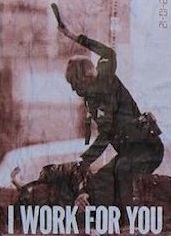
NYPD Police Chief Absolves NYPD Detective Found to Have Used "Gratuitous" Force: Cop swore that Unarmed Latino Man had assumed a “boxer’s stance,” refused “six or seven” orders to get down, and flailed his arms, leaving him no choice but to use brutal force = all lies

Gothamist 

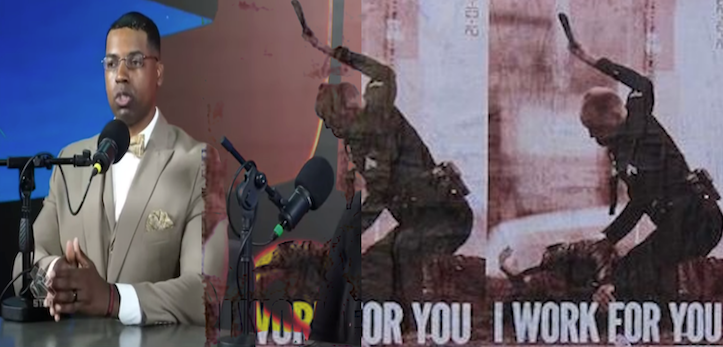
A 21-YEAR NYPD detective is under scrutiny this week for giving an unarmed, wanted man a “Gestapo-like” beating — and then allegedly evading questions about the 2008 incident. Detective David Gross swore that Neal Malangone had assumed a “boxer’s stance,” refused “six or seven” orders to get down, and flailed his arms, leaving him no choice but to use brutal force against the man.

The problem for Gross is that virtually none of that story appears to be true. [MORE]

Despite being granted prosecutorial power last year, the Civilian Complaint Review Board's authority is still derived from NYPD Commissioner Ray Kelly. Kelly recently exercised that authority by tossing aside the CCRB's ruling that an NYPD detective used excessive force against a suspect on camera. The Daily News reports that at an NYPD hearing Detective David Goss was found not guilty of beating Neal Malangone. But Goss, a 21-year veteran of the department, was found by the CCRB to have used "gratuitous" force while arresting Malangone for throwing a garbage can through a window during a prior incident.


Goss told the CCRB that Malangone refused to submit to verbal commands and acted as if he was going to fight, but the CCRB ruled that Malangone surrendered before Goss beat him with a baton. The incident was captured on a surveillance camera.

"Det. Gross is a consummate professional who, in attempting to arrest a violent felon that refused to follow simple instructions, used the minimum amount of force necessary to effect the arrest," Goss's attorney said. Malangone is suing the city for $25 million in a federal lawsuit at a time when legal complaints against the department are at a "historical high," and cost taxpayers $185 million in 2011.

From 2002 to 2010, 92% of the CCRB's recommendations were ignored by the NYPD. In 2011, the NYPD reversed course and followed their recommendations 81% of the time, and in 2012, 72% of the time.

The Bloomberg administration has stridently opposed the City Council creating a position of Inspector General to provide independent oversight for the NYPD, claiming at a hearing in October that doing so would "curtail" the mayor's power.

Black Woman sues Boynton Police for pursuit, arrest (if you are non-white, when dealing with the police: Just Comply - you are the enemy)

From [HERE] A Black woman says city police arrested her at gunpoint in retaliation for speaking out against the Police Department at a commission meeting. Belinda Lester, a public relations consultant and business owner, criticized the Boynton Beach Police Department at a January 2009 City Commission meeting, according to her Jan. 12 lawsuit in federal court. At the meeting, she told elected officials that the police had used excessive force in her neighborhood and that residents there feared officers. After the meeting, she said, Police Chief Matthew Immler took down her information.

Four days later, she was driving home at night when an unmarked black truck started following her, Lester says. Near her house, the truck's lights and siren came on, but she didn't pull over because she feared criminals might be posing as police, according to her complaint.

At her house four blocks away, Officer Carlos Reinhold "pulled her from her car at gunpoint and arrested her," the complaint alleges. In front of Lester's niece, Reinhold held Lester in the rain while waiting for a van to take her to jail. "By the time the van arrived, Ms. Lester was soaking wet."

(In a White Supremacy System When Dealing with Police Just Comply) 

Lester says Reinhold seized her unreasonably and the city violated her right to speak without government retaliation. Lester's attorney, Sherri Renner, declined to reveal how she knows the meeting appearance and the arrest were connected. Lester is seeking damages for the "anxiety, paranoia and insomnia" she says the arrest caused her.

Fmr. Israeli Prime Minister: Israel Wasted $3 Billion on imaginary Iran war plan - Israel Dedicated to War

AllVoices

In a case reminiscent of former US president George Bush waging war on Iraq over a fictitious nuclear bomb, Israel’s Prime Minister Benjamin Netanyahu has similarly been accused of wasting nearly $3 billion preparing for an imaginary war on Iran by the former Israeli prime minister Ehud Olmert.

However, the very fact the current Israeli PM wasted taxpayers money on unnecessary defense projects relating to Iran, suffering a “security delirium,” clearly underlines how seriously he was contemplating launching an attack on the Islamic Republic two years ago.

Meanwhile, Olmert has slammed the Netanyahu for squandering the money over what he termed “harebrained adventures that haven’t, and won’t, come to fruition.”

Olmert’s charges against Netanyahu come even as the latter continues to promise to keep Iran on top of his agenda if he is re-elected prime minister in general elections scheduled for later this month.

In an interview with Israel’s Channel 2 News, the ex-PM said: "In the last two years, 11bn shekels [$2.9bn] were spent on operations which were not and will not be carried out ….We are dealing with expenditures that go above and beyond multi-year budgets.”

According to Olmert, that money was spent on “security delirium.” He added that "the projects won't be carried out now because 2012 was the decisive year." Charging the Netanyahu government with false propaganda, Olmert said: “They scared the world for a year and in the end didn’t do anything.”

The ex-Israeli PM was referring to Netanyahu’s unrelenting campaign to lead the world into action against Iran's nuclear weapons program, including pressure to tighten sanctions on Iran and threatening military strikes in order to derail its alleged uranium enrichment drive.

Olmert also seemed to back the claims made by Yuval Diskin, the former head of Israel’s Shin Bet or Security Services, that Netanyahu and his Defense Minister Ehud Barak discussed launching an attack on Iran over alcohol and cigars.

According to Olmert, if a responsible person like Diskin, known for his integrity during all his years of public service, “reaches the conclusion that the Israeli public must know what's going on when their fates are being decided on, it is vital that he does so.”

Just last week, Diskin accused Netanyahu of selfishly putting his own interests before the State’s and toying with the country’s security.

"Bibi [Netanyahu] wants to go down in history as the person who did something on this size and scale. I have heard him belittle what his predecessors have done and assert that his mission on Iran is on a much grander scale," Yuval Diskin told Israeli newspaper Yediot Aharonot.

Meanwhile, Olmert’s criticisms were staunchly rebutted by both Netanyahu and Barak. Reacting to the claims in an interview with Israel Army Radio, which was aired today, Netanyahu called the former PM’s criticism “a bizarre, irresponsible thing to say,” reported Israel National News.

Netanyahu also elucidated: “We’ve done a lot to strengthen the Israel Defense Forces, Mossad and Shin Bet [the Israeli Security Service] in various ways.” Further, the Israeli premier said he was not going into details of their security expenses.

"Israel must do all it can to stop Iran from acquiring nuclear weapons. This was and will remain my number one task as prime minister, and whoever does not understand that it's the most serious threat to Israel cannot lead Israel," he added.

(Worshiping white god + white Jesus = white supremacy) According to Texas public school bible classes, races come from Noah, earth 6000 years old

Goddiscussion and "It is reasonable to believe that racism does not serve God" [MORE]

The Texas legislature passed a law in 2007 that allows public schools to teach students about the influence the bible has had in history and literature. This can be done in a number of ways, one of which involves including bible stories into standard history and literature lessons. Of course, they can also craft courses that consist of only bible instruction.

According to a report filed by the Texas Freedom Network, a study by a professor at Southern Methodist University in Dallas was cited that included a survey of fifty-seven school districts are teaching students.

The report states the following examples:

  • Instructional material in two school districts teach that racial diversity today can be traced back to Noah’s sons, a long-discredited claim that has been a foundational component of some forms of racism.
  • Religious bias is common, with most courses taught from a Protestant — often a conservative Protestant — perspective. One course, for example, assumes Christians will at some point be “raptured.” Materials include a Venn diagram showing the pros and cons of theories that posit the rapture before the returning Jesus’ 1,000-year reign and those that place it afterward. In many courses, the perspectives of Roman Catholics, Orthodox Christians and Jews are often left out.

  • Anti-Jewish bias — intentional or not — is not uncommon. Some courses even portray Judaism as a flawed and incomplete religion that has been replaced by Christianity.
  • Many courses suggest or openly claim that the Bible is literally true. “The Bible is the written word of God,” students are told in one PowerPoint presentation. Some courses go so far as to suggest that the Bible can be used to verify events in history. One district, for example, teaches students that the Bible’s historical claims are largely beyond question by listing biblical events side by side with historical developments from around the globe.
  • Course materials in numerous classes are designed to evangelize rather than provide an objective study of the Bible’s influence. A book in one district makes its purpose clear in the preface: “May this study be of value to you. May you fully come to believe that ‘Jesus is the Christ, the son of God.’ And may you have ‘life in His name.’”
  • A number of courses teach students that the Bible proves Earth is just 6,000 years old.
  • Students are taught that the United States is a Christian nation founded on the Christian biblical principles taught in their classrooms.
  • Academic rigor is so poor that many courses rely mostly on memorization of Bible verses and factoids from Bible stories rather than teaching students how to analyze what they are studying. One district relies heavily on Bible cartoons from Hanna-Barbera for its high school class. Students in another district spend two days watching what lesson plans describe a “the historic documentary Ancient Aliens,” which presents “a new interpretation of angelic beings described as extraterrestrials.”

According to the report, there was a failure in the legislature to,

"…appropriate funding to develop in-service training for teachers of Bible courses, and most school districts simply ignored the requirement that teachers get such training. Moreover, the State Board of Education — under the control of religious conservatives at the time — refused to adopt serious curriculum standards to help guide school districts as they planned their courses. For these and other reasons detailed in the new report, school districts across Texas are offering courses about the Bible that simply have no place in a public school classrooms — or, in numerous cases, any classroom at all because their quality is so poor."

Here is a press release from the TFN regarding this issue: [MORE]

Wall Street Journal Hurt Because Jackie Chan said America is Corrupt

Wall Street Journal 

The latest incident occurred last week, during an otherwise mundane interview on Qiang Qiang, a popular talk show on Hong Kong-based cable net Phoenix TV. After 15 minutes spent discussing Chan’s latest film, CZ12 (“Chinese Zodiac”), the conversation turned to the action hero’s reputation for fervent nationalism, which has prompted criticism from some on the Internet.

“Chinese are dissatisfied with many things, but you always say ‘China is so good.’ Now many people on the net are displeased with you,” said the talk show’s host, Dou Wentao. In response, Chan pointed out that while China has many problems, particularly with corruption, its ascent into global prominence has occurred only over the last dozen years. “If you talk about corruption, does the entire rest of the world — does America have no corruption?…America has the most corruption in the world!”

(genocide watch) Non-Whites Scapegoated for all social problems/labelled as the Enemy in Xenophobic Greece

In These Times

Across Europe, the economic crisis is driving communities to deep desperation, and the people who were always at the margins are getting pushed straight off the edge.

Under misguided austerity policies, unemployment has reached devastating levels in the euro zone--reaching 12 percent across the region and topping 50 percent for youth in Spain and Greece. But some communities are sinking faster than others. Struggling migrant communities--both economic immigrants and refugees--are more neglected by the state's social infrastructure than ever, while their native-born neighbors turn against them in a rash of xenophobic scapegoating.

Greece, which has long been a hub of immigration from Asia, Middle East and Africa, has become a cesspool of bigotry. According to a December report by Amnesty International, “Asylum-seekers, migrants, community centres, shops and mosques have been the target of such attacks which have been reported on an almost daily basis since the summer.”

Last September, an attack on a Pakistani-run barber shop showed how racism intersects with inhumane immigration policies:

The two men verbally attacked the Greek customer who was present for having a haircut in a shop owned by Pakistanis and stabbed him when he reacted. Then they started destroying the shop and throwing Molotov cocktails. The police came to investigate the incident and arrested two Pakistani nationals because they had no documents. In October, they were both in detention, pending deportation.

Meanwhile, dysfunctional European Union border policies leave Greece, due to its geography, bearing the brunt of the responsibility to absorb immigrants. Amnesty researchers found that many asylum seekers from countries such as Afghanistan and Syria flee to the Greek border, but instead of finding refuge they languish in detention under poor overcrowded conditions, while their claims wend through a broken, under-resourced bureaucracy.

The mistreatment of Greece's migrant workers and asylum seekers reflects the economic injustices facing all working people in a state that has mortgaged its democracy for a neoliberal austerity program. With Greece's economy expected to contract another 4 percent in the coming year, the misery continues to deepen.

Much of Greece's most brutal xenophobic violence is affiliated with Golden Dawn, the neo-fascist-associated movement known for mob harassment and beatings of migrants. Yet Greek police appear sympathetic to the Golden Dawn. The Guardian reported in October that police responded to clashes at an anti-fascist protest in Athens by detaining, abusing and torturing a group of protesters. Earlier reports suggested that police may be aiding Golden Dawn by intimidating people into “donating” to the group’s local charity programs. Whether or not the police are directly partnering with fascists, there’s no doubt that the state and the extreme Right are aligned in their vicious attacks on immigrants.

During Greece's economic collapse, Golden Dawn has gained broader popularity with the public and even won some parliamentary seats in recent elections. The group deftly exploits the public’s despair by “advocating the ousting of foreigners as “the only way to solve unemployment, poverty and criminality,” blogs Amalia Loizidou in Socialism Today:

Golden Dawn’s electoral success in 2010 was the result of consistent local campaigns it had launched in the deprived neighborhoods. Whose fault is it, they endlessly asked, that these areas are deprived? Whose fault is it that there is such extreme poverty, unemployment, criminality, and no hope for the future? Its answer, of course, is to blame immigrants and foreigners, not the big-business bosses or capitalists. On the basis of this propaganda, Golden Dawn intervened in schools. It went petitioning. It went door to door and organised demonstrations. This was the way it built its electoral profile and recruited supporters.

The idea that immigration poses an economic threat is a political fiction (research shows that immigration is vital to Europe's economic functioning, even in times of job scarcity). However, failed immigration policies do have harmful human-rights consequences.

According to John Dalhuisen, Amnesty's Europe and Central Asia program director, efforts to tighten immigration restrictions and militarize Europe's borders have, as in the United States, deepened the humanitarian crisis. “Rather than halting irregular migration, such policies reconfigure mobility flows and make migration routes more dangerous and difficult," he explains. "They also contribute to making smuggling a more lucrative business.” Across the EU, Dalhuisen adds, “There is an urgent need to reverse policies which criminalize migrants and address the wide-spread anti-immigration political rhetoric which contributes to making migrants unwelcome, if not the outright target of xenophobic attack.”

Once migrants make it into Europe, their systematic disenfranchisement enables severe labor exploitation that hurts all workers. Alexandre Afonso, a lecturer in politics at King’s College London, tells ITT via email that however political attitudes toward migrants may fluctuate, migration flows are essentially linked to demand for cheap labor. At the same time, improving labor conditions can help alleviate the erosion of jobs and wages and by extension help rebalance a global labor market rife with exploitation:

Since the politics of control is bound to be ineffective because migration flows de facto cannot be totally stopped, it seems that the only effective way is to ensure fair working and salary conditions for all, including migrants, through work standards compliance, enforced minimum wages, in order to prevent exploitation practices.

Though such reforms are more vital than ever, the gutted social infrastructure has left compassion in short supply. The epidemic abuse of migrants is a symptom of social degradation precipitated by austerity. One group of dispossessed falls into a spiral of racial invective and xenophobia aimed at another, instead of forming a collective uprising against the real threat: an elite that has bled civil society dry and left the poor to cannibalize themselves.