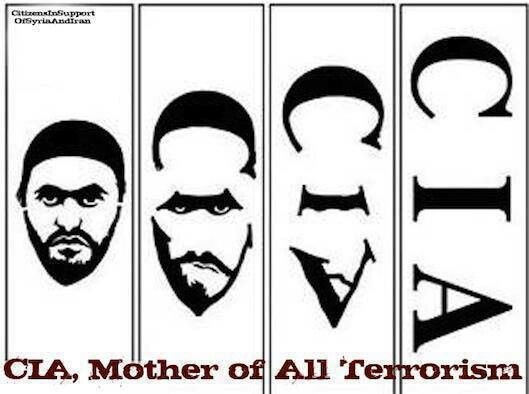
Top Public Health Schools Condemn CIA For Thwarting Disease Prevention In Pakistan

From [HERE] Twelve of the deans leading the nation’s top public health schools have written to President Barack Obama to condemn the use of public health programs as cover for covert activities.

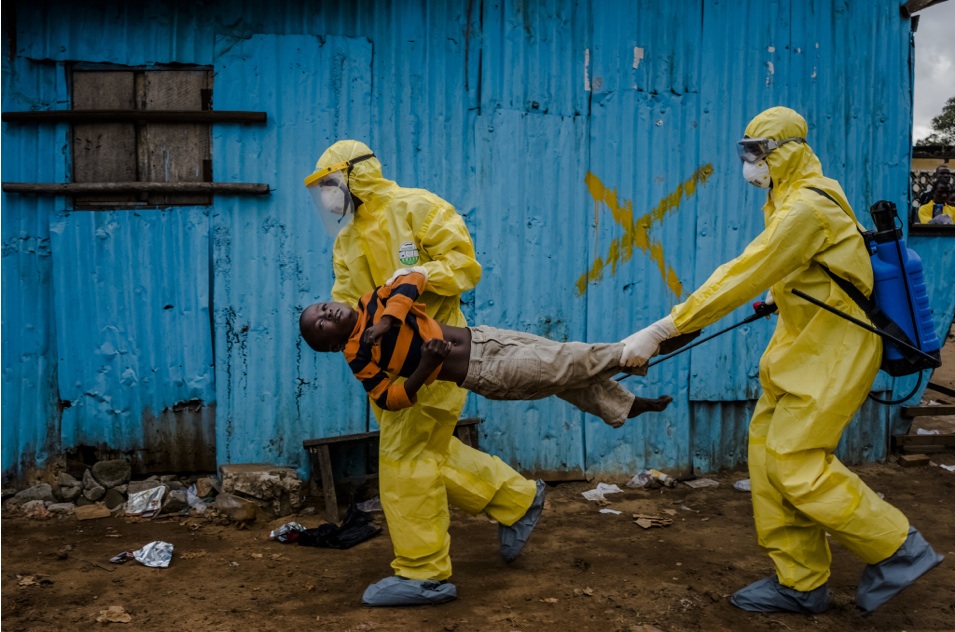
In 2011, it was reported that the Central Intelligence Agency utilized a vaccination program as cover to confirm the whereabouts of Osama bin Ladin in Abottabad, Pakistan. Since then, health workers have been targeted for violence throughout the country, with over a dozen murdered in the past three weeks alone. The upswing in violence caused the United Nations to suspend their vaccine work in December, while the covert operation itself led the Pakistani government to kick out the NGO Save the Children in Sept. 2012.

In the course of the one-page letter, the deans or such schools as Harvard, Johns Hopkins, and UCLA take the President and the administration to task for their role in the spreading mistrust of health workers, and close with an impassioned plea to prevent further uses of health programs for intelligence-gathering:

Independent of the Geneva Conventions of 1949, contaminating humanitarian and public health programs with covert activities threatens the present participants and future potential of much of what we undertake internationally to improve health and provide humanitarian assistance. As public health academic leaders, we hereby urge you to assure the public that this type of practice will not be repeated.

International public health work builds peace and is one of the most constructive means by which our past, present, and future public health students can pursue a life of fulfillment and service. Please do not allow that outlet of common good to be closed to them because of political and/or security interests that ignore the type of unintended negative public health impacts we are witnessing in Pakistan.

The letter specifically refers to a recent spike in treatable diseases run rampant in Pakistan, following the surge in suspicion towards vaccination programs and the workers who administer them. In particular, have measles have jumped from 4,000 in 2011 to 14,000 in 2012. Likewise, Pakistan is one of only three countries where polio remains endemic, a statistic that will be unlikely to change should attacks on health workers continue.

Junior Seau/Rg3 Get Circus Animal Treatment from NFL & So-Called Sports Media

USA Today

When Junior Seau was hitting people for a living in the NFL, he wore No. 55 and weighed 250 pounds. At the National Institutes of Health, his case number was SS-3590 and his brain weighed 1,580 grams.

Word came Thursday that Seau had a degenerative brain disease when he shot himself in the chest last May. Most shocking was that it was hardly a shock at all. His is merely the latest of dozens of cases of former pro football players who died with signs of chronic traumatic encephalopathy (CTE) and the third by suicide in recent times.

MORE: Seau's death serves as reality check

But Seau, for 20 seasons one of the NFL's most feared linebackers, is perhaps the most famous victim to date. His family donated his brain to NIH's National Institute of Neurological Disorders and Stroke last June, about six weeks after a girlfriend found him dead in his home in Oceanside, Calif.

A six-month study was completed a week before Christmas and released Thursday with his family's blessing.

"On initial examination the brain looked normal but under the microscope, with the use of special staining techniques, abnormalities were found that were consistent" with a form of CTE, NIH said in a statement. It added that a small region of Seau's left frontal lobe showed scarring consistent with a small, old, traumatic brain injury.

"In some ways, I'm relieved there's this finding," Mark Walczak told USA TODAY Sports. He is a former teammate and friend who spent time with Seau in the last week of his life.

"I'm not surprised that Junior and others have this evidence of brain damage," Walczak said. "He's not the only one that has these types of issues. We've got guys who are retiring as we speak, like Ray Lewis, that we need to keep an eye on."

Tavares Gooden, San Francisco 49ers linebacker and veteran of five NFL seasons, hadn't heard the news about Seau. He said that when he puts on his helmet each day he's not thinking about potential long-term effects from hits to the head.

However, he knows enough to monitor himself.

"We can all learn something from Junior," Gooden told USA TODAY Sports on Thursday. "I've been getting CAT scans to make sure things are right in my brain. Every year I get a check-up. … I try to stay on top of things."

Officially, Seau never suffered a concussion during a two-decade career with the San Diego Chargers, Miami Dolphins and New England Patriots that ended with his 2009 retirement. But Walczak, a former tight end and long snapper in the NFL, believes his friend suffered multiple undiagnosed concussions.

"Junior just didn't report head injuries," Walczak said. "I had (unreported) concussions, too, especially back when guys were allowed to tee off on the long snappers. But you just don't report them. You're a football player. You're tough. If you did report stuff like that, next thing you know you're on waivers."

The NFL, in a statement to USA TODAY Sports, said in part: "We appreciate the Seau family's cooperation with the National Institutes of Health. The finding underscores the recognized need for additional research to accelerate a fuller understanding of CTE."

The statement said the NFL had earlier committed a $30 million research grant to NIH and is working with the NFL Players Association on investment of an additional $100 million for medical research, per the collective bargaining agreement.

"We have work to do," the statement said, "and we're doing it."

Walczak expressed skepticism about the NFL's efforts.

"I think they've basically just scratched the surface of a gigantic iceberg," he said. "There's so much more to do for the players from the past and the players who are playing now. They need to take some more steps to rectify things. They need to acknowledge the fact that the players who have played in the past have suffered. They need to try to eliminate more of these tragedies.

"They've got to facilitate something for the retired players. They turned a blind eye to this for so long, and now it's an avalanche."

Russell Lonser, chair of Ohio State's Wexner Medical Center Department of Neurological Surgery, oversaw the NIH study.

"There's still a lot to learn about CTE," Lonser told USA TODAY Sports. "We don't have a basic understanding of the incidents and prevalence. From a research perspective, what needs to be done" is long-term studies.

That won't be of much solace to those playing now and those who have retired.

"I understand it won't be for those individuals," said Lonser, who is head of the NFL's research subcommittee and a member of the NFL's head, neck and spine medical committee. "But (long-term research) is critical to our understanding it. I think it goes back to many disorders that occur: The first step is a better understanding."

The trouble is that CTE cannot be diagnosed until after death. Lonser believes the day will come when it can be diagnosed in the living, which "would give us ways, potentially, to treat it. That's the ultimate hope."

Lonser, former chief of surgical neurology at NIH, said three experts independently arrived at the same conclusion in Seau's case. "The three experts from outside the federal government reviewed it with other brain samples and were not told that one of those three samples they looked at was Junior Seau's," Lonser said.

Chicago neurosurgeon Julian Bailes of NorthShore University Health System is director of the Brain Injury Research Institute. He told USA TODAY Sports that the Seau finding supports his belief that CTE can be caused by the cumulative effects of football head impacts that don't result in formally diagnosed concussions.

"When (Seau) died, I said if there was anybody you'd worry about having CTE it was certainly someone who played 30 years, including 20 at the NFL level," Bailes said. "I remember Mike Webster, the first case, played 17 years in the NFL."

In 2002 in Pittsburgh, Bailes and neuropathologist Bennet Omalu identified Webster, a deceased former star center with the Steelers, as the first NFL case of CTE, once associated primarily with boxers. Bailes said Webster, like Seau, had never been diagnosed with a concussion during his pro career.

Bailes said a key area of research is whether some players might have a genetic predisposition to CTE, which could explain why some get the disease while others don't.

"There's likely a genetic predisposition, just like there is to everything else in life," Bailes said. "But I do think that it's probably going to be shown that it's on an exposure (to head contact) basis. If anybody played a long time, it was (Seau). He played youth football, he played high school, college and 20 years in the NFL."

Omalu and Bailes also found CTE in the autopsied brain of former Cincinnati Bengals wide receiver Chris Henry, who was killed in North Carolina in 2009 when, according to police, he fell off the back of a pickup truck driven by his fiancé during a domestic dispute.

"Chris Henry was the youngest and the only active NFL player ever diagnosed with CTE. … He was 26. No concussion history," Bailes said.

Bailes favors expanded efforts to take head contact out of football. He would like to see linemen start off each play in a stand-up position instead of a three-point stance to eliminate the head-to-head contact that starts every play

As medical director of Pop Warner youth football, Bailes was involved this year in new rules limiting head contact in youth practices. He wants stringent enforcement of rules to protect the head.

"I've been saying for several years that we've got to get the head out of the game," Bailes said.

ABC News/ESPN broke the Seau story Thursday on Good Morning America. Gina Seau, his former wife, said the family was told the disease came from "a lot of head-to-head collisions over the course of 20 years of playing in the NFL. And that it gradually, you know, developed the deterioration of his brain and his ability to think logically."

Asked if she believed the NFL was slow to address the issue, she said, "Too slow for us, yeah."

Seau's name joined a list of several dozen deceased football players identified as having CTE. Boston University's center for study of the disease reported last month that 34 former pro players and nine who played only college football suffered from CTE.

Besides Webster and Henry, other cases of CTE in former NFL players identified by Bailes' Brain Injury Research Institute include Terry Long and Justin Strzelczyk of the Pittsburgh Steelers and Andre Waters of the Philadelphia Eagles.

The NFL is facing a federal lawsuit representing more than 4,000 former players claiming the league refused to acknowledge the link between brain damage and the sport, even after CTE was found in former players. The first suit was filed in August 2011. Now, about 190 such suits have been consolidated in federal court in Philadelphia. The Seau family has not decided about joining the lawsuits.

"I'm not shocked by the news. I know how Junior played. He played hard for 20 years," said ESPN analyst Lomas Brown, a former NFL offensive lineman who is part of the lawsuit. "This is a real condition, CTE. It's not just a group of retired guys trying to get money."

ESPN analyst Christian Fauria, a former NFL tight end, said he still doesn't believe enough to join the lawsuit.

"I just don't feel right signing up for it. I don't," he said. "I forget a guy's name I knew two minutes ago. 'Do I need to join this (lawsuit)? Is it just my age catching up to me?' I don't know how many concussions I had that were a product of pro football, or of high school football, of fighting my brother tooth and nail for 15 years. ...

"For me to jump into the lawsuit based on everything I see, and questioning the motives of some players — I'll probably get screamed at for this — but some players, I don't know what their motives are."

The other former players who killed themselves and were found to have evidence of CTE are former Chicago Bears defensive back Dave Duerson and former Atlanta Falcons safety Ray Easterling.

Duerson left a note asking for his brain to be studied for signs of trauma before shooting himself. His family filed a wrongful death suit against the NFL, claiming the league didn't do enough to prevent or treat the concussions that severely damaged his brain.

Easterling suffered from dementia, depression and insomnia after his career, according to his wife, Mary Ann. He committed suicide last April. She is among the plaintiffs who have sued the NFL

With approval from the families, the Boston University study identified three of the former players diagnosed with CTE: John Mackey, who died last year at 69 and played 10 NFL seasons as a tight end, all but one with the Baltimore Colts; Ollie Matson, who died last year at 80 and played 14 NFL seasons as a running back with the Chicago Cardinals, Los Angeles Rams, Detroit Lions and Eagles; and Cookie Gilchrist, who died in 2011 at 75 and played for CFL teams and for the AFL's Buffalo Bills, Denver Broncos and Dolphins.

That study was done by investigators from Boston University's Center for the Study of Traumatic Encephalopathy and the Veterans Affairs Boston Healthcare System, in collaboration with the Boston-based Sports Legacy Institute — a group focused on brain injury in athletes and other high-risk groups, such as the military.

The study also reported early-stage cases of CTE among some individuals who only played football through high school. The investigators said that was further cause for alarm about head injuries in high school and youth football and other youth sports with head impacts.

That study identified one of the former high school players as Eric Pelly, who died in suburban Pittsburgh at 18 in 2006. Researchers said he had early stage CTE. Pelly sustained concussions as a high school football and amateur rugby player. He died 10 days after sustaining a concussion in a rugby game. He had a concussion two years earlier while playing high school football.

Cultural critics emerged Thursday with the Seau news. Orin Starn, professor of cultural anthropology at Duke, said in a release: "Americans don't seem to care that NFL players put their lives at risk every Sunday. … The NFL has become America's favorite blood sport, a modern version of the ancient Roman coliseum where thousands gathered to cheer brutal gladiatorial combat."

Ta-Nehisi Coates, a senior editor at The Atlantic, wrote in an online column: "You can't fix this by getting rid of big hits. You can't fix this by focusing on concussions. Junior Seau never had such a diagnosis, and even if he did, it is the repeated 'minor' hits that cause CTE. The enemy is the game itself. And it is killing men."

Reaction came, too, from NFL locker rooms.

"It's scary," Seattle Seahawks Pro Bowl center Max Unger told USA TODAY Sports. "Football will always and forever be a sport with pretty severe consequences, at least at the professional level. We're talking about 10-, 11-, 12-year careers. Everybody knows the risks that are involved. I don't think that's really surprising.

"It's a tradeoff, though. You make a pretty big salary in a relatively short period of time. The tradeoff is you get beat up a little bit. I think the (get-back-in-there) culture is changing a little bit. But it's scary. That's the reality we live in. I don't know there's a lot you can do."

The 49ers' Gooden says as long as he's playing, he can't let what might happen down the line impact him.

"You can't do that," he said. "You can only live for right now. That's all you can do because we all know what we signed up for. I signed up for this game when I was 10 years old, and I knew the consequences of it.

"Nobody thinks about the bad side. You only think about the good side, and that's what everybody does. You leave the rest to God and you pray and hope that nothing happens to you.''

Gooden said he has had three or four concussions: "I had one in college at the University of Miami, and I think I had three or two in Baltimore" with the Ravens.

Is he doing okay?

"I am as of today," he said. "There are some things that go on where I can't look into the light as well as I want to. I have light sensitivity, and sometimes I get migraine headaches due to the concussions. … My mood's not at that level where I don't want to live or anything like that."

Tyler Perry Offers $100,000 For Info About Black Men Who Disappeared After Getting Into Police Car

PolicyMic

Three major black leaders – NAACP President Ben Jealous, the Rev. Al Sharpton, and filmmaker Tyler Perry – have descended on Naples, Florida, to press for an investigation into the case of two Florida men who disappeared nearly a decade ago after being seen in the company of the same now-fired Collier County Sheriff’s Office policeman Steve Calkins.

During a press conference held in Naples on Thursday, Tyler Perry offered a $100,000 reward for information which could lead to a resolution of the case. Area man Anthony Denson Jr. told Perry that the officer in question had “chased me down the beach;” Perry was visibly shaken by the encounter.

“Wow. I have been praying for an answer for this family and I wasn’t expecting this moment. I am beyond overwhelmed by it. And just like this man has come forward, I am sure there are others.”

Perry, Sharpton, and the NAACP hope their appearance will allow others to speak freely about the disappearances.

While blacks number just 13% of the U.S. population, they are nearly three times likelier to go missing, comprising over 33% of cases known to the FBI.

Sharpton said that Perry had confronted him on the lack of attention given by minority activists to these disappearances, leading him to help organize the action. “Why aren’t you civil rights leaders dealing with cases of missing people? … [he said] if we fight for what’s right, how do we forget about people who just disappeared? And I felt guilty, because he’s right. All of us have not done all we should,” he said during the conference.

Calkins, who is white, repeatedly denied any involvement in the disappearances. He instead claims that he did nothing more than drop the men off at a convenience stores.

Felipe Santos, 23, is an undocumented immigrant who vanished in October 2003 following arrest by Calkins. He was driving to work when he was involved in a minor traffic accident with his brothers, after which the officer ascertained he did not have registration or insurance. Taken away, his brothers were later unable to find him in jail. Calkins claimed that Santos was so cooperative that he had decided to drop him off at a local Circle K.

Terrence Williams, 27, is black. He ran into Calkin in January 2004 after moving to Naples to spend time with his mother following trouble with police in Tennessee. His car broke down and needed to be towed. In a recorded conversation, Calkins and a dispatcher were heard to use exaggerated racial voices when discussing Williams.

“Well, I got me a ‘homie’ Cadillac on the side of the road here, signal 11, signal 52, nobody around,” Calkins said. “It’s gonna come back to one of the brothers in Fort Meyers.”

Calkins claimed that Williams “asked him for a ride so he would not lose his job and that it was just up to the Circle K,” later explaining he “was very clean cut. That’s one of the reasons I helped him. Outside of his long dreadlocks, I mean he, he seemed to be a very clean young man … very respectful of me and very well-spoken.” He said that when Williams went missing, he made a call to the store to verify Williams’ identity.

Williams did not work at that Circle K, and no one at that Circle K remembered the call or Williams. Disturbingly, Calkins made a call for a background check using a fake birthdate that Williams had previously given out when in trouble.

“Terrance would know that date of birth, but nobody else would,” said Collier Sgt. John Morriseau to the SP Times.

Calkins pulled over Williams between 9 a.m and 10 a.m., but did not call into dispatch until 12:49 PM, leaving a potential 2 hour window of opportunity.

Authorities say they investigated the disappearances, including treating Calkins as a potential suspect. They interviewed him, finding multiple inconsistencies in his statements. His car was tested for blood or signs of a struggle, but none was found. They secretly put a tracking device on his vehicle, hoping he would lead them to the scene of the crime, but Calkins never went to any crime scene.

They have also modified department policy. Officers in the county are now required to inform dispatchers when transporting anyone in a police vehicle.

Calkins’ personnel file brimmed with praise before the incidents. A lieutenant wrote that “I like having heroes on my team,” after Calkins saved the life of a 78 year old man having a heart attack; a captain wrote in 1996 that he was “proud to have worked directly with you and I know your performance will always be of high quality.” Captain Jim Williams, who works with the county’s Professional Responsibility Bureau, said that while “nobody would like to solve this better than this agency” but there was “no evidence” that indicated the men had even had unpleasant exchanges.

Calkins claims no knowledge of what happened to Santos, and says that he was “duped” by Williams, who he says lied about having a valid registration or permit in his vehicle. He says both men had reason to disappear. The officer was fired in August 2004 after giving inconsistent accounts and refusing to cooperate with investigators.

“They were put into the back of Deputy Calkins’ car and never heard from again. And to this day Deputy Steve Calkins is a free man. I guess it’s time to march in Naples now,” Perry wrote in April.

He called for racial profiling to be labeled a hate crime investigated by the FBI, saying “that way local government can’t make the decision on whether or not these people get punished.”

Perry urged others to come forward with information on the case, saying “you do not have to be afraid. The sheriff here has assured me that [the tipster] will be safe and anyone else that wants to say anything or speak out about this will be safe.”

Williams’ mother was grateful for their appearance. “I think people are afraid to speak up. They don’t want to get involved.”

Collier County Sheriff Kevin Rambosk was as well. The involvement of the men would “have a positive effect on the continuing investigation,” he said.

Katt Williams: Redskins Team Name is Racist

TMZ

The Redskins is a racist team name ... so says Katt Williams who tells TMZ he's SHOCKED that Americans have tolerated such an offensive moniker for so many years.  

Katt -- who wasn't arrested or accused of any wrongdoing last night -- was in Malibu when we asked about the renewed effort to get the team to change its name. 


"Do you know how racist that is?" Katt said ... explaining, "That would be like saying the Chinese Yellowskins or the Compton Blackskins."


He added, "Can you please not keep disrespecting the people we already admit we did wrong to?"

Another chance for Maryland to end the death penalty

WashingtonPost

By Editorial Board,

BY THE GRACE of state Sen. Thomas V. Mike Miller (D-Calvert), Maryland Gov. Martin O’Malley (D) has been handed a second chance — probably his last — to abolish the state’s death penalty. He should seize it.

Four years ago, in deference to Mr. O’Malley, who opposes capital punishment, Mr. Miller, the powerful president of the Senate and a supporter of the death penalty, allowed the issue to reach the Senate floor. There, despite cajoling, the governor could not corral the 24 votes needed for abolition. Instead, a bill was enacted that limited Maryland’s death penalty to cases where there is DNA evidence, a videotaped confession or a video linking the suspect to a murder.

Now Mr. Miller has given Mr. O’Malley a green light to try again — if he can find the necessary 24 votes in the Senate.

The good news is that the votes may be within reach. (They’re already there in the House of Delegates, according to nose-counters in Annapolis.) The puzzling news is that Mr. O’Malley, though he remains as opposed to capital punishment as ever, is balking.

Perhaps the governor is simply being cautious. According to The Post’s John Wagner, 23 senators are firmly, or relatively firmly, on record as prepared to end capital punishment, and several others are on the fence. But an excess of gubernatorial caution would be a mistake. Without a push by Mr. O’Malley himself, the status quo will remain unchanged and Maryland's death penalty will remain on the books.

In practice, it is in remission, having been suspended by a ruling from the state’s high court in 2006. Although five prisoners remain on death row, Maryland hasn’t executed anyone since 2005.

But even if the machinery of death is frozen, there are good reasons to abolish it for good and to eliminate a costly, unjust and dysfunctional system. In fact, the legislation four years ago codified an even more arbitrary system where the nature of the evidence, rather than the barbarity of the crime, is the crucial factor.

What’s more, the fundamental flaws in the death penalty’s application remain unresolved, including disparities based on race and jurisdiction. And there is no evidence proving that it is more effective at deterring homicides than is a sentence of life without parole.

Those flaws, as well as the steady drip of capital convictions overturned by DNA evidence, have prompted other states to use the death penalty more sparingly or to ban it altogether. Last year, according to the Death Penalty Information Center, 43 people were put to death, less than half the number executed in 1999 and the fewest in two decades.

Even more encouraging, just 77 convicts were sentenced to death last year, 75 percent fewer than 1996’s record total. Virginia, once a major death-penalty state, executed no one and imposed no death sentences. Today, the death penalty is either forbidden or in abeyance — meaning no one executed in the past five years — in 30 states.

The arguments against capital punishment are refreshed and strengthened every time a capital conviction is overturned. In September, Damon Thibodeaux was freed after 15 years on Louisiana’s death row — the 18th convict released from prison after analysis of DNA evidence. As long as the death penalty exists, the nation risks committing the gravest of injustices: killing innocent people.

More on this debate: The Post’s View: Maryland’s missed chance to repeal the death penalty The Post’s View: Maryland’s broken death penalty The Post’s View: A welcome drop in executions

CIA being sued over domestic spying collaboration with NYPD

The FinalCall

The CIA is being sued for withholding information about its cooperation on domestic spying as part of the New York Police Department’s counter-terrorism surveillance program.

The Electronic Privacy Information Center (EPIC) filed a lawsuit at the end of December seeking the release of a report by the CIA’s inspector general that examined the legality of spying on American soil.

CIA spy activity at home made headlines in 2011 when a series of investigative reports by the Associated Press exposed the CIA’s role in the NYPD’s Intelligence Unit, which kept tabs on New York’s Muslim community despite a lack of evidence of any crimes.

AP’s Pulitzer Prize-winning enquiry found that the CIA played a crucial role in instructing the NYPD on its surveillance program, which spied on mosques, student groups and Muslims in general.

The agency’s director general responded to the allegations by launching a self-investigation into the collaboration. In December 2011, the CIA announced that it found “no evidence” its actions had broken the law. The agency also denied that it was directly involved spying inside the country. Soon after, the AP revealed that a CIA operative was being removed from assignment with the NYPD.

In March 2012, EPIC filed a Freedom of Information Act request to receive a copy of the inspector general’s report, but Langley has so far failed to release it, claiming a “substantial backlog” of such inquiries. [MORE

John Brennan’s Lie About Civilian Casualties Killed by US Drones

Antiwar

Claims by the Central Intelligence Agency’s new director-designate that the US intelligence services received ‘no information’ about any civilians killed by US drones in the year prior to June 2011 do not appear to bear scrutiny.

John Brennan, President Obama’s nominee to take over the CIA, had claimed in a major speech in summer 2011 that there had not been ‘a single collateral death’ in a covert US strike in the past year due to the precision of drones. He later qualified his statement, saying that at the time of his comments he had ‘no information’ to the contrary.

Yet just three months beforehand, a major US drone strike had killed 42 Pakistanis, most of them civilians. As well as being widely reported by the media at the time, Islamabad’s concerns regarding those deaths were also directly conveyed to the ‘highest levels of the Administration’ by Washington’s then-ambassador to Pakistan, it has been confirmed to the Bureau.

This confirmation suggests that senior US officials were aware of dozens of civilian deaths just weeks before Brennan’s claims to the contrary.

Jirga deaths

The CIA drone strike in Pakistan on March 17, which bombed the town of Datta Khel in North Waziristan and killed an estimated 42 people, has always seemed a contradiction of Brennan’s official statement.

The attack was later justified by an anonymous US official as a so-called ‘signature strike’ where the identities of those killed was unknown. They insisted that ‘a large group of heavily armed men, some of whom were clearly connected to al Qaeda and all of whom acted in a manner consistent with AQ-linked militants, were killed.’

In fact the gathering was a jirga, or tribal meeting, called to resolve a local mining dispute. Dozens of tribal elders and local policemen died, along with a small number of Taliban.

Within hours of the attack Pakistan’s prime minister and army chief publicly condemned the mass killing of dozens of civilians. Pakistan’s president also later protested about the strike to a visiting delegation from the US House Armed Services Committee, led by Congressman Rob Wittman.

An official Pakistani government document issued at the time reports that Washington’s then-ambassador Cameron Munter was summoned to the Foreign Ministry in Islamabad on March 18 for a dressing-down.

A strongly worded statement reported that ‘Ambassador Munter was categorically conveyed that such strikes were not only “unacceptable” but also constituted “a flagrant violation of humanitarian norms and law”.’

Munter also intended ‘to convey Pakistan’s message to the US Administration at the highest levels,’ the Foreign Ministry press release claimed.

While some challenge Pakistan’s portrayal of some aspects of the meeting, it is not disputed that the Ambassador did indeed convey Pakistan’s concerns to the highest levels in the US government.

‘Not a single collateral death’

Yet three months after the Datta Khel strike, John Brennan would insist that covert US drone strikes were so accurate that they were no longer killing civilians, and had not done so for the previous 12 months.

He told an audience on June 29 that ‘I can say that the types of operations… that the US has been involved in, in the counter-terrorism realm, that nearly for the past year there hasn’t been a single collateral death because of the exceptional proficiency, precision of the capabilities that we’ve been able to develop.’

The Datta Khel attack was not the only time that civilians had died in the period referred to by Brennan. Working with veteran Pakistani reporter Rahimullah Yusufzai and field researchers in the tribal areas, the Bureau identified and published details of 45 civilians known at the time to have been killed by CIA drones in ten strikes between August 2010 and June 2011, the date of Brennan’s speech. Many of those killed had died at Datta Khel.

The Bureau presented a summary of its findings to the White House and to John Brennan’s office in July 2011. Both declined to comment.

Nine months later, George Stephanopoulos of ABC News challenged Brennan on his original claims.

‘Do you stand by the statement you have made in the past that, as effective as they have been, [drones] have not killed a single civilian?’  the interviewer asked. ‘That seems hard to believe.’

Brennan was robust, insisting that ‘what I said was that over a period of time before my public remarks that we had no information about a single civilian, a noncombatant being killed.’

Military-aged males

A later report in the New York Times provided a possible explanation for Brennan’s robustness. The paper revealed that Washington ‘counts all military-age males in a strike zone as combatants, according to several administration officials, unless there is explicit intelligence posthumously proving them innocent.’

Since all of the civilians killed at Datta Khel were adult males, officials may simply have discounted their deaths. There are no indications that the CIA has amended its records since.

The Bureau has now raised its estimate of the number of civilians killed in the period Brennan claimed none had died to 76, including eight children and two women. The new figures are based in part on our own research and on studies by Associated Press and Stanford and New York universities.

Virginia Governor Says Restore Voting Rights for Nonviolent Felon Offenders

ColorLines

Yesterday, Virginia Gov. Bob McDonnell announced in his 2013 State of the Commonwealth speech that he supports Republican-sponsored bills to automatically restore civil rights -- including voting rights -- for nonviolent felony offenders. Virginia is one of four states that permanently bars felony offenders from voting or running for office even after they've already served time in prison and any probation/parole sentence. The governor alone can restore those rights and only after a cumbersome process that includes a two-year wait for nonviolent offenders or a five-year wait for violent offenders. There are roughly 350,000 Virginians, most of then African Americans, disenfranchised due to this law.

Gov. McDonnell is now saying the wait is over for nonviolent offenders -- or at least that it should be. Automatic rights restoration will only happen with an amendment to the state's constitution, which can only be done by the state legislature. According to The Washington Post, Republicans in that legislature gave Gov. McDonnell's appeal a lukewarm response, and those who head the committees responsible for creating such legislation oppose automatic rights restoration.

However, McDonnell was clear about his support for it, saying:

"While we have significantly improved and fast-tracked the restoration of civil rights process, it's still an executive process. As a nation that believes in redemption and second chances, we must provide a clear path for willing individuals to be productive members of society once they have served their sentences and paid their fines and restitution. It is time for Virginia to join most of the other states and make the restoration of civil rights an automatic process for non-violent offenders."

Civil rights advocates for voting rights and erasing felony disenfranchisement welcomed McDonnell's support.

"The governor has embraced the principle of redemption and the legislature should follow his lead," stated Judith Browne Dianis, co director of Advancement Project. "Evidence shows that voting reduces the likelihood of recidivism helping to strengthen our families and communities. These are citizens often trying to rebuild their lives. They live and work in our neighborhoods. They pay taxes. They should not be denied the right to raise their voice in the ballot box."

"Governor McDonnell is again leading the way for states still practicing felony disenfranchisement to eradicate themselves from antiquated and racially biased disenfranchisement laws," said Benjamin Todd Jealous, President and CEO of the NAACP.  "As we continue to fight these battles on the ground, we hope that legislatures across the United States and especially in Kentucky, Iowa, Florida and Virginia make automatic restoration of rights a permanent fix in their state constitutions."


According to the NAACP, McDonnell has restored the voting rights of 4,423 people to date, which is officially more than the number of people whose rights were restored under the previous governor Timothy Kaine, who currently represents Virginia in the U.S. Senate. McDonnell is in the last year of his term as governor of Virginia. Governors are limited to one term in the state.

Seven (Yes, 7) Slave-Themed Films Coming in 2013

ColorLines

2013 is going to be the year of the slave-theme movies.

Shadow & Act's Tambay A. Obenson compiled a list of all the slave-themed films currently in production and found there's seven films (that he knows of) in the works that will be released in 2013.

Obenson has dubbed the current Hollywood trend  the "slave movie fever" and says the 150 year anniversary of the Civil War may be why all the studios are flocking to the slave genre.

Steve McQueen's "Twelve Years A Slave," an adaptation of Solomon Northup's autobiography, is perhaps getting the most attention. The film about a man living in New York during the mid-1800s that's kidnapped and sold into slavery in the south has a respected black director and a spectacular cast. The cast includes Quvenzhané Wallis, Chiwetel Ejiofor, Michael Fassbender, Ruth Negga, Adepero Oduye, Alfre Woodard, Lupita Nyong'o, Brad Pitt and Michael K. Williams.

Another film, "Big Ben Jones," will star former NFL linebacker Jeremiah Trotter as an escaped slave. Cuba Gooding Jr. also stars in "Something Whispered," and Danny Glover co-stars in the upcoming slave uprising film, "Tula, The Revolt."
Feel overwhelmed? 

The good news is we may actually see a black actor or director win an Oscar in 2014. 

McQueen has said before that he "could never make American movies - they like happy endings." (He's also not afraid to talk about the politics of race.) "Twelve Years A Slave" is expected to come with a wildly different take on the subject compared to 'Django.' 

Visit "Shadow & Act" to read about the rest of the films.

Camden Agrees to Pay $3.5 million in damages to 88 people whose convictions were overturned due to Police Corruption

ACLU

The City of Camden has agreed to pay $3.5 million in damages to 88 people whose convictions were overturned because of widespread corruption in the Camden Police Department. The settlement stems from a series of lawsuits filed against Camden Police in federal district court and state superior court over the last two years, after five officers were charged with a number of federal civil rights violations from conduct involving evidence planting, fabrication of reports and evidence, and perjury.

The American Civil Liberties Union and ACLU of New Jersey filed one of those lawsuits on behalf of Joel Barnes, a Camden resident who was arrested in 2008 after police planted drugs on him.

“This prolonged campaign to plant evidence on innocent people was a true stain on Camden Police and represents one of the most serious forms of police corruption,” said Alexander Shalom, policy counsel for the ACLU-NJ. “Unfortunately, the systems that are designed to prevent corruption and protect the public eroded and allowed rogue officers to operate unabated for years.”

The Camden City Council approved the settlement at its meeting this week. The court still needs to approve the settlement. No date has been set for the court to review the agreement.

Three of the officers involved in the conspiracy, Jason Stetser, Kevin Parry and Dan Morris pleaded guilty in federal court to corruption. Officer Antonio Figueroa was convicted by a jury, and officer Robert Bayard was acquitted. The officers’ actions went undetected because of a breakdown in the department’s Internal Affairs unit, which was understaffed and used antiquated systems.

As a result, the 88 plaintiffs in the cases served a combined 109 years in prison on their overturned convictions. The corruption has also cost the city millions of dollars in legal fees.

“Because of the actions of these officers, and the Camden Police Department’s failure to identify and stop the corruption within its ranks, these men and women were deprived of their liberty and will never recoup the time they lost from their loved ones,” said Jason D. Williamson, staff attorney at the ACLU Criminal Law Reform Project and co-counsel on the Barnes case. “We hope that other police departments will take note of what went wrong in Camden and take measures to prevent it from happening in their departments.”

Barnes, 30, a lifelong Camden resident, stopped by a friend’s house on Aug. 2, 2008 to help set up for a barbecue later that day. Police raided the home in search of illegal drugs. Barnes, along with other occupants in the house, was herded into the kitchen. An officer slipped handcuffs on Barnes and emptied Barnes’s pockets. There were no drugs. When officers repeatedly asked where the drugs were, Barnes answered truthfully, saying he did not know.

Figueroa pulled out a bag containing drugs and said, “Tell us where the shit’s at and we’ll make this disappear.”

When Barnes insisted he did not know if there were drugs in the house, the police supplied the incriminating evidence and charged him with possession with intent to distribute. On Feb. 23, 2009, fearing his testimony would not be believed, and facing the prospect of even more jail time if convicted at trial, he pleaded guilty to a crime he did not commit.

While in prison, Barnes read about the Camden corruption case and recognized the names of the officers involved. Figueroa and Bayard were among the officers who were present when Barnes was arrested.

On Feb. 2, 2010, the New Jersey Superior Court vacated Barnes’s conviction. Barnes was finally freed on June 8, 2010, with the help of the ACLU, but only after serving 418 days in prison.


U.S. Death Penalty Support Stable at 63% (Gallup Poll Does Not Measure for Race!)

Gallup

PRINCETON, NJ -- Americans' support for the death penalty as punishment for murder has plateaued in the low 60s in recent years, after several years in which support was diminishing. Sixty-three percent now favor the death penalty as the punishment for murder, similar to 61% in 2011 and 64% in 2010.

Trend: Are you in favor of the death penalty for a person convicted of murder?

Gallup first asked Americans for their views on the death penalty using this question in 1936, and has asked it at least annually since 1999. The latest results come from a Dec. 19-22, 2012, USA Today/Gallup survey, conducted in the first few days after the Newtown, Conn., school shooting massacre.

Although views on the death penalty have been fairly static since 2010, support has been gradually diminishing since the high point in 1994, when 80% were in favor. By 2001, roughly two-thirds were in favor, and since then it has edged closer to 60%.

The death penalty is not relevant in the Newtown case, given that the lone gunman took his own life after his rampage; however, the tragedy could have influenced Americans' thoughts about capital punishment and may be a reason support for it held steady this year, rather than declining any further.

Most Groups, but Not "Liberals," Lean in Favor of Death Penalty

The majority, or at least plurality, of most demographic and political groups are in broad agreement about supporting the death penalty as punishment for murder.

One exception to that is adults who describe their political views as "liberal." Just under half of liberals, 47%, favor the death penalty, while 50% oppose it. However, most conservatives and moderates support it, as do majorities of all party groups, including 51% of Democrats.
U.S. Adult Support for the Death Penalty, by Ideology and Party ID, December 2012

Additionally, nonwhites are closely divided on the issue, with 49% in favor and 45% opposed. That contrasts with whites, among whom 68% are in favor.

These patterns of support are consistent with previous Gallup findings on the death penalty. In addition, men continue to be more supportive than women of the death penalty, this year by 67% to 59%, and those without a college degree are more supportive than those with a college degree.

Consistent with their more Democratic political leanings, residents of the East are the least likely to favor the death penalty, while residents of the South and Midwest -- who tend to be the most Republican -- are the most likely.

U.S. Adult Support for the Death Penalty, by Demographic and Regional Groups, December 2012

Despite the moral nature of the death penalty as a political issue, with teachings on it differing among the various faiths, Gallup finds virtually no difference in support for it on the basis of respondents' religious background. Two-thirds of Protestants and Catholics, alike, are in favor of the death penalty as a punishment for murder, as are at least six in 10 adults regardless of whether they attend church weekly, monthly, or less often. Only among those who say they have no religious preference, which would include atheists and agnostics, is there a difference, with a slightly smaller 56% in favor of the death penalty.

There are, however, sharp differences in views about capital punishment by gun ownership. Those who report personally owning a gun are much more likely than those who do not have a gun to favor the death penalty: 80% vs. 55%.

Long-Term Drop in Support Seen Mainly Among Democrats

Gallup's annual measurement of death penalty views since 2001 shows that support for it has declined more among young adults (aged 18 to 34) than among those 55 and older, and more among men than among women.

Additionally, the trend differs by party ID, with support dropping most precipitously among Democrats, from 59% in 2001 to 51% today.

Gallup found a dip in support for the death penalty among independents in 2003, but their views since returned to prior levels and, at 65%, independents' current support for the death penalty is similar to what it was in 2001. At 80%, Republicans' current support also matches the 2001 level.

Support for the Death Penalty -- 2001-2012 Trend by Party ID

Bottom Line

Americans' support for the death penalty has varied widely over the 77 years Gallup has measured it, and now stands at 63%, which is about average for the full trend. Gallup's initial reading in 1936 found 59% in favor, but support then dipped well below 50% at points during the 1960s, only to surge above 70% in the 1980s. Support remained high through the first part of this century, but has since waned, possibly relating to several states recently imposing moratoriums on executions or abolishing their death penalty statutes altogether.

The future course of public support for the death penalty may depend as much on the impact of unforeseen tragedies such as the Oklahoma City bombing or Newtown shootings, as it does on political campaigns by death penalty supporters and opponents. However, for now, views appear to be at a standstill, with just over six in 10 Americans in favor, essentially unchanged since 2010.

Survey Methods

Results for this USA Today/Gallup poll are based on telephone interviews conducted Dec. 19-22, 2012, with a random sample of 1,038 adults, aged 18 and older, living in all 50 U.S. states and the District of Columbia.

For results based on the total sample of national adults, one can say with 95% confidence that the maximum margin of sampling error is ±4 percentage points.

Interviews are conducted with respondents on landline telephones and cellular phones, with interviews conducted in Spanish for respondents who are primarily Spanish-speaking. Each sample includes a minimum quota of 400 cellphone respondents and 600 landline respondents per 1,000 national adults, with additional minimum quotas among landline respondents by region. Landline telephone numbers are chosen at random among listed telephone numbers. Cellphone numbers are selected using random-digit-dial methods. Landline respondents are chosen at random within each household on the basis of which member had the most recent birthday.

Samples are weighted by gender, age, race, Hispanic ethnicity, education, region, adults in the household, population density, and phone status (cellphone only/landline only/both, cellphone mostly, and having an unlisted landline number). Demographic weighting targets are based on the March 2011 Current Population Survey figures for the aged 18 and older U.S. population. All reported margins of sampling error include the computed design effects for weighting.

In addition to sampling error, question wording and practical difficulties in conducting surveys can introduce error or bias into the findings of public opinion polls.

Documenting the Execution of Troy Davis

HumanRightsNow

One For Ten (“a series of films about innocence and death row”) has a beautiful piece today on photographer Scott Langley and his wrenching experience documenting the execution of Troy Davis. Scott is also Amnesty International’s New York State Death Penalty Abolition Coordinator, and has photographed the US death penalty abolition movement for many years.

In September 2008, as Scott arrived to document Troy’s second of what would be four execution dates, the prison guard checking him in told him: “I just hope the truth comes out.”

As the death penalty abolition movement has grown, everyone from artists to lawyers has worked to expose the truth – about the death penalty in general, about particular cases like Troy’s, and about the deeply flawed political and legal system in which capital punishment operates.  And as the truth has come out, support for the death penalty has dropped.

The hard data (about deterrence, financial costs, error rates, etc.) shows clearly that the death penalty doesn’t work and has led many to conclude that it should be abandoned. But it is the profound emotional truths (the human impact of executions on families and communities) revealed by photographers like Scott that deepens and solidifies opposition to capital punishment.

For the foreseeable future, executions and death sentences may continue, albeit at reduced levels and in a diminishing number of states. But every time someone documents or exposes the truth about the death penalty we come closer to recognizing capital punishment as the ultimate human rights violation that it is, and finally deciding to let it go.

Federal appeals court hears arguments on release of bin Laden photos

Jurist

A three-judge panel of the US Court of Appeals for the District of Columbia Circuit [official website] heard arguments Thursday on whether to release photos of the body of former al Qaeda [JURIST news archive] leader Osama Bin Laden [WP obituary; JURIST news archive]. The judges appeared unswayed [AP report] by arguments made by conservative government watchdog group Judicial Watch (JW) [advocacy website] which has filed a Freedom of Information Act (FOIA) [5 USC § 552] request [JURIST report] for the release of photos and videos showing bin Laden's body as well as his subsequent funeral at sea. Judicial...

D.C. Council Chair Introduces Eyewitness ID Reform Bill

LegalTimes

During the D.C. Council's first legislative meeting of the year yesterday, Chair Phil Mendelson (D) introduced legislation aimed at reforming how police conduct eyewitness identifications during criminal investigations.

The bill would require training on best practices and mandate certain changes in procedure, including a directive that police do "double-blind" lineups, meaning the officer administering the lineup doesn't know who a suspect might be. Mendelson said during the meeting that although the Metropolitan Police Department made an effort several years ago to replace procedures that reflected "antiquated concepts," more changes were needed.

"We have seen instances over the last several years, not just in this jurisdiction, but elsewhere, of individuals who have, after serving some time in prison, been found actually innocent of the crime for which they were convicted, sometimes involving eyewitness identification which turned out to be inaccurate," Mendelson said.

The full text of the bill was not immediately available today, but Mendelson outlined some of the provisions in his remarks. Besides the double-blind requirement for lineups, the bill would require double-blind of "modified" non-blind photo arrays – when police ask witnesses to identify a suspect from a group of photos – and remedies for when procedures violate the law.

A spokeswoman for the Metropolitan Police Department said they did not have any comment at this time.

Shawn Armbrust, executive director of the Mid-Atlantic Innocence Project, said that if the council adopted what they consider best practices for eyewitness identifications, the city would join a growing number of jurisdictions, such as Virginia, to do so.

"They're not expensive, they're not hard, and we really think that everyone in D.C., including victims, would benefit from this new system because it's going to make things more accurate," she said.

According to the national Innocence Project, eyewitness misidentifications have played in role in approximately 75 percent of convictions that were overturned through DNA testing.

It wouldn't be the first time the council looked at how police conducted line-ups and photo arrays. Similar legislation was introduced in 2004, 2008 and 2009, but never made it to a vote, according to council records.

The bill will go to the council's judiciary and committee. Mendelson recently left his role as chair of that committee, handing the assignment over to Councilmember Tommy Wells (D-Ward 6) beginning this year.

Mendelson co-introduced the bill with Councilmember Mary Cheh (D-Ward 3). Councilmembers Anita Bonds (D-At Large) and Kenyan McDuffie (D-Ward 5) are co-sponsors.

When Burglary Is Not Burglary (and the refinement of White Supremacy/confine as many non-whites as possibile)

NYTimes

Matthew Descamps was convicted in 2008 of being a felon in possession of a handgun and ammunition under federal law, which usually leads to a maximum sentence of 10 years in prison. But a federal trial judge in Washington State more than doubled that sentence to 21 years and 10 months under the Armed Career Criminal Act.

That federal statute imposes a minimum sentence of 15 years and a maximum of life for a felon who commits a crime with a gun after three prior convictions for violent felonies. The judge concluded that Mr. Descamps’s previous conviction for burglary under California law should count as one of the three felonies.

Mr. Descamps appealed the sentence, arguing that the burglary should not be counted against him because the state law does not involve illegal entry into a building (a person could be convicted of burglary even if he legally entered the premises) and the Supreme Court has said that a burglary conviction under the Armed Career Criminal Act has to involve “basic elements,” including an illegal entry. The United States Court of Appeals for the Ninth Circuit affirmed his sentence.

In Descamps v. United States, which the Supreme Court heard this week, Mr. Descamps makes a persuasive argument that the trial judge should not have disregarded the California’s definition of burglary to fit the Armed Career Criminal Act. Trial judges can look at certain documents, like a defendant’s plea agreement, to figure out whether a state crime involved the basic elements required under the federal statute. But they cannot fish for facts to match such elements if they aren’t included in the state’s definition of the crime, as the judge did in this case.

During the oral argument, the justices sometimes sounded frustrated by this approach. Justice Elena Kagan pointed out that it means that any conviction under California’s burglary law would not qualify as a prior crime. But given what is at stake, it’s only right that state convictions be carefully considered if they are used under the federal statute to lengthen criminal sentences.


Frank Ocean, Pot Possession: The War on Drugs is a War on Black Males

ColorLines

R&B star Frank Ocean was stopped by California Highway Patrol on New Year's Eve after officers observed his black BMW speeding on U.S. Highway 395. When officers approached the vehicle they found (and smelled) something else to charge him with.

"As the deputy approached the vehicle, a strong odor of marijuana came from inside the car," said a sheriff's department statement released Thursday. "Christopher Breaux, aka Frank Ocean, age 25, of Beverly Hills, CA, had a small bag of marijuana on his person. Mr. Breaux was cited for possession of marijuana and released. This incident has been forwarded to the Mono County District Attorney's Office for review."

The Associated Press quoted a California Highway Patrol spokesperson who said Ocean's license was confiscated and a passenger who was traveling with him was allowed to drive the vehicle away.

Ocean didn't seem too concerned when he took to Twitter yesterday, tweeting, "hi guys, i smoke pot. ok guys, bye." (I should note he was also pulled over the day before for speeding.)

While Ocean may be making light of the situation, the reality is that men who have the same skin color he does are arrested at much higher rates than whites--even though federal surveys find that young whites use marijuana at higher rates than young blacks.

Ocean's residence is in Beverly Hills, but next-door, the City of Los Angeles arrested blacks for marijuana possession at seven times the rate of whites, according to a study by the Marijuana Arrest Research Project for the Drug Policy Alliance and the California NAACP.

In June 2011, Akiba Solomon and Stokely Baksh created the infographic below that looks at how the drug war has been waged almost exclusively in communities of color.

Inmate Dies in Arpaio's Tent City

ColorLines

The Associated Press is reporting Maricopa County officials say a 60-year-old inmate in Sheriff Joe Arpaio's tent city has died from cardiac arrest.

Authorities believe the inmate died of natural causes but an investigation has been launched into his death.

Reporter Aurelia Fierros at Examiner.com published the inmates name along with more details of the incident:

Officers found Arthur Madril unresponsive in his bunk, at the Maricopa County jail, on Saturday.

Madril was in custody on a $4,000 child support warrant and had been booked into custody in September. He was on work release status, being able to work during the week and report to jail on nights and weekends.

The prisoner had returned to jail Friday night and was found unresponsive by detention officers in the morning. CPR was performed but a Phoenix Fire crew, pronounced him deceased.

Sheriff Arpaio celebrated Tent City's 19th anniversary in August 2012. CBS affiliate KPHO reports there have been at least two other deaths in Tent City:

In 2003, Brian Crenshaw died after what was determined to be a beating by jail guards. His family sued and was awarded $2 million.

That same year, Phillip Wilson was serving two months for a non-violent offense and was attacked, beaten and killed by white supremist gang members. A suit was also filed in that death, but MCSO was not held responsible.

In June 2012, more than 1,000 demonstrators gathered at a rally to call for the closure of the sheriff's complex of canvas jail tents. Organizers claim conditions in Arpaio's "Tent City" complex are inhumane. Complaints include dangerous temperatures in the tents that rise above 125 degrees during the Summer.

Alabama police: High school white supremacist planned bomb attack

LATimes

Alabama police say they have averted an attack on a high school by a student aligned with the white supremacist movement.

Russell County High School student Derek Shrout, 17, appeared in court Monday after officials said they'd found bomb-making materials at his house Friday.

Officials said a teacher had come across his journal at school and found plans for an attack. Six students and one teacher were named in the journal; five of the students were black.

The senior class president, David Kelly, told WTVM-TV that Shrout was in the junior ROTC program and "was confident, well-rounded, but as time went by, he was doing the whole white power thing."

Kelly told WTVM-TV that Shrout would do Nazi salutes at school: "In the hallway, at breakfast, at the lunch tables, after school where we have our bus parking lot, he'd have his big old group of friends and they'd go around doing the whole white power crazy stuff."

Russell County Sheriff Heath Taylor told the Associated Press that the first entry in Shrout's journal detailing an attack came three days after the school massacre in Newtown, Conn., which led him to believe that Shrout may have been inspired by the Sandy Hook Elementary School shooting

When confronted by investigators, Shrout said the journal was a work of fiction.

At his home, police said they discovered Copenhagen tobacco tins filled with potential shrapnel and holes drilled for fuses. They did not discover incendiary materials.

Taylor told WTVM-TV that "these bombs are potential; they're not complete.  So we don't want to indicate that he was ready to do something. It could have been a day later, potentially." 

On Monday, Shrout's attorney, Jeremy Armstrong, said the arrest was an overreaction after the Newtown attack, according to the Columbus, Ga., Ledger-Enquirer.

Shrout, facing a felony charge of attempted assault, was expected to be placed under house arrest after posting $75,000 bond, the paper reported.

11,000 US teachers laid off in December

WSW

Since the Department of Labor’s monthly employment report was released last Friday, very little discussion in the media has been devoted to the fact that of the 13,000 local government workers that were laid off last month, more than 11,000 were teachers or school-related staff. Reuters reported that last month’s firings have driven the number of workers employed by local government to their lowest levels since 2005.

Typically, a school will announce layoffs slated to go into effect at the end of a school year. That the firings have occurred in the middle of the year points to the fact that many districts, pressed for funds, simply have no choice but to let go of staff without warning.

“There is some expectation that state and local budgets will start to improve as the economy is picking up,” said Jan Eberly, the US Treasury’s assistant secretary on economic policy, about the findings. This echoes the refrain of the Obama administration, citing the barely 153,000 average jobs added per month in 2012 as a sign of an improving economy. It has been acknowledged, however, that at this pace, the level of employment will not reach pre-recession levels for nearly a decade.

In reality, the Obama administration has no intention to restore public sector jobs that have been eliminated since the onset of the recession in 2008. Public education has been a prime target of privatization and downsizing under the administration’s Race to the Top program. Across the country, district managers have used questions of accountability and so-called efficiency in school districts to shred public education, with teachers bearing the brunt of this onslaught.

Alongside this is the outright elimination of public education in many school districts, with its replacement by privately contracted charters. A recent announcement by the Philadelphia public school district noted it was preparing to shutter as many as three dozen schools in the city. Such a move would effectively eliminate public education for many neighborhoods in the district. Washington, D.C., has an arrangement stating that any new public facilities that are opened in the district will be given to charter operators on a first come, first served basis.

The Economix blog of the New York Times recently noted that while the private sector has added roughly 725,000 workers since 2008, the public sector has lost a near-equivalent number at 697,000. This means that a shifting has occurred within the workforce, sending workers out of the public sector and into less-secure, lower-paying private sector jobs, if they happen to be rehired at all. Over that period, 300,000 of those lost pubic sector jobs belonged to teachers.

A National Employment Law Project study released last fall found that 60 percent of the jobs that the “economic recovery” has produced were low paying, having wages between $7.69 and $13.83 an hour. In contrast, medium-paying jobs, those that made up the majority lost during the recession, made up barely 22 percent of those that have returned since.

Local governments, starved of federal and state funding, have been compelled to carry out some of the most drastic budget cuts and layoffs. US Commerce Department data shows that local and state government spending contracted 11 of 12 months throughout last year, with only a slight uptick of 0.3 percent in December.

Sharpton Pokes Holes in the Air Over Slavery Action figures for Crap Movie ‘Django Unchained’

ABCNews

Slavery-era action figures tied to Quentin Tarantino’s “Django Unchained” are raising questions about whether they’re appropriate.

A line of figures of the movie’s main characters are on sale online, manufactured by toy maker NECA in partnership with the Weinstein Co.

A collection of dolls based on the characters in Quentin Tarantino’s slave revenge epic racist crap movie “Django Unchained” has the Rev. Al Sharpton’s National Action Network calling for a national boycott of the dolls.

“Selling this doll is highly offensive to our ancestors and the African-American community,” the Rev. K.W. Tulloss, president of the Network’s Los Angeles chapter, told the New York Daily News.

“The movie is for adults, but these are action figures that appeal to children. We don’t want other individuals to utilize them for their entertainment, to make a mockery of slavery.”

Najee Ali, director of the advocacy group Project Islamic Hope, plans a news conference Tuesday with other Los Angeles black community leaders calling for the removal of the toys from the market.

Ali called the action figures “a slap in the face of our ancestors.”

“We were outraged,” said Ali, upon learning of the figures. “We feel that it trivializes the horrors of slavery and what African Americans experienced.”

The action figures are collectibles recommended for people older than 17. Tarantino has had such figures made for all of his films, including his last, “Inglourious Basterds.” That film, too, reveled in a revenge fantasy set in history — Nazi Germany.