After Failing Last Year, Kansas Legislature Is Expected To Consider Harmful Anti Non-white Immigration Bills

ThinkProgress

Even though several strict immigration bills stalled in the Kansas legislature last year, legislators are expected to consider harmful immigration measures again this year. And after more conservative GOPers replaced several moderate Republican senators in the 2012 election, Kansas Secretary of State Kris Kobach, the anti-immigrant official who wrote Arizona’s and Alabama’s extreme immigration laws, said he thinks state lawmakers will pass at least one of the anti-immigrant bills, according to the Wichita Eagle.

The Kansas legislature likely will consider four bills:

  • One requires “state and local governments, and possibly private businesses, to vet employees through an electronic database;”
  • another would mandate that “local law enforcement officers to check the immigration status of people they come in contact with,” if the they suspect the person is undocumented;
  • another bill “would prohibit any public benefits from going to anyone here illegally;”
  • the final bill tries to undo a 2004 Kansas law that allows undocumented immigrants to qualify for in-state tuition at state colleges.

Kobach said Kansas’ in-state tuition bill turned Kansas into “the sanctuary state of the Midwest” and that extreme immigration measures would force undocumented immigrants to self-deport, leaving jobs for unemployed Kansans. But Janeth Vazquez, communications coordinator for Wichita-based Sunflower Community Action, a pro-immigration reform group, said undocumented immigrants contribute more in taxes. And without immigrant workers, farmers in Western Kansas could suffer if they do not have enough workers — just like farmers in Alabama and Georgia after those states passed extreme self-deportation measures.

Even some Republicans are unsure of the harmful bills being floated ahead of the state legislative session that begins in two weeks. Michael O’Neal, the outgoing Republican speaker of the House and now president of the Kansas Chamber of Commerce, said the chamber opposes forcing employers to get rid of hard-working employees because of their immigration status. “It turns good people into ones who will commit fraud to get a job and keep a job,” he said.

Last year, Kansas Agriculture Secretary Dale Rodman sought a waiver from the federal government so that companies could hire undocumented workers, but Kobach dismissed any type of what he called state-level amnesty as illegal. “You might as well pass a law saying all Kansans should sprout wings and fly,” he said.

But while state officials and anti-immigrant conservatives may want to push for more extreme state laws, it’s clear that a comprehensive immigration reform plan that offers a path to citizenship would benefit all states by increasing the nation’s GDP and tax revenue. Congress needs to pass a law in order to address the issue nationally instead of continuing to have states pass their own immigration laws.

Wall Street Journal Tells Black And Hispanic New Yorkers To Be "Thankful" For Unconstitutional Stop-And-Frisk Policy

MediaMatters

A Wall Street Journal editorial scolds communities of color for protesting New York City police "stop-and-frisk" tactics, failing to mention that the police are changing this policy in response to successful challenges to its constitutionality. The WSJ also incorrectly claimed these warrantless street detentions have "a track record of saving lives and making ghettos safer" and falsely equated constitutional gun violence prevention strategies with unconstitutional search and seizure violations.

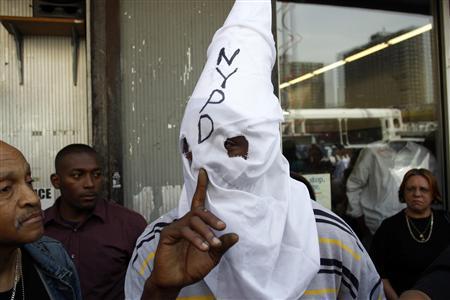
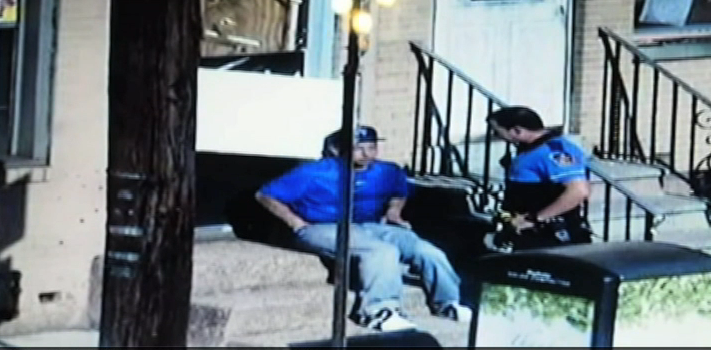
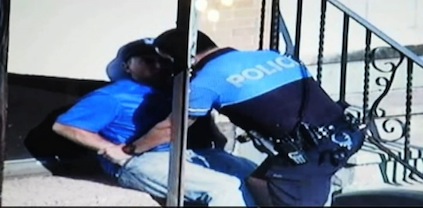
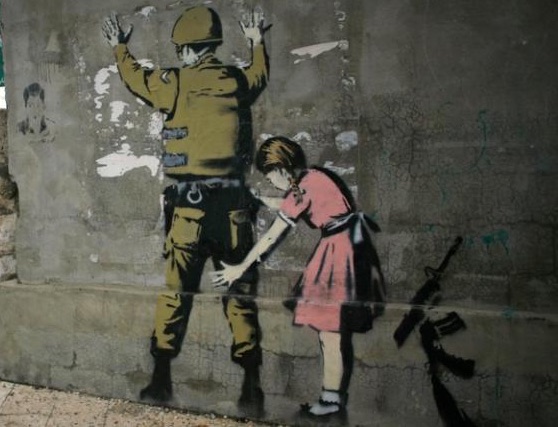
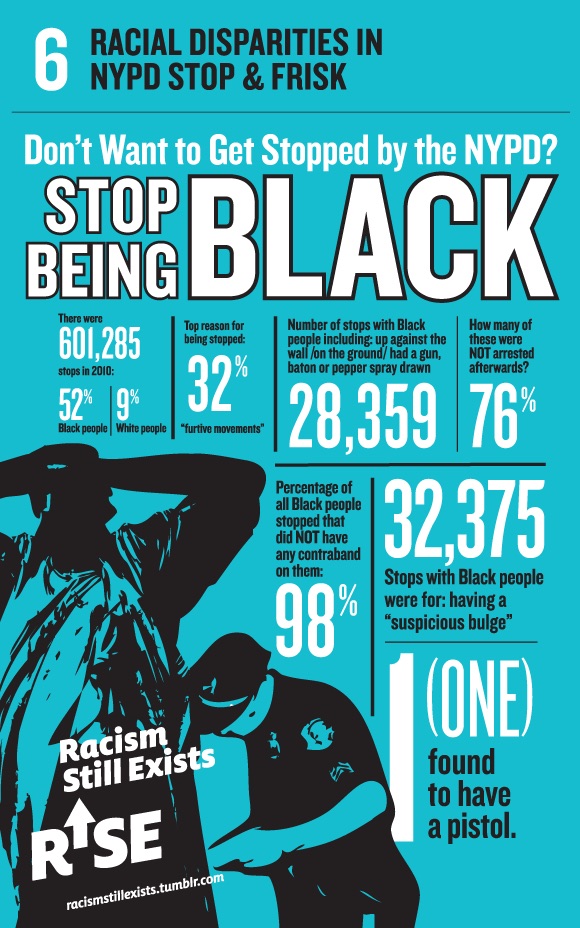
In the past decade, despite evidence of its inefficacy, the NYPD has dramatically increased stop-and-frisk, which overwhelmingly targets young men of color. Support for this police tactic is not strong, receiving the most significant opposition in the communities of color where it is most prevalent. Recent lawsuits alleging this police practice is not only impermissibly racially discriminatory, but also a systematic violation of the Fourth Amendment's prohibition on unreasonable searches and seizures, are succeeding.

Nevertheless, the WSJ argued that black and Hispanic New Yorkers should be "thankful" that the police are targeting them for pat-downs without reasonable suspicion of illegal activity. From the editorial:

Mayor Mike Bloomberg and Police Commissioner Raymond Kelly credit "stop and frisk" police tactics with the drop in homicides, and rightly so, but it's worth noting that Gotham has a slew of Democrats running to succeed Mr. Bloomberg next year and promising to repeal "stop and frisk" if they're elected. The left claims to care so deeply about the welfare of minorities and the poor, yet they oppose policies that have a track record of saving lives and making ghettos safer for the mostly law-abiding people who live in them.

By the way, many of these same liberal opponents of "stop and frisk" support stricter gun control laws. But as commentator David Frum recently asked, how can you support gun control and oppose "stop-and-frisk"?

The WSJ does not cite evidence for its claim that the "drop in homicides" is due to the past decade's stop-and-frisk policing. In fact, the evidence does not support this much-repeated right-wing talking point. In addition to the NYPD admission that "nearly nine times out of ten" the individuals detained under the policy are innocent and that police discover "guns in only about one of every 666 stops--or 0.15 percent," claims that stop-and-frisk is responsible for the drop in homicide are spurious. As explained by The New York Times:

[Proponents of stop-and-frisk] applaud[] the mayor for inventing "a new statistic": 5,600 "fewer murders in the past decade" because of stop-and-frisk.

The mayor's math is certainly inventive, as well as deeply ahistoric. He takes the high point for homicides, which hovered around 2,200 in the late 1980s and early 1990s. Then he points to the number of homicides each year since he took office in 2002, which has hovered near 500, and claims 5,600 lives saved.

Where to begin?

The early 1990s represented a high-water mark for urban bloodshed. Boston, Miami, Chicago, Los Angeles, Richmond, Washington: all became caldrons of violence.

The wave of homicides subsided most substantially in New York, but violence slid in most cities. Smart policing helped a lot. So did the waning of the crack epidemic, the decline of drug turf wars, and tens of thousands of citizens who refused to stay locked in their homes.

New York experienced its sharpest drop before 2002, the year Mr. Bloomberg took office. Since then, homicides have fallen about 11 percent, while stop-and-frisks increased sevenfold.

The NYPD has already begun changing its stop-and-frisk policy in recognition of the increasingly successful challenges to its constitutionality. Although brief police detentions of individuals on the street are not automatically unconstitutional, in certifying a class action lawsuit against the NYPD's specific stop-and-frisk practices, a federal court warned the NYPD last summer that its use of the practice appeared to go far beyond what was constitutionally reasonable. Furthermore, on the same day the editorial page of the WSJ published support for stop-and-frisk, a federal court struck down part of it as unconstitutional, a major news story the WSJ covered in its straight news section:

In the first judicial rebuke of the city's stop-and-frisk practice, a federal judge ordered the New York Police Department to end what the ruling described as "unlawful trespass stops" outside some private buildings in the Bronx.

[...]

In her harshly worded ruling, the judge wrote that "while it may be difficult to say where, precisely, to draw the line between constitutional and unconstitutional police encounters, such a line exists, and the NYPD has systematically crossed it."

Finally, the WSJ recycled journalist David Frum's question, "How can you support gun control and oppose stop-and-frisk?"

The answer is simple. First, even if stop-and-frisk was an effective gun violence prevention measure, as right-wing media erroneously claim, it does not follow that it is a necessary tool to enforce gun laws. Second, as conservative Supreme Court Justice Antonin Scalia concluded, "gun control" is constitutional. According to yesterday's federal district court ruling, NYPD's stop-and-frisk policy is not.

Military contractor pays $5 million settlement in lawsuits alleging torture at Abu Ghraib

Jurist

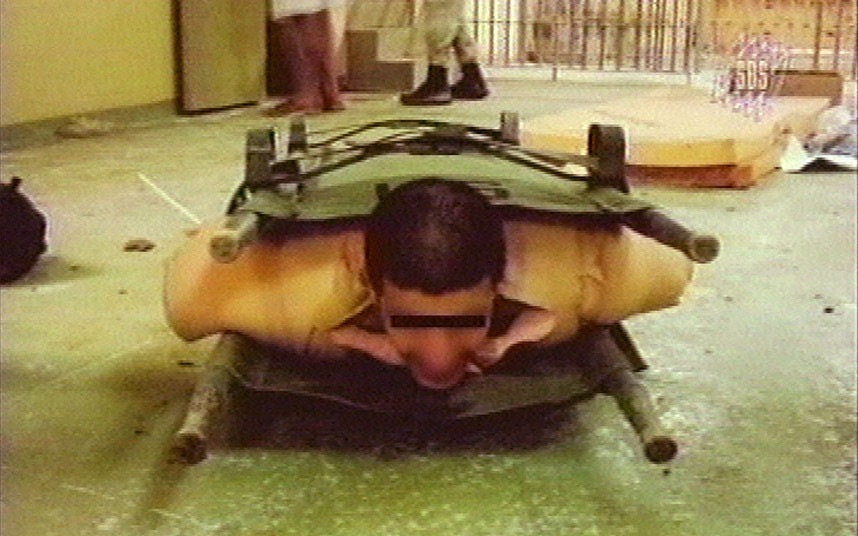
A military contractor that was accused in a lawsuit by former detainees of the Abu Ghraib [JURIST news archive] prison of conspiring to torture detainees has paid $5.28 million to detainees held at the prison and other US detention centers in Iraq. The detainees filed suit against two military defense contractors in federal court in 2008 for alleged torture occurring over a period of four years. The cases against CACI International Inc. and L-3 Communications Holdings Inc. [corporate websites] were dismissed [JURIST report] in September 2011 on the grounds that the companies have immunity as government contractors. A 14-judge panel for the US Court of Appeals for the Fourth Circuit [official website] ruled 12-2 [opinion, PDF] in May that the dismissal was premature [JURIST report]. L-3 Communications Holdings Inc. settled the dispute and each of the former detainees who were parties to the lawsuit received a portion of the settlement [AP report]. The case against CACI is likely to go to trial this summer.

A three-judge panel of the Fourth Circuit dismissed the claims [JURIST report] against CACI International Inc. and L-3 Communications Holdings Inc. [opinions, PDF] in September 2011, holding that federal law protecting civilian contractors acting under the control of the US military in a combat situation preempted the plaintiffs' tort claims based in state law. US military personnel have also been accused of torturing detainees at Abu Ghraib prison. Army Spc. Charles Graner [JURIST news archive], the convicted ringleader of abuses committed at the prison, was released [JURIST report] last August for good behavior after serving more than six-and-a-half years of his 10-year sentence. Graner was convicted [JURIST report] in 2005 of conspiracy, assault, maltreating prisoners, dereliction of duty and committing indecent acts and received the longest sentence of the six others involved in the abuses. In June, the DOJ initiated a grand jury investigation [JURIST report] into the torture and death of a detainee at Abu Ghraib. Manadel Al-Jamadi was captured [JURIST report] by US Navy SEALs in 2003 and held in Abu Ghraib as a "ghost detainee," or unregistered prisoner, for his suspected involvement in the bombing of a Red Cross center in Baghdad that killed 12 people. The US military has never revealed the exact circumstances of his death, which was ruled a homicide [JURIST report]. Reports show he died while suspended by his wrists, which were handcuffed behind his back.

Supreme Court rules burden on defendant to prove withdrawl from conspiracy

 JURIST

[JURIST] The US Supreme Court [official website] ruled [opinion, PDF] Wednesday in Smith v. US that it is defendants' burden to prove they had removed themselves from a conspiracy in cases where their departure from the conspiracy happened long enough ago that prosecution would be barred by a statute of limitations. Lawyers for the appellant argued that though their client had been involved in a criminal conspiracy, it should be incumbent on the prosecution to prove that the defendant had remained active in the conspiracy past the time threshold determined by the state's statute of limitations. Delivering the opinion for the unanimous court, Justice Antonin Scalia wrote:

Having joined forces to achieve collectively more evil than he could accomplish alone, Smith tied his fate to that of the group. His individual change of heart (assuming it occurred) could not put the conspiracy genie back in the bottle. We punish him for the havoc wreaked by the unlawful scheme, whether or not he remained actively involved. It is his withdrawal that must be active, and it was his burden to show that.

The court affirmed the ruling [opinion, PDF] of the US Court of Appeals for the District of Columbia Circuit that once the prosecution had proven that the defendants were a part of the conspiracy, the defendants must positively establish that they actively left the conspiracy prior to the date imposed by the statute of limitations.

The court heard oral arguments in this case in November after granting certiorari [JURIST reports] in June. The case involved two individuals who had been sentenced to life in prison for their connections to a large drug ring that has been tied to several murders. The government alleged that the two were members of the drug ring and involved in an ongoing conspiracy to commit a number of crimes with the group. At issue is a jury instruction that allowed jurors to assume that the defendants did not abandon the conspiracy unless the defendants positively demonstrated that this was the case. The jurors convicted the defendants based on the fact that they had been members of the group during a time that was barred by statute of limitations. Because the defendants did not offer sufficient evidence to refute their ongoing participation in the conspiracy, their ongoing participation leading up to the permitted statutory period was assumed.

Supreme Court hears arguments on warrantless blood alcohol tests - Restraining Suspects Taking Blood, DNA Info for Misdemeanor case

Jurist

The US Supreme Court [official website] heard oral arguments [day call, PDF] Wednesday in Missouri v. McNeely [transcript, PDF; JURIST report] on whether the Fourth Amendment [text] allows a police officer to take a warrantless blood sample to test for alcohol levels. The Missouri Supreme Court ruled [opinion text] that the exigency standard set in Schmerber v. California [opinion text] for warrantless intrusions of the body, "requires more than the mere dissipation of blood-alcohol evidence." John Koester, appearing on behalf of Missouri, argued that securing evidence quickly was paramount to a drunk driving investigation because alcohol is continuously removed from the blood by the body and thus securing a warrant to obtain a blood sample would be overly burdensome. The court questioned why a blood sample was necessary when a breathalyzer would provide adequate results. Koester argued that the warrantless search was reasonable, but Justice Sonia Sotomayor questioned the reasonableness of the search given how intrusive it was. The justices also pointed out that many jurisdictions have implemented a streamlined process where it only takes officers 15 to 20 minutes to obtain a warrant in drunk driving cases, whereas Koester had stated that in this case it would have taken the officer 90 to 120 minutes to obtain a warrant. Sotomayor suggested that it would be improper for the court to reward police in inefficient jurisdictions when other jurisdictions had demonstrated that they could obtain warrants adequately. Chief Justice John Roberts expressed the court's reluctance with giving police the ability to obtain blood samples without a warrant: "it's a pretty scary image of somebody restrained, and ... a representative of the State approaching them with a needle."

What Is It Like To Be Black in America? (wake up, you are a prisoner of war)

Slate.com

Before answering this, I just want to say that I love being black, I love America, and I love being black in America. Most of the time, I am just another person in this great country. But, in the recent words of one of my close friends, "Every now and then, you get a reminder that you are black in America."
 
I got a reminder just two weeks ago, on Christmas Eve. My best friend, who was in town from Atlanta, wanted to go to a local mall just to hang out. He invited me and another good friend to meet up with him.
 
So that's the setting: three clean-cut, college-educated black men in their 30s at a nice outdoor mall the day before Christmas. We were dressed fairly conservatively, wearing sweaters, jeans, and dress shoes. We were all done with our Christmas shopping, so we were just strolling around the mall to be around people, enjoy some snacks, catch up with each other, and just feel the winter air.
 
After a few hours, we decided to leave. While walking out, we noticed that people were standing outside one of the businesses as though something had just happened. Mall security was busy taking witness accounts. We went in for a closer look. We overheard a witness say that a man was beaten up. Tragic, but honestly, it's the kind of crime that is common around the holidays, especially in malls.
 
We headed to the parking lot. I arrived at my car first, so I said my goodbyes and they walked towards their cars. But before they could go 30 feet, several police cars sped in and surrounded us, lights shining bright on our faces. We had no idea what was happening. An officer started barking orders at us. "Turn around!" "Hands up" "Show me your hands!" They made us come over.
 
They then started giving us conflicting orders. One officer would say, "Put your hands up." We put them up. The other would say "Put your hands down." We put them down. But then one would say "Who told you to put your hands down?! Get your hands up!" Back up go our hands. I felt like I was doing the Hokey Pokey dance.
 
They asked us questions about where we were at a specific time. We had an alibi: We were at the Yard House and had the receipts to prove it. But that wasn't enough. The questions continued. We asked if this was about the assault that happened. The questioning officer then acted as though our knowledge that a crime had occurred was an admission of guilt. He threw accusations at us and began a very aggressive line of questioning, hoping to get us to confess to being involved or catch us in a lie.
 
They repeatedly made us show them the front and backs of our hands. The idea is that if we had been in a fight, our hands would have been bloodied or bruised. Our hands were clean. But that didn't stop them from making us show our hands several more times, as though the blood and bruises would suddenly appear.
 
After an unnecessarily long questioning, they finally left us. No apologies. No "Merry Christmas." Just gone. That was when one of my buddies, shaking his head, said, "Every now and then you get a reminder that you are black in America."
 
I later shared this story on my Facebook and told some friends and family. The reaction to this was surprisingly insightful. Without fail, my white friends heard the story of our harassment and they were all upset and outraged. They felt that we should file a complaint with the police. My black and Hispanic friends weren't surprised at all and just shrugged it off. And this is a simple difference in the experiences of races. My white friends have never had to deal with police harassment, and most never will. My black and brown friends, unfortunately, are all too familiar with police harassment. In a few cases, they have experienced police brutality. Something like this happens to me maybe once a year. If ever a crime is committed and the witness description turns up the words "black male," every brother within 20 miles will have to answer for the crime, regardless of age or specific appearance. [MORE]

Brutality allegations still pending against St. Paul officers for Videotaped Attack on Unarmed Black Man

Kare11.com

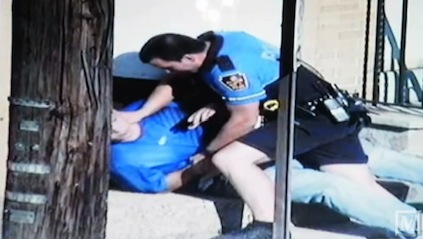
St. Paul police have asked Minneapolis prosecutors to review allegations of police brutality against two officers after a videotaped arrest shows one of them kicking a man.

The YouTube video shows St. Paul police Officer Jesse Zilge kicking 30-year-old Eric Hightower once in the chest while trying to arrest Hightower last August. Another officer, Matthews Gorans, sprayed Mace into Hightower's face and right ear to help get him into a squad car.

Last year, Olmsted County prosecutor Jim Martinson reviewed the case for possible felony charges. He declined to file charges, saying there was "insufficient proof" the officers used unreasonable force.

A St. Paul police spokesman tells Minnesota Public Radio the Minneapolis city attorney will review the incident for possible misdemeanor charges.

Meanwhile, a police internal affairs investigation continues.

Part of NYC 'Stop and Frisk' Policy Ruled Unconstitutional

PolicyMic

It’s about time: a key part of the New York Police Department’s “stop and frisk” tactic has been ruled unconstitutional by a federal judge.

U.S. District Court Judge Shira Scheindlin ordered the NYPD to put an immediate halt to stop and frisk trespass stops outside residential buildings as part of its “Clean Halls” program.

Stop and frisk is a controversial NYPD practice in which police officers who claim reasonable suspicion that a person is involved in a felony can stop and search them for weaponry; the “Clean Halls” program was originally introduced by NYC Mayor David Dinkins and invites the NYPD to conduct regular sweeps of participating private apartment buildings. That policy has given police officers the power to make anyone found in a building not on an owner-provided tenant roster subject to immediate arrest if they cannot provide a “reasonable explanation” for their presence.

Fair enough; trespassing is trespassing. Few New Yorkers would hesitate to criticize measures which allow the cops to remove undesirables from private buildings with the express permission of the owner.

What the NYPD is doing, however, is nowhere close to that. The cops are using the program as an excuse to stop and frisk virtually anyone they encounter who they suspect might be a criminal. As fellow PolicyMic pundit Justine Gonzalez noted last year, “officers’ definitions of ‘reasonable suspicion’ vary widely,” so cops are free to “stop and frisk according to their own biases.” A New York Times study found that of reported stop and frisks, an astounding 44.1% were justified by “furtive movement.” An additional 16.7% were cited as due to “fits description.” (No, not the description of a wanted offender – or else the suspect would be arrested on the spot, not frisked.) 20.2% were listed as “other.” All told, that indicates that as many as 81% of stops are only legal under an exceptionally broad – and probably unconstitutional – definition of “reasonable suspicion.”

Even accepting these dubious claims of “reasonable suspicion,” it is notable that federal courts have generally upheld that more intrusive frisks like the ones used by the NYPD are only justifiable if police believe the suspect is involved in a violent crime. Most arrests through the program, strangely, come not from weapons possession charges but for the possession of small amounts of marijuana or other drugs. Marijuana is decriminalized in NYC, and 80% of those arrested for marijuana possession are black – even more curious, considering that whites are more likely to smoke pot. These factors led former NYC Mayor Ed Koch to condemn marijuana arrests conducted under the auspices of stop and frisk as “a great injustice.”

While ostensibly designed to clear crime-ridden buildings of loiterers, drug dealers, gangs, and the homeless, residents in those buildings have alleged Clean Halls is more accurately a campaign of harassment and suspicion against minority residents. Jacqueline Yates, a plaintiff in an ongoing lawsuit against the program, says that the program has turned her building into a prison, with her dinner guests frequently searched as they leave her building and her sons being stopped and frisked at least two to three times a week.

In September, Bronx prosecutors quietly stopped prosecuting those arrested for trespassing in public housing after they noticed many of the defendants were innocent, “even though police officers had provided written statements to the contrary.” But the practice of stopping minority residents at private complexes continues.

Residents in well-to-do buildings with mainly white populations have never heard of the program, protected by doormen and security guards, while 3,895 mostly minority and poor apartment buildings participate. Nearly every Bronx apartment building is a member of the program.

Last February, the number of stop and frisk incidents reached a 10 year high – with over 684,330 people being stopped in 2011. That number is a 600% increase over the program’s inception in 2002. 92% of those stopped were male, and 87% were black or Latino. Given the NYPD’s record on police brutality, it is reasonable to assume that the number of 684,330 considerably underestimates the number of people harassed by the NYPD.

Gawker refers to the policy as the “minority guy harassment program.” Polls have found that 69% of black New Yorkers oppose the policy. (Strangely, white people, who are subject to only 13% of searches, generally support it.)

NYPD Commissioner Ray Kelly compares the program to the safety provided by doormen in wealthier buildings. He is flat-out wrong. Doormen are not cops and are familiar with the residents in their building. Police officers working through “Clean Halls” patrol dozens of buildings. While a well-to-do tenant or their guest being searched by a doorman is virtually unheard of, the police obviously do this consistently, even to tenants.

“While it may be difficult to say when precisely to draw the line between constitutional and unconstitutional police encounters such as a line exists, and the NYPD has systematically crossed it when making trespass stops outside buildings,” Scheindlin ruled. “For those of us who do not fear being stopped as we approach or leave our own homes or those of our friends and family, it is difficult to believe that residents of one of our boroughs live under such a threat.”

In May, Scheindlin criticized the NYPD for “overwhelming and indisputable” evidence of a department-wide stop and frisk policy, saying that the department’s “cavalier attitude… displays a deeply troubling attitude towards ... fundamental constitutional rights.” She said then that the increasing number of stop and frisk incidents was not due to an increase in crime or incidents requiring police attention, but the result of policy set by Commissioner Kelly.

The New York Daily News and the New York Post have come out to condemn Scheindlin’s ruling. They are wrong. The Post irritatingly referred to the judge’s decision to rule on whether the stops were constitutional, as opposed to effective, as “slavish obeisance to abstraction.” Actually, that’s her job. The Daily News says that Scheindlin’s ruling was “pre-ordained” and said that “contrary to her view, the stops are overwhelmingly proper.”

Presumably, the editors of both papers don’t have to deal with a consistent campaign of harassment by the police on a day to day basis. I wonder why that is.

Judge approves $1 million settlement in pepper spray lawsuit

indyBay.org

A federal judge on January 9 approved and finalized the $1 million settlement of a lawsuit filed by UC Davis students and recent alumni who were pepper sprayed during a protest at the University in November 2011. 


The federal class-action lawsuit was the result of a shocking incident in which campus police repeatedly doused seated, non-violent student demonstrators with military grade pepper spray at close range during demonstrations on November 18, 2011. 


Photos and videos of the incident of UC Davis Police Lieutenant James Pike became viral, drawing attention to the repression of the Occupy movement in the U.S. and to the outrageous tactics used to repress Occupy UC Davis in particular. 


"Police should never have been called out to disperse the lawful protest against steep tuition increases, police brutality against UC Berkeley protesters, and privatization of the university," said Mark E. Merin, one of the attorneys for the plaintiffs. 
 

"The University never should have used police against peaceful protesters. Perhaps the economic costs of violating students' First Amendment rights to free speech and free assembly will discourage similar abuse in the future," Merin added. 

 

"If the First Amendment means anything, it's that students should be able to exercise their free speech-rights on their college campus without being afraid of police violence," Michael Risher, staff attorney with the ACLU of Northern California. "What happened on November 18 was among the worst examples of police violence against student demonstrators that we've seen in a generation. The early resolution to this lawsuit means that the students can begin the process of moving on and we can work with the University to ensure that nothing like this ever happens again at the University of California." 


The lawsuit by 21 UC Davis students and alumni charged that the police violated state and federal constitutional protections, including the First Amendment to the U.S. Constitution, when they arrested and used excessive force against these non-violent demonstrators. The UC Regents approved the settlement in a September 13 meeting, and the settlement documents were filed with the court on September 26, 2012. 
 

The task force that the University created to investigate and analyze the response to the protestors concluded in an extensive report that “The pepper spraying incident that took place on November 18, 2011 should and could have been prevented,” and found culpability at all levels of the University administration and police force. 

White Man in Tulsa Terror Attack on Black People Pleads Not Guilty

WVTM

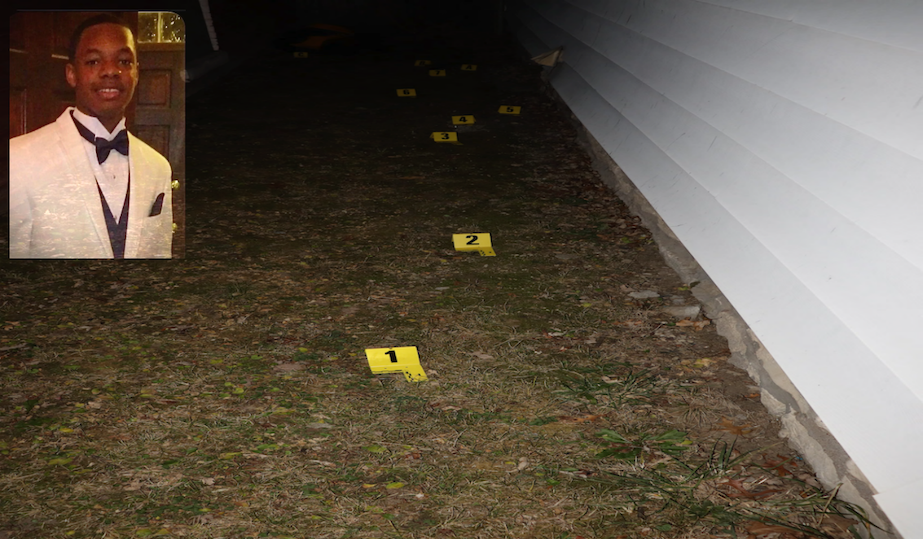
A white man pleaded not guilty Wednesday to murder charges in an April shooting rampage that killed three black people and wounded two others in Tulsa.

Tulsa Judge James Caputo entered the plea on behalf of 20-year-old Jake England, who's charged with three counts of first-degree murder and two counts of shooting with intent to kill.

A second man charged in the deaths, Alvin Watts, 33, did not enter a plea, and his attorneys say they will enter one for him after filing several motions, including one seeking that their client be tried separately from England.

The pair also face hate crimes charges as a result of the deaths of William Allen, Bobby Clark and Dannaer Fields, who were killed over Easter weekend as they walked near their homes in a predominantly black section of Tulsa.

Prosecutors announced last week they would seek the death penalty against both men.

Dressed in black and white-striped jail fatigues, England and Watts did not speak during the hearing and both looked directly ahead and showed no emotion as prosecutors read into the court record the crimes they are accused of committing.

Prosecutors and defense attorneys said Wednesday after the hearing that they want the case to go to trial sometime this year. Caputo set a Feb. 25 hearing on several trial motions and indicated the court would schedule future hearings after then.

Rob Nigh, one of England's attorneys, said he will challenge the prosecution's decision to seek the death penalty, saying the evidence used to support the request is "legally insufficient." First Assistant District Attorney Doug Drummond defended the decision.

At a preliminary hearing in July, England's uncle testified that England and Watts treated the mass shootings as a contest. Timothy Hoey testified Watts told him a day after the killings that Watts and England each shot two people and England shot the fifth victim "that would break the tie," Hoey said.

Hoey also testified that the day after the shootings, England used racial slurs to describe the Black people who were shot.

Rep. Sheila Jackson Lee wants feds to collect data on local traffic stops/Racial Targeting of Non-Whites

BlogChron

In an effort to collect information about racial profiling nationwide, Rep. Sheila Jackson Lee introduced a bill that would collect data on stops for traffic violations by local law enforcement officers.

The Houston Democrat”s “Traffic Stops Along the Border Statistics Study Act of 2013″ would allow state and local police departments to trade their traffic-stop data for federal funds.  Jackson Lee submitted the measure to the House Judiciary Committee  on Jan. 3, the first day of the new Congress.

The proposal already is drawing criticism from conservatives and libertarians, who see it as another step by Big Government to collect information on average Americans. The libertarian web site American Vision News reported that Jackson Lee would “require state and local police departments to report broad information about all traffic stops into a national database under the control of the Justice Department.”

American Vision News suggested that the federal grants were an attempt “to buy off the local [police] departments.”

Jackson Lee’s measure does not mention a new “national database,” but it does authorize the Justice Department to conduct a nationwide study of traffic violations.

According to the Library of Congress, the bills also would:

perform an initial analysis of existing data, including complaints alleging and information concerning traffic stops motivated by race and other bias; and
gather specified data from a nationwide sample of jurisdictions, including the traffic infraction alleged to have been committed that led to the stop, identifying characteristics of the driver stopped, whether immigration status was questioned, and whether any warning or citation was issued as a result of the stop.

Jackson Lee’s proposal “authorizes the Attorney General to make grants to law enforcement agencies to collect and submit data.” To allay privacy concerns from law enforcement officials and civil liberties groups, the measure would forbid federal officials or the media from “revealing the identity of any individual who is stopped or any officer involved.”

Jackson Lee has been an outspoken critic of racial profiling. She has raised questions about some police officers targeting African American and Latino drivers.

Earlier last year, Jackson Lee joked about breaking traffic laws to make it from an event back to the Capitol in time to vote.

“And I don’t want anyone to hear about what traffic rule I have broken,” she told the audience as she left.

Pet Negro/"Cornball Brother" Rob Parker Canned by EPSN after Shadowboxing RG3

Yahoo


pet negro rob parker shadow boxing rg3 by dm_50cc04a88acf2

In case you somehow missed Parker's original comments on Dec. 13, here's a refresher:

"I've talked to some people in Washington, D.C. Some people in [Griffin's] press conferences. Some people I've known for a long time. My question, which is just a straight, honest question, is ... is he a 'brother,' or is he a cornball 'brother?' He's not really ... he's black, but he's not really down with the cause. He's not one of us. He's kind of black, but he's not really like the guy you'd want to hang out with. I just want to find out about him. I don't know, because I keep hearing these things. He has a white fiancé, people talking about that he's a Republican ... there's no information at all. I'm just trying to dig deeper into why he has an issue. Tiger Woods was like, 'I have black skin, but don't call me black.' People wondered about Tiger Woods early on – about him."

According to Neely Fuller, Racial Shadow Boxing occurs when victims of racism (non-white people) are directly or indirectly, "assigned", bribed, coerced, and/or otherwise influenced, by the racists (white Supremacist), to speak or act to do harm to to other victims of racism. White Supremacists oftentimes hide behind others whom they use as shadows of themselves. [MORE]  

Bum rush: Chuck D. bemoans Bonds, Clemens Hall shutout

USAToday

In a wide-ranging Twitter diatribe that touched on topics as disparate as Bruce Lee's martial-arts brilliance and Buck Showalter's managerial maneuvers, legendary rapper Chuck D. bemoaned the shutout pitched by Hall of Fame voters that kept Barry Bonds and Roger Clemens out of Cooperstown.

Chuck D., who fronts the socially conscious and musically groundbreaking Public Enemy that hit its apex in the late 1980s, also evoked the game's racist past that prevented integration until 1947. However, he feels players such as Cap Anson - who one biographer noted was "involved in the greatest number of reported negative incidents, on the field, relating to blacks" - should remain in the Hall.

Some highlights that Chuck D. shot out to his 186,000-plus followers:

Bonds was a game-changer: "Steroids or not Bonds was a rare dude a team would intentionally walk while bases were loaded. You can't name many in THAT category ?!?"

(Lest we forget, Showalter gave Bonds a bases-loaded IBB and lived to tell about it).

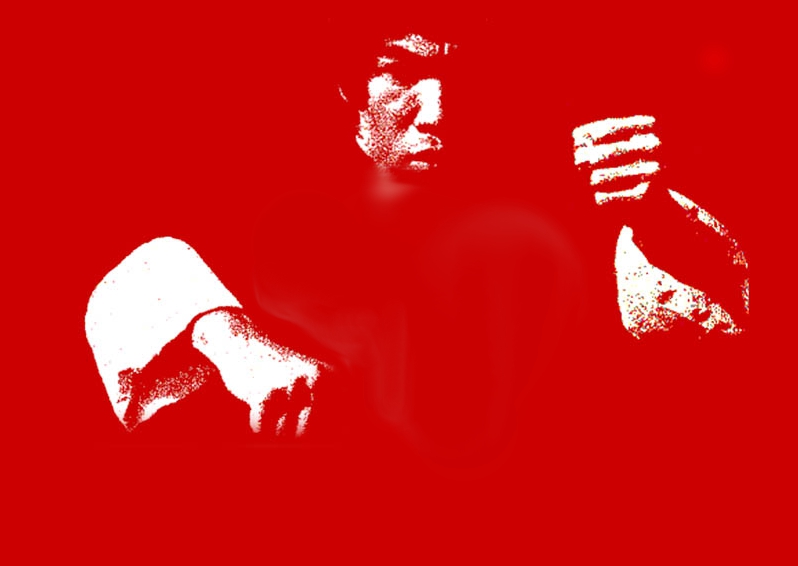
Bruce Lee has nothing on Bonds: "Bonds was impossible to pitch to. It was like trying to punch Bruce Lee"

Let Pete Rose in, too: "I'm also a BIG PeteRose FAN there's NO way the hit and HR (leaders) should be OUT of the HOF. The game was built on a cracker attitude.CapAnson"

Leave the racists in: "Landis.Cobb,Anson,Dykes,HarryWalkerStill no ones removing them nor should they.Those dudes were part of something that cheated everybody "

Babe Ruth was victimized by racism as well: "IN MLB players often called BabeRuth nigg*r because of his different caucasian features lips nose and his unsophisticated ...background"

PED use, late-career spikes were inevitable: "MLB players travel& lifestyle broke their bodies down around 32-33 up to 1960 Conditions&technique increased years they knew this was coming"

Clemens' perks worse than steroids: Clemens made more of a mockery with his convenience demands rather than Roids.

(And who ever thought we'd see the day Chuck D. and Kyle Farnsworth could be considered kindred spirits?)

Big-market teams suck: "The smashing of small market teams hurt Baseball more than Roids Angels getting Hamilton Pujois follows the criminality of TheSteinYANKS"

(Spoken like an artist who rocked a Pirates cap during the heart of his career).

Voters, please research: "if YOU dig something KNOW a great deal of its history, just dont freestyle s--- just because you dig it as a fan.Research some reasons why.."

Juror: "they're all bad. They're all drug dealers. They're taking over our country" - Judge Ignores Latino Defendant's Request for New Trial

Twincities.com

A Ramsey County judge sentenced a meth dealer to more than six years in prison Wednesday, Jan. 9, rejecting his bid for a new trial on a claim of jury bias.

Basurto Estaquio, 28, had asked Judge Gary Bastian for a new trial after a juror told the defense attorney that another juror had made racist comments during deliberations.

The anti-Hispanic comments led the juror to agree to convict Estaquio, which he immediately regretted, he told attorney Murad Mohammad.

Estaquio, a Mexican living in the U.S. illegally, was convicted Aug. 10 of first-degree conspiracy to sell methamphetamine. The jury deadlocked on two other charges, which later were thrown out.

After the verdict was announced in court, juror Jacob Cuffe lingered in the hallway to talk with Mohammad, according to an audiotape of a later interview between Cuffe and Mohammad at the attorney's office. Cuffe told Mohammad that a fellow juror had expressed negative opinions about Hispanics along the lines of "they're all bad. They're all drug dealers. They're taking over our country," Cuffe said in court at a later hearing.

Mohammad argued that the comments robbed Estaquio of a fair trial. The state disagreed. Prosecutor David Miller wrote in a brief that there was "no substantial evidence that racial prejudice permeated or infected the jury's deliberation or its ultimate verdict."

Bastian wrote in his order denying a new trial that he believed Cuffe was "trying to use the (racist) comments as a way

to go back and change his verdict based on his verdict remorse not on the basis that the comments had an actual affect (sic) on his decision."

Miller said at trial that police found 6 pounds of meth during a Jan. 17, 2012, traffic stop of a GMC Yukon in St. Paul. Estaquio had been riding in a car behind the Yukon and the two vehicles were traveling "in tandem," Miller argued.

Before the stop, police were watching a house near Western and Jessamine avenues in St. Paul. They saw a Chevrolet Impala, later identified by investigators as the car Estaquio was in, driving around slowly.

Miller told the jury that Estaquio and another man were acting as a backup in the drug operation.

Mohammad said the state lacked any meaningful evidence against his client.

Election Promise is to Get Rid of Black People: Israeli Protesters Rally Against Africans in Tel Aviv, Accost non-white Foreigners

Antiwar

Fresh off of a fistfight with security at the Israeli High Court, MP Michael Ben Ari and his Strong Israel party took to the streets today in an anti-African rally in Southern Tel-Aviv.

The protest came after Israeli police revealed that an Eritrean had been arrested on suspicion of rape in the neighborhood, prompting Ben Ari to conclude that southern Tel Aviv is now occupied soil.

The next step, to them, was a rally at which Ben Ari et al cursed Africans, hurled water at them, accusing them of making Israel a “living hell” and insisting that the elections should refocus on the issue of the mass expulsion of all Africans from the nation.

The religious Shas Party, which had long made the goal of expulsion of Africans a centerpiece argument, is heading for the hills now, announcing that they are canceling a campaign video in which Interior Minister Eli Yishai refers to them as “infiltrators” and includes snippets of Shas supporters blaming Africans for everything from the housing shortage to the cost of goods in stores. It concluded with the promise that if Shas wins “not one Sudanese will remain.”

Rep. Hanabusa Calls For Apology From Fox's O'Reilly Over "Insulting" Comments On Asian-Americans

Media Matters for America 

U.S. Representative Colleen Hanabusa (D-HI) condemned Fox News host Bill O'Reilly, describing his recent comments on Asian-Americans as "insulting" and calling for an apology.

On Thursday, O'Reilly devoted a segment of his Fox News show, The O'Reilly Factor, to Hawaii. After playing a pre-recorded video of producer Jesse Watters doing man-on-the-street interviews in Hawaii, O'Reilly said that the state is one of his "favorite places in the world," but that it has "a lot of social problems." He went on to say that "35 percent of the Hawaiian population is Asian," and added: "Asian people are not liberal, you know, by nature. They're usually more industrious and hard-working."

In response, Hanabusa criticized O'Reilly for "thoughtlessly insult[ing] 1.3 million people with one sweeping misstatement," and said that "O'Reilly's attempt to characterize Hawaii's Asian-American population is most insulting of all." She characterized his comments as "the kind of one dimensional and paternalistic attitude that we should have gotten past decades ago."

Major Newspapers Call For More Transparency Of Drone Program

ThinkProgress

Two editorials by major American newspapers on Friday highlight the need for increased oversight and transparency over the United States’ counter-terror targeted killing programs. The editorials, in the New York Times and Los Angeles Times, are responding to a recent court ruling that the Obama administration was not required to disclose a document outlining its legal justification for killing American citizen Anwar al-Awlaki in Yemen in 2011. Though the judge in the case, Colleen MacMahon, called for greater transparency with respect to the drone program, she also concluded she was legally incapable of ordering it, a point the New York Times — one of the plaintiffs challenging the government in the suit — took issue with:

For starters, various government officials have spoken publicly about the American role in killing Mr. Awlaki and the circumstances under which the government considers targeted killings, including of American citizens. At President Obama’s nominating convention last summer, a video prepared by his campaign listed the killing of Mr. Awlaki prominently among Mr. Obama’s national security achievements.

Such a selective and self-serving “public relations campaign,” as the judge termed it, should have been deemed a waiver of the government’s right to withhold its legal rationale from public scrutiny. Moreover, disclosing the document would not have jeopardized national security or revealed any properly classified operational details. The ruling, which is inconsistent with the purpose and history of the information disclosure law, richly deserves overturning on appeal.

While the Los Angeles Times is more sympathetic to MacMahon’s legal reasoning, it also believes more transparency is needed on the legal justification for killing Awlaki, writing that “If [the Obama administration] is going to act as judge, jury and executioner, the least it can do is divulge its legal reasoning.”

Some of the arguments in the government’s 50-page memo justifying the strike on al-Awaki have been released publicly. It appears to argue that since al-Awlaki was waging war on the United States as a member of al-Qaeda, it would be lawful to kill him despite his citizenship if and only if he cannot also be captured. CAP’s Ken Gude agrees with this reasoning, writing that the al-Awlaki case “was an airstrike that resulted in the death of a legitimate military target based on the power Congress granted the president in the 2001 AUMF [Authorization to use military force].” Critics charge, for example, that such reasoning would only apply if al-Awlaki were on a battlefield in active combat with American forces. It is hard to assess this debate without access the government’s full legal justification for the strike.

But the legally surrounding the strike on al-Awlaki is separate from the broader debate about the legality of the targeted killing program under domestic and international law. As Gude noted in the same piece quoted above, “There are reasonable questions raised about the interpretation of the 2001 AUMF when targeting or detaining suspected terrorists.”

Forcing the government to disclose a full legal rationale for strikes like the one against al-Awlaki is only one possible mechanism for improving transparency over drone strikes. Though there is some information about how the administration decides who to target, it could release a more comprehensive explanation of the procedures by which it decides to kill without endangering intelligence sources. This could include a clear explanation of how those procedures attempt to avoid civilian casualties, as disclosures last year raised the troubling prospect that the mechanisms for counting civilian casualties were designed to minimize them. Finally, an internal independent oversight commission like those used in the United Kingdom and Australia could potentially pose a check on possibly arbitrary and immoral targeted killing.

Obama adminisration announces immigration rule to ease family separation

 Jurist

[JURIST] US Secretary of Homeland Security Janet Napolitano [official profile] announced a new rule [text] Wednesday which will make easier for undocumented immigrants to become citizens if they have an immediate relative who is an American citizen. Under existing law [press release], immediate relatives of US citizens who have been in the US illegally for more than six months must leave the US, obtain an immigrant visa abroad and obtain a waiver to overcome the bar on unlawful presence admissibility before they can return to the US. Under the new rule, immediate relatives must still leave the US but can apply for a provisional waiver before they depart. The goal of the new rule is to reduce the amount of time US citizens are separated from their immediate relatives and could affect as many as one million [LAT report] of the 11 million immigrants who are currently in the US unlawfully.

Immigration law [JURIST backgrounder] has been a controversial issue over the past several years, and the announcement of the new rule on Wednesday is the latest effort by the Obama administration to affect immigration policy through executive directives. In October 2012 Mississippi joined [JURIST report] a lawsuit challenging a policy directive [DHS memorandum, PDF; JURIST report] announced by the Obama administration that instructs immigration enforcement agencies not to enforce deportation laws against certain young people who were brought to the US as children but never became citizens. Shortly after the Obama administration announced this rule, Iowa Congressman Steve King [official website] issued a statement [JURIST report] indicating his plans to sue the administration in order to delay implementation of the policy, and Arizona Congressman Ben Quayle introduced a bill [JURIST report] to block enforcement of the policy. Additionally, a number of states have passed restrictive immigration laws [JURIST backgrounder] over the past several years, which give local authorities more autonomy to regulate immigration. However many of these laws have been partially blocked by federal courts, including those in Arizona, Alabama and Georgia [JURIST reports].

Supreme Court to hear American Indian adoption case

Jurist

The US Supreme Court [official website] granted certiorari in three cases [order list, PDF] on Friday. In Adoptive Couple v. Baby Girl [docket; cert. petition, PDF] the court will consider whether the Indian Child Welfare Act (ICWA) [materials] allows a non-custodial parent to block an adoption by their non-Indian partner. In this case, a woman put her baby, who was fathered by an American Indian, up for adoption. A South Carolina couple adopted the child, but once the American Indian father was notified about the adoption proceedings, he attempted to revoke the adoption and gain custody of the child. The South Carolina Supreme Court ruled for the biological father [opinion], stating that the federal ICWA, which seeks to keep American Indian children in their ethnic communities, supersedes South Carolina law. The court will examine not only whether the ICWA allows an American Indian parent to stop a non-American Indian parent from putting a child up for adoption, but also if the father's absenteeism when the mother gave birth and chose adoption gives him the rights of a parent under the ICWA.

The court granted US v. Davila [docket; cert. petition, PDF] and will consider what degree of error is required to vacate a guilty plea under Federal Rule of Criminal Procedure (FRCP) 11(c)(1) [text]. Anthony Davila plead guilty to conspiring to file fraudulent tax returns under the advice of his court-appointed lawyer. However, he requested different counsel early in the proceedings, because his lawyer offered no defense other than pleading guilty. In an ex parte hearing, a magistrate judge told Davila that he would not accept his request for change of counsel, because he also believed there was no option but to plead guilty: "[T]he only thing at your disposal that is entirely up to you is the two or three level reduction for acceptance of responsibility. That means you've got to go to the cross. You've got to tell the probation officer everything you did in this case regardless of how bad it makes you appear to be because that is the way you get that three-level reduction for acceptance, and believe me, Mr. Davila, someone with your criminal history needs a three-level reduction for acceptance." The US Court of Appeals for the Eleventh Circuit ruled [opinion] that this violated FRCP 11(c)(1) due to the "[t]he court" involving itself in plea discussions and vacated the plea.

The court will also hear Tarrant Regional Water District v. Herrmann [docket; cert. petition, PDF] and will consider to what extent a state can go into another state's territory to utilize a river that flows through both states. The dispute in this case is between Texas using water from the portion of the Red River [backgrounder] that runs in Oklahoma, analyzed under the Red River Compact [materials]. The US Court of Appeals for the Tenth Circuit found [opinion] for Oklahoma in the dispute, stating that: "[T]he Red River Compact insulates Oklahoma water statutes from dormant Commerce Clause challenge insofar as they apply to surface water subject to the Compact."

Rendition gets ongoing embrace from Obama administration

CitizensforLegitGov

The three European men with Somali roots were arrested on a murky pretext in August as they passed through the small African country of Djibouti. But the reason soon became clear when they were visited in their jail cells by a succession of American interrogators. US agents accused the men -- two of them Swedes, the other a longtime resident of Britain -- of supporting al-Shabab, an Islamist militia in Somalia that Washington considers a terrorist group. Two months after their arrest, the prisoners were secretly indicted by a federal grand jury in New York, then clandestinely taken into custody by the FBI and flown to the United States to face trial. The secret arrests and detentions came to light Dec. 21 when the suspects made a brief appearance in a Brooklyn courtroom. The men are the latest example of how the Obama administration has embraced rendition -- the practice of holding and interrogating [and torturing] terrorism suspects in other countries without due process -- despite widespread condemnation of the tactic in the years after the Sept. 11, 2001, attacks. Because of the secrecy involved, it is not known how many renditions have taken place during Obama's first term.