Global warming: 2012 was the hottest year recorded

CitizensforLegitGov

It may be cold now, but 2012 was the warmest year on record especially for us here in the northeast. According to the Northeast Regional Climate Center, for most major cities 2012 was the "hottest" year ever recorded. In New England, Boston, Worcester, Hartford, and Burlington, Vermont, all broke the record for the warmest annual temperature last year.

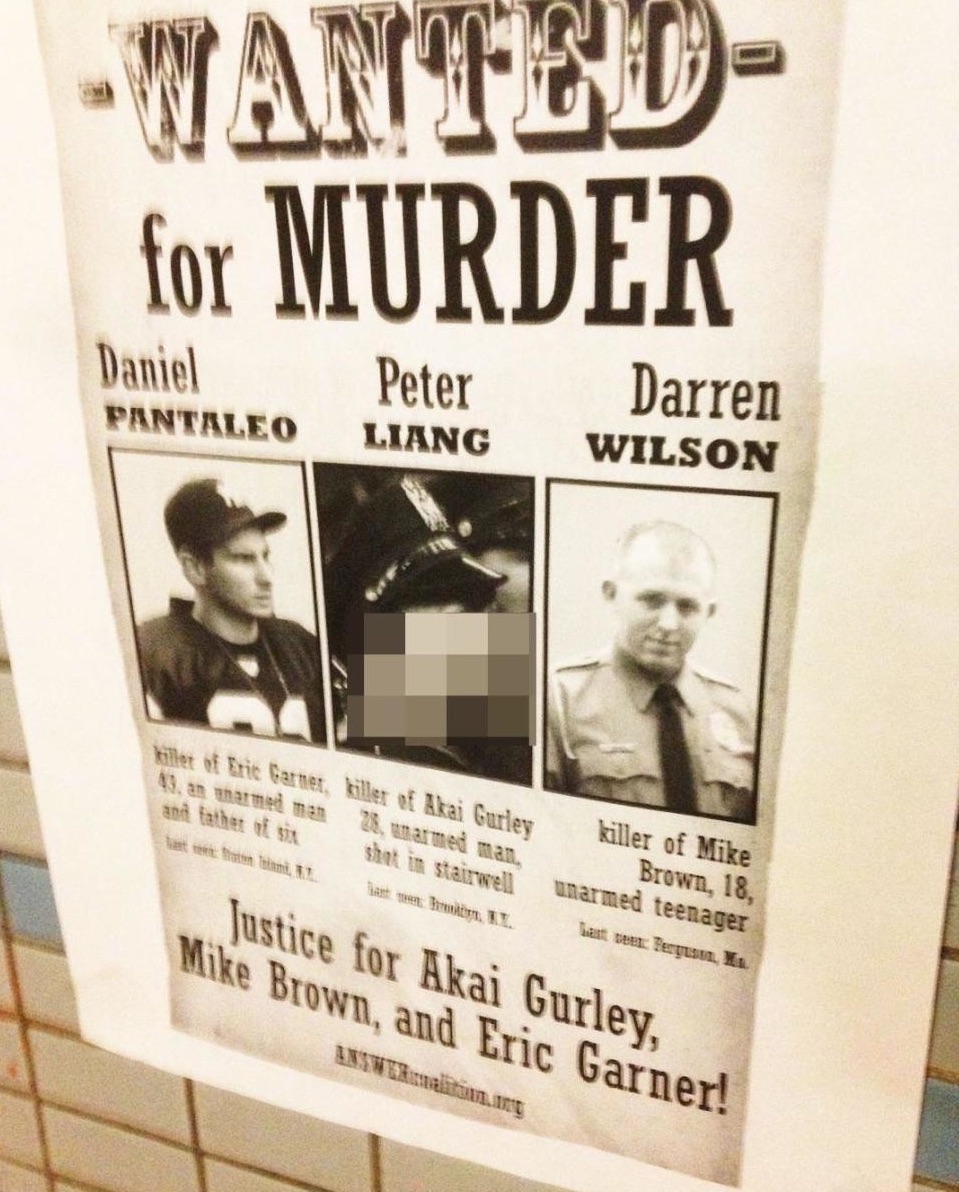
Purpose of Criminal Justice System? Refinement of White Supremacy/Genocide: To Expunge PA Misdemeanor Record -- absent a pardon, you must be 70 and arrest free for 10 years or be dead. For at least three years.

MySanatonio

In five years, Melissa T. Benvegno of Allentown sees herself as a juvenile probation officer or even a federal border patrol agent.

Not long ago, those dreams would have been next to impossible for her, given two shoplifting convictions she had in her teens and 20s that would come up every time she applied for a job.

Now 35, Benvegno says she's a different person from the girl who grew up without stable parents and spent time in foster care as a result. She's gotten an associate degree in criminal justice and is working on her bachelor's, and says she's overcome her rough upbringing and believes she could help other youths do the same.

Last year, Gov. Tom Corbett granted Benvegno a rare pardon from her misdemeanor record, ending a more than three-year process that is, in effect, the only way for someone with even a minor brush with the law to have his or her past cleared in Pennsylvania.

"I started crying," Benvegno said, remembering the moment she got the notice. "Just like I'm about to do right now. To me, it's a feeling that you can put that behind you."

Benvegno is getting a second chance — unlike most people with criminal records in Pennsylvania, which makes it very difficult for someone to move on from a misdemeanor or felony conviction.

How hard is it? Absent a pardon, you must be 70 and arrest free for 10 years to have your record expunged. Or be dead. For at least three years.

That leaves action from the governor the only avenue for almost anyone who committed a crime when they were young, whether a bar fight, drug possession or a more serious offense like burglary.

Using the Right-to-Know Law, The Morning Call reviewed clemency applications that were decided by the Pennsylvania Board of Pardons for Lehigh, Northampton, Bucks, Schuylkill, Carbon and Monroe counties from June 2011 to October 2012.

The applications and meeting minutes showed 56 requests from the area were considered by the board. They overwhelmingly involved people with minor criminal histories that, many said, continued to haunt them years after they paid their debts to society, causing them embarrassment and difficulty advancing in their careers.

But most were unable to sell their hard-luck stories to the five-member board, which makes nonbinding recommendations to the governor, who decides on his own.

Nearly 60 percent were rejected by the Board of Pardons, including 28 — half — who were turned down without a hearing in which they could publicly plead their cases.

Of the 23 who won a pardon recommendation that was sent to the governor's desk, 11 were granted pardons by Corbett, one was rejected, and 11 others were still awaiting action.

The applicants spanned professions, ages and education levels, including:

—A Texas man attending law school, who feared he couldn't take the bar exam because of a 1998 conviction for the statutory sexual assault of a 15-year-old girl in Catasauqua when he was 19. (He was granted a pardon.)

—A 33-year-old Allentown man who admitted in 1999 to threatening another man with a shotgun in Wilson, but said he had since served in the Army, gotten married, had two children and enrolled in college. (He was granted a hearing, but the board denied recommending a pardon.)

—A 51-year-old Allen Township man with convictions for trespassing at a shuttered cement company in 1983 and the simple assault of his girlfriend in 2000. Raymond R. Brown said he wanted to find a better job, restore his voting rights and volunteer as a coach for his grandchildren. (He was denied without a hearing.)

In an interview, Brown said the experience was disheartening and left him feeling like he'll never live down his past.

"Years ago, you could apply for a job without them getting that information on you," Brown said. "Now with the computers, they know everything about you. What do you think people think when they see that? 'Well, that guy steals and goes around and assaults people.'"

Brown said he was wrong to do what he did, but that he's changed in the many years that have gone by. He compared the process to New Jersey, where he said he was able to get a 25-year-old felony conviction expunged merely by filling out paperwork and sending it back to his lawyer.

"I think to myself, 'They make me feel like a hardened criminal," he said of Pennsylvania's system. "I didn't do any time in jail for that stuff."

Not everyone has sympathy for a past offender like Brown.

Northampton County District Attorney John Morganelli opposes relaxing the state's expungement law to make it easier for misdemeanors or felonies to be forgiven. He said the pardons board, by approaching cases individually, is able to separate the deserving applicants from those who aren't.

"The fact of the matter is that when you commit a crime there are consequences," said Morganelli, a Democrat. "And one of those is that you'll end up with a record that'll haunt you."

Even among prosecutors, however, there is disagreement.

"There's a place for an expansion of expungement in Pennsylvania," Lehigh County District Attorney Jim Martin said. "There are people who slip through the cracks at the beginning or have so modified their lives that they're deserving of consideration."

Martin, a Republican, said first-offender programs like Accelerated Rehabilitative Disposition help. Under the program, defendants avoid a criminal conviction upfront, provided they complete a period of probation and pay court costs and fines, allowing them to have their records expunged.

But Martin said not all defendants in minor cases end up on ARD, some because they handled their charges without a lawyer.

"I have a lot of empathy for the young person who was in college, then gets caught for a minor crime, and it comes time for them to get a teaching certificate, to apply for a job in law enforcement, or to become a nurse," Martin said.

In 2008, Pennsylvania did extend its expungement law to allow those convicted of summary offenses — for instance, disorderly conduct or public drunkenness — to petition the courts to have their records cleared after five years without an arrest. But efforts to go further have failed to advance in the Legislature.

Across the nation, 37 states and the District of Columbia allow expungements for at least some misdemeanor offenses, a review by The Morning Call found. Twenty-six states, including neighboring New Jersey, allow some felonies to be expunged.

9/11 spurs requests

Pardons board member Louise B. Williams said she would support making it easier for some minor charges to be cleared from records, saying young adults often don't comprehend the long-term consequences of what they're doing.

"They had no idea this was going to affect them later on in life," Williams said. "They graduate college and get a degree, and they say, 'Wow, I can't get a job in a bank or something.'"

Williams, a Lancaster city councilwoman, has served as the pardon board's victim representative since 1997. She noticed an increase in applications involving petty crimes after the Sept. 11, 2001, terrorist attacks, which led many employers to institute background checks.

"Before 9/11, we didn't have as many of those kinds of cases," Williams said. "But now, it affects you if you're working in a school, many businesses. . Employers won't hire people who have a record."

In judging pardon requests, the board looks at the totality of each person's background, Williams said. She mulls whether the applicants have improved their lives over the years, whether they have held a steady job, and whether they have kept out of trouble, she said.

Once someone is granted a public hearing, Williams said she tries to evaluate the person's demeanor and forthrightness.

"Some people are evasive. Some people feel that they didn't do anything at all," Williams said.

In The Morning Call's sample, the most common charges were theft and other minor property crimes, which accounted for 19 cases. Drugs followed with seven cases, then simple assault with six. Felonies — aggravated assault and burglary — were also represented, with three cases each.

At least 60 percent of the applicants never saw the inside of a jail cell, receiving probation or fines only. The requests involved offenses that were, on average, committed 15 years ago. They typically took more than three years and two months to resolve.

There is a long line of applicants hoping to make their cases before Williams and her colleagues, who include Lt. Gov. Jim Cawley as chairman, the attorney general, a psychologist and a corrections expert.

Around 800 people are waiting to have their bids for clemency considered, said Tracy Forray, secretary to the Board of Pardons. She said some complain about how long it takes, but that no one gets to cut in line, with applications handled based on the day they were received.

"Every one has to be reviewed by staff, so it is itself a very time-consuming process," said Forray, who noted the board isn't full time, as the state Board of Probation and Parole is.

"They all have other jobs," Forray said.

A pardon application costs $8, plus another $25 in filing fees. Applicants must provide their state police rap sheet, a certified driving record, a passport photo, and copies of court documents. The requests spur an investigation by state probation and parole officials, or the state Corrections Department if the person is in prison.

From 2002 through 2011, the pardons board received nearly 600 requests annually, according to its statistics. On a typical year, 181 public hearings were held, and 136 people received pardons from the governor — less than one in four applicants.

___

Efforts to change the law

State Sen. Tim Solobay was one of the forces behind the 2008 bill allowing expungements for summary offenses, which he said would help the pardons board address its backlog and focus on its most serious cases. In the legislative session that just ended, Solobay pushed for the law to be expanded.

Under his proposal, people with convictions for most third-degree misdemeanors would be able to ask a judge to clear their records after seven years without an arrest. People with most second-degree misdemeanors could petition for expungement after 10 years, provided their offenses were committed before they were 25.

Solobay, D-Washington, said he had lined up support in the Senate and House, but the bill stalled because of opposition from Corbett, a Republican who as a former attorney general served on the pardons board.

Chad Saylor, a spokesman for Lt. Gov. Cawley, said the state Department of Aging had concerns the bill would hinder the ability of long-term care facilities to screen potential employees.

Solobay plans to reintroduce the proposal next year to "get it rolling fast, and see if we can't make it happen," he said. "It's too important, I think, of a bill to not be done."

In the meantime, people will continue to turn to the clemency process.

Allentown defense attorney John Waldron has a client who recently applied for a pardon for a 1996 traffic offense in which she pleaded no contest to reckless endangerment. A nurse, she's a widow to cancer with two college-age children, he said.

The paperwork Waldron got back from the Board of Pardons warned it could take four years for her application to be resolved, he said.

"Four years?" he asked. "Is that crazy or what?"

Black Man's Conviction Overturned by DC Court of Appeals - after requesting Attorney, Handcuffed & Interrogated 13 Hours by Police

WashingtonPost.com

The case gripped residents throughout the Washington region. An 83-year-old woman, known as “Grandma” in the Foggy Bottom neighborhood where she sold hats, umbrellas and T-shirts from a vending table outside the Metro station, was viciously beaten and robbed. The attack was caught on security cameras, and the video was played over and over again on television and local news Web sites.

Just days after the May 3, 2005, attack, a District man, James Dorsey, was arrested. A jury found him guilty, and he was sentenced to 14 years in prison.

But now, prosecutors must decide whether to drop their case against Dorsey or bring it to trial again.

Last week, the D.C. Court of Appeals ruled 5-2 that detectives violated Dorsey’s rights when they arrested him, handcuffed him to a chair for 13 hours and repeatedly questioned him after Dorsey said that he didn’t want to talk and requested an attorney.

The court overturned Dorsey’s conviction and ordered a new trial.

At issue is a videotaped confession in which Dorsey never waived his right to silence nor his right to speak to an attorney, the judges ruled.

Despite objections from Dorsey’s attorneys, two D.C. Superior Court judges — during Dorsey’s initial hearing and subsequent trial — allowed prosecutors to play the videotaped statement. It was a crucial piece of evidence because neither the victim, Vasiliki Fotopoulos, nor witnesses could identify the attacker.

A spokesman for the U.S. attorney said the office was reviewing the court’s ruling and declined to comment.

District Police Chief Cathy L. Lanier said in an e-mail that the department “obviously does not condone the types of techniques that were used in the initial interrogation of defendant Dorsey, and it would be a violation of MPD policy to continue an interrogation once a suspect has invoked his/her right to counsel. MPD would consider corrective action against those investigators, if they were still members of the department.”

D.C. defense attorneys hailed the ruling, calling it a strong message to prosecutors and detectives.

“The police in this case made every mistake possible,” said James W. Rudasill Jr., a District defense lawyer. “The police can’t ignore a request for an attorney, and they can’t question or take statements from a suspect without reading their rights first.”

The case was highly publicized after police released security footage to local TV news stations and Web sites showing the attack, which occurred behind an apartment building in the 700 block of 24th Street NW. The video showed a hooded man punching and attacking Fotopoulos. The man’s face was obscured.

The attack left Fotopoulos with a broken cheekbone and nose and cracks in her knee, which caused her to rely on a walker. Police officers called it one of the worst beatings ever caught on tape. Fotopoulos’s attacker made off with about $300.

Dorsey, now 54, has a record that dates to 1979, with at least 30 arrests and 10 convictions for assault with a dangerous weapon, burglary, grand larceny and other crimes.

Philly wants to overhaul defense system for poor people

Philly.com

The City of Philadelphia wants to overhaul how it provides legal counsel to poor defendants and criminals by asking firms to bid for work now handled individually by hundreds of lawyers.

Officials say a new system could improve the defense that poor people get. But the lawyers who now do the work predict it will lead to worse outcomes in court.

"This is the 21st century, and we want to standardize a lot of the practices," said Everett Gillison, the city's deputy mayor for public safety and a former public defender.

Currently, when a conflict prevents the Defender Association of Philadelphia from representing someone, the courts assign the client a lawyer. Such conflicts arise when clients' legal interests diverge and the association cannot represent all the parties.

Gillison said a single provider could make the process more efficient and allow for better coordination.

The city's request for proposals states that, in addition to bidding for legal services, interested firms should also explain how they would provide other needed services, including investigative work, expert consultation, and social and other services. Such work could include mental health and drug and alcohol assessments.

The city spends $8 million to $10 million yearly on so-called conflict counsel, who work in family and criminal courts. Under city fee schedules in effect last summer, private lawyers were paid a flat fee of $350 to defend misdemeanor cases and $600 for defendants facing felony counts.

From July 1, 2010, through June 30, 2011, there were 22,441 conflict appointments in Philadelphia's Family, Criminal, Municipal, Orphans, and Traffic Courts, according to the city's proposal.

Gillison said that, while he hoped that consolidating work would save money, that was not the primary goal.

"It's also in raising the level of services to these individuals," he said.

The city has attempted such changes before, only to meet crushing resistance from lawyers.

Lawyer Samuel Stretton said he was prepared to sue the city if it moved forward with the plan, for which bids are due Jan. 18. He believes such a new system would seek only to save money and not to provide high-quality representation, which could trample on the rights of poor people.

"It doesn't make any sense, this proposal, and I'm really kind of taken aback that the city would do this without talking to people like myself and others who are involved in this kind of work," Stretton said. "This is a proposal where they think they can get something cheaper, and it's impossible."

The Philadelphia Bar Association has not issued an opinion on the proposed change, said Chancellor Kathleen D. Wilkinson, and hoped to learn more from the city.

Key witness (the Victim) missing in Criminal trial of 4 Fresno Officers Facing Jail Time

MercuryNews

Federal prosecutors say they can't find a key witness in the criminal trial of four Fresno police officers accused of using excessive force.

During a pretrial hearing Thursday, prosecutors said Rolando Celdon can't be found in Mexico and likely won't testify in the trial of Sgt. Michael Manfredi and former officers Christopher Coleman, Paul Van Dalen and Sean Plymale.

Authorities say the officers punched and kicked Celdon during an October 2005 domestic dispute call. Celdon also was bitten by a police dog and injured by a less-than-lethal shotgun.

The defendants face charges including using excessive force, concealing the alleged assault and falsifying an official report to obstruct justice.

The Fresno Bee ( http://bit.ly/VIIeN6) reports they face up to 20 years in prison if convicted.

Jury selection is scheduled to start Tuesday.

Black Texas cop fired after forceful arrest caught on tape (Black Police are often held accountable by media & police)

CBSNews

Disraeli Arnold, a Hurst police officer, has been suspended indefinitely - the equivalent of being fired - after an investigation determined that the officer violated department rules in an outburst caught on tape, CBS DFW reports. 

The internal affairs investigation concluded that Arnold "was disrespectful to a citizen, used indecent, profane, and harsh language in the performance of his official duties, and conducted himself in a manner which brought discredit to himself and the Hurst Police Department," according to a release by the City of Hurst obtained by CBS DFW.

It did, however, state that the amount of force used by Arnold "was reasonable based upon his perception when he arrived to assist Officer Jimenez."

The suspension Arnold has received is the equivalent to a termination from the police department, according to Assistant Police Chief Steve Niekamp.

On Nov. 20, 2012, Officer Arnold came to the aid of a fellow officer who was struggling with 17-year-old Andrew Rodriguez. The teenage suspect was told he was going to jail for an outstanding warrant, when he began to call his mother.

According to Police Chief Steve Moore, Rodriguez started to walk away and ignore Officer Miguel Jimenez, who called for backup for a suspect resisting arrest.

The cell phone video, taken by 17-year-old Jordan Rojas, appears to show the late-arriving Officer Arnold tackling the teenager, who was already on the ground. The tape also shows Arnold repeatedly cursing at Rodriguez, and asking him at least three times if he wanted to die.

According to Kelly Pope, Rodriguez's mother, the outstanding warrant was from a ticket her son had received four years ago for trespassing on school property after hours, CBS DFW reports.

Prior to the incident, Arnold had received mostly positive reviews for his work for the department and was referred to by superiors as a "team player" interested in being promoted to supervisor, the station says. 

Escaping Slavery

NyTimes

By Charles M. Blow

America has slavery on the brain these days.

There were the recent releases of the movies “Lincoln” (which I found enlightening and enjoyable) and “Django Unchained” (which I found a profound love story with an orgy of excesses and muddled moralities). I guess my preferences reflect my penchant for subtlety. Sometimes a little bit of an unsettling thing goes a long way, and a lot goes too far. Aside from its gratuitous goriness, “Django Unchained” reportedly used the N-word more than 100 times. “Lincoln” used it only a handful. I don’t know exactly where my threshold is, but I think it’s well shy of the century mark.

And there was this week the 150th anniversary of the Emancipation Proclamation, one of the most important documents in this country’s archives.

All of this has caused me to think deeply about the long shadow of slavery, the legacy of that most grievous enterprise and the ways in which that poison tree continues to bear fruit.

To be sure, America has moved light-years forward from the days of slavery. But the idea that progress toward racial harmony would or should be steady and continuous is fraying. And the pillars of the institution — the fundamental devaluation of dark skin and strained justifications for the unconscionable — have proved surprisingly resilient.

For instance, in October, The Arkansas Times reported that Jon Hubbard, a Republican state representative, wrote in a 2009 self-published book that “the institution of slavery that the black race has long believed to be an abomination upon its people may actually have been a blessing in disguise.” His misguided point was that for all the horrors of slavery, blacks were better off in America than in Africa.

This was a prevailing, wrongheaded, ethically empty justification for American slavery when it was legal.

Robert E. Lee wrote in 1856: “The blacks are immeasurably better off here than in Africa, morally, physically, and socially. The painful discipline they are undergoing is necessary for their further instruction as a race, and will prepare them, I hope, for better things.”

And in a famous 1837 speech on the Senate floor, John C. Calhoun declared: “I hold that in the present state of civilization, where two races of different origin, and distinguished by color, and other physical differences, as well as intellectual, are brought together, the relation now existing in the slaveholding States between the two, is, instead of an evil, a good — a positive good.”

Lee was later appointed commander in chief of the armies of the South, and Calhoun had been vice president and became secretary of state. But in November, Hubbard lost his seat; I guess that’s progress.

Still, the persistence of such a ridiculous argument does not sit well with me. And we should all be unsettled by the tendency of some people to romanticize and empathize with the Confederacy.

A Pew Research Center poll released in April 2011 found that most Southern whites think it’s appropriate for modern-day politicians to praise Confederate leaders, the only demographic to believe that.

A CNN poll also released that month found that nearly 4 in 10 white Southerners sympathize more with the Confederacy than with the Union.

What is perhaps more problematic is that negative attitudes about blacks are increasing. According to an October survey by The Associated Press: “In all, 51 percent of Americans now express explicit anti-black attitudes, compared with 48 percent in a similar 2008 survey. When measured by an implicit racial attitudes test, the number of Americans with anti-black sentiments jumped to 56 percent, up from 49 percent during the last presidential election.”

Not progress.

In fact, it feels as though slavery as an analogy has become subversively chic. Herman Cain, running as a Republican presidential candidate, built an entire campaign around this not-so-coded language, saying that he had left “the Democrat plantation,” calling blacks “brainwashed” and arguing, “I don’t believe racism in this country today holds anybody back in a big way.”

As the best-selling author Michelle Alexander pointed out in her sensational 2010 book “The New Jim Crow,” various factors, including the methodical mass incarceration of black men, has led to the disintegration of the black family, the disenfranchisement of millions of people, and a new and very real era of American oppression.

As Alexander confirmed to me Friday: “Today there are more African-American adults under correctional control — in prison or jail, on probation or parole — than were enslaved in 1850, a decade before the Civil War began.”

Definitely not progress.

Ethnic Cleansing: A Nicer Way (paying Palestinians to Leave)

Dissident Voice

Moshe Feiglin, one of the most deluded and racist of those who make up the extreme right of Israeli politics and who is guaranteed his first seat in the Knesset after the upcoming election, has proposed what I imagine he regards as a nice way to complete Zionism’s ethnic cleansing of Palestine.

At a recent settler-organized conference in Jerusalem, he said Israel should pay Palestinian families to leave the West Bank, using funds earmarked for security measures. “We can give every family in Judea and Samaria $500,000 (USD) to encourage them to emigrate… This is the perfect solution for us.”

I imagine he regards it as a “perfect” solution because it would save Israel from having to create a pretext to drive the Palestinians off the West Bank by military means.

The question somebody should ask him is this. “For the sake of discussion, let’s assume that such an offer is made to the Palestinians on the West Bank and they reject it, what then?”

Feiglin lives in a West Bank settlement and heads Likud’s Jewish Leadership faction. He believes that the Bible, interpreted literally, should form the basis of Israel’s legal system. “This is just the beginning. Eventually, we will build the temple and fulfill our purpose in this land.” And his credentials as a racist are impeccable. In an interview with Jeffrey Goldberg for New Yorker, he said:

Why should non-Jews have a say in the policy of a Jewish state? For two thousand years, Jews dreamed of a Jewish state, not a democratic state. Democracy should serve the values of the state, not destroy them. In any case, you can’t teach a monkey to speak and you can’t teach an Arab to be democratic. You’re dealing with a culture of thieves and robbers. Muhammad, their prophet, was a robber and a killer and a liar. The Arab destroys everything he touches.

Just imagine what the reaction would be if an Arab politician running for office expressed similar vile thoughts about Israeli and other Jews and their prophets!!! (Zionism’s unquestioning supporters would call it a blood libel. Feiglin’s statement is that plus).
During the conference at which Feiglin made his proposal there was also a most interesting and, I think, very revealing contribution from Yuli Edelstein, currently the Minister of Information and Diaspora in Netanyahu’s coalition government. (I stopped using the term diaspora to describe the collective of the Jews of the world when my very dear friend Ilan Pappe explained to me why it was wrong to do so. Diaspora means, is the consequence of, the movement, migration or scattering of people away from an established or ancestral home. The term “Jewish diaspora” implies that all the Jews of it are from the same established or ancestral home, and that is nonsense. Edelstein’s original homeland, for example, is the Ukraine in what was part of the Soviet Union when he was born there in 1958).

Edelstein told the conference that the lack of Israeli sovereignty over Area C — the 60% of the occupied West Bank under full Israeli military control and in which most of Israel’s illegal settlements are situated — “strengthens the international community’s demand for a withdrawal to the pre-1967 lines.”

I think he was doing more than calling in code for the formal annexation of Area C. He was also signalling the need for Zionism to pre-empt any possible international pressure for withdrawal by going ahead with annexation without too much further delay. This would see Zionism resorting to its tried and tested way of defying international law. Effectively Israel’s leaders say to the world: “We know we should not have done this, but we’ve done it. What are you going to do about it?” On the evidence of history to date Zionism knows the answer to that question, “Nothing.”

Edelstein is not alone. As the battle for right-wing votes intensifies, more and more members of the Likud-Beiteinu election alliance are using the “a” (annexation) word. [MORE]

“African Resistance, White Solidarity!” International Conference of the African People’s Solidarity Committee - 1/6 - 1/8

FOR IMMEDIATE RELEASE


WHAT:  “African Resistance, White Solidarity!” International Conference of the African People’s Solidarity Committee  


WHERE: Uhuru House,1245 18th Ave. South, St. Petersburg, FL. 33705


WHEN: January 6–8, 2013


CONTACT:  apscuhuru.org (727) 683-9949


The African People’s Solidarity Committee (APSC) will hold its annual International Conference on January 6-8, 2013.


The APSC is the organization of white people working in the white communities under the leadership of the African People’s Socialist Party, which leads the worldwide movement for African liberation, unification and socialism.


The Conference will feature Omali Yeshitela, Chairman of the African People’s Socialist Party and founder of the Uhuru Movement, and Penny Hess, Chairwoman of the African People’s Solidarity Committee.


The APSC International Conference offers a unique chance for white people to come together in the presence of the African People’s Socialist Party Chairman Omali Yeshitela and other Party leaders to understand what is happening in the world and to join the rest of humanity in overturning this oppressive system.


In Florida, African people live under oppressive conditions that demand solidarity from the white community.


Tampa police recently gunned down 16-year-old Javon Neal and refused him medical attention as he bled to death. Miami police have shot dead scores of African people in the last two years, and white vigilante violence has resulted in the deaths of Trayvon Martin and Jordan Davis, both innocent teenagers. Eric Oliver of Bronson, Florida, heroically defended his family against a white lynch mob attack on his home and faced state persecution for standing his ground, a right which the state reserves for whites only. 


In Florida and all around the world, African and all oppressed people are rising up in resistance. The Conference will provide white people with a dynamic opportunity to play a role in this powerful social and political transformation.


The Conference will include presentations on African Internationalism, the guiding political theory of the Uhuru Movement, theoretical and practical aspects of building the solidarity movement, and a Community Forum on the current political and economic situation in Obama’s second term.

For more information or to register: apscuhuru.org | 727-683-9949.

Hurricane Flooding Makes Evidence Inaccessible to NYPD

InnocenceProject

When Hurricane Sandy touched down in Brooklyn in October, the storm flooded two New York Police Department warehouses, damaging thousands of pieces of evidence needed in criminal trials, reported The New York Times.
 
According to Paul J. Browne, the chief spokesman for the Police Department, a police official has had to testify that evidence was inaccessible in at least six criminal trials in recent weeks. And prosecutors and defense lawyers like Steven Banks, chief lawyer for the Legal Aid Society are concerned that many more cases could emerge.
 
The NYPD has sought advice from officials at the New Orleans Police Department about how to handle the damaged evidence. But more than seven years after Hurricane Katrina devastated Louisiana, waterlogged evidence still remains a problem in New Orleans.

“If you don’t keep it properly stored, you’re affecting somebody’s life,” said Robbie Keen, who directs a federally financed DNA project in New Orleans that is still trying to recover evidence.


Ms. Keen said some of the damaged biological evidence from Hurricane Katrina had been successfully tested, but some had been lost.


In an effort to prevent the damage at the Brooklyn facilities from negatively affecting lives or leading to wrongful convictions, the NYPD assigned 20 officers, 6 civilians and a captain to recover evidence at the two warehouses. But, a safety team within the Police Department subsequently determined that the warehouses had been contaminated, barring the workers from the sites with no date for safe entry , said Browne. 


To make matters worse, the department’s outdated paper records were already unorganized in the storage warehouses. Despite advancing to a bar code system, the old method is often the only way to track millions of pieces of evidence in the department’s 11 storage areas.


Last September, the New York City Police Department, the Office of the Chief Medical Examiner and the Innocence Project were awarded a National Institute of Justice grant totaling $1.25 million to catalogue crime scene evidence so that those seeking to prove their innocence through DNA testing can more readily get access to evidence in their case. 

Israel's new barrier with Syria: Another brick in the ‘apartheid’ wall?

Rt.com

The walls around Israel are growing as the country’s army builds a new physical barrier, this time on its border with Syria. The wall will reportedly begin in the southern part of the occupied Golan Heights, extending north from there.

­Israel says the move is designed to safeguard its citizens from fallout from the conflict in war-torn Syria. Others say the wall is just a new installment in one of Israel's most recognizable tools of injustice.

“It’s a wall of oppression. It’s a wall of segregation. It’s a wall of stealing the land of the people,” Jamal Juma, of the Stop the Wall movement, told RT. 

Juma says the wall will end up only remaining in place temporarily, as those who oppose it will stand up for their rights.

“Walls around the world that have been built to suffocate and oppress people have fallen down. Why would the Israeli wall stay? We are not going to settle for it. We are not going to accept the system they are imposing on us,” he said.

RT: Israel is citing the conflict in Syria and the rise of Islamist extremism there as its reasons. Doesn't Israel have a valid concern in this case?

Jamal Juma: Israel has to recalculate what they’re doing in the Middle East. Israel tries all the time to build walls around itself, claiming that people hate them and target them. Israel has harmed the whole region around it. Israel is building a wall around Palestinian areas, claiming it’s for security – but it amounts to apartheid for the Palestinian people. They built a wall around Gaza and turned it into a jail – the biggest prison in the world. We know how devastating the situation in Gaza is.

They still occupy parts of Syria, and are now building a wall on occupied land; they want to keep this land and keep themselves as occupiers. To keep building walls is not a solution. It needs to make peace with the region. In Syria and the Arab world, there are six million Palestinian refugees because of Israel. They have to solve the problem of the refugees, to give them the right to return to their homeland that has been taken from them. Israel cannot build its future at the expense of the people of the region. And building walls to protect themselves… walls are not going to protect the Israelis. People have rights, and they will keep claiming those rights.

RT: Israel's most visible wall is its barrier separating Israel from the Palestinians, while it's also building settlements in the area. Is there any possibility for compromise here?

Read More

President Obama Signs Bill to Keep Detainees at Guantanamo

NACDL

The National Association of Criminal Defense Lawyers (NACDL) expresses its deep disappointment that despite his administration’s stated commitment to close the Guantanamo detention facility, as well as the urging of dozens of religious, civil and human rights groups, including NACDL, President Obama decided not to use his veto power to stop the enactment of the 2013 National Defense Authorization Act and its provisions restricting the transfer of detainees from Guantanamo for either repatriation or resettlement overseas or prosecution in the United States. Instead, President Obama again signed these restrictions into law yesterday, January 2, 2013.

In addition to precluding proper prosecutions in U.S. courts of law, this law makes it difficult, for yet another year, to transfer prisoners to their home or other countries – including those at Guantanamo already cleared for transfer by the Bush and Obama Administrations. As NACDL has maintained year after year, implementation of this type of legislation undermines the rule of law and harms U.S. interests abroad.

Regardless of the President’s current level of commitment to the “moral high ground” he spoke of when signing his January 2009 executive order to close the Guantanamo Bay detention facility, NACDL takes that commitment very seriously and will continue to work tirelessly for the cessation of unconstitutional detentions and proceedings at Guantanamo, and for the facility’s prompt closure.

Al Jazeera Acquires Current TV; Time Warner Cable Drops Network

Colorlines

Current TV, the struggling cable news network co-founded by former Vice President Al Gore, has been sold to Qatar-based Al Jazeera. The sale is reportedly valued at close to $500 million.

"By acquiring Current TV, Al Jazeera will significantly expand our existing distribution footprint in the U.S., as well as increase our newsgathering and reporting efforts in America," Ahmed bin Jassim Al Thani, director general of Al Jazeera, said in a statement.

Al Jazeera said it will shutter Current and create a New York-based network. Al Jazeera, which is financed by the government of Qatar, said it plans to expand its presence in the U.S., opening new bureaus and doubling its staff to 300 employees.

As HuffPo's Michael Calderone reported:

Joel Hyatt, who co-founded Current TV with former Vice President Al Gore, told staff in a Wednesday night memo that Time Warner Cable "did not consent to the sale to Al Jazeera."

"Consequently, Current will no longer be carried on TWC," Hyatt wrote. "This is unfortunate, but I am confident that Al Jazeera America will earn significant additional carriage in the months and years ahead."

"Our agreement with Current has been terminated and we will no longer be carrying the service," TWC said in a statement. "We are removing the service as quickly as possible."

The Hollywood Reporter notes other operators are said to be exploring options to drop the channel.

The new channel dubbed Al Jazeera America will soon be available in 40 million households. The network could have reached an additional 12 million homes with the Time Warner Cable.

NAACP Checks Iowa on Felony Disenfranchisement Credit Check Rule

Colorlines

The NAACP made progress on the felony disenfranchisement front when it convinced Iowa's governor Terry Brandstad to lighten up his requirements for voting rights restoration for the formerly incarcerated.

Iowa is one of three states that permanently removes voting rights from people formerly incarcerated for felonies. Each has a process for restoring rights to citizens returning from prison, but Iowa's credit check provision -- where former inmates must submit a credit history report for restoration consideration -- was one of the most forbidding policies of any state's restoration requirements.

After meeting with NAACP leaders late last year, Gov. Brandstad has agreed to streamline the restoration process, including removing the credit check policy. Brandstad also committed to simplifying restoration instructions and streamlining the application process.

"We are pleased that Governor Brandstad has responded to our request and the and the requests of his constituency to review the policy and make the necessary changes, " said Arnold Woods, President of the NAACP Iowa and Nebraska State Conference.

"A streamlined application is a good first step. We will continue fighting for every Iowan's right to vote to be fully respected," said Benjamin Todd Jealous, President & CEO of the NAACP. "Any American who has committed a crime and served their time behind bars should be allowed to vote upon their release. It is a step in the right direction for them, and for our country."

The NAACP is still pushing for automatic voting rights restoration for those released from prison, as it is in Virginia and Florida. But Iowa still isn't hearing that right now.

"When an individual commits a felony, it is fair they earn their rights back by paying restitution to their victim, court costs, and fines," said Gov. Branstad. "Iowa has a good and fair policy on the restoration of rights for convicted felons, and to automatically restore the right to vote without requiring the completion of the responsibilities associated with the criminal conviction would damage the balance between the rights and responsibility of citizens."

Race, Politics and Maryland’s Lingering Death Penalty

HumanRightsNow

While a New York Times editorial highlights the fact that states are “retreating” from capital punishment due to “evolving standards of decency,” very little evolution is evident in Maryland’s political circles, where a stacked Senate committee has for years been the one and only stumbling block to death penalty repeal.

As Gerald Stansbury of the NAACP writes in the Baltimore Sun, 75% of murder victims in Maryland are African American, and almost 50% of murders go unsolved each year. Yet the capital punishment system diverts a massive amount of resources to cases in which the victims were white – all 5 Maryland inmates executed and all 5 current residents of Maryland’s death row were convicted of killing white victims.

There is only one African American on Maryland’s 11 member Senate Judicial Proceedings Committee (despite the state’s 31% overall African American population). As Stansbury puts it: “right now, the Judicial Proceedings Committee has jurisdiction over all criminal justice issues but fails to adequately represent those who are affected by these issues the most — people of color.”

Meanwhile, four of the committee members are from Baltimore County, the most pro-death penalty county in the state.  It is known that both the state’s House and Senate would most likely vote for repeal if it got to the floor, and that the Governor would sign it into law. But with the Senate committee stacked this way, Maryland’s legislators have never been able to actually cast their votes.

When it comes to capital punishment, standards of decency have indeed evolved. But in Maryland, a more decent policy – death penalty repeal – has been stymied by old fashioned politics. The makeup of the 2013 Senate Judicial Proceedings Committee is expected to be announced soon. Will its composition be more representative, or more of the same?

O'Reilly: "Asian People Are Not Liberal, You Know, By Nature. They're Usually More Industrious And Hard-Working"

MediaMatters

From the January 3 edition of Fox News' The O'Reilly Factor:

BILL O'REILLY (host): Now I have to say, Hawaii is one of my favorite places in the world. It's beautiful.

JESSE WATTERS (Fox News producer): Yeah, it's beautiful.

O'REILLY: But when I'm there I'm under water. I'm not talking to pinheads. But the state is in enormous debt.   

WATTERS: They are.

O'REILLY: Alright. They've got a lot of social problems. When you says it's the biggest homeless thing, it's because of the addiction.

WATTERS: Right.

O'REILLY: The addiction is rampant, all over the place, because they don't enforce the drug laws.

WATTERS: No.

O'REILLY: And, you know, I think the one person who said, Look, this is a place where people come to to escape. This is, you know, generally speaking. But you know what's shocking? 35 percent of the Hawaiian population is Asian, and Asian people are not liberal, you know, by nature. They're usually more industrious and hard-working.

WATTERS: But they did vote for President Obama --

O'REILLY: Big time.

WATTERS: -- and if you add the indigenous native Hawaiian population --

O'REILLY: About 20 percent.

WATTERS: -- to the Hispanic population, they outnumber whites by more than two to one. 

Fox Nation v. Fox News Latino On Obama's New Immigration Rule

MediaMatters

Fox Nation and Fox News Latino are once again selling different versions of the same story to pander to conservative audiences while simultaneously attempting to court Latino readers.

As reported by the Los Angeles Times, the Obama administration announced Wednesday that it would create an easier process for undocumented immigrants who are relatives of American citizens to apply for permanent residency in the United States. The Department of Homeland Security, which issued the new rule, hopes to reduce the amount of time families spend apart while relatives seek to obtain legal status. The change is set to take effect March 4, and approved applicants will be required to return to their native country to retrieve their visas.

Fox News Latino reported the story with the headline, "US Eases Path to Legalization for Some Immigrants, Keeps Families Together," accompanied by a photo of individuals at a rally for immigration reform:

Fox News Latino screenshot

The anti-immigrant Fox Nation, on the other hand, posted the Los Angeles Times article with the headline "Obama Begins Amnesty Push" and the following photo:

 Screenshot of Fox Nation website

If the photo looks familiar, it's because Fox Nation used the same one in a June story attacking the Obama administration's decision to halt deportations of undocumented children.

Fox News Latino has received sharp criticism from Latino leaders who argue that the site lacks credibility, given that it seeks to attract and profit from Latino readers while its parent network and partner websites demonize immigrants.

This dichotomy persists even as Fox News hosts abruptly softened their anti-immigrant positions after the November 6 election, in which Latino voters heavily favored President Obama over Republican candidate Mitt Romney.

White men no longer majority in the House Democratic caucus

TheGrio

A diverse group of men and women will be sworn in as the 113th Congress today at noon.

Over 90 newcomers will join veteran lawmakers. Eight-four freshmen will be sworn in at the House and 12 in the Senate.

The 2013 class is unlike any to come before it.  For the first time in U.S. history, white males will no longer be the majority of House Democrats.

Four African-Americans, 10 Latinos, 5 Asian Americans, and 24 women will be sworn in.

The 113th Congress will contain the most women ever to serve at the same time.  In addition to the six seats occupied by women who were up for re-election this year, Democratic women picked up an additional four: Elizabeth Warren in Massachusetts, Mazie K. Hirono in Hawaii, Tammy Baldwin in Wisconsin and Heidi Heitkamp in North Dakota, according to the Los Angeles Times.

Twenty percent of the Senate and 18 percent of the House will now be comprised of women.

Rep. Tulsi Gabbard, D-Hawaii, will be the first Hindu to serve in either the House or Senate, and Mazie Hirono, D-Hawaii, will be the first Buddhist.  Hirono will also be the first Asian American woman elected to Senate.

Democrat Tammy Baldwin of Wisconsin is the first openly-gay person elected to the upper chamber, reports The Hill.

“I didn’t run to make history. I ran to make a difference,” Baldwin tweeted on Election Night.

NBC Connecticut reports that New Hampshire will be the first state to send women, and only women, to Washington for representation. It already had two female Senators, Kelly Ayotte and Jeanne Shaheen, but the 2012 election put women in the state’s two House seats: Ann McLane Kuster and Carol Shea-Porter.

The number of Republican female senators dropped from five to four, and the number of House Republican Latinos shrank from seven to five.

With Millions Still Waiting For Sandy Relief, White Party (Republicans) Reintroduce Obamacare Repeal

ThinkProgress

The 112th Congress gaveled to a close on Thursday afternoon without passing a relief package for victims of Hurricane Sandy or reauthorizing the Violence Against Women Act, but Rep. Michele Bachmann (R-MN) isn’t too concerned about finishing what Republicans had left undone. Instead, at 12:00 PM she introduced the very first piece of legislation to repeal the Affordable Care Act, which states are now busily implementing.

House Republicans have unsuccessfully voted 33 times in the last two years to eliminate health care reform and wasted at least 88 hours and $50 million, while failing to pass a single piece of job creation legislation in the last session of Congress.

Dozens of Republicans, including 2012 presidential candidate Mitt Romney, ran against Obamacare, yet the party suffered losses every step along the way. The Supreme Court upheld the law, House repeal efforts went nowhere in the Democratically-controlled Senate, and President Obama has pledged to veto any effort to rescind the measure. Even newly reelected Speaker John Boehner (R-OH) was compelled to admit in November that Obamacare is now the law of the land (though he later backed away from his own comments and pledged to do everything in his power to undermine it).

But House Republicans are apparently not quite ready to give up the fight. At this rate, they could be on track to becoming even less productive than the least productive Congress in U.S. history.