How HUD Failed to Enforce the Fair Housing Act

ProPublica: Articles and Investigations 

On Monday, ProPublica published a major look at how the Department of Housing & Urban Development has failed to enforce the Fair Housing Act's requirements for cities to create integrated neighborhoods. The in-depth piece shows how the agency has never been able to define the law's mandate to "affirmatively further" fair housing so that communities would know what they have to do to be in compliance with the law.

Reporter Nikole Hannah-Jones joins the podcast and walks us through the history of the Fair Housing Act, George Romney's efforts to enforce the law, and how President Nixon stopped him at every turn. She also discusses HUD's conflicting mandate and why the agency has chosen not to withhold block grants from cites in order to get them to abide by the law. Ultimately, no president has had the will to force cities to integrate.

"Obama's record is very mixed," said Hannah-Jones in responding to a question about what the current president is doing to enforce the law. "There were lots of high hopes when he first came into office. He really strengthened the Civil Rights department at the Justice Department. And when he got involved with a landmark fair housing settlement out of Westchester (County, New York), people believed there was going to be a big change in fair housing for the first time in decades. But, in the end, you haven't seen the strong enforcement of the Westchester court order. And the Obama administration also promised that they would release regulations on affirmatively furthering fair housing. Two years past the time they said they were going to do it, they haven't. And, of course, if he's not re-elected it's unlikely that it's going to happen at all."

CA's prison problem

Aljazeera

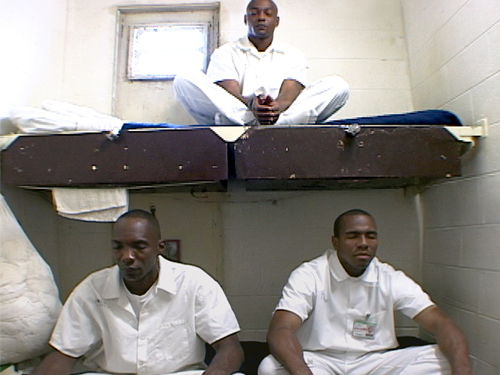
The US locks up more people than any other country in the world, spending over $80bn each year to keep some two million prisoners behind bars. Over the past three decades, tough sentencing laws have contributed to a doubling of the country's prison population, with laws commonly known as 'three strikes and you're out' mandating life sentences for a wide range of crimes.

But a clear sign that Americans are rethinking crime and punishment is a voter's initiative on California's November ballot called Proposition 36 that seeks to reform the state's three-strikes law. Some 27 states have three-strikes laws patterned after California's version, which was one of the first to be enacted in the country.

Since it was passed in 1994, nearly 9,000 felons have been convicted in California under the law.

One of them is Norman Williams, a 49-year-old African-American man who was a crack addict living on the streets. He was convicted of burglarising an empty home and later stealing an armload of tools from an art studio. His third strike: filching a jack from a tow truck in Long Beach. His fate sealed under California's three-strikes law, Williams was sent to a maximum security prison alongside murderers, rapists and other violent criminals.

"I never wanted to do my whole life in prison. Nobody wants to be caged like that," Williams says.

Williams was lucky. After 13 years behind bars, his case was reviewed by a judge and he was released. He is one of about two dozen 'three strikers' who have won sentence reductions through the work of a Stanford University law clinic founded by Michael Romano. In Williams' case, the prosecutor actually agreed that the original sentence was too harsh. An idea emerged from Romano's work: Why not draft a ballot initiative to ensure that sentences like Williams' will not be repeated?

"When people originally passed the three-strikes law in 1994 the campaigns were about keeping serious and violent murderers, child molesters in prison for the rest of their lives," Romano says. "I think that's what people want and are kind of shocked to hear that people have been sentenced to life for petty theft."

Romano helped write Proposition 36, which would amend Californian law so felons could be sentenced to life only if their third strike is a serious or violent crime. Current 'three strikers' could appeal their sentences if their last conviction was non-serious and non-violent. However, the three-strikes law could still apply to felons whose third strike is a minor crime if their past strikes include violence, or what many call "super strikes" like murder, rape and child molestation.

Adam Gelb, the director of the Pew Center on the States' Public Safety Performance Project, says the proposition could be a bellwether for crime policies across the US.

"California's three-strikes law really stands out," he says. "If it's changed it will definitely send a dramatic signal to policy makers across the country that it is a new day."

Read More

Obama Granted Clemency Less Than Any Modern President

The Sentencing Project 

A former brothel manager who helped the FBI bust a national prostitution ring. A retired sheriff who inadvertently helped a money launderer buy land. A young woman who mailed ecstasy tablets for a drug-dealing boyfriend, then worked with investigators to bring him down. All of them and hundreds more were denied pardons by President Obama, who has granted clemency at a lower rate than any modern president, according to a ProPublica review of pardons data. The Constitution gives the president unique power to forgive individuals for federal offenses, allowing the restoration of a person's full rights to vote, possess firearms and obtain business licenses, as well as remove other barriers. For many, a pardon is an opportunity for a fresh start. But Obama has parceled out forgiveness far more rarely than his recent predecessors, pardoning just 22 individuals while denying 1,019.

Innocence Project Helps to Free Black Man Convicted of Murder due to Ineffective Assistance of Defense Attorney

From [HERE] A Black man convicted of a southern Illinois murder 14 years ago is scheduled to be set free today because of the efforts of the Illinois Innocence Project housed at the University of Illinois Springfield.

Anthony Murray, 40, had been convicted of first-degree murder for his alleged involvement in the death of Seneca Jones of Centralia. He was sentenced to 45 years in prison. A Marion County judge in August ordered vacated Murray‘s conviction for stabbing Jones to death after a dice game.

UIS students helped review the case and assisted Innocence Project lawyer John Hanlon and Marion County public defender Timothy Hewitt. The students searched for new evidence, interviewed Murray and attended a June hearing challenging his conviction. The student efforts contributed to a ruling by Marion County Associate Judge Marc Kelly that Murray‘s conviction should be vacated due to ineffective legal representation at his second trial.

The judge found that Murray‘s Chicago attorney made a mistake when he called Georgetta Anderson as a witness, even though he knew her testimony would implicate Murray. The lawyer’s decision was so prejudicial that the outcome of the trial probably would have been different had Anderson not been called by the defense, Kelly found. In order to gain his freedom, Murray accepted a plea to second-degree murder Tuesday. He was to be released based on time served in prison.

The plea, called an Alford Plea, allows an individual to gain freedom by pleading guilty to a lesser offense, while still maintaining innocence of the original crime. Murray indicated he wanted to go home to his mother and family, supporters said.

“Given new evidence of Anthony’s innocence, it is clear that Anthony was not even at the scene of the murder,” said Larry Golden, executive director of the Illinois Innocence Project. “The original conviction was an injustice that should never have occurred. While we are pleased that Anthony can walk out of prison, he should have been able to do so as a fully exonerated person. This is just another injustice allowed by a criminal justice system badly in need of reform.”

When can police dogs sniff at the door?

NBC

The idea that your home is your castle lies at the heart of the Fourth Amendment's protection against unreasonable searches.  So what if the police bring a dog to sniff for evidence at the castle door?

Two cases from Florida, to be argued Wednesday, ask the U.S. Supreme Court to decide when the police need a search warrant to use drug-sniffing dogs at a house, and how much legal authority a dog's alert gives police to search a car.

The front-door case comes from Dade County, where police received a Crime Stoppers tip that occupants of a house were growing marijuana.  After watching the house for about 15 minutes, police and federal agents sent for Franky, a drug-sniffing dog. 

A police handler walked the dog up to the front door, where Franky alerted the officer by sitting down after sniffing at the base of the door.  After using that result to get a search warrant, police entered the house and found marijuana plants growing.

But a judge threw the evidence out, ruling that "the use of a drug detector dog at the defendant's house door constituted an unreasonable and illegal search."  In other words, the court said, the police should have gotten their search warrant before they sent for Franky.

The Supreme Court has upheld the authority of police, acting without a warrant, to use dogs at airports for sniffing the outside of luggage suspected of carrying contraband or to sniff the outside of cars at roadside checkpoints. 

But the court has also said that police, without a warrant, could not stand on the street and aim a thermal imaging device at a house to see if marijuana was being grown inside with heat lamps. Such an intrusion, it held, would reveal the private activities of a homeowner, including such intimate details as "at what hour each night the lady of the house takes her daily sauna and bath."


Read More

Drug Lab Scandal: What Did Prosecutors Know?

Cognoscenti

As someone who has studied past forensic scandals, I thought I was sufficiently jaded when it came to lurid stories about what goes on behind-the-scenes in our country’s crime labs. Then I learned about the alleged misdeeds of Annie Dookhan.

The disgraced former chemist from a Massachusetts state crime lab in Jamaica Plain purportedly forged signatures, tampered with drug samples, bypassed protocols, disregarded the very concept of chain of custody and ultimately compromised the legitimacy of evidence in a staggering number of cases.

News of Dookhan’s conduct has prompted officials and other stakeholders to ask the critical questions: How could her supervisors let this go on? What should happen with the more than 30,000 affected cases? What changes could prevent this behavior from re-occurring?

I would like to focus on another question: To what extent were prosecutors aware of Dookhan’s actions? More to the point, to what extent should they have been aware?

In October, the media reported details about a series of personal, even flirtatious email exchanges between Dookhan and an assistant district attorney in Norfolk County who prosecuted multiple drug cases where Dookhan supplied the analysis.


Read More

Paperwork Errors Can Send You to Prison

TheFoundry 

Under a recently proposed rule, a clerical error could send someone to prison for five years.

In the latest attempt to criminalize seemingly every aspect of our lives, a group of federal bureaucrats in the Pipeline and Hazardous Materials Administration (PHMSA), an agency within the Transportation Department, recently proposed a regulation that would make filing duplicate applications to transport fireworks a crime punishable by up to five years’ imprisonment.

To its credit, PHMSA recognized that its current process for obtaining a permit to transport fireworks was inefficient. To rectify this, PHMSA proposed a new streamlined process. A business owner can now obtain a permit by using either the old or the new process, but woe betide the unwary businessman who, out of confusion or an abundance of caution, submits an application under both processes. Such a mistake could land you in prison for up to five years.

Why such a severe punishment for merely filing a duplicate application? To quote PHMSA, “The submission of duplicate applications under both processes may result in confusion, slower processing, and diminished safety.”

Imagine that: five years in prison for slowing the work of a government bureaucrat. Whatever happened to letting the punishment fit the crime?

This proposed regulation is a prime example of an alarming trend to criminalize activity that most reasonable people would consider benign. More and more people today are subject to prosecution for everyday conduct, even if they act with no malicious intent whatsoever. As Notre Dame law professor Gerard V. Bradley writes:

Too many criminal offenses today are malum prohibitum offenses—that is, they criminalize conduct that is morally innocuous—and do not contain an adequate mens rea (criminal-intent) element. These offenses often capture conduct that would otherwise be natural and even desirable in business, commerce, accounting, or everyday life.

Criminal law was designed to protect the innocent and ensure public safety. It should be applied to people who intentionally break the law. Clearly there is no more criminal intent, morally blameworthy conduct, or danger to society in submitting duplicate applications than there would be for eating a French fry in a subway station or selling lemonade on the side of the road, both of which are also prosecutable offenses.

Read More

White Party's 5 Most Racist Ads Of 2012

ThinkProgress

Economic issues dominated the 2012 election season, with candidates from both parties vying to convince voters that they are more qualified to create jobs and help the economy recover. But unfortunately, some campaigns and third-party groups strayed from policy issues and relied on racism to win over voters. Below are the top 5 racist ads of the 2012:

1) In October, the Tea Party Victory Fund ran an ad suggesting that President Obama’s policies have “enslaved Americans” and showed an African American woman claiming that she received a free “Obamaphone” from the administration:


2) Former Rep. Pete Hoekstra (R-MI), who is challenging Sen. Debbie Stabenow (D-MI), ran a Super Bowl ad showing a woman in rural China speaking broken English and thanking Stabenow because “we take your jobs.” “Your economy get very weak, ours get very good,” the woman said:


3) In a stunning appeal to Islamaphobia, a group linked to former Swiftboater and birther conspiracy theorist Jerome Corsi launched a smear attack ad on a Muslim-American Congressional candidate. The spot warns that Dr. Syed Taj, the Democratic nominee in Michigan’s 11th Congressional district, wants to “advance Muslim power in America“:


Read More

Measure to Repeal CA Death Penalty Leading in Polls

SfGate

A ballot measure to repeal California's death penalty and replace it with life in prison without parole has gained support in the last week and leads by 45 to 38 percent among likely voters in the final Field Poll before Tuesday's election.

The poll, conducted Oct. 25-30, was the first to show a lead for Proposition 34, which had trailed 42 to 45 percent in the last survey in mid-September. Polling also found that a majority agreed with one of Prop. 34's major premises - that the death penalty is more expensive than life without parole - and a plurality said innocent people are executed "too often."

Some other recent statewide polls have reported Prop. 34 trailing by as much as seven percentage points. But Field Poll director Mark DiCamillo said his organization's new survey was more up-to-date and found that the measure's margin of support had widened by six percentage points in a single week.

The poll also coincided with the first ads aired by the Yes on 34 campaign, which has raised $7 million, nearly 20 times as much as the law enforcement-backed opposition.

Read More

Brainless blame on Palestinians

Cape Argus (South Africa) November 01, 2012

The human brain is indeed wonderful.

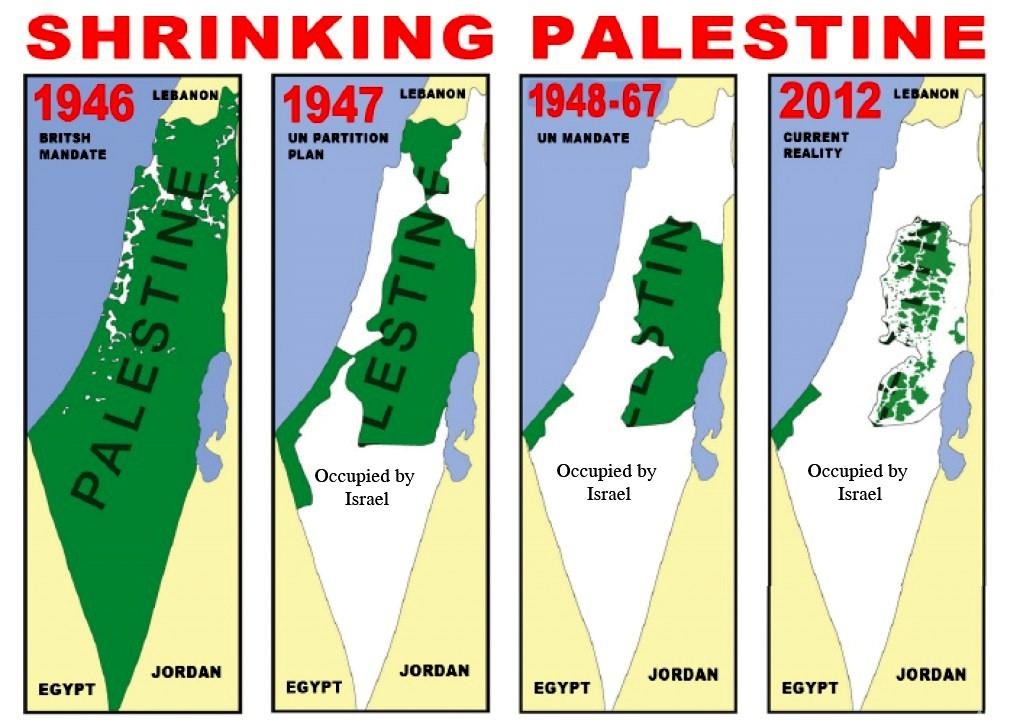
The supposedly more intellectually endowed can sophistically manoeuvre their way out of the minefield of oppressive apartheid systems and "prove" that oppression is good for the victims and, as in the case of Machiavellian Michael John ("Arabs authored their own woes", Cape Points, October 30), that the Palestinians are responsible for the grotesque inhumanity they suffer at the hands of the racist Zionist Israeli entity. 

Without cataloguing the litany of savagery and the oppressive nature of the inhuman Zionist machinery since their planned ethnic cleansing of Palestinians as detailed by among others, Israeli-Russian journalist Lia Tarachansky's documentary citing testimony of Israeli soldiers, one could cite Israeli historians such as Ilan Pappe who quotes from Israeli state archives and, right now, the orders of Israeli Defence Minister Ehud Barak to demolish eight Palestinian villages ostensibly for military training.

As in the past, after some years the land will be used for a new Israeli Jewish settlement.

John has to oblige with one answer only: if the Israelis are really serious about a settlement, even based on the two-state version, then why do they occupy or control 90 percent of the 40 percent of land apportioned to the Palestinians in 1948? Justice is on the side of the Palestinians and all justice-seeking Jews.

Abe Parker

Surrey Estate

Palast: United Autoworkers Files Suit Against Mittens for Bail Out Profiteering

GregPalast

For Mitt Romney, it's one scary Halloween.  The Presidential candidate has just learned that tomorrow afternoon he will charged with violating the federal Ethics in Government law by improperly concealing his multi-million dollar windfall from the auto industry bail-out.


At a press conference in Toledo, Bob King, President of the United Automobile Workers, will announce that his union and Citizens for Responsibility and Ethics in Washington (CREW)  have filed a formal complaint with the US Office of Government Ethics in Washington stating that Gov. Romney improperly hid a profit of $15.3 million to $115.0 million in Ann Romney's so-called "blind" trust.


The union chief says, "The American people have a right to know about Gov. Romney’s potential conflicts of interest, such as the profits his family made from the auto rescue,” “It’s time for Gov. Romney to disclose or divest.”


“While Romney was opposing the rescue of one of the nation’s most important manufacturing sectors, he was building his fortunes with his Delphi investor group, making his fortunes off the misfortunes of others,” King added.


The Romneys' gigantic windfall was hidden inside an offshore corporation inside a Limited Partnership inside a trust which both concealed the gain and reduces taxes on it.  

Read More

Bill Clinton: Obama's a good leader "without regard to race"

CBSNews

In a slap at former New Hampshire Gov. John Sununu, Bill Clinton said on Friday that President Obama "has been a good commander-in-chief without regard to race." 

Appearing in Lake Worth, Fla., the former president cited ex-Secretary of State Colin Powell's recent endorsement of Obama. That endorsement led Sununu, a leading surrogate for Mitt Romney, to suggest that the move was motivated by race.

"Colin Powell said, 'I'm going to endorse the president because I think he's done a good job in a difficult, rapidly changing, not totally controllable world and because Gov. Romney has the same neocon advisors who gave President Bush the push to go into Iraq on bad intelligence,'" Clinton said. "That's what he said. What did they respond? They put Gov. Sununu out to respond and he said, 'What do you expect these two guys -- Colin Powell wants a black guy to be re-elected.'"


Read More

Fortune Deletes Racist Portion of Article Implying that Asians in line to Buy iPad Mini will re-sell Device in Hong Kong

Betabeat

This morning’s release of the iPad Mini saw crowds completely forgetting about the hurricane and lining up to score themselves a miniaturized version of their favorite fancy tablet. Apple beat reporter  was covering the release for Fortune/CNN Money. His online bio says that he’s been covering Apple for the last 30 years. He described the scene as such:

“Judging from the ethnic makeup of the queue in front of the big glass cube of Apple’s (AAPL) Fifth Avenue store, however, most of the customers who made the pilgrimage were coming from the environs of Chinatown.

Apple hasn’t yet said when the iPad mini will be available in mainland China, so there’s likely to be a market there for units shipped from the U.S.”

Since Mr. DeWitt didn’t cite a source supporting his Chinatown claim, it seemed like an . . . odd assumption.

The paragraph in question was pulled down, but not before we got a screen shot.


We reached out to Mr. Elmer-Dewitt, who said it was taken down because “some readers complained about ethnic profiling.”

Gotcha. But why did he say that the Asian customers in line were from Chinatown?

“It’s well documented that there’s a steady flow of new Apple products from the Fifth Ave store to Chinatown to Hong Kong to the mainland,” said Mr. Elmer-Dewitt. “See my old pieces. See the NY Times. My mistake was assuming that all the Asians in line (some of whom brought their children so they could buy 4 iPads, not just the maximum 2) were Chinese and that just because they were Chinese that they were from Chinatown. But I’ve reported on a lot of these lines, and this one had a higher percentage of Asians than any I’ve seen before.”

Well, alrighty then, no racism to see here, folks.

[via @Joescoscarelli]

Chevron Earns $19 Billion Profit So Far This Year, Spending Millions To Elect House GOP

ThinkProgress

Chevron, the second largest oil company in the United States and eighth largest in the world, earned $5.3 billion in profits in the third-quarter of 2012. This brings their total profits for the first nine months of this year to $19 billion.

Last month, Chevron made the single-largest corporate donation since Citizens United. The company dropped $2.5 million with the Congressional Leadership Fund, a super PAC for House Republicans, after congressional GOP voted at least twice to protect Chevron’s $700 million tax breaks.

Below is a glimpse at what Chevron is spending its billions in profits:

– Chevron paid a 19 percent effective federal tax rate in 2011, after making $26.9 billion profit.

– Since 2011, Chevron has spent $16.6 million lobbying Congress to block pollution controls and safeguards for public health.

– Chevron spent $3.7 million on campaign contributions this election, with 85 percent of contributions going to Republicans.  Chevron gave more than any of the other Big Five Companies.

–Meanwhile, Chevron’s production has decreased by over 6 percent since this time last year, from 1.7 billion barrels of net liquids (oil + natural gas liquids) to a current rate of 1.68 billion barrels per day.

– Chevron is sitting on cash reserves totaling $21.3 billion, up from $15.8 billion in January.

– Chevron spent 24 percent of its Q3 profits buying back stocks ($1.25 billion), which enriches the largest shareholders.

– Chevron paid a 19 percent effective federal tax rate in 2011, well below the statutory corporate rate of 35 percent.

– Chevron CEO John Watson received over $17 million in compensation last year.

The Big Five companies are on track to make over $100 billion in profits this year, while they collect $2.4 billion in annual tax breaks. Meanwhile, they are producing 5 percent less oil than the third quarter last year. The Big Five has spent more than $100 million lobbying Congress since 2011, and millions on campaign contributions.

Supreme Court hears arguments in Sixth, Fourth Amendment cases

Jurist

The US Supreme Court [official website] heard oral arguments [day call, PDF] in two cases Thursday. In Chaidez v. United States [transcript, PDF; JURIST report] the court heard arguments to determine if Padilla v. Kentucky [JURIST report] applies retroactively to persons whose convictions became final before its announcement. Padilla held that the Sixth Amendment [text] guarantee of effective assistance of counsel requires a criminal defense lawyer to advise a non-citizen client that pleading guilty to an aggravated felony will trigger mandatory, automatic deportation. In this particular case, petitioner Roselva Chaidez's attorney's advice to take a plea deal resulted in her deportation. She contends had she known deportation was possible, she would not have taken his advice. The attorney for Chaidez argued that Padilla was just an application of the longstanding precedent in Strickland v. Washington [text] and thus the more than 10 contrary circuit court decisions that were issued before Padilla was announced are incorrect.

Well, let me—let me try to work with your hypothetical. I think what I hear your hypothetical to say is that prevailing norms change, and they evolve to a certain point where certain kinds of advice is required, which is much what this Court said in Padilla about—about deportation advice. You would have—you would not have a new rule to simply recognize that at the time that attorney gave advice, that—that Strickland was violated. It would be a new rule, I think, Justice Kennedy, to say that Strickland requires relief, even though at the time the advice was given the prevailing norm had not yet crystalized into the degree that this Court requires.

Read More

Negro Outreach: Republicans are the ones who love you Black Dummies

Wonkette

This ad, playing in Ohio, rests its case! Barack Obama will not bring you wealth and prosperity (except for how he will totally mandate reparations, but shhhh), and Lincoln freed the slaves. That one guy, the one talking before the stock photo couple, he is totally convincing with his Mormonish “revelations.” (Sorry we are reading Krakauer’s Under the Banner of Heaven right now, about the polygamous Mormon fundies, and it is alllll about revelations … to KILL!)

And the stock photo couple, they look so sweet! (What are they doing there? You know, just chillin’ and bein’ black.) And Abraham Lincoln did free the slaves! (It is sad that they can’t find an example later than 1965, but what are you gonna do?) So good job with your ad buy, um, “Empower Citizens Network.” Totally good ROI. You know where else you could get just as good a return? A little place we like to call “Wonkette.com.” Check us before you wreck us! (Because clearly you have too much fucking money.)

Arizona White Party Outlaw Joe Arpaio's re-election bid divides county (b/tw racist people & people who react to racist people)

WKZO

Arizona Sheriff Joe Arpaio's hardline stance on illegal immigrants has given him a national profile. But a backlash from angry Latinos is turning his bid for re-election into the toughest of his long career.

Republican Arpaio, who turned 80 this year, is seeking a sixth term in the state's most populous county, where a bitter national fight over illegal immigration has helped drive what has become the most costly sheriff's race in U.S. history.

To his supporters, he is a hard-as-nails lawman who locks up county inmates in an austere "Tent City" jail, and does not hesitate to arrest illegal immigrants nor flinch from probing Democratic President Barack Obama's Hawaiian birth certificate.

But for opponents, the man who styles himself "America's Toughest Sheriff," relentlessly profiles brown-skinned Hispanics across the sprawling Phoenix metro area and neglects police work in his tireless pursuit of media glory.

"When you try to do your job, and you are a little controversial, some people don't like it. That's the way it is," Arpaio told Reuters on the sidelines of a rally in suburban Phoenix, where he was feted by a crowd of supporters.

The Maricopa County sheriff, who his campaign says raised an $8.5 million war chest, is a favorite with Phoenix-area Tea Party conservatives who love him for his fights with the Obama administration and support for Arizona Governor Jan Brewer's clampdown on illegal immigration.

On the Democrat ticket, heavily outspent challenger Paul Penzone, who has raised $527,000, is riding a wave of community activism, pushing riled Latinos to vote to end the sheriff's 20-year-stint in office.

While Arpaio draws support from hundreds of enthusiastic supporters at rallies across the sun-baked Phoenix metro region, opponents see much with which to find fault.

He is the target of an ongoing Justice Department lawsuit alleging civil rights abuses by his office, including accusations of widespread racial profiling of Latinos in dozens of immigration "sweeps." Arpaio denies racial profiling.

Critics also cite what they see as the neglect of more than 400 sex-crime cases in a Phoenix suburb, some involving children, while they say deputies focused on rounding up landscapers in traffic stops.

Earlier this year, Arpaio dispatched volunteer posse members to Hawaii to investigate the authenticity of Obama's birth certificate at the request of local Tea Party grassroots activists - a key Arpaio constituency.

He declared the document a forgery even after most Republican critics of Obama had given up pursuing discredited claims that the president was not born in the United States.

"It was a completely absurd waste of time and resources," said Raquel Teran, an activist with the "Joe's Got To Go" campaign. "His priorities have not been to keep Maricopa safe, but to ... campaign while he's in office."

"UNFINISHED BUSINESS"

Stepping into the breach is Penzone, a retired 21-year Phoenix police veteran known as the face of the "Silent Witness Program," a tip line that helped snare two serial killers in 2006.

Penzone says he wants to focus on policing he believes was neglected by Arpaio's headline-grabbing policies in a deeply divided community where Latinos make up nearly a third of the 3.9 million population.

"He has turned that office into a machine for his public image and (it) should be a machine for public safety," Penzone told Reuters. "I didn't want to stand by any more on the sidelines."

Penzone, outspent by Arpaio by about 16 to 1, has been aided by a Democratic drive to register Latinos riled by a state immigration crackdown that requires police to check the papers of anyone they stop and suspect is in the country illegally.

The state Democratic Party has said activists registered about 15,000 voters - some new, others re-registered - in recent months, but were not able to say how many were Hispanic.

Penzone is also aided by groups like Citizens for a Better Arizona, which last year helped oust former Republican state senator Russell Pearce, the author of Arizona's immigration clampdown, in a recall election.

But beating the sheriff remains a long shot. Polls vary depending on which candidate paid for them, but all show Arpaio ahead by 4 to 14 percentage points.

One factor is the sheriff's war chest - greater than what many U.S. congressional candidates spend - which has financed an advertising blitz highlighting Arpaio's 50-year law enforcement career that included stints with the U.S. Drug Enforcement Administration in Turkey and Mexico, and as its Arizona chief.

Analysts say the blitz was helping consolidate his advantage with a core base of older, white retirees in Phoenix suburbs such as Sun City and Surprise who vote in high numbers and on whom the criticism of Arpaio has little impact.

"To the average older guy, the issue is ‘All he's doing is trying to protect us from the people who are coming across the border,'" said Bruce Merrill, an emeritus political science professor at Arizona State University.

Among that core group is retiree Jim Heath, who admires Arpaio for arresting illegal immigrants and not "coddling" inmates in county jail.

"He's probably not perfect, but I feel the major points ... how he treats the prisoners and tries to enforce the law, that's the decision-maker for me."
Battered Haiti facing food shortages after Sandy destroyed crops

Telegraph

Humanitarian groups assessing the damage caused by the storm warned the island's population, still reeling from the disasters of the last two years, was at risk of hunger after the downpours destroyed farmland and crops.

Fears of a food crisis and outbreaks of disease emerged as the historic storm's death toll for the Caribbean rose to 71, including victims in Jamaica, Cuba and the Dominican Republic.

As many as 30,000 people in Haiti alone were affected after the hurricane skirted the Caribbean last week. More than 20 inches (500mm) of rain fell over four days. Officials said as much as 70 per cent of crops were destroyed by the hurricane in some areas.

Myrta Kaulard, Haiti's representative from the World Food Programme, said the number of people at risk of hunger could run to thousands while farmers were also hit by the loss of food and cash crops.

Read More

Presidential Election Still Imperiled by Power Outages in 6+ States Where E-Voting is Forced

Bradblog

With just 5 days to go until the nation holds its next Presidential Election, power remains out in large swaths of the Eastern Seaboard, according to Google Maps' special Hurricane Sandy power outage map.

The outages persist in a number of states which force the majority of their voters to use 100% unverifiable electronic voting machines to cast their votes at the polls on Election Day. If power is out at the polling place on Election Day in those states, voters may not be able to cast their vote at all.

As we warned before Sandy barreled ashore earlier this week, the ability of voters to vote at all --- presuming polling places are not flooded and voters are able to get to them --- is imperiled by states such as Virginia, Pennsylvania, West Virginia, Maryland, New Jersey, North Carolina and even Ohio, all of which force all, or some of their voters to vote on systems which simply do not work if they do not have power.

While most of those states require a small percentage of emergency paper ballots be made available at the precincts, that number is unlikely to be enough in the event that voting machines are unavailable all day at the polls on November 6th. Moreover, battery backups on the electronic touch-screen systems are unreliable at best and, even when working, can only be counted on for a small number of hours.

In Pennsylvania, for example, as noted yesterday by the Pittsburgh Post-Gazette, "In case of power loss, local election officials are encouraged to keep enough paper ballots on hand for 20 and 25 percent of their registered voters."

While the PA Dept. of State claimed in the same report that voting machines can run on backup batteries "about six hours," a Lehigh County, PA election official offers a more realistic assessment, noting their touch-screen system backup batteries last just 2 and a half hours at best.
The BRAD BLOG has long warned that power loss on Election Day is just another, among a myriad of reasons why forcing voters to use such systems is insane and extraordinarily disrespectful to the electorate in such jurisdictions. Other reasons why these type of voting systems should never be used: They are 100% unverifiable in every case (whether they include a so-called "Voter Verifiable Paper Audit Trail" or not, as some do) and computer scientists and security experts have long warned, in virtually every instance where these type of systems have been examined over the past decade, that they are both prone to failure and easily manipulated, by both election insiders and hackers alike, in ways that are unlikely to ever be detected.

At The Nation today, Ari Berman notes that "Thanks to a wave of new voting restrictions passed by Republicans, the 2012 election was already shaping up to be pretty chaotic before the arrival of Hurricane Sandy, which left 8.2 million households without power in 15 states and the District of Columbia."
He then goes on to detail some of the worst hotspots for concern...


"As of Wednesday, power outages were the most severe in New Jersey (2.4 million homes and businesses without power), New York (1.9 million) and Pennsylvania (1.2 million)," Berman reports. While almost the entirety of both NJ and PA force voters to use electronic voting systems on Election Day, NY at least allows voters to cast their vote on paper ballots. Though those paper ballots are tallied on electronic systems which routinely fail to tabulate votes accurately (see thousands of votes completely lost on NY's brand new optical-scan systems in 2010, and losing candidates named as "winners" by Palm Beach County, FL earlier this year after their paper ballot op-scan systems declared incorrect results in three different races), at least voters will be able to vote if polling locations are open and voters can get to them next Tuesday.

If optical-scan systems at the precinct are unavailable due to outage in NY jurisdictions, those ballots can be tabulated later (presuming the secure chain of custody is up to snuff) either on central optical-scanners at county headquarters or, better yet, transparently and publicly by hand.

Berman notes that Washington Post is reporting that PA officials "said that getting all the polls open in all sixty-seven counties on Election Day may be problematic. About 1.2 million customers in Pennsylvania lost power in the storm, and utilities warned that full restoration might be more than a week away. All of the nine counties with the bulk of the power losses went for Obama in 2008."

Our own missives to Philadelphia's election chief Stephanie Singer have gone unanswered over the past several days. She is usually quite responsive, so we suspect she's struggling at this point to figure out how to ensure polls are opened and that voters get to vote. In the City of Brotherly Love voters are forced to vote on 100% unverifiable electronic touch-screen systems on Election Day, unless the systems are unavailable. Whether there will be enough emergency paper ballots, however, for all voters in such case, is another issue entirely.

(Also, see this, for still more concerns about voting in the Keystone State in the wake of Sandy.)

"Nine Virginia communities—including several in Northern Virginia that were key to President Obama’s victory in the commonwealth in 2008—remained closed for in-person absentee voting Tuesday in the aftermath of Hurricane Sandy," the Post also reports. Virginia also forces almost all of its voters to use electronic touch-screen systems on Election Day.

Many have asked about whether Election Day can be postponed, given the disaster. That question is not an easy one to answer. Slate's L.V. Anderson attempted to answer that question before the storm hit. Essentially, it would be difficult, both legally and politically. While the date of Election Day is set by federal law --- so Congress would have to reconvene to change the law for the entire nation --- states have some latitude as far as when they must complete the process of selecting their electors before the Electoral College meets in mid-December. Changing the date of the election in parts of the country, but not others, however, would be fraught with all sorts of political and legal peril and controversy.

While nobody can predict the devastation of natural disasters like Superstorm Sandy, and whether such storms might make polling places inaccessible or difficult for voters to reach, they can predict that power outages on Election Day will keep voters from being able to cast their vote at all if electronic systems are the only option allowed for voters. That so many states still continue to do so is shameful and should outrage every American, not to mention those which are forced to use such systems.

That part of the problem was perfectly predictable. Indeed, we have been warning about it at The BRAD BLOG for many years. That elected officials and election officials have chosen to do nothing about it for so many years, preferring to play with fire instead, while treating their voters with extraordinary disrespect, is just another cause for demanding that lawmakers bar such systems for use in American elections.