Election 2012: They Will Steal It!

Truthout

Thanks to our bizarre Electoral College voting system, if one political party wants to steal the election they don't need to deploy teams all around the country to stuff ballot boxes, intimidate voters, and rig electronic voting machines.

They just need to set-up shop in one or a few of those swing states – like Florida and Ohio – kick a couple thousand voters off the rolls, disqualify a few more thousand voters on Election Day by giving them wrong information, maybe toggle a few electronic voting machines, and then "Voila!" The election is taken care of.

Two out of the last three elections have been determined in this way. And it appears this election will be heavily influenced by voter purges, too.

As pollster Nate Silver with the New York Times' 538 Blog projects, there's a 50/50 chance Ohio will determine who the next president is – just like in 2004.

Cue the new Republican Secretary of State, Jon Husted, who's been working hard to restrict Ohio voters' access to the polls. Hundreds of thousands of Ohioans – particularly minorities – took advantage of early voting in 2008 to elect President Obama. So, Husted cut down on those early voting hours.

And now the courts have given Husted a new tool to restrict the vote. On Wednesday, a panel of three Conservative Justices (all appointed by George W. Bush or his dad) ruled in favor of Secretary of State Husted, paving the way for massive voter disenfranchisement in the key swing state.

According to the ruling, voters who are told by poll workers to vote at the wrong precinct and then do so, lose their right to have their votes counted.  A previous court ruling ordered that voters who are misled by poll workers still have a right to have their vote counted, but that's now been overturned.

We already know that the Romney campaign has sent out flyers to prospective ballot watchers in Wisconsin giving them misleading information to tell voters.  Now, thanks to this court ruling, the Romney campaign can legally have its poll watchers in Ohio send voters to the wrong polling places to make sure their votes aren't counted.

For the second time in three elections, Ohio could be stolen right in front of all of our eyes.

Or the theft might happen in Florida again. Just like in 2000, Republican election officials are again purging tens of thousands of voters off the rolls. As the Miami Herald reported on these purge lists, "Hispanic, Democratic, and independent-minded voters are the most likely to be targeted...Whites and Republicans are disproportionately the least-likely to face the threat of removal."

On top of that, already discrepancies are being reported with early-vote tallies on Florida's electronic voting machines. In one Florida voting precinct, more than a thousand early votes were either "lost" or "miscounted." Considering that George W. Bush "officially" won the state by 538 votes, these discrepancies could mean the difference in the election.

A close national election, like everyone is expecting this year, translates to an even closer election in the states where all it will take is a few thousand voters to flip an election.

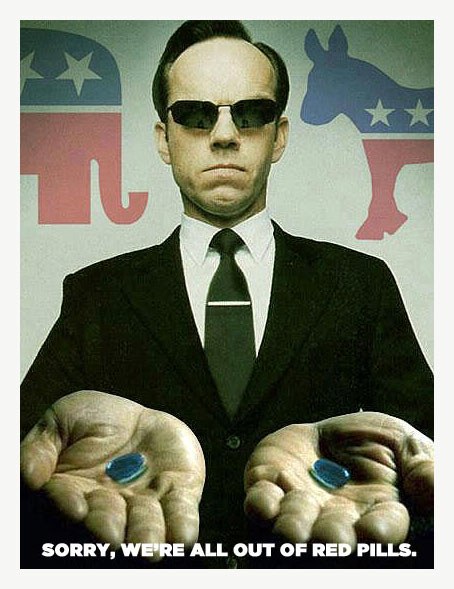
It is way too easy to steal an election in America. Our Electoral College allows just one or two states to swing a Presidential election every year. The privatization of the vote with electronic voting machines has handed over the beating heart of our democracy – the vote - to corporate interests who then handle it in secret. And the lack of an explicit federal "right to vote" for all eligible Americans has made voter suppression efforts much easier and harder to prosecute or prevent.

We must fundamentally change how we elect our President and who gets to vote in that election. Until we do this, we don't have a democratic republic that the rest of the world should emulate – we just have a dysfunctional system that the plutocrats can steal and more closely resembles an oligarchy than a republic.

Israel to stay on its own if Iran is attacked, US warns

Rt.com

A military strike on Iran by way of Israel could still occur at a moment’s notice, but the US is now warning its allies that any action overseas would jeopardize America’s ability to assist in a Middle East war.

Although US President Barack Obama and his challenger Mitt Romney both say the next administration will be aligned with any Israeli efforts to prevent Iran from procuring a nuclear weapon, any unilateral strike on the Islamic Republic could prevent America from offering its service in the event of a war.

The United States currently has military bases across much of the world, including key stations in Bahrain, Qatar, Kuwait, the United Arab Emirates and Oman. Should Israel decide to strike Iran, instability in the region is expected to become rampant and American officials fear they won’t be able to rely on troops stationed overseas to come to their ally’s aid.

“The Gulf states’ one great fear is Iran going nuclear. The other is a regional war that would destabilize them,” a source in the region tells the UK’s Guardian. “They might support a massive war against Iran, but they know they are not going to get that, and they know a limited strike is not worth it, as it will not destroy the program and only make Iran angrier.”

A war overseas is less hypothetical than officials have let on, though, and could be a very likely reality. Earlier this week, Israeli Defense Minister Ehud Barak told London's Daily Telegraph that his nation all but launched an assault on Iran only eight months ago when the country was thought to be close to going nuclear. At the last moment, though, Iran apparently diverted part of its enriched uranium to civilian programs, prompting Israel to pull the plug on a planned preemptive aerial assault.

Benjamin Netanyahu, Israel’s prime minister, recently went on the record with the French magazine Paris Match to say he thinks any strike to stop a nuclear Iran would be well received, despite warnings from others that the Middle East would erupt instantly, especially given the rampant disruptions spurred in recent months through the Arab Spring.


Read More

What's Still the Matter With Kansas - and the Democrats?

Part One: It's Not About "The Economy, Stupid."

Voters are not basing their decision primarily on the unemployment rate and the performance of the economy. When you look at the polls, as The New York Times reported, "disaffection with the economy didn't translate into support for Mr. Romney." In fact, those who suffer most when jobs disappear - the poor, single women, people of color - are most likely to support Obama. Those who suffer least - the white, the married, the rich and solidly middle-class - are the only groups giving Romney a majority of their votes.

The states with the highest unemployment rates (California, Rhode Island) are solidly blue; the states with the least unemployment (North Dakota, Nebraska) are solidly red. If this were simply a referendum on Obama's economic stewardship, the polling data should be exactly the other way around.

That's not to say the economy is irrelevant. But the mass news media blow it out of proportion. They earn their name by focusing on what's new. So they have to find a story that makes this election look different than the last. And they trumpet every shift of one or two percent in the polling (which may be due to economic news) as a huge event.

Meanwhile, they ignore what should be the most important story of this election: how little has really changed. The electorate remains virtually split between the two major parties, as it has been for decades. And it's split along the same old demographic lines.

Republican presidential candidates garner a majority among Southern whites and, in the rest of the country, among white men and white married women in the middle to upper classes who don't have graduate degrees. (For at least a quarter century, Democrats have held a solid majority of voters in the lower third on the income scale.) White married voters are more likely than other whites to be religious, and, as always, the GOP does best among whites who call themselves "very religious." These groups have been voting Republican for a long time.

Some stereotypes that emerged from past elections turn out to be less true. Whites without college degrees do not tilt toward the GOP unless they live in the South. (Over the last 36 years, Democrats have actually done best among voters who never finished high school, as well as among those with graduate degrees.) On the other hand, whites with college degrees (but not grad degrees) are as likely to vote Republican as Democrat. Though Romney will surely do well among over-65 voters, and Obama well among young voters, historical data on age do not show people voting more Republican as they get older. And the age gap may be closing a bit in recent months. So, education and age correlations are not so important.

The racial, regional, marital and religious divides are as strong as ever. But they don't make news. Instead, the demographic map is treated as an obvious fact of political life, not worth discussing because it's assumed that nothing will ever change. Yet it's the supposedly "obvious" truths that deserve the most attention. If we don't lift them up for analysis and interrogation - if they go on being treated as inevitable - they will indeed remain unlikely to change.

Read More

Rwanda - Bystanders to Genocide

Atlantic

I. People Sitting in Offices

In the course of a hundred days in 1994 the Hutu government of Rwanda and its extremist allies very nearly succeeded in exterminating the country's Tutsi minority. Using firearms, machetes, and a variety of garden implements, Hutu militiamen, soldiers, and ordinary citizens murdered some 800,000 Tutsi and politically moderate Hutu. It was the fastest, most efficient killing spree of the twentieth century.

A few years later, in a series in The New Yorker, Philip Gourevitch recounted in horrific detail the story of the genocide and the world's failure to stop it. President Bill Clinton, a famously avid reader, expressed shock. He sent copies of Gourevitch's articles to his second-term national-security adviser, Sandy Berger. The articles bore confused, angry, searching queries in the margins. "Is what he's saying true?" Clinton wrote with a thick black felt-tip pen beside heavily underlined paragraphs. "How did this happen?" he asked, adding, "I want to get to the bottom of this." The President's urgency and outrage were oddly timed. As the terror in Rwanda had unfolded, Clinton had shown virtually no interest in stopping the genocide, and his Administration had stood by as the death toll rose into the hundreds of thousands.

Why did the United States not do more for the Rwandans at the time of the killings? Did the President really not know about the genocide, as his marginalia suggested? Who were the people in his Administration who made the life-and-death decisions that dictated U.S. policy? Why did they decide (or decide not to decide) as they did? Were any voices inside or outside the U.S. government demanding that the United States do more? If so, why weren't they heeded? And most crucial, what could the United States have done to save lives?

So far people have explained the U.S. failure to respond to the Rwandan genocide by claiming that the United States didn't know what was happening, that it knew but didn't care, or that regardless of what it knew there was nothing useful to be done. The account that follows is based on a three-year investigation involving sixty interviews with senior, mid-level, and junior State Department, Defense Department, and National Security Council officials who helped to shape or inform U.S. policy. It also reflects dozens of interviews with Rwandan, European, and United Nations officials and with peacekeepers, journalists, and nongovernmental workers in Rwanda. Thanks to the National Security Archive (www.nsarchive.org), a nonprofit organization that uses the Freedom of Information Act to secure the release of classified U.S. documents, this account also draws on hundreds of pages of newly available government records. This material provides a clearer picture than was previously possible of the interplay among people, motives, and events. It reveals that the U.S. government knew enough about the genocide early on to save lives, but passed up countless opportunities to intervene.

In March of 1998, on a visit to Rwanda, President Clinton issued what would later be known as the "Clinton apology," which was actually a carefully hedged acknowledgment. He spoke to the crowd assembled on the tarmac at Kigali Airport: "We come here today partly in recognition of the fact that we in the United States and the world community did not do as much as we could have and should have done to try to limit what occurred" in Rwanda.

This implied that the United States had done a good deal but not quite enough. In reality the United States did much more than fail to send troops. It led a successful effort to remove most of the UN peacekeepers who were already in Rwanda. It aggressively worked to block the subsequent authorization of UN reinforcements. It refused to use its technology to jam radio broadcasts that were a crucial instrument in the coordination and perpetuation of the genocide. And even as, on average, 8,000 Rwandans were being butchered each day, U.S. officials shunned the term "genocide," for fear of being obliged to act. The United States in fact did virtually nothing "to try to limit what occurred." Indeed, staying out of Rwanda was an explicit U.S. policy objective.

With the grace of one grown practiced at public remorse, the President gripped the lectern with both hands and looked across the dais at the Rwandan officials and survivors who surrounded him. Making eye contact and shaking his head, he explained, "It may seem strange to you here, especially the many of you who lost members of your family, but all over the world there were people like me sitting in offices, day after day after day, who did not fully appreciate [pause] the depth [pause] and the speed [pause] with which you were being engulfed by this unimaginable terror."

Clinton chose his words with characteristic care. It was true that although top U.S. officials could not help knowing the basic facts—thousands of Rwandans were dying every day—that were being reported in the morning papers, many did not "fully appreciate" the meaning. In the first three weeks of the genocide the most influential American policymakers portrayed (and, they insist, perceived) the deaths not as atrocities or the components and symptoms of genocide but as wartime "casualties"—the deaths of combatants or those caught between them in a civil war.

Yet this formulation avoids the critical issue of whether Clinton and his close advisers might reasonably have been expected to "fully appreciate" the true dimensions and nature of the massacres. During the first three days of the killings U.S. diplomats in Rwanda reported back to Washington that well-armed extremists were intent on eliminating the Tutsi. And the American press spoke of the door-to-door hunting of unarmed civilians. By the end of the second week informed nongovernmental groups had already begun to call on the Administration to use the term "genocide," causing diplomats and lawyers at the State Department to begin debating the word's applicability soon thereafter. In order not to appreciate that genocide or something close to it was under way, U.S. officials had to ignore public reports and internal intelligence and debate.

The story of U.S. policy during the genocide in Rwanda is not a story of willful complicity with evil. U.S. officials did not sit around and conspire to allow genocide to happen. But whatever their convictions about "never again," many of them did sit around, and they most certainly did allow genocide to happen. In examining how and why the United States failed Rwanda, we see that without strong leadership the system will incline toward risk-averse policy choices. We also see that with the possibility of deploying U.S. troops to Rwanda taken off the table early on—and with crises elsewhere in the world unfolding—the slaughter never received the top-level attention it deserved. Domestic political forces that might have pressed for action were absent. And most U.S. officials opposed to American involvement in Rwanda were firmly convinced that they were doing all they could—and, most important, all they should—in light of competing American interests and a highly circumscribed understanding of what was "possible" for the United States to do.

One of the most thoughtful analyses of how the American system can remain predicated on the noblest of values while allowing the vilest of crimes was offered in 1971 by a brilliant and earnest young foreign-service officer who had just resigned from the National Security Council to protest the 1970 U.S. invasion of Cambodia. In an article in Foreign Policy, "The Human Reality of Realpolitik," he and a colleague analyzed the process whereby American policymakers with moral sensibilities could have waged a war of such immoral consequence as the one in Vietnam. They wrote,

The answer to that question begins with a basic intellectual approach which views foreign policy as a lifeless, bloodless set of abstractions. "Nations," "interests," "influence," "prestige"—all are disembodied and dehumanized terms which encourage easy inattention to the real people whose lives our decisions affect or even end.

Policy analysis excluded discussion of human consequences. "It simply is not done," the authors wrote. "Policy—good, steady policy—is made by the 'tough-minded.' To talk of suffering is to lose 'effectiveness,' almost to lose one's grip. It is seen as a sign that one's 'rational' arguments are weak."
Talib Kweli: Obama & Romney, 2 Sides Of The Same Coin?

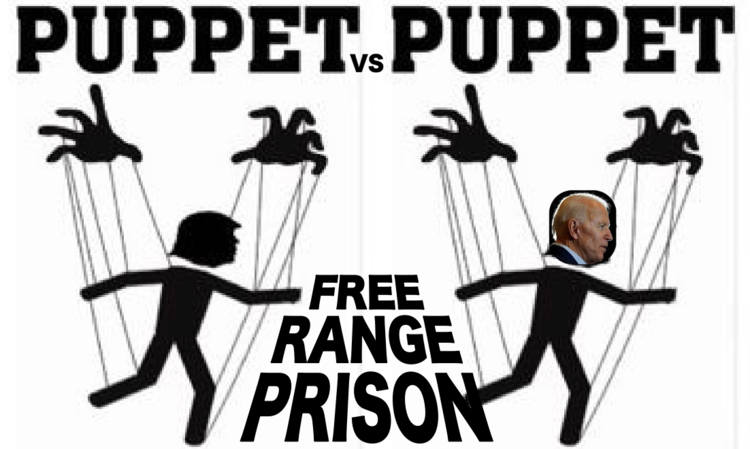
There are those that say the Barack Obama and Mitt Romney are two sides of the same coin. They say that politics on the presidential level are so corrupt that it makes no sense to participate in the process at all. They say these candidates collect money from the rich and votes from the poor, while all the time playing those two groups against each other. They say that the Democrats and the Republicans are all in the pocket of international bankers and corporate lobbyists. These are valid arguments that cannot be ignored.

Barack Obama promised us a change we can believe in. But then he extended the Bush tax cuts and bailed out Wall Street. He signed the NDAA bill, which gives the U.S. the right to illegally detain people. He has a kill list and orders drone attacks that wreak havoc on communities and kill innocent people. His record on immigration is suspect and he does not vocally address the needs of the African-American community, a community that truly supports him. When you look at these facts it is easy to come to the conclusion that he is no different from any political puppet.

But these are not the only facts to consider. Fact is, if you believed Barack Obama was going to be anything more than a politician, that's on you. Obama never promised a revolution. He promised to try and work with his opposition and do what he could within the system, and to that extent, he has done a wonderful job. Consider the United States' place in the world from 2008 until now. Politically, Obama has been the most progressive president almost ever. Imagine if he didn't meet with the resistance from the party of no, a lot of it raced based. Imagine if the G.O.P was focused more on making the country better than winning elections they've already lost. They are focused on demonizing Obama. He is not a socialist, actual socialists would be quick to tell you that. You can tell by his foreign policy alone that he is not a Muslim. Based on his actual record, Barack Obama is a right of center democrat, a guy who believes in the core principles of the Democratic Party and who honestly believes, or believed, that he could work with the other side and achieve progress.

I have no reason to make excuses for our President or to prop him up. I do not agree with many of his decisions, because they are based on politics. But when I supported Obama in 2008, I didn't go into it thinking he would change the world and I definitely didn't expect to agree with him on everything. That would've been foolish of me. Anyone who expected Obama to be their savior in 2008 deluded themselves. I respected what he symbolized for my children, and it was the first time I saw a politician with a background that was so relatable to my experience. I expected him to be a good politician. He turned out to be a great one. While that is not necessarily a compliment, it is the truth.

If you refuse to vote because you are mad that Obama had lunch with the Bilderbergs or you realize that the electoral college is a flawed system, I can't even be mad at you. I completely understand that sentiment, and have voiced my disdain with our current system on many occasions. If this is you, you can stop reading right now.


Read More

Are You a Voter? (Victim of the Electoral Returns) The Welfare Poets on the Deception/Election

My name is Rayzer, founder of the Welfare Poets, the socio-political Hip Hop fusion band out of NYC, and our new single critical of the Obama administration and the upcoming deception/election is out.

There is a critical perspective that has been drown out. Please check it and share if you are feeling what we are doing.

 "Your vote is reduced to a commodity that'll never get you out of poverty

A Duocracy -- Obamney, fronting for this Kleptocracy

A mockery to democracy, a tragic comedy

forever trapped in the Council On Foreign Relations' Harry Pottery and Barry's atrocities"

Also see Dr. Blynd on voting [HERE]

Iran Offers to Send Emergency Aid Team to Stricken New York

NY Times

Iranian rescuers and aid workers are on standby to fly to New York City to provide assistance to those affected by Hurricane Sandy, the head of Iran's Red Crescent Organization said on Wednesday. "We are ready to help the flood-stricken people of America," Mahmud Mozaffar, who leads the organization, told the semiofficial Fars News Agency. His men stand ready to board planes and fly to the United States to help out, assuming the American government accepts Iran's offer, he said. "If American authorities agree, we can send our rescuers with equipment and tools to American cities in the shortest period of time," Mr. Mozaffar said.

White Man Rides Around With Obama Noose Effigy

GlobalGrind

A North Carolinian man is using an effigy of President Obama being hung from a noose as a symbol in his fight for justice, and it's causing quite a stir!

VR Phipps is traveling along the East Coast with a lynched Obama puppet in a wagon being pulled from his pick up truck. Phipps says the effigy is not meant to be racist, but instead he's doing it to draw attention to his fight for justice for family members that were killed by local police officers.  

In a YouTube video, Phipps claimed, "All we want is what Trayvon Martin's family wants. Justice." He denied racism was his motivation, arguing, "You say it's racism, well, I tell you it's not. It's absolutely not. We have been hanging people in effigy when George Bush was President. I would have hanged him no problem. It wouldn't have been a problem at all."
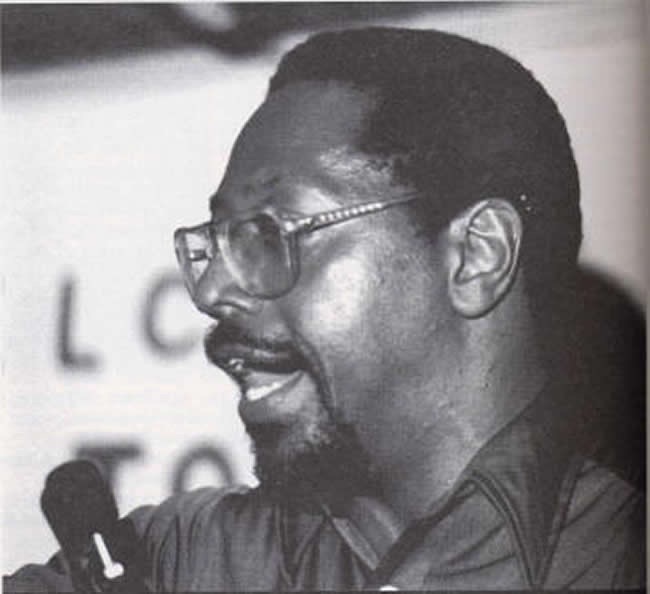
The shocking imagery has drawn attention from the Secret Service and has also been spotted in New York and Florida.

GM, Chrysler Have Best October in Five Years

ThinkProgress 

Chrysler and General Motors, the American automakers that were rescued by the federal government in 2009, each had their best October in five years last month, according to monthly sales reports. Chrysler sales rose 10 percent, with its four major brands — Dodge, Ram, Chrysler, and Fiat — all posting gains over the same month a year ago. GM sales rose 4.7 percent overall, with all four of its brands — Buick, Cadillac, GMC, and Chevrolet — posting gains.

Montana Judge Won’t Ease Native Americans’ Access to Polls

ThinkProgress

A federal judge in Montana rejected an emergency request Tuesday by 15 Native American plaintiffs who argue the lack of polling places on reservations violates the Voting Rights Act and amounts to discrimination. The judge, Richard Cebull, acknowledged Native Americans do not have equal access to the polls, but said the plaintiffs were unable to prove “that they can’t elect the candidates of their choice.”

I’m not arguing that the opportunity is equal for Indian persons as it is to non-Indians . . . Because of poverty, because of the lack of vehicles and that sort of thing, it’s probably not equal. However, you have to prove … that they can’t elect candidates of their choice.

The emergency ruling means the state will not set up satellite voting stations on reservations for this November’s election. The lawsuit, however, will continue after the election. The Native American vote is crucial to the reelection of Sen. Jon Tester (D-Mont.) and maintaining the Senate’s Democratic majority.

Most Native Americans in Montana — of which an estimated 30,000 are eligible voters — live on reservations that lack voting stations. As a result, some have to travel more than 120 miles to complete voter registration and fill out early voting forms. With higher than average poverty and unemployment rates, it is likely some Native Americans lack the resources to travel such distances.

Read More

Why The GOP Agenda Is Likely Dead Even If Romney Wins

TPM

The 2012 presidential campaign has been premised on the notion that voters faced the greatest choice in a generation. Vastly different candidates, enormous consequences.

The premise took hold in large part because Republicans spent 2011 and 2012 building party- and movement-wide support for a policy platform -- Paul Ryan's budget -- that called for a radical restructuring of Medicare, and deep cuts to nearly all of the government's domestic functions, to finance much lower taxes on wealthy Americans.

But that agenda seemed politically viable because for most of the race (and for good reason) because the conventional wisdom held that if Romney won, it would be on a Republican wave sizable enough to sweep the party into control of the Senate.

That conventional wisdom has recently fallen apart. Today, all major polling aggregators forecast that Democrats will keep a majority of the Senate no matter who wins the presidency. And that's badly damaged the GOP's hope of making sweeping policy changes.


Read More

Late Super PAC Ad Buy Urges African Americans in Ohio To Vote Republican Because Lincoln Freed The Slaves

TPM

In the final days of the campaign in Ohio, the stops have been pulled out in the scramble to eke out a win. And that means one super PAC calling on African Americans to vote against President Obama because Abraham Lincoln freed the slaves.

Cable viewers in several markets across the state are being treated to ads by an obscure self-described "alternative conservative" super PAC called the Empower Citizens Network. One of the group's ads accuses Obama and Democrats of imploding the economy by forcing mortgage companies to lend to "unqualified borrowers" while the Soviet national anthem plays. Another promises welfare recipients that "Republicans can save your money source" by reducing regulations on business.

And then there's the ad which one viewer told TPM is airing in the Columbus area on cable. Our source caught it a couple of times on MSNBC. That ad is the Empower Citizens Network spot that tells African Americans it's a "lie" that Democrats support them and cites the Emancipation Proclamation as evidence.

Read More

Supreme Court hears arguments on drug sniffing dogs

[JURIST]

The US Supreme Court [official website] heard oral arguments [day call, PDF] Wednesday in two cases concerning whether the use of drug sniffing dogs violates the Fourth Amendment [text, Cornell LII] rights of defendants. The question in the first case, Florida v. Jardines [transcript, PDF; JURIST report], was whether police bringing a dog onto the front porch of a suspected grow house to sniff for drugs without a warrant and without probable cause constituted a violation of the suspect's rights. The Florida Supreme Court [official website] ruled [opinion] last year that this action was unconstitutional under the Fourth Amendment. In oral arguments Wednesday, the US Supreme Court seemed to agree, as Justices Antonin Scalia and Anthony Kennedy were openly hostile to Florida's arguments that the dog sniff did not constitute a search and that being on the front porch was not the same as going into the suspect's home. Justice Elana Kagan also called the tactic used by the police "a lengthy and obtrusive process." JURIST Guest Columnist Jim Harper, Director of Information Policy Studies at the Cato Institute, argued that the Supreme Court, when deciding Florida v. Jardines, must adopt a new test [JURIST comment] to determine when an impermissible "search" has occurred.
Read More

Satellite Images Show Isreal Launched Attack on Sudan

ABC

Days after Sudanese officials blamed Israel for launching an air strike on a weapons factory south of the African nation's capital, a monitoring group said satellite images appear to show damage consistent with an aerial bombing.

The Satellite Sentinel Project (SSP), a George Clooney-backed partnership between the anti-genocide non-profit Enough Project and the satellite imaging company DigitalGlobe, published birds-eye imagery taken Oct. 25, two days after a large explosion erupted from the Yarmouk weapons factory.

The images appear to show the total destruction of a 60-meter-long "shed-type" building as well as approximately 40 shipping containers around it, along with damage to factory buildings as far as 700 meters away from the epicenter of the explosions, according to the SSP report. The report identified several 16-meter-wide craters that it said were "consistent with impact craters created by air-delivered munitions."

DOWNLOAD: Satellite Sentinel Project: Explosions in Khartoum (PDF)

Read More

Concerns on the rise as Hurricane Sandy expected to hit 26 nuclear power plants

Rt.com

Millions of Americans are preparing to lose electricity as Hurricane Sandy speeds up the East Coast, but downed power lines might be the least of their worries: the projected path of the storm has Sandy hitting as many as 26 nuclear plants.

More than two dozen nuclear facilities up and down the East Coast could be ravaged by a storm expected to be of epic proportions this week. Arnie Gundersen, the chief engineer of energy consulting company Fairewinds Associates, warns in a recent podcast that even if engineers at plants from North Carolina to New England say their plants have been shut down and are safe from disaster, it may already be too late.

During a recording uploaded to the Fairewinds website on October 28, the nuclear expert explains that facilities that are shut-down in preparation of severe storms like Sandy could still contain dangerous radioactive materials in their cooling pools for as long as two days.

“The plant can withstand relatively high winds, but the transmission grid can’t — that’s all those transmission towers that are all over the states,” Gundersen says. “So what’s like to happen is that power lines will go down and the plant will suffer what will call loss of offsite power,” the same thing that happened at Fukushima, Japan.

Gundersen says that once offsite power is shut down, plants will automatically halt its nuclear chain reaction process because that energy will have nowhere to go. “The plant needs to drop its power immediately because there is no wire at the other end to send it anywhere if the offsite power is lost,” he says.


Read More

Republican momentum against Electoral College math

Aljazeera

From that first debate the face of the race changed. Romney started to pull back the huge gap he had in the national polls, and in some cases, even pushed ahead.
 
The story changed from the problems his campaign had through September to a momentum story (Mittmentum one newspaper called it in a terribly tortuous use of language).
 
And so with just over a week to election day, the Romney campaign is hammering momentum, the 'big mo', the continuing surge in the polls.
 
Some Democrats are worried and wavering, thinking an election they considered in the bag just six weeks ago might actually be lost.
 
However, the problem the Republicans have is that this election is more likely to be decided by maths than momentum.
 
Most of the polls are national but US elections are not decided on the popular vote, but on the electoral college and the individual state races.  As I've written before, Obama simply has more ways to the coveted figure of 270 electoral college votes than his Republican rival.

Read More

African migrants 'denied entry' to Israel

Aljazeera

Israel has turned away dozens of African asylum-seekers, mostly Eritreans trying enter the country from Egypt, human rights groups have said.

Human Rights Watch (HRW) and two Israeli NGOs said that "since June, Israeli forces patrolling Israel's newly constructed border fence with Egypt's Sinai region have denied entry to dozens of Africans, mostly Eritreans".

The numbers of rejected asylum seekers from Africa has increased at the Egypt-Israel Sinai border since Israel started the construction of a 250km fence running the length of its border with Egypt. The fence is due for completion by year-end.

A report written by HRW, the Hotline for Migrant Workers and Physicians for Human Rights published on Sunday said Israeli soldiers allegedly denied food and water to migrants, beat them with fists and guns and pushed them across the Israel-Egypt border with long metal poles.

'Infiltration problem'

The report was published just as Interior Minister Eli Yishai wrote a letter calling on Prime Minister Binyamin
Netanyahu and the justice ministry to allow for the resumption of arrests of African migrants in Israel.

Read More

Hurricane Sandy Kills 51 in Haiti, Leaving Behind Fears of Disease Outbreak and Growing Toll

DemocracyNow

As Hurricane Sandy makes its way to the Eastern Seaboard of the United States, it has already left behind a trail of destruction in Haiti, Jamaica and Cuba. Government officials have reported 65 storm-related deaths across the Caribbean, with 51 of those in Haiti, which had three days of continuous rainfall that ended only on Friday. Flooding has since ravaged the southwestern areas of the impoverished country, and given the extent of the damage, the death toll may rise. Haiti is still suffering from the effects of Tropical Storm Isaac, which battered the country in late August, resulting in heavy flooding in the camps where some 400,000 survivors of the 2010 earthquake still live. We’re joined from the capital of Port-au-Prince by Haitian pro-democracy activist Patrick Elie.