Judge delays ruling on gag order in Zimmerman case - Prosecution says Psychopathic White Man Using Social Media to influence potential jurors

NcountyTimes

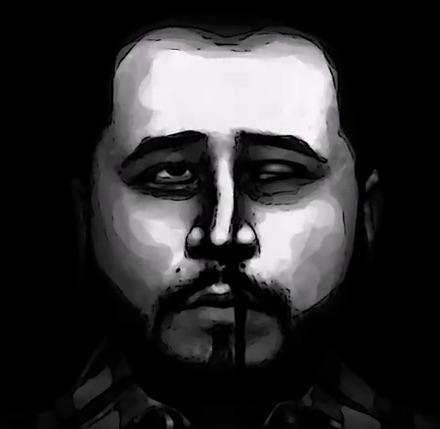
The prosecutor in the case of a white man accused of shooting an unarmed black teenager called the conduct of the defense lawyer "a slippery slope" in pleading with the judge Friday to impose a gag order on all attorneys.

Assistant state attorney Bernie de la Rionda wants the order imposed because he believes George Zimmerman's attorney, Mark O'Mara, has been using a website and both social and news media to influence potential jurors.

He questioned O'Mara's motives and ethics in publicly questioning the credibility of potential witnesses in the high-profile case.

"My concern is if we are going to be able to pick a jury in Seminole County or anywhere else in the state of Florida?" De la Rionda told the judge. "Commenting on the credibility of witnesses? Why do we have an ethical rule about that?"

Circuit Judge Debra Nelson delayed issuing a written ruling until at least Monday after hearing more than an hour-and-a-half of arguments.

The 29-year-old Zimmerman is charged with second-degree murder in the February shooting of Trayvon Martin. Zimmerman has pleaded not guilty claiming self-defense.

O'Mara denied that he had crossed any ethical lines, but said his unique approach in this case has been done to combat what he believes are attempts by attorneys for Martin's parents to paint Zimmerman as a "racist murderer."

"We had to do something to deal with the enormity of information flowing in the case," O'Mara said. " ... And we did it in a way we thought was principally presented."

O'Mara launched a website, as well as Twitter and Facebook accounts in April, citing a need to diffuse fraudulent internet entities that claimed to come from Zimmerman. O'Mara contends he didn't discuss any specific evidence and has been compliant with all bar rules.

The judge ruled on several other motions Friday, including setting a date for a hearing on the "Stand Your Ground" self-defense immunity for 45 days before trial. Nelson has previously scheduled Zimmerman's murder trial for June 10. A status hearing is set for mid-December.

In addition, Nelson gave the prosecution redacted copies of Zimmerman's medical records from his doctor visits in the weeks following the Feb. 26 shooting. The state had requested more records than it previously had been provided.

She redacted only information she said was not pertaining to the Martin case specifically. Zimmerman has claimed that the reason she shot the teen was because he feared for his life after Martin began to slam his head against the ground during a fight.

Nelson also will allow the defense to seek copies of any additional materials the Florida Department of Law Enforcement may have collected in the case that may have not been previously provided.

She also denied a defense request to have several Sanford police officials sequestered before giving depositions to the defense.

The prosecution had its first motion for a gag order denied in April by the former judge in the case, Kenneth Lester.

An appeals court forced Lester to step down from the case in August after it overturned his decision not to leave the case. O'Mara said that the judge made disparaging remarks about Zimmerman's character and advocated for additional charges against him in setting his $1 million bond in July.

Friday was the first time that Nelson has been presented with the gag order request since taking over the case.

De la Rionda argued in court filings that since Lester's denial of the gag order in April, O'Mara had "continued to have an inordinate amount of media coverage" with both Zimmerman and his attorney appearing on national television to talk about the case.

O'Mara in turn called the attorneys for Martin's parents_ Benjamin Crump and Natalie Jackson _ "state surrogates" for what he said have been their public attacks on Zimmerman by calling him "racist" and accusing him of profiling Martin.

"Crump and Natalie Jackson decided they would go to make this a national case because sometimes there's a pot of gold at the end of these cases," O'Mara said. " ... I'm not saying they are in a conspiracy, but they are in effect presenting the state's case."

McCain Dumps On Powell Again: He 'Got Us Into Iraq'

TPM

John McCain had some more critical words for Colin Powell on Friday, saying the former Secretary of State's involvement in the Iraq War should hurt his political appeal. Powell endorsed Obama this week for a second straight election.

"Colin Powell, interestingly enough, said that Obama got us out of Iraq," McCain told the National Review. "But it was Colin Powell, with his testimony before the U.N. Security Council, that got us into Iraq."

McCain lit into Powell on Thursday over his backing for Obama.

"General Powell, you disappoint us and you have harmed your legacy even further by defending what is clearly the most feckless foreign policy in my lifetime," McCain said on Brian Kilmeade's radio program.

He isn't the only top Romney supporter upset with Powell. John Sununu suggested on Thursday that Powell only endorsed Obama because they're both black.


Reading Guide: Where Romney and Obama Stand on the Supreme Court


ProPublica: Articles and Investigations 

 The Supreme Court has remained a largely unspoken topic on the campaign trail — even though the Court plays a critical function in Americans' lives. (This past June's Affordable Care Act ruling, anyone?)

The next president could very well appoint one or two new justices. And who steps down first could also depend on who's elected.

Mitt Romney hasn't said much about the Supreme Court, apart from expressing disagreement with the Court's ruling on Obamacare. But his website states the candidate would nominate judges "in the mold of" the Court's conservatives — Antonin Scalia, Clarence Thomas, Samuel Alito and Chief Justice John Roberts (the last two of whom a then-Sen. Obama voted against confirming). It also says Romney would like to see Roe v. Wade overturned.

President Obama, of course, has appointed two liberal justices, Elena Kagan and Sonia Sotomayor, the nation's first Hispanic justice. His past remarks indicate a preference for nominees who bring "common sense" and "pragmatism" to the table, who'd blend constitutional analysis with "a sense of what real-world folks are going through."

Legal challenges to such key social issues as same-sex marriage, gun rights, immigration and separation of church and state are likely to be heard by the Supreme Court in the coming years. One justice is all it may take to tip the scale in these cases.

So what exactly have the candidates said, and why hasn't the Supreme Court been a bigger issue? Let's take a look.

Mitt Romney

Romney has spoken out against the president's first-term Supreme Court picks.

In April, Romney told the National Rifle Association that he's opposed to judges "who view the Constitution as living and evolving, not timeless and defining."

"In his first term, we've seen the president try to browbeat the Supreme Court. In a second term, he would remake it," Romney said. "Our freedoms would be in the hands of an Obama Court, not just for four years, but for the next 40. That must not happen."

Romney has occasionally embraced recent Supreme Court decisions. He praised the Court's unanimous January 2012 ruling in a religious liberty case that allowed for a "ministerial exception" to employment discrimination laws. He favorably cited another unanimous March 2012 ruling that made it easier for property owners to challenge compliance orders from the Environmental Protection Agency.

The candidate has been vocal about abortion. In June 2011, Romney wrote that he felt Roe v. Wade was a "misguided ruling that was a result of a small group of activist federal judges legislating from the bench." Early this year, Romney repeated that position, and again in April during an interview with ABC News' Diane Sawyer.

His running mate, Paul Ryan, also touched on the Court's role when it comes to abortion. "We don't think that unelected judges should make this decision; that people, through their elected representatives and reaching a consensus in society through the democratic process, should make this determination," Ryan said in the vice-presidential debate.

As Vice President Joe Biden pointed out during this debate, one of the people heading Romney's panel of advisers on judicial appointments is Robert Bork, a Reagan Supreme Court nominee who failed to win Senate confirmation in 1987 over fears he would vote to strike down a range of issues, including Roe v. Wade.

(Biden, then the Chairman of the Senate Judiciary Committee, helped lead the opposition. The vacancy to which Bork was nominated eventually went to Justice Anthony Kennedy, typically the Court's swing vote.)

On another note, Romney would have a deep bench from which to select judicial nominees, given Republicans' vigorous focus on this area. (CNN has compiled a list of likely nominees, including former U.S. Solicitor General Paul Clement — who argued the Affordable Care Act challenge — and an assortment of conservative federal appellate judges.)

"Romney would appoint people with a more conservative judicial philosophy, who are not transforming the Constitution, not sticking up for the rights of any particular group and are very neutrally interpreting the law," said Curt Levey, president of Committee for Justice, an organization that promotes conservative judicial candidates.

President Obama

If Obama is reelected, there is strong speculation that Justice Ruth Bader Ginsburg, the Court's oldest member at 79, will retire to make room for a replacement. In that event, argue some, the president would likely nominate another woman (two other justices are also approaching their late 70s: Scalia and Kennedy are both 76.)

"[Obama] would place value on racial and ethnic diversity, but it wouldn't be determinative," said Tom Goldstein, co-founder and regular contributor to SCOTUSBlog, which provides news and analysis of the Court's decisions. "President Obama hasn't really pushed for very liberal nominees."

Back in 2008, Obama shed light on his thoughts about the subject.

In remarks to the Detroit Free Press, then-Sen. Obama said he would seek Supreme Court nominees who recognize "that one of the roles of the courts is to protect people who don't have a voice," for instance, "the vulnerable, the minority, the outcast, the person with the unpopular idea, the journalist who is shaking things up."

That same year, Obama, who taught constitutional law at University of Chicago Law School, praised former Justice David Souter and current Justice Stephen Breyer — both considered liberal votes — as "very sensible judges."

"They believe in fidelity to the text of the Constitution, but they also think you have to look at what is going on around you and not just ignore real life," he said.

Obama has made clear he supports Roe v. Wade, which has been narrowed in the face of new challenges.

In 2010, shortly after Justice John Paul Stevens announced his retirement, Obama told Senate lawmakers he'd apply no "litmus test" to potential nominees.

"But I will say that I want somebody who is going to be interpreting our Constitution in a way that takes into account individual rights, and that includes women's rights," the president said, eventually nominating Kagan for the vacancy.

In February 2011, Obama spoke out against the Defense of Marriage Act, which seeks to impose a definition of marriage as a legal union between a man and a woman, and instructed the Justice Department to stop defending the law in court. (A second federal appeals court recently struck down the law as unconstitutional; some predict the issue could next be headed to the Supreme Court.)

Although the president has been criticized for taking his time with judicial appointments in the lower federal courts — a gateway to the Supreme Court — he's also named more ethnic minorities to the bench than any of his predecessors.

More Discussion?

So, why hasn't there been more discussion about the Supreme Court on the campaign trail? It's a question that's been raised again and again, especially since justices, who are appointed for life, serve on average about 30 years.

One possible explanation is that the Supreme Court strategically took itself out of the political calculus earlier this year when it narrowly upheld the health care law.

"[The issue] would have played out a little differently if the Supreme Court had struck down the health care act," SCOTUSBlog's Goldstein said. "It's really hard for the president to run against the Court that has just upheld his signature legislative achievement by a whisker."

But the silence could also just convey a perceived lack of interest among the public.

"I think the candidates realize that the Supreme Court doesn't move independent voters," said Goldstein, even though "the president makes a radical difference in the composition of the judiciary."


Fox Freaks Out Over Routine Election Monitoring By International Organization

Media Matters for America

Fox News hosts and contributors are manufacturing panic over the arrival of election monitors from the UN-affiliated Organization for Security and Cooperation in Europe (OSCE), insinuating that they will interfere with the November 6 election. But the OSCE has monitored elections in the United States since 2002, without any complaints that they meddled in the election.

As Think Progress has noted, the observers are coming at the invitation of the State Department after a number of civil rights organizations requested their presence due, in part, to new voter ID laws that threaten to disenfranchise young, minority, and elderly voters.

Several days earlier, the Drudge Report and Fox Nation highlighted a story from The Hill about the presence of international election monitors arriving for the 2012 election. On Tuesday, Fox News' evening shows began fearmongering about the observers.

During Tuesday's edition of The O'Reilly Factor, Fox host Kimberly Guilfoyle called the election monitoring "meddling of a bizarre nature," and said there are "members from terrorist countries that are amongst" the election monitors. On Wednesday, conservative radio host Dennis Miller -- who has a regular segment on the Factor -- claimed that the OSCE monitors are "going to make sure Jews don't vote." On both nights, O'Reilly imagined a scenario of New Black Panther members assaulting the observers.

On Thursday, Fox Business host Lou Dobbs highlighted Texas Attorney General Greg Abbott's threat to arrest the OSCE observers if they come near or enter a polling place, summing it up as: "Don't mess with Texas."

On Friday, Fox News contributor Dick Morris released a video claiming that election monitoring and other UN actions might figuratively constitute a UN coup d'etat. Morris stated:

The threat we face is from the United Nations. Now, I'm not literally suggesting that black helicopters are going to land on the Rose Garden and blue-helmeted UN troops are going to do a coup d'etat. But figuratively speaking, that is a metaphor for what's going on at this point. Just two weeks ago, or last week, the United Nations announced -- get this -- they are going to send monitors to observe elections in the United States to determine that our elections are fair and free.

This unwarranted wave of panic is undermined by the fact that the OSCE has been monitoring U.S. elections by invitation since 2002. Conservatives are upset that OSCE representatives recently met with civil liberties groups concerned about voter suppression, even though that is not the organization's primary mission. An October 20 report from The Hill explains:

The observers, from countries such as Germany, France, Serbia, Belarus, Ukraine and Kazakhstan, will observe voting at polling places and other political activity.

"They [will] observe the overall election process, not just the ballot casting," said Giovanna Maiola, spokeswoman for OSCE. "They are focusing on a number of areas on the state level, including the legal system, election administration, the campaign, the campaign financing [and] new voting technologies used in the different states."

In a follow-up e-mail, Maiola noted that it is a limited election-observation mission. She said "the OSCE has regularly been invited to observe elections in the United States, in line with OSCE commitments."

[...]

The OSCE has 56 participating states from Europe, Central Asia and North America, including the United States and Canada. It has assessed elections in the United States since 2002.

Wikileaks begins release of confidential US 'detainee policies'

Jurist

The controversial intelligence-leaking website Wikileaks [website; JURIST news archive] on Thursday began releasing [press release] a series of confidential US detainee policies [Wikileaks page], according to the website. The site said that it will release "more than 100 classified or otherwise restricted files from the United States Department of Defense" over the next month. Wikileaks said that many of the documents that will be released exemplify US "policies of unaccountability." One of the first documents to be released is the standard operating procedure (SOP) manual for Guantanamo Bay [JURIST backgrounder]. Wikileaks founder Julian Assange [Telegraph profile] said of the documents:

The "Detainee Policies" show the anatomy of the beast that is post-9/11 detention, the carving out of a dark space where law and rights do not apply, where persons can be detained without a trace at the convenience of the U.S. Department of Defense. It shows the excesses of the early days of war against an unknown "enemy" and how these policies matured and evolved, ultimately deriving into the permanent state of exception that the United States now finds itself in, a decade later.

The US government has not commented on this newest leak.

The US government has struggled to deal with the release of confidential files on Wikileaks. Army Col. Denise Lind in June ordered [JURIST report] the prosecution in the case against Pfc. Bradley Manning [advocacy website; JURIST news archive] to submit to her a number of files that were allegedly withheld from the defense during discovery. Manning is accused of transferring more than 700,000 confidential documents and video clips to Wikileaks, the largest intelligence leak is US history. Manning's defense has argued the leaks did not hurt US national security, but the US Army has responded that Manning's actions indirectly aided al Qaeda. Manning was formally charged [JURIST report] in February with 22 counts, including aiding the enemy, under the Espionage Act. In April 2011 WikiLeaks began publishing the Guantanamo Files [JURIST report], a collection of more than 700 classified documents relating to the evidence and treatment of almost all detainees held at Guantanamo Bay between 2002 and 2008. In December 2010, UN High Commissioner for Human Rights Navi Pillay criticized [JURIST report] actions by governments and corporations worldwide to cut off funding to WikiLeaks, saying it could violate the website's rights to free expression.

Tennessee appeals court upholds state voter ID law but says library cards ok

Jurist

The Tennessee Court of Appeals rejected [opinion, PDF] a challenge to the state's voter identification law [SB 16, PDF] Thursday while upholding the validity of Memphis public library cards as acceptable forms of voter ID. The state had argued that the Memphis library is not an entity of the state as defined in the law as an approved provider of acceptable forms of photo ID. In examining the intent of the legislature the court ruled that allowing such local government entities to produce voter IDs is consistent with and furthers the goals of the legislation, and ordered that Memphis library cards immediately begin to be accepted at Tennessee polling places. The three-judge panel then upheld the constitutionality of the voter ID law over larger arguments that it represents an undue burden on individual voters under the Tennessee Constitution [text, PDF]:

The legislature has determined, pursuant to its authority to secure the integrity of elections, that requiring photographic identification will advance the state's interest in preventing in-person voter fraud. We agree that the requirement bears a substantial relation to the state's interest. ... Showing a photo ID is not a significant intrusion or burden. ... The photographic identification requirement, in the context of the statutory scheme, serves the State's interest in the integrity of elections in the least intrusive manner possible.

The court also rejected arguments that the ID requirement constitutes an Equal Protection [Cornell LII backgrounder] violation akin to a poll tax, holding that the fees required for documentation to obtain a photo ID are not tied to voting in that such documents, such as a birth certificate, have "independent value separate and apart from voting." Secretary of State Tre Hargett [official website] praised the decision to uphold the law but announced that the state would appeal the library card order [AP report] to the Tennessee Supreme Court [official website], effectively putting the order on hold pending further appeal.

The issue of voting rights [JURIST backgrounder] remains a contentious issue in the US, particularly in the run-up to the 2012 presidential election. At least 30 states have passed laws [NCSL backgrounder] that require voters to present some form of ID at the polls. Earlier this month the Pennsylvania Commonwealth Court [official website] issued a preliminary injunction [JURIST report] preventing Pennsylvania's new voter ID law [HB 943 materials] from taking effect before the upcoming election. That same week Mississippi Attorney General Jim Hood [official website] announced that his state's voter ID law will not take effect [JURIST report] before the November election. Also this month the US District Court for the District of Columbia [official website] ruled that South Carolina's new voter ID law [A27, text] does not discriminate against racial minorities [JURIST report], paving the way for the law to take effect next year.

ACLU Regional Center for Border Rights Urges Full Investigation of Texas State Trooper Killing of Two Unarmed Migrants

ACLU

The ACLU of New Mexico Regional Center for Border Rights today denounced the fatal shooting of two unarmed passengers in a moving vehicle by a Texas state trooper in a helicopter. The incident took place Thursday afternoon near the south Texas border town of La Joya. A Texas Parks and Wildlife Department game warden called in the Department of Public Safety helicopter to assist in the pursuit of a vehicle he suspected was smuggling contraband. A sharpshooter fired on the vehicle multiple times, killing two passengers and wounding another. Initial reports suggest the truck was loaded with Guatemalan immigrants.

“Using deadly force in this situation was reckless and resulted in the tragic and unnecessary deaths of two people,” said Vicki Gaubeca, Director of the ACLU-NM Regional Center for Border Rights. “We urge a full and thorough investigation of this incident. We cannot allow our law enforcement officials—be they local or federal—to continue the ‘shoot first, ask questions later’ attitude that has resulted in the deaths of 18 people along the border over the past two years.”

Since January 2010, 18 individuals have died or were seriously injured by CBP officials in use-of-force incidents. Of these, eight cases involve agents responding to individuals alleged to be throwing rocks and six involve individuals killed while standing on the Mexican side of the border. Six of those killed were under the age of 21 and five were U.S. citizens. A federal investigation has been concluded in only one of these cases, without corrective action, and these abuses are subject to minimal oversight and accountability.

ExxonMobil oil chief 'assassinated' in Brussels street

Citizens for Legit Gov

Nicholas Mockford, a British executive for the oil company ExxonMobil has been shot dead in front of his wife in an assassination-style killing in Brussels. Belgian police have imposed a news blackout after Nicholas Mockford, 60, was shot as he left an Italian restaurant in Neder-over-Heembeek, a suburb of the capital. The executive was shot three times, once as he lay on the ground, after leaving the Da Marcello restaurant in Rue de Beyseghem at around 10pm on Oct 14... One family member told The Daily Telegraph he believed Mr Mockford had been killed in a professional hit.

Up to 40 percent may vote early in U.S. election; Obama crusing

Reuters

Early voters could account for up to 40 percent of all ballots cast in the 2012 U.S. presidential election, and polls of people who already voted show President Barack Obama with a comfortable lead over Republican challenger Mitt Romney.

Both candidates have been urging supporters not just to vote but to do it early as Republicans and Democrats campaign vigorously - particularly in key battleground states - to lock up as many votes as possible before Election Day on November 6.

Polls of people who say they already have voted show Obama with a lead in many of the states. The Obama campaign, which benefited from early voting in 2008, has focused heavily on urging supporters to vote early in this election as well.

Provocative Prosecutor Causes Juror to Walk - Juror replaced after saying that racial slur offended him

Tenessean 

A juror was excused Wednesday on the second day of a federal drug conspiracy trial in Nashville after saying that the defendants’ racially derogatory language, as quoted by the prosecutor, offended him.

In the prosecution’s opening statements, Assistant U.S. Attorney Sunny A.M. Koshy quoted the three black defendants’ use of the racial expletive among themselves. A black juror brought it to the court’s attention that the language used offended him to the point that he could no longer be a fair juror.

“It just made me cringe, and I knew there was no way I could move past that,” the juror said.

He was replaced with an alternate juror.

The trial continued in U.S. District Court with the defense’s opening statements. Travis Gentry, Frank Randolph and Patrick Smith have various charges against them, including facilitation of a drug conspiracy, intent to distribute drugs and money laundering.

Gentry’s lawyer, Barry Tidwell, said the prosecution’s evidence hinges on incredible witnesses, such as informant Josh Harvey, who faced a drug charge before he cooperated with the government, and Gentry’s ex-girlfriend, Amber Stack.

John S. Colley III, Randolph’s lawyer, said his client held two full-time jobs.

“All this money that the U.S. government is going to jump up and down about, saying it’s drug money, was earned the same way we all earn it — legally,” Colley said.

“The proof is going to show that (Smith and Gentry) were friends,” Hawkins said. “They partied together, did drugs together and got drugs for each other. But the proof will not show that they intended to distribute over five kilos of cocaine.”

The government’s first witness, Giles County narcotics investigator Michael Thomason, told jurors that the informant agreed to cooperate with the government after he was caught with 75 methadone pills.

“I didn’t want to get charged with a crime because I was told it would affect me having my daughter,” Harvey told Tidwell during cross-examination.

Pakistani Man bought NFL Jaguars undeterred by racism

CBS

In a 60 Minutes profile, Jacksonville Jaguars owner Shahid Khan is seen in the parking lot of his team's stadium surrounded by well-wishers. Presumably, these fans of the popular Jaguars' owner were not the ones who spouted anti-Muslim epithets on the Internet when they learned the Pakistan-born billionaire was buying their football team. Khan tells Byron Pitts that such prejudice only made him more determined and denies rumors that it caused the former owner to offer him an escape from the deal. Pitts' report on Khan's remarkable immigrant's journey to the top of American business will be broadcast on 60 Minutes, Sunday, Oct. 28 at 7:00 p.m. ET/PT.


Some Internet posts seen around the time Khan bought the team referred to the Jaguars' new owner as a "sand monkey" and a "terrorist from Pakistan." Khan, in the U.S. since 1967 when he came here to attend college, says he's heard it before. "[I reacted] the way I reacted most of my life, which is it's not really my problem. It's their problem," he tells Pitts. "It was not Jacksonville's finest moment."


Asked by Pitts if it was true whether former owner Wayne Weaver, embarrassed by the comments, had offered to let him out of the deal, Khan replies, "I wouldn't characterize it that way. I think he was surprised. And he wanted to just make sure that you know, it wasn't giving me pause." Did it? "None whatsoever," says Khan. "As a matter of fact, if it was possible for me to be more determined, it... gave me more determination."


Khan made a fortune in auto parts, particularly a one-piece truck bumper he helped design and then went on to develop to phenomenal success. Today, two-thirds of all cars and trucks sold in the U.S. contain at least one part made by Khan's company, Flex-N-Gate. It was the American dream realized by a 16-year-old who came to the U.S. for college with $500 to his name and worked his way up to the Forbes List of the 400 richest Americans.


He expresses little nostalgia for his native Pakistan, which he says does not offer the same opportunities as the U.S. "See how hard things are? You know, power's going out, it's 108 degrees. It's tough," he tells Pitts on a visit back to his old neighborhood in Lahore. "I think the biggest impediment here is that hope -- and you know, getting to the next stage -- it doesn't matter how hard you work, there are forces that kind of prevent you from being the best you can be."


In Virginia, 350 Thousand Would-Be Voters Wait for Democracy’s Slow Return

TheNation

Virginia is one of four states this year that permanently disenfranchises anyone with a felony conviction, a right only regained by appealing directly to the governor. James is one of 450,000 people disenfranchised under the felony statute, 350,000 of whom are not in jail but in society—242,000 of whom are African Americans.

The state’s felony disenfranchisement law was cultivated (though not born) during the turn of the 20th century, post-Reconstruction era when white lawmakers sought to limit, if not erase black political power after slavery was abolished. Millions of African Americans in Virginia over the past hundred years have been excluded from democracy as a result. The state now faces a massive collision between its Confederate history and its present racial realities, as civil rights advocates struggle to reconcile the two.

In May 2010, shortly after he took office, Gov. Bob McDonnell, a Republican, agreed to streamline the felon rights restoration process. He committed his office to processing restoration applications within 60 days, as opposed to the months for which applications languished in limbo in previous administrations.

This won’t help Lukita James for November. Even if she placed her application directly in Gov. McDonnell’s hands by close of business, the earliest she might hear back would be two weeks later, well after the voter registration deadline. As the day winds to a close, she heads to the county court to request the information she needs to complete her application for restoration. Before she leaves she asks Kennedy for a voter registration form for her older son, who’s 19. She can’t cast a ballot this year, but he still has time.

A Break With the Past

McDonnell’s commitment to review voting rights restoration applications in a shorter time than past governors may seem trivial, but advocates in the Virginia Voter Restoration coalition call it a “victory.” It’s a larger concession than any garnered from previous governors, even Democrats. But they believe McDonnell can go farther, grantingautomatic rights restoration.

There is, in fact, litigation pending in the U.S. District Court that could lead to automatic restoration. In a lawsuit filed July 24 against McDonnell’s administration, former Richmond City Councilman Sa’ad El-Amin, 72, is arguing that the felony disenfranchisement law is unconstitutional. El-Amin, who was convicted of felony tax evasion in 2003 and served three years in prison, is hanging his own right to vote on his lawsuit, which he says shows that the disenfranchisement law is an offspring of early Black Codes laws rooted in white supremacist intentions. It’s somewhat of a long shot, but El-Amin is less faithful in the “piecemeal” route to automatic rights restoration through the governor.

“It’ll never happen,” says El-Amin. “You know why? Because this is the same governor and general assembly that just passed a voter ID law, which is just another form of voter suppression.”

That said, the felon rights restoration coalition has made inroads with McDonnell’s office, after being stiff-armed and ignored by the state for almost 30 years. King Salim Khalfani, chairman of NAACP’s Virginia State Conference explains to me the decades-long struggle with the Commonwealth as we ride to 18th and Broad Street, near downtown Richmond, not far from a historic burial ground for enslaved Africans. Here, a voter registration tent is set up by Clovia Lawrence, a local radio personality, as part of her Rolling for Freedomproject to increase black voter participation.

A man named “Mr. Stuart” approaches the tent, which is stacked with voter registration forms, rights restoration applications, and other “know your voting rights” literature, but he’s already registered. Twice this year he sent in registration forms, he says, but he hasn’t received his voter identification card from the county. A woman at the tent points Mr. Stuart to Khalfani, who whips out his cellphone, dials digits and then hands the phone over. Within seconds, Mr. Stuart hands Khalfani his phone back. He’ll have his voter card in a few days he’s told.

“Any issues I have with someone’s registration or restoration status, I send a call or an email to the Secretary [of the Commonwealth] and it’s resolved,” says Khalfani with complete assurance. Khalfani credits McDonnell with having “the most open and accessible” administration ever.

However, the relationship is somewhat “fragile,” one advocate tells me, and contingent upon the governor delivering on his promises—namely, processing applications in a timely manner and not shutting the advocates out.

The coalition has not abandoned the fight for automatic rights restoration, though, and some are even leery of McDonnell’s 60-day turnaround process. “Gov. McDonnell and the Secretary of the Commonwealth have stepped up their efforts and we applaud that,” says Edgardo Cortes, Advancement Project’s director of Virginia Voting Rights Coalition. “But given the way the system is set up, there is no way that any process short of automatic restoration can handle the overwhelming number of people who’ve lost their voting rights.”

’The Darkey as a Political Factor’

To El-Amin, the streamlined process is beside the point, because the law is wrong on its face. His legal argument is quite complex, but ultimately it rests on the 14th Amendment equal protection clause and the U.S. Supreme Court decision Hunter vs. Underwood. That ruling struck down part of Alabama’s criminal disenfranchisement law because it was passed during a time when white lawmakers were purposely seeking to limit black voting strength. The post-Emancipation fears of white Confederates that formerly enslaved blacks would outnumber whites, giving them electoral power, led to a number of efforts to suppress and outlaw black votes. Felony disenfranchisement was one of them, argues El-Amin.

Felony disenfranchisement laws actually pre-date Reconstruction, when they applied to both blacks and whites. But during the 1901-‘02 Virginia Constitutional Convention, a state senator named Carter Glass made clear what the 20th century intentions of them would be:

“This plan…will eliminate the darkey as a political factor in this state in less than five years, so that in no single county…will there be the least concern felt for the supremacy of the white race in the affairs of government.”

“If African Americans were more aware of this history then we would be more protective of our right to vote,” says El-Amin. “If they understood the efforts that went into disenfranchising us then they wouldn’t want to just sit back and wait for stuff to happen.”

It sounds like the romance of a civil rights idealist, but in Richmond, he can speak this kind of truth to power because he did it. As a city councilman from 1998 to 2003, and a civil rights attorney before that, El-Amin didn’t shrink from racial justice fights. Anytime the city attempted to build something or pass a law that encroached upon Black Richmond’s legacy, he boldly flashed that legacy in their face. More importantly, he won. When the Richmond Riverfront Redevelopment Corporation attempted to hang a mural near downtown that included an image of Confederate Gen. Robert E. Lee, El-Amin had it shut down. And recently when Virginia Commonwealth University laid a parking lot over a slave burial ground site, El-Amin led a swelling coalition of civil rights activists, professors and students to dig the asphalt back up and preserve the graveyard.

El-Amin saw VCU’s parking lot maneuver as just another sign of Virginia attempting to pave over the history of injustice towards African Americans—El-Amin’s “Get your ASS-phalt off our ancestors” slogan was the rallying cry. And while some might say this is a symbolic victory, the felony disenfranchisement battle shows how the symbols of a racist past reinforce racist policies of the present.

When McDonnell took office in 2010, he became the focus of national controversy after proclaiming April Confederate History Month—and leaving any mention of slavery out of his proclamation. The political fallout forced McDonnell to face Khalfani and the civil rights community, which ultimately led to the governor’s public commitments to expedite voting rights restoration and open access to his office.

The Pace of Change

While the McDonnell administration is duking it out with El-Amin in court, it is playing nicely with civil rights advocates on the ground. Just how nicely is a matter of perspective. Coalition members agree the 60-day turnaround period is being honored. Asked if McDonnell is making good on this, Clovia Lawrence says, “Yes, he has. I know people who had their rights restored in two weeks.”

McDonnell’s administration has approved 90 percent of the rights restoration forms it’s received from those with non-violent felony convictions, and 80 percent of those with violent felony convictions. He is on course to restore the voting rights of more felons than any governor before him, and we know these percentages and record-breaking stats because Secretary of Commonwealth Janet Kelly tells us this and newspapers havegleefully repeated it.

What we don’t know is the exact number of people who have applied. Nor do we know the number of applications denied, pending or sent back because they were incomplete or ineligible. Kelly told me “it’s impossible to pinpoint an exact figure” because some were considered incomplete or ineligible. Asked how many applications they had processed since they announced the 60-day turnaround window, Kelly responded, “All eligible applications, once deemed complete, are decided on within the Governor’s self-imposed 60 day deadline. The only reason an application would NOT be decided on in 60 days is that it is not complete. Frequently, we have to get information from outside sources (Clerks of Court,etc) to complete and verify the application. Once we receive that information, the 60 day clock starts.”

That last point must be underscored. The 60-day clock doesn’t start on the application’s post date, or even on the day that the Secretary of Commonwealth’s office receives it. In order for an application to be considered complete or eligible, a county court clerk must send the secretary a certified copy of an applicant’s sentencing order from conviction. That form is not given to the applicant. The clerk can only send that directly to the Commonwealth’s office. One advocate told me that in some cases a clerk can give an applicant a letter verifying possession of the sentencing record and their intent to send it off. Others told me that sometimes applicants seek the sentencing order from court clerks and are told it’s not on file or doesn’t exist. Until that’s reconciled, the clock doesn’t start.

There are other potential jam-ups: Some applications aren’t considered complete or eligible without a letter from a probation officer stating the probation is complete. Depending on how long it takes for that officer to write and send the letter, that can delay the clock. Then there are the criminal background checks done by state police. People with non-violent felonies have a two-year waiting period before they can apply for restoration while those with violent felonies have to wait five years. If in that waiting period you get a DUI then your waiting period starts over. So background checks are conducted to find out if a DUI exists, and that takes time.

This is why Cortes said that the current restoration process is not adequately set up to meet the needs of the 350,000 people currently disenfranchised.

‘Years in the Making’

While the Commonwealth’s office processes each application, the sole discretion of whether or not to approve restoration lies with the governor, who must sign off on every single application. An NAACP report, “Silenced in Virginia,” says that in order to restore the rights of every felony disenfranchised person the governor would have to review one application every hour for 24 hours for 51 years. Which seems to confirm El-Amin’s summary of the chances automatic rights restoration will come through the governor or legislatively: “It’ll never happen.”

Advocates like Kennedy believe that it can happen, though, mainly because of the victories achieved by El-Amin. Citing El-Amin’s work in the slave burial ground campaign, Kennedy says, “That was years in the making. So we can’t get complacent and say it’ll never happen because I’ve seen what happens when people come together.”

Still, Kennedy understands the current reality, which is that many formerly incarcerated people won’t have their rights restored for this year’s elections. She explained this to Lukita James as she helped her with her restoration application in the Henrico library. James understood it as well, but felt it was important anyway so that she could vote in future elections.

The courage of James to go through this process as a former felon did not go unnoticed by Kennedy, especially as it was discussed before her 5-year-old son, and an unknown journalist. When Kennedy looked up James’ conviction file in an online database, with the assistance of her organizing partner Cathy Woodson, they couldn’t find it. That means the courts either lost James’ file, or James didn’t have a felony to begin with and thought she did, says Kennedy.

Many people go through life without having their rights restored, afraid or ashamed to “come out” as a felon, explains Woodson. But the racial history El-Amin is dredging up shows that many African Americans are disenfranchised not because they are criminals, but because their blackness was criminalized.

“I met a guy at a church who lost his right to vote at 18, and now he’s 60-something years old,” says Woodson. “And you know how things were for black people back then—that conviction could have been for anything. He told me that he wanted his right to vote restored before he died. He had been eligible for restoration long ago, but all that time he went without voting, he said, because he didn’t want people to know that he had a felony criminal record.”
Va. white supremacist resentenced

WSLS

A Virginia white supremacist convicted of making threats and intimidation will spend another three months.

The Roanoke Times (http://bit.ly/SfwXoz ) reports that William A. White was resentenced Tuesday in U.S. District Court in Roanoke.

White received a two-and-a-half-year sentence in 2009. But a three-judge panel of the 4th U.S. Circuit Court of Appeals ordered a new sentence earlier this year.

The court said U.S. District Court Judge James Turk didn't apply the proper sentencing enhancement for targeting vulnerable victims. The intimidation charge stemmed from a letter White addressed to the young children of an apartment resident who was suing her landlord for discrimination.

White completed his original sentence. But he received another 10 months behind bars in September for violating his supervised release by traveling to Mexico.

___

Florida city Targets Black Youth with Saggy Pants Ban - (Nearly Naked White Women Jog all over every urban City)

Sallywagon

The city council banned pants that expose underwear or skin more than three inches below the waistline on streets, sidewalks and other city property.

If a police officer judges the clothing to violate the law, then the offender will fined $25 for the first offense, $75 for a third and $100 for every time after that.

The wearing of baggy pants is usually favored by urban youth which has led to the argument of racial profiling as officers are now allowed to stop individuals simply on the basis of the clothes they are wearing.

Cocoa Police Chief Mark Klayman supports the ordinance and considers it an opportunity to confront individuals on the street.

“This would give the police officers the probable-cause stop,” Klayman said. “This could also be a measure to allow us to get drugs and guns off the street just based on this stop.”

Alberta Wilson, president of the Central Brevard Branch of the National Association for the Advancement of Colored People (NAACP) told FloridaToday.Com: “This is nothing more than a vehicle for further harassment of young people. I don’t like the saggy pants anymore than you do, however, I respect people’s Constitutional rights.”

“As disgusting as it may be, that is his civil right to do so. I’m worried about enforcement, I fear a police officer getting some resistance and resorting to some means and doing bodily harm to a child.”
Notwithstanding the constitutional right that individuals ought to have when it comes to deciding what they are wearing one wonders what’s next? Admittedly the wearing of saggy pants is an eyesore and it has been documented that it does cause issues with hip motor rotation as individuals are forced to wear compensate with their hips to keep their pants on. It could be an issue of offending public tastes and following public decorum (which is why there are indecency laws in place) but then again how would we be reacting if this was Muslim women wearing a veil which is mandated on religious grounds?

Then again who made the City of Cocoa the new fashion police? Really does the wearing of saggy pants really hurt anyone besides the wearer, and those who insist on imposing their aesthetic choices on others? Perhaps really in the end this is just a cynical way to allow an abusive law to get by given that saggy pants are generally detested by most and will inevitably allow authorities another way to stop individuals that it normally wouldn’t be able to stop, so much for liberties…

Reflect a variety of commentators on the web:

welcome to the new America…. where government tells you what to eat, what to wear and what to think… I find the saggy pants thing disrespectful and in bad taste, but dressing like a clown should still be a choice.


Great idea. Next ban the idiots from wearing their hat backwards.

That trend was old five years ago and stupid when it was a trend. Not sure why so many males are copying something from prisons that make the statement that they are ready for sex with another man.


If it is indecent exposure, there’s a law that can be used to charge them and, ironically, it just so happens to be called “indecent exposure”. This is legislating for two reasons: a) gain popularity with the 99.2362% of the population like me that hates the look and, more importantly, b) to give cops an iota of probable cause to profile based on age and presumably race to some degree during fishing expeditions that otherwise might come under scrutiny.


Wow!!! So a kid walking down the street can now get fined,searched or taken to jail because his pants are sagging. Know skin is showing & if someone walked down the road in boxers & Tshirt its not a crime. Republicans always talkin about less Government but always coming up wit stupid laws to take our rights away. I am totally against saggy pants or clothes, my 12yr old son would never get caught sagging but just because I don’t like it doesn’t mean we should pass a law against it. Whats next guys with no shirts on? If you turn your radio to a station you dont like u turn to a different one, If u see a dude wit saggy pants on stop looking. Our police have more serious crimes to be working than a homeless man wit saggy pants or a skater

Israeli poll finds majority in favour of 'apartheid' policies for Palestinians

Guardian

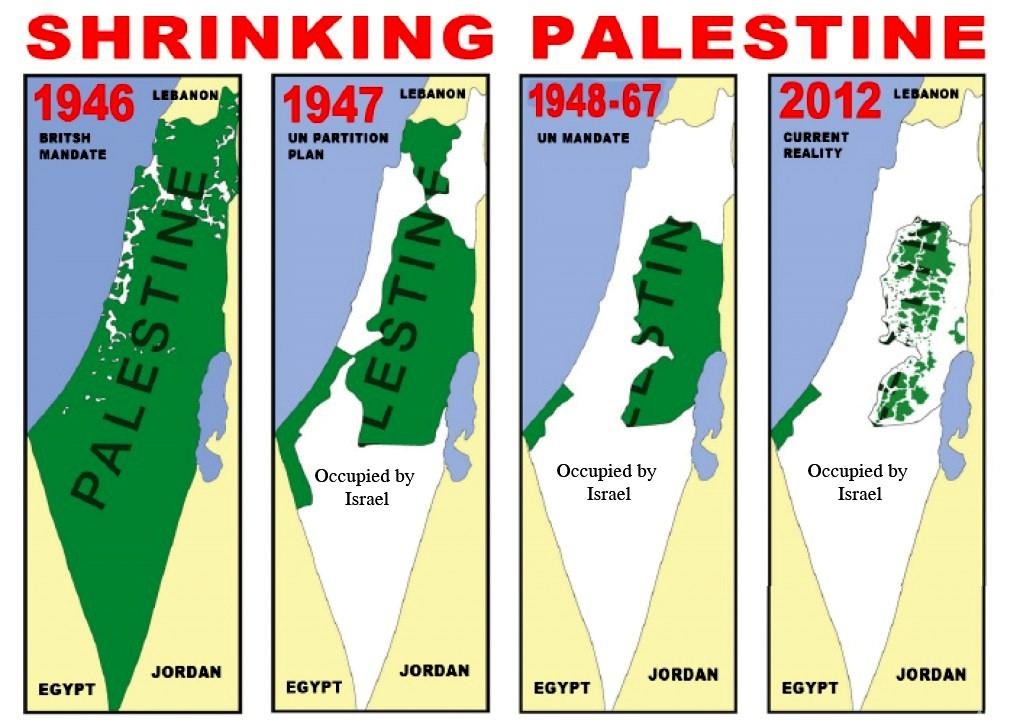
More than two-thirds of Israeli Jews say that 2.5 million Palestinians living in the West Bank should be denied the right to vote if the area was annexed by Israel, in effect endorsing an apartheid state, according to an opinion poll reported in Haaretz.

Three out of four are in favour of segregated roads for Israelis and Palestinians in the West Bank, and 58% believe Israel already practises apartheid against Palestinians, the poll found.

A third want Arab citizens within Israel to be banned from voting in elections to the country's parliament. Almost six out of 10 say Jews should be given preference to Arabs in government jobs, 49% say Jewish citizens should be treated better than Arabs, 42% would not want to live in the same building as Arabs and the same number do not want their children going to school with Arabs.

A commentary by Gideon Levy, which accompanied the results of the poll, described the findings as disturbing. "Israelis themselves … are openly, shamelessly and guiltlessly defining themselves as nationalistic racists," he wrote.

"It's good to live in this country, most Israelis say, not despite its racism, but perhaps because of it. If such a survey were released about the attitude to Jews in a European state, Israel would have raised hell. When it comes to us, the rules don't apply."

The poll was conducted by a public opinion firm, Dialog, which interviewed 503 people out of an Israeli Jewish population of just under 6 million.

Talk of the possible annexation of the West Bank, or the main settlement blocks within it, has increased in recent months as expectations of a negotiated settlement to the conflict have sunk to an all-time low. Israel's defence minister, Ehud Barak, recently argued for the annexation of land between the internationally recognised Green Line and the Israeli-built separation barrier.

The poll results will bolster the claim of Israel's Arab citizens, who make up 20% of the population, that they suffer from racist discrimination. Almost half the poll's respondents said Israeli Arabs should be transferred to the Palestinian Authority, and a third said that Arab tow

Read More

Texas attorney general threatens to arrest monitors observing US election

Guardian

The Texas attorney general, Greg Abbott, has threatened to arrest international election monitors invited by liberal groups to observe the conduct of next month's presidential vote in states accused of attempting to disenfranchise minorities.

Abbott has written to the Organisation for Security and Cooperation in Europe warning that its monitors have no right to monitor the vote even though they have observed previous US elections.

"The OSCE's representatives are not authorized by Texas law to enter a polling place. It may be a criminal offence for OSCE's representatives to maintain a presence within 100 feet of a polling place's entrance," he said. "Failure to comply with these requirements could subject the OSCE's representatives to criminal prosecution for violating state law."

The OSCE is sending 44 observers to voting stations across the US at the request of various groups, including the NAACP and the American Civil Liberties Union, because of "an unprecedented and sophisticated level of coordination to restrict voting rights in our nation". These include attempts by several states, including Texas, to introduce voter identification laws and other measures blocked by federal courts which have ruled they were motivated by racial discrimination.

In his letter, Abbott glossed over the recent judgements striking down the Texas identification law and pointed to a supreme court ruling in a case involving another state.

"The OSCE may be entitled to its opinions about voter ID laws, but your opinion is legally irrelevant in the United States, where the supreme court has already determined that voter ID laws are constitutional," Abbott said.


Read More

Obama tells Reporter: If I Win, It'll Be Because GOP 'Alienated' Latinos

Colorlines

In an interview with the Des Moines Register, which was originally conducted off the record but made public Wednesday, President Obama said if he's reelected it'll be because the GOP has ignored Latinos.

Des Moines Register editors accepted the interview with the President on the condition that it would be off the record, but once the interview was done the editors published a story urging the Obama campaign to release transcripts of the interview. On Wednesday the Obama campaign obliged.

Below is an except from Obama's interview with the DesMoinesRegister.com:

The second thing I'm confident we'll get done next year is immigration reform. And since this is off the record, I will just be very blunt. Should I win a second term, a big reason I will win a second term is because the Republican nominee and the Republican Party have so alienated the fastest-growing demographic group in the country, the Latino community. And this is a relatively new phenomenon. George Bush and Karl Rove were smart enough to understand the changing nature of America. And so I am fairly confident that they're going to have a deep interest in getting that done. And I want to get it done because it's the right thing to do and I've cared about this ever since I ran back in 2008.

"There's a difference between Latinos voting for you because the other party has so alienated them and Latinos voting for you because they enthusiastically support your policies and agenda and President Obama may be banking too much on the former and not paying enough attention to the latter," said Colorlines.com reporter Julianne Hing.


Read More

New Report: Teens in Solitary Confinement

ACLU

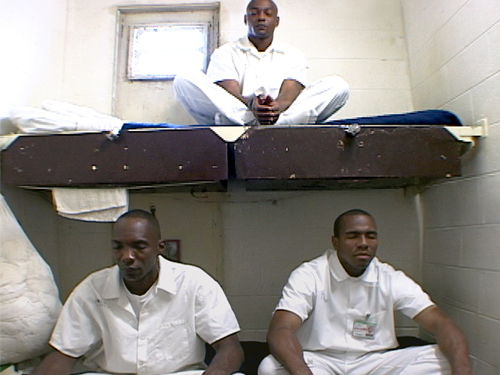
Young people are held in solitary confinement in jails and prisons in across the United States, often for weeks or months at a time, the American Civil Liberties Union and Human Rights Watch said in a report released today.

The 141-page report, “Growing Up Locked Down: Youth in Solitary Confinement in Jails and Prisons Across the United States,” is based on research in both US jails and prisons, and correspondence with young people in several states including Texas. The isolation of solitary confinement causes anguish, provokes serious mental and physical health problems, and works against rehabilitation for teenagers, Human Rights Watch and the ACLU found.

“Young people have rights and needs that are different from adults; jail and prison practices should reflect those differences and promote their ability to grow and change – we should invest in youth, not banish them,” said Terri Burke, Executive Director of the ACLU of Texas.

The report is based on interviews and correspondence with more than 125 young people in 19 states who spent time in solitary confinement while under age 18 as well as with jail and/or prison officials in 10 states.

“Locking kids in solitary confinement with little or no contact with other people is cruel, harmful and unnecessary,” said Ian Kysel, Aryeh Neier Fellow with Human Rights Watch and the ACLU and author of the report. “Normal human interaction is essential to the healthy development and rehabilitation of young people; to cut that off helps nobody.”
Human Rights Watch and the ACLU estimate that in 2011, more than 95,000 young people under age 18 were held in prisons and jails. A significant number of these facilities use solitary confinement—for days, weeks, months, or even years—to punish, protect, house, or to treat some of the young people held there.

Because young people are still developing, traumatic experiences like solitary confinement may have a profound effect on their chance to rehabilitate and grow, the groups found. Solitary confinement can exacerbate short and long-term mental health problems or make it more likely that such problems will develop. Young people in solitary confinement are routinely denied access to treatment, services, and programming required to meet their medical, psychological, developmental, social, and rehabilitative needs.

Young people interviewed for the report repeatedly described how solitary confinement compounded the stress of being in jail or prison. They spoke about cutting themselves with staples or razors while in solitary confinement; having hallucinations, and losing touch with reality. Several said they had attempted suicide multiple times in solitary confinement.

Those allowed outside described only being allowed to exercise in small metal cages, alone, a few times a week. Several said they could not get books, magazines, paper, pens, or pencils, or attend any classes or programming. For some, the hardest part about solitary confinement was being denied visits and not being able to hug their mother or father.

The solitary confinement of young people under age 18 is itself a serious human rights violation and can constitute cruel, inhuman, or degrading treatment under international human rights law, Human Rights Watch and the ACLU said. Conditions that compound the harm of solitary confinement, such as denial of educational programming, exercise, or family visits, often constitute independent, serious human rights violations.

A number of corrections officials have begun to recognize and speak against the use of solitary confinement, saying that it is costly, ineffective, and harmful.

There are alternative ways to address the problems—whether disciplinary, administrative, protective, or medical—that officials typically cite to justify using solitary confinement, while taking into account the rights and special needs of adolescents, Human Rights Watch and the ACLU said. Youth could be housed in specialized facilities organized to encourage positive behavior. And punishment should be proportional to the infraction, using any short-term isolation as a rare exception.

The federal and state governments should ban placing youth in solitary confinement, Human Rights Watch and the ACLU said. They should also prohibit housing adolescents with adults or in jails and prisons designed to house adults, and strictly regulate and monitor all forms of isolation of young people.

“Growing Up Locked Down,” as well as additional materials including a video, podcast and multimedia feature, can be found online at: www.aclu.org/growinguplockeddown.