How the U.S. Intentionally Destroyed Iraq's Water Supply

Progressive.org

Over the last two years, I've discovered documents of the Defense Intelligence Agency proving beyond a doubt that, contrary to the Geneva Convention, the U.S. government intentionally used sanctions against Iraq to degrade the country's water supply after the Gulf War. The United States knew the cost that civilian Iraqis, mostly children, would pay, and it went ahead anyway.

Over the last two years, I've discovered documents of the Defense Intelligence Agency proving beyond a doubt that, contrary to the Geneva Convention, the U.S. government intentionally used sanctions against Iraq to degrade the country's water supply after the Gulf War. The United States knew the cost that civilian Iraqis, mostly children, would pay, and it went ahead anyway.

The primary document, "Iraq Water Treatment Vulnerabilities," is dated January 22, 1991. It spells out how sanctions will prevent Iraq from supplying clean water to its citizens.

"Iraq depends on importing specialized equipment and some chemicals to purify its water supply, most of which is heavily mineralized and frequently brackish to saline," the document states. "With no domestic sources of both water treatment replacement parts and some essential chemicals, Iraq will continue attempts to circumvent United Nations Sanctions to import these vital commodities. Failing to secure supplies will result in a shortage of pure drinking water for much of the population. This could lead to increased incidences, if not epidemics, of disease."

The document goes into great technical detail about the sources and quality of Iraq's water supply. The quality of untreated water "generally is poor," and drinking such water "could result in diarrhea," the document says. It notes that Iraq's rivers "contain biological materials, pollutants, and are laden with bacteria. Unless the water is purified with chlorine, epidemics of such diseases as cholera, hepatitis, and typhoid could occur."

The document notes that the importation of chlorine "has been embargoed" by sanctions. "Recent reports indicate the chlorine supply is critically low."

Food and medicine will also be affected, the document states. "Food processing, electronic, and, particularly, pharmaceutical plants require extremely pure water that is free from biological contaminants," it says.

The document addresses possible Iraqi countermeasures to obtain drinkable water despite sanctions.

"Iraq conceivably could truck water from the mountain reservoirs to urban areas. But the capability to gain significant quantities is extremely limited," the document states. "The amount of pipe on hand and the lack of pumping stations would limit laying pipelines to these reservoirs. Moreover, without chlorine purification, the water still would contain biological pollutants. Some affluent Iraqis could obtain their own minimally adequate supply of good quality water from Northern Iraqi sources. If boiled, the water could be safely consumed. Poorer Iraqis and industries requiring large quantities of pure water would not be able to meet their needs."

The document also discounted the possibility of Iraqis using rainwater. "Precipitation occurs in Iraq during the winter and spring, but it falls primarily in the northern mountains," it says. "Sporadic rains, sometimes heavy, fall over the lower plains. But Iraq could not rely on rain to provide adequate pure water."

As an alternative, "Iraq could try convincing the United Nations or individual countries to exempt water treatment supplies from sanctions for humanitarian reasons," the document says. "It probably also is attempting to purchase supplies by using some sympathetic countries as fronts. If such attempts fail, Iraqi alternatives are not adequate for their national requirements."

In cold language, the document spells out what is in store: "Iraq will suffer increasing shortages of purified water because of the lack of required chemicals and desalination membranes. Incidences of disease, including possible epidemics, will become probable unless the population were careful to boil water."

The document gives a timetable for the destruction of Iraq's water supplies. "Iraq's overall water treatment capability will suffer a slow decline, rather than a precipitous halt," it says. "Although Iraq is already experiencing a loss of water treatment capability, it probably will take at least six months (to June 1991) before the system is fully degraded."

This document, which was partially declassified but unpublicized in 1995, can be found on the Pentagon's web site at www.gulflink.osd.mil. (I disclosed this document last fall. But the news media showed little interest in it. The only reporters I know of who wrote lengthy stories on it were Felicity Arbuthnot in the Sunday Herald of Scotland, who broke the story, and Charlie Reese of the Orlando Sentinel , who did a follow-up.)

Recently, I have come across other DIA documents that confirm the Pentagon's monitoring of the degradation of Iraq's water supply. These documents have not been publicized until now.

The first one in this batch is called "Disease Information," and is also dated January 22, 1991. At the top, it says, "Subject: Effects of Bombing on Disease Occurrence in Baghdad." The analysis is blunt: "Increased incidence of diseases will be attributable to degradation of normal preventive medicine, waste disposal, water purification/distribution, electricity, and decreased ability to control disease outbreaks. Any urban area in Iraq that has received infrastructure damage will have similar problems."

The document proceeds to itemize the likely outbreaks. It 'mentions "acute diarrhea" brought on by bacteria such as E. coli, shigella, and salmonella, or by protozoa such as giardia, which will affect "particularly children," or by rotavirus, which will also affect "particularly children," a phrase it puts in parentheses. And it cites the possibilities of typhoid and cholera outbreaks.

The document warns that the Iraqi government may "blame the United States for public health problems created by the military conflict."

The second DIA document, "Disease Outbreaks in Iraq," is dated February 21, 1990, but the year is clearly a typo and should be 1991. It states: "Conditions are favorable for communicable disease outbreaks, particularly in major urban areas affected by coalition bombing." It adds: "Infectious disease prevalence in major Iraqi urban areas targeted by coalition bombing (Baghdad, Basrah) undoubtedly has increased since the beginning of Desert Storm ... Current public health problems are attributable to the reduction of normal preventive medicine, waste disposal, water purification and distribution, electricity, and the decreased ability to control disease outbreaks." [MORE

Ex-CIA Officer John Kiriakou Pleads Guilty

FBI.gov

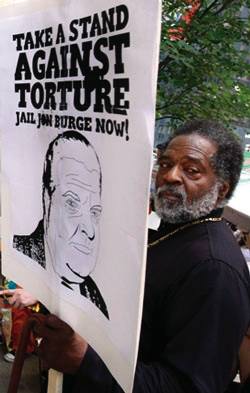
Former CIA Officer John Kiriakou, 48, of Arlington, Virginia, pleaded guilty today to disclosing to a journalist the name of a covert CIA officer and also admitted to disclosing information revealing the role of another CIA employee in classified activities.

Neil H. MacBride, U.S. Attorney for the Eastern District of Virginia, and James W. McJunkin, Assistant Director in Charge of the FBI’s Washington Field Office, made the announcement after the plea was accepted by U.S. District Judge Leonie M. Brinkema.

Kiriakou pleaded guilty today to one count of intentionally disclosing information identifying a covert agent. As part of the plea agreement, the United States and Kiriakou agree that a sentence of 30 months in prison is the appropriate disposition of this case. Sentencing has been scheduled for January 25, 2013.

“The government has a vital interest in protecting the identities of those involved in covert operations,” said U.S. Attorney MacBride. “Leaks of highly sensitive, closely held, and classified information compromise national security and can put individual lives in danger.”

“Disclosing classified information, including the names of CIA officers, to unauthorized individuals is a clear violation of the law,” said Assistant Director in Charge McJunkin. “Today’s plea would not be possible without the hard work of the prosecutors and FBI special agents and analysts who brought this case to justice and who will continue to pursue those who ignore their obligations to protect national security secrets.”

According to court records, the case is a result of an investigation triggered by a classified filing in January 2009 by defense counsel for high-value detainees at Guantanamo Bay, Cuba. This filing contained classified information the defense had not been given through official government channels, including photographs of certain government employees and contractors. The investigation revealed that on multiple occasions, one of the journalists to whom Kiriakou illegally disclosed classified information, in turn, disclosed that information to a defense team investigator. This information was reflected in the classified defense filing and enabled the defense team to take or obtain surveillance photographs of government personnel. The government has made no allegations of criminal activity by any members of the defense team for the detainees.

Kiriakou was a CIA intelligence officer between 1990 and 2004, serving at headquarters and in various classified overseas assignments. Upon joining the CIA in 1990 and on multiple occasions in following years, Kiriakou signed secrecy and non-disclosure agreements not to disclose classified information to unauthorized individuals. In a statement of facts filed with his plea agreement, Kiriakou admitted that he made illegal disclosures about two CIA employees and their involvement in classified operations to two journalists (referenced as “Journalist A” and “Journalist B” in court records) on multiple occasions between 2007 and 2009.

Kiriakou admitted that, through a series of e-mails with Journalist A, he disclosed the full name of a CIA officer (referred to as “Officer A” in court records) whose association with the CIA had been classified for more than two decades. In addition to identifying the officer for the journalist, Kiriakou also provided information that helped the journalist link the officer to a particular classified operation.

In addition, Kiriakou admitted that he disclosed to Journalists A and B the name and contact information of a CIA analyst, identified in court records as “Officer B,” along with his association with an operation to capture terrorism subject Abu Zubaydah in 2002. Kiriakou knew that the association of Officer B with the Abu Zubaydah operation was classified. Based in part on this information, Journalist B subsequently published a June 2008 front-page story in The New York Times disclosing Officer B’s alleged role in the Abu Zubaydah operation.

Without Kiriakou’s knowledge, Journalist A passed the information he obtained from Kiriakou to an investigator assisting in the defense of high-value detainees at Guantanamo Bay.

Kiriakou also admitted that he lied to the CIA regarding the existence and use of a classified technique, referred to as a “magic box,” while seeking permission from the CIA’s Publications Review Board to include the classified technique in a book.

This case was investigated by the FBI’s Washington Field Office, with assistance from the CIA and the Air Force Office of Special Investigations. Assistant U.S. Attorneys Iris Lan of the Southern District of New York; Mark E. Schneider and Ryan Fayhee of the Northern District of Illinois; and W. Neil Hammerstrom, Jr. of the Eastern District of Virginia are prosecuting the case on behalf of the United States.

Prop 34: Ex-San Quentin Prison Warden Jeanne Woodford Backs California Measure to End Death Penalty

Democracy Now! 

The former warden of San Quentin State Prison, Jeanne Woodford, joins us to discuss why she has come out in favor of Proposition 34, a ballot initiative to abolish the death penalty in California. Home to nearly a quarter of the nation’s death row population and in a state coping with budget crisis, independent analysts estimate that getting rid of the death penalty could save California taxpayers $130 million annually. The latest polls show a narrow margin of Californians oppose Prop 34 and that significant percentages are still undecided. Since leaving San Quentin — where she oversaw four executions, despite being personally opposed — Woodford now serves as executive director of Death Penalty Focus of California, which educates the public about alternatives to the death penalty.

Will Texas Admit It Wrongly Executed White Man?

Amnesty 

Today, the family of Cameron Todd Willingham filed a petition calling for his posthumous exoneration.  Exoneration, because he is almost certainly innocent. Posthumous because the state of Texas executed him anyway. More info can be found here, courtesy of the Innocence Project.

A Texas father of three, Willingham was convicted and executed for the alleged murder of his three daughters by arson. However, in a 2011 report, the Texas Forensic Science Commission concluded that unreliable fire science led to Willingham’s 1992 conviction and 2004 execution. Evidence cited as proof of an intentionally set fire, such as pour patterns, discoloration and “crazed” glass, has since been discredited.

If the petition is accepted and Willingham is posthumously exonerated, he will join with Timothy Cole in Texas, and Joe Arridy and Lena Baker in Colorado and Georgia, who, among others, were wrongfully convicted and executed or died in prison while serving out their sentence.

Timothy Cole, 1st Posthumous Exoneration in Texas

26-year-old Texas Tech student Timothy Cole was the first person to be posthumously exonerated in Texas. He had been wrongfully accused of the 1985 rape of fellow student Michelle Mallin. In 2008, DNA tests proved that Lubbock County police got the wrong man, but the finding came after Cole had died in prison in 1999 from complications with asthma connected to his forced labor in cotton fields.

The real perpetrator, Jerry Wayne Johnson, wrote to Lubbock County officials as soon as the statute of limitations had run out in 1995. At this time, Cole’s life could yet have been saved and his innocence proven, but Judge Jim Bob Darnell, who as an assistant district attorney had prosecuted Cole, chose to ignore the letters. Only in 2007 was a serious investigation launched into the case, prompted by Johnson’s insistent letters to newspapers and the Innocence Project. After Lubbock courts rejected the request for a court inquiry into the case, the inquiry moved to Travis County where, on February 13, 2009 District Judge Charlie Baird formally exonerated Cole.

Lena Baker, Self Defense=Electric Chair?

In 1944, Lena Baker, an African American Georgia woman, worked for a white man named Ernest Knight. Knight locked her in his gristmill against her will, and when she tried to escape, he threatened her. She grabbed his rifle and shot him in self-defense. She was tried, convicted, and sentenced to death in one day by an all-white all-male jury. Baker became the only woman to be executed by electrocution in Georgia. The Georgia Board of Pardons and Paroles officially pardoned her in 2005, stating that Baker “could have been charged with voluntary manslaughter, rather than murder,” which would have gotten her 15 years in prison, not execution. A dedication ceremony for a new headstone for her grave in was held in Cuthbert, GA in 2011.

Joe Arridy, Innocent, with an IQ of 46

Joe Arridy was convicted as an accomplice to a 1936 murder. 72 years after his execution, on January 7, 2011, Colorado Gov. Bill Ritter officially pardoned Arridy. His case included false and coerced confessions, a high likelihood that Arridy was not in town at the time of the crime, and an admission of guilt by another man. Arridy also had an IQ of 46 and reportedly “functioned like a toddler.” Gov. Ritter stated: “Pardoning Mr. Arridy cannot undo this tragic event in Colorado history. It is in the interests of justice and simple decency, however, to restore his good name.”

Whether the Texas government of Rick Perry, who executed Willingham despite knowing better and tried to quash the re-investigation of his case, will show such decency is of course an open question.  Whether our error-prone justice system should have to the power over life and death is not an open question – it shouldn’t.

ACLU to Testify at the United Nations on Human Rights Abuses and Excessive Use of Force against Non-Whites on US Border

ACLU

The American Civil Liberties Union is slated to present testimony today at the United Nations on human rights violations at the U.S.-Mexico border, including deaths as a result of the U.S. government’s border enforcement policy.

The testimony will include details of lethal shootings and excessive force by U.S. Customs and Border Protection (CBP) officials at the U.S.-Mexico border. Since January 2010, 20 individuals have died or were seriously injured by CBP officials in use-of-force incidents. Of these, eight cases involve agents responding to individuals alleged to be throwing rocks and six involve individuals killed while standing on the Mexican side of the border. Six of those killed were under the age of 21 and five were U.S. citizens. A federal investigation has been concluded in only one of these cases, without corrective action, and these abuses are subject to minimal oversight and accountability.

“The frequency and regularity of CBP’s lethal use of force is alarming and demands a comprehensive, independent investigation of CBP policies and practices,” says Brian Erickson, policy advocate at the ACLU of New Mexico Regional Center for Border Rights. “We look forward to the results of the Department of Homeland Security Office of Inspector General’s pending investigation into CBP’s use-of-force protocols and practices.”

This summer, 16 members of Congress, as well as the Inter-American Commission on Human Rights, the U.N. High Commissioner for Human Rights, and the Southern Border Communities Coalition of 60 non-governmental organizations, including the ACLU, condemned these deaths.

The ACLU’s testimony will also highlight other abuses by CBP agents, including sexual abuse, unwarranted and invasive personal searches, unjustified and repeated detention based on misidentification, and the use of coercion to force individuals to surrender their legal rights, citizenship documents, or property. The testimony also raises the criminalization of immigrants and the militarization of the U.S.-Mexico border.

“We are deeply concerned by these systematic abuses,” said Jennifer Turner, ACLU human rights researcher. “It is essential that the United States launch a comprehensive external investigation in addition to the Department of Homeland Security’s internal review. These reviews must examine CBP’s policies and practices in order to bring the United States in compliance with its human rights obligations to conduct thorough, impartial and transparent investigations and hold perpetrators accountable for human rights abuses.”

At the event, which is convened by the UN Office of the High Commissioner for Human Rights and the Permanent Mission of Mexico to the United Nations, the ACLU will urge the U.S. government to implement the following reforms:

  • CBP should adopt a zero-tolerance policy for abuses and conduct publicly-released investigations with disciplinary actions for agents who commit abuse.
  • CBP should reform its use-of-force training and policies, including the incorporation of de-escalation techniques commonly used as best practices by U.S. police departments.
  • Congress should establish a permanent external, independent oversight commission to investigate and respond to complaints about CBP abuses.
  • DHS should record encounters between CBP agents and individuals in short-term custody or in secondary inspection areas at ports-of-entry and interior checkpoints. Dashboard cameras also should be installed on installed on CBP’s roving patrol vehicles and unmarked cars (including BP), as well as officer-mounted cameras for recording away from vehicles.
  • Victims of CBP abuse should be ensured access to information about investigations and the right to judicial and administrative remedies to recover damages, especially in deadly-force incidents.

Egypt prosecutor orders investigation into alleged presidential election fraud

JURIST

Egyptian Prosecutor-General Abdel Maguid Mahmoud on Monday ordered an investigation into allegations of forgery during the recent presidential elections. The order came after former Egyptian prime minister Ahmed Shafiq alleged [WP report] that ballots were forged and votes were bought by current president Mohammed Morsi [BBC profile; JURIST news archive]. Shafiq added that previous investigations into the allegations were stopped without justification by the presidential election commission. Shafiq, who left for the United Arab Emirates right after his loss in the elections, has faced corruption charges [JURIST report] of having misused public funds while in office as minister of civil aviation during the 30-year regime of ousted president Hosni Mubarak [BBC profile; JURIST news archive]. Shafiq has argued that the charges against him are politically motivated. He has also noted that he will remain politically active and return to Egypt soon. The call for the investigation came after Egyptian authorities seized Shafiq's assets as part of his corruption investigation.

Shafiq is one of the many former politicians under Mubarak's regime who are facing corruption charges. In August the former secretary for Mubarak's political party, Safwat El-Sherif, was referred to a criminal court [JURIST report] on corruption charges. He was accused of having abused his office by obtaining real estate at discounted prices and illegally obtaining $49.2 million. In July an Egyptian court rejected pleas to release [JURIST report] Mubarak's two sons while they await trial. Gamal and Alaa Mubarak, along with seven others, were charged [JURIST report] with stock market fraud and using unfair trading practices and illegally manipulating the market. Hosni Mubarak was sentenced to life [JURIST report] after an Egyptian court found him guilty of complicity to kill protesters during the Arab Spring protests [JURIST backgrounder]. During the protests that resulted in the overturning of Mubarak's 30-year regime, Mubarak ordered government officials to use gunfire and other violent measures to subdue protesters, causing more than 850 deaths [JURIST report]. Mubarak's trial ended in February with the chief prosecutor asking the court in his closing remarks to issue a death sentence [JURIST reports] against the former ruler.

U.S. Attorneys Are Prolonging the Incarceration of Wrongly Imprisoned People in NC

ACLU

U.S. attorneys have still not taken all promised steps to provide relief to potentially hundreds of federal inmates in North Carolina whose convictions or sentences have since been found improper, the American Civil Liberties Union and its North Carolina and Massachusetts affiliates wrote in an Oct. 12 letter to federal officials. The letter comes more than a month after the U.S. Department of Justice vowed to take “concrete steps” to provide appropriate relief.

In August the ACLU asked the Justice Department to take immediate action to identify and assist all federal inmates in North Carolina who remain incarcerated for violating federal gun possession laws even though a 2011 decision by the U.S. Fourth Circuit Court of Appeals in United States v. Simmons has since found that it was not federal crime for them to have a gun.

In an Oct. 12 letter to H. Marshall Jarrett, Director of the Executive Office for U.S. Attorneys, the ACLU writes that the Justice Department continues to oppose post-conviction relief for the vast majority of improperly sentenced inmates and that U.S. attorneys in the Western District of North Carolina are “still prolonging the incarceration of innocent people” by failing to respond in a timely manner to motions for relief.

“The [Justice] Department’s response to Simmons has been, and continues to be, inadequate,” the letter states. “…It is unfortunate that, more than a year after Simmons, there is still so much justice left to be done. But we are hopeful that the Department will take corrective action now.”

Read the entire letter online at acluofnc.org.

Outlaw Police Officers Hate Cameras: Border Agents Harass Americans Taking Pictures, Threaten to Smash Cameras

ACLU

U.S. Customs and Border Protection’s policy and practice of prohibiting the use of cameras and video recorders at or near U.S. ports of entry is unconstitutional, said the American Civil Liberties Union Border Affiliates and the law firm Morrison & Foerster LLP in a lawsuit filed late yesterday. Clients in the case, two U.S. citizens were attempting to document environmental harms and human rights abuses when border agents stopped, detained, and interrogated them and then deleted their photographs. The citizens hope that the court will order the Department of Homeland Security to end its policy of interfering with Americans’ free speech right to take photographs and make video recordings of matters of political and human rights interest.

“The border is not a Constitution-free zone,” said David Loy, legal director of the San Diego ACLU. “Border agents are not above the law, and the law guarantees our right to hold them accountable by documenting their conduct.”

The suit charges that Ray Askins, a U.S. citizen who lives in Mexicali, and Christian Ramirez, a U.S. citizen who lives in San Diego, were stopped in separate incidents on the U.S. side of the border.

Askins was conducting research for a report about excessive pollution caused by the inspection system at the border for an environmental conference when he was stopped. Several border agents told him they would “smash the camera” if he did not delete photos he took of a secondary inspection area at the Calexico Port of Entry. He was attempting to demonstrate that the Customs and Border Protection (CBP) does not make full and proper use of inspection areas, creating longer delays at the border crossing and thus causing more pollution from emissions of vehicles waiting in line to cross. Askins said that the officers who confronted him behaved aggressively even though Askins was not posing a threat or resisting. He was handcuffed and subjected to an invasive and embarrassing physical search. His camera was confiscated and, when it was returned to him, all but one photograph he had just taken at the port of entry had been deleted.

Ramirez, who works for Alliance San Diego, a nonprofit social justice group that, among other things, monitors human rights issues along the U.S.-Mexico border, had just crossed the border when he observed male CBP agents patting down women. He snapped several photos, because it appeared the agents were only searching women. Immediately, two men who appeared to be private security officers approached him, asked for his personal identification documents, and asked him to stop taking photographs. CBP agents soon appeared, confronted Ramirez and his wife, and asked why he was taking photographs.  When he refused, an Immigration and Customs Enforcement agent said, “Give me one other reason to take you down.” The officer took the Ramirezes’ passports and his phone, and deleted all the photos Ramirez had just taken.

Official CBP security policies prohibit visitors at CBP-controlled facilities from using cameras and video recording devices without prior approval from the senior CBP official or someone she or he designates. The ACLU lawsuit charges that the policies violate the First Amendment and that Americans have the free speech right to document the public operations of law enforcement agencies.

“Americans have a right to chronicle the activities of law enforcement,” said M. Andrew Woodmansee, partner with Morrison & Foerster. “The Department of Justice recently has stated that the right of a citizen to gather information about government officials –including photographs—‘serves a cardinal First Amendment interest in protecting and promoting the free discussion of governmental affairs.’  While the government has an interest in guaranteeing the security of the United States, it should have no role in stifling speech or violating our right to be secure in our person and our papers.”

The lawsuit seeks to stop the government from preventing or interfering with the public’s First Amendment speech rights and asks that Askins receive damages for the violations he experienced.

U.S. Officials Created a False Link Between Iraq and 9/11 to Launch Iraq Genocide

WashBLog

5 hours after the 9/11 attacks, Donald Rumsfeld said “my interest is to hit Saddam”.

He also said “Go massive . . . Sweep it all up. Things related and not.”

And at 2:40 p.m. on September 11th, in a memorandum of discussions between top administration officials, several lines below the statement “judge whether good enough [to] hit S.H. [that is, Saddam Hussein] at same time”, is the statement “Hard to get a good case.” In other words, top officials knew that there wasn’t a good case that Hussein was behind 9/11, but they wanted to use the 9/11 attacks as an excuse to justify war with Iraq anyway.

Moreover, “Ten days after the September 11, 2001, terrorist attacks on the World Trade Center and the Pentagon, President Bush was told in a highly classified briefing that the U.S. intelligence community had no evidence linking the Iraqi regime of Saddam Hussein to the [9/11] attacks and that there was scant credible evidence that Iraq had any significant collaborative ties with Al Qaeda”.

And a Defense Intelligence Terrorism Summary issued in February 2002 by the United States Defense Intelligence Agency cast significant doubt on the possibility of a Saddam Hussein-al-Qaeda conspiracy.

And yet Bush, Cheney and other top administration officials claimed repeatedly for years that Saddam was behind 9/11. See this analysis. Indeed, Bush administration officials apparently swore in a lawsuit that Saddam was behind 9/11.

Moreover, President Bush’s March 18, 2003 letter to Congress authorizing the use of force against Iraq, includes the following paragraph:

(2) acting pursuant to the Constitution and Public Law 107-243 is consistent with the United States and other countries continuing to take the necessary actions against international terrorists and terrorist organizations, including those nations, organizations, or persons who planned, authorized, committed, or aided the terrorist attacks that occurred on September 11, 2001.

Therefore, the Bush administration expressly justified the Iraq war to Congress by representing that Iraq planned, authorized, committed, or aided the 9/11 attacks.

Indeed, Pulitzer prize-winning journalist Ron Suskind reports that the White House ordered the CIA to forge and backdate a document falsely linking Iraq with Muslim terrorists and 9/11 … and that the CIA complied with those instructions and in fact created the forgery, which was then used to justify war against Iraq. And see this.

Suskind also revealed that “Bush administration had information from a top Iraqi intelligence official ‘that there were no weapons of mass destruction in Iraq – intelligence they received in plenty of time to stop an invasion.’ ”

Cheney made the false linkage between Iraq and 9/11 on many occasions.

For example, according to Raw Story, Cheney was still alleging a connection between Iraq and the alleged lead 9/11 hijacker in September 2003 – a year after it had been widely debunked. When NBC’s Tim Russert asked him about a poll showing that 69% of Americans believed Saddam Hussein had been involved in 9/11, Cheney replied:

It’s not surprising that people make that connection.

And even after the 9/11 Commission debunked any connection, Cheney said that the evidence is “overwhelming” that al Qaeda had a relationship with Saddam Hussein’s regime , that Cheney “probably” had information unavailable to the Commission, and that the media was not ‘doing their homework’ in reporting such ties.

Again, the Bush administration expressly justified the Iraq war by representing that Iraq planned, authorized, committed, or aided the 9/11 attacks. See this, this, this.

On December 16, 2005, Bush admitted “There was no evidence that Saddam Hussein was involved with the attack of 9/11″ (and see this video). However, Bush and Cheney continued to frequently invoke 9/11 as justification for the Iraq war. And see this. (Cheney finally admitted in 2009 that there was no link.)

A bipartisan Senate Report from 2006 found that Bush misled the press on Iraq link to Al-Qaeda.

The administration’s false claims about Saddam and 9/11 helped convince a large portion of the American public to support the invasion of Iraq. While the focus now may be on false WMD claims, it is important to remember that, at the time, the alleged link between Iraq and 9/11 was at least as important in many people’s mind as a reason to invade Iraq.

Indeed, the false claims about Iraqi WMDs probably would not have gained traction if it wasn’t for the anti-Arab hysteria after September 11th. And the government policy of torture would not have been tolerated if we weren’t misled into thinking that Saddam and Al-Qaeda had formed an unholy, all-powerful alliance on 9/11, and had to be stopped at any cost. Thus, the Saddam-911 deception was a necessary precursor to the administration’s WMD lies and torture policies.

And 2006 polls show that almost 90% of the troops in Iraq are under the mistaken belief that the U.S. mission in that country is “to retaliate for Saddam’s role in the 9-11 attacks.” In other words, our kids are fighting and dying because of this lie.

U.S. Officials Launched a Systematic Program of Torture Using Specialized Techniques Which Produce False Confessions … to Justify the Iraq War

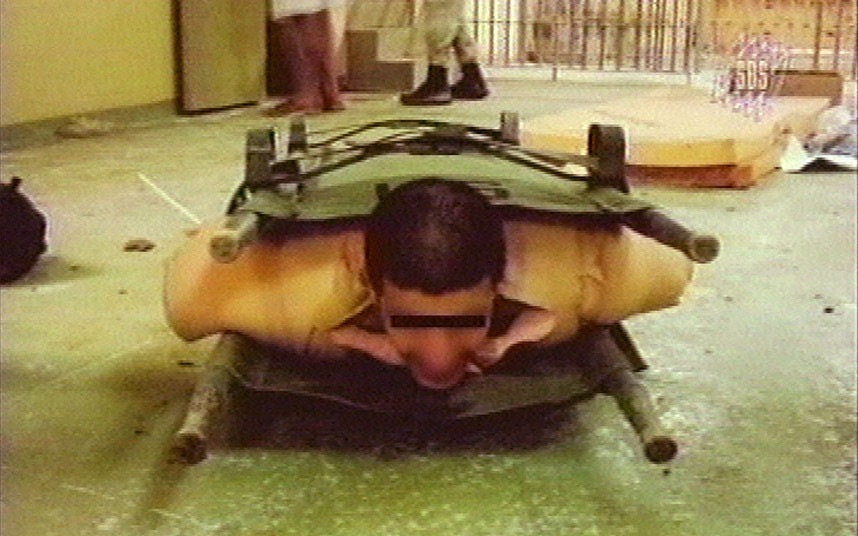
Not only did Bush, Cheney and other top government officials lie about us into the Iraq war by making a false linkage between Iraq and 9/11, but they carried out a systematic program of torture in order to intentionally create false evidence of that allegation.

Indeed, the entire purpose behind the U.S. torture program was to obtain false confessions.

And the torture techniques used were Communist techniques specifically designed to produce false confessions.

Senator Levin, in commenting on a Senate Armed Services Committee report on torture in 2009, dropped the following bombshell:

With last week’s release of the Department of Justice Office of Legal Counsel (OLC) opinions, it is now widely known that Bush administration officials distorted Survival Evasion Resistance and Escape “SERE” training – a legitimate program used by the military to train our troops to resist abusive enemy interrogations – by authorizing abusive techniques from SERE for use in detainee interrogations. Those decisions conveyed the message that abusive treatment was appropriate for detainees in U.S. custody. They were also an affront to the values articulated by General Petraeus.

In SERE training, U.S. troops are briefly exposed, in a highly controlled setting, to abusive interrogation techniques used by enemies that refuse to follow the Geneva Conventions. The techniques are based on tactics used by Chinese Communists against American soldiers during the Korean War for the purpose of eliciting false confessions for propaganda purposes. Techniques used in SERE training include stripping trainees of their clothing, placing them in stress positions, putting hoods over their heads, subjecting them to face and body slaps, depriving them of sleep, throwing them up against a wall, confining them in a small box, treating them like animals, subjecting them to loud music and flashing lights, and exposing them to extreme temperatures. Until recently, the Navy SERE school also used waterboarding. The purpose of the SERE program is to provide U.S. troops who might be captured a taste of the treatment they might face so that they might have a better chance of surviving captivity and resisting abusive and coercive interrogations.

Senator Levin then documents that SERE techniques were deployed as part of an official policy on detainees, and that SERE instructors helped to implement the interrogation programs. He noted:

The senior Army SERE psychologist warned in 2002 against using SERE training techniques during interrogations in an email to personnel at Guantanamo Bay, because:

[T]he use of physical pressures brings with it a large number of potential negative side effects… When individuals are gradually exposed to increasing levels of discomfort, it is more common for them to resist harder… If individuals are put under enough discomfort, i.e. pain, they will eventually do whatever it takes to stop the pain. This will increase the amount of information they tell the interrogator, but it does not mean the information is accurate. In fact, it usually decreases the reliability of the information because the person will say whatever he believes will stop the pain… Bottom line: the likelihood that the use of physical pressures will increase the delivery of accurate information from a detainee is very low. The likelihood that the use of physical pressures will increase the level of resistance in a detainee is very high… (p. 53).

McClatchy filled in some of the details:

Former senior U.S. intelligence official familiar with the interrogation issue said that Cheney and former Defense Secretary Donald H. Rumsfeld demanded that the interrogators find evidence of al Qaida-Iraq collaboration…

For most of 2002 and into 2003, Cheney and Rumsfeld, especially, were also demanding proof of the links between al Qaida and Iraq that (former Iraqi exile leader Ahmed) Chalabi and others had told them were there.”

It was during this period that CIA interrogators waterboarded two alleged top al Qaida detainees repeatedly – Abu Zubaydah at least 83 times in August 2002 and Khalid Sheik Muhammed 183 times in March 2003 – according to a newly released Justice Department document…

When people kept coming up empty, they were told by Cheney’s and Rumsfeld’s people to push harder,” he continued.”Cheney’s and Rumsfeld’s people were told repeatedly, by CIA . . . and by others, that there wasn’t any reliable intelligence that pointed to operational ties between bin Laden and Saddam . . .

A former U.S. Army psychiatrist, Maj. Charles Burney, told Army investigators in 2006 that interrogators at the Guantanamo Bay, Cuba, detention facility were under “pressure” to produce evidence of ties between al Qaida and Iraq.

“While we were there a large part of the time we were focused on trying to establish a link between al Qaida and Iraq and we were not successful in establishing a link between al Qaida and Iraq,” Burney told staff of the Army Inspector General. “The more frustrated people got in not being able to establish that link . . . there was more and more pressure to resort to measures that might produce more immediate results.”

“I think it’s obvious that the administration was scrambling then to try to find a connection, a link (between al Qaida and Iraq),” [Senator] Levin said in a conference call with reporters. “They made out links where they didn’t exist.”

Levin recalled Cheney’s assertions that a senior Iraqi intelligence officer had met Mohammad Atta, the leader of the 9/11 hijackers, in the Czech Republic capital of Prague just months before the attacks on the World Trade Center and the Pentagon.

The FBI and CIA found that no such meeting occurred.

In other words, top Bush administration officials not only knowingly lied about a non-existent connection between Al Qaida and Iraq, but they pushed and insisted that interrogators use special torture methods aimed at extracting false confessions to attempt to create such a false linkage.

The Washington Post reported the same year:

Despite what you’ve seen on TV, torture is really only good at one thing: eliciting false confessions. Indeed, Bush-era torture techniques, we now know, were cold-bloodedly modeled after methods used by Chinese Communists to extract confessions from captured U.S. servicemen that they could then use for propaganda during the Korean War.

So as shocking as the latest revelation in a new Senate Armed Services Committee report may be, it actually makes sense – in a nauseating way. The White House started pushing the use of torture not when faced with a “ticking time bomb” scenario from terrorists, but when officials in 2002 were desperately casting about for ways to tie Iraq to the 9/11 attacks – in order to strengthen their public case for invading a country that had nothing to do with 9/11 at all.

***

Gordon Trowbridge writes for the Detroit News: “Senior Bush administration officials pushed for the use of abusive interrogations of terrorism detainees in part to seek evidence to justify the invasion of Iraq, according to newly declassified information discovered in a congressional probe.

Indeed, one of the two senior instructors from the Air Force team which taught U.S. servicemen how to resist torture by foreign governments when used to extract false confessions has blown the whistle on the true purpose behind the U.S. torture program.

Latest White Party (GOP) Name Calling Attack: Ann Coulter Continues to call Obama "Retard" Despite Backlash

Media Matters for America

Conservative commentator and frequent Fox News guest Ann Coulter defended her repeated use of the derogatory term "retard" on Thursday, saying the word is simply a synonym for words like idiot and moron. In fact, the word is widely considered a slur and disability advocates argue it is hate speech.

Appearing as a guest on Alan Colmes' Fox News Radio show, Coulter stated she did not regret her use of the word, saying that "no one would refer to a down syndrome child, someone with an actual medical handicap, by saying retard." She added: "Where do you think the words idiot, imbecile, cretin, moron, come from? These were all technical terms at one time. Retard has been used colloquially to just mean 'loser' for 30 years."

In an October 22 post on her Twitter feed following the presidential debate, Coulter wrote: "I highly approve of Romney's decision to be kind and gentle to the retard," presumably a reference to President Obama. The next day she again tweeted that if Obama is "'the smartest guy in the room' it must be one retarded room." In an email to Politiker defending her remarks, she wrote: "The only people who will be offended are too retarded to understand it."

But many agree that the word is meant only to demean and should be considered hateful speech.

Huffington Post blogger Ellen Seidman, who has a son with special needs, says that while it's not true that "anyone who uses the word flippantly has something against people with special needs," the word is demeaning "even if it's meant as a joke, because it spreads the idea that people who are cognitively impaired are either stupid or losers."

Analyzing the fact that the word is now being increasingly avoided, NPR reported that disability advocates have continually campaigned against the word, arguing that "it's not a hilarious put-down; it's hate speech."

Organizations like the American Psychiatric Association still use the medical phrase "mental retardation," so the term "retard" is culturally understood to be associated with mental disability, regardless of context. What distinguishes the term from the other words Coulter cited, such as idiot and cretin, is that unlike "retard," they do not necessarily denote mental disability.

However, CNN reports that even the APA "plans to replace the term 'mental retardation' with 'intellectual development disorder'" in the 2013 edition of their manual.

Moving Images: Documenting the Lives of Women Migrants

People Of Color Organize! 

Many contemporary feminist projects attempt to subvert the male gaze by “bearing witness” to female trauma through visual representation. Yet these projects have tended to be under-theorized. Since visual images invoke the spectator’s experience of unmediated access to the inner world of the subject, the evocative power of photographic images may readily reproduce forms of [...]

America's most disenfranchised population?

The Sentencing Project 

This November, nearly 6 million Americans will be kept from the polls, disenfranchised under a number of ever more aggressive state laws barring felons and ex-felons from the voting booth. This is detrimental to our justice system and a vicious threat to our democracy. A report from The Sentencing Project, State-Level Estimates of Felon Disenfranchisement in the United States, 2010, estimates that these laws currently disenfranchise 5.85 million Americans. The majority of them, 75 percent are no longer inmates in prison or jail. Instead, they are serving parole, probation, or, in the case of 2.63 million individuals (nearly half of the entire population measured), are living in their communities freely, having already completed their sentences in full.

Rejecting Pet Negro Status with White Party (GOP): Colin Powell endorses Obama

The Atlantic

President Obama scored a big endorsement Thursday morning from Colin Powell, the former chairman of the Joint Chiefs of Staff and Bush Administration secretary of State. "I think, generally, we've come out of the dive and we're starting to gain altitude," Powell said on CBS's This Morning. "I voted for him in 2008, and I plan to stick with him in 2012. I'll be voting for he and for Vice President Joe Biden next month."

There's no reason to expect Powell's endorsement will have a major effect on the election: it's a tight contest; the margin will likely be close no matter what; Powell's profile is lower than it once was; and few voters will be swayed by foreign-policy arguments. But Powell is a self-described lifelong Republican and was one of the "Obama Republicans" who notably defected from the GOP in 2008. He's also one of the few to again back the president publicly.

That party affiliation has brought out some ugly reactions, most notably from Ben Shapiro of Breitbart.com. This will be no surprise to those who remember Shapiro and Breitbart.com's hyping of a video of Obama embracing controversial Professor Derrick Bell two decades ago. Here's a screengrab from Shapiro's Twitter feed this morning:

Here, Shapiro can see no plausible reason why Powell would back Obama other than the color of their skin. But of course Powell has been telegraphing his worries about Mitt Romney's campaign for months, even as he held back on endorsing either candidate. Powell famously battled with neoconservative foreign-policy voices in the Bush Administration, including John Bolton, Donald Rumsfeld, and Dick Cheney. In May, he went on Morning Joe to express his deep concerns about the number of neocons in Romney's circle, noting in particular the Republican nominee's claim that Russia was America's greatest geopolitical foe.

"Come on, Mitt, think. That isn't the case," Powell said then. "I don't know who all of his advisers are, but I've seen some of the names and some of them are quite far to the right. And sometimes they might be in a position to make judgments or recommendations to the candidate that should get a second thought."

Since then, Romney has mostly stuck with a hard line on foreign policy, although he struck a more dovish tone in Monday's debate on foreign affairs. And he has very visibly stumbled on foreign policy, from a gaffe-marred trip to Europe and Israel to his widely panned initial reaction to incidents in Cairo and Benghazi on September 11 that left four Americans dead. If Powell was nervous about Romney's overseas abilities in May, there's no reason he'd be more assured now, and no reason why he'd opt for the Republican over Obama.

Detroit News endorses Romney despite ‘Let Detroit go bankrupt’ op-ed

TheGrio

Despite his often-repeated “Let Detroit Go Bankrupt” op-ed, the Detroit News officially endorsed Republican nominee Mitt Romney today.

The paper claimed Romney has a “credible plan” to help the country’s economy recover.

“President Barack Obama came into office in 2009 riding a wave of hope and change,” the editorial said.

“Unfortunately, he has not delivered on the nation’s yearning for change nor on the specific promises he made to fix what is broken. The president is asking the country to be patient, but his plan isn’t producing results that would merit more patience, and the president hasn’t spelled out what he would do differently in a second term. Hope and change are still what Americans are seeking. This time, Republican challenger and Michigan native Mitt Romney offers the best hope of changing the nation’s fate.”

The endorsement is of little surprise, as the paper has a history of supporting Republican candidates. The News – the city’s second-largest paper – officially describes itself as Libertarian yet has never endorsed a Democratic candidate for president.

Only three times has the paper not endorsed a candidate at all: Twice during President Franklin Roosevelt’s presidency, and in 2004 when the paper refused to endorse President George W. Bush for re-election. The News feels that Romney will be similar to current Michigan Gov. Rick Snyder, who has drawn mixed reviews during his first term.

“Snyder has rapidly set Michigan on the path to revival by applying sound business practices and accountability to government operations,” the News said. “We expect that Romney will also employ a results-oriented approach and be ever mindful of his customer, the taxpayer.

“Also like Snyder, we find Romney to be less partisan than the typical politician, and not bound by rigid ideology. The nation will be best served if the entrenched disagreements of the past four years give way to cooperation and achievement.”

As for Romney’s infamous 2009 “Let Detroit Go Bankrupt” op-ed in the New York Times that alienated a large number of Michigan residents of both parties, the News said that it credits President Obama for helping lead the restructuring of General Motors and Chrysler. They acknowledged that without the bailouts, Michigan’s economy would’ve completely collapsed.

“We have said in past editorials that while Romney rightly advocated for structured bankruptcies in his infamous “Let Detroit Go Bankrupt” New York Times op-ed, he was wrong in suggesting the automakers could have found operating capital in the private markets,” the News said. “Obama put a rescue team to work and they were true to the task.

“We have criticized Obama for rewriting bankruptcy law on the fly to hold harmless his supporters in the United Auto Workers union. Still, Michigan is better off today because of Obama’s leadership on this issue.”

The paper said that despite the bailout and the resurgence of the auto industry they would still endorse Romney, insisting that the economy is still “broken.”

The paper said that they feel Romney will “replace government checks with private sector jobs.”

“Romney’s goal is to help all Americans live independent and productive lives, free to rise to the extent of their personal capabilities,” the News said. “He would not shield them from risk or the consequences of their decisions, but neither would he deny them their earned rewards.”

Numerous polls show President Obama firmly ahead in Michigan – a state that has not been carried by a Republican since 1988.

By contrast, the city’s largest newspaper, the Detroit Free Press, endorsed President Obama in 2008 and will announce their endorsement later this week.

Oh Please Don't Go!: David Stern Finally announces he will retire as NBA Commissioner in 2014

The Grio

NBA Commissioner David Stern will retire on Feb. 1, 2014, 30 years after he took charge of the league. He will be replaced by Deputy Commissioner Adam Silver.

The announcement came at an NBA Board of Governors meeting Thursday.

Stern told owners during their two days of meetings of his plans, and the board unanimously decided Silver would be his successor.

Stern, who turned 70 last month, became commissioner on Feb. 1, 1984. He has been the NBA’s longest-serving commissioner, establishing the league’s brand around the world, presiding over team expansion and overseeing the establishment of the WNBA.

“You’ll be remembered as the best of all-time,” Silver told Stern, sitting to his left on a podium during a news conference.

Stern said he decided on his plans about six months ago, having guided the league through a lockout that ended nearly a year ago. He said the league is in great shape and he is confident in Silver, who has been the league’s No. 2 since 2006.

“I don’t know what else to say other than to recite what I told the owners yesterday in executive session,” Stern said. “I told them that it’s been a great run, it will continue for another 15 months, that the league is in, I think, terrific condition.”

ESPN Worried about Stephen A. Smith's Black Vernacular: Ebonically Challenged Network thinks he said "N" Word

The Grio

The Internet is buzzing about the possibility that ESPN’s Stephen A. Smith appeared to have dropped the n-word during a segment on ESPN’s First Take.

While on-air, Smith mocked the idea that Kobe Bryant could miss the Lakers season opener on Tuesday night against the Dallas Mavericks because of a foot injury.

Smith joked, “Opening night. Kobe Bryant is going to miss it because, ‘my foot is sprained?’”

He then appeared to say, “Are you crazy, ni**a please.”

Smith appeared later on ESPN to deny any claims that he used the racial slur.

“There have been numerous reports out there that I uttered the word I should not have uttered … I did not do so,” said Smith. “I’m a New Yorker. I speak very very fastly, and sometimes … my words are misconstrued and I get it.”

He went on to say that if he had used the word he’s been accused of using, he would immediately offer an apology, but he maintains that he had never used that word at any point.

This is the second time Smith has been called out for using the offensive racial slur on the show.

The first time was in December of 2011 when he supposedly said it while venting about Lebron James’ performance.

When today’s broadcast was re-aired, Smith’s verbal slip-up was bleeped out.

Top Mittens Adviser: If You Own A Microwave, You Aren’t Really Poor

ThinkProgress

A top adviser to Mitt Romney’s presidential campaign denied the nation’s income inequality gap in a Wall Street Journal editorial on Thursday, brushing off the growing concentration of wealth in the hands of the very wealthy by arguing that lower-income Americans are buying more consumer goods.

“Today we hear that the gains from economic growth accrue to the highest-income earners while the standard of living of the poor and middle America stagnates and the gap between the richest and the poorest grows ever wider,” Kevin Hassett and Aparna Mathur argue. “That portrait of the country is wrong“:

Yet the access of low-income Americans—those earning less than $20,000 in real 2009 dollars—to devices that are part of the “good life” has increased. The percentage of low-income households with a computer rose to 47.7% from 19.8% in 2001. The percentage of low-income homes with six or more rooms (excluding bathrooms) rose to 30% from 21.9% over the same period.

Appliances? The percentage of low-income homes with air-conditioning equipment rose to 83.5% from 65.8%, with dishwashers to 30.8% from 17.6%, with a washing machine to 62.4% from 57.2%, and with a clothes dryer to 56.5% from 44.9%.

The percentage of low-income households with microwave ovens grew to 92.4% from 74.9% between 2001 and 2009. Fully 75.5% of low-income Americans now have a cell phone, and over a quarter of those have access to the Internet through their phones.

But this argument, a favorite of conservative think tanks like the Heritage Foundation, is highly misleading. Appliances and commonly used consumer gadgets like cell phones are necessities in the 21st century and are significantly cheaper today than they were just decades earlier. In fact, were families to sell their appliances in order to help pay for food and other basic necessities, many would still struggle — for while prices on microwaves and air conditioners have fallen, “the real everyday basics such as quality child care and out-of-pocket medical costs” are “squeezing the budgets of the poor and middle-class alike.”

Hassett argues that safety net programs like “unemployment insurance, food stamps, Medicaid” help families afford basic needs, further shrinking the nation’s income gap. But these programs are already failing to keep up with need and Romney and Ryan have proposed massive cuts to the safety net in order to pay down the deficit and finance a tax cut plan that is heavily skewed towards the rich.

Their approach would only exacerbate the differences between the rich and poor — a gap that has grown dramatically since the late 1970s. Indeed, compared to the 30 countries in the Organization for Economic Co-operation and Development (OECD), the United States has a Gini coefficient — a number that measures the distribution of income on a scale of 0 (perfectly unequal) to 1 (perfectly equal) — of 0.47 and ranks near the very bottom in inequality. America also suffers from the absolute highest “percentage of national income that went to the top 1 percent” and “has seen income inequality increase at a much faster rate than most other countries.”

This trend is already devastating the American democratic ideals of equal opportunity and upward mobility. Unfortunately, neither Romney nor his advisers can see the problem or offer the kind of tax and economic policies that will help solve it.

D.C. Sniper: ‘I Was Sexually Abused By John Muhammad’

NewsOne

Convicted D.C. sniper Lee Boyd Malvo (pictured) said in a television interview that aired Thursday that he was sexually abused by John Allen Muhammad, his adult accomplice in shootings that terrorized the Washington area 10 years ago.

Malvo also said there are still unidentified victims from the pair’s shooting spree and that he contacted the families of some of those victims.

“Without anyone contacting me two and a half years ago, I reached out and I did that,” Malvo said in an interview with NBC’s Matt Lauer that was aired on the “Today” show. “In five different instances in different states. But there was a point in time where psychologically, I couldn’t handle it.”

Lauer told viewers the telephone interview was taped Wednesday and lasted about 40 minutes.

Malvo’s accomplice, Muhammad, was executed by lethal injection in 2009. Malvo is serving a life sentence at a prison in Virginia. The pair were linked to 27 shootings across the country, including 10 fatal attacks in the Washington area.

“For the entire period when I was almost 15 until I got arrested, I was sexually abused by John Muhammad,” Malvo said in the interview.

Malvo also said he was sexually abused by a babysitter at age 5 and later by relatives when he was around 8 or 9.

Malvo said he knew the killings were wrong but couldn’t do anything to stop them because he “did not have the willpower to say no.” He said he has forgiven himself for the killings.

Lauer said Malvo told a “Today” show producer this is the last time he plans to give an interview about his crimes. He also spoke to The Washington Post for an article that ran in September.

Asked what he wanted to say to the family members of the pair’s victims he said, “Please do not allow my actions and the actions of Muhammad to hold you hostage.”

Think the Florida Recount Was Bad? Just Wait Until November 6

You think the hanging chads in Florida were bad in 2000? You think the patch of procedures, appeals, and standards of review was crazy? At least a human being was looking at those ballots. At least some of the rest of us were able to look at that human being looking at those ballots. At least there were ballots to be seen. In 2012, on the other hand, loose technology, lax industry oversight, political indifference, and partisan bigotry mean there is the potential for mischief -- and by that I mean democracy-crushing voter fraud -- on a scale that would make the high drama and low comedy of November 2000 seem mundane.

How about thousands upon thousands of votes instantly disappearing from the electronic count of one candidate, or being added to the count of another, with no paper trail left behind? How about electronic voting machines whose programs can be breached and hacked -- patched for fraud, is the new term -- from thousands of miles away? How about new voting technology controlled largely by corporations with strong partisan ties? Not only can it all happen in two weeks, there is a viable case to be made that it's already happened -- in both the decade before and the decade since Bush v. Gore.

And of course the great irony of it all, one of the most under-reported stories of this campaign, is that the politicians and activists who have tried so hard this election cycle to make it harder for poor, ill, and elderly voters to vote are some of the ones most closely aligned with the operatives who can, with a click, determine the outcome of the coming election. Instead of securing accurate voting rights for all, they want to deprive voting rights for some. This is the important message Victoria Collier sends us courtesy of a trenchant piece (not currently online) in the November issue of Harper's *, titled "How To Rig An Election." Collier writes:

Old-school ballot-box fraud at its most egregious was localized and limited in scope. But new electronic voting systems allow insiders to rig elections on a statewide or even national scale. And whereas once you could catch the guilty parties in the act, and even dredge the ballot boxes out of bayou, the virtual vote count can be manipulated in total secrecy. By means of proprietary, corporate-owned software, just one programming could steal hundreds, thousands, potentially even millions of votes with the stroke of a key. It's the electoral equivalent of a drone strike.

Collier's piece is timely and jaw-dropping because of the context it offers for this cycle's voting-rights fights. It suggests persuasively that the Florida recount, and the federal legislation it spawned, have made our elections less reliable and thus more susceptible to partisan disenfranchisement than we ever could have imagined watching those hapless bureaucrats count those chads. We took a bad situation, in other words, and made it much worse. If the coming election is as close as everyone seems to think it is, there is no reason to believe with any confidence that honest officials could prevent someone from stealing it outright.

n direct response to the embarrassment of the 2000 election, and even before the next national election in 2002, Congress passed, and the aforementioned Bush signed, the Help America Vote Act (HAVA), federal legislation designed to raise state election standards. It passed 92-2 in the Senate and 357-48 in the House of Representatives. The preamble to the law states its purpose:

To establish a program to provide funds to States to replace punch card voting systems, to establish the Election Assistance Commission to assist in the administration of Federal elections and to otherwise provide assistance with the administration of certain Federal election laws and programs, to establish minimum election administration standards for States and units of local government with responsibility for the administration of Federal elections, and for other purposes.

In order for the states to improve their voting systems, they needed money. And HAVA authorized nearly $4 billion for the upgrade. The states gobbled up the money. And so did the electronic-voting companies. HAVA, we were told, was an example of bipartisan success, where both the winners and losers of 2000 had come together to protect the rights of all Americans to have their votes counted as accurately and fairly as possible. The only problem with the story, and the law, was that the money found its way into the wrong hands around the same time that the public oversight required by the law was turning out to be a sham.

The Recent Past

Let's now catch up with Collier's piece. The practices she chronicles may be new, but the patterns aren't. There were problems with electronic-voting irregularities before Florida, she contends, and cites as an example the 1996 Senate race in Nebraska, where Chuck Hagel won a surprisingly decisive victory over Ben Nelson. The polls were even days before the election, but Hagel won by 15 percent of the vote -- votes counted by a company Hagel had chaired until shortly before the election. The "surprising scale of his win," Collier writes, "awakened a new fear among voting-rights activists."

The intervening 16 years -- and electronic-voting irregularities in most of the five national elections since 2002 -- have done little to allay those fears. Nor did the Help America Vote Act. Collier writes that the law isn't ensuring voting accuracy or the reliability of election results but instead is "accelerating a deterioration of our electoral system that most Americans have yet to recognize, let alone understand." For example, Collier writes about an appalling lack of online security for electronic voting operations:

The Atlantic

As recently as September 2011, a team at the U.S. Department of Energy's Argonne National Laboratory hacked into one of Diebold's old Accuvote touchscreen systems. Their report asserted that anyone with $26 in parts and an eighth-grade science education would be able to manipulate the outcome of an election.

"This is a national security issue," wrote the Argonne team leader, Roger Johnston, using the sort of language that would normally set off alarm bells in our security-obsessed culture. Yet his warning has gone unheeded, and the Accuvote-TSX, now manufactured by ES&S [Hagel's old company], will be used in twenty states by more than 26 million voters in the 2012 general election.

Meanwhile, Collier reminds us, the "Election Assistance Commission" created by the law, the federal oversight office that was supposed to help ensure voting security, was so feckless that one of its chiefs, a Bush appointee, resigned in 2005, calling his office a "charade." That year, not incidentally, the Commission on Federal Election Reform, which was called a bipartisan effort, warned about the potential for great abuse from electronic-voting insiders, but reassured the American people that electronic voting was reliable so long as officials included a "voter-verifiable paper audit trail."

The CFER's 2005 report, led by lions-in-winter James Baker and Jimmy Carter, did more than just that. It also (to great public controversy) placed blame for election inaccuracies on the voters themselves, suggesting in great detail how states could force people to show more identification when they registered and voted. These recommendations paved the way for the current generation of odious new photo-identification laws, passed by Republican lawmakers in dozens of states. At the time, a handful of the commission's most vocal dissenters, the counsel for the Brennan Center for Justice, presciently recorded their opposition:

While our election system is undeniably in need of substantial structural and administrative improvement, the burden of reform must not be borne by voters. The problems with American elections are not caused by American voters. They are caused by inadequate attention to election administration, insufficient resources, and unfair and unreasonable rules and procedures often designed and administered by elected or partisan individuals with an interest in the outcome of elections. Unfortunately, several sections of the Commission's report seem to shift the blame to regular Americans, and as a result, make recommendations that are likely to exclude a significant number of citizens from the political process -- especially those who have traditionally been disadvantaged by restrictions at the polls.

In other words, while Baker and Carter and company were focused on rules designed to stymie the efforts of a few illegal in-person voters, the wise men largely ignored the direct and obvious threat to millions of legitimate votes, the accurate and complete counting of which depends, then and now, on the good faith of unregulated companies and their employees, who operate with scarcely any government or public oversight. Add Collier's report to Tova Andrea Wang's excellent recent book The Politics of Voter Suppression, which shines the light on the long history of voter suppression in America, and it portends truly bad things for election night.**

South Africa mine set to fire 12,000 striking workers

Aljazeera

More than 12,000 striking workers are set to lose their jobs at a gold mine in South Africa, despite managers' insistence they are still trying to bring an end to the impasse.

Miners at the AngloGold Ashanti facility in Carletonville defied orders to return to work by noon on Wednesday and end a strike called to demand higher pay and better working conditions.

Speaking to Al Jazeera, Alan Fine, a spokesman for AngloGold Ashanti, said that the dismissals were "a drawn-out process".

"In the meanwhile, we have been and continue to engage with strike leaders and attempt to reach an agreement for a return to work at the earliest opportunity," he said.

"We think that the improvements we've offered ... that seems to us to be a reasonable basis for a return to work and a return to normality."

But the deal, set out last week, has been rejected by many of the striking workers.

"Management is not prepared to meet us halfway," said miner Rogers Mohlabane. "They are coming with peanuts and workers aren't happy."

Al Jazeera's Haru Mutasa, reporting from Carletonville, said: "Government officials and union leaders are meeting to try and end the strikes in the mining sector.

"But many workers are defiant, saying they are not going back to work until they get their pay increase."

Roger Letswalo, a miner at Ashanti, said: "We demanded R18,500 ($2,100) from the management and then for how much we will settle, that is going to be the outcome of the negotiations now."

Many miners earn the equivalent of $500 a month.