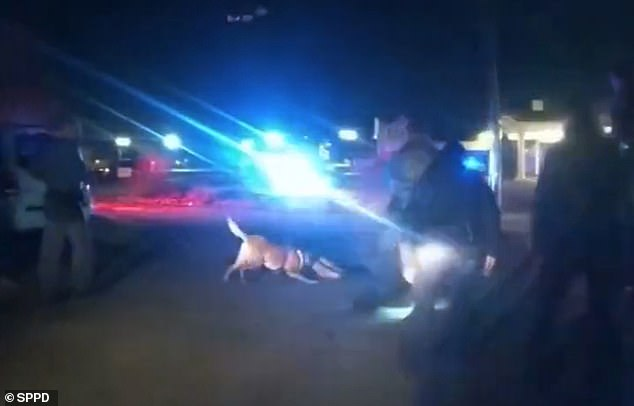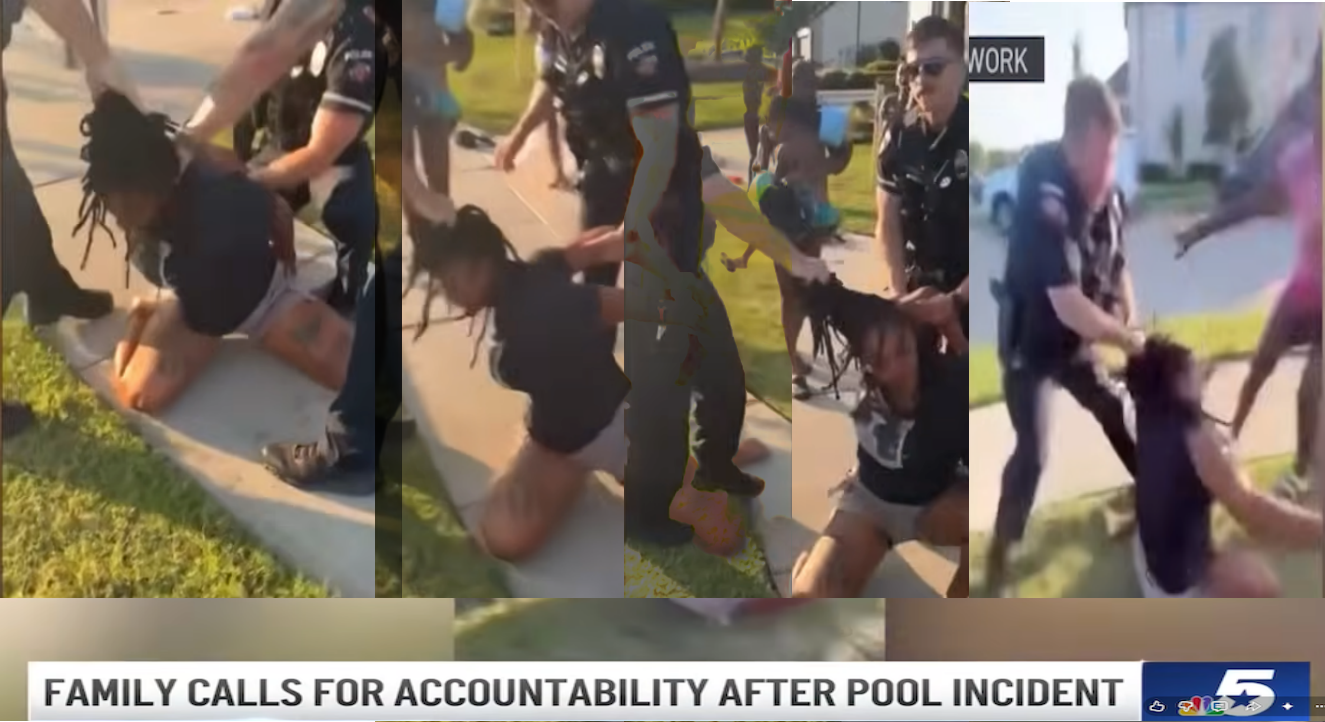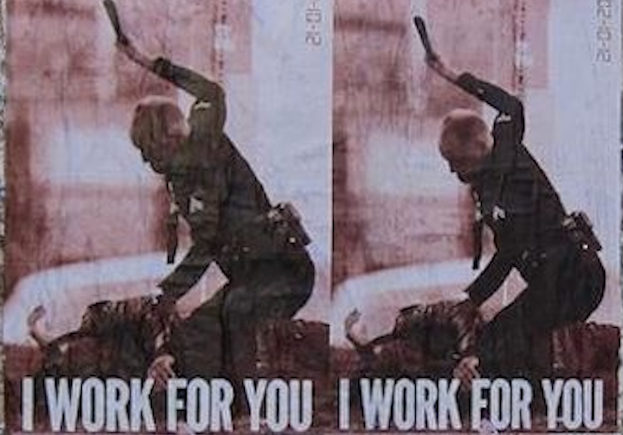
Utica Cops Immediately Release Blurry Video of White Cop Fatally Shooting Teen w/Play Gun because its Blurry and Doesn't Incriminate Police
/[MORE]

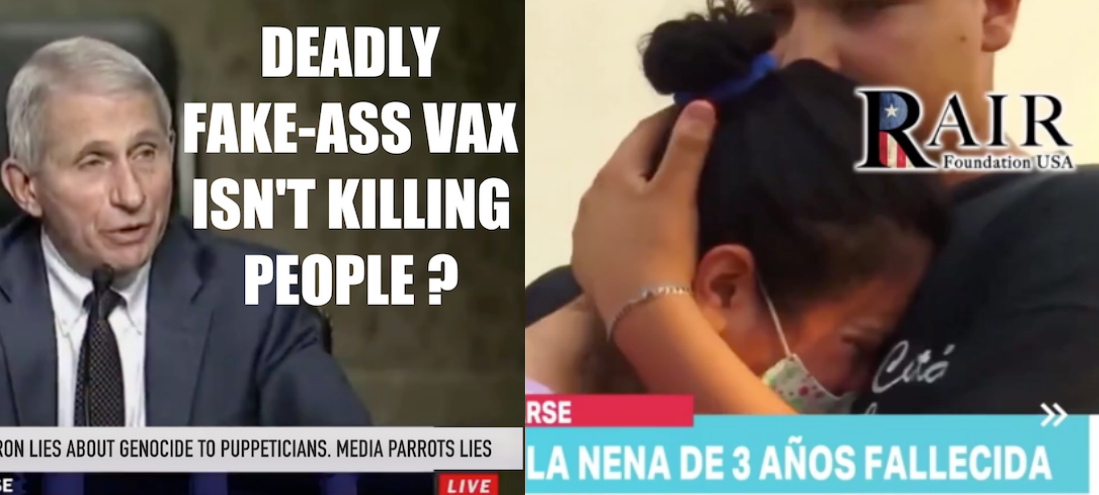
More experts are coming forward verifying that the ‘spike protein’, SARS-2 ‘virus,’ and COVID-19 mRNA injections were designed to be resistant to antibodies and cause disease.
In a February 19, 2020, article in Science, authored by the inventors of coronavirus S-2P spike proteins, Barney Graham and Jason McClellan, the authors state that the S-2P ‘spike protein’ has stronger binding affinity to the ACE-2 receptors (in the hearts, lungs, kidneys, and endothelial cell line of blood vessels) than the original SARS-CoV-2 (S) spike protein.
Graham and McLellan also tested synthetically recreated antibodies for coronaviruses (SARS-CoV-2) against the S-2P spike proteins. Their research showed that none of the antibodies for coronaviruses bound to the new trimeric two-proline spike (S-2P) proteins and no coronavirus antibodies were able to neutralize it. [MORE]
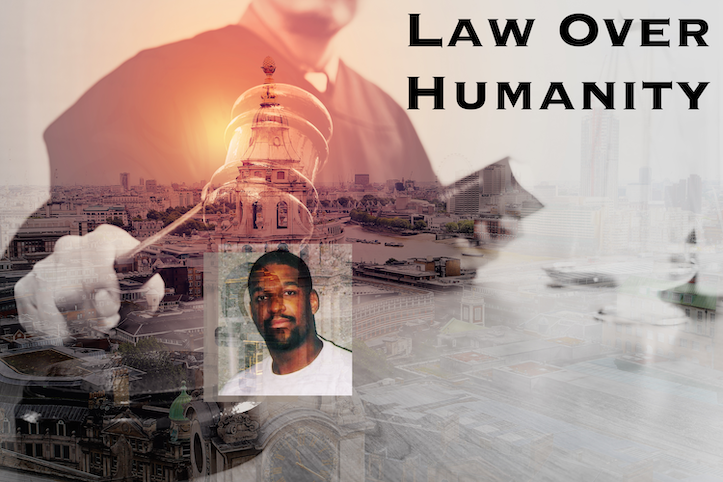
From [HERE] In 2006, Ramiro Gonzales (pictured as a child) confessed to the murder, kidnapping, and rape of Bridget Townsend and was sentenced to death. Texas death sentencing procedures uniquely require capital juries to predict whether a defendant is likely to commit future acts of violence. At Mr. Gonzales’ trial, psychiatrist Dr. Edward Gripon testified for the state and told the jury that Mr. Gonzales “has demonstrated a tendency to want to control, to manipulate, and to take advantage of certain other individuals,” opining that he would cause harm to others in the future. That opinion formed the basis of the jury’s sentence of death. Mr. Gonzales’ execution is now scheduled for June 26, 2024.
But in September 2021, Dr. Gripon met with Mr. Gonzales on death row and determined his prediction about him was wrong. “Ramiro [Gonzales] doesn’t try to lie his way out… If this man’s sentence was changed to life without parole, I don’t think he’d be a problem,” Dr. Gripon told The Marshall Project. Citing his reliance on a now-debunked study and invalid statistics, Dr. Gripon wrote following this second evaluation that “it is [his] opinion, to a reasonable psychiatric probability, that [Mr. Gonzales] does not pose a threat of future danger to society. According to The Marshall Project, this is the only time Dr. Gripon has ever changed his opinion about a defendant in a death penalty case.
Mr. Gonzales was scheduled to be executed in July 2022, but two days ahead of his execution date, the Texas Court of Criminal Appeals (TCCA) stayed his execution and directed the trial court to review a claim that Dr. Gripon testified and presented false, debunked statistics. Despite Dr. Gripon’s changed opinion, the trial court recommended that the TCCA dismiss Mr. Gonzales’s claim because of procedural bars. [MORE]
From [HERE] Alabama inmate Alan Eugene Miller on Friday requested the US District Court for the Middle District of Alabama block his scheduled nitrogen gas execution, which would be the second of its kind in US history.
In 2000, Miller was sentenced to death for the murder of three people. Alabama law lets death row inmates choose the method of death either by lethal injection or by nitrogen gas. In September 2022, Miller requested the nitrogen gas, but Alabama stated they never got the request and therefore determined he would receive lethal injection as the default. Miller lost his suit against the state of Alabama to be executed by nitrogen gas, and he then had his execution rescheduled after his lethal injection did not work.
The first nitrogen gas execution occurred less than six months ago on Kenneth Smith. The procedure did not go as planned, according to Miller’s lawyers. The team called the execution a “disaster” in Friday’s motion, stating, “Multiple eyewitnesses reported a horrific scene, where Mr. Smith writhed on the gurney and foamed at the mouth.” Based on Smith’s reaction to the nitrogen gas execution, Miller’s team argued that his “right to be free from cruel and unusual punishments” under the Eighth Amendment would be violated if Alabama does not execute under the following conditions:
(1) [U]sing a mask that fits Mr. Miller’s larger-than-average face and head, and creates an airtight seal; (2) using a qualified medical or scientific professional, rather than correctional officers, to place the mask on Mr. Miller’s face, and hold it in place if it becomes dislodged in any way; (3) using a qualified medical or scientific professional … to supervise the nitrogen flow rate during the execution; (4) having a medical professional present in the execution chamber during the execution attempt, who can respond if the execution goes awry as Mr. Smith’s did; (5) using medical grade nitrogen; and (6) using a sedative or tranquilizing medication in pill form before administering the nitrogen gas …
The motion therefore sought to block Miller’s execution until the state decides to follow those conditions by preliminary injunction.
Miller’s preliminary injunction can be granted only if Miller will “suffer irreparable harm” without it and if it will not “substantially harm” Alabama or harm the “public interest.” His team argued that the pain suffered from the execution would be irreparable and the “minimal delay” caused by the injunction would be an unsubstantial harm for Alabama. The motion also added that the public has an interest in ensuring that constitutional rights are not violated.
The nitrogen gas method of execution has been widely criticized by the UN and Amnesty International for being experimental and inherently cruel.

From [HERE] In a closely watched decision stemming from the January 6, 2021, Capitol riot, the US Supreme Court ruled on Friday that the government must prove a defendant impaired or attempted to impair the availability or integrity of evidence to be convicted under a key obstruction statute. The statute has nothing to do with obstructing an event at the capitol.
On January 6, 2021, a crowd of supporters of then-President Donald Trump gathered outside the US Capitol while Congress convened in a joint session to certify the 2020 Presidential election results in favor of Joe Biden. Amid escalating tensions, some protesters breached the Capitol, breaking windows and clashing with law enforcement, which resulted in a significant delay in the certification process.
The complaint alleges that Fischer was one of those who invaded the building.
According to the complaint, about an hour after the Houses recessed, Fischer trespassed into the Capitol and was involved in a physical confrontation with law enforcement. Fischer claimed in Facebook posts that he “pushed police back about 25 feet,” and that he “was inside the [Cap- itol] talking to police.” Id., at 193–194. Body camera foot- age shows Fischer near a scrum between the crowd and police who were trying to eject trespassers from the building.
A grand jury returned a seven-count superseding indict- ment against Fischer. Six of those counts allege that Fischer forcibly assaulted a federal officer, entered and re- mained in a restricted building, and engaged in disorderly and disruptive conduct in the Capitol, among other crimes. See id., at 181–185; 18 U. S. C. §§111(a), 231(a)(3), 1752(a)(1), (a)(2); 40 U. S. C. §§5104(e)(2)(D), (G). Those six counts carry maximum penalties ranging from six months’ to eight years’ imprisonment.
In Count Three, the only count before the court, the Government charged Fischer with violating 18 U. S. C. §1512(c)(2). Fischer moved to dismiss that count, arguing that the provision criminalizes only attempts to impair the availability or integrity of evidence. The District Court granted his motion in relevant part. It concluded that the scope of Section 1512(c)(2) is limited by subsection (c)(1) and therefore requires the defendant to “‘have taken some action with respect to a document, record, or other object.’
A divided panel of the D. C. Circuit reversed and re- manded for further proceedings. Judge Pan, writing for the court, held that the word “otherwise” in Section 1512(c)(2) means that the provision unambiguously covers “all forms of corrupt obstruction of an official proceeding, other than the conduct that is already covered by §1512(c)(1).” 64 F. 4th 329, 336 (2023). Judge Walker concurred in part and concurred in the judgment because he read the mens rea element of the statute—“corruptly”—as requiring a defend- ant to act with “an intent to procure an unlawful benefit.” Id., at 361 (internal quotation marks omitted). The preceding section of the Sarbanes-Oxley Act, 1512(c)(1) establishes criminal liability for specific actions such as altering, destroying, or concealing records intending to obstruct official proceedings. Subsection 1512(c)(2) broadens this prohibition to anyone who “otherwise obstructs, influences, or impedes any official proceeding, or attempts to do so.”The Supreme Court was asked to weigh in on whether the expansive language of 1512(c)(2) should be tempered by the specific acts listed in 1512(c)(2).
Through statutory interpretation of the language of the statute and its legislative history and context, the Court ruled that 1512(c)(2)n had nothing to do with obstructing an official proceeding. Rather, 1512(c)(2) “was enacted simply to address the Enron accounting scandal disaster which dealt with the destruction of documents and other forms of evidence. [MORE]
From [HERE] The debate over concealed carry weapon (CCW) laws is as heated as ever. With out-of-control crime and a flood of illegal alien criminals, citizen concealed carry is needed now more than ever, as recent self-defense events illustrate. Well-funded Gun control advocates tirelessly argue that these laws lead to more crime, but a new research paper “How Does Concealed Carrying of Weapons Affect Violent Crime?” by John R. Lott and Carlisle E. Moody is making waves by challenging these claims head-on. Here’s what you need to know about their findings, especially if you support gun rights.
The Claims: More Concealed Carry Holders, More Crime?
Anti-gun activists often say that right-to-carry laws, which allow citizens to carry concealed firearms, lead to two main problems:
More Stolen Guns: They argue that more people carrying permitted guns means more chances for those guns to be stolen and end up in the hands of criminals.
Interference with Police: They claim that armed citizens make it harder for police to do their jobs, reducing their effectiveness and potentially increasing crime.
The Research: Setting the Record Straight
Lott and Moody set out to test these claims using solid data. Their research doesn’t just lump all CCW laws together. Instead, they look at specific factors, like the percentage of the adult population with a permit and the number of stolen guns in each state. Here’s what they found:
Stolen Guns: Using data Lott and Moody obtained with help from Congressman Thomas Massie, the study shows that CCW permit holders are NOT a significant source of stolen guns. The research found that the coefficients on CCW permits per capita were approximately ZERO, meaning there was no significant relationship between the number of permits and the number of stolen guns. This slam closed the argument that more CCW permits equal more guns for criminals.
Police Effectiveness: The study also found NO evidence that CCW permit holders reduce police effectiveness. The clearance rates (arrest rates) for violent crimes, such as murder, rape, robbery, and assault, showed no significant difference related to the number of CCW permits. In fact, many law enforcement officers believe that armed citizens can help reduce crime. This directly counters the claim that more people carrying guns make it harder for the police to do their jobs.
Supporting Data
Revocation Rates: In the 19 states with comprehensive data, the average revocation rate of CCW permits for any reason is one-tenth of 1%. This indicates that permit holders are highly law-abiding.
Driving Violations: Data from Michigan shows that non-permit holders are 2.4 times more likely to drive drunk, 34.1 times more likely to drive under the influence of a controlled substance, and 10.6 times more likely to drive recklessly compared to permit holders.
Police Opinion: A 2013 survey by PoliceOne found that 76% of law enforcement officers believe legally armed citizens are very or extremely important in reducing crime. Additionally, 91.3% support civilians carrying firearms if they haven’t been convicted of a felony or deemed psychologically incapable.
Why This Matters
For gun rights supporters, this research is a big deal. It provides strong evidence that right-to-carry laws don’t lead to the negative outcomes that anti-gun activists claim. Instead, it supports the idea that law-abiding citizens carrying firearms can coexist with effective policing without increasing crime rates. [MORE]
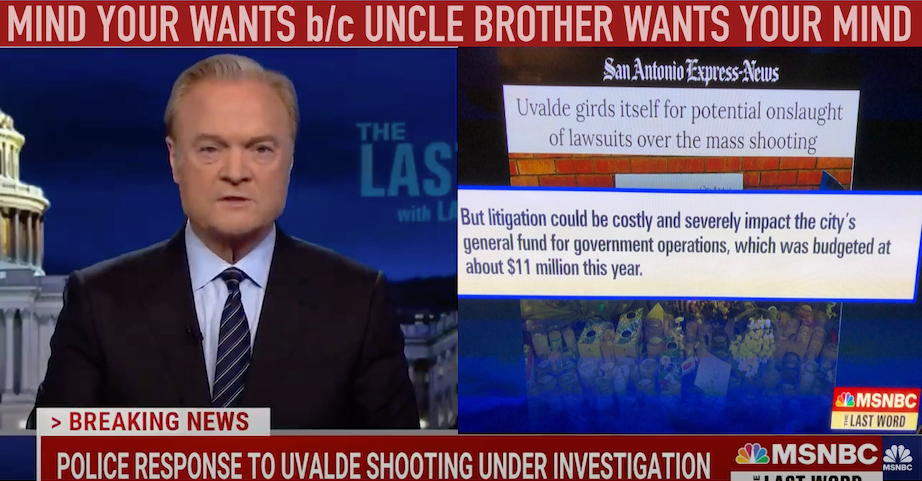
THERE WILL PROBABLY BE NO CONTESTED TRIAL. JUST A GUILTY PLEA. According to the Supreme Court police have no legal duty to protect any victim from violence by other private parties unless the victim was in police custody. [MORE] and [MORE] This means that police cannot be sued for any federal constitutional claim for a failure to protect citizens. Unless a state negligence law exists allowing such a lawsuit, victims cannot hold police liable for a failure to protect from harm from private parties. [MORE]
From [HERE] The former Uvalde schools police chief was indicted over his role in the slow police response to the 2022 massacre at a Texas elementary school that left 19 children and two teachers dead, the local sheriff said Thursday.
Pete Arredondo was indicted by a grand jury on 10 counts of felony child endangerment/abandonment and briefly booked into the county jail before he was released on bond, Uvalde Sheriff Ruben Nolasco told The Associated Press in a text message Thursday night.
The Uvalde Leader-News and the San Antonio Express-News reported that former school officer Adrian Gonzales also was indicted on multiple similar charges. The Uvalde Leader-News reported that District Attorney Christina Mitchell confirmed the indictment.
The indictments make Arredondo, who was the on-site commander during the attack, and Gonzales the first officers to face criminal charges in one of the deadliest school shootings in U.S. history. A scathing report by Texas lawmakers that examined the police response described Gonzales as one of the first officers to enter the building after the shooting began.
Arredondo lost his job three months after the shooting. Several officers involved were eventually fired, and separate investigations by the Department of Justice and state lawmakers faulted law enforcement with botching their response to the massacre.
Whether any officers would face criminal charges over their actions in Uvalde has been a question hanging over the city of 15,000 since the Texas Rangers completed their investigation and turned their findings over to prosecutors.
Mitchell’s office has also come under scrutiny. Uvalde city officials filed a lawsuit in 2022 that accused prosecutors of not being transparent and withholding records related to the shooting. Media outlets, including the AP, also sued Uvalde officials for withholding records requested under public information laws.
But body camera footage, investigations by journalists and damning government reports have laid bare how over the course of over an hour, a mass of officers went in and out of the school with weapons drawn but did not go inside the classroom where the shooting was taking place. The hundreds of officers at the scene included state police, Uvalde police, school officers and U.S. Border Patrol agents. [MORE]
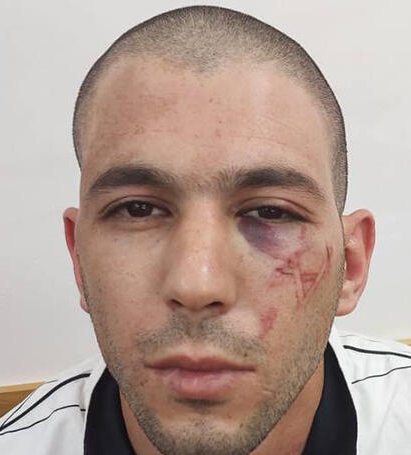
From [HERE] The Department for Internal Police Investigations says that it has notified 7 police officers that they will be charged in a 2023 incident of alleged police brutality against an East Jerusalem resident.
According to a statement from DIPI, the seven cops are slated to be indicted on varying charges of abuse of a helpless person; aggravated assault; obstruction of investigative proceedings; and abuse of official power.
In the August 2023 incident, East Jerusalem Palestinian Arwah Sheikh Ali says that police officers beat him and branded his face with a Star of David while arresting him for suspected drug trafficking. The officers were also accused of deleting footage of the arrest.
Vadim Shub, head of the Jerusalem public defender’s office, which is representing Mr. Sheikh Ali, said in an interview on Sunday, “The mark on his face is the tip of the iceberg,” adding, “We want to raise the issue of police violence.”
Mr. Shub said the mark was still evident four days after Mr. Sheikh Ali’s arrest.
“When his lawyer visited him, he saw that he was heavily beaten, and he saw a sign that looks like a Star of David,” Mr. Shub said.
Mr. Shub said that 16 officers had been present during Mr. Sheikh Ali’s arrest but that there was no body-camera footage. The police did not answer questions about the lack of recordings. [MORE]
From [HERE] The 4th US Circuit Court of Appeals will allow a woman to proceed with her federal excessive-force lawsuit against three Randolph County sheriff’s deputies. Appellate judges ruled Thursday against granting the deputies immunity from the suit.
The court’s opinion noted the “obvious illegality” of the “outrageous conduct” alleged in the suit.
Ka’Lah Martin’s complaint stemmed from a February 2019 traffic stop “that turned violent and culminated in her arrest,” wrote Judge Robert Bruce King for the unanimous 4th Circuit panel.
Martin was driving a $600 car that “had some issues,” in King’s words. She could open neither the front doors nor windows. When a Randolph County sheriff’s deputy attempted to stop Martin for failing to display a registration plate, she slowed her speed from 65 miles per hour to 30 mph and turned on her hazard lights. Martin drove for nearly six miles before turning off the road.
When she did pull over, there were multiple deputies, who approached with guns drawn. Martin had her hands raised and tried to tell the deputies that her car's front doors and windows did not work, but they smashed her driver's side window, grabbed her by the hair and arms, pulled her out without removing her seat belt, and threw her on the asphalt,
Martin received no medical attention to the cuts and scrapes resulting from being pulled through the broken window until she was released from jail and went to a doctor herself. [MORE]
She was arrested and charged with fleeing to elude arrest, operating a vehicle with no insurance and driving without a license plate. The charges later were dismissed. [MORE]
Martin filed suit in November 2021. Among her claims were excessive-force violations by deputies Travis Short, Kyle Gabby, and Jeremiah Harrelson. Each deputy claimed qualified immunity. The trial court rejected that defense and ruled that the excessive-force claims should proceed to trial.
“[W]e underscore that the appellants present the district court’s factual recitation in a way that actually favors them over plaintiff Martin in several respects,” King wrote. “For example, the appellants would have us rule that their use of force was reasonable based on the evidence that Martin continued to drive for 5.7 miles after appellant Short initiated his patrol car’s emergency lights and that Martin needed no more than a band-aid, Ibuprofen, and muscle relaxers for injuries sustained during her arrest.”
“Concomitantly, the appellants would have us diminish and outright disregard evidence tending to refute any threat that otherwise might be inferred from Martin’s continued driving (such as the evidence that Martin slowed her vehicle significantly and turned on the vehicle’s hazard lights), as well as evidence suggesting that any lack of more serious injuries was simply a matter of luck (i.e., the evidence that the appellants busted out the driver’s side window, forcibly pulled Martin through the broken window by her hair and arm, and then placed her face down on the roadway),” King added.
“At bottom, when we view the facts in the light that is truly most favorable to plaintiff Martin, we cannot conclude either that the appellants did not contravene her Fourth Amendment right against an unreasonable seizure or that the right was not clearly established at the time of her arrest,” King concluded.
“Indeed, we are convinced that — when, as Martin alleges happened, the appellants violently busted out the windows of her vehicle and yanked her through the broken driver’s side window by her hair and arm — every reasonable officer would have understood that what he was doing was unlawful, whether by then-existing precedent or by the otherwise obvious illegality of that outrageous conduct,” King wrote.
Chief Judge Albert Diaz and Judge Harvie Wilkinson joined King’s opinion.
How do you persuade a populace to embrace totalitarianism, that goose-stepping form of tyranny in which the government has all of the power and “we the people” have none?
According to FUNKTIONARY:
psyopsy – performing an analysis of what caused one who is mentally dead and culturally comatose to reach such a state or fate. Psyopsies can be performed only on the living dead. Those who are living another’s script (“reality”) are candidates.
Hobson’s Choice – you can either get with this or nothing at all. (See: Volition, Deschooling & Free Will)
maze – a fortified network of oversimplified logics and programmed attachments with strong emotional charges (connected to the attachments) severely hampering one in achieving lasting satisfaction from Life and clarification in Life. In a state of a ‘mazement’ learning is suspended and experiences which need to be assimilated are repressed. The cheddar-chasers say: “Don’t bother me, I know what I have to do to get what I want.” You would be amazed to learn how simple (not easy) it is to escape the smoke alarm reaction filled haze of the mighty maze. 2) a system of interconnecting multicursal pathways replete with blind alleys, twists and turns, false choices and unknown exit points often designed to confuse or confound the traveler. Mazes can be used to spiral through the rungs of our evolution in consciousness both infinitely extendable and expandable. (See: Cementality, Meditativeness, BLYND, Generalizations, Absolute Truth, Psylence, Critical Thought, Me-Bot, Understanding, Logic, Identifications, Mindful Witnessing, Souljourn, Consciousness, Clarity & Neuralasticity)
delusion – perceiving our personal experience as the ultimate reality. The delusion is not in the experience, but our existential orientation to it within our mind. There is no absolute way or fixed method to dismantle or dissipate your delusions, for they are myriad and legion when the primary delusion is running your spiritual operating system, i.e., the delusion of duality. However, there are a few approaches that address the Catch-22 of delusion. Aptly noted in the Quran surah 3:185 “…And what is the life of this world except the enjoyment of delusion.” All other delusions stem from this master delusion—the Template of Duality. “When one person suffers from delusion, it’s called insanity. When many people suffer from delusion, it is called religion.” ~Robert Pirsig. Delusion, by its very nature, is quite obscure. When we’re deluded, we don’t know we’re deluded. This is what I refer to as “Bignorance.” Those unaware are unaware of being unaware. Even delusion itself exists already within the freedom of the Self. (See: Ghosts, The Self, The Sky, Illusion, Physical World, “Me,” Ego, Appropriate Attention, The World, “Bignorance,” Mastar, Religion, HOE, Beacon, The World, Template of Duality, SOS, Separate Self, Suffering, Identification, Authority, Perception, Explanation, Impressions, Identities, Attachment, Fear, Thinking, Religion, Reductionism & Passing Show)
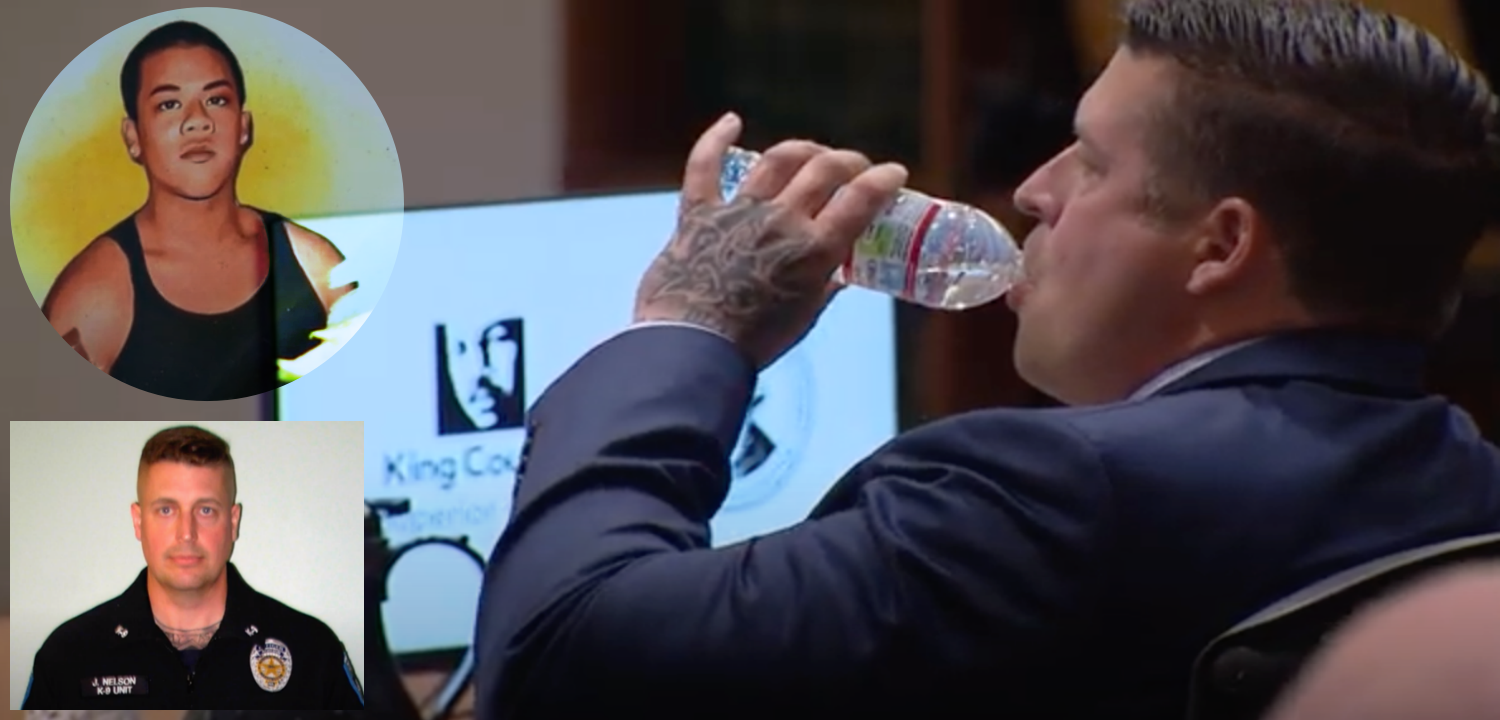
From [HERE] and [HERE] A jury found a suburban Seattle police officer guilty of murder Thursday in the 2019 shooting death of a homeless man outside a convenience store, marking the first conviction under a Washington state law easing prosecution of law enforcement officers for on-duty killings.
After deliberating for three days, the jury found Auburn Police Officer Jeffrey Nelson guilty of second-degree murder and first-degree assault for shooting Jesse Sarey twice while trying to arrest him for disorderly conduct. Deliberations had been halted for several hours Wednesday after the jury sent the judge an incomplete verdict form Tuesday saying they were unable to reach an agreement on one of the charges.
The judge revealed Thursday that the verdict the jury was struggling with earlier in the week was the murder charge. They had already reached agreement on the assault charge.
Nelson was ordered into custody after the hearing. He’s been on paid administrative leave since the shooting in 2019. The judge set sentencing for July 16. Nelson faces up to life in prison on the murder charge and up to 25 years for first-degree assault. His lawyer said she plans to file a motion for a new trial.
In 2019, Sarey was reportedly having a crisis and was allegedly throwing garbage, banging on store windows and kicking cars in an Auburn shopping area. Nelson claimed Sarey failed to comply with arrest, so he began punching Sarey numerous times in the head and upper body. Nelson then drew his gun and shot Sarey in the torso.
After Sarey fell onto the pavement, Nelson tried to fire his gun again before it jammed. The video then shows Nelson clearing the round, racking another bullet and firing a second shot into Sarey’s head.
The jurors rejected Nelson claim that Sarey tried to grab his gun and a knife, so he shot him in self-defense. In fact, video showed Sarey was on the ground reclining away from Nelson after the first shot.
A witness, Steven Woodard, testified that after the first shot, “Mr. Sarey was ‘done,’ lying on the ground in a nonthreatening position.”
Sarey’s family told The Associated Press (AP) he was the son of survivors of the Khmer Rouge genocide in Cambodia and became homeless after aging out of foster care.
“Jesse Sarey died because this defendant chose to disregard his training at every step of the way,” King County Special Prosecutor Patty Eakes told the jury in her closing argument Thursday. The shooting was “unnecessary, unreasonable and unjustified,” she said.
The case is the first of its kind in Washington as Nelson was the first police officer in King County to face murder charges and his case was also the first to be prosecuted under I-940, a police accountability measure passed in 2018.
The King County Prosecuting Attorney’s office thanked the jury for their efforts on the case, which has gone on for more than three weeks.
“We appreciate the hard work of all parties to get to these important verdicts,” spokesman Casey McNerthney said in an email. “All along we felt this was a case that needed to be tried before a jury. Our thoughts continue to be with Mr. Sarey’s loved ones.”
The case was the second to go to trial since Washington voters in 2018 removed a standard that required prosecutors to prove an officer acted with malice — a standard no other state had. Now they must show the level of force was unreasonable or unnecessary. In December, jurors acquitted three Tacoma police officers in the 2020 death of Manuel Ellis.
Auburn settled a civil rights claim by Sarey’s family for $4 million and has paid nearly $2 million more to settle other litigation over Nelson’s actions as a police officer.
KILLER COP KILLED 3 OTHER PEOPLE. Sarey was the third person Nelson has killed in his law enforcement career. Jurors did not hear evidence about Nelson’s prior uses of deadly force.
Prior to fatally shooting Sarey, Nelson killed Isaiah Obet in 2017. Obet was acting erratically, and Nelson ordered his police dog to attack. He then shot Obet in the torso. Obet fell to the ground, and Nelson fired again, fatally shooting Obet in the head. Police said the officer’s life was in danger because Obet was high on drugs and had a knife. The city reached a settlement of $1.25 million with Obet’s family.
In 2011, Nelson fatally shot Brian Scaman, a Vietnam War veteran with mental issues and a history of felonies, after pulling Scaman’s vehicle over for a burned-out headlight. Scaman got out of his car with a knife and refused to drop it; Nelson shot him in the head. An inquest jury cleared Nelson of wrongdoing.
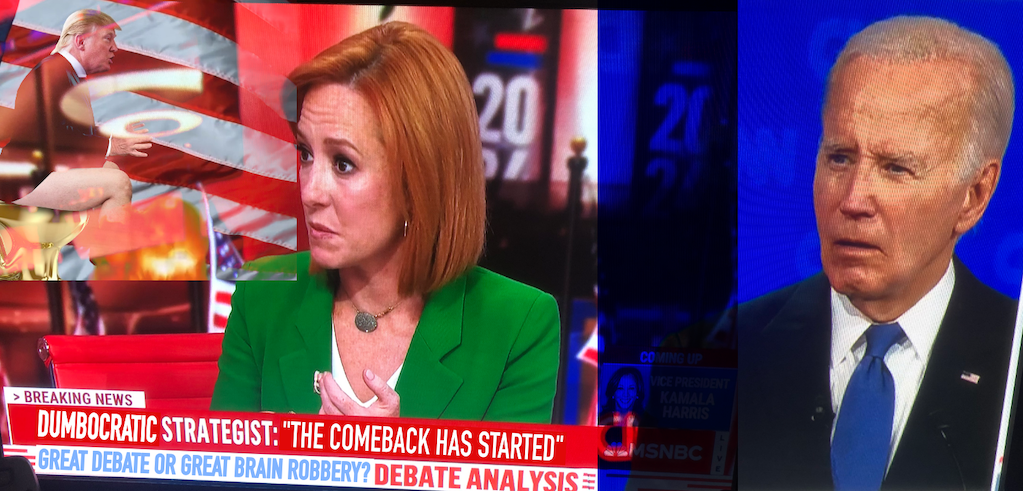
According to FUNKTIONARY:
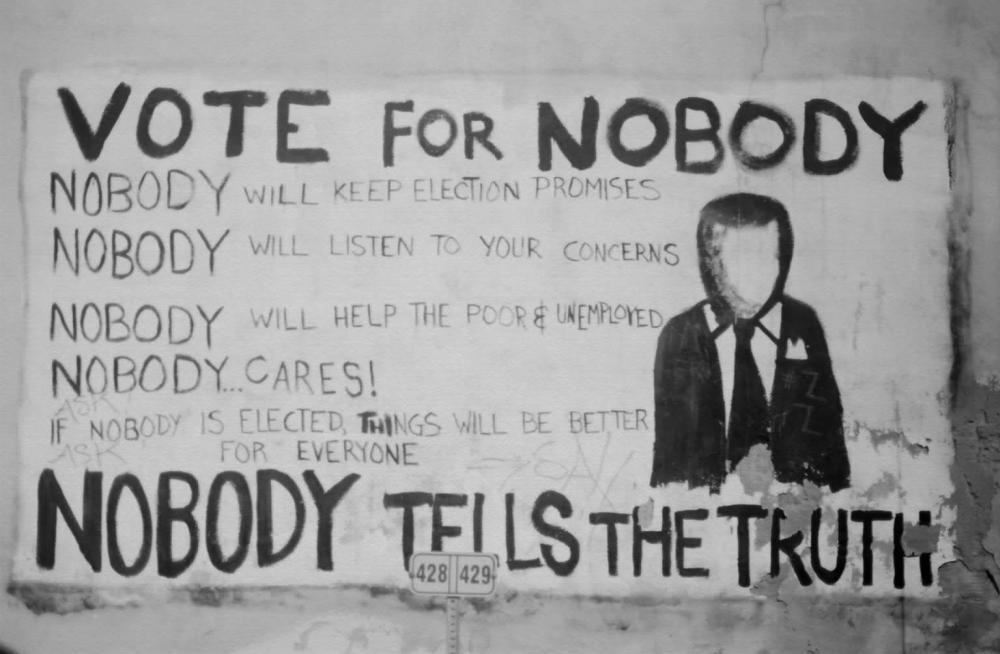
voting hoax - "Help Slave America." "We would do well to remember that voting is often a way not of consenting to something, but only of expressing a preference. If the state gives a group of condemned prisoners the choice of being executed by firing squad or by lethal injection, and all of them vote for firing squad, we cannot conclude from this that the prisoners thereby consent to being executed by firing squad. They do, of course, choose this option; they approve of it, but only in the sense that they prefer it to the other option. They consent to neither option, despising both. Voting for a candidate in a democratic election sometimes has a depressingly similar structure. The state offers you a choice among candidates (or perhaps it is "the people" who make the offer), and you choose one, hoping to make the best of a bad situation. You thereby express a preference, approve of that candidate (over the others), but consent to the authority of no one." --A. John Simmons. (See: Taxtortion, Freedom Technology, Ph.F. Degree, NOW, The Matrix, MEDIA, Elections & University of Chocolate City).
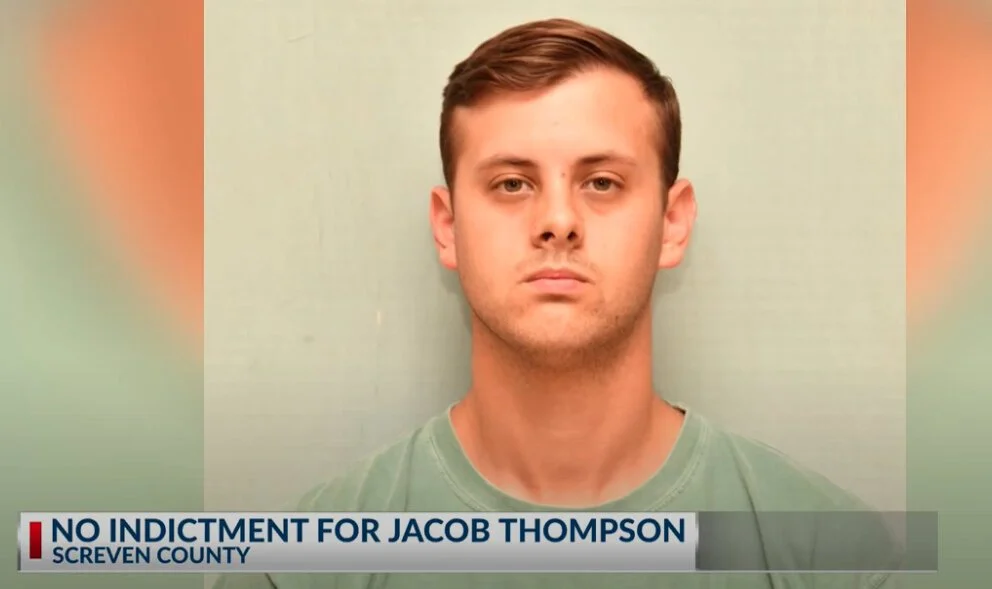
From [HERE] Julian Lewis didn’t pull over for the Georgia State Patrol cruiser flashing its blue lights behind him on a rural highway. He still didn’t stop after pointing a hand out the window and turning onto a darkened dirt road as the trooper sounded his siren.
Five minutes into a pursuit that began over a broken taillight, the 60-year-old Black man was dead — shot in the forehead by the white trooper who fired a single bullet mere seconds after forcing Lewis to crash into a ditch. Trooper Jake Thompson insisted he pulled the trigger as Lewis revved the engine of his Nissan Sentra and jerked his steering wheel as if trying to mow him down.
“I had to shoot this man,” Thompson can be heard telling a supervisor on video recorded by his dash-mounted camera at the shooting scene in rural Screven County, midway between Savannah and Augusta. “And I’m just scared.”
But new investigative details obtained by The Associated Press and the never-before-released dashcam video of the August 2020 shooting have raised fresh questions about how the trooper avoided prosecution with nothing more than a signed promise never to work in law enforcement again. Use-of-force experts who reviewed the footage for AP said the shooting appeared to be unjustified.An investigative file obtained by AP offers the most detailed account yet of the case, including documents that spell out why the Georgia Bureau of Investigation concluded the 27-year-old trooper’s version of events did not match the evidence. For instance, an inspection of Lewis’ car indicated the crash had disconnected the vehicle’s battery and rendered it immobile.
Footage of the pursuit has never been made public. It was first obtained by the authors of a new book about race and economic inequality titled “Fifteen Cents on the Dollar: How Americans Made the Black-White Wealth Gap.” Louise Story and Ebony Reed shared the video with AP, which verified its authenticity and obtained additional documents under Georgia’s open-records law.
The footage does not include visuals of the actual shooting, which happened outside the camera’s view. But it shows the crucial final moments in which Thompson uses a police maneuver to send Lewis’ car spinning into a ditch. Then the trooper’s cruiser stops parallel to Lewis’ vehicle and Thompson’s voice barks, “Hey, get your hands up!” The gunshot rings out before he can finish the warning.
The documents show Thompson fired just 1.6 seconds after his cruiser stopped.
“This guy just came out shooting” and did not give Lewis “remotely sufficient time to respond” to his order, said Andrew Scott, a former Boca Raton, Florida, police chief who wrote a dissertation about police chases.
“This goes beyond a stupid mistake,” added Charles “Joe” Key, a former Baltimore police lieutenant and use-of-force expert who has consulted on thousands of such cases.
Key also took issue with the maneuver to disable Lewis’ vehicle, saying that, too, was unwarranted. And he deemed Thompson’s claim that he fired because of the revving engine “total garbage.”
“I’m not in favor of people running from the police,” Key said. “But it doesn’t put him in the category of people deserving to be shot by the police.”
Thompson was fired and arrested on a murder charge a week after the Aug. 7, 2020, shooting, which came amid a summer of protests in the wake of the police killings of George Floyd and other Black people. The trooper was denied bail and spent more than 100 days in jail.
But in the end, Thompson walked free without a trial. A state grand jury in 2021 declined to bring an indictment. The district attorney overseeing the case closed it last fall, when federal prosecutors also ruled out civil rights charges.
At the same time, the U.S. Justice Department quietly entered into a non-prosecution agreement with Thompson forbidding him from ever working in law enforcement again – a highly unusual deal that brought little solace to Lewis’ family.
“It’s inadequate,” said Lewis’ son, Brook Bacon. “I thought the shortcomings that occurred at the state level would be more thoroughly examined at the federal level, but that’s apparently not the case.”
The state of Georgia in 2022 paid Lewis’ family a $4.8 million settlement to avoid a lawsuit.
The U.S. Attorney’s Office for Georgia’s Southern District, which reached the non-prosecution deal with Thompson, declined to discuss it except to say the Justice Department communicated with the Lewis family “consistent with the law and DOJ policy.”
District Attorney Daphne Totten did not respond to requests for comment. Neither Thompson nor his attorney, Keith Barber, would discuss the case.
Because Georgia law doesn’t require troopers to use body cameras, the dashcam footage is the only video of the shooting.
“It’s a heartbreaking case and sheds light on the complexities and difficulties Black families face when intersecting with the justice system,” said Reed, a former AP journalist and one of the authors who first obtained the footage.
Lewis worked odd jobs as a carpenter and handyman. He helped put a new roof and siding on a local church, relatives said, and repaired plumbing and electrical wiring in people’s homes. He would often charge friends and family only for materials.
Days after the shooting, Thompson told GBI investigators he used the tactical maneuver to end the chase – which he estimated reached top speeds of 65 mph (105 kph) — out of concern that the pursuit was approaching a more populated area. He acted right after Lewis’ car rolled without stopping through an intersection with a stop sign.
Thompson said that after getting out of his cruiser beside Lewis’ car in the ditch, he heard the Nissan’s engine “revving up at a high rate of speed.”
“It appeared to me that the violator was trying to use his vehicle to injure me,” Thompson said in an audio recording of the GBI interview obtained by the AP. He said he fired “in fear for my life and safety.”
On the dashcam footage, a brief noise resembling a revving engine can be heard just before Thompson shouts his warning and fires. Less than two minutes later, the trooper can be heard saying: “Jesus Christ! He almost ran over me.”
According to the GBI case file, Thompson fired facing the open driver’s side window of Lewis’ car less than 10 feet (3 meters) away.
Agents at the scene found Lewis’ front tires pointing away from the trooper’s cruiser. They also determined Lewis’ car had no power after the Nissan struck the ditch. Raising the hood, they discovered the battery had tipped onto its side after its mounting broke. One of the battery cables had been pulled loose, and the engine’s air filter housing had come partially open.
Investigators later performed a field test on Lewis’ car in which they connected the battery and started the engine. When an agent disconnected one of the cables from the battery, the car’s engine immediately stopped. Likewise, opening the air filter cover caused the engine to die.
Because grand jury proceedings are generally secret, it’s unknown why the panel declined to indict Thompson in June 2021. Georgia affords law enforcement officers the chance to defend themselves before a grand jury, a privilege not given to any other defendants.
Totten, the district attorney, decided not to try again, saying in a Sept. 28 letter to the GBI that “there has been no new evidence developed in this case.”
For Bacon, Lewis’ son, the lack of charges is an open wound. He worries no one will remember what happened given the passage of almost four years — and the number of others killed by police under questionable circumstances.
“It’s hard for anybody to even reach back that far, especially if they didn’t hear about it initially,” he said. “But these issues haven’t gone away.”
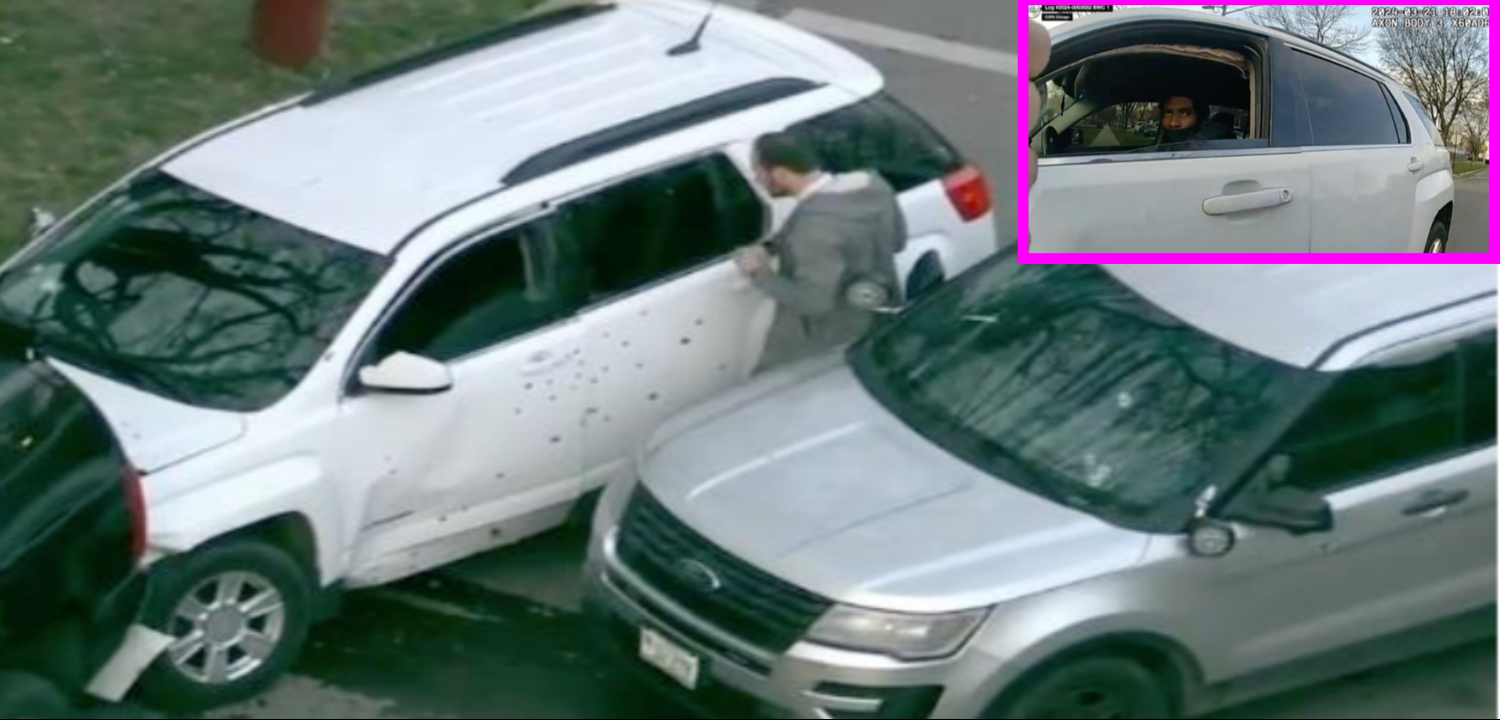
On April 24, 2024, the family of Dexter Reed and their attorneys filed a federal civil rights lawsuit against the City of Chicago and Chicago Police Department (CPD) officers Alexandra Giampapa, Thomas Spanos, Victor Pacheco, Gregory Saint Louis and Aubrey Webb, who fatally shot Reed during a traffic stop in West Side neighborhood Humboldt Park. [MORE] On June 4, 2024 they amended their complaint. It states,
On March 21, 2024, CPD officers targeted Dexter during a predatory, violent, unlawful traffic stop that ended with Defendant Officers shooting Dexter 96 times in 41 seconds. One Defendant Officer continued to shoot at least three bullets into Dexter’s body as he lay unarmed, lifeless, and bleeding out on the street. Rather than attempt to provide Dexter with lifesaving aid, Defendant Officers handcuffed Dexter’s arms behind his lifeless body and then walked away. Eventually, Dexter was transported to the hospital where he was pronounced dead.
Police in an unmarked vehicle stopped Dexter by sideswiping his car without any forewarning or orders to stop. The police officers involved were not wearing uniforms - they wore hoodies and failed to identify themselves as they aggressively stormed Dexter’s car, surrounding him with their guns drawn as they barked commands at him, to enforce an unknown traffic violation.
Although prosecutors clearly have probable cause to charge for murder and the entire crime was captured by cameras, no cops have been charged with any crime - 3 months after the fact.
The complaint states,
“Next, while wearing hoodies, jeans, and other casual clothing, they brandished their weapons in a threatening manner, screamed curse words at Dexter, and attempted to unlawfully enter his vehicle. Defendant Officers unlawfully pointed their guns at Dexter, thus escalating the situation and exponentially increasing the risk of death for everyone—Dexter, Defendant Officers, and bystanders alike. Then, Defendant Officers used wildly disproportionate force against Dexter—repeatedly shooting at him even when he clearly presented no threat. Finally, Defendant Officers ignored Dexter as he was handcuffed and bleeding out on the street. In those critical minutes, Defendant Officers refused to attempt to provide him with any lifesaving aid.”
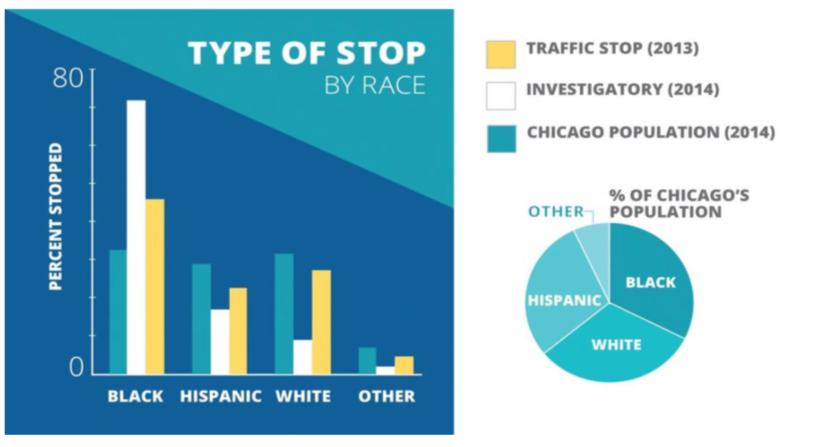
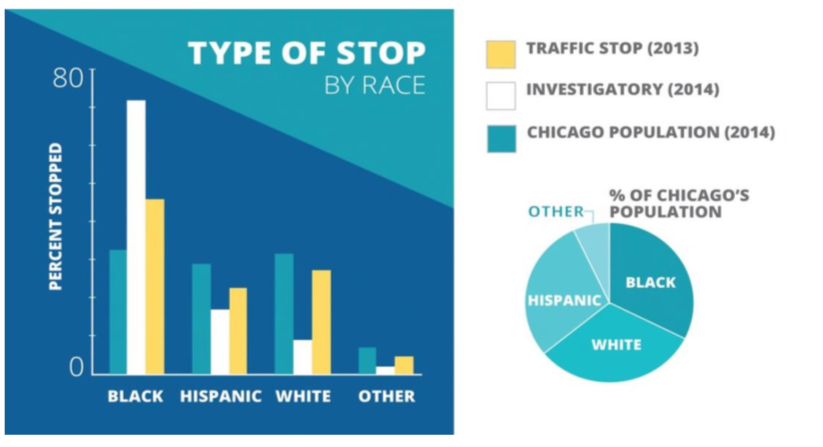
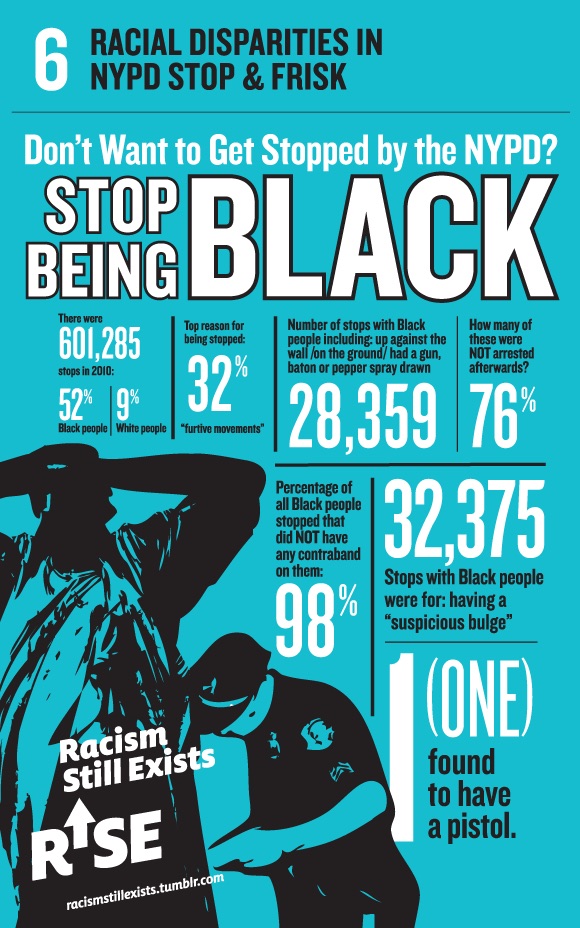
TARGETING ALL BLACKS. According to the complaint, “Dexter’s death is also directly attributable to CPD’s longstanding practice of engaging in unlawful traffic stops. CPD officers routinely target Black drivers on Chicago’s south and west sides for minor traffic violations. The large scope and persistent unlawfulness of CPD’s Mass Traffic Stop Program has most recently been documented by the Free to Move Coalition2 and in a class action complaint filed by the ACLU of Illinois.3 Free to Move’s data analysis concluded that Black drivers comprised 51.2% of people pulled over despite Black people making up less than 30% of the city’s residents.4 In contrast, over 32% of Chicago's population is white, and 13.6% of stops by CPD were of white drivers.5 CPD officers in the 11th District—where Defendant Officers stopped Dexter—conduct more traffic stops than almost anywhere else in the City. Most of CPD’s traffic stops focus on minor non-moving violations that are unrelated to safety. This data provides further evidence that most CPD traffic stops since 2016 have been pretextual.
The specific allegations are as follows:
FACTUAL ALLEGATIONS
I. CPD’s UNLAWFUL MASS TRAFFIC STOP PROGRAM TARGETS THE WESTSIDE OF CHICAGO.
25. As described in detail below, CPD operates an unlawful Mass Traffic Stop Program. For at least half a century, CPD has implemented police programs characterized by high-volume stops of Black and Latino people based on low-level violations that CPD uses as excuses to harass, surveil, and intimidate Black and Brown Chicagoans.18
26. CPD operates its Mass Traffic Stop Program with particular force on the Westside of Chicago, where the Defendant Officers unlawfully stopped, detained, and eventually shot at Dexter Reed at least 96 times. CPD officials have repeatedly affirmed that officers should conduct traffic stops “where violent crime occurs.”19 There is, however, no correlation between CPD’s Mass Traffic Stop Program and violence prevention. Fewer than 1% of CPD traffic stops recover contraband. The vast majority of CPD’s traffic stops are not made for “offenses indicating dangerous driving behavior and the stops did not produce evidence of criminal activity.”20
27. CPD officers conduct 22% of all traffic stops in the 11th District and the surrounding area—but only 6% of Chicago’s drivers live in this area. 21
28. CPD’s Mass Traffic Stop Program imposes quotas on CPD officers. CPD internal emails reveal that over a period of several years, 11th District CPD Supervisors repeatedly demanded Tact Team Members report, focus on, and increase pretextual traffic stops.22 On the day they encountered Dexter, Defendant Officers operated pursuant to CPD’s Mass Traffic Stop Program and attempted to achieve the quotas imposed upon them by District 11 supervisors.
II. DEFENDANT OFFICERS CONDUCTED AN UNLA WFUL, PRETEXTUAL STOP OF DEXTER REED.
29. On the evening of March 21, 2024, at approximately 6:00 PM, Dexter drove his recently purchased white SUV on Ferdinand Street, in the City of Chicago. The weather was clear and it was still daylight. Dexter stopped his vehicle at a red light at the intersection of Hamlin and Ferdinand, facing westbound. When the light turned green, Dexter drove through the intersection and traveled westbound onto the 3800 block of West Ferdinand. Another vehicle traveled westbound, immediately behind Dexter. Dexter traveled within the speed limit and complied with the stop sign at the next intersection, Ferdinand and Avers Ave.
30. On the same date and time, Defendants CPD Officers and Tact Team members Alexandra Giampapa, Thomas Spanos, Victor Pacheco, Gregory Saint Louis, and Aubrey Webb patrolled District 11 in an unmarked, silver SUV. Defendant Officer Webb drove the vehicle.
31. While Dexter drove onto the 3800 west block of Ferdinand, Defendant Officers’ vehicle was south of Dexter, stopped at a red light.
32. After both Dexter and the vehicle traveling immediately behind Dexter traveled through the intersection of Hamlin and Ferdinand, Defendant Officer Webb approached and ran through a red light at the intersection of Hamlin and Ferdinand, turning left onto Hamlin. Video footage demonstrates Defendant Officers made the decision to target Dexter merely three seconds after his vehicle came in their line of sight.
33. Defendant Officer Webb accelerated his unmarked car to pass the vehicle traveling immediately behind Dexter. Defendant Webb then pulled the unmarked CPD vehicle alongside Dexter’s vehicle and angled it as if to sideswipe Dexter’s car. This maneuver forced Dexter to stop his car just past the northwest corner of Ferdinand and Avers Ave. Defendant Webb used this vehicle maneuver to unlawfully detain Dexter.
34. West Ferdinand Street, between Hamlin and Avers—where Defendant Officers stopped Dexter’s car—is a residential area, populated by numerous single and multiunit family dwellings, with green space and wide sidewalks for community members to enjoy.
35. Each named Defendant Officer completed a Tactical Response Report documenting Defendant Officers’ initial justification for engaging with Dexter. Those reports state Defendant Officers pulled Dexter over incident to a “traffic stop.” Defendant Officer’s reports affirms that, at the time they targeted Dexter, Defendant Officers had no information to suggest Dexter had committed any serious or violent offense. The reports further affirm Defendant Officers targeted Dexter pursuant to CPD’s Mass Traffic Stop Program.
36. Surveillance camera footage reflects that Defendants lacked reasonable suspicion to suspect Dexter of any traffic violation. Defendant Officers had no legal justification to target, stop, and detain Dexter.
37. After evaluating available video evidence regarding this traffic stop, Andrea Kersten, the Chief Administrator of the Civilian Office of Police Accountability (“COPA”) wrote to CPD Superintendent Snelling documenting concerns with the Defendant Officers’ credibility and justification for stopping Dexter. Specifically, “COPA is uncertain how the officers could have seen this seat belt violation given their location relative to (Reed’s) vehicle and the dark tints on (his) vehicle windows. . .This evidence raises serious concerns about the validity of the traffic stop that led to the officers’ encounter with (Reed).
III. DEFENDANT OFFICERS UNLAWFULLY POINT FIREARMS AT DEXTER AND ENGAGE IN ESCALATORY CONDUCT DURING THE UNLAWFUL STOP.
38. After Defendant Officers unlawfully curbed Dexter’s vehicle, they engaged in a number of violent, threatening, and ultra-aggressive policing tactics intended to confuse and to create chaos. Defendant Officers screamed conflicting commands at Dexter, brandished batons in a threatening manner, used disrespectful and profane language, unlawfully attempted to enter his vehicle, and pointed their weapons at Dexter’s face without legal justification.
39. Defendant Officer Giampapa exited the unmarked CPD SUV from the back passenger side. She was un-uniformed and wore a hoodie and blue jeans. Defendant Officer Giampapa did not announce herself as a police officer, nor did she advise Dexter why he had been stopped.
40. Instead, Defendant Giampapa aggressively demanded “Roll the window down, roll the window down. What are you doing?” Dexter complied and completely rolled down his front driver’s side window. In response to Defendant Officer Giampapa’s question, Dexter stated that he was doing “nothing.”
41. Defendant Officer Giampapa then ordered Dexter to roll down his other windows. Body camera footage suggests Dexter became flustered and, in an effort to comply with Defendant Officer Giampapa’s commands, mistakenly partially rolled up the driver's side window instead of rolling down the vehicles’ other windows. The fact that Dexter had committed no violation, but was still subject to Defendant Officers’ aggressive threats undoubtedly created confusion and panic for Dexter.
42. After Dexter’s window rolled partially up, Defendant Officer Giampapa commanded Dexter “do not roll the window up.” At the same time, Defendant Officer Giampapa unholstered her firearm and pointed it at Dexter’s face. While she pointed her gun at Dexter, she attempted to open the driver’s side door of Dexter’s vehicle. Defendant Officer Giampapa unreasonably pointed her gun at Dexter within seconds after she approached his vehicle
43. With her gun pointed at Dexter’s face, Defendant Officer Giampapa continued yelling, screaming repeatedly “Open the doors now!” Dexter replied “Okay, Okay I’m trying.” Defendant Giampapa never acknowledged Dexter’s words and never inquired whether his window had malfunctioned or if his door was jammed. Instead, she continued screaming at him with her gun aimed at him.
44. Defendant Officer Saint Louis, who was un-uniformed wore a hoodie pulled up over his head and jeans. Defendant Officer Saint Louis did not announce himself as a police officer nor did he advise Dexter why he had been stopped.
45. Defendant Officer Saint Louis exited the unmarked CPD vehicle from the front passenger’s seat and approached the front passenger side of Dexter’s vehicle at the same time Defendant Giampapa approached Dexter on the driver’s side. Defendant Officer Saint Louis approached Dexter with an extended baton in his raised hand and immediately ordered Dexter to roll down his passenger side window and commanded “Put your ... put your window down, man,” “Hey roll this one down too... Hey, unlock it!” Seconds after he approached the vehicle, Defendant Officer Saint Louis pointed his gun at Dexter, cocking his wrist and aiming the weapon at Dexter through the windshield.
46. Defendant Officer Pacheco was un-uniformed, wearing khaki pants and a baseball cap. Defendant Officer Pacheco did not announce himself as a police officer nor did he advise Dexter why he had been stopped and curbed.
47. Defendant Officer Pacheco exited the unmarked SUV from the back passenger side and approached the driver’s side of Dexter’s vehicle. Immediately after exiting CPD’s vehicle, Defendant Officer Pacheco pointed his firearm at Dexter and began screaming "Do not f---'g roll it up. . .Unlock the f---'g door.”
48. Defendant Officer Spanos was un-uniformed, and dressed in a hoodie, khakis, and a knit cap. Defendant Officer Spanos did not announce himself as a police officer nor did he advise Dexter why he had been stopped and curbed.
49. Defendant Officer Spanos exited the unmarked SUV from the back driver’s side and approached the driver’s side of Dexter’s vehicle. Standing just a few feet from Dexter’s vehicle. Defendant Officer Spanos immediately unholstered and pointed his gun at Dexter and yelled “Put both hands up!”
50. CPD policy prohibits officers from pointing their firearms at a person unless objectively reasonable to do so.24
51. CPD’s Use of Force Policy General Order 03-02 provides that officers will “use de-escalation techniques to prevent or reduce the need for force. . .” The Policy further provides de-escalation techniques include providing a “warning and exercising persuasion and advice prior to the use of force” and determining whether the situation could be “stabilized through the use of time, distance and positioning.” The Policy also requires that CPD officers “treat all persons with courtesy and dignity which is inherently due every person and will act, speak, and conduct themselves in a courteous, respectful, and professional manner.” Finally, the Policy prohibits officers from using force unless it is the “minimum amount of force needed to provide for the safety of any person.”
52. Defendant Officers surrounded Dexter and failed to identify themselves as police officers or to explain why they conducted the aggressive, pretextual stop and trapped him in between the curb and a parked car. Defendant Officers then each unholstered and pointed their guns at Dexter at close range and screamed various and conflicting commands at him, with several of them repeatedly and forcefully pulling on his car doors and trying to get inside his vehicle. Defendant Officers’ actions created a confusing and chaotic environment and placed Dexter in objective fear for his safety, and at risk of great bodily harm. None of the Defendant Officers engaged in any type of de-escalation. Instead, they pointed their weapons at Dexter and used profane language in clear violation of CPD policy.
53. CPD’s Use of Force Policy General Order 03-02 imposes on CPD officers an affirmative obligation to intervene when they observe a use of force that is “excessive or otherwise in violation” of CPD policy. The Policy instructs officers to “verbally intervene” to stop a violation.
54. From the driver’s side of the CDP vehicle, Defendant Officer Webb observed Defendant Officers Giampapa, Saint Louis, Pacheco, and Spanos engage in the escalatory and unlawful conduct described above. In clear violation of CPD policy, Defendant Officer Webb took no action to intervene or deescalate.
55. By pointing their firearms at Dexter during a minor traffic stop and otherwise escalating this encounter as detailed above, Defendant Officers Giampapa, Saint Louis, Pacheco and Spanos engaged in an unreasonable use of force. By observing these unlawful actions and failing to take action, Defendant Officer Webb violated his duty to intervene.
IV. DEFENDANT OFFICERS DEMONSTRATED A GROSS DISREGARD FOR THE SANCITY OF HUMAN LIFE WHEN THEY SHOT DEXTER REED 96 TIMES IN 41 SECONDS AND FIRED BULLETS INTO DEXTER’S MOTIONLESS BODY.
56. Defendant Chicago Police Officers Giampapa, Pacheco, Spanos, and Webb unloaded a barrage of bullets at Dexter while he was inside his vehicle. At some point either before or after the Defendant Officers Giampapa, Pacheco, Spanos, and Webb began shooting at Dexter, Defendant Officer Saint Louis sustained a gunshot injury when a bullet grazed his wrist.25
57. After Defendant Officers Giampapa, Pacheco, Spanos, and Webb shot their weapons at Dexter for approximately 27 seconds, firing approximately 83 shots, Dexter exited his vehicle, unarmed, with hands empty and raised in sign of surrender. At this point, Dexter posed no threat of imminent harm.
58. After observing Dexter exit his vehicle, the Defendant Officers Giampapa, Pacheco, Spanos, and Webb failed to provide Dexter with any commands or warnings. Nor did any of these Defendant Officers attempt to engage in any de-escalation. Instead, they continued to shoot at Dexter in a reckless, out-of-control manner demonstrating a complete disregard for Dexter’s humanity.
59. After Dexter exited his vehicle, unarmed and with his hands empty, Defendant Officers Giampapa, Spanos, and Pacheco moved closer to Dexter.
60. Defendant Officer Giampapa shot additional bullets at Dexter.
61. Dexter collapsed to the ground at the rear of his vehicle. His head slammed into the street and lay unmoving and face down, with his head under the rear of his vehicle.
62. At this point, Defendant Officers Giampapa, Pacheco, Spanos, and Webb took no action to determine if Dexter was alive. Nor did they make any effort to secure him medical assistance.
63. Instead, Defendant Officers Spanos and Pacheco continued to shoot at Dexter even as he lay motionless, face down in the street.
64. Even after Dexter fell to the street, Defendant Officer Spanos paused his shooting, and then fired an additional three shots at Dexter’s body as he lay face down and motionless on the street.
65. Ultimately, Defendant Officers Giampapa, Pacheco, Spanos, and Webb shot 96 bullets at Dexter 41 seconds after they first encountered him.
66. In the letter to Superintendent Snelling, based on a review of relevant video evidence, COPA Chief Kersten documented “grave concerns about [Defendant Officers Giampapa, Pacheco, Spanos, and Webb’s] ability to assess what is a necessary, reasonable, and proportional use of deadly force.”26
67. CPD’s Use of Force Policy G03-02 instructs officers that CPD’s “highest priority is the sanctity of human life. In all aspects of their conduct, Department members will act with the foremost regard for the preservation of human life and the safety of all persons involved.” This Policy further provides that officers must continually “assess the situation and modify[] the use of force as circumstances change.”27
68. In violation of CPD written policy and applicable law, Defendant Officers Giampapa, Pacheco, Spanos, and Webb used grossly disproportionate force against Dexter when he clearly presented no threat to the officers.
69. Defendant Officer Spanos demonstrated a gross disregard for the sanctity of human life when he continued to fire his weapon at Dexter’s motionless body, even after the other Defendant Officers ceased firing.
V. DEFENDANT OFFICERS FAILED TO PROVIDE DEXTER WITH ANY LIFE SAVING MEASURES AS HE LAY BLEEDING OUT ON THE STREET.
70. None of the individual Defendant Officers provided any life-saving measures to Dexter after they had shot 96 bullets at him, striking him multiple times. Instead, Defendant Officers Giampapa, Pacheco, Spanos, and Webb left Dexter lying face down on the City street with his head under his vehicle as he bled out.
71. After the shooting stopped, Defendant Giampapa approached Dexter as he lay in the street with one shoe missing. Blood poured from his head and pooled on the street. Despite Dexter’s obvious and urgent medical needs, Defendant Officer Giampapa called for an ambulance for Defendant Officer Saint Louis, but never communicated Dexter’s need for care.
72. Instead, Defendant Officer Giampapa repeatedly screamed at Dexter “don’t move, don’t move, don’t f---’ing move!” When Defendant Giampapa was just a few feet from Dexter she stated “he’s still breathing.” Defendant Officer Webb responded “we need EMS here now! We need EMS here now!” At this point both Defendant Officers Giampapa and Webb realized Dexter was still alive and in need of urgent medical attention. But neither Defendant Officers Giampapa nor Webb took any action to provide Dexter with any lifesaving care.
73. Defendant Officer Giampapa continued to move closer to Dexter, while repeatedly screaming “hey don’t f--’ing move! Do not f--’ing move!” When she was close enough to touch Dexter Defendant Officer Giampapa stated repeatedly “I don’t know where the gun is.” She attempted to issue commands to Dexter, stating “hey dude, let go of the gun” as she pulled Dexter’s left hand out from underneath body. Simultaneously, Defendant Officer Webb pulled Dexter’s right hand out from underneath his body. Dexter’s hands were empty. There was no gun in his possession or near his body. After confirming Dexter did not have a gun in his hands, Defendant Officers Webb and Giampapa walked away from Dexter. At no time did they provide him with lifesaving aid.
74. Officer John Doe 1 aided by Officer John Doe 2 took over for Defendant Officers Webb and Giampapa and placed handcuffs on Dexter.
75. After Dexter was handcuffed, another John Doe Officer exclaimed, “I don’t know where it is”— seemingly in reference to a weapon the officers suspected Dexter of possessing. In response, Officer John Doe 1, walked away from Dexter, walked in a circle around Dexter’s vehicle, CPD’s vehicle and other parked vehicles and explained to a fellow officer that he is “trying to find a gun.”
76. While Officer John Doe 1 attempted to “find a gun,” Officer John Doe 2 stood over Dexter’s body. Neither Officer John Doe 1 nor Officer John Doe 2 provided Dexter with any lifesaving aid.
77. In sharp contrast, while Defendant Officers ignored Dexter’s obvious and urgent medical needs, multiple CPD officers surrounded and provided aid to Defendant Officer Spanos who was—in his own words: “ok, [but] just freaking out.” After reloading his weapon three times and shooting Dexter dozens of times, blood was splattered on Defendant Officer Spanos’ pants. When he realized his pants were blood stained, Defendant Officer Spanos exclaimed plaintively to other CPD officers “these are my favorite pants.”
78. Seconds later, Defendant Officer Spanos approached Dexter while he was laying on the street, bleeding out. He observed Officers John Does 1 & 2 standing over Dexter while failing to provide him with any lifesaving aid. Defendant Officer Spanos took no action to provide Dexter with aid nor did he encourage any Officers John Does to do so.
79. Eventually, other CPD officers who arrived at the scene, immediately provided Dexter with chest compressions and other potentially lifesaving aid. Their efforts came too late to save Dexter. He was pronounced dead later that day.
80. CPD Special Order S11-10-03 provides that every CPD member—including each Defendant—receive training in Law Enforcement Medical and Rescue Training, often referred to as LEMART. LEMART instructs CPD officers on the use of four lifesaving implements: (1) tourniquets to stop arterial bleeding; (2) combat gauze containing a hemostatic agent that can stop bleeding in seconds; (3) chest seals that prevent air from entering the chest cavity of gunshot victims; and (4) pressure bandages to stop bleeding. A reasonable police officer who has training about and access to these implements would use them to attempt to save the life of any gunshot victim.
81. CPD General Order 03-02 provides that CPD officers are required to “immediately request appropriate medical care for [an] injured person” and guides officers to provide medical care consistent with their training to any individual with visible injuries.
82. Defendants Officers Giampapa, Pacheco, Spanos, Webb, and Officer John Does 1 and 2 had access to the lifesaving implements described above and training on how to use them. Despite this fact, these Defendants refused to provide care to Dexter and further failed to request appropriate medical care for Dexter “as soon as it was safe and practicable” in violation of CPD policy and the law.

From [HERE] Five Black and Latino Chicago motorists, Plaintiffs and proposed class representatives in Wilkins v. City of Chicago et al.,are asking Chief Judge Rebecca Pallmeyer to block CPD from sidestepping their case by moving oversight of traffic stops in the city under the Consent Decree process that has moved at a “snail’s pace” due to CPD’s recalcitrance. Last month, after years of complaints and warnings about the CPD’s mass traffic stop program, the federal court overseeing the consent decree set a public hearing on Tuesday, June 11th for testimony about “what specific traffic stop-related requirements should be added to the Consent Decree, if any.”
The Court order follows a hearing in October 2023 in which the issue of including traffic stops under the consent decree was publicly discussed. There was no indication at that time how the decree would address the problems of discriminatory traffic stops or what steps would address the issue, and several community members testified that they preferred other mechanisms for fixing CPD’s traffic stop practices. In the intervening months, there was no indication that the parties in the consent decree were working to move traffic stops under the decree process.
The Wilkins plaintiffs have a clear and distinct interest in how the issue of discriminatory traffic stops is addressed and reformed, leading to today’s filings.
“As our clients have made clear in their complaint, discriminatory traffic stops are an urgent problem in Chicago,” said Alexandra Block, director of the Criminal Legal System and Policing Project at the ACLU of Illinois who represents the Wilkins plaintiffs. “More than a half million Chicago motorists, mostly Black and Latino, are being stopped each year with no benefit to public safety. Moving oversight under the consent decree – without a transparent plan for immediate and accountable transformation of CPD’s practices and policies – does not meet the community’s need for urgent change.”
The request to intervene in the consent decree process comes as another federal judge has ruled that the Wilkins case may move forward. Judge Mary Rowland largely denied the City’s motion to dismiss the case and held that the Wilkins Plaintiffs can proceed on their claims that the mass traffic stop program violates their rights under the federal Equal Protection Clause and the Illinois Civil Rights Act. The Court found that the Wilkins Plaintiffs presented sufficient facts to show that the City intentionally discriminated against Black and Latino drivers on the basis of race, and that the mass traffic stop program unlawfully burdens Black and Latino drivers disproportionately.
The Wilkins lawsuit alleges that CPD officers are more likely to pull over Black and Latino drivers than white drivers, flooding neighborhoods on the South and West Sides of the City with traffic stops for alleged minor equipment and registration violations. The issue of racially discriminatory traffic stops in Chicago has been reported publicly for years. The number of traffic stops has grown astronomically in recent years, from fewer than 90,000 in 2015 to more than 500,000 in 2022 and 2023. Data shows that since 2016, Black drivers in Chicago have been 4 to 7 times more likely than white drivers to be stopped by police; Latino drivers have been twice as likely to be stopped as white drivers. The data presented also shows Chicago police are also far more likely to search Black and Latino drivers and their vehicles, even though the police often have higher rates of finding illegal contraband in the vehicles of white drivers.
While CPD has consistently failed to address this problem – even as the number of stops increased dramatically – Superintendent Snelling publicly responded to the release of video footage of CPD officers shooting a Black driver, Dexter Reed, ninety-six times during a pretextual traffic stop by calling for traffic stops to be brought under the consent decree. CPD could have unilaterally ended its program of pretextual stops, but did not do so.
The Wilkins plaintiffs have asked the court overseeing the consent decree to allow them to participate in proceedings to determine whether the consent decree should be modified so they are not crowded out of any discussions about ways to end CPD’s mass traffic stop program. The Wilkins plaintiffs are represented by the ACLU of Illinois and the law firm Arnold & Porter.
The Wilkins plaintiffs also note that CPD has not used the consent decree process to make real changes since the final Consent Decree was entered in January 2019. The most recent Monitor report about progress under the decree shows that the City has fully met its requirements in only 7% of the Decree’s provisions. Moreover, CPD repeatedly has been called out by the Monitor for failing to engage the public in the reform process, a problem that would be exacerbated by cutting off the Wilkins clients from meaningful discussions on reform of the traffic stop program.
“CPD has moved at a snail’s pace in making change under the Consent Decree – something which already frustrates members of the community across Chicago,” added Block. “It is simply unacceptable to allow their recalcitrance to be extended to traffic stops and to eliminate the voices of our clients in this process.”
“We urge the court to ensure that our clients’ voices are heard in this process.”














AMOS WILSON
ARCHIVE
DONATIONS


























BOOKS BW IS CHECKING OUT



















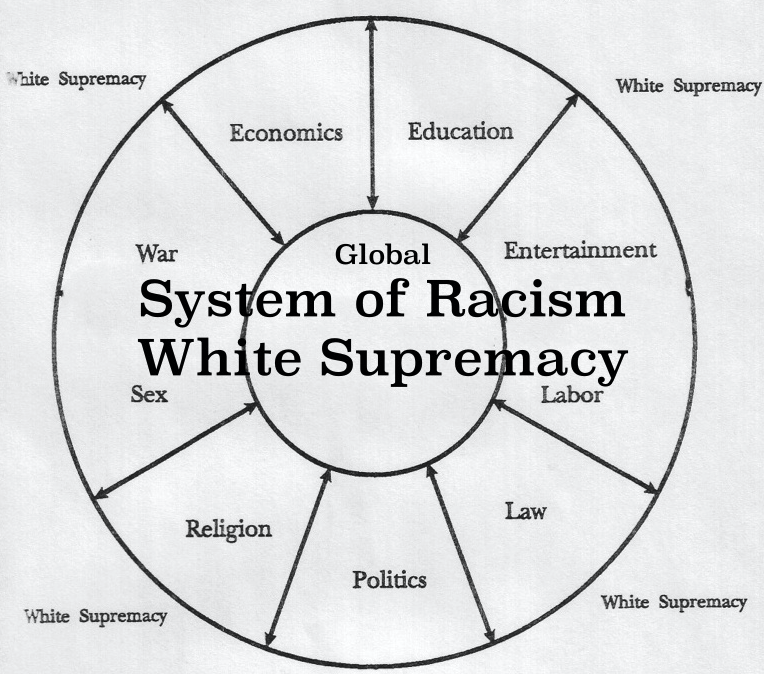
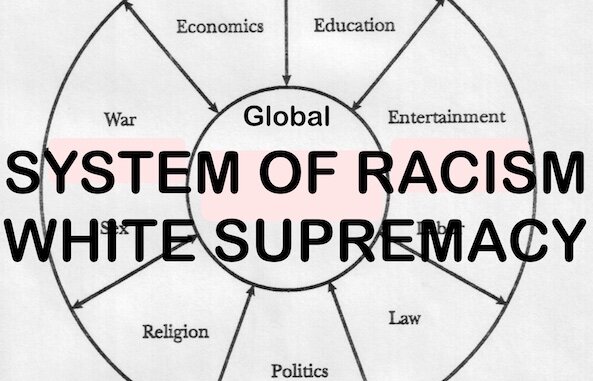
BrownWatch is a non-profit website that provides news and information for the purpose of liberation, education, self-reliance and greater self-knowledge. BrownWatch is intended to function as a tool to overcome info-gaps, verigaps and false programming toward the goal of “Endependence” within the meaning of FUNKTIONARY. It seeks to destroy the master/servant relationship maintaining the system of racism white supremacy and to unplug belief in systems of authority and all other granfalloons ensnaring humankind.
Any reproduction of copyrighted materials is done solely for the “productive uses” and “fair uses” of news reporting, sharing research, criticism, commentary, education and to provide an alternative contextual lens of such material within the meaning of the Copyright Act. 17 USCS § 107 (2019).
Powered by Squarespace.
Copyright © 2025, The BrownWatch. All rights reserved.