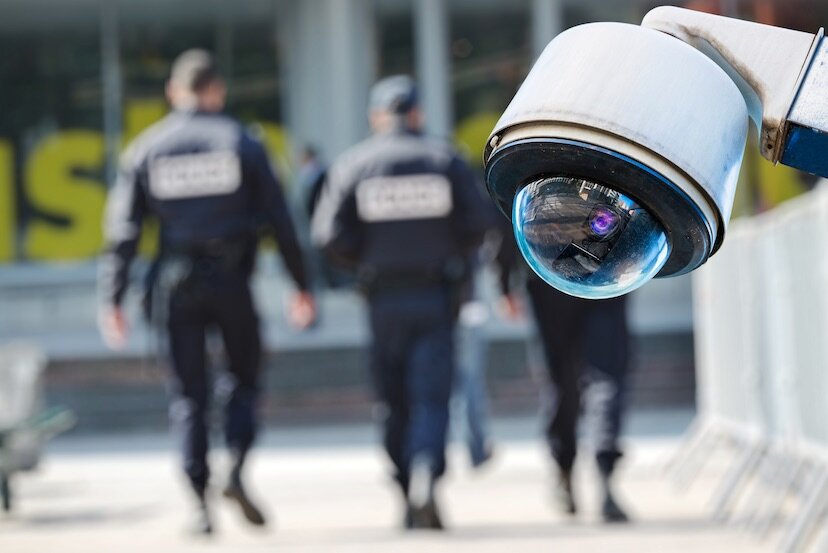
Under the guise of stopping so-called mass shootings, a surveillance system backed by top Mossad, CIA and FBI Authorities is being installed in schools, churches and other locations throughout the US
/From [HERE] Launched in 2016 in response to a Tel Aviv shooting and the Pulse Nightclub shooting in Orlando, Florida, Gabriel offers a suite of surveillance products for “security and safety” incidents at “so-called soft targets and communal spaces, including schools, community centers, synagogues and churches.” The company makes the lofty promise that its products “stop mass shootings.” According to a 2018 report on Gabriel published in the Jerusalem Post, there were an estimated 475,000 such “soft targets” across the U.S., meaning that “the potential market for Gabriel is huge.”
Gabriel, since its founding, has been backed by “an impressive group of leaders,” mainly “former leaders of Mossad, Shin Bet [Israel’s domestic intelligence agency], FBI and CIA.” In recent years, even more former leaders of Israeli and American intelligence agencies have found their way onto Gabriel’s advisory board and have promoted the company’s products.
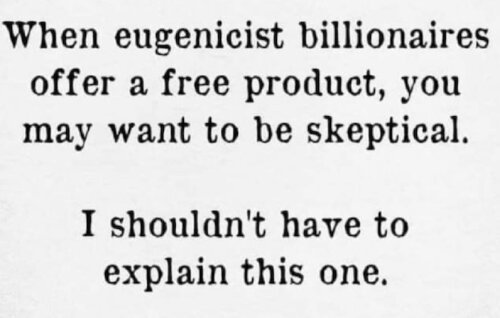
While the adoption of its surveillance technology was slower than expected in the United States, that dramatically changed last year, when an “anonymous philanthropist” gave the company $1 million to begin installing its products throughout schools, houses of worship and community centers throughout the country. That same “philanthropist” has promised to recruit others to match his donation, with the ultimate goal of installing Gabriel’s system in “every single synagogue, school and campus community in the country.”
With this CIA, FBI and Mossad-backed system now being installed throughout the United States for “free,” it is worth taking a critical look at Gabriel and its products, particularly the company’s future vision for its surveillance system. Perhaps unsurprisingly, much of the company’s future vision coincides with the vision of the intelligence agencies backing it – pre-crime, robotic policing and biometric surveillance.
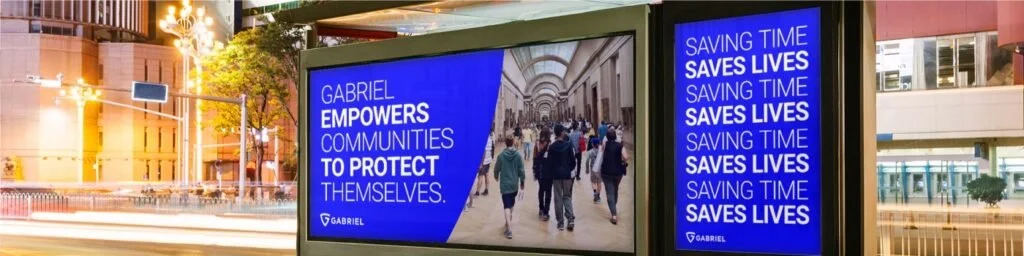
“Safety” Through Invasive Surveillance
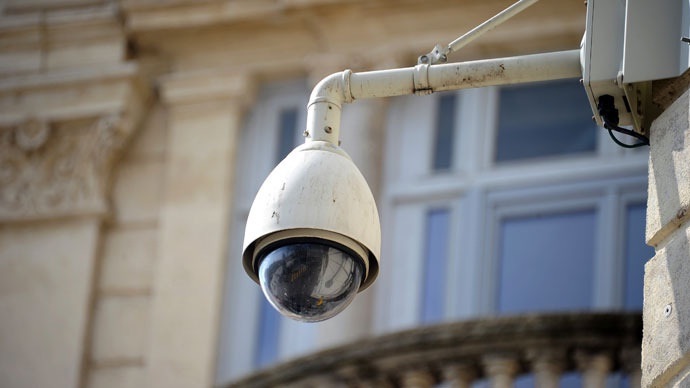
Gabriel’s product suite is built around its “smart shield” panic button. The panic button can be activated both manually and remotely and offers two-way communication, a live video feed, instant altering and gunshot detection by acoustic means. However, the panic button is meant to be used in tandem with company’s “threat detection” suite, which includes “smart cameras” that use AI, facial recognition and related technologies to detect not just weapons, but also “fights” and “abnormal behavior” of people in a particular area. Gabriel’s cameras and panic buttons throughout a facility are meant to act as “activation triggers.” The triggering is largely automated and managed by AI. When an “activation trigger” is set off, the Gabriel system then enters any one of its alert modes, which include emergency, panic, silent panic and yellow (which is the alert mode for minor incidents).
As noted elsewhere on the company’s website, Gabriel is looking to expand far beyond schools and houses of worship to retail stores, warehouses, data centers and banks. At these other facilities, it specifically promotes its “abnormal behavior” detection capabilities. One example, given in reference to how its products might be used in the banking sector, states the following as an “abnormal behavior detection example”:
A group of people are loitering in the ATM lobby. Gabriel is activated in silent panic mode and sends alerts with live video to the security operations center and on-site security team. Audio talk warnings begin to broadcast in the lobby. Security arrives to clear the scene.
Another example, this time for the retail sector, notes how Gabriel surveillance cameras would activate alerts when they detect “unusual movements.” Yet another example for warehouses and distribution centers notes how facial recognition functionality could be used to activate “silent panic mode” when a terminated employee is detected on the premises. [MORE]
No Need for Residents to Carry Guns to Defend Themselves in Crime Ridden NYC as Rolebotic “Black” Mayor Re-introduces Robotic Dog to Surveil and Attack Citizens Under the Pretense of Protecting Them
/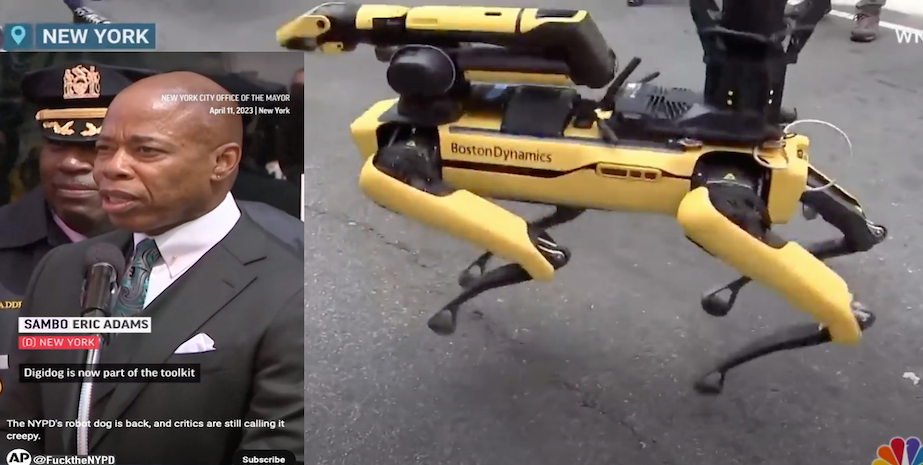
From [HERE] Black borg and strawboss NYC Mayor Eric Adams and the New York City Police Department have reintroduced the controversial robotic dog for surveillance patrols, and there’s another surprise this time: an R2-D2-style robot. These robots are set to debut in Times Square, making this already bustling area of the city appear even more than dystopian ever.
According to local news ABC 7, Mayor Adams said Tuesday he is modernizing the NYPD with the latest technology to fight crime.
“We are scanning the globe to find technology that will assure this city is safe,” the mayor said.
The return of the $74,000 Boston Dynamics’ four-legged robotic dog called “Digidog” is set to assist the NYPD in investigating high-risk or hazardous incidents. Digidog first appeared on the streets in 2020 and was shelved months later after civil rights advocates called the technology ‘aggressive policing.’
Besides the robotic canine, the NYPD will add a K5 Autonomous Security Robot to its force and the StarChase GPS system.
Think of the K5 robot as Robocop; Its R2-D2 style with real-time situational awareness and cameras will allow the NYPD to monitor streets. There’s yet to be a word if the police will be operating facial tracking software from the robot’s cameras…
“This K5 robot provides real-time situational awareness and actionable intelligence to first responders and also provides a physical crime deterrence,” Chief of Department Jeffrey Maddrey said.
And then there’s the StarChase GPS system, which allows police, in a hand-held or vehicle-mounted launcher, to track a tagged vehicle remotely.
“We want the public to know that the use of these technologies will be transparent, consistent, and always done in collaboration with the people that we serve.
“And as with every NYPD initiative, we will continuously evaluate their use and impact on our city. Our job is to fight crime and keep people safe. And these tools are significant steps forward in that vital mission,” Police Commissioner Keechant Sewell.
If you’re curious about how the StarChase GPS system works. Watch this: [MORE]
RecogNegro Defense Secretary Lloyd Austin—Former Member of Raytheon Board of Directors—Has Awarded Over $30 Billion in Contracts to Raytheon Since His Confirmation in January, 2021
/From [HERE] The Pentagon has awarded the defense giant Raytheon Technologies, the second largest weapons-maker in the world, over $30 billion in government contracts since Secretary of Defense Lloyd Austin III’s confirmation on January 22nd, 2021.
Austin was on Raytheon’s board of directors prior to his confirmation.
Austin at the time had made a commitment to resign from Raytheon’s board and recuse himself from all matters concerning Raytheon for four years and agreed to divest from his financial holdings in the company, amounting to between $500,000 and $1.7 million in stock.
These initiatives, however, have not prevented Austin from using his position to bolster Raytheon’s fortunes. Nor those of other defense contractors on whose board he has sat such as Booz Allen Hamilton, the world’s “most profitable spy organization,” according to Bloomberg News, and Pine Island Capital, a private equity firm that invests in military industry.[1]
At Austin’s nomination hearing, Senator Elizabeth Warren (D-MA) questioned him about his ties to Raytheon—whose headquarters are based in Warren’s home district (Waltham, Massachusetts).
A year earlier, Warren had proposed legal changes to strengthen ethics at the Defense Department by blocking the revolving door between the Pentagon and giant defense contractors like Raytheon, including by prohibiting big defense contractors from hiring former Pentagon officials for four years after they leave government. [MORE]
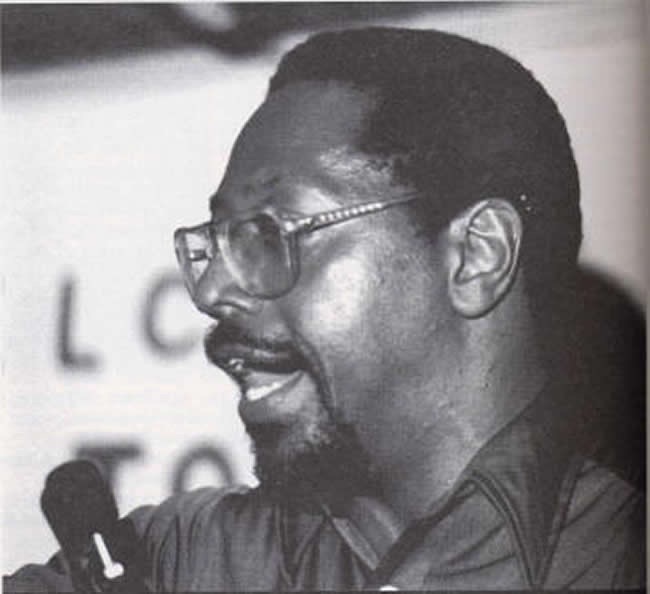
Were Thurgood Marshall, Jesse Jackson and Others Black Informants? The Great Rebel Steve Cokely on SNAGs ($nitch-ass Negroes Aiding Governments)
/According to FUNKTIONARY:
SNAGs – $nitch-ass Negroes Aiding Governments. 2) COINTEL-BROs. 3) Smile Negro And Grin—while I put it in. SNAGs are coin-operated piece-activist sniggering infiltraitors from the native Black American community. SNAGs are on the stroll, exacting Black life as the toll, while klandestinely on the rogue “government” payroll. Dumb-ditty dumb where the hell do these sorry-ass sellout Negroes come from? When you see them, go and give them some—or at least a piece of your mind. It’s easy to heckle and hyde, but why do we seem to always let self-hating sucker-perpetrating Negroes electric slide? SNAGs are Negroes who run from the fabric, the very essence of their Afrikan heritage struggle, culture and consciousness, and run to support the psychopathological dominant minority elite European global racist-supremacist mindset and Agenda along with its narcissistic projections and population control objectives (genocide and eugenics). The more you pull at a snag, the more problems it causes—hence, you have to cut it off from the garment so it will cease causing constraint and strain on the integrity of the fabric of Afrikan consciousness and liberation. Don’t just run them off, cut them off. SNAGs get dealt with! SNAG’s are responsible for facilitating agents of various “government intelligence” operations in successfully accomplishing the “wet jobs” (assassinations) and downfall of some of our most cherished leaders, luminary thinkers, uncompromising revolutionaries and lovers of justice for all humanity. SNAGs come in all shapes, colors, sizes and forms within the Black American community but they all share one common thread—self-hatred. Some of the less known but high-exposure SNAGs were Alex Haley (who covertly worked his roots on Malcolm X), Enest Withers (civil rights photographer and FBI informant), and Justice Thurgood Marshall (also snitching and informing on the Right-Reverend Martin L. King, Jr.), not to mention another “Reverend” from Memphis, TN who was heavily involved (along with Jesse Jackson) in the orchestration of King’s assassination. SNAGs have also been known to be complicit in both successful and botched assassination schemes plotted and executed by the shadowy characters within and behind the veil of the Corporate State and its wet-works black operations spy agencies. Where is the Black Flask Brigade when you need them? (See: COINTELPRO, FBI, CIA, Manhood, $nigger, Sigma Pi Phi, Coin-Operated, Racism White Supremacy, HO-Method, Infiltraitors, Wet Jobs & Piece-Activist)
Racist Suspect AG and Court Order Black Man Back to Prison 2 yrs After his Murder Conviction Set Aside. Gov Witnesses Recanted Confession Testimony and Said They Were Coerced Into Lying by Prosecutors
/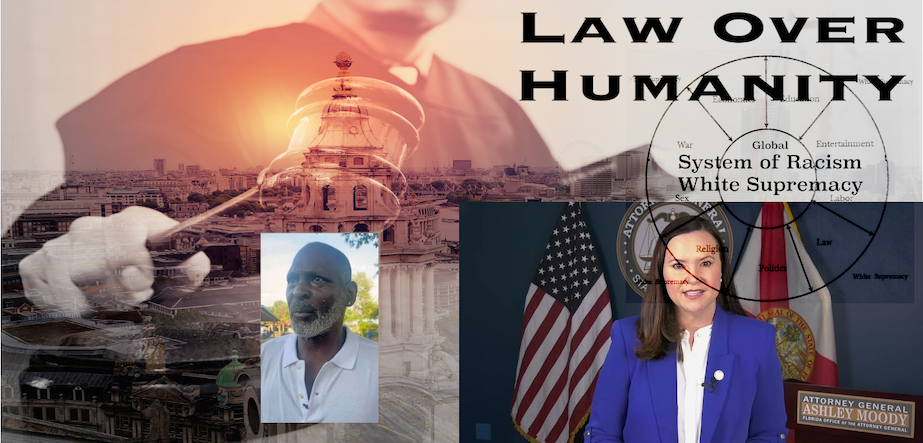
From [HERE] When Crosley Green was released from a Florida prison in 2021 after serving 33 years for a murder he said he did not commit, he and family members who met him outside the penitentiary walls believed his long nightmare was over. As loved ones hugged Green and cried tears of joy, his lawyers said they were confident evidence discovered after his conviction would exonerate him.
Green, however, has been ordered back to prison next week after the U.S. Court of Appeals for the 11th Circuit rejected his claim that his guilty verdict was obtained in violation of his constitutional rights. The appellate court described the evidence uncovered post-trial as "strictly circumscribed" and concluded it would not have changed the outcome of his 1990 conviction by an all-white Brevard County, Florida, jury.
"The most important thing is an innocent man has served 33 years in prison and is going back in for a crime he didn't commit," one of Green's attorneys, Jeane Thomas, told ABC News.
Thomas said three key prosecution witnesses, including Green's sister, recanted testimony that Green, who is Black, confessed to fatally shooting Charles "Chip" Flynn, a 21-year-old white man during a 1989 carjacking, stating they were all coerced by prosecutors and investigators into lying on the witness stand.
Additionally, Green's legal team said the prosecution never turned over to the defense evidence that the two sheriff's deputies who initially responded to the shooting did not believe the sole eyewitness, Flynn's ex-girlfriend, a white teenager, who claimed a "Black guy" committed the slaying.
The U.S. Supreme Court decided in late February not to review Green's case, exhausting his final appeal.
Green, 65, is scheduled to report to the Florida Department of Corrections by Monday to resume his life sentence. But, he said he has not given up and hopes he will walk free again.
"It's bad, but it ain't enough to affect me any kind of way. It can't make me feel down, out and stuff like that because I came too far," Green said in a video statement released to ABC News by his lawyers. "There could be a lot more I'd like to do. But in reality, one day I'm going to get to do it. Right now, I'm going to abide by the rules about what was set forth and be returned back to prison."
'He did not kill that boy'
The 11th Circuit decision overturned a ruling made in 2018 by U.S. District Court Judge Roy B. Dalton Jr. of the Middle District of Florida. Dalton set aside Green's conviction, granted him a conditional release citing concerns over the COVID pandemic and sent the case back to the state to free Green or hold a new trial.
Dalton, according to his ruling, found that now retired Assistant State Attorney Chris White violated the so-called Brady rule constitutionally requiring prosecutors to disclose material evidence favorable to a defendant. He concluded White should have turned over to the defense notes of conversations with the first two sheriff's deputies who responded to the Flynn shooting and told him they suspected Flynn might have been shot by his ex-girlfriend -- the star prosecution witness.
"It is difficult to conceive of information more material to the defense... than the fact that the initial responding officers evaluated the totality of evidence as suggesting that the investigation should be directed toward someone other than (Green)," Dalton's ruling reads.
Diane Clark, a retired Brevard County Sheriff's Office major, was one of the two deputies who responded to the Flynn shooting. Clark told ABC News in a telephone interview this week she was "devastated" when she heard Green was ordered back to prison.
"He doesn't belong there. He spent too many years there to start with. And to this day, I'll say he did not kill that boy," Clark said. "When I got the news that he was going back to prison, I just felt terrible about it."
Regardless of the new evidence, Florida Attorney General Ashley Moody appealed Dalton's ruling, leading to the 11th Circuit decision.
"The Florida Attorney General's Office is charged by statute to represent the State of Florida in upholding judgments and sentences sought by the State Attorney in each circuit and imposed by trial courts when they are appealed," a spokesperson for Moody said in a statement to ABC News.
In the two years Green, the father of three sons, has been out of prison, he has lived a model life, said Thomas, who has worked on Green's case for the past 15 years. As part of his conditional release, Green is required to wear an ankle monitoring bracelet and report regularly to a probation officer.
He's allowed to leave his house only to go to his job as a skilled machinist at a manufacturing company and services at his church on Sundays.
Thomas, a partner in the Washington D.C. law firm Crowell & Moring, said Green has also gotten the chance to know his many grandchildren, nieces and nephews. [MORE]
Oklahoma AG Now Admits Death Row Prisoner who Survived Nine (9) Execution Dates Should Receive a New Trial
/From [HERE] Richard Glossip has consistently maintained his innocence while on death row for the last 25 years. Last week Oklahoma Attorney General Gentner Drummond acknowledged that Mr. Glossip did not receive a fair trial.
Citing evidence of serious prosecutorial misconduct revealed by an independent review of Mr. Glossip’s case, Attorney General Drummond asked the Oklahoma Court of Criminal Appeals to call off Mr. Glossip’s execution, vacate his conviction, and grant him a new trial.
Mr. Glossip was convicted in 2004 for his alleged role in the 1997 murder of Barry Van Treese, the owner of a motel where Mr. Glossip worked. No physical evidence linked Mr. Glossip to the crime and he has maintained his innocence.
The independent review found that the state repeatedly failed to provide—and even destroyed—substantial evidence in the case. The case against Mr. Glossip centered around the testimony of then 19-year-old Justin Sneed, but the review revealed that Mr. Sneed had been diagnosed with bipolar disorder and prescribed lithium while in jail. In his testimony he denied ever seeing a psychiatrist and Mr. Glossip’s attorneys were not made aware of his condition.
“The state’s murder case against Glossip was not particularly strong and would have been, in my view, weaker if full discovery had been provided,” Rex Duncan, the appointed counsel who reviewed the case, wrote.
Since 2004, Mr. Glossip, who is now 60, has been scheduled for execution nine times and has on more than one occasion come within hours of being put to death only to be granted a temporary stay. He has been served three final meals.
In 2015, in the case of Glossip v. Gross, the United States Supreme Court rejected his challenge to the constitutionality of Oklahoma’s lethal-injection protocol, permitting the state to execute him.
“It is critical that Oklahomans have absolute faith that the death penalty is administered fairly and with certainty,” Attorney General Drummond wrote in his motion. “Considering everything I know about this case, I do not believe that justice is served by executing a man based on the testimony of a compromised witness,” he added.
Mr. Glossip remains scheduled for execution on May 18 as he awaits a ruling from the district court following Attorney General Drummond’s motion to vacate his sentence.
The ACLU Announces that It is Challenging the Racist Practice that Excludes Black Jurors from Death Penalty Cases
/From [HERE] Leo Jones, a Black man, was convicted and sentenced to death by an all-white Florida jury in 1982 for the killing of a white police officer.
The conviction rested on a key witness who later recanted his testimony, and a coerced confession from Mr. Jones, which was written by the police officers interrogating him. Both officers were later fired for a pattern of misconduct, including police brutality.
Despite the serious doubts around Mr. Jones’ conviction, the state of Florida executed him in 1998 by electric chair. Mr. Jones’ case is emblematic of pervasive issues in death penalty cases.
Juries are an integral part of our justice system.
One of the first lines of defense against miscarriages of justice is a diverse, representative jury which is much more capable of fairly weighing evidence, holding the government to its high burden, and protecting the rights of those accused of crimes than an all-white jury.
Juries are an integral part of our justice system. Their goal is the determination of truth and the fair and equitable application of law. Other than voting, serving on a jury is the most substantial opportunity that most citizens have to participate in the democratic process.
But in death penalty cases, juries are rigged to be more conviction-prone, friendlier to the prosecution, and to exclude Black community members.
This is because of a process known as death qualification, which dictates that to serve on a death penalty jury, a prospective juror must be willing to impose the death penalty. Those unwilling to impose the death penalty are excluded from jury service. Black people are more likely to oppose the death penalty — and as a result, are disproportionately excluded from death penalty juries.
But in death penalty cases, juries are rigged to be more conviction-prone, friendlier to the prosecution, and to exclude Black community members.
Black opposition and skepticism about the death penalty is unsurprising, given racial bias in the administration of the death penalty, the line between racial terror lynchings and capital punishment, and racial disparities in the criminal legal system.
We are challenging the racist death qualification jury selection process in cases in Florida and Kansas.
In Duval County, Florida, a study of 12 capital cases since 2010 (where 11 out of 12 people on trial were Black) involving more than 800 jurors found Black jurors were twice as likely to be removed as white jurors because of death qualification. We are representing two men in Duval County, who are challenging how the jury will be selected in their capital trials.
In Kansas, where we are challenging the state’s death penalty law, our expert report found that death qualification would similarly change the composition of the jury in Sedgwick County, Kansas, putting a thumb on the scales in favor of the death penalty, while disproportionately excluding Black women.
It’s an endless cycle of discrimination: Exclude skeptical Black jurors, disproportionately condemn Black people to death with whitewashed juries, prompt distrust in a racist system, and repeat.
Black exclusion from jury service is deeply embedded in and a shameful reality of our nation’s founding. Not until the passage of the Fourteenth Amendment and the 1875 Civil Rights Act were Black people — newly recognized as citizens in the eyes of the law — legally guaranteed the right to serve on juries.
Even with the passage of these important guarantees, discrimination remained the reality, especially in the former confederate states. Overwhelmingly, Black people accused of crimes (often falsely) continued to be judged and sentenced by all-white juries. Conversely, Black people who were victims of racial violence and racial terror did not find justice in the courts — the white perpetrators of violence, if even brought to trial, judged by all-white juries.
It is no accident that racial disparities in mass incarceration and racial bias in the death penalty go hand –in hand with the exclusion of Black Americans from juries. All are part of the project of upholding white supremacy, much as Congress’s 1836 “gag rule” meant that no petitions to end slavery would be considered. But we are capable of changing as a nation, and we aren’t doomed to repeat the past.
Ending death qualification moves us toward overcoming the shameful history of exclusion, terror, and injustice endured by Black Americans.
Participation in the jury, a voice in the just administration of criminal laws — these are essential acts of citizenship and democracy. When we have juries that represent all of us and include all of us, we strengthen our democracy, making it fairer and more just. We have the opportunity to write a new story and leave behind a better inheritance for our nation.
"This case is about four Boston police officers who stole." Jury Told Inflated Cop Overtime Fraud was 'Unwritten Rule'
/From [HERE] The overtime fraud trial of four Boston police officers kicked off Tuesday in federal court with attorneys for the current and former cops countering prosecutors' theft claims(link is external) by arguing it was a "time-honored, accepted practice" to file for overtime in four-hour chunks regardless of how long they worked (article available here(link is external)).
Jurors heard opening arguments in the case alleging former Lt. Timothy Torigian, former Sgt. Robert Twitchell, former Officer Henry Doherty, and suspended Officer Kendra Conway stole tens of thousands of dollars by claiming overtime pay for hours they never worked.
"This case is about four Boston police officers who stole," Assistant U.S. Attorney told jurors. "They didn't rob a bank. They didn't crack a safe. They stole overtime pay for putting in for hours they didn't work."
Torigian's attorney told the panel that the lieutenant doesn't dispute filling out his own overtime slips in four-hour chunks and signing off on similar slips from others in the Evidence Control Unit.
"In practice, it was a time-honored tradition that officers could, would, and did submit overtime in 4-hour blocks at the Evidence Control Unit, in particular, and throughout the Boston Police Department in other units," he said.
Twitchell's attorney categorized the four-hour overtime claims as an "unwritten rule" of the evidence warehouse. No one ever told his client he had to stay until the very end of the shift.
Prosecutors unveiled the case(link is external) against nine current and former Boston cops detailed to the department's Evidence Control Unit in September 2020, filing federal conspiracy and theft charges against the officers for collectively embezzling more than $200,000 in no-work overtime pay.
Prosecutors said they planned to call nine former members of the evidence control unit, many pursuant to cooperation deals, who will testify that they knew the exaggerated overtime slips were wrong.
Five other officers charged in separate cases between March 2021 and October 2021 all pleaded guilty.
NYC Rikers Island Misconduct Investigations Boss Resigns over questions about Lax Excessive Force Probes. Cops Not Disciplined for Brutalizing Inmates in Reprehensible Jail Run by Liberals
/From [HERE] The head of the city Correction Department’s Investigation Division — a key unit that investigates a wide range of staff misconduct — has stepped down over questions about his handling of probes into excessive force cases, the Daily News has learned.
Deputy Investigation Commissioner Manuel Hernandez resigned Friday under pressure over decisions he made to close serious use-of-force cases without charging officers or after filing reduced charges, multiple sources said. Hernandez was appointed last May.
The Correction Department’s federal monitor has found a pattern in recent months of noncompliance, meaning its recommendations in cases where correction officers were demonstrated to have used excessive force on detainees have often not been followed
The monitor, Steve Martin, is expected to release a previously secret report this week on the state of the jails, likely to include these findings.
Correction Commissioner Louis Molina fired Deputy Intelligence, Investigation and Trials Commissioner Sarena Townsend at a time when the monitor had said longstanding problems in the disciplinary system, including backlog and lack of penalties for serious misconduct, were improving.
Townsend claimed she was fired for refusing Molina’s demand to close 2,000 staff use-of-force cases in four months.
Hernandez, 63, a retired NYPD lieutenant and military veteran, was Molina’s squad commander in Greenwich Village’s 6th Precinct when Molina worked there as an NYPD detective.
In May, Molina described Hernandez as a mentor and lauded his integrity. “I have full confidence that Manuel will enforce accountability in the agency,” Molina said.
In a post where he was supposed to be constantly on call, Hernandez was known to leave for his Putnam Valley home on weekdays by 4 p.m. and take weekends off, sources said.
“That is a 24/7 job,” said Maureen Sheehan, a former Correction Department deputy director of investigation. “You have to answer your phone.”
Hernandez was known to have had underlings sign off on investigative findings and discipline decisions for him.
For example, on Jan. 31, Hernandez’s office declined to charge any officers in the case of Herman Diaz.
Diaz choked to death on an orange in March 2022 while no correction officer patrolled his unit and after a security booth officer declined to provide medical assistance. Rather than sign off on the decision himself, Hernandez had an assistant do it, records show.
Hernandez is the second high-ranking Molina hire to resign in two months. On Feb. 3, Joseph Dempsey, the deputy commissioner of operations, resigned after he was accused of sending a sexually explicit picture to a subordinate. His tenure lasted three months.
Alabama to Spend Nearly $1 Billion for a Single Prison
/From [HERE] Alabama state officials voted last week to increase the amount the state will pay a private company to build a new prison in Elmore County to nearly $1 billion.
The resolution was passed by the Alabama Correctional Institution Finance Authority, a group of seven state officials who have final authority over all financial decisions related to building or leasing state prisons.
In April 2022, Alabama signed a contract with Montgomery-based Caddell Construction Company to build a 4,000-bed prison in Elmore County. The “initial guaranteed maximum price” for the prison was $623 million with construction to be completed by January 2026.
The resolution passed last week raised the maximum price to $975 million—a 57% increase—and pushed back completion to June 2026.
The contract to build the Elmore facility was given to Caddell after Alabama lawmakers passed a bill allowing state agencies to circumvent the standard competitive bid process.
The director of the Legislative Services Agency said signing a deal with Caddell without soliciting bids from other companies would save the state $75 million by “locking in material costs sooner.”
This is the second billion-dollar commitment made by the Alabama Department of Corrections in two months. In February, ADOC entered a $1 billion contract with private prison medical provider YesCare (formerly Corizon).
The billion-dollar contract for a single 4,000-bed prison is roughly equivalent to the budget of the entire Alabama Department of Mental Health, which provides services to more than 200,000 Alabamians annually.
Decades of Research Show that Mass Pretrial Incarceration Actually Undermines Public Safety. A New Study from the University of Chicago Law School Suggests that Judges are Making the Problem Worse
/From [HERE] Despite the fact that tough-on-crime rhetoric may have cost them votes in the midterms, prominent Democrats continue to double down on calls to roll back bail reform. Earlier this month, New York Gov. Kathy Hochul (D) doubled down on her calls for bail reform efforts to be walked back, urging legislators to expand judges’ ability to lock up the accused while awaiting trial.
She’s not alone. New York City Mayor Eric Adams (D) has been beating the drum against bail reform for months — and New Jersey lawmakers recently introduced a bill to scale back the state’s landmark bail reforms. Amid growing concerns about violent crime, politicians have seized on the idea that locking people up before trial leads to safer streets.
The problem is that decades of research show that mass pretrial incarceration actually undermines public safety. And a new study from Professor Siegler’s Federal Justice Clinic at the University of Chicago Law School suggests that judges are making the problem worse.
According to one well-known study, locking even low-risk arrestees in jail for just two or three days increased the likelihood that they are arrested for a new crime by 40 percent. What’s worse, people jailed pretrial often lose their jobs, homes, and custody of their children.
This is nothing new. Policymakers across the political spectrum have long acknowledged the cascading, harmful effects of pretrial jailing. Ironically, the perils of pretrial detention led to the passage of federal bail reform signed by President Reagan in the ’80s, an era most liberals consider the modern epicenter of mass incarceration. Still on the books, the Bail Reform Act of 1984 flatly prohibits judges from jailing people who are too poor to pay for their freedom.
Despite that law, federal pretrial detention rates remain stubbornly high. And nationwide, an estimated one-in-four of the nearly 2 million people caged in jails and prisons are people awaiting trial, at a cost of more than $14 billion annually.
So what’s going wrong?
For the last two years, Professor Siegler’s Clinic studied the decisions of federal judges presiding over the cases of people accused of a crime who are awaiting trial and presumed innocent. Their research shows that federal judges regularly violate the very bail laws that they are sworn to uphold, locking people in jail who should be released.
Professor Siegler’s study found that federal judges are jailing people unlawfully in 12 percent of cases, without any evidence that the person is facing a serious crime or poses a serious risk of flight, as required by the Bail Reform Act.
Federal District Court Judge Judith Levy put it this way: “We have a crisis on our hands, and some of the blame falls on judges. Jailing people before trial ruins lives and may undermine public safety. Federal judges need to follow the law.” Perhaps the path to safer streets runs not through tougher laws, but closer scrutiny of the judges responsible for our pretrial detention crisis.
Judges’ continued reliance on cash bail is also contributing to the problem. Although it’s illegal under Reagan’s 1984 law, Professor Siegler found that federal judges regularly set bail that defendants can’t possibly afford to pay. In Miami, it is commonplace for federal judges to saddle indigent people with $250,000 bail bonds, knowing full well that the person will remain in jail because they are too poor to pay. Across hundreds of cases, every single person jailed on a high bail bond in Miami was a person of color. What’s worse, in over one-quarter of federal courthouses in this country, people who do not have the money to pay for a lawyer are regularly locked in jail without a lawyer — a practice that federal law clearly forbids.
Taken together, the evidence points to a clear but perhaps counterintuitive conclusion: Judges’ refusal to follow the law is destabilizing communities, and may be contributing to the very crime wave they are trying to avert. [MORE]
Perhaps the legal scholars here miss the point, which is simply to lock up as many Black people as possible no matter the expense or consequences?

The Sentencing Project explains, “The United States is the world’s leader in incarceration. There are 2.2 million people in the nation’s prisons and jails—a 500% increase over the last 40 years. Changes in law and policy, not changes in crime rates, explain most of this increase. The results are overcrowding in prisons and fiscal burdens on states, despite increasing evidence that large-scale incarceration is not an effective means of achieving public safety.
. . . A series of law enforcement and sentencing policy changes of the “tough on crime” era resulted in dramatic growth in incarceration. Since the official beginning of the War on Drugs in the 1980s, the number of people incarcerated for drug offenses in the U.S. skyrocketed from 40,900 in 1980 to 452,964 in 2017. Today, there are more people behind bars for a drug offense than the number of people who were in prison or jail for any crime in 1980. The number of people sentenced to prison for property and violent crimes has also increased even during periods when crime rates have declined.
Sentencing Project states, “Today, people of color make up 37% of the U.S. population but 67% of the prison population. Overall, African Americans are more likely than white Americans to be arrested; once arrested, they are more likely to be convicted; and once convicted, they are more likely to face stiff sentences. Black men are six times as likely to be incarcerated as white men and Hispanic men are more than twice as likely to be incarcerated as non-Hispanic white men.” [MORE]
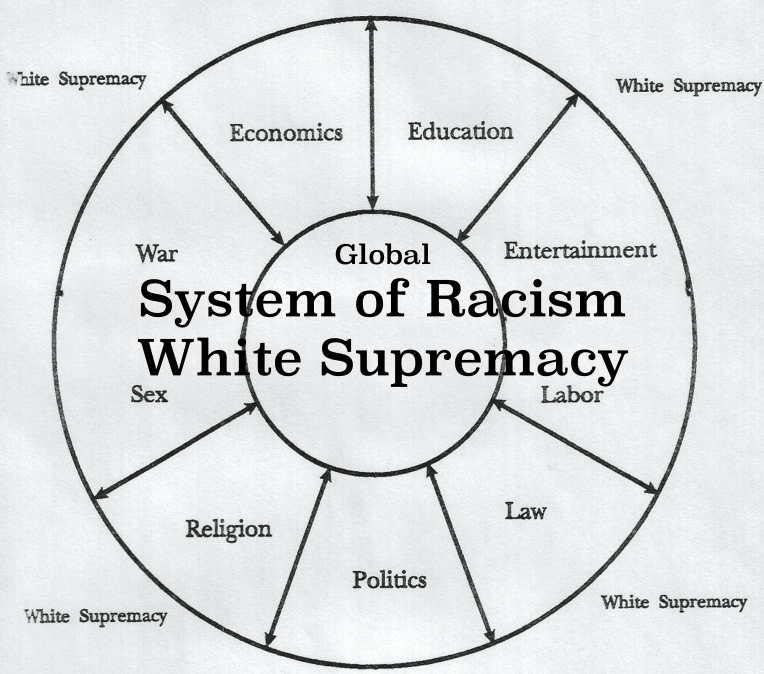
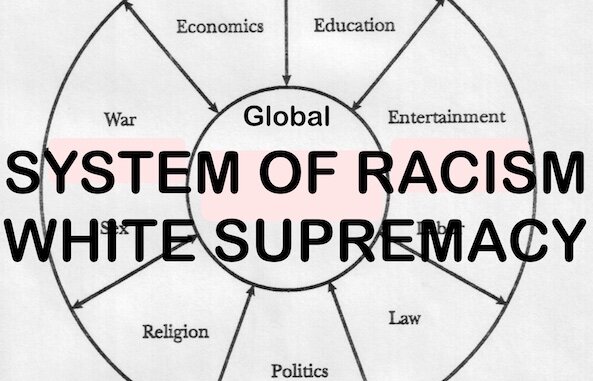
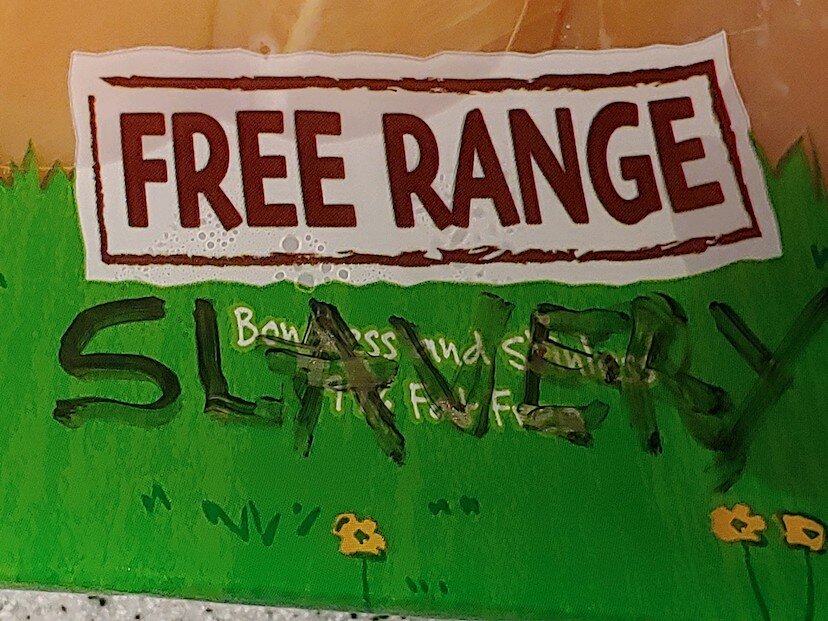
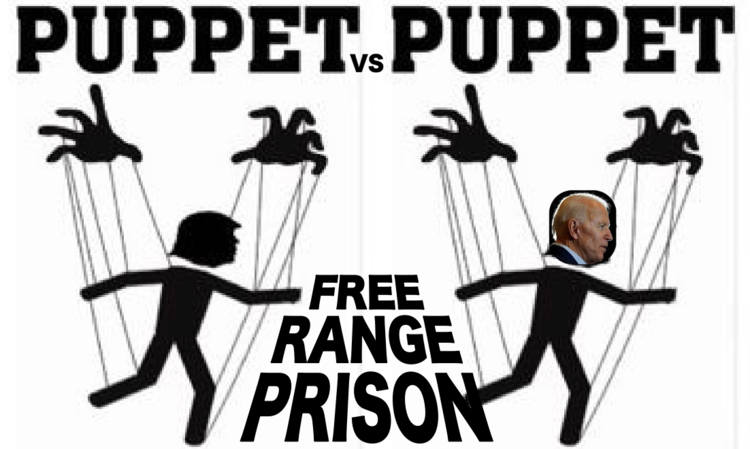
FREE RANGE PRISON. RWS requires the greater confinement of substantial numbers of non-white people. Undeceiver Neely Fuller makes it plain that ‘Elite racists know that a world system based on Racism White Supremacy requires that substantial numbers of non-white people be greatly restricted in their movements from place to place. Elite racists restrict the movements and activities of non-white people so as to keep them idle, and/or keep them from becoming constructively sufficient.
Elite Racists make certain that large numbers of non-white people exist under conditions that will most likely cause them to do things that will give racists an “excuse” to put them in Greater Confinement.” [MORE]
The great rebel Dr. Amos Wilson stated,
Given the historical and contemporary virulence of White racism in America and the injustice toward Blacks that such racism engenders, the number of arrests, incarcerations, and in many instances, convictions of Black males should be viewed with a jaundiced eye. The willingness of White Americans to heavily tax themselves in order to finance accelerated and increased prison construction, rapidly expanding police forces and so-called criminal justice system personnel, burgeoning private police and security establishments; their willingness to finance the incarceration of a Black male prisoner upwards of $30,000 to $40,000 per year, in sharp contrast to their unwillingness to tax themselves to provide for the appropriate funding of the education of Black children and to commit themselves to the ending of racist employment practices; to provide adequate housing medical care, food and clothing; clearly implies that alleged Black male criminality plays a very important role in defining the collective White American ego and personality.
The typical White American response to the so-called criminality of the Black male when closely examined, clearly indicates that it is more consistent with a conscious and unconscious need to instigate and sustain Black criminality as a highly visible and publicized component of American society, than with a yearning to reduce its destructive influence on both Black and White societies. White America needs an expressly "hyped" Black American criminality the way a neurotic patient needs his symptoms, despite his protests to the contrary. In other words, the existence of Black American criminality, alleged and actual, is a political-economic, social-psychological necessity for maintaining White American psychical and material equilibrium. Black American criminality apparently serves fundamental Eurocentric psychopolitical needs and is engendered and sustained for this reason. We will now examine some of these needs.
New SF DA Makes Her Masters Happy by Expanding Cash Bail and Removing Prison Alternatives. Safe McNegro Eases White Liberals Perceptions About Crime by Putting More Blacks in Greater Confinement
/
ACCORDING TO FUNKTIONARY:
MCNEGRO – OVER ONE MILLION SOLD-OUT. HOW CAN ANY NEO-NEGRO SELL OUT OF ANYTHING THAT HE DOES NOT OWN—OTHER THAN MERCHANDISE? YOU HAVE TO OWN SOMETHING TO SELL-OUT. (SEE: NEGROPOLITAN, BOHICAN, EYESERVANT, $NIGGER & SAMBO)
NEGRO – A NONEXISTENT PERSON. THE WORD “NEGRO” IS AN ADJECTIVE—AND HAS ONLY WITHIN THE LAST CENTURY BECOME USED AS A NOUN. SINCE BECOMING USED AS A NOUN, IT IS A WORD TO DESCRIBE A MAN OR WOMAN OF AFRIKAN DESCENT LIVING IN PATHOLOGICAL MENTAL STATE OF CULTURAL ABSTINENCE AND HISTORICAL AMNESIA—ONE WHO WANTS TO IMPRESS HIS OR HER OPPRESSOR WHILE IGNORING THE EFFECTS AND PLIGHT THAT HIS OR HER ACCOMMODATIONIST POSTURE INURES. 2) A HANKY-HEAD. 3) AN INDIGENOUS-TO-THE-LAND (AMERICAN) AFRIKAN WHO DOES EVERYTHING IN HIS OR HER POWER TO SUPPRESS OR PRETEND THAT HE OR SHE IS OTHER THAN SOMEONE OF RECENT AFRIKAN DESCENT. 4) ETHNICITYDENYING, ASSIMILATED AND CONFUSED FORMERLY ENSLAVED NATIVES (LARGELY INDIGENOUS TO AMERICA) AS WELL AS THE SMALLER PERCENTAGE AFRIKAN CAPTIVES KIDNAPPED AND BROUGHT TO AMERICA IN SHIPS AND CHAINS. 5) ONE WHO TRULY BELIEVES HE OR SHE IS WHITE AMERICAN— MASQUERADING IN BLACK FACE. IN THE PREFACE TO “THE NIGGER BIBLE,” WRITTEN BY ROBERT H. DECOY, THE LATE SOCIAL ACTIVIST DICK GREGORY, DEFINES NEGRO AS, “A STATE OF A NIGGER’S MIND WHICH DESCRIBES HOW CAUCASIAN AND CHRISTIAN HE HOPES TO BE.” ~THE NIGGER BIBLE. MIRROR, MIRROR ON THE WALL, WHO’S A NEGRO AFTER ALL? (SEE: NIGGER, RENTELLECTUAL, MCNEGRO, $NIGGER, COIN-OPERATED, DOUBLE CONSCIOUSNESS, SAMBO & NEGROPOLITAN)
From [HERE] After San Francisco’s unconventional District Attorney Chesa Boudin was ousted in July 2022, Boudin’s successor Brooke Jenkins has advised prosecutorial cases throughout the city. In the wake of backlash against Boudin’s restorative approach to the position and the increase in crime, Jenkins has taken a tougher stance on crime with her provisions.
Elected as San Francisco district attorney in 2019, Boudin implemented some criminal justice reform policies to reduce incarceration, including bail reform and alternatives to prosecution and sentencing.
After Boudin was elected, however, the conversation of reform in the city began to fizzle as a narrative about a perceived so-called nationwide crime wave gained steam with a particular focus on crime rates in San Francisco.
The changes of crime in San Francisco with Boudin as active District Attorney was more of a shift from crime in tourist to residential areas rather than an overall spike. This pattern follows trends of many other cities across the country, much of which can be attributed to the pandemic. Regardless, a number of San Francisco residents saw the perceived rise in crime as a result of Boudin’s policies, including not prosecuting houselessness cases and diversion programs for first time offenders, and were displeased with his performance as a district attorney. After serving only two and half years of his four-year term, in July, 2022, San Francisco residents recalled Boudin in a 55 to 45 vote.
Brooke Jenkins, who was a leading figure and critic of Boudin in the recall election, was chosen by Mayor London Breed, a black strawboss, to succeed him as interim District Attorney. During Jenkin’s time in office she has scaled back many of the progressive measures implemented under Boudin.
Thus far, Jenkins has removed Boudin’s no cash bail system, an integral part of his campaign. Removing cash bail as a factor in allowing individuals to be released pre-trial means that lower income people charged with nonviolent offenses will not be forced to stay incarcerated simply because they cannot afford to be released. In fact, she has expanded the use of cash bail in misdemeanor cases. According to the American Civil Liberties Union (ACLU), this policy disproportionately impacts low-income communities and communities of color. “If they can’t afford bail, people who have not been convicted of a crime may languish in county jail while more affluent people facing the same charges are released.”
Furthermore, Jenkins’s punitive punishments for nonviolent offenses starkly contrasts with the prior restorative policies meant to provide alternatives to incarceration with a focus on rehabilitative measures for convicts. While in office, she has consistently prioritized waging a war on drug offenses by promising to prosecute more drug charges and increasing sentences for people charged with selling drugs. The District Attorney’s Office says this is an attempt to curb drug addiction in San Francisco. However, according to the ACLU, “increasing sentences for drug-related activity does not deter substance use or reduce the availability of drugs; it only consigns more people to our dangerously overcrowded jails, removes individuals from their families and communities, squanders scarce public resources and worsens the overdose crisis.”
For the following years after 2020 and in the wake of several instances of police brutality that were recorded, a national discussion about implementing reformative measures to address the inconsistencies and disparities in the criminal justice system was widely supported, especially in San Francisco. This change in perspective in such a brief time potentially indicates the need for a further conversation about the dedication cities have to remedying systemic harm done to communities through mass incarceration and tough on crime policies. Law and order media outlets and politicians have pushed the idea that crime is on the rise across the country, and they targeted San Francisco, painting a picture of the city as a city of crime. This rhetoric caused many residents to quickly turn on the idea of a non-conventional district attorney’s office. As a result, we have reverted back to the traditional system of criminal justice that was just beginning to be widely criticized.
Suit Says DC Police Target Black Men and Stop and Search Them for Guns [the 4th Amendment Doesn’t Protect Blacks from Cops and Liberals Make Sure Blacks Can’t Defend Themselves in Crime Ridden Areas]
/From [HERE] The District of Columbia failed to shake off a proposed civil rights class action alleging its Metropolitan Police Department policy of stopping and searching for guns is racially biased (article available here(link is external)).
The allegations that the department’s gun recovery unit unlawfully targets Black males without reasonable suspicion or probable cause are sufficient to survive dismissal for failure to state a claim, the court ruled Wednesday.
The nine members of the unit named in the complaint aren’t entitled to qualified immunity because the allegations, if true, are clearly illegal, the court held.
“It defies credulity that a law enforcement officer would not know that stopping and searching a citizen with no reasonable articulable suspicion or probable cause was plainly unlawful." The allegations are also sufficient to proceed with claims that the city has a “policy or custom that was the ‘moving force’(link is external) behind the alleged constitutional injury,” the court added.
The court cited the testimony of one D.C. police officer that the Narcotics and Special Investigations Division, which oversees the gun recovery unit, used “illegal tactics,” and allegations that the GRU “openly displayed flags, banners, and t-shirts, depicting or alluding to their reputation for stopping and searching residents of the areas in which they operated,” which shows that policymakers were aware of their practices.
The case is Crudup v. District of Columbia(link is external), No. 20-cv-1135 (D.D.C. Mar. 29, 2023).
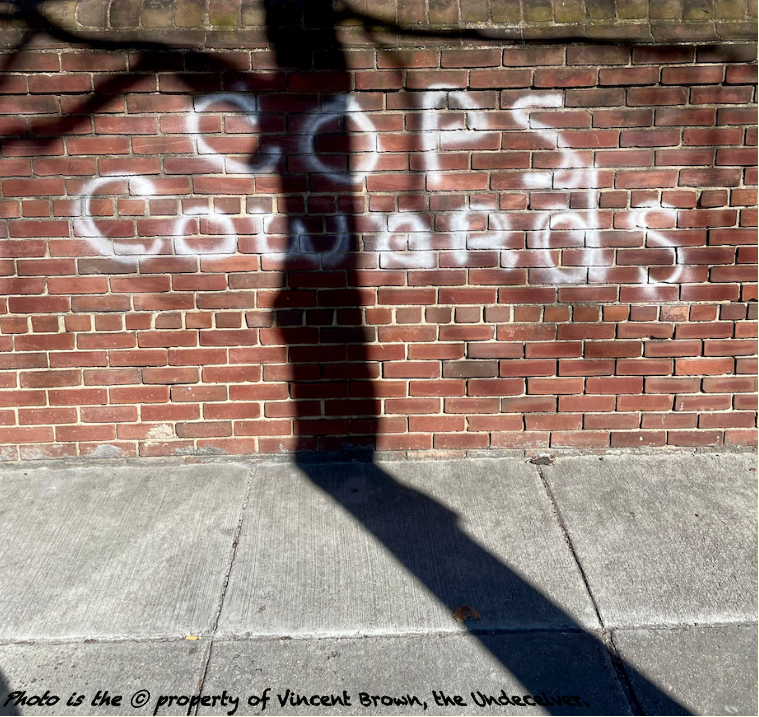
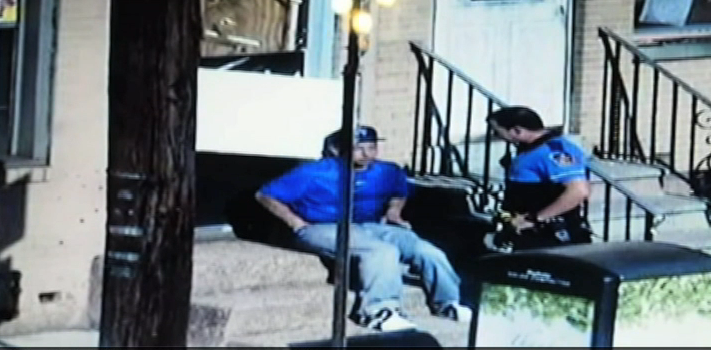
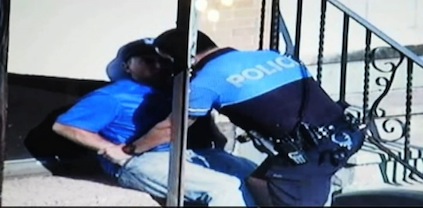
WASHINGTON DC APRIL 2023. PHOTO COURTESY OF VINCENT BROWN, THE UNDECEIVER.
The Supreme Court made it clear that the 2nd Amendment protects an individual’s right to keep and bear arms for self-defense in public. The court clearly stated;
Nothing in the Second Amendment’s text draws a home/public distinction with respect to the right to keep and bear arms. As we explained in Heller, the “textual elements” of the Second Amendment’s operative clause— “the right of the people to keep and bear Arms, shall not be in- fringed”—“guarantee the individual right to possess and carry weapons in case of confrontation. Heller further confirmed that the right to “bear arms” refers to the right to “wear, bear, or carry . . . upon the person or in the clothing or in a pocket, for the purpose . . . of being armed and ready for offensive or defensive action in a case of conflict with another person.”
This definition of “bear” naturally encompasses public carry. Most gun owners do not wear a holstered pistol at their hip in their bedroom or while sitting at the dinner table. Although individuals often “keep” firearms in their home, at the ready for self-defense, most do not “bear” (i.e., carry) them in the home beyond moments of actual confrontation. To confine the right to “bear” arms to the home would nullify half of the Second Amendment’s operative protections.
Moreover, confining the right to “bear” arms to the home would make little sense given that self-defense is “the central component of the [Second Amendment] right itself.” Heller, 554 U. S., at 599; see also McDonald, 561 U. S., at 767. After all, the Second Amendment guarantees an “individual right to possess and carry weapons in case of confrontation,” Heller, 554 U. S., at 592, and confrontation can surely take place outside the home.
Although we remarked in Heller that the need for armed self-defense is perhaps “most acute” in the home, id., at 628, we did not suggest that the need was insignificant else- where. Many Americans hazard greater danger outside the home than in it. See Moore v. Madigan, 702 F. 3d 933, 937 (CA7 2012) (“[A] Chicagoan is a good deal more likely to be attacked on a sidewalk in a rough neighborhood than in his apartment on the 35th floor of the Park Tower”). The text of the Second Amendment reflects that reality.
The Second Amendment’s plain text thus presumptively guarantees petitioners Koch and Nash a right to “bear” arms in public for self-defense.
White Liberals overwhelmingly subject Black people to greater restrictions in the free range prison. Black citizenship is so low that; no matter what the law says, Blacks are prohibited from possessing guns. A recent Marshal Project study found that liberal authorities fail to to make arrests in the overwhelming majority of most Shootings but are cramming Blacks into their jails over mere gun possession.
By coercively interfering in individuals’ self-defense efforts, the state becomes partly responsible (in addition to the criminals themselves) for their victimization – the state in effect becomes an accomplice to those crimes. Failing to protect people is one thing; actively intervening to stop them from protecting themselves is much worse. [MORE]
Brazen cops so frequently abuse their power that no Black shopper, pedestrian, motorist, juvenile, adult or Black professional of any kind—could make a rational argument that so-called constitutional rights provide any real protection from cops or the government in general. The only thing upholding the 4th Amendment is your belief in it. You only have rights if an authority says that you do or agrees that you do. Your possession of "rights” given to you by a magical government, which functions as your master, is cult belief. In reality, as explained by Dr. Blynd, “There is no freedom in the presence of so-called authority.” [MORE]
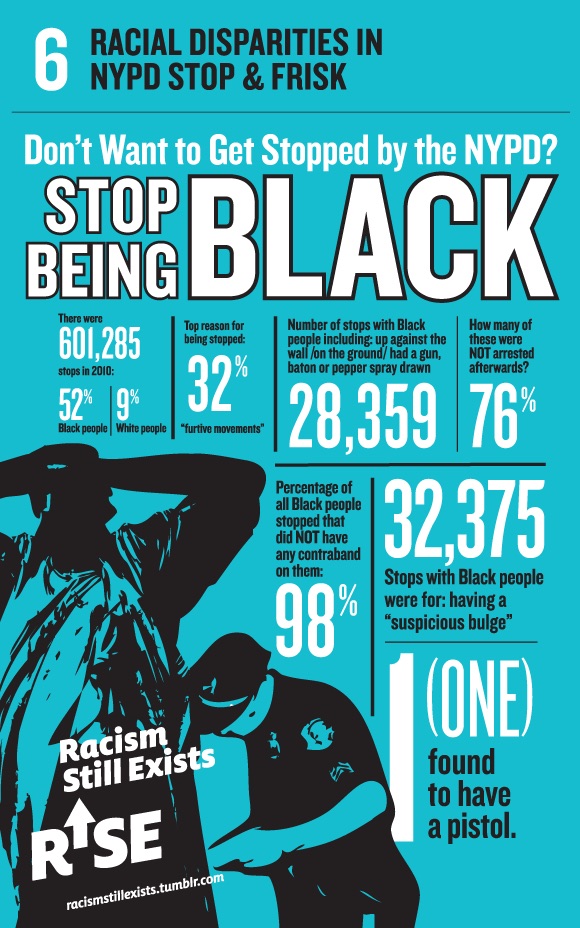
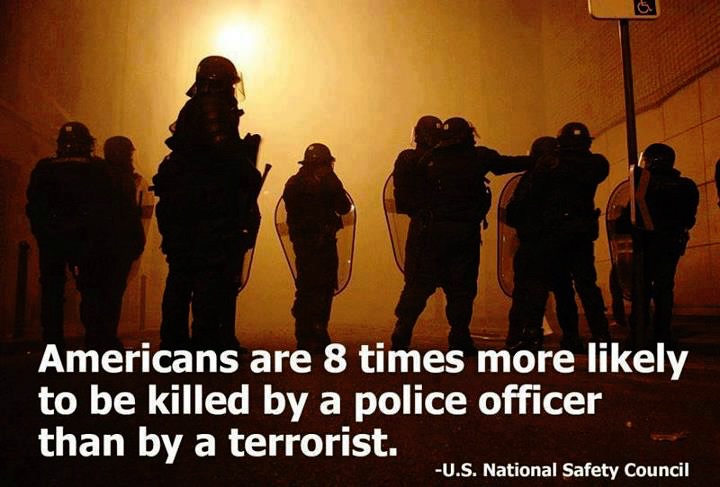
Blacks are subject to omnipresent interference by cops with their freedom of movement and their right to be left the fuck alone, Black people are 3 times more likely than whites to be murdered by cops and the police have no legal duty to protect any particular citizen from harm unless they are in custody (“the public duty doctrine”). Said factors exist in a legal context in which law enforcement is uncontrollable by citizens, generally unaccountable to them, can’t be hired or fired by citizens and has irresponsible, limitless power over people to take life on the street as they see fit while providing a compulsory “service” that citizens have no “right” to decline. [MORE]
Memphis Authorities Approved an Ordinance that Limits When Police Can Pull Drivers Over, in Hopes of Preventing Deadly Encounters Between Officers and Black Residents (it Didn't Work in Berkeley CA)
/From [HERE] Memphis City Council approved a police reform ordinance that limits when officers can pull drivers over, in hopes of preventing negative encounters between officers and citizens. The decision comes after the police killing of Tyre Nichols in January.
Councilmember Michalyn Easter-Thomas said the new Driving Equality Act is modeled after a Philadelphia law of the same name, which took effect in March 2022. Both policies create a list of minor vehicle violations that can no longer be the sole reason an officer pulls someone over.
In Philadelphia, those violations are:
Late registration (if under 60 days late)
Relocation of temporary registration (must be visible)
Hanging license plate (must be fastened)
Missing a single headlight or taillight
Items hanging from a rearview mirror
Minor bumper damage
Driving with an expired or missing inspection sticker
Driving with an expired or missing registration sticker
(this is more symbolic politics from reformers: there are literally hundreds of regulations that police can use to make traffic stops [MORE])
Memphis’s ordinance includes five infractions. At the Tuesday City Council meeting where the policy was approved, Easter-Thomas said the goals include saving low-income residents from exuberant fines, and allowing police officers to focus on more serious offenses.
“We can build our positive rapport between our officers and our community members,” she said. “It limits the possible negative interactions that officers can have … we’re making sure we focus on what’s really important on our roads and in our communities.”
Philadelphia’s law has been in effect for about a year. In the first eight months of implementation, traffic stops of Black men for the covered violations dropped 54% according to data from the Defender Association of Philadelphia, as did stops for people of all races committing those offenses. Across the board, there was a slight uptick in stops for moving violations including blowing stop lights and driving the wrong way. [MORE]
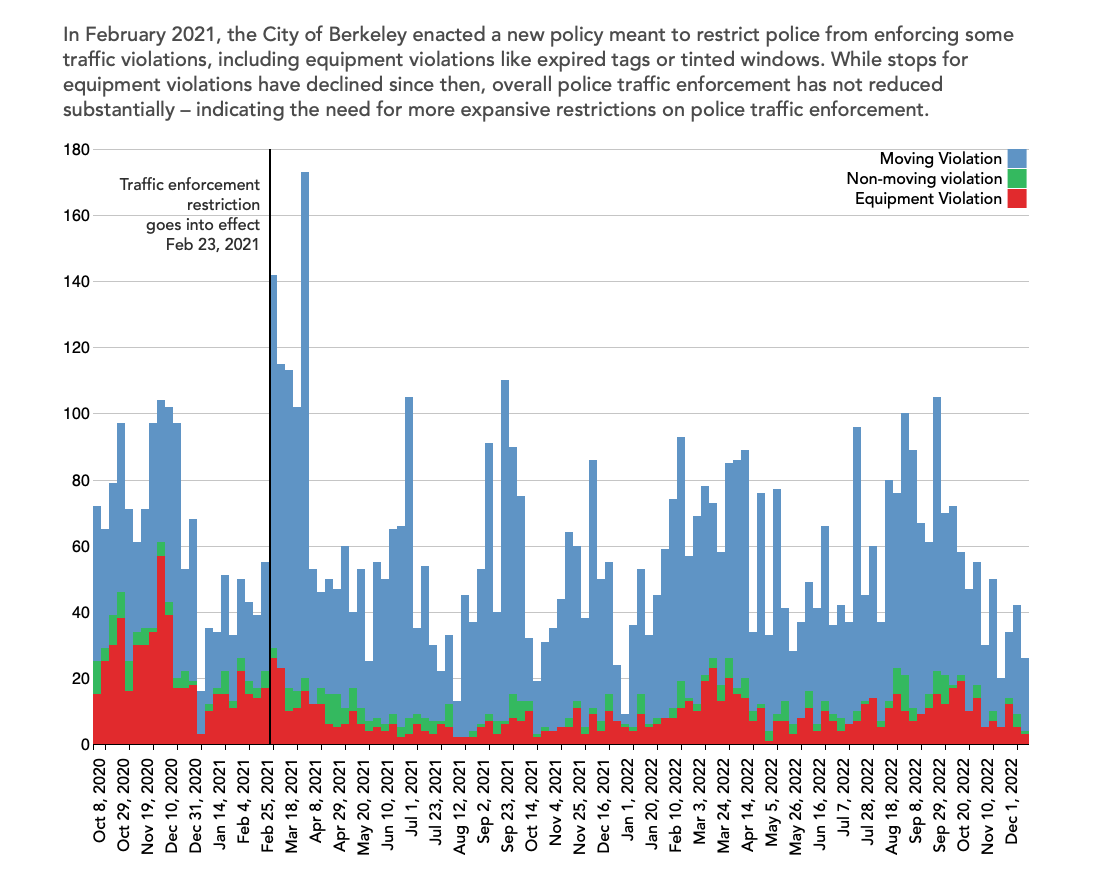
Not so, however in Berkeley according to Mapping Violence 2022 Police Violence Report , which states “In February 2021, the City of Berkeley enacted a new policy meant to restrict police from enforcing some traffic violations, including equipment violations like expired tags or tinted windows. While stops for equipment violations have declined since then, overall police traffic enforcement has not reduced substantially – indicating the need for more expansive restrictions on police traffic enforcement.“
New Mexico has One of the Highest Rates of Police Killings in the US. Although blacks are only 2.7% of the State's Population, They are Nearly 4x More Likely to be Killed by Police than Whites
/From [HERE] Last week, officers with the Farmington, N.M., Police Department responded to a call of a domestic violence incident. Police mistakenly arrived at the wrong house and shot and killed Robert Dotson after he opened his door armed with a handgun.
New Mexico State Police are still investigating the incident, but the fatal shooting of the 52-year-old is just the latest example of police using lethal force against civilians in a state where this happens too frequently, critics say.
Home to about 2.1 million people, New Mexico has one of the highest rates of police killings per capita in the country.
Last year, 32 people — around 15 people per million — were killed by police in the state, according to data from MappingPoliceViolence.org. The project is part of Campaign Zero, a nonprofit focused on policing reform.
New Mexico is second to Wyoming, with a population of about 581,000, where around 17 people per million were killed by police.
"Who would have thought New Mexico would have one of the highest rates in the country?" said Howard Henderson, founding director of the Center for Justice Research at Texas Southern University. He's also a professor in the university's school of public affairs.
In New Mexico, the rate of police using lethal force is even higher if a Black resident is involved. Black people total around 2.7% of the state's population, yet they are nearly four times more likely to be killed by police than white people. Years of high-profile cases of Black people killed by police across the country show this is an ongoing problem due in part to racial bias in policing.
MappingPoliceViolence.org data reflects any incident where a law enforcement officer (off-duty or on-duty) applies lethal force resulting in a civilian being killed. This is whether the killing was considered "justified" or "unjustified" by law enforcement. [MORE]