‘Tough-on-Crime [Blacks]’ Policies Are at Odds With the Presumption of Innocence

From [HERE] We launch into 2023, with big, ambitious plans for the coming year, buoyed by last year’s successes — including six exonerations, two vacated death sentences, over 10 policy wins, a first-of-its-kind research convening and so much more. 

While we continue our core exoneration and policy work, and deepen our understanding of the role of racial bias in wrongful conviction, we are warily observing a dangerous trend that threatens to undermine our country’s progress toward a truly fair and equitable criminal legal system. Increasingly, we’re seeing policymakers ignoring the lessons of the past and embracing the tough-on-crime rhetoric that drove decades of mass incarceration and countless wrongful convictions.

We must never forget how incendiary language and stiff criminal codes led to an unprecedented rise in incarceration — and wrongful conviction — in the ‘80s and ‘90s, as well as a proliferation of unjust law enforcement practices targeting Black, brown, and poor communities that transformed a generation. Today, we are still working to undo these harms, which have come at a high and unnecessary cost  — almost $182 billion every year, according to one report — to the government and impacted families. 

Yet, we’re still seeing a renewed emphasis on tough-on-crime policies and rhetoric, despite the fact that throughout the country violent crimes, including murders, were down in 2022. For example, since taking office last year, New York City Mayor Eric Adams has embraced tough-on-crime policies, arguing that judges be allowed to consider a person’s “dangerousness” when determining whether bail should be granted. And in New Jersey, we’re seeing an influx of proposed tough-on-crime bills. 

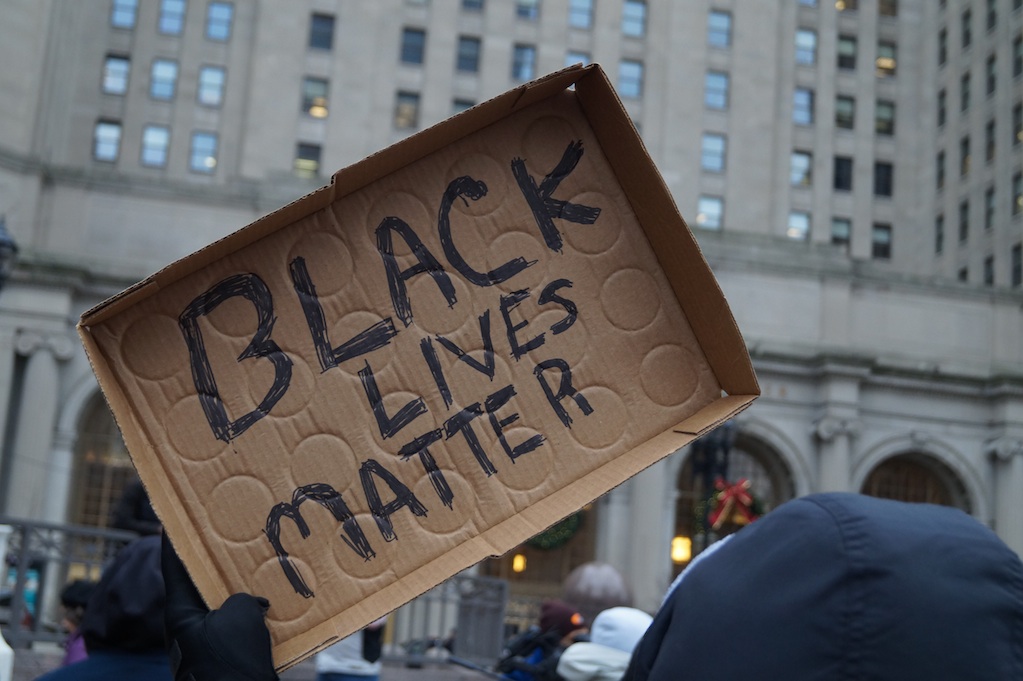
It is not lost on us that the recent tough-on-crime talk and policy proposals come on the heels of significant reforms, which include amendments to New York’s cash bail system and the election of progressive prosecutors across the country. In the bigger picture, this chatter and these proposals follow the emergence of the Black Lives Matter movement, the murder of George Floyd, and the broad calls for racial justice and criminal legal system reform.

This phenomenon of oscillating between progress and retrenchment is, of course, not new. Instead, it is a tragic hallmark of our country’s history. 

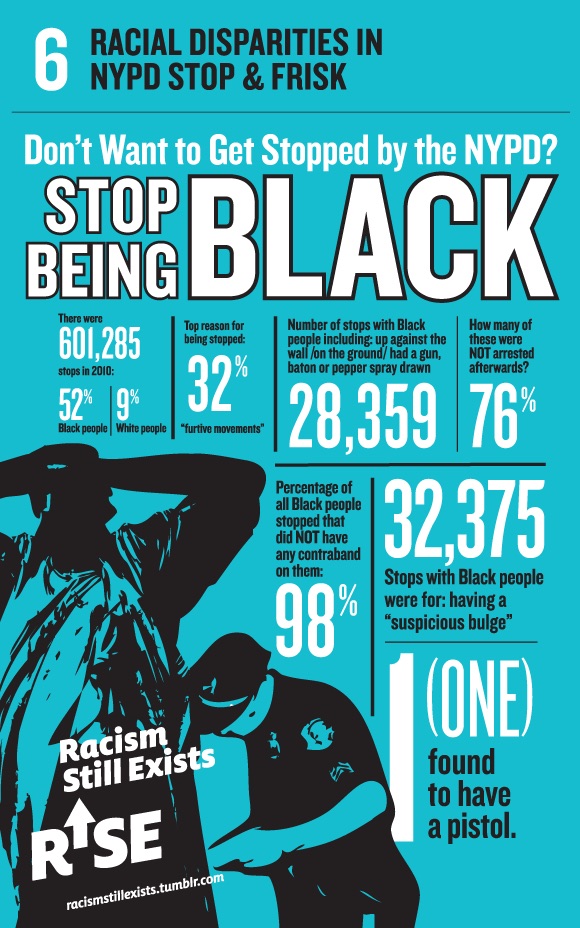
After the Civil War and Reconstruction, we saw the emergence of Black Codes, convict leasing, and lynchings. After the Civil Rights Movement of the 1960s, the government passed the Omnibus Crime Control and Safe Streets Act, which gave significant funding and power to law enforcement. As Black incomes soared in the 1990s, President Clinton passed one of the most draconian crime bills in history and the New York City Police Department implemented a stop-and-frisk policy that — at its height — resulted in almost 700,000 innocent Black and Latinx people being stopped and searched on public streets. Less than 10% of those stops produced arrests or seizures of guns, drugs, or contraband. And despite the creation of President Obama’s 21st Century Policing Task Force that, amongst other things, called for greater regulation of surveillance technologies, we have seen an increased use of these unreliable and unvalidated technologies, like facial recognition technology, in already overpoliced communities of color with potentially damaging consequences. 

The Rush to Convict and Imprison

The case of the Exonerated Five — who celebrated the 20th year of their exoneration last December — powerfully demonstrates how tough-on-crime approaches can and do ensnare the innocent. The Five were convicted in the midst of a wave of such policies, and just about every factor that we know contributes to wrongful convictions — racism, police and prosecutorial misconduct, the use of lies and deception in the interrogations of minors, false confessions, and a trial by media — played a role.

At the time of their prosecution, the War on Drugs and the juvenile superpredator myth drove a perception of lawlessness and unchecked danger to which policymakers responded with a bevy of tough-on-crime rhetoric, policies, and practices.

It was in this overheated climate that Kevin Richardson, Raymond Santana, Yusef Salaam, Korey Wise and Antron McCray — all of whom were teenagers — faced police who, in an overzealous attempt to secure confessions, made false statements which unfairly pressured the teens to falsely implicate themselves. This tactic — which remains legal in most states — is known to produce false confessions, especially among children. Indeed, 27% of the Innocence Project’s 241 exonerations and releases, and 11% of the cases recorded by the National Registry of Exonerations since 1989, were the product of such false confessions. Through our advocacy, five states have now outlawed the use of deception in the interrogation of juveniles. Ultimately, as you know, the Five were wrongfully convicted and sentenced to serve between five and 15 years in prison. 

In 2023, we will be supporting legislation in over 10 states to stop deceptive interrogation tactics. And we will continue to push to ensure that all 50 states record all police interrogations as a means of improving transparency and creating an indisputable account of the proceedings. Thirty states are already doing this, so we’re over halfway there. 

An Overloaded System and the Guilty Plea Problem

Tough-on-crime policies and the aggressive, high-volume police and prosecution practices they demand also obstruct true justice and drive wrongful convictions by backlogging courts, overwhelming public defenders, holding people in jail for months before trial, and incentivizing guilty pleas — whether accurate or not. 

In the U.S., 95% of felony convictions are secured through guilty pleas. And according to the National Registry of Exonerations, 25.6% of the 3,343 exonerations in the United States since 1989 involved a guilty plea.

The case of exoneree and Innocence Project Re-entry Coach Rodney Roberts is a perfect illustration. In 1986, Mr. Roberts was arrested in New Jersey after getting into a fight. After several days in jail, he was blindsided when he learned that he was being charged with the kidnapping and rape of a 17-year-old girl. His public defender told him he would face life in prison if he went to trial, so Mr. Roberts pleaded guilty, believing that doing so was his only chance to return home to his family and, in his words, “salvage my life.” He spent seven years behind bars and another 10 years fighting for his innocence before DNA testing helped to exonerate him. [MORE]

Although the White, Liberal City of East Lansing is Only 7% Black, 50% of All Police Encounters with Minors Involved Black Teenagers

From [HERE] The East Lansing Police Department, or ELPD, reported a separate 21 incidents in which a minor was transported, arrested, issued a citation, or stopped from July to December 2022. 12 of the 21 incidents involved a Black minor. 

In addition, five of the 11 reported incidents where an officer used force, it included force being used on a Black minor, according to the December 2022 use of force report.

The department also reported 19 incidents in which department employees transported, arrested, issued a citation to or stopped a person who is or appears to be experiencing homelessness from July to December 2022.

More than 50% of the incidents reported included a Black man. Black people make-up 6.8% of  East Lansing’s population as compared to 77.4% white population, according to the U.S census

The findings of these reports were discussed by the city’s Independent Police Oversight Commission at their Feb. 1 meeting. 

Commissioner Ron Fink, citing an incident in the report in which five white officers and a social worker were deployed to an 18-year-old Black female subject home experiencing a crisis, said the excessive amount of white officers deployed to the subject’s house would make her uncomfortable. 

“You have a Black community that already doesn't trust the police in general in this community,” Fink said. “There’s still gonna be that stigma there, right? That could have actually caused this woman to kill herself.”

Commissioner and social worker Amanda Morgan said it’s important to recognize what could be a trigger for individuals in crisis, which may include an all-white team of deployed officers.

The police department only has one social worker who works during the day, according to ELPD Capt. Chad Pride.

The commission made a recommendation to the department in regards to the completed investigation into a complaint filed by Sean Flanagan, who alleged ELPD officers Jeff Horn and Brittany Monroe performed an illegal search and seizure of his nephew and his nephew's belongings after he had a seizure in front of Target on Grand River Avenue on May 23, 2022.

Flanagan's nephew was unnamed in the investigation documents. 

The complaint investigation conducted by ELPD Captain Chad Pride found that the officers violated ELPD's "exception to the search warrant rule," as Flanagan's nephew did not consent to the search of him and his belongings, was not in custody, under arrest or in need of assistance for the protection of his life during the search. 

Flanagan's nephew was told by officers he needed to stay until paramedics checked him out, also violating ELPD policy regarding "persons refusing EMS care."

Pride’s investigation concluded the "fair and impartial policing" policy was not violated, along with code of conduct, assault and battery, false imprisonment and harassment policies. [MORE]

Rolebotic Black Atlanta Mayor Announces Police Training Facility will Move Forward Despite ‘Stop Cop City’ Protests

From [HERE] Nearly a year and a half after the Atlanta City Council approved plans to build a controversial new police and firefighter training center in one of the city’s largest forests — and just two weeks after a protester was fatally shot by police at the site — Atlanta officials announced on Tuesday that they have struck an agreement clearing the way for the construction of “Cop City.”

Atlanta Mayor Andre Dickens and DeKalb County CEO Michael Thurmond said during a press conference Tuesday that an agreement has been reached between the city and the county to issue a construction permit for the $90 million Atlanta Public Safety Training Center, which has been the subject of a year-long protest movement.

The training center will be built on 85 acres of land in the South River Forest, which is owned by the city of Atlanta but located just outside the city limits in DeKalb County. The plan has faced fierce public opposition since it was announced, including by a group of protesters who lived in tree encampments on the site until the forest was cleared by police earlier this month.

The self-described “forest defenders” say the construction would be a severe blow to Atlanta’s tree canopy and result in irreparable environmental damage.

“They’re trying to harp on the fact that it’s only 85 acres and allegedly the rest will be left for public use,” said Jasmine Burnett, organizing director of the mutual aid group Community Movement Builders. “But that’s 85 acres too much.”

One activist who protested outside City Hall after the press conference said it would be “a tragedy” to lose even a portion of the forest.

“We’re the city in the forest,” Francesca, 18, said, referencing the city’s nickname. “Atlanta’s canopy is a big part of who we are. If we lose that, we lose a part of our city’s identity and we lose a significant part of what lets us breathe every day. It’s ridiculous.”

On Tuesday, Dickens appeared to respond to those concerns by saying that the area contains only invasive species, weeds, softwood trees and rubble from old structures. The mayor pledged that 300 acres of the land parcel not slated for use to build the facility will be preserved as a public greenspace.

“This essentially is a huge park about the size of Atlanta’s largest park and it will be a park that will have a training center on a modest footprint within it,” Dickens said. “This is Atlanta and we know forests. This facility will not be built over a forest.”

memorandum signed by Dickens and Thurmond agreed to recommendations made by a “community advisory committee” for environmental protections at the site and safety upgrades to a nearby residential neighborhood.

The environmental commitments include a reforestation effort to replace every tree impacted by the construction with 100 hardwood trees and a mandate to implement “double erosion control” to ensure the viability of Intrenchment Creek, the main waterway in the South River Forest Basin.

DeKalb County commissioner Ted Terry appeared skeptical of the plan on Tuesday. Speaking to reporters at City Hall, Terry noted that damage to the creek by construction disruptions might be unavoidable.

“Intrenchment Creek has already maxed out its sediment control permits. It’s one of the most endangered creeks in Georgia. And of course, it flows into the South River, which is another endangered rivershed,” Terry said. “This again speaks to whether this site is the best site for any type of development to take place.”

The environmental protections included in the agreement are also unlikely to appease environmental activists.

One local organizer associated with the Stop Cop City movement called the agreement “bogus on its face.”

“You’re gonna protect the environment by tearing down trees? It’s insulting,” Micah, 26, said. “They’re taking us for fools if they think anyone would believe that tearing down trees and putting cement over it is protecting the environment.”

The news was announced as a group of about two dozen protesters, who were blocked from entering the press conference by police, clustered outside the mayor’s office and shouted calls for his resignation.

“Andre Dickens — blood on your hands!” protesters chanted, referring to the Jan. 18. death of activist Manuel “Tortuguita” Teran.

The Georgia Bureau of Investigation says Teran, 26, opened fire on state troopers, injuring one, and was killed by return fire. The claim by authorities that the troopers fired in self-defense has been disputed by protesters who have noted that there is no body camera footage of the shooting.

Teran’s death sparked protests throughout downtown Atlanta on Jan. 21, culminating in the burning of a police vehicle and fireworks being launched at the building that houses the Atlanta Police Foundation. Six people were arrested and charged with domestic terrorism in connection with the protests.

Officials on Tuesday did not say when construction on the training center will begin. [MORE]

Black Man on Death Row Hung Himself after the Supreme Ct Denied Review for a 2nd Time. Ineffective Defense Attorney Failed to Investigate or Present “Abundant” Mitigating Evidence During Sentencing

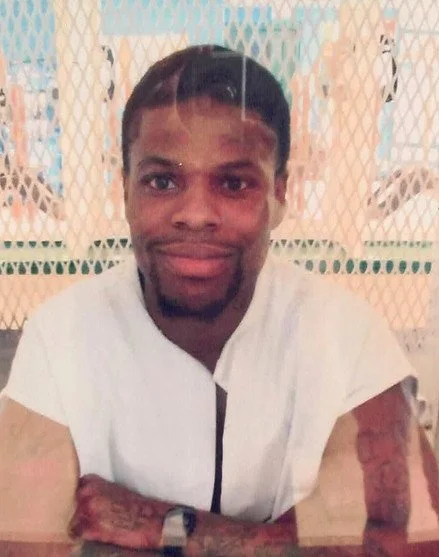
From [HERE] On January 21, 2023, Texas death row prisoner Terence Andrus hanged himself at the age of 34, a little more than 6 months after the U.S. Supreme Court denied review of his case for a second time. His lawyer,Gretchen Sween, told the Los Angeles Times that “he’d been careening toward the abyss,” since their decision. “He was broken.”

In 2008, at the age of 20, Andrus killed two people during an attempted carjacking while high on PCP-laced marijuana. He was sentenced to death in 2012 by a jury that was unaware of his diagnosis of affective psychosis – a mood disorder causing hallucinations for which he was diagnosed in elementary school – parental neglect as a child, or the trauma he endured in juvenile detention. Beginning at the age of 16, he spent 18 months at an overcrowded juvenile detention center, where he was given high doses of psychotropic drugs and placed in solitary confinement, consisting of a cold and filthy cell for extended periods, either for engaging in self-mutilation, suicidal feelings, minor adolescent infractions, or at his own request to escape the violence in the facility.

Andrus had twice appealed to the U.S. Supreme Court citing inadequate trial representation. In June 2020, the Court ruled in favor of Andrus 6-3, finding that his counsel failed to properly investigate or present “abundant” mitigating evidence during the penalty phase of the case, which included his “ordeal” in juvenile detention, which left “an already traumatized Andrus all but suicidal.” The Court directed the Texas Court of Criminal Appeals to reconsider “whether Andrus has shown that counsel’s deficient performance prejudiced him.”

In May 2021, the TCCA reaffirmed an earlier decision, stating that “[t]he mitigating evidence is not particularly compelling.” A second appeal to the U.S. Supreme Court was denied review in June 2022, with three dissents.

Just days after Andrus’ suicide, Texas death row prisoners filed a lawsuit on January 26, 2023 against the state for their unconstitutional conditions of confinement, including indefinite solitary confinement, minimal health care, and improper access to counsel. Most of the 181 prisoners have spent years enduring days of 22 hours to 24 hours of solitary confinement, about 75 of whom have endured these conditions for more than two decades. The lawsuit claims that such conditions are unconstitutional as it violates the 8th amendment’s right against cruel and unusual punishment. Prolonged and indefinite solitary confinement is also a violation of the United Nations Standard Minimum Rules for the Treatment of Prisoners, more commonly known as the Nelson Mandela rules.

Blue Lives Matter Much Much More: Texas Authorities Murder Latino Man to Obtain Revenge/Justice for the Murder of a White Cop After Supreme Court Denies Appeal

From [HERE] The State of Texas Wednesday executed Wesley Ruiz after the US Supreme Court denied Ruiz’s petition to for a stay. Ruiz, convicted of fatally shooting a Texas police officer, filed an application with the court on Tuesday to stay his execution and consider his petition for a writ of certiorari. The court denied both the application for stay of execution and Ruiz’s petition for writ of certiorari. 

In his petition to the court, Ruiz alleged issues of racial bias amongst the jurors who sentenced him to death. Ruiz provided an affidavit from the jury foreman describing Ruiz as an “animal” and a “mad dog.” The foreman also stated that Hispanic individuals in the audience were “gang members” that scared the jury. According to Ruiz’s petition, the foreman managed to persuade an unsure juror into the death penalty by saying Ruiz could be dangerous. Another juror stated that racial integration had changed her neighborhood. The same juror’s sister had been victimized by a man the juror thought to be Hispanic and involved in the “smuggling” of undocumented people. 

Ruiz was executed utilizing lethal injection, a method which he had challenged in state court. Ruiz filed a lawsuit in December, claiming that the state was utilizing expired and unlawfully obtained pentobarbital in lethal injections. The Texas Department of Criminal Justice denied that the drugs were expired. The state’s Attorney General filed a writ of prohibition to prevent the case from being heard. The Texas Court of Criminal Appeals (TCCA) granted the writ of prohibition in early January. 

Ruiz’s execution comes only days after another Texas death row prisoner, Terence Andrus, took his own life, after multiple appeals to the Supreme Court. In 2020, the court found in Andrus’s favor, remanding the case to the TCCA. However, the TCCA reaffirmed their earlier decision.

11th Circuit Revives Inmate’s Request for Execution by Firing Squad

From [HERE] The Eleventh Circuit overturned the dismissal of a death-row inmate’s petition requesting to be executed by firing squad instead of a lethal injection, which he has plausibly shown may not work on him due to a back pain medication he takes. He has failed to argue that an alternative injection procedure could not constitutionally be performed, however, so the issue is returned to the district court. Read the ruling here.

Industrial Gas Distributor Airgas Will Not Supply Nitrogen to Authorities to Murder Inmates ("execution")

From [HERE] Airgas, an industrial gas distributor that is one of Alabama’s largest suppliers, has announced it will not supply gas for executions. “[S]upplying nitrogen for the purpose of human execution is not consistent with our company values,” the company said in a statement.

Alabama lawmakers added nitrogen hypoxia as an alternative execution method to lethal injection in 2018, following Oklahoma and Mississippi.

Oklahoma became the first state to adopt a measure allowing prison staff to use nitrogen gas to execute people after the botched lethal injection execution of Clayton Lockett in 2014 led to a halt in executions.

Oklahoma State Rep. Mike Christian reportedly saw a documentary about killing humans that included a segment on nitrogen inhalation, and he and two others with no scientific or medical knowledge presented a report on nitrogen to the state legislature in 2014. Lawmakers passed a bill allowing nitrogen hypoxia as a backup method to lethal injection, and then-Gov. Mary Fallin signed it into law in 2015.

Despite the absence of scientific evidence on executing people with nitrogen, Mississippi passed a similar law in 2017, and on March 22, 2018, Alabama Gov. Kay Ivey signed legislation making Alabama the third state in the country to allow executions by nitrogen gas.

Using nitrogen gas to execute a person is untested and has never been done in the U.S.

The American Veterinary Medical Association has long rejected nitrogen gas as an acceptable method for euthanizing animals, and nitrogen is not used for terminal patients in states where medically assisted dying is legal.

Nitrogen, which kills by replacing oxygen, has killed people in industrial and medical accidents, including a liquid-nitrogen leak at a Georgia poultry plant that left six people dead just last year.

ADOC has acknowledged in court that nitrogen gas presents “the dangers of inert-gas asphyxiation to employees.”

Airgas said in December that it “has not and will not supply Alabama nitrogen or other inert gases to induce hypoxia for the purpose of human execution.” A company spokesperson said in a statement that it contacted the State of Alabama to “reinforce the point and ensure that there was no confusion regarding Airgas’ position.”

The company’s CEO further stated that Airgas is not “working with the state of Alabama, or anyone else, to develop nitrogen hypoxia as an execution method.”

Airgas, now owned by the French company Air Liquide, has become the largest U.S. distribution network in the packaged gas industry, according to its website.

With 24 branches in Alabama, Airgas is one of the state’s largest suppliers of gas. State agencies including forensic sciences, conservation and natural resources, transportation, and public health collectively spent over $287,000 with Airgas in fiscal year 2022, al.com reports.

The Alabama Department of Corrections purchased $1,634 in products or services from Airgas, but al.com reported there are no details about what was purchased. Airgas said ADOC does not currently have nitrogen cylinders from the company.

Airgas is not the first company to refuse participation in Alabama executions. Last year, a Tennessee company, FDRsafety, terminated its contract to help ADOC create a gas chamber after a public outcry led by faith leaders.

DC Circuit Court Orders Bureau of Prisons to Disclose the Supplier of the Lethal Agent Pentobarbital, which is Used by Authorities to Murder Inmates on Death Row

The District of Columbia Circuit ruled that the Bureau of Prisons did not justify its decision to withhold the identities of companies that will supply its new lethal agent, pentobarbital, for federal executions that had been on a 20-year hiatus from a watchdog group that sought a Freedom of Information Act request for that information. Read the ruling here.

Liberal Black Rolebot Refuses to Hold Evidentiary Hearing Despite New Evidence Raising Doubt About Leonard Taylor’s Conviction. Missouri Authorities Plan to Murder Black Man Tomorrow

From [HERE] Leonard Taylor is a Missouri death-row prisoner who was convicted in 2008 of a quadruple murder that occurred in St. Louis in December 2004. His execution is scheduled for February 7, 2023. Taylor has consistently maintained his innocence. Although Taylor’s attorneys have discovered new evidence to substantiate his claim, St. Louis County Prosecuting Attorney Wesley Bell announced that he would not ask a judge to hold an evidentiary hearing in the case.

Taylor claims that he was not in St. Louis at the time of the murder. In support of that claim, a forensic pathologist submitted a signed affidavit that cast doubt on the medical examiner’s determination of the time of death in the murders. According to the pathologist, Dr. Jane Turner, the evidence suggests the victims were killed after Taylor left St. Louis. When prosecutors learned of his “airtight alibi,” Taylor alleges they prodded witnesses to change their testimony about the timing of the homicides, putting him in town.

Taylor is currently in solitary confinement. In an interview with the Kansas City Star, Taylor said he has sought strength in his Islamic faith and is a “student of life.”

Israelien Rulers Extend Irrational COVID Law Despite No Outbreak in Free Range Prison Disguised as Democracy

From [HERE] Israel’s Knesset (parliament) Sunday renewed the Law on Special Authorities for Dealing with the Novel Coronavirus which grants the government unbridled authority to implement sweeping restrictions and criminalize non-compliance.  

Despite there being no COVID-19 outbreak the law will remain in effect until February 15, 2024, "to continue to enable legal infrastructure for imposing restrictions and maintaining public health." 

The law authorizes the government to require proof of vaccination, a negative coronavirus test or recovery certificate as a condition for entering places that are open to the public, businesses, workplaces, and more. 

Restrictions may be placed on movement and gatherings both in public and private spaces, including one’s own residence. The government can close businesses and can force those that remain open to serve only the vaccinated. 

Physical distancing and masking requirements may also be enforced. 

Establishments allowing entry to a person who has not presented an up-to-date negative test result, Green Pass vaccine passport, or proof of recovery may be fined up to NIS 10,000 ($2,815).  

The government may enforce hygiene, regulate types of activities and place restrictions related to a person’s private vehicle. Limitations on schools may be enforced as well. 

“The law does not generally apply to the president of the state, official buildings of the Knesset, the state comptroller’s office, and courts and tribunals,” says the bill. “It similarly does not apply to the Israel Defense Force, the Israel police, the Prison Authority, and other institutions specified by the law.” 

"Due to the uncertainty and the need for further monitoring of the corona disease, and especially against the background of the reports from China about the outbreak of the disease there, the minister accepted the recommendation of the professional officials at the Ministry of Health to extend the validity of the law,” Health Ministry officials told N12.

Acting Health Minister Yoav Ben-Zur reportedly signed the request to reinstate the law without officially consulting with the ministry.

The government notified the public of its proposal to renew the law and allowed public comment until January 13, 2023, but has ignored the overwhelming public opposition to the move.

Public Health Doctors Union Chairman Prof. Hagai Levin said: "We are not where we were three years ago, this is an unwillingness to give up the power and control that the authorities received during the COVID era.”

"This law is a draconian law that gives very broad powers to the ministry, cancels normal mechanisms of discussion in the Knesset and public discussion and may lead to misuse under the pretext of protecting public health in a disproportionate way,” he added.

Israel’s government drew heavily on these powers throughout the pandemic. Former Prime Minister Naftali Bennett, who accused the unvaccinated of "walking around with a machine gun firing Delta variants at people,” at one point proposed mandating bracelets which would publicly identify those who had not received the injections. He also proposed forcing the unvaccinated to pay for their own healthcare. Both proposals were supported by then-Health Minister Nitzan Horowitz though Bennett relented due to social pressure. 

It was revealed last year that Israel's Health Ministry knew masks had 'no strong scientific basis' before imposing the mask mandate. Documents released under the freedom of information act revealed that Israel’s Health Ministry imposed the policy to send an “educational” message to increase COVID compliance.

Blacks Not Wanted by Impostor Pale Hebrews [Israeliens]: Terrorcrat Netanyahu's Nazi Regime Offers African Migrants $3,500 to Leave "Enlightened" Israel

According to FUNKTIONARY:

Israeliens – impostor (pale interloper alien) Hebrews—Eastern European stock Caucasians who adopted the philosophy myths fables and traditions of the so-called “Jews” while living in Russia—masquerading as if they had any genetic or historical ancestry and cultural heritage to the Afrikan Hebrews the Afrim people who occupied Canaan (Palestine) from ancient times. 2) those who currently are occupying Palestine (the land of Canaan) colonizing and killing its rightful descendants historic owners and dwellers) and are undeniably alien (foreign—not aboriginal) to that land. 3) impostor Hebrews originating from the Pale of Settlement in Kazzarian Russia currently an occupying force (militarily holed-up and propped-up by US financial support and British skullduggery) in occupied Palestine. 4) alien Jews—Pinchbeck Hebrews. Israeliens are East Europeans with no genetic or actual historic ties whatsoever to the land now called Palestine. Israeliens have brainwashed (and fooled) themselves and many others into believing this historical lie and propaganda that they are the descendents of “Jews” (a misnomer for African Hebrews, itself a misnomer for the Afrim people). Anyone with a modicum of research skills knowledge of basic geography philology and an unbiased-by-religious-myth mind can easily confirm or validate this fact for his or herself. Both so-called Sephardim and Ashkenazim “Jews” are not historically tied to the Afrim. It’s not that Caucasians who have adopted the “Jewish” religion shouldn’t have a place to live—but how about suggesting relocating where they came from—the hills of Russia and not on another peoples’ land. You don’t invade (break into) someone’s house (property) and expect them to just go away and not fight to get it back (despite how much force, murdering, deception, and propaganda that is brought to bear to justify such wrongful invasion and genocide). Psychological repression is both invisible and reflexive. (See: Zionism, USS Liberty, Gulf of Tonkin, Genocide, Immigrant Human, Jew, Twelve Tribes of Israel, Evolution, Caucasian, Pilgarlick, El & Judaism)

From [HERE] Not even one month into his sixth term as Israel's Prime Minister, the chaos that marred Benjamin Netanyahu's last term in the office has already reared its ugly head. Although his term at the head of the 24th Knesset only just began on December 29th, the return of the familiar face at the helm of the State of Israel has not calmed the turbulent waters of a legislature that has seen its ruling governments falter time and time again since the ouster of Netanyahu in June of 2021.

From the onset, critics of Netanyahu's newest government have characterized his hardline ruling coalition as one of the most far-right in the world. Those tensions have led to policy making directed to implement expansive judicial reforms in order to solidify the reign of Netanyahu's latest administration. The totalitarian tenor that has enveloped the political discourse across Israel has led to the emergence of a constitutional crisis centering on proposed judicial reforms. That agenda has evoked a fervent outcry from opponents who fear that Israel has come under the rule of extremists. Netyanyahu's latest proposal will do little to qualm that criticism.

Following public remarks from Netanyahu in which he recounted his previous efforts in 2013 to rein in illegal immigrants entering the country from Israel's border with Egypt, the Prime Minister announced a plan to expel the remaining entirety of the 60,000 Africans who entered the country before it was able to erect a barrier to prevent them from doing so. Since then, Israel has already deported a third of that number - 20,000.  Despite that, Netanyahu has doubled down on his hardline immigration rhetoric by going as far to announce a policy which will offer African migrants a payment worth $3,500 and free air travel to return to the nations they emigrated from. “We have expelled about 20,000 and now the mission is to get the rest out,” Netanyahu said in remarks embodying how hardlined his ruling faction has become.

Further details on the policy elucidate how Israel will partner with alternative destinations to expel African migrants to. Migrant rights groups have surmised that Rwanda and Uganda have joined forces with Netanyahu's government to facilitate the mass deportation scheme. Israeli Immigration officials conveyed that there are presently 38,000 migrants freely living illegally in Israel along with 1,420 being held in detention centers. While the $3,500 incentive to leave Israel is on the table now, those officials have stated that that monetary award will shrink after March until it's eventually weened down to zero and any migrants found to be in the country afterward will face incarceration.

Netanyahu's latest immigration crackdown isn't the first instance in which a Knesset under his rule has been maligned for policy making its critics have characterized as a xenophobic violation of human rights. in 2013, a report emerged that African migrants coming to Israel had been unknowingly subjected to mandatory contraceptive injections. Depo-Provera injections administered in three month periods drew comparisons to forced sterilization campaigns like those conducted during the Holocaust. That human rights abuse affected over 130,000 Ethiopian migrants who themselves were Jewish and had repatriated to Israel under the tenet of Aliyah, which Jews acknowledge as the birthright of their religions adherents to seek refuge in Israel.

To garner support for his current proposal to initiate a mass expulsion of African migrants, Netanyahu stoked fear in his citizens nationwide by characterizing the illegal immigrants as an existential threat to Israel, an oft-repeated line he has aimed at his opponents throughout his decades in Israeli politics. Netanyahu expounded on the premise that his impetus to deport migrants was rooted in populist support, painting a picture in which he illustrated how residents of Tel Aviv live in fear due to the presence of Africans who have come to settle there. “So today, we are keeping our promise to restore calm, a sense of personal security and law and order to the residents of south Tel Aviv and those in many other neighborhoods,” he said.

In classic Netanyahu fashion, the Prime Minister has deflected away from the controversies his government lies at the center of by courtesy of the coincidental timing of an attack against Jewish residents of Israel by Arab extremists. During the last days of his fifth term as Prime Minister, Netanyahu led a military campaign in Palestinian territories which he likely envisaged as the vehicle he needed to evoke the popular support to prevent the dissolve of Likud's ruling coalition at the time, albeit to no avail. Now, in the wake of a fatal synagogue shooting in which a 21-year old Palestinian gunman killed seven Jews, Netanyahu has turned to the familiar posture as the self-avowed sole savior capable of preserving Israel's right to exist. [MORE]]

Although Racism is an Integral Part of its Culture and the Public Devaluation of Arabs is Part of Everyday Life, "Democratic" Israel is Definitely Not an Apartheid State According to Racists at the EU

From [HERE] It is anti-Semitic to say Israel perpetrates the crime of apartheid against the Palestinian people, according to the European Union.

That would mean that major rights groups including Human Rights Watch, Amnesty International and Israel’s B’Tselem – which is funded by the EU – are guilty of anti-Jewish bigotry, according to Brussels.

The EU’s extraordinary claim came in response to a question from several pro-Israel members of the European Parliament directed towards the EU’s executive body, the European Commission.

The lawmakers stated that Amnesty’s report last February “alleges that apartheid was inherent in the founding of the State of Israel in 1948 and has been built on and maintained by successive Israeli governments.”

The lawmakers asked if EU foreign policy chief Josep Borrell also views Israel as an “apartheid state.”

They also wanted to know if Borrell considers Amnesty’s report to be “anti-Semitic” under the International Holocaust Remembrance Alliance (IHRA) definition of anti-Semitism, “given that it claims that the existence of the State of Israel is a racist endeavor (i.e. an apartheid state).”

“Not appropriate”

The pro-Israel lawmakers should be fully satisfied with Borrell’s written response issued on 20 January.

“The Commission considers that it is not appropriate to use the term apartheid in connection with the State of Israel,” Borrell wrote.

Borrell affirmed the EU’s reliance on the so-called IHRA definition of anti-Semitism and emphasized: “Claiming that the existence of a State of Israel is a racist endeavor is amongst the illustrative examples included under the IHRA definition.”

The highly politicized IHRA definition, heavily promoted by Israel and its lobby, has faced broad opposition due to concerns that it will be used in precisely the manner Borrell is now deploying it: to falsely label legitimate criticism of Israel and its crimes as anti-Jewish bigotry.

Borrell provided no factual basis for dismissing the meticulous research from multiple human rights groups showing how Israel perpetrates apartheid, a serious crime against humanity covered by the Rome Statute, the founding treaty of the International Criminal Court.

But he did go on to reassert the EU’s ritualistic and empty adherence to “a negotiated two-state solution.”

Crime against humanity

Under international law, the crime of apartheid is defined as “inhuman acts committed for the purpose of establishing and maintaining domination by one racial group of persons over any other racial group of persons and systematically oppressing them.”

B’Tselem – the EU-supported human rights group – stated in January 2021 that Israel operates “a regime of Jewish supremacy from the Jordan River to the Mediterranean Sea” – all the area that encompasses Israel, the occupied West Bank and Gaza Strip.

“This is apartheid,” B’Tselem concluded.

Israel’s new government took office openly proclaiming its commitment to Jewish supremacy and therefore the apartheid policies necessary to maintain it.

“The Jewish people have an exclusive and inalienable right to all parts of the Land of Israel,” the new coalition declared, promising to “promote and develop the settlement of all parts of the Land of Israel — in the Galilee, the Negev, the Golan and Judea and Samaria.”

The Golan Heights are occupied Syrian territory, while “Judea and Samaria” is Zionist terminology for the occupied West Bank.

Following this declaration, Borrell told Israel’s new rulers that he was “Looking forward to working with you on further improving EU-Israel relations.”

In other words, the EU’s commitment to Israel’s apartheid regime and its opposition to Palestinian rights remains rock solid.

New Report: 4 Giant Chemical Companies’ [Bayer (Monsanto), BASF, Corteva and Sinochem] Control of Global Food System Threatens Health, Environment and Access to Food

From [HERE] The four largest agrochemical companies — Bayer (Monsanto), BASF, Corteva and Sinochem (which recently acquired ChemChina/Syngenta) — are exerting increasing leverage over an agricultural system where the concentration of power and wealth threatens health, the environment and access to food, according to a new report.

The report, by Philip H. Howard, Ph.D., updates previous Howard’s previous work (see here and here) on these trends during the past couple of decades, focusing on the most recent (2018-2022) developments.

Howard, a food system researcher, is a member of International Panel of Experts on Sustainable Food Systems and a professor at Michigan State University.

The machinations of these industries for profit, power, market penetration and privatization of aspects of the natural world are hardly new. The National Sustainable Agriculture Coalitionsummarizes some aspects of the situation:

“Land and seed once belonged to no one and were shared by all, replicating the giving essence of the natural world. Today, these precious resources are tightly controlled and commoditized inputs.

“The modern U.S. food and agriculture system is designed to maximize a narrow concept of economic efficiency which fails to prioritize the well-being of small family farmers, rural communities, or the land.”

Increasing mechanization, industrialization, consolidation and privatization of genetic information and data all contribute to the dynamic and entropic world in which conventional agriculture currently operates.

Aspects of the shifting paradigms in agriculture during the past 75 years can be traced to multiple factors, including World War II innovations in materials science, chemical weapons development and other technologies; the so-called “Green Revolution”; advances in genetic science and biotechnology in the last couple of decades; and most recently, the advent of uses of Big Data and the technologies that enable it.

To begin with one of those: the dawn of genetically modified seed that would resist the assaults of applied herbicides was a game changer for the agrochemical industry and ratcheted up sector consolidation (see below).

Glyphosate-resistant seed meant that farmers could plant the seed and use Roundup (glyphosate) liberally because it would not harm the plant — but would knock down weeds.

National Sustainable Agriculture Coalition writes:

“To create and mass produce a seed that would resist Roundup, Monsanto needed a captive supply of germplasm [seed].

“‘One of their main strategies,’ noted [Kiki] Hubbard [of the Organic Seed Alliance], ‘was to buy up smaller [seed] firms to access their varieties and simply insert their GE traits without needing to do any of the breeding work themselves. …

“Monsanto thus began to acquire small and regionally based seed companies, exponentially multiplying their supply of germplasm and restricting the distribution of these varieties which had been carefully bred to possess ideal traits.

“These foundations enabled Monsanto to become the first company to genetically engineer a plant cell and eventually mass produce a Roundup Ready line of seed.”

The company promoted the heck out of this pairing of proprietary seed plus herbicide, and competitors took note.

With Monsanto’s development of its flagship glyphosate herbicide (Roundup), and its acquisition of seed companies that resulted in the 1996 debut of “Roundup Ready” soybean seed, the consolidation that now characterizes most parts of the food supply system was off and running.

Now, several huge companies (see below) sell genetically modified (GM) seed for use with their herbicide products.

Not so many years ago, there were six large agrochemical companies that sold pesticides and (in some cases) synthetic fertilizers and seeds to agricultural operations.

Beyond Pesticides has covered several of the huge mergers of the past decade-plus that have reduced that number to four, including Bayer’s acquisition of Monsanto, the Dow–DuPont merger(which then reconfigured to DuPont and Corteva) and the ChemChina acquisition of Syngenta(with ChemChina subsequently acquired by Sinochem in 2021).

ChemChina had already been scooping up many smaller seed companies over the past decade; multiple of Bayer’s seed divisions were also sold off to BASF, another chemical giant, in 2018.

Bayer, DowDupont, Sinochem and BASF now control more than 60% of global proprietary seed sales. Globally, sales are dominated by Corteva and Bayer.

Notably, Bayer is the inheritor of the beleaguered but ubiquitous glyphosate herbicides, most notably Roundup, that are still in extensive use around the world and often paired with GM seeds for important commodity crops, such as corn, soy, cotton, and increasingly, wheat and oat crops.

Howard — a faculty member in the Department of Community Sustainability at Michigan State University, and member of the International Panel of Experts on Sustainable Food Systems — points out in his 2016 book, “Concentration and Power in the Food System: Who Controls What We Eat?,” that control of much of the world’s food supply system by so few entities has enormous impacts on human health, biodiversity, the environment broadly, agricultural workers and rural communities.

In his book, Howard notes that the impacts on people:

“Tend to disproportionately affect the disadvantaged — such as women, young children, recent immigrants, members of minority ethnic groups, and those of lower socioeconomic status — and as a result, reinforce existing inequalities.”

Indeed, a year ago, a report — written by the Open Markets Institute and submitted to the U.S. House of Representatives Judiciary Committee Subcommittee on Antitrust, Commercial and Administrative Law — begins with this: “Food system consolidation is a danger to all Americans.”

It goes on to say:

“Just a handful of corporations control critical junctures in the U.S. food supply chain, from seeds and fertilizers to processing to grocery shelves. This concentration of capacity and control increases supply chain fragility by putting more production in fewer hands and fewer places.

“This consolidation is also what gives these corporations the market power necessary to dictate prices paid to producers and push down workers’ wages, even while they charge consumers more.”

Beyond Pesticides would add that this consolidation makes the products agrochemical companies offer, and the harmful practices they engender, even more entrenched in the operations of most conventional farming.

These large companies’ size gives them more influence on governmental and commercial decision makers; more leverage in supply chains and their sector marketplace, and thus, more control of what products are available to producers; and deeper pockets with which to fight challenges to their products and business models.

This is true in the U.S. and much of the so-called “developed” world, and increasingly, these companies are making inroads into less-Western, less-mechanized, and heretofore less “agrochemically saturated” agricultural areas around the globe. (See more below.)

Behind the retail food outlets (which are themselves being gobbled up by larger and larger “parent” companies) are these behemoth actors in the food system. These entities exist to make money; they do not, unless forced (or sometimes incentivized) to do so, center human or environmental or community health, or equity concerns, in their business models.

The interest of these corporations is now expanding beyond the production and sale of synthetic pesticides and fertilizers, and seeds, often genetically modified.

In the face of the issue of developing organismic resistance to agricultural chemicals’ efficacy, increasing public distaste for the noxious products these companies offer, and more governmental regulation of their products’ use, some have begun investing in firms that specialize in “biologicals” for pest control.

SyngentaCorteva and Bayer have all entered into this business realm.

Syngenta’s website characterizes this emerging sector as “harnessing nature to protect and promote plant growth effectively and sustainably,” and notes its entry into both biocontrols (i.e., use of natural pest enemies) and biostimulants (i.e., products with substances or microorganisms to improve growth and boost yield).

The company describes biologicals as “derived from or inspired by nature,” which is the “tell.”

The companies are likely uninterested in selling what organic farmers use — largely, naturally occurring substances — but rather, once again, in creating genetically modified organisms and/or synthetic versions of natural “substances or microorganisms” to deploy in agriculture and into the environment.

Syngenta speculates that the biologicals market will double in a few short years, and that the company expects to “secure market leadership” by 2025.

In addition, some companies are exploring and/or expanding into the digital agriculture space (i.e., the application of robotics, software, automation and sophisticated data analysis to agricultural operations).

The 2023 report notes some corporate aspirations: “Executives at agricultural machinery firm John Deere, for example, said they want to ‘build a world of fully autonomous farming by 2030,’ and Dan Rykhus, CEO of precision agriculture company Raven Industries, is certain that autonomous machinery is ‘the future of farming.’”

A recently published book by Kelly Bronson, Ph.D., “The Immaculate Conception of Data” suggests, according to Howard, that “the site of power in the food system has moved from seed and chemicals (or seeds paired to be useful only with chemicals) to data.”

Critics note that the agrochemical and agro-biotech industries have used the myth of the “Green Revolution” of the mid-20th century in their promotion of “the next big things” in agriculture, whether GM seeds paired with herbicides, or synthetic “biologicals” or über-mechanized and digital farming.

Glenn Davis Stone, of Washington University, revises our understanding of the Green Revolution, and comments:

“Today the biotechnology industry and its allies zealously promote the legend as a flattering framing for the spread of genetically modified crops. A Monsanto chief even recounted the aging Borlaug [Norman Borlaug, credited with the short-stalked wheat with very high yield potential when heavily fertilized that was the linchpin of said revolution in India] tearing up because while he lived through the Green Revolution, he would not live to see the ‘Gene Revolution’ which might save Africa. …

“… The push for a ‘Green Revolution for Africa’ today is very real.”

(Note, e.g., China’s investment in “industrializing” agriculture in multiple African countries. See also, pushback against UN cooperation with industry, in order to protect agroecological activity.)

Taken together, Howard writes in this 2023 report, the trends cited above:

“Have blurred previously distinct boundaries between seeds, agrochemicals, and biotechnology, and more recently, between other sectors, including biologicals (‘plant protection and strengthening products that are derived from or inspired by nature’) and digital agriculture (the growth of robotics, software, automation, and sophisticated data analysis in agriculture).”

Taken together, these trends reflect intensifying industrialization of agriculture and a landscape that some economists might readily deem an “oligopoly.” Control over more parts of the food supply system translates to more power to set prices, dictate practices and more.

Howard adds:

“Such high levels of concentration can also threaten political sovereignty, or lead to additional consequences, including negative impacts on communities, labor, human health, animal welfare, and the environment.”

The Open Markets Institute report is not a fan of consolidation; it asserts:

“Food companies and some economic analyses argue that decades of consolidation promoted efficiency and brought down food prices. Recent supply chain disruptions reveal the tradeoffs of prioritizing efficiency over resiliency, diversity, and safety nets. …

“Rebuilding a resilient, sustainable, and equitable food supply chain requires rules of fair competition that encourage businesses to focus on socially beneficial innovation and investing in workers and infrastructure rather than exploiting their brute bargaining power to wring cash out of other people’s pockets.

“It requires strict assurances of safety and dignity on the job as well as a living wage for workers. And it requires changes in corporate governance to hold corporations accountable to invest in capacity and act in the interests of the public rather than the interests of financiers.”

These industrialization and consolidation trends continue to be very concerning. As long ago as 1999, scientist-researchers at the University of Missouri, led by William Heffernan, wrote this:

“New firm names emerge, often the result of new joint ventures, and old names disappear. But underlying these changes is a continuing concentration of ownership and control of the food system.

“These structural changes are so strong that they often undermine the desired and expected outcomes of much of the agricultural policy developed over the past couple of decades.

“These structural changes, often referred to as ‘the industrialization of agriculture,’ have progressed to the point that some agricultural economists now refer to the agricultural stage of the food system as ‘food manufacturing.’ …

“One often hears the statement that agriculture is changing and we must adapt to the changes. Few persons who repeat the statement really understand the magnitude of the changes and the implications of them for agriculture and for the long-term sustainability of the food system.

“It is almost heresy to ask if these changes are what the people of our country really want or, if they are not what is desired, how we might redirect the change. The changes are the result of notoriously short sighted market forces and not the result of public dialogue, the foundation of a democracy.”

In the face of these trends, and the power of the corporations that shape how agriculture is deployed, both in the U.S. and globally, the importance of protecting and promoting alternative approaches is greater than ever.

Beyond Pesticides works for the advancement of organic regenerative agricultural strategies that genuinely work with natural systems, do not use synthetic petrochemical inputs (fertilizers and pesticides), and have at their heart the health and welfare of people, communities, soil, environment, biodiversity and more.

It is critical that small- and medium-scale organic agriculture holds true to its origins and principles, and serves as an increasingly robust and viable alternative and counterpoint to the agrochemical and agro-biotech industries, which do not serve or protect consumers, farmers, the environment or planetary sustainability.

A recent Substack post by Charles Eisenstein offers relevant inspiration:

“The core of the old story is hollowing out. … The void beneath the power, the wealth, the control, the comfort grows intolerable.

“Cracks spread through the superstructure. Truths long denied seep out through the cracks. Contradictions erupt through the broken crust. People stop believing the stories that held the world in place. …

“… all of us were born with a biologically encoded Great Expectation which the modern world falls far short of. Yet that expectation never truly dies. It can go dormant for years, for decades, but its ember stays alive at the center of the cold ash of innumerable disappointments. Today many of us are gently brushing away the ash and blowing on the coal within. It bursts back into flame. It is the flame of hope — not the false hope of wishful thinking and ignorance of reality, but the true hope that is a premonition of an authentic possibility, a possibility we have agency in creating. …

“… there are two basic kinds of work we may [do] … The first is to dismantle the structures, habits, beliefs, and powers of the old story.”

“The second is to grow the structures of the new story” — which can build, as he writes, “the more beautiful world our hearts know is possible.”

Help us build that world in agriculture and the food system, and amplify the message, by protecting and growing organic — join usorganize and advocate and buy organic!

Showcase Black Beyoncé’s Clothing Line w/Adidas Suffers From Weak Sales Revenue from the singer’s Ivy Park brand fell more than 50% last year, documents show

From [HERE] Beyoncé fans are clamoring for tickets to her world tour, but the music superstar is having a harder time finding buyers for her line of inclusive streetwear.

Beyoncé’s fashion partnership with Adidas AG ADDYY -0.03%decrease; red down pointing triangle has produced weak sales of her Ivy Park clothing brand, according to documents and people familiar with the matter, leaving a roughly $200 million hole in the company’s annual projections

Sales of Ivy Park tumbled by more than 50% to about $40 million in 2022—coming in below internal Adidas projections for $250 million in sales that year, documents reviewed by The Wall Street Journal show. The documents show Ivy Park has been losing money for Adidas and Beyoncé gets about $20 million in annual compensation.

The contract between the pop star, whose full name is Beyoncé Knowles-Carter, and the German sneaker giant is set to end after 2023, and Adidas executives have discussed either ending or revamping the arrangement, the people said. [MORE]

No End in Sight for Jackson’s Water Crisis

From [HERE] “Water, water everywhere, but not a drop to drink,” is how the ongoing crisis of not having access to clean drinking water is being felt throughout Jackson, Mississippi, after decades of politics, neglect, natural disasters, and inadequate funding have together undermined the quality of the city’s water supply. 

Still struggling to overcome last fall’s water crisis, below-freezing temperatures on Christmas Eve caused pipes to burst and other related infrastructure to break down. And for the third time in two years, residents are again advised to boil water, depend upon local, state, and federal officials for potable and non-potable water deliveries, and endure indignities not worthy of a state capital. 

“When the temperatures drop as low as they do, when we have hundreds of miles of pipe that we have, then there’s no way in that span of time to deal with that,” Jackson’s Mayor, Chokwe Antar Lumumba, said during a press conference shortly after the breaks.  “We’re calling on residents to call in if you see a leak, if you see a break, large leaks, you know that are on large thoroughfares, please let our crews know so that those repairs can be made,” he said in the immediate wake of the local emergency.

Stating that major leaks have been spotted in and around Jackson and that city and contract crews have been fanning out throughout the community to repair them, including fire hydrants, Ted Henifin hired by the EPA (Environmental Protection Agency) to oversee the repairs, said the leaks are a small part of a much larger problem.

Advertisement

“We frankly don’t know where the water is being lost,” said Mr. Henifin, a third-party administrator hired by the EPA to help solve Jackson’s overall water crisis. He described how modern technology was being used to detect the source. “We’re working with the health department about putting some drones in the air this evening to do some thermal imaging (and) to see if we can see some warm spots somewhere in town,” he said. 

According to WAPT 16 News, Mayor Lumumba declared a local emergency but didn’t say how long the emergency would last. What started as a low water pressure issue on Christmas Eve became an issue of no water at all on Christmas Day, making an inconvenience for some and a great hardship for others.

Mr. Henifin said the problem is not with the O.B. Curtis Water Plant itself but is more with not knowing where the treated water is now going. “It’s going somewhere that we haven’t figured out, it’s got to be distribution system leaks or breaks, and we’ve got folks out looking. Our gut feel is that it must be someplace that people aren’t noticing,” he said.

Dr. Mustafa Santiago Ali, a former EPA official and a founding member of the Office of Environmental Justice, told The Final Call that crumbling and nonexistent infrastructure, a lack of investment, and historical injustices toward Jackson’s majority Black population, have together contributed to a perfect storm of what is now a dysfunctional if not defunct public waterworks system.

“We’ve known some of the historical things that have gone on in Mississippi where Black communities were seen as less valuable, so in many instances, there hasn’t been the same level of resource investment as there has been in other communities,” Dr. Ali said, “There has been some investment over the years, but there was always a greater need and that was not met and now, with the climate crisis, things are being exacerbated whether you’re talking about the flooding that has gone on that overwhelmed the system or the freezing. (Jackson) is 150,000 plus folks, primarily Black folks in a dire situation,” he said.

According to the Associated Press, a Mississippi environmental regulator recently denied claims leveled by the NAACP that the state agency he leads discriminated against the capital city of Jackson in its distribution of federal funds for wastewater treatment. 

Jackson is set to receive nearly $800 million in federal funds for its water system, the bulk of which comes from the $1.7 trillion spending bill that Congress passed in December, the news agency continued. 

The NAACP has charged that for over 25 years, Jackson received funds from an important federal program only three times, and that when Jackson tried to fund improvements itself, those efforts were repeatedly blocked by state political leaders, the AP reported.

The EPA announced Oct. 20 of last year that it was investigating whether Mississippi state agencies discriminated against the state’s majority-Black capital city by refusing to fund improvements to the water system. EPA Administrator Michael Regan has visited Jackson multiple times and has said “longstanding discrimination” has contributed to the decline of the city’s water system, according to news reports. 

The federal agency could withhold money from Mississippi if it finds wrongdoing or if the state agencies don’t cooperate with the investigation, the EPA could refer the case to the Department of Justice.

“We have to set a 21st century paradigm and set of actions to address the economic opportunities that could exist in Jackson, Mississippi, both in local businesses, mom and pop shops all the way up to larger types of business opportunities,” Dr. Ali explained. “When we don’t have strong water infrastructure, it sends a message across your state and across the country that this may not be a place where a business wants to sit.” 

There are other examples Dr. Ali explained. “In Flint, Michigan, we know that a number of the businesses, the larger business industries, the car industries, that were associated with Flint, decided to move away from the water source that folks had to utilize and drink because it was going to affect their manufacturing processes. Now, we come to 2022 and 2023, where businesses have had to shut down because of the water crisis that was going on there,” he said. 

“So, if I am a businessman and I’m thinking about locations across the country, where I might site expansion of my business or a new business, that would probably give me pause because I would be worried if there’s been this lack of focus that it would definitely impact my business which would impact the bottom line,” Dr. Ali said. 

“And we know in the African American community, small businesses are the way we often get started, and is where many of our ownership opportunities currently lie.”

Quality of Black Citizenship Low: The IRS Disproportionately Audits Black Taxpayers as Much as 4.7 Times More Often than non-Black Taxpayers According to New Stanford Study

From [HERE] and [HERE] Researchers have long wondered if the IRS uses its audit powers equitably. And now we have learned that it does not.

Black taxpayers receive IRS audit notices at least 2.9 times (and perhaps as much as 4.7 times) more often than non-Black taxpayers, according to a new paper by Daniel E. Ho, the William Benjamin Scott and Luna M. Scott Professor of Law at Stanford Law School, faculty director of the Stanford RegLab, associate director of the Stanford Institute for Human-Centered Artificial Intelligence, and senior fellow at the Stanford Institute for Economic Policy Research; Hadi Elzayn, researcher at the Stanford RegLab; Evelyn Smith, PhD candidate at the University of Michigan; Arun Ramesh, a pre-doctoral fellow at the University of Chicago; Jacob Goldin, a professor of tax law at the University of Chicago; and economists in the U.S. Department of the Treasury’s Office of Tax Analysis.

The disparity is unlikely to be intentional on the part of IRS staff, Ho says. Rather, as the team’s research demonstrated, the racial disparity in audit selection is driven by a set of internal IRS algorithms that Goldin likens to the recipe for Coca-Cola. That is: It’s completely secret.

To better understand this audit selection bias, the research team modeled the racial impact that various alternative audit selection policies might have. The result: a demonstration of how the IRS might be able to tweak its secret algorithm to reduce its racially disparate impact.

“The IRS should drill down to understand and modify its existing audit selection methods to mitigate the disparity we’ve documented,” Ho says. “And we’ve shown they can do that without necessarily sacrificing tax revenue.”

From a Suspected Disparity to a Proven One

Although there have been long-standing questions about whether the IRS uses its audit powers equitably, Ho says, the private nature of tax returns and the confidentiality of the IRS’s approach to audit decisions made it difficult to study. That changed when, on his first day in office, President Biden signed Racial Justice Executive Order 13985 requiring all federal agencies to assess how their programs impact racial and ethnic equity. To apply that order to the IRS tax return audit program, economists at the Treasury Department collaborated with the Stanford RegLab team, allowing them to analyze (on an anonymized basis) more than 148 million tax returns and approximately 780,000 audits for tax year 2014 (an overall audit rate of 0.54%).

Read the full paper, Measuring and Mitigating Racial Disparities in Tax Audits

Even with all that data in hand, the research team faced a major hurdle: Tax returns do not ask for the taxpayer’s racial or ethnic identity. So, the team adapted and improved on a state-of-the-art approach that uses first names, last names, and geography (U.S. Census block groups) to predict the probability that a person identifies as Black. And they validated their racial identification predictions using a sample of voter registration records from North Carolina – a state where, until recently, citizens were required to check a box for race and ethnicity when they registered to vote.

After finding that Black taxpayers were 2.9 to 4.7 times more likely to be audited than non-Black taxpayers, the team explored possible reasons for that disparity. They suspected that the problem lay with an IRS algorithm’s use of the Dependent Database, which flags a potential problem and generates an audit letter to the taxpayer. That instinct proved to be correct in that the bulk of the observed racial disparity involved so-called “correspondence” audits done by mail rather than more complex, in-person “field” audits.

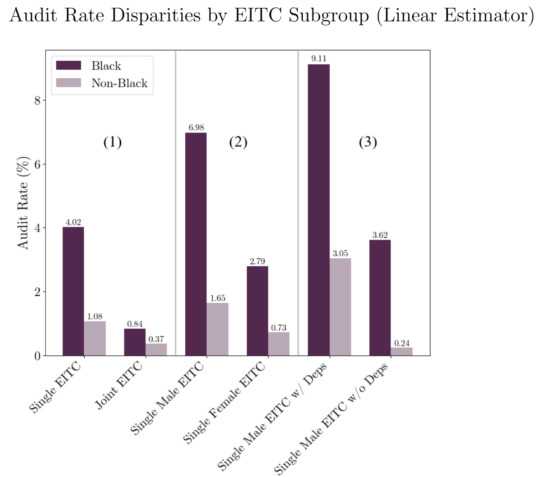
The team also found that the IRS disproportionately audits people who claim the Earned Income Tax Credit (EITC) – a program that assists low- to moderate-income workers. But claiming the EITC only explains a small percentage of the observed racial disparity. The largest source of disparity occurs among EITC claimants. Indeed, Black taxpayers accounted for 21% of EITC claims, but were the focus of 43% of EITC audits.

The racial disparity in audit rates persists regardless of whether EITC claimants are male or female, married or unmarried, raising children or childless. But it is most extreme for single male taxpayers claiming dependents (7.73% for Black claimants; 3.46% for non-Black claimants) and for single male taxpayers who did not claim dependents (5.66% for Black; 2% for non-Black).

Perhaps the most striking statistic is this: A single Black man with dependents who claims the EITC is nearly 20 times as likely to be audited as a non-Black jointly filing (married) taxpayer claiming the EITC. [MORE]