Ron DeSantis Accused of Acts of Torture against Guantanamo Detainees [all-Non-White] when he was a Navy JAG Officer

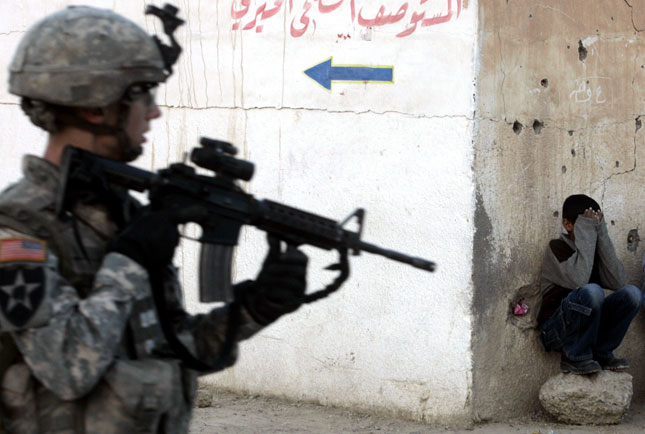
From [HERE] Before he was governor, before he was a congressman, Ron DeSantis was a Lt. Commander and JAG lawyer in the U.S. Navy, serving at the Guantanamo Bay terrorist detention camp in Cuba and Fallujah during the Iraq War.

Not much is known about DeSantis’s duties at those locations. DeSantis has released only limited highlights of his military career – noting in a speech, for example, that he spent Christmas 2006 in Guantanamo without his family – and has declined repeatedly to be interviewed about it, most recently to Florida Bulldog. His official biography, cited by Wikipedia and other information sources, touts that he “still serves in the U.S. Navy Reserve,” but the Navy says otherwise.

A Navy data sheet about DeSantis provided to Florida Bulldog last week lists his separation date from the Navy as Feb. 14, 2019 – a month after his first inauguration. “He’s not active or reserve. He’s not a member of the Navy anymore,” said U.S. Navy spokeswoman Lt. Alyson Hands.

Forty-two pages of heavily censored U.S. Navy records released to the Florida Phoenix during DeSantis’s 2018 gubernatorial campaign say his naval duties included things like assistant urinalysis coordinator. At Guantanamo, where hundreds of people scooped up in the George W. Bush administration’s post 9/11 War on Terror were held indefinitely without trial and amid multiple allegations of torture by the International Committee of the Red Cross and others, the Phoenix reported the records showed that from March 2006 through early January 2007 “DeSantis’s primary duty was a trial counsel – meaning a prosecutor. The record also showed that DeSantis was described as a ‘JTF-GTMO [Joint Task Force Guantanamo] scheduler/administrative officer.’” No further details were released.

complied with the law.”

DESANTIS’S ALLEGEDLY DARK ROLE AT GUANTANAMO

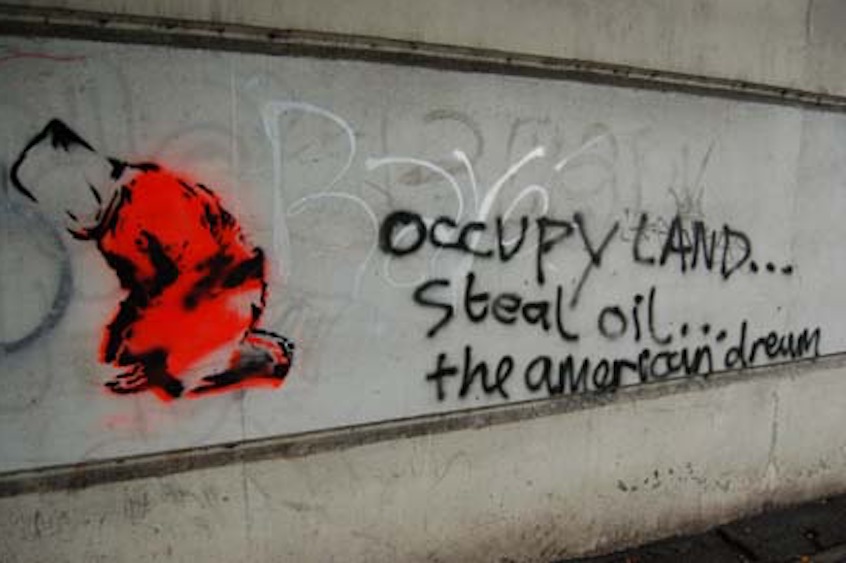
Now, however, an ex-Guantanamo detainee has come forward to allege that DeSantis actually had a much darker role at Gitmo. And his disturbing accusations about DeSantis have yet to be reported by any national or Florida-based news outlet despite the governor’s well-known presidential ambitions.

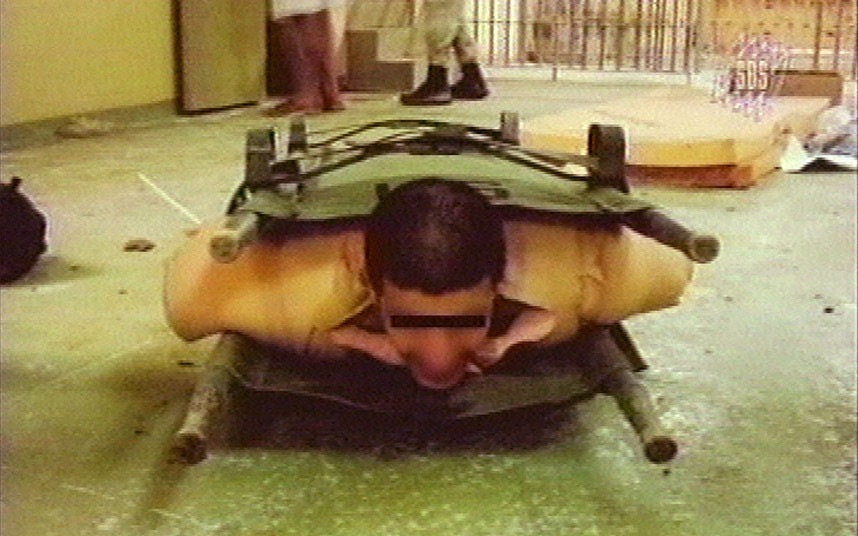
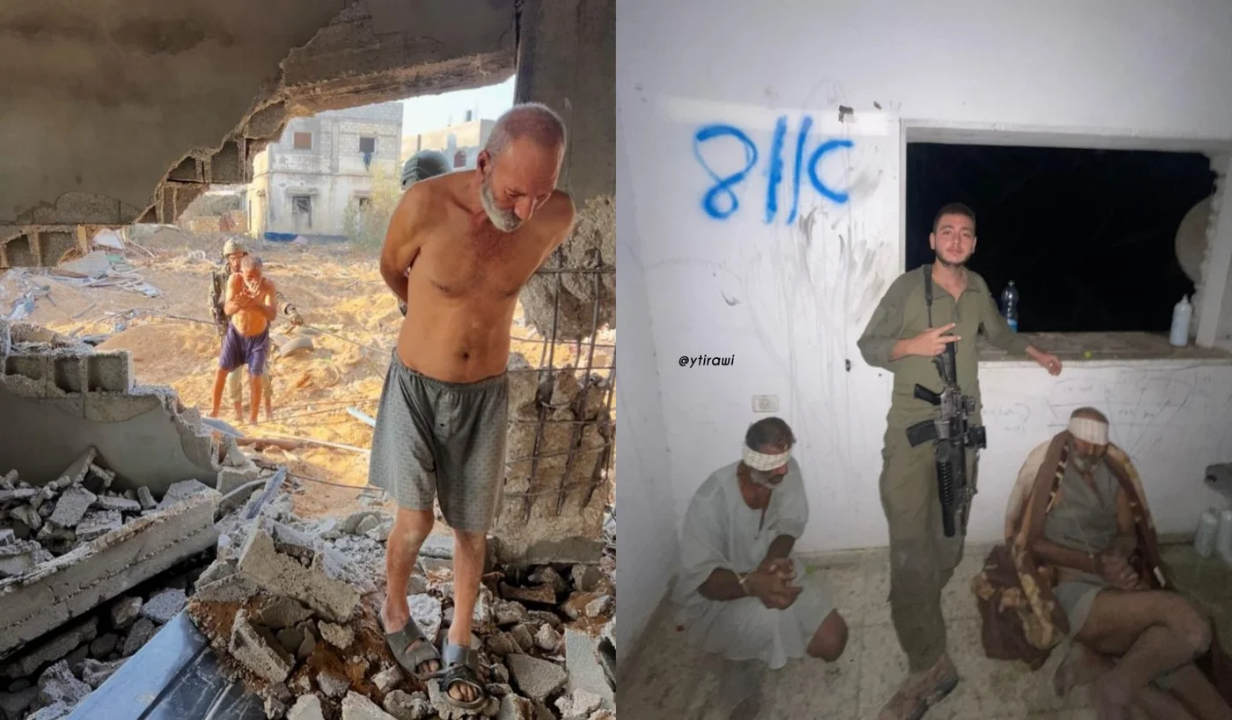
Mansoor Adayfi, formerly detainee #441 and also known as Abdul Rahman Ahmed, says JAG Officer Ron DeSantis observed, allowed and participated in illegal acts of torture to help put down a hunger strike in 2006 by dozens of detainees protesting their detention. DeSantis also covered up the torture, Adayfi says.

The Yemen-born Adayfi, held for 14 years without charges, was released in 2016 and flown to Serbia to start a new life after a review board determined he was not a threat to the U.S. He made his allegations about DeSantis in a Nov. 18 interview podcast of Eyes Left, hosted by U.S. Army veteran and anti-war activist Michael Prysner, a graduate of Florida Atlantic University.

“I saw a fucking handsome person who was coming. He said, ‘I’m here to ensure that you’re treated humanely.’ And we said, OK, this is our demand, you know. We’re not asking for much,” Adayfi said. He said DeSantis went on, “And if you have any problems, if you have any concerns, if you have…just talk to me.’ And you know we, we, we, we’re drowning in that place. I’m like, ‘Oh, this is cool.’ That person actually writing something. He will raise the concerns, but it was [a] piece of the game. What they were doing, they were, they were looking what’s [going to] hurt you more, to use against you.”

Adayfi, now 44, said DeSantis watched with amusement as he and other detainees were repeatedly force-fed Ensure, a “meal replacement” shake, through a nasal feeding tube pushed down their throats. [MORE]
Federal Judge Issues Second Order to Restrain New Jersey’s Concealed Carry Gun Law

From [HERE] On Monday, U.S. District Judge Reneé Marie Bumb issued a second temporary restraining order blocking parts of New Jersey’s concealed carry law, stating that the state and the public are not interested in enforcing unconstitutional laws.

According to the ruling in United States District Court for the District of New Jersey Camden Vicinage, Bumb temporarily suspended the law from preventing guns from being seized in “sensitive places” such as casinos, public libraries, museums, bars and restaurants serving alcohol, entertainment facilities, private property, unless otherwise indicated by owners, and private vehicles. The law was passed by lawmakers in December, which requires residents seeking concealed carry permits to purchase liability insurance and take training courses, in addition to raising permitting fees and prohibiting firearms in sensitive areas.

“Defendants cannot demonstrate a history of firearm regulation to support these challenged provisions for which they have demonstrated Article III standing. The threat of criminal prosecution for exercising their Second Amendment rights, as the holders of valid permits from the State to conceal carry handguns, constitutes irreparable injury on behalf of Plaintiffs, and neither the State nor the public has an interest in enforcing unconstitutional laws,” Bumb wrote in the ruling.

In early January, Bumb first ruled that portions of the law violated the Second Amendment rights of New Jersey residents, opting to rule in favor of a temporary restraining order on the “sensitive places” portion of the law. Bumb based her ruling at the time on the belief that the state did not have the “historical tradition” of regulating where a concealed carry permit can be used.

The first partial temporary restraining order was in favor of the plaintiffs in the Koons v. Platkin case, and Bumb ruled in favor of enjoining the two cases moving forward, according to the ruling.

New Jersey’s concealed carry law was first implemented after the Supreme Court’s ruling in the New York State Rifle And Pistol Association v. Bruen case. The ruling set a precedent for gun laws in the U.S. and established the need for “historical tradition” in court rulings for Second Amendment cases, according to the ruling.

The bill received bipartisan criticism, with Republican state Sen. Michael Testa calling the bill “absolutely wrong” and Democratic state Sen. Nicholas Sacco saying it is unconstitutional and will face legal challenges, according to NJ.com.

New Jersey Senate Republican Leader Steven Oroho previously told the Daily Caller News Foundation that the law was rushed through the Legislature in an attempt to circumvent the Supreme Court.

“The federal judge’s ruling, which validates what we have been saying, is a victory for the 2nd Amendment and the rights of law-abiding citizens to protect themselves both in public and in private. We look forward to the offending provisions of the law being permanently struck down,” he said. [MORE]
Proposed NY Bills Would Create State Process to End Police Qualified Immunity

From [HERE] Bills introduced in the New York Assembly and Senate would create a process to sue police officers and government officials in state court for the deprivation of individual rights without the possibility of “qualified immunity” as a defense.

Asm. Latrice Walker (D) and Asm. Khaleel Anderson (D) introduced Assembly Bill 2632 (A2632) on Jan 26. The legislation would create a cause of action in state courts to sue a police officer who “under color of law, subjects or causes to be subjected, including failing to intervene, any other person to the deprivation of any individual rights that create binding obligations on government actors secured by the bill of rights, article one of the state constitution.”

The bill specifically prohibits “qualified immunity” as a defense.

Senate Bill 2887 (S2887) would also create a state cause of action to sue police officers, but it would include violations of the U.S. Constitution as a basis for a suit. As explained below, this is problematic.

THE PROCESS

Typically, people sue police for using excessive force or other types of misconduct through the federal court system under the U.S. Bill of Rights. But federal courts created a qualified immunity defense out of thin air, making it nearly impossible to hold law enforcement officers responsible for actions taken in the line of duty. In order to move ahead with a suit, the plaintiff must establish that it was “clearly established” that the officer’s action was unconstitutional. The “clearly established” test erects an almost insurmountable hurdle to those trying to prove excessive force or a violation of their rights.

Passage of A2632 or S2887 would create an alternative path in state court with no qualified immunity hurdle to clear.

The language in the bill is similar to a law passed in Colorado.

IN PRACTICE

It remains unclear how the state legal process would play out in practice.

The first question is whether people will actually utilize the state courts instead of the federal process. Under the original constitutional system, it would have never been a federal issue to begin with. Regulation of police powers was clearly delegated to the states, not the federal government. But with the advent of the incorporation doctrine, people reflexively run to federal courts. But by removing the qualified immunity hurdle, it should incentivize people to take advantage of the state system.

The second question is if police officers will be able to transfer cases to federal jurisdiction in order to take advantage of qualified immunity.

State and local law enforcement officers working on joint state/federal task forces almost certainly would. They are effectively treated as federal agents.

For New York law enforcement officers not operating with a federal task force, it seems unlikely they will be able to remove the case to federal court initially under A2632, but that door could open on appeal.

By allowing people to sue for violations of the U.S. Constitution in state court, S2887, the door would be immediately open to moving cases to federal courts where qualified immunity would apply. That makes the language in A2632 preferable. [MORE]

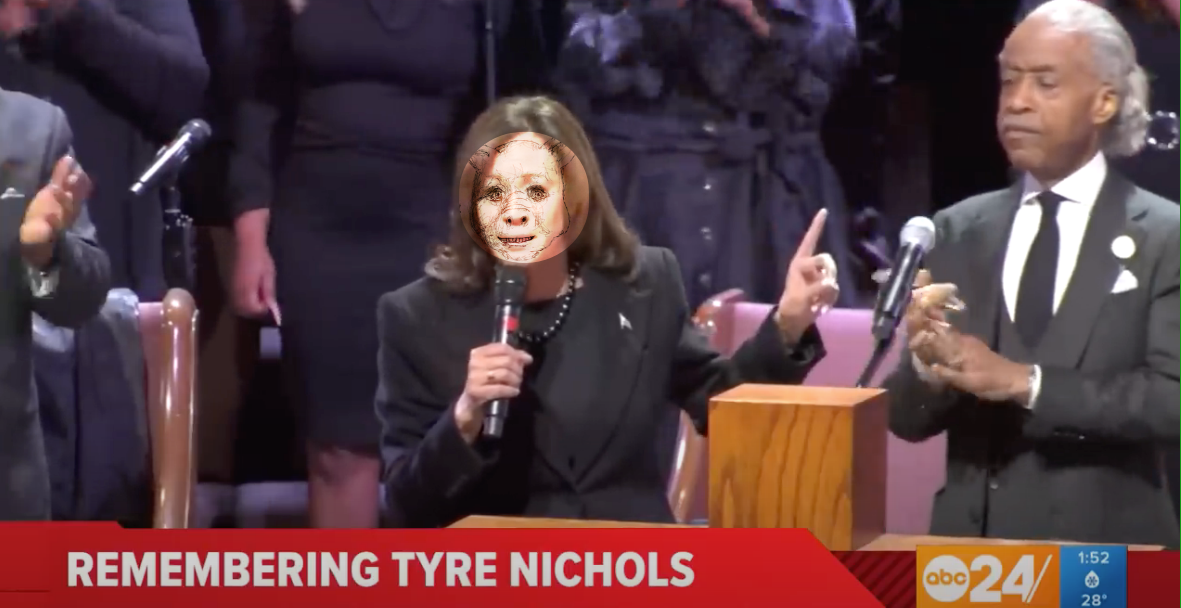
[say less] “Tyre Nichols Had The Right to be Safe:” Step-and-Fetchit Coordinator Kamala Harris Makes Speech at Funeral, Performs Leadership - Doing Nothing Else for Black Voters

THE RIGHT TO BE SAFE from GOVERNMENT ABUSE? BRAZEN COPS SO FREQUENTLY ABUSE THEIR POWER THAT NO BLACK SHOPPER, PEDESTRIAN, MOTORIST, JUVENILE, ADULT OR BLACK PROFESSIONAL OF ANY KIND—COULD MAKE A COMPELLING ARGUMENT THAT SO-CALLED CONSTITUTIONAL RIGHTS PROVIDE BLACK PEOPLE ANY REAL PROTECTION FROM COPS OR THE GOVERNMENT IN GENERAL. [MORE]

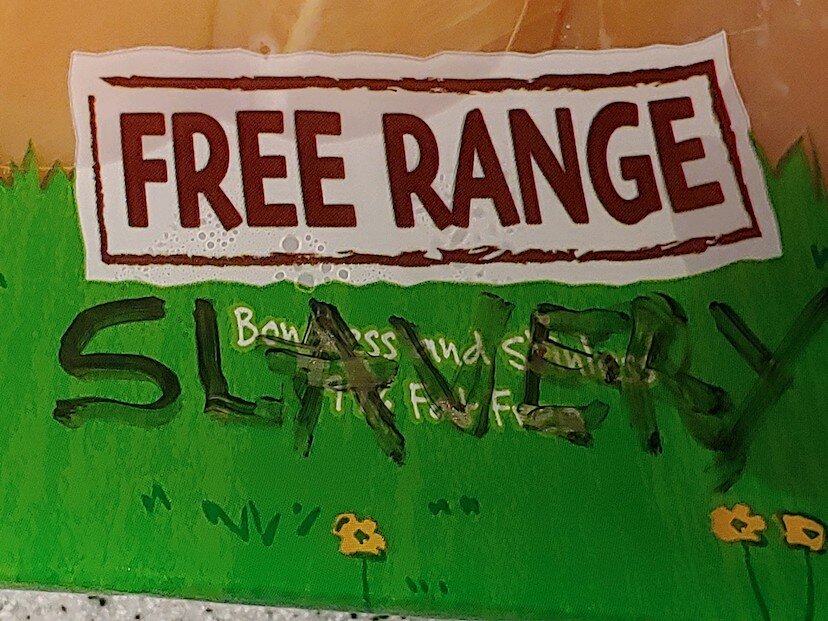
THE RIGHT TO BE SAFE FROM CRIMINALS? POLICE DON’T EXIST TO PROTECT BLACK AND BROWN PEOPLE -THEY EXIST TO CONTROL AND SURVEIL THEM. THE “SOCIAL CONTRACT” IS A FUCKING MYTH. it is an undisputed legal truth that police have no legal duty to protect any victim from violence from other private parties, unless the victim was in governmental custody. If there is no social contract then there is no rational basis for the belief in political authority, which is the basis for all government. Here, BW is not talking about the purpose of government or how government can be improved. Rather, “the problem OF POLITICAL AUTHORITY” is whether the government has a right to rule over people and whether people have an obligation to obey authority. What is the basis of the government’s implied right to rule over people in the first place? If there IS NO logical way to account fOR THE existence OF AUTHORITY THEN WE ARE CONFINED IN A FREE RANGE PRISON [MORE]

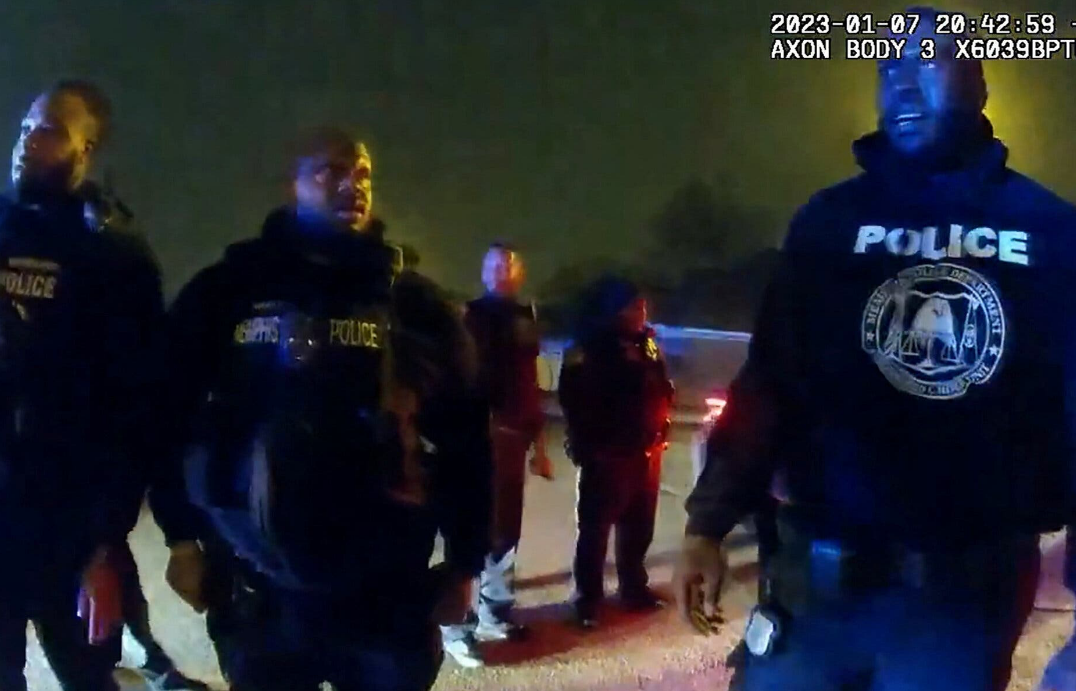
BLACK LEADERSHIP ONLY AS A PERFORMANCE. ONE GREAT SPEECH AFTER ANOTHER. From [HERE] Thousands of mourners on Wednesday attended the funeral of Tyre Nichols, a 29-year-old Black man who died three days after Memphis police officers beat him following a traffic stop last month.

Nichols’ beating shocked many in the US after being captured on camera, and triggered yet another bout of soul-searching over racism and police brutality. The five officers involved have been charged with murder and other crimes.

The Rev Al Sharpton, who delivered the eulogy at Nichols’ service, shared his anger that at least five Black officers were involved in the brutal beating of Nichols - so close to the location of where Dr Martin Luther King Jr was assassinated.

“In the city that Dr King lost his life, not far away from that balcony, you beat a brother to death,” said Sharpton.

“All he wanted to do was get home,” said Sharpton of Nichols.

That was a heart-breaking theme echoed by Nichols’ mother, RowVaughn Wells, and other family members, whose moving tributes to their lost relative were also edged by passionate demands for action and the passage of a stalled federal law aimed at reforming the police.

“We need to take some action because there should be no other child that should suffer the way and all the other parents here that lost their children. We need to get that bill passed because if we don’t, the next child that dies, their blood is going to be on their hands,” Wells said.

His stepfather Rodney Wells similarly called for justice and action, saying: “What’s done in a dark will always come to the light, and the light of day is justice for Tyre, justice for all the families that have lost loved ones to brutality of police or anybody.”

Vice-President Kamala Harris gave brief remarks at the service, condemning those who argue that law enforcement acts to support public safety in light of police brutality incidents.

“This violent act was not in pursuit of public safety … Was Tyre Nichols not also entitled to the right to be safe?” said Harris.

“Tyre Nichols should’ve been safe.”[MORE]
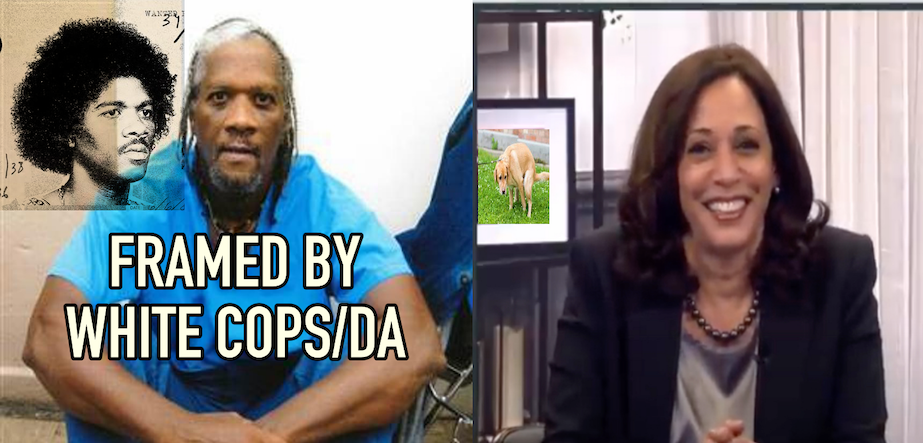
Newsom's Token Report to Quiet Criticism of Kamala Harris Improper: Despite Evidence Kevin Cooper was Framed for Murder He Remains on Death Row b/c VP and Others Blocked Efforts to Establish Innocence

IS THIS BLACK POWER? VOTING FOR COIN-OPERATED BLACK ROLEBOTS WHO WORK ON BEHALF OF AUTHORITY AND ELITE RACISTS?

From [HERE] Kevin Cooper is a death-row prisoner in California who was convicted of murdering four people in 1985. He has maintained his innocence of the offense. On January 13, 2023, a special counsel appointed by Governor Gavin Newsom to conduct an independent investigation of Cooper’s case released a report dismissing his claims of innocence, stating, “The evidence of Cooper’s guilt is extensive and conclusive.” 

In response, Cooper’s attorneys made the following statement: “The special counsel’s investigation ordered by Governor Newsom in May 2021 was not properly conducted and is demonstrably incomplete. It failed to carry out the type of thorough investigation required to explore the extensive evidence that Mr. Cooper was wrongfully convicted.” 

Cooper’s attorneys argue that the evidence cited in the report raises questions about the findings of the investigation. Cooper maintains he was framed by the San Bernardino Sheriff’s Department, and that a man named Lee Furrow committed the murder. Two construction workers, who had worked with Furrow in Pennsylvania, told California’s independent investigator that in 2018 they heard Furrow say, “me and my boys, we butchered a whole family.”

In addition, Furrow’s former girlfriend told the investigator that she saw Furrow wearing coveralls covered with bloodstains. Six months later, the sheriff’s deputy questioned Furrow and disposed of the coveralls without testing the bloodstains. Josh Ryen, the only survivor of the attack attributed to Cooper, told the police, “That wasn’t the guy that did it,” after seeing a photo of Cooper.

Cooper’s attorneys assert that prosecutorial misconduct is also central to the case: “Most fundamentally, we are shocked that the governor seemingly failed to conduct a thorough review of the report that contains many misstatements and omissions and also ignores the purpose of a legitimate innocence investigation, which is to independently determine whether Mr. Cooper’s conviction was a product of prosecutorial misconduct.” The special counsel noted in the report that it did not assess whether Cooper’s trial had been unfair and “improperly influenced by Cooper’s race.”

Lying Isn’t the Exception for Cops, It’s the Rule. Police Report states ‘Tyre Nichols was Irate, Started to Fight, Grabbed Guns' and Lists Cop as a Victim. But Videos Show Black Man Never Struck Back

From [HERE] A police report written hours after officers beat Tyre Nichols was starkly at odds with what videos have since revealed, making no mention of the powerful kicks and punches unleashed on Mr. Nichols and instead claiming that he was violent.
The police report painted Mr. Nichols, 29, who died three days after the Jan. 7 beating, as an irate suspect who had “started to fight” with Memphis police officers, even reaching for one of their guns. The videos, which were released last week, showed nothing of the sort. 

Instead, they captured police officers yanking Mr. Nichols from a car, threatening to hurt him and then — after he ran away — catching up with him and inflicting the deadly beating. All the while, it appears from the videos, Mr. Nichols never struck back.

On Monday, the fallout from Mr. Nichols’s death continued. The Police Department announced that it had suspended two more officers, in addition to the five who have already been fired and charged with murder in the beating.

Meanwhile, the city’s fire chief, Gina Sweat, fired two emergency medical technicians and a lieutenant who had responded to the scene, saying that they all had violated a range of policies.

The fire chief said that the E.M.T.s had been responding to a report of a person who had been pepper sprayed and that they had relied on information given to them at the scene, presumably by some of the police officers who had just kicked, punched and used a baton to pummel Mr. Nichols, a FedEx worker and father who had pleaded with the officers to stop.

The official account written by a police officer early the next morning told a much different story in which Mr. Nichols was the assailant.

It was the latest instance nationwide in which video evidence — whether from body camera footage or a bystander’s cellphone — offered a starkly different account of police violence from what officers had reported themselves.

n Minneapolis, for example, the police said in May 2020 that George Floyd had died following a “medical incident,” a description that was soon challenged by a teenager’s cellphone video, leading to international protests and charges against four officers.

In Mr. Nichols’s arrest, the officer wrote that the police stopped Mr. Nichols’s car on Jan. 7 after seeing him drive quickly and into oncoming traffic, and that, once he was stopped, Mr. Nichols had been “refusing a lawful detention” and fought detectives on the scene.

Cerelyn Davis, the Memphis police chief, has said investigators have been unable to determine whether Mr. Nichols was driving recklessly. And the videos show that officers had approached his car with their guns drawn, while threatening and cursing at him, before pulling him out and pushing him to the ground.

Mr. Nichols, sounding distressed, says “You don’t do that, OK?” and then tries to follow officers’ contradictory and rapid fire commands, which included ordering him to get on the ground while he was already lying down. “All right, I’m on the ground,” he says, before responding to another demand: “Yes, sir.”

But the police continued to be aggressive, with one threatening to fire his Taser at Mr. Nichols and another threatening to “break” his hands. Mr. Nichols pleaded with them to stop, and said at one point, “You guys are really doing a lot right now.”

The police report said that, sometime around this period, Mr. Nichols had grabbed for a detective’s gun, something not shown in any of the videos. The officers then deployed pepper spray into Mr. Nichols’s face, after which he ran away, toward his mother’s house.

Despite the fact that Mr. Nichols does not appear to strike back, the report lists Mr. Nichols as the suspect in an aggravated assault and said he had grabbed officers’ belts and one officer’s vest. A Memphis police officer is listed on the report as a victim. That police officer is one of five who have since been charged with second-degree murder in Mr. Nichols’s death.

Only one of the two police officers whose suspensions were announced on Monday has been identified. That officer, Preston Hemphill, had fired his Taser at Mr. Nichols as he ran away, and who also later said, while his body camera was rolling, “I hope they stomp his ass.” He was not seen on video from the second location, where the police carried out the assault on Mr. Nichols.

All five of the charged officers are Black, as was Mr. Nichols. Officer Hemphill is white.

The district attorney’s office said in a statement on Monday that prosecutors were still examining whether to bring more charges, including against Officer Hemphill, the Fire Department employees and officials who wrote reports on the episode.

Chief Sweat said on Monday that the two E.M.T.s whom she fired had “failed to conduct an adequate patient assessment” on Mr. Nichols after arriving at the scene. The lieutenant who was fired never got out of the fire engine, the chief said.

A day earlier, The Times had reported that the E.M.T.s had largely looked on as Mr. Nichols writhed in pain and, at one point, had not touched him or provided any care for nearly seven minutes.

Videos from the scene showed that as the medics were arriving, the police officers who had battered Mr. Nichols were laughing about the episode and describing it in detail, with one saying he had hit Mr. Nichols with “haymakers.” It is unclear whether the medics overheard this or how much the officers told them about the injuries they had inflicted. 

They were also insisting that Mr. Nichols must be on drugs, something for which no evidence has emerged. And when another officer arrived at the scene, they described events that, if they happened, were not shown on the footage, claiming that Mr. Nichols “swung” at one officer and “literally had his hand” on that officer’s gun.

The police report is not the only official narrative of the beating that has been challenged by the videos.

The Police Department’s first public statement, issued hours after the arrest, described each of the two encounters only as “confrontations” and omitted details of the beating. “Afterward, the suspect complained of having a shortness of breath,” it said, noting that state investigators had been called in.

The messaging changed after Mr. Nichols died, residents protested and his family pressed the authorities for answers. Chief Davis has since condemned the actions of the indicted officers as “a failing of basic humanity.”

Those officers — Tadarrius Bean, Demetrius Haley, Emmitt Martin III, Desmond Mills Jr. and Justin Smith — have each been charged with the same seven felonies, which, in addition to the second-degree murder charge, include kidnapping, official misconduct and aggravated assault.

Videos Show Memphis EMT’s Doing Nothing as Tyre Nichols Writhed in Pain and at one point, hadn’t Touched Him or Provided Any Care for Nearly 7 Minutes. Cops Seen Laughing as They Described the Murder

From [HERE] Tyre Nichols writhed in pain on the pavement after being beaten by Memphis police officers. His back was against a police car, his hands were cuffed and his face was bloody. He was groaning, and he kept falling over.
A few feet away, two emergency medical workers looked on. They helped Mr. Nichols sit up a few times after he had slumped to his side, but then, for nearly seven minutes, they did not touch him. At one point, they walked away.

Mr. Nichols, a father and FedEx worker who liked photography and skateboarding, died in a hospital three days later. Five officers were fired and have been charged with second-degree murder in his death.

Videos of the Jan. 7 beating released on Friday have led people to scrutinize those officers’ actions frame by frame. But the footage has also turned the public’s attention to the emergency medical workers who first arrived on the scene after the beating, raising the question of whether they should or could have done more to help Mr. Nichols.

“It seems like they did not have the decent humanity to render aid to a man who was, at first, calling for his mother, but then laying against the car,” said JB Smiley Jr., the vice chairman of the Memphis City Council.

Both of the medical workers who arrived first to tend to Mr. Nichols appeared to be emergency medical technicians with the Memphis Fire Department. Fire E.M.T.s often respond more quickly than ambulance crews to emergency calls, but their job is largely to carry out fundamental first aid: conducting a basic neurological assessment, making sure patients can breathe, checking their vital signs and stemming any major bleeding.

Qwanesha Ward, a spokeswoman for the Fire Department, said on Friday that the department had suspended two of its E.M.T.s who had treated Mr. Nichols and that an investigation was expected to wrap up early this week. She declined to identify the medics.

To many in Memphis, the videos were troubling, appearing to show the medical workers responding without urgency to Mr. Nichols’s suffering.

Experts in emergency medicine noted that the first medics on a scene were often the least trained and frequently relied in part on the police — who, in this case, said Mr. Nichols was on drugs — to understand a patient’s condition.

Dr. Sean Montgomery, a trauma expert at Duke University’s medical school, said that it was difficult to evaluate the medical response, given the low quality of the nearby surveillance camera, but that the responding medical personnel did not seem to have followed standard protocol, which calls for stopping any major bleeding and then assessing a patient’s airway and breathing.

He said it was not clear that anyone had begun to fully assess Mr. Nichols, in line with those standards, until about 15 minutes after the medics had arrived. That is when medics can be seen going into their bag of tools and treatments. At that point, it had been 21 minutes since an officer last kicked Mr. Nichols.

“The patient clearly seems to be in shock and have trouble breathing, even with the poor camera view,” Dr. Montgomery wrote in an email, adding that emergency response crews are often undertrained and underfunded.

Dr. Alan Tyroch, the chief of surgery and trauma at Texas Tech University Health Sciences Center in El Paso, said he had watched a video of the response several times but had found the quality so poor that it was nearly impossible to evaluate what medical care was being provided, or by whom.

“Nobody really knows except the people who were there,” he said.

An ambulance pulled up to the scene more than 25 minutes after the police officers had stopped beating Mr. Nichols. Medical response times have been a problem in many cities, including Memphis, where officials have said they are experiencing a rise in 911 calls, straining the system.

In recent years, the Memphis firefighters’ union has tried to calm fears about slow response times by noting that Fire Department E.M.T.s often show up before more skilled paramedics and ambulance units do. Union officials did not respond to inquiries, and the Fire Department did not respond to questions about the specifics of its response.

Mr. Nichols suffered his fatal injuries after police officers kicked, punched and used a baton to beat him. They said later that they had pulled him over because he was driving recklessly. The police had pulled him out of his car and ordered him onto the ground, continuing to yell at him and threaten him even as he lay on his side, pleading with them to stop. When one officer pepper-sprayed him, he got up and ran in the direction of his mother’s house, but officers caught him about 200 feet from her home and began to pummel him.

Afterward, some officers dragged a handcuffed Mr. Nichols to a police car and propped him up against it. In the first five minutes that the medics were on the scene, Mr. Nichols fell to his side six times. The medics helped him up several times and at one point asked a police officer to shine a light on him.

At that point, several Memphis officers can be heard insisting that Mr. Nichols, 29, must be high, and they sound surprised to have learned that nothing was found in his pockets or in the car.

Some laughed as they recalled their assault in detail. “Man, I was hitting him with straight haymakers, dog,” one said. It is not clear from the body camera videos whether the medics heard those conversations.

Among the seven felony charges filed against each of the officers is an accusation that they refrained from performing a duty that was either imposed by law or was inherent as part of their jobs. This could cover a range of behavior, but the Shelby County district attorney, Steven J. Mulroy, suggested at a news conference last week that the charge had to do in part with their communications with medical officials.

On-duty police officers, Mr. Mulroy said, have a duty “to prevent official misconduct and to accurately report information to medical personnel who show up.”

The officers have not entered a plea. Lawyers for the officers have cautioned people to wait for more details before judging them. Blake Ballin, who represents Desmond Mills Jr., one of the five officers, said in a statement that the videos have “produced as many questions as they have answers.”

At the scene, the medics at times appeared to defer to the police, standing back at one point as a police officer asked Mr. Nichols what drugs he had taken. Mr. Nichols largely groaned in response, though twice he appears to answer “alcohol.”

For about the next 6 minutes and 40 seconds, no one touches Mr. Nichols as he rolls back and forth on the pavement.

The official cause of Mr. Nichols’s death has not been released by the Shelby County medical examiner’s office. The family said it had commissioned a separate, private autopsy that determined he had suffered from extensive bleeding.

When a young person like Mr. Nichols dies three days after a beating involving blows to the head, Dr. Montgomery said, brain injuries are the most likely cause. He said that, based on video of the beating, Mr. Nichols had likely been at risk for severe traumatic brain injury, rib fractures, collapsed lungs and internal bleeding.

Dr. Montgomery said it was not easy to say whether getting Mr. Nichols into an ambulance or to the hospital more quickly would have made a difference, though some cases, such as a brain injury, would have been helped by early surgery.

“Some brain injuries are too severe for medical care to improve them,” he added. “However, if you manage the other injuries well, the brain will do better. For example, if the patient is not breathing well, the brain will have a much worse outcome.”

The police in Memphis have said that Mr. Nichols was taken to the hospital after complaining about shortness of breath.

At a march on Saturday in response to the police killing, some Memphis residents said they were nearly as disturbed by the medical response as they were by the officers’ actions. Towanna Murphy, who operates a radio station in Memphis, said the medics needed to be held accountable.

“When you see somebody laying there,” Ms. Murphy said, “you’re supposed to give medical treatment right away.”

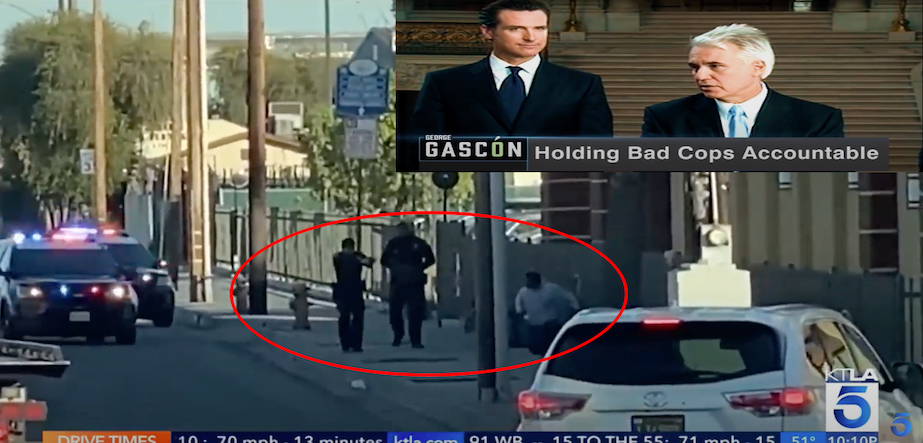
Video Shows Black Man w/Both Legs Amputated Hobbling Away from Huntington Cops when They Fatally Shoot Him 8X. Cops Confiscate Surveillance Video, Keep it Secret. What Will the White Liberal DA Do?

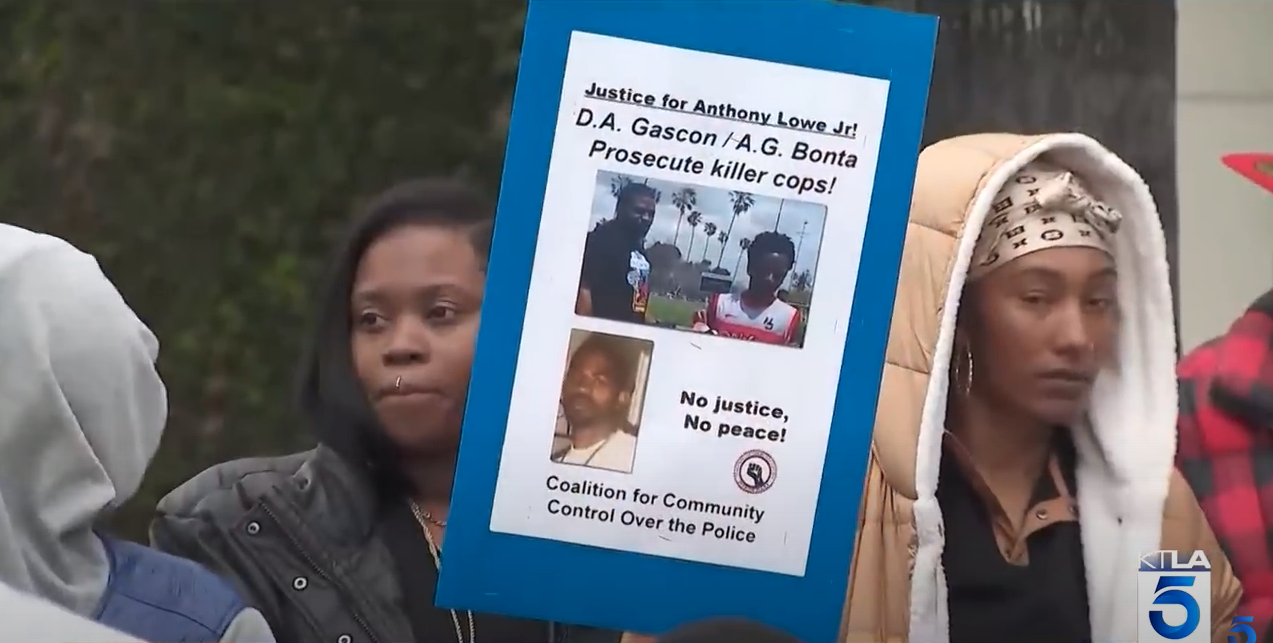
From [HERE] Family members of a double-amputee shot and killed by Huntington Park police officers last week after he threatened them with a knife are calling the shooting murder.

The Huntington Police Department said Anthony Lowe was shot and killed by officers on Thursday, Jan. 26, after he stabbed a man then threatened responding officers with a 12-inch butcher knife.

Lowe's family and members of the Coalition for Community Control Over the Police held a news conference in front of the Huntington Park Police Department Monday, condemning the shooting as another example of police brutality.

"He's out of his wheelchair, he's amputated in both legs at the knee, and he's moving away from the officers," said Cliff Smith, a member of the Coalition for Community Control Over the Police.

The Los Angeles County Sheriff's Department is now heading up the investigation into the officer-involved shooting. The police officers who fired are now on paid, administrative leave, which is standard operating protocol.

Eyewitness News reached out to the Huntington Park Police Department, but department officials declined to be interviewed, instead releasing a written statement.

According to the statement, officers Tased Lowe twice and when he tried throwing the knife at the officers, they opened fire.

Lowe was pronounced dead at the scene.

"If you guys are here to protect and to serve, protect us. Serve us. Don't kill us!" said Jonathan Longmire, Anthony's cousin.

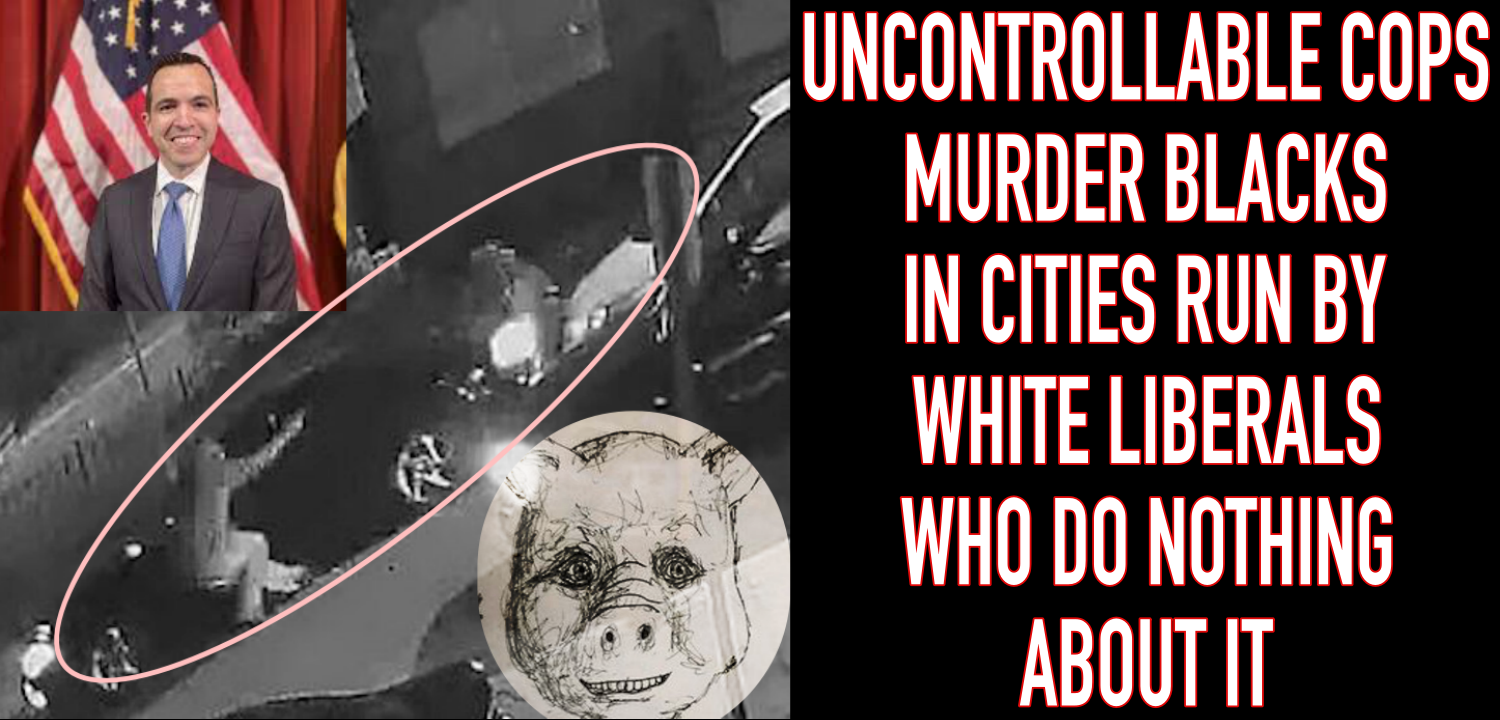
Carl Dorsey’s Family Wants Federal Probe After White Liberal AG Failed to Charge White Newark Cop who Murdered Him: Video Shows a Plainclothes Cop Jump Out an Unmarked Van and Shoot Black Man to Death

From [HERE] Days after a grand jury declined to indict a Newark cop in the fatal shooting of an unarmed South Orange man in January 2021, the man’s family members said they are still reeling from the “excruciating pain” of his loss.

Speaking to reporters Monday, Madinah Person said when she heard the news that Newark Police Detective Rod Simpkins would face no charges over the killing of her brother Carl Dorsey, it felt like Dorsey dying all over again.

“It’s almost like my brother’s life didn’t matter to anyone else but our family, and it was another slap in the face to just go from not knowing anything for two years to finding out that the officer who killed him was not charged at all,” she said.

The family said they want U.S. District Attorney Peter Sellinger to investigate Dorsey’s death.

Person was speaking to the press outside of the federal courthouse on Broad Street in Newark along with other family members and civil rights activists to demand justice for Dorsey.

Dorsey was shot minutes after midnight on Jan. 1, 2021. Authorities said police were responding to reports of gunshots near South 11th Street and Woodland Avenue in Newark. Surveillance video capturing the killing shows a group of 12 plainclothes officers pull up in unmarked cars to South 11th Street and Dorsey crossing the street toward them.

Simpkins and Dorsey collide, and then Simpkins shoots him. Dorsey, a 39-year-old father of three, died an hour later after being transported to University Hospital in Newark.

Robert Tarver, attorney for the family, noted the video shows Simpkins turning his body and firing toward Dorsey after they collide. The Attorney General’s Office describes the shooting like this: “As Det. Simpkins was falling to the ground, his service weapon discharged once, striking Mr. Dorsey.” 

“As if it had done that by itself,” Tarver said.

On Monday, Tarver showed frame-by-frame photos of the video, taken from across the street. Tarver noted the officer’s stance while Dorsey was attempting to move away from the officers and that Simpkins was the one who ran into Dorsey. He also stressed that Dorsey, who was Black, posed no threat because he was unarmed. 

“Here we are, at this time and this place where we have been far too many times, the same scenario over and over. But we are here because this is not going to be the end of our journey to get Carl Dorsey justice,” he said. “We’re here because this is the beginning of a new day.” 

Attorney General Matt Platkin — whose office must investigate all police-involved fatalities — said in a statement Thursday that his probe included interviews with witnesses and reviews of video, forensic evidence, and autopsy results from the medical examiner. None of the officers wore body cameras.

The grand jury concluded deliberations on Jan. 24 and voted “no bill,” which means no criminal charges should be filed.

The Dorsey family received no updates from Platkin’s office until the decision not to indict, family members and Tarver said

Justice means not only holding police officers accountable for their actions, but also transparency with victims’ families, Tarver said. 

“It’s important to understand that his family has been affected, his family has been hurt by this, and this family has been injured,” Tarver said. “They’ve lost their loved one forever.”

Tarver said he wants to hold Sellinger to his promise of upholding civil rights. In March 2022, Sellinger launched a division within his office to enforce civil rights laws in New Jersey, saying at the time that “hate crimes and unlawful bias incidents are antithetical to the core principles underlying our democracy.”

Newark Mayor Ras Baraka said the city will begin its own independent investigation of the killing.

The family also filed a civil rights lawsuit against several Newark police officers, the police department, and the city in state Superior Court in August. The suit accuses the city of failing to properly train officers and alleges the police committed excessive force during the incident. 

The news Simpkins would not face charges came one day before the release of videos showing Memphis police officers beating Tyre Nichols, who died three days after the beating. Nichols was also unarmed.

The officers who beat Nichols were charged with second-degree murder. Medinah Person, Dorsey’s sister, said she couldn’t bring herself to watch that video because it reminds her of what her brother went through at the hands of police.

“There is a long straight line between this incident and the incident in Memphis and the other ones like it. It’s an unbreakable bond because they all have something in common, and that is the devaluation of Black life in America,” Tarver said.

Lawrence Hamm, chair of the People’s Organization for Progress, called on the state Legislature to pass a bill, A1515, that would allow municipalities to create civilian police review boards with subpoena power. The bill hasn’t received a hearing in the Legislature more than a year after it was introduced.

“The police have to understand there are consequences for what they do. That’s why they keep doing it — because there’s not been any consequences,” Hamm said. “They have to know that if they commit an unjust murder, they have to pay the same price that a citizen would have to pay.”

After a LA Cop Overheard Brandon Kennedy Talking about BLM in Store He Followed Him Outside and w/o Warning Grabbed his Neck, Slammed him Down and Put His Knee Into Black Man's Back. ACLU Settles Case

From [HERE] The American Civil Liberties Union of Louisiana today announced a settlement on behalf of Mr. Brandon Kennedy, who was wrongfully attacked, arrested, and searched by Shreveport police after one of the officers overheard Mr. Kennedy speaking to another person about the Black Lives Matter movement and his own negative experiences with the Shreveport Police Department.

As alleged in his complaint, without warning or provocation, Kennedy, who had been shopping at a convenience store, was brutalized and detained against his will by Shreveport police in retaliation for his constitutionally protected speech. An officer grabbed him by the neck, slammed him to the ground, and then placed his knee on Mr. Kennedy’s back, mere months after George Floyd was murdered in the same fashion. Although he was compliant, the officer then grabbed Mr. Kennedy’s face with both hands and smashed it into the concrete pavement. Knowing they had no legal reason to arrest him, the officers brought Mr. Kennedy to a mental health unit where he was held against his will overnight.

“Our client Brandon Kennedy endured a terrifying and dehumanizing ordeal, and we’re glad he’s receiving monetary compensation,” said Nora Ahmed, ACLU of Louisiana legal director. “Nonetheless, this is unfortunately the kind of racial profiling Black and Brown people continue to face each and every day, as they are targeted and jailed for merely existing in public spaces. And Mr. Kennedy’s case is particularly appalling because he was assaulted for speaking out against these very injustices. We hope this settlement sends a message that when local law enforcement agencies violate the rights of the people they’re sworn to serve — we will hold them accountable.”

In 2022, police officers across the United States killed at least 1,176 people — the highest on record. But these alarming statistics don’t include cases like Mr. Kennedy’s, where victims survive police violence, become traumatized, and are tortured by the event for the rest of their lives. 

As we approach the tenth anniversary of the Black Lives Matter movement and the third anniversary of the uprising following the murder of George Floyd, there is still a long way to go in the march toward justice for all. Congress must act and pass the George Floyd Justice in Policing Act and address the legal fiction of qualified immunity. 

Kennedy v. Jackson et al. was the 29th lawsuit filed as part of the ACLU of Louisiana’s Justice Lab campaign. The initiative has filed nearly 50 lawsuits against Louisiana law enforcement since launching in 2020. For more information, visit aclujusticelab.org.

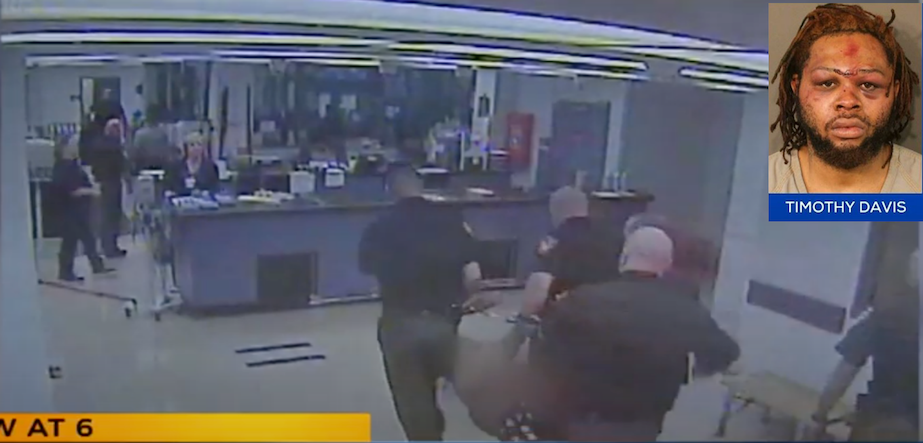
Columbus Settles Case: White Cops Verbally Abused, Punched, Kicked, Tased, Pulled Black Man’s Hair Out and Stripped Him Naked from Waist Down. Police said 'The Force Continuum Allowed Them to Do so'

From [HERE] White Officials in Columbus have reached a $225,000 settlement with a Black man who said white police officers used improper force during a 2017 arrest.

The Columbus City Council voted unanimously Monday to approve the deal with Timothy Davis. As part of the settlement, neither the city nor the officers admitted to any wrongdoing.

Davis had sued the city in federal court, alleging civil rights violations, but a jury rejected his claims in December 2021. A federal judge granted a partial new trial in September, saying a complete jury verdict in favor of the officers was "against the clear weight of the evidence.” The settlement reached in December and approved Monday resolves that matter.

Davis' lawyers had said during the trial that Columbus officers verbally abused, punched, kicked and used a stun gun on him; pulled out his hair; and stripped him nearly naked from the waist down during the September 2017 arrest.

A lawsuit also accused officers of trying to block bystanders from filming the arrest. [MORE]
After the incident Police Spokesman Sgt. Dean Worthington told the NBC, “We are allowed to punch and we are allowed to kick.” “That’s part of our use of force continuum and it all depends on what the behavior of the suspect is at the time.” Also,  a white Columbus police officer was "relieved from duty" after he allegedly made comments threatening to choke a suspect. [MORE]

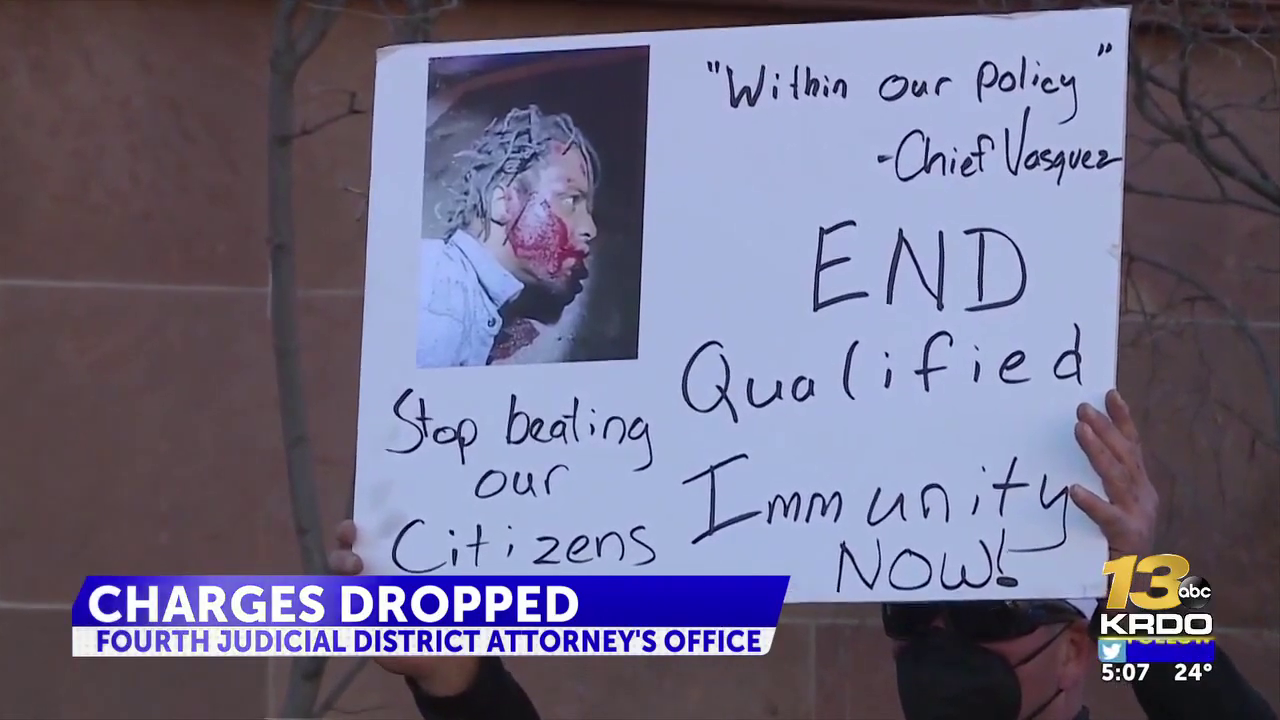
Charges Dropped Against Black Veteran Brutalized by White Cops: Atty says Colorado Springs Cops Unlawfully Stopped Dalvin Gadson, Beat him Mercilessly and then Smiled as he Laid in the Street Bleeding

From [HERE] Tuesday, the 4th Judicial District Attorney's Office dropped charges against a Black veteran who was hospitalized after an arrest by the Colorado Springs Police Department.

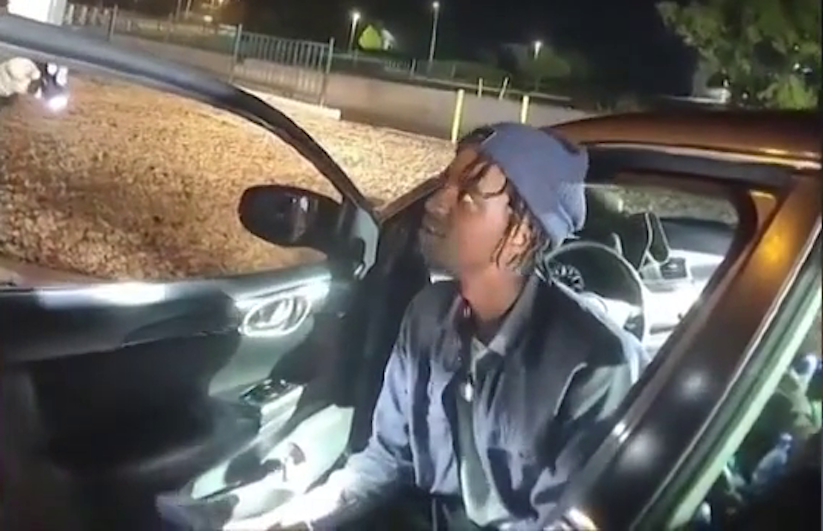
According to the attorneys of 29-year-old Dalvin Gadson, he was pulled over by officers during a traffic stop on Oct. 9, 2022. Gadson was reportedly pulled over for not having license plates on the back of his sedan.

After about 30 seconds of speaking to Gadson, body-worn camera footage showed officers trying to remove him from his car with force.

In the video obtained by 13 Investigates, officers are seen punching and kicking Gadson while he was refusing the exit the car. According to arresting documents, an officer claimed Gadson "kicked Officer Hummel in the chest area several times, while becoming more aggressive."

Gadson was arrested and charged with two counts of Second Degree Assault on a Police Officer, Resisting Arrest, Obstructing a Peace Officer, Driving Under the Influence, and Driving Without License Plates.

Those charges, however, have since been dropped by the DA after Gadson paid a $15 fine for improperly displaying the license plates on his car.

His attorney's provided KRDO with the following statement regarding the dropped charges:

“By dropping the charges, the District Attorney has made it clear that these officers had no reason to detain Mr. Gadson for a DUI investigation much less beat him mercilessly and then smile for the cameras as he lay on the ground bleeding. In other words, this decision means that their actions weren’t just excessive. They were unlawful. 

“Chief Adrian Vasquez said that Officers Colby J. Hickman, Matthew Anderson and Christopher K. Hummel did nothing wrong. But the reality is that they brutally beat Dalvin Gadson for a $15 fine and they should be investigated, arrested and prosecuted. Failing to do so puts lives at risk. Just ask Tyre Nichols’ family.”

Harry M. Daniels LCC

A federal lawsuit has since been filed against the three Colorado Springs police officers.

Lawsuit Claims Baltimore Cops Violently Attacked a Black Family After Claiming to Smell Marijuana from a Parked Car with Its Windows Up

From [HERE] A new federal civil rights lawsuit claims that Baltimore County police officers violently beat five members of the same family after claiming to smell an odor of marijuana coming from a parked vehicle with its windows up.

The family went out to dinner on Jan. 25, 2020, to celebrate their daughter’s upcoming 18th birthday when they were stopped by the officers, according to the complaint.

What followed was a “gross display of excessive force,” said Hannah Ernstberger, the lawyer representing the family. The complaint alleges that the Westminster family’s two parents, their daughter and adult son, and a cousin were all assaulted by the officers and suffered injuries.

All five were also arrested and charged with crimes, but the charges against each were later dropped or placed on the stet docket.

The complaint names nine Baltimore County police officers and refers to extensive body camera footage of the incident.

According to the lawsuit, Shaneris Nalls, now 20, and three female friends were sitting in a parked vehicle at about 7:30 p.m. after having dinner at to celebrate her birthday at City View Bar & Grill on Security Boulevard.

Two police officers drove by and approached the vehicle. One of the officers, Evan Vicarini, claimed that he could smell marijuana coming from the vehicle, though its windows were rolled up and other cars were nearby.

Vicarini would later tell another officer, “‘We drove by and they gave us the (expletive) crim look,’ seemingly admitting that the officers stopped the vehicle and the occupants based on appearance alone,” Ernstberger wrote in the complaint.

Vicarini told Nalls that if she handed over marijuana she would be free to leave without a citation, the complaint claims. Nalls handed over a joint, but Vicarini believed there was more inside the vehicle and ordered the passengers out.

Nalls’s mother, Dayaneris Dmeza, approached to speak with Vicarini. When Dmeza’s husband, Shamdu V. Nalls, and son, Shamdu C. Nalls, also arrived, Vicarini told the other police officers who had responded to “hook ’em” if “they start to get out of hand,” according to the complaint.

Shaneris Nalls and her mother approached their vehicle to warm up. Vicarini told Dmeza to back up, grabbed her hoodie and slammed her into the side of the vehicle, the complaint claims.

Shaneris Nalls tried to step in, but Vicarini threw her to the ground and kneeled on top of her before handcuffing and arresting her.

Another officer, Anthony Vitacco, then slammed Dmeza into a metal fence near the vehicle. Dmeza’s husband, Shamdu V. Nalls, tried to intervene nonviolently, according to the complaint, and was punched multiple times by Vicarini.

Other officers then slammed him to the ground, where he was beaten, kicked and Tased by four officers while his hands were behind his back. One officer kicked him in the face and he lost consciousness before being dragged into a nearby police vehicle and Tased again, the complaint claims.

A cousin, Nehemiah Lembert, tried to check on Dmeza when four officers violently forced him into the metal fence and onto the ground. Multiple officers placed their hands around Lembert’s neck or used their arms in an effort to choke him while his hands were behind his back, according to the complaint.

Finally, the couple’s son, Shamdu C. Nalls, rushed past the officers with his hands raised to check on his mother. As officers grabbed him, he lost his balance and fell into one of the officers. Another Tased Nalls  and continued Tasing him after he had fallen to the ground, the complaint alleges.

The complaint also claims that on multiple occasions, the responding officers put their body weight on top of the members of the family they were arresting, causing difficulty breathing.

All five of the family members were taken to the police precinct and charged with crimes. According to the complaint, Shaneris Nalls was charged with possession of marijuana and her brother and cousin were charged with assault on a law enforcement officer and resisting arrest. The charges were ultimately dismissed, Ernstberger wrote.

Dmeza was charged with failure to obey a lawful order and disorderly conduct and her husband, Shamdu V. Nalls, was charged with assault on a law enforcement officer and resisting arrest. Their charges were placed on the stet docket, court records show.

The complaint claims that body-worn camera footage also captured officers Vitacco and Vicarini conspiring to create a “fabricated story” about the arrests in their statement of probable cause. One officer covered Vitacco’s body camera in an effort to muffle their conversation, the complaint alleges.

All of the family members were injured during the arrests. Shamdu C. Nalls and Dmeza suffered concussions, according to the complaint, and Shamdu V. Nalls suffered a broken bone near his eye.

Ernstberger said the family believes the incident was at least partially motivated by race. Shamdu V. Nalls is African American and Dmeza is Hispanic.

The family continues to struggle with issues related to post-traumatic stress disorder, Ernstberger said.

The family filed complaints with the Baltimore County Police Department a few days after the incident. In December 2021, they received a letter that said “the officer was in violation of departmental rules and regulations” and that “corrective administrative action will be initiated,” but provided no other information. A copy of the letter is included with their lawsuit.

The suit brings claims of excessive force, false arrest and malicious prosecution. It also raises a Monell claim against Baltimore County for failing to train and supervise the officers.

Lawmakers this year are considering legislation that would prohibit police officers from citing the odor of marijuana as the sole basis for reasonable suspicion or probable cause, with the exception of investigations for impaired driving. Marijuana will become legal in Maryland on July 1.

Plea Deal Offered to Black Maryland Cop who Murdered Willam Green. Fatally Shot Handcuffed Black Man 6 Times

From [HERE] Prosecutors have offered a plea deal to a Maryland police officer who fatally shot a handcuffed man six times, an arrangement that could reduce the officer’s charges from second-degree murder to voluntary manslaughter and dramatically cut back a potential punishment, according to the victim’s family.

The proposal to Prince George’s County Cpl. Michael A. Owen Jr. — who had been the subject of multiple use-of-force investigations prior to the killing — was made days before he was set to go to trial in the 2020 killing of William Green. The potential plea agreement, which county prosecutors would not comment on and is not official unless accepted by a judge, has angered Green’s family and comes as the nation is roiling from the police killing of a Black man in Memphis.

Green’s family, who met with prosecutors on the anniversary of the date Owen was first charged to discuss the plea offer, said they are concerned that the lesser charge could make the police officer eligible for parole within a few years.

“We wanted to go to court, and we still want to go to court,” said Brenda Green, William Green’s mother. “How could they do that when he actually killed my son? How could they do that?”

“I want the people in Memphis to know that just because they are arrested, that doesn’t mean they will pay for their crime,” Owens said.

On Jan. 27, 2020, police received a 911 call about a man driving a Buick that had struck several vehicles. Authorities eventually found the car in Temple Hills. Green was asleep inside.

Owen removed Green from the car, cuffed his hands behind his back and placed him in the front seat of a Prince George’s police cruiser to wait for a drug recognition expert, according to police records and interviews. A few minutes later, authorities said, Owen shot at Green seven times, with six shots hitting the man. The wounds, Green’s family said, were on both sides of his torso.

The day after the shooting, Owen was charged in Green’s death — the first county officer charged with murder in connection with actions taken while on duty, officials said at the time. Nine months later, County Executive Angela D. Alsobrooks (D) would join Green’s family and their civil attorneys, Billy Murphy and Malcolm Ruff, for a news conference to announce a $20 million settlement in their case against the county — at the time one of the largest police misconduct payouts in the nation.

“Police are given by this community an awesome and tremendously difficult responsibility of protecting life,” Alsobrooks said at the September 2020 news conference. “They are also likewise given an authority that is not shared by anyone else in this community, and that is the authority to take life. . . . When that trust is abused, it is necessary to take swift and decisive action.”

Owen was not wearing a police-issued body camera at the time of the shooting, authorities said. Afterward, Owen said that Green had reached for the officer’s firearm and that he feared for his life. Prosecutors said then that there was no evidence Green had posed a serious threat.

But during their meeting with the state’s attorney’s office Saturday — in which top prosecutor Aisha Braveboy was not present — Green’s family said, they were told that the decision to reduce the charges had come after the discovery of new evidence, including Owen’s testimony.

Mooney, Owen’s attorney, has said in the past that authorities pressed the second-degree murder charge after a “rushed” investigation.

Green’s family said they felt hurt and frustrated that the decision was made without their consultation, and baffled that Braveboy — who campaigned on police accountability and whose office has tried nearly a dozen police misconduct cases during her tenure — would forgo a trial in one of the most high-profile police shooting cases in the county’s history.

“We expected him to come up with a defense,” said Owens, Green’s cousin. “We didn’t expect them to believe his defense so much that they are going to lower the charges.”

In a 2020 investigation into Owen’s history with the department, where he had been an officer for 10 years, The Washington Post found that the department had missed opportunities to steer a struggling and errant officer back on course long before Green’s killing.

Owen had triggered the agency’s early-warning system by using force twice in quick succession the previous summer. It took months for the system, which relied on information being compiled by hand and entered into a database, to create the flag, police officials said. Owen’s supervisors weren’t formally notified until the month he killed Green, and they had not taken action.

In two other 2019 incidents, videos showed Owen with his hands on the necks of people he arrested. One of those incidents came less than a month before Green’s death.

Other Prince George’s residents who encountered Owen over the years also had accused him of brutality and a lack of professionalism. Several who were arrested by Owen, and who were accused of aggressive behavior toward him, had charges dropped because the officer did not show up for court proceedings — another sign of trouble.

Experts who spoke to The Post said the sluggish pace of the early-warning system jeopardized officers as well as civilians like Green. Former Prince George’s County police chief Hank Stawinski — who ordered Owen arrested after the shooting — told The Post that he understood that the system was too slow and had been working to upgrade it.

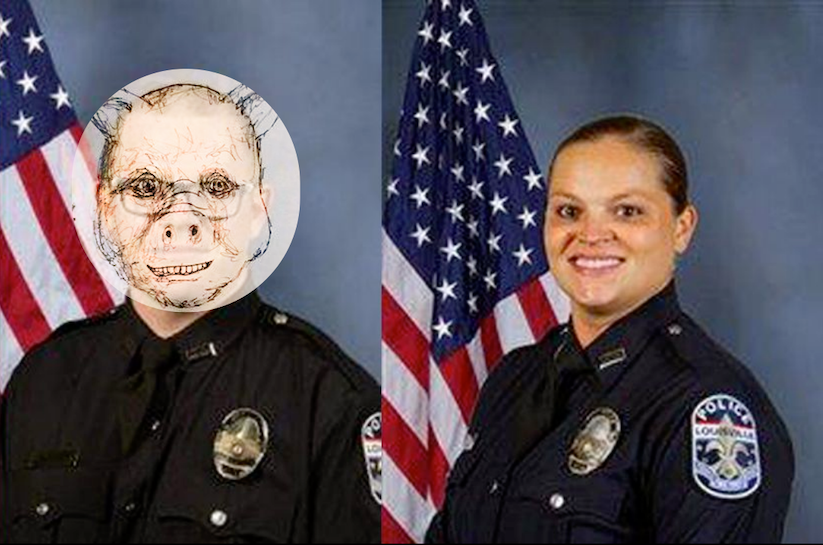
White Judge Sentences White Louisville Cop to Only 2 Years of Probation, $5,000 Fine and No Jail Time For Her Murder of David McAtee

From [HERE] and [HERE] In what he called an “incredibly difficult case,” U.S. District Court Judge Benjamin Beaton sentenced former Louisville Metro Police Department officer Katie Crews to two years of probation in lieu of prison time Monday for Crews’s firing of pepper balls in the moments leading up to the killing of West End barbecue chef David McAtee in June 2020. David McAtee was a Black man.

In addition to probation, Crews will have to complete 200 hours of community service and pay a $5,000 fine. Breaton and Crews are both white.

On June 1, 2020, Crews — who was employed with the Louisville Metro Police Department at the time — responded to the area of YaYa’s BBQ at 26th and Broadway along with other officers and the National Guard to break up a gathering that was violating a city-mandated curfew in wake of Breonna Taylor protests.

Court documents said she used a pepper ball gun, striking Machelle McAtee, David McAtee‘s niece. David McAtee owned the restaurant and died from a single gunshot to the chest. A ballistics report found the bullet fragments had green paint, showing the bullet came from a National Guard member.

Crews admitted to her actions during a plea hearing in Oct. 2022 and pleaded guilty to one misdemeanor count for using unreasonable force.

She’s been sentenced to two years of probation, 200 hours of community service and a $5,000 fine.

She is no longer part of the Louisville Metro Police Department as part of her plea deal, and she has also forfeited her Kentucky law enforcement certification.

“This former Louisville police officer abused her authority as a law enforcement officer and violated the victim’s civil rights,” said Assistant Attorney General Kristen Clarke of the Justice Department’s Civil Rights Division in a statement. “This sentence makes clear that law enforcement officials are not above the law. The Justice Department will continue to prosecute law enforcement officials who violate our federal civil rights laws and defy the public trust by using excessive force.”

Crews was originally charged with a felony and faced as many as 10 years in prison. 

The FBI and the Louisville Metro Police Department’s Public Integrity Unit investigated the case through the Louisville Public Corruption Civil Rights Task Force.

White TX Authorities All Set to Murder Latino Man Convicted for Murder of White Cop. White Judge Denied Request to Delay Execution Despite Claims of False Expert Testimony and a Racist Juror

From [HERE] A Latino man convicted of fatally shooting a Dallas police officer in 2007 is scheduled to die by lethal injection Wednesday in Huntsville.

Wesley Lynn Ruiz, 43, was sentenced to death in July 2008 for the slaying of Mark Nix after a high-speed chase through West Dallas. Nix leapt out of his squad car, ran to the car where Ruiz hid and swung his baton repeatedly at the front passenger window to break it. The officer had just managed a small hole in the window when Ruiz fired one gunshot from inside the vehicle, killing Nix.

Ruiz filed a motion last week to halt the execution, saying prosecutors violated his constitutional rights when they allowed an expert to give false testimony. He also argued some jurors harbored racial bias against him, according to court records. Ruiz is Hispanic. The motion was denied Friday by Judge David C. Godbey in the U.S. Northern District of Texas.

Ruiz recently filed a lawsuit with two other death row inmates that alleged Texas plans to use expired, unsafe drugs for executions in violation of state law. A University of South Carolina pharmacology professor who reviewed state records said some pentobarbital vials were more than 630 days old and others were more than 1,300 days old. Their beyond use date limit is 24 hours when stored at room temperature, and 45 days if such compounded drugs are frozen.

Prison officials denied the allegations and said the state’s pentobarbital supply is safe. A civil court sided with the inmates, but Attorney General Ken Paxton appealed to the Texas Court of Criminal Appeals, saying the case should be decided by a criminal court, not a civil one. The state’s high court agreed.

One of the three inmates, Robert Fratta, was put to death last month. Ruiz’s attorney, Shawn Nolan, did not respond to a request for comment.

Ruiz hasn’t denied that he fired the shot that killed Nix, a 33-year-old senior corporal. But he argued during his capital murder trial he acted in self-defense and he feared for his life because he thought police shot at the car where he hid.

Jurors deliberated about three hours before they rejected Ruiz’s argument. The same jury then sentenced him to die. [MORE]

Liberal Authorities in St. Louis to Pay $5.2M for Silencing the Speech of Protesters. Cops Made Unlawful Arrests of Masses of People Protesting the Police Murder of a Black Man in 2017

From [HERE] The city of St. Louis will pay nearly $5.2 million to settle claims by people who were arrested during a protest in 2017 over the acquittal of a police officer in the shooting death of a Black man, the St. Louis Post-Dispatch reported.
According to a proposed class action settlement filed last week, the city agreed to pay $4.91 million, or about $58,500 per person, to 84 people who were protesting in downtown St. Louis.

The lawsuit claimed the protesters' rights were violated when they were caught in a police “kettle" as officers surrounded and arrested everyone in the area. Three people who filed individual lawsuits settled from $85,000 each.

They were protesting after former St. Louis police officer Jason Stockley was acquitted in the Dec. 20, 2011, shooting death of Anthony Lamar Smith.

Protesters said police surrounded more than 120 people who officers said did not follow dispersal orders. Several people claimed police used excessive force and indiscriminate pepper spray, including against bystanders who were not protesting.

The city denied any wrongdoing as part of last week’s settlement. A city spokesman declined comment Monday.

The settlement proposal must still be approved by a judge.

Previously, the city paid $5 million to Luther Hall, a Black undercover officer who said he was assaulted by fellow policemen who thought he was a protester.

In 2021, the city also agreed to pay $115,000 to a deceased Kansas City filmmaker who said he was beaten and pepper-sprayed during the protests.

Several more Stockley-related cases are still working through the legal system in St. Louis.

Justice Department Finds Louisiana Prisons Hold Inmates Past Their Release Dates

From [HERE] Louisiana routinely incarcerates people past the end of their prison sentences, a constitutional violation the state had been warned of for at least a decade, the Justice Department said Wednesday.
The department, announcing the findings of its multiyear review of the state’s correctional system, said that since 2012, more than one quarter of the people released from Louisiana state custody were held past the end of their sentences. The state was deliberately indifferent to the due-process rights of those individuals, the department said.

“The Constitution guarantees that people incarcerated in jails and prisons may not be detained beyond their release dates, and it is the fundamental duty of the state to ensure that all people in its custody are released on time,” said Assistant Attorney General Kristen Clarke, head of the Justice Department’s civil rights division.

The Louisiana Department of Public Safety and Corrections “has been cooperative for the entire duration of the investigation, and we will continue to work with DOJ throughout this process,” a spokesman for the agency said.

The state’s system for calculating and managing prison sentences is rife with opportunities for error, the Justice Department report found. Physical records crisscross the state at least twice by mail, fax or hand-delivery, sentence calculations are largely done by hand or on 30-year-old software, and no one is tracking the scale of the problem internally, the department said.

Louisiana has repeatedly failed to update its systems and has declined to receive sentencing documents electronically from clerks of court, the report said.

Delays are costly. Federal investigators estimated that detaining inmates past their release dates costs the state $2.5 million annually.

The state has 49 days to implement meaningful changes before the Justice Department may file a lawsuit to force corrective measures, the department said in a letter to Louisiana Gov. John Bel Edwards, a Democrat, though it said it hoped to resolve the matter “through a more cooperative approach.”