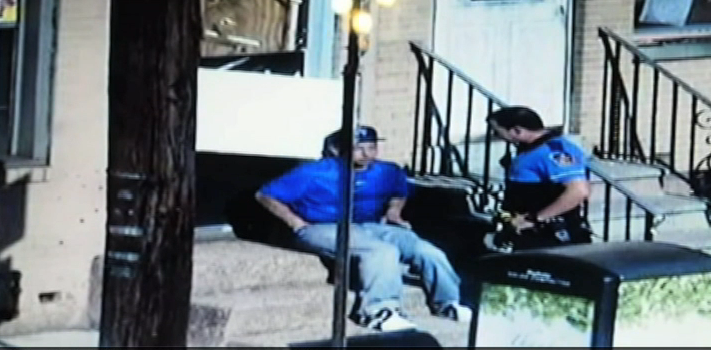
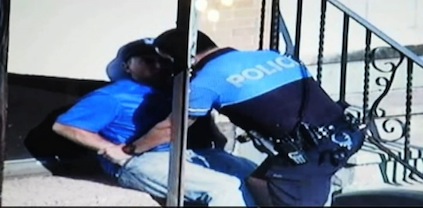
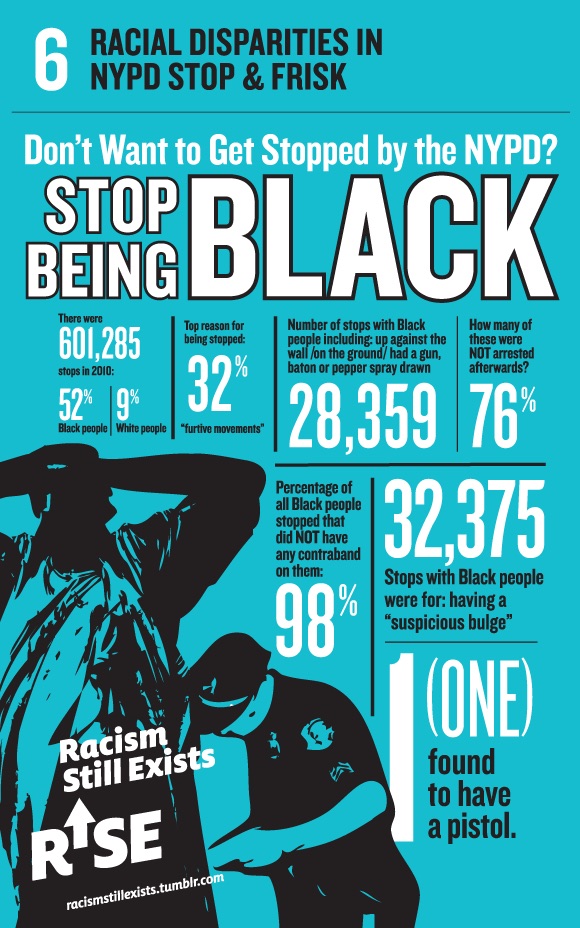
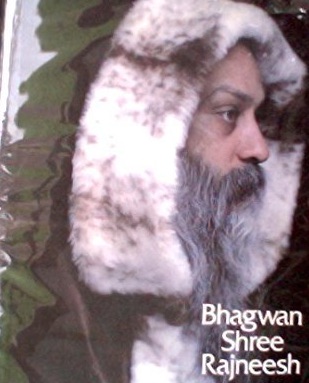
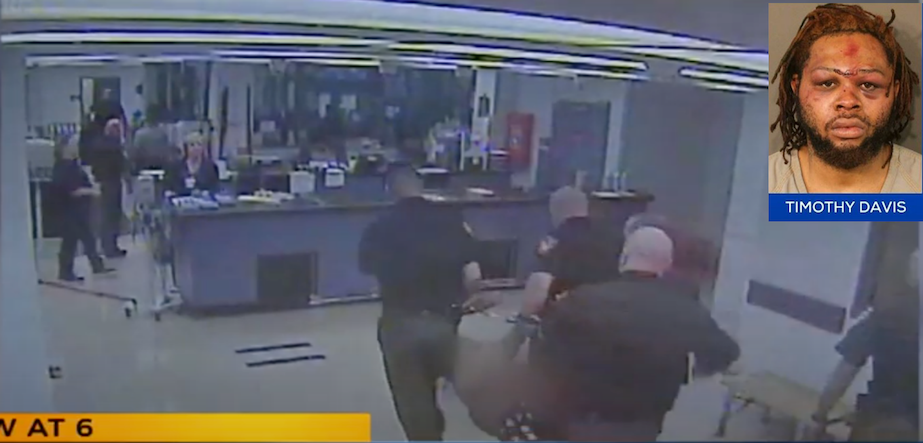
Columbus Settles Case: White Cops Verbally Abused, Punched, Kicked, Tased, Pulled Black Man’s Hair Out and Stripped Him Naked from Waist Down. Police said 'The Force Continuum Allowed Them to Do so'

From [HERE] White Officials in Columbus have reached a $225,000 settlement with a Black man who said white police officers used improper force during a 2017 arrest.

The Columbus City Council voted unanimously Monday to approve the deal with Timothy Davis. As part of the settlement, neither the city nor the officers admitted to any wrongdoing.

Davis had sued the city in federal court, alleging civil rights violations, but a jury rejected his claims in December 2021. A federal judge granted a partial new trial in September, saying a complete jury verdict in favor of the officers was "against the clear weight of the evidence.” The settlement reached in December and approved Monday resolves that matter.

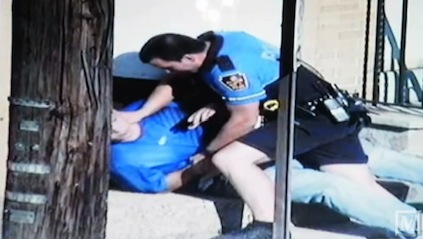
Davis' lawyers had said during the trial that Columbus officers verbally abused, punched, kicked and used a stun gun on him; pulled out his hair; and stripped him nearly naked from the waist down during the September 2017 arrest.

A lawsuit also accused officers of trying to block bystanders from filming the arrest. [MORE]

After the incident Police Spokesman Sgt. Dean Worthington told the NBC, “We are allowed to punch and we are allowed to kick.” “That’s part of our use of force continuum and it all depends on what the behavior of the suspect is at the time.” Also,  a white Columbus police officer was "relieved from duty" after he allegedly made comments threatening to choke a suspect. [MORE]

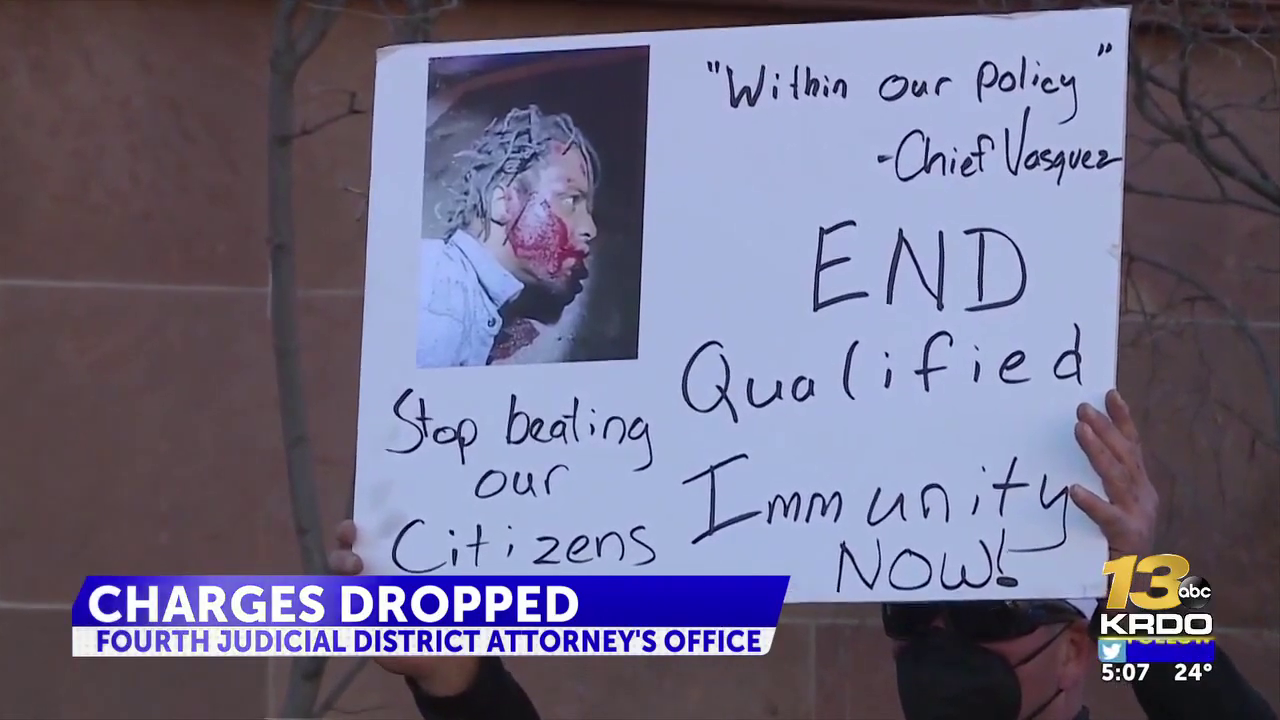
Charges Dropped Against Black Veteran Brutalized by White Cops: Atty says Colorado Springs Cops Unlawfully Stopped Dalvin Gadson, Beat him Mercilessly and then Smiled as he Laid in the Street Bleeding

From [HERE] Tuesday, the 4th Judicial District Attorney's Office dropped charges against a Black veteran who was hospitalized after an arrest by the Colorado Springs Police Department.

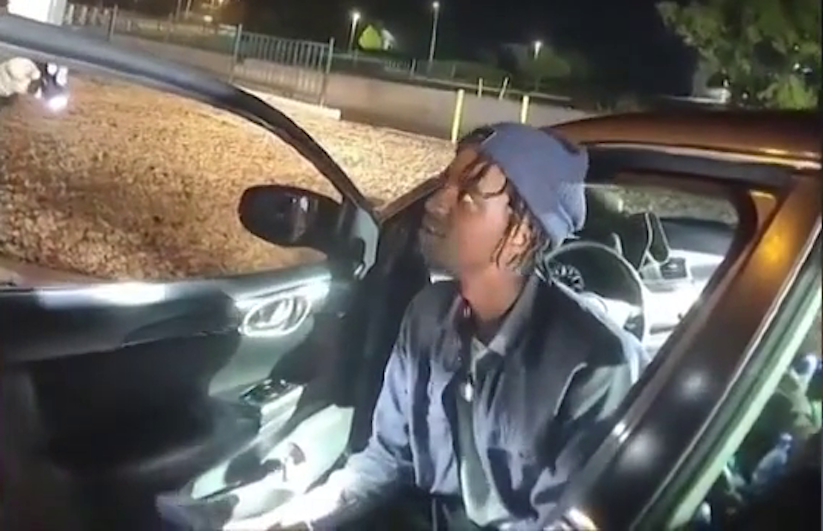
According to the attorneys of 29-year-old Dalvin Gadson, he was pulled over by officers during a traffic stop on Oct. 9, 2022. Gadson was reportedly pulled over for not having license plates on the back of his sedan.

After about 30 seconds of speaking to Gadson, body-worn camera footage showed officers trying to remove him from his car with force.

In the video obtained by 13 Investigates, officers are seen punching and kicking Gadson while he was refusing the exit the car. According to arresting documents, an officer claimed Gadson "kicked Officer Hummel in the chest area several times, while becoming more aggressive."

Gadson was arrested and charged with two counts of Second Degree Assault on a Police Officer, Resisting Arrest, Obstructing a Peace Officer, Driving Under the Influence, and Driving Without License Plates.

Those charges, however, have since been dropped by the DA after Gadson paid a $15 fine for improperly displaying the license plates on his car.

His attorney's provided KRDO with the following statement regarding the dropped charges:

“By dropping the charges, the District Attorney has made it clear that these officers had no reason to detain Mr. Gadson for a DUI investigation much less beat him mercilessly and then smile for the cameras as he lay on the ground bleeding. In other words, this decision means that their actions weren’t just excessive. They were unlawful. 

“Chief Adrian Vasquez said that Officers Colby J. Hickman, Matthew Anderson and Christopher K. Hummel did nothing wrong. But the reality is that they brutally beat Dalvin Gadson for a $15 fine and they should be investigated, arrested and prosecuted. Failing to do so puts lives at risk. Just ask Tyre Nichols’ family.”

Harry M. Daniels LCC

A federal lawsuit has since been filed against the three Colorado Springs police officers.

Lawsuit Claims Baltimore Cops Violently Attacked a Black Family After Claiming to Smell Marijuana from a Parked Car with Its Windows Up

From [HERE] A new federal civil rights lawsuit claims that Baltimore County police officers violently beat five members of the same family after claiming to smell an odor of marijuana coming from a parked vehicle with its windows up.

The family went out to dinner on Jan. 25, 2020, to celebrate their daughter’s upcoming 18th birthday when they were stopped by the officers, according to the complaint.

What followed was a “gross display of excessive force,” said Hannah Ernstberger, the lawyer representing the family. The complaint alleges that the Westminster family’s two parents, their daughter and adult son, and a cousin were all assaulted by the officers and suffered injuries.

All five were also arrested and charged with crimes, but the charges against each were later dropped or placed on the stet docket.

The complaint names nine Baltimore County police officers and refers to extensive body camera footage of the incident.

According to the lawsuit, Shaneris Nalls, now 20, and three female friends were sitting in a parked vehicle at about 7:30 p.m. after having dinner at to celebrate her birthday at City View Bar & Grill on Security Boulevard.

Two police officers drove by and approached the vehicle. One of the officers, Evan Vicarini, claimed that he could smell marijuana coming from the vehicle, though its windows were rolled up and other cars were nearby.

Vicarini would later tell another officer, “‘We drove by and they gave us the (expletive) crim look,’ seemingly admitting that the officers stopped the vehicle and the occupants based on appearance alone,” Ernstberger wrote in the complaint.

Vicarini told Nalls that if she handed over marijuana she would be free to leave without a citation, the complaint claims. Nalls handed over a joint, but Vicarini believed there was more inside the vehicle and ordered the passengers out.

Nalls’s mother, Dayaneris Dmeza, approached to speak with Vicarini. When Dmeza’s husband, Shamdu V. Nalls, and son, Shamdu C. Nalls, also arrived, Vicarini told the other police officers who had responded to “hook ’em” if “they start to get out of hand,” according to the complaint.

Shaneris Nalls and her mother approached their vehicle to warm up. Vicarini told Dmeza to back up, grabbed her hoodie and slammed her into the side of the vehicle, the complaint claims.

Shaneris Nalls tried to step in, but Vicarini threw her to the ground and kneeled on top of her before handcuffing and arresting her.

Another officer, Anthony Vitacco, then slammed Dmeza into a metal fence near the vehicle. Dmeza’s husband, Shamdu V. Nalls, tried to intervene nonviolently, according to the complaint, and was punched multiple times by Vicarini.

Other officers then slammed him to the ground, where he was beaten, kicked and Tased by four officers while his hands were behind his back. One officer kicked him in the face and he lost consciousness before being dragged into a nearby police vehicle and Tased again, the complaint claims.

A cousin, Nehemiah Lembert, tried to check on Dmeza when four officers violently forced him into the metal fence and onto the ground. Multiple officers placed their hands around Lembert’s neck or used their arms in an effort to choke him while his hands were behind his back, according to the complaint.

Finally, the couple’s son, Shamdu C. Nalls, rushed past the officers with his hands raised to check on his mother. As officers grabbed him, he lost his balance and fell into one of the officers. Another Tased Nalls  and continued Tasing him after he had fallen to the ground, the complaint alleges.

The complaint also claims that on multiple occasions, the responding officers put their body weight on top of the members of the family they were arresting, causing difficulty breathing.

All five of the family members were taken to the police precinct and charged with crimes. According to the complaint, Shaneris Nalls was charged with possession of marijuana and her brother and cousin were charged with assault on a law enforcement officer and resisting arrest. The charges were ultimately dismissed, Ernstberger wrote.

Dmeza was charged with failure to obey a lawful order and disorderly conduct and her husband, Shamdu V. Nalls, was charged with assault on a law enforcement officer and resisting arrest. Their charges were placed on the stet docket, court records show.

The complaint claims that body-worn camera footage also captured officers Vitacco and Vicarini conspiring to create a “fabricated story” about the arrests in their statement of probable cause. One officer covered Vitacco’s body camera in an effort to muffle their conversation, the complaint alleges.

All of the family members were injured during the arrests. Shamdu C. Nalls and Dmeza suffered concussions, according to the complaint, and Shamdu V. Nalls suffered a broken bone near his eye.

Ernstberger said the family believes the incident was at least partially motivated by race. Shamdu V. Nalls is African American and Dmeza is Hispanic.

The family continues to struggle with issues related to post-traumatic stress disorder, Ernstberger said.

The family filed complaints with the Baltimore County Police Department a few days after the incident. In December 2021, they received a letter that said “the officer was in violation of departmental rules and regulations” and that “corrective administrative action will be initiated,” but provided no other information. A copy of the letter is included with their lawsuit.

The suit brings claims of excessive force, false arrest and malicious prosecution. It also raises a Monell claim against Baltimore County for failing to train and supervise the officers.

Lawmakers this year are considering legislation that would prohibit police officers from citing the odor of marijuana as the sole basis for reasonable suspicion or probable cause, with the exception of investigations for impaired driving. Marijuana will become legal in Maryland on July 1.

Plea Deal Offered to Black Maryland Cop who Murdered Willam Green. Fatally Shot Handcuffed Black Man 6 Times

From [HERE] Prosecutors have offered a plea deal to a Maryland police officer who fatally shot a handcuffed man six times, an arrangement that could reduce the officer’s charges from second-degree murder to voluntary manslaughter and dramatically cut back a potential punishment, according to the victim’s family.

The proposal to Prince George’s County Cpl. Michael A. Owen Jr. — who had been the subject of multiple use-of-force investigations prior to the killing — was made days before he was set to go to trial in the 2020 killing of William Green. The potential plea agreement, which county prosecutors would not comment on and is not official unless accepted by a judge, has angered Green’s family and comes as the nation is roiling from the police killing of a Black man in Memphis.

Green’s family, who met with prosecutors on the anniversary of the date Owen was first charged to discuss the plea offer, said they are concerned that the lesser charge could make the police officer eligible for parole within a few years.

“We wanted to go to court, and we still want to go to court,” said Brenda Green, William Green’s mother. “How could they do that when he actually killed my son? How could they do that?”

“I want the people in Memphis to know that just because they are arrested, that doesn’t mean they will pay for their crime,” Owens said.

On Jan. 27, 2020, police received a 911 call about a man driving a Buick that had struck several vehicles. Authorities eventually found the car in Temple Hills. Green was asleep inside.

Owen removed Green from the car, cuffed his hands behind his back and placed him in the front seat of a Prince George’s police cruiser to wait for a drug recognition expert, according to police records and interviews. A few minutes later, authorities said, Owen shot at Green seven times, with six shots hitting the man. The wounds, Green’s family said, were on both sides of his torso.

The day after the shooting, Owen was charged in Green’s death — the first county officer charged with murder in connection with actions taken while on duty, officials said at the time. Nine months later, County Executive Angela D. Alsobrooks (D) would join Green’s family and their civil attorneys, Billy Murphy and Malcolm Ruff, for a news conference to announce a $20 million settlement in their case against the county — at the time one of the largest police misconduct payouts in the nation.

“Police are given by this community an awesome and tremendously difficult responsibility of protecting life,” Alsobrooks said at the September 2020 news conference. “They are also likewise given an authority that is not shared by anyone else in this community, and that is the authority to take life. . . . When that trust is abused, it is necessary to take swift and decisive action.”

Owen was not wearing a police-issued body camera at the time of the shooting, authorities said. Afterward, Owen said that Green had reached for the officer’s firearm and that he feared for his life. Prosecutors said then that there was no evidence Green had posed a serious threat.

But during their meeting with the state’s attorney’s office Saturday — in which top prosecutor Aisha Braveboy was not present — Green’s family said, they were told that the decision to reduce the charges had come after the discovery of new evidence, including Owen’s testimony.

Mooney, Owen’s attorney, has said in the past that authorities pressed the second-degree murder charge after a “rushed” investigation.

Green’s family said they felt hurt and frustrated that the decision was made without their consultation, and baffled that Braveboy — who campaigned on police accountability and whose office has tried nearly a dozen police misconduct cases during her tenure — would forgo a trial in one of the most high-profile police shooting cases in the county’s history.

“We expected him to come up with a defense,” said Owens, Green’s cousin. “We didn’t expect them to believe his defense so much that they are going to lower the charges.”

In a 2020 investigation into Owen’s history with the department, where he had been an officer for 10 years, The Washington Post found that the department had missed opportunities to steer a struggling and errant officer back on course long before Green’s killing.

Owen had triggered the agency’s early-warning system by using force twice in quick succession the previous summer. It took months for the system, which relied on information being compiled by hand and entered into a database, to create the flag, police officials said. Owen’s supervisors weren’t formally notified until the month he killed Green, and they had not taken action.

In two other 2019 incidents, videos showed Owen with his hands on the necks of people he arrested. One of those incidents came less than a month before Green’s death.

Other Prince George’s residents who encountered Owen over the years also had accused him of brutality and a lack of professionalism. Several who were arrested by Owen, and who were accused of aggressive behavior toward him, had charges dropped because the officer did not show up for court proceedings — another sign of trouble.

Experts who spoke to The Post said the sluggish pace of the early-warning system jeopardized officers as well as civilians like Green. Former Prince George’s County police chief Hank Stawinski — who ordered Owen arrested after the shooting — told The Post that he understood that the system was too slow and had been working to upgrade it.

White Judge Sentences White Louisville Cop to Only 2 Years of Probation, $5,000 Fine and No Jail Time For Her Murder of David McAtee

From [HERE] and [HERE] In what he called an “incredibly difficult case,” U.S. District Court Judge Benjamin Beaton sentenced former Louisville Metro Police Department officer Katie Crews to two years of probation in lieu of prison time Monday for Crews’s firing of pepper balls in the moments leading up to the killing of West End barbecue chef David McAtee in June 2020. David McAtee was a Black man.

In addition to probation, Crews will have to complete 200 hours of community service and pay a $5,000 fine. Breaton and Crews are both white.

On June 1, 2020, Crews — who was employed with the Louisville Metro Police Department at the time — responded to the area of YaYa’s BBQ at 26th and Broadway along with other officers and the National Guard to break up a gathering that was violating a city-mandated curfew in wake of Breonna Taylor protests.

Court documents said she used a pepper ball gun, striking Machelle McAtee, David McAtee‘s niece. David McAtee owned the restaurant and died from a single gunshot to the chest. A ballistics report found the bullet fragments had green paint, showing the bullet came from a National Guard member.

Crews admitted to her actions during a plea hearing in Oct. 2022 and pleaded guilty to one misdemeanor count for using unreasonable force.

She’s been sentenced to two years of probation, 200 hours of community service and a $5,000 fine.

She is no longer part of the Louisville Metro Police Department as part of her plea deal, and she has also forfeited her Kentucky law enforcement certification.

“This former Louisville police officer abused her authority as a law enforcement officer and violated the victim’s civil rights,” said Assistant Attorney General Kristen Clarke of the Justice Department’s Civil Rights Division in a statement. “This sentence makes clear that law enforcement officials are not above the law. The Justice Department will continue to prosecute law enforcement officials who violate our federal civil rights laws and defy the public trust by using excessive force.”

Crews was originally charged with a felony and faced as many as 10 years in prison. 

The FBI and the Louisville Metro Police Department’s Public Integrity Unit investigated the case through the Louisville Public Corruption Civil Rights Task Force.

White TX Authorities All Set to Murder Latino Man Convicted for Murder of White Cop. White Judge Denied Request to Delay Execution Despite Claims of False Expert Testimony and a Racist Juror

From [HERE] A Latino man convicted of fatally shooting a Dallas police officer in 2007 is scheduled to die by lethal injection Wednesday in Huntsville.

Wesley Lynn Ruiz, 43, was sentenced to death in July 2008 for the slaying of Mark Nix after a high-speed chase through West Dallas. Nix leapt out of his squad car, ran to the car where Ruiz hid and swung his baton repeatedly at the front passenger window to break it. The officer had just managed a small hole in the window when Ruiz fired one gunshot from inside the vehicle, killing Nix.

Ruiz filed a motion last week to halt the execution, saying prosecutors violated his constitutional rights when they allowed an expert to give false testimony. He also argued some jurors harbored racial bias against him, according to court records. Ruiz is Hispanic. The motion was denied Friday by Judge David C. Godbey in the U.S. Northern District of Texas.

Ruiz recently filed a lawsuit with two other death row inmates that alleged Texas plans to use expired, unsafe drugs for executions in violation of state law. A University of South Carolina pharmacology professor who reviewed state records said some pentobarbital vials were more than 630 days old and others were more than 1,300 days old. Their beyond use date limit is 24 hours when stored at room temperature, and 45 days if such compounded drugs are frozen.

Prison officials denied the allegations and said the state’s pentobarbital supply is safe. A civil court sided with the inmates, but Attorney General Ken Paxton appealed to the Texas Court of Criminal Appeals, saying the case should be decided by a criminal court, not a civil one. The state’s high court agreed.

One of the three inmates, Robert Fratta, was put to death last month. Ruiz’s attorney, Shawn Nolan, did not respond to a request for comment.

Ruiz hasn’t denied that he fired the shot that killed Nix, a 33-year-old senior corporal. But he argued during his capital murder trial he acted in self-defense and he feared for his life because he thought police shot at the car where he hid.

Jurors deliberated about three hours before they rejected Ruiz’s argument. The same jury then sentenced him to die. [MORE]

Liberal Authorities in St. Louis to Pay $5.2M for Silencing the Speech of Protesters. Cops Made Unlawful Arrests of Masses of People Protesting the Police Murder of a Black Man in 2017

From [HERE] The city of St. Louis will pay nearly $5.2 million to settle claims by people who were arrested during a protest in 2017 over the acquittal of a police officer in the shooting death of a Black man, the St. Louis Post-Dispatch reported.

According to a proposed class action settlement filed last week, the city agreed to pay $4.91 million, or about $58,500 per person, to 84 people who were protesting in downtown St. Louis.

The lawsuit claimed the protesters' rights were violated when they were caught in a police “kettle" as officers surrounded and arrested everyone in the area. Three people who filed individual lawsuits settled from $85,000 each.

They were protesting after former St. Louis police officer Jason Stockley was acquitted in the Dec. 20, 2011, shooting death of Anthony Lamar Smith.

Protesters said police surrounded more than 120 people who officers said did not follow dispersal orders. Several people claimed police used excessive force and indiscriminate pepper spray, including against bystanders who were not protesting.

The city denied any wrongdoing as part of last week’s settlement. A city spokesman declined comment Monday.

The settlement proposal must still be approved by a judge.

Previously, the city paid $5 million to Luther Hall, a Black undercover officer who said he was assaulted by fellow policemen who thought he was a protester.

In 2021, the city also agreed to pay $115,000 to a deceased Kansas City filmmaker who said he was beaten and pepper-sprayed during the protests.

Several more Stockley-related cases are still working through the legal system in St. Louis.

Justice Department Finds Louisiana Prisons Hold Inmates Past Their Release Dates

From [HERE] Louisiana routinely incarcerates people past the end of their prison sentences, a constitutional violation the state had been warned of for at least a decade, the Justice Department said Wednesday.

The department, announcing the findings of its multiyear review of the state’s correctional system, said that since 2012, more than one quarter of the people released from Louisiana state custody were held past the end of their sentences. The state was deliberately indifferent to the due-process rights of those individuals, the department said.

“The Constitution guarantees that people incarcerated in jails and prisons may not be detained beyond their release dates, and it is the fundamental duty of the state to ensure that all people in its custody are released on time,” said Assistant Attorney General Kristen Clarke, head of the Justice Department’s civil rights division.

The Louisiana Department of Public Safety and Corrections “has been cooperative for the entire duration of the investigation, and we will continue to work with DOJ throughout this process,” a spokesman for the agency said.

The state’s system for calculating and managing prison sentences is rife with opportunities for error, the Justice Department report found. Physical records crisscross the state at least twice by mail, fax or hand-delivery, sentence calculations are largely done by hand or on 30-year-old software, and no one is tracking the scale of the problem internally, the department said.

Louisiana has repeatedly failed to update its systems and has declined to receive sentencing documents electronically from clerks of court, the report said.

Delays are costly. Federal investigators estimated that detaining inmates past their release dates costs the state $2.5 million annually.

The state has 49 days to implement meaningful changes before the Justice Department may file a lawsuit to force corrective measures, the department said in a letter to Louisiana Gov. John Bel Edwards, a Democrat, though it said it hoped to resolve the matter “through a more cooperative approach.”

Racist Suspect Attorney General Attempts to Block Alabama Prison Inmates Set to be Released

From [HERE] On Tuesday, January 31, 412 inmates are expected to be released from correctional facilities across the state, according to court documents obtained by News 19.

On Monday, January 30, Alabama Attorney General Steve Marshall filed a lawsuit in order to prevent the early release. The suit states the delay of the early release would only be temporary until ADOC Commissioner John Hamm could give notice to the inmates’ victims.

“Every violent crime leaves behind a victim or a victim’s family,” read the complaint. “That is why state and federal laws have long recognized the rights of crime victims or their families to be notified by the relevant government agency when their offender is up for parole or is soon to be released from prison.”

Read the complaint in full:

The release of 2.07% of the inmate population comes from a bill passed by the state legislature in 2021, confronting the issue of prisons being overcrowded and understaffed.

Inmates would be released under “mandatory supervision,” meaning each will be fitted with an electronic ankle monitor at the time of their release.

While sex offenders whose victims were children weren’t eligible for release, the “supervised” period for inmates who will be released is as follows:

  • 3-5 months for sentences of five years or less

  • 6-9 months for sentences of five to 10 years

  • 10-12 months for sentences of more than 10 years

A notice from ADOC and the Alabama Bureau of Pardons and Paroles (ABPP) was recently distributed to law enforcement agencies across the state to make them aware of the release, which comes as the Alabama prison system is being sued by the Department of Justice (DOJ) over its prison conditions.

In that lawsuit, which stemmed from a 2016 investigation, the DOJ claimed ADOC failed to protect its prisoners from sexual abuse and constant violence, along with excessive force by staff and failure to provide safe conditions of confinement.

Alabama Attorney General Steve Marshall was an avid opponent of the bill passed in 2021, saying, “This bill mandates the early release of dangerous individuals with only the possibility of electronic monitoring and without the assurance of other resources necessary to safely supervise those initially released.”

Alabama Parole Board Denies Medical Parole for Dying 71-Year-Old Black Woman

from [HERE] The Alabama Bureau of Pardons and Paroles last week denied medical parole to Leola Harris, 71, who uses a wheelchair, relies on dialysis, and is suffering from end stage renal disease, among other life-threatening medical conditions.

The board allotted six minutes to considering whether Ms. Harris had been adequately punished for the 2001 killing of Lennell Norris, an unhoused man she had befriended, when he entered her home, and whether Ms. Harris, who had no prior criminal history, could be released with no threat to public safety after 19 years in prison as a model prisoner.

The board did not allow Ms. Harris to attend the hearing or even see it online. Felicia Hall-Grace, a highly experienced registered nurse and case manager, testified that Ms. Harris should be released to a nursing home due to her severe medical conditions, multiple disabilities, and lengthy stays in the prison infirmary.

The Alabama Department of Corrections certified to the parole board that Ms. Harris met the criteria for medical parole, and there was no victim opposition.

Redemption Earned, a nonprofit led by former Alabama Supreme Court Chief Justice Sue Bell Cobb, arranged a nursing home placement for Ms. Harris and two of its attorneys advocated for her release.

But the board denied parole and set off her next hearing for five years.

“Any reasonable person would conclude that 19 years is a sufficient sentence for a 71-year-old woman who is dying in prison,” Justice Cobb wrote. “No one would say that a dying woman, who is confined to a wheelchair, who cannot perform basic personal body functions unassisted, is a danger to the public.” She continued:

This Parole Board not only failed Ms. Leola Harris, but they also failed the taxpayers of the State of Alabama. This denial of medical parole to a wheelchair- bound, weak, and dying woman is an injustice that the people of Alabama ought not accept or be forced to pay for.

The board heard 43 other cases last Tuesday and granted parole to only one person, al.com columnist John Archibald wrote.

Even though overcrowding and understaffing in the state’s prisons has led to conditions so dangerous they violate basic constitutional rights and have prompted a federal lawsuit, the parole board’s grant rates have fallen from a little over half in 2017 to 10% last year, Mr. Archibald wrote.

Alabama’s parole board members are appointed by the governor. Led by former prosecutor Leigh Gwathney, the board has granted parole to just seven out of 106 people over age 60 this fiscal year—and none of the 21 people over age 70 have been granted parole.

The refusal to grant parole where there is clearly no threat to public safety flies in the face of parole guidelines and the recommendations of the board’s own staff, Mr. Archibald reports, observing, “It’s like they want to show they are tough so badly that they hurt us all.”

Prison Medical Care is Not Humane, Especially for Black People

From [HERE] I am located at MCF Oak Park Heights in the Transitional Care Unit. I am wheelchair-bound and have a rare medical condition called cauda equina, which causes me to have chronic nerve pain and spazzing in my lower back spinal cord area and right leg.

I have experienced excessive force due to my medical condition. I was left sleeping in my wheelchair for 39 days because I couldn’t physically transfer myself due to my medical issues. While left in my wheelchair for 39 days, my medical conditions got worse. Both of my feet and legs swelled up turning green and reddish. 

Also, my hands started curling up and I couldn’t really move them. It was hard to eat or even hold my toothbrush or anything really. I was seen by two different doctors who didn’t even acknowledge my worsening and new medical conditions. They failed to put in their reports about my new and worsening conditions, but instead put in their report that I was fine and looked good. 

I didn’t get any help until a physical therapist saw me and I showed him my condition and that I had been sleeping in my wheelchair. He called down to the central office and moved me a few days later to the medical unit. After an hour of being there, I was sent to Regions because of how bad of shape I was in. 

I stayed at Regions for 10 days undergoing tests. When the doctors finally came to the conclusion that my new medical condition was from being left in my wheelchair for 39 days, the Department of Corrections pulled me out of the hospital.

I would like to see the officers and nurses and doctors held accountable for all the pain and suffering they cause.

I have been in TCU for almost two months now and noticed that they try to move African Americans out quickly no matter their medical condition. I would like to see the Department of Corrections give African Americans equal care and everyone the basic care they need as human beings. 

If the prisons can’t treat people like human beings and give them basic medical care, maybe it’s time to rethink prisons. 

Stephan Holmes is in MCF Oak Park Heights in the Transitional Care Unit.

'Stomach-Turning’ Abuse of Children was Reported at Adair Regional Juvenile Detention Center (aka Prison for Kids) in KY Months before Riot

From [HERE] In the months leading up to the riot and sexual assault of a teenage girl at the Adair Regional Juvenile Detention Center last November, employees warned that youths were being mistreated in various ways, often isolated in cells not as punishment but because that made it easier for the thinly stretched staff to keep control.

A grim picture emerges of life inside the facility run by the Kentucky Department of Juvenile Justice in Adair County based on interviews with four former employees and internal documents obtained by the Herald-Leader.

“I have witnessed abuse and neglect on a stomach-turning scale,” nurse Joanne Alvarado wrote in her Aug. 1 letter resigning from the facility.

“The treatment of the youths is absolutely terrible,” wrote another nurse, Nina Burton, in her Oct. 6 resignation letter. “They are confined to their room 24 hours a day. They do not even get a shower or recreation daily. They are even served meals in their cells — mind you, the same cells that they defecate and urinate in. It’s absolutely a disgrace.”

The facility’s superintendent, Tonya Burton, vented her own frustration about leaving youths locked in isolation for extended periods, including girls who were pregnant or mentally ill. But Burton said she saw no alternative given a constant shortage of the employees who would be necessary to monitor youths gathering in common areas.

“I am doing the best I can right now,” Tonya Burton wrote in an Oct. 4 text to the medical staff in response to protests over the isolation of youths. “I am working insane hours. I am napping a few hours here and there and working all shifts. I want these kids moving.”

Nobody should have been surprised when violence exploded at the Adair facility on Nov. 11, requiring Kentucky State Police to enter and restore order, according to former medical and security employees.

Police said in a statement that the youths “assaulted a staff member, confiscated the staff member’s keys and released other juveniles from their cells.” During the chaos, a teen girl was sexually assaulted, police said.

The former employees said the violent outburst, while horrible, was sadly predictable.

“When you’re in a cell for three or four days at a time, are you going to want to go back in once you finally get out? No, you are not,” said David Hare, a youth worker supervisor at the Adair facility until he retired in November, in an interview with the Herald-Leader.

“It’s mental and psychological abuse that goes on there,” Hare said. “Somebody needs to go in there and take over.”

Faced with criticism about the juvenile detention centers, Gov. Andy Beshear has announced a number of changes in recent weeks. Among them, Beshear ordered that youths be housed separately by gender and severity of offense. He also approved higher starting salaries for youth workers, taking them to $50,000 a year, as well as pepper spray and tasers as “defensive equipment” for youth workers to use if necessary inside the facilities.

However, Hare and the other former DJJ employees who spoke to the newspaper said they each separately left the Adair facility last fall in disgust because they were so unhappy with how youths are treated there.

“I said, ‘It’s not a matter of if but when this ends badly.’ And that’s what happened,” Alvarado said.

“Anyone could have seen that coming,” Alvarado said. “The way we treated those kids? Nobody in charge cared. And if you messed up there, I swear, you got a promotion.”

Several former employees who spoke to the Herald-Leader said they also have been interviewed by the FBI in recent months about conditions inside the Adair facility. A spokesman for the FBI office in Louisville declined to comment.

A longtime Kentucky children’s right’s attorney, Rebecca Ballard DiLoreto, said she recently represented a client held at the Adair facility. She vouched for the former employees’ accounts of youths stuck in cells indefinitely.

“There are horrible conditions in that facility,” DiLoreto said. “There was no freedom to move around. They just keep them locked down. There was no mental health services provided to him — and my client had severe mental illness. No showers, no recreation, horrible food.”

“If DJJ had been transparent about the conditions inside this place before the riot happened last November, then maybe they could have gotten more funds at the time to improve things,” DiLoreto said. “Maybe they could have even refused to take more kids until they got the help they needed. They could have handled this a lot better.”

‘THEY BROKE HER’

According to various accounts from the former employees, youths’ meal trays were withheld as punishment if a single youth misbehaved; prescription medicine was withheld despite doctors’ orders; youths were hit in the face and head during restraints by staff; and incident reports were altered to conceal incriminating facts.

Last June, a grand jury indicted a woman who worked at the facility, Brooke Belt, on felony charges related to her allegedly bringing in drugs to distribute to one or more youths, according to court records. At least one youth tested positive for drugs in relation to that case. Belt’s trial is scheduled in Adair Circuit Court for Feb. 23.

But of all the deficiencies, the former employees told the Herald-Leader they were particularly shocked by the deteriorating mental health of a teenage girl — a ward of the state — who was locked in isolation last summer with little official effort made to assist her.

The girl ended up naked, covered in her own filth and nearly catatonic, according to the employees and documents obtained by the Herald-Leader from some of the employees and through the Kentucky Open Records Act.

“They broke her. It was Adair County that broke her,” said Beth Johnson, a former nurse at the Adair facility. “That whole wing smelled so bad, nobody could go down that wing.”

“We tried to get her help, but the excuse was always, ‘We can’t do anything with her because she’s naked.’ Well, she’s naked because she’s going through a psychotic break,” said Nina Burton. “She needs to be in a hospital or some sort of psychiatric facility, not a jail.”

A youth worker supervisor was put on investigative leave and later disciplined for inappropriate or excessive force after he forced the girl’s hands back through the flap of her cell door on July 1, according to state records. Kentucky State Police referred an allegation of official misconduct to prosecutors, where it is pending, police say.

The girl was reaching out the door flap and saying, “Please help me, please help me” when her arms were painfully twisted and forced back into her cell, witnesses said. Security staff then angrily ordered the flap kept shut, they said.

The girl was manic that day, hearing voices inside her head, witnesses said.

“If this child was with parents and found in this condition, she would be removed from their custody and the parents would be jailed!!!! This is unethical and at this point criminal!!!! Short staffing does not excuse abuse,” nurse practitioner Angela Jessie wrote in an Aug. 1 email to six of her medical staff colleagues at DJJ.

“I will be filing a grievance tomorrow in hopes that the commissioner and/or executive staff will intervene,” DJJ nurse administrator Deborah Curry replied to the same group of people in her own email.

“This should not be tolerated in any DJJ facility,” Curry wrote. “It’s the worst I have ever experienced and we have all experienced it some time or another. And they’re basically bullying this youth.”

“I will be glad when someone watches these videos, especially before they come up missing. They’re supposed to be archived but I was told they probably won’t archive these,” Curry wrote.

FRANKFORT OFFICIALS KNEW

The former employees said the Department of Juvenile Justice did not acknowledge their concerns.

“We screamed at the top of our lungs, the whole time we were there, that things were going wrong,” said former nurse Beth Johnson. “But all the way to the top, you hear the supervisors say, ‘Well, I didn’t hear it this way, that’s not what was told to me.’”

In fact, the problems at the Adair facility were no secret to state officials in Frankfort.

As the Herald-Leader previously has reported, like other DJJ facility directors, superintendent Tonya Burton sent monthly reports to DJJ Commissioner Vicki Reed throughout 2022 to update her on lack of staffing, security lapses and poor morale among youths and employees.

The Adair facility — both a detention center and a development center, meant to hold youths before and after a conviction — had an average daily population of 35 youths last summer with at least a dozen job vacancies among its youth workers, according to the reports.

Sometimes only three staff were on the floor to watch the youths when there should have been twice that number, employees said.

In its monthly reports, the Adair facility confirmed that it commonly placed youths on “lockdown” due to inadequate staffing, although it tried to put items such as DVD players in their cells to help them occupy their time.

Regarding the girl locked alone in a cell with failing mental health, Tonya Burton told Reed in July’s report: “She stopped taking a shower, cleaning her room and wearing clothes. She stripped down naked and refused to shower or clean her room. This made the room a mess and have an odor.”

The disturbed girl’s plight “took a toll on staff,” the superintendent told the commissioner. “It has been a tough month for us in dealing with our residential female.” [MORE]
Yale Study Shows Black Boys are More Likely to be Disciplined than their White Classmates

From [HERE] A Yale study shows Black boys are more likely to be punished than their white classmates for the same behavior.

WSHU’s Molly Ingram spoke with the study’s author Jayanti Owens, assistant professor of organizational behavior at the Yale School of Management, about her research that shows Black boys are more likely to be punished for acting out at school compared to their white classmates.

WSHU: Your study found that Black boys are more likely to get in trouble than their white peers for the same behavior. Tell me about your research process. How did you find that out?

JO: So the way that I went about doing the study was to think about how it is that teachers perceive routine misbehavior. So nothing really extreme, but things like defiance or non compliance, disrespect, things that fall into that sort of category of routine behavioral infractions. And we used videos to capture students of different racial ethnic backgrounds, committing the same routine misbehavior in classroom settings. And so we showed these video clips of students and they were situated in normal classrooms, so they had about 25 peers around them. And they were all taking class tests at the time. We captured these video clips, and we showed them to teachers around the country. And we basically asked the teachers who were randomly assigned to see a video of either a Black, Latino or white student, to describe in text what they saw. And we asked them to tell us whether they would refer the student to the principal's office or not, and to tell us a bit about themselves and their schools they actually teach in.

In doing so, we found there was the sort of double jeopardy faced by Black and Latino boys. And in particular for Black boys. What we found is that Black boys are perceived as being more blameworthy for identical misbehavior as white boys. And they're more likely to be referred to the principal's office, even if they have that same perception of blameworthiness. So for Black and white boys that are also perceived as being equally blameworthy, Black boys are still more likely to be sent to the principal's office.

Then we found this other component, which is the sort of double jeopardy part, which is that even for Black and Latino students in schools that are sort of composed with larger proportions of Black and minority classmates, that students of all racial ethnic backgrounds are perceived as being more blameworthy than their counterparts who attend predominantly white schools. So essentially, there's something about the climate of schools that are attended by Black and Latino boys, that leads to students of all racial ethnic backgrounds in those contexts being perceived as more blameworthy than their counterparts in white schools.

WSHU: In your study, you provided some possible explanations. What were they?

JO: Yeah, so one of the biggest explanations is that of racial and ethnic bias, essentially, on the part of teachers. What we're doing is showing the exact same behavior and the exact same classroom context and finding that Black boys are perceived as being more blameworthy for that exact same behavior.

So one possible explanation is that there is racial bias on the part of teachers. We also find that because Black boys are more likely to be referred to the principal's office, even when they are perceived as being similarly blameworthy that there might also be other mechanisms at play. So it could be things like differences in teachers expectations about the likelihood that parents will intervene in the classroom. So if the student is referred to the principal's office, and they’re Black, teachers might perceive that parents are less likely to sort of step in and say, 'hey, what's going on?' than if the boy is white.

There could also be other things going on as in, teachers might anticipate less pushback from administrators when they refer a Black student as opposed to a white student. So it may be that they're more likely to refer the Black student because they believe that they're not going to get sort of called out in the same way as if the student was white.

There could be other mechanisms of bias that don't operate specifically through blameworthiness perception, but other forms of bias could be that there's just a greater sort of expectation of misbehavior on the part of teachers when it's a Black boy as opposed to a white boy.

WSHU: What kind of impact do you find that this has on learning?

JO: So in this particular study, I don't look at the impact on learning directly. But in other work that I've done, and in other work that's been done by other scholars in this area, there's a very clear finding that suspension and other forms of discipline are linked to lower achievement.

One of the direct mechanisms is simply less time in the classroom learning environments. So most often when students are referred to the principal's office, they're taken out of that classroom learning environment, either for a relatively short period, while they're in the principal's office, waiting to speak to the principal or one of the staff members. But if they get a suspension, or an expulsion even more so, they're removed from the classroom learning environment for many days at a time. This has direct effects on lowered achievement simply because of less instructional time.

WSHU: How do you think that schools should be addressing this issue? [MORE]

A Brookings Study says Blacks Make Up Only 15% of All Students in the Public Fool System but Account for 38% of Disciplinary Suspensions and are Punished More Severely than Similarly Situated Whites

From [HERE] Racial disciplinary disproportionalities are a stubborn feature of U.S. public school systems. Based on the 2017-18 Civil Rights Data Collection, Black students comprised 15% of public school enrollment but accounted for 38% of total suspensions.

These discrepancies are particularly troubling for two broad reasons. First, suspensions are associated with a host of negative impacts on academic achievement, school engagement, and even outcomes in young adulthood (e.g., exposure to the criminal justice system, SNAP receipt, and college completion). Second, such disparities might reflect systematic biases in how schools handle student discipline and not underlying racial differences in student behavior.

Closing racial gaps in suspensions and reducing the use of suspensions in general thus has been a priority in U.S. education policymaking. The good news is that there has been much progress in recent years. The out-of-school suspension rate dropped from 6.9% of students in 2010 to 3.8% in 2018. Many states and districts have gone through discipline reforms that limit the use of suspensions for minor infractions and adopt nonpunitive strategies such as restorative justice. For example, California banned suspensions and expulsions of students in grades k–3 for minor misbehaviors, and Massachusetts requires schools to first use alternative forms of discipline, such as mediation and behavioral intervention, before considering out-of-school suspension as a last resort.

Despite these positive changes, however, racial disproportionality in school discipline persists. Why is it so hard to close such gaps? What are we missing? A close look at research articles and policy debates on this topic suggests that researchers and policymakers have been almost exclusively focusing on the end result of discipline—suspensions. In contrast, little attention has been given to the referral and reporting process that precedes the decision of whether, and for how long, to suspend a student. Educators have a great deal of autonomy about whether and how to respond to undesired student behaviors. It is these “moment-by-moment” interactions that ultimately lead to the observed racial disparities in school discipline. Thus, a deeper understanding of this referral-to-suspension process is a prerequisite for the design of programs and policies to reduce disciplinary rates and disparities.

NEW RESEARCH FROM CALIFORNIA

In a trio of studies, my coauthors and I investigate how the referring process and actions of educators expand racial disparities in school discipline. To do this, we use four years of administrative data (2016-17 to 2019-20) from a large and demographically diverse urban school district in California. What’s unique about these data is that they contain detailed information on all disciplinary referrals, regardless of whether they ultimately led to a suspension, as well as the individual who made and received the referral, the reason for the referral (i.e., type of incident), and the exact time, date, and location of the incident. These rich details allow us to depict a fuller picture of how racial disparities in school discipline emerge.

Finding #1: Both racial gaps in disciplinary referrals and systematic biases in the adjudication processes contribute to racial disparities in suspensions

In the first study of this series, we find that Black students are more than twice as likely to have received at least one disciplinary referral as their white peers in the same school. Thus, part of the racial gap in suspensions is due to underlying differences in the frequency of disciplinary referrals. However, the racial gap in referral propensities is not the sole reason for the racial gap in suspensions. We also find that the conversion rate of referrals into suspensions across all types of referrals is significantly higher for Black than for white students even after controlling for a battery of student characteristics, including their demographics, neighborhood conditions, and their prior achievement and behavioral outcomes (47% higher relative to the base rate of 0.038 for white students).

“We find a clear and consistent pattern in which Black and Hispanic students are punished more severely than white students who were involved in the same incident and had the same prior disciplinary histories.”

The elevated referral-to-suspension conversion rate for Black students could be driven by differences in student behavior, educators’ biases, or both. But it is challenging to tease out the mechanism because researchers almost never observe the underlying student behavior of an infraction. To more rigorously test whether racial bias or “intentional discrimination” exists in sentencing decisions, we compare the outcomes for students of different races who were involved in the same incident. We find a clear and consistent pattern in which Black and Hispanic students are punished more severely than white students who were involved in the same incident and had the same prior disciplinary histories. Specifically, Black students were about two percentage points more likely to be suspended than white students involved in the exact same incident (nearly doubling the base rate of 2.6% for white students). Thus, intentional discrimination appears to explain a nontrivial share of racial disciplinary disparity. [MORE]
Breaking Down Family Connections in The Dependent Media

From [HERE] In January 2021, I published an article documenting family relations in Canadian journalism. 

At the time, I wrote, “Late last year, various groups announced that they are launching media diversity surveys to help the public get a better sense of the makeup of Canadian newsrooms. These surveys will examine demographic factors, such as race and gender. What remains missing is an effort to track how many journalists working today either had or have family members in the industry.”

The article, which has since been updated multiple times, proved to be popular, and sparked a heated discussion among journalists and the public alike. It also led many people in other countries to remark that they wished such an article existed for the industry there. 

Although Passage is a Canadian publication, we often publish articles (including media criticism) that appeal to a broader audience. As such, and because no one in the United States appears to be doing it, I’ve chosen to put together a guide to family relations in the U.S. journalism industry.

In order to be included, the family must have at least one currently-working journalist. The article deals only with journalists. So, for example, a journalist who is the son of a politician wouldn’t be included in it unless they’re also related to a journalist. I haven’t included spouses unless they both share a relation with another journalist (for example, being the parents or child and child-in-law of a journalist). 

I’ve put together a list of all the connections of which I’m aware. I have no doubt that this list fails to be comprehensive, judging by my first attempt at the Canadian version of this article (it started off with 14 families, but then jumped to 57 after receiving tips), and the fact that the U.S. industry is much larger and I’m less familiar with it.

As such, if you know of any more relations that fit the criteria, please send an email listing them to submissions@readpassage.com so they can be included in future updates. They will need to be fact checked, so including a source in your email is helpful, although not necessary. Your identity will be kept anonymous. If you believe you’ve spotted an error in the article, please reach out to that email address as well, and your message will be reviewed promptly.

This list isn’t intended to be a reflection on the competence of any of the journalists mentioned. I’m not implying that they’re in the industry because of family connections, or that they would have never succeeded otherwise. I’m also not implying any of them have tried to hide their family connections, as most have mentioned them either in their writing or on social media. 

Here they are… [MORE]

Latino Reporter Locked Up for Publishing the Name of a Border Patrol Officer. Even Though Another Cop Provided the Info Prosecutors Claim She Violated Texas Law. Case in front of 5th Circuit Ct

From [HERE] A popular Texas independent journalist who was arrested on felony “misuse of official information” charges after publishing names she obtained from a police officer asked the full Fifth Circuit on Wednesday to revive her First Amendment lawsuit.

Priscilla “Lagordiloca” Villarreal is lauded as a throwback to the muckraking journalists of the early 1900s and an adept user of modern tools, livestreaming her on-the-scene coverage of events in her hometown Laredo on her Facebook page.

Since launching the page in 2015, she has amassed more than 200,000 followers and the public is an integral part of her work, frequently giving her tips about car accidents, fires and police chases.

She has even broken news about corruption of public officials that has led to FBI probes in the bustling border city, population 256,000, which boasts the busiest inland port on the southwest border with millions of trucks each year passing to and from Mexico.

In December 2017, Villarreal turned herself in after learning Laredo police had obtained an arrest warrant for her.

She was charged with two felony counts after publishing the names of a Border Patrol officer who died by suicide after jumping off an overpass and victims of car wreck before they were made public.

Though a Laredo police officer had given her the names, prosecutors alleged she had violated Chapter 39.06 of the Texas Penal Code, which bars soliciting or receiving information from a public servant that has not been made public with the intent to obtain a benefit. Police said her benefit was the Facebook followers she gained by publishing news before other media outlets did.

A state judge determined the statute was unconstitutionally vague in response to Villarreal’s habeas petition and the charges were dropped.

Represented by JT Morris of the Foundation for Individual Rights and Expression, Villarreal then sued the city of Laredo, Webb County and several prosecutors and police, alleging they had unlawfully arrested her and retaliated against her for her candid reporting and criticism of Laredo authorities in violation of the First, Fourth and 14th amendments.

A federal magistrate judge dismissed her case, finding qualified immunity protected the officials. But a Fifth Circuit panel revived her case in November 2021 with a 2-1 order.

While dismissing her retaliation claims, the majority found there was no question her arrest had violated the First Amendment.

“If the First Amendment means anything,” wrote U.S. Circuit Judge James Ho, “it surely means that a citizen journalist has the right to ask a public official a question, without fear of being imprisoned.”

“Yet that is exactly what happened here: Priscilla Villarreal was put in jail for asking a police officer a question,” the Donald Trump appointee added.

But that opinion did not stand. The New Orleans-based appellate court vacated it last October and granted the defendants’ petition for a rehearing before all the court’s 16 active judges.

A schism emerged in Wednesday’s hearing between Ho and one of his most outspoken colleagues, U.S. Circuit Judge Edith Jones.

Villarreal’s attorney, Morris, argued in his opening that qualified immunity does not shield the defendants because it was clearly established the First Amendment protected Villarreal asking a Laredo police officer questions about two public incidents and then reporting what the officer shared.

Morris said in a nutshell, the basis for her arrest was “routine journalism.”

But Jones pushed back. The Ronald Reagan appointee noted a magistrate judge signed the arrest warrant affidavit prepared by Laredo police and said all the elements of the offense—that Villarreal received nonpublic information from a government official and obtained a benefit—were laid out in the criminal complaint against her.

Siding with Villarreal, Ho stated he believes the warrant affidavit was faulty because it did not cite exceptions against the Laredo officer sharing the names with Villarreal.

Texas has a longtime policy that citizens are entitled to complete information about government affairs, unless the data is deemed exempt from disclosure under the Texas Public Information Act, such as information about ongoing criminal investigations, or prepared by a prosecutor in preparation for a trial.

Morris said Villarreal had no idea the information she asked for was nonpublic. 

“Defendants are essentially saying Ms. Villarreal and every other citizen has an obligation to understand which of 60 [disclosure] exceptions to the Texas Public Information Act might apply,” he stated.

On rebuttal, William McKamie, the city of Laredo’s outside counsel, said the case is not about the First Amendment, but about a statute “that regulates conduct, not speech.”

He said Villarreal knows the proper way to request information from the Laredo Police Department is through its public relations officer, but she chose to go through an illicit “back channel”– the officer who provided her the names of the deceased – and by doing so herself committed a felony.

“Asking a back channel for information, even the codes of ethics of the Society of Professional Journalists dissuades journalists from taking that action,” said McKamie of the Fort Worth firm Taylor Olson Adkins Sralla and Elam.

Texas Attorney General Ken Paxton’s office intervened in the case and urged the Fifth Circuit to affirm the lower court’s dismissal of Villarreal’s claims.

A group of media organizations, meanwhile, lobbied on behalf of Villarreal in an amicus brief, pressing for adoption of Ho’s view that Villarreal’s arrest clearly trampled press freedoms enshrined in the First Amendment.

“This Court should affirm that the American press can do the simple, and fundamentally important, democratic task for which Villarreal was arrested: ask questions of the government,” they wrote.

The appellate court’s judges did not say when they would rule on the case.

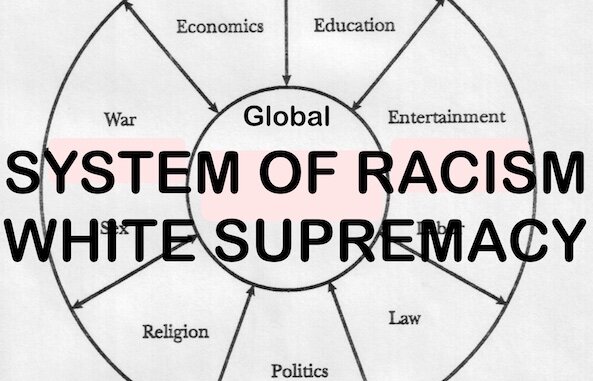
Tyre Nichols Murder Not Racial? It Would Never Happen to a White Person in the System of White Supremacy. In the History of Policing How Many Unarmed White People Have Black Cops Killed? [Less than 5]

BLACKS ARE FORBIDDEN FROM HARMING WHITES IN THE SYSTEM OF RACISM WHITE SUPREMACY. We know that white cops rarely face prosecution when they intentionally harm or murder Black or Latino people.

In Death of a Dark Nation” Anon explains, “It is just as rare for a black police officer to use excessive force against a white person.

In fact, the authors were unable to find a single instance of a black police officer shooting or killing an unarmed white person in the history of modern law enforcement. This is not surprising but it is absolute proof that the black individual operating within a system of white supremacy cannot mistreat whites even if he or she is wearing a uniform, a badge, and carrying a gun." [MORE

Note that Anon is also necessarily saying that it is even more rare for a Black cop to get away shooting or killing an unarmed white person. BW can only find 3 episodes [Dillion Taylor in Utah and allegedly Ofc Christopher Dorner in LA] involving a Black cop shooting an unarmed white person in the history of modern law enforcement. The cop who shot Taylor was not charged. Recently, Minneapolis police officer Mohamed Noor was acquitted on appeal after shooting an unarmed white woman by mistake. If you know of any others let us know.

NEVER HARM WHITES. Anon explains, “Of course, all people can be hateful or prejudiced. Those terms describe individual behaviors, not systematic power. Racism is the COLLECTIVE behaviors of a group. A white individual within a system of racism/white supremacy has the implicit or explicit support of that system IF they choose to practice racism.

If a poor man robs a rich man at gunpoint that doesn’t mean the poor man is more powerful (economically and politically) than the rich man. The poor man is an individual who committed a crime of opportunity. There are no powerful institutions or systems that support his right to rob the rich man, but there are institutions and systems that allow the rich man to rob the poor man - which is why he doesn’t need a gun to do it.

A black person who mistreats a white person doesn’t mean black people are more powerful (economically and politically) than white people. Never confuse the actions of a black individual (or a group of black individuals) that mistreats someone white as proof that black racism exists. Their “power” is limited ONLY to what they can do as individuals. There are NO black institutions or systems that support, defend, or finance the right of blacks to mistreat whites.

There are NO black individuals or black organizations that have the power to strip whites of their collective right to live where they want, work where they want, get an education wherever they want, or control what white people do collectively in ANY area of human activity. There are NO black institutions that are more powerful than white institutions. Therefore, blacks do not have the COLLECTIVE POWER to diminish the quality of life for the white collective.

Q: What is collective power?

A: Collective power is the institutions and systems that benefit one group at the expense of another group, and allow one group to dominate another group in all areas of human activity.

For example, when a white policeman shoots an unarmed black man (50 times), his fellow officers, the police chief, internal affairs, the union, the media, the prosecutor, thejudge, and thejury will support, defend, and finance that white police officer’s “right” to shoot (murder) an unarmed black person. That is white collective power.”

Anon further explains: “This does not mean blacks are less likely to abuse power than whites if given the opportunity. It means blacks cannot abuse power that does not exist. The proof: there is no place in America where blacks are collectively practicing racism against whites collectively.

Q: Don’t black politicians and corporate executives represent black power?

A: Not necessarily. Having a powerful position does not make a person powerful. For example, shortly after a female employee sued the XYZ firm for sex discrimination, Ms. X and Mrs. Y are appointed to the corporate board. They will be used as proof in the upcoming trial that the XYZ firm does not discriminate against women.

Like most token board members, Ms. X and Mrs. Y are benchwarmers; not policy makers. Their “powerful” positions are an ILLUSION designed to deceive the public and the courts. The black man or woman in a (public) position of power often serves the same purpose: to give the appearance that certain companies do not discriminate.

These blacks maybe qualified for their position; however, even the “powerful” black person - regardless of title -- is still controlled by more powerful whites who limit whatever authority or power this black individual possesses.

Q: If a powerful black person mistreats a less powerful white person, isn’t he or she practicing black racism?

A: A black person whose power comes from a white institution will not be allowed to mistreat whites - unless he or she is following orders from more powerful whites. In a system of white supremacy, all whites are more powerful than blacks.

 A white supremacy system by its very NATURE forbids ALL non-white people - regardless of wealth, status, or position - from victimizing white people. Of course, a powerful black person can - as an individual - harm a white individual. For example, it was well known that OJ Simpson physically abused his white ex-wife, Nicole, but that abuse was limited to what he was able to do as an individual.

Powerful blacks present no danger to the white collective but they can be extremely dangerous to other blacks. They are often rewarded for victimizing black people (doing the dirty work), and are usually following orders from more powerful whites behind the scenes.

If they are not following direct orders, they will abuse other blacks: (1) for profit or career advancement; (2) out of fear of losing status or income; (3) out of fear of being lumped with the “inferior” black masses; (4) because of self- hatred issues, which they project onto other blacks; or (5) out of frustration because they have no real power (over whites).

Even the most “powerful” blacks in America cannot practice black racism because it does not exist. Nor can they be black supremacists because black supremacy cannot co-exist within a system of white supremacy. They cannot practice white racism because they are not white. They cannot be racists of any kind; but are knowingly OR unknowingly agents (extensions) of the white supremacist system. If anyone disagrees with this premise and believes that blacks can be racist, he or she should be able to answer the following question:

Name one thing that black people - as a group -- have stopped white people - as a group -- from doing that they had a RIGHT to do? For example, denying them the right to work, own a home, live in a certain area, get a fair trial, an education, or use any public facility.

Affirmative action is not a correct response. Affirmative action is NOT black racism. Black people did not create affirmative action, the terminology, or the where, when, and how it becomes a policy in Corporate America. Blacks do NOT have the power to implement any just or unjust policies at any white college or university. Whites control, name, legislate, and decide everything that happens within America’s institutions of power - including black institutions. 

If it can be documented (proven) that black people are COLLECTIVELY mistreating white people COLLECTIVELY in the United States, someone should write a book about it. The truth should be made public, even if it contradicts what is written here. Any corrections would be greatly appreciated in the interest of being as accurate as possible. [MORE]]

THE ISSUE OF POLICE BRUTALITY IS NUANCED BECAUSE IT OFTEN COMBINES THE GRANFALLOONS OF AUTHORITY (THE RIGHT TO RULE) AND RACISM WHITE SUPREMACY. BOTH MUST BE GRASPED TO RECOGNIZE REALITY

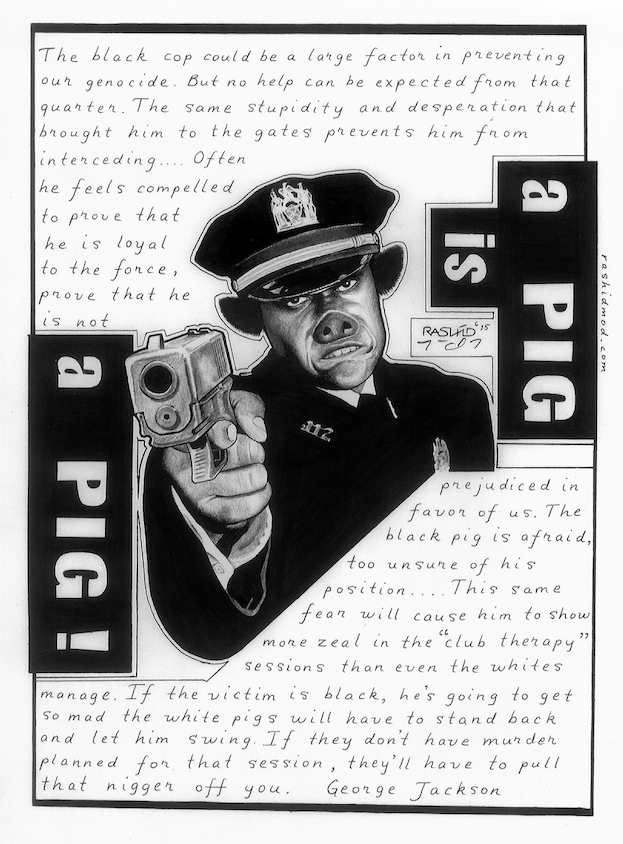
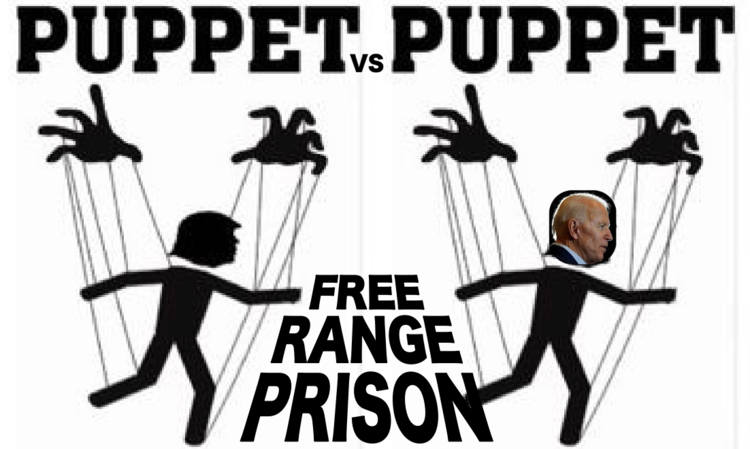
BLACK COPS CAN HARM BLACKS. Black cops exist primarily to arrest, surveil and control Black people and provide a veneer of civility, inclusion, protection and service in a free range prison. They are mentacidal rolebots, SNAGS (Snitch Ass Negroes Aiding Government) and Human Resources who are traitors to Black people who are plugged into Uncle Brother’s operating system. Any benefit or service provided to Black people is incidental, random and accidental in a system of injustice designed to be that way. Neely Fuller correctly states, “Blame the white supremacists (racists) for all unjust acts that Victims of White Supremacy (non-white people) commit against each other. Whereas the victims of White Supremacy who commit unjust acts are guilty of having committed the acts, they are not responsible for the acts.' [MORE]
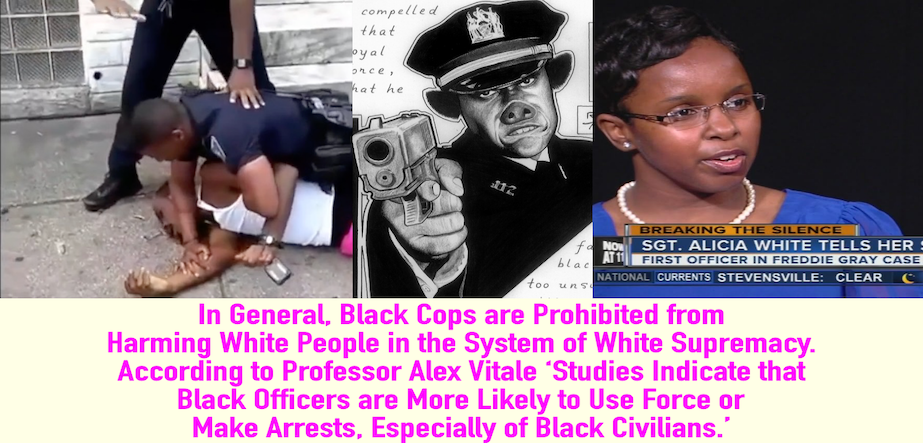
Although do-gooders often claim diverse police forces are a cure for reform and police brutality, Black cops brutalize and harm Black people at a rate nearly equal to white cops. Yale legal historian James Foreman explains that Black people have been calling for the hiring of Black police officers since the 1860’s. Scholar Alex Vitale states, “Reformers often call for recruiting more officers of color in the hopes that they will treat communities with greater dignity, respect, and fairness. Unfortunately, there is little evidence to back up this hope. Even the most diverse forces have major problems with racial profiling and bias, and individual black and Latino officers appear to perform very much like their white counterparts.” He states, “there is now a large body of evidence measuring whether the race of the individual officers affects their use of force. Most studies show no effect. More distressingly, a few indicate that black officers are more likely to use force or make arrests, especially of Black civilians.”

WHITES AND JUSTIFIABLE HOMICIDE OF BLACKS. Conversely, when white whites harm or kill Blacks there are significantly less repercussions. The Marshall Project found that when a white person kills a black man, the killer is eight times more likely to face no legal consequences (compared to homicides involving other combinations of "races"). In 1 in 6 of these killings, there is no criminal sanction, according to an examination of 400,000 homicides committed by civilians between 1980 and 2014. That rate is far higher than the one for homicides involving other combinations of "races." The disparity remains no matter the circumstances and has persisted for decades. [MORE]
In almost 17% of cases when a black man was killed by a non-Hispanic white civilian over the last three decades, the killing was categorized as justifiable, which is the term used when a police officer or a civilian kills someone perceived to be committing a crime or in perceived self-defense. Overall, the police classify fewer than 2 percent of homicides committed by civilians as justifiable.

The disparity persists across different cities, different ages, different weapons and different relationships between killer and victim. The researchers analyzed 400,000 homicides committed by civilians between 1980 and 2014, using FBI data provided by police departments. They looked at information on each killer and victim's location, age, race, ethnicity, and gender. [CONT]

According to the Brookings Institute, although black males make up only 7% of the entire population they constitute 34% of all unarmed persons killed by police.

WHEN BLACKS HARM WHITES. In contrast blacks who harm or kill whites are summarily punished. For instance, prominent researchers have documented a pattern of discrimination in the application of the death penalty based on the race of the victim, race of the defendant, or both, in nearly every state that uses capital punishment. Blacks who murdered whites were found more likely to be sentenced to death than those who murdered blacks." [MORE] and [MORE]
In fact, the Baldus study found that Blacks are 22 times more likely to be put to death when the victim is white. Since 1977, the overwhelming majority of death row defendants (77%) have been executed for killing white victims, even though Blacks make up about half of all homicide victims. [MORE

In almost 17% of cases when a black man was killed by a non-Hispanic white civilian over the last three decades, the killing was categorized as justifiable, which is the term used when a police officer or a civilian kills someone perceived to be committing a crime or in perceived self-defense. Overall, the police classify fewer than 2 percent of homicides committed by civilians as justifiable.

The disparity persists across different cities, different ages, different weapons and different relationships between killer and victim. The researchers analyzed 400,000 homicides committed by civilians between 1980 and 2014, using FBI data provided by police departments. They looked at information on each killer and victim's location, age, race, ethnicity, and gender. [CONT]

System of White Presumacy and WhiteWash: White Media and Liberal Authorities Shield Privileged White Cop Involved in Tyre Nichols Murder. Not Charged as Accessory or Failing to Intervene by White DA

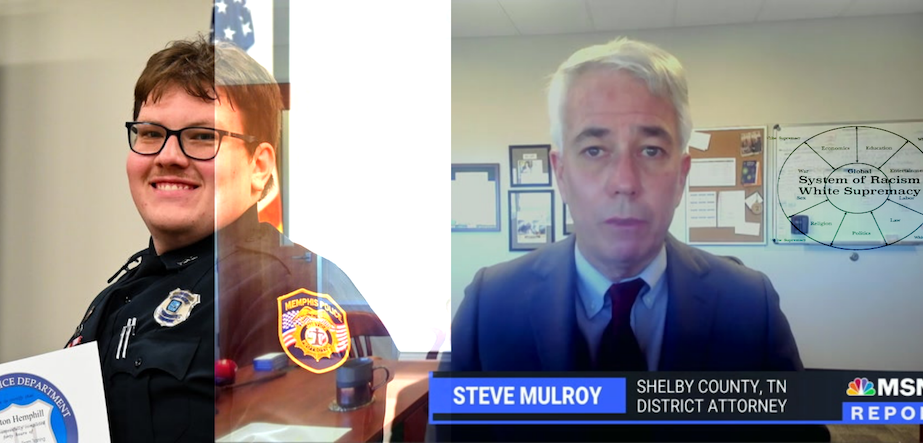
“I HOPE THEY STOMP HIS ASS.” From [HERE] A sixth Memphis Police officer involved in the arrest which led to the death of Tyre Nichols on Jan. 7 has been relieved of duty, a spokesperson for the department confirmed with ABC24 Monday.
According to Memphis Police, Officer Preston Hemphill has been relieved of duty during an ongoing investigation. Memphis Police told ABC24 Hemphill was relieved at the beginning of their internal investigation Jan. 8 into the circumstances which eventually led to Nichols' death.

Hemphill is a white man.

We are working to find out why his name was just released Monday.

Memphis Police said additional information would be available on their social media platforms once it became available. 

Attorneys for the Nichols' family released the following statement: "The news today from Memphis officials that Officer Preston Hemphill was reportedly relieved of duty weeks ago, but not yet terminated or charged, is extremely disappointing. Why is his identity and the role he played in Tyre’s death just now coming to light? We have asked from the beginning that the Memphis Police Department be transparent with the family and the community – this news seems to indicate that they haven’t risen to the occasion. It certainly begs the question why the white officer involved in this brutal attack was shielded and protected from the public eye, and to date, from sufficient discipline and accountability. The Memphis Police Department owes us all answers.”

Protesters had been calling for MPD and city officials to take additional action after the video of the 29-year-old's beating by five now-former Memphis Police officers was released on Friday. 

Attorney Lee Gerald, representing Hemphill, released the following statement:

"I can confirm that I represent Memphis Police Officer Preston Hemphill who was the third officer at the initial stop of Mr. Nichols. Video One is his bodycam footage. As per departmental regulations Officer Hemphill activated his bodycam. He was never present at the second scene. He is cooperating with officials in this investigation."

Hemphill was shown on video during MPD's initial confrontation with Nichols, pulling him from his car forcefully while hitting him on the ground with a Taser, later stating, "I hope they stomp his ass" after Nichols escaped. (evidence of intent to commit grievous bodily harm)

Shelby County D.A. says charges "may or may not" happen against Hemphill

Shelby County District Attorney General Steve Mulroy (above) said in a statement Monday that his office is still investigating additional charges, and did not rule out charges being levied for other officers involved:

"This is an ongoing investigation. The current charges do not preclude us from adding additional charges as more information is presented. We are looking at all individuals involved in the events leading up to, during, and after the beating of Tyre Nichols. This includes the officer present at the initial encounter who has not— so far—been charged, Memphis Fire Department personnel, and persons who participated in preparing documentation of the incident afterward.

The DA’s Office worked extraordinarily swiftly but thoroughly to charge those whose offenses were plain and clear and directly contributed to the death of Mr. Nichols, but in no way is this investigation over.

While we are committed to transparency, we cannot comment on the details of an ongoing investigation or give previews of what charges we may or may not bring.

Our goal remains the same: to seek justice for Tyre Nichols and hold all who contributed to his death accountable. We ask for the public's patience as the investigation continues."

Memphis Mayor Jim Strickland also weighed in, saying he's taking the investigation very seriously.

"As mayor, I take violations of departmental policies very seriously, but I cannot comment further on employment matters during the pendency of administrative reviews."

Memphis police said two confrontations occurred between Nichols and officers. After he was arrested, Nichols complained of shortness of breath and was taken to a hospital in critical condition. He died three days later.

Relatives have accused the police of causing Nichols to have a heart attack and kidney failure. Authorities have only said that Nichols experienced a medical emergency.

According to civil rights attorney Ben Crump, who was hired by Nichols' family, an independent autopsy found that Nichols had suffered from extensive bleeding caused by a severe beating.

Nichols’ family said police beat him to the point of being unrecognizable.

Five Memphis Police officers were fired and later indicted on numerous charges, including second-degree murder, in the death of Nichols.