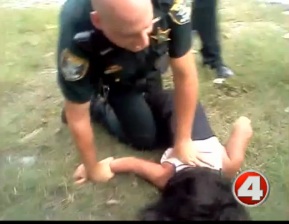
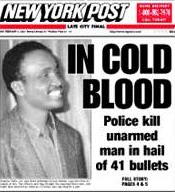
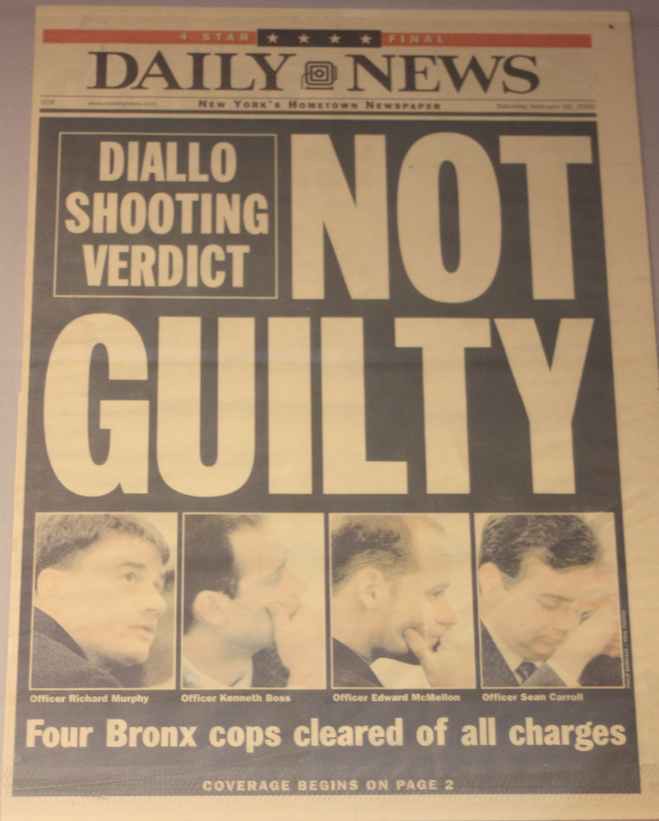
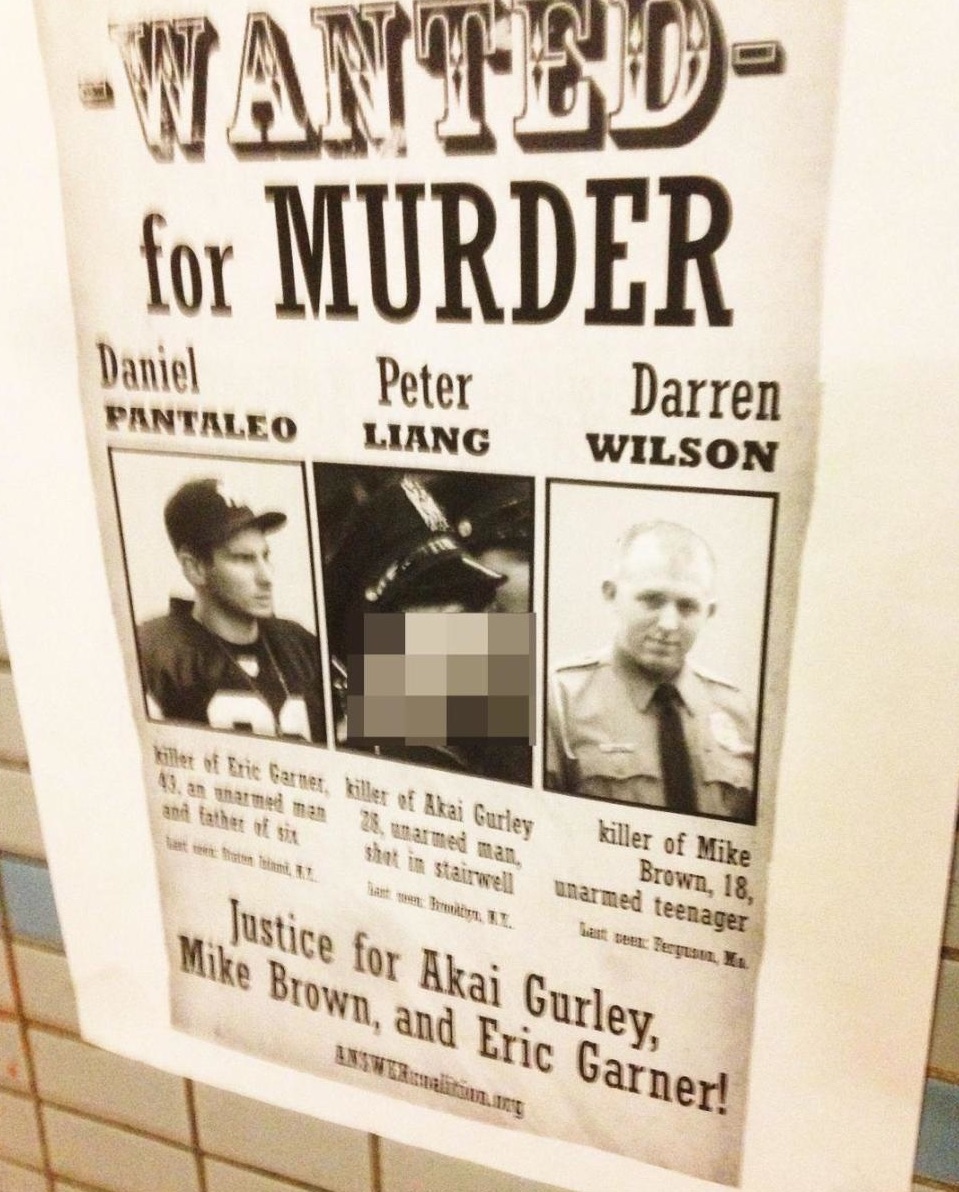
Although Alexis Wilson Posed No Threat as She Fled in a Car, Dolton Cops Shot Her to Death. Cops Called Over Order Dispute at Fast Food Drive-Up, Executed Her 3 min After they Arrived. Lawsuit Filed

From [HERE] The parents of Alexis Wilson told the I-Team they expected the Dolton Police to protect their daughter. Instead, they said she was a victim of excessive force when she was shot within three minutes of officers arriving at a drive-thru restaurant where she was arguing with staff about her food order.

In a federal lawsuit filed Tuesday, the suburban Homewood family alleges officers grossly overreacted, leading to Alexis' death.

"Three minutes, that child is dead with seven bullets to in her head," said Alexis' mother, Cara Wilson. "That's an execution."

On July 27th, 2021, security camera footage from Baba's restaurant shows Dolton police officers arriving with their weapons drawn. Police say an employee called 911 claiming Wilson was threatening workers with a gun in the drive-thru lane.

Greg Kulis, the family's attorney, said it appeared the 19-year-old was hitting a stick against the glass, not a gun.

"This was senseless," Kulis said. "There was no reason for these police officers to come across so aggressively to this young lady and start punching a young lady in the face."

The lawsuit filed late Tuesday names Dolton Police Officers Ryan Perez and Gerald Carlton, alleging they used excessive force against Wilson.

The officers asked Wilson and her boyfriend to get out of the minivan. Edited bodycam video released by Dolton police shows he complied, but Wilson did not. She said she wasn't properly dressed. When the officer tried getting in on the passenger side, Wilson took off.

"She was scared. She drove off," said Alexis' father, Alonzo Wilson.

Dolton police said both officers shot at Wilson. Her vehicle crashed into a nearby bike shop. Police have said a gun was found in Wilson's car.

"This didn't have to happen this way," her mother said. "Why is it that beauticians get more training than police? It should not have happened this way. There was so many choices to make that night that could have preserved that child's life."

Wilson said Alexis was extremely close to her younger brother, and she was about to begin classes at Prairie State.

"She was so happy and proud," said Alonzo Wilson.

The Cook County State's Attorney's office told the I-Team the shooting is under review by prosecutors in its Law Enforcement Accountability Division. They review investigations of all on-duty officer involved shootings to determine if criminal charges are appropriate. Dolton police had no comment on the case or the suit and have not provided us with the status of the officers.

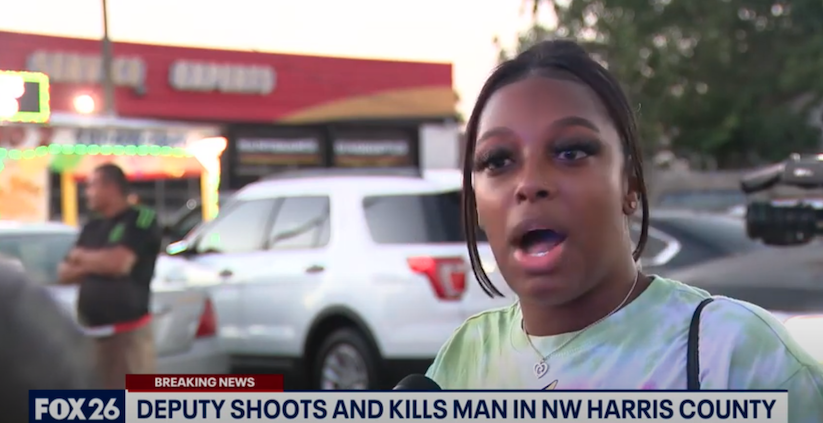
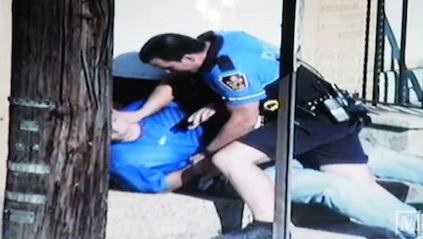
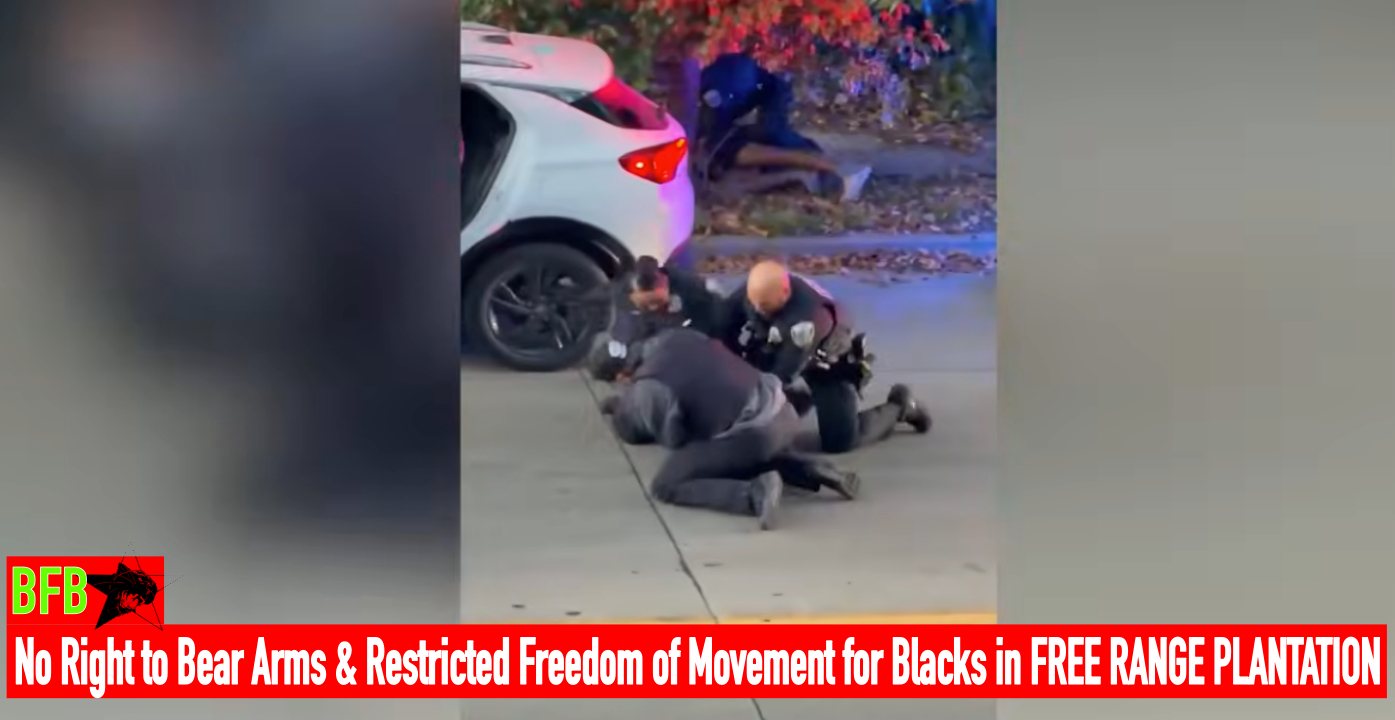
Witnesses say a White Harris County Cop Jumped from a Moving Car to Chase Roderick Brooks who was Accused of Shoplifting at Dollar Store. Cop Pulverized Him, then Fatally Shot Him. No Bodycam Released

From [HERE] and [HERE] The family of the Black man who was killed by a Harris County Sheriff’s Office sergeant in Westfield on Friday called the shooting “unjustified and unnecessary,” adding that he was a victim of racism and police brutality.

Authorities, who are accused of murder by the family, said Roderick Brooks had allegedly shoplifted from a nearby Dollar General and assaulted a clerk there moments earlier, died after an altercation with Sgt. G. Hardin, who used a Taser on him and then shot him in the neck. Hardin shot at Brooks when he grabbed at the sergeant’s Taser, authorities said.

Cell phone video obtained by ABC13 shows the moments immediately after the shooting. Witnesses were shocked by what they saw in a gas station parking lot in the 15500 block of Kuykendahl in north Harris County. it shows the cop who is on top of Brooks who is laying face down lying on his stomach.

Meanwhile, Brooks’ family is calling for body camera footage of the killing to be released and demanding more transparency from the sheriff’s office.

“For the city and the state to allow this type of … racism, I’ve never seen anything like this,” said Brooks’ older sister, Demetria Brooks Glaze. “My brother was treated worse than an animal. Shoplifting does not warrant killing a man.”

The incident began with a call to police from the discount store in the 2000 block of Cypress Creek Parkway, where the family’s attorney, Sadiyah Evangelista, said Brooks shoplifted household goods.

Hardin spotted him nearby and began chasing him, at one point jumping out of his police cruiser without putting it in park and running after Brooks, Evangelista said witnesses told her.

They also said that after Brooks, 47, was shocked by the Taser and incapacitated, Hardin jumped on his back and “pulverized (him) with punches,” the attorney continued.

The family and the sheriff’s office disagree on what happened next. Brooks reached back and tried to gain control of Hardin’s Taser, authorities said, but Evangelista and Brooks’ family contend that he was defending himself against the “onslaught of punches” from the officer.

The sergeant’s actions drew a sharp rebuke from Deric Muhammad, a local activism stalwart.

“The problem is that racist policing is alive and well in the United States of America, and I believe that Roderick Brooks was a victim of racist policing,” he said. “(Hardin) was so hellbent on hog-tying this Black man that he abandoned all of his general orders.”

At the time of his death, Brooks had been free for hours on a personal recognizance bond stemming from a felony theft charge filed Thursday in which he was accused of stealing $124 worth of shampoo and beer from a Walmart, according to court records.

Despite several past shoplifting convictions, Brooks did not have a history of violence, his older sister said.

“My brother, he’s always been in and out of trouble — but he’s no murderer,” Brooks Glaze had previously told the Houston Chronicle.

Homicide and internal affairs investigators are reviewing the shooting, the sheriff’s office said in a statement, as is the civil rights division of the Harris County District Attorney’s Office. A grand jury will determine whether charges will be filed.

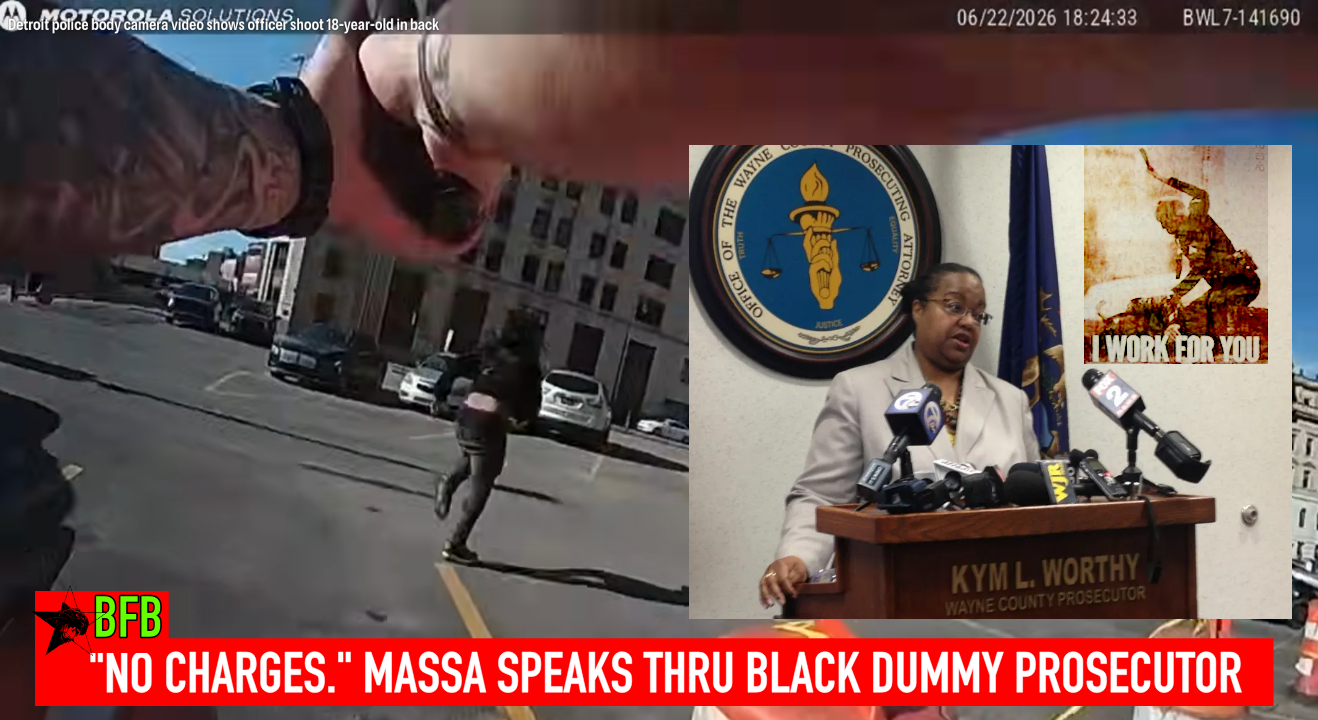
When LAPD Cop said a Latino Man Removed a Handgun from his Waistband and Pointed it at Cops as He Fled, She was Lying. Video Shows Cop Murder Marvin Cua, Shot in the Back while Running from Police

From [HERE] In the weeks after a Los Angeles police officer fatally shot a man in Koreatown, LAPD officials said little about the killing.

The department broke its silence on Friday, when it made public video footage of the deadly encounter from cameras worn by officers. 

Instead of clarifying what happened, however, the video has injected more uncertainty into the incident by failing to resolve a critical question: Did Marvin Cua cause the shooting by pointing a gun he was carrying at the officers, as the LAPD alleges?

The video uploaded to the LAPD’s YouTube page includes an account of how the shooting unfolded from Capt. Kelly Muniz, a spokeswoman, followed by excerpts of a 911 call and footage of the shooting. 

In her account of the shooting, Muniz said officers were responding to a call of a man with a gun and summarized what occurred, saying, “The officers pursued the suspect a short distance on foot; as officers gave chase, the suspect removed a handgun from his waistband, pointed it in the direction of the officers and an officer-involved shooting occurred.”

But the footage that follows does not show Cua doing that. 

The video from a camera worn by an officer riding in the passenger seat of a patrol car starts as the vehicle pulls up alongside Cua, who was walking on a sidewalk with another man. The officer, whom the LAPD identified as Christopher Jongsomjit, yells at the men to stop. Cua, who was 23, turns and runs down the sidewalk in the opposite direction.

Jongsomjit gives chase. A parked car briefly obstructs his view of Cua, who reappears and takes a few more strides before Jongsomjit fires a single shot about four seconds after Cua began running.

After his initial command to stop, Jongsomjit says nothing to Cua or his partner before firing. He first mentions Cua’s weapon after Cua has been shot and is motionless on the ground.

The video plays first at regular speed and it is difficult to see Cua as he runs. The LAPD then edited the video to replay it in slow motion. Twice the video freezes and zooms in on Cua to show the gun in his hand. At the slower speed and in the still frames, Cua is not seen pointing the gun at the officer and appears to be facing away from the officer as he runs.

Muniz, citing the department’s ongoing investigation into the shooting, declined to discuss the apparent discrepancy between her statement alleging Cua pointed his gun at the officers and the video. She cautioned that videos of shootings released by the department “are not a complete investigation.”

“These videos are produced to provide a description of the incident based on the information we have at the time,” she said in an email. 

And in her statement on the video, Muniz said that because of where they are mounted on officers’ chests, “the angle of the camera prohibits viewers from seeing everything the officer saw and experienced.” 


For years, video of shootings or other serious incidents captured by LAPD officers’ body-worn cameras were typically kept secret as department officials resisted calls for their release. Then, in 2018, the civilian commission that oversees the department ordered the videos to be made public within 45 days, saying the change was needed to increase transparency. The new rule has allowed the public to see firsthand how officers act during violent, dangerous episodes, but as the Cua shooting shows, the videos have limitations.

Cua died at the scene. A .22-caliber handgun was recovered next to his body, according to video. Police have said he was stopped because he matched the physical description of a suspect reported by a 911 caller. 

Around 9 a.m. on June 2, the caller told dispatchers a man on South Berendo street near 8th Street dressed in a white tank top and black and white shorts had pointed a gun at some children.

Jongsomjit and his partner responded and spotted Cua, who was wearing a white T-shirt and black and white shorts, walking in the area with another man.

“Yo, yo stop right there both of you,” Jongsomjit shouted as he exited the patrol car, the video shows. “Stop! Stop! Hey! Hey!”

Jongsomjit drew his handgun and trained it on Cua as he gave chase. Without warning, he fired a single shot.

Cua continued running into the parking lot of a nearby strip mall, where he collapsed between a parked car and truck.

Jongsomjit is heard on the video instructing another officer to put out a help call on the radio and warning the officer Cua “has the gun on him.” Jongsomjit repeatedly yells, “Let me see your hands!” at Cua, who was lying motionless on the pavement. 

Other officers arrived and a group of them approached Cua, handcuffing him. One of them checked for a pulse. Finding none, Cua was uncuffed and an officer began doing CPR.

Coroner officials declined to release information about Cua, saying an autopsy report will not be publicly available for several months. That report is likely to shed some light on how Cua was positioned in relation to Jongsomjit when he was shot by determining where on his body Cua was hit and the trajectory of the bullet.

Margaret Hellerstein, an immigration attorney, said that she first got to know Cua more than three years ago when he was being held at Adelanto Immigration and Customs Enforcement processing center and she represented him as he sought asylum. The two later became friends, she said.

Hellerstein said Cua was from Guatemala and his full name was Marvin Cua Sapon. Medical records, she said, showed he had been diagnosed with schizophrenia and battled bouts of depression, which she suspects contributed to several run-ins he had with police.


Since his release from immigration custody last winter, Hellerstein said, Cua had taken odd jobs to pay the bills, and was splitting his time between staying with his mother, a friend in Koreatown and, occasionally, on the streets. He found comfort in drawing, for which he’d shown a true talent, according to Hellerstein.

“He was an incredibly gifted artist, he was soft-spoken, he was generous, he was funny. I know he wasn’t a saint, but he had a huge heart. I genuinely loved him,” said Hellerstein, who started a GoFundMe page to help his family cover funeral expenses and, if money is left over, to pay an attorney as the family pursues a possible lawsuit over his death. 

The Office of the Inspector General will oversee the LAPD’s investigation into the shooting. An internal department panel will review the findings and advise Chief Michel Moore on whether Jongsomjit’s decision to use deadly force was appropriate. Moore, in turn, will make a recommendation to the civilian police commission, which will vote on whether the shooting was in line with the department’s policies.

Under the LAPD’s policy, an officer is permitted to use deadly force on a fleeing suspect if the suspect is believed to have committed a “felony that threatened or resulted in death or serious bodily injury” and the officer believes, based on the “totality of the circumstances,” that the suspect “will cause death or serious bodily injury to another unless immediately apprehended.” 

Court cases over police shootings generally are guided by a 1989 Supreme Court ruling that established an “objectively reasonable” standard to determine whether an officer’s use of force was justified. 

Under that standard, an officer is judged by whether a reasonable officer in the same situation would have acted the same, in light of several factors including the severity of the alleged crime, whether the suspect poses an immediate threat and whether the suspect was attempting to flee. 

A handful of states, including California, have sought to establish their own, stricter standards. In 2019, California lawmakers changed the legal standard for when officers can use deadly force from being “reasonable” to “necessary.”

After watching video of the Cua shooting, William Terrell, a criminal justice professor at Arizona State University, questioned why the department would suggest that Cua pointed his gun at officers if the act wasn’t captured on camera. He also questioned whether the officers might have chosen a different approach that didn’t seemingly escalate the situation.

“I don’t know if that’s their training tactic to drive up slowly with their door open to someone who’s reported to be armed,” said Terrell, associate dean at the school’s Watts College of Public Service and Community Solutions. “I did find that somewhat strange.”

The incident is one of eight fatal LAPD shootings so far this year, with three of them happening last week.

After reaching a 30-year low in 2019, the number of police shootings increased last year. LAPD officers opened fire 37 times in 2021, killing 18 people, which was an increase from the 27 shootings by officers in 2020, seven of which were fatal.

In light of last year’s increase, Chief Moore previously said the department would review how its officers are trained on the use of lethal force. Moore told the Police Commission at the time that the LAPD would conduct a “deep dive” into its training program to assess whether it properly outlines existing department policies, which have gotten stricter in recent years, and makes clear to officers “the reverence for human life” that is required of them. 

“Go Away. Bye” [No Right to be Left the Fuck Alone] Baltimore Reaches $630k Settlement w/76 yr old Black woman Thrown to Ground by Provocative White Cops, who Insisted on Providing Unwanted Service

NO. I DON’T WANT YOUR FUCKING COMPULSORY SERVICE. From [HERE] Baltimore County will pay $630,000 to the then-76-year-old woman thrown to the ground during an arrest at her home in January 2020.

Cellphone video capturing an officer tackling Rena Mellerson, of Gwynn Oak, sparked public outrage and both criminal and administrative investigations of officer conduct — with the chief of police calling the footage “unsettling to watch” when it surfaced in 2020.

Baltimore County State’s Attorney Scott Shellenberger said Tuesday his office had reviewed the criminal investigation and determined no criminal charge would be filed. The police department said the administrative investigation into potential policy violations had concluded but declined to provide the outcome, instead requesting a reporter file a public records request. It confirmed both officers were still employed.

A federal lawsuit filed in 2021 concluded on Friday, court records show.

Attorney J. Wyndal Gordon said the $630,000 settlement represented “the justice [Mellerson] was looking for.” An additional $15,000 each will go to the guardians of two children who were at the home.

According to police, an officer arrived at Mellerson’s home in the 7000 block of North Alter Street on Jan. 10, 2020, to arrest her granddaughter for disorderly conduct during a previous interaction. Apparently the fragile white cop was really in his feelings about the young woman calling him names and telling him to go away, “bye.” In general courts have recognized that police officers are trained to be more patient than the average person in the face of hostile words: police officers are trained to deal with unruly and uncooperative members of the public. A police officer is expected to have a greater tolerance for verbal assaults, . . . and because the police are especially trained to resist provocation, we expect them to remain peaceful in the face of verbal abuse that might provoke or offend the ordinary citizen.

Not so, with this fragile white cop, he had to show her he is their master. [MORE]

Body camera footage released by the department shows tensions escalated at the front door of the home — Mellerson’s granddaughter refused to exit; the officer used pepper spray and fired his Taser unsuccessfully, then drew and pointed his handgun at the door he said closed on his foot.

He eventually entered the home and pulled Mellerson outside. A second officer then ran up to her and threw her to the ground.

The footage shows she was barefoot outside, where there was snow on the ground. She can be seen in handcuffs trying to ensure the children who were at the home during the arrest have someone to watch them.

A lawsuit filed by Gordon, who represented Mellerson and the two children at the home, identifies the two officers as Cpl. Sean D. Brennan and Officer Brian Schmidt.

Brennan was the police officer attempting to arrest Mellerson’s granddaughter, Cierra Floyd. Schmidt threw Mellerson to the ground.

The lawsuit argued Brennan used excessive force and committed unlawful assault and battery on Mellerson, the two children and others in the home when he drew and pointed his weapon and when he “indiscriminately deployed OC spray and his department-issued tazer.” It says the spray contacted the two children, causing temporary respiratory complications.

It also argued officers had no legal justification for arresting Mellerson, and that she was assaulted, in violation of her rights, because at the time she was “attacked” by Schmidt, she was cooperating and posed no threat.

“Even more egregious, after handcuffing Mellerson and removing her from the cold, hard, wet ground, Officer Schmidt forced her to walk barefooted for a while,” the suit said.

Mellerson was initially charged with second-degree assault, obstructing and hindering and resisting or interfering with the arrest of her granddaughter, police said. The charges were dropped by prosecutors by mid-March 2020.

Floyd, Mellerson’s granddaughter, ultimately pleaded guilty to a misdemeanor offense of disorderly conduct and was granted probation before judgment [dismissed without a conviction], court records show. She was initially charged with other offenses, including second-degree assault on law enforcement, failure to obey a lawful order, second-degree assault and resisting and interfering with an arrest.

Body camera footage previously released by Baltimore County Police showed a verbal altercation between Brennan and Floyd at an earlier scene police responded to for a report of a child damaging vehicles. Police previously released a 911 call prompting their arrival in which a caller said “somebody better hurry up before I cut this little boy.”

In the body camera footage, Floyd swears at Brennan and expressed frustration with the child. Both Floyd and Brennan shout at one another, with Brennan telling her she was “becoming a problem” and would be arrested.

Charging documents indicated Brennan used a Maryland Motor Vehicle Administration database to identify Floyd and track her to Mellerson’s house.

Gordon, Mellerson’s attorney, called the officer who sought to arrest Floyd “out of line” and “rogue in his conduct.” Schmidt tackling Mellerson, he said, was “outrageous.”

Father’s 20-Year Battle on Behalf of Vaccine-Injured Son Exposes Travesty of Liability-Free Vaccines

From [CHD] In a riveting legal battle spanning two decades, William Yates Hazlehurst (“Yates”) on Feb. 2, 2022, became the first vaccine-injured person with a diagnosis of autism to reach a jury since the National Childhood Vaccine Injury Compensation Act of 1986 (the Vaccine Act) became law.

In a medical malpractice case filed in the Madison County Circuit Court in Tennessee, attorneys for Yates argued the clinic and physician who administered Yates’ vaccines, including the measles-mumps-rubella (MMR) vaccine on Feb. 8, 2001, should be held liable for medical malpractice and the neurological injuries Yates developed after being vaccinated.

Although the jury decided in favor of the physician — who Yates’ father said failed to adequately inform the parents of the risks of vaccinating Yates while he had an active ear infection — the case exposed major flaws in a system designed to protect children and shield pharmaceutical companies and physicians from liability for vaccine injuries.

“In the fight to end the autism epidemic, we were all hoping for the one knockout punch that would bring the truth to light and help end the autism epidemic,” Yates’ father, Rolf Hazlehurst, said.

“This medical malpractice trial was the only opportunity in the last 35 years for a jury to hear evidence in a court of law regarding whether a vaccine injury can cause neurological injury, including autism.”

Hazlehurst, who is a senior staff attorney for Children’s Health Defense (CHD), said “unless the Vaccine Act is repealed, my son is probably the only vaccine-injured child with a diagnosis of autism who will ever reach a jury.”

The Hazlehurst case was a medical malpractice case against the doctor who administered the pediatric vaccines that, in the opinion of the world’s top experts, sent Yates, now 22, spiraling into the depths of severe, non-verbal autism.

Although the case was originally filed in 2003, it didn’t receive its day in court for 19 years because a separate case involving Yates’ injury first had to work its way through the National Vaccine Injury Compensation Program (NVICP).

When Yates’ medical malpractice case was finally heard, the trial exposed alarming evidence about autism and vaccines, the low standard of care practiced by physicians administering pediatric vaccines and financial conflicts of interests between pharmaceutical companies that manufacture vaccines and government agencies entrusted with vaccine safety.

During the trial, the world’s top experts in the field of autism and mitochondrial disorderexplained how the administration of “routine” childhood immunizations can cause autism, brain injury, and many other disorders.

According to the National Institute of Mental Health, autism is a neurological and developmental disorder that affects how people interact with others, communicate, learn and behave. Symptoms can be severe and usually manifest before a child turns 3, which coincides with the age children receive the most childhood vaccines.

Increasing evidence indicates a significant proportion of individuals with autism have concurrent diseases such as mitochondrial dysfunction, abnormalities of energy generation, gastrointestinal abnormalities and abnormalities in the regulation of the immune system.

Yates’ medical malpractice trial illuminated how vaccines can cause autism in children with mitochondrial disorder and showed how the Vaccine Act — which is designed to ensure informed consent and compensation to injured children — is an abject failure because it’s largely unenforceable.

Yates was normal until he received his 12-month vaccines

During the first year of his life, Yates developed typically and met all of his developmental milestones.

“He was a happy, healthy and normal child,” his father said.

After his 6-month shots, Yates experienced a severe screaming episode approximately 24 hours after receiving the DTaP, Prevnar, Hib and Hep B vaccines.

In the days following his vaccinations, Yates began to experience seizure-like shaking episodes.

But his parents didn’t realize their son’s symptoms were consistent with a severe vaccine adverse reaction because they were not given a Vaccine Information Statement (VIS) at their pediatrician’s office.

According to the Centers for Disease Control and Prevention (CDC), a VIS is an information sheet produced by the CDC that explains both the benefits and risks of a vaccine to recipients.

“Federal law requires that healthcare staff provide a VIS to a patient, parent or legal representative before each dose of certain vaccines,” the CDC website states.

Instead of providing the VIS, Yates’ physician told his parents any adverse event to a vaccine would be “almost immediate” — within 5 to 15 minutes after vaccination.

Before Yates’ first birthday, his mother and aunt took him to the doctor because he had been sick, and his parents wanted to make sure it was okay for Yates to have a birthday party.

Hazlehurst told The Defender this appointment was not a scheduled well-child check. It was a sick visit. At the appointment, Yates was diagnosed with an ear infection and prescribed an antibiotic.

As the pediatrician turned to leave, he stated Yates would receive his shots, as it was close to his first birthday. A woman returned to the room who portrayed herself to be a nurse, but Hazlehurst later found out was only a medical assistant.

Yates’ mother asked the “nurse” whether their son should receive his shots despite being sick and was told he should.

Once again, they were not given a VIS form informing them of the risks of vaccinating Yates while he had a fever and an active ear infection.

“By administering vaccines to a sick child, the doctor and his clinic could charge a “modified double bill” Hazlehurst said.

That day, on Feb. 8, 2001, Yates received the MMR, Prevnar, Hib and Hep B vaccines. Twelve days later, Hazlehurst said his son experienced a high fever, rash and vomiting consistent with a vaccine adverse reaction.

Hazlehurst called the clinic where his son received his vaccine and talked to the doctor on call who asked him which vaccines Yates received. Hazlehurst responded, “whatever you get when you’re a year old.”

Hazlehurst was told his son was having an adverse reaction to the antibiotic and the doctor wrote him a prescription for a different antibiotic and an anti-fungal medication.

Soon after, Yates began to lose the skills he once had and began developing abnormally. He lost his speech, started running wild, was constantly on the go and would knock things off the table.

“He was visually ‘stimming’ off the falling objects and running with his head down for the visual stimulation,” Hazlehurst said.

He explained:

“It was not like he got the shots and boom, the next day he was autistic. That’s not the way it happened. The mitochondria produce the energy to the connecting tissue in the cells in the brain, and if they don’t get enough energy for a short period of time (as short as 6 seconds), cellular death occurs.

“The brain keeps developing, but it cannot develop normally because the connecting cellular tissue has been damaged. That’s why it takes time to manifest. It’s like watching grass grow. It’s happening, but you don’t realize it’s happening.”

Yates’ condition worsened. He developed an obsession with spinning objects, became a picky eater, started hand-flapping and toe-walking, became unable to sleep and exhibited gastrointestinal and multiple other medical and neurodevelopmental issues, Hazlehurst said.

On June 3, 2002, Yates was diagnosed with autism spectrum disorder.

Hazlehurst searches for answers to his son’s autism

According to federal law, there are specific recording requirements for vaccine medical records, and healthcare providers must provide records to a parent upon request.

Hazlehurst, on June 21, 2002, requested a copy of his son’s original vaccine records so other physicians could evaluate, diagnose and treat Yates.

Hazlehurst had questions about the American Academy of Pediatrics’ standard of care and wanted to know why his son was vaccinated while he was sick with a fever.

In response to Hazlehurst’s request and questions about Yates’ care, the pediatrician rushed out of the room and called his attorney, Hazlehurst said.

The doctor and clinic denied Hazlehurst’s requests to review and receive copies of his son’s original vaccine records, forcing him to petition the court for Yates’ records.

The court granted the request, and the local sheriff’s department seized Yates’ medical records from the doctor’s clinic.

Hazlehurst quickly realized there were problems with his son’s vaccine record, which was on an unsigned consent form that had a billing code sticker placed over the language regarding the risks and benefits of vaccines and vaccine information materials.

Hazlehurst said he never received a VIS form and Yates had been vaccinated without informed consent.

Hazlehurst files claim with the NVICP for son’s vaccine injury

Hazlehurst, like many parents of vaccine-injured children, pursued a claim with the NVICP as federal law requires. The process took nine years — from 2002 to 2011.

In order to bring a case in a court of law, the parents of a vaccine-injured child must first file their case with the NVICP.

The NVICP is a special, no-fault tribunal housed within the U.S. Court of Federal Claims that handles injury claims for 16 federally recommended vaccines. To date, the court has awardedmore than $4 billion to thousands of people for vaccine injuries.

In the NVICP, America’s legal system is replaced by a “special master.” The special masters who review claims are government-appointed attorneys, many of whom are former U.S. Department of Justice (DOJ) attorneys.

Under the NVICP, the parents of vaccine-injured children are forced to sue the secretary of the U.S. Department of Health and Human Services (HHS) for compensation. HHS is represented by DOJ attorneys.

It is exceptionally difficult to obtain compensation within the NVICP, Hazlehurst said. The proceedings are often turned into drawn-out, contentious expert battles and the backlog of cases is substantial. Because of this, a single case can drag on for over a decade.

Payouts, including attorneys’ fees, are funded by a 75-cent tax per vaccine. There is a $250,000 cap on pain and suffering and death benefits.

The Vaccine Act established the NVICP, and the 2011 U.S. Supreme Court decision Bruesewitz et al v. Wyeth et al later guaranteed vaccine manufacturers, doctors and other vaccine administrators almost always have no legal accountability or financial liability in civil court when a government-recommended or mandated vaccine(s) causes permanent injury or death, Hazlehurst said.

The NVICP ultimately denied Yates’ claim, but his case against HHS became a central part of the U.S Supreme Court’s decision in Bruesewitz v. Wyeth.

Yates’ case in the NVICP was part of the Omnibus Autism Proceeding (OAP), in which 5,400 claims submitted to the NVICP were consolidated to determine if vaccines cause autism and if so, under what conditions.

“HHS whittled down the thousands of cases to six “test cases,” one of which was Yates’ case,” Hazlehurst said. “If HHS could find a way to deny NVICP compensation to the test cases, the agency would be able to deny compensation to all 5,400 families.”

Hazlehurst said HHS and the DOJ “took advantage of the fact that the rules of evidence, discovery and civil procedure mechanisms available in a regular court do not apply in the so-called vaccine court, and perpetrated fraud upon the special masters, the Court of Appeals for the D.C. Circuit and ultimately, the U.S. Supreme Court.”

The special masters on Feb. 12, 2009, in the so-called vaccine court, denied Yates’ petition for compensation and those of the five remaining OAP “test cases” involving children who developed autism after receiving their pediatric vaccines.

HHS makes key concession in Hannah Poling case

The potential fourth test case — Hannah Poling’s — was quietly conceded in 2007, in a corrupt coverup to conceal the opinion of the HHS expert witness, Dr. Andrew Zimmerman, the world’s leading expert in autism research, Hazlehurst said.

When Poling was 19 months old, she was vaccinated against nine diseases at one doctor’s visit: measles, mumps, rubella, polio, varicella, diphtheria, pertussis, tetanus and Haemophilus influenzae type b. In total, she received five vaccines.

Prior to receiving her vaccines, Poling was described as normal, happy, healthy, interactive, playful and communicative. But two days after being vaccinated, she was lethargic, irritable and febrile, and within 10 days she developed a rash consistent with vaccine-induced chicken pox.

Over the course of several months, Poling stopped eating, didn’t respond when spoken to, began showing signs of autism, developed neurological and psychological disorders and was diagnosed with encephalopathy caused by an underlying mitochondrial disorder.

In 2003, Poling’s father, Jon, a physician and trained neurologist, and mother, Terry, an attorney and nurse, filed an autism claim against HHS under the NVICP for their daughter’s injuries.

Five years later, the government settled the case before trial and in essence had it sealed.

During the OAP, in the Poling case, the government quietly conceded vaccines caused “regressive encephalopathy with features of autism spectrum disorder.”

According to CBS News, Poling received more than $1.5 million dollars for her life care, lost earnings and pain and suffering for the first year alone. After the first year, the family was supposed to receive more than $500,000 per year to pay for Poling’s care, which is estimated to amount to $40 million over her lifetime.

Jon Poling on March 6, 2008, said, “the results, in this case, may well signify a landmark decision with children developing autism following vaccinations.”

Prior to the Poling case, federal health agencies and professional organizations had reassured the public vaccines didn’t cause autism. The Poling case challenged that narrative, which is why the case was conceded and in essence sealed.

HHS’ concession that Poling developed autism as a result of a vaccine injury briefly became international news. Yet, only a handful of people knew why the government conceded Hannah’s case.

When news of the concession in Poling v. HHS was made public in March 2008, Dr. Julie Gerberding, then-director of the CDC, in an interview with CNN’s Dr. Sanjay Gupta said:

“We all know that vaccines can occasionally cause fevers in kids, so if a child was immunized, got a fever, had other complications from the vaccines, then if you are predisposed with a mitochondrial disorder, it can certainly set off some damage — some of the symptoms can be symptoms that have characteristics of autism.”

If HHS had not conceded her case, the truth as to how vaccines cause autism in some children with an underlying mitochondrial disorder would have been exposed by the world’s leading expert witnesses in the spotlight of the OAP, Hazlehurst said.

The concession document in the Poling case states:

“The vaccinations Hannah received on July 19, 2000, significantly aggravated an underlying mitochondrial disorder, which predisposed her to deficits in cellular energy metabolism, and manifested as a regressive encephalopathy with features of autism spectrum disorder.”

Zimmerman was an expert witness for the government defending vaccines in the NVICP. In 2007, during the hearing in the first test case, he told the government vaccines could cause autism in “exceptional” cases, but said the government later hid that information and misrepresented his expert opinion.

In a 2018 letter, Robert F. Kennedy, Jr., CHD chairman and chief legal counsel, and Hazlehurst meticulously described the DOJ’s fraud pertaining to the misrepresentation of Zimmerman’s opinions in the OAP and requested an investigation.

“The Office of Inspector General passed the buck to the DOJ Department of Ethics,” Hazlehurst said. “The DOJ investigated itself and wrote a highly misleading letter absolving itself of any wrongdoing.”

Zimmerman said in a signed affidavit:

“Shortly after I clarified my opinions with the DOJ attorneys, I was contacted by one of the junior DOJ attorneys and informed that I would no longer be needed as an expert witness on behalf of H.H.S. The telephone call … occurred after the above-referenced conversation on Friday, June 15, 2007, and before Monday, June 18, 2007. To the best of my recollection, I was scheduled to testify on behalf of H.H.S. on Monday, June 18, 2007.”

As a result of his firing, Zimmerman was not present for the Hazlehurst OAP proceedings, which allowed DOJ attorneys to misrepresent Zimmerman’s statements related to a separate autism case and apply them to all cases of autism, including Yates’ case.

Over the years Hazlehurst has repeatedly stated, “I want to be very clear, neither the Polings nor Dr. Zimmerman did anything wrong.”

“But,” he added, “if I did to a criminal, in a court of law, what the United States Department of Justice did to vaccine-injured children, I would be disbarred and I would be facing criminal charges.”

Zimmerman did testify as an expert witness on behalf of Yates in the medical malpractice case filed against Yates’ doctor, which was finally heard by a Tennessee court in February 2022.

Research by Zimmerman and others determined that at least 30%-40% of children with a diagnosis of regressive autism suffer from a mitochondrial disorder, which is a condition with which Yates was later diagnosed.

Yates in ‘perfect position’ to file lawsuit after exhausting remedies in NVICP

After exhausting all remedies under the NVICP — a process that took 25 years — the legal floodgates were then open, Hazlehurst said.

But because no one could sue the vaccine manufacturer, the only vaccine-injured child — out of thousands of cases originally included in the OAP — left with legal standing was Yates Hazlehurst and his claim of medical malpractice against the pediatrician who oversaw the administration of his vaccines.

Ultimately, the same medical experts, including Zimmerman and Dr. Richard Kelley, former director of the Genetics Department at Johns Hopkins Medical Institute  — whose testimony HHS and the DOJ relied on in the Poling concession — concluded that what happened to Hannah Poling is what also happened to Yates Hazlehurst.

In an affidavit which was not admissible in the 2022 medical malpractice trial, Kelley stated:

“I also find, with a high degree of medical certainty, that the set of immunizations administered to Yates at 11 months while he was ill was the immediate cause of his autistic regression because of the effect of these immunizations to further impair the ability of his weakened mitochondria to supply adequate amounts of energy for the brain, the highest energy-consuming tissue in the body.”

Zimmerman’s expert opinion on the cause of Yates’ neurological condition was consistent with Kelley’s opinion. [MORE]


New Research Demonstrates Wearing Masks May Make You Sick and Accumulating Research Shows Mask Mandates Didn't Lower the Spread of COVID, whether community spread of COVID was low or high

STORY AT-A-GLANCE

  • Using CDC data, no significant differences were found in COVID-19 case growth between states with or without mask mandates, during periods of low or high transmission

  • The widespread use of masks did not reduce COVID-19 transmission in Europe, and a moderate positive correlation was found between mask usage and deaths in Western Europe

  • An update to a CDC study on school mask mandates, using nearly six times more data, found no significant relationship between mask mandates in U.S. schools and COVID-19 case rates

  • In Kansas, counties with a mask mandate had significantly higher COVID-19 case fatality rates than counties without a mask mandate

  • One way masks cause harm may be the “Foegen effect” — the idea that deep re-inhalation of droplets and virions caught on facemasks might make COVID-19 infection more likely or more severe

From [MERCOLA] and [PDF] During the COVID-19 pandemic, 80% of U.S. states mandated masks to slow the spread of SARS-CoV-2, but accumulating research shows mask mandates and use do not lower the spread of the virus.1 While rules requiring masks did increase compliance, they didn't translate to lower transmission growth rates, whether community spread of SARS-CoV-2 was low or high.

Even before COVID-19 was declared a pandemic, mask mandates were put in place without ever properly evaluating efficacy, but that didn't stop them from dividing communities and being used as a form of virtue signaling and a visible reminder of compliance with the "new normal."

Now, with research showing not only that masks don't protect you but may actually make you sick, the rationale behind their widespread mandated usage must be questioned.

Mask Mandates Didn't Lower COVID-19 Cases

Using CDC data, researchers with the University of Louisville calculated total COVID-19 case growth and mask use for the U.S. No significant differences were found in case growth between mandate and non-mandate states during periods of low or high transmission.

"Surges were equivocal," they noted, concluding, "Mask mandates and use are not associated with slower state-level COVID-19 spread during COVID-19 growth surges."2 While stating that their findings "do not support the hypothesis that SARS-CoV-2 transmission rates decrease with greater public mask use," they did note that "masks may promote social cohesion as rallying symbols during a pandemic."3

Similarly dismal results from mask mandates were demonstrated in Europe. A study published in Cureus analyzed data from 35 European countries, including morbidity, mortality and mask usage, over a six-month period. The researchers noted:4

"Mask mandates were implemented in almost all world countries and in most places where masks were not obligatory, their use in public spaces was recommended … These mandates and recommendations took place despite the fact that most randomized controlled trials carried out before and during the COVID-19 pandemic concluded that the role of masks in preventing respiratory viral transmission was small, null, or inconclusive."

When the data were analyzed, the study also revealed that the widespread use of masks did not reduce COVID-19 transmission. Worse, a moderate positive correlation was found between mask usage and deaths in Western Europe, which "suggests that the universal use of masks may have had harmful unintended consequences."5

Mask Mandates in Schools Didn't Reduce COVID-19 Cases

As part of the government sponsored propaganda campaign, a widely cited CDC study, published in October 2021, reported that counties without school mask mandates had larger increases in COVID-19 case rates in children after the start of school compared with counties that had school mask mandates.6

The study was used to support school mask mandates, but a team of researchers revisited the research, incorporating a larger sample size and longer study period. The updated study,7 published in May 2022, used nearly six times more data compared to the original study and found no significant relationship between mask mandates in U.S. schools and COVID-19 case rates. According to the researchers:8

"We failed to establish a relationship between school masking and pediatric cases using the same methods but a larger, more nationally diverse population over a longer interval. Our study demonstrates that observational studies of interventions with small to moderate effect sizes are prone to bias caused by selection and omitted variables. Randomized studies can more reliably inform public health policy."

On Twitter, surgeon and public policy researcher Dr. Marty Makary pointed out that the CDC's original study appeared to include cherry-picked data and the agency refused to publish an update using the more extensive data:9

"This study demonstrates how the CDC was cherry-picking data to support their school mask dogma. The article states that CDC's MMWR journal rejected publishing this re-analysis. Most likely because it exposed the CDCs salami-slicing of data & use of science as political propaganda."

It should be noted that a previous CDC study found mask requirements for students had little effect on COVID-19 incidence in Georgia schools, while improved ventilation, such as opening a window, reduced cases more than mask mandates for staff and teachers.10

The Foegen Effect: Mask Mandates Increased COVID-19 Deaths

A profoundly important study was conducted by German physician Dr. Zacharias Fögen to find out whether mandatory mask use influenced the COVID-19 case fatality rate in Kansas from August 1, 2020, to October 15, 2020.11 He chose the state of Kansas because, while it issued a mask mandate, counties were allowed to either opt in or out of it.

His analysis revealed that counties with a mask mandate had significantly higher case fatality rates than counties without a mask mandate. "These findings suggest that mask use might pose a yet unknown threat to the user instead of protecting them, making mask mandates a debatable epidemiologic intervention," he concluded.

That threat, he explained, may be something called the "Foegen effect" — the idea that deep re-inhalation of droplets and virions caught on facemasks might make COVID-19 infection more likely or more severe.

“The fundamentals of this effect are easily demonstrated when wearing a facemask and glasses at the same time by pulling the upper edge of the mask over the lower edge of the glasses. Droplets appear on the mask when breathing out and disappear when breathing in.”

"In the "Foegen effect," the virions spread (because of their smaller size) deeper into the respiratory tract. They bypass the bronchi and are inhaled deep into the alveoli, where they can cause pneumonia instead of bronchitis, which would be typical of a virus infection. 

Furthermore, these virions bypass the multilayer squamous epithelial wall that they cannot pass into in vitro and most likely cannot pass into in vivo. Therefore, the only probable way for the virions to enter the blood vessels is through the alveoli."12

Wearing Masks Could Be Related to Long COVID

Fögen explained that wearing masks could end up increasing your overall viral load because, instead of exhaling virions from your respiratory tract and ridding your body of them, those virions are caught in the mask and returned. This might also have the effect of increasing the number of virions that pass through the mask, such that it becomes more than the number that would have been shed without a mask.

The fact that "hypercondensed droplets and pure virions in the mask might be blown outwards during expiration, resulting in aerosol transmission instead of droplet transmission" is another issue that could make transmission worse instead of better, and the use of "more protective" masks could also backfire, making COVID-19's long-term effects worse. Fögen explained:13

"The use of "better" masks (e.g., FFP2, FFP3) with a higher droplet-filtering capacity probably should cause an even stronger "Foegen effect" because the number of virions that are potentially re-inhaled increases in the same way that outward shedding is reduced.

Another salient point is that COVID-19-related long-term effects and multisystem inflammatory syndrome in children may all be a direct cause of the "Foegen effect." Virus entry into the alveoli and blood without being restricted to the upper respiratory tract and bronchi and can cause damage by initiating an (auto) immune reaction in most organs."

Clear Risks of Prolonged Mask Use

Two expert reports spoke out against the use of masks for children in 2021. The first, a psychology report,14 stated that masks are likely to be causing psychological harm to children and interfering with development.15 "The extent of psychological harm to young people is unknown," the report stated, "due to the unique nature of the 'social experiment' currently underway in schools, and in wider society."16

The second report focused on health, safety and well-being,17 noting potential permanent physical damage to the lungs caused by fibrosis from inhalation of fibrous nanoparticles.

"There are real and significant dangers of respiratory infection, oral health deterioration and of lung injury, such as pneumothorax, owing to moisture buildup and also exposure to potentially harmful levels of an asphyxiant gas (carbon dioxide [CO2]) which can cause serious injury to health," the authors explained.18

Normally, the CO2 then dissipates into the air around you before you take another breath. In the open air, carbon dioxide typically exists at about 400 parts per million (ppm), or 0.04% by volume.

The German Federal Environmental Office set a limit of CO2 for closed rooms of 2,000 ppm, or 0.2% by volume. If you're wearing a facemask, the CO2 cannot escape as it usually does and instead becomes trapped in the mask. In a study published in JAMA Pediatrics, researchers analyzed the CO2 content of inhaled air among children wearing two types of masks, as well as wearing no mask.19

While no significant difference in CO2 was found between the two types of masks, there was a significant elevation when wearing masks compared to not wearing them. CO2 in inhaled air under surgical and filtering facepiece masks came in between 13,120 ppm and 13,910 ppm, "which is higher than what is already deemed unacceptable by the German Federal Environmental Office by a factor of 6," the researchers noted.20

Also important, this level was reached after only three minutes, while children wear masks at school for a mean of 270 minutes at a time. Even the child who had the lowest measured CO2 level had a measurement three-fold greater than the closed room CO2 limit of 0.2%. However, younger children appeared to have the highest CO2 values; a level of 25,000 ppm was measured from a 7-year-old wearing a facemask.21

Bacterial Infection Risk, Problems With Social Learning

The full consequences of prolonged mask use are only beginning to be understood. The University of Louisville researchers noted, however, that using a mask for more than four hours per day "promotes facial alkalinization and inadvertently encourages dehydration, which in turn can enhance barrier breakdown and bacterial infection risk."22 Other reported adverse effects include:23

After a lawsuit was brought by Leslie Manookian's Health Freedom Defense Fund (HFDF), U.S. District Judge Kathryn Kimball Mizelle finally voided the CDC's U.S. mask mandate on airplanes and public transit in April 2022.24 The U.S. Department of Justice (DoJ) has appealed the court order,25however, making it clear that they don't intend to give up on mask mandates without a fight. In response, HFDF issued the following statement:26

"DoJ's statement [that it would appeal] is perplexing to say the least and sounds like it comes from health policy advocates not government lawyers. The ruling by the US District Court ruling is a matter of law, not CDC preference or an assessment of 'current health conditions.'

If there is in fact a public health emergency with clear and irrefutable science supporting CDC's mask mandate, does it not warrant urgent action? Why would DoJ and CDC not immediately appeal?

HFDF is left with no option but to conclude that the Mask Mandate is really a political matter and not at all about urgent public health issues or the demands of sound science. While DoJ and CDC play politics with Americans' health and freedoms, HFDF trusts individual Americans to make their own health decisions.

HFDF is confident that Americans possess ample common sense and education to understand that there are real questions about mask efficacy and risk and that CDC's policy reflects neither."

You can support the Health Freedom Defense Fund and push back against the DoJ and CDC by taking to social media. Please follow and/or like the HFDF on the following platforms, share their content, and invite your followers to do the same:


Sources and References

FDA Grants Emergency Use Authorization for Novavax COVID Shots - Linked to Heart Inflammation, Blood Clots. Biden Purchased $3B of Shots Designed for the Original Variant, which has been Supplanted

THE BLIGHT HOUSE PROMISES TO LIE TO YOU OVER AND OVER.

From [CHD] The U.S. Food and Drug Administration (FDA) today granted Emergency Use Authorization (EUA)for the Novavax COVID-19 vaccine for adults 18 and over.

The EUA is for the two-dose primary series targeting the original Wuhan SARS-CoV-2 virus — limiting the vaccine’s use, as about two-thirds of Americans already have completed a primary series of either the Pfizer, Moderna or Johnson & Johnson vaccines.

The Centers for Disease Control and Prevention (CDC) still needs to sign off on the Novavax vaccine before pharmacies and other healthcare providers can start administering shots.

The vaccine maker’s stock rose 3% earlier today, after Politico reported yesterday that the FDA would likely announce the decision today.

The Biden administration on Monday announced a deal with Novavax to purchase 3.2 million doses of the vaccine.

Under the taxpayer-funded deal — which the U.S. Department of Health and Human Services said was contingent on the vaccine receiving EUA and formal recommendation by the Centers for Disease Control and Prevention — the U.S. government will provide the vaccine to states, jurisdictions, federal pharmacy partners and federally qualified health centers.

Advisors to the FDA last month recommended the agency accept Novavax’s EUA application, but the agency delayed issuing the authorization pending FDA review of the Maryland-based company’s manufacturing process.

Novavax already is available in other countries, including Canada and Australia, under the name Nuvaxovid.

The Novavax vaccine relies on a protein-based technology used for decades, leading some media outlets to portray it as a “traditional” vaccine compared with other COVID-19 vaccines that use newer technologies.

Politico reported last month that FDA committee members expressed interest in making available a vaccine that uses a different technology than the mRNA vaccines widely used in the U.S., “in hopes of convincing unvaccinated holdouts to change their minds.”

According to Politico, Novavax “may appeal to the sliver of the population allergic to components of the messenger RNA vaccines developed by Pfizer-BioNTech and Moderna, or who are skeptical of those shots’ newer technology.”

But according to Dr. Meryl Nass, an internist with a special interest in vaccine-induced illnesses, chronic fatigue syndrome and toxicology, the media’s portrayal of Novavax as a more traditional vaccine is not accurate.

Nass, a member of the Children’s Health Defense (CHD) scientific advisory committee, pointed out that the Novavax shot contains a novel adjuvant, Matrix-M, “so it is not really an old-fashioned shot.”

Nass raised safety concerns specific to the adjuvant, while others voiced concerns about Novavax being linked to heart inflammation and blood clots, and the fact that the vaccine was designed for use against the original Wuhan strain of SARS-CoV-2 — not the various Omicron variants that are dominant today.

How does Novavax differ from other COVID vaccines used in U.S.?

Novavax is a subunit protein vaccine. It uses the spike protein, which it delivers directly to the host cell, from the viral coat of the SARS-CoV-2 virus, as the antigen — the part of the vaccine that provokes an immune response.

The mRNA-based shots — Pfizer and Moderna — use a lipid nanoparticle to encapsulate the mRNA and usher it into the host cell. Then the host cell’s own machinery produces the spike protein.

“Unlike mRNA vaccines, the spike protein is already premade in the Novavax vaccine, said Dr.  Diana Florescu, who led the Novavax clinical trial. “It’s a shortcut. All the synthesis happens outside the body and we just give the end product: the spike protein.”

Johnson & Johnson’s Janssen COVID-19 shot is a viral vector vaccine. It also causes cells to produce the spike protein, but in a different way than the mRNA shots. It uses a virus called adenovirus, familiar as a common cause of respiratory infections.

The DNA in the adenovirus is modified so that when it enters the host cell, it causes the cell’s own machinery to produce the spike protein.

The adenovirus is also modified so it cannot replicate itself, which is why it is called a replication-defective recombinant adenoviral vector vaccine.

Adjuvant used in Novavax linked to autoimmune disease

Because Novavax is a protein subunit vaccine, it uses just the spike protein as the antigen rather than the whole pathogen (an inactivated or attenuated virus). Using the whole pathogen would expose the host to the virus’ entire protein coat instead of just one protein.

Protein subunit vaccines are often less immunogenic (less likely to provoke the immune system) than vaccines that use whole pathogens as the antigen, and may not generate a strong enough immune response.

That’s why they require the use of an adjuvant — in this case, Matrix-M — in addition to the antigen to get a stronger immune response.

However, few adjuvants are both potent and non-toxic enough for clinical use.

The proposed primary series for Novavax is two intramuscular injections 21 days apart at the dose level of 5 µg of the recombinant spike protein and 50 µg of the Matrix-M adjuvant.

Matrix-M, originally called QS-21, was one of the saponins derived from Quillaja saponaria, which is the soap bark tree native to Chile.

Some reports point out that the Matrix-M adjuvant — unlike the polyethylene glycol (PEG) lipidused in mRNA vaccines — is not linked to anaphylaxis (a severe allergic reaction), making it more attractive to people who are allergic to PEG.

But according to Nass, while it’s true that Matrix-M — which is not found in any other vaccines in the U.S. — isn’t linked to anaphylaxis, it is linked to autoimmune diseases.

“While touted as a replacement for the PEG lipid found in the mRNA vaccine, Matrix-M is less likely to cause anaphylaxis but more likely to cause autoimmune diseases,” Nass said.

Nass voiced other safety concerns about Novavax technology, including the use of moth cells.

According to the University of Nebraska Medical Center, where Novavax Phase 3 clinical trialswere conducted, the Novavax vaccine uses moth cells to create a nanotechnology version of the COVID-19 spike protein.

Nass said insect cells can be used to grow proteins rapidly. “There is one flu vaccine made the same way: Flublok,” Nass said. Flublok is one of two egg-free flu vaccines licensed for use in the U.S.

“How many insect and viral proteins or other molecules are being injected into you when you get the Novavax vaccine — which is a function of how purified the vaccine is —  is unknown,” Nass said.

Novavax still uses the spike protein

The SARS-CoV-2 virus encodes 29 proteins, but Novavax — like Pfizer, Moderna and Johnson & Johnson — chose to target only the spike protein.

As previously reported in The Defender, it is not known if the spike protein itself is safe.

“We have known for a long time that the spike protein is a pathogenic protein,” said Byram Bridle, Ph.D., assistant professor of immunology at the University of Guelph, Ontario. “It is a toxin. It can cause damage to our body if it gets into circulation.”

According to Brian Hooker, Ph.D., CHD’s chief scientific officer, “If you wanted to pick the most toxic protein, you know what represents the highest virulence, the highest amount of damage on the COVID-19 virus? You would pick the spike protein.”

The spike protein “has been consistently shown to create clotting issues in the blood,” Hooker said.

Novavax downplays link to heart issues

According to the briefing document for the Vaccines and Related Biological Products Advisory Committee meeting on June 7, severe local adverse events occurred in 1.2 to 7.2% of Novavax recipients, and systemic adverse events occurred in 2.4% to 12.1% of Novavax recipients.

These adverse events were more frequent after the second dose than after the first dose.

As previously reported in The Defender, there are concerns that Novavax is associated with myocarditis and pericarditis, just like the mRNA vaccines.

Reuters reported that the FDA asked Novavax to “flag” myocarditis and pericarditis as an “important identified risk” in its materials accompanying the vaccine. It is not known if the vaccine maker agreed to do so.

Novavax denied the connection between its vaccine and the reported cases of heart inflammation, claiming that “natural background events” of myocarditis can be expected in any large database.

“Based on our interpretation of all the clinical data supporting NVX-CoV2373 [Novavax]… we believe there is insufficient evidence to establish a causal relationship,” Novavax stated.

Does it work against the Omicron variant?

Like the other COVID-19 vaccines available in the U.S., Novavax’s vaccine was developed against the ancestral Wuhan strain of SARS-CoV-2.

In the FDA’s June 7 briefing document on the vaccine’s efficacy and safety, the FDA stated:

“The study enrollment and efficacy follow-up occurred during December 27, 2020, to September 27, 2021, and mainly when the Alpha variant of SARS-CoV-2 was predominant and prior to the emergence of Delta and Omicron variants.

“Relevant data to assess effectiveness of NVX-CoV2373 [Novavax] against the Omicron variant and sublineages, including observational data from use in other countries where the vaccine has been deployed, are currently unavailable; however, based on the efficacy estimate in the clinical trial of this vaccine, it is more likely than not that the vaccine will provide some meaningful level of protection against COVID-19 due to Omicron, in particular against more severe disease.”

The FDA briefing document also stated that due to the limited length of follow-up, “it is not currently possible to assess sustained efficacy over a period longer than 2 months.”

Bruce Gellin, chief of global public health strategy at the Rockefeller Foundation, was the lone abstaining vote on the FDA committee that voted to recommend Novavax on June 7.

Gellin said he abstained because the committee wasn’t given data on how the vaccine performs against the current Omicron variants, or for how many months its protection lasts.

Will Novavax convince the unvaxxed?

CNET last month reported that more than two years into the pandemic, a majority of Americans (about 67%) are fully vaccinated against COVID-19, and many have been boosted.

A Kaiser Family Foundation poll found 75% of adult Americans self-report that they are already vaccinated.

Meanwhile, those hesitant or opposed to COVID-19 vaccination seem to be firm and consistent in their opinion, according to the Kaiser poll.

Kaiser has tracked the “public’s attitudes and experiences with COVID-19 vaccinations” since December 2020. During that time, the percentage of American adults who answered the poll and said they would “definitely not” get vaccinated ranged from 12% to 17%.

In April, the most recent month reported, 17% of those polled said they would “definitely not” get vaccinated against COVID-19.

Millions of Americans have already been infected with COVID-19 and recovered. As of February 2022, the overall seroprevalence rate (indicating previous COVID-19 infection) in the U.S., determined by random antibody testing, was 57%.

Emails Confirm Vaccine Definition was Changed b/c COVID Shots Aren’t “Vaccines.” [“Immunity” was Removed from Definition. Shots are a “Treatment” and People have a Right to Refuse “Medical Treatment”]

From [HERE] and [HERE] Newly obtained emails confirm that the Centers for Disease Control and Prevention (CDC) changed its definition for both “vaccine” and “vaccinated” because people were pointing out that definitions didn’t seem to apply to the COVID-19 vaccines.

“The definition of vaccine we have posted is problematic and people are using it to claim the COVID-19 vaccine is not a vaccine based on our own definition,” Alycia Downs, a CDC official, wrote in an email on Aug. 25, 2021, to a colleague.

The definition is located on a page titled Immunization Basics.

“Vaccine” was defined since at least 2011 by the CDC as a product that triggers immunity, while “vaccination” was described as an injection that prevents a disease, according to archived versions of the page. However, a flood of inquiries on the definitions was triggered by the fact that the COVID-19 vaccines have been increasingly ineffective against infection by the virus that causes COVID-19, the emails show.

“Our question is how is the CDC and the rest of the world allowed to call the shot a vaccination when it doesn’t even meet your own definition,” one person wrote to the CDC.

“Right-wing covid-19 pandemic deniers are using your ‘vaccine’ definition to argue that mRNA vaccines are not vaccines,” another said.

The Pfizer and Moderna COVID-19 vaccines are both built on messenger RNA technology. They are two of the three COVID-19 vaccines available in the United States.

Downs and colleagues Allison Michelle Fisher, Cynthia Jorgensen, Valerie Morelli, and Andrew (no last name given) worked on changing the definitions for “vaccine” and “vaccination,” according to the emails. [MORE]

A recently filed lawsuit funded by a renowned IP underwriter and analyst Dr. David Martin challenging the CMS federal mandate explains the importance of the definition vaccine and the legal distinction between vaccine and treatment because it triggers a much higher and stricter level of judicial review of mandates. The complaint in relevant part states "the CMS Mandate must be struck down because:

  • The overwhelming evidence shows that the Injections do not prevent transmission, infection, or reinfection in those who receive them.

  • The CDC Director has admitted that the Injections do not prevent infection or transmission of SARS-CoV-2, the virus that has been identified by various public health agencies as causing the disease known as COVID-19. “[W]hat [the vaccines] can’t do anymore is prevent transmission.”1

  • The CDC has acknowledged that the “vaccinated” and “unvaccinated” are equally likely to spread the virus.2 The Injections do not confer immunity but are claimed to reduce the severity of symptoms experienced by those infected by SARS-CoV-2. They are, therefore, treatments and not vaccines as that term has always been defined in the law.

  • In fact, the CDC has actually changed its definitions of “vaccine” and “vaccination” so that the Injections would fit within the new definition. Until recently, the Centers for Disease Control defined a “Vaccine” as: “A product that stimulates a person’s immune system to produce immunity to a specific disease, protecting the person from that disease.”3

  • The CDC also previously defined “Vaccination” as: “The act of introducing a vaccine into the body to produce immunity to a specific disease.”4

  • Both prior definitions fit the common understanding of those terms. To be vaccinated meant that the recipient should have lasting, robust immunity to the disease targeted by the vaccine.

  • But on September 1, 2021, the CDC quietly rewrote these definitions. It changed the definition of a “Vaccine” to: “A product that stimulates a person’s immune system to produce immunity to a specific disease, protecting the person from that disease preparation that is used to stimulate the body’s immune response against diseases.”5 It changed the definition of “Vaccination” to: “The act of introducing a vaccine into the body to produce immunity to protection from a specific disease.”6

  • Thus, the CDC has eliminated the word “immunity” from its definitions of “Vaccine” and “Vaccination.” Upon information and belief, the CDC did so because it recognizes that the Injections do not produce immunity to the disease known as COVID-19.

  • This is a critical factual and legal distinction. The Supreme Court has long held that the right to refuse medical treatment is a fundamental human right. Since the Injections do not stop the transmission of SARS-CoV-2 as a matter of fact, they are not “vaccines” as a matter of law. Instead, they are a therapeutic or medical treatment which Dr. Griner has the fundamental human right to refuse.

The complaint further explains,

The complaint explains,

“Because the Injections are treatments, and not vaccines, strict scrutiny applies. The US Supreme Court has recognized a “general liberty interest in refusing medical treatment.” Cruzan v. Dir., Mo. Dep’t of Health, 497 U.S. 261, 278, 110 S. Ct. 2841, 2851, 111 L.Ed.2d 224, 242 (1990). It has also recognized that the forcible injection of medication into a nonconsenting person’s body represents a substantial interference with that person’s liberty. Washington v. Harper, 494 U.S. 210, 229, 110 S. Ct. 1028, 1041, 108 L.Ed.2d 178, 203 (1990), see also id. at 223 (further acknowledging in dicta that, outside of the prison context, the right to refuse treatment would be a “fundamental right” subject to strict scrutiny).32

As mandated medical treatments are a substantial burden, Defendants must prove that the CMS Mandate is narrowly tailored to meet a compelling interest.

No such compelling interest exists because, as alleged above, the Injections are not effective against the now dominant Omicron variant of SARS-CoV-2 in that they do not prevent the recipient from becoming infected, getting reinfected, or transmitting SARS-CoV-2 to others. Indeed, evidence shows that vaccinated individuals have more SARS-CoV-2 in their nasal passages than unvaccinated people do.

The Injections may have been somewhat effective against the original SARS-CoV- 2 strain, but that strain has come and gone, and the Injections—designed to fight yesterday’s threat—are simply ineffective against the current variant.

Since the Injections are ineffective against the Delta and Omicron viral variants, and the original variant has been supplanted, there can be no compelling interest to mandate their use at this time.”

But even if there were a compelling interest in mandating the Injections, the CMS Mandate is not narrowly tailored to achieve such an interest.

The blanket mandate ignores individual factors increasing or decreasing the risks that the plaintiff—indeed, all healthcare workers—pose to themselves or to others.

Defendants entirely disregard whether employees have already obtained natural immunity despite the fact that natural immunity does actually provide immunity whereas the Injections do not.

Treating all employees the same, regardless of their individual medical status, risk factors, and natural immunity status is not narrowly tailored.

Moreover, the CMS Mandate fails entirely to consider other existing treatment options beyond the Injections as part of a more narrowly tailored approach. 97. Given these facts, as more fully set forth above, the CMS Mandate has no real or substantial relation to public health or is beyond all question, a plain, palpable invasion of rights secured by the fundamental law. Alternatively, the CMS Mandate has no real or substantial relation to public health or is beyond all question, a plain, palpable invasion of rights secured by the fundamental law as to Plaintiff, who already has natural immunity.” [MORE]

While Boris Johnson was "Resigning," a UK Government Report Revealed that 94% of all COVID Deaths in April and May 2022 were Among the Fully Vaccinated and 90% were Triple or Quadruple-Jabbed

From [EXPOSE] and [MERCOLA] While eyes around the world were focusing on British Prime Minister Boris Johnson’s resignation, a report on COVID-19 cases and deaths was quietly issued in the U.K., and now it’s raising eyebrows.

According to the U.K. Office for National Statistics, 94% of all COVID deaths in April and May 2022 were among fully vaccinated individuals. Not only that, 90% were triple- or quadruple-jabbed.

“It’s times like these that you ought to watch what bad news is being quietly published in the background in the hope that it won’t receive much attention, and it just so happens that hours before Boris announced his resignation, his government published new data that proves things have been terrible for the vaccinated population in England over the past couple of months,” The Exposé said.

In total, there were 4,935 COVID deaths, and 4,647 were considered fully vaccinated. Of those deaths, 4,216 were triple-jabbed. On the flip side, only 288 deaths were recorded among those who had not received the shots.

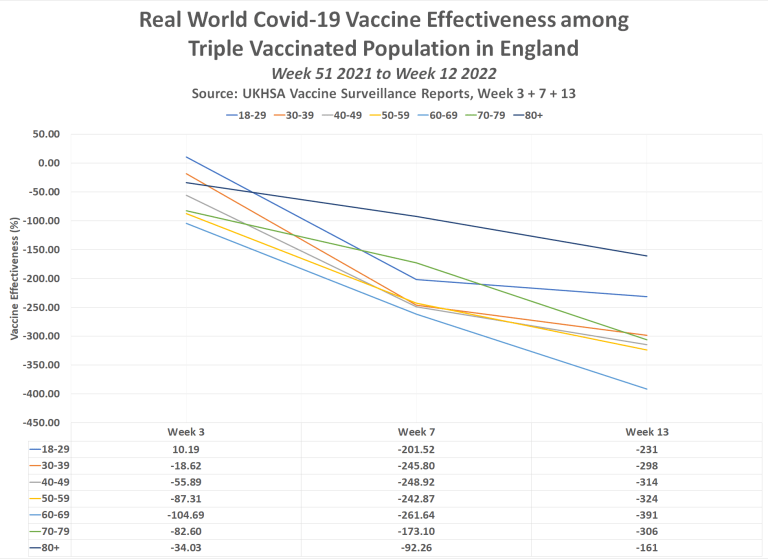
The following chart shows the real world Covid-19 vaccine effectiveness among the triple vaccinated population in England in the Week 3, Week 7 and Week 13 UKHSA Vaccine Surveillance reports of 2022 –

This was nowhere near the claimed 95% effectiveness by Pfizer was it?

But now we have more evidence to both prove the UKHSA was lying, and that the current mainstream media storm surrounding the resignation of Boris Johnson is just a distraction.

This is because another UK Government agency, known as the Office for National Statistics (ONS), has just published data on deaths by vaccination status. 

The latest dataset from the ONS is titled ‘Deaths by Vaccination Status, England, 1 January 2021 to 31 May 2022‘, and it can be accessed on the ONS site here, and downloaded here.

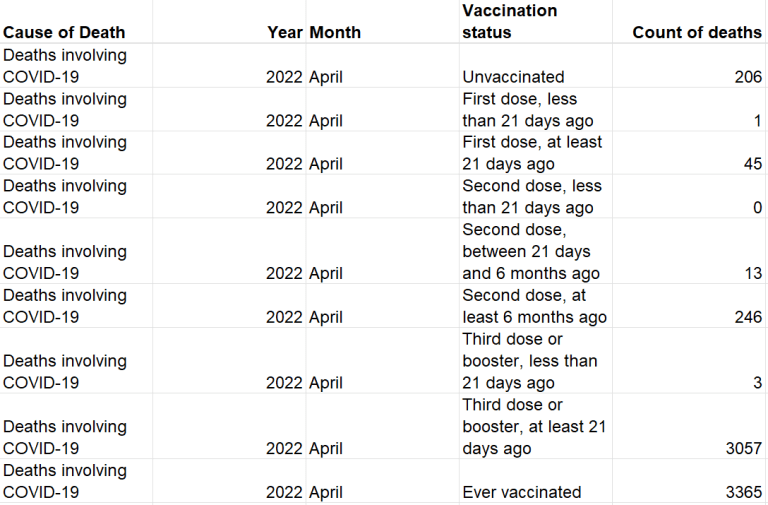
Table 1 of the latest dataet contains figures on the mortality rates by vaccination status for all cause deaths, deaths involving Covid-19, and deaths not involving Covid-19. And it is here that we are able to ascertain the vaccination status of everyone who has died of Covid-19 since the beginning of April 2022, when the UKHSA claimed they could no longer reliably report the figures. 

Here’s how the ONS presents the figures for the month of April 2022 –

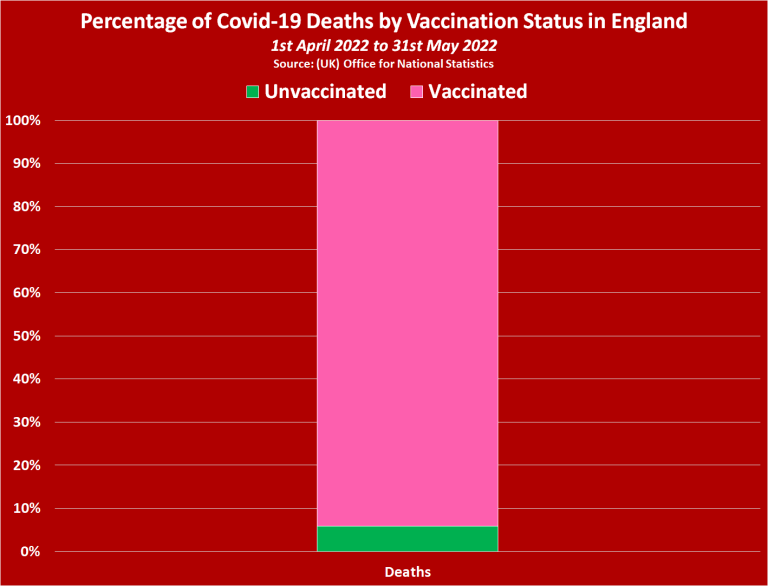
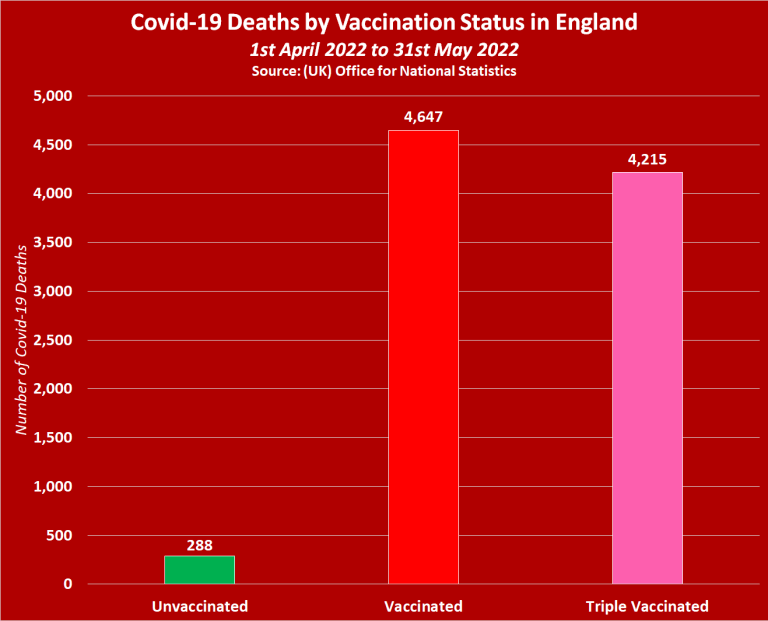
We’ve taken the figures provided by the ONS for both April and May 2022, and produced the following chart showing Covid-19 deaths by vaccination status in England between 1st April and 31st May 2022 – 

In all, according to the ONS, there were 4,935 Covid-19 deaths over these two months, and the vaccinated population accounted for a shocking 4,647 of those deaths. But what’s even more shocking is that the triple vaccinated accounted for 4,216 of those deaths, with just 288 deaths recorded among the unvaccinated population. 

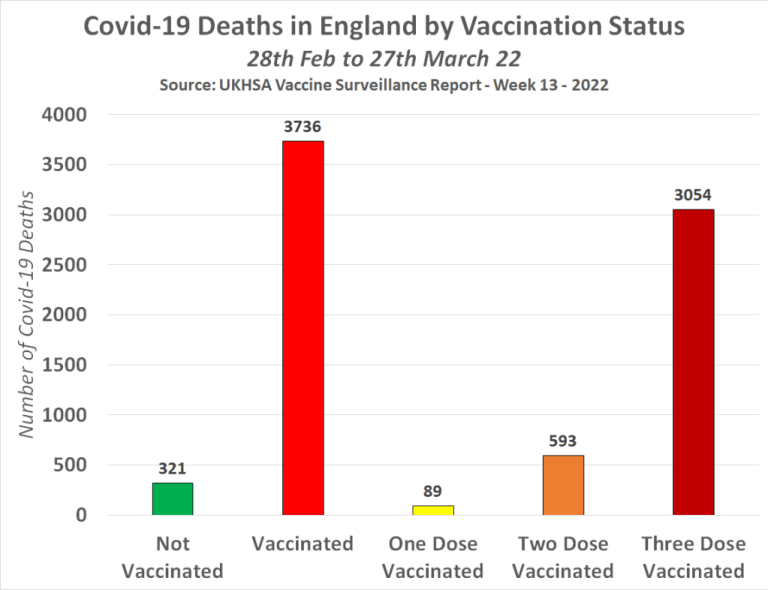
In March 2022, there were 321 Covid-19 deaths within 60 days of a positive test among the unvaccinated population according to the UKHSA Week 13 Vaccine Surveillance Report, as detailed in the following chart using data extracted from table 13b of the report –

This means there were 33 less deaths among the unvaccinated over two months (April and May) than there were in the whole of March. 

Unfortunately, the opposite is true for the vaccinated population, especially the triple vaccinated. There were 911 more deaths among the vaccinated over two months, and 1,161 more death among the triple vaccinated. 

This means deaths have fallen drastically among the unvaccinated but increased significantly among the vaccinated population since the UKHSA claimed they could no longer reliably publish the data. 

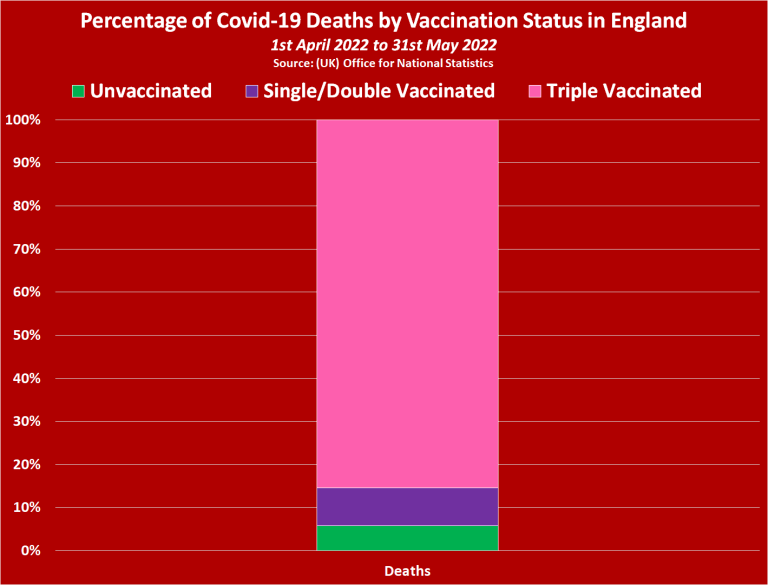
The following chart shows the percentage of Covid-19 deaths by vaccination status in England between 1st April and 31st May 2022, according to the latest ONS dataset published just hours before Boris Johnson’s resignation –

The quietly published figures reveal that the vaccinated population as a whole accounted for a shocking 94% of all Covid-19 deaths in April and May 2022, with the unvaccinated accounting for just 6% of all Covid-19 deaths. But the most horrific statistic here is that 90% of the deaths among the vaccinated were among people who had been given at least three doses of a Covid-19 injection. 

However, many in the UK have been given a fourth dose of a Covid-19 injection since the spring, and judging by the latest data from the Government of Cananda, it’s likely many of those deaths could actually be among the quadruple vaccinated.

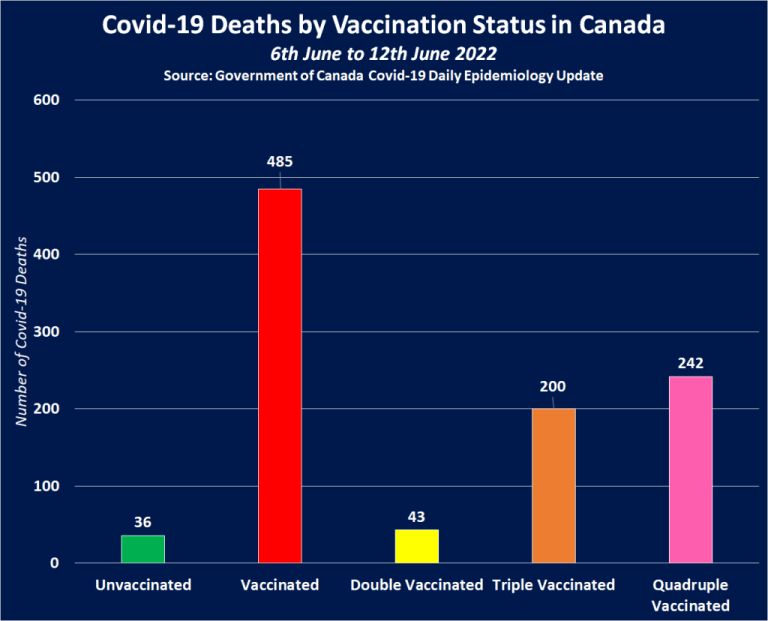
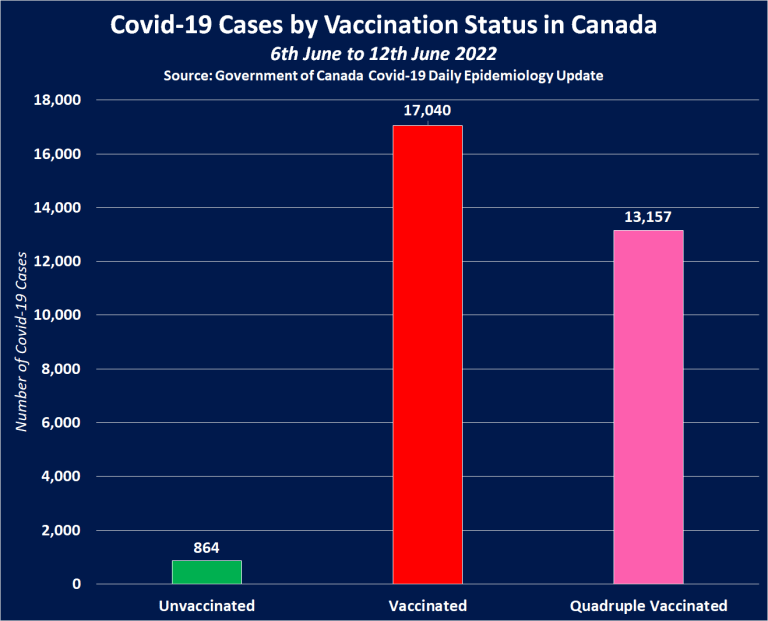
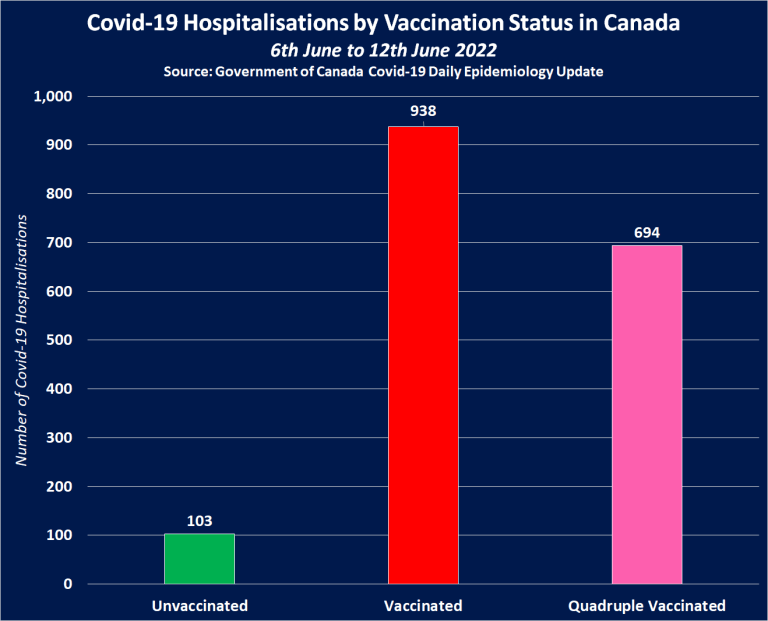
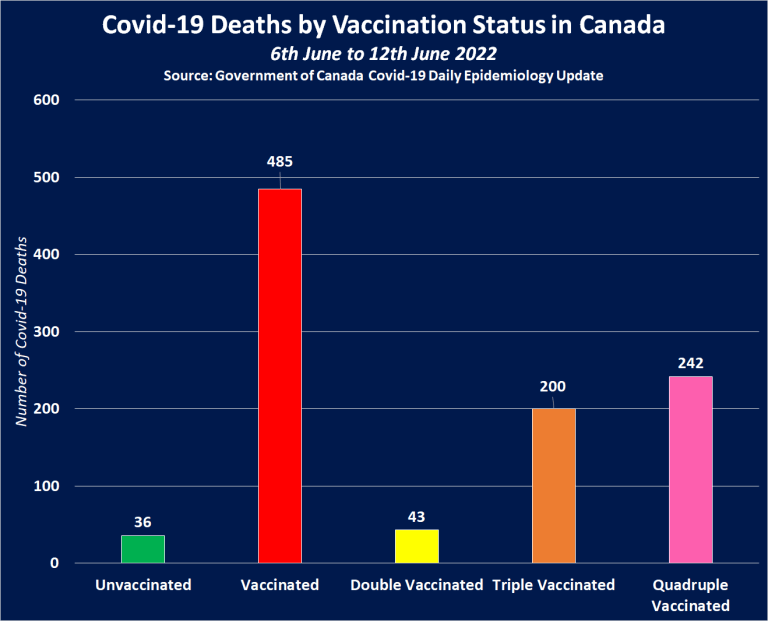
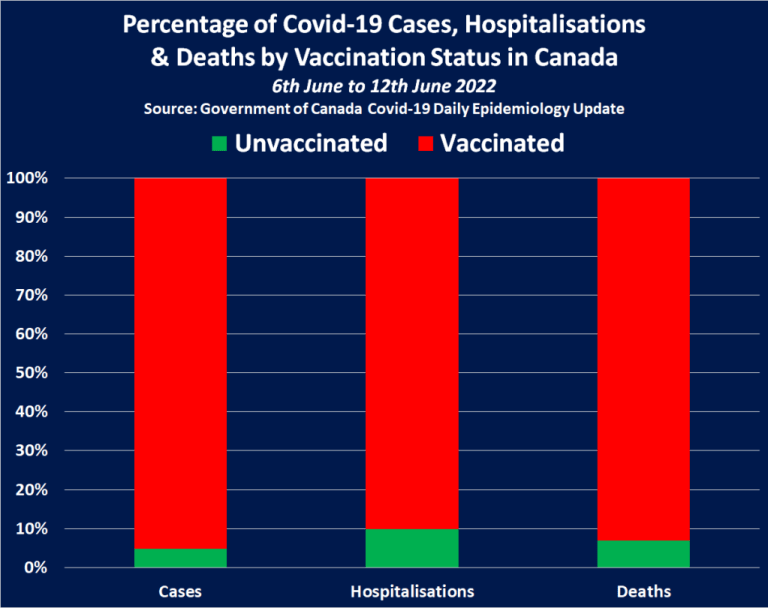
The most recent Government of Canada figures show that there were 521 Covid-19 deaths between 6th and 12th June, and the vaccinated population accounted for 485 of them, with a shocking 242 deaths among the quadruple vaccinated population, meaning they accounted for 50% of Covid-19 deaths among the vaccinated in the second week of June 2022. 

These aren’t the kind of figures you would expect to see if the Covid-19 injections really are up to 95% effective at preventing death, are they? [MORE]

Canadian Gov Data Shows that in June 2022, the Vaccinated Accounted for 93% of all COVID Deaths; 50% of which were Quadruple Jabbed

From [EXPOSE] The following chart shows the number of Covid-19 cases across the whole of Canada by vaccination status between 6th June and 12th June 2022 – 

the most recent figures show that there were 17,904 Covid-19 cases between 6th and 12th June, and the vaccinated population accounted for 17,040 of them, with 13,147 cases among the quadruple vaccinated population.

This means the unvaccinated population accounted for 5% of Covid-19 cases, whilst the vaccinated population accounted for 95%, 77% of which were among the quadruple jabbed.

Covid-19 Hospitalisations

The following chart shows the number of Covid-19 hospitalisations across the whole of Canada by vaccination status between 6th June and 12th June 2022 –

The most recent figures show that there were 1,041 Covid-19 hospitalisations between 6th and 12th June, and the vaccinated population accounted for 938 of them, with 694 hospitalisations among the quadruple vaccinated population.

This means the unvaccinated population accounted for 10% of Covid-19 hospitalisations, whilst the vaccinated population accounted for 90%, 74% of which were among the quadruple jabbed.

Covid-19 Deaths

The following chart shows the number of Covid-19 deaths across the whole of Canada by vaccination status between 6th June and 12th June 2022 –

The most recent figures show that there were 521 Covid-19 deaths between 6th and 12th June, and the vaccinated population accounted for 485 of them, with a shocking 242 deaths among the quadruple vaccinated population, and 200 deaths among the triple vaccinated population. 

This means the unvaccinated population accounted for just 7% of Covid-19 deaths, whilst the vaccinated population accounted for 93%, 50% of which were among the quadruple jabbed, and 41% of which were among the triple jabbed. 

Despite a mass booster campaign, and the Government of Canada trying to desperately conceal it, a bit of time, effort, and simple maths has revealed that 9 in every 10 Covid-19 cases, hospitalisations and deaths were recorded among the fully vaccinated population between 6th and 12th June 2022, and the vast majority of those were among the quadruple jabbed.

Should we really be seeing this if the Covid-19 injections are effective? 

Absolutely not. These figures suggest the more jabs you have, the more likely you are to be hospitalised or lose your life if exposed to the alleged Covid-19 virus.

Caught Off Guard by a Real Question, NY's Unelected Governor Said she ‘Doesn’t Need Data’ to Claim that Concealed Carry Permit Holders Commit Crimes [who needs reality when you have Dogma, Beliefs?]

According to FUNKTIONARY:

belief pushers – those men and women who call on their victim-followers to protest studies, facts, information, inner work, experience, knowledge, etc. that do not support their established dogma. You can never get rid of a belief by having it killed by another one! The realization and knowledge of the nature of what we imagine being God is fundamentally different and qualitatively much more than simply believing. “Reality heals the mind. It not only clears out the wrong information but it also regenerates your ability to think. When you live the lie you get used to believing in things that you subconsciously know aren’t true. You get used to believing lies that other people tell. You get used to believing contradictory information. When you think about reality you learn how to be more discerning. You learn to tell when someone is trying to bullshit you. Reality removes the leaches that are sucking your mind dry.” ~Marc Perkal. Belief is like a taboo—both respected and self-alienating. (See: Dogma, Reality, Awakening, Sacred Moment, Belief-Systems, Sacred Question, Bullshit, Vaccime, Dualisms, Sin, Holy Crossover, Memetics, Belief Space, Indoctrination & FUDGE)

From [HERE] When a local reporter in Albany, New York, asked Gov. Kathy Hochul if she had “the numbers to show it’s the concealed carry permit holders that are committing crimes,” Hochul dismissed the question outright. “I don’t need to have numbers,” Hochul said. “I don’t need to have a data point to say this.”

The reporter, Anne McCloy, persisted and noted: “Somebody who is going to go do a mass shooting or something like that may not go and get a permit.” But Hochul said that was irrelevant to the issue of people carrying concealed handguns for protection.

The exchange must have caught Hochul off guard, since reporters don’t normally challenge support for gun control. But if Hochul wants to claim that the Supreme Court’s decision to strike down New York’s restrictive concealed handgun law “could place millions of New Yorkers in harm’s way,” she has to explain how exactly permits make people a danger to others. After all, permit holders must pass a criminal background check, obtain the required training, and be at least 21 years old.

Democrats and gun control proponents are now predicting disaster in New York and the six other heavily Democratic states with restrictive “may-issue” concealed handgun laws. These states required applicants to demonstrate “proper cause” – a good reason that would convince a government bureaucrat of one’s need for a permit.

But those predicting catastrophe don’t have history on their side. Forty-three states don’t require a good reason for people to carry a gun for protection. And yet, concealed handgun permit holders have proven extremely law-abiding. No right-to-carry state has ever even held a legislative hearing to consider moving back to a “proper cause” requirement.

Since 1976, 18 states have eliminated “proper cause” requirements in favor of “right-to-carry” policies. In state after state, gun control proponents kept predicting the same disaster. And gun control proponents continually lost credibility.

But that didn’t stop Justice Stephen Breyer from speculating: “People of good moral character who start drinking a lot and who may be there for a football game or – or some kind of soccer game – can get pretty angry at each other. And if they each have a concealed weapon, who knows?”

Concealed carry laws have been in place for decades, and there are now 21.5 million permit holders nationwide. If there were any merit to Breyer’s concerns, his imagined scenario ought to have played out at least once. But there isn’t a single recorded incident like it.

In Florida and Texas, permit holders are convicted of firearms-related violations at one-twelfth the rate of police officers. The average revocation rate is one-tenth of 1% in the 19 states with comprehensive data. Typically, permit revocations occur because someone moved, died, or forgot to bring a permit while carrying.

California and New York don’t provide data on revocation rates, but we do have some other information on how arbitrarily permits are issued. In 2013, Los Angeles County named its 341 permit holders out of a population of almost eight million adults. 

In L.A., only the political elite got permits: judges, reserve deputy sheriffs, and a small group of very wealthy, well-connected individuals who gave campaign donations to the county sheriff. Few recipients were minorities or women. While Hispanics made up over half of Los Angeles County residents, they only received about 6.5% of the county’s permits. Women got about 7%, and blacks 5%. In right-to-carry states, women have 29% of the permits and blacks have 12%.

In the rest of the U.S., 10% of adults have permits. People in most states don’t think twice about being in the presence of armed citizens in restaurants, theaters, and stores. New Yorkers must be terrified to visit Pennsylvania, where 14.4% of adults have permits. 

When officials get to decide who gets a permit, explicit death threats often aren’t even enough to qualify. Residence in a high-crime neighborhood is irrelevant.

Fifty-two peer-reviewed, empirical studies have been published on right-to-carry laws. Of these, 25 studies found that allowing people to carry reduces violent crime, and 15 found no significant effect. A minority, 12, observed increases in violent crime after concealed carry was adopted. Unfortunately, these 12 studies suffer, to varying degrees, from systematic error. They overwhelmingly focus on the last 20 years and compare states that recently passed concealed carry laws with more lenient states that had sustained a much larger growth in permits over the past two decades. The finding that crime rose relatively in such states is actually consistent with permit holders reducing crime.

Hochul says her job is to establish sensible gun safety laws, but facts do matter. The current system is arbitrary and favors the privileged. With California and New York unable to protect their citizens, people will soon learn that Hochul’s fears of letting law-abiding citizens defend themselves are unjustified.

John R. Lott Jr. is the president of the Crime Prevention Research Center and the author of “More Guns, Less Crime.”

Black Assistant Attorney General was Just Another NGHR at a Protest to White Des Moines Cops. Suit says Cops pepper-sprayed, tackled him and Falsely Arrested, Incarcerated Him Outside His House

From [HERE] The latest lawsuit accusing Des Moines police of using unnecessary and unlawful force during protests in 2020 comes from another law enforcement official: an assistant Iowa attorney general.

Paxton Williams, who represents the state in income and tax cases as an attorney for the revenue division in the Attorney General's Office, is suing the city, the police department and multiple officers for what he says were their actions against him on the night of June 1, 2020.

Williams, who also is president of the Iowa National Bar Association, a professional group for Black attorneys, is representing himself in the case.

According to his complaint, he participated in a June 1 protest march in response to the arrest of Des Moines Register journalist Andrea Sahouri while she was covering a protest the night before, as well as other "reports of questionable and unlawful police tactics."

The June 1 protest took place on and around the grounds of the Iowa Capitol. Williams says he was standing on the sidewalk outside his East Village residence, which is a few blocks away from the Capitol, when police approached and, without warning or ordering him to disperse, pepper-sprayed and tackled him. Williams was arrested and cited for failure to disperse and spent the night at the Polk

Williams says he and a co-worker had walked with the crowd to the Capitol, where the protest was "overwhelmingly peaceful," until police "without warning" began using what he considered to be unjustified force against protestors.

He "was shocked that law enforcement officers would instigate such violence and escalate it by chasing after individuals, using tear-gas, rubber-bullets, pepper-spray, and tackling, arresting or otherwise detaining individuals who had simply been excising their Iowa and federal constitutional rights," according to the complaint.

Williams says he was afraid for his life during the arrest, particularly when he was placed in the back of an empty police van, which reminded him of the 2015 death of Freddie Gray under similar circumstances in the custody of Baltimore police. Williams says in the complaint that ever since his arrest, he's felt fear and anxiety about what happened, particularly when he passes the entryway to his residence.

In his complaint, Williams denies any animus toward police and notes he works closely with agencies across the state in handling cases on behalf of the Iowa Alcoholic Beverages Division. After his arrest, he says, he "felt real concern (his arrest) would affect his ability to perform his professional duties."

Williams says he filed a complaint with Des Moines police June 4, 2020, alleging excessive force and racial bias. Within hours, according to the complaint, a police sergeant called him to say he had reviewed police camera footage and "it had refuted everything in (Williams') claim," which Williams says is untrue.

He alleges the sergeant, Jeff Robinson, "was engaged in intimidation as an attempt to stop (Williams) from pursuing the matter further," and he is suing Robinson alongside the unnamed officers who took part in his arrest.

Multiple lawsuits filed in wake of 2020 protests

The complaint accuses the city of violating both federal and state constitutional civil rights through false arrest, excessive force, retaliation and malicious prosecution.

The city has not yet filed its answer to Williams' complaint, and city and department officials did not respond to a reporter's messages seeking comment. Williams also could not be reached for comment.

Court records show Williams' failure-to-disperse citation was dismissed under a deferred prosecution agreement requiring him to avoid further criminal charges for six months. A 2021 investigation by the Des Moines Register found that scores of people charged during the protests had their cases dismissed, often due to a lack of evidence or documentation.

Williams' suit is among at least eight cases, including  a class-action suit representing dozens of plaintiffs, to be filed against Des Moines police for alleged actions taken during the protests, which broke out following the death of George Floyd in the custody of Minneapolis police.

Black Man Locked Up for Not Wearing a Mask on Bus Dies in Custody After Authorities Refused to Provide His Blood Pressure Medication. Judge Refused Release, Couldn't Afford Bail, Suit Filed

From [HERE] Another abuse-of-an-incarcerated-person scandal at the beleaguered Santa Rita jail brings a new lawsuit against Alameda County, after they jailed a man for not wearing a mask on AC Transit, then allegedly denied him his medication and he died behind bars.

Few California correctional facilities have as terrible a reputation as Santa Rita Jail in Dublin, the Alameda County mega-jail known for some revolting behavior by guards, and one of the highest in-custody death rates in the state. The place has racked up so many civil lawsuits that it is now under court-appointed external supervision, but there are still plenty of past cases of alleged abuse at the facility working their way through the courts.

Add another one to the docket, in what sounds like another heartbreaking failure of the justice system. 45-year-old Maurice Monk of Oakland was jailed on charges stemming from not wearing a mask on AC Transit in October 2021. Monk, who was mentally ill and additionally had high blood pressure, was allegedly not given his medication while in custody. KTVU reports he died in jail a month later, and a new lawsuit from his family claims he died over being denied that medication.

“Jail Staff found the 45 year-old football coach laying unresponsive in cell just over a month after he was initially brought to Santa Rita,” the text of the lawsuit says. “This foreseeable yet readily preventable death was the result of Mr. Monk being denied adequate medical care despite his family’s repeated efforts to ensure Jail staff gave him the medications he so desperately needed.”

“Mr. Monk became the 57th death to occur at Santa Rita Jail since the year 2014,” the complaint says. “In fact, Mr. Monk was not even the only person to die that day at Santa Rita – adding another tally to the Jail’s shameful record of outpacing every jail in the country for inmate deaths per capita.”

The arrest itself was odd. According to a prior KTVU report, Monk was arrested on June 2, 2021 when he was not wearing a mask on AC Transit, and became argumentative with the driver, who called the police. (According to court documents, Monk also told the driver he would “fuck him up.”) Monk reportedly missed a court appearance, though the family claims he was there, and a deputy turned him away. Monk was taken into custody over a misdemeanor charge of making a criminal threat, and then died in prison, with his family claiming he was denied his medications.

Santa Rita Jail spokesperson Lieutenant Ray Kelly tells KTVU that Monk simply died of natural causes. "It's unfortunate when a person passes away at our jail," Kelly told the station. "Many of the people who come to us suffer from serious illness, poverty and lack of access to regular external health care in the community."

But the suit details a number of other in-custody deaths over alleged medical malpractice, and stunningly, also an incident wherein the jail’s medical director allegedly “was discovered to be unlawfully self-prescribing opioid pain medications for the previous five months and practicing medicine while impaired.”

It’s encouraging that there is, literally, a new sheriff in town in Alameda County to oversee the troubled facility. The far more progressive Yesenia Sanchez was elected last month, and had promised to reform the culture of that jail. That said, Sanchez will not take office until January 2023, and there’s a long list of past indiscretions still haunting that facility.

The lawsuit from Monk’s family does not specify a dollar amount for which they are suing, but asks for a jury trial, and damages for wrongful death.

The Only Monroe Cop Charged in Assault on Timothy Williams Pleads Guilty. 7 White Cops Kicked and Punched Handcuffed Black Man in the Face after He Surrendered and was Laying on the Ground

From [HERE] and [HERE] A former north Louisiana police officer pleaded guilty Friday to kicking a man in the face as he lay on the ground with his hands behind his back during an arrest in 2020, federal prosecutors said.

Jared Desadier, 44, of Monroe, entered the plea before U.S. District Judge Elizabeth Foote to a charge of deprivation of rights under color of law, U.S. Attorney Brandon B. Brown's office said in a news release.

At the time, Desadier was an officer with the Monroe Police Department. Authorities said Desadier and other officers detained a man for questioning and found he was carrying drug paraphernalia. The man ran and officers pursued him. Another officer caught up with the man and ordered him to the ground. The man complied and as the officer prepared to handcuff him, Desadier ran up on them and kicked the man in the face, authorities said.

Desadier admitted in court that his assault was without justification, as the man did not present a threat to any officer or other person on the scene, Brown's office said. Desadier also admitted that he knew that his actions were unjustified and unreasonable under the circumstances.

“Instead of lawfully carrying out his sworn duties as a law enforcement officer, Desadier abused his authority by assaulting and injuring an arrestee who was not a threat,” said Assistant Attorney General Kristen Clarke of the Department of Justice's Civil Rights Division. “The Justice Department will continue to vigorously prosecute any officer who abuses the public trust by using excessive force without basis.”

Desadier faces up to 10 years in prison, three years of supervised release and a fine of up to $250,000. Sentencing is set for Nov. 21. The terms of his plea were not shared by the media.

Jared P. Desadier was accused of malfeasance in office and second-degree battery following the April 2020 encounter with Williams.  Body cam footage shows that Desadier was one of several law enforcement officers on the scene the night they encountered Williams. Desadier was arrested in July that same year and resigned a short time later. He had previously entered a plea of not guilty.

Williams says he ran from police while being searched because he was afraid but later surrendered by putting his hands in the air and laying on his stomach. Williams says he was handcuffed, punched, and kicked by at least two officers.

In a statement sent to KNOE. Williams’ attorneys expressed disappointment that other officers on the scene that night have not been charged. A federal lawsuit was also filed in this case. You can read the full release below.

Over the past year, the Monroe Police Department has been under federal investigation due to the brutal and senseless beating of Mr. Timothy Williams, whereby Mr. Williams still suffers effects from that inhumane treatment today. This has been a long journey, and Mr. Williams is still fighting for justice. We will continue in our endeavors to end this nightmare for Mr. Williams, other police brutality victims and the families of those who are still impacted by these traumatic and irreparable incidents that continually plagues them.

It saddens Mr. Williams, the impacted families, and community to know that the other Monroe Police Officers who were on the scene on that night have not yet been charged. These officers conspired to cover up this incident and should be held accountable. However, we will remain hopeful that justice will prevail. [MORE]
6 White LA County Jail Cops Caught on Camera Beating a Latino Man in an Unprovoked Attack, Struck 14 Times

From [HERE] Six deputies with the Los Angeles County Sheriff's Department were caught on camera using excessive force on an inmate, who was arrested for a non-violent crime, an attorney representing the inmate alleged Monday.

The incident happened at LA County's Inmate Reception Center. The video shows inmate Jesus Soto Jara being compliant before he is ultimately attacked by six officers on video, the lawyer alleged. He was subsequently pushed to an area that is off-camera and further pummeled, he added.

According to his attorney, Soto Jara was arrested last week for drug possession with a firearm. He took a two-year deal during his court appearance in Pomona last Thursday.

Soto Jara's attorney said that his sources claim that a scuffle happened immediately above the camera view involving two other inmates, but, "Mr. Soto had nothing to do with that incident. He was compliant with the officers there."

He also alleged that the officers knew and intentionally continued to beat Sota Jara out of the view of the camera.

"It was out of view on purpose," he claimed. "They knew what was happening."

The inmate's attorney said that his client is in need of further medical treatment because he is suffering from injuries to his back, head and left eye, but he added that he has no pictures of the injuries. He was also unaware of whether there was any documentation of the injuries after they were initially received.

LASD has responded to Soto Jara's attorney's claims, calling them "categorically incorrect and misleading."

"He merely provided a fragment of the facts surrounding the incident, including the inmate was intentionally taken out of camera view and beaten. This is incorrect, in fact the LASD has multiple cameras covering the entire incident," Deputy Raquel Utley said in a statement to FOX 11. 

According to Utley, Soto Jara was in fact involved in an argument with another inmate before the interaction with deputies, and took off his shirt to fight that inmate.

"Mr. Romero claimed the contact with [Soto Jara] was ‘unprovoked’ and he was 100% not involved," Utley said. "This was inaccurate."

Soto Jara's lawyers claim a violation of civil rights and battery and are hoping for a viable motion to vacate his recent sentencing.

LASD tells FOX 11 that the investigation has been referred to the Internal Affairs Bureau, the Internal Criminal Investigation Bureau and the Office of the Inspector General.

This isn't the first time LASD deputies have been accused of using excessive force. Several top-ranking officials have filed lawsuits against LA County Sheriff Alex Villanueva, accusing him of a coverup in connection with a leaked jail video showing a deputy with his department kneeling on a handcuffed inmate's head.

Federal Judge Finds Arizona’s Prison Health Care is "Plainly Grossly Inadequate" and Unconstitutional

From [HERE] A prison sentence should not mean people lose fundamental human rights such as access to health care or humane conditions of confinement. Yet in Arizona prisons, despite a settlement promising to improve conditions, this problem persisted for years. Finally, after almost a decade of broken promises by Arizona state prison officials, U.S. District Judge Roslyn O. Silver ruled on June 30 that the Arizona Department of Corrections, Rehabilitation, and Reentry (ADCRR) systematically violates the constitutional rights of people incarcerated in the state’s prisons by failing to provide them minimally adequate medical and mental health care, and by subjecting them to harsh and degrading conditions in solitary confinement units.

The lawsuit, Jensen v. Shinn, is part of a decade-long struggle to ensure that the nearly 30,000 adults and children in Arizona’s prisons receive the basic health care and minimally adequate conditions to which they are entitled under the Constitution and the law. Plaintiffs in the case are represented by the American Civil Liberties Union’s National Prison Project, the ACLU of Arizona, Prison Law Office, Arizona Center for Disability Law, and the law firm of Perkins Coie LLP.

The ACLU repeatedly detailed in court filings that preventable suffering and deaths, including deaths by suicide in solitary confinement, were occurring in Arizona’s prisons.

Our lawsuit was originally filed in 2012, and in 2014, prison officials settled the case, promising to improve health care and conditions in isolation. But in the seven years between settling the case and going to trial, we repeatedly detailed in court filings that preventable suffering and deaths, including deaths by suicide in solitary confinement, were occurring in Arizona’s prisons.

Judge Silver’s ruling came after 15 days of trial held in November and December 2021, where we showed that incarcerated people suffer excruciating pain, gruesome permanent injuries, and preventable deaths due to the state’s failure to provide basic health care. The evidence we presented at trial included expert testimony regarding unconstitutional medical and mental health care, the psychological effects of isolation and conditions in isolation units, and inadequate health care staffing.

Judge Silver’s 200-page order finding Arizona prison officials in violation of the Eighth Amendment cited evidence showing that ADCRR has abdicated its responsibility to deliver health care through its merry-go-round of for-profit correctional health care vendors. Judge Silver also described the gratuitous cruelty of isolation units, including the indefinite incarceration in solitary confinement of seriously mentally ill persons and children who were convicted as adults. [MORE]

Amnesty International Urges Biden to End the Federal Death Penalty and Commute All Federal Death Sentences

From [DPIC] A new report by the human rights organization Amnesty International urges President Joe Biden to act upon his campaign pledge to work to abolish the death penalty by exercising his constitutional authority to commute the sentences of all federal death row prisoners.

The report, titled The Power of Example: Whither the Biden Death Penalty Promise?, was released on June 27, 2022, just two days before the 50th anniversary of the United States Supreme Court’s decision in Furman v. Georgia, which struck down all existing death penalty statutes. Amnesty International argues that “the 50th anniversary of Furman is an opportune moment for the US administration and members of Congress to be reminded that the world is waiting for the USA to do what almost 100 countries have achieved during this past half century — total abolition of the death penalty.”

The report cites the 2020-2021 federal execution spree under President Donald Trump as an example of the egregious nature of the United States’ application of capital punishment, highlighting the arbitrariness, racial disparities, issues of tribal sovereignty, and the executions of people with intellectual and mental disabilities. “When the Trump administration resumed federal executions in July 2020 after a 17-year hiatus, it provided a stark reminder of the horror show that is capital justice in the United States,” said Justin Mazzola, Deputy Director, Research, at Amnesty International USA.

“The President, his administration and Congress must recognize that respect for human dignity and retention of the death penalty are incompatible; that respect for the rule of law must include international human rights law guaranteeing protection of the rights of those facing the death penalty; that upholding universal rights must include upholding the right of everyone to life and freedom from cruel, inhuman or degrading treatment or punishment; and that making international institutions stronger must include implementing the conclusions of UN human rights treaty bodies,” the report urged.

The 10th Circuit Court of Appeals Rules the Public has a First Amendment Right to Film Police

From [HERE] The federal appeals court covering Colorado and five neighboring states on Monday for the first time affirmed that the public’s right to film police is protected under the First Amendment — a landmark ruling celebrated by press freedom organizations.

“Based on First Amendment principles and relevant precedents, we conclude there is a First Amendment right to film the police performing their duties in public,” Judge Scott M. Matheson Jr. wrote in a published opinion on behalf of a three-judge panel of the 10th U.S. Circuit Court of Appeals in Denver.

The U.S. Supreme Court has not yet taken up the issue.

The ruling centers on the case of a YouTube journalist, Abade Irizarry. On May 26, 2019, Irizarry and three others took out their phones to film a DUI traffic stop in Lakewood, only for officers to intentionally obstruct their line of sight.

One officer, Ahmed Yehia, also shone a bright light into their cameras and then gunned his police cruiser directly at the journalists while blasting his air horn, according to the ruling.

Irizarry sued Yehia, claiming the officer violated his First Amendment rights. A district court judge threw out the lawsuit, saying Yehia was entitled to qualified immunity as a law enforcement officer.

But Monday’s ruling reversed the decision, with the 10th Circuit judges concluding Irizarry’s right to film police “falls squarely within the First Amendment’s core purposes to protect free and robust discussion of public affairs, hold government officials accountable and check abuse of power.”

In the opinion, Matheson cited previous rulings in six of the nation’s 12 circuit courts of appeal affirming the right to film police as a basis for the 10th Circuit’s decision.

Irizarry’s lawyer, Andrew Tutt, said the ruling will protect the right of every citizen under the court’s jurisdiction to record police carrying out their duties.

“Today’s decision also adds to the consensus of authority on this important issue, bringing us a step closer to the day when this right is recognized and protected everywhere in the United States,” he said.

Lakewood police could not be reached for comment.

Press freedom organizations applauded Monday’s ruling, calling the right to record police “extremely critical” for holding law enforcement agencies accountable.

“It’s a huge victory,” said Dan Shelley, president and CEO of the Radio Television Digital News Association and Foundation. “It’s one we hope is replicated by the remaining circuit courts of appeal that have not yet spoken on this issue.”

Colorado law states that “officers may not threaten or intimidate individuals who are recording police activities.” But that doesn’t mean it doesn’t happen.

In 2018, journalist Susan Greene was detained and put in handcuffs after refusing to stop recording an arrest on a public sidewalk. The Denver police officers took Greene’s phone, telling her to “act like a lady.” The Denver Police Department later disciplined the officers for violating policy.

“It’s absurd it needed a court case to get the point across that we have basic First Amendment rights in the 10th Circuit to watchdog police and other officials who work on the public’s dime,” Greene said Monday. “It’s a no-brainer.”

It’s not just reporters who need this ruling, Greene stressed. It’s every person with a phone.

“To a large extent, (reporters) really are only as good as people’s willingness to record something they see as questionable,” she said.

The U.S. Supreme Court declined last year to take a case on this issue, leaving it to the circuit courts of appeal to rule for themselves. Members of Congress also planned to introduce legislation last year that would enshrine the right into law, but the bill never made it to a vote.