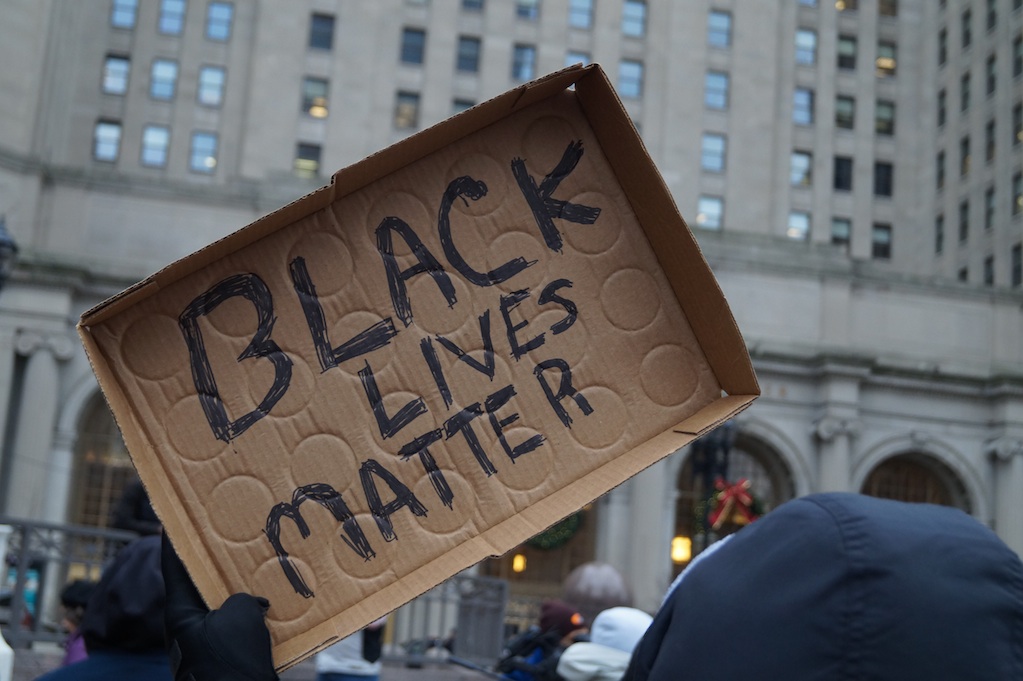
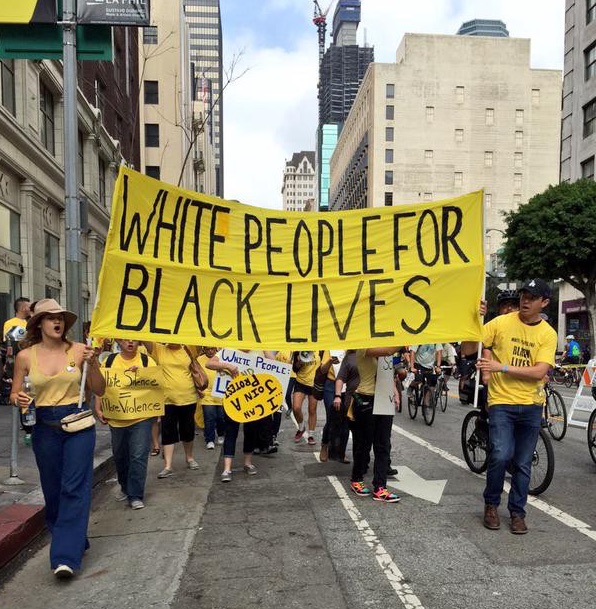
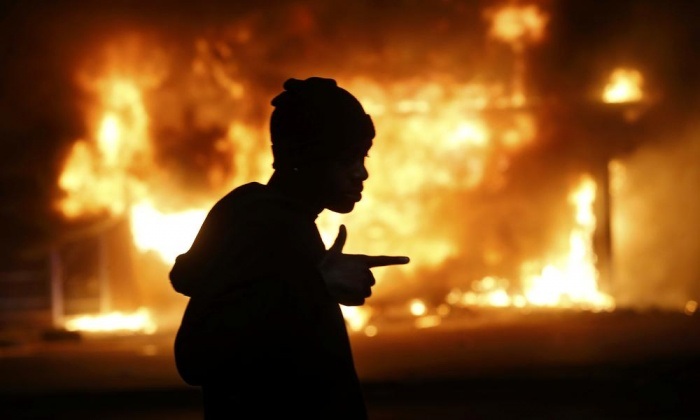
The Justice Department didn’t put out a press release when Pugh was convicted, as it did when she was charged, but her case was an important test. The feds had rarely invoked this civil disorder law until last year, when prosecutors charged at least 55 people, most of them involved in protests in support of racial justice. Former President Donald Trump’s reelection campaign leveraged the crackdown in its marketing; by contrast, the Biden administration has made subtler references to prosecuting these cases.
But far from breaking with the Trump administration’s prosecution of civil disorder cases, the Biden administration has doubled down with an expansive view of so-called domestic violent extremism and domestic terrorism.
Under President Joe Biden, cases involving violations of this civil disorder law have been overseen by the Justice Department’s Counterterrorism Section. In the first month of Biden’s presidency, the department was faced with the January 6 Capitol attack, and the anti-riot law proved useful in those prosecutions: At least 163 of the 570 Capitol defendants prosecuted at the federal level were charged with civil disorder offenses between January and August, along with an array of other charges, according to data compiled by the Prosecution Project.
When the Justice Department began prosecuting protesters and other participants in civil unrest last year, public defenders and former U.S. attorneys said that such charging for property offenses and looting was unprecedented because cases would generally be handled at the state level rather than by federal authorities. Capitol attack participants, on the other hand, committed their alleged acts on federal property, where the jurisdiction is clear.
Regardless of whom the Justice Department charges with civil disorder, however, legal experts we interviewed see the use of these once-rare statutes as indicative of a shift that could make it easier for the federal government to intervene when it alleges criminal activity during protests in the future.
As pending legislation aims to bolster federal powers against domestic terrorism, there is political will among congressional Democrats to repress far-right extremism. But the Justice Department’s approach under Biden also appears to be sweeping up people like Pugh, who had no ties to extremist groups or even an activist background.
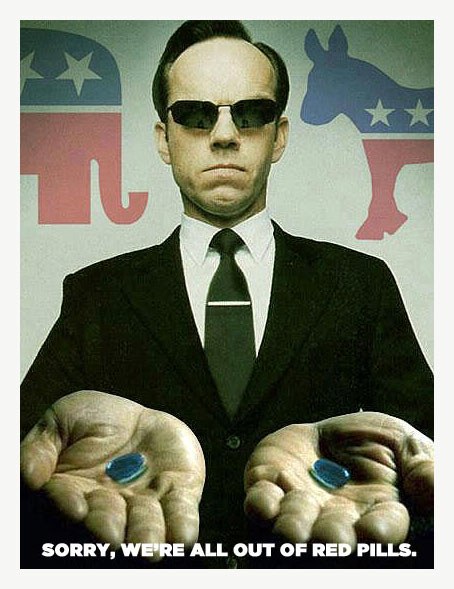
With prosecutions of both Capitol defendants and protesters for racial justice, this use of the federal court system has become a bipartisan affair.
An Unusual Use of the Federal Courts
The same day as the protest in Mobile, former Attorney General Bill Barr activated the FBI’s Joint Terrorism Task Forces to make arrests across the country, and throughout that summer, he pressed federal prosecutors to intervene in protest cases, even convening a task force “devoted to countering violent anti-government extremists.”
Court records for more than 300 federal cases for rioting and destruction arising from last year’s protests seldom referenced people’s affiliations with any political groups to support the idea that they were extremists, according to an analysis by the Associated Press in October. We found that about 59 cases arose from two civil disorder charges, and another 111 were arson cases in which a link to a federal jurisdiction — such as an attack against federal officers or property — wasn’t immediately apparent. The Intercept and Type Investigations were able to confirm the race of 83 defendants in those two groups. Over half of those defendants were Black.
The Justice Department under Biden has continued many of these civil disorder and arson prosecutions. In March, two months after the Capitol attack, new guidance issued by acting Deputy Attorney General John Carlin instructed all federal prosecutors to take a broad view of domestic violent extremism “and include all violent criminal acts in furtherance of ideological goals stemming from domestic influences, such as racial bias and anti-government sentiment.”
In testimony to the Senate Appropriations Committee on May 12, Attorney General Merrick Garland affirmed the department’s priority of prosecuting domestic violent extremism, emphasizing “those who advocate the superiority of the white race.”
But when the committee’s vice chair, Alabama Republican Sen. Richard Shelby, asked about the attorney general’s stance on prosecutions for last year’s urban “rioting and pilfering,” Garland insisted that the department was indifferent about the ideologies undergirding federal crimes.
“Anything that breaks the law is subject to prosecution,” Garland said. “It may not be subject to federal prosecution — there has to be a federal crime involved. But if it breaks the law, of course it’s subject to prosecution.”
In a National Security Council strategy document released in June, the Biden administration declared that while the U.S.’s main domestic terror threats were militia groups and “racially or ethnically motivated violent extremists (principally those who promote the superiority of the white race),” federal authorities would also “disrupt and deter those who launch violent attacks in a misguided effort to force change in government policies that they view as unjust.”
Because the Trump administration disproportionately targeted protesters supporting the racial justice movement, maintaining these prosecutions is concerning, according to Lauren Regan, executive director of the Civil Liberties Defense Center.
“Under Trump, we were seeing an unusual use of the federal court system,” Regan said, but that’s still the case. “We’re not seeing a big change in the Biden administration with regard to the prosecutions of Black Lives Matter activists as compared with the previous administration.”
But the Justice Department has a legitimate interest in maintaining prosecutions across presidential administrations, said Mary McCord, executive director of the Institute for Constitutional Advocacy and Protection at Georgetown University and formerly the Justice Department’s acting assistant attorney general for national security from 2016 to 2017.
It may even have more of a reason to do so after the Capitol attack; choosing only or mostly to prosecute those defendants could raise allegations of political bias or selective prosecution.
“It’s not helpful in the long term for the institution to zing back and forth between administrations,” McCord said. “My suspicion is that the department is trying to take a holistic look: How are we applying these statutes across the board so that we’re not only applying them to one instance of ideologically driven civil disorder and not another? Because that would lose credibility in the courts.”
The Department of Justice did not respond to questions from The Intercept and Type Investigations.
In the late 1960s, U.S. legislators were seemingly obsessed with two young Black leaders of the Student Nonviolent Coordinating Committee. Their names, Stokely Carmichael (Kwame Ture) and H. Rap Brown (Jamil Abdullah Al-Amin), were frequently mentioned in the Congressional Record as legislators debated passing a federal anti-riot law and the FBI pursued them relentlessly.
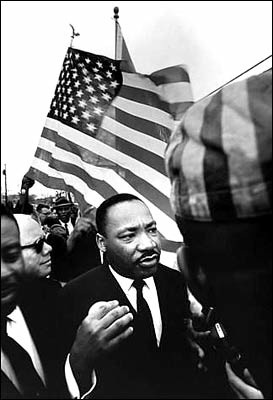
After King was assassinated, cities across the nation burned, and Washington, D.C., erupted into rioting that came within blocks of the White House. One week later, President Lyndon B. Johnson signed into law the Civil Rights Act of 1968, which outlawed discrimination in housing. It was part of a large legislative package that included a set of laws criminalizing civil disturbances that stemmed from conservative legislators’ anxieties over activists like Brown and Carmichael.
This included the “H. Rap Brown Law,” which broadly criminalizes inciting a riot and was famously used against the Chicago Seven. At least 14 people from last year’s uprisings have been charged under the law. One, Shamar Betts, has been in detention since June 2020 for calling for a riot on Facebook; he pleaded guilty to the charge in February 2021. Betts faces a five-year prison sentence and more than $2 million in fines and restitution. The incitement charge hasn’t been deployed against any Capitol defendants, according to data from the Prosecution Project.
The Civil Rights Act of 1968 also included the civil disorder law under which Pugh and about a quarter of Capitol defendants were charged. At least 55 people were charged under the law following last year’s uprising, with 19 of those cases based in Portland, Oregon.
For one of those Portland defendants, lawyers in the Office of the Federal Public Defender in Oregon collaborated on a motion to dismiss the charges that called attention to the late Sen. Russell B. Long — the architect of the civil disorder law, who disdained the civil rights movement — as evidence of the law’s anti-protest roots. They shared the motion’s language with other defense lawyers, including Armstrong, Pugh’s attorney, who filed a motion to dismiss Pugh’s indictment in January.
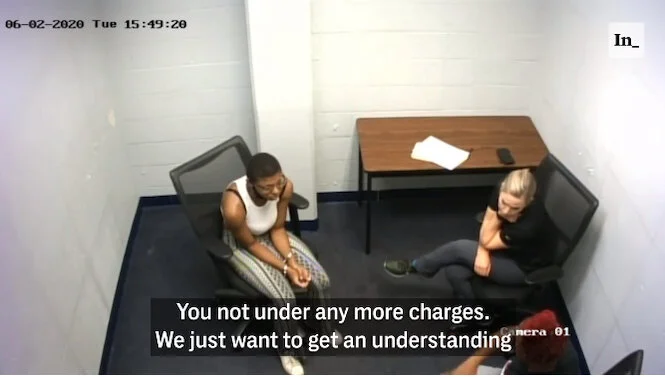
In response to Pugh’s motion, the Justice Department sent prosecutor Michael Dittoe from the department’s National Security Division, normally assigned to the division’s Counterterrorism Section, to one of her pretrial hearings in April. It was an unusual move; The Intercept and Type Investigations reviewed six other anti-rioting cases in which nearly identical motions to dismiss were filed, but only in Pugh’s case did the federal government file a notice of attorney appearance for a prosecutor who specializes in counterterrorism.
The law is “racially neutral,” argued Dittoe, who didn’t respond to multiple messages seeking comment. The District Court in Southern Alabama agreed and denied Pugh’s motion. It became a useful ruling for the department, which then submitted the court’s opinion to the U.S. District Court for the District of Delaware to bolster its case against a person accused of violating the law by throwing a brick into a police car the weekend following George Floyd’s murder.
It’s possible that the Justice Department saw Pugh’s case as one that could establish a legal precedent, according to McCord. She pointed to the memo sent to prosecutors in March calling for a broad view of domestic violent extremism as a possible reason why the National Security Division intervened in Pugh’s case, as opposed to letting the local U.S. attorney’s office handle it.
“If in the course of its new and expanded authority over domestic violent extremist-related cases it has been doing some research behind challenges to [the law], it could have just been bringing in the person who had expertise [in that argument],” McCord said.



![DR FRANCES CRESS WELSING EXPLAINED THAT "Within the historic framework of Western civilization and culture (the civilization and culture organized to prevent white genetic annihilation), all white peoples have the spoken or unspoken mandate to participate actively in their collective struggle for global white genetic survival. This specifically means, of necessity, the murder and slaughter of Black and other non-white males whenever it is felt within the white collective to be necessary and, therefore, justified [MORE], 'A major strategy in the war against the Black collective is the killing of Black males. Black males are being killed daily, in ever-increasing numbers, across the country by whites. Other non-white males also are being killed in ever-increasing numbers.” [MORE] and [MORE]](https://images.squarespace-cdn.com/content/v1/5a5430b290bade59404c2423/1629684784924-5L77K95WJTFSDAD591O1/k+rittenhouse+and+white+cops+RWS.jpg)



![FROM [HERE]](https://images.squarespace-cdn.com/content/v1/5a5430b290bade59404c2423/1629102931969-WSAWI4Z7I7M7L6N00P6M/COVID+GET+PAID.jpg)