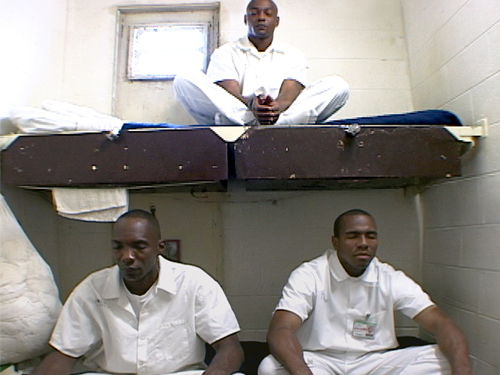
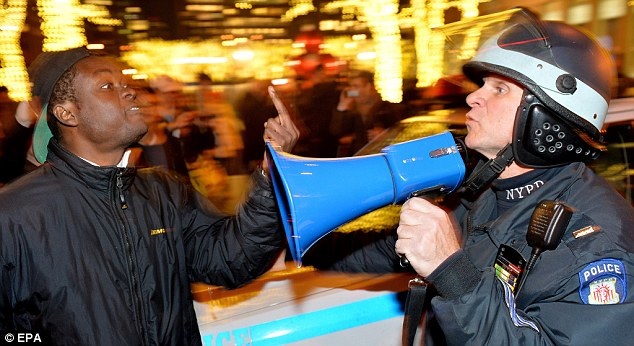
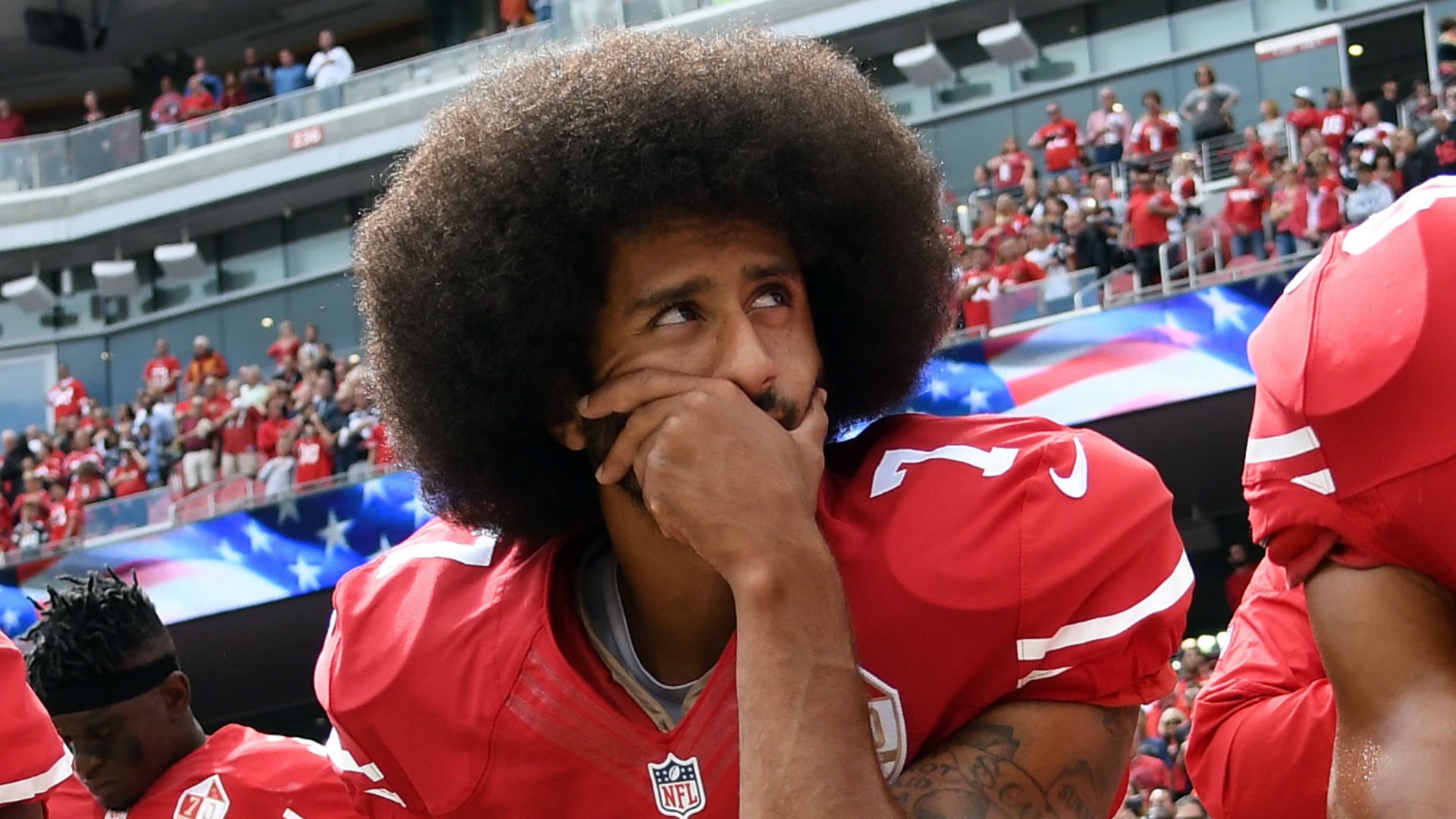
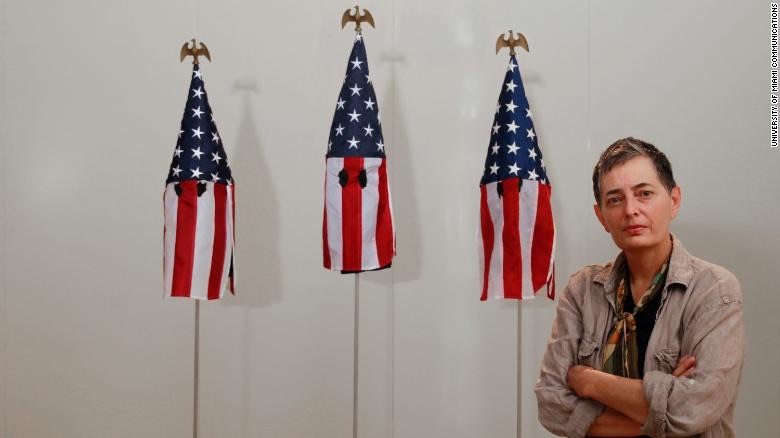
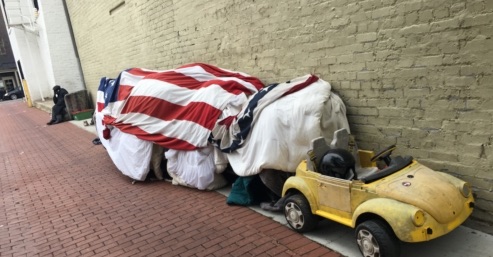
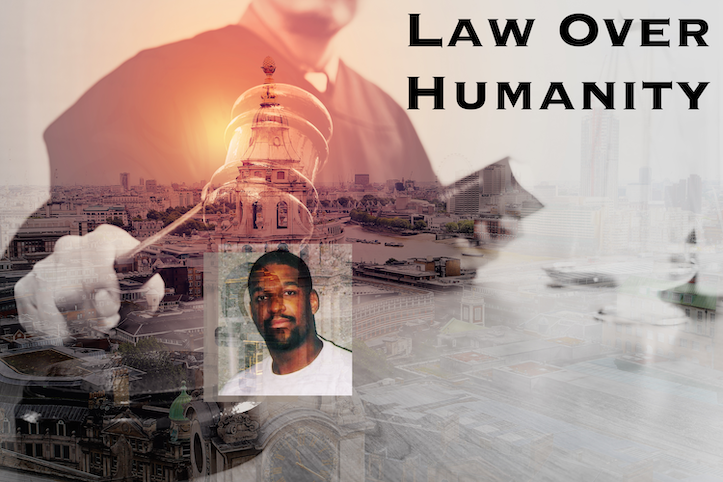
'Thanks for Your Duty, NGHR.' Black Iraq War Veteran Gets 5 Yrs in Prison for Taking his Medical Marijuana into Alabama. White Cop Stopped Him for Loud Music. Sentenced by White Judge

Tvrannolaw - a peremptory (beyond debate or recall) system of law held to be superior to humanity, such that whenever the two are in conflict, humanity must yield. Typified by too many self-propagating laws, contrived complexity, debatable interpret…

Tvrannolaw - a peremptory (beyond debate or recall) system of law held to be superior to humanity, such that whenever the two are in conflict, humanity must yield. Typified by too many self-propagating laws, contrived complexity, debatable interpretations, encroachment, abuse, corruption, symbolaeography, and overdeveloped unrelenting and violent enforcement. Tyrannolaw subjugates humanity to unyielding, despotic, blind and arbitrary authority—resulting in constraint, conformity and fear. Tyrannolaw is the by-product from the myth that truth and law came from God. Reflect for a minute and realize that if people can't manage themselves, how can they possibly manage law. Law cannot prevent its abuse. Tyrannolaw operates under command mentality that breeds irresponsibility and can only flourish in a predatory legalistic world where profit drives the legal structure. People crave reality's uncertainty. Unwittingly, law makes fatal opportunities for which the law renders witless. So we have law and order before freedom—imprisoned for trying to find a way out. (See: Noble Law, Holodeck Court, Justice. Equality, Power, Control, Language, Government, Corporate State, Terms, "The Law" & Police) - FUNKTIONARY

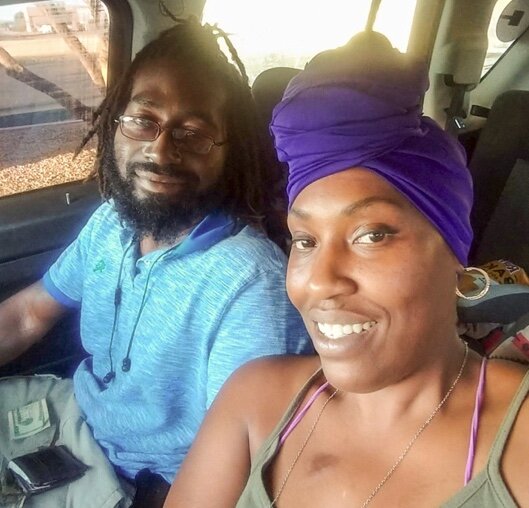
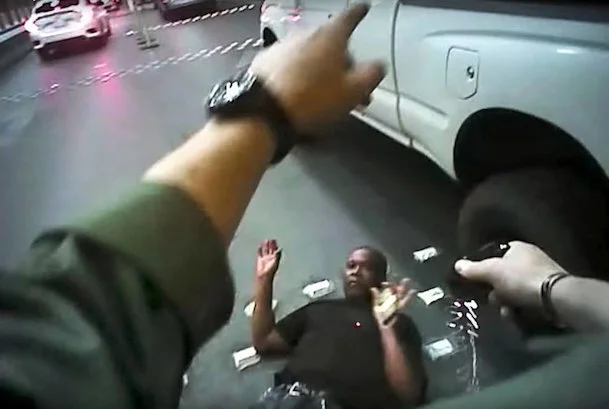
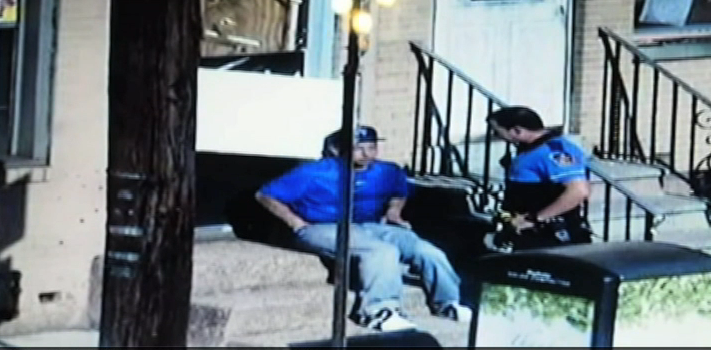
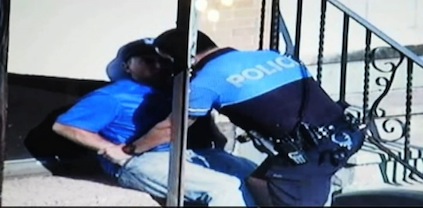
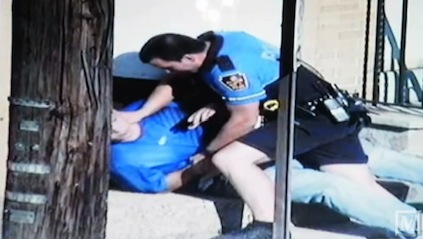
From [HERE] and [HERE] A Black Iraq war veteran was sentenced to five years in prison by a white judge after a white police officer arrested him for bringing medical marijuana into Alabama and liquor into a partly dry county.

Officer Carl Abramo arrested Sean Worsley and his wife in 2016 at a gas station in Gordo, Alabama, where he was playing loud music, playing air guitar and laughing while looking at his wife, according to the Washington Post, the Alabama Political Reporter and the Alabama Appleseed Center for Law and Justice.

According to an arrest report filed five days after the incident, he heard loud music coming from a vehicle and “observed a Black male get out of the passenger side vehicle. They were pulled up at a pump and the Black male began playing air guitar, dancing, and shaking his head. He was laughing and joking around and looking at the driver while doing all this.”

According to the arrest report, he smelled marijuana and asked the couple about it. Sean told him he was a disabled veteran and tried to give him his medical marijuana card. Worsley agreed to turn down his music and allowed the officer to search his vehicle.

The officer found medical marijuana that Worsley had legally purchased in Arizona, along with pain pills prescribed to Worsley’s wife, a bottle of vodka and a six-pack of beer. “I explained to him that Alabama did not have medical marijuana. I then placed the suspect in hand cuffs,” the report reads. 

Even though Sean’s marijuana was legally obtained via a prescription and packaged in a prescription bottle, Abramo booked him in for possession for other than personal use, a Class C felony. Eboni received the same charge, though it was later dropped.

worsely.jpg

The white cop Abramo, who no longer works for the Gordo Police Department, appears to be a racist. His Facebook page is a mishmash of pro-law enforcement videos and memes that demean Muslims, Mexicans, and Democrats. Nearly all the pro-law enforcement posts feature Black people taking up for the police, a common tactic among conservatives seeking to demonstrate that they are not racist. Many of the rest of his Facebook posts promote racist birther conspiracy theories about President Barack Obama and villainize non-white people and ethnic or religious non-whites. [MORE]

The Worsleys spent six days in jail and were released pending trial. Their lives would never be the same.

Medical marijuana is legal in 33 jurisdictions, but not in Alabama. When Worsley was arrested in 2016, Black people in Alabama were more than four times as likely as white people to be arrested for marijuana, according to the Appleseed.

Worsley had service-connected disabilities, including a traumatic brain injury, post-traumatic stress disorder, depression, and back and shoulder pain, according to a letter from the Veteran’s Health administration. He used medical marijuana to calm his nightmares and soothe his back pain. The VA determined that he was “totally and permanently disabled due solely to [his] service-connected disabilities,” according to a February 2015 benefits summary letter included in his Veteran’s Health Administration (VHA) records.

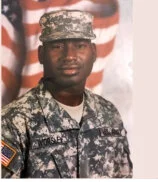
Altogether, Sean spent five years in the military. His deployment to Iraq spanned 14 months, and he was honorably discharged September 22, 2008. Even after his injuries, he served in the Army Reserve until late 2010.  

According to FUNKTIONARY:soldiers - tools (living human resources—walking fodder); corporate mercenaries used by the legistraitors, wordsymthologists, journalists, and politicians to impose the will of their Corporate masters and imperialistic sooth…

According to FUNKTIONARY:

soldiers - tools (living human resources—walking fodder); corporate mercenaries used by the legistraitors, wordsymthologists, journalists, and politicians to impose the will of their Corporate masters and imperialistic soothsayers (i.e., CrimethInc). [MORE]

DUTY - a dirty four letter word. 2) a concept of slaves; a tool of DOGGY. 3) external motivations and saNctions from an alleged or purported “authority.” 4) a word used to excuse our unqualified delight in hurting others. When duty calls the sheet falls. (See: DOGGY, Humanslaves, ORDERLIES, AUTHORITIES & DRAFT).

Neither his service, nor the Purple Heart award he received, nor his prescription mattered in Pickens County, Alabama.

For a state so eager to honor veterans, Alabama’s justice system produces some confounding results. This system’s determination to punish Sean set off a spiral of job loss, homelessness, additional criminal charges, and eventually incarceration in the country’s most violent prison system — all for a substance that’s legal in states where half of Americans live. 

But first, Sean and Eboni drove back home to Arizona. They found the charges made it difficult for them to maintain housing and stability, so they moved to Nevada, where they acquired a home and lived peacefully while their case progressed.  

Worsley agreed to a plea deal to prevent his wife from also being charged, his wife told an Appleseed researcher. When they got to court, the Worsleys were taken to separate rooms. Eboni was horrified. She explained that Sean was disabled with serious cognitive issues, that he had PTSD, that he needed a guardian to help him understand the process and ensure he made an informed decision. If a legal guardian couldn’t be appointed, she offered to serve as his advocate in court as she served as his caregiver at home.

“They said no, and they literally locked me in a room separate from him. And his conversation with me is that they told him that if he didn’t sign the plea agreement that we would have to stay incarcerated until December and that they would charge me with the same charges as they charged him,” Eboni said. “He said because of that, he just signed it.”

Sean’s plea agreement included 60 months of probation, plus drug treatment and thousands of dollars in fines, fees, and court costs. Because the Worsleys had lived in Arizona at the time of their arrest, his probation was transferred to Arizona, instead of Nevada, where they lived. Transferring it again would mean another lengthy delay and more jail time while the paperwork was sorted out, they were told. 

When they arrived in Arizona, the only housing they could find on short notice was a costly month-to-month rental. Their funds were depleted, but at least they had a place to stay. 

The Worsleys were ready to start rebuilding their lives. But when they checked in with the Arizona probation officer, she told them that their month-to-month rental did not constitute a permanent address. She would not approve it for purposes of supervision and told them to contact probation in Alabama. They did, and the Alabama probation officer told them they would have to return to Pickens County to sign paperwork to redo the transfer. They didn’t have the money to do that, so they asked their Alabama lawyer if it could be done by proxy and proceeded with attempting to comply with the other terms of Sean’s probation.

Among those was drug treatment. Had he been an Alabama resident, Sean would have participated in mandatory programming through Alabama’s Court Referral, one of several diversion programs operating across the state. The terms of his probation required him to seek similar services where he lived, so in February 2018, Sean went to the VA to take an assessment for placement in drug treatment. 

The VA rejected him. A letter from VA Mental Health Integrated Specialty Services reads in part, “Mr. Worsley reports smoking Cannabis for medical purposes and has legal documentation to support his use and therefore does not meet criteria for a substance use disorder or meet need for substance abuse treatment.”

The Worsleys maintained contact with their Alabama lawyer and probation officer as best they could, but things were difficult. Eboni, a certified nursing assistant who works with traumatized children, had a job offer rescinded due to the felony charge in Alabama. She also lost her clearance to work with sensitive information to which she needed access to do her job. For a while, the Worsleys slept in their car or lived with family.

In January 2019, they again found themselves homeless. They requested assistance from a program that helps homeless veterans. Just as they completed the six-month program, the VA notified Sean that his benefits would be stopped because Alabama had issued a fugitive warrant for his arrest. Unknown to Sean, he had missed a February court date in Pickens County and the Pickens County Supervision Program had terminated his supervision, citing “failure to attend” and “failure to pay court-ordered moneys.” The case was referred to the district attorney’s office in March 2019.

The Worsleys were in a terrible situation. Eboni needed heart surgery, and Sean had to stop taking on extra gigs so he could help her recover. Rent was expensive, anywhere from $1,200-$1,500 a month, and they had a car loan as well. To cover costs, the couple took out a title loan, but they were unable to keep up with it. They lost Eboni’s truck. They lost their home and again had to move into a temporary rental, paying $400 a week to live in a suburb about an hour from the hospital where Eboni still had frequent appointments.

Sean was able to get his check started up again around August 2019, but the financial hole they were in was so deep that he didn’t have the $250 to renew his medical marijuana card. It expired.

In early 2020, Sean was pulled over on his way to Eboni’s sister’s home, where he was going to help with a minor repair. He had some marijuana with him. The officers who pulled him over noticed he was terrified. They asked him why. According to Eboni, he told them everything: about this PTSD, his traumatic brain injury, the expired card, the outstanding warrant from Alabama. The officers told him not to worry; Alabama would never extradite him over a little marijuana. It would be OK.

But when they called to make sure, Alabama said it wanted to bring Sean back to Pickens County. When the Arizona police told him, he ran. He fell. He was taken to jail, and eventually, he was transported to Pickens County at a cost to the state of Alabama of $4,345. The state moved to make Sean pay that money himself, on top of the $3,833.40 he already owed in fines, fees, and court costs.

RACIST HISTORY. A total of 15 African Americans were lynched in Pickens County, AlaBAMA, many in the courthouse square, from 1877 to 1917. This was the fifth-highest total of any county in the state. A mass lynching was committed by a whit…

RACIST HISTORY. A total of 15 African Americans were lynched in Pickens County, AlaBAMA, many in the courthouse square, from 1877 to 1917. This was the fifth-highest total of any county in the state. A mass lynching was committed by a white crowd who fatally shot four black men and a black woman in their cells in September 1893. They were suspects in the burning of a cotton gin owned by a white man. [MORE]

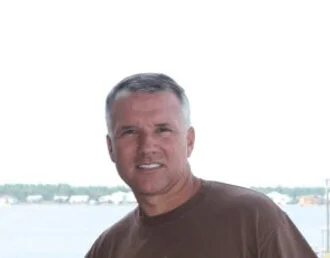
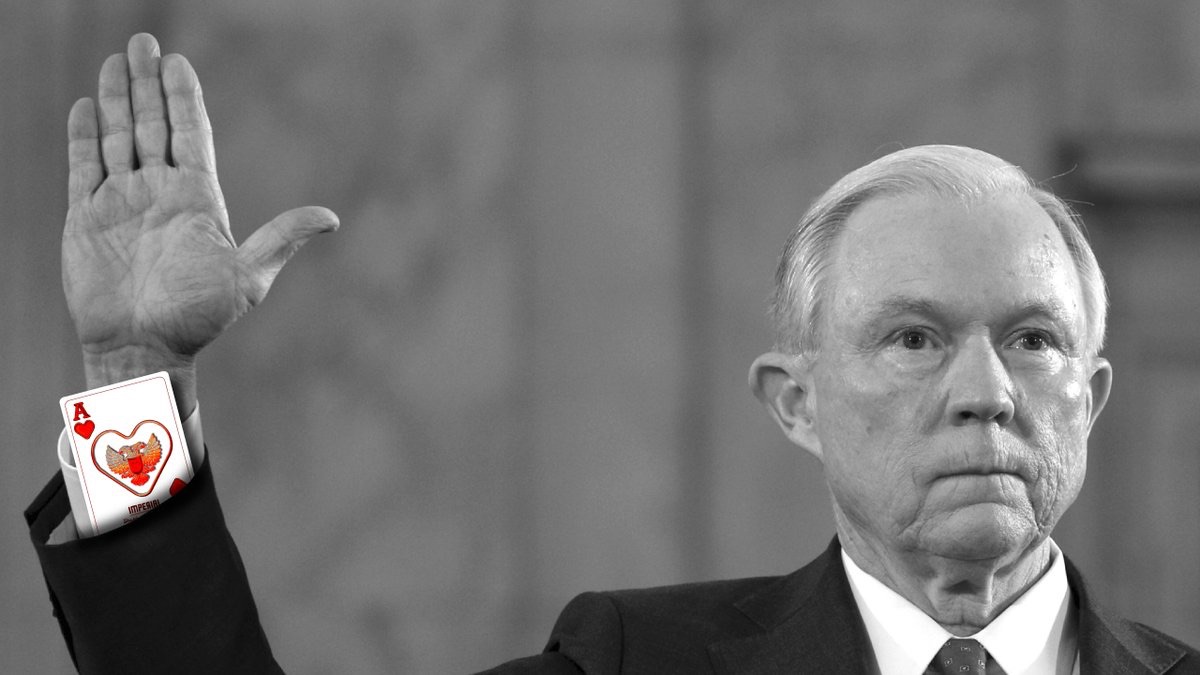
Pickens County District Judge Lance Bailey [racist suspect in photo] revoked Worsley’s probation in April and sentenced him to five years in prison.

Worsley remains in jail as he appeals his sentence.

“I feel like I’m being thrown away by a country I went and served for,” Worsley wrote in a letter from the Pickens County Jail to Alabama Appleseed, a criminal justice organization that recently published a detailed account of his case. “I feel like I lost parts of me in Iraq, parts of my spirit and soul that I can’t ever get back.” [MORE]

BLIND OBEDIENCE TO AUTHORITY IS NOT A VIRTUE

The first error this Black man made was answering this Jack-officer’s questions about marijuana. Due to recent Supreme Court rulings eroding the so-called 5th Amendment right against self-incrimination, remaining silent or asserting the 5th could be harmful because it actually could be used against you at trial. [MORE] Additionally, in the system of racism white supremacy you should presume that most white people are racist [this especially includes white cops]. Nevertheless, it is hard for non-whites to determine which racist suspects are racist because racism is carried out by deception. If you are dealing with a psychopathic racist cop it would be stupid to expect him to treat you humanely. Robotic compliance with a cop’s incriminating questions and orders would be mindless. What to do? One approach is to assert your so-called 6th Amendment right to an attorney. “I will not answer any more of your questions without a lawyer” or “I want an attorney.” Would the racist cop who legally stopped Sean still have made the search? Probably, but Sean would at least may have had a defense to possibly get the non-consensually obtained evidence suppressed [the 6th Amendment can’t be used against you] or to negotiate a better plea.

The second thing was consenting to the search of his vehicle. Sean’s marijuana was legally prescribed. They thought they had nothing to hide. They were wrong. And now Sean has been sentenced to five years in Alabama’s violent, drug-filled, corrupt prison system because of it.

The 3rd mistake was running his mouth when he was pulled over in Arizona. Cops are not your friend and you are not in a benign environment. FUNKTIONARY explains, “People who are awake see cops as mercenary security guards that remind us daily, through acts of force, that we are simultaneously both enemies and slaves of the Corporate state - colonized, surveilled and patrolled by the desensitized and lobotomized drones of the colonizers.” [MORE]. Legal scholar James Duane explains that, ‘far too many ignorant American citizens naturally assume that there must be some kind of legal oversight of police interactions. . . people frequently assume, that there must be some similar rules restricting the ability of the police to trick you into giving up your most precious constitutional rights. I would not blame you for thinking such a thing, but you would be dead wrong.’

The use of dishonesty and deception by cops is rampant and the resulting products (evidence from searches, coerced confessions etc) from such exchanges is energetically used by white prosecutors and ratified by white judges. Nothing per se happened to Sean that was harmful during his stream of consciousness explanation of everything to the Arizona cops but he prolonged the traffic stop, during which anything else could happen leading him to being placed into greater confinement.

The problem here for Sean and many non-whites is not automatic compliance or automatic non-compliance or the automatic assertion of rights - nothing should be automatic. Having some set pre-made plan or code and legal script ready to go could get you killed or placed into greater confinement. Understanding rights or lack thereof and acquiring knowledge has its value but there can be no robotic application of rules to life. If your car is on fire do you think about exiting or just get out? There also can be no set plans for dealing with a maniac cop - that’s like making a plan to deal with falling out of a tree. Legal truths give way to reality on the street, so the only rule for dealing with cops is awareness. You must be consciously present in the here-now moment, completely aware of what is going on internally and externally. You must be able to see things as they really are and not be reacting out of the past or react from your knowledge. If you are aware, present in the right-now, you can spontaneously respond in the moment and whatever you do will probably be right. Awareness can only be cultivated through meditation which enables you to be "the center of a cyclone," remaining centered even in chaos. [MORE

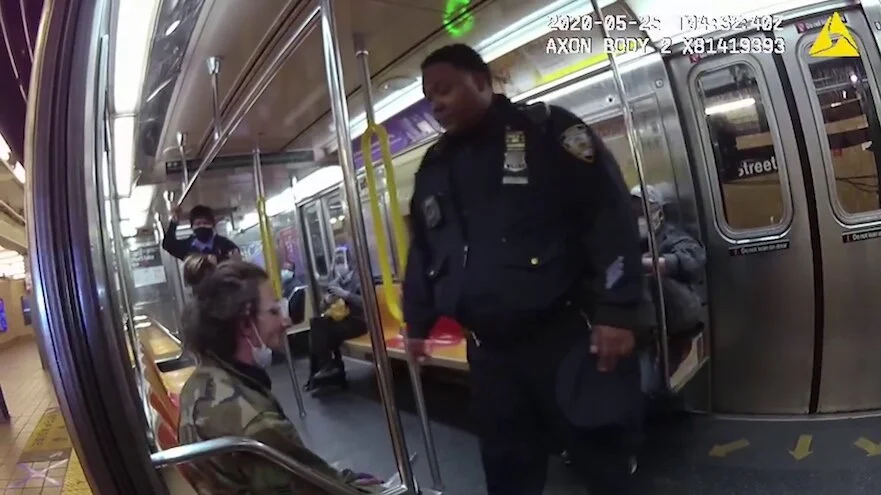
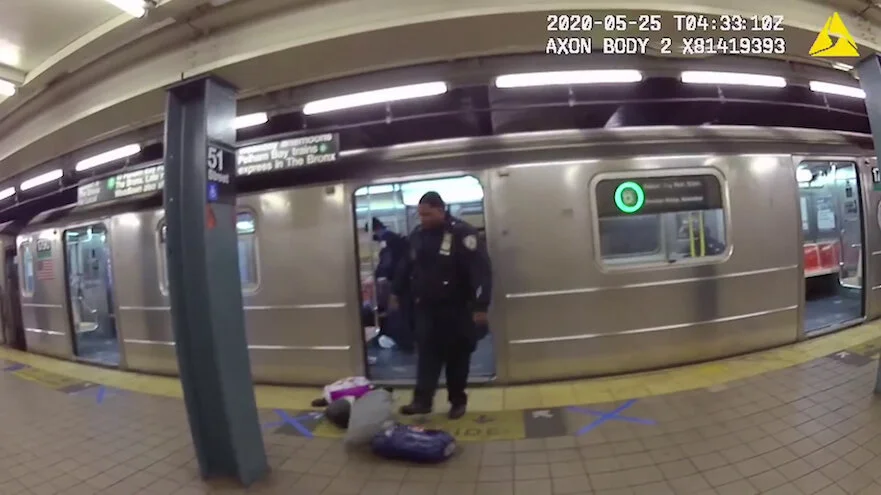
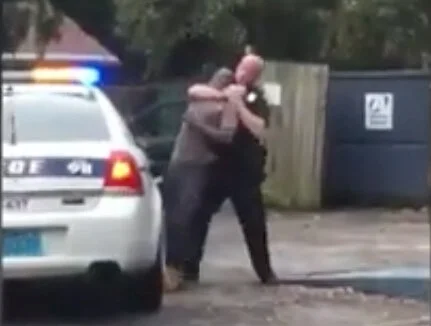
Black Cops are Forbidden from Harming Whites in the System of RWS & Rarely Do So. Was the Black NYPD Droid Confused About His Role or Authorized to Attack a Homeless White Man On an Empty Train?

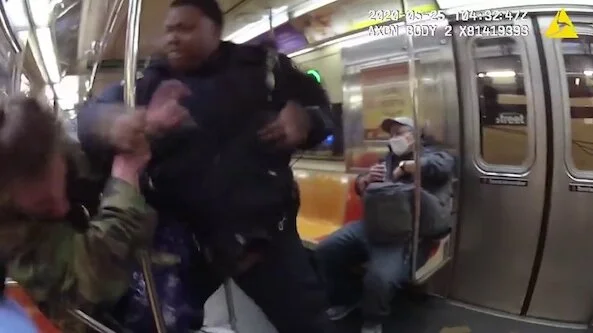
From [HERE] and [HERE] Body camera footage shows a New York City police officer brutally assaulting a homeless man for taking up more than one seat on a near-empty subway train. Instead of immediately arresting the officers involved in his attack, Manhattan District Attorney Cyrus Vance decided to charge the homeless victim with assault, a felony charge which carries a maximum prison sentence of 7 years. However, on Thursday the felony was dropped.

Additionally, the office will offer Joseph an “adjournment in contemplation of dismissal” on the remaining charge of resisting arrest, which means his case may be dismissed and sealed if he accepts that offer and isn’t re-arrested for six months. The DA is not seeking to prosecute him occupying two seats on the subway, a petty crime that hasn't been prosecuted by Cy Vance's office since 2016. The Black cop had swollen knuckles from beating the defenseless white man.

New York City police officers had attacked the man, identified only as “Joseph,” while attempting to kick him off the train, according to the Legal Aid Society, which is representing him. There were plenty of seats on the train.

The video shows the beginning of the altercation where the officer needlessly escalated the situation by repeatedly punching Joseph in the face and it does not show any such kicks to the officer’s hand.

The encounter took place just after midnight on May 25th, when Joseph was riding the subway after leaving a local homeless shelter that didn’t have space for him. The subway was nearly empty and Joseph was tired so he laid down, taking up two spaces. Police told him to get up and leave because he was taking up more than one space, and he moved along to the next train, but the police decided to follow him.

When police confronted him a second time he said that he did not understand why they were bothering him and told them that they could not arrest him for refusing to leave a train. Officer Adonis Long put his hands on Joseph in an attempt to remove him from the train, but Joseph pulled away. As soon as Joseph pulled away, Long punched him in the face repeatedly and then kicked his belongings off the train.

The Legal Aid Society, which released nearly five minutes of body-cam footage Wednesday, said what Vance is offering isn’t good enough. Attorneys there think all charges should be dropped and that the two officers involved — Long and Shimul Saha — should be fired. [MORE]

black drone nypd subway.jpg

In the system of racism white supremacy it is rare for a black police officer to use excessive force against a white person. In fact, according to Anon, 'in the history of modern law enforcement there have been only a handful of instances of a black police officer intentionally shooting or killing an unarmed white person. This is not surprising but it is absolute proof that the black individual operating within a system of white supremacy cannot get away with mistreating whites even if he or she is wearing a uniform, a badge, and carrying a gun.’ [MORE

Anon asks and answers the following:

Q: If a powerful black person mistreats a less powerful white person, isn’t he or she practicing black racism?

A: A black person whose power comes from a white institution will not be allowed to mistreat whites - unless he or she is following orders from more powerful whites. In a system of white supremacy, all whites are more powerful than blacks.

 A white supremacy system by its very NATURE forbids ALL non-white people - regardless of wealth, status, or position - from victimizing white people. Of course, a powerful black person can - as an individual - harm a white individual. For example, it was well known that OJ Simpson physically abused his white ex-wife, Nicole, but that abuse was limited to what he was able to do as an individual.

Powerful blacks present no danger to the white collective but they can be extremely dangerous to other blacks. They are often rewarded for victimizing black people (doing the dirty work), and are usually following orders from more powerful whites behind the scenes.

If they are not following direct orders, they will abuse other blacks: (1) for profit or career advancement; (2) out of fear of losing status or income; (3) out of fear of being lumped with the “inferior” black masses; (4) because of self- hatred issues, which they project onto other blacks; or (5) out of frustration because they have no real power (over whites).” [MORE]

Scholar Alex Vitale explains, “there is now a large body of evidence measuring whether the race of the individual officers affects their use of force. Most studies show no effect. More distressingly, a few indicate that black officers are more likely to use force or make arrests, especially of Black civilians.”

Black cops are obedient black rolebots and human resources plugged into doggy's operating system. They worship rules, government and logic within the parameters of the lex-icon. They are used by Neuropeans primarily against Black people to help disguise the system of racism/white supremacy.

Anon continues:

“Even the most “powerful” blacks in America cannot practice black racism because it does not exist. Nor can they be black supremacists because black supremacy cannot co-exist within a system of white supremacy. They cannot practice white racism because they are not white. They cannot be racists of any kind; but are knowingly OR unknowingly agents (extensions) of the white supremacist system. If anyone disagrees with this premise and believes that blacks can be racist, he or she should be able to answer the following question:

Name one thing that black people - as a group -- have stopped white people - as a group -- from doing that they had a RIGHT to do? For example, denying them the right to work, own a home, live in a certain area, get a fair trial, an education, or use any public facility.” [MORE]

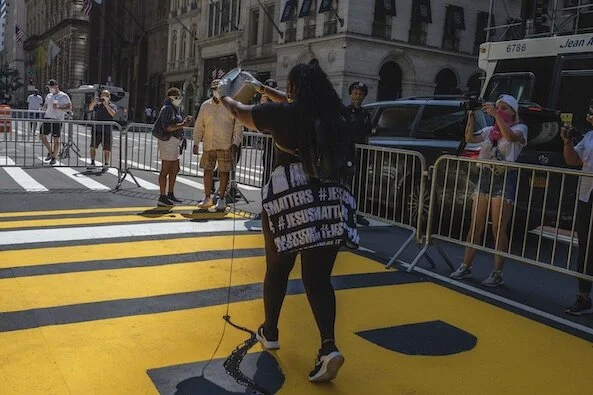
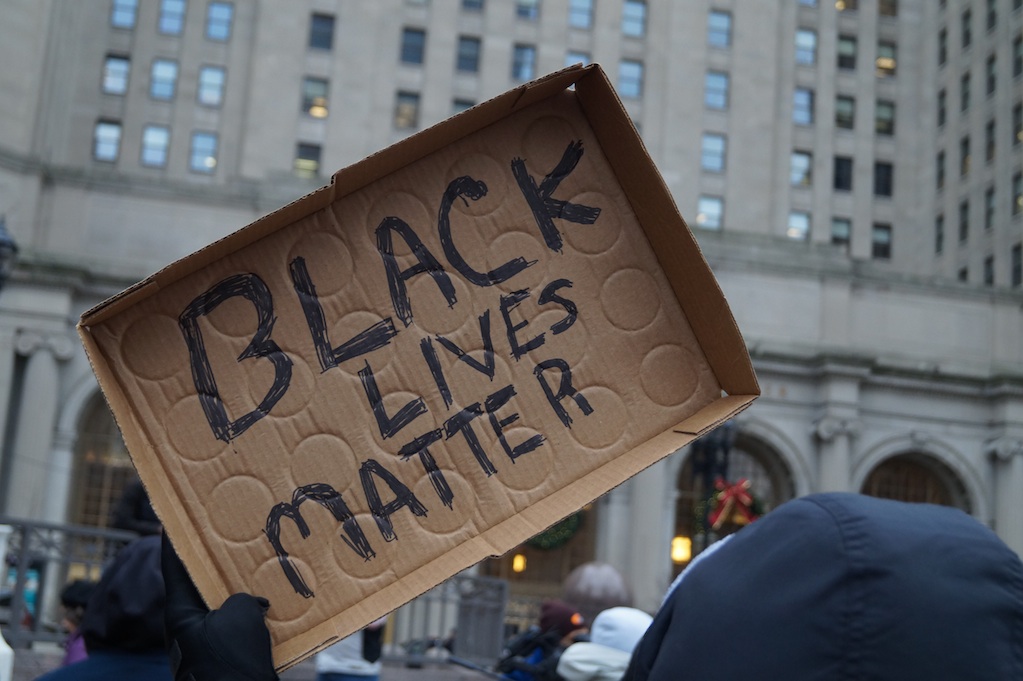
Crazy SNiggers Under the Remote Control of GOP Masters Defaced the NYC BLM Mural in order to Express Jesusized Belief in Their Inferiority, Doubt About the Value of Black Life & Spread Negrosis

SNIGGERING SAMBOS SPREAD NEGROSIS in NYC. According to FUNKTIONARY:Negrosis - the psychological disease affecting and afflicting native Black Americans, Afrikans, Afrikan-Americans, Negroes and all other people of Afrikan genetic heritage characteri…

SNIGGERING SAMBOS SPREAD NEGROSIS in NYC. According to FUNKTIONARY:

Negrosis - the psychological disease affecting and afflicting native Black Americans, Afrikans, Afrikan-Americans, Negroes and all other people of Afrikan genetic heritage characterized by double-consciousness resulting from the falsification of Afrikan consciousness, history and applied spiritual sciences. (See: Double-Consciousness & Asili)

Mentacidal Black Conservatives Hard at Work Conserving their Slavery & Unequal Power Relations in the System of Racism White Supremacy From [HERE] Two SNiggers charged with splashing paint over the Black Lives Matter mural in front of Manhattan’s Trump Tower were identified Sunday as attention-seeking anti-abortion protesters who have pulled similar stunts before.

Bevelyn Beatty, 29, and Edmee Chavannes, 39, who live together on Staten Island, were arrested Saturday after they allegedly started to smear black paint over the bright yellow lettering of the mural on Fifth Ave. in Midtown.

“Refund the police,” the two women shouted as they splashed the paint. “Jesus matters! We will never support Black Lives Matter!” Both women were charged with criminal mischief and released pending a future court date.

“We are taking our country back NOW!” a statement posted on the Facebook page of their At The Well Ministries reads. In the statement they claim to have been treated like “royalty” by cops after their arrest.

“The police expressed their HIGH APPRECIATION for what Bevelyn and Edmee stood up for today,” the statement says. “They expressed their concerns and fears for their city. They are in fear for the sake of NYC and voiced that they need MORE people like them to help and stand up for what is RIGHT!”

A cop responding to their vandalism slipped and fell in the wet paint — loudly thumping his shoulder and head on the pavement, video of the incident shows.

“The police officer that slipped and fell in the paint is doing OKAY,” the statement on their Facebook page reads. “He had a hard fall but is doing very well and fine.”

Beatty went on to deface two more murals Saturday night into Sunday morning — one on Seventh Ave. and West 125th St, in Harlem, the other on Fulton St. in Bedford-Stuyvesant in Brooklyn — and posted videos of both to her Facebook page.

“Y’all, we did an all-nighter. Let me tell you something. Yesterday was epic,” she said in a Facebook video

Police were still investigating the later incidents, and have made no arrests, an NYPD spokesman said.

The pair were arrested last month for protesting outside Planned Parenthood’s New York headquarters.

They were also charged with disorderly conduct when they disrupted a council meeting in a suburb of Fort Myers, Fla. The duo also took an unwelcome trip to Kentucky to attend a Easter Sunday service held in defiance of the governor’s April coronavirus stay-at-home order.

Elite racists often talk to us through their dummies. Above SNiggers parrot their masters; talking about “Our country.” This is how you sound and act when you have a "jesusized" "belief" in your racism/white supremacy programming. Such a falsified consciousness causes them to engage in behavior designed specifically to block out any awareness of their true reality in the context of racism/white supremacy and their imaginary freedomThese deluded Sambo negros are controlled by remote, programmed to hate themselves and speak and act against their own interest - kicking themselves in the ass for problems caused by the system of racism/white supremacy. 

Doc Blynd further states, “Racism White Supremacy is a virus in the mind, a malignant meme that has both the host of the virus and the whole society sick. White Supremacy (Degeneracy) is socially engineering Black Consciousness and/or also responsible for the falsification of Black consciousness.” We know that when whites [“the hosts of the virus”] believe in the granfalloon of race and the illusion of their superiority they practice racism and act out genocidally in all areas of activity. When Blacks believe in the fantastic myth of white genetic superiority the result is a falsified consciousness. As stated by Amos Wilson, "it is not so much that the European says we are inferior, and that we are this and that, and that the European maligns our character, et cetera: It is the belief on our part that what he says is true that makes us crazy. It is a crazy reaction to what he says, an insane and unthinking kind of approach to dealing with what he says about us, that maintains the craziness. [MORE] Dr. Bobby Wright describes such a state of mind as Mentacide [refers to the deliberate, systematic destruction of a group's mind} which he said is the ultimate threat to Black people’s survival [MORE]. Such a consciousness is a political necessity to maintain RSW.

Uncontrollable CHP Police Refuse to Release Bodycam or ID the Cop who Shot Erik Salgado 18X b/c "the People" Apparently Granted Its Power To Its “Servants" to Make Them Masters Over Public Video

Rulers don’t serve servants. Counselor Burris must re-enact the murder of Eric Salgado b/c the Authorities keep the video secret. “In an often unremarked development, police have taken control of body camera programs and - most damaging - they have claimed sole ownership of the videos themselves. They decide which system to buy; they determine how to configure those systems; they decide when and how to activate the cameras; they control who may have access to the videos and when; and they determine how long to keep the videos, and whether to destroy them.” “This configuration runs entirely counter to accountability: the very party that the program aims to check currently has full control over its contents.”

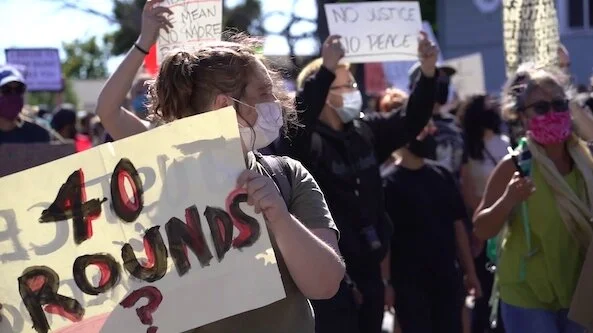
GIVING THEM THE POWER TO RULE US? From [HERE] On what would have been Erik Salgado’s 24th birthday, his Oakland family and their attorney announced they are filing a wrongful-death lawsuit for a June 6 CHP police shooting that killed Salgado and wounded his pregnant girlfriend who was shot in the stomach.

Erik Salgado’s mother is asking officers for two things: to see body-cam footage of the incident and to know the names of the officers involved in the shooting.

Erik Salgado, 23, was fatally shot by CHP officers yards from his home on June 6. His girlfriend was injured in the shooting and lost their baby.

Family attorney John Burris recounted the events that took place on June 6.

“(A CHP officer) stood right here and started shooting into the car,” Burris said. “The number of shots fired was enough to kill a militia. It was a massacre!”

Burris claims that roughly 40 shots were fired, 18 of them striking Delgado.

Felina Ramirez, Delgado’s mother, spoke through an interpreter, saying, “I don’t understand why with such cruelty — what was the requirement for that?”

The family and legal team say the force was unjustified. Burris claims the safety of the officers was never in question. All Delgado tried to do, Burris says, was to maneuver around a car.

But that’s not the information from the agency investigating this case. According to the Oakland police department, Delgado was in a stolen Dodge Charger and started ramming police cars during a traffic stop. That’s when officers opened fire.

The family is pleading for transparency but, in some cases, police agencies are allowed to withhold certain information. The Salgado family says they just want to see what happened and who exactly was responsible for taking Erik and his unborn son’s life.

KPIX reached out to the CHP for comment but was told it cannot speak about pending litigation. The Oakland police department says it is still investigating the case along with the Alameda County District Attorney’s Office.

eric salgado .jpg

AUTHORITY IS A FARCE. Larken Rose explains,

“Contrary to what nearly everyone has been taught to believe, “government” is not necessary for civilization. It is not conducive to civilization. It is, in fact, the antithesis of civilization. It is not cooperation, or working together, or voluntary interaction. It is not peaceful coexistence. It is coercion; it is force; it is violence. It is animalistic aggression, cloaked by pseudo-religious, cult-like rituals which are designed P make it appear legitimate and righteous. It is brute thuggery, disguised as consent and organization. It is the enslavement of mankind, the subjugation of free will, and the destruction of morality, masquerading as “civilization” and “society.” The problem is not just that “authority” can be used for evil; the problem is that, at its most basic essence, it is evil. In everything it does, it defeats the free will of human being controlling them through coercion and fear. It supersedes and destroys moral consciences, replacing them with unthinking blind obedience. It cannot be used for good, any more than a bomb can be used to heal a body. It is always aggression, always the enemy of peace, always the enemy of justice. The moment it ceases to be an attacker, it ceases to fit the definition of “government.” It is, by its very nature, a murderer and a thief, the enemy of mankind, a poison to humanity. As dominator and controller, ruler and oppressor, it can be nothing else.

The alleged right to rule, in any degree and in any form, is the opposite of humanity. The initiation of violence is the opposite of harmonious coexistence. The desire for dominion is the opposite of love for mankind. Hiding the violence under layers of complex rituals and self-contradictory rationalizations, and labeling brute thuggery as virtue and compassion, does not change that fact. Claiming noble goals, saying that the violence is “the will of the people,” or that it is being committed “for the common good” or “for the children,” cannot change evil into good. “Legalizing” wrong does not make it right. One man forcibly subjugating another, no matter how it is described or how it is carried out, is uncivilized and immoral. The destruction it causes, the injustice it creates, the damage it does to every soul that it touches – perpetrators, victims, and spectators alike-cannot be undone by calling it “law,” or by claiming that it was necessary. Evil, by any name, is still evil. “

$2.2M Settlement in Tashii Farmer Case: White Vegas Cop Murdered Black Man in 73 Second Chokehold. If He Survived He Wouldn't Have Been Charged w/a Crime. White DA Dropped Charges Against Cop

Tashii+Brown.jpg

From [HERE] Tashii Farmer’s [aka Tashii Brown] family filed the lawsuit against the Las Vegas Metropolitan Police Department. According to a spokesperson for the family legal team, a $2.2 million settlement was reached. The settlement will now go before the Las Vegas Metropolitan Police Department Fiscal Affairs Committee for its approval.”

The settlement is believed to be the largest ever in a lawsuit alleging misconduct by the Metro Police.

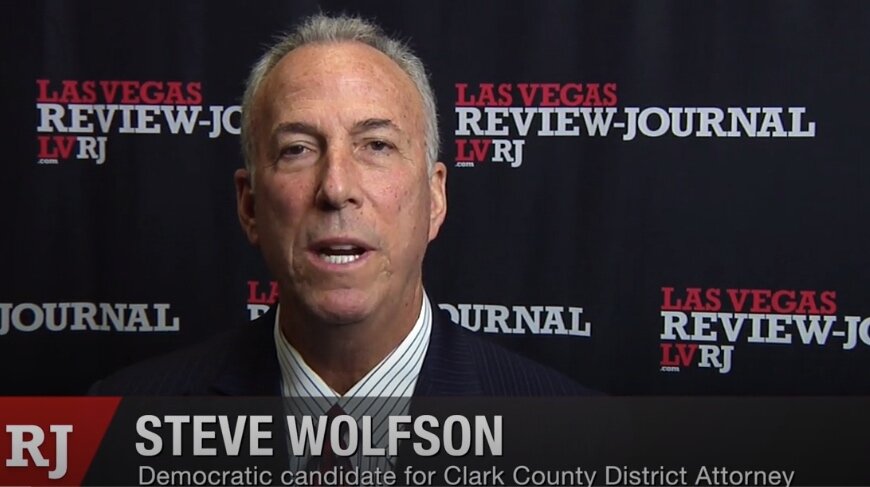
The former officer accused of causing Farmer’s death, Kenneth Lopera, who was accused of using excessive force, was charged with involuntary manslaughter and oppression under color of office in the death of Farmer. However, racist suspect District Attorney Steve Wolfson dropped the charges.

steve wolfson da.jpg

Tashii Brown initially approached Ofc Lopera and another white uniformed officer having coffee about 1 a.m. May 14 inside The Venetian, 3355 Las Vegas Blvd. South. The arrest report said that he was sweaty and told the officers he was sweaty because he had run from people who were chasing him.

He asked the officers if they knew the location of a drinking fountain, and he ran off when Lopera tried to grab him. Lopera then inexplicably fervently chased the man out of the hotel - as if he had committed a crime and ordered him to stop. [Under arrest for Sweating? Under arrest or seized by cops for what crime at this point? In order for the police to stop you the Supreme Court has ruled that police must have reasonable articulable suspicion that there is criminal activity afoot and the person detained is involved in the activity. Clearly, these rules have no practical significance in reality in regards to interactions between cops and Blacks.] 

During the chase Officer Lopera, who caught up to Mr. Farmer behind the hotel, said he believed Farmer was trying to carjack a pickup truck. [right] As he ran behind him, the Loopera later claimed he saw Farmer try to open the tailgate and then driver’s side door of a truck parked near the rear of the property.and stunned him with a Taser when he saw the man trying to open the tailgate of a truck parked near the property’s rear. 

The arrest report shows the men in the truck did not feel threatened by Brown and notes Lopera did not have “reasonable suspicion or probable cause” to chase him. The video also does not show Farmer even touching the car. He runs past the vehicle. He is about 10 feet from the vehicle when the cop orders him to stop and when the first stun gunshot comes. [MORE

Police said Brown would not have been charged with a crime if he survived.

Lopera stunned Brown with a Taser seven times — engaging the stun gun for five seconds six times and for nine seconds the final time, the report shows. Police Department policies are to use the Taser three times, for five seconds each cycle, and then move on to another type of force.

The Taser’s prongs attached to Brown’s lower back, causing “neuromuscular incapacitation” that would have made it difficult for Brown to move, the report shows.

Throughout the encounter, Lopera was screaming at Brown to get on his stomach so he could be handcuffed. But the longest time between stuns was six seconds, so Brown never had a reasonable opportunity to do so. The arrest report also notes that Brown was positioned on his stomach several times as the officer yelled at him to comply.

Contradictory commands

Lopera’s commands also contradicted each other. He told the man, “don’t move” and “get on your stomach.” The report also notes that several commands for Brown to lie on his stomach were issued while Brown was on his stomach.

Brown was struck in the head 10 to 12 times after he was stunned with a Taser, even though he was not displaying aggressive resistance. Detectives investigating the case concluded the man was trying to pull the Taser prongs out of his back, trying to avoid being handcuffed and protecting his face from the punches, the report shows.

The report first describes the chokehold the officer used on Brown as the lateral vascular neck restraint, the only neck hold allowed under Metro policies, but later describes it as a rear naked choke based on statements Lopera made to other officers after the struggle.

LOPERA [IN PHOTO] BRAGGED ABOUT HIS ACTIONS TO OTHER OFFICERS AFTER THE ENCOUNTER, ACCORDING TO A FEDERAL LAWSUIT FILED IN MAY ON FARMER’S BEHALF BY ATTORNEY ANDRE LAGOMARSINO.

LOPERA [IN PHOTO] BRAGGED ABOUT HIS ACTIONS TO OTHER OFFICERS AFTER THE ENCOUNTER, ACCORDING TO A FEDERAL LAWSUIT FILED IN MAY ON FARMER’S BEHALF BY ATTORNEY ANDRE LAGOMARSINO.

“I tased him, fought a little bit and choked him out,” Lopera told an officer.

During the choking, another white police officer on the scene told officer Kenneth Lopera to release his chokehold on Tashii Brown, but the officer continued his hold for another 46 seconds, a Metropolitan Police Department report on the officer’s arrest shows.

Lopera places Brown in a chokehold 2 minutes and 58 seconds into the struggle, the report shows.

“Is he out yet?” the officer asks 15 seconds later. He then repeats the question twice.

Another officer arrives on the scene 3 minutes and 25 seconds into the struggle.

“Let him go, Ken,” the officer is heard saying.

“Are you sure?” Lopera said.

“Yeah,” the officer replies 3 minutes and 26 seconds into the struggle. Lopera released the hold on Brown at 4 minutes and 11 seconds, the report shows.

The exchange between the two officers can be heard clearly when the sound from previously released body camera footage is enhanced.

According to Metro Police, Lopera used his taser seven times, along with an unauthorized chokehold while trying to restrain Farmer outside The Venetian. The Clark County D.A. dropped those charges in August 2018 after a grand jury decided not to indict Lopera.

Lopera retired from the LVMPD and filed a lawsuit of his own against the agency, stating that the department’s internal investigation is self-incriminating.

White Mobile Cop Caught on Video Putting a Non-Resisting Black Man in a Chokehold & His Hands Around His Neck Quits the Force. Race Soldier was Named Officer of the Month Twice

mobile cops .jpg

From [HERE] AND [HERE] Officer Blake Duke has submitted his resignation Friday while under investigation for an off-duty incident, according to Mobile Police.

Duke was placed on paid administrative leave Wednesday. Mobile Police Department did not offer details on why.

In February, Duke was placed on desk duty during an administrative investigation into the actions captured on cellphone video during the arrest of Howard Green, Jr. The video filmed by a witness shows Officer Duke grabbing 53-year-old Howard Green Jr. in what appears to be a chokehold. When the video picks up, officers are on top of Green. Once he’s under control and being walked to the car, Officer Duke is seen pushing Green forward. Green’s face hits the side of the car. Then Duke applies the hold.

According to witnesses, a traffic stop led to this incident. Mobile Police Chief Lawrence Battiste said Howard Green mentioned he was going to spit on Officer Duke.

The video has been watched and shared thousands of times on social media.

“Next thing you know they (police) just pulled the man over and slammed him. I’m talking about slammed him,” a witness said.

The witnesses who were recording the video tell Duke they’re recording, and he threatens to arrest them.

BLACK STRAWBOSS NOT SURE IF IT WAS A CHOKEHOLD.

An Oath of No Obligation: Study says Thousands of US Judges [Unaccountable & Uncontrollable by citizens] who Broke Laws & Oaths Remain On the Bench. 9 out of 10 Return to Bench After Sanctions

judge doggy 23.jpg

From [HERE] Judge Les Hayes once sentenced a single mother to 496 days behind bars for failing to pay traffic tickets. The sentence was so stiff it exceeded the jail time Alabama allows for negligent homicide.

Marquita Johnson, who was locked up in April 2012, says the impact of her time in jail endures today. Johnson’s three children were cast into foster care while she was incarcerated. One daughter was molested, state records show. Another was physically abused.

“Judge Hayes took away my life and didn’t care how my children suffered,” said Johnson, now 36. “My girls will never be the same.”

Fellow inmates found her sentence hard to believe. “They had a nickname for me: The Woman with All the Days,” Johnson said. “That’s what they called me: The Woman with All the Days. There were people who had committed real crimes who got out before me.”

In 2016, the state agency that oversees judges charged Hayes with violating Alabama’s code of judicial conduct. According to the Judicial Inquiry Commission, Hayes broke state and federal laws by jailing Johnson and hundreds of other Montgomery residents too poor to pay fines. Among those jailed: a plumber struggling to make rent, a mother who skipped meals to cover the medical bills of her disabled son, and a hotel housekeeper working her way through college.

Hayes, a judge since 2000, admitted in court documents to violating 10 different parts of the state’s judicial conduct code. One of the counts was a breach of a judge’s most essential duty: failing to “respect and comply with the law.”

Despite the severity of the ruling, Hayes wasn’t barred from serving as a judge. Instead, the judicial commission and Hayes reached a deal. The former Eagle Scout would serve an 11-month unpaid suspension. Then he could return to the bench.

Until he was disciplined, Hayes said in an interview with Reuters, “I never thought I was doing something wrong.”

This week, Hayes is set to retire after 20 years as a judge. In a statement to Reuters, Hayes said he was “very remorseful” for his misdeeds.

Community activists say his departure is long overdue. Yet the decision to leave, they say, should never have been his to make, given his record of misconduct.

“He should have been fired years ago,” said Willie Knight, pastor of North Montgomery Baptist Church. “He broke the law and wanted to get away with it. His sudden retirement is years too late.”

Hayes is among thousands of state and local judges across America who were allowed to keep positions of extraordinary power and prestige after violating judicial ethics rules or breaking laws they pledged to uphold, a Reuters investigation found.

Judges have made racist statements, lied to state officials and forced defendants to languish in jail without a lawyer – and then returned to the bench, sometimes with little more than a rebuke from the state agencies overseeing their conduct.

Recent media reports have documented failures in judicial oversight in South Carolina, Louisiana and Illinois. Reuters went further.

In the first comprehensive accounting of judicial misconduct nationally, Reuters reviewed 1,509 cases from the last dozen years – 2008 through 2019 – in which judges resigned, retired or were publicly disciplined following accusations of misconduct. In addition, reporters identified another 3,613 cases from 2008 through 2018 in which states disciplined wayward judges but kept hidden from the public key details of their offenses – including the identities of the judges themselves.

All told, 9 of every 10 judges were allowed to return to the bench after they were sanctioned for misconduct, Reuters determined. They included a California judge who had sex in his courthouse chambers, once with his former law intern and separately with an attorney; a New York judge who berated domestic violence victims; and a Maryland judge who, after his arrest for driving drunk, was allowed to return to the bench provided he took a Breathalyzer test before each appearance.

The news agency’s findings reveal an “excessively” forgiving judicial disciplinary system, said Stephen Gillers, a law professor at New York University who writes about judicial ethics. Although punishment short of removal from the bench is appropriate for most misconduct cases, Gillers said, the public “would be appalled at some of the lenient treatment judges get” for substantial transgressions.

Among the cases from the past year alone:

In Utah, a judge texted a video of a man’s scrotum to court clerks. He was reprimanded but remains on the bench.

In Indiana, three judges attending a conference last spring got drunk and sparked a 3 a.m. brawl outside a White Castle fast-food restaurant that ended with two of the judges shot. Although the state supreme court found the three judges had “discredited the entire Indiana judiciary,” each returned to the bench after a suspension.

In Texas, a judge burst in on jurors deliberating the case of a woman charged with sex trafficking and declared that God told him the defendant was innocent. The offending judge received a warning and returned to the bench. The defendant was convicted after a new judge took over the case.

“There are certain things where there should be a level of zero tolerance,” the jury foreman, Mark House, told Reuters. The judge should have been fined, House said, and kicked off the bench. “There is no justice, because he is still doing his job.”

Judicial misconduct specialists say such behavior has the potential to erode trust in America’s courts and, absent tough consequences, could give judges license to behave with impunity.

“When you see cases like that, the public starts to wonder about the integrity and honesty of the system,” said Steve Scheckman, a lawyer who directed Louisiana’s oversight agency and served as deputy director of New York’s. “It looks like a good ol’ boys club.”

That’s how local lawyers viewed the case of a longtime Alabama judge who concurrently served on the state’s judicial oversight commission. The judge, Cullman District Court’s Kim Chaney, remained on the bench for three years after being accused of violating the same nepotism rules he was tasked with enforcing on the oversight commission. In at least 200 cases, court records show, Judge Chaney chose his own son to serve as a court-appointed defense lawyer for the indigent, enabling the younger Chaney to earn at least $105,000 in fees over two years.

In February, months after Reuters repeatedly asked Chaney and the state judicial commission about those cases, he retired from the bench as part of a deal with state authorities to end the investigation.

Tommy Drake, the lawyer who first filed a complaint against Chaney in 2016, said he doubts the judge would have been forced from the bench if Reuters hadn’t examined the case.

“You know the only reason they did anything about Chaney is because you guys started asking questions,” Drake said. “Otherwise, he’d still be there.”

BEDROCK OF AMERICAN JUSTICE

State and local judges draw little scrutiny even though their courtrooms are the bedrock of the American criminal justice system, touching the lives of millions of people every year.

The country’s approximately 1,700 federal judges hear 400,000 cases annually. The nearly 30,000 state, county and municipal court judges handle a far bigger docket: more than 100 million new cases each year, from traffic to divorce to murder. Their titles range from justice of the peace to state supreme court justice. Their powers are vast and varied – from determining whether a defendant should be jailed to deciding who deserves custody of a child.

Each U.S. state has an oversight agency that investigates misconduct complaints against judges. The authority of the oversight agencies is distinct from the power held by appellate courts, which can reverse a judge’s legal ruling and order a new trial. Judicial commissions cannot change verdicts. Rather, they can investigate complaints about the behavior of judges and pursue discipline ranging from reprimand to removal.

Few experts dispute that the great majority of judges behave responsibly, respecting the law and those who appear before them. And some contend that, when judges do falter, oversight agencies are effective in identifying and addressing the behavior. “With a few notable exceptions, the commissions generally get it right,” said Keith Swisher, a University of Arizona law professor who specializes in judicial ethics.

Others disagree. They note that the clout of these commissions is limited, and their authority differs from state to state. To remove a judge, all but a handful of states require approval of a panel that includes other judges. And most states seldom exercise the full extent of those disciplinary powers.

As a result, the system tends to err on the side of protecting the rights and reputations of judges while overlooking the impact courtroom wrongdoing has on those most affected by it: people like Marquita Johnson.

Reuters scoured thousands of state investigative files, disciplinary proceedings and court records from the past dozen years to quantify the personal toll of judicial misconduct. The examination found at least 5,206 people who were directly affected by a judge’s misconduct. The victims cited in disciplinary documents ranged from people who were illegally jailed to those subjected to racist, sexist and other abusive comments from judges in ways that tainted the cases.

The number is a conservative estimate. The tally doesn’t include two previously reported incidents that affected thousands of defendants and prompted sweeping reviews of judicial conduct.

In Pennsylvania, the state examined the convictions of more than 3,500 teenagers sentenced by two judges. The judges were convicted of taking kickbacks as part of a scheme to fill a private juvenile detention center. In 2009, the Pennsylvania Supreme Court appointed senior judge Arthur Grim to lead a victim review, and the state later expunged criminal records for 2,251 juveniles. Grim told Reuters that every state should adopt a way to compensate victims of judicial misconduct.

“If we have a system that holds a wrongdoer accountable but we fail to address the victims, then we are really losing sight of what a justice system should be all about,” Grim said.

In another review underway in Ohio, state public defender Tim Young is scrutinizing 2,707 cases handled by a judge who retired in 2018 after being hospitalized for alcoholism. Mike Benza, a law professor at Case Western Reserve University whose students are helping identify victims, compared the work to current investigations into police abuse of power. “You see one case and then you look to see if it's systemic,” he said.

The review, which has been limited during the coronavirus pandemic, may take a year. But Young said the time-consuming task is essential because “a fundamental injustice may have been levied against hundreds or thousands of people.”

SPECIAL RULES FOR JUDGES

Most states afford judges accused of misconduct a gentle kind of justice. Perhaps no state better illustrates the shortcomings of America’s system for overseeing judges than Alabama.

As in most states, Alabama’s nine-member Judicial Inquiry Commission is a mix of lawyers, judges and lay people. All are appointed. Their deliberations are secret and they operate under some of the most judge-friendly rules in the nation.

Alabama’s rules make even filing a complaint against a judge difficult. The complaint must be notarized, which means that in theory, anyone who makes misstatements about the judge can be prosecuted for perjury. Complaints about wrongdoing must be made in writing; those that arrive by phone, email or without a notary stamp are not investigated, although senders are notified why their complaints have been summarily rejected. Anonymous written complaints are shredded.

These rules can leave lawyers and litigants fearing retaliation, commission director Jenny Garrett noted in response to written questions.

“It’s a ridiculous system that protects judges and makes it easy for them to intimidate anyone with a legitimate complaint,” said Sue Bell Cobb, chief justice of the Alabama Supreme Court from 2007 to 2011. In 2009, she unsuccessfully championed changes to the process and commissioned an American Bar Association report that offered a scathing review of Alabama's rules.

In most other states, commission staff members can start investigating a judge upon receiving a phone call or email, even anonymous ones, or after learning of questionable conduct from a news report or court filing. In Alabama, staff will not begin an investigation without approval from the commission itself, which convenes about every seven weeks.

By rule, the commission also must keep a judge who is under scrutiny fully informed throughout an investigation. If a subpoena is issued, the judge receives a simultaneous copy, raising fears about witness intimidation. If a witness gives investigators a statement, the judge receives a transcript. In the U.S. justice system, such deference to individuals under investigation is extremely rare.

“Why the need for special rules for judges?” said Michael Levy, a Washington lawyer who has represented clients in high-profile criminal, corporate, congressional and securities investigations. “If judges think it’s fair and appropriate to investigate others for crimes or misconduct without providing those subjects or targets with copies of witness statements and subpoenas, why don’t judges think it’s fair to investigate judges in the same way?”

Alabama judges also are given an opportunity to resolve investigations confidentially. Reuters interviews and a review of Alabama commission records show the commission has met with judges informally at least 19 times since 2011 to offer corrective “guidance.” The identities of those judges remain confidential, as does the conduct that prompted the meetings. “Not every violation warrants discipline,” commission director Garrett said.

Since 2008, the commission has brought 21 public cases against judges, including Hayes, charging two this year.

Two of the best-known cases brought by the commission involved Roy Moore, who was twice forced out as chief justice of the Alabama Supreme Court for defying federal court orders.

Another Alabama justice fared better in challenging a misconduct complaint, however. Tom Parker, first elected to the state’s high court in 2004, pushed back when the commission investigated him in 2015 for comments he made on the radio criticizing the U.S. Supreme Court's decision legalizing gay marriage.

Parker sued the commission in federal court, arguing the agency was infringing on his First Amendment rights. He won. Although the commission had dropped its investigation before the ruling, it was ordered to cover Parker’s legal fees: $100,000, or about a fifth of the agency’s total annual budget.

In 2018, the people of Alabama elected Parker chief justice.

These days, Parker told Reuters, Alabama judges and the agency that oversees them enjoy “a much better relationship” that’s less politically tinged. “How can I say it? It’s much more respectful between the commission and the judges now.”

"GUT INSTINCT"

Montgomery, Alabama has a deep history of racial conflict, as reflected in the clashing concepts emblazoned on the city’s great seal: “Cradle of the Confederacy” and “Birthplace of the Civil Rights Movement.”

Jefferson Davis was inaugurated here as Confederate president after the South seceded from the Union in 1861, and his birthday is a state holiday. As was common throughout the South, the city was the site of the lynchings of Black men, crimes now commemorated at a national memorial based here. Police arrested civil rights icon Rosa Parks here in 1955 for refusing to give up her seat on a city bus to a white passenger.

Today, about 60% of Montgomery’s 198,000 residents are Black, U.S. census records show. Even so, Black motorists account for about 90% of those charged with unpaid traffic tickets, a Reuters examination of court records found. Much of Judge Hayes’ work in municipal court involved traffic cases and the collection of fines. Hayes, who is white, told Reuters that “the majority of people who come before the court are Black.”

City officials have said that neither race nor economics have played a role in police efforts to enforce outstanding warrants, no matter how minor the offense.

In April 2012, Marquita Johnson was among them. Appearing before Hayes on a Wednesday morning, the 28-year-old single mother pleaded for a break.

Johnson had struggled for eight years to pay dozens of tickets that began with a citation for failing to show proof of insurance. She had insurance, she said. But when she was pulled over, she couldn’t find the card to prove it.

Even a single ticket was a knockout blow on her minimum-wage waitress salary. In addition to fines, the court assessed a $155 fee to every ticket. Court records show that police often issued her multiple tickets for other infractions during every stop – a practice some residents call “stacking.”

Under state law, failing to pay even one ticket can result in the suspension of a driver’s license. Johnson’s decision to keep driving nonetheless – taking her children to school or to doctor visits, getting groceries, going to work – led to more tickets and deeper debt.

“I told Judge Hayes that I had lost my job and needed more time to pay,” she recounted.

By Hayes’ calculation, Johnson owed more than $12,000 in fines. He sentenced Johnson to 496 days in jail. Hayes arrived at that sentence by counting each day in jail as $25 toward the outstanding debt. A different judge later determined that Johnson actually owed half the amount calculated by Hayes, and that Hayes had incorrectly penalized her over fines she had already paid. To shave time off her sentence, Johnson washed police cars and performed other menial labor while jailed.

Hayes told Reuters that he generally found pleas of poverty hard to believe. “With my years of experience, I can tell when someone is being truthful with me,” Hayes said. He called it “gut instinct” - though he added, in a statement this week, that he also consulted “each defendant's criminal and traffic history as well as their history of warrants and failures to appear in court.”

Of course, the law demands more of a judge than a gut call. In a 1983 landmark decision, Bearden v. Georgia, the U.S. Supreme Court ruled that state judges are obligated to hold a hearing to determine whether a defendant has “willfully” chosen not to pay a fine.

According to the state’s judicial oversight commission, “Judge Hayes did not make any inquiry into Ms. Johnson’s ability to pay, whether her non-payment was willful.”

From jail, “I prayed to return to my daughters,” Johnson said. “I was sure that someone would realize that Hayes had made a mistake.”

She said her worst day in jail was her youngest daughter’s 3rd birthday. From a jail telephone, she tried to sing “Happy Birthday” but slumped to the floor in grief.

“She was choking up and crying,” said Johnson’s mother, Blanche, who was on the call. “She was devastated to be away from her children so long.”

When Johnson was freed after 10 months in jail, she learned that strangers had abused her two older children. One is now a teenager; the other is in middle school.

“My kids will pay a lifetime for what the court system did to me,” Johnson said. “My daughters get frantic when I leave the house. I know they’ve had nightmares that I’m going to disappear again.”

Six months after Johnson’s release, Hayes jailed another single Black mother. Angela McCullough, then 40, had been pulled over driving home from Faulkner University, a local community college where she carried a 3.87 grade point average. As a mother of four children, including a disabled adult son, she had returned to college to pursue her dream of becoming a mental health counselor.

Police ticketed her for failing to turn on her headlights. After a background check, the officer arrested McCullough on a warrant for outstanding traffic tickets. She was later brought before Hayes.

“I can’t go to jail,” McCullough recalled pleading with the judge. “I’m a mother. I have a disabled son who needs me.”

Hayes sentenced McCullough to 100 days in jail to pay off a court debt of $1,350, court records show. Her adult son, diagnosed with schizophrenia, was held in an institution until her release.

McCullough said she cleaned jail cells in return for time off her sentence. One day, she recalled, she had to clean a blood-soaked cell where a female inmate had slit her wrists.

She was freed after 20 days, using the money she saved for tuition to pay off her tickets, she said.

Jail was the darkest chapter of her life, McCullough said, a place where “the devil was trying to take my mind.” Today, she has abandoned her pursuit of a degree. “I don’t think I’ll ever be able to afford to go back.”

A clear sign that something was amiss in Montgomery courts came in November 2013, when a federal lawsuit was filed alleging that city judges were unlawfully jailing the poor. A similar suit was filed in 2014, and two more civil rights cases were filed in 2015. Johnson and McCullough were plaintiffs.

The lawsuits detailed practices similar to those that helped fuel protests in Ferguson, Missouri, after a white police officer killed a Black teenager in 2014. In a scathing report on the origins of the unrest, the U.S. Department of Justice exposed how Ferguson had systematically used traffic enforcement to raise revenue through excessive fines, a practice that fell disproportionately hard on Black residents.

“Montgomery is just like Ferguson,” said Karen Jones, a community activist and founder of a local educational nonprofit. Jones has led recent protests in Montgomery in the wake of the killing of George Floyd, the Black man whose death under the knee of a cop in Minneapolis set off worldwide calls for racial justice.

In Montgomery, “everybody knew that the police targeted Black residents. And I sat in Hayes’ court and watched him squeeze poor people for more money, then toss them in jail where they had to work off debts with free labor to the city.”

It was years before the flurry of civil rights lawsuits against Hayes and his fellow judges had much impact on the commission. The oversight agency opened its Hayes case in summer 2015, nearly two years after plaintiffs’ lawyers in the civil rights cases filed a complaint with the body. Hayes spent another year and a half on the bench before accepting the suspension.

Under its own rules, the commission could have filed a complaint and told its staff to investigate Hayes at any time. Commission director Garrett said she is prohibited by law from explaining why the commission didn’t investigate sooner. The investigation went slowly, Garrett said, because it involved reviewing thousands of pages of court records. The commission also was busy with other cases from 2015 to early 2017, Garrett said, issuing charges against five judges, including Moore.

"SLAP IN THE FACE"

A few months after Judge Hayes’ suspension ended, his term as a municipal judge was set to expire. So, the Montgomery City Council took up the question of the judge’s future on March 6, 2018. On the agenda of its meeting: whether to reappoint Hayes to another four-year term.

Hayes wasn’t in the audience that night, but powerful supporters were. The city’s chief judge, Milton Westry, told the council that Hayes and his colleagues have changed how they handled cases involving indigent defendants, “since we learned a better way of doing things.” In the wake of the suits, Westry said, Hayes and his peers complied with reforms that required judges to make audio recordings of court hearings and notify lawyers when clients are jailed for failing to pay fines.

As part of a settlement in the civil case, the city judges agreed to implement changes for at least two years. Those reforms have since been abandoned, Reuters found. Both measures were deemed too expensive, Hayes and city officials confirmed.

Residents who addressed the council were incredulous that the city would consider reappointing Hayes. Jones, the community activist, reminded council members that Hayes had “pleaded guilty to violating the very laws he was sworn to uphold.”

The city council voted to rehire Hayes to a fifth consecutive term.

Marquita Johnson said she can’t understand why a judge whose unlawful rulings changed the lives of hundreds has himself emerged virtually unscathed.

“Hiring Hayes back to the bench was a slap in the face to everyone,” Johnson said. “It was a message that we don't matter.”

On Thursday, Hayes will retire from the bench. In an earlier interview with Reuters, he declined to discuss the Johnson case. Asked whether he regrets any of the sentences he has handed out, he paused.

“I think, maybe, I could have been more sympathetic at times,” Hayes said. “Sometimes you miss a few.”
Public Ruler Prefers to Keep 'It’s Video' of Gregory Edwards a Public Secret: Black Vet Tased, Kneed/Struck in the head, Sprayed w/chemicals & Strapped into chair w/Spit Mask, Murdered by Cops

IF THEY EXCLUSIVELY CONTROL POSSESSION, RELEASE AND USE OF THE VIDEO THEN IT BELONGS TO THEM, NOT THE PUBLIC. A still image from surveillance video show Gregory Lloyd Edwards as he is transported in the back of a police car. The 38-year-old vet…

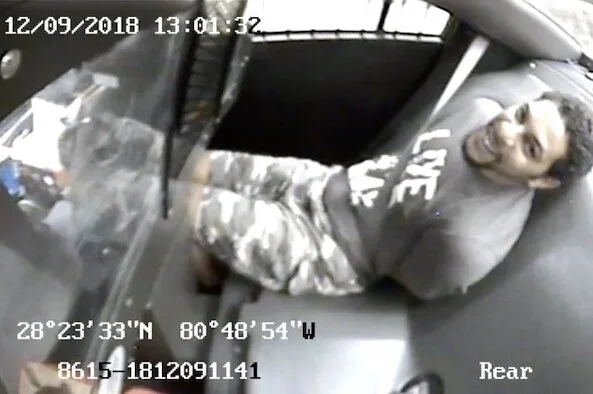
IF THEY EXCLUSIVELY CONTROL POSSESSION, RELEASE AND USE OF THE VIDEO THEN IT BELONGS TO THEM, NOT THE PUBLIC. A still image from surveillance video show Gregory Lloyd Edwards as he is transported in the back of a police car. The 38-year-old veteran got into a confrontation with a deputy during his booking process on Dec. 9, 2018, and Edwards was beaten, kneed, sprayed with a chemical agent, shocked with a stun gun, handcuffed and strapped into a restraint chair with a spit hood covering his face. The decorated Army medic died the next day at a hospital.

From [HERE] The Brevard County Chapter of the Florida Association of Criminal Defense Lawyers (FACDL) issued a list of necessary criminal justice reforms to end bad police practices in our own communities. The list included a demand for Brevard County Sheriff Wayne Ivey continues to release the Brevard County Jail tape of combat veteran Gregory Edwards.

Edwards was arrested on Dec. 9, 2018, outside a Walmart in Palm Bay while experiencing combat-related PTSD. The next day, he was dead at a hospital following an altercation with deputies during his booking at the jail. Internal jail cameras recorded the incident. The sheriff's own investigation concluded Edwards suffered multiple stun gun shots, and was kneed, struck in the head, sprayed with chemicals, covered with a spit mask, and strapped into a chair before being left alone.

Kathleen Edwards, Edwards’s widow, has begged for release of the tape and her cause has garnered massive support from the community who chant, “Release the tape!” State Attorney Phil Archer cleared corrections deputies of any criminal wrongdoing in July 2019. Nevertheless, the State Attorney’s Office indicated that Ivey possesses the discretion to release the tape.

Ivey claims state law supports his refusal and cites security concerns if the inner workings of the jail are exposed. Nevertheless, Ivey allows jail tours and videos of inmates allegedly committing crimes are regularly disclosed in the ordinary discovery process. Video redaction practices can be used to eliminate any privacy concerns. Brevard FACDL calls on Ivey to release the video and for an independent investigation into the death of Edwards.

Unnamed Saginaw Cop Fired For Punching a Handcuffed Black Woman in the Face Several Times. Video Unavailable to Citizens b/c Police Own Public Video & Unilaterally Decide Who Can View It

‘in an often unremarked development, police have taken control of body camera programs and - most damaging - they have claimed sole ownership of the videos themselves. They decide which system to buy; they determine how to configure t…

‘in an often unremarked development, police have taken control of body camera programs and - most damaging - they have claimed sole ownership of the videos themselves. They decide which system to buy; they determine how to configure those systems; they decide when and how to activate the cameras; they control who may have access to the videos and when; and they determine how long to keep the videos, and whether to destroy them. DEPENDENT MEDIA & PUPPETICIANS assume such police control falls within the natural order of things. Why shouldn't police departments control the programs, own the videos, and control their disclosure?’ [MORE] AUTHORITIES ALSO OWN US AND SOMEHOW HAVE BEEN DELEGATED UNCONTROLLABLE POWER TO INITIATE UNPROVOKED ACTS OF VIOLENCE AGAINST US & INTERFERE WITH OUR FREEDOM AT WILL. obedient advocates misunderstand the meaning of authority.

From [HERE] After investigation of excessive force at the Saginaw County Jail Saturday, July 11 a Saginaw police officer has been terminated.

The officer, whose name has been withheld due to an ongoing criminal investigation, was caught on video striking Jennifer Clemmons,  a 57-year-old African American female inmate who was in handcuffs several times after she had spit on him, causing her to fall to the ground.

The officer was on unpaid suspension since the incident. Saginaw Police Chief Bob Ruth said the officer was given his due process before an expeditious internal investigation. Ruth said that investigation was prompt due to available video camera footage and minimal witnesses needing to be interviewed. He said the terminated officer was allowed to speak with police union representatives and attorneys before the investigation  conclusion.

Video evidence was shared with leaders of the Saginaw NAACP and ALPACT (Advocates & Leaders for Police and Community Trust), which said the department’s quick action was needed and important for the community. However, the public has been made unavailable to the public. Even though the cop was fired his identity remains a government secret.

Michigan State Police are handling an ongoing criminal investigation.

Law Cropping: Ensuring the Right to Effective Counsel for its Disproportionately Black Defendants is Not a High Priority in Indiana. Public Defenders Make $5.16 per hour after covering expenses

law cropping.jpg

From [HERE] Contract public defenders in Indiana who earn median pay make only about $5.16 per hour after covering overhead expenses, according to a June study by the Indiana Public Defender Commission.

The study concluded that contract public defenders should receive overhead compensation or an increase in general pay, report the Indiana Lawyer and TheStatehouseFile.com.

The study found that, in 2018, the median pay for full-time contract public defenders was $64,777, and the median overhead for a single, full-time lawyer was $54,455. That left only $10,322 in annual compensation, which translates to about $5.16 per hour for a 40-hour workweek.

The findings showed that lawyers have to take more private cases to subsidize the work of representing criminal defendants, according to Derrick Mason, a senior staff attorney at the commission who spoke with the Indiana Lawyer.

“Insufficient compensation, which encourages taking ever-increasing public and private caseloads, undermines Indiana’s entire criminal justice system,” Mason told the publication in an email.

Under commission standards, contract public defenders are supposed to receive the same pay as an equivalent prosecutor. But the standards don’t distinguish between full-salaried public defenders working in an office and contract or part-time public defenders who receive nothing for overhead, according to the study.

The highest overhead cost was for support staff. Fourteen percent of the part-time and contract public defenders reported no support staff at all, “which creates a serious concern,” the study said. Forty-four percent reported support staff hours that were lower than the standard for adequate staffing.

The survey was based on survey responses from 108 attorneys, some of whom were responding for a multi-attorney office. As a result, the survey represented costs associated with overhead for 204 lawyers. Fifty Indiana counties were represented in the sample.

The study focused on public defenders who work in counties that receive a partial reimbursement for public defense expenses by following commission standards for fair pay. The study title is Indiana Public Defense Overhead Costs.

Research Suggests Racism White Supremacy Puts Black People at Higher Risk of Dementia ['avoidance and Escape from White-instigated anxieties preoccupy the conscious­ness of Oppressed Afrikans']

Research Suggests Racism White Supremacy Puts Black People at Higher Risk of Dementia ['avoidance and Escape from White-instigated anxieties preoccupy the conscious­ness of Oppressed Afrikans']

Consequently, even the "normal" Afrikan under White domina­tion is primarily motivated by the desire to escape — to actively or passively avoid or in some other way neutralize or alleviate the fearful effects of his oppression.

Read More

Obey Authority or Get Put Into Greater Confinement: After Unlawful Stop for Expired Sticker White Cops Pretend to Smell Weed, Drag Black Man Out of the Car & Arrest for Not Complying Fast Enough

SYSTEM BASED ON PHYSICAL COERCION ALWAYS PRESENTS FALSE CHOICES. From [HERE] A white Virginia State trooper is under investigation for a traffic stop last year during which he can be heard on video telling a black driver “you are going to get your ass whooped,” before forcefully removing the man from his car, authorities said Wednesday.

The incident came to light when an attorney representing Derrick Thompson, the driver, sent a letter to Virginia Attorney General Mark Herring on Monday claiming that Trooper Charles Hewitt unconstitutionally assaulted his client during the stop on I-495 in Fairfax County on April 20, 2019. The attorney also tweeted video of the encounter that Thompson recorded with his cellphone.

The Virginia State Police superintendent, Col. Gary T. Settle, has reviewed the two-minute cellphone video clip, according to a statement from the Virginia State Police.

“The conduct displayed by Trooper Hewitt during the course of the traffic stop is not in agreement with the established standards of conduct required of a Virginia trooper. Nor is it characteristic of the service provided daily across the Commonwealth of Virginia by Virginia State Police personnel,” Settle said in the statement.

Virginia Secretary of Public Safety and Homeland Security Brian Moran called the video “unacceptable” in a text message.

The clip begins with Thompson, who appears only to passively resist Hewitt, sitting in the driver’s seat of his car and Hewitt at the door following a stop for an expired inspection decal. Another trooper, who initiated the stop, said she smelled the odor of marijuana coming from Thompson’s car and wanted to search it, police said.

At one point during the stop, Thompson tells Hewitt that his detention and a request for him to get out of the car were unlawful. [ And yes this April 20th stop apparently violated the 4th Amendment. On March 19, Governor Ralph Northam directed the Virginia State Police to suspend citing drivers for expired motor vehicle Safety Inspection stickers until at least July 31 due to the spread of COVID-19. Said order applies only to the state police - the white folks who made the stop and arrest in this matter. As such, there apparently was no lawful reason to stop the Black man within the meaning of the 4th Amendment, that is, if you believe in such things.]

VA STATE THUGS.jpg

Hewitt leans toward Thompson and yells: “Take a look at me. I am a f---ing specimen right here, buddy. You have gotten on my last nerve, all right?”

Thompson then tells Hewitt he has his hands up.

Hewitt responds: “You are going to get your a-- whooped.” He repeats the f-word before saying, “I’m going to give you one more chance. You can bring that with you — I’ll let you film the whole thing.”

After some more back-and-forth, Hewitt tells Thompson he is being placed under arrest, looks into the camera and says, “Watch the show, folks.”

Hewitt is then seen putting his arm around Thompson’s neck and wrestling Thompson out of the car as he yells out for help. The other 2 white cops assist. The action that follows is captured only on audio, but Joshua Erlich, an attorney for Thompson, said his client was taken to the ground and pinned there, and his face was cut up.

Erlich said Thompson was placed under arrest for counts including misdemeanor obstruction of justice without force, a charge he pleaded guilty to in Fairfax County General District Court earlier this year, according to court records. Apparently, no marijuana was found in the car after they forced him out to search it.

Erlich said he has not filed a lawsuit on his client’s behalf to date and is hoping to resolve the case without legal action.

Thompson, 28, of Woodbridge, said in an interview that he would like to see Hewitt fired and charged for the incident.

“That was honestly the worst thing I’ve gone through in my life,” Thompson said. “It’s shocking. Reliving the moment through social media has been shaky.” “At the end of the day, people are losing their lives over things like this, and that could have been me,” Thompson said.

Thompson said the stop began when he was driving to work at the Cheesecake Factory in Tysons Corner.

['If an Authoritarian slaps you on the right cheek Turn his other cheek & Hit him harder.' RIP John Lewis & Turn the Other Cheekism] "Won't Be Televised" Video- Ruste Juxx

WHO GAVE THEM THE RIGHT TO SLEEP WELL AT NIGHT? According to FUNKTIONARY:

nonviolence - a principle that reveals the true nature of our pathological violent propensities toward each other. That we possess the ideal of nonviolence is proof that we are violent by nature, for if we were not violent, we would have no need for the ideal. Nonviolence can be useful as a tactic or strategy--but not the only one. Violence has inherently authoritarian properties. Violence is a last resort--to be used against people who leave us no other choice or who silence our collective voice (self-expression and self-determination). Violence is an authoritarian virtue not an anarchistic one. An "anarchist" terrorist is a contradiction in terms. Violence is rooted in fear, and we are filled with fears and suspicions. We may not openly assault our neighbors or take out our frustrations on innocent bystanders, but our fear nevertheless frames our thought-forms and warps our behavior, and in the heart of whatever passivity we may muster lies the seed of violence. (See: Violence & Religion)

self-defense - understanding the game - the hunter and the hunted. Self-defense is the only self-executing right, and requires the discipline to respond in the wild and the reading capability in order to plead in a courtroom if there are any survivors after one’s response to a foiled attack. (See Kensei, Flow, Intuition, T’ai Chi & Clarity).

Weitko Disease - the caucasian’s patapathetic fascination with the exploitation and control of nature and exploitation and genocide of his fellow man. 2) Death-force. (See: Caucasian, Western Civilization and Yurugu).

authoritarian - any human who has been reared and formally educated (in form over reality and law over humanity) in such a manner that at the normal time of maturity, character structure has become impuissant and ineffective. 2) a humanoid.

authoritarians - the great unweaned of the world 2) violentists. 3) 'reality-violaters.' 4) uniform (costume-wearing) and non-costume wearing purveyors of the absolute worst crimes against humanity. 5) the coercive class within an economic and social caste-based society. While the State is a military formation, it is first and foremost a fruit of justice—not to be confused with (or extrapolated to imply or mean that) justice is a seed of the State. There is a high correlation between justice systems and the development or proliferation of the State. (See: Justice, Control, BOG. Statists, Power. Psychopaths & Violence)

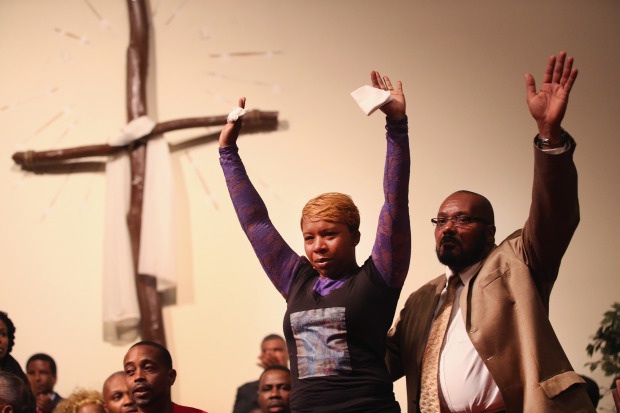
ruste juxx 2.jpg
ruste juxx.jpg

Osho Rajineesh explained the robotic application of violence or non-violence as dogma to any given situation is stupid, reactionary.

“Jesus said that if somebody hits you on one cheek, turn the other cheek. You are asking me what I have to say about it. This will be the attitude of a man who believes in the idea of non-violence, the philosopher of non-violence. But when you are hit by somebody and you give him the other cheek, you are encouraging violence in the world. It is not non-violence. And you are assuming something which is absolutely your imagination. If somebody hits me, according to Jesus I have to give him my other cheek. But his tastes may be different. He may have enjoyed the first hit, he may enjoy the second even more; he may be a sadist. Then you are encouraging a sadist to torture people; you are encouraging violence. Even to allow your own body to be tortured by somebody is to encourage violence.

No, this stupid ideology has been the downfall of the whole of India.

After Buddha and Mahavira, India never again became the same golden bird it was.

After Buddha and Mahavira begins the downfall. Buddha and Mahavira are absolutely responsible for twenty-five centuries of slavery in India, because they taught people to be non-violent. They completely forgot that the other people surrounding the country are not non-violent. You are encouraging those people, inviting them: "Come and be violent to us." That's actually what has happened in Indian history for twenty-five centuries. Anybody who wanted riches, women, slaves, invaded India. There was no trouble, India was non-violent. Most probably they would pass through kingdoms and there would be no fight at all, no resistance even.

If you look at your non-violence and it has provoked violence, then what kind of non-violence is this? It has brought more violence in the world than there was before. Before Buddha and Mahavira, India was never invaded. There had never been any violence because people knew that to invade India was to just invite your death. But after Buddha and Mahavira's teachings people became just like butter - you just cut into them with your knife, and there would be no noise at all. And millions of people were killed, burned without any resistance, because resistance would be violence.

But you go on missing seeing the point that you are provoking the violence in the other person. Who is responsible for it? Now turning the other cheek means you are telling the other person, "Please hit me a little more, it is not enough; I am not satisfied. Hit me a little more so that I can become a little more saintly." And you have only two cheeks. What are you going to do when he has hit you on your second cheek? What Jesus is saying looks a beautiful statement but it is not at all practical, pragmatic, scientific.

Reverence for life approaches the whole problem from a different angle.

I will say respect life, yours included.

In fact, you are first to be respectful towards yourself, then only can you be respectful towards anybody else.

Be loving towards yourself, then you will be able to love others too.

Reverence for life will not allow any provocation to violence. It will not start violence, but if anybody starts it, it will stop it immediately.

Jesus says, "If somebody hits you on one of your cheeks, turn the other cheek." I say, "Okay, turn his other cheek - and hit him harder. Give him a lesson! Make it clear to him that it is not so easy to hit somebody on the cheek- that it comes back, and comes back harder. And if you are capable, hit both his cheeks at the same time. Why give him the chance to turn the other cheek and become a saint? Hit him and tell him simultaneously,'! do not believe in violence, hence I have to stop it at the first chance. And remember that you cannot just be violent without being prevented.'"

You have to prevent violence if you respect life. And in another way too, it is respectful to hit the man, not to give him your other cheek, because that is very disrespectful. This may seem a little difficult for you: you hit me, and I don't hit you but show my other cheek to you, and say, "Please be kind enough to hit me." I am trying to be superhuman and reduce you below humanity.

I am humiliating you far more than I can humiliate you by hitting you. By hitting you I simply declare you are human, I am human, and I speak the same language that you speak. We are both on the same ground. This is more respectful because you are not raising yourself higher; you are keeping yourself on the same ground as the other man. You are telling him, "You are my brother; if you hit me you are going to get a bigger hit. Be watchful and be careful, because somewhere you may get into real trouble."

I am not in favor of your being superior to the other man. That's what Jesus is saying: "Be meek, be humble, turn the other cheek, because then you will inherit the kingdom of God."

I am not promising you any kingdom of God.

You are not going to inherit anything. You have already inherited it - that is your life.

Be loving and respectful to it.

Be loving and respectful to others. But don't try to be superior and higher and above others. Don't put the other man down.“ [MORE]

White Skin is an Important Criterion to Get a PPP Loan: Black & White Test Applicants w/Similar Profiles were Offered Different products, info & encouragement to apply for loans from bank reps

Devil Hand 23.jpg

From [HERE] White applicants for Paycheck Protection Program loans were treated better than Black applicants, according to a study by an activist group that fights discrimination.

The National Community Reinvestment Coalition sent Black and white testers with similar profiles to talk to banks about securing PPP loans to help their small businesses stay afloat during the coronavirus crisis. They found “different levels of encouragement to apply for loans, different products offered and different information provided by bank representatives.”

The study was conducted between April 27 and May 29 with 17 banks in the Washington, D.C., metropolitan area. The results are in line with patterns of disparities in lending before the pandemic hit. 

"The tests show that old patterns of systemic discrimination in lending didn’t magically disappear when banks made PPP loans," said Jesse Van Tol, CEO of NCRC. "Banks still have a long way to go to root out discrimination, and clearly they need better training for their employees and more testing to create internal checks and internal pressure to drive out racist practices.”

The government-backed loans were especially sought after because they can be forgiven as long as small business borrowers maintain their payrolls. The Trump administration says more than $520 billion in loans were given out and that about $130 billion remains uncommitted. [MORE]

Banks Will Make Out with $18 Billion in PPP Processing Fees from the Cares Act

money hoaxesss.jpg

From [HERE] BANKS WILL MAKE out with $18 billion in fees for processing small business Paycheck Protection Program relief loans during the pandemic, according to calculations by Amanda Fischer, policy director at the Washington Center for Equitable Growth, a progressive economic think tank.

That’s money taken directly out of the overall $640 billion pot of funding Congress allocated to the program it created as part of the CARES Act. “If we did it through a public institution, there would be [more than] $140 billion left,” Fischer noted, as opposed to the $130 billion still up for grabs. The Washington Center for Equitable Growth is releasing an analysis of the government response to the pandemic as soon as this week.

The fees compensate the banks for some of the costs that come with processing loans — call center time to handle business owners’ questions, employee hours spent on processing paperwork for both loan and forgiveness applications — and some of the risk they shoulder if any of the loans they extend end up being fraudulent. But there is no credit risk; if business owners who qualified for PPP loans later default, the Small Business Association takes the hit, not the banks. “Basically it’s free money,” Fischer said.

For some banks, this money represents a hefty windfall. New Jersey-based Cross River Bank’s estimated $163 million haul would be more than double its net revenue last year. JPMorgan Chase could make $864 million.

The fact that banks are siphoning money off of the relief program is thanks to the fact that the United States had no existing public infrastructure ready to quickly get money out to struggling businesses when the pandemic hit. Fischer characterized it as “a failure of preparedness,” adding, “We should have invested in better systems.” The Small Business Association, which is running the PPP program, has long been criticizedfor struggling to process emergency relief quickly during past natural disasters. So when the time came to respond to the coronavirus crisis as fast as possible, the SBA was in no position to do it itself, and Congress mandated that the loans be run through banks instead. There weren’t many other options. “It’s hard to build the plane while you’re flying it,” Fischer said.

But on top of the fact that the program leaked money to banks, relying on these firms meant an uneven distribution of funds. One study found that areas served by the country’s four largest banks — JPMorgan Chase, Wells Fargo, Citibank, and Bank of America — underperformed in terms of how many businesses got PPP funding. On the flip side, another found that places with large numbers of mid-sized and community banks saw more businesses get PPP loans. That meant that whether a small business received the money it needed to stay afloat depended in large part on the composition of financial institutions in its area. “That’s a really perverse outcome,” Fischer said. [MORE]

After Acknowledging Their Unjust Enrichment from Slavery the Bank of England, Barclays & Lloyd’s of London are Urged to Pay Reparations [Racists Apologize to Manipulate & Reform Their Image]

DOC BLYND EXPLAINED, “Reparation(s) - satisfaction that is made for a wrong and deducted from the satisfaction felt in committing it. Through this analytic-equation, now you know why our ancestors didn't get an ass and 40 acres as you nor your poste…

DOC BLYND EXPLAINED, “Reparation(s) - satisfaction that is made for a wrong and deducted from the satisfaction felt in committing it. Through this analytic-equation, now you know why our ancestors didn't get an ass and 40 acres as you nor your posterior will ever likely receive any... so remember—Free Your Mind.. .Watch Your Ass, because this will never, in any substantive form, come to pass. One danger in reparations is the notion that white America can actually pay for what happened. They can never pay for the level of meta-genocide, mentacide, psycho-spiritual pain and suffering experienced by more than score plus four generations of African descendents dislocated in Amerikka. Reparations are a strategic diversionary tactic in the rebellion towards total liberation, because as the Afrikan People's Intelligence Minister Steve Cokely aptly quips, "You cannot have reparation and exploitation at the same time." “

From [HERE] The Black Lives Matter movement is reinvigorating a yearslong campaign to push some of London’s oldest financial institutions to pay reparations to the descendants of slaves.

City of London companies played an important role for centuries in organizing and funding the trans-Atlantic passage of African slaves and the Caribbean and American plantations where they were forced to work. Directors of the companies earned fortunes from the trade. The Bank of England, Barclays BCS -2.03% PLC and Lloyd’s of London insurance market are among those to apologize for or acknowledge links to slavery since the May killing of George Floyd by a police officer in Minneapolis prompted protests world-wide.

“Britain was the most efficient and profitable slave trader in terms of return on capital largely because of the role of the City of London in providing cheaper finance, better insurance rates, better reinsurance rates and, critically, funding the construction of the shipping industry,” Hilary Beckles, chairman of a reparations commission representing Jamaica, Barbados and 10 other Caribbean nations, said in an interview.

Mr. Floyd’s death has sparked renewed calls from Caribbean governments and from Black British campaigners descended from slaves for British companies to pay reparations. They say apologizing isn’t enough and are calling for more discussion about reparations. Companies are so far resisting those calls, choosing to focus on improving workplace diversity. 

On July 6, the Caricom Reparations Commission, chaired by Mr. Beckles, called for British companies to participate in a summit to discuss how they can contribute to the Caribbean. 

“The City of London as we know it now would not have been without the slave trade,” Mr. Beckles said. “We are calling for a dialogue in which we say from our point of view this is what we think would be an appropriate attempt at remedy. In the case of the financial institutions of London we are looking for a development strategy.”

The City of London Corp., a centuries-old council which manages the financial district, declined to comment on whether it would participate in a reparations summit, as did spokesmen for the Bank of England, Barclays, Lloyd’s of London, Royal Bank of Scotland Group PLC, Lloyds Banking Group PLC and law firms Freshfields Bruckhaus Deringer and Farrer & Co. They have all acknowledged historic links to slavery. 

British politicians have long resisted discussions on the issue. Speaking to Jamaica’s Parliament in 2015 on the most-recent official Caribbean visit by a prime minister, David Cameron emphasized Britain’s role in ending the slave trade. “I do hope that, as friends who have gone through so much together since those darkest of times, we can move on from this painful legacy,” Mr. Cameron said.

“Finance could be the best healer,” Darrel Blake, a former banker who leads a slave-trade money trail tour through London’s financial district, said on a June 20 tour. 

The Bank of England said it wasn’t directly involved in the slave trade but “is aware of some inexcusable connections involving former governors and directors and apologizes for them,” a spokeswoman said. 

Lloyd’s of London, the insurance market founded in the 1680s, said it was sorry for its role in the trade.

“This was an appalling and shameful period of British history, as well as our own, and we condemn the indefensible wrongdoing that occurred during this period,” a spokesman said. 

A Barclays spokesman said the bank is “committed to do more to further foster our culture of inclusiveness, equality and diversity, for our colleagues, and the customers and clients we serve.”

Mr. Beckles said commitments to improve diversity are a public-relations stunt. “That is not a sincere effort to participate in reparatory justice,” he said. “We are talking about the damage and the harm done to millions of people and the death of millions of people.”

Last year he brokered a £20 million ($25 million) reparations agreement with Scotland’s University of Glasgow, which benefited from slavery. The university is raising the money mainly through grants and donations to work with the University of the West Indies on research projects to improve health care and economic development in the Caribbean. The agreement is a model for companies to follow but no such conversations have started, Mr. Beckles said.

“We are happy to share our experience,” David Duncan, the University of Glasgow’s chief operating officer, said in an interview. 

That agreement has set a precedent that makes companies wary, said Malik Al Nasir, a British citizen who has researched his family history and found he’s descended from slaves and slave traders in Guyana. 

“Companies know that there is liability here,” Mr. Al Nasir said in an interview. He wants the United Nations to lead a truth and reconciliation commission to investigate and quantify slavery reparations. U.K. lawmaker Layla Moran has written to companies with links to slavery and asked them to do more. 

Calls for reparations for slavery are also increasing in the U.S. in the wake of Mr. Floyd’s killing, according to Ana Lucia Araujo, a Howard University professor who studies slavery. A bill embracing the idea was first introduced in Congress in 1989 but the issue of reparations has languished for decades. 

The British government abolished slavery in the 1830s, paying £20 million—the equivalent of billions of dollars today—to compensate slave owners because they were deemed to have lost property. Beneficiaries are listed on a University College London website.

The government finished repaying debt used to fund the compensation payments in 2015. Compensating slave owners was unjust according to Mr. Blake, whose ancestors, like those of Mr. Beckles, were slaves.

“My taxes have gone back to the government to replace the money that was given to the slave masters that owned my family,” said Mr. Blake, who worked at Barclays and HSBC Holdings PLC before becoming a teacher. “How ridiculous is that?”