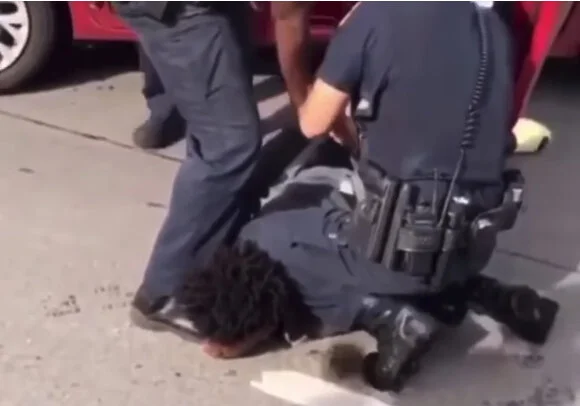
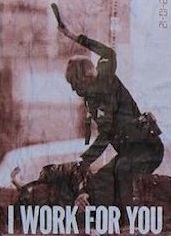
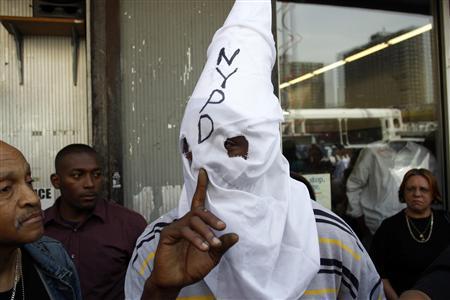
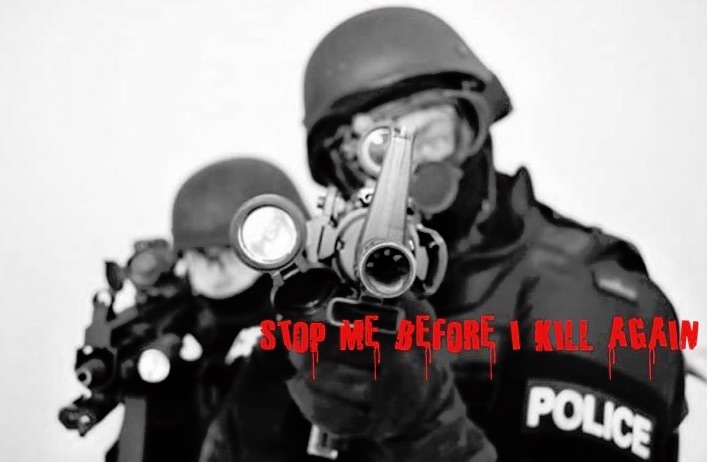
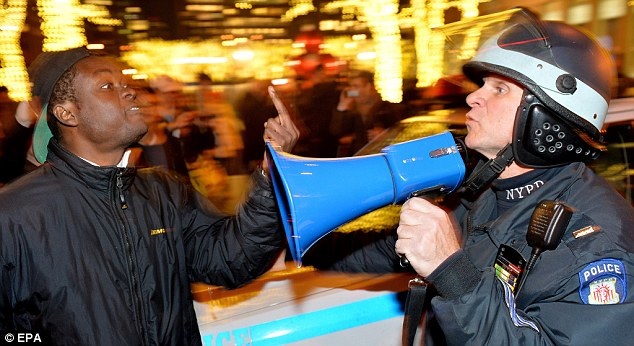
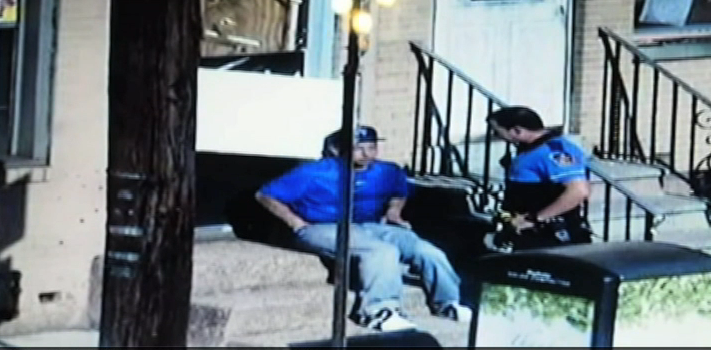
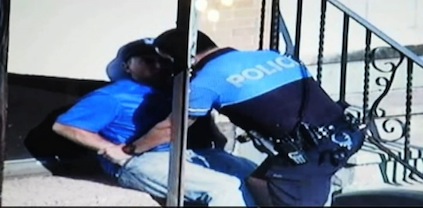
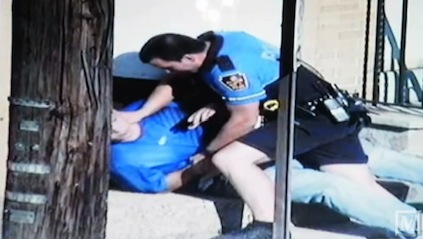
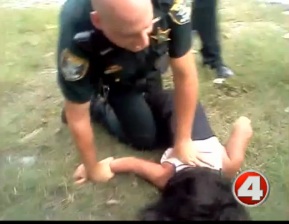
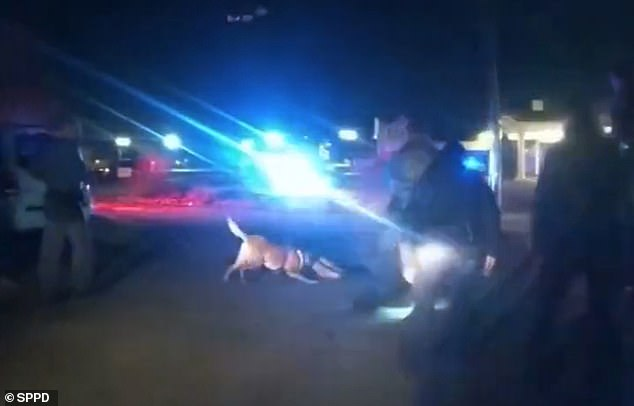
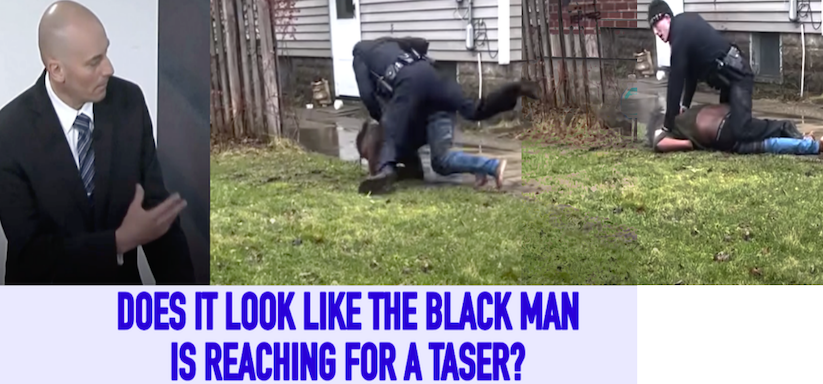
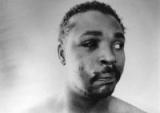
Tired of the Slave & Enemy Treatment in the Free Range Prison a Black Man Defends Himself by Putting a White NYPD Cop in a Chokehold

From [HERE]

According to FUNKTIONARY

Force - the source or sources of all possible actions of the particles or materials of the universe(s). 2) the manipulation of a man or woman in disregard of its own volition or nature. 3) the use of an outside physical coercion of any kind by one or more humanoids against another or others in order to make him/her or them obedient and compliant to higher or their will. 4) the basis of all social evils and can only be used in the sense of attack not defense. 5) You must! In the way I say! 6) the social disease. "Force (coercion) and fraud are the foundation of all social systems and the source of the aroma which they exhale." --Max Nomad. "Force" operates to remove personal volition from opportunity to act or not act. Someone '`makes" you behave in a certain way by threatening to injure or enslave you, someone you love, or something you prize, if you do not behave in that way. Force operates to obtain an intended behavior when the forced party would otherwise have exhibited a different behavior. Punishment, pain, suffering, and discomfort characterize force. Unfortunately, governments only function by force. Once established, they put laws into effect by threatening persecution, imprisonment, fine, or death against all who don't comply with those laws--including the use of the force continuum. (See: Autonomy, Fiction, Fraud, Corporate State, Freedom, Forgery, Authority, Violence, Coercion, Deception, Language, Punishment, Capital Punishment, Gerp & Government)

NYPD beatdown.jpg

Farrakhan Warns Non-White People, 'Don't Let Them Vaccinate You With Their History of Treachery Through Vaccines. Don't Take Any COVID Medicines Until Black Experts Vouch for Its safety.'

COVID discussion begins at about 1:18:29

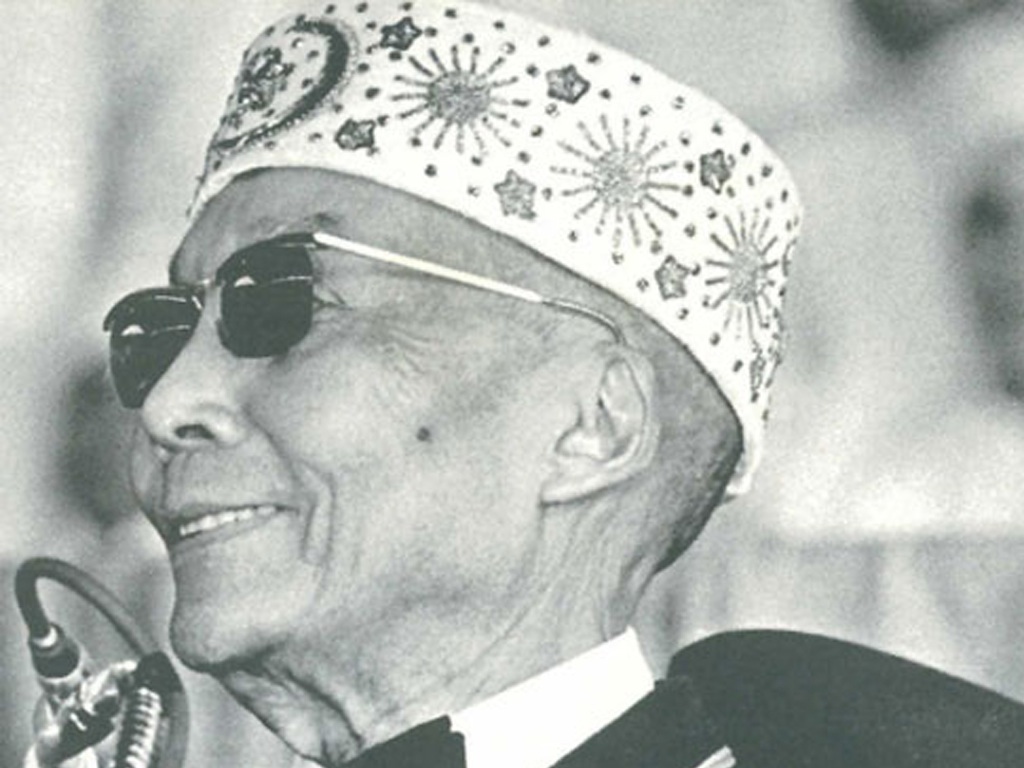
Minister Farrakhan said “death is not in the cards for me just yet.” From [HERE] The Final Call reports, “In a time of world crisis and widespread scoffing at religious obedience, Nation of Islam Minister Louis Farrakhan, resplendent in a white robe and fez embroidered with gold threads and bedecked with small gems, stepped into a beautiful garden to deliver a message of warning, guidance and instruction. “

“You want it to end, Mr. Trump, so you can go back to what was. But I’m here to tell you sir, you will never see what was again. That is over,” said the Minister. “We are under the judgement of God.” 

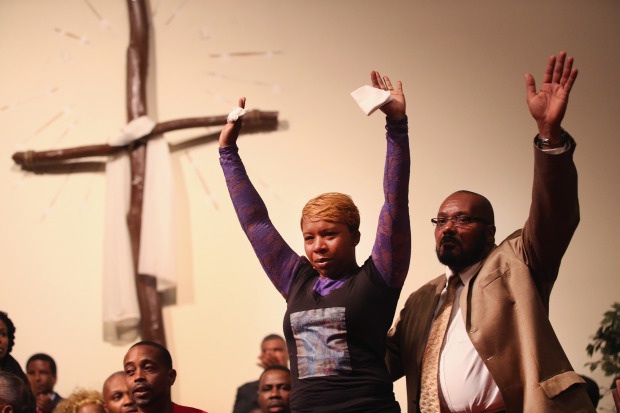
farrakhan 2020.jpg

Min. Farrakhan warned African leaders and African people not to blindly accept Covid-19 cures from Caucasian people.

The history of White people shows they cannot be trusted, he said. Blacks and non-Whites have been subjected to medical experimentation from Whites, including gynecological techniques on slaves, smallpox in blankets to the Native Americans, a contaminated polio vaccine, and the infamous Tuskegee syphilis experiment, in which the U.S. Public Health Service purposely left syphilis untreated in Black men. The U.S. Public Health Service and Guatemalan government also infected and studied Guatemalan prisoners and mental patients with syphilis in the 1940s.

During the colonial era and afterward, there have been experiments in Africa whether through uninformed consent or forced procedures. In the 1990s, there were complaints as the U.S. sought treatments or cures for AIDS and meningitis. Nearly 20,000 HIV-positive women in Zimbabwe were not informed about trials for development of the AIDS drug AZT. Pfizer lost several informed consent lawsuits after testing 200 children in Kano, Nigeria with an experimental drug to treat bacterial meningitis. Millions were paid to the Kano government and other payments made to four parents who lost children. South Africa tested different ways to kill Blacks under apartheid. Some believe AIDS is connected to oral polio vaccine research in the Congo, though other scientists insist it’s untrue. In the 1970s, the female contraceptive Depo-Provera was clinically tested on Black women in Zimbabwe. In the late 1800s to 1910s, Namibia, then known as German South-West Africa, saw doctors conduct forced sterilization on native Herero women and mixed race children.

In a 2017 study, Wemos, a Dutch group, outlined problems with clinical trials in Egypt, Kenya, Zimbabwe and South Africa. The “global pharmaceutical industry has increasingly been conducting clinical trials in low- and middle-income countries. In 2005, 40% of all clinical trials took place in emerging countries,” it said.

Africa and developing regions are hot spots for trials and research offering “faster and cheaper recruitment of clinical trial participants, weak health systems, and treatment-naïve, often medically illiterate populations with a wide range of diseases. Also, it is easier to bypass ethical rules and regulations because of lack of legislation and less stringent or weak monitoring,” the study states.

In April, French doctors came under fire for saying Covid-19 vaccine research should be targeted for Africa. “It may be provocative. Should we not do this study in Africa where there are no masks, no treatment or intensive care, a little bit like it’s been done for certain AIDS studies, where among prostitutes, we try things, because we know that they are highly exposed and don’t protect themselves?” said Jean-Paul Mira, head of the intensive care unit at the Cochin Hospital in Paris,” reported Al-Jazeerah.

Min. Farrakhan told Blacks in America and the Motherland not to take any Covid-19 medicines until Black experts vouch for its safety. 

We need to call a meeting of Black epidemiologists, virologists, students of biology and chemistry to look at what they give us and we need to give ourselves something better, he said. 

The Minister said he was speaking for the interests of Blacks, Latinos, Native Americans, and those who desire life.

The Minister also blasted the state of Florida, Cuban emigres and the U.S. for the blockade of Cuba and keeping away treatments that could help with Covid-19.

Pointing to rising infection rates in the Sunshine State, the Minister said he asked God to strike Florida with the disease as she prevented others from possible help. At Final Call press time, Florida’s Department of Health logged 6,336 additional Covid-19 cases, reporting 206,447 cases statewide and 3,778 deaths statewide. The Associated Press reported July 2 that 40 of 50 states reported rising numbers of coronavirus cases.

“Florida are you becoming the epicenter of the coronavirus? I asked God to do that. That I asked Him for,” said Min. Farrakhan. “I just want to show you, this man you see talking has power with God.”

Companies are plotting to give over seven billion people vaccinations, but Dr. Anthony Fauci and Bill and Melinda Gates want to rid the planet of billions of people, he warned. If you try to force vaccines on us, that’s war, he vowed.

The Minister spoke to a relatively small crowd of Nation of Islam laborers, Believers and special guests under a white tent.

Chairs were carefully spaced apart; masks were worn by everyone and social distancing was practiced. His message was webcast via the Nation of Islam website, The Final Call newspaper website, Revolt TV, WVON AM radio in Chicago, WPFW AM in Washington, D.C., Dr. Boyce Watkins’ media company and others. Believers, supporters and friends used Twitter, Instagram, Facebook and other digital means to share the webcast or distribute clips. Celebrities like Madonna shared images or information with millions of followers, often using #Farrakhan. The Minister’s address trended for several hours on Twitter and was heard globally.

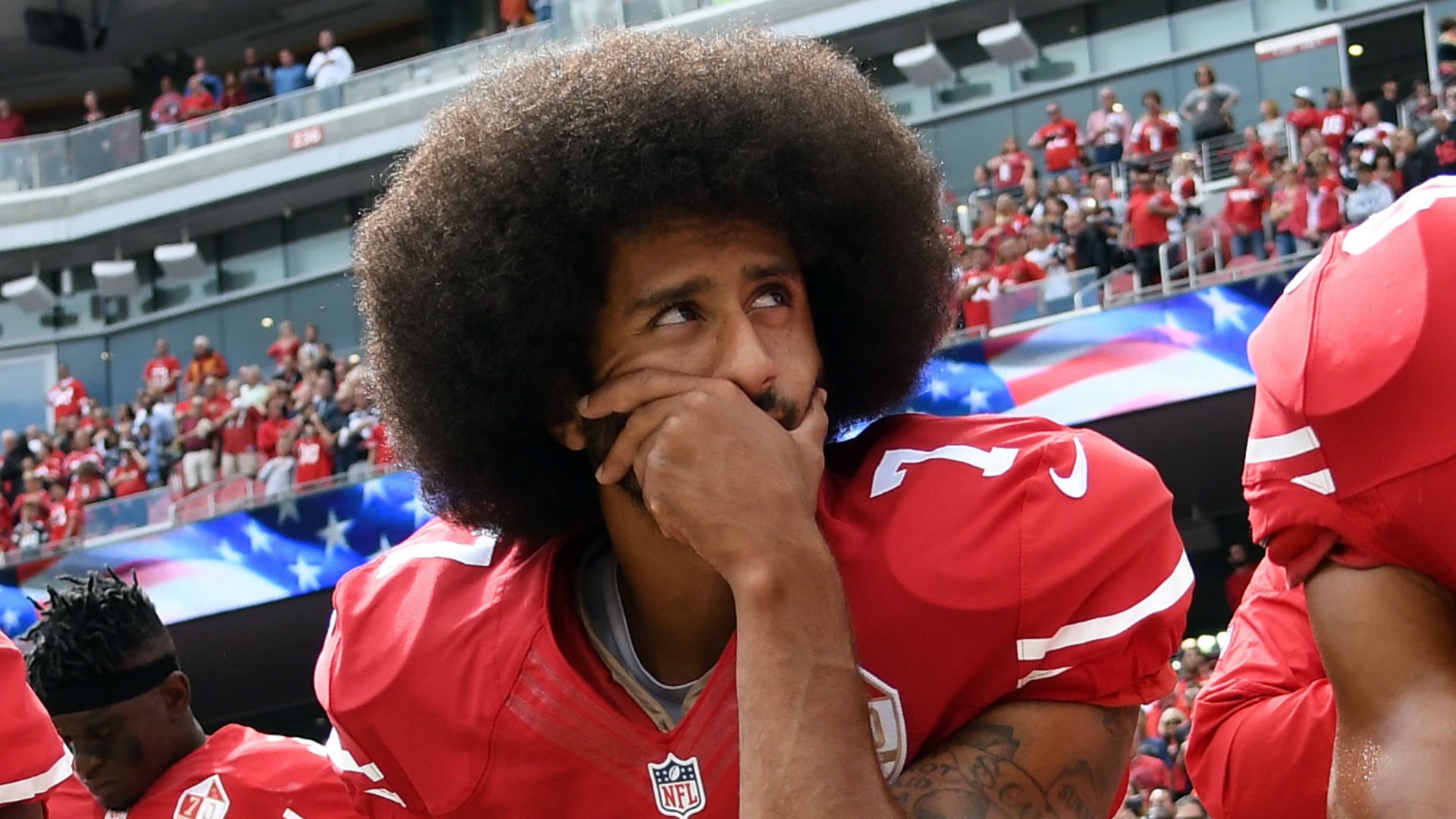
People Aren't Mascots: Racist NFL Owner Forced to Drop the Name Redskins. Racist Fan Base Obsessed w/Skin Color & Suffering from the Disease of Constant Comparison Disappointed at Another Loss

From [HERE] Washington’s NFL team on Monday dropped its name of 87 years, the Redskins, bowing to pressure to change a team name widely seen as a racial slur amid the sweeping reckoningover race in 2020. 

The decision was expected after the franchise announced on July 3 that it was conducting a “thorough review” of the name, a process that was catalyzed by new levels of criticism in a country charged by protests against systemic racism. Politicians, activists and even the team’s own sponsors, such as FedEx Corp., called on the team to get rid of the mascot that dates back to 1933, when the team played in Boston. 

A new name was not immediately announced. [MORE]

race soldiers small.jpg

Uncontrollable LA Sheriffs Broke Into a Black Woman's Home while She was in the Shower, Dragged Her Outside Naked in Public View & Hogtied Her. Cops were Looking for Someone Already Arrested

From [HERE] and [FTP] A Black woman from Lancaster says white Los Angeles County Sheriff's Department deputies violated her Constitutional rights when they burst through her door, handcuffed and moved her outside naked, and terrified her younger sister and son, while allegedly searching for the woman's brother -- who she later learned was being arrested at a different location.

She filed a lawsuit in U.S. District Court earlier this year as a, "Jane Doe," that claims the deputies were negligent when they conducted an unreasonable search of her home, and as a result, inflicted emotional distress. The woman does not want her name or face revealed publicly due to the nature of what happened and her allegations against the County.

"They tied me up, I was dragged across my grass, keep in mind, I was on my menstrual period," she told NBC4's I-Team. "I'm completely undressed, on my front yard."

The woman says she asked her younger sister to begin recording the July 25, 2019 encounter with a cellphone, and the video shows four male deputies inside the home ordering her to walk down a flight of stairs while nude. The woman says she was in the shower when the deputies forced their way inside.

"I'm telling him I'm not dressed and to wait a minute," she said. The deputy, "said no and opened the door."

la sheriffs are dog shit.jpg

The Sheriff's Department has declined to discuss the incident and said it could not address the allegations in the lawsuit.

"Due to pending litigation, the Department is unable to comment," it said in a written statement Thursday.

Lawyers for LA County have filed a general answer to the lawsuit in federal court with general denials to each of the woman's claims.

At the time of the search, the woman says the deputies told her they were searching for her brother, who was wanted in an assault case. Time-stamped Sheriff's Department booking records show he was being arrested by other deputies in South Los Angeles around the same time deputies forced open the woman's door in Lancaster.

"They were looking for someone who wasn't there," said the woman's attorney Brian Dunn. He said there was no threat to public safety, and no reason for the deputies to go into the home in the manner they did.

"There was too much aggression and not enough compassion," Dunn said, adding that no female deputies were sent to the home and the male deputies inappropriately touched, searched, and handled his client while she was naked.

The Sheriff's Department has also yet to respond to a request under the California Public Records Act filed earlier this month for details of the response to Lancaster home and the circumstances of the arrest of her brother.

The brother's arrest turned out to be fruitless, according to court and other records, because the L.A. County District Attorney's Office declined to file a criminal charge citing a lack of sufficient evidence. "No independent witnesses," and, "suspect denies," were listed by the deputy district attorney who rejected the case, according to a charge evaluation worksheet.

The assault allegation against the brother stemmed from an alleged confrontation with a family member in April, 2019, according to a DA's office record.

The woman's federal lawsuit accuses the deputies of violating her civil rights, based on an unreasonable search, committing battery, and negligently and intentionally inflicting emotional distress.

"The above conduct of the individual defendants was outrageous, and undertaken with reckless disregard of the probability that plaintiffs would suffer severe emotional distress," the lawsuit said.

"I'm in complete shock that it happened," the woman told the I-Team. "I feel as if they should be held accountable for their actions."

White Baton Rouge Cop Caught w/His Knee on the Neck of a Handcuffed Black Teen as He is Held Face Down by 2 Race Soldiers. Govt Refuses Release of Details b/c Cops Own Public Info & Bodycam

From [HERE] The Baton Rouge Police Department claims to be conducting an internal investigation after video posted on social media appeared to show a white officer kneeling on the neck of a Black teenage suspect, who they arrested, Mayor-President Sharon Weston Broome said.

Similar restraint tactics have been condemned since the recent death of George Floyd — who died after a Minneapolis police officer kneeled on his neck for about eight minutes while the dying man pleaded for air. Broome did not mention Floyd's death in her statement Sunday night, but she was commenting on a Facebook post from local activist Gary Chambers Jr., who posted the video to social media with the following message: "A cop doing this after George Floyd knows exactly what they are doing."

Baton Rouge police have not released additional details about the incident, including why the young man was being detained and the outcome of his interaction with officers. Authorities declined to release his name because he's a juvenile.

Broome said only that he's 17 and was taken into custody and later released to his mother. His parents released his identity - his name is Dillion Cannon, age 17 and niggerized by race soldiers.

She said the department will ask the courts for permission to release the body camera footage, which is otherwise shielded from public view because of the suspect's juvenile status. It's unclear how long that process will take.

baton rouge trash cops.jpg

"We are prepared to ensure transparency and the release of that footage for public consumption," Broome said. "I ask that the community allow us to take the proper steps necessary to investigate and swiftly determine the outcome."

Broome expanded on those comments during an unrelated press conference late Monday morning, saying the video on social media "certainly causes concern" but suggested that viewing a more complete account of what happened would be essential to determining whether the officer should be disciplined. 

"As I understand it, there is lengthy video of the entire incident. I have not seen that," she said. "It's important to see the entire video. Then we can assess what happened and where we're going from there."

Chambers called for the officer in the video to be fired immediately.

The juvenile is lying face down in the street while the officer restrains him and appears to place him in handcuffs. The video also clearly shows the teenager getting up from the ground after the officer releases him, and walking away escorted by two Baton Rouge cops.

As in the George Floyd case, the officer appears to be White and the suspect is Black. Several other Baton Rouge police officers are on scene assisting.

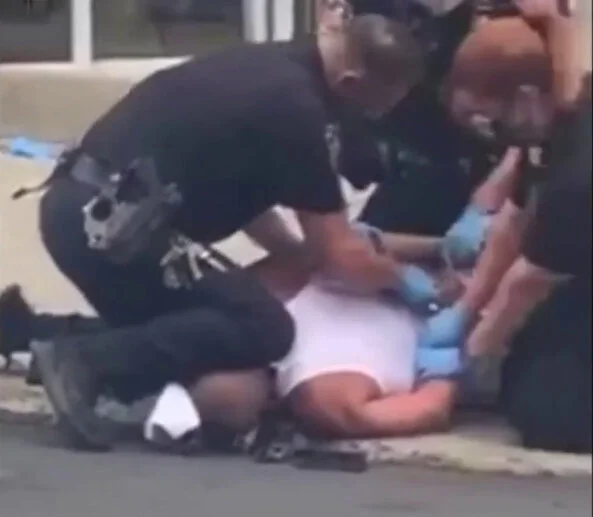
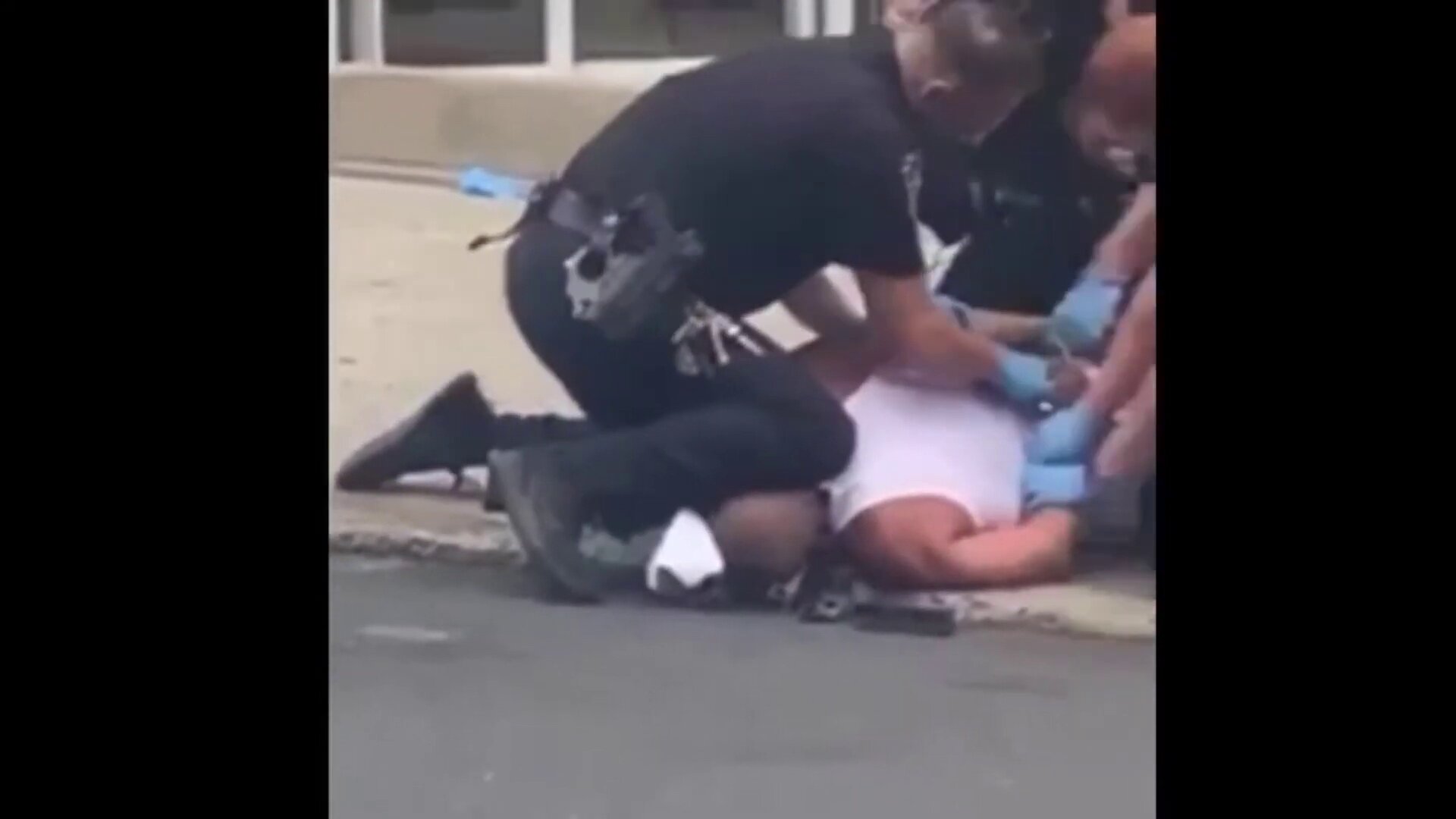
Video Catches a White PA Cop Put His Elbow & Knee on a Handcuffed Black Man's Neck, Head & Press His Face Into the Street Against the Curb as 2 Other White Cops Hold Him Down Outside Hospital

From [HERE] Video of a white Allentown police officer with his knee on a Black man's neck and neck as two other white cops hold him down drew outrage Sunday from protesters and criticism from officials. The white officer uses his knee to press the black man’s face into the street, up against the curb. The cop then uses his elbow, leaning into his face and neck. Then he switches position again and puts his knee back on the man’s neck/head pressing it into the asphalt. The Black man is handcuffed.

The 39-second clip, shot outside a hospital in Allentown, north of Philadelphia, doesn't show what prompted the confrontation, but three officers can be seen restraining a man lying face down on the ground and yelling.

The Lehigh County district attorney is investigating, a statement said. "Although significant, the entirety of the interaction is being reviewed," the statement said, adding that witnesses were being interviewed and that other videos were being reviewed.

The clip was posted to Facebook and reposted by Black Lives Matter to Lehigh Valley, which demanded that police release body camera video and suspend the officer during the investigation.

allentown cops attack.jpg
allentown cops assault.jpg
allentown cops 3.jpg

Allentown police said in a statement Sunday that the encounter occurred Saturday night after officers saw a man staggering in the street and throwing up. He eventually stopped outside a hospital emergency room, police said.

The man, who wasn't identified, began to yell and spit at officers and hospital staff after they "interacted" with him, the statement said.

The man became noncompliant with police, prompting a hospital staff member to put a spit shield on his head and officers to restrain him, the statement said. It didn't mention the officer's knee on the man's neck. He was released from the hospital later; police didn't say whether he had been arrested.

Protesters gathered outside the police department Saturday night holding Black Lives Matter signs and chanting "defund the police." Video posted by Black Lives Matter to Lehigh Valley appeared to show Allentown Mayor Ray O'Connell talking with protesters outside the police building.

LA County Autopsy Supports Witnesses Claim: Andres Guardado had No Gun & was on his Knees w/his Hands on his Head when Cop Shot him in the Back 5X. IG Says Sheriff is Ignoring Oversight Laws

la ig.jpg

From [HERE] and [HERE] The Los Angeles County medical examiner confirmed that 18-year-old Andres Guardado, who was shot and killed by Southern California sheriff's deputies, was shot five times in the back, as his family had previously said.

Homicide investigators claimed the teenager was shot in the upper torso, however they did not specify where on the torso Guardado was hit.

The report listed Guardado's death as a homicide.

The release of the autopsy results caused a backlash among officials. Los Angeles County Sheriff Alex Villanueva had put a security hold on the report, but Chief Medical Examiner Dr. Jonathan Lucas defied that order and released it anyway Friday evening.

"After careful thought and deliberation, I am releasing the autopsy report of Andres Guardado Pineda," Lucas said in a statement. "In doing so, I have given careful consideration to the major variables in this case -- supporting the administration of justice, as well as the public's right to know. I do not believe that these are mutually exclusive ideals."

Villanueva criticized the move, which he called "unprecedented." The sheriff said the release had the potential to jeopardize the case.

"This move will now force the Sheriff's Department to use court orders to enforce security holds that exist for only one purpose -- to prevent tainting witness testimony prior to interviews," Villanueva said.

Police claim Guardado was shot and killed after two Los Angeles County Sheriff's deputies said they saw him wielding a gun in front of a business and led them on a foot chase. "Guardado reportedly looked toward the deputies, produced a handgun and ran south down the driveway of the business at the location," Capt. Kent Wegener, head of the Los Angeles County Sheriff's Department Homicide Bureau said at a press conference in late June.

He said the deputies chased Guardado on foot and one of them fired six shots at the teenager, hitting him in the torso. Wegener did not specify where on the torso he was hit. Guardado was pronounced dead at the scene, he said.

When asked if Guardado pointed the gun at deputies, Wegener said that "remains to be seen" because they don't have video of the actual shooting. [MORE]

AFTER THE SHOOTING COPS REMOVED CAMERAS AND SNATCHED VIDEOS AND THEN CAME BACK WITH A WARRANT. NATURALLY, NOW THEY CLAIM NOTHING WAS ON THE VIDEO AND EXPECT PEOPLE TO BELIEVE THEM. THIS IS THE OPPOSITE OF DUE PROCESS, NO PROCESS BEFORE DEPRIVATION O…

AFTER THE SHOOTING COPS REMOVED CAMERAS AND SNATCHED VIDEOS AND THEN CAME BACK WITH A WARRANT. NATURALLY, NOW THEY CLAIM NOTHING WAS ON THE VIDEO AND EXPECT PEOPLE TO BELIEVE THEM. THIS IS THE OPPOSITE OF DUE PROCESS, NO PROCESS BEFORE DEPRIVATION OF RIGHTS AND PROPERTY.

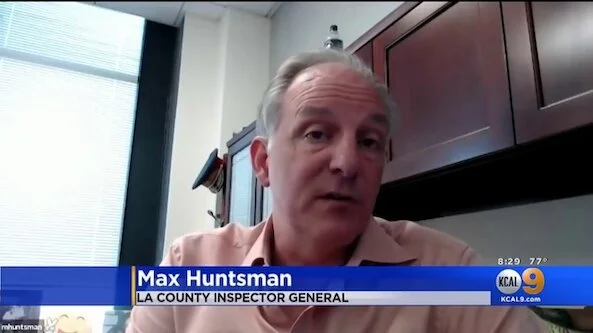
Inspector General Max Huntsman sent a letter to Villanueva on June 22 to request documents and video recovered in the investigation but have received no response.

"I ask you to provide us the items requested immediately," Huntsman wrote.

Huntsman also indicated that his office has offered to participate in interviews and assist in outreach to witnesses who are "reluctant to cooperate with the sheriff's department." He said that “the Sheriff’s Department has failed to follow transparency and oversight laws. We have state law and county codes that require cooperation with the Inspector General to monitor shooting investigations and they refuse to follow that.” See video above.

Guardado's family claimed that at the time he was shot, he was working as an informal security guard for an auto body shop in an unincorporated section of Gardena, California, near where he was shot to death on June 18.

The police claims are also disputed by witnesses who say Guardado had no gun and was on his knees with his hands on his head when he was shot in the back. This is now confirmed by the autopsy.

Andrew Heney, owner of the Freeway autoshop where Guardado worked, said the teen became frightened when deputies pulled up on him with guns drawn for no reason and so he ran.

“The police came up, and they pulled their guns on him and he ran because he was scared, and they shot and killed him. He’s got a clean background and everything. There’s no reason,” he said.

la county sheriff.jpg

According to FTP after they killed him, police then destroyed all the cameras that may have caught the interaction before stealing the DVR from the repair shop. Then, as they promised “transparency,” they blocked the results of the autopsy from the family — so the family had their own autopsy performed.

Capt. Kent Wegener, the head of the department’s Homicide Bureau, told ABC7 that investigators have taken six or seven exterior cameras from the scene, claiming two of the cameras were missing their memory cards.

A search warrant was obtained to gain access to any “web-based video or security footage from the third-party vendor who supplies the service at the scene,” Wegener said.

However, Heney disputes this claim and said police “got the warrant after they took the cameras.”

“This is the first camera they yanked off the wall,” Heney said pointing towards one of the broken devices in an interview posted on Twitter. “They broke it off and took it right off the wall,” he said as he pointed out another.

“They were just trying to be malicious and covering themselves,” he said.

“They illegally got into everything, then they had the place locked down and then they got the warrant,” he said.

The owner of one of the businesses at that address, Street Dynamic Autobody, told LAist that deputies broke surveillance cameras after the shooting. The man, who would only identify himself as "Slavin," also said deputies did not have a search warrant to take his video footage. [MORE]

Nevertheless, Cmdr. Chris Marks, who oversees the sheriff's Detective Division Headquarters, said cameras seized at the scene did not contain any video recording of the shooting.[UH,HUH]

Neither deputy involved were wearing body cameras because, Villanueva said, the Los Angeles County Board of Supervisors have not provided funds for him to equip all officers in his department with the equipment.

The names of all the deputies involved in the incident have not been released because the names of the public servants is a secret. Attorneys have said the officer who him was Deputy Miguel Vega.

At attorney for Vega, the unknown deputy who fired the shots, told the Los Angeles Times in a statement on Wednesday that Guardado ignored multiple commands to stop while he was running from the deputies, and that Guardado pulled out a gun during the chase. Attorney Adam Marangell said Guardado eventually turned around and raised both arms, still holding the weapon. Under orders from Vega, Guardado put the firearm down then got on the ground, face-down, but the gun was still near his right hand, the attorney told The Times.

According to Marangell, Vega holstered his weapon and approached Guaradado to put him in handcuffs, warning him, "Don't reach for the gun." But Guardado reached for the gun near his hand, prompting Vega to open fire, Marangell said.

The attorney told The Times that the findings of the family's autopsy "do not alter in any way the ultimate fact that Deputy Vega acted properly and lawfully." [MORE]

Tom Yu, an attorney for the second deputy, Hernandez, told The Times his client saw Guardado pull out a weapon while running and eventually saw him start to get on the ground under orders from Vega. When the shots rang out, Hernandez had only a partial view of Guardado, Yu said.

The autopsy showed that in addition to the shots to the back, Guardado was hit with two graze wounds on his forearms. The autopsy revealed Guardado had no drugs or alcohol in his system.

Guardado's sister, Jennifer Guardado, 22, said the gun found at the scene of the shooting did not belong to her brother. She also described the shooting as a "cowardly move" by deputies.

"He couldn't even see the person that was going to shoot him," Jennifer Guardado said at a vigil held for her brother near the scene of the killing.

His death prompted Congresswomen Nanette Diaz Barragan and Maxine Waters, both Southern California Democrats, to call on state Attorney General Xavier Becerra to conduct a full investigation into the shooting.

"Andres Guardado is the latest young man of color killed by police gunfire," Barragan and Waters said in their statement. "There must be full transparency so the public can trust the investigation and we know we are getting the truth." [MORE]

Sounding Like a Defense Atty for Cops, Salt Lake DA says No Matter How Far Away & How Fast Latino Man Ran from Cops It is Reasonable to Believe They Faced Imminent Harm & Had to Shoot Him 34X

sim gill da.jpg

From [HERE] and [HERE] Two white police officers in Utah were cleared Thursday in the death of an armed Latino man shot at more than 30 times as he ran away from police, a decision that prompted his grieving family to heighten their calls for systematic changes to law enforcement.

The killing of Bernardo Palacios-Carbajal, 22, has become a rallying point for protesters in the state amid a national wave of dissent against police brutality.

District Attorney Sim Gill said Palacios-Carbajal was struck 13 to 15 times as he ran away from Salt Lake City police officers who were investigating a gun-threat call and had yelled for him to drop a gun.

Two officers, Neil Iversen and Kevin Fortuna, fired their weapons at Palacios-Carbajal when they confirmed he had a gun in his possession, Gill said. The weapon could be seen on top of Palacios-Carbajal’s body after the shooting, according to body camera footage Gill presented Thursday.

Gill offered condolences to the family shortly before he announced the determination that the shooting was justified.

The Palacios-Carbjal family’s lawyers, Nathan Morris and Brian Webber, take issue with “the decision to shoot a fleeing suspect in the first place,” as he was running away. The first rounds struck the man in the back.

But the officers who fired their weapons told investigators that they didn’t consider using less lethal force because they’d already seen Palacios-Carbajal with a gun. Officers are trained to bring “equal to or greater force” than the suspect they are pursuing, Gill said.

Morris doubts that, he told The Salt Lake Tribune in an interview, because another officer can be heard in the body camera footage asking for someone to use a less-than-lethal option.

“There was a disagreement between one officer who said, ‘Tase him! Tase him! Tase him!” and the other officers who defaulted to the use of lethal force, shooting 34 times,” Morris said. “That right there makes me think that there’s an issue relating to the training and what is actually the default when it comes to chasing a fleeing suspect.”

He added that bodycam and security footage shows that “at all times, [Palacios-Carbajal] was running away from” police officers.

“There was plenty of opportunity to default to less violent situations,” Morris said.

Gill, a Democrat, said police saw Palacios-Carbajal had a gun, and officers are generally considered legally justified in using deadly force if they reasonably believe their lives or the lives of others are in danger.

“We decline to file criminal charges against either officer for his use of deadly force," Gill said.

Gill noted in his presentation that Palacios-Carbajal seemed intent on keeping the gun with him — which was concerning for the officers who were chasing him.

“What we can’t ignore is the number of times Mr. Palacios-Carbajal dropped the weapon,” Gill said. “The desire to retrieve the gun was greater than the desire to run away.”

The second “major issue” that the Palacios legal team raises is that the “amount of force that was used on Bernardo was way excessive” after he was “down and disabled.”

“Courts have held that after even one bullet, bullets two through six can be clearly excessive and a violation of established rights — let alone 34 bullets,” Morris said. “What I didn’t hear [from Gill or Salt Lake City Police Chief Mike Brown] was any concern about the number of bullets that were shot.”

Gill said the officers told investigators that they continued to fire because they claim they saw Palacios-Carbajal begin to point his gun at them, and reasonably believed their lives were in danger. He added police are trained to keep shooting until the threat is gone.

The district attorney made much of the fact that, after he was shot and killed, Palacios-Carbajal’s handgun was resting on his waist. Gill argued that this was further evidence the man had been pointing the gun at officers just before they shot at him a second time. If it had merely been in Palacios-Carbajal’s hand, Gill said, it likely would have fallen near him on the asphalt.

But Morris said “there’s any number of ways” the gun could have ended up on top of him, suggesting it landed there as Palacios-Carbajal fell after he was first shot.

“I’m speculating, just the way Mr. Gill would have to speculate,” he said. “The fact that it was there, to me does not indicate one way or the other what Mr. Palacios’ intentions were.”

He also disagreed that there is any evidence to suggest Palacios-Carbajal posed a threat to turn his gun on the officers, which was a concern the officers later recounted to investigators.

“One clear possibility in that situation is that Bernardo was turning, looking at them and putting his hand up to tell them to stop shooting,” Morris said. “There’s not only one possibility here. And the video that we saw does not show at any point that Bernado lifted a gun and pointed it at the officers.”

And on the audio from one of the officer’s bodycams “you could hear Bernardo’s voice saying, ‘Officer, I don’t want to die.’ And continuing to run away.” Salt Lake Tribune journalists reviewing the footage also hear the phrase.

“That wasn’t brought up by Mr. Gill. He brought up things to help his case and help the police.”

The district attorney’s office said Friday they found no evidence of Palacios-Carbajal saying that.

Morris believes that since Officers Neil Iversen and Kevin Fortuna fired so many rounds at Palacios-Carbajal when he was already wounded, Gill could have filed charges.

“He had every opportunity and every right under the wording of the law to say the threat of harm had abated. That it was removed,” Morris said. “And yet they continued to shoot him while he was on the ground.”

The video shows Iverson and Fortuna continuing to fire for nine seconds after Palacios-Carbajal was down. While they fired 34 rounds, it is not clear how many of them hit Palacios-Carbajal. He had roughly 15 injuries, but some bullets may have caused entry and exit wounds.

Members of Palacios-Carbajal’s family expressed pain and frustration with the district attorney’s decision. The family's attorneys said Gill had chosen to perpetuate a “system of oppression” by not bringing charges against the officers.

Morris said he and Palacios-Carbajal’s family are frustrated not just with Gill’s decision, but with the way he looked at the evidence.

“It’s not just that Mr. Gill decided that it was a justified shooting, but that at every turn he answered all of these unknown questions [by] giving the benefit of the doubt to the officers as opposed to leaving that as a question that a jury or a judge would need to ultimately decide.”

Asked what a trial would have looked like if Gill had filed charges against the officers, Morris quickly replied, “Well, we’re going to find out.”

The Palacios-Carbajal attorneys are looking at other possible violations and working with the American Civil Liberties Union of Utah and other social justice groups in their plan to file suit against Salt Lake City, the police department and possibly the officers.

“As a family, we will not stop in our pursuit of justice for Bernardo through all means that are available to us,” attorney Nathan S. Morris read from a statement prepared on behalf of the family, who called for peaceful protest.

Protesters rallied Thursday evening and some clashed with police. Authorities declared an unlawful assembly after windows were smashed at the Salt Lake County District Attorney’s Office, Salt Lake Police Chief Mike Brown said on Twitter. An officer was injured and two people were arrested, according to police. The governor declared a state of emergency to close the Capitol building and grounds until July 13, The Deseret News reported.

Lucy Carbajal, Palacios-Carbajal’s mother, sobbed as she described in Spanish the pain her family has felt following her son's death. His brother, Freddie Palacios-Carbajal, said that hearing Gill's decision made him feel sick.

“I feel like they just get a pat on the back for what they did, and I don’t agree with any of it,” he said.

Demonstrators have chanted Palacios-Carbajal's name, posted fliers calling for justice and painted the street outside Gill's office red to symbolize blood. Mayor Erin Mendenhall previously called video of the shooting “disturbing and upsetting," though the Democrat said Thursday the full evidence showed the officers followed their training and state law.

Palacios-Carbajal died shortly after midnight on May 23, after someone called police to report an apparent armed robbery, Gill said. Officers saw Palacios-Carbajal near the Utah Village Motel and chased him, yelling for him to stop and drop the weapon, Gill said.

Video footage shows Palacios-Carbajal trip and fall several times before getting up and continuing to run, picking up what officers identified as a gun from the ground before two officers begin shooting, Gill said.

Iversen and Fortuna were put on administrative leave, standard practice for a police shooting. Salt Lake City Police Chief Mike Brown said in a statement he trusts the review process and his officers. “They are asked to do an impossible job, and often receive little thanks for it,” he said.

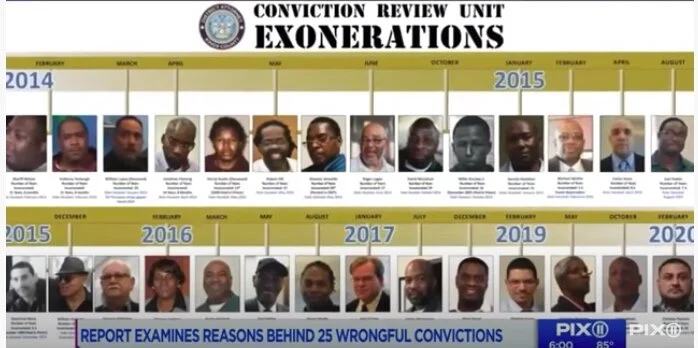
Brooklyn DA Exonerates 25 People. All Black or Latino & Wrongly Convicted Due to Prosecutorial Misconduct, Lies by Cops, Hiding Favorable Evidence, Fake Confessions & Unreliable Witness ID

brooklyn exonerations.jpg

From [HERE] On Wednesday, the Kings County District Attorney’s Office released a landmark report examining how and why the KCDA’s Conviction Review Unit (CRU) in Brooklyn, New York, agreed to exonerate 25 wrongly convicted people in a five-year period (between 2014-2019). Eric Gonzalez is district attorney for Kings County in Brooklyn, New York.

These 25 wrongly convicted persons served a staggering 426 years in prison before their exonerations. And virtually all of them — 24 out of 25 — were Black and/or Latinx. They served an average of over 17 years in prison; the one white exoneree, a victim of a politically motivated election fraud prosecution, served no prison time. The report also finds that the evidence police gathered against many of these exonerees was clearly flawed from the outset — raising obvious questions about why so many Brooklyn citizens of color were prosecuted at all, and why none of the system’s actors stepped in to halt these prosecutions or rectify them for decades.

The report forthrightly addresses the grievous errors – including outright misconduct in a number of cases — by both police and prosecutors that tainted the vast majority of these cases. We know that, for many reasons, retrospective investigations of official misconduct will always yield an undercount. For example, evidence supporting a claim of innocence that is intentionally suppressed by law enforcement is designed to stay hidden — and often does. But those limitations make the errors and misconduct that were found by the CRU all the more undeniable. For example, the reinvestigations by the KCDA’s own CRU staff revealed that:

  • Misconduct and/or serious error by prosecutors was the most common factor in these wrongful convictions, occurring in at least 84% of the 25 cases.

  • “Police conduct” was the next most common factor and was present in 72% of the exonerees’ cases.

  • Failure to disclose favorable evidence to the defense — by prosecutors, police, or both — was a factor in 40% of these exonerees’ cases. (This factor was independent of — and/or in addition to — other police and prosecutorial conduct cited by the CRU.)

  • False or unreliable confessions were used to wrongly convict over one-third (36%) of these 25 exonerees, and in many cases was the only direct evidence against them.

  • Eyewitness Misidentification was a contributing factor in the wrongful convictions of one-fifth (20%) of the 25 exonerated people.

The KCDA, the Innocence Project, and the law firm of WilmerHale co-authored the report, and the Innocence Project designed the research tool that was used to gather and analyze the data.

Many prosecutors around the nation have formed “conviction review” or “conviction integrity” units in recent years. These are specialized, independent units whose sole focus is to reexamine and reinvestigate claims of wrongful conviction. But today’s report constitutes the first public examination ever commissioned by any elected prosecutor in the United States of the reasons why its own office made the decision to throw out more than two dozen deeply flawed convictions in its own county. It is also the first time an elected district attorney has ever allowed outside researchers — much less staff from an innocence organization — to analyze documents from its own files regarding that process.

The result is a groundbreaking report that, for the first time, provides a window into how and why one prosecutor’s office came to acknowledge the injustices earlier perpetrated in its own county against so many of its own citizens.

The report is necessarily limited by its exclusive focus on the CRU’s own investigations and conclusions. The CRU’s conclusions reflect its own view of these cases, based on the evidence it had available and/or considered significant at the time. We recognize that many of these wrongly convicted persons and their advocates may have very different perspectives on why they were sent to prison for crimes they did not commit, and that key facts about these cases and the officials involved may not be included here.

However, there are still profound takeaways from this report for all who seek to fix our broken criminal legal system, particularly since it constitutes the district attorney’s own acknowledgment of what went grievously wrong in these cases and its devastating human toll.

While there have been some gains in reforming the criminal justice system in New York State to prevent future miscarriages of justice like these, the report provides a good roadmap for modifications to existing reforms and the need to promote new changes to the criminal justice system through law and policy. These include:

  • Banning Police Deception/Assessing Reliability of Confession Evidence. Addressing the legally permitted use of deception by law enforcement in the interrogation room and assessing the reliability of confession evidence before it is introduced. New York State Senator Zellnor Myrie, also from Brooklyn, has introduced SB6806, which would prohibit law enforcement’s use of “false facts” during interrogations and assure that when judges assess the voluntariness of a confession, they also assess its reliability before allowing it to be used in court.

  • Rejecting Repeated Presentations of the Same Person When Witnesses are Asked to Identify a Suspect /Requiring Witnesses to Rate How Confident They are When an Identification is Made. In several cases, the same suspect was presented to the eyewitness in more than one identification procedure, such as a view in a mug book, a show-up, or one-on-one identification procedure, or a photographic or live lineup with multiple potential suspects. This has been shown to increase the possibility of a misidentification of an innocent person because of what is known as “commitment effect” or misplaced familiarity. Multiple identification procedures of the same suspect should never be permitted during the course of an investigation.

  • The level of confidence an eyewitness expressed at the time of an identification is critically important to capture. The level of confidence an eyewitness might initially describe at the time he or she identifies someone as the perpetrator of a crime can be artificially inflated through any sort of confirming feedback, so that by the time the eyewitness takes the witness stand, he or she is 100% confident in the identification she/he has made. All police agencies should implement the policy of taking an immediate confidence statement — where the witness is asked in his or her own words how certain they are of the identification they have made — at the time when an identification is first made. While versions of these reforms are included in an advisory policy in New York State, they should be mandated and uniformly adopted across the State. Also, given the lack of evidentiary value offered by an in-court identification, they should no longer be permitted.

  • Assuring Police and Prosecutorial Accountability. New York recently repealed Civil Rights Law 50-a, which had shielded police misconduct records from the public. Now that this law has passed, police agencies should readily provide this information to the public, without requiring Freedom of Information Law requests, and immediate action should be taken to remove law enforcement with histories of perjury and excessive force from police agencies. New York should also finally allow the nation’s first-ever Commission on Prosecutorial Conduct to begin its important work; the independent commission was enacted into law in 2019 but has been ensnared in court challenges which will require either judicial resolution or legislative action to resolve.

  • Prosecutors’ offices should better assess the integrity of the evidence they may use in a criminal case. The report’s authors noted that many of the 25 wrongful conviction cases might not have moved forward had trial prosecutors and their supervisors more thoroughly assessed the reliability of the evidence presented to them by law enforcement — including eyewitness accounts, confessions, informant claims, and forensic evidence. For example, the report cites numerous cases where a “confession” or an informant’s statement simply did not fit the physical evidence or failed to comport with eyewitness accounts of the crime. While each of these cases represent a systemic breakdown at every step of the process, many red flags became apparent in the review of these cases that should have been heeded, and opportunities to prevent the cases from becoming wrongful convictions were missed.

The Innocence Project commends District Attorney Eric Gonzalez for making these detailed findings public, and for the report’s forthright acknowledgment that “[t]he wrongful convictions discussed here all point to failures of prosecution as an institution — whether through the acts of individual prosecutors, collective decisions, or failure to train or guide prosecutors adequately.” We look forward to working with policymakers and exoneree advocates to meaningfully redress the systemic failures cited in the report and prevent future wrongful convictions.

DA Charges 3 LAPD Cops w/Manufacturing Evidence & Reports to Identify People as Gang Members. They falsified interviews, noted tattoos that didn't exist, made up names on reports & forged docs

slaves lapd 2.3.jpg

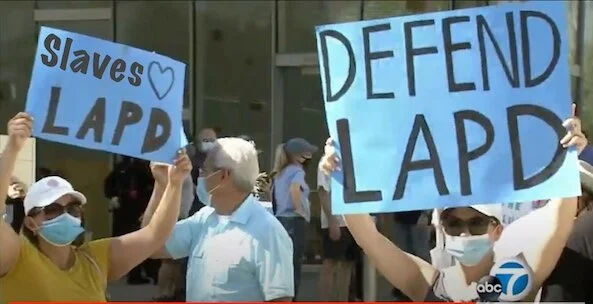
From [HERE] Three Los Angeles police officers face charges of falsifying police reports to claim that people they pulled over during traffic stops had gang allegiance or some affiliation.

The LA County District Attorney’s Office announced the charges Friday. Black strawboss DA Jackie Lacey is presently in the midst of a competitive election and this case may be a placebo to quiet her angry critics. Black Lives Matter leaders and the ACLU criticize Ms. Lacey’s record of failing to charge any cops in hundreds of deadly police shooting. According to the D.A.’s office, police in L.A. County have shot and killed 342 people during her tenure - none were charged. Ms. Lacey, an African-American who has been in office since 2012, will face fellow Democrat George Gascón, a former San Francisco police chief and district attorney, in the November election. A poll released by Mr. Gascon’s campaign Thursday showed the two statistically tied, with him at 35% and Ms. Lacey at 32%, a difference that is within the survey’s margin of error. 33% of respondents were undecided. Adam Schiff, a Democratic congressman from Los Angeles, pulled his endorsement of Ms. Lacey in late June, saying on Twitter, “We have a responsibility to make profound changes to end systemic racism & reform criminal justice.” [MORE] and [MORE]

In a 59-charge criminal complaint, prosecutors say Metro Division officers Braxton Shaw, Michael Coblentz and Nicolas Martinez misidentified people as gang members, falsified interviews, noted tattoos that did not exist and made up names on field reports.

Prosecutors say the men also forged documents to say that the people who were interviewed by the officers admitted to being part of a gang even though their body cameras proved otherwise.

Shaw is accused of falsifying 43 reports, Coblentz is accused of falsifying 7 and Martinez falsified 2 reports according to the DA’s office.

The case remains under investigation according to the DA’s office.

Each officer faces prison time if convicted with over 30 years for Shaw, 7 years for Coblentz and 4 years for Martinez.

The charges against the officers originated from a misconduct investigation by the LAPD’s Internal Affairs department and overseen by the Office of the Inspector General.

According to the LAPD, 21 additional officers remain under investigation as part of a probe into officers falsifying their field interview cards with 10 officers assigned to home duty, 8 on administrative duty, 5 who are still in the field and one who has retired.

As part of recent reforms within the department, the LAPD said they would stop using a controversial statewide gang database.

In a statement LAPD Chief Michel Moore said, “Public trust is the bedrock of community policing and these allegations shake that foundation.  The actions of these few tarnish the badge we all wear.  The department is committed to continuing this comprehensive investigation in our effort to restore the confidence of the people we protect and serve.”

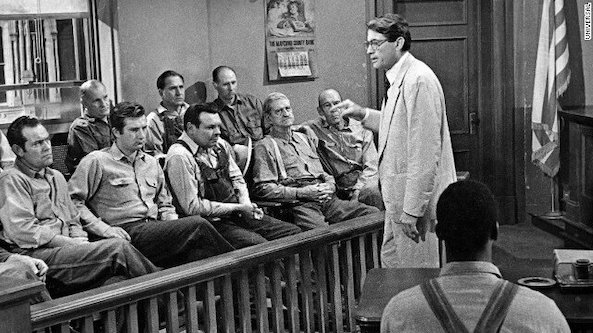
Like voting, jury service is a basic right of citizenship that is Illusory for Blacks: White Prosecutors are Using 'Support for Black Lives Matter' as a Reason to Strike Black People from Juries

IF MS REED CHANGED HER MIND AND SAID BLACK LIVES DON’T MATTER WOULD WHITE PROSECUTORS SELECT HER?

IF MS REED CHANGED HER MIND AND SAID BLACK LIVES DON’T MATTER WOULD WHITE PROSECUTORS SELECT HER?

From [HERE] Questioning a potential juror named Crishala Reed, the prosecutor homed in on a sentence from Reed’s questionnaire. “I support Black Lives Matter,” she had written.

The prosecutor asked Reed if she supported “destroying other people’s property.” Reed said no. After the questioning, the prosecutor used a peremptory strike, where no reason is required, to remove Reed from the jury for the 2016 trial.

She looked around the jury box and didn’t see any other Black people, Reed told The Marshall Project. “I felt targeted,” Reed said. “It was a life-changing experience for me, personally. And I still talk about it to this day. I tell my kids about it. Not to scare them but to make them aware.” The questioning of Reed’s support for Black Lives Matter will be considered by a California appeals court in the coming months. Lawyers for the defendants in the double-murder trial say the decision to remove Reed violated the U.S. Constitution’s ban on excluding prospective jurors based on race.

The case is one of several across the country in which prosecutors have pressed potential jurors about their sympathy for Black Lives Matter – a movement that has won growing mainstream support in the weeks since the killing of George Floyd.A Minneapolis man’s conviction was upheld in 2016 after a court found there were no racial overtones to the question, “Have you participated in any of the Black Lives Matter kind of marches and stuff like that here?”But the Nevada Supreme Court in 2018 criticized prosecutors for the racist implications of questioning potential jurors about Black Lives Matter and ordered a new trial. This year, a North Carolina court upheld a conviction where a potential juror, a college student who was involved in Black Lives Matter, was dismissed by the prosecutor, who said her activism raised questions about whether she could be impartial toward law enforcement.Legal experts say that those cases probably represent only a fraction of instances where jurors have been asked their views on Black Lives Matter, because these are the cases that have made their way up to appeals courts.

California courts rarely find racial bias in jury selection, but in January the state Supreme Court announced plans to review the rules for disqualifying potential jurors. State lawmakers are also considering a measure that would tighten rules on removing juror candidates. The rules limiting discrimination against jurors are called the Batson process, named after a 1986 U.S. Supreme Court case over a trial at which prosecutors dismissed all prospective Black jurors. The high-profile case of Curtis Flowers, tried six times for the same crime, brought the issue to national attention again last summer when the U.S. Supreme Court overturned his conviction, finding that a White prosecutor had intentionally removed Black jurors. If a California appeals court finds that the prosecutor used race in her decision to remove Reed, the defendants could get a new trial. A spokesman for the district attorney in Contra Costa County, northeast of San Francisco, said prosecutors would not comment while the appeal is pending.

The California Attorney General’s Office, which handles criminal appeals for county prosecutors, said race was not a factor in Reed’s dismissal. In a court filing, it said Reed crossed her arms when the prosecutor talked to her, but not when the defense did, and she was “openly hostile when the prosecutor questioned her about BLM.” 

The Black Lives Matter issue in the case is catching the attention of national litigators who specialize in jury discrimination, including Jim Craig, the director of the Louisiana office of the Roderick and Solange MacArthur Justice Center. Craig had filed a brief in support of Flowers during his appeal. 

“That these same techniques of racial discrimination and trying to whitewash discrimination are not just a part of Southern trials, but are a part of some of the most progressive parts of the United States, is exceptionally troubling,” he said.

When Reed, a 28-year-old mail carrier who lives in a suburb about 30 miles northeast of San Francisco, received a jury summons, she was eager to go, she said. In the days before she went to court, she mentioned jury duty to her stepfather, who told her not to get her hopes up. “He said, ‘They’re going to weed you out,’” she said. “I was just shocked when he told me that.” Reed showed up for jury duty and filled out a form with questions about her work history and experience with the criminal justice system.

One question asked if she had strong feelings about how the criminal justice system treats people based on gender, race, religion or national origin. She checked yes, but wrote that it wouldn’t affect her role as a juror. Another question asked whether she was part of “any law or justice-focused special interest groups.” The form listed examples, including the National Rifle Association, the American Civil Liberties Union, Blue Lives Matter and Black Lives Matter. Reed wrote she supported Black Lives Matter.

Lawyers often test jurors for views about the criminal justice system, and courts have given them wide latitude, even allowing prosecutors to probe jurors on their opinions of the O.J. Simpson verdict. In the California murder case, Reed was the first juror the judge called on in the group. The judge asked about her views on fairness in the criminal justice system. Reed told the judge that “how I feel is that Black people are being sentenced longer than other races.” But she told the judge that she could set that aside and be fair. When it was the prosecutor’s turn, Deputy District Attorney Melissa Smith asked Reed about Black Lives Matter. “I support it,” Reed told the prosecutor, according to a transcript filed in court. “But I’m not in anything social like, as in, group-wise.” Reed said she didn’t support any illegal behavior, but that she supported the cause. Smith then asked about whether she supported “riots” during demonstrations. After the defense lawyer objected, Smith asked if Reed supported demonstrators who “destroy property.” Reed said no. Reed said she doesn’t want to go through jury duty again. “I wanted to cry, but I held it,” she said. “I didn’t want to look weak. I would never want my kids to go and do that.”

Value of Black Citizenship Low in CA: Berkeley Study says [white] DA's Removed Blacks from Juries in 72% of the Cases They Examined & 98% of Removal Challenges Lose on Appeal [white judges]

Trial By an Unlawfully Created State Body [a jury]. There are only a few ways that Americans can meaningfully exercise their citizenship; enlisting in the military, running for national office, voting and serving on a jury. Like voting, jury service…

Trial By an Unlawfully Created State Body [a jury]. There are only a few ways that Americans can meaningfully exercise their citizenship; enlisting in the military, running for national office, voting and serving on a jury. Like voting, jury service is a basic right of citizenship THAT IS AN ILLUSORY FOR BLACK CITIZENS. [MORE]

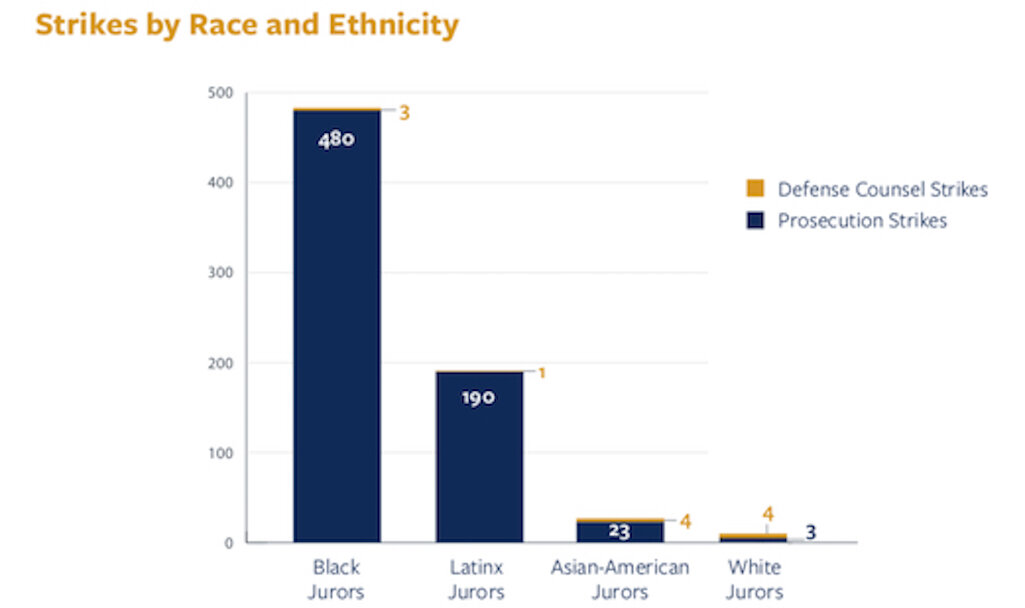
From [HERE] “Prosecutors continue to exercise peremptory challenges to remove African Americans and Latinx people from California juries for reasons that are explicitly or implicitly related to racial stereotypes,” according to a study by the Berkeley Law Death Penalty Clinic, featured in the Los Angeles Times. In “Whitewashing the Jury Box: How California Perpetuates the Discriminatory Exclusion of Black and Latinx Jurors,” Elisabeth Semel and co-authors examine nearly 700 cases decided by the California Courts of Appeal from 2006 through 2018 involving objections to prosecutors’ peremptory challenges. These challenges allow attorneys to excuse prospective jurors without stating a reason and without the court’s approval. District attorneys used their strikes to remove Black jurors in 72% of these cases, Latinx jurors in 28% of cases, Asian-American jurors in 4% of cases, and white jurors in 1% of cases. Prosecutors justified these strikes based on the prospective juror’s demeanor, their relationship with someone who had been involved in the criminal justice system, and their expressions of distrust or perceptions of bias in law enforcement or the justice system.

In the last 30 years, the California Supreme Court has reviewed 142 cases to determine if they violated Batson v. Kentucky’s rejection of intentional race-based jury selection. They found a Batson violation only three times. Between 2006 and 2018, the appellate courts found error in just 18 out of 683 decisions. “Batson’s requirement that the objecting party prove intentional discrimination allows these biases to operate unchecked,” write the report authors. Rather than the California Supreme Court’s approach to form a “work group” to consider these issues, the authors recommend that the state legislature pursue a “drastic course correction” encompassing significant changes to the state’s Batson procedure.

berk study 2.jpg

The study’s main findings are as follows [annotations omitted]:

  1. Many decades after Wheeler and Batson were decided, California prosecutors’ use of peremptory challenges to exclude African Americans and Latinx citizens from juries is still pervasive.

  2. Historically and still today, in California, the overwhelming number of Batson objections are brought by defense attorneys against prosecutors’ peremptory challenges.

  3. Empirical evidence overwhelmingly shows that implicit biases play a significant role in prosecutors’ peremptory challenges. Strikes based on these biases most often adversely affect Black defendants and Black jurors. Implicit biases are, by definition, deeply held and reflexive. Inasmuch as each of us acts on them without awareness, lawyers most often will not recognize their biases, much less be able to acknowledge them. Judges are no better at identifying them. Batson’s requirement that the objecting party prove intentional discrimination allows these biases to operate unchecked.

  4. Our empirical analysis of California appellate court opinions shows that prosecutors routinely and successfully cite a Black or Latinx prospective juror’s distrust of law en- forcement or the criminal legal system to justify a peremptory strike against the juror. Social science research demonstrates that most African Americans and Whites do not share the same views of law enforcement or the criminal legal system. The differences in attitude are long-standing and rooted in the nation’s history of institutional racism, as well as the present-day differential treatment of Blacks and Latinx people by actors in the criminal legal system, including by members of law enforcement. More than 40 years ago, in Wheeler, the California Supreme Court announced that these differences do not support the exercise of peremptory challenges: “The representation on juries of these differences in juror attitudes is precisely what the representative cross-section standard . . . is designed to foster.” California courts long ago lost sight of this goal.

  5. District attorney training manuals on peremptory challenges encourage discriminatory strikes in at least three respects:

    *Prosecutors are trained to identify the “ideal juror” as a person who most resembles them—“attached to the community, educated, stable, [and] professional.” They are likewise advised to avoid individuals who are members of groups in which people of color are overrepresented, that is, “less educated people and blue collar workers,” and those who are “unemployed or underemployed” or who have family members experiencing similar economic hardship

    *Prosecutors are instructed to strike jurors based on their “gut reactions” to jurors’ facial expressions, body language, clothing, and hairstyle, and to rely on lengthy stock lists of court-approved “race-neutral” reasons to explain their challenges. Social science has repeatedly shown that “gut reactions” are often the product of implicit biases that correlate with racial and ethnic stereotypes.

    *Prosecutors are trained to strike prospective jurors who have had or whose relatives have had a negative experience with law enforcement or are distrustful of the criminal legal system. They are, in other words, instructed to exploit the historic and present- day differential treatment of Whites and people of color, especially African Americans and Latinx people, by the police, prosecutors, and the courts.

  6. The California Supreme Court’s definition of a “race-neutral” reason is so expansive that any explanation short of the admission of a discriminatory motive will suffice at Batson’s second step, and, ultimately, defeat a Batson challenge. This also allows prosecutors to rely successfully on a laundry list of judicially approved “race-neutral” reasons when they explain their peremptory challenges. Courts have consistently upheld reasons such as a juror’s prior arrest, a juror’s loved one’s incarceration, or a juror’s distrust of the criminal legal system as facially race-neutral and, overwhelmingly, sufficient to defeat a Batson objection.

  7. We evaluated nearly 700 cases decided by the California Courts of Appeal from 2006 through 2018, which involved objections to prosecutors’ peremptory challenges. In near- ly 72% of these cases, district attorneys used their strikes to remove Black jurors. They struck Latinx jurors in about 28% of the cases, Asian-American jurors in less than 3.5% of the cases, and White jurors in only 0.5% of the cases.

    • Prosecutors most often gave demeanor-based justifications for their strikes. The next most common reason related to a prospective juror’s relationship with someone who had been involved in the criminal legal system. This was followed almost as frequently by a prospective juror expressing a distrust of law enforcement or the criminal legal system or a belief that law enforcement or the criminal legal system is racially- and/or class-biased.

    • Prosecutors in these cases successfully used their peremptory challenges against African Americans because they had dreadlocks, were slouching, wore a short skirt and “blinged out” sandals, visited family members who were incarcerated, had negative experiences with law enforcement (often many years before they were called for jury duty), or lived in East Oakland, Los Angeles County’s Compton, or San Francisco’s Tenderloin.

    • Prosecutors also successfully struck Latinx prospective jurors for frowning, seeming confused, wearing large earrings, stating that a loved one had been wrongfully accused of a crime, expressing a belief that the criminal legal system treats people differently based on their race, or being “kicked off a ladder by a border patrol officer who was chasing” undocumented people three decades earlier.

  8. Between 2003 and 2019, the United States Supreme Court issued a series of decisions that signaled the need for lower courts to more rigorously enforce Batson. The California Supreme Court has largely disregarded those directives. Here are three examples:

    • For years, at step one of the process, the California Supreme Court required the objecting party to show that it was more likely than not that the strike was based on intentional discrimination. Unless the standard was satisfied, the striking party did not have to give reasons for the peremptory challenge. In 2005, in Johnson v. California, the United States Supreme Court rejected California’s test as unduly burdensome and inconsistent with Batson’s rule that step one is a low threshold; the objecting party need only raise an inference of discrimination. Despite the United States Supreme Court’s intervention, in the 42 step-one cases the state supreme court has since decided, the court has not once found Batson error.

    • The United States Supreme Court has left no doubt that Batson requires the attorney to provide the reasons for the strikes, and that the trial judge and reviewing courts must base their rulings on the reasons the attorney offers. However, the California Supreme Court has consistently approved speculation by trial and appellate courts about reasons the prosecution could have (but did not) offer for its strikes in order to uphold the denial of a Batson objection.

    • Since 2003, the United States Supreme Court has endorsed a method of analyzing
      a Batson objection known as “comparative juror analysis,” an approach central to each of its subsequent favorable Batson decisions. In over 30 years, the California Supreme Court has never used this analysis to expose discrimination. Rather, in case after case, the state supreme court has declined to engage in comparative analysis, restricted its application, or conducted the analysis but found it unpersuasive. The court’s resistance to this powerful analytic tool also explains its extraordinarily high affirmance rate.

  9. California courts—the California Supreme Court and Courts of Appeal—have an abysmal record in Batson cases. In the last 30 years, the California Supreme Court has reviewed 142 cases involving Batson claims and found a Batson violation only three times (2.1%).

  10. It has been more than 30 years since the California Supreme Court found a Batson violation involving the peremptory challenge of an African-American prospective juror.

  11. It has been more than 30 years since the California Supreme Court found that a trial court committed error in denying a defendant’s objection to the prosecutor’s use of peremptory challenges at the first step of the Batson procedure.

  12. California Courts of Appeal, which follow the state supreme court’s precedent, rarely find error when trial courts deny defense attorneys’ Batson motions challenging the removal of Black and Latinx jurors. From 2006 through 2018, our appellate courts found error in just 18 out of 683 decisions (2.6%).

  13. In our examination of California state cases between 1993 and 2019, which were later reviewed by the Ninth Circuit Court of Appeals in habeas corpus proceedings, the Ninth Circuit granted Batson relief 15% of the time­—almost six times more often than the California Courts of Appeal and over seven times more frequently than the California Supreme Court. This is particularly noteworthy because the Ninth Circuit, applying federal law, is obliged to use a much stricter standard of review than that employed by our state courts.

  14. In two opinions in 2019, California Supreme Court and Court of Appeal justices urged immediate, decisive action to remedy Batson’s failure in California. In the words of Su- preme Court Justice Goodwin Liu, it is “past time for course correction.” Justice Liu has repeatedly dissented from the majority in Batson cases since joining the court in 2011. He has criticized the court’s persistent failure to apply Batson’s precedents with the “vigi- lance required by the constitutional guarantee of equal protection of the law.” Justice Jim Humes, a member of the California Court of Appeal, similarly urged that “the time has come” for the state “to consider meaningful measures to reduce actual and perceived bias in jury selection.” In May 2020, in another dissenting opinion, Justice Liu declared that the “Batson framework, as applied by this court, must be rethought in order to fulfill the constitutional mandate of eliminating racial discrimination in jury selection.”

  15. Across the country, members of the state and federal bench—including United States Supreme Court Justice Stephen Breyer—legal scholars, and some state supreme courts have acknowledged Batson’s failure as a mechanism for eliminating discriminatory peremptory challenges, and have called for or implemented reform. In 2018, the Washington Supreme Court took a leadership role when the court adopted General Rule 37 to reform Batson.

  16. We acknowledge the California Supreme Court’s interest in studying Batson’s shortcomings by announcing the formation of a “work group” in January. There has been no sub- sequent statement regarding the goals of the work group or its membership. Over the last three decades, the court has declined many opportunities to remedy these inequities. The legislature—through the passage of AB 3070—is better suited to effectively address persistent discrimination in jury selection in a timely manner. As this report makes ev- ident, the topics identified for study by the “work group” have been amply studied. The questions posed have been answered. The time for a decisive “course correction” by the California Legislature is now.

As "Shelter in Place" Orders "Took" Citizens' Labor & Business Property w/o Just Compensation in Violation of the 5th Amendment at Least 12 “Legistraitors" Got Paid Off the COVID Rescue Program

From [HERE] At least a dozen lawmakers have ties to organizations that received federal coronavirus aid, according to newly released government data, showing how Washington insiders were both authors and beneficiaries of one of the biggest government programs in U.S. history.

Under pressure from Congress and outside groups, the Trump administration this week disclosed the names of some loan recipients in the $659 billion Paycheck Protection Program, launched in April to help allegedly small businesses keep Americans employed during the pandemic. Connections to lawmakers, and the organizations that work to influence them, were quickly apparent.

Among businesses that received money was a California hotel partially owned by the husband of House Speaker Nancy Pelosi, and a shipping business started by Transportation Secretary Elaine Chao’s family. Chao is married to Senate Majority Leader Mitch McConnell.

Car dealerships owned by at least three Republican House members — Reps. Roger Williams of Texas, Vern Buchanan of Florida and Mike Kelly of Pennsylvania — received money. So did fast-food franchises owned by Rep. Kevin Hern, R-Okla., a law firm owned by the husband of Sen. Jeanne Shaheen, D-N.H., and the former law firm of Rep. Matt Cartwright, D-Pa., which employs his wife.

Money also flowed to a farming and equipment business owned by the family of Rep. Vicky Hartzler, R-Mo., and a regional casino company led by the husband of Rep. Susie Lee, D-Nev.

Members of Congress and their families are not barred from receiving loans under the Paycheck Protection Program, and there is no evidence they received special treatment. Loans were granted to Democrats and Republicans alike, something President Trump’s campaign mentioned when records showed donors to his campaign were among the earliest beneficiaries.

Hundreds of millions of dollars also flowed to political consultants, opposition research shops, law firms, advocacy organizations and trade associations whose work is based on influencing government and politics. [MORE]

Last year In a 5-4 decision, the Supreme Court held that the Takings Clause of the Fifth Amendment guarantees property owners a right to just compensation at the time a taking occurs.  The majority opinion in Knick v. Township of Scott, Pe…

Last year In a 5-4 decision, the Supreme Court held that the Takings Clause of the Fifth Amendment guarantees property owners a right to just compensation at the time a taking occurs. The majority opinion in Knick v. Township of Scott, Pennsylvania, et al, No. 17-647, explicitly overrules Williamson County Regional Planning Commission v. Hamilton Bank of Johnson City, 473 U. S. 172 (1985), which required plaintiffs to seek compensation in state courts first before bringing federal constitutional claims under the Fifth Amendment. [MORE]. This assumes that a Government has given you some Constitutional Rights or you and a government orderly believe that you have them.

Meanwhile governors across the country have issued executive orders mandating the closure of businesses they deem non-essential in an effort to slow the spread of COVID-19. Slowing the spread of COVID-19, in turn, benefits all the state’s residents. Thus, the owner of the closed business is made to sacrifice the use of his or her property for the good of the general public. Has the state thereby effected a taking under the Fifth and Fourteenth Amendments for which it must compensate the business owner?

There are good arguments for getting to yes. Although shelter in place orders may be necessary they are nevertheless Government seizures of people’s livelihoods and businesses that have forced indefinite closures and widespread layoffs. The government’s actions may be described as “uncompensated takings” that violate the Takings Clause of the 5th Amendment. That is, the government is legally obligated to properly compensate citizens for their tangible losses.

Because the orders would be characterized to effect an alleged regulatory (rather than physical) taking, a fact-intensive, multi-factor analysis applies. The Orders constitute a regulatory taking implemented for a recognized public purpose, and therefore the failure to pay just compensation contravenes the Takings Clause of the Fifth and Fourteenth Amendments. See Penn Central Transportation Co. v. City of New York, 438 U.S. 104 (1978); Lucas v. S.C. Coastal Council, 505 U.S. 1003 (1992); Horne v. Dep't of Agric., 576 U.S. 350, 135 S. Ct. 2419, 2426 (2015) (“Nothing in the text or history of the Takings Clause, or our precedents, suggests that the rule is any different when it comes to appropriation of personal property. The Government has a categorical duty to pay just compensation when it takes your car, just as when it takes your home.”).

A recent lawsuit makes such an argument and the complaint explains, ‘Without extending constitutionally required just compensation to Plaintiffs and those similarly situated, [shelter in place] Orders jeopardize the sustainability of many businesses and the livelihoods those businesses provide to individuals.’ [MORE]


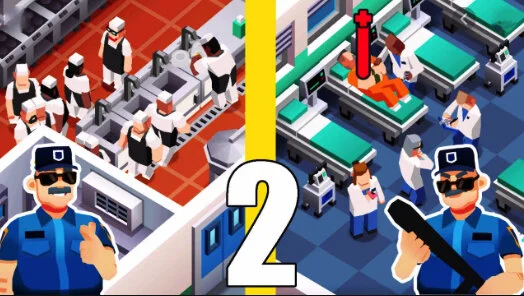
A New Game for Slaves who Want to be the Master: In “Prison Empire Tycoon" Gamers Simulate Physical Control of Inmates & Win by Creating a Profit Making Low Income Warehousing Project [prison]

prison tycoon sucks.jpg

From [HERE] A new game called “Prison Empire Tycoon” is going viral. Released in late May, it has risen to become the current number one strategy game in Apple’s App Store and has been among the top 20 most popular games overall since its launch, with at least  3 million downloads to date. In line with many other popular business simulation games like the “Railroad Tycoon” and “Rollercoaster Tycoon” series, where users create huge transport networks or design and run their own theme parks, the point of “Prison Empire Tycoon” is to make money running a private American prison.

During the tutorial at the start, a baton-wielding guard instructs you, telling you that “the state pays us good money” to manage the “lowlifes” they send your way. “It’s a perfect business,” he says, as he shows you how to send inmates to solitary confinement, something that is near-universally described as torture.

The game is undeniably well put together, with a clear, functioning world and appealing, chunky graphics. And judging from the extremely positive reception the game has received, users see nothing wrong with its content either. Indeed, the biggest complaints in the negative reviews left online are that it has a number of bugs, has a tendency to crash, and features a lot of annoying ads and in-app purchases.

With almost 2.3 million people locked up across a sprawling network of thousands of facilities, the United States has by far the highest incarceration rate in the world, significantly worse than brutal dictatorships in Africa, Latin America or Central Asia. The U.S. imprisons its citizens at over ten times the rate of European countries like Denmark or Sweden, and over seventeen times that of Japan. Three-quarters of people held in jails have not been convicted of anything.

For-profit private prisons are a growing phenomenon. Since 2000, the number of people incarcerated in them has increased by 39.3 percent, compared to an overall rise of 7.8 percent. Some states have seen their private prison industry explode. Arizona’s private prison population for example has grown nearly sixfold over the last 20 years. Indiana and Ohio’s have quadrupled, while Florida’s has tripled.

Private prison corporations have a clear and perverse incentive to keep their charges in their custody for as long as possible and to make sure they return. In 2010, a federal grand jury convicted Pennsylvania judges of taking $2.6 million in bribes from for-profit juvenile detention facilities in exchange sending thousands of children to jail, often over the protestations of their probation officers.

Writer and prison critic Chris Hedges, who has taught at a number of penitentiaries, called prisoners the ideal American worker; they do not receive any benefits or pensions, are not paid overtime, cannot organize or go on strike, have no vacations or sick days, never show up late to work, cannot complain, and if they try to protest they can be beaten or tortured in solitary confinement. As such, he concludes, prisons “are models for what the corporate state expects us all to become.” According to a 2017 study by the Prison Policy Initiative, incarcerated workers in non-industry prison jobs are paid between $0.86 and $3.45 per day, a significant decline from previous years.

These wages are used as a battering ram against wages across society. Right now, California is facing a critical shortage of firefighters to tackle the summer forest fires, precisely because the state has relied on prison labor, rather than unionized firefighters. California’s prison population is currently on lockdown after particularly severe COVID-19 outbreaks across the state’s correctional facilities.

Trump is Daily, Living Proof that White Supremacy is Mythology & the Ultimate Affirmative Action: Blithering Idiot says 'No one knew Abraham Lincoln was Republican until he pointed it out'

IDIOCRACY: ‘RULE AND OVERRULED BY COMPLETELY CLUELESS ADN BLITHERING IDIOTS. the TRUMP administration IS IDIOCRACY.’ -FUNKTIONARY.

IDIOCRACY: ‘RULE AND OVERRULED BY COMPLETELY CLUELESS ADN BLITHERING IDIOTS. the TRUMP administration IS IDIOCRACY.’ -FUNKTIONARY.

From [HERE] Blithering Idiot, Paper Boat Puppeticican, Donald Trump has claimed that until he became US president “nobody ever heard” that Abraham Lincoln was a Republican. 

The US president’s improbable claim came during a roundtable discussion on Venezuela at his Doral golf resort in Florida, in which he largely ignored the issue of the South American country and instead praised his administration’s handling of a coronavirus pandemic that has killed more than 135,000 Americans. 

“The Republican Party has grown incredibly from when it was and we have a whole different group of people in the Republican Party,” Mr Trump said on Friday.

“Like people don’t remember, nobody ever heard of it until I came along, nobody remembered it for a long time, or they didn’t use it at least, I use it all the time: Abraham Lincoln was a Republican. You know you say that and people say, ‘I didn’t know that’, but he was Republican, so we’re doing a great job.”

In fact, Lincoln, who abolished slavery and led the Union to victory in the American civil war, is the first and one of the most iconic Republican presidents in history.

During the roundtable, Mr Trump also falsely accused rival nominee for president Joe Biden of trying to “impose socialism” on the US, wrongly suggested the Democratic Party wanted to “rip down statues to Jesus”, and said cities with Democrat political leaders were “going to hell”.

Detroit is Surrounded by Water but Govt Water Shut Offs Ensure that a Large No of Black Residents Cannot Wash their Hands, Flush Toilets & Clean their homes, thereby Spreading COVID. Suit Filed

From [HERE] Detroit residents backed by the ACLU filed a federal class action Thursday accusing city and state officials of not having a plan in place for low-income residents who face water shutoffs during the coronavirus pandemic.

Michigan Governor Gretchen Whitmer, Detroit Mayor Mike Duggan and water department supervisor Gary Brown are named as defendants in the 101-page lawsuit, and are alleged to have shown “deliberate indifference to the known risks of living without water service that could, did, and will cause harm to plaintiffs.”

The introduction of the complaint states as follows [annotations omitted]:

“Water is a human right and a basic necessity, especially in a time of pandemic. Access to safe, affordable water is critical to stop the spread of COVID- 19 and other bacterial or viral infections through frequent handwashing and cleaning. In Detroit, however, thousands of residents—who are predominantly and disproportionately Black—have suffered from the lack of water service in their homes for years. These residents, many of whom have had their water service temporarily restored during the pandemic, will risk losing their water service again when Detroit resumes its water shutoff policy. The lack of water places these residents and members of their communities, including schools, workplaces, and other shared spaces, at risk of contracting bodily illnesses, including COVID-19.

2. Detroit has had a water affordability crisis for decades.1 While water is generally considered “affordable” when families spend no more than 2% to 2.5% of their household incomes for water services,2 low-income Detroit residents must pay an average of 10% of their household incomes on water,3 and some pay much more.4 As a result, many families in Detroit struggle to pay their water bills.

3. When customers’ water bills go unpaid, DWSD, a department of the City of Detroit, disconnects their service without first determining whether customers have the means to pay their bills. The looming resumption of water shutoffs will exacerbate an existing public health emergency in Detroit absent this Court’s intervention.

4. Between 2014 and 2019, more than 141,000 households in Detroit had their water service disconnected for non-payment.5 Some families live for years without water service in their homes after a disconnection by DWSD. Others are trapped in a cycle of water insecurity with repeated disconnections and reconnections. These water insecure families risk losing service at any time because of their inability to pay DWSD’s rates.

5. In 2014, Detroit disconnected water service to approximately 44,000 households for non-payment of bills.6 In 2018, Detroit disconnected water service from more than 16,000 households.7 In 2019, shutoffs rose again to a total of 23,473.8 As of January 2020, approximately 9,500 homes in Detroit were reportedly still without water service.9

6. Families without water service in their homes are susceptible to infection. Through the years, Detroit’s water shutoff policy has resulted in outbreaks of various forms of infectious diseases, as well as other threats to the health of affected families resulting from such things as the inability of people with diabetes to prepare medically necessary meals, the inability of parents to prepare infant formula, dehydration, and various other health consequences associated with the lack of water. Families without water service are also at risk of involvement with Child Protective Services, as the lack of running water is a factor in determining whether parents are providing a suitable home for their children.10 In many cases, individuals who live without water service in their homes have become carriers of disease, infecting others within their physical proximity. This has created a public health emergency in Detroit.

7. Despite repeated, consistent demands for remedial action by affected communities and their advocates, including Plaintiff People’s Water Board Coalition, Defendants’ response to this public health emergency has been woefully inadequate and appallingly weak. Defendants have failed to implement a program to ensure that Detroit’s water insecure population has long-term access to affordable water and Defendant Detroit has continued to employ water shutoffs as a collection method despite the known risks of living without water.

8. The public health emergency caused by Detroit’s water shutoff policy has been exacerbated by the current pandemic.

9. Water shutoffs disproportionately impact Detroit’s Black and low- income residents. Detroit is a predominantly Black city and has a significant population of impoverished residents. According to data reported by the U.S. Census Bureau, as of July 2019, the population of Detroit was 670,031.11 Approximately 79% of the city’s population is Black and nearly 15% is white.12 In Detroit, 36.4% of the population is impoverished.13 Black people comprise the largest percentage of impoverished or low-income residents of Detroit.14

10. Detroit is the epicenter of COVID-19 infections within Wayne County. As of May 15, 2020, Detroit’s confirmed cases were concentrated in predominantly Black and lower-income neighborhoods.15 According to the Brookings Institution, 90% of the city’s zip codes with the highest number of confirmed cases have populations that are at least 80% Black.16 Data compiled by the City of Detroit shows that Black people account for 82.1% of COVID-related deaths in the city.17 As of late May 2020, Wayne County had the fifth highest death toll from COVID-19 in the country.18

11. Since the COVID-19 crisis began, Defendants and other government officials have admonished members of the public to engage in regular handwashing to prevent infection and the spread of disease. Yet, through its water shutoff policy, Detroit has made handwashing a practical impossibility for thousands of families in the city for nearly 20 years.19

12. The arrival of COVID-19 signaled catastrophe for Detroit communities that were unable to engage in defensive or preventive handwashing and other cleaning measures because of the lack of water service in their homes. The rates of infection in Detroit outpaced all other regions in the State of Michigan as well as many regions throughout the country.

13. Through its Water Restart Plan and Governor Whitmer’s Executive Order (“EO”) 2020-28,20 Detroit has been required since March 2020 to halt its water shutoff policy and restore water service to all customers previously disconnected for non-payment. On July 8, 2020, Defendant Whitmer rescinded EO 2020-28 and replaced it with EO 2020-144, which requires the restoration of water service to customers for non-payment until December 31, 2020.21 However, Defendant Whitmer has not taken the actions necessary to ensure long-term water affordability and access in Detroit. In fact, EO 2020-144 specifies that it does not relieve a customer of the obligation to pay for water, prevent a public water supply from charging any customer for water service, or reduce the amount a resident may owe to a public water supply.

14. Additionally, while EO 2020-28 was in effect, she failed to ensure that municipalities like Detroit were in compliance with the order.

15. In June 2020, the Michigan Legislature passed a bill that will, among other appropriations, grant $25 million to water utility providers across the state to assist customers with arrearages and fees incurred during the COVID-19 pandemic.23 This assistance is limited to $700 per household.24 It provides no relief to customers for arrearages incurred prior to the COVID-19 pandemic or after December 2020, nor any long-term relief for Detroit’s water insecure population. Governor Whitmer signed the bill into law on July 1, 2020, but Defendant Detroit has not indicated whether it will participate in the program.

16. Defendants Detroit, Duggan, and Brown failed to fully comply with EO 2020-28 and restore water service to all customers previously disconnected for non- payment during the COVID-19 pandemic. Upon information and belief, some families in Detroit still lack water service as of the date of this filing, while the pandemic continues to threaten the health of city residents. Consequently, Defendants Detroit, Duggan, and Brown are also currently out of compliance with EO 2020-144, which replaced EO 2020-28. Further, Defendant Duggan has announced that Detroit will resume water shutoffs for customers who cannot keep up with their bill payments after the coronavirus crisis has passed.25

17. By creating conditions that contribute to and threaten the introduction of infectious disease by knowingly and purposefully preventing many Detroit residents from washing their hands, flushing their toilets, and cleaning their homes, Defendants have caused and continue to cause disastrous consequences for Plaintiffs and thousands of similarly situated individuals.

18. Plaintiffs bring this action for injunctive, declaratory, and compensatory relief under the Due Process Clause of the 14th Amendment to the U.S. Constitution, alleging that Defendants have violated their rights to substantive due process. In particular, Plaintiffs allege that Defendants deliberately and knowingly breached the constitutionally protected bodily integrity of Plaintiffs through their deliberate indifference to the known risks of living without water service that could, did, and will cause harm to Plaintiffs. Plaintiffs also allege Defendants Detroit, Duggan, and Brown have violated their rights to substantive due process under the Michigan Constitution of 1963 by these actions.

19. Plaintiffs also bring this action for injunctive, declaratory, and compensatory relief under the equal protection guarantees of the 14th Amendment to the U.S. Constitution and the Michigan Constitution of 1963, alleging that Defendant Detroit has violated their equal protection rights by disconnecting the water service of predominately Black impoverished customers without first determining whether they have the ability to pay.

20. Plaintiffs further bring this action for injunctive, declaratory, and compensatory relief pursuant to the FHA and the ELCRA, alleging that Defendant Detroit’s water shutoff policy has a disproportionate and unjustified impact on Black residents.

From 21. January 2017 to July 2018, 95% of residential water shutoffs occurred in Census tracts with a population that was greater than 50% Black. Additionally, from January 2019 to January 2020, 96% of residential water shutoffs occurred in zip codes with a population greater than 50% Black. These disparities persist even when controlling for differences in income and the number of unoccupied homes in Detroit.

22. Defendant Detroit’s policy of disconnecting water service to customers for non-payment causes Black residents to disproportionately experience water shutoffs, forcing them to live without water service in their homes.

23. Through its water shutoff policy, Defendant Detroit discriminates against Black residents in violation of the FHA and ELCRA. [MORE]
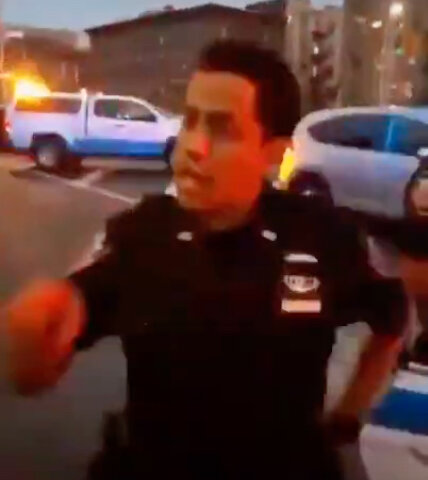
Chicago's Intercept Program, Enabling the City to Garnish Tax Refunds to Pay Unpaid tickets, court fees & Debts, is Applied Exclusively to Blacks/Latinos-90% Collected came from non-white areas

lightfoot+mayor 23.jpg

From [HERE] In Chicago, a tax refund intercept program that allows the city to collect unpaid tickets, court fees, and other debt by garnishing state tax refunds disproportionately impacts the city’s poor Black and Latino residents. An investigation by The Chicago Reporter and Type Investigations found that 80% of the $13.5 million collected by the city in 2018 was intercepted from residents in ZIP codes where the median household income falls below the city’s median household income of $55,000, and 90% of the funds were from residents living in predominantly non-white neighborhoods.

The program, started by former Mayor Rahm Emanuel, continues during Mayor Lori Lightfoot’s administration despite her vow to stop penalizing poor residents as a way to raise revenue. “The system itself is not providing affordable ways for them to actually pay the debt. It’s just kind of a backdoor way of doing it, and it’s not helping that particular person who is struggling,” said Tracy Occomy Crowder, a senior organizer with Community Organizing and Family Issues. According to Illinois Comptroller Susana Mendoza: “The city should consider alternative methods of debt settlement for lower-income people to pay some of these fines, such as more flexible payment plans or other creative options.”