Study Challenges Myth that the Death Penalty Brings Victims’ Families Closure & finds that “people who punish others in the hopes of making themselves feel better actually feel worse"

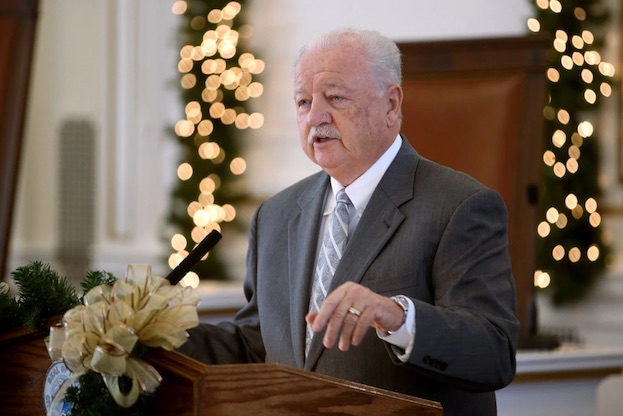
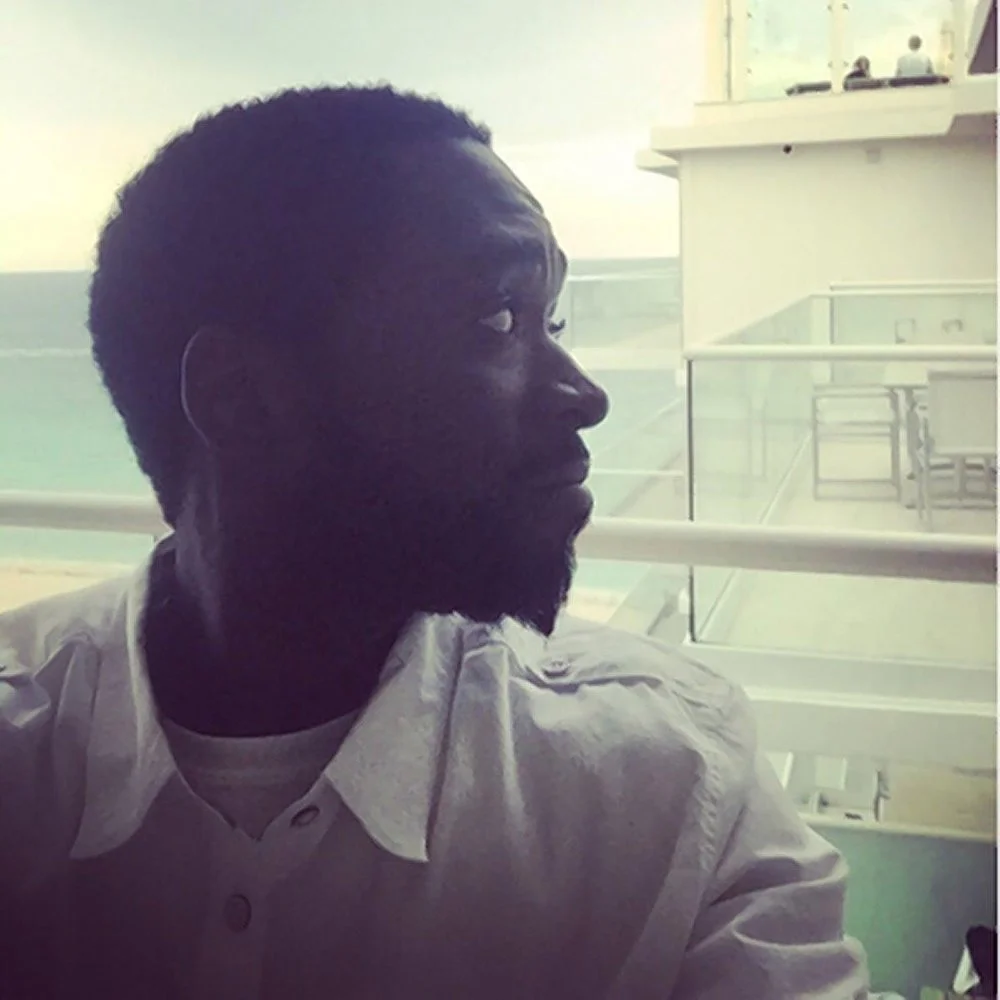
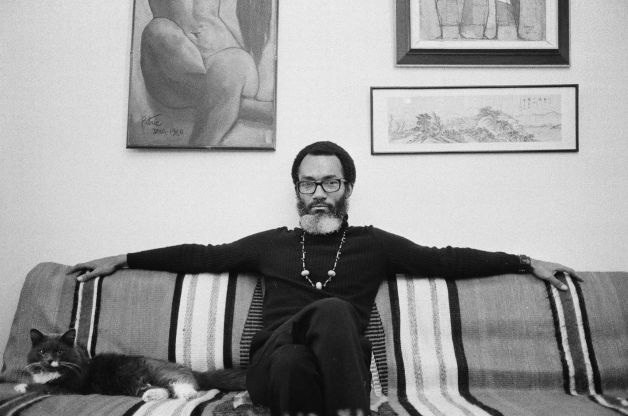
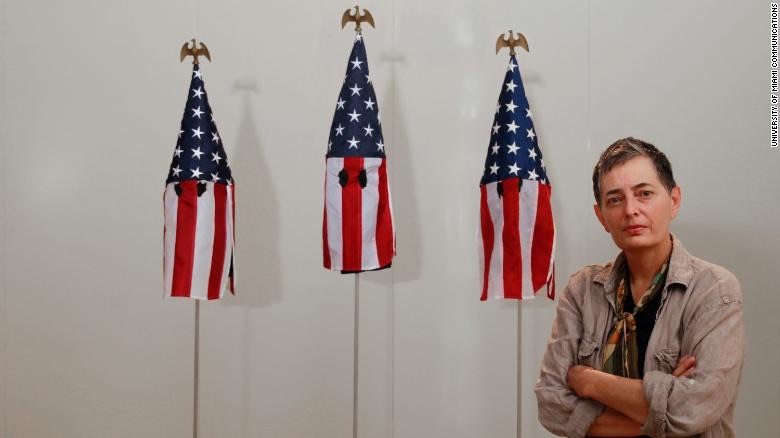
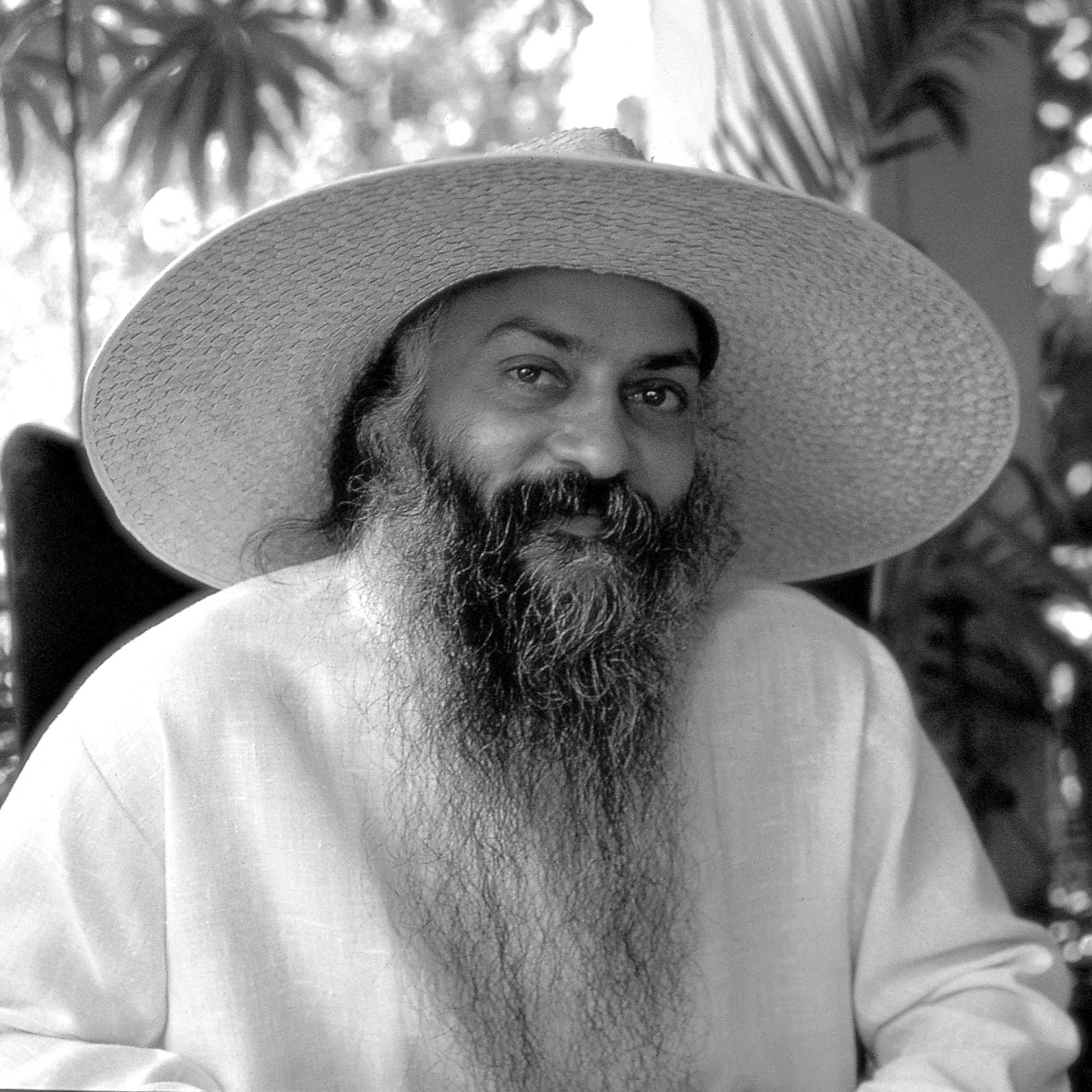
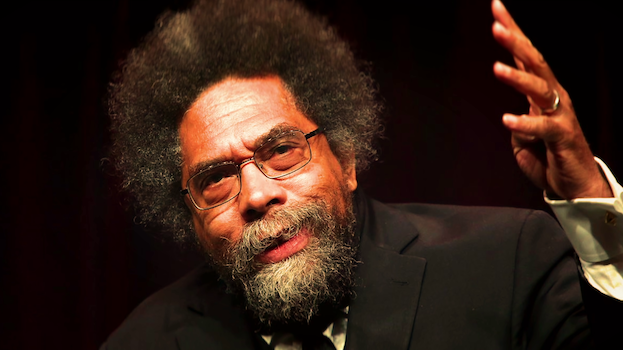
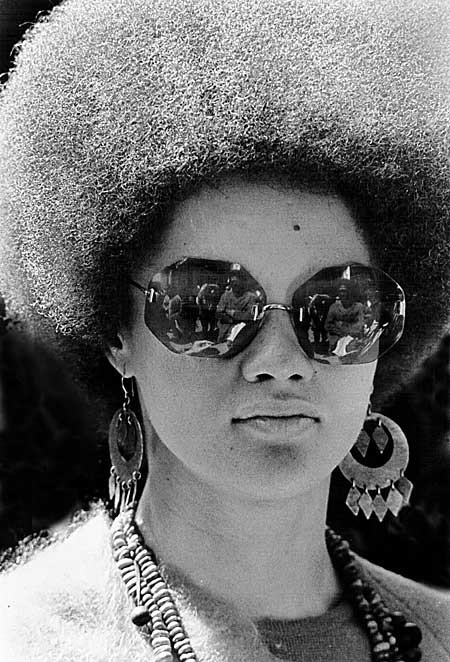
From [DPIC] Proponents of capital punishment have long argued for the death penalty on the grounds that it brings closure to family members of homicide victims. But science suggests that achieving closure through execution may be a myth, says family and child therapist Linda Lewis Griffith (pictured) in a May 6, 2019 column in the San Luis Obispo Tribune, and that capital punishment may actually make matters worse.

To underscore that point, Griffith cites studies in the Personality and Social Psychology Bulletin and the Journal of Personality and Social Psychology that found “subjects who were given the opportunity to vent their hostilities had higher levels of aggression and anger than those participants who did nothing at all” and “people who punish others in the hopes of making themselves feel better actually feel worse.” The death penalty, she says, “keeps victims involved in the tragedy for years, even decades, as multiple hearings, appeals and trials drag on.” As a result, family members “feel stuck in a time warp, being repeatedly re-traumatized by the legal system and accompanying media coverage.” In cases in which the death penalty is eventually carried out, “[e]xecutions do not offer emotional catharsis as many would suggest.” Instead, Griffith says, “executing perpetrators actually increased family members’ feelings of emptiness because it didn’t bring back their loved ones.”

A University of Minnesota study published in 2007 attempted to quantify the extent to which victims’ family members achieved closure as a result of capital punishment. The study found that only 2.5% of victims’ family members—roughly one in 40—reported achieving closure, while 20.1% said the execution did not help them heal. A 2012 study published in the Marquette Law Review compared the emotional well-being of survivors in Texas, a death penalty state, and Minnesota, a life without possibility of parole state. The study found that “victims in Minnesota experienced greater control over the sentencing process,” while the “drawn out, elusive, delayed, and unpredictable” capital appeals process in Texas “created ‘layers of injustice, powerlessness, and in some instances, despair’” for family members.

Given these studies, Griffin believes that life without possibility of parole offers “[a] more emotionally satisfying solution” for victims’ families than does the death penalty. “Instead of proceeding with archaic and inaccurate information, let’s consider the data and do what really works best” for victims’ families, she says.
'Our No 1 Priorities are Our Own Survival & Surveilling Blacks:' White Baytown Cop Claims He Had to Shoot Black Woman to Death b/c She Took His Taser During a Struggle. Cops Keep Bodycam Secret

Black woman yells ‘I’m pregnant’ before white cop shoots her 5 times [“I’m Pregnant” = Please Don’t Shoot.] From [HERE] and [HERE] A Black woman was shot and killed during an altercation with a white police officer Monday night in Baytown, Texas, after she resisted arrest and grabbed the officer's Taser, police said.

An officer in Baytown, a city of about 76,000 people east of Houston, was patrolling an apartment complex when he recognized a woman who lived there that he knew had prior warrants, police said.

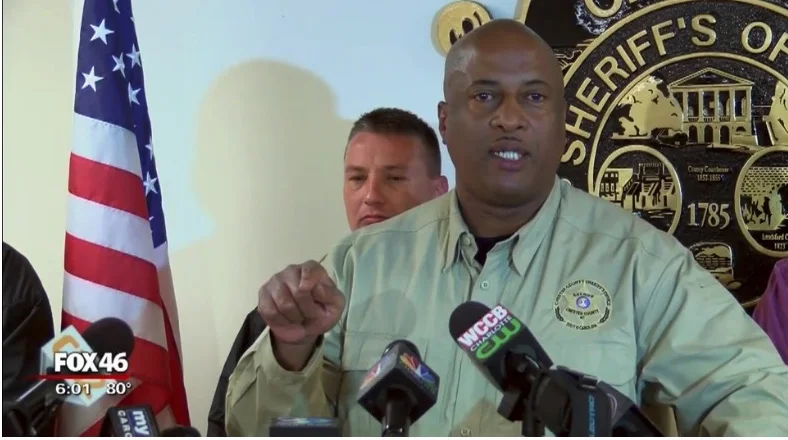
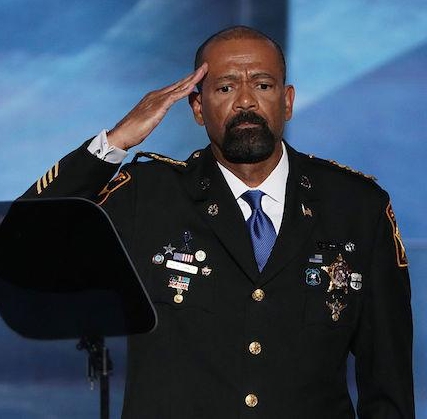
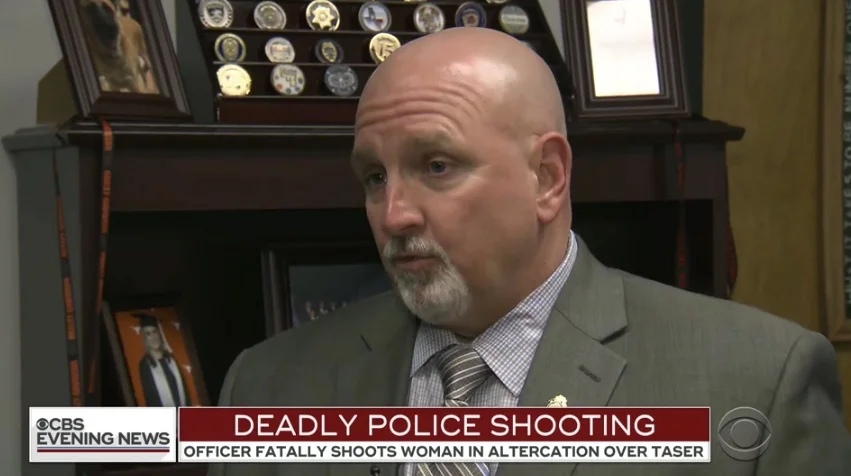
When police tried to arrest the woman, whom they identified as Pamela Turner, 44, she resisted arrest, said Lt. Steve Dorris, a racist suspect Baytown police spokesman [in photo].

The officer was "forced to deploy his Taser" on the woman, but it wasn't "effective," Dorris said. The woman grabbed the Taser and used it on the officer who was trying to arrest her.

Turner's actions "forced the officer to draw his duty weapon and fire multiple rounds at the suspect, who was struck at least one time," Dorris said.

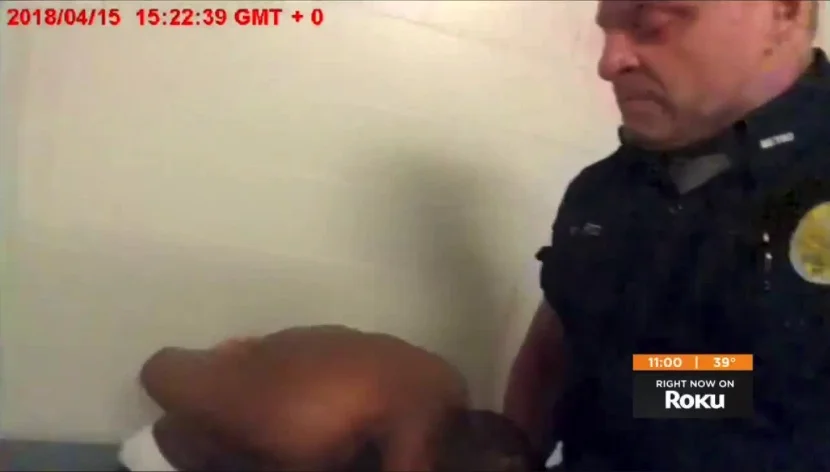
Dorris said he believes the officer was wearing a body cam, but the video will not immediately be released as the investigation continues.

She was declared dead at the scene, police said. The Harris County district attorney's office is assisting in the investigation.

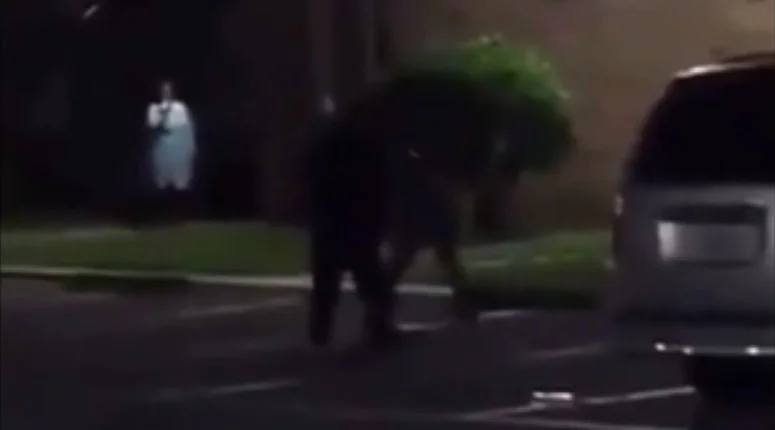
In a blurry Snapchat video of the incident, Turner told the officer that she was pregnant. Police told NBC News on Tuesday that she was not pregnant, although they did not specify how they knew, and autopsy results have not been released. [Yurugu doesn’t get it. whether she was pregnant or not is not the point; when she yelled out she was pregnant she was asking for mercy, trying to get the white cop to not shoot her. It is another way of saying please don’t shoot].

Her family told NBC's Houston affiliate KPRC that she had two children, both in their 20s.

Witnesses at the apartment complex told KPRC that the woman was "not a bad person" and that she would "just walk around, smoke her cigarettes and walk her dogs."

baytown cops 3.jpg

A witness wearing white clothing is clearly visible in the video -standing close to the incident.

Another neighbor, Taylin Inniss, said that she heard the shots and that when she learned that someone had been killed at her apartment complex, she did not believe it.

"They must've had a couple of words. Things went a whole different way, and he shot her, and I really feel for the family, and I hope they get some type of justice," Inniss said. "I just pray for them, honestly, because life is short nowadays."

Baytown police are not naming the officer who shot the woman. They said he has worked as an officer for 11 years.

Rather than Defend Its Make-Believe Claims in the Anthony Weber Case LA County Settles Suit for $3.75M: White Cop Shot Black Man whose hands were visibly empty, Denied Medical Care & Lied About It

anthony weber 23.jpg

From [CBS] The County of Los Angeles Board of Supervisors approved a $3.75 million settlement in a federal civil rights lawsuit against sheriff’s deputies in the shooting and killing of a 16-year-old Black boy, authorities announced Tuesday.

Deputies shot and killed Anthony Weber on Feb. 4, 2018, near the 1200 block of 107th Street in South Los Angeles after a foot chase ensued after police told Weber not to move.

Authorities responded to the area after hearing reports of a young man pointing a handgun at a motorist.

Arriving deputies said they saw Weber at an apartment complex that was as a known gang hangout and claimed that that he a handgun tucked into his waistband.

The deputies reported that as they were approaching Weber, he began to run from them.

When one of the deputies was about five to ten feet behind him, he turned and looked at the deputy “as if he was acquiring a target” and reached for his waistband, according to the summary.

One of the deputies then fired 13 shots at Weber.

“Both deputy sheriffs immediately drew their duty weapons, pointed at (Weber), and the first deputy sheriff yelled, `Let me see your hands!”‘ the summary stated.

They "could clearly see" a handgun in his waistband, the summary said.

Considering it was nighttime, the level of detail given by one deputy of the gun was unusual [or in-credible]. He said it was a Smith & Wesson M&P semi-automatic pistol with black Talon grips and a red dot sight.

No weapon was ever found by investigators at the scene. Authorities have said that they believe the weapon may have been picked up by a passerby after a large crowd formed after the shooting occurred.

According to the Sheriff’s Department, a gun matching the description of the one alleged to be in Weber’s possession when he was killed was later retrieved in a residence search of an alleged gang associate [that is, the gun was possessed by someone else - without more, such facts have no relevance to this case].

Weber’s parents filed a lawsuit with Los Angeles federal court in May of 2018 claiming that Weber was unarmed when he was shot.

The complaint said, ‘At the time of the shooting he posed no imminent threat of death or serious physical injury to anyone especially since he was unarmed and his hands were visibly empty when he was fatally shot.

After shooting Weber multiple times, the police did not timely summons medical attention for Weber, who was bleeding profusely and had obvious serious injuries, and police also did not allow and prevented responding medical personnel on-scene to timely render medical aid/assistance to him.

After the shooting the officers involved made false statements to investigators and made false statements to the media in attempts to justify the shooting of an unarmed 16 year-old kid.’ [MORE]

“Anthony Weber committed no crime,” attorney Gregory Yates said last May. “He was unarmed and posed no threat to anyone. These deputies acted as judge, jury, and executioner when they fired multiple shots at an innocent kid.”

Sherrif’s deputies denied these claims - but settled the case for millions.

“Anthony was a devoted, loving son and young father whose life was tragically cut short,” co-lead counsel Dale K. Galipo said last May. “We intend to prove that under the color of authority, the deputies engaged in excessive force and violated the young man’s constitutional rights.”

In the aftermath of the shooting, the courtyard of the apartment complex where he was shot “was flooded with people who were trying to get to the subject and the deputies,” according to a sheriff’s statement released following the shooting.

The board approved the settlement on the advice of counsel who cited the risks and uncertainties of going to trial.

Like the Constitution says If You Flee from Cops They Can Brutalize You: Lawsuit Claims White Sacramento Cop Intentionally Ran Down Black Teen with SUV, Striking Him on the Sidewalk

From [HERE] Citing a “string of recent excessive force incidents” by Sacramento police, a prominent civil rights attorney is suing the city over an incident last July during which a white police officer intentionally struck a 16-year-old boy with his SUV.

The police claim the boy was fleeing officers after being stopped for riding a bicycle at night without lights. At the time of the incident the boy was not on the bike - but standing on the sidewalk when he is rundown.

Oakland attorney John Burris filed the lawsuit in federal court in Sacramento alleging excessive force, assault, battery and negligent infliction of emotional distress by the officers involved in the July 22, 2018, incident in the 900 block of Eleanor Avenue.

The teen was stopped at about 10 p.m. for bicycle code violations, including riding at night without lights, and fled during questioning, police said. A police SUV pursuing him struck the teen on a sidewalk, sending him onto the hood and then knocking him back several feet.

The incident sparked a tense standoff as police formed a skirmish line to keep angry citizens at bay while they tended to the teen, who is described in the suit as suffering “serious injuries to his legs and body and emotional distress.”

Police later released body cam and car video of the incident and said the vehicle was traveling at 27 mph when it struck the teen. Police spokesman Vance Chandler said at the time that the crash was “an unintended collision” and that the officer was driving “too fast to make that turn.”

City officials declined to comment, saying they had not yet been served with the lawsuit.

The suit seeks general, special and punitive damages, and claims that the teen, identified only as “D.B.,” and his mother, Renea Mcentee, who heard the crash and came out to find her son calling her name, “suffered extreme emotional distress.”

The lawsuit also notes that Sacramento police have been involved in a series of high-profile use-of-force incidents, including the July 2016 Joseph Mann case in which officers tried to hit the mentally ill man with their car, then shot him to death, and the March 2018 shooting death of Stephon Clark, an unarmed black man who ran from officers.

sacramento race soldiers.jpg

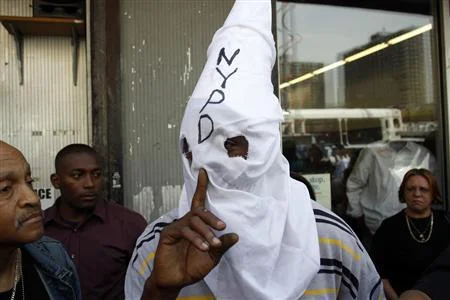
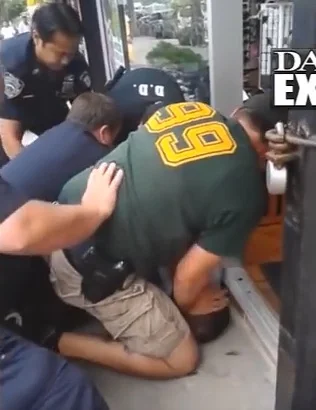
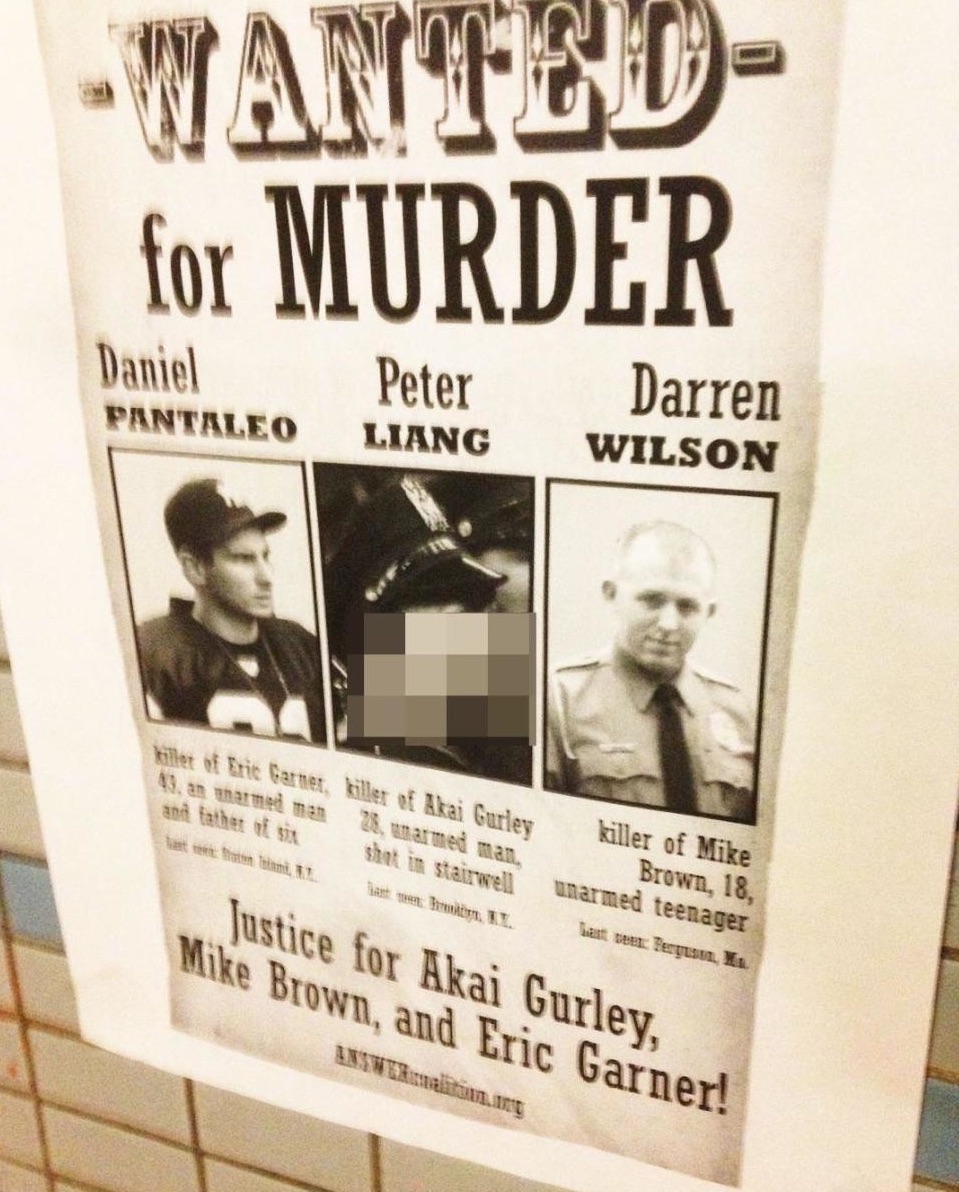
Out of a Gang of White NYD Cops who Murdered Eric Garner, 1 Faces Only the Loss of his Job in an Administrative Trial: White Atty says Black Man Died from Obesity Not Chokehold & Suffocation

nypd racist.jpg

From [AP] Nearly five years after Eric Garner's pleas of "I can't breathe" became a rallying cry against police brutality, a disciplinary trial began Monday for the New York City police officer accused of hastening his death with a banned chokehold.

The start of Officer Daniel Pantaleo's internal trial, which could lead to his firing, sparked protests in the streets and evoked emotional reactions from Garner's family in the hearing room as video of the July 2014 confrontation was played.

The police watchdog agency bringing the case featured the video prominently at the start of the two-week trial, using the cellphone footage of Garner being grabbed and pulled to the ground to shield against alternate explanations and concerns about the credibility of the man who recorded it.

"His last words, 'I can't breathe,' tell you who caused his death," Jonathan Fogel, a lawyer for the watchdog Civilian Complaint Review Board, said in an opening statement.

Pantaleo's lawyer, Stuart London, countered that the video shows the officer using an approved technique known as a "seat-belt hold" to restrain Garner and that he is being made to be a scapegoat in a politically charged atmosphere.

Ramsey Orta, a friend of Garner's who shot the video of the confrontation, conceded during cross-examination that Pantaleo's arm wasn't around Garner's neck when he uttered, "I can't breathe."

"We know he wasn't choked out because he is speaking," London said.

The lawyer called it a common misconception that the phrase was uttered when the officer's hands or arms were around Garner's neck. Garner made the plea while lying on the sidewalk as officers were trying to handcuff him, London said.

London said Pantaleo had pulled the much larger Garner to the ground because he feared they would crash through a plate-glass window while tussling against a Staten Island storefront. Garner, who was 43, weighed 350 pounds and suffered from asthma since childhood.

"Mr. Garner died from being morbidly obese," London said in his opening statement, describing him as a "ticking timebomb."

The police department's disciplinary process plays out like a trial in front of an administrative judge, but the purpose is to determine whether Pantaleo violated department rules. The final decision on any punishment lies with the police commissioner, with penalties ranging from the loss of vacation days to firing.

Pantaleo, 33, has been on desk duty since Garner's death. He denies wrongdoing and does not face criminal charges.

Two police officials involved in an internal affairs investigation into Garner's death testified that they found Pantaleo likely violated department rules and that a request for disciplinary charges was made in January 2015.

The police department put the disciplinary matter on hold while federal prosecutors weighed a possible civil rights case against Pantaleo. The department decided to move forward with the discipline case last year as the federal investigation appeared to have stalled.

Garner's sister, Ellisha Garner, left the courtroom wailing as Orta's video played. Garner's mother, Gwen Carr, also walked out. She had tears streaming down her face as the Rev. Al Sharpton escorted her to the hallway.

Back in the courtroom later, Ellisha looked away and pressed her fingers into her ears to block the sound as the video was played again. [MORE]

NYPD+GANG+ERIC+GARNER.jpg

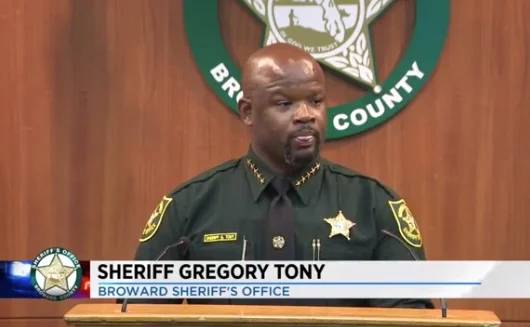
No Accountability for Broward Cop who Assaulted Black Teen at School: Speaking for his Masters, Black Proxymoron says the 'Use of Chokehold was Appropriate & They Will Not Investigate Themselves

According to FUNKTIONARY:

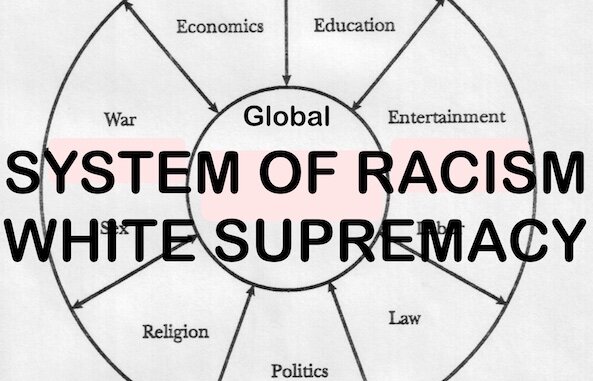
terrorism - the implementation of the principle/concept of limited liability. 2) "A system of government that seeks to rule by intimidation." -Funk & Wagnalls New Practical Standard Dictionary, 1946. All acts of terrorism, even those carried out by those outside of the fold of the machinations of Corporate State and its minions (territorial gangsters), are either political or religious expressions. One's man's ideology is another man's religion and vice-versa. Terrorism and the terrorists who carry it out is a kind of psycho-economic Thug-of-War—leaving the countless shattered lives of innocents in its wake. (See: Corporations, War, Corporate State, Territorial Gangsters, Patriot Act, Mononright, Wargasm, Racism White Supremacy, Cryptocracy, Sovereignty, Crimethlnc, Violence, Coercion, Oppression, BOP & Gangbanking)
black droid slave.jpg

From [HERE] The parents and the attorney of a 17-year-old Blanche Ely High School student are demanding action in response to a Broward Sheriff’s deputy allegedly using excessive force on the teen during an encounter back in February.

However, according to NBC Miami, Sheriff Gregory Tony is standing by his deputy, saying that the use of force was appropriate and announcing that there will be no internal investigation.

At a news conference on Monday, attorneys for Jordan Bennett said that the teen was in the midst of a verbal argument with another student on Feb. 21, when the officer tackled the teen, slamming his head to the cafeteria floor. Some of the incident was captured on cellphone footage.

Bennett had to be taken to the hospital, where he received stitches, leaving a scar on his forehead.

“Don’t tell me that you could not take my client who engaged in a verbal altercation with another student without leaving a permanent scar on his forehead. I don’t buy it, the people of Broward County don’t buy it, and enough is enough,” attorney Jasmine Rand said at the press conference. “If you keep coming for our babies, we’re going to keep [coming] for your badges, period.”

Rand also accused the deputy of putting Bennett in a chokehold, something which the Sheriff stepped around.

“What you’re seeing in that video is the deputy on top of this young man, holding him down. So there was no full execution of a chokehold in the sense of what we’re accustomed to seeing. He was holding him down,” Tony insisted.

broward cops droid.jpg

“The allegations that were made today by Mr. Bennett’s attorney are not consistent and they’re not accurate with what video footage shows, what the deputy’s actions were and what is articulated in the report,” Tony added.

The sheriff said that there will be no internal affairs investigation into the deputy’s action. The deputy, who remains unidentified, has been with the sheriff’s office for over 20 years.

“If my deputies step out of line and they violate policies and protocols, if they breach and use any form of excessive force, they will be held accountable,” Tony said. “But when they are right, I will also stand here and tell you that.”

Chocolate Suburbs & Vanilla Cities in a 90% Chocolate World: Study says Whites are Increasingly Moving into Black neighborhoods [dislocation is mandatory in the System of White Supremacy]

Untitled 23.jpg

From {NY Times] In the African-American neighborhoods near downtown Raleigh, the playfully painted doors signal what’s coming. Colored in crimson, in coral, in seafoam, the doors accent newly renovated craftsman cottages and boxy modern homes that have replaced vacant lots.

To longtime residents, the doors mean higher home prices ahead, more investors knocking, more white neighbors.

NYT Times Study says Whites are Increasingly moving into Black neighborhoods [racial dislocation is a major part of the System White Supremacy in a 90% Non-White World]

Here, and in the center of cities across the United States, a kind of demographic change most often associated with gentrifying parts of New York and Washington has been accelerating. White residents are increasingly moving into nonwhite neighborhoods, largely African-American ones.

In America, racial diversity has much more often come to white neighborhoods. Between 1980 and 2000, more than 98 percent of census tracts that grew more diverse did so in that way, as Hispanic, Asian-American and African-American families settled in neighborhoods that were once predominantly white.

But since 2000, according to an analysis of demographic and housing data, the arrival of white residents is now changing nonwhite communities in cities of all sizes, affecting about one in six predominantly African-American census tracts. The pattern, though still modest in scope, is playing out with remarkable consistency across the country — in ways that jolt the mortgage market, the architecture, the value of land itself.

In city after city, a map of racial change shows predominantly minority neighborhoods near downtown growing whiter, while suburban neighborhoods that were once largely white are experiencing an increased share of black, Hispanic and Asian-American residents. [MORE]

NYT chart homebuyer.jpg

What's a "minority" when 80% of Residents are Black or Latino? Racist Police Director who Routinely Called Staff NGHRS Quits After Providing Contemptuous "Public Service" in Elizabeth (NJ)
james cosgrove.jpg

From {NYT] The top law enforcement official in Elizabeth, one of New Jersey’s largest and most diverse cities, resigned on Tuesday after an inquiry found that he had routinely referred to police officers in his department using racist and sexist slurs.

The official, James Cosgrove, who has led the police force in Elizabeth since 1998, had faced mounting pressure to step aside following an investigation by the Union County prosecutor’s office that began after a lawyer for several police officers filed complaints.

The state’s attorney general, Gurbir S. Grewal, had demanded that Mr. Cosgrove resign.

Mr. Grewal pointed to the prosecutor’s findings, which have not been publicly released, but “concluded that, over the course of many years, Director Cosgrove described his staff using derogatory terms, including racist and misogynistic slurs.” Mr. Grewal also ordered an examination of the culture of the Elizabeth Police Department.

The city’s mayor,  J. Christian Bollwage, who had refused to discuss the findings of the two-month investigation, on Tuesday issued a news release announcing that he had accepted Mr. Cosgrove’s resignation. As a political appointee, Mr. Cosgrove could only be removed by the city’s mayor.

Until Tuesday, Mr. Bollwage’s only public comment came on Twitter. On Monday, he attacked a news report, which he called a “character assassination.” Mr. Bollwage was scheduled to meet Tuesday with the attorney general, whose office is now overseeing the investigation, a spokesman said.

Over the years, Elizabeth has transformed from a largely white working-class city into an overwhelmingly minority community, where more than 80 percent of its roughly 130,000 residents are Hispanic or black.

The controversy involving Mr. Cosgrove was the latest chapter in what community groups and residents say are long-running tensions between the police and people of color that reflect similar conflicts across the country.

“It’s critical that the city government take action to ensure that the Police Department reflects the value of our city,” said Sarah Cullinane, the director of Make the Road New Jersey, an Elizabeth-based organization that helps immigrant and minority communities and had called for Mr. Cosgrove’s resignation. [MORE]

After a Gang of Wake County Cops Stomp & Bash Kyron Hinton w/Flashlights, Fists, Guns & K9 Dog Bites 21 times, 1 White Cop Pleads Guilty to Misdemeanor w/No Jail Time. Dead Black Man Gets $80K

BOO-HOO. YURUGU SAD HE GOT CAUGHT

BOO-HOO. YURUGU SAD HE GOT CAUGHT

police-arrested-k9-696x366.jpg

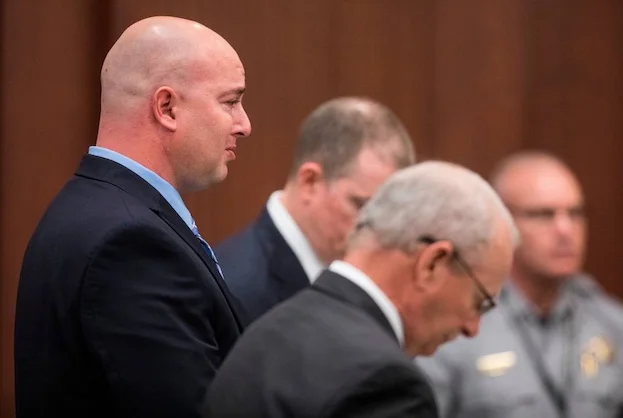
System of Injustice in a Demockery: According to the NewsObserver Wake County Sheriff’s Deputy Cameron Broadwell pleaded guilty Monday to misdemeanor charges in the case of siccing a K-9 dog on an unarmed man last year. It was a rare conviction for an officer in the line of duty and it was weak considering the facts and evidence. The trial had already been underway and apparently the cop struck a deal before jurors heard all the evidence and had deliberated.

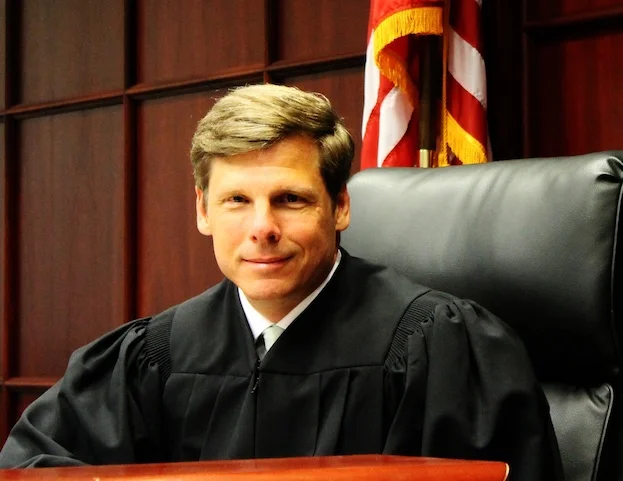
Broadwell will permanently surrender his law enforcement certification as part of his plea. Superior Court Judge Paul Ridgeway, who is also white, gave Broadwell a suspended 45-day jail sentence for his plea, placing him on unsupervised probation.

judge ridgeway.jpg

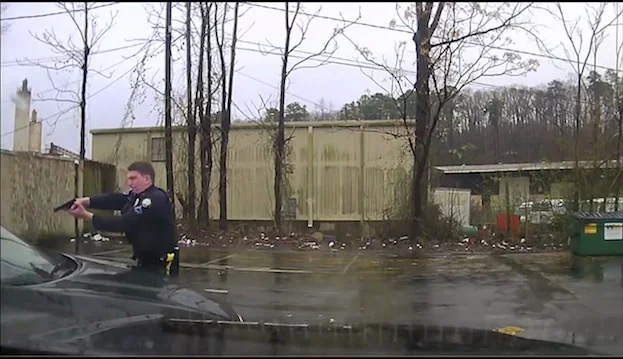
In April 2018, officers responded to a 911 call reporting a man standing in the middle of Raleigh Boulevard, possibly holding a gun. A state trooper and four Raleigh police officers found Kyron Hinton screaming and waving his arms near the intersection of Yonkers Road, holding a cell phone in one hand and his genitals in the other. They formed a circle around him and waited, one officer holding a Taser behind his back. [Here, we know a white journalist in his feelings is writing this article and is caught up in the presence of color/the phenomenon of “race.”. How could Kyron “possibly be holding a gun?” unless he had a 3rd arm? Remember racists imagine Blacks to be a different species! lol.]

Hinton initially was charged with disorderly conduct, resisting a public officer and assault on a law enforcement animal, but Wake prosecutors dismissed all charges against him.

According to police, they received a series of calls about a man walking down Raleigh Boulevard around 10 pm. When police responded to the area, they found Hinton.

First on the scene was the North Carolina Highway patrol, followed by Raleigh police. In a video shown to jurors last week things remained calm as officers talked to Hinton until Wake County Deputy Cameron Broadwell arrived on the scene with his police dog, Loki.

Hinton was peacefully standing there, talking with deputies when deputy Broadwell decided the time for talking was over. Without cause or provocation, Broadwell begins shouting at Hinton to get on the ground.

“Get on the ground now or you’re gonna get bit,” the deputy calls out. “Get on the ground or you’re gonna get bit. Get on the ground or you’re gonna get bit.”

Hinton appears confused and frightened and does not immediately get on the ground. At this point, Broadwell forces the dog to bite Hinton and as he goes down, Broadwell begins punching Hinton in the face.

“Get him, get him, get him!” Broadwell screams as more than a half dozen cops pile on top of this unarmed man.

The chaos and gore was so horrific that even one of the officers yelled, “Get that f—king dog out of here!”

Hinton, who was clearly distressed, can be heard saying “Yahweh help,” and “God is good.”

After nearly five minutes of dog biting and beating, the dust settled and police attempted to justify the pseudo lynching they just dished out.

“He wouldn’t get on the ground,” Broadwell said, claiming that he thought the situation was a 10-80, police code for a chase in progress. But there was no chase, and Hinton—although he may have been in a diminished mental state—was simply talking with police, who had him entirely surrounded.

“I sicced my dog on him while he was in the middle of the street,” the deputy tells another officer as he breathes heavily, catching his breath. “My dog bit him in the side. I’ve got to take pictures of the dog bite. I got to get my camera, man.”

During a portion of the video, Broadwell is heard saying, “I’m glad my radio broke, man. I punched him in the face while Loki was biting him.”

Another officer then says, “hey,” as if to warn him he was being recorded on body camera.

Broadwell then responds, “Yeah, yeah, it’s fine. I gave him a chance to get down on the ground.”

For walking down the road, Hinton was severely beaten, mauled by a K9 and hospitalized for several days. He suffered 21 dog bites all over his body, a broken nose and a fractured eye socket.

Broadwell was charged with felony assault. Those assault charges were dropped in exchange for the deputy pleading guilty to willfully failing to discharge duty.

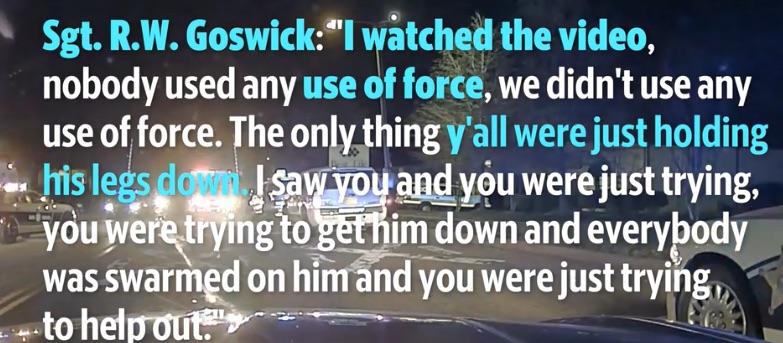
Troopers Tabithia L. Davis and Michael G. Blake were fired for their role in the beating and they have been charged with assault inflicting bodily injury and willfully failing to discharge duties. Their patrol sergeant, R.W. Goswick was also placed on administrative leave for his role in instructing the troopers to cover it up. The trooper was captured on video telling his officers to lie.

Dashcam video from the scene captures Goswick telling Davis, Blake, and another trooper Zachary C.Bumgardner to lie on their statements and report “no use of force on our part.”

Goswick would conclude—in spite of the horrific video showing otherwise and officers admitting to the abuse—that all the troopers did was “assist in holding the man down” and “that nobody threw any punches.”

“The actions of Mr. Broadwell on that evening were unnecessary, excessive and against the policies of his agency,” District Attorney Lorrin Freeman said. “Today marks a big day in this community. We appreciate the acceptance of responsibility.”

Hinton’s mother Vicki has said her son has long suffered from mental health trouble along with drug and alcohol problems. Still, she said, watching the video of her son getting bitten left her “heartbroken for America.” She fled the courtroom as it played Thursday.

Hinton died in February from causes unrelated to the dog assault, a day after receiving an $83,000 settlement from Wake County. Freeman said evidence in the case has been changed by Hinton’s death, making a felony conviction uncertain. The priority was making sure Broadwell no longer served in law enforcement.

goswick+statement+.jpg

“We count this as a victory,” said Diana Powell, executive director of the Raleigh community group Justice Served. “He will never be able to put a dog on another human being.” [spoken like an obedient citizen-slave. A costumed orderly commits an unprovoked series of felonies on a Black man and only loses his job?]

Freeman said she will urge Wake County Sheriff Gerald Baker to adopt a no-bite policy for K-9 dogs, using them only to apprehend violent criminals. Baker said Monday that the policy is already under review.

On Monday afternoon, the sheriff’s office announced that Broadwell had officially been terminated.

The case marked a rare prosecution of an on-duty law-enforcement officer, both in Raleigh and nationwide.

Freeman, who tried the case personally along with Assistant District Attorney Patrick Latour, could recall only one other recent example: Markeith Council, the Wake County detention officer convicted of involuntary manslaughter in 2013 for fatally beating inmate Shon McLain.

Nationally, only 54 law-enforcement officers faced charges in fatal shootings between 2005 and 2015, out of thousands of such incidents, according to a 2015 Washington Post report.

Broadwell’s attorney Rick Gammon said the deputy had no prior excessive-force complaints. But he had a choice between protecting his family and risking a felony conviction. He criticized the deputy’s prosecution, saying he was motivated only by protecting the public.

“My advice to any and all law enforcement officers is they need to get another line of work,” Gammon said. “This is just the beginning.”

The deputy choked up as he admitted his guilt, his voice breaking as he spoke to the judge.

“He has been punished, your honor,” said Broadwell’s attorney, Joe Zeszotarski. “He has given up his career. It was what he always wanted to be. It was what he always wanted to do.”

White Little Rock Cop Fired [not charged] for Moving in Front of a Slow Moving Car (1 mph) & Fatally Shooting a Black Man 15 Times Even Though He Posed No Imminent Threat
LRPD+COPS+1.jpg
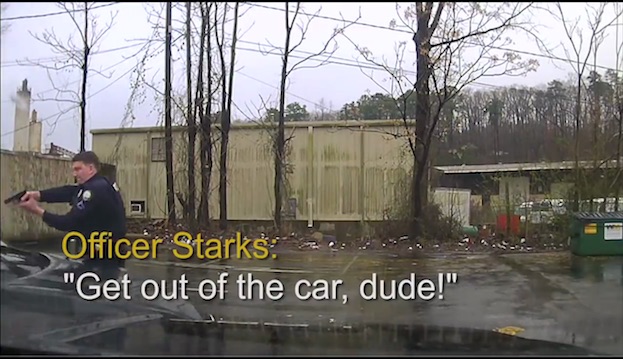
AS YOU CAN PLAINLY SEE THE WHITE COP IS STANDING ON THE SIDE OF THE CAR AND THEN MOVED IN ITS PATHWAY. NEVERTHELESS, MIND-BLOCKED RACIST SUSPECT PROSECUTORS, COPS & JOURNALISTS BELIEVE THEIR AGREED UPON HALLUCINATION THAT HE WAS IN FRONT OF THE …

AS YOU CAN PLAINLY SEE THE WHITE COP IS STANDING ON THE SIDE OF THE CAR AND THEN MOVED IN ITS PATHWAY. NEVERTHELESS, MIND-BLOCKED RACIST SUSPECT PROSECUTORS, COPS & JOURNALISTS BELIEVE THEIR AGREED UPON HALLUCINATION THAT HE WAS IN FRONT OF THE CAR when it started to move & HE FACED IMMINENT HARM.

From [HERE] A white Little Rock police officer who fatally shot a black man in February has been fired, a department spokesman said Monday.

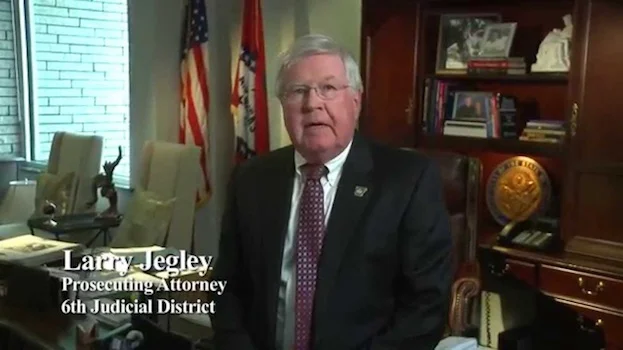
Officer Charles Starks killed Bradley Blackshire during a traffic stop Feb. 22. Prosecutors announced last month that Starks had been cleared of criminal wrongdoing. He was fired Monday after an internal investigation of the killing.

A letter of termination from Police Chief Keith Humphrey to Starks says that Starks violated the department's use-of-force policy. The policy prohibits officers from moving in front of an oncoming vehicle when deadly force is the probable outcome.

"When confronted by an oncoming vehicle, officers will move out of its path, if possible, rather than fire at the vehicle," the policy says.

The killing led to protests at City Hall and the Arkansas State Capitol. One of the protests led police to temporarily close the Broadway Bridge.

Protesters and an attorney for Blackshire's family accused of Starks of using excessive force. [MORE]

Larry+Jegley.jpg

Judge Allows Jury Trial Against City of Dearborn in Kevin Matthews Case to Proceed: 2 Gun Experts Say White Cop Stood Over Black Man & Shot Him to Death

From [HERE] A federal judge ruled Tuesday a lawsuit against the city of Dearborn over the fatal shooting of a man by a city police officer will continue. Judge George Caram Steeh ruled that the testimony of gun experts cast enough doubt over the officer’s explanation for the shooting for the case to move to jury trial, according to the Associated Press.

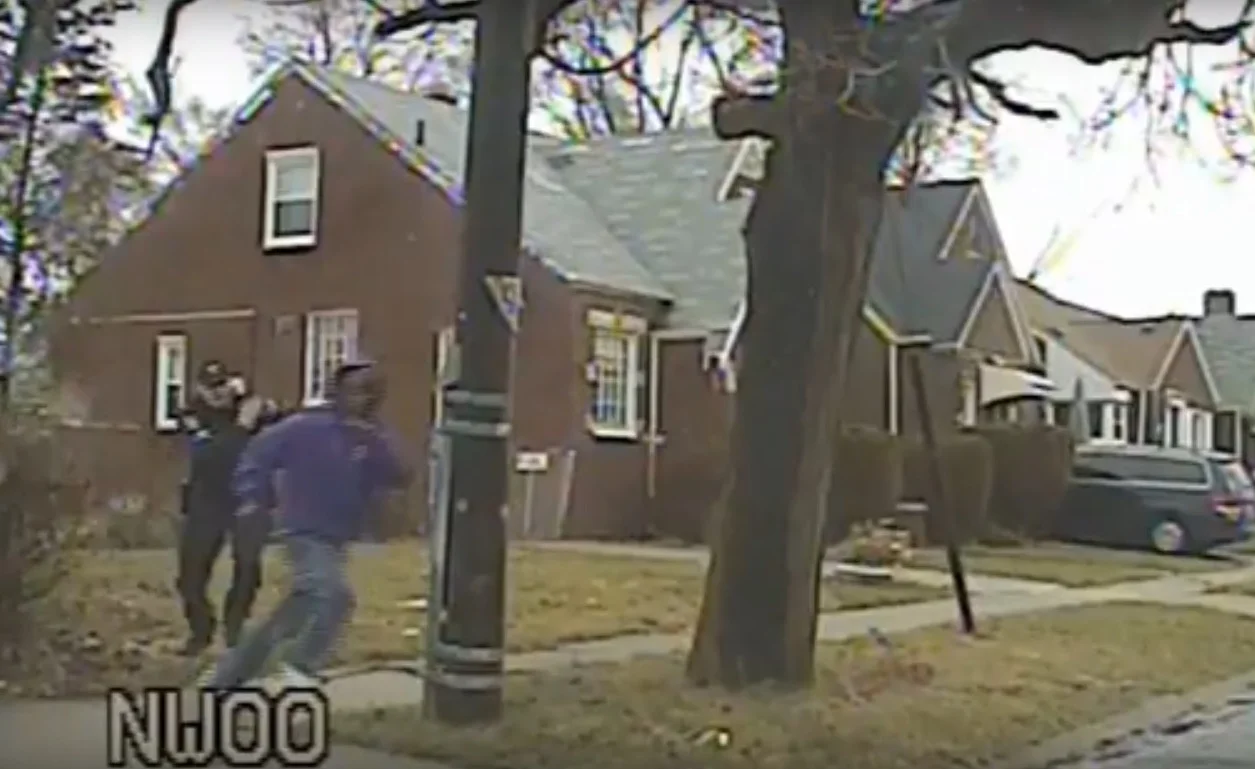
Kevin Matthews was shot nine times by officer Chris Hampton during an incident in 2015. Matthews died as a result of the shooting, which Hampton said happened after Matthews reached for the officer’s gun during a struggle. However, two gun experts who analyzed evidence in the case say they believe Hampton was standing over Matthews when the shooting happened.

Matthews’ family filed a $10 million wrongful death lawsuit against the city and the officer following the shooting. Hampton was never criminally charged for his actions.

David Balash, a retired state police trooper who uncovered past problems with Detroit police ballistics testing, says Kevin Matthews, 35, couldn’t have died the way Dearbon police say.

Attorneys for Matthews’ sister, Kimberly Matthews, who filed a wrongful death lawsuit in 2016, hired Balash and another expert to review and possibly testify about evidence in the case.

While performing an unrelated traffic stop on Dec. 23, 2015, Dearborn Police Officer Chris Hampton spotted Matthews walking by.

Hampton knew Matthews, who had a history of mental illness and petty crime, from prior encounters. He also knew Matthews was wanted for stealing a Red Bull energy drink from a Dearborn gas station the prior night.

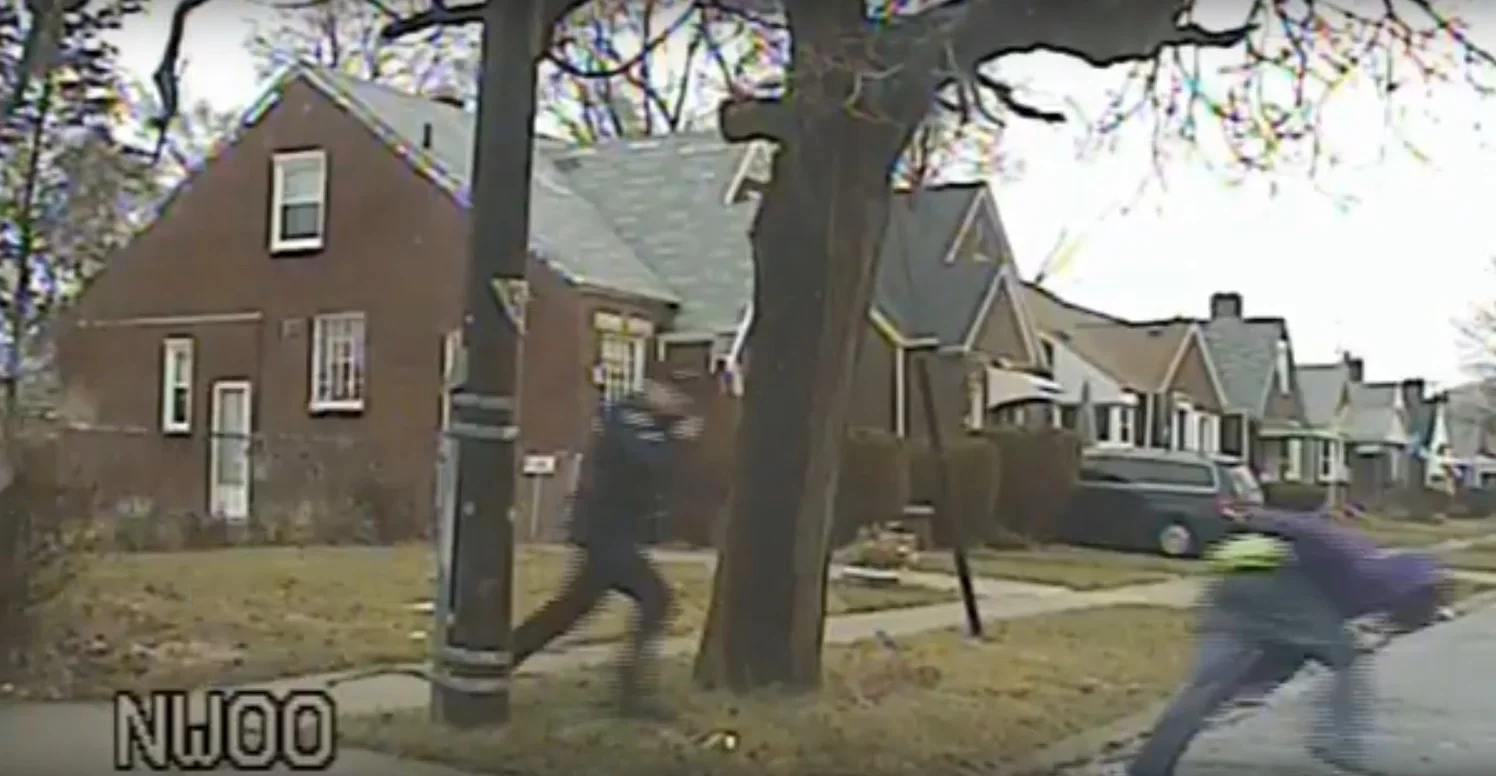
Hampton quickly wrapped up the traffic stop and pursued Matthews, who then ran away when Hampton exited his police vehicle, dashcam video showed.

A struggle ensued in the backyard of a nearby home. Hampton said in a deposition he was on his back with Matthews hovering over him, reaching for the officer’s firearm. Hampton pulled out his gun and fired 11 bullets in about two seconds, he said at his deposition. Nine bullets struck Matthews, who died a short time later.

dearborn cops 2.jpg

“After carefully reviewing the evidence on this case the undersigned is of the opinion that the version of the shooting of Kevin Matthews could not have happened in the manner that Officer Hampton claims,” Balash wrote in an April 8, 2018 report provided to attorney Milt Greenman, who filed the lawsuit against Dearborn and Hampton.

Among Balash’s reasons for disputing the police version is the discovery of bullets beneath Matthews’ body.

“If the bullets were fired in an upward direction, as stated by Officer Hampton, how is it that three fired bullets are found underneath/near the victim?” Balash wrote. “It is not possible for the bullets to be there without having them pass through the victim, impact the pavement and (be held) in the area next to and under the victim’s body.”

Dearborn attorneys filed a motion to strike Balash’s opinion, claiming they weren’t the “product of reliable scientific principals or methods,” but U.S. Magistrate Stephanie Dawkins Davis on April 19 ruled Balash would be able to offer an expert opinion in the case.

dearborn cops 1.jpg

Attorney T. Joseph Seward, who is representing Hampton and Dearborn, filed a new motion on Friday, May 3, challenging Davis’ ruling.

Wayne County Prosecutor Kym Worthy, based on the police investigation and Hampton’s statements, ruled the killing was justified in December 2016.

A scheduling conference is set for May 14 in the civil case.

MLive previously investigated what happened to missing audio and video recorded by the officer’s dashcam system during Matthews’ death.

While audio and video was captured leading up to the point Hampton began to chase Matthews, investigators say video from that point on was “corrupted.” [MORE]

3 White Louisville Correctional Officers Indicted for Felonious Assault on Non- Resisting Handcuffed Black Man & Cover up w/False Police Reports & Witnesses Tampering

Louisville+corrections+thugs.jpg

From [HERE] Three white Louisville Metro Corrections officers are accused in federal court of beating a handcuffed Black male prisoner and covering up the assault. 

David Schwartz, 48, and Donna Gentry, 55, were indicted Wednesday by a grand jury in U.S. District Court in Louisville.  Another white officer, Devan Edwards, was also charged in connection with the assault.

The indictment charges three felony offenses against Schwartz and one felony offense against Gentry. Schwartz is charged with depriving the inmate of his right to be free from excessive force (resulting in bodily injury), and with filing two false reports, one of which wrongfully accused the inmate of assaulting on an officer. Gentry is charged with obstructing justice by filing a false use of force report, and by directing a subordinate officer to file a false use of force report.

The maximum penalties for the charged crimes are 10 years of imprisonment for the deprivation-of-rights offense and 20 years of imprisonment for each of the false report and obstruction offenses. [MORE]

Schwartz and Edwards are accused of striking a handcuffed, noncombative Terry Whitehead in April 2018. 

Schwartz is also charged with filing two false reports. One accused 19-year-old Whitehead of assaulting him and the other neglected to mention he assaulted the handcuffed inmate. 

Edwards is accused of punching Whitehead twice in the face while he was seated, handcuffed and not resisting, according to court papers. Prosecutors further allege he failed to stop Schwartz from assaulting the man.

Gentry, who was a supervisor at the time, is charged with obstruction of justice. 

Prosecutors say Gentry lied in an incident report, claiming Whitehead came at officers and spat on and struck Schwartz when they entered his cell. She also didn’t mention both Schwartz and Edwards assaulted the inmate.

She also lied about giving Whitehead a warning before using pepper spray on him, prosecutors allege.

She’s further accused of making Edwards lie in his report.

Video of the incident, provided to the Courier Journal by Whitehead’s attorney Sam Aguiar, shows Schwartz punching Whitehead in the face as his hands are cuffed behind his back.

The attorney said Wednesday he hopes the indictments will serve as a deterrent for any corrections or law enforcement officers who would attack someone in their charge. 

Metro Corrections Director Mark Bolton fired Schwartz and Edwards, who were both probationary officers at the time, after viewing the footage about a week after the incident.

“What I saw on that video is disturbing and is not reflective of what we expect from our staff,” Bolton said at the time.

In Schwartz’s termination letter, Bolton wrote the former Marine didn’t have the temperament for the job and said there was property damage from his “fit of rage.”

Edwards’ firing letter noted he failed to report the incident and also cited earlier “unprofessional actions” on social media as reasons for the firing.

Both were hired as recruits in September 2017.

Gentry retired from the department in September 2018 following a demotion from sergeant to officer that stemmed from an unrelated policy violation. 

Whitehead is suing Schwartz, Edwards and Gentry in federal court over the assault, claiming excessive force, assault and battery.

He claims in the suit he was pepper sprayed and badly beaten.

The suit is pending. All defendants have denied wrongdoing [MORE]

Christopher Perras of the Department of Justice’s Civil Rights Division and Assistant U.S. Attorney Amanda Gregory are prosecuting the case. 

Federal Lawsuit Filed after 5 Mesa Cops Violently Assaulted Unarmed, Non-Resistant Black Man who Didn't Obey Authority Fast Enough

robert+johnson+mesa+police (1).jpg

From [HERE] Lawyers for a black man shown on video being beaten by five Mesa police officers last year have filed a federal lawsuit against the city and three of the policemen.

Attorneys for Robert Johnson said Tuesday they are seeking a jury trial for their client and at least $2 million in compensation for the May 2018 incident.

The lawsuit filed last Friday in U.S. District Court in Phoenix alleges excessive force, wrongful arrest, negligence, assault, battery, and intentional infliction of emotional distress.

A Mesa spokesman said city officials would not comment on pending litigation.

The apartment complex video shows the police officers repeatedly punching the unarmed Johnson as he stood against a wall after he failed to follow their instructions to sit down.

A police report states Johnson was verbally defiant and confrontational, but his attorneys say there was no reason for officers to hit him and the video shows a different story.

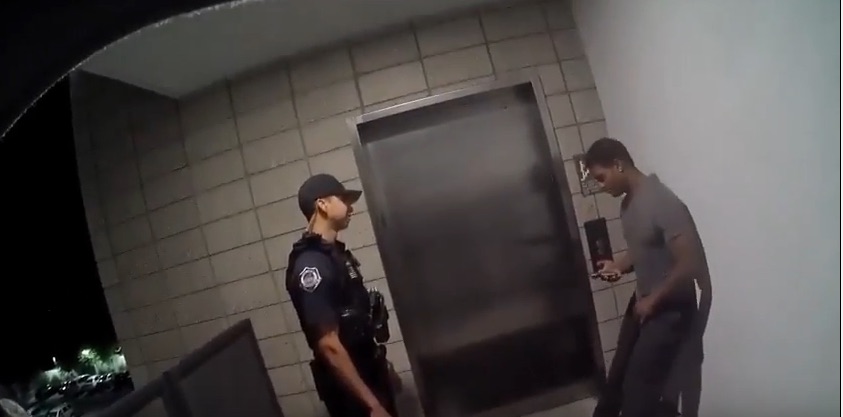
Johnson, 35, had accompanied a friend who was picking up his belongings from his ex-girlfriend's apartment. Someone called 911 and alleged Johnson's friend had tried to force his way into the apartment and police confronted the men outside an elevator at the complex.

When police arrived on the scene, Reyes and another man, 33-year-old Robert Johnson were leaving the complex. When police told Reyes to sit down on the ground, he reportedly complied with their order. Johnson was given the same order as he walked to the elevator.

Instead of sitting on the ground, Johnson, likely knowing he had done nothing wrong, simply sat against the wall. Apparently, this was not enough to appease the officers beca use he was not moving fast enough. The cops then swarmed the unarmed and seemingly innocent man.

Cops are then seen on video brutally punching the non-violent man in the face and kneeing him in the stomach. Even after he’s knocked unconscious, the massive cop in front of him pummels his face as he falls to the ground.

Officer Jhonte Jones said in his report he kneed and punched Johnson because Johnson leaned against a wall and extended his feet instead of sitting on the floor as police had ordered.

"Johnson's body language was projecting he was preparing for a physical altercation," the police report said. "Johnson's shoulders were bowed forward slightly and head slightly nodded.

"That was a position I recognized from past physical confrontations where a person ops (sic) to look toward the floor in order to use their peripheral vision to track several opponents simultaneously. Johnson's breathing became shallower and intentional, suggesting physiologically his body was transitioning to fight-or-flight mode." 

Lawyers for Johnson said the beating left their client with serious injuries, emotional distress and medical expenses.

Last August, Scottsdale police and the Maricopa County Attorney's Office cleared the Mesa officers of any criminal wrongdoing following an investigation.

Johnson's attorneys filed a $1.97 million notice of claim — a precursor to a lawsuit — against Mesa last November. The city had 180 days to respond or settle the case.

"The Mesa police officers who assaulted Mr. Johnson were not prosecuted criminally, so we have to seek justice in a civil court," attorney Benjamin Taylor said Tuesday.

Black Strawboss Sheriff in Chester County Fired & Indicted by His Masters for Lying to the FBI about his Unlawful Arrest & Incarceration of a Black Man who Recorded the Cops

Most Black cops are Obedient Black rolebots plugged into Doggy's operating system. They worship rules, government and logic within the parameters of the lex-icon. Black cops are used by Neuropeans primarily against Black people to help better disgui…

Most Black cops are Obedient Black rolebots plugged into Doggy's operating system. They worship rules, government and logic within the parameters of the lex-icon. Black cops are used by Neuropeans primarily against Black people to help better disguise the system of racism/white supremacy. Said Black cops probably possess what Dr. Blynd calls a “double consciousness”:

double consciousness - the sense of looking at one's Self through the eye's (axiology) and distorted mirrors of others. 2) the psycho-mismanagement of one's neurosis. 3) intimately involved with what you hate, and torn apart from who you (think you) are. You cannot learn to use that which you refuse to acknowledge, i.e., one's heritage, roots, or asili. (See: Matah, Inauthentic, "Wille-Chip," Power, Anxiety, Anguish, LEARN & Asili.) [MORE]

From [HERE] A change in command at the Chester County Sheriff's Office took place on Wednesday after a federal indictment says the sheriff lied to the FBI about putting an innocent man behind bars.

Prosecutors say Sheriff Alex Underwood and two deputies were involved in the cover up of an unlawful arrest. 

The indictment alleges that the three men were angered when they saw a man taping the aftermath of a police chase from his yard back in November.

Officials say Underwood, along with Chief Deputy Robert Sprouse and Lt. Johnny Neal Jr., arrested that man and held him in jail for three days without probable cause. In the process, the man was knocked to the ground, injuring his head and elbow. 

They’re also accused of making a fake police report, searching the man’s home without a warrant, seizing evidence illegally and trying to destroy the man's cellphone.

Underwood and those two deputies will be in court later this month, but in the meantime, Max Dorsey is taking over in Chester County. He’ll be serving as the interim sheriff, and was sworn in Wednesday morning. 

Underwood is the 12th South Carolina sheriff indicted or accused of criminal activity connected to their job in the past decade.

Underwood, Neal, and Sprouse will make their initial appearances at 10:00 a.m. on Tuesday, May 21, at the Matthew J. Perry Federal Courthouse in Columbia.

4 Yrs Later, No Quick “Justice" for Jamar Clark Like the White Woman Got in Minneapolis [Police Chief Fired, Bodycams Mandatory, Black Cop Convicted & $20M Settlement in Less than 2 Yrs]

jamar clark 2.jpg

From [HERE] and [HERE] Another lawsuit involving the city of Minneapolis and the family of Black man who died at the hands of a white police officer, is under scrutiny. 

On Tuesday, a federal Judge ordered city leaders to reconvene with the parents of Jamar Clark in a closed-door meeting. Clark was 24-years-old when he was shot and killed by a police officer in 2015. The officer claimed Clark was reaching for his gun during a struggle in north Minneapolis. 

However, witnesses have said the shooting occurred while Clark was handcuffed and not resisting. Teto Wilson said he saw Clark "perfectly still, laying on the ground" when he was shot. Keisha Steele, who lived near the area of the shooting, said she saw Clark's hands behind his back. The shooting occurred in front of Ze'Morion Dillon-Hokins and Darrell Gross' houses. Dillon-Hokins said he saw Clark putting his hands up when police approached him. Officers handcuffed Clark and "choke-slammed" him, then shot him in the face. [MORE]

However, Clark's parents claim he was the victim of excessive force. They filed a wrongful death claim with the city and a civil rights lawsuit in federal court in 2017. Two years have passed without resolution. 

"It seems like they're trying to kick our case under the rug," James Clark, Jamar's father, said.

When the judge learned city leaders rejected a settlement offer by Clark's attorney on the same day they announced a historic deal with relatives of 40-year-old Justine Ruzszyk Damond, the judge ordered both sides to meet in a closed-door mediation session at the federal courthouse in Minneapolis. 

The announcement of the Damond settlement, by the mayor and members of the City Council, came just three days after Mohamed Noor, who is black, Somali and Muslim, became the first Minnesota police officer convicted of murder in an on-duty killing.

[Additionally the white police chief was fired less than one week after the incident. Also, less than two weeks after the shooting, Minneapolis acting police chief Medaria Arradondo announced that police officer body camera usage would now be mandatory during all calls and traffic stops.].

"It's totally baffling why the City Council didn't accept our settlement offer," said Bill Starr, Clark's attorney. 

Starr described the offer as nowhere near the amount of the Damond settlement, which was reached in record time and in the historic sum of $20 million. City leaders declined to say why it took the Clarks' offer off the table. Clark's father suspects there is a racial double standard in the justice system. 

"They're just making it worse for black people because it was a racist thing, ya know," said Clark.

The city's own records disclosed it has paid out many times in officer misconduct cases before. Since 2006, 170 claims have been resolved totaling nearly $20 million. They are taxpayer dollars.   

As for the Clark case, there is more to come. A trial is set for July, but if a deal is reached before then, or the case thrown out, then a trial would be avoided. 

AND THERE WAS NO NEED FOR TEDDY BEARS, CANDLES, SIGNS OR HOLDING HANDS & SINGING SONGS IN THE CASE OF Justine Ruzszyk Damond. JUSTICE WAS STARBUCKS QUICK. THE MINNEAPOLIS POLICE CHIEF, JANEE HARTEAU, RESIGNED AT THE MAYOR’S REQUEST [IN PHOTO], L…

AND THERE WAS NO NEED FOR TEDDY BEARS, CANDLES, SIGNS OR HOLDING HANDS & SINGING SONGS IN THE CASE OF Justine Ruzszyk Damond. JUSTICE WAS STARBUCKS QUICK. THE MINNEAPOLIS POLICE CHIEF, JANEE HARTEAU, RESIGNED AT THE MAYOR’S REQUEST [IN PHOTO], LESS THAN A WEEK AFTER A BLACK COP FATALLY SHOT AN UNARMED AUSTRALIAN WOMAN WHO HAD CALLED 911 FOR HELP.

in THE SYSTEM OF RACISM/WHITE SUPREMACY ANON EXPLAINS: ‘IT IS RARE FOR A WHITE POLICE OFFICER TO BE PUNISHED FOR USING EXCESSIVE FORCE AGAINST A BLACK MAN, WOMAN, OR CHILD. IT IS JUST AS RARE FOR A BLACK POLICE OFFICER TO USE EXCESSIVE FORCE AGAINST A WHITE PERSON.

IN FACT, THE AUTHORS WERE UNABLE TO FIND A SINGLE INSTANCE OF A BLACK POLICE OFFICER SHOOTING OR KILLING AN UNARMED WHITE PERSON IN THE HISTORY OF MODERN LAW ENFORCEMENT. THIS IS NOT SURPRISING BUT IT IS ABSOLUTE PROOF THAT THE BLACK INDIVIDUAL OPERATING WITHIN A SYSTEM OF WHITE SUPREMACY CANNOT MISTREAT WHITES EVEN IF HE OR SHE IS WEARING A UNIFORM, A BADGE, AND CARRYING A GUN.’

Asian Cop who Hoped to Get ‘White Cop Treatment’ from a White Judge in FLA, Gets 25 Yrs for Shooting Black Man to Death as he Waited for a Tow Truck on Side of the Road

Nouman K. Raja.jpg

From [HERE] A police officer in Florida was sentenced Thursday to 25 years in prison for fatally shooting a black man who had been awaiting help on a highway more than three years ago.

“This has been a heartbreaking case,” Judge Joseph Marx, who is white, said in sentencing the officer, Nouman K. Raja, for the two counts a jury found him guilty of last month: manslaughter by culpable negligence and attempted first-degree murder with a firearm.

Mr. Raja, 41, who had faced a maximum penalty of life in prison in the fatal shooting of Corey Jones, received a 25-year term for each count. The sentences will be served concurrently.

corey+jones.jpg

In asking the judge to hand down the maximum sentence, Adrienne Ellis, the chief assistant state’s attorney, said that Mr. Jones, 31, “had done nothing wrong that night.”.

“He did everything right, and yet, he still lost his life,” she said. “Corey essentially begged the defendant not to kill him.”

Richard G. Lubin, who oversaw Mr. Raja’s defense team, asked the judge to sentence Mr. Raja only on the manslaughter count and not on the attempted first-degree murder charge.

He said that it was difficult for his client to receive a fair trial, because people “have stoked the narrative that this is another case about a white cop murdering a black man.”

“He doesn’t have a prejudiced bone in his body,” Mr. Lubin said of Mr. Raja, who is of Asian descent. “He himself has had a lifetime of suffering prejudice because of his race.”

Raja was charged with manslaughter and attempted murder for shooting 31-year-old Corey Jones, a drummer who was returning home from a performance when his SUV broke down on Interstate 95 before dawn in October 2015. Raja was fired after the shooting.

Raja was not in uniform and never identified himself as a police officer before opening fire on the motorist, prosecutors said — a direct contradiction to the arrested officer’s story. An audio recording shows that the cop lied over and over about what happened. 

Audio reveals the officer, who was investigating car burglaries, was immediately aggressive with Jones and began barking commands at him without ever saying he was with the force.

Jones was leaving a late-night gig on Oct. 18, 2015 when his car broke down on the side of I-95. The 31-year-old musician called AT&T roadside assistance for help, and the call was still connected when Raja, who is of South Asian descent, exited an unmarked white van and approached the stalled car.

That recording captured the exchange between the two men.

“You good?” Raja, dressed in a T-shirt and jeans, asked.

Jones said he was fine, prompting Raja to ask “Really?”

“Yeah,” Jones replied, according to the audio.

Suddenly, Raja became belligerent, and started yelling at Jones.

“Get your f-----g hands up! Get your f-----g hands up!” he shouted as Jones pleaded “hold on, hold on!”

“Get your f-----g hands up! Drop!” Raja screamed again before firing two shots, prosecutors said.

Jones began running down an embankment and into the grass as Raja fired several more shots, killing him. Jones' unfired gun was found about 75 feet from his SUV. Jones' body was found another 125 feet away.

In a 911 call that prosecutors say Raja placed about 30 seconds later, the officer yelled for Jones to drop his gun — even though they say he knew Jones had been hit and was dying on the ground. Jones had a permit for the weapon.

But about four hours after the shooting, Raja voluntarily sat down with a Palm Beach County sheriff's detective and recounted the shooting.

He claimed that he walked up to Jones’ van thinking it had been abandoned, and he was surprised to find Jones inside.

"The door swung open and, uh, this guy jumps outside immediately," Raja told the investigator. "He got out of the van and then he's like, 'I'm OK, I'm OK man.' And at which point I said, 'Hey, man, police, can I help you?'”

Raja claimed that when he identified himself as a cop, Jones became violent.

“And the second I said police, he jumped back and I clearly remember him drawing and...pointing a gun at me,” he said. "It's just like, you know, your family flashed in front of you, your kids flashed in front of you.”

He said he ordered Jones to drop the gun and then fired when he didn't. [MORE]

The jury did not find the cop credible. The jury found that Mr. Raja fired shots even as Mr. Jones fled. Within moments of making his approach, Mr. Raja had fired six shots and struck Mr. Jones three times, killing him. [MORE]

According to the Miami Herald, the last time an officer was sentenced for an on-duty killing in Florida was 1989.

Public Fool Systems are Spending More on Social Media Monitoring Technology Even Though It Disproportionately Targets Black & Latino Kids & There is No Proof It Keeps Students Safer

From [Brennan Center] School districts are spending more on social media monitoring technology, but there is little evidence it is keeping students safer.

While statistically rare, school shootings are traumatic for those directly affected, their loved ones, and society at large. A recent spate of campus shootings has led to renewed calls for gun control, often student-led. Legislatures and schools are facing mounting pressure to address the issue, but gun control appears out of reach in the current political climate. In the meantime, school officials and policymakers have turned to a broad range of surveillance technologies in an attempt to prevent attacks on schools.

Social media monitoring is one such form of student surveillance. A number of companies, many of which have sprung up in the last five years, are selling software that can allegedly identify signs of violence or other concerning behavior by trawling children’s social media posts and other online activity.

In an attempt to quantify expenditures on social media monitoring software by school districts, the Brennan Center examined contracts for such software using SmartProcure, a database of government purchase orders. Our review is based on self-reported procurement orders in the database, and thus likely depicts only a portion of school spending on these tools. According to these data, school spending on social media monitoring software has surged in recent years. As the graph below indicates, the database shows 63 school districts across the country purchasing social media monitoring software in 2018, up from just six in 2013 — more than a tenfold increase.

Aside from anecdotes promoted by the companies that sell this software, there is no proof that these surveillance tools work. But there are plenty of risks. In any context, social media is ripe for misinterpretation and misuse. But the possibility of misinterpretation is particularly high for middle school and high school students, who are more likely to use slang and quotes from pop culture, and who may be especially motivated to evade adults’ prying eyes. Difficulties in interpretation mean that social media monitoring of students is likely to lead to false positives. Moreover, monitoring programs are particularly bad at correctly understanding languages other than English and even non-standard English, which may be used by minority students.  And it is well known that school discipline falls more heavily on children of color. These factors suggest that social media monitoring tools are likely to disproportionately tag students of color as dangerous and that those students will be punished more severely than white students who are similarly identified. Overall, research shows that as school security measures proliferate, students often feel less safe. And overbroad and unnecessary surveillance is likely to have a detrimental impact on students’ privacy and chill their ability to express themselves.

Despite these considerable risks, dozens of companies new and old are stepping in to take advantage of schools’ and parents’ fears about the possibility of violence at school. Law enforcement agencies have used technology from some of these companies, like DigitalStakeout and MediaSonar, to monitor for “threats to public safety.” But in 2016, public records requests revealed that police were using these tools to surveil lawful protestors, leading major social media platforms to block data access by companies building surveillance tools for law enforcement. SmartProcure’s purchasing data suggests that in recent years, these companies’ share of the school surveillance market has been surpassed by companies that focus solely on schools, such as Geo Listening and Social Sentinel. These companies provide an extensive suite of services, including tracking social media, blogs, and forums. They also couch their services in the language of student wellness and mental health, claiming they can detect bullying and suicidal tendencies as well as acts or threats of violence.

Social media monitoring software is relatively affordable; according to our data, the median annual expenditure was $8,417 in 2018. But even a moderate expenditure can enable fairly extensive surveillance of students, with little guarantee that the money is making students and schools safer.

In addition, SmartProcure records show that the largest outlays are clustered within a small number of states (although this may be a result of the self-reported nature of the data). While districts in at least 20 states across the country have documented their purchases on SmartProcure, four states stand out among the purchases reported to the database: Texas ($654K), Illinois ($321K), Florida ($258K), and California ($197K). One school official has stated that “every school district across the state of Texas has been given some sort of direction to make these type[s] of moves.” In 2018, there was also a notable increase in purchases for Social Sentinel through a district services center or a regional organization rather than directly from the company. While this consortium pricing gives small districts purchasing power for educational technology that would otherwise be out of reach, it also magnifies the risk that local parents and other stakeholders will be in the dark about surveillance tools being implemented in their schools.

Social media and internet monitoring are only part of the burgeoning school surveillance system. Many school districts also have contracts with companies that integrate online monitoring of students with other “digital safety solutions.” Gaggle and Securly, for example, both monitor school-provided Gmail and affiliated applications (such as Google Drive, Google Docs, Google Calendar, and Contacts). These companies monitor content within the school’s network, including emails, texts, and networked documents. They are not included on the map because their focus is on school devices and networks rather than children’s social media use (though they can include social media posts originating from a school-provided email address). The contracts in SmartProcure suggest that purchases of these products are also increasing substantially: the total amount spent by school districts has more than doubled between 2013 ($3.9 million) and 2018 ($8.2 million). [MORE]