Chicago Authorities Implement GPS Ankle Monitoring Devices that Call and Record Conversations of Mostly Black & Latino Children on Probation without Their Consent

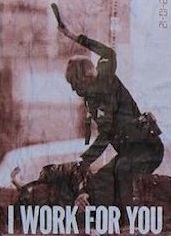
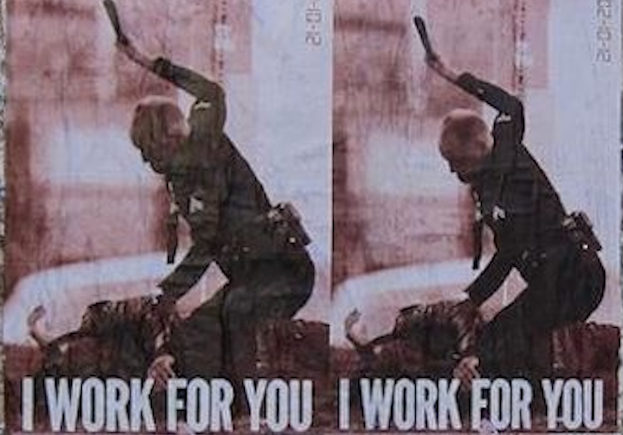
Hungry Cop Watching You.jpg

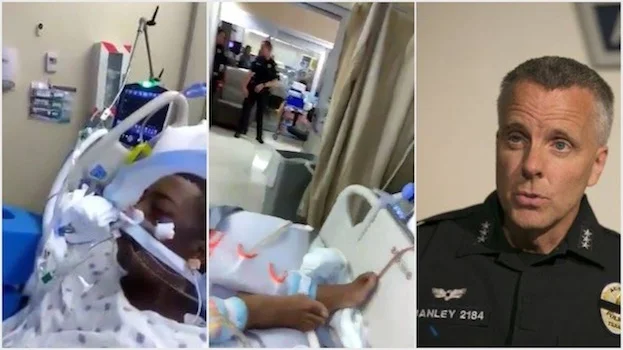
Colorlines reports; Cook County, home of Chicago, Illinois, has implemented a GPS monitoring system that calls and records youth without their consent, according to a new article published yesterday (April 8) by The Appeal in partnership with Citylab

Per “Chicago is Tracking Kids With GPS Monitors That Can Call and Record Them Without Consent” by Kira Lerner, in January, government officials contracted with electronic monitoring company Track Group to lease 275 ankle monitors to trace children on juvenile probation. The city switched children to these new ankle monitors in February and March.

The device, called ReliAlert XC3, allows electronic monitoring officers in criminal court and Track Group employees to contact—and record—individuals wearing the the ankle monitor. And while wearers can initiate contact with the monitoring center, they do not have the option to decline calls. 

Cook County officials and Track Group say the monitoring tool improves communication with children who are awaiting trial, but attorneys, experts and advocates call its implementation an invasion of privacy and violation of the U.S. Constitution. Black and Latinx children are more likely to be arrested than their White counterparts.

“A million alarm bells go off as a professor of criminal procedure,” Kate Weisburd, a professor at The George Washington University Law School who researches electronic monitoring across the country, told The Appeal. “I think if the police hear something incriminating on one of these, there will be litigation as to the constitutionality of [the use of] those statements.”

The article breaks down how the ReliAlert XC3 monitors work:

All calls made through the new devices are recorded, time-stamped and archived, and are stored on Track Group’s servers for 18 months, according to its contract with Cook County. Officials in Cook County have access to the files and can use them however they choose, including in the course of criminal investigations, AJ Gigler, vice president of marketing and product management at Track Group, told The Appeal.

[…]

The ReliAlert device is supposed to play an audible, three-note sound when an electronic monitoring official is calling and then play another three notes when the call ends. […] In 2014, a technician for Track Group, which was then called SecureAlert, testified during a hearing in Puerto Rico that although the device is supposed to vibrate and make a noise when it’s activated, the listening and speaking capabilities can be turned on without warning.

Track Group—the only company that provides electronic monitoring with built-in communication capabilities—holds contracts with several other U.S. jurisdictions and countries. Under its contract with Chicago, the corporation is expected to also provide 350 ReliAlert XC3 GPS devices for adult probation and 90 more for use by the sheriff’s office, The Appeal says. For each of the 275 devices used for youth, the city will pay Track Group $3.68 a day.

“I can’t quite even start down the parade of horribles in terms of all the ways this could be a problem,” Sarah Staudt, senior policy analyst and staff attorney for Chicago Appleseed Fund for Justice and a former juvenile defense attorney in Cook County, told The Appeal. “The idea that an adult can turn on a listening device while a child is, say, in the bathroom or in their bedroom is not good.”

TSA Officials say the Disproportionate, Degrading Hair Pat-Down Searches for Weapons in Black Women's Hair at Airports is Due to Scanner Problems, Not an Abuse of Discretion by Racist Suspect Cops

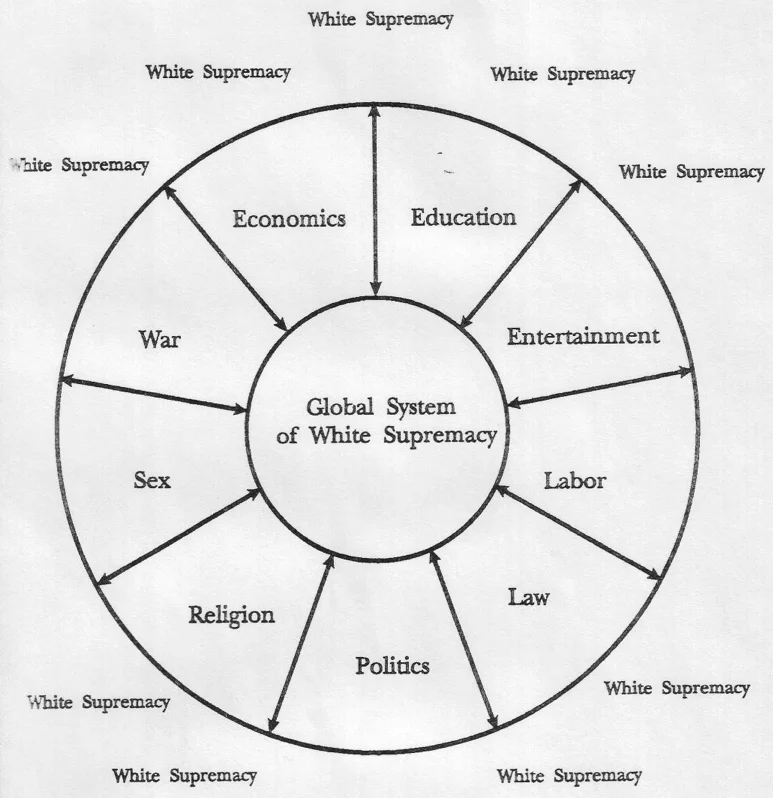
white supremacy chart 2.jpg

Pro Publica reports: Dorian Wanzer travels frequently for work. And almost every time she steps out of an airport body scanner, security screeners pull her aside and run their fingers through her hair. It’s called a hair pat-down.

“It happens with my natural Afro, when I have braids or two-strand twists. Regardless,” said Wanzer, who lives in Washington, D.C. “At this point in my life I have come to expect it, but that doesn’t make it any less invasive and frustrating.”

Wanzer, who had her hair patted down by Transportation Security Administration officers two weeks ago while she flew home from Raleigh, North Carolina, said she feels singled out when she is asked to step aside.

“When you find yourself in that kind of situation, it makes you wonder,” Wanzer said. “Is this for security, or am I being profiled for my race?”

Black women have been raising alarms for years about being forced to undergo intrusive, degrading searches of their hair at airport security checkpoints. After a complaint five years ago, the TSA pledged to improve oversight and training for its workers on hair pat-downs.

But it turns out there’s an issue beyond the screeners: the machines themselves.

The futuristic full-body scanners that have become standard at airports across the United States are prone to false alarms for hairstyles popular among women of color.

In a request to vendors last summer, the TSA asked for ideas “to improve screening of headwear and hair in compliance with Title VI of the Civil Rights Act.” That law bars federally funded agencies and programs from discriminating — even unintentionally — on the basis of race, color or national origin.

Two officers interviewed by ProPublica said the machines’ alarms are frequently triggered by certain hairstyles.

“With black females, the scanner alarms more because they have thicker hair; many times they have braids or dreadlocks,” said a TSA officer who works at an airport in Texas and asked not to be named. “Maybe, down the line, they will be redesigning the technology, so it can tell apart what’s a real threat and what is not. But, for now, we officers have to do what the machine can’t.”

A government report in 2014 found that the machines also “had a higher false alarm rate when passengers wore turbans and wigs.”

Asked about the false alarms, the TSA said in a statement to ProPublica that the agency “is reviewing additional options for the screening of hair.” (Read the agency’s full statement.)

A senior TSA official said in an interview that hair pat-downs are not discriminatory and are done when a body scanner indicates that a passenger has an object in his or her hair. “I get a hair pat-down every time I travel. I’m a white woman,” said the official, who agreed to be interviewed on the condition that she not be named.

“Procedures require that if there is an alarm on the technology, the pat-down [must] be conducted,” the official said. She added that the agency has found no evidence of discrimination in hair pat-downs or any pattern that pointed to a particular airport.

The TSA advises passengers to remove all items from their hair before going through airport security and warns on its website that “wearing a hairpiece, extensions or a wig as well as a ponytail, a hair bun or braids” may trigger an alarm.

The TSA would not say if it had ever found a weapon in a passenger’s hair. Its website says: “You’d be surprised what can be hidden in hair. The most notable things we’re looking for in hair are explosives and improvised explosives device components.”

The false alarms affect more than the passengers whose hair is searched. The government report from 2014 noted that patting down passengers slows security lines and may increase costs by requiring extra screeners.

Full-body scanners — millimeter wave machines — have become standard at airports over the past decade. The TSA accelerated their installation after failed “underwear bomber” Umar Farouk Abdulmutallab boarded a flight on Christmas Day 2009 from Amsterdam to Detroit with plastic explosives inside his pants.

The scanners are made by L3 Technologies. A government report said they cost about $150,000 each, and that the TSA spent more than $100 million deploying the machines. An L3 spokesperson declined to comment on the machines, and pointed us to the company’s website.

Unlike metal detectors, the scanners can detect nonmetallic items. But they can’t tell what objects are — or, apparently, if it’s just thick hair. That requires humans.

Last month, ProPublica asked people to share their experience with hair searches at airports. We received 720 responses. More than 90% were from women. Of the respondents overall, 313 identified as white only, 311 as black only and 96 as other ethnicities such as Latino, Asian American, Middle Eastern, American Indian or Alaskan Native, or mixed.

Most black women and other women of color we heard from described the hair pat-downs as intrusive and disrespectful. They said they felt singled out during the process.

“I get TSA workers have a job to do, which is to keep us safe,” said Wanzer, the Washington, D.C., resident who frequently has her hair searched. “But there needs to be a level of sensitivity about how different people perceive these kinds of searches.”

Black women have long been discriminated against for wearing their hair as it grows naturally or for sporting hairstyles mostly associated with black culture, like braids, two-strand twists, cornrows and locks. Natural black hair has been deemed unhygienic, unprofessional and radical, and it has been policed for centuries.

Most white women we heard from said they didn’t mind the searches or considered them a minor annoyance.

Toni Moss, who is white, said she travels by plane about four times a month. Moss said she is occasionally flagged for a hair search. The searches happen only when she keeps her short, voluminous hair in its naturally curly state. When Moss straightens her hair before traveling, she doesn’t get a hair pat-down, she said.

“It isn’t really something that I mind. I just find it funny when it happens but, then, it doesn’t happen every time I travel,” said Moss, whose hair was searched most recently in January while going through security at Austin-Bergstrom International Airport in Texas.

“The last time it happened I was joking with TSA [officers],” Moss said. “I told them, ‘Sorry you didn’t find a pork chop in my head.’ And they laughed.”

The agency has said that even if the machines don’t sound an alarm, agents can still choose to do hair pat-downs if “an individual’s hair looks like it could contain a prohibited item or is styled in a way an officer cannot visually clear it.”

That discretion enables profiling, said Abre’ Conner, a lawyer with the ACLU of Northern California, which filed the complaint against the TSA in April 2014. “When that discretion comes into play, unless there is explicit- and implicit-bias training, that can play out in a way that harms people of color, black people,” Conner said.

When Jazzmen Knoderer traveled by plane for the second time in her life, in 2012, TSA officers at Dayton International Airport in Ohio asked her to step aside for a full-body pat-down. It happened again the next time she took an airplane and went through security, at an airport on the Hawaiian island of Maui in 2013. And again, for her fourth plane trip in 2014, at Baltimore-Washington International Thurgood Marshall Airport. [MORE]

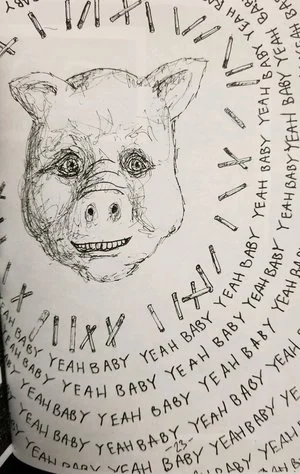
Suit Filed for Nia Wilson Claims BART Subway System has a Legal Obligation to Protect Passengers - the Racist Suspect who Murdered Her Awaits Competency Hearing in Criminal Case

Atlanta Black Star reports: Less than one year after a woman was stabbed to death at a BART station in Oakland, California, her family has filed a wrongful death suit against the transit line.

Nia Wilson, 18, was the victim of a fatal assault by alleged attacker John Crowell, 27, a felon who had been recently paroled at the time of the July 2018 incident.

The suit, which was filed in the Alameda County Superior Court Friday, states BART has a legal obligation to protect its passengers from assault, the East Bay Times reported April 12.

“This lawsuit is part of Nia Wilson’s family’s commitment to hold BART accountable for cleaning up its system. No one else should have to suffer because of BART’s failure to protect its riders from harm,” attorneys Jonathan Davis and Robert Arns from San Francisco-based Arns Law Firm said in a statement Friday.

Crowell, who was a serial fare evader, attacked Wilson and her older sister, who had been coming back from a birthday celebration for the now-deceased victim’s late boyfriend. Police said Crowell “struck very rapidly” as the siblings exited a train at MacArthur station.

Later, detectives discovered a knife at a construction site close to the station that was used in the attack.

Wilson was slashed across the neck and bled out on the platform. Her sister, Letifah Wilson, was stabbed in the neck, but she survived.

The lawsuit says Crowell should never have been able to get into the transit station and he should have been prohibited from entering at the turnstiles. The filing, which was made after the family filed a complaint with BART that was not given a response, states that Nia Wilson’s death was preventable since there is a lack of proper safety measures at the turnstiles to stop criminals from entering transit system.

The claim states the attack is not a “horrific anomaly” but it occurred as part of “a serious and endemic public safety problem.”

In order to solve this problem, the filing proposes BART enact policies to prevent crime. It also wants the establishment of the Nia Wilson Crime Statistics Notice, which would alert the public to accurate and current criminal activity at each station.

Additionally, the suit says the Wilson sister’s father, Ansar El Muhammad, arrived at the station to discover Nia Wilson covered in a blanket in a pool of blood and her sister cloaked in blood. The father, as well as other family members, say they’ve suffered serious emotional distress as a result of the incident. The family is also seeking monetary damages.

BART chief spokesperson Alicia Trost told the East Bay Times that the transit agency is unable to speak on pending cases.

New Hampshire Senate Passes Death Penalty Repeal w/Enough Votes to Override a Veto, Replacing State Sanctioned Murder of Citizens w/Life in Prison w/o the Possibility of Parole

EJI reports A bipartisan bill to abolish the death penalty in New Hampshire passed the state Senate on Thursday with enough votes (17-6) to override a veto.

The bill revokes the existing capital punishment statute and replaces it with a penalty of life in prison without the possibility of parole.

"State-sanctioned killing is cruel, ineffective and inherently flawed," said Senator Martha Hennessey (D-Hanover). "In committee we heard tragic, heart-wrenching testimony from those whose loved ones were murdered. Many testified that state killings do nothing to honor the lives of their loved ones."

Senator Ruth Ward (R-Stoddard) spoke briefly before voting on Thursday. Her father was killed when she was seven. "He never saw us grow up," she said. "My mother forgave whoever it was, and I will vote in favor of this bill."

The same bill passed the state House of Representatives on March 3, also with a veto-proof supermajority (279-88).

Sponsored by seven Democrats and six Republicans across both houses of the state legislature, this is the third death penalty repeal passed by New Hampshire lawmakers. In 2000 and 2018, the bills were vetoed. An attempt to override Governor Chris Sununu's veto last year fell two votes short in the Senate.

The governor has promised to veto this bill, but both chambers have the two-thirds majority needed to override the veto.

Once signed by the House Speaker, Senate President, and Secretary of State, the bill will be delivered to the governor, who has five business days to veto, sign, or let the bill become law without a signature. The New Hampshire Union Leader reports that a vote to override a veto could take place later this month or next.

The repeal bill does not apply retroactively to Michael Addison, the only person currently sentenced to death in New Hampshire. The state has not executed anyone since 1939 and presently has no execution protocol in place.

If the bill becomes law, New Hampshire will be the 21st state to abolish capital punishment and the ninth in the past 15 years. Bills to restrict or repeal the death penalty have been introduced in at least 18 states this year, half of them with significant Republican sponsorship or support.

State Senator John Reagan, a Republican who long believed the death penalty was important to public safety, said during the senate debate that he now favors repeal because "the more and more experience I had with government, I concluded that the general incompetency of government didn't make them the right people to decide life and death."

Supreme Ct Declines to hear Mayhem Mal's 1st Amendment Appeal Over Lyrics in song "F*ck the Police," that Allegedly Made Felony Threats to 2 Specifically Named Pittsburgh Cops

Jurist reports: The US Supreme Court declined on Monday to hear arguments that a Pittsburgh rapper’s First Amendment rights were violated after he was convicted for song lyrics.

Jamal Knox, who rapped under the name Mayhem Mal, argued that his conviction for song lyrics about killing two police officers violated his First Amendment right.

Knox was charged with several offenses after he fled during a routine traffic stop, which led officers to discover 15 stamp bags contenting heroin, a large some of cash and a loaded firearm in the vehicle Knox was driving. While the charges were pending, Knox co-wrote and recorded a rap song entitled, “F–k the police,” which was later uploaded to YouTube. The song lyrics described killing two Pittsburgh police officers, “Officer Zeltner” and “Mr. Kosko,” two police officers who had participated in Knox’s earlier arrest and were scheduled to testify against him. Knox was convicted in 2013 on state charges of terroristic threats and witness intimidation.

Knox petitioned the high court after the Pennsylvania Supreme court upheld the trial court’s decision that the lyrics constituted a “true threat.” The Pennsylvania Supreme Court reasoned that the First Amendment “permits the imposition of criminal liability based on the publication of a rap-music video containing threatening lyrics directed to named law enforcement officers.”

In his appeal, Knox argued that the Supreme Court needed to resolve the issue of whether the government in a criminal threat case must only prove the “speaker’s subjective intent to threaten,” or must prove “objectively that a reasonable person would regard the statement as threatening.”

In an earlier decision, the Supreme Court ruled in Watts v. United States that “true threats” were outside of the First Amendment’s protections. However, the court failed to clearly establish the level of intent that is necessary in order to determine what constituted a “true threat.”

Despite Winning Landmark Supreme Ct Case, 72 Yr Old Black Man [locked up 55 yrs for murder of white cop] Remains Behind Bars After Racist Suspect Parole Board Member Denied His Parole

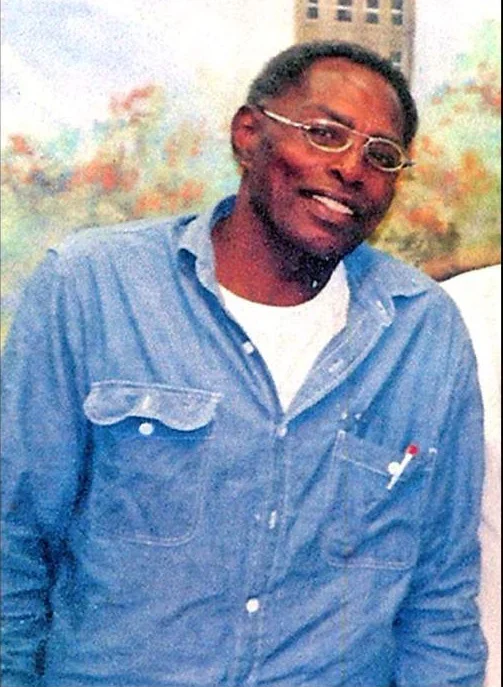
BRENNAN C. KELSEY.jpg

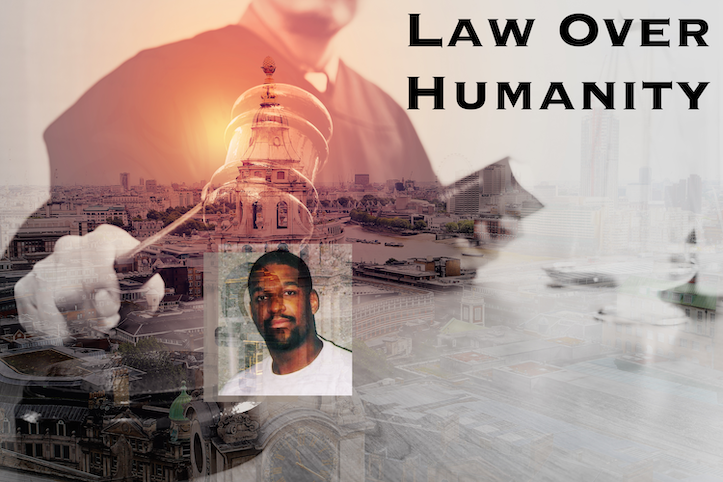
"Lawless Society - a socio-juristic human relation configuration where law is upheld, codified, and deified over humanity. If you fear or worry about its advent, you'll certainly never recognize its presence. 2) a Police State of the Overruling Class" - from FUNKTIONARY

Henry Montgomery's victory at the U.S. Supreme Court in 2016 created a way for hundreds of prisoners like him — those convicted of horrific crimes while juveniles — to earn their freedom by demonstrating their rehabilitation since their youth.

Yet on Thursday, Montgomery was again denied his own opportunity at a life beyond bars. [MORE]

[ABA Journal] reports: 72-year-old Louisiana inmate who was 17 when he killed a sheriff’s deputy must remain in prison, despite his U.S. Supreme Court victory in January 2016.

Parole was denied for Henry Montgomery on April 11, report the Advocate, the Associated Press and Mother Jones.

Parole is not granted absent a unanimous vote of the three-member Louisiana Committee on Parole. One member of the board voted no.

Montgomery was the named petitioner in Montgomery v. Louisiana, a 2016 Supreme Court decision that gave retroactive effect to a prior decision barring mandatory life in prison without parole for juveniles.

henry montgomery.jpg

Board member Brennan Kelsey [racist suspect in photo] said he voted against granting parole because Montgomery had to take more classes and complete more programming, according to coverage by the Advocate. “It’s your responsibility to continue to work,” he said in proceedings broadcast by video feed.

Montgomery’s lawyer, Keith Nordyke, said Montgomery has “been through all of the programs he could take,” and he has been “a force for good,” according to the Advocate.

Montgomery has taken classes in anger management and victim awareness. He organized a literacy program and a boxing club, and he was involved in a church ministry. He also has worked in the prison’s silk screen shop.

The only classes left to take are on parenting and substance abuse, which don’t apply to Montgomery, Nordyke said, because he has no children and hasn’t struggled with substance abuse. “I do feel like the goalposts are moving,” Nordyke said.

Alabama's Uncivilized Prisons [aka family destruction, murder and gender annihilation centers] are an Urgent Humanitarian Crisis in a Lawless Society

EJI reports: Findings issued by the United States Department of Justice documenting the extraordinary rise in violence and sexual assaults in Alabama's prisons over the last five years leave no doubt that there is a humanitarian crisis in our state's prisons. Photographs are now appearing in local and national media that provide a window into violence that state officials have long shielded from public view.

WBRC News reported yesterday about the horrific conditions at St. Clair Correctional Facility in Springville, Alabama, based on more than 2500 photographs that were delivered to the station on a jump drive in an envelope with no return address. Reporter Beth Shelburne showed the photographs to two former St. Clair correctional officers who both confirmed their authenticity. 

WBRC reported that the photos "give us an unprecedented and visceral window into what we've been reporting for years, but have never actually seen." The report continues:

Alabama prisons are a slaughterhouse, where rape, stabbings, murder and extortion happen around the clock, as confirmed in the recent Department of Justice investigation.

In the wake of the Justice Department's letter to Alabama Governor Kay Ivey, law enforcement leaders across Alabama have called on state officials to act with urgency. Richard Moore, U.S. Attorney for the Southern District of Alabama, said in a statement that the findings indicate a "flagrant disregard" for the constitutional ban on cruel and unusual punishments.

"The failure to respect the rule of law by providing humane treatment for inmates in Alabama prisons is a poor reflection on those of us who live and work in Alabama," Mr. Moore said. "We are better than this. We do not need to tarry very long assessing blame, but rather commit to righting this wrong and spare our State further embarrassment." 

Jay Town, U.S. Attorney for the Northern District of Alabama, agreed. "This massive undertaking alleges constitutional troubles in the Alabama Department of Corrections which are serious, systemic, and in need of fundamental and comprehensive change," he said in a statement.

The Justice Department's letter details 25 immediate reform measures that Alabama must prioritize to reign in this violence and drug trafficking. The remedies mirror those sought in EJI's lawsuit about conditions at St. Clair and would address the root causes of prison violence: management deficiencies, inadequate investigations, the absence of internal classification systems for housing prisoners, severe staffing shortages, the absence of rehabilitative programming, the failure to intervene in drug trafficking, and the failure to treat a drug epidemic that is out of control.

EJI believes that Alabama must act with a sense of urgency to implement the Justice Department's recommendations, none of which requires or can be meaningfully addressed with new prison construction.

The Presence of Bikini Clad Black College Kids Sets-Off Yurugu Authoritarian: Off-Duty TX Cop Assaults Multiple Women During Unlawful Arrest for Talking to Each Other in Parking Lot of Their Apt Bldg

Nacogdoches cops.jpg

According to FUNKTIONARY

Yurugu - a mythological figure within the Dogon tribe (Africa) who is "the incomplete being" (fiend without a face) referring to Neuropeans (neurotic Europeans) within the European asili. 2) a regressive (degenerative) state of consciousness where the soul is cut off from itself. 3) the inability to recognize or abate unacknowledged destructive capabilities. Yurugu also expresses itself and manifests as the pathological condition that utterly fails to convince those in geographical proximity of its harmlessness, therefore has to kill them. Yurugu is in a vicious spiral increasingly at odds with his own humanity—as fragmented, pathological, and distorted as it is. [MORE]

authoritarians - the great unweaned of the world 2) violentists. 3) 'reality-violaters.' 4) uniform (costume-wearing) and non-costume wearing purveyors of the absolute worst crimes against humanity. 5) the coercive class within an economic and social caste-based society. While the State is a military formation, it is first and foremost a fruit of justice—not to be confused with (or extrapolated to imply or mean that) justice is a seed of the State. There is a high correlation between justice systems and the development or proliferation of the State. (See: Justice, Control, BOG. Statists, Power. Psychopaths & Violence)

"authority" - (so-called)—a cartoon, an alleged image of the Law. 2) a cartoon clothed in flesh and blood. 3) the notion of an implied right and application of that "right" of individuals or groups of same to control or exercise external power over others, which has no meaning in reality. 4) power over...which is thoroughly institutionalized. 5) ruling through coercion. So-called "authority" is the justification for remaining impotent. The real threat to "authority" is the masses overcoming info-gaps and verigaps through self-knowledge and the proliferation of symbols of opposition, not crime or destruction of property. "Authority-" is not a force but a farce! "Every great advancement in natural knowledge has involved the absolute rejection of authority." —Aldous Huxley. Government is the hefty price we pay for our lack of being further evolved as humans.

Niggerized - "unsafe, unprotected, subjected and subjugated to random violence, hated for who you are to the point you become so scared that you defer to the powers that be while willing to consent to your own domination." Dr. Cornel West quoted in FUNKTIONARY

The Star Telegram reports: An off-duty Nacogdoches police officer working security for an apartment complex is at the center of what has become a controversial arrest.

The officer, Josh Anders, [who is white] said he approached a group of young [Black] women in the parking lot Wednesday due to ongoing issues with criminal activity at the complex in the 1600 block of Cardinal Street, according to police.

Anders requested help from on-duty officers when several of the women refused orders not to leave while a trespassing investigation was underway, police said in a statement.

Anders said two of the women resisted arrest, police reported. Anders required medical attention for minor injuries after the incident, police said.

One suspect walked away, while Lindsey Ogbonna, 19, of Nacogdoches, was arrested and is facing a resisting arrest charge, according to police.

A criminal investigation into the alleged assault on the officer is ongoing and further charges may be filed, police said.

Kim Cole, an attorney representing some of the women, said in a statement that Anders - who wore plaid shorts and an orange T-shirt - identified himself as a security guard but not a police officer and that witnesses to the incident questioned his true identity.

The bikini-clad black female students had just returned from a pool party and were still in the parking lot when the officer approached and demanded to know why they were on the property, Cole said. Several of the students told him they lived there and “questioned who he was and why he was harassing them,” Cole said.

As the women began to leave, Anders demanded they stay where they were, but the women continued to walk away, the statement said.

Anders got into a police car with lights flashing and drove closer to the group, pursuing the woman who was farthest away, the attorney’s statement said. Anders got out of the car, “ripped the wig off her head, tore the T-shirt from her body, put her in a headlock and slammed her to the ground,” the statement said.

Two other women tried to free her while asking who Anders was and for him to let go of their friend, the statement said.

ARREST DESCRIBED BY LAWYER AS BRUTAL

Anders let that woman go and slammed Ogbonna to the ground, forcing his knee into her pelvic area, exposing her breasts and locking her in a wrestling hold, the attorney’s statement said.

Ogbonna sustained numerous injuries during the arrest and was accused of assault on a public servant, the statement said.

“Neither of the brutalized young ladies had any clue whatsoever that this belligerent vicious brute was even a police officer,” the statement said.

Cole asked in her statement that Anders be charged for the role he played during the arrest and that all charges against Ogbonna be dropped.

A protest march is planned to begin at 3 p.m. Tuesday just outside Stephen F. Austin State University campus that will end at the Nacogdoches Police Department, Cole’s statement said. Officers with the university police department will monitor the planned event to make sure it remains peaceful, said Shirley Luna, university spokeswoman.

Ogbanna is a sophomore student attending classes at Stephen F. Austin State University, Luna said.

Cole released cell phone video of the incident, and the Nacogdoches Police Department has also released the dashboard camera video from Anders’ car.

“Transparency is of utmost importance to the Nacogdoches Police Department,” Sgt Brett Ayres, public information officer with the Nacogdoches Police Department said in a statement on Facebook. “Several concerns have been expressed by the community members affected and we are committed to continuing conversations with all involved.” 

Nacogdoches is about 200 miles southeast of Fort Worth.

LAWYER ALSO REPRESENTED FAMILY IN MCKINNEY POOL PARTY ARREST

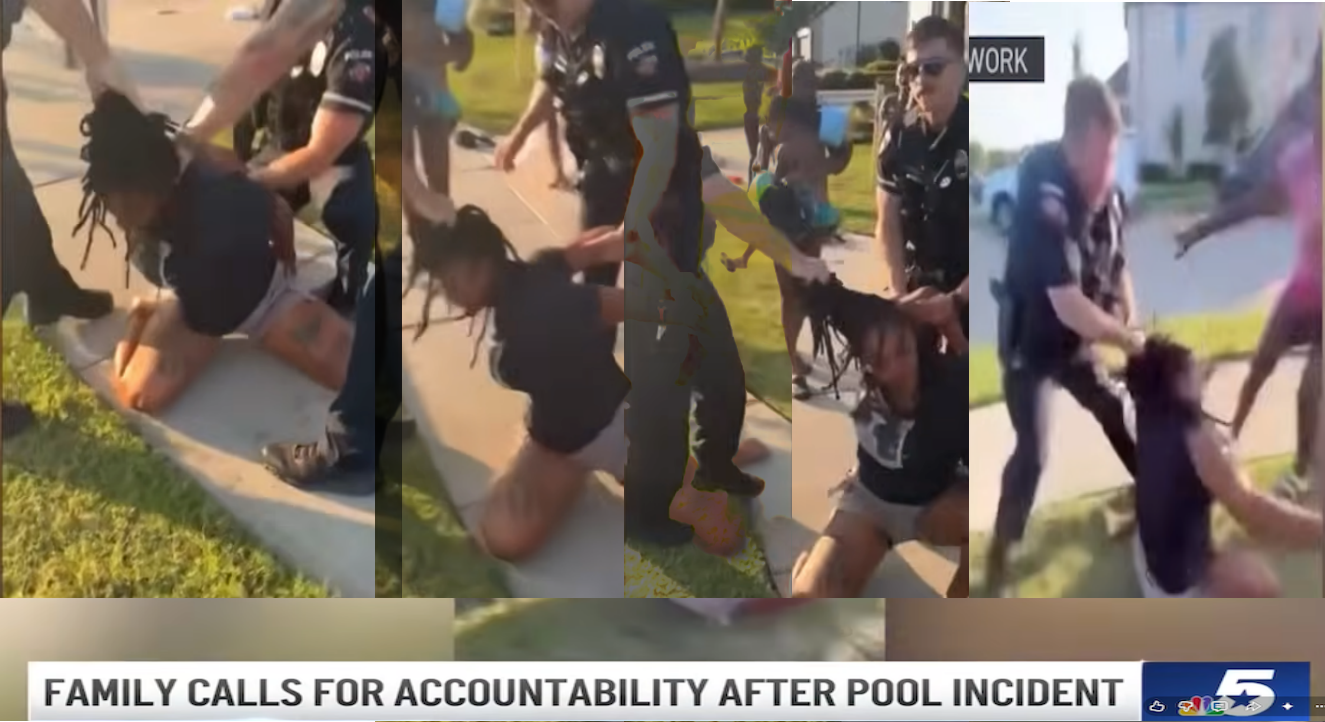
Cole, the attorney retained to represent some of the women involved in this incident, also represented the family of Dajerria Becton, a 15-year-old girl involved in a violent police take-down in June 2015 during a pool party in McKinney.

Becton and her guardian, Shasona Becton, and their attorneys, agreed to a $184,850 settlement award after suing McKinney officials for $5 million in federal court. The officer involved in the arrest, Eric Casebolt, resigned following the release of cell phone video of the incident.

A grand jury declined to indict Casebolt. Casebolt was seen in cell phone video footage of the incident running after African-American teens and ordering them to the ground as he tried to break up the pool party, then forcing Becton onto her stomach on the ground and placing his knees on her back.

Casebolt was one of a dozen officers who responded to the 911 disturbance calls at the pool, where an estimated 100 teens were celebrating the end of the school year.

The McKinney police chief later called Casebolt’s actions at the pool “indefensible.”

Video Shows Panicked-Acting Charlotte "Cop-artists" Fatally Shoot Black Man as He Appeared to Lower his Gun, Obeying their Orders & Keeping Them Safe. He Never Pointed it at Them

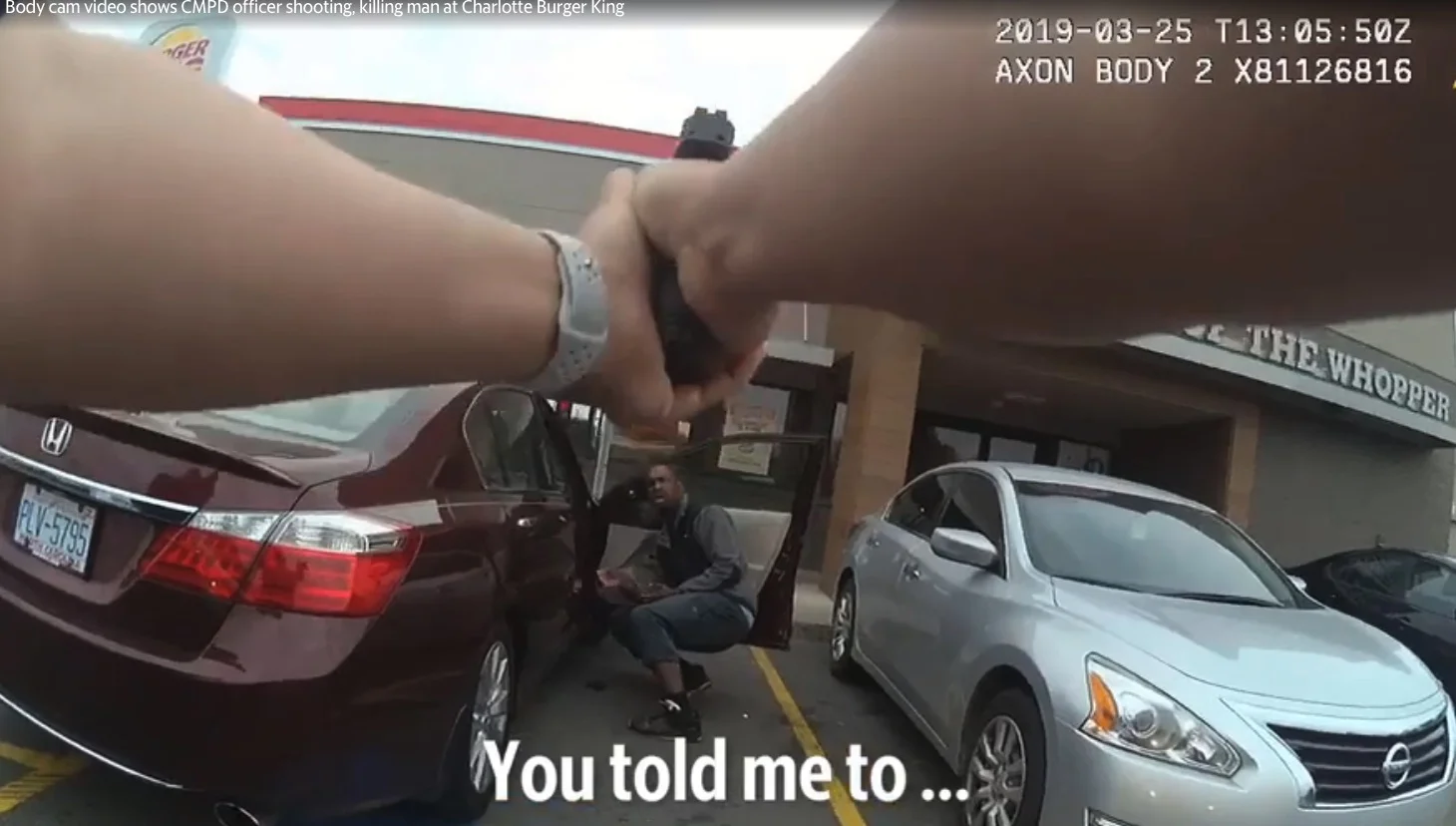
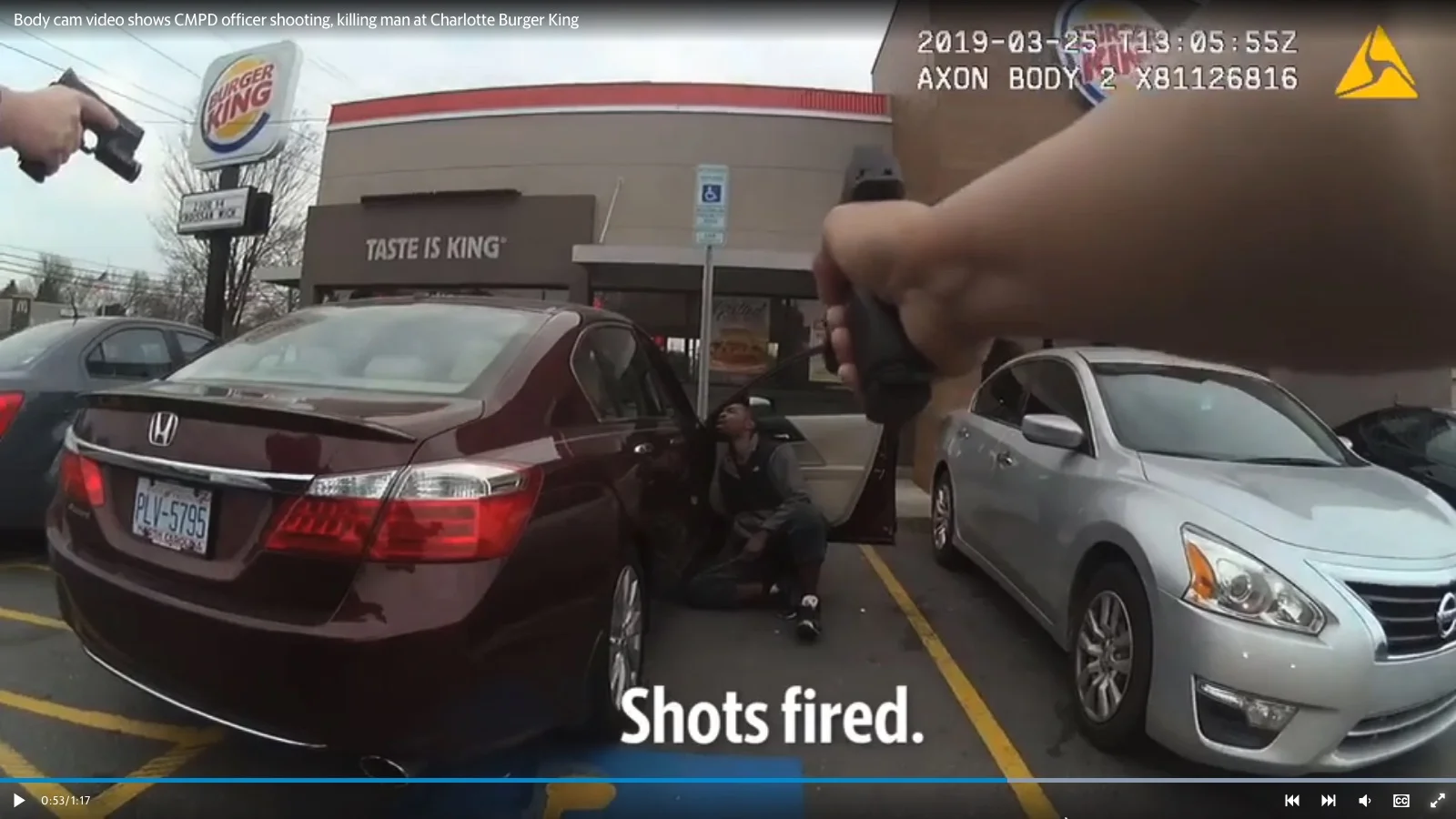
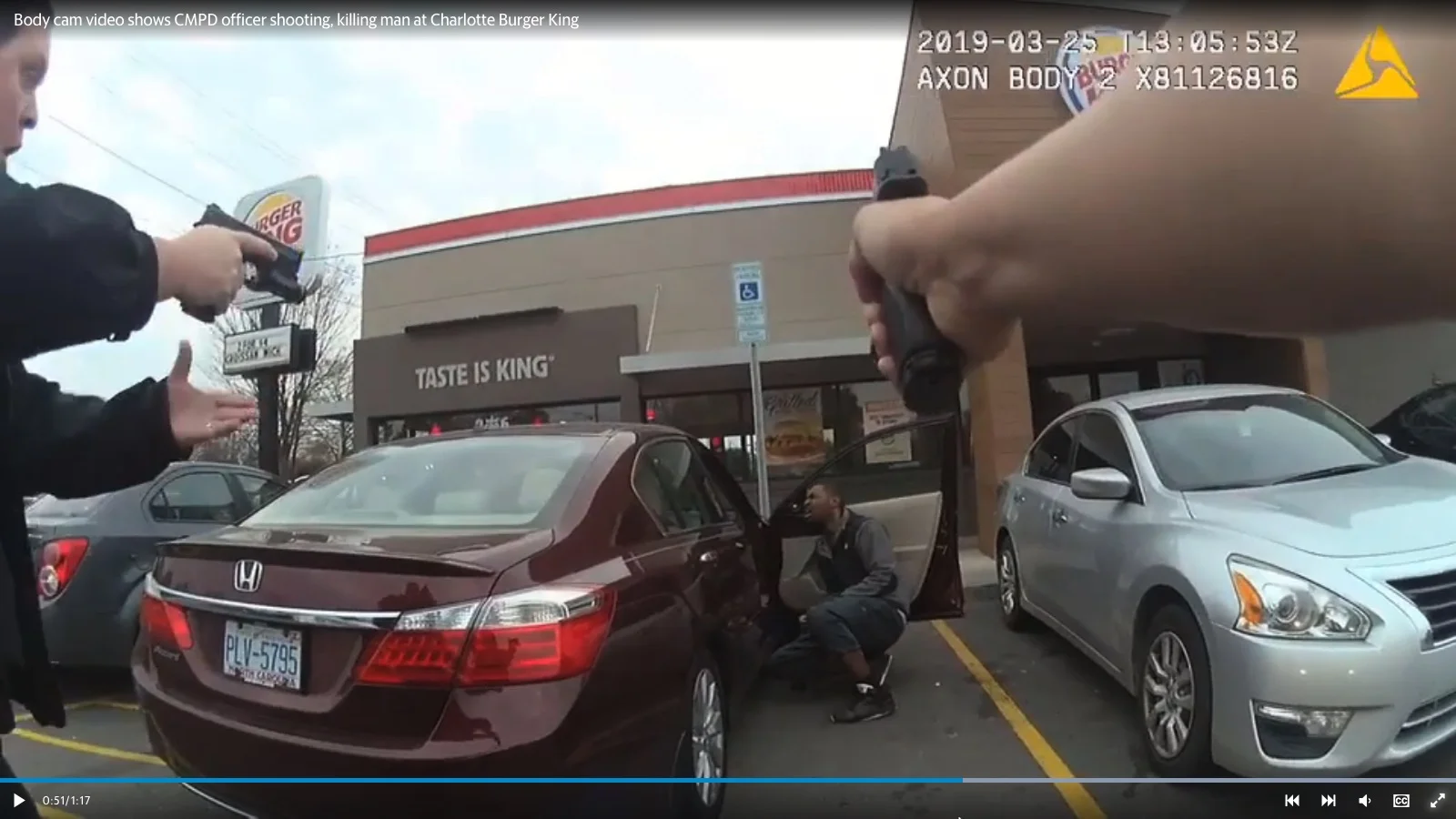
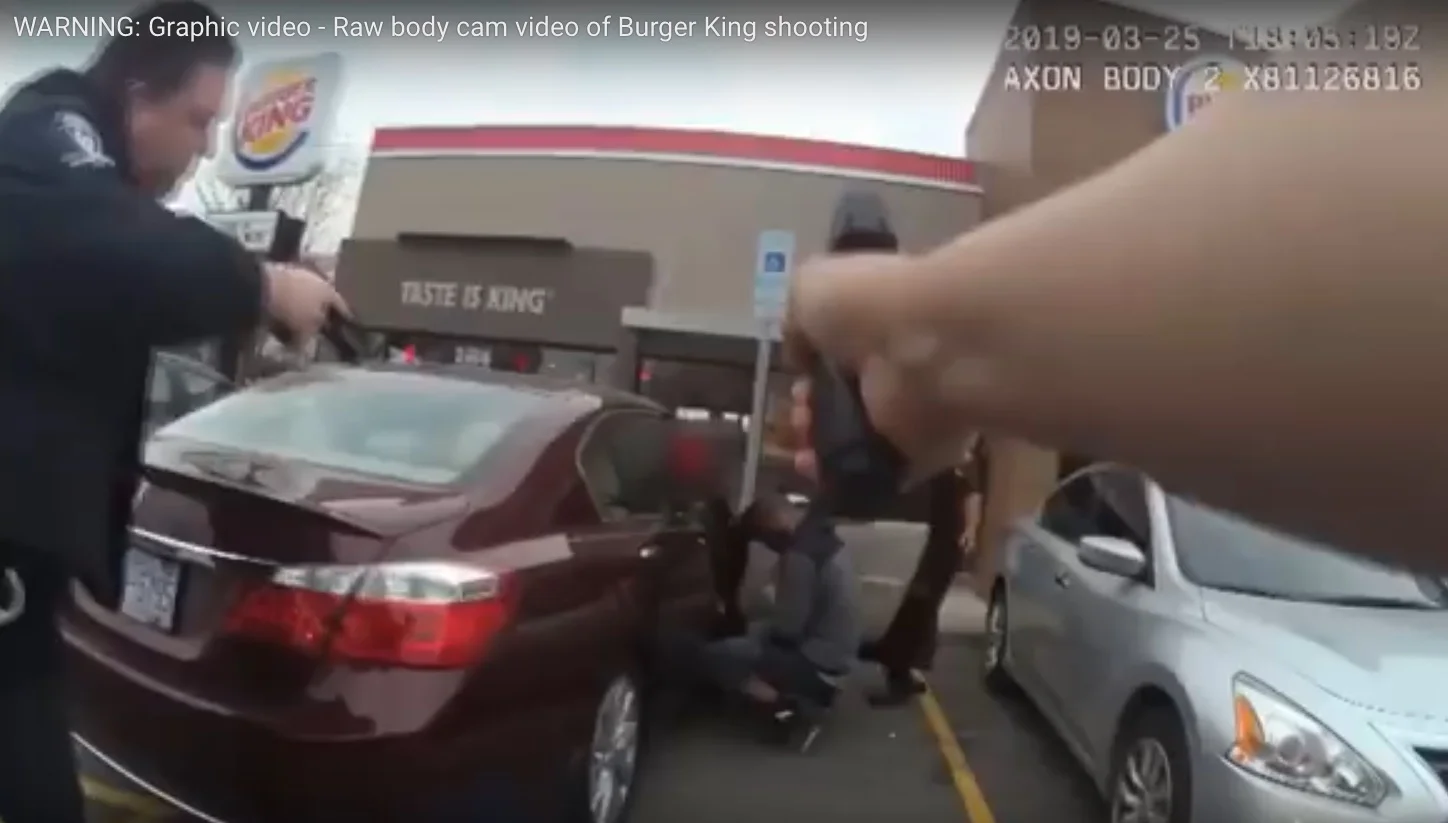
From [HERE] and [HERE] Video released on Monday showed the moment a white Charlotte cop shot dead a black man who appeared to be following instructions to lower or drop his gun.

Officers were ordered by a court to release the bodycam images captured by Wende Kerl, who killed Danquirs Franklin in a Burger King parking lot on March 25.

Franklin is seen in the footage squatting in front of an open car door while Kerl and another officer shout: “Drop the gun. Drop it. Drop it now.”

Franklin’s firearm is not visible at first. Then, he moves his right hand to his pocket and appears to take out a gun in order to put it down. Kerl fires multiple times.

“You told me to,” Franklin said, looking up, before collapsing on the floor.

The video cuts off seconds later, after he slumps over.

Alongside a link to the video, the Charlotte-Mecklenburg Police Department tweeted it was “just one piece of evidence among many others to be considered in determining whether the shooting was justified.”

Police Chief Kerr Putney said the video shows that Franklin refused to drop his weapon and an officer fired after perceiving a deadly threat. [MORE] and [MORE]

Albany Cop’s Bodycam Video Reveals what’s just below the Surface of the Lex-icon: Angry, White Authoritarian Violently Attacks Black Man, Treating Him as a Slave & Enemy of the State

‘Legal system is anchored by non-voluntary intervention, harm the state can impose regardless of the individual’s choices.’ From [HERE] Bodycam video has been released showing an excessive force incident last month that resulted in the arrest of one white Albany, New York officer and the suspension of two others.

Officer Luke Deer has been charged with felony assault and official misconduct. He has been suspended without pay along with two other officers, one of which was identified as Officer Matthew Seeber, according to the Albany Times Union.

The incident occurred early March 16 when officers responded to a call about loud music at a residence.

Bodycam video obtained by WNYT shows officers kicking open the front door of the home after a man inside tells them he won't let them in without a warrant. The man is then seen being thrown to the floor and beat by several officers before being dragged outside.

ACCORDING TO FUNKTIONARY:Lex-icon - the appearance of justice (the form) over the substance of justice via truth and law over humanity.”"Lawless Society - a socio-juristic human relation confliguration where law is upheld, codified, and deified over…

ACCORDING TO FUNKTIONARY:

Lex-icon - the appearance of justice (the form) over the substance of justice via truth and law over humanity.”

"Lawless Society - a socio-juristic human relation confliguration where law is upheld, codified, and deified over humanity. If you fear or worry about its advent, you'll certainly never recognize its presence. 2) a Police State of the Overruling Class" - from FUNKTIONARY. Dr. Blynd states, "the difference between an outlaw and a lawman is mainly on paper - not on principle."

authoritarians - the great unweaned of the world 2) violentists. 3) 'reality-violaters.' 4) uniform (costume-wearing) and non-costume wearing purveyors of the absolute worst crimes against humanity. 5) the coercive class within an economic and social caste-based society. [MORE]
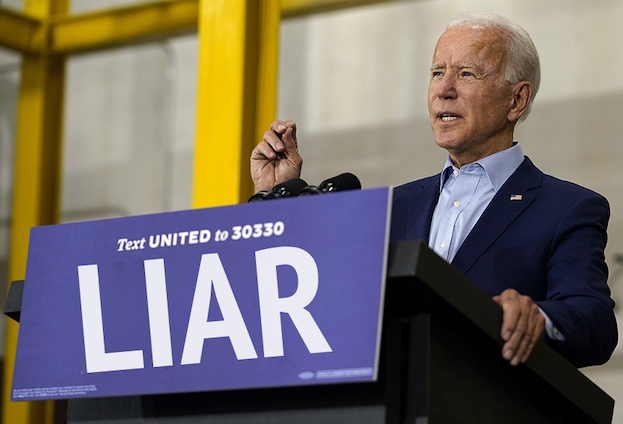
Authority - ruling through coercion. [MORE]

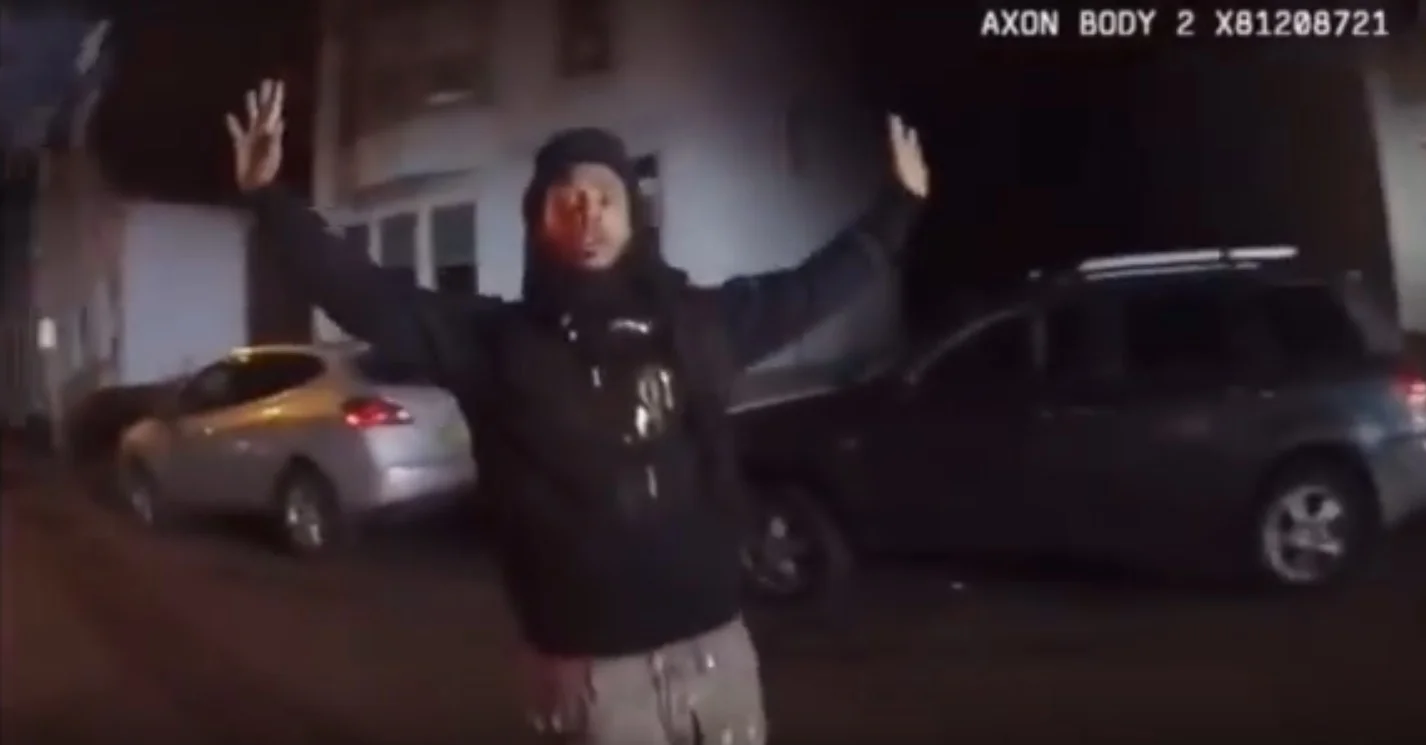
Another video shows a man standing in the middle of the street with his hands up when an officer, identified as Deer, runs at him and pushes him to the ground. The officer is then seen punching him several times and beating him with a baton. The man is heard repeatedly yelling, "What you hitting me for?"

Officers are also seen using pepper spray, and at one point, an officer is heard telling Deer to calm down.

Three people at the home were arrested during the incident for disorderly conduct, resisting arrest and inciting a riot, officials said. A judge dropped the charges Wednesday, citing misconduct by the officers.

"As a matter of law, she would have found that there was no basis for these charges for which these men were arrested," a lawyer for one of the victims told WNYT. "Not to mention what they were subjected to."

Deer has pleaded not guilty to the charges against him, officials said. His next court appearance is scheduled for Monday.

"It was determined that not only had Officer Deer violated departmental policy, but he had also committed criminal acts as well," Albany Police Chief Eric Hawkins said at a news conference Tuesday. "I am convinced that the misconduct I observed by these few officers was an aberration. Nonetheless, I condemn that misconduct in the strongest terms, and I'm sending a strong message that such conduct will not be tolerated in the Albany Police Department."

The Albany Police Officers Union released a statement Tuesday, saying it "firmly stands behind every officer involved in the incident," and that "officers were called to the house that night because of the lawlessness that has been allowed to perpetuate over several months."

Judge Allows Christopher Ballew to Sue Pasadena: White Cops Hit Compliant Black Man Several Times w/Batons & Fists & Slammed His Head into Asphalt after BS Traffic Stop @ Gas Station

christopher bellow 2.jpg

From [HERE] A federal judge refused to dismiss a claim of racial profiling against the city of Pasadena in a lawsuit stemming from the violent arrest of an Altadena motorist in late 2017.

Christopher Ballew, who is African American, is suing the city of Pasadena and the Police Department for excessive force, false arrest, falsification of reports, delay or denial of medical care and excessive bail in relation to the incident.

A former John Muir High School basketball standout, Ballew, 23, was arrested at a gas station in Altadena on Nov. 9, 2017 by officers Zachary Lujan and Lerry Esparza for allegedly resisting arrest and assaulting a police officer after being stopped for driving without a front license plate and excessive window tint on his late-model Mercedes sedan.

In the course of the altercation, Ballew was struck on the head several times with fists and on the legs with a metal baton. His head was also rammed into the asphalt. He suffered a broken leg bone and multiple contusions during the arrest, a portion of which was captured by a passerby on a cell phone and later posted to Facebook.

After the incident had become public, Pasadena City Manager Steve Mermell released footage captured by the body cameras worn by the officers. The footage is not helpful to the cops.

Ballew was released on $50,000 bail. However, the LA County District Attorney’s Office later declined to charge Ballew with any crimes.

“Regardless of whether the stop was lawful, if the plaintiff can show that they were subjected to unequal treatment based upon their race or ethnicity during the course of an otherwise legal traffic stop, that would be sufficient to demonstrate a violation of the Equal Protection Clause,” wrote US District Judge Fernando M. Olguin.

As part of the Fourteenth Amendment, the Equal Protection Clause mandates all citizens have the guaranteed right to equal protection under the law.

In his ruling, Olguin also refused to throw out Ballew’s claims of excessive force being used and officers filing falsified reports, a decision which will allow jurors to decide the allegations.

The judge threw out Ballew’s delay in medical care claim, but left the door open for it to be reintroduced with more information.

In a prepared statement, one of the city’s attorneys said the defense would press on despite the judge’s refusal to dismiss the charges.

“We accept the court’s order on our motion to dismiss, which addressed the initial allegations raised by Mr. Ballew. While we disagree with some aspects of the ruling, we will continue to strongly defend the case to protect the public’s taxpayer dollars, as the matter moves forward,” said Justin Sarno, an attorney representing the city and the officers in the litigation.

Esparza and Lujan were n Altadena, an unincorporated part of Los Angeles County, when the incident occurred.

The Altadena Town Council was so upset by the incident that officials there sent a letter to Mayor Terry Tornek demanding that Lujan and Esparza not be allowed to patrol the area, despite decades of cooperation between the neighboring areas.

“I have yet to talk to one person who has seen the video who does not believe there was excessive use of force on the part of the police officers,” Altadena Town Council Chariman Okorie Ezieme told the Pasadena Weekly.

The 16-member Town Council, which meets monthly, unanimously voted to send the letter after its January 2018 session. Several local residents also provided input at that meeting.

Ballew’s attorney claims the officers were using common vehicle violations to detain, search and catalogue young African-American men as gang members or associates when they stopped Ballew.

“This is my neighborhood, this is where I live. I know it. Chris Ballew could be my neighbor. The Ballews are nice middle class people. Chris Ballew is not a thug or a criminal. He is a nice kid,” said civil rights attorney John Burton.

According to Burton, Lujan and Esparza were looking for African-American gang members and stopped Ballew and then became aggressive with him because he is African American and the officers assumed he was in a gang.

After police stopped Ballew in the parking lot of a gas station, they made contact with him as he walked toward the cashier.

A scuffle ensued after they walked Ballew back to his vehicle and attempted to handcuff him. Lujan repeatedly hurled profanities at the Altadena resident, demanding Ballew give him his “f—ing hands.”

Ballew repeatedly requested the officers call their commanding officer.

“Shut the f–-k up,” Lujan screamed at Ballew after pushing his face into the parking lot asphalt. Esparza also repeatedly told him to “stop acting like a dummy.”

Moments later, Ballew managed to make it to his feet and was struck twice by the baton. Ballew reached for the baton and began struggling with Esparza for the weapon.

As a scuffle ensued, Lujan hit Ballew and Esparza drew his service revolver while Ballew was close to his partner. Esparza did not fire and instead holstered the handgun.

By then, Ballew had been knocked to the ground by Lujan and had dropped the baton. At that point, Lujan jumped on Ballew’s back and started punching him on the side of his head.

After holstering his weapon, Esparza picked up the retractable metal baton and struck Ballew three times in the legs and ankles while his partner slammed Ballew’s head into the asphalt.

Ballew suffered facial abrasions and a fractured fibula during the encounter.

Robert Fonzi, a former San Bernardino undersheriff hired as a use-of-force expert by the city, concluded that the two Pasadena police officers used reasonable force.

Lujan and Esparza are lateral transfer hires from the Los Angeles County Sheriff’s Department and the Bakersfield Police Department, respectively,  hired by the city despite repeated problems of “maintaining internal cultures that sanction misconduct, including excessive force, false arrests and frame ups and fabricated police reports, especially directed against African Americans,” according to Burton.

“They didn’t need sensitivity training. They needed discipline,” Burton told the Pasadena Weekly.

After the incident, the officers remained on duty for more than three months, despite outrage expressed by local community members before then-Police Chief Phillip Sanchez reassigned them to desk duty.

Sanchez left the department a week later.

“You can’t just assume because somebody is black and driving in Altadena they are a gang member,” Burton said.

Black Man who had the Audacity to Talk to His Chattanooga “Public Servant" as His Equal, Got Tased & Arrested by a Costumed White Public Ruler Who Didn’t Share Black Man’s Illusion - Suit Filed

Larken Rose states, “It is very telling that many modern “law enforcers” quickly become angry, even violent, when an average citizen simply speaks to the “officer” as an equal, instead of assuming the tone and demeanor of a subjugated underling. Again, this reaction is precisely the same – and has the same cause – as the reaction a slave master would have to an “uppity” slave speaking to him as an equal. There are plenty of examples. depicted in numerous police abuse videos on the internet, of supposed representatives of “authority” going into a rage and resorting to open violence, simply because someone they approached spoke to them as one adult would speak to another instead of speaking as a subject would speak to a master. The state mercenaries refer to this lack of groveling as someone having an “attitude.” In their eyes, someone treating them as mere mortals, as if they are on the same level as everyone else, amounts to showing disrespect for their alleged “authority.”

Similarly, anyone who does not consent to be detained, questioned, or searched by “officers of the law” is automatically perceived, by the mercenaries of the state, as some sort of troublemaker who has something to hide. Again, the real reason such lack of “cooperation” annoys authoritarian enforcers is because it amounts to people treating them as mere humans instead of treating them as superior beings, which is what they imagine themselves to be." [MORE]
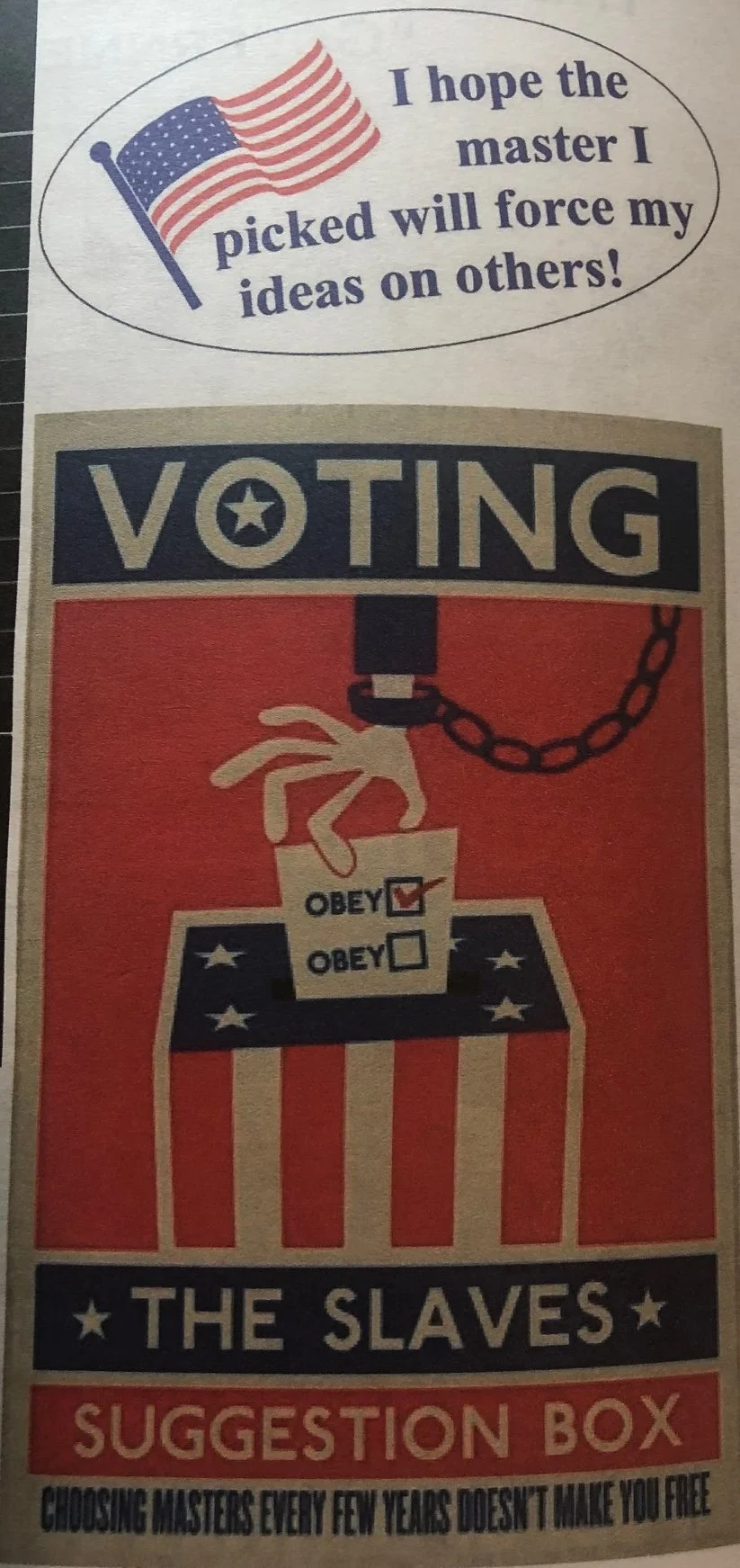
The moment he complied with the cop’s order to stop he was seized within the meaning of the so-called 4th amendment. WHAT CRIME WAS HE BEING DETAINED FOR? IN ORDER TO SEIZE OR BRIEFLY DETAIN THE COPS MUST HAVE REASONABLE ARTICULABLE SUSPICION crimin…

The moment he complied with the cop’s order to stop he was seized within the meaning of the so-called 4th amendment. WHAT CRIME WAS HE BEING DETAINED FOR? IN ORDER TO SEIZE OR BRIEFLY DETAIN THE COPS MUST HAVE REASONABLE ARTICULABLE SUSPICION criminal activity IS afoot and the person stopped is involved in the activity. ALSO, The cop’s warrantless unwanted intrusion onto the black man’s property also violated ‘HIS RIGHTS.” SUCH RULES ARE AN ILLUSION TO BE ARGUED OVER AFTER-THE-FACT BY LAWYERS IN A RECONSTRUCTED REALITY IN A COURTROOM AND ONLY EXIST IN A “CONSENSUS REALITY.” IN ACTUAL REALITY “RIGHTS ARE MYTHS,” JUST WORDS ON PAPER. no Black OR LATINO motorist, juvenile, adult, professional of any kind—could make a compelling argument that constitutional rights afford any Black or Latino person MEANINGFUL protection from the COPS ON THE STREET IN THE REAL WORLD.

FUNKTIONARY defines “rights - fantasmatic or fictitious objects having no reality in actuality by those imagining as an identity being in possession of them. Rights are cultural gratuities perceived through various fantasy frames, recognized, and sometimes even created, by man's system of law to provide a modicum or pretense of civility under a system whereby their very undermining and violation is vouchsafed.” [MORE]

From [HERE] and [HERE] Nate Carter is bringing a $3 million lawsuit against the city of Chattanooga, Tennessee, its police department, and the officer responsible for his tasing and wrongful arrest.

According to the complaint, the April 2018 incident began when police responded to a 911 call about a man threatening the caller with a gun. The caller described the suspect as a black man with short hair, who was heavy-set and wearing green and black pants.

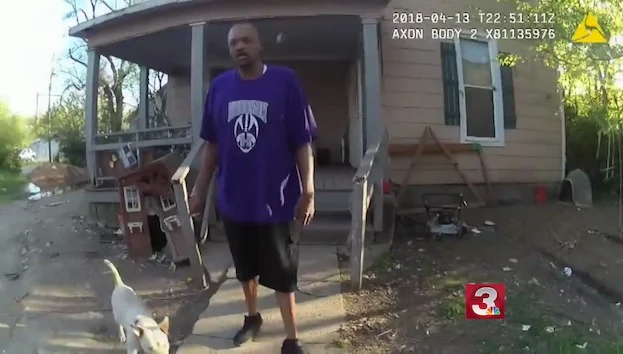
The suspect had fled by the time police arrived. Instead, they saw Carter, who was wearing a purple t-shirt and black shorts. Officer Cody Thomas asked Carter to identify himself. Carter, who said he was checking his mail outside, responded that Thomas was not welcome to come to his house. The situation escalated with Thomas telling Carter, “How about you watch your mouth before your ass gets thrown in the back of my car.”

Thomas pulled out a Taser and threatened to shoot Carter’s “fucking dog,” which was barking in the front yard. Carter attempted to go into his house, at which point Thomas shot Carter in the back with his taser, causing him to fall on his front porch. Carter managed to make his way inside, and Thomas called for backup. Carter then re-emerged from his home with his family while several officers, including Thomas, pointed guns and tasers toward Carter, his family, and his dog. After the family was out of the way, the officers moved to arrest Carter.

Body camera footage shows Carter’s arrest

Thomas later claimed that Carter was standing in the street and “bolted” prior to the incident. He charged Carter with disorderly conduct and resisting arrest. Those charges were thrown out by a judge in November and Carter is now suing.

This is not the first incident involving Officer Thomas. In February 2018, Thomas and other officers entered the home of Dale Edmonds after a neighbor told emergency services that someone was sitting in a black vehicle in Edmonds’ driveway. The person in the vehicle was a Department of Child Services agent who was waiting while a second agent was meeting with Edmonds inside of the house. Though the agent explained to officers the purpose of their trip, Thomas and others entered the house through the backdoor without a warrant. The officers led Edmonds, his housemate, and the agent outside of the house at gunpoint, but not before Thomas “manhandled” Edmonds, who was recovering from a gunshot wound.

Robin Flores, an attorney and former police officer who works on police brutality cases, is representing Carter. Their suit argues that the city “has long-established patterns of overlooking or providing excuses and reasons to justify the misconduct of its officers.” Flores told Reason that the complaint highlights how the city fails to “discipline and supervise” officers. The complaint lists other reports of bad policing by Chattanooga police dating back to 2003, including excessive force, lingering investigations, domestic abuse, and sexual harassment.

Flores told Reason that the Supreme Court has ruled that the language Carter used during his arrest is a form of protected speech. In 1974, the court ruled against a Louisiana statute that criminalized the use of obscene language while an officer is performing their duties. Justices argued that the law was too broad to fit within the legal definition of “fighting words” and had the potential to be abused in instances lacking a valid reason for an arrest.

Though Thomas’ body camera was rolling during the incident, he turned his cruiser’s dash camera off in violation of the department’s policy. At one point, Thomas’ hand covers his body camera. The complaint argues that this was done either in an attempt to turn it off or conceal his interaction with Carter.

Flores says that the footage available in both Carter’s case and in the Edmonds case is “critical enough to bring a claim” against Thomas, the department, and the city. In other instances, footage has been enough to drop charges and reopen the cases of offending officers. He also mentions another case where he dismissed a suit after his client’s version of events did not match the camera footage. This, he says, also protects police officers.

In the Presence of Color White Chico Cops Panicked & Fired their Guns “Excessively” at Close Range, Executing Black Man after Father’s 911 Call - Suit Filed for Desmond Phillips

From [HERE] The Chico police officers who fatally shot Desmond Phillips in 2017 “squandered” their opportunity to safely take him into custody before opening fire, according to a police procedures consultant hired by lawyers representing the Phillips family in a wrongful death suit against the city.

The consultant, Roger Clark, who worked as a law enforcement officer for 27 years, found that police appropriately stunned the 25-year-old Phillips with a Taser as they stormed his family’s apartment March 17, 2017, in the 700 block of West Fourth Avenue, according to recently filed court documents. But instead of going “hands on” and detaining Phillips after he fell to the floor, the officers froze and “utterly squandered their opportunity for Desmond’s safe apprehension.”

desmond phillips.jpg

What followed, according to Clark, was a “panic shooting,” with officers Alex Fliehr and Jeremy Gagnebin firing their guns “excessively” after Phillips rose to his feet. Phillips, a black man who was suffering from a mental health crisis at the time, was shot at least 10 times at close range. Fliehr has claimed he saw knives in both of Phillips’ hands. Gagnebin has claimed he saw Phillips pick something up off the floor before making slashing motions.

“It is my opinion that the gunfire prevented the appropriate redeployment of the Taser, that the gunfire was unreasonable because the officers were never in danger from Desmond to the point they could not have reasonably removed themselves from that danger, and that the excessive shooting demonstrates that the shooting officers did not re-assess after their initial shots (which were themselves unreasonable),” Clark wrote in an analysis of the incident. “In my experience, this level of excessive shooting is indicative of a panic shooting, and consistent with sympathetic and contagious gunfire.”

Clark’s findings, as well as autopsy and toxicology reports, were filed Friday in U.S. District Court for the Eastern District of California. The documents were filed by the firm representing the Phillips family in a lawsuit against the city. The firm, led by prominent civil rights attorney John Burris, indicated in court documents that it intends to call Clark as a witness at trial later this year.

Clark retired from the Los Angeles County Sheriff’s Department in 1993 following stints as a deputy sheriff, sergeant and lieutenant, according to the documents. He has since testified as a use of force and police procedures expert across the country. Lawyers for the Phillips family said in the documents that Clark at trial would provide testimony on a variety of topics, including use of force, police response to mentally ill people and Chico Police Department policies.

Chico City Attorney Vince Ewing did not return a message sent Friday seeking comment about Clark’s analysis. An investigation report released by Butte County District Attorney Mike Ramsey in 2017 said the involved officers had intended to go “hands on” and handcuff Phillips after he was stunned and fell to the floor, but they were surprised when Phillips “unlocked” and quickly rose to his feet. The officers, according to the report, were still assessing whether Phillips had anything in his hands.

The civil trial is scheduled to begin in November.

Judge Denies Pittsburgh Authorities’ Request to Dismiss Case: 'a non-racist juror could find Excessive Force where Cops Used Chokehold, Broke 16 Ribs & Sat on Top of Latino Man Causing Death'

From [HERE] In a striking decision, a federal judge ruled that Pittsburg officers may have violated the Fourth Amendment rights of a man who was killed when police cut off the blood flow to his brain during a struggle.

Humberto Martinez, 32, had been stopped for a traffic violation moments earlier, led police on a brief car chase around the block, then dashed into a Pittsburg home where several officers tried to arrest him in the kitchen. He suffered 16 broken ribs during the struggle, and died from having the bloodstream to his brain cut off by a police neck hold.

In his March 8 decision, U.S. District Judge Richard Seeborg did not take sides in the factual dispute between the city and Martinez’s family. But he did say a jury could reasonably find that Martinez’s rights had been violated, and he refused the city’s request to throw out excessive force claims against the police.

“A reasonable jury could conclude that, although he resisted arrest, Martinez did not deliberately strike the arresting officers, yet the officers delivered strikes that broke 16 ribs and deployed a prohibited choke hold that crushed the cartilage in his neck resulting in his death,” Seeborg wrote. “Accepting these facts as true, and taking into account the relatively minor underlying offense, no reasonable officer would believe this use of force complied with the Fourth Amendment.”

Seeborg, though, threw out claims by Martinez’s family that the officers violated Martinez’s First and 14th Amendment rights, saying there was no evidence two of the officers were “motivated by a nefarious purpose rather than a desire to subdue Martinez and end the struggle.”

In determining whether to let the legal claims proceed at this stage in a lawsuit, a federal judge is supposed to interpret the facts in a way that’s most favorable to the plaintiff, or the person suing.

pittsburgh cops .jpg

Seeborg also noted a key disagreement between plaintiffs and defendants: Martinez’s family contends Pittsburg Officer Ernesto Mejia used an illegal chokehold during the struggle with Martinez, which the city denies. What is not disputed is that an officer continued to sit on Martinez after he had been handcuffed, before police realized he was dying.

Attorneys for Pittsburg police had asked Seeborg not to let the Fourth Amendment claims proceed, saying Mejia’s use of force “was justified and in response to (Martinez’s) escalating violence.” They wrote Martinez was “clearly an immediate threat to officers due to the fact that he was a very large and strong man, continued to struggle and assault officers, had not been searched for weapons, defied commands and violently resisted for over two and a half minutes.”

Police Chief Brian Addington declined to comment on the ruling. The city has appealed Seeborg’s ruling.

Martinez died July 26, 2016. In 2017, his family filed a federal lawsuit, naming officers Ernesto Mejia, Jason Waite, Willie Glasper, Gabriel Palma, Jonathan Elmore and Patrick Berhan as defendants. The suit alleges officers beat and choked Martinez, causing his airways to constrict.

Seeborg’s order also raises questions about Pittsburg police’s training as it relates to the carotid hold, which is designed to squeeze certain arteries in a person’s neck. It is employed by many U.S. police departments but has drawn criticism because it can sometimes cause arteries to close and not reopen.

Seeborg wrote that, “none of the defendant officers were familiar with the terms restraint, positional or compression asphyxia,” and that police Chief Brian Addington was “unable to point to any specific policy addressing these types of asphyxiation.”

An expert called by the plaintiffs testified Pittsburg police training on carotid holds was “out of step” with norms in law enforcement, adding that police are supposed to be trained that “placing pressure on a person’s back while they are prone and handcuffed, particularly if the suspect is overweight,” can be dangerous, according to court records.

The entire confrontation was captured on officers’ body cameras, which were released to this newspaper in late 2017, after a public records request. One video shows multiple officers rushing into the front door to assist two others attempting to arrest Martinez. When they arrive, an officer has Martinez in a neck hold as he lies on the floor and another is sitting on his back. The officer releases his neck about 50 seconds later, after Martinez is handcuffed and another officer says, “Get off.”

The other officer continues to sit on Martinez’s back for another minute.

During the struggle, police are heard yelling “Stop resisting” and “Give me your arm.” Another asks him, “What is your problem, dude?” After Martinez is cuffed, the officer who put him in a neck hold is told to go outside and relax.

As Martinez remains on the floor, an officer pats him on the face and says, “Wake up.” One asks whether Martinez is breathing and another replies, “Yeah, he’s breathing.” About a minute later, they realize he is “going purple” and call for medical help, while removing his handcuffs.

The footage shows several minutes of officers conducting CPR on Martinez, yelling, “Come on, bud,” and telling him to “Breathe” and “Wake up.” Another can be heard saying, “Please, don’t croak.” One says he thinks they’re bringing him back, but Martinez is led out on a stretcher minutes later and a family member can be heard asking if he’s not breathing.

A trial date for the lawsuit has not been set. On Thursday, the judge denied a request by Martinez’s family and ruled that the city could appeal his decision.

Unarmed Latino Man Walking Away from White South Gate Cops Posed No Threat When They Shot Him More than 12 Times, Shattering His Knee - Suit Filed

south gate cops .jpg

LIKE THE CONSTITUTION SAYS, IF YOU FLEE FROM COPS THEN THEY CAN TRY TO MURDER YOU. From [HERE] A man who was shot by South Gate police in January is suing the department for excessive force after his attorney says he was shot at 16 times and struck at least 13 times.

Daniel Canizales was shot multiple times off of Paramount Boulevard on January 29, 2019, while South Gate police were responding to reports of a disturbance at a business.

South Gate police say Canizales repeatedly ignored their orders to comply, and witnesses saw him reaching into his pockets. Video shows officers opening fire on him, and he slumps to the ground. 

“It’s just real sad and depressing, you know, I just thank God that I’m here,” Canizales said at a press conference with his attorney, Luis Carrillo, on Wednesday.

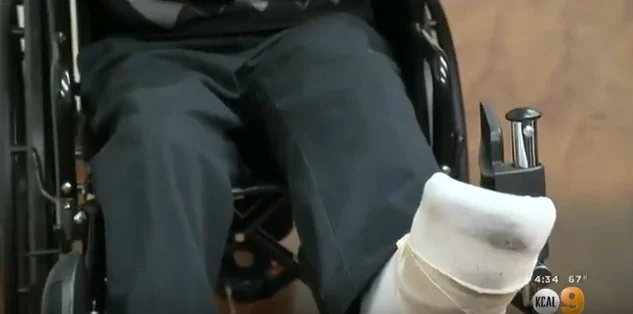
He was in a wheelchair, and his family says he may remain that way for the rest of his life.

“We want justice, we want justice because the man was unarmed when he was shot,” Carrillo said. “He was not being pursued from an armed robbery or attempted murder or anything like that. What those officers did was totally against the law, and worse, they didn’t follow or were not trained properly as to police procedure and proper police tactics, you don’t just shoot an unarmed man in broad daylight!”

No gun was recovered at the scene.

Canizales’ brother fears his sibling may never walk again after the bullet shattered his left kneecap.

“The nerves are damaged permanently,” Alejandro Somoza said. “That hurts to know my brother might not be able to walk anymore, or is not gonna be able to walk anymore.”

“This was so unjust, and the police officers committed so many tactical mistakes, that I do believe a jury will do justice in this case,” Carrillo said.

South Gate Police Department told FOX 11 they would not be responding or giving a statement in response to the lawsuit.

According to Suit, Austin “Cop-Artists" Falsely Claimed Black Man Pointed a Gun at Them to Justify Shooting Him & then Lied to Maliciously Prosecute & Incarcerate Him for a Year

From [HERE] and [HERE] In 2017, police responded to a man's East Austin home due to reports that he had a gun.

Lawrence Parrish was in his home on April 7, 2017 when, according to the lawsuit, more than 10 police cars were congregated near his home in East Austin around 10 p.m.

When Parrish opened the door of his home at around 10:11 p.m., Austin police officers shot him several times and critically wounded him. Now, Parrish is filing a lawsuit.

On the night of the shooting, Parrish was taken to University Medical Center Brackenridge. According to the lawsuit, the officers falsely claimed that Parrish fired at them, but it was later determined he never raised a weapon toward the officers. 

The officers in question have been identified as Dane O'Neill, Paul Bianchi, Jordan Wagstaff and Marcos Johnson. The lawsuit was filed April 4 in the United States District Court.

KVUE reported in 2017 that the officers were placed on administrative leave, which is protocol after an officer-involved shooting.

The four officers who fired their weapons claimed Parrish was holding a rifle when he opened the door, however, this was determined not to be true, according to the lawsuit. 

Court documents suggest that the lack of video evidence of the shooting "was not an accident. It was a coordinated, intentional plan to diminish the potential review and oversight of the officers’ actions with objective evidence."

The lawsuit said Parrish was charged with aggravated assault against a public servant and held on $500,000 bail from April 2017 until July 2018. 

austin cops and interim chief.jpg

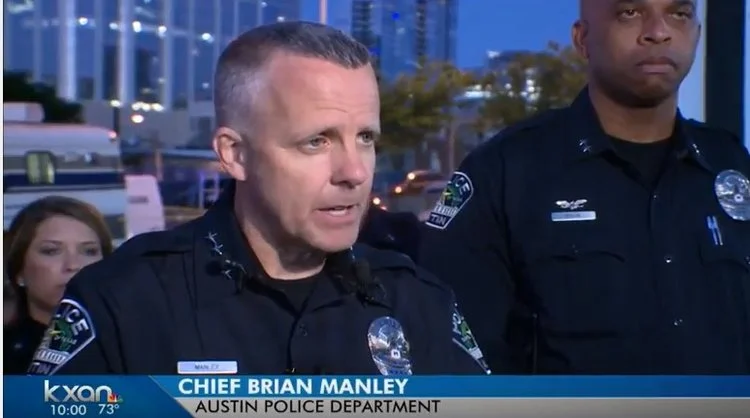
Four officers allegedly tried to get Parrish out of his home to talk, but he wouldn't comply – stepping in and out of the house sporadically, at one point with a rifle, later identified as a .40 caliber Hi-Point. Eventually, cops issued a SWAT callout, but Parrish stepped outside before the SWAT team showed up, again brandishing his rifle. Interim Police Chief Brian Manley said during an on-scene presser that Parrish then fired his rifle toward the officers, who immediately returned fire for a duration between one and two seconds, hitting Parrish.

A few days later, however, Manley took to a lectern at APD Headquarters to say that initial investigations revealed Parrish never fired at the four officers. "Perception in those seconds when everything's unfolding and you're in a critical incident, sometimes perceptions are not always 100% accurate," said Manley. He reiterated that aggravated assault charges remain for Parrish, because his rifle was used in a threatening manner against the officers. [MORE]

The arrest affidavit, filed the day after the shooting, states the officer closest to Parrish claimed he saw Parrish “raise his rifle towards his direction.” The officer states he fired two rounds at Parrish then heard more gunshots when he ducked down to take cover, but wasn’t sure where the shots came from. [MORE]
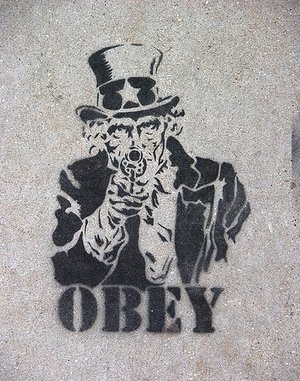
Parrish was struck by several more bullets.

In July of 2018, those charges were dropped, according to the lawsuit.

Black Man Didn’t Display a Gun & Austin Cops Shot Him in the Back as He Fled According to Witnesses Cited in Suit for Wrongful Death of Landon Nobles

apd+manley+and+probot.jpg

From [HERE] A lawsuit has been filed against the City of Austin and the Austin police officers who were involved in a shooting that killed a man on May 7, 2017.

Landon Nobles, 24, died in a shooting after police said he ran away from officers with a handgun. Officers said at the time of the shooting that they perceived him as a threat.

The family of Nobles claims in the lawsuit that officers used excessive force against Nobles.

According to the lawsuit, Nobles was out celebrating a birthday with his cousins on Sixth Street when they gathered with a crowd that was watching two people "fixing to fight."

A large popping sound allegedly went off in the crowd, causing the crowd to disperse. Nobles walked away from the scene, his family said.

His family said Nobles was walking down Trinity Street when an unidentified Austin police officer allegedly threw a bike in front of him, causing him to fall. When Nobles regained his balance he was shot in the back by police, according to the lawsuit.

In the lawsuit, Sergeant Richard Egal is identified as the officer who threw his bicycle at Nobles and allegedly drew his weapon, shooting the man in the back. The lawsuit claims Corporal Maxwell Johnson ran up to Nobles after Sergeant Egal shot him in the back and also shot Nobles in the back several times more.

Witnesses in the crowd claim Nobles was not displaying a gun and posed no danger when he was shot in the back, according to the lawsuit.

In a cell phone video, witnesses can be heard saying that police shot him and that he didn't have a gun that they could see.

"I didn't see no exchange of gunfire at all," said Elvis Ingram, an eyewitness. "As he was running on Trinity [Street], an officer picked up a bicycle and threw it at his face and he fell, he tripped and fell over the bike, and when he fell right by my golf cart a pop went off, and he jumped up immediately, and he ran past me."

After the shooting occurred, both officers were placed on administrative leave as the case was investigated.

In Nov. 2018, the Travis County District Attorney determined the Austin officers' use of deadly force in the death of Nobles was justified.