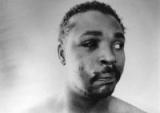
Mistaken, White Cops Had No Idea if Black Man was an Armed Suspect when They Shot Mark Henderson Moments after He Exited Motel Door, City of Woodbury Reaches Settlement

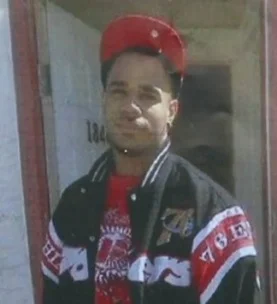
mark+henderson.jpg

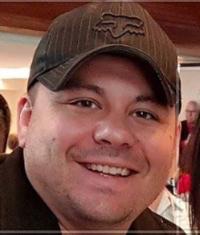
From [HERE] The city of Woodbury has agreed to settlement terms in a civil lawsuit brought by Tawana Henderson, the mother of a Black man shot and killed by three Woodbury police officers in 2012. Although the city has agreed to the terms of settlement, it has yet to be finalized.

At an April 10 Woodbury City Council meeting, city attorney Mary Tietjen reported on a March 27 closed session during which the city accepted the terms of the settlement.

"At that closed session, the City Council received information regarding the proposed settlement terms relating to the case and agreed that moving forward with the final settlement of the case would be in the best interest of the parties and the public," Tietjen said.

The terms of the settlement included the dismissal of charges against officers Natalie Bauer, Stacey Krech and Anthony Ofstead with prejudice without cost to any party, according to documents filed April 10. "Dismissed with prejudice" means the charges are dismissed permanently.

Bauer, Krech and Ofstead are all currently employed with Woodbury Public Safety, Police Commander John Altman said.

The settlement follows a November 2018 decision by the Eighth U.S. Circuit Court of Appeals stating a jury trial should determine the outcome of the lawsuit filed by Henderson. That decision reversed a previous ruling by a U.S. District Court judge following a February 2017 appeal in the case.

The lawsuit alleged wrongful death, excessive force and indifference of the civil rights of Mark Henderson.

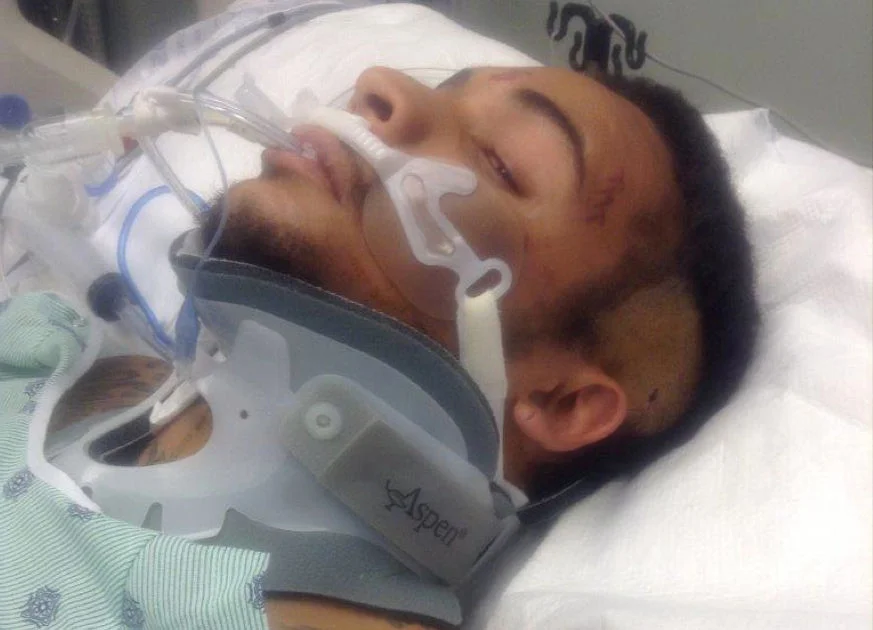
Henderson, 19, was one of several people attending a party at the Red Roof Inn in Woodbury in 2012 when another man, Demetrius Ballinger, pulled out a gun, robbed the guests and held them hostage.

According to police, a suspect was holding several people hostage and assaulting some of them. When Woodbury Police and the Washington County SWAT team converged on the room.

Henderson ran from the motel room and was initially fired at by officers, after which they said he dropped to the ground. But after seeing movement from his right arm and torso, they said, the officers fired at him 17 more times. Henderson was struck by 12 bullets and died shortly after. Officers fired at Henderson believing he had a weapon, but no weapon was found on him. No information was provided regarding why the police thought the black man was armed. Police saw someone come out the door and fired.  

Judge Dismisses Wrongful Death Suit Against Chatham County Sheriff b/c Cops had No Choice but to Hogtie, Tase & Beat Mathew Ajibade to Death

Mathew Ajibade.jpg

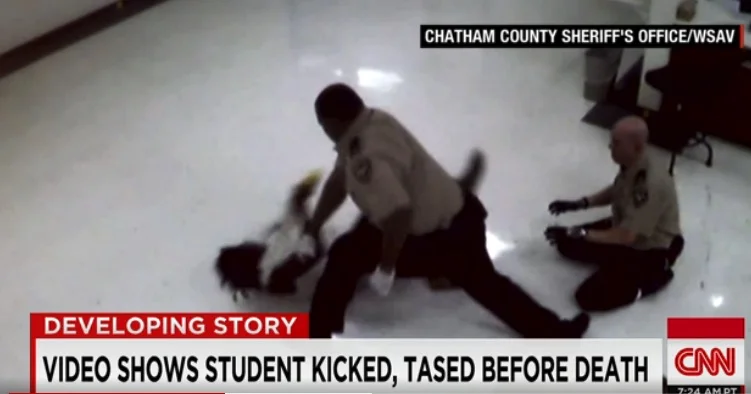
From [HERE] A federal judge has dismissed wrongful death claims against a Georgia sheriff sued by the family of a man who died in jail after deputies strapped him into a chair and shocked him four times with a stun gun.

Mathew Ajibade (ah-ji-BAH-dee) died at the Chatham County jail in Savannah following a bloody brawl with deputies who were trying to book him on a domestic violence charge in January 2015. Ajibade's family filed a civil suit in U.S. District Court against the sheriff, several deputies and the jail's medical contractor.

U.S. District Court Judge R. Stan Baker ruled March 28 there was no evidence to fault Sheriff John Wilcher with rights violations in Ajibade's death. He also dismissed civil claims against two jailers.

The lawsuit was filed by Ajibade's family against Sheriff Wilcher, several deputies and a nurse contractor.

An autopsy found no single cause for why he died, but a Georgia Bureau of Investigation medical examiner told jurors during the criminal trial that Ajibade was "stressed to death."

WJCL reached out to attorneys on both sides and the Ajibade family. We have not yet heard back.

We also reached out to the sheriff, who said he has no comment.

The court says all parties have until April 26 to provide a status report of the case or drop it. Civil claims against others are still pending.

Since 2015, the Chatham County jail has made improvements by adding new buildings and staff members. This year, the jail was the first in the country to be accredited for mental health services.

While the judge wrote that Ajibade's death was a tragedy for the young man's family, he also said that Wilcher should not face liability. He sais Wilcher would have had to "personally deprive Ajibade of his constitutional rights or to have established a policy that allowed other officers to do so.  The judge also said that Wilcher had not had direct contact with Ajibade and as a result, granted a summary judgment which removes Wilcher from being named as a defendant in the lawsuit.  

Suit says after Racist Suspect Neighbor Called 911 for a Noise Complaint, Wash Cops Handcuffed a 66 yr-old Man, who only spoke Chinese, Forced him Down Onto a Couch Breaking His neck, Causing Death

Issaquah police 1.jpg

From [HERE] An Issaquah family is suing the Issaquah Police Department for using excessive force.

Lawyers say a 66-year-old man, who only spoke Chinese, died after Issaquah police handcuffed him and broke his neck. 

Police went to Wang Shen Leng’s home in August after a neighbor called in a noise complaint. Police reports indicate they thought it was a possible domestic violence call.

Leng was living with his wife, who also does not speak English. He was diagnosed with a Alzheimer’s a few of years ago – something officers didn’t know when they responded. The report says Leng was “waving his arms and yelling” in the home, and officers moved to cuff him. 

“The police proceeded to come in, to separate the two, and to force Mr. Leng down onto the couch--pushing on his neck in such a way that it ended up breaking his neck,” said Harry Williams, an attorney for Leng’s family. 

Leng died about a month later.

The police report said Leng "went limp" and officers called for medical aid. 

“A healthy person, who that morning had walked to the Issaquah Community Center,” Williams said. “And after an interaction with police, someone who was never conscious again and died a month later,” he said.

Now the Issaquah Police Department and the city of Issaquah are getting sued for excessive force. 

His wife of 30 years didn't want to be on camera, but told KIRO7 that they took walks every day, she would cook for him, and they were happy together.

A neighbor of Leng, Jim Lemming, said he called 911.

He said they've had trouble with people hanging around the dumpsters at the apartment complex before.

“When I heard real heavy banging is when I called 911 without knowing what was going on, I figured better safe than sorry,” he said.

He didn't know that Leng had died until KIRO7 told him.

“Sad the way ended, everyone has 20/20 hindsight,” Lemming said.

The lawsuit says the King County Medical Examiner’s Office ruled Leng's death, a homicide. 

Attorneys say the actions of the responding officers, were "unconstitutional and unlawful." 

“They didn't exercise any patience and call a translation line or try to figure out what was happening. Instead they went into the apartment, physically moved people, and unfortunately Mr. Leng ended up dying,” Williams said.

Both the city of Issaquah and the Police Department declined an interview.

Police called in the King County Sheriff’s Office to investigate after Leng died and that investigation is ongoing.

A press release from the city does not acknowledge officers broke Leng's neck, and says "our sympathies are with Mr. Leng's family."

The East Baton Rouge Parish Council Forces Black Taxpayers to Fund the Legal Defense of the White Cop who Shot Alton Sterling to Death During Arrest for No [lawful] Reason

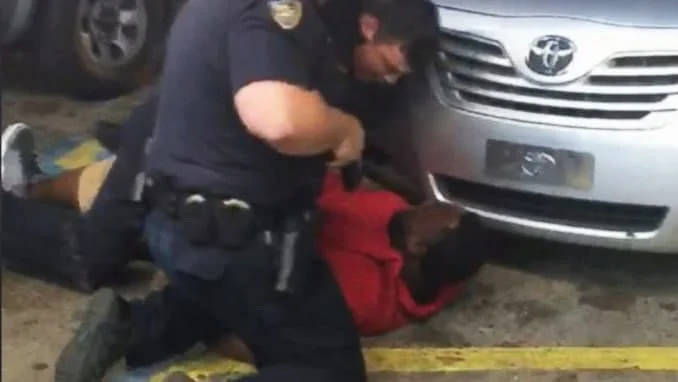
UNDER ARREST FOR WHAT? According to cops an anonymous [white] man called 911 to report that a black man selling music CD’s outside the Triple S Food Mart on North Foster Drive, who was wearing a red shirt and had threatened him with a gun. Apparently when the man called he was no longer in any danger. Evidently, the caller gave no other information. So, the white cops were looking for a Black man with a red shirt hanging around the store. The black man had allegedly committed a felony threat and may have been armed (gun possession is legal in Louisiana). [MORE]  

When the two officers arrived about 12:35 a.m. at the store the 911 caller was not present. There was no ongoing confrontation or emergency. The cops did not witness the black man (Sterling) committing any crimes and no gun was visible. Prior to approaching him the cops did not bother to interview any witnesses in the store, such as the manager, (the owner of the store had no knowledge of an argument outside his store that led to the initial 911 call.). The cops had no idea of whether anyone else had heard the alleged threats or had seen a gun. They also had no information about the gun to know whether the caller saw an actual gun or just heard a threat about a gun.  On seeing a Black man with a red shirt the cops immediately confronted Mr. Sterling and ordered him to stop and answer questions. Sterling stopped. At that time he was not free to go which means he was legally detained or seized [within the meaning of the 4th Amendment]. Seized for what crime and upon what basis? None. There was no reasonable articulable suspicion to detain and no probable cause to arrest, if you believe in such illusions.

alton sterling.jpg

Demockery. From [HERE] The East Baton Rouge Parish Metro Council agreed Wednesday to increase public funds available to cover the legal costs for former Baton Rouge police officer Blane Salamoni in a suit filed against him on behalf of Alton Sterling's children.

The lawsuit, filed in June 2017 in state district court, claims that when Salamoni fired the shots that killed Sterling, the officer's decision exemplifies longstanding problems within the Baton Rouge Police Department, including a culture of entrenched racist attitudes and excessive force among some officers. The lawsuit also alleges the officers violated Sterling's constitutional rights and requests damages. 

Council members approved spending up to $37,500 for Salamoni's defense costs. Council approval is necessary for any contract over $17,500, so the resolution passed Wednesday was a request to increase the maximum compensation by $20,000.

It's standard procedure for public funds to be used to cover legal costs and settlements involving public officials, including police officers. Typically the Parish Attorney's Office would serve as counsel, but the office is representing the Baton Rouge Police Department — another defendant in the case — and declined to represent the two officers involved in the incident to avoid a conflict of interest. That's why the city contracted with an outside attorney to represent Salamoni.

Another request to increase the contract amount could come later because the case is ongoing. But interim Parish Attorney Andy Dotson told the council that the $37,500 "is our best estimate based on where we are right now and where the case appears to be going."

Mike Adams, an attorney representing Sterling's youngest children, said although the case continues to move toward a 2020 trial date, he is hoping the parties will reach a settlement agreement before then. He said such a resolution would be in the city's best interest because continuing litigation means mounting expenses for Baton Rouge taxpayers.

Blane Salamoni .jpg

"It really becomes a question for the Metro Council of how they're using their resources — to continue having the lawyers fight, or come together at the negotiating table," he said. "I would hope that the council members, in their wisdom, would get serious about resolving this case and letting this city move forward."

The contract for Salamoni's defense is with Baton Rouge attorney Stephen Carleton. Attempts to reach him for comment were unsuccessful.

Howie Lake II, the other officer who responded to the call that resulted in Sterling's death, is also named as a defendant. The Parish Attorney's Office said Lake's legal costs are being handled the same way but haven't exceeded the allotted $17,500, and therefore haven't come before the Metro Council. Lake used a stun gun on Sterling during the struggle but didn't discharge his firearm.

Baton Rouge Police Chief Murphy Paul fired Salamoni last spring following months of criminal and internal affairs investigations. Lake received an unpaid suspension but has returned to the force. Both officers have appealed to Baton Rouge's civil service board, which oversees the discipline process for city police and firefighters.

The board received their appeals last spring and scheduled appeal hearings, which have since been pushed back multiple times at the request of attorneys involved. The latest schedule had Salamoni's slated for next week, but the board announced Wednesday it would hold a special meeting Thursday to consider a request for further postponement. The board has also agreed that Salamoni's hearing should come before Lake's because of overlapping information. 

Adams said he hopes attorneys on both sides can take advantage of that extra time before the civil service hearing and "all work together to fashion a global resolution to this problem and a settlement that's in the best interest of Baton Rouge."

Metro Councilman Matt Watson emphasized the significance of the case and the importance of dedicating enough time and resources to achieve an outcome that's fair to both sides.

"This is the single most important wrongful death suit this city has ever seen, and it's going to set a precedent," he said. "Every step of this process informs what we should do if anything like this ever happens again."

Councilwoman Tara Wicker said she also recognizes the litigation process takes time and resources, but she's hoping for a resolution in the near future.

"I know this is a difficult situation, and there are going to be people who aren't happy regardless of the outcome," she said. "But I'm hopeful there will be opportunity for some compromise where both parties can agree to bring closure to this issue so that the community can move forward, and these families can move forward."

Lawsuit says White Greensboro Cops Restrained Black Man 'Prone on the Ground & Hogtied him like an Animal until he Stopped Breathing' as Paramedics Watched, Failed to Intervene

hog+tying+in+NC.jpg

From [HERE] The surviving family members of a 38-year-old Black man who died while being hogtied by white Greensboro police officers are suing the city for wrongful death under federal civil rights law.

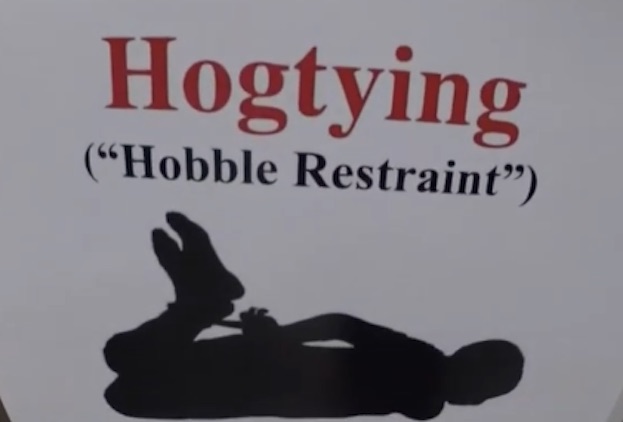
Marcus Smith, a 38-year-old man who suffered from bipolar disorder and schizophrenia, died during an encounter with police officers in downtown Greensboro late at night after the North Carolina Folk Festival in September 2018. Officers bound his legs and arms behind his back with a Ripp Hobble device after he attempted to kick out a police car window. The NC Office of the Chief Medical Examiner eventually ruled Smith’s death a homicide as a result of “sudden cardiopulmonary arrest due to prone restraint” as well as the presence of MDMA, cocaine and alcohol, and hypertensive and atherosclerotic cardiovascular disease.”

The lawsuit filed today in US District Court for the Middle District of North Carolina charges that “defendants, acting jointly and in conspiracy and under the color of state law, deprived decedent of rights, privileges, and immunities secured by the Constitution and laws of the United States, including those secured by the Fourth and Fourteenth Amendments to the Constitution, by among other things, subjecting decedent to unreasonable and excessive force and/or directing, encouraging and implementing the use of unreasonable and excessive force, and/or failing to intervene on his behalf to stop the unreasonable and excessive force having the duty and opportunity to do so; and/or unreasonably failing to promptly attend to his severe medical needs.”

In addition to the city of Greensboro and Guilford County, the suit names police officers Justin Payne, Robert Duncan, Michael Montalvo, Alfred Lewis, Christopher Bradshaw, Lee Andrews, Douglas Strader and Jordan Bailey as defendants, along with Guilford County paramedic Ashley Abbott and EMT Dylan Alling.

The suit also alleges that the city violated Smith’s rights under the Americans with Disabilities Act by “fail[ing] and refus[ing] to reasonably accommodate [his] mental health disabilities and to modify their operations, services, accommodations and programs to reasonably accommodate Marcus’ disabilities.”

Mayor Nancy Vaughan, who is attending a conference in Philadelphia today, said she hadn’t had an opportunity to read the complaint and couldn’t comment specifically on the lawsuit. But she said the filing of the suit means the city will almost certainly shelve plans to hire an outside law firm to conduct an independent review of Smith’s death.

“I think on Tuesday there was a majority of council members that were willing to support a professional, independent review of the Marcus Smith investigation,” Vaughan said. “However, now that there’s been a lawsuit filed, I think we’re going to have to table that vote. Whenever there’s a lawsuit that’s been filed it ties our hands, and I think this is probably a strategic blunder on their part.”

The suit seeks “substantial compensatory damages” from the city and county, along with punitive damages from the individual defendants “because they acted in a malicious and/or willful and wanton manner.”

Smith’s family is represented by Graham Holt, a local lawyer, along with Flint Taylor, Ben Elson and Christian Snow of the People’s Law Office in Chicago. Taylor represented plaintiffs seeking redress in the 1969 murder of Black Panther Party leader Fred Hampton by the Chicago police, and was also part of the legal team that won a wrongful death civil suit against the city of Greensboro and members of the Ku Klux Klan in the aftermath of the 1979 Greensboro Massacre.

The lawsuit alleges that Greensboro police officers “caused Marcus’ death by brutally restraining him prone on the ground and hogtying him like an animal until he stopped breathing, and the Guilford County EMS paramedics, who were called to the scene, failed to intervene to protect Marcus from the use of unreasonable force and failed to promptly attend to his serious medical needs.”

Guilford County EMS could not immediately be reached for comment for this story.

The suit goes on to say that the officers’ use of force through hogtying Smith with the Ripp Hobble device “was unnecessary, unreasonable and excessive because Marcus was not engaged in any criminal conduct, was unarmed, made no threats to the police officer or others, presented no immediate danger to the officers, himself or others, was not actively resisting arrest, and was particularly vulnerable to the excessive force because of his delusional and agitated mental state.”

The suit also alleges that the police department attempted to cover up the cause of Smith’s death by misrepresenting the circumstances surrounding the incident.

“The same day Marcus was killed, the GPD issued a press release that contained misinformation, lies, and omissions, stating that Marcus collapsed while he was in police custody (he did not), that he was combative (he was not), that officers rendered aid (they did not), that he died at the hospital (he died face down in the street), and blatantly omitting that Marcus was taken to the ground by the police and forcibly restrained and hogtied,” the complaint says.

The suit quotes from the police department’s directives manual, which states that “at no time shall the wrists and ankles of an arrestee be linked together using the Ripp Hobble restraining device, unless the arrestee can be seated in an upright position, or on their side,” and also notes that police Chief Wayne Scott stated that the directive did not apply to Smith’s death because the incident occurred before he was transported. The suit also quotes a warning from the manufacturer of the device reading, “Never hog-tie a prisoner.”

Jake Keys, a spokesperson for the city, said that neither Chief Scott nor City Manager David Parrish would comment on the matter because it involves litigation against the city.

“Defendant city of Greensboro and its police department have a long history of racist police violence and misconduct and deliberate indifference,” the lawsuit alleges, “including, most recently, the targeting of African Americans for, among other things, driving while black and being downtown while black, and the accompanying use of force, violence, false charges, perjury, and coverup by superiors using the professional standards division, the chief of police, the city manager, the city attorney, and the city council to condone and ratify police misconduct, which causes Greensboro police officers, such as the officers in this case, to believe that they can abuse African-American citizens with impunity and with no fear of consequences.”

The Names of the Public “Servants" Fired for Chaining Mario Scott’s Feet to His Hands and Beating & Suffocating Him to Death are being Kept Secret by Jackson Authorities

mario+clark.jpg

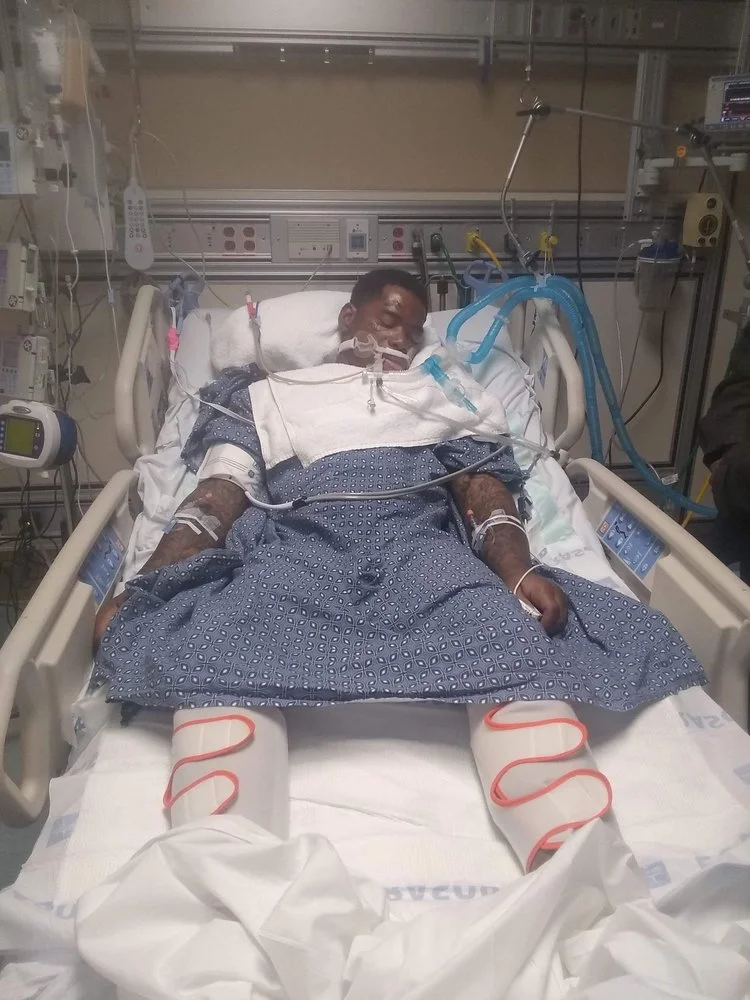
From [HERE] In February, Mario Clark's family went public with allegations that a brutal beating by Jackson police officers left the 31-year-old brain dead for days before he died.

Then the grieving family started receiving threatening messages, they said.

"If you don't shut up, they're going to find you missing," said one message described by Clark's brother.

"Thank y'all for killing this man. He's a nuisance to society .... You better kill the rest of the family and her for running her damn mouth," is another comment his sister said she saw online. 

To the family, the message is clear — stop talking about Clark. That's not going to happen, said Clark's mother, Shelia Ragland, 54.

On Feb. 14, 2019, 911 was call for assistance when Clark, who had been diagnosed with paranoid schizophrenia, was having a psychotic episode. The encounter with Jackson Police Department officers ended in Clark's death, which has been ruled a homicide.

Last month, an internal investigation by the Jackson Police Department into Clark's death led to the firing of four officers. The city has released little information about the firings.

jackson+mayor+2.jpg

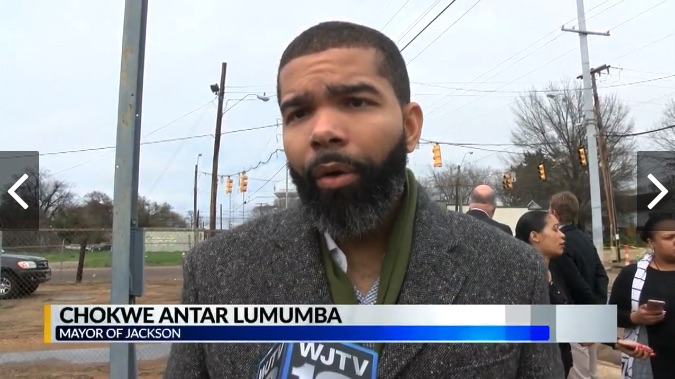
All we know so far was summed up in a three-paragraph news release sent from the mayor's office on March 5. It said that Mayor Chokwe Antar Lumumba and Police Chief James Davis terminated three officers and their supervisor after an internal investigation revealed "multiple violations of the officers' general orders." The officers also failed to file necessary reports about the incident.

When pressed for more details, a JPD spokesman said he doesn't know if or when the officers' identities will be made public.

Clark's family is left with many questions. Who are the terminated officers? Why don't we know their names yet? If they were responsible for Clark's death, why have they not been arrested?

"They committed a crime. Just like everybody else, why aren't they in jail?" Ragland wants to know.

Their frustration mounts with each week that passes. It's been nearly two months.

On Valentine's Day evening, Clark — who was diagnosed with paranoid schizophrenia at a young age — suffered from a "psychotic episode," Ragland said.

She called 911 for help. When officers arrived, they picked Clark up and threw him on the couch, Ragland said in an interview with WLBT. At some point, Clark ended up on the floor, his hands and feet handcuffed, she said. Ragland alleged officers beat Clark on his legs and kicked and hit her son in the head while she pleaded with them to stop.

Kristale Bennett, Clark's girlfriend, told the Clarion Ledger he had asked her to come pick him up on Valentine's day. By the time she arrived at the house, Clark's feet were "chained" to his hands and "four or five" officers were on top of him, beating him, she said.

"He said, 'They're trying to kill me,'" Bennett recalls. She said officers forced her to leave the home.

"They really didn’t have to do him like that," Bennett said. "He was a teddy bear. He didn’t pose no threat at all."

Later, EMTs arrived at the house, the mother told WLBT. Clark was transported to an area hospital and was placed on life support.

Ragland told local media that officers showed up at her door, "hogtied" Clark with handcuffs and started beating and kicking him.

He died shortly after midnight on the morning of Feb. 20 at Merit Health Central.

Clark's cause of death was "blunt force injuries with probable asphyxial component," according to his death certificate. It was ruled a homicide, according to the Hinds County coroner.

Jackson Sgt. Roderick Holmes told the Clarion Ledger that while JPD's internal investigation of the incident has been completed, an ongoing criminal investigation continues. Holmes said it's normal in situations like this for there to be both internal and criminal investigations.

The FBI is also on the case, according to a statement previously released by the mayor's office. The status of that probe is unclear as the FBI's policy does not allow for them to confirm or deny ongoing investigations.

“Check his pulse. Make sure he ain’t faking it." White Riviera Beach Cop Suspended 3 Days for Committing Felony Assault on Surrendering Black Man by Turning his K-9 Loose on Him

White Cop Was Unsure if Black People were Affected the Same Way by Dog Bites. From [HERE] A police officer in Riviera Beach was suspended after an arrest he made with his K-9 was ruled to be excessive force.

Officer John Vanderlaan was suspended for 84 hours after an Internal Affairs investigation ruled he did not follow proper procedures.

Vanderlaan was also required to undergo 40 hours of additional K-9 training before he was allowed to be reinstated.

The Internal Affairs investigation was launched after an October incident where Vanderlaan and his K-9 were chasing a suspect in a hit-and-run.

WPBF 25 News has obtained Officer Vanderlaan’s bodycam video of the incident.

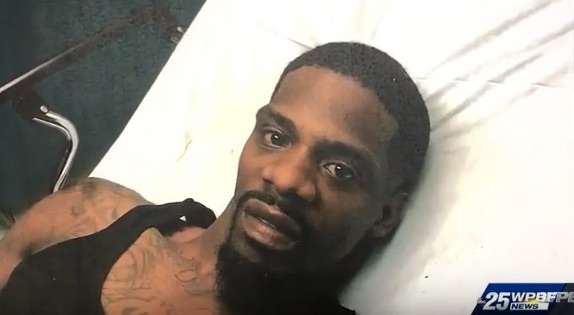
The video shows the officer and K-9 tracking down a young Black man who is sitting on top of an awning attached to a building near the intersection of Blue Heron Boulevard and Avenue O.

“Get on the ground!” Vanderlaan repeatedly yells at the Black man as the K-9 can be heard barking.

k-9 black man unnamed by white media.jpg
Officer John Vanderlaan CRIMINAL.jpg

He tells the officer he wants to surrender but is afraid of the dog. “Just don’t bite me!” the suspect is heard yelling. “Get the dog! Please just get the dog!”

The suspect is not identified in the Internal Affairs report.

After about three minutes of the officer yelling for the suspect to come down and the suspect yelling for the officer to control the dog, Officer Vanderlaan reaches up through the awning and pulls the suspect down by his legs.

As soon as the suspect hits the ground, the K-9 is on him.

The suspect can be heard screaming as the K-9 bites him repeatedly.

The suspect eventually passes out.

“Check his pulse. Make sure he ain’t faking it,” Vanderlaan can be heard saying.

The Internal Affairs report contains photographs of multiple wounds on the suspect’s arm and back.

Vanderlaan told the Internal Affairs investigator that he heard the suspect saying he wanted to surrender but he wasn’t sure if the suspect was bluffing.

He said he also wasn’t sure if the suspect had a weapon.

Officer Vanderlaan, however, also admitted he made a mistake by allowing his K-9 to bite the suspect.

He said the suspect was clearly not resisting and therefore the K-9 should have been kept at a distance.

White Nashville Cops Sicced a Dog on a Black Man who had His Hands in the Air. Will the Supreme Ct Reconsider its Doctrine that Gave Cops Superhuman Powers of Immunity [Unaccountability]?

Hungry Cop Watching You.jpg

FUNKTIONARY makes it plain: Sovereign immunity  - ''government" so-called, applying the law of the jungle to its relationship to the people. We are bound by the written law but those who wrote the law are bound by the law of the jungle. Makes you feel like a fool, doesn't it? Minority rule majority fooled? Surely, on earth as it is in heaven. Why would we ever allow "government" to assert the position that it is not bound by the same law that binds us? The answer is that we are fools sweet-talked by judges into believing that the "natural state of affairs" is to bind the people by law, and the "'government" by fiat. "Government" has replaced religion as the opiate of the masses using the Media as its subduing gasses (fumes of subterfuge). (See: CHAOS, Overrulers, Judicial System, Constitution, Law, Domestication, Justice, Economics, Civilization, Weitiko Disease & "Government") 
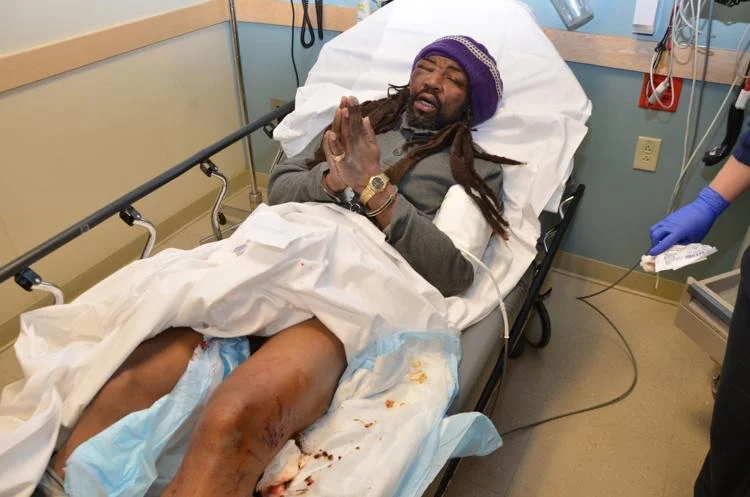
From [HERE] When two Nashville police officers responded to a home burglary report in 2014, they found Alexander Baxter hiding in a basement. Baxter put his hands in the air. Nevertheless, the police unleashed a K-9 unit, which bit Baxter under his armpit.

Baxter sued the officers for excessive force, but in 2018 the Sixth Circuit Court of Appeals ruled that, whether or not Baxter’s rights were violated, the officers were immune from his lawsuit. It wasn’t clearly established, the court said, that using a police dog to apprehend him while his hands were raised was unconstitutional.

The decision hinged on a notorious doctrine, known as “qualified immunity,” that protects police from lawsuits when reasonable officers wouldn’t know they were committing a constitutional violation. Now the American Civil Liberties Union (ACLU) is asking the Supreme Court to reconsider not just Baxter’s case but the entire doctrine of qualified immunity, which has faced a growing bipartisan chorus of criticism.
The ACLU today filed a petition for a writ of certiorari asking the Supreme Court to not only review Baxter’s case but revisit the current standard for qualified immunity. “The costs of qualified immunity to the rule of law are real and significant,” the ACLU writes. “Because qualified immunity relies centrally on the question of when the unlawfulness of particular conduct has been ‘clearly established’—an inquiry for which a consistent standard has eluded federal courts for a generation—the jurisprudence of qualified immunity is beset with inconsistency.”

As The New Republic recently noted, qualified immunity has recently come under criticism from both originalist and liberal judges. On the Supreme Court itself, arch-conservative Justice Clarence Thomas wrote in 2017 that qualified immunity should be revisited in an appropriate case, and while liberal Justice Sonia Sotomayor has bemoaned its effects on lawsuits over police shootings.

“As I have previously noted, this Court routinely displays an unflinching willingness to summarily reverse courts for wrongly denying officers the protection of qualified immunity but rarely intervenes where courts wrongly afford officers the benefit of qualified immunity in these same cases,” Sotomayor wrote in a 2018 dissent.

U.S. Circuit Judge Don Willett wrote in a 2018 decision that, “To some observers, qualified immunity smacks of unqualified impunity, letting public officials duck consequences for bad behavior—no matter how palpably unreasonable—as long as they were the first to behave badly.”

Reason‘s Damon Root described the Court’s 1982 decision in Harlow v. Fitzgerald, which established the current test for qualified immunity, as one of the five worst Supreme Court decisions of the past 50 years. It has caused an enormous number of civil rights lawsuits to be tossed. This January, for example, the 11th Circuit Court of Appeals granted qualified immunity to a Georgia district attorney who allegedly defamed a wrongly convicted man in order to scuttle a bill in the state legislature that would have compensated him for his seven years behind bars.

“Although we conclude that Echols’s complaint states a valid claim of retaliation under the First Amendment, we agree with the district court that Lawton enjoys qualified immunity because Echols’s right was not clearly established when Lawton violated it,” the court wrote.

The Second Circuit Court of Appeals ruled last year that two New York prison guards violated an inmate’s First Amendment rights when they put him in solitary confinement for nine months for refusing to become a snitch, but added that this right wasn’t clearly established at the time and therefore the guards were covered by qualified immunity.

The fuzzy definition of “clearly established” has led to confusion between courts. The Third Circuit Court of Appeals overturned a lower court’s ruling that granted qualified immunity to a police officer who took intimate photos of a woman on his personal cell phone after she went to a police station to report a sexual assault.

“Qualified immunity undermines official accountability and lacks any sound legal basis,” ACLU attorney Emma Andersson tells Reason. “It weakens respect for the rule of law by widening the gap between rights and remedies, and it denies justice to the victims of many constitutional violations.”

White Judge says White Cops are Protected by the Law of the Jungle [Qualified Immunity] in their relations with Us: KC Cops Imprisoned Black Teen Despite Having Proof of his Innocence, Case Dismissed

judge kays.jpg

From [HERE] A federal judge has dismissed the lawsuit brought by the family of Tyree Bell, a black teenager who was placed in juvenile jail by white Kansas City police officers for three weeks, though they possessed proof of his innocence.

The family’s attorney said this week that they are appealing the ruling.

U.S. District Judge Greg Kays ruled last month that the officers were entitled to “qualified immunity,” which protects government officials from being sued unless there is a clear violation of constitutional rights.

Tyree’s mother, Sherri James, had sued the police department in 2017 for unlawful arrest, negligent training and supervision and deprivation of Tyree’s constitutional rights.On a June 2016 afternoon, Officers Jonathan Munyan and Peter Neukirch responded to a report of three black teenagers brandishing a firearm at 91st Street and Marsh Avenue. One of the teens, wearing a white shirt and black shorts, and with shoulder-length dreadlocks, took off a pair of flip-flops and fled on foot, with Munyan in pursuit. Footage obtained by The Star shows the teen throwing a gun over a fence while running away.

Less than 10 minutes later and more than a mile away, another officer found then-15-year-old Tyree walking down 87th Street.

In some ways, Tyree matched the fleeing teen — both were black and thin with dreadlocks and were wearing white T-shirts. Tyree, however, was 6 feet 3 inches (5 inches taller than the height Munyan originally radioed in to surrounding officers), wore sneakers and blue shorts with a thick white stripe, and showed no signs of having run a sub-seven-minute mile in near 90 degree heat.

Tyree was arrested that day and spent three weeks in the Jackson County Juvenile Detention Center until, after multiple requests from Tyree’s mother, Detective John Mattivi viewed dashcam footage and determined that Tyree was not the teenager who had fled.

In his summary judgment, Kays stated that the doctrine of qualified immunity “allows officers to make reasonable errors” and that Munyan, Neukirch, Mattivi and the police department acted within their rights and with probable cause.

“The fleeing suspect and Plaintiff were physically similar: they both were black, juvenile males who had a similar height, weight, body build, hair color, hair style, and hair length,” the judge wrote. “They also both wore unstained white t-shirts and black and red shoes.”

Though Tyree and the suspect had different shoes and shorts, the officer might believe that a fleeing suspect could shed clothing in an attempt to alter his appearance during a foot pursuit, the judge wrote.

Kays also ruled that Mattivi did not purposefully ignore evidence since he relied on his officers’ “multiple assurances” that dashcam footage showed Tyree to be the suspect.

Attorney Arthur Benson, who represented Tyree’s family, has already begun the appeals process and advised Tyree and his mother to no longer speak about the case.

“A prudent officer simply would not have gone through with that arrest,” Benson told The Star. “We have testimony about how cross-race eyewitnesses are fallible. The judge didn’t even mention this.”

In a motion responding to Kays’ decision, Benson mentioned the discrepancies in the description of Tyree and the suspect, the fact that Tyree showed no signs of having fled, and the decision by the officers to not ask the other teenagers whether Tyree was with them at the scene.

The next step will be handled by the U.S. Court of Appeals in St. Louis. If an appeal is granted, Benson would once again bring Tyree’s case before Kays, likely sometime next year.

“This is a difficult case, and the Court is sympathetic to the difficulties (Tyree) faced during his arrest and detention,” Kays wrote.

“Sympathy is great,” Benson said. “But Tyree deserves more.”

Black Man Still Set to be Murdered by Authorities in TX: Supreme Ct says his Attorney’s “pronounced, obvious & frequent" Sleeping during Murder Trial Didn’t Deprive Him of an Effective Defense

john benn atty.jpg

From [HERE] A federal judge in Texas has rejected a habeas petition filed on behalf of a death-row inmate whose primary lawyer snoozed throughout the trial.

U.S. District Judge Lynn Hughes ruled against inmate George McFarland, who was convicted in 1992 for killing and robbing a grocer carrying a bag with $27,000 to cash customers’ payroll checks. The Houston Chronicle has coverage of the April 2 decision.

No one disputes that the lawyer’s sleeping “was pronounced, obvious and frequent,” Hughes wrote. But McFarland was never completely without counsel because a concerned judge had appointed another lawyer as co-counsel.

g mcfarland death row.jpg

McFarland was charged after his nephew said he had admitted to the robbery and an eye witness identified him, although her initial ID was tentative. No physical evidence connected McFarland to the crime. The nephew was paid $900 from Crime Stoppers for his information.

McFarland had hired 72-year-old lawyer John Benn to represent him, although he had not tried a capital case in two decades, Hughes wrote in his decision. The trial judge recognized that Benn was unprepared to try a capital case and repeatedly asked McFarland whether he wanted to continue with Benn as lead counsel. McFarland kept Benn.

“The bailiff initially nudged Benn’s chair to rouse him but soon gave up,” Hughes wrote. “Benn’s sleeping was obvious to the entire courtroom.”

The trial judge appointed a second lawyer, Sanford Melamed, as co-counsel. Melamed had tried about 30 felony cases but had never represented a capital defendant. McFarland didn’t consent to appointment of Melamed, and Benn refused to coordinate with him on trial strategy.

Melamed did examine all but three of the prosecution witnesses, however. He had filed motions, tried to exclude evidence, hired an investigator and researched legal issues. He also was ready to try the case himself. At trial, Melamed questioned the nephew about his $900 payment form Crime Stoppers and his previous admission to a mental institution.

Benn had testified that reading the state’s case and briefing a few points of law on evidence was sufficient trial preparation, Hughes said.

But Benn did cross-examine the eye witness, bringing out that she initially told police she wasn’t sure she could make an identification. Benn also questioned her ability to recognize McFarland in an initial photographic array a month after the crime. In closing arguments, Benn told jurors that her memory was unlikely to have improved when she later identified McFarland in a live lineup.

Benn and Melamed are listed as deceased in records by the State Bar of Texas.

“The court does not approve of a sleeping lawyer,” Hughes wrote. “This is unacceptable by an attorney in any case, and particularly in a case of this magnitude. The question before the court is whether the court of criminal appeals unreasonably applied federal constitutional law. It did not. McFarland was never completely without counsel.”

The case had come before Hughes more than a decade ago, according to the Houston Chronicle. Hughes ruled months after a Houston-area activist wrote a higher court to complain about the delay.

Court to Decide if the Government Has a Legal Duty to Protect its Subjects: Suit for Aniya Day-Garrett says Agents Ignored Clear Signs of Physical Abuse Leading to Brutal Death of 4 yr Old

The Government Provides “No Guarantee of Certain Minimal Levels of Safety and Security” [to Citizens They Subjugate & Control]

The Government Provides “No Guarantee of Certain Minimal Levels of Safety and Security” [to Citizens They Subjugate & Control]

The Government Provides “No Guarantee of Certain Minimal Levels of Safety and Security” [to Citizens It Subjugates & Controls] From [HERE] The father of Aniya Day-Garrett filed a lawsuit Wednesday accusing Cuyahoga County and two Euclid daycare centers of failing to protect the 4-year-old girl against the abuse that led to her death.

The 60-page lawsuit filed in Cuyahoga County Common Pleas Court names Cuyahoga County; county Executive Armond Budish; employees of the county Department of Children and Family Services; representatives of Get Ready, Set, Grow daycare; and representatives of Harbor Crest Childcare Academy daycare as defendants.

It also names Aniya’s mother, Sierra Day and her boyfriend Deonte Lewis as defendants. A Cuyahoga County judge sentenced Day and Lewis to life in prison last month after a jury convicted them of aggravated murder and other charges related to the girl’s death.

“[The] defendants ignored clear signs of abuse and neglect and failed to protect a vulnerable child dependent upon [them] for protection, breaching reasonable standards of care and their statutory obligations,” the lawsuit says. “As a result, Aniya died a brutal, excruciating, and avoidable death.”

Cuyahoga County spokeswoman Mary Louise Madigan said Wednesday afternoon that the county could not comment on the lawsuit, because it has not yet been served and thus has not had a chance to review it.

Representatives for Get Ready, Set, Grow and Harborcrest could not immediately be reached.

Garrett filed the lawsuit so he can get the “full story out” after Day and Lewis were convicted and sentenced, said Cleveland attorney Hannah Klang, who is representing him along with attorney Paul Grieco.

“The lawsuit’s been filed because there were a lot more people involved who need to take responsibility for what happened, and so we can ensure it never happens again. That’s really Mickhal’s goal," she said.

Aniya died March 11, 2018 after she suffered a stroke caused by blunt impacts to the head. She had scald marks on her feet and legs, a large bruise near her left eye and a cut on her face when she died.

Lewis and Day summoned police to the house after Aniya had stopped breathing, and her body was found dressed in a winter coat and hat, lying on the living room floor beneath a running window air-conditioning unit.

The DCFS received at least six reports that Day was abusing Aniya between Feb. 14, 2017 and March 6, 2018, but the agency and its employees failed to properly investigate those reports, Garrett’s lawsuit says.

Cuyahoga County officials said after Aniya’s death that the DCFS investigated multiple reports of abuse against the girl, but did not find enough evidence to remove her from her mother’s home.

A scathing ODJFS report found that Cuyahoga County social workers dismissed Aniya’s statements that her “mommy had hurt her,” which she made while being treated for injuries in a hospital, and allowed her to return home.

The report also found that social workers failed to follow protocols, made few face-to-face contacts with the child, ignored two years' worth of injuries reported by Aniya's daycare provider, and didn't check whether the girl's mother attended parental counseling.

Cuyahoga County officials implemented changes to Children and Family Services in the wake of Aniya’s death.

The two Euclid daycares Aniya attended before she died lost their licenses last year for failing to report signs of the girl’s abuse.

Get Ready, Set, Grow later reached a settlement agreement with the Ohio Department of Job and Family Services in which it agreed to close by March 31.

The lawsuit says Get Ready, Set Grow acted negligently, and allowed Day to work at the daycare. It does not say when she worked there or specify her job.

Harborcrest employees documented at least 14 instances between Sept. 17, 2015 and May 18, 2017 where they observed bumps, bruises and other injuries on Aniya’s body, the suit says. On one occasion, Aniya told a Harborcrest employee that “her mom hit her,” the suit says.

Despite those signs, Harborcrest failed to report the injuries to police until May 18, 2017.

Day had custody of Aniya, but Garrett was actively involved in his daughter’s life and provided financial support. Day began depriving him of visits in late 2017, when he began to ask about bruises on Aniya’s body and reported his suspicions of abuse to Cleveland police, the suit says.

Day falsely accused Garrett of domestic violence in order to obtain a protection order against him, the suit says. He was petitioning to have the protection order removed when Aniya died.

Day was sentenced last month to life in prison with no chance of parole. Lewis will be eligible for parole in 20 years.

Aniya lost her motor skills over time, stopped eating and became so emaciated that she lost the strength to walk and her pancreas started to digest itself after she suffered a stroke triggered by a blow to her head at least several weeks before her death, according to trial testimony.

Neither Day nor Lewis called a doctor as the girl wasted away in a bed soaked with her own urine, prosecutors said.

Garrett called Day and Lewis “monsters” during their sentencing hearing.

Garrett is seeking a jury trial and more than $25,000 in damages, the lawsuit says. The case is assigned to Judge Emily Hagan.

St. Louis Police Seek a Freer Hand to Use Chemical Agents on Protesters Begging Their Public Rulers to Hold Cops Accountable Whenever They Harm & Kill Black People in System of Injustice

From [HERE] Tools of justice can become inconvenient for those in power when people become comfortable wielding them. That seems to be the message of the motion filed by the St. Louis police department last week asking to lift a restriction on the use of chemical agents like mace and pepper spray.

Let’s start at the beginning: In September 2017, a white police officer named Jason Stockley was acquitted of the murder of Anthony Lamar Smith, who was black and suspected of drug offenses. Weeks of demonstrations in St. Louis followed, and some protestors threw bricks and bottles at police. About 300 people were arrested, but most germane to this situation, about 100 people “testified that they were surrounded [in a process of being corralled known as “kettling”], beaten, pepper-sprayed, and taunted as they kneeled or laid on the ground,” according to Jay Connor at The Root.

The American Civil Liberties Union (ACLU) filed suit against the city “for retaliating against persons engaging in First Amendment-protected activity; for interfering with the right to record police officers in public places; for unreasonably seizing them and applying excessive force; and for violating procedural due process rights by kettling and gassing and spraying them with chemical agents designed to cause pain and confusion without constitutionally adequate warning.”

While a final decision has not yet been reached, District Judge Catherine Perry granted a preliminary injunction against the city that, among other things, limited police officers’ ability to deploy chemical agents. She wrote, “Officers have exercised their discretion in an arbitrary and retaliatory fashion to punish protesters for voicing criticism of police or recording police conduct” and opined that the defendants had a good chance of persuading a jury that this was a habitual activity. The injunction prevents the city from declaring “unlawful assembly” unless there is an actual threat of violence, and regulates the use of chemical agents. (The city’s motion last week complained that protestors had no permit to assemble, but as Judge Perry pointed out, “the City of St. Louis does not require, and will not provide, a permit for protests.”)

Last week, the city filed its own motion to reverse that injunction, so that police may deploy chemical agents as they see fit. “The streets of the City of St. Louis during September 2017 were not the Edmund Pettus Bridge,” says the motion, “much as the ACLU and its plaintiffs want the Court to react as though they were.”

The motion claims that the ACLU has “inveigled the Court into improvident intrusion into police practices in the City of St. Louis.” That’s insulting enough (to inveigle is to “persuade [someone] to do something by means of deception or flattery,” something the courts generally try to avoid), but the motion also claims that because St. Louis did not erupt into full-scale violent riots, “the community (including plaintiffs, though they may not realize it) owes a debt of gratitude to the vast majority of St. Louis police officers.” No doubt there are many times the St. Louis police provided a service for which citizens might be grateful, but this is not one of those times and the protestors were certainly not grateful to be “drowning in mace,” as one person described it.

What does “improvident intrusion,” the basis of the city’s complaint, really mean? The motion cites “numerous” suits filed against the city related to the “same conduct” at issue in the ACLU’s suit. (The New York Times reports that nearly two dozen lawsuits have been filed.) This seems to be the main complaint; the motion explains that “the numerous damage suits now pending against defendant City, including actions brought by former plaintiffs in this case, reinforce the conclusion that equitable jurisdiction is lacking in this case.” The city also cited previously unknown evidence (they motion accuses the ACLU of “telescoping” evidence to support their claims) and the fact that St. Louis has experienced no violent riots since 2017. However, the only result of reversing the injunction would be to permit the police greater license to crack down on protests.

Erin White of Afropunk sensibly pointed out, “Kinda weird that they’re fighting so hard to regain what has [been] determined to be abusive tactics instead of finding safer alternatives for dealing with the community.”

True, if the only issue at play here were their ability to manage community disruption. But reversing an injunction like this would make a statement about the ability of courts to dictate police behavior, about who’s in charge of ensuring justice. That debate is painfully ironic, considering the original cause of the protest was the failure of courts to provide justice in a case of police violence. But where gains have been found, such as in Judge Perry’s original injunction, they must be actively preserved.—Erin Rubin

During Opening Statement Prosecutor says White Michigan Trooper 'Chose to Incapacitate' Black Teen by Tasing Him as He Rode an ATV Bike, Causing Flip, Crash & Murder

Mark Bessner .jpg

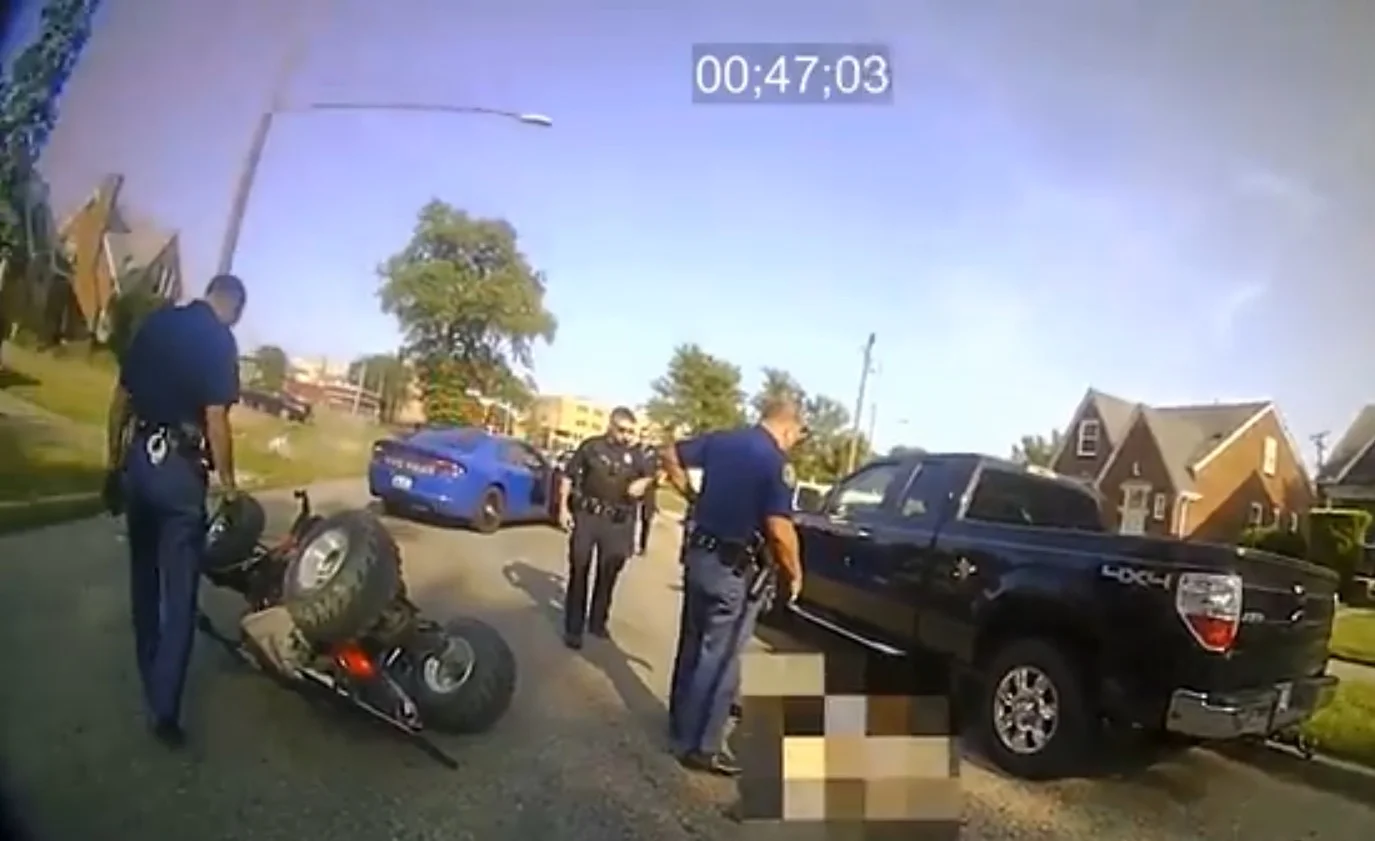
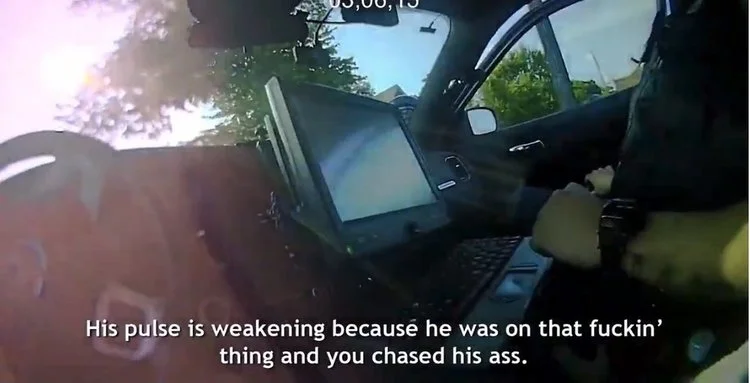
From [HERE] and [HERE] A former state trooper used excessive force when he fired his Taser at a teen fleeing on an ATV, causing the 15-year-old boy to crash and die, a prosecutor said Wednesday as the retrial of Mark Bessner began.

 During his opening statement, Assistant Wayne County Prosecutor Matthew Penney told jurors Bessner "did cause the death of Damon Grimes" and that the ex-trooper's decision to deploy his Taser at the teen on Aug. 26, 2017, was not "reasonable." 

"There was no justification for what he did," said Penney, adding that Grimes was not a threat to Bessner on his partner during the incident on Rossini Street near Gratiot. "The defendant didn't choose to shout at Grimes (to stop him). The defendant chose to incapacitate him."

Penney said some of the questions jurors need to consider include: "Why are you shooting? ... How risky is a traffic (violation) to the whole world?"

Bessner, 45, is charged with second-degree murder and involuntary manslaughter in the death of Grimes.

Penney also told jurors that Bessner chased a group of ATV riders near downtown Detroit on Aug. 12, 2017, two weeks before the Grimes encounter. During the first incident, Penney said Bessner was laughing as he chased the ATV riders.

In a video of the earlier incident, which is expected to be shown to jurors, Bessner allegedly is heard talking about using a Taser on the driver, who eluded Bessner and his partner after they put their lights and sirens on.

"I was kinda of hoping we'd get close enough that we could Tase that guy once we stopped,'" Bessner allegedly is heard saying. 

The first jury did not see the video of the Aug. 12 incident. Prosecutors discovered its existence after the first trial.

In his opening statement, defense attorney Richard Convertino told the jury that Bessner followed the department's use of force continuum and that Grimes went "directly" at Bessner and his partner with his ATV.

The defense attorney said Bessner thought Grimes was reaching for a weapon when one of his hands dropped near his waistline.

A witness to the incident, Ariel Houser, testified she did not see Grimes' hands leave the handlebars, saying she noticed the teen's hands because she watched him "struggle" to control the ATV and stay on it.

Convertino said there was "absolutely nothing wrong" with Bessner deploying his Taser because he followed protocol on when an officer can use deadly force. He added that Bessner had "an absolute right" to protect himself because the former trooper felt threatened.

"If you believe that Mr. Bessner believed that the (public safety) and his life were at stake, you must find him not guilty," said Convertino, adding that his client was "not someone out Tasing people for sport."

mark+bessner+23.jpg

Bessner’s first trial ended in a mistrial in October. A jury of six men and six women deliberated for three days before they told Judge Margaret Van Houten that they could not agree on a verdict.

Van Houten is presiding over the retrial, with a jury of 10 women and four men, including two alternates.

Dr. David Moons, a former assistant medical examiner for Wayne County, testified about Grimes' autopsy, saying the teen died of multiple blunt forces that caused extensive brain and spinal cord injuries, which would have caused an immediate death.

He said Grimes had a Taser probe in his left back and in the left side of his head. Moons said the teen did not have any alcohol or drugs in his system.

Also testifying Wednesday was a stun gun expert, who discussed what happens when a Taser is fired at a human body. A Michigan State Police sergeant took the witness stand Wednesday to talk about the video of the crash that killed Grimes' life.

The video was shown to jurors.

Penney called six witnesses Wednesday, including Grimes' mother, who said she purchased the brand-new ATV for her son months before the fatal incident.

Detroit Police Officer Jalen Williams, who came across the chase with his partner, said he did not not see a weapon on Grimes. Williams also said he did not hear Bessner or his partner say that they believed that Grimes had a weapon.

Williams said he did not "recall" seeing Grimes take his hands off the handle bars of the ATV. He also disputed Convertino's description of the Rossini/Gratiot area as a high-crime district, where Bessner was patrolling as part of a special task force.

Testimony continues Thursday.

After White Cop Body Slammed Disobedient Black 12 Yr Old on His Head Outside School, White Saint Lucie Cty Sheriff says He Acted "Within Our Guidelines," White Media Concurs

sherrif ken facist.jpg

From [HERE] A viral video that is making the rounds on social media is drawing concern among parents.

The video shows a Saint Lucie County Sheriff's deputy taking down a sixth grader outside Lincoln Park Academy in Fort Pierce.

"That's kind of rough to be at a school campus, he didn't have to slam him down like that," said General Platt, as he watched the video while picking up his twins on Wednesday.

"I would have freaked out if I saw that in person," said Jazmine Arias, as she was waiting to pick up her sister. "He's a kid, I don't think a little kid should be thrown to the ground like that."

The 15 second video shows a the school resource deputy run after a 6th grader outside the school Tuesday afternoon and slam him on the grass. Another video then shows the student in handcuffs walking away.

"If the kid was fighting him back and he felt like he was in some kind of danger, then I could justify his actions, but it didn't appear to be that way," Platt said.

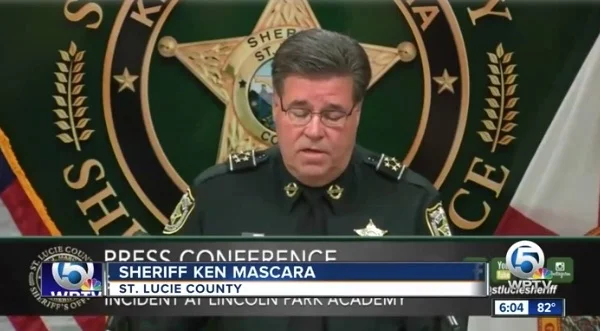
At a news conference Wednesday afternoon, Sheriff Ken Mascara said the deputy did not use excessive force, and the video does not show what happened in the minutes beforehand.

"Our school resource deputy is very familiar with this student and knows he has a violent history, including possessing weapons," Mascara said.

The Sheriff says the student was recently caught with a knife, and he has to be escorted around campus by a staff member because he's been physically aggressive to staff and students.

Mascara says the 11-year-old was aggressive during dismissal on Tuesday, and when staff tried to stop him he ran away. That's when the resource deputy took him to the ground.

"At the end of the day the deputy did everything he could to diffuse the situation, and his use of force fell within the legal and our agency guidelines," Mascara said.

The deputy has been a school resource officer for eight years, three of which have been at Lincoln Park Academy. Mascara said the deputy has never had a complaint of excessive force.

The student is now facing a number of charges. He was taken to the hospital briefly and left with a band-aid. His grandfather tells WPTV, he is now undergoing a mental health evaluation in Lake Worth Beach.

FOP Probot says Chicago Cops “Did Their Best" after Video Shows Them Drag a 16 Yr Old Black Girl Down Steps & Stomp on Her to Enforce Obedience to Cell Phone Rules at School

chicago fop idiot.jpg

From [HERE] New surveillance video shows two Chicago police officers getting into a violent encounter with a student at Marshall High School.

The incident happened in February, and the student’s attorney filed an amended lawsuit Thursday. The lawsuit claimed the officer pushed and dragged 16-year-old Dnigma Howard down a flight of stairs, then held her down by stepping on her chest, punching her and then shocked her with a stun gun.

Laurentio Howard said the video shows he and his daughter were telling the truth the whole time. In the video, the teen’s father (in the blue coat) tries to intervene and is told to stay away.

The teen has an individualized education program to help manage her behavior, but her father said the protocol in place wasn’t followed.

"She wasn't really fighting back. She was defending herself. They were kicking her and stomping her and stuff. She tensed up. That's a natural reaction of anybody," he said.

The student was initially charged with aggravated battery against the officers.

Prosecutors said police were called to escort her away, after she was suspended and refused to leave. She then kicked, bit and spit on the officers. The charges were dropped less than a week later.

In February, the Fraternal Order of Police president called the state’s attorney’s decision to drop the charges very disturbing.

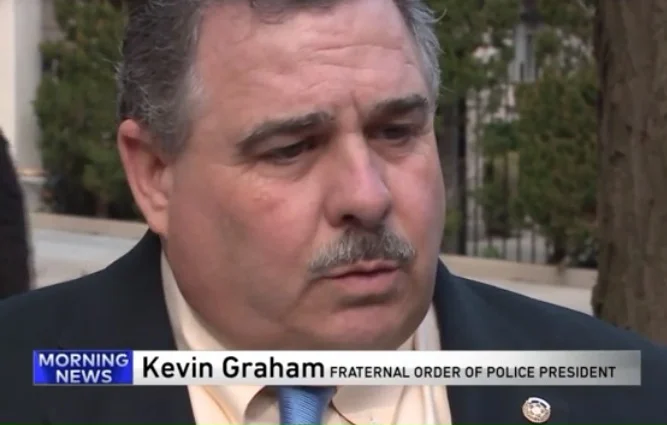
“They did everything they could to protect her from being hurt and they used the Taser because she seriously injured those two officers and she needs to be recharged,” Kevin Graham, FOP president, said at the time.

Graham said she should be recharged.

“The video doesn’t capture all of the interaction the student has with the police. I know that the officers, one of them almost had her finger bit off and the other officer has a broken knee cap,” Graham said.

Attorney Andrew Stroth said the two officers in the video had 89% more complaints of excessive force than other members in the CPD. He said Howard “did not instigate or provoke any type of attack.”

Stroth said CPD officers should not be in Chicago schools. He’s appealing to Mayor-elect Lori Lightfoot to change the practice. The Chicago Teacher’s Union president has denounced the video.

Judge Denies Immunity: 4 White Camden Cops Pounced on a Black Man’s Back as he Laid in the Street, Stepped on His Neck Leaving Him Quadriplegic & Assaulted Another Black Man who Witnessed it

camden+cops+xavier+ingram.jpg

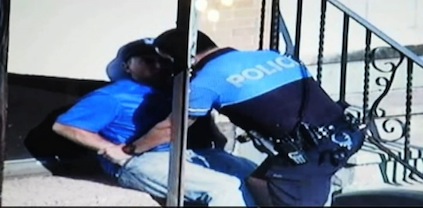
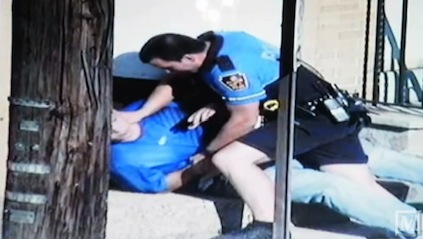
From [HERE] A Black man left paralyzed after his arrest by white Camden County police officers can pursue a lawsuit alleging violations of his civil rights, a white federal judge has ruled.

Xavier Ingram claims he was the victim of excessive force after he fell on a rain-slicked street during a police chase near 7th and Chestnut streets in June 2014.

Ingram contends a police officer stepped on his neck, causing injuries that left him a quadriplegic, and that police worsened his situation by mishandling him in the wake of his injury. Ingram, now 25, will live the rest of his life in a hospital bed at a rehabilitation facility, unable to move anything below his neck. He eats and breathes through tubes surgically implanted in his body. According to his criminal attorney, Robert Dunn of Morristown, “He’s a quadriplegic in a nursing home and right now there’s no chance of him ever improving,” Dunn said. “Unless there’s a medical breakthrough.”

One witness said police were “whooping his ass” as he lay on the ground — will ultimately be decided in federal court.

Police deny wrongdoing, saying the Camden man caused his own injuries when he fell.

In two rulings Friday, U.S. District Judge Jerome Simandle said a jury could consider allegations brought by Ingram and by Darren Dickerson, another Black man who alleges police beat him after he cursed officers at the arrest scene.

In a third decision, Simandle ruled two expert witnesses for Ingram — an orthopedic surgeon and a researcher who specializes in the causes of human injuries — could testify that they believed police were responsible for the man's paralysis.

Dr. James J. Yue, an orthopaedic surgeon in Connecticut, Dr. William D. Matuozzi of Maryland, who specializes in radiology, and Paul C. Ivancic, a spinal biomechanics researcher from Connecticut will testify for Ingram. 

All three said they believe his injuries — a damaged spinal cord, a displaced vertebrae, and other issues — are consistent with force being applied to the back and side of his neck as he lay on his stomach with his head turned to the right.

They said the force it would take to cause such a violent injury is inconsistent with a slip and fall, and the lack of head trauma or swelling means he did not hit his head hard.

Yue said he believes that the first officer’s knee on Ingram’s neck started the dislocation of the vertebrae and that the compression from Merck’s foot on his neck completed or worsened the dislocation and caused the spinal cord injury.

The two doctors also concluded that the officers’ moving and dropping Ingram, after he repeated that he couldn’t feel his legs, made his injuries worse.

They said the force it would take to cause such a violent injury is inconsistent with a slip and fall, and the lack of head trauma or swelling means he did not hit his head hard. [MORE]

xavier+ingram.jpg

According to the decision, Ingram says he fled from police after leaving a liquor store because he had an outstanding warrant.

In contrast, police officers said they suspected Ingram, then 21, had tossed a gun between two parked cars as he walked away from officers in an area known for drug activity around 9:45 p.m.

A grainy surveillance video recorded the pursuit.

“As Ingram ran from the officers, he slipped and fell, seemingly feet first, on wet pavement, striking his buttocks and probably shoulders and head as he fell, all without being touched by the officers,” said the judge’s ruling. “Within less than a second, the officers jumped on or near his torso as he lay on the ground.”

Ingram’s lawsuit contends one officer jumped on his back and two officers punched and kicked him “as soon as he hit the ground.” 

The city man alleged he “was screaming that he could not breathe and that he could not feel his legs” when a supervising officer, Jeremy Merck, told him to ‘shut up,’ stepped on his neck, and … Ingram heard it crack,” according to Simandle’s ruling.

Ingram’s lawsuit alleges excessive force by Merck and two other officers, Nicholas Marchiafava and Antonio Genetta. Among other claims, it also contends the officers showed deliberate indifference to the serious medical needs of a person in custody.

Dickerson alleges excessive force against a fourth officer, Nigel Shockley.

In denying defense motions for summary judgment on those claims, Simandle said a jury might decide in favor of Ingram and Dickerson if it viewed the incidents in a way that’s most favorable to the city men.

He also acknowledged the jury might come to a different verdict if it saw contested facts in a light that favored the police officers.

The judge disputed the defense claim that the surveillance video supported the officers’ actions against both men. Simandle said the video “is of such low quality that it cannot be used to definitively ascertain the amount of force” that police used in arresting both men.

The judge also said officers involved in the incident could not claim legal immunity for their actions, asserting a jury might find they had knowingly violated the men’s civil rights.

“The most significant claims in this case survived summary judgement and are going to trial to be decided by a jury,” said Ingram’s attorney, Beth Baldinger of Roseland, Essex County.

Camden County spokesman Dan Keashen said the police department “fully respects the court’s decision,” but contended Ingram’s claims were “baseless and frivolous” [so they respect something they claim is frivolous?]

Simandle also said a jury could consider whether the police department had failed to train and supervise Shockley.

He noted Dickerson's assertion that Schockley had a “history of at  least six incidents of the use of force that, under Camden County Police Department’s own policies, should have triggered an ‘early warning’ intervention by his supervisors.”

Simandle said “a reasonable jury viewing the video could find it confirms … Dickerson’s version that he never moved toward any officer and was walking away when tackled violently from behind.”

He also noted ”no evidence that Dickerson was acting violently (although he was noisy and disrespectful),” or that Shockley lacked time “to have taken another, non-violent course of action.”

“Under this version of the facts, a jury could reasonably find that this force was not for the purpose of arresting Dickerson, but rather for the purpose of summarily punishing him for being obnoxious toward the officers at a time of heightened emotion due to his witnessing the alleged beating of Ingram in the street nearby,” the judge wrote in his decision.

Ingram, who also alleges false arrest, was charged with drug and weapons offenses, as well as resisting arrest and receiving stolen property.

Ingram has pleaded not guilty to the charges, contending the gun and other evidence against him was planted at the scene.

Atlantic City Authorities Settle Case for $700K before Jury Verdict: 4 White Cops "Viciously Attacked" Non-Resisting Black Man and Released Dog on Him Causing Permanent Damage After Traffic Stop

Charlie Harrison.jpg

From [HERE] and [HERE] Atlantic City has agreed to pay $700,000 in a settlement Thursday to end a New York City man’s excessive-force lawsuit against the city and several resort police officers.

In the suit, filed in U.S. District Court in October 2014, Charlie Harrison, 58, alleged several city police officers, including a K-9, assaulted him after a traffic stop.

“We are pleased that there was some measure of justice done for our client,” Jennifer Bonjean, Harrison’s attorney, said Friday. “A monetary award is really the only outcome in a civil litigation. Money cannot fully make someone whole who has been victimized by the police, but it was a good settlement.”

On Nov. 14, 2012, Officers Michael Oldroyd, Anthony Alosi, Rebecca Seabrook and Bounthamal Thavisack allegedly kicked Harrison in his face and body until he lost consciousness, and Officer Michelle Clarke released a K-9 on him, “causing deep lacerations, scarring and permanent damage,” according to the suit.

According to the suit, Harrison was gambling at the now-shuttered Atlantic Club Casino Hotel on Nov. 13, 2012, and was asked to leave by security, who called police. About 2 a.m. the next morning, Oldroyd followed Harrison’s black Mercedes and pulled him over near Virginia and Pacific avenues. Thavisack and Alosi also responded.

After getting kicked out of a club for his drunkenness and then getting denied entry from multiple Atlantic City establishments in 2012, Charlie Harrison was driving down Pacific Avenue and swerving when officer Michael Oldroyd spotted him and tried to pull him over.

Initially, Harrison didn’t stop, continuing to drive 5 to 10 miles per hour, said Jennifer Bonjean, his attorney, at the openings of the trial. When he eventually did pull over, Oldroyd and a group of officers pulled their guns on Harrison as they shouted orders at him to get out of the car.

A confused Harrison began walking to Oldroyd before the officer “gave him a nice punch in the face” followed by several more, Bonjean said at the openings.

Soon after a K-9 bit him from behind, Harrison dropped to the ground and officers began “raining punches” to the point of him blacking out, Bonjean said. The officers “physically beat” Harrison, according to the suit, and “Clarke’s K-9 partner viciously attacked Plaintiff, who was not resisting arrest or committing any other crime.”

Harrison was charged with assault of a police officer, resisting arrest, eluding police, reckless driving, unsafe lane change and driving while intoxicated. He ended up pleading guilty to eluding police, with all other charges dismissed, according to the suit.

A look into the Atlantic City police department as part of the The Force Report, a 16-month investigation by NJ Advance Media for NJ.com, found that the department often seemed indifferent to officers with violent tendencies, leaving them on the street without repercussions.

Oldroyd was one of those officers.

The 14-year officer used force 50 times from 2012 to 2016. But he wasn’t told about his high rate until February 2014, he said in a deposition. His command staff told him they did not give credence to internal affairs complaints against him and to continue policing how he was. Oldroyd tallied 91 internal affairs complaints — 46 of which were for excessive force — during a stretch of his career.

Bonjean has relentlessly sued Atlantic City over the past five years on behalf of alleged victims of police brutality. The Brooklyn-based attorney has won more than $6 million for her clients in excessive force civil lawsuits.

She is currently representing two young black men who allege in a federal lawsuit that two Atlantic City police officers performed an illegal stop and began harassing them, with one of them telling them that if they “frog up,” his 90-pound dog “is gonna come out and rip the f-- outta you.”

Amended Lawsuit Names Park Police Cops [all white] who Shot Unarmed Iranian American to Death after Car Chase Ended, Although He Posed No Threat

park police murder.jpg

From [HERE] The family of a northern Virginia Iranian American man shot to death by U.S. Park Police in 2017 has identified the two officers in an amended wrongful-death lawsuit.

Bijan Ghaiser was shot on Nov. 17, 2017, after a police chase on the George Washington Parkway.

In a federal lawsuit filed in August, Ghaiser's family described the shooting as "egregious, senseless and unlawful." The family identified the officers as Alejandro Amaya and Lucas Vinyard in a court filing Friday.

A Park Police spokesman declined to comment. Both officers have been on paid administrative duties since the shooting. All the cops were white.

Vinyard has worked for the Park Police since 2007, while Amaya joined the force in 2009.

Neither officer could be reached for comment Friday. Vinyard did not immediately respond to a message left at his home. Amaya did not immediately respond to a message left on his cellphone. The names of their attorneys were not yet listed in court documents.

The lawsuit says the chase began after Ghaiser, 25, was involved in a minor traffic accident. While driving a Jeep Grand Cherokee, he was hit from behind by an Uber driver, driving a Toyota Corolla and with a female passenger in the back seat. The driver and the passenger both reported the incident to 911.

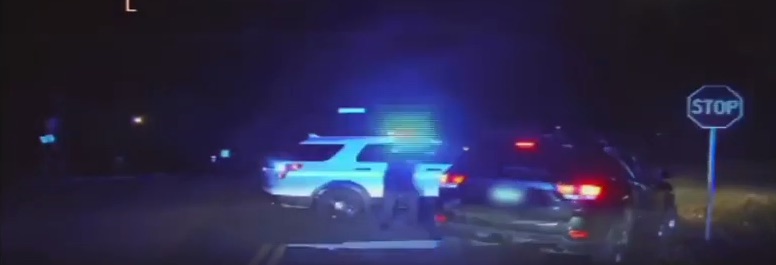
According to a report of the accident, Ghaisar pulled away without giving his information to the Uber driver. A lookout for his vehicle was announced and a Park Police car and Fairfax County Police car followed in pursuit. Ghaisar stopped his vehicle and was approached by a Park Police officer with his gun drawn. As Ghaisar drove off, the officer banged on the car with the gun, dropping his weapon. The pursuit continued at 57 miles per hour, in a zone that had a 50-mile-per-hour limit. However, no traffic or people were on the road at that time of night.

Ghaisar stopped a third time in the Fort Hunt area. Park Police parked a vehicle in front of Ghaisar's Jeep to prevent him from fleeing again at an intersection with stop sign. It says Ghaiser drove away from the scene and was pursued by Park Police. They say he stopped three times, and each time, officers jumped from their cruiser and pointed their guns at him.

The lawsuit says that on the third stop, officers blocked his path with their patrol car, jumped out and fired nine shots into Ghaisar's Jeep.

Dashcam video released by Fairfax County police shows that during the final stop, officers with guns drawn approach the car at the driver side door. The video clearly shows that the cops were in no danger when they shot him; the cops were at his driver side just feet away as he began to drive away again turning his car to the right at about 1 mph. After the first set of shots he stops. Moments later, the car continues to move to the right at about 1 mph when the cops shoot into the car again at close range on his driver side. The cops were never in the vehicle’s path.

The FBI said recently that the shooting is a complex case and its 16-month investigation is not unusual [and would it be complex if this man shot cops like this?]. The agency's comments came in a March 15 letter to U.S. Sen. Charles Grassley, R-Iowa, who has questioned why the FBI is taking so long to investigate the shooting.