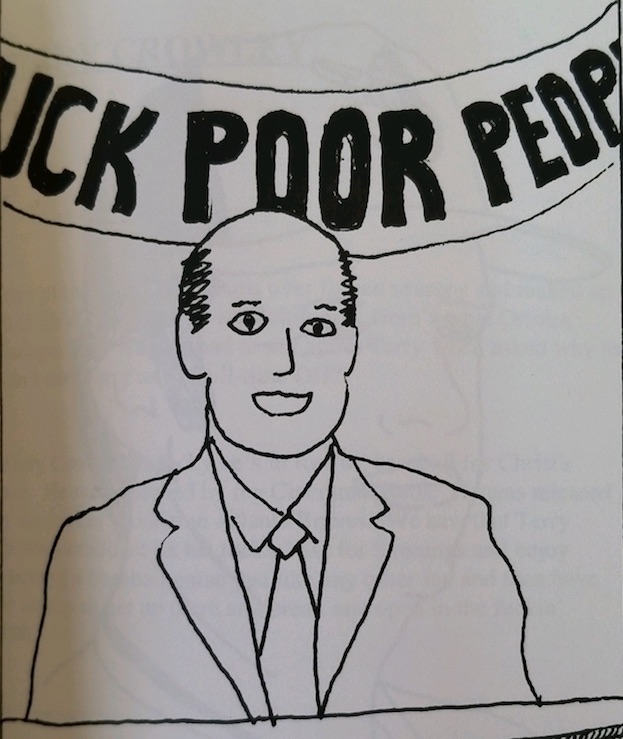
Florida Supreme Ct Rejected Lawsuit Claiming the State Failed to Provide Constitutionally Mandated “High Quality" Education for Black & Latino Students in its Underfunded Public Fool System

the primary GOAL of the public fool system is IS to teach obedience to authority, FALSIFY CONSCIOUSNESS AND PROVIDE TRAINING TO NON-WHITE CHILDREN ON HOW TO BEST SERVE WHITE FOLKS & TO HELP THEM SOLVE THEIR PROBLEMS IN A SYSTEM OF WHITE DOMINATI…

the primary GOAL of the public fool system is IS to teach obedience to authority, FALSIFY CONSCIOUSNESS AND PROVIDE TRAINING TO NON-WHITE CHILDREN ON HOW TO BEST SERVE WHITE FOLKS & TO HELP THEM SOLVE THEIR PROBLEMS IN A SYSTEM OF WHITE DOMINATION. ACCORDING TO FUNKTIONARY.

Public Fool System - a place where children are having unprotected education. 2) a syndromatic exercise in conformity and blind obedience to so-called "authority" (disguised repression). 3) systematic planned violence meted out on children and young adults—held hostage and hostile—daily, hourly, quarantined from the natural rhythm of things in life through Pavlovian bells and shrink-wrapped prefabricated and curriculum and distorted history. 4) a training boot camp for life-long slavery and indentured servitude to gangbankers and the Corporate State in a society created and based in violence, governed by fear, propaganda, psychogenic money and power. [MORE]

From [Jurist] The Supreme Court of Florida rejected a lawsuit on Friday that claimed the state was failing to provide constitutionally mandated “high quality” education for all.

The lawsuit, which was filed nearly a decade ago by parents, students and advocacy groups, claimed the state wasn’t properly funding schools as outlined in a 1998 amendment approved by voters, which makes it the state’s “paramount duty to make adequate provisions for a uniform, efficient, safe, secure, and high quality system of free public schools that allows students to obtain a high quality education.”

The court narrowly rejected the claim with a 4-3 decision on several factors. In addition to the plaintiffs failing to show what level and manner the schools should be funded, the court declined to settle a matter it felt should fall under those of the state’s legislature.

Three justices dissented, stating, “The majority of this Court eviscerates article IX, section 1, of the Florida Constitution, contrary to the clear intent of the voters, and abdicates its responsibility to interpret this critical provision and construe the terms ‘uniform,’ ‘efficient,’ and ‘high quality,’ enshrined in that provision.” Additionally, the dissent calls attention to the disparity in education for minority students and pointed to statistics that show strong correlation between test scores and school funding. The dissent also stated,

“With its decision today, the majority of this Court fails to provide any judicial remedy for the students who are at the center of this lawsuit—AfricanAmerican students, Hispanic students, economically disadvantaged students, and students who attend school in poorer school districts or attend persistently lowperforming schools. The majority of this Court eviscerates article IX, section 1, of the Florida Constitution, contrary to the clear intent of the voters, and abdicates its responsibility to interpret this critical provision and construe the terms “uniform,” “efficient,” and “high quality,” enshrined in that provision. Today, even more emphatically than before the 1998 amendment to article IX, section 1, I echo the words of Justice Anstead, joined by Justices Kogan and Shaw: “By [the Court’s] action today, we have reduced to empty words a constitutional promise to provide an adequate educational system for our children.” Coalition for Adequacy & Fairness in Sch. Funding, Inc. v. Chiles, 680 So. 2d 400, 410 (Fla. 1996) (Anstead, J., dissenting). “

Federal Ct says Flint is Not Entitled to Immunity & Their "Government-Created Environmental Disaster" Violated Residents Rights to Bodily Integrity, “Water Crisis was Preventable"

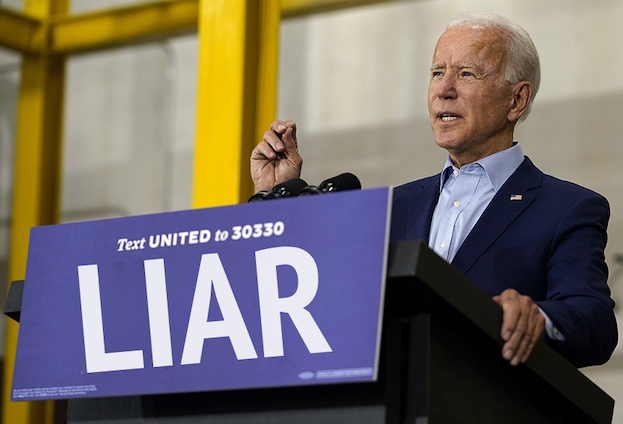
snyder liar.jpg

From [Jurist] The US Court of Appeals for the Sixth Circuit on Friday ruled against the city of Flint and several Michigan state officials for violation of its residents’ rights to bodily integrity as guaranteed by the Substantive Due Process Clause of the Fourteenth Amendment.

The court found that defendants’ decisions during the Flint Water Crises caused Flint residents injuries and damages from drinking and bathing in the lead-contaminated water. In the court’s words, “the crisis was preventable and predictable because the city had extended opportunities to do better.”

The court also held that the city of Flint is not entitled to Eleventh Amendment immunity despite the takeover by the state of Michigan pursuant to Michigan’s “Emergency Manager” law that transformed the city into an arm of the state. The court based its decision on four factors: the State’s potential liability against the city; the degree of state control over the city’s actions; the appointment of the emergency manager; and whether the city’s functions fell within the traditional purview of state or local government. Among these factors, only the appointment of the emergency manager weighed in the city’s favor.

As the state of Michigan argued, “the City of Flint’s functions are ‘within the traditional purview of local government’ because the City of Flint is a local government.” The city of Flint even admits that “the day-to-day operations of a waterworks generally fall within the purview of local authorities.”

The court explained,

“This case arises out of the infamous government-created environmental disaster commonly known as the Flint Water Crisis. As a cost-saving measure until a new water authority was to become operational, public officials switched the City of Flint municipal water supply from the Detroit Water and Sewerage Department (DWSD) to the Flint River to be processed by an outdated and previously mothballed water treatment plant. With the approval of State of Michigan regulators and a professional engineering firm, on April 25, 2014, the City began dispensing drinking water to its customers without adding chemicals to counter the river water’s known corrosivity.

The harmful effects were as swift as they were severe. Within days, residents complained of foul smelling and tasting water. Within weeks, some residents’ hair began to fall out and their skin developed rashes. And within a year, there were positive tests for E. coli, a spike in deaths from Legionnaires’ disease, and reports of dangerously high blood-lead levels in Flint children. All of this resulted because the river water was 19 times more corrosive than the water pumped from Lake Huron by the DWSD, and because, without corrosion-control treatment, lead leached out of the lead-based service lines at alarming rates and found its way to the homes of Flint’s residents. The crisis was predictable, and preventable. See generally Mason v. Lockwood, Andrews & Newnam, P.C., 842 F.3d 383, 387 (6th Cir. 2016).” [MORE]

Without Any Acknowledgment of Wrongdoing, San Joaquin County will Give James Rivera's Family 300K: White Cops, who Claimed to be in Danger of Being Run-Over by an Immobilized Van, Shot Black Teen 29X

james rivera 640_img_6934.jpg

From [HERE] and [MORE] The family of James Rivera, a Black 16-year-old fatally shot by white law enforcement officers in 2010, will receive a $300,000 settlement from San Joaquin County if the Board of Supervisors approves the agreement at Tuesday’s meeting.

News of the settlement appears on the agenda for Tuesday’s meeting. The county settlement does not bring to an end the federal lawsuit filed by Rivera’s mother, Dionne Smith-Downs, shortly after her son’s death.

The city of Stockton also is listed as a defendant in the lawsuit brought by Oakland civil rights attorney John Burris’ office. City spokeswoman Connie Cochran said late Wednesday afternoon that Stockton’s attorneys plan to go to trial.

A pretrial conference is scheduled for Feb. 6 at the Eastern District of California federal courthouse in Sacramento. The trial is scheduled to begin March 4.

Stockton and San Joaquin County are both named in the lawsuit because officers from the police and the Sheriff’s Office were involved in Rivera’s death.

Rivera, who was unarmed, died July 22, 2010, a day before his 17th birthday.

According to a 27-page report on the case released by the San Joaquin County District Attorney’s Office in 2012 their actions were justified and no charges were filed. They concluded cops opened fire after the van, which crashed inside a home’s garage, was put in reverse and Rivera began revving the engine, the report said. The van was immobilized and had to be removed by a tow truck.

Additionally, according to the report, even though Rivera did not possess a firearm, lethal force was justified because the van itself could have served as a deadly weapon.

Deputy County Counsel Kristen Hegge provides in Tuesday’s agenda a one-paragraph explanation for the county’s decision to settle the case.

“It has been determined that timely economic resolution together with release of any and all potential claims is in the best interests of the County,” Hegge says. “Pursuant to the authority previously rendered by the Board (of Supervisors), the Office of the County Counsel has negotiated a settlement in this case in the amount of $300,000.”

stockton cops killed 16 yr old.jpg

The lawsuit, which survived summary judgment tells an entirely different story.

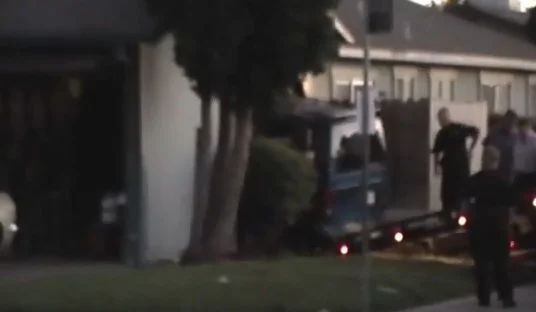
Rivera had been a suspect in an armed carjacking of a blue Chevrolet Astro van. Officer Nesbitt spotted the van on a residential street, identified Rivera as the driver, and notified dispatch. As a result, Officer Azarvand and officer Michael Hughes arrived on the scene in separate marked police cars and attempted to pull over the van. Rivera did not pull over, and instead a high-speed chase ensued wherein Hughes, Azarvand, and Nesbitt all pursued the van in separate vehicles. Dunn eventually joined the pursuit, and ended up being the vehicle directly behind the van. The pursuit ended when police vehicles rammed the van and the van hit a parked car, drove over the sidewalk, and ran into a house’s garage.

After striking the garage, the van penetrated the wall and became lodged almost wholly within the garage. Officer Dunn stopped his vehicle directly behind the van, while Azarvand parked his car to the left of the van. Cops drew their weapons as Azarvand positioned himself to the left of Dunn, and Nesbitt positioned himself behind metal mailboxes to the right of Dunn. Dunn positioned himself behind the open driver-side door of his vehicle. Dunn was within a triangle formed by the open door, the side of Dunn’s vehicle, and the side of the vehicle Rivera hit before striking the garage.

It is undisputed that the van’s tires began spinning, spraying mud and debris. Without providing exactly how much time passed, The cops state that less than 30 seconds after they drew their weapons, the three officers fired a total of 29 rounds at Rivera, killing him. The officers all claim that they fired because they feared that Dunn was in danger of being hit by the van and fired to stop Rivera from reversing into him. However, they do not agree on the specific facts that led them to form that concern. [When officer defendants are “the only surviving eyewitness[es], . . . [t]he judge must carefully examine all the evidence in the record, such as . . . contemporaneous statements by the officer[s] and the available physical evidence . . . to determine whether the officer[s’] story is internally consistent and consistent with other known facts.” Scott v. Henrich, 39 F.3d 812, 915 (9th Cir. 1994).]

Although cops claimed that they reasonably believed that it was likely Rivera was going to dislodge the van from the garage and reverse into Dunn, they provided inconsistent accounts of the incident. Azarvand testified that he saw the van’s backup lights come on and saw the van move backwards and forwards, hitting Dunn’s vehicle repeatedly, and moving “probably between around five” feet before making contact.

Dunn testified that he saw the van only rock backwards and forwards—that is, not move up to five feet as described by Azarvand—which hit his vehicle several times, before yelling out, “He’s ramming me.” Nesbitt also testified that he heard the van’s engine rev and saw the van move backwards and forwards before lurching suddenly toward Dunn. These statements are all inconsistent.

According to the Court’s Memorandum and Order the officers watched the van spin its tires as it became clear that it was unable to move, and then fired 29 rounds at Rivera.

importantly, the officers did not agree on how much the van moved before the officers opened fire. For example, Azarvand testified that the van moved up to five feet before hitting Dunn’s vehicle, while Dunn testified that he positioned his vehicle such that its bumper was “very close, if not touching” the van. And only Nesbitt averred that he saw the van lurch backwards, prompting him to fire, while the other officers testified that the van hit Dunn’s vehicle several times—disagreeing on how far the van moved—and fired after several of those hits. Each officer relies on how the van moved to argue that it was reasonable to believe the van could become loose and hit Dunn, but each officer gives differing accounts of those movements.

Physical evidence was also in conflict with the officers’ accounts and supports Rivera’s theory of the case. A deep tire track was found under the van’s rear wheel, making it likely that the van did not move at all, let alone the several feet described by Azarvand or the lurch described by Nesbitt. This physical evidence lends credence to Plaintiffs’ view of the encounter: the officers watched for up to 30 seconds as it became apparent the van could not dislodge itself and then opened fire. Thus, the cops did not act reasonable under the circumstances and executed the Black tee.

stockton cops happy after murder.jpg

Witnesses said cops smiled and gave each other high fives immediately after the incident. Cops opened fire with 48 rounds from 2 (9mm) handguns and a AR-15 Army Assault rifle. 19 of the 48 bullets hit the 16 year old Black youth on both sides of his body and in the back of his head. His mother followed the ambulance to the hospital and was threatened by police dogs and forced out of the hospital when she demanded to see her sons body.

Even Though Joseph Pettaway Didn't Resist, Threaten or Flee Montgomery Police, Uncivilized Cops Allowed Police Dog to Torture & Maul Black Man to Death, Did Nothing to Intervene- Suit Filed

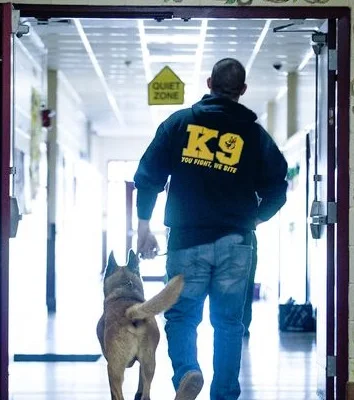
you fight we bite non-whites.jpg

‘You Fight We Bite Non-Whites.’ Rule by intimidation. From [HERE] The family of a man killed by a Montgomery police dog last summer has filed a federal lawsuit against the city, alleging civil rights violations due to unlawful and excessive force. 

Joseph Pettaway died on July 8 after a police dog attacked him inside a Montgomery home and he died of a ruptured artery in his thigh.

Walter Pettaway, Joseph Pettaway's brother, filed the lawsuit Friday against the city and police Chief Ernest Finley, in addition to numerous unnamed police officers. 

The Montgomery Police Department had no comment regarding the lawsuit, per city protocol.

The suit alleges Pettaway, whose family lived in the west Montgomery neighborhood in which he died, was employed in a house repair project in the 3800 block of Cresta Circle. The house was unoccupied at the time, according to the lawsuit.

Montgomery police said Pettaway was believed to have been burglarizing a Cresta Circle home when the homeowner approved a K-9 unit entry. Pettaway's family, who lives in the neighborhood, said he frequently visited the home and wouldn't have a reason to break in.

The lawsuit alleges Pettaway had been at the house the night of July 7 for a "barbecue" with others before leaving at 11 p.m. Sometime in the early hours of July 8, Montgomery police responded to the house on a burglary-in-progress call.

Montgomery police said this summer the homeowner approved the K-9's entry, but the lawsuit questions the use of fatal force when Pettaway "at no time" tried to "actively resist or threaten MPD police, give any indication or basis for reasonable suspicion he was armed, or attempt to flee from MPD police," the suit alleges.

"From the screams and/or pleas of Mr. Pettaway heard by MPD police during the attack ... they knew that the police dog was attacking Joseph Lee Pettaway and knew that he was being violently injured by the dog, i.e., he was being mauled and his flesh was being torn and ripped by the police dog ...," the lawsuit alleges. "After the police dog began attacking Mr. Pettaway inside the house, [MPD police] allowed the police dog to continue this violent attack on Mr. Pettaway, during which time no MPD policeman entered the house and intervened or took any actions that effectively restrained or ceased the police dog’s attack on Mr. Pettaway."

"During the police dog attack, it was not possible for Mr. Pettaway to surrender to the police since there were no policemen present inside the house where the dog attack was occurring."

The Montgomery Advertiser in July asked MPD if the K-9's handler entered the home with the dog. MPD declined to answer, referring to an ongoing State Bureau of Investigation probe at the time.

The SBI, a department within the Alabama Law Enforcement Agency, has since completed its investigation, a spokesperson said last month.

ALEA has denied the Pettaway family access to its completed investigation and report, Pettaway family attorney Griffin Sikes and his law partner Chip Nix say. 

Donald Cook, a Los Angeles civil rights attorney who for decades has litigated police dog bite cases, said deaths from police dog attacks are statistically rare for several reasons.

“Most people who die from civilian dog attacks are very young or very old, are bitten by more than one dog, and they’re not able to defend themselves," Cook said. "Police dog victims are a different story. Most of the victims tend to be adult males. Usually, it’s only one dog. Finally, human intervention is there. Cops can call for medical help right away. The major cause or likely cause of death from a police dog attack is bleeding to death. If you have competent medical personnel available, they can stop that massive bleeding."

Cook has coined the term "Lassie or Rin Tin Tin effect," where dogs are an "extremely sympathetic factor" in American society. He worries this and the Robinette v. Barnes opinion allows disassociation from the consequence of using the dog, which can often treat subjects with a level of violent force its human counterpart could never legally inflict. 

"What people don’t get is that dogs can’t think. They don’t know how to use force," Cook said. "Would any cop have gone up to (Briggs) and banged on his throat with his baton? You can’t do that. The dog does what it does, because it’s a dog. Cops can avoid responsibility for the consequences." [MORE]

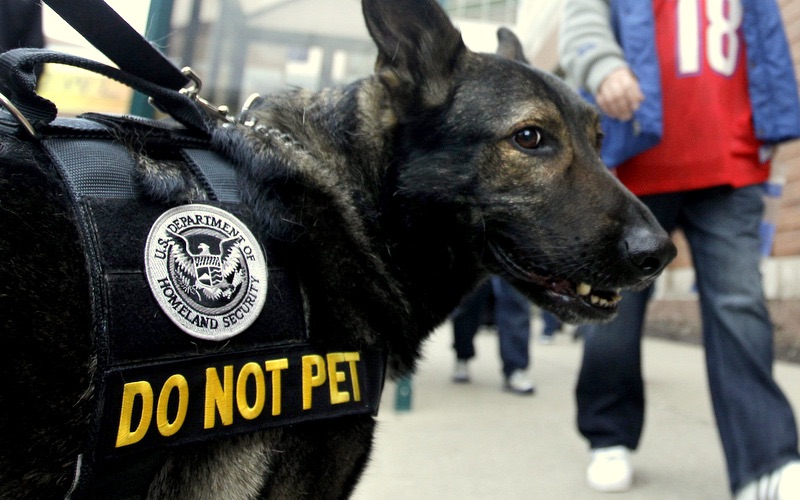
homeland security dog .jpg

Seattle Police Claimed Iosia Faletogo Reached for a Gun, But Released Video Shows White Cops Shoot Samoan Man While He's On All Fours w/His Hands Open & Pressed Against the Sidewalk

iIosia Faletogo bodycam.jpg

From [HERE] and [HERE] and [HERE] Relatives of a 36-year-old Samoan man who was shot and killed by a white Seattle police officer on New Year’s Eve are challenging the police account of the deadly encounter, questioning why officers did not try to de-escalate the situation.

“He did not deserve to be slaughtered like an animal in the street,” said Kerina Ngauamo, aunt of Iosia (yoh-see-a) Faletogo, who was killed after a traffic stop on Aurora Avenue North.

Speaking at a news conference on Friday morning, family members focused on the officer body-cam videos released by police on Thursday, which show police chasing Faletogo after he bolted from a traffic stop and his struggle with several officers before he was shot in the head. Some of the videos show a handgun in Faletogo’s hand at one point during the struggle, while others appear to show both of his hands empty, palms flat against the ground, at the time he was shot.

Relatives also repeatedly asked why it took so long for police to notify them of Faletogo’s death and why they had not yet been allowed to see or claim his body.

The Seattle Police Officers Guild, the union representing more than 1,300 officers and sergeants, issued a statement Friday, calling Faletogo a “convicted and violent felon” who repeatedly failed to comply with warnings from officers.

“His refusal to obey their commands escalated the situation and forced the officers to defend themselves,” the statement said.

The video also shows that when the man was shot the gun was no longer in his hand as he struggled with several officers. Cops yelled that he was "reaching" for his weapon during a scuffle, but the gun is later seen on the ground while Faletogo's hands are open and pressed against the sidewalk.

Police said Faletogo was pulled over New Year’s Eve after a license-plate check on the car he was driving showed the registered owner had a suspended driver’s license, according to a source familiar with the investigation who spoke on condition of anonymity because the matter is under review. They also saw the driver make an unsafe lane change, prompting them to stop the car, the source said.

No video or audio was released of what went on before the stop.

Video shows he stopped in the parking lot of the Z Food Mart. He's then seen running out of the driver side door and into traffic. A cop ultimately tackled him on a sidewalk.

Faletogo ran from the car and was chased a short distance by officers before he was shot during a struggle.

Relatives questioned why Faletogo was shot in the back of the head when his hands appear to be empty and splayed on the ground in front of him. They also wonder why officers yelled they would shoot Faletogo as he fled, rather than attempt to de-escalate the situation. Why was lethal force, instead of a Taser, used for what started as a seemingly minor driving violation, they asked.

Among those who spoke at the gathering was Andrè Taylor, founder of Not This Time, an advocacy group involved in the passage of a new state law that removed a 32-year-old legal barrier that has made it virtually impossible to bring criminal charges against police officers believed to have wrongfully used deadly force. Initiative 940 also requires de-escalation and mental-health training for police and requires independent investigations into the use of deadly force.

Initiative 940 passed with 59.6 percent of the statewide vote, enacting a requirement that independent bodies investigate police-inflicted killings. The law also removes the "malice" requirement that had to have been proven in order to convict a cop in a fatal incident.

Faletogo’s death is the first officer-involved shooting in King County since the initiative took effect in December, and Taylor said the community “will be watching closely” to see how it’s handled by King County Prosecutor Dan Satterberg.

Taylor is the brother of Che Taylor, who was killed by police while they attempted to arrest him for being a felon in unlawful possession of a firearm in North Seattle in February 2016. The shooting was ruled justified by police.

“This is a department that shoots first and asks questions later,” Taylor said of Seattle police.

Before Faletogo was shot, it appears in the video that he had a gun in his hand during the pursuit and struggle. Officers can be heard yelling “drop the gun,” “you’re going to get shot” and “he’s reaching” while chasing and trying to subdue him.

The video shows that Faletogo went down on his hands and knees as the officers tried to take him into custody and that his hands were empty and fingers splayed out on the ground when the fatal shot was fired.

“It also sounds as if Faletogo said, “I’m not reaching” before he was shot, although the audio isn’t clear on the video.

The officer who fired the shot that killed Faletogo has been placed on paid administrative leave pending the outcome of an investigation into the shooting. He was identified as Jared Keller, who was hired in September 2015.

Keller was one of seven Seattle police officers who fired shots during a fatal confrontation with a man in Magnuson Park on Dec. 12, 2017. The confrontation with Kyle M. Gray, 24, occurred after he and a woman were reportedly involved in an armed robbery at the Northgate Mall, according to police.

Faletogo had cash and drugs on him that was discovered after the shooting, police said, and officers said they recovered a loaded firearm at the scene.

But his family and Taylor said they are rejecting the police’s explanations, justifications and narratives about the shooting.

“Police lie to get out of trouble,” said Taylor.

Iosia Faletogo.jpg

U.S. District Court records in Alaska indicate that Faletogo was on probation after pleading guilty in June to a federal drug conspiracy out of Juneau.

City officials have said that the shooting will be investigated by the police department’s Force Investigation Team - which is problematic because I-940 calls for independent inquiries.

At issue is not only whether the shooting was justified, but how to investigate it. The Seattle Police Department, bound by a federal consent decree, claims it is required to perform investigations into their own police-involved shootings. It already announced its Force Investigation Team (FIT) would perform its own probe. However, I-940 calls for independent inquiries.

The state Legislature had intended to introduce amendments to I-940 in the 2019 session, including a specific exemption for agencies under consent decree from the independent investigation requirement.

The Seattle Community Police Commission in a letter released Tuesday called for city leaders to clarify the conflict.

"(B)ecause I-940 is in effect and no express exclusion that would apply to Seattle has yet been adopted by the legislature, there is a strong likelihood that members of the public who voted for, organized for or are aware of the I-940 independent investigation requirement will be surprised or troubled to learn that SPD is still, even after voters approved the initiative, using an entirely internal forensic investigation process," the letter read.

King County also runs independent inquests into officer shootings throughout the county with a process it reformed last year to include the victim's family's attorney; the victim's family was previously not allowed to call or question witnesses and the inquests only heard from witnesses called by the officers' attorneys.

Honolulu Argues Cops are Entitled to Use Deadly Force to Clear the Street in Appeal to Sup Ct: Unarmed, Non-Resisting Samoan Man Tased, Beaten to Death & Dragged to the Curb by Cops for Jaywalking

Legal system based on intentional, harmful coercion. Michael Huemer explains, “As these examples illustrate, commands are often enforced with threats to issue further commands, yet that cannot be all there is to it. At the end of the chain must come…

Legal system based on intentional, harmful coercion. Michael Huemer explains, “As these examples illustrate, commands are often enforced with threats to issue further commands, yet that cannot be all there is to it. At the end of the chain must come a threat that the violator literally cannot defy. The system as a whole must be anchored by a non-voluntary intervention, a harm that the state can impose regardless of the individual’s choices.

That anchor is provided by physical force. Even the threat of imprisonment requires enforcement: how can the state ensure that the criminal goes to the prison? The answer lies in coercion, involving actual or threatened bodily injury, or at a minimum, physical pushing or pulling of the individual’s body to the location of imprisonment. This is the final intervention that the individual cannot choose to defy. One can choose not to pay a fine, one can choose to drive without a license, and one can even choose not to walk to a police car to be taken away. But one cannot choose not to be subjected to physical force if the agents of the state decide to impose it.” [MORE]

From [HERE] and [HERE] A lawsuit over the death of a mentally ill Samoan man who was tasered by Honolulu police could go to the U.S. Supreme Court.

Sheldon Haleck died after three officers repeatedly tased and pepper-sprayed him when he refused to stop walking in the middle of King street.

A judge in Honolulu and the 9th Circuit appeals court have both refused to throw out the case against the officers.

The city is now appealing to the U.S. Supreme Court, arguing the 9th Circuit ruling will discourage officers from trying to maintain the public safety and is “an affront to law enforcement.”

Eric Seitz, the attorney for Halek’s family, said the city is essentially arguing that officers are "entitled to use whatever force we need to clear the street.

He added, "That’s never been a position that’s been taken by any court anywhere.”

Seitz said the case is one of the most egregious he’s seen in more than 30 years of taking on police misconduct in Hawaii. He said Haleck was essentially killed for a jaywalking offense, and that he never presented a threat to the officers who deployed pepper spray and Tasers to subdue him.

Haleck, 38, died after a struggle with police officers near Iolani Palace. According to police, Haleck was acting erratically and running through traffic in dark-colored clothing. A Honolulu Police Department press release also described Haleck as being “combative” and “disorderly.”

But beyond that, details have been hard to come by. The Honolulu Medical Examiner’s Office refused to release Haleck’s autopsy for several months after the incident, saying that police and prosecutors did not want the information to be made public while an investigation into the incident was pending.

Taser videos obtained by Civil Beat through a public records request also raised questions about whether the officers making the arrest followed proper protocol when trying to subdue Haleck. One video showed Haleck holding up his hands and backing away as officers told him to get on the sidewalk. Another showed him face down on the ground screaming as he was handcuffed and leg shackled.

Happy said methamphetamine in Haleck’s system was also a contributing factor in his death. Haleck also suffered from blunt force trauma to the head.

Seitz, however, says Haleck was murdered, and that the city has been trying to hide the facts from the family and the public. He says he’s been repeatedly stonewalled when trying to get information, such as police reports and call transcripts, from HPD and other agencies involved in the case.

The city lawyers also say the officers were right to tase Halek because his actions were creating a hazard to public safety and traffic. According to the lawsuit:

The officers arrived at or near the intersection of South King Street and Richards Street, confronted Sheldon, and began questioning him. that as Sheldon was talking to the police, for reasons unknown to Sheldon and without warning to him deployed her Taser which struck Sheldon in his chest.

After being struck by Officer Critchlow’s initial Taser discharge, Sheldon attempted to back away from the Officers as the Officers continued to pursue him. Sheldon turned away and attempted to walk away from the Officers when Officer Critchlow deployed her Taser a second time, this time striking Sheldon in his back.

After being struck a second time, Sheldon fell to his back on the ground along South King Street. Officers Chung, Critchlow, Kardash, and/or other unnamed cops then physically assaulted Sheldon as he lay on the ground on his back. Officers flipped Sheldon on to his stomach, restraining him on the ground for several minutes. An unidentified officer then assaulted and restrained Sheldon by violently and forcefully planting his knee on to and across Sheldon’s neck and upper back while other officers restrained and cuffed Sheldon’s hands and legs. Then Sheldon was dragged along the road to the sidewalk by Officers Chung, Critchlow, Kardash, and other unnamed cops.

Sheldon sustained injuries including but not limited to loss of consciousness, punctures to his chest and back, abrasions to his right forehead, right cheekbone, both feet, both knees, and inner left ankle, and swelling of both hands and both feet. No officer ever warned Sheldon that a Taser would be deployed prior to the first or second deployment of Critchlow’s Taser.

The suit states that cops never announced that Sheldon was under arrest. It states that he was unarmed and not threatening members of the public or any of the officers. Sheldon was not actively resisting or threatening any cops. [MORE]

In his last days in office, White DA says White Greensboro Cops Didn't Commit a Crime when They Hog-Tied & Suffocated a Black Man to Death - 'They Intended to Help Marcus Smith Not Hurt Him'

hog tying in NC.jpg

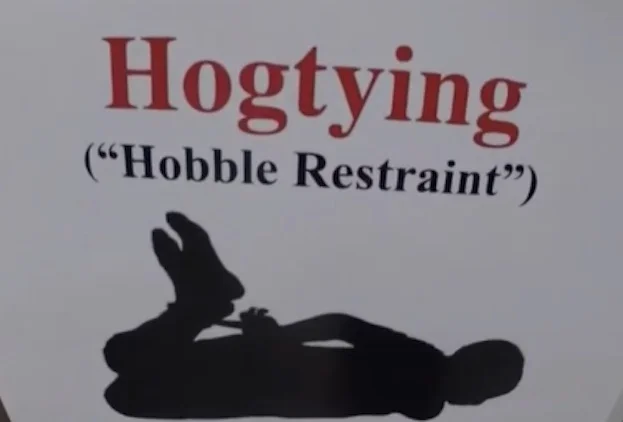
From [HERE] and [MORE] A white prosecutor has ruled that white Greensboro officers were not criminally negligent and will face no criminal charges in the September death of a Black man after he was hogtied while in police custody. 

In his last days in office, former Guilford County District Attorney Doug Henderson told Greensboro Police Chief Wayne Scott that officers were not criminally negligent in the death of Marcus Deon Smith. 

Graham Holt, the attorney who represents Smith's family, said they are "very disappointed" in the decision.

"I guess that means it's legal in Greensboro, North Carolina, for a group of white police officers to suffocate a black man to death," Holt said.

Smith, 38, died of cardiopulmonary arrest caused by a variety of factors including "prone restraint" at the hands of police as well as a combination of drugs, alcohol and cardiovascular disease, the N.C. Office of the Chief Medical Examiner said in the autopsy report, which ruled the death a homicide.

In a Dec. 28 letter to Scott released Friday by the city, Henderson, who retired as district attorney on Wednesday, said after reviewing evidence that included an investigation by the State Bureau of Investigation, that the four officers primarily involved in what happened that day showed patience and intended to help Smith before they restrained him with the "Ripp Hobble" device that medical examiners said contributed to his death.

District Attorney Doug Henderson.jpg

Henderson said he considered the case closed. He now is going into private practice [perhaps to defend killer cops or klansman?]

The city of Greensboro issued a press release that said, in total, "The City of Greensboro and the Greensboro Police Department turned over the investigation to the North Carolina State Bureau of Investigations. The SBI concluded its investigations and turned the matter over to the Guilford County District Attorney’s office and they have provided us with their response."

Mayor Nancy Vaughan could not be reached Friday for comment. 

Marcus Hyde, a spokesman for the Homeless Union of Greensboro, an advocacy group involved in highlighting the Marcus Smith case, said the group considers all options open in response to Henderson's judgment, including the possibility of a civil lawsuit against the city. 

"If the DA and the police and council all want to cover for each other that’s unfortunate for the people of Greensboro who are going to foot the bill for us to right these wrongs," Hyde said.

Hyde also said that Henderson's successor, Avery Crump, the first African American woman to serve as district attorney in Guilford, was supported by a group of the same black leaders who have been calling for action in the Smith case. He said this could be the "defining" issue in her administration. 

Crump's Chief Assistant District Attorney Steve Cole said late Friday that the case was reviewed thoroughly by Henderson and, "I expect going forward at this point that the matter should be considered closed."

Holt declined to say what action the family may take, saying only that he remains employed by the family. 

He also said it's up to Crump to make the next move. 

"I think the people of Greensboro need to know from her what her view of the case is," Holt said.

Henderson wrote in his letter to Scott that he considered a variety of evidence to reach his conclusion including:

• A series of interviews with all of the police officers, emergency medical technicians and firefighters that were present or responded.

• Interviews with Smith's family members and people who knew him in Greensboro.

• The autopsy report.

• Greensboro police policies for "transporting persons in custody."

• Body-worn camera footage, 911 calls and witnesses at the scene. 

Henderson wrote that Ripp Hobble policy says that a person should be restrained in an upright position or on their side to avoid harm.

"In this instance, Mr. Smith became unresponsive immediately after he was necessarily placed in the additional restraints and before he could be transported to the hospital in the manner described," Henderson wrote. "Mr. Smith was at no time transported while in the 'Ripp Hobble' device."

Holt said, "The crux of the letter seems to be a boldfaced lie. The letter says that Marcus Smith became immediately unresponsive. And that’s not true at all. He was in the hogtied position for at least a full minute before he became unresponsive ...

"It’s ridiculous to say that," Holt said, "so it’s just more of the same of the city cooperatively working to cover up a man being killed by the police."

Smith's family and community organizers early in December asked the City Council to apologize to and compensate Smith's family.

Vaughan said at a council meeting that the city is considering placing mental health workers with police officers to deal with situations like the one involving Smith.

The police department released multiple videos from body-worn cameras of officers who responded Sept. 8 to the 100 block of North Church Street downtown where, according to video footage, they found a disoriented and agitated Smith running and walking back and forth on Church Street near its intersection with East Market Street.

Smith often asks for help and says at least once, "I'm gonna kill myself," and also suggests he is in danger. Police stand back and ask him to stop so they can help him. Eventually they put him in the back of a police car without restraints.

Smith in the video becomes so agitated in the car that police open the door and he rushes out. Within minutes officers put him on the ground and, with a bit of struggle, they cuff his hands behind his back and begin to bind his feet to his hands in the Ripp Hobble restraint, which is a thick fabric strip similar to a leash with a fastener to secure a person.

Smith yells and struggles and appears to gasp for breath during the process. Then he becomes still and officers check for a pulse, then begin to untie him so emergency workers can treat him.

Police said in a news release in September that officers responded to the scene about 12:40 a.m. Paramedics arrived about five minutes later.

Police said Smith died about an hour after he was taken to a hospital for further treatment.

Instead of Arresting Him, Albany Authorities Hold Retirement Ceremony for White Cop who Lied About Shooting Ellazer Williams - Shot Black Man in the Back from 20 Ft Away, Causing his Paralysis

Albany Police Detective James Olsen stands outside South Station for a tradition piping out ceremony to mark his retirement on Jan. 4, 2018, in Albany, N.Y.

Albany Police Detective James Olsen stands outside South Station for a tradition piping out ceremony to mark his retirement on Jan. 4, 2018, in Albany, N.Y.

From [HERE] The city police detective who shot and paralyzed 19-year-old Ellazar Williams during an August foot chase retired Friday after 22 years with the department.

Detective James Olsen announced his intention to retire in late 2018, shortly after an Albany County grand jury declined to indict him on charges related to the shooting. David Soares, a caucasional rolebotic Black DA declined to file any charges against the white cop. [MORE[

Williams contends the white city detective shot him in the back from a distance of 20 feet away as he was running away on 9/25/18.

That contradicts the account that Albany County prosecutors say Detective James Olsen gave their investigators. Olsen, who fired the shot that struck Williams, told the investigators that Williams — armed with a large hunting knife — charged at him in a courtyard outside the former Tony Clement Center for Education at 395 Elk St.

Olsen said he had spotted a "shiny object" in Williams hand moments just before the encounter outside the former Tony Clement Center for Education at 395 Elk St.

Olsen had pursued Williams following a sequence of events that began when Williams and two other people allegedly caused a disturbance outside a store on Central Avenue.

"He yelled for the other detectives to watch (Williams') hands and, as Mr. Williams was running, he tripped onto the concrete and dropped a large hunting knife," Rossi said. "Olsen ordered Mr. Williams to get on the ground. Mr. Williams grabbed the big knife and got back up. At this time, Detective Olsen indicates that Mr. Williams ignored his command and ran in his direction with the knife."

Rossi said Olsen said that at the moment he fired his weapon he believed Williams posed deadly force to himself and other detectives.

Williams' lawyers filed a lawsuit against the city in federal court last month, and also released a video they say proves the teen was a victim of excessive force.

A video released by the attorneys shows Williams running from Olsen, falling and then getting up to run away again before they say the shots were fired. The video does not show the teen moving toward the detective. In the video he is approximately 20 feet away from the white cop and fleeing from him.

Williams currently faces a felony charge of menacing a police officer and misdemeanor weapons possession. He is paralyzed from the chest down.

Ellazar Williams still has a bullet lodged in his spine. He is still paralyzed from the chest down. He still suffers severe back pain. He is confined to a bed set up in the living room of his girlfriend's second-floor apartment. He has not been outside in two months. It is difficult for two men to carry him up and down the steep, narrow stairway. Medical transport workers said it is too dangerous to navigate the stairs, which has led to canceled doctor appointments. His girlfriend does not own a car. They live on a South End street punctuated by abandoned buildings marked by a red X.

As White Prosector Delays Charging White Euclid Cop who Feloniously Assaulted a Black Man, Activists who Witnessed the Incident on Social Media Petition the Court to Initiate Private Prosecution

DOING NOTHING

DOING NOTHING

From [WashPost] The case against a white police officer who assaulted a black motorist after a traffic stop in this Cleveland suburb — a confrontation caught on cellphone video that went viral on social media — has gained new life because of a citizens’ petition with a distinctly 21st century argument.

Citing Ohio ordinances that allow individuals to seek charges against someone they’ve seen commit a crime, seven Euclid residents claim to have “witnessed” the encounter between Officer Michael Amiott and driver Richard Hubbard III by virtue of viewing a four-minute video on Facebook. Their unique argument has triggered discussion in the legal community about the role that “social media witnesses” could play in such cases.

“It used to just be the police officer’s word against the victim’s word,” notes lead petitioner Richard T. Montgomery II. “Now, in the age of cellphone videos and social media, we as a community have the opportunity to participate in ensuring police accountability.”

The racially and economically diverse group scored its first victory in late December when a municipal judge responded to its request by requiring the Cuyahoga County prosecutor to investigate Amiott for felonious assault during the August 2017 traffic stop.

The cellphone video, which has more than 11 million views on Facebook, shows the officer repeatedly punching Hubbard’s head and hitting his head on pavement as the 25-year-old man lay in the street. Separate video from a police cruiser’s dash cam shows Amiott wrestling Hubbard to the ground moments after he was ordered out of his car for a suspended driver’s license.

The initial statement from police in the Cleveland suburb of Euclid said Richard Hubbard III, who was pulled over for not stopping behind the white stop line at the intersection [a bullshit stop - white media, such as the Washington Post say the stop was “based on suspicion of having a suspended driver's license”. Listen to the dashcam - the cop explains the stop. This stop probably violates the 4th Amendment- as this kind of stop is probably rarely made of white travelers in Euclid and the white line is not clearly marked due to the condition of the street. Stupid racist suspect journalists usually ignore the 4th Amendment whenever non-whites are involved.] had refused Officer Michael Amiott's orders to "face away" after getting out of his car Aug. 12 and then began resisting. But the dashcam video obtained shows Amiott not giving Hubbard a chance or adequate space to comply.

The dashcam video shows Amiott immediately began to clutch his service weapon upon talking to the Black couple in the car. The conversation became contentious when Hubbard inquired as to why he was pulled over. Hubbard asked for an explanation as to what exactly stop bar infraction entails, But Amiott did not explain the relevant facts to Plaintiffs at that time. According the civil lawsuit “Hubbard grew apprehensive upon not receiving an adequate explanation, and suspected that he had been racially profiled. Amiott merely responded that his partner called them out.” The complaint explains;

‘Amiott then asked Hubbard to whom was the vehicle registered, and whether or not he had any warrants. At this time, Tirado attempted to tender her registration, proof of insurance, as well as her license to Amiott. Hubbard also tried to give Amiott paperwork showing he had no warrants and had taken care of a prior Driving Under Suspension fine. Nevertheless, despite his inquiries into these subjects, Amiott did not even look at the documentation tendered in an effort to fully comply with the cop’s requests.

Officer Amiott then instructed Hubbard to turn off the car engine, and he complied with this request immediately. Next, Amiott asked Hubbard to hand him the car keys. At this point, Hubbard again asks where was he supposed to stop regarding the stop bar, and for what purpose Amiott required the keys to automobile.

Without any further explanation, Amiott sternly asks Hubbard to hand him the keys. Hubbard immediately complied with this second request for the car keys. Amiott then asked Hubbard for his drivers’ license. Hubbard reached into his pocket, and pulled out some cash money, and handed it over to Tirado for safe-keeping. Cops Amiott and Gilmer both remarked about the size of the bankroll. Hubbard then presented his state identification credentials to Amiott, who placed them on the roof of the vehicle.

Amiott next asked Plaintiff Hubbard to “step out,” with no explanation as to the reason for the request. Hubbard again complies, and unlocks the door. As Hubbard opened the car door and began to step out of the vehicle as instructed, Officer Amiott did not move away from the vehicle at all, depriving Plaintiff Hubbard of the required space to exit, and turn around, without making contact with Defendant Amiott’s body.

As Hubbard was beginning to exit the car, Amiott told him to “face away” from him. Hubbard then promptly exited the vehicle; his face only mere inches away from Amiott, due to the fact that Amiott had never taken a step away from the vehicle door to give him any space. Less than one second after his first verbal command, Amiott again orders Hubbard to “face away.” Again, Hubbard complies with this request, and begins to turn around away from Amiott.

Before Hubbard could finish turning, Amiott forcefully pushed him against the car, causing him to lose his balance, with Hubbard’s momentum carrying him backward. Amiott then grabbed Hubbard’s neck in a clench, and attempted to trip him.

As Hubbard attempted to sturdy himself in the midst of this violent assault, Amiott began to knee and kick Hubbard repeatedly. Hubbard tried to avoid Defendant Amiott’s strikes, and pleaded with him to stop his assault, and take him into custody peacefully. Nevertheless, Officer Amiott would not relent, and continued striking Plaintiff Hubbard, and attempting to wrestle him to the ground. At this point the other white cop runs over to the struggle, and immediately deploys his taser on Hubbard, while Officer Amiott was still clenching Hubbard. As a result, both Hubbard and Amiott were thrown to the ground. Hubbard screamed in agony as a result of having been tasered. Officer Gilmer then proceeded to achieve a side-mount position upon Hubbard, as he continued to scream and writhe in pain from the taser. Amiott then commenced a violent series of punches to Hubbard’s head and face, as Gilmer continued to hold him down.

Amiott advanced his position to achieve a full mount upon Hubbard; pinning his legs between his own, and rendering him unable to turn over onto his stomach. Amiott then escalated his attack by lifting Hubbard’s head, and violently slamming his skull against the pavement with the full weight of his body. 

Amiott remained silent during his assault upon Hubbard. Amiott did not order him to roll over, provide any other directive to allow Hubbard a reprieve from his beating, or take any measure whatsoever to de-escalate the situation. Amiott then commenced to choking Hubbard with his arms. At this point, cop Gilmer began patting Defendant Amiott on the back. Hubbard never attempted to strike, or otherwise harm the white Officers.

Other white Euclid Police Officers, including Officer Pavkov, began to arrive at the scene. Pavkov kneed Plaintiff Hubbard in the head, and then assisted in wrenching Hubbard’s arm behind his back causing significant pain to his shoulder. The Officers finally hand-cuffed Plaintiff Hubbard.

Amiott finally noticed that Tirado was recording the arrest. Amiott then ordered Pavkov to arrest her. As Pavkov proceeded towards Tirado, she took several steps away from the scene, and placed her hands in the air. Pavkov then grabbed Tirado’s arms, pushed her down to the ground, and handcuffed her. She asked why she was being arrested, and Pavkov informed her she was being arrested for disorderly conduct based on her shouting at the officers. [MORE]

amiott+(1).jpg

Amiott was hired by the Euclid Police Department in September 2014. He was reprimanded for hitting a driver with a handgun, mishandling evidence, losing his temper in front of his commanding officer and being involved in two crashes in police vehicles, according to personnel files released Friday.

Before Euclid, Amiott was an officer in Mentor, east of Cleveland. Amiott resigned in April 2014 after an internal investigation concluded he had lied to other officers when explaining why he stopped a man for a suspended driver's license.

Amiott was fired two months later for excessive force. But emotions flared anew this October when the unwanted public servant was rehired following an arbitrator’s ruling in his favor. The ensuing outcry included the NAACP announcing a travel advisory to people of color who might be driving through Euclid.

The legal issues raised by the citizens’ petition and the prospect of witnesses via social media are largely untested.

In his ruling referring the matter to the county prosecutor, Euclid Municipal Judge Patrick Gallagher did point out that the petitioners fail to claim any “personal knowledge of Mr. Hubbard’s injuries.” Had they done so, he could have taken more drastic action, the judge seemed to imply. Under Ohio law, Gallagher also could have used the citizens’ petition to circumvent the prosecutor’s office and issue an arrest warrant for Amiott.

Nearly a dozen other states also allow private citizens to initiate criminal charges — including Pennsylvania, New Hampshire, Maryland, Virginia, North Carolina, South Carolina, Georgia, Texas and Idaho.

In all but one, however, the decision to actually file criminal charges is left to a prosecutor or grand jury. The exception is South Carolina, where police also have that power.

The Euclid petition should not factor into the Cuyahoga County prosecutor’s decision to file charges against Amiott, in Stoughton’s view, though he thinks the community should play a role in holding police accountable.

“A community may be limited in what they can do in respect to an individual case,” he said, but whether through “public pressure or the ballot box, there’s still a lot of democratic power that a community can yield.”

The petitioners in Euclid are pursuing every avenue. Following a recent city council meeting, Montgomery pressed council member Daryl Langman for a resolution that would compel the mayor to release data on individual officers’ arrest rates by race.

“Part of how a Michael Amiott becomes a Michael Amiott is there’s no external review by city council,” he told Langman.

No resolution is necessary, Langman replied. “We just need to get five council people to say, ‘Mayor, we want to see these kinds of reports.’

In Crisis Created by the Government, Racist Authorities Tell Lies: Border Patrol Attacked Migrants w/o Provocation & Trump says "4000 Terrorists" [who arrived by plane] "Walked Across the Border"

According to FUNKTIONARY:Borders - arbitrary geographical abstractions - economic and cultural impediments and surprisingly ineradicable. 2) imaginary geographic distinctions and occult political restrictions. Borders are what allows fences (interne…

According to FUNKTIONARY:

Borders - arbitrary geographical abstractions - economic and cultural impediments and surprisingly ineradicable. 2) imaginary geographic distinctions and occult political restrictions. Borders are what allows fences (internetworks of stolen goods) to be erected and trafficked through. (See Corporate State, Political Borders & States).

From [HERE] White House Press Dummy Secretary Sarah Huckabee Sanders got fact-checked in an unlikely place Sunday morning — during an appearance on Fox News Sunday.

Sanders joined host Chris Wallace to talk about the government shutdown and repeated one of President Trump’s favorite lies about immigration, that terrorists are streaming across the southern border into the United States.

“We know that roughly 4,000 known or suspected terrorists come into our country illegally, and we know that our most vulnerable point of entry is southern border,” Sanders said.

“I know the statistic, I didn’t know if you were going to use it, but I studied up on this,” Wallace interjected. “Do you know (when) those 4,000 people come where they are captured? Airports.”

“Not always,” Sanders said, but Wallace insisted.

“Airports. The State Department says there haven’t been any terrorists found coming across the southern border,” he said.

Sanders responded, “It’s by air, it’s by land, it’s by sea. It’s all of the above. But one thing that you’re forgetting is, the most vulnerable point of entry that we have into this country is our southern border.”

She was interrupted again by a terse Wallace, who insisted that the 4,000 known or suspected terrorists who have entered the country have not come across the southern border and have instead been stopped at airports.

“They’re coming a number of ways, they’re certainly — I’m not disagreeing with you that they’re coming through airports,” an increasingly flustered Sanders said. [MORE]

fox-news-tear-gas-pr.jpg

Fox News runs PR for Border Patrol’s latest tear-gassing of migrants at the border

From [HERE] Fox News anchors and hosts credulously repeated the Department of Homeland Security’s claim that U.S. Border Patrol agents fired tear gas at migrants attempting to cross the U.S.-Mexico border on January 1 only after some of them began throwing rocks. But an Associated Press photographer who was on the ground when the incident occurred said the migrants threw rocks after the agents fired the gas.

During the early morning hours of January 1, approximately 150 migrants, many of them wishing to seek asylum, attempted to cross the border near Tijuana, Mexico. The Associated Press reported, “Several migrants tried to climb the metal wall, prompting agents to fire the first volley of tear gas. When migrants approached the wall again, authorities fired a second round and then a third,” and “the migrants fled, screaming, crying and coughing.” A spokesperson for DHS described the migrants as a “violent mob” and said Border Patrol agents were being attacked with “projectiles.” But the AP story said a photographer for the wire service “saw rocks thrown only after U.S. agents fired the tear gas” and saw the “migrants put their hands up or behind their heads once they crossed the border as agents approached.” Additionally, Reuters reported that “U.S. officials said the group had attacked agents with projectiles but a Reuters witness did not see any migrants throwing rocks at U.S. agents.” The Mexican government has asked the U.S. to open an investigation into the incident.

Fox News largely treated DHS’ self-serving version of events as the authoritative account while reporting on the incident:

  • Fox & Friends co-host Brian Kilmeade said during a January 2 broadcast that Border Patrol “had to send tear gas over the barrier to actually quiet down 150-plus people who were storming the border,” while fellow co-host Steve Doocy claimed Border Patrol “simply aimed [the tear gas] at the people who were throwing the rocks.”

Later, during the same program, Kilmeade emphasized that “border guards were, again, forced to act and shoot tear gas in their direction while avoiding rocks,” with Doocy claiming, “The reason they did launch the tear gas and the pepper spray was because a number of the migrants, part of the caravan, by the way, were throwing rocks.” Co-host Ainsley Earhardt also attempted to push the DHS narrative, claiming, “Our border agents had to fire off tear gas at these individuals because they were pelting our border agents with rocks, hitting them in the face and in the head.”

  • Fox News anchor Jon Scott said during the January 2 broadcast of America’s Newsroom that “border protection agents [were] forced to use tear gas to turn back a surge of migrants in Tijuana yesterday. About 150 migrants trying to illegally cross the border, some of them throwing rocks at the agents.”

  • Scott continued to carry water for DHS elsewhere in the program, saying that Border Patrol used “tear gas when some migrants began throwing rocks” and that the agents showed “a lot of restraint.” The segment also featured a representative of the Border Patrol who was allowed to push DHS’ disputed claims without any pushback.

  • During the same program, Fox News anchor Sandra Smith said, “U.S. Customs and Border Protection agents firing tear gas into Mexico Tuesday, trying to stop migrants from throwing rocks and storming the border.”

One exception to the Fox News stenography came later on January 2 during  Fox News’ broadcast of Shepard Smith Reporting. After guest host Trace Gallagher noted the AP report, Fox News reporter Anita Vogel said, “Now, the Border Patrol says the migrants threw the rocks first and agents responded with tear gas and pepper spray. But both the AP and Reuters photographers dispute that version of events -- the AP specifically saying rocks were thrown after the tear gas was fired. So, we don't really know what happened there.” (Vogel had earlier uncritically reported DHS’ claims during America’s Newsroom, saying, “Officials say a number of people in the crowd began throwing rocks over the fence at agents and officers and they responded with tear gas and pepper spray.”)

But that reporting didn’t stop further credulous repetition of DHS’ claims on Fox. Later that evening Fox Business host Lou Dobbs said that “Central American migrants tried to storm the southern border and assault border patrol officers” and that “in a statement, U.S. Customs Border Protection saying agents forced to use gas in response to those migrants throwing rocks at them.”

Fox’s Tomi Lahren also ran with it during the “Final Thoughts” segment of her Fox Nation show that evening, complete with the chyron “We will rock you.” Lahren said, “Some people hunt for unique rocks for their collections and others gather rocks to throw at Border Patrol agents and we call those folks illegal immigrants.” She went beyond what even DHS claimed, saying migrants “amassed south of the border wall … and started collecting rocks for what agents believe was a coordinated rock attack.”

The Israeli Government Orders Thousands of African Migrants to Leave the Country or Face Imprisonment

african migration deportation.jpg

From [HERE] The Israeli government has issued a notice for thousands of African migrants to leave the country or face imprisonment.

The migrants will be given up to $3,500 (£2,600) for leaving within the next 90 days.

They will be given the option of going to their home country or third countries.

If they do not leave, the Israeli authorities have threatened that they will start jailing them from April.

The UN refugee agency said the controversial plan violated international and Israeli laws.

The Israeli government says their return will be humane and "voluntary".

The order exempts children, women, parents of dependent minors and victims of slavery and human trafficking.

A spokesperson for Israel's Population and Immigration Authority told the BBC there were currently 38,000 "infiltrators" in Israel, of whom just 1,420 were being held in detention facilities.

Israel uses the term "infiltrators" to describe people who did not enter the country through an official border crossing.

Many of the migrants - who are mostly from Eritrea and Sudan - say they came to Israel to seek asylum after fleeing persecution and conflict, but the authorities regard them as economic migrants.

Israeli Prime Minister Benjamin Netanyahu has claimed that an unchecked influx of African migrants could threaten Israel's Jewish character.

In a Reversal 2 Black Men Arrested and One Charged in the Murder of 7 Yr Old Jazmine Barnes after Misidentification

From [CBS] A 20-year-old man in Texas was arrested Saturday and charged in the death of 7-year-old Jazmine Barnes, who was shot and killed while riding in a car with her family in Houston. Another man is being held in connection with the shooting but has not yet been charged, a lawyer for the girl's family said.

Eric Black Jr., 20, was charged with capital murder and appeared in court early Sunday morning, wearing handcuffs and an orange jumpsuit. He was ordered held without bail. A prosecutor said Black admitted to driving the car when his passenger opened fire.

Lee Merritt, an attorney for the Barnes family, told CBS News another suspect had also been arrested.

The shooting occured in Houston on Dec. 30 when a car pulled alongside the vehicle carrying Barnes and her family at a stoplight and a gunman opened fire. Jazmine died of a gunshot wound to the head, and her mother was hit in the arm.

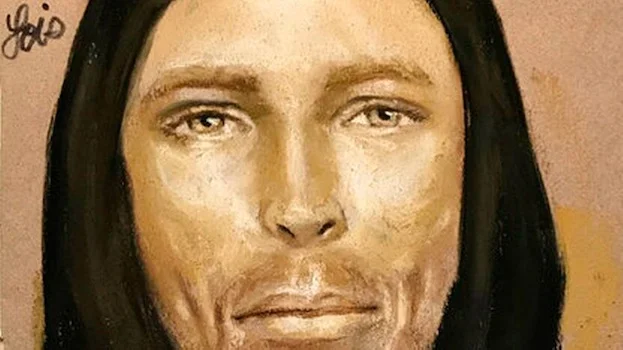
LaPorsha Washington, Jazmine's mother, said in the days following the shooting that she believed it was racially motivated. Her 15-year-old daughter, who was also in the car, initially said the shooter was a white man in a red truck, and police released an artist's sketch Thursday showing a thin, white man with a 5 o'clock shadow. Black, the alleged driver, is African American. The full name of the alleged gunman is not yet known, but Harris County Sheriff Ed Gonzalez said Sunday the individual is also African American.

In a press conference Sunday afternoon, Gonzalez said there was indeed a red truck at the stoplight when shots rang out, but said investigators now believe the person or people in the truck were nothing more than witnesses. He urged the unidentified driver of the truck to come forward.

Gonzalez said investigators don't believe "in any way" that family members were involved in anything "nefarious." He added that investigators believe two people were involved in the shooting, but would not comment further since Black is the only individual who has been charged. 

"We feel that they were truthful. This just went down very quickly when the gunfire erupted," Gonzalez said. "You're talking about small children — they witnessed something very traumatic. And it is possible that the last thing they did see was indeed that red truck and that driver that was in that truck, and that's what they remembered last."

Earlier Sunday, a prosecutor presented details of the case against Black at a hearing at Probable Cause Court in downtown Houston. Appearing by video conference, the prosecutor said Gonzalez had received an anonymous tip passed along by journalist and activist Shaun King. The source implicated two men identified as "LW" and "EB" in the shooting after authorities asked the public for help identifying the assailants.

The source for the tip said the suspects thought the vehicle carrying Jazmine was another vehicle they had seen earlier in the day, the prosecutor said, and didn't realize they had hit the wrong vehicle until seeing the news later that day.

The source provided the sheriff with the name of an Instagram account used by one of the suspects, which investigators determined belonged to Black, the prosecutor said. 

On Saturday, police stopped Black in a grey Kia for failing to signal when changing lanes, and held him for suspected marijuana possession after a deputy said he saw a plastic bag with what appeared to be marijuana in his glove box when Black opened it to find his insurance card. The officer searched Black's car, found more marijuana and detained him, the prosecutor said.

Homicide detectives interviewed Black on Saturday, and the prosecutor said Black admitted to driving the vehicle involved in the shooting. Black told investigators "LW" — identified in court only as "Larry" — was seated in the front passenger seat of a rental car and fired at the vehicle carrying Jazmine. Black returned that rental car after the shooting and picked up the car he was driving when he was pulled over Saturday.

The prosecutor said in Sunday's hearing that Black then agreed to a search of his residence, where police found a 9 mm pistol consistent with shell casings found at the site of the shooting.  

Gonzales, the sheriff, said Sunday that police had received more than 1,000 tips in the case. A reward of $100,000 had been offered for information leading to an arrest. At a rally in Houston on Saturday, more than 500 people honored Jazmine and helped raise money for the family.

Lee Merritt & Shaun King Offer a $75,000 Reward for Info Leading to the Arrest of the Racist Suspect who Shot into a Black Woman’s Car in Houston & Murdered Her 7-year-old Daughter

This Thursday, Jan. 3, 2019, sketch provided by the Harris County Sheriff's Office in Houston, Texas, shows an artist's rendition of the suspect in the fatal shooting of 7-year-old Jazmine Barnes on Sunday, Jan. 30, 2018, in Houston. Authorities say…

This Thursday, Jan. 3, 2019, sketch provided by the Harris County Sheriff's Office in Houston, Texas, shows an artist's rendition of the suspect in the fatal shooting of 7-year-old Jazmine Barnes on Sunday, Jan. 30, 2018, in Houston. Authorities say the girl was killed when a white suspect fired into a vehicle she was riding in. Jazmine died at the scene and her mother, LaPorsha Washington, suffered a gunshot wound to the arm. [MORE] according to funktionary:

racist suspect - any white person who is capable of practicing racism against non-whites. In general, if a Caucasian is able to be a Racist (White Supremacist), he or she may be one and should be presumed to be racist. According to Neely Fuller, as long as white supremacy exists, every person classified as 'white' should be suspected of being Racist (White Supremacist). . .Noted psychiatrist, Dr. Francis Cress Welsing, has stated, "people who classify themselves as White, who wish to be taken seriously, and who are righteous and responsible, will only talk about ending White Supremacy (Racism) and replacing it with Justice." [MORE]

From [HERE] An attorney and an activist are offering a $75,000 reward for information leading to the arrest of a white man who shot into a black woman’s car in Houston and killed her 7-year-old daughter. 

Harris County Sheriff Ed Gonzalez said at a news conference Wednesday that detectives are looking for a white man in his 40s with a beard who pulled his red pickup next to LaPorsha Washington’s car on an East Houston road and opened fire car around 7 a.m. Sunday morning.

The racist suspect is described as a white man in his 30s or 40s, wearing a black hoodie, with pale skin and blue eyes.

Investigators say he pulled up alongside the car Jazmine Barnes was riding in with her family Sunday and fired into the vehicle in the eastern outskirts of Houston. Jazmine died at the scene while her mother was shot in the arm.

Washington said when she heard the gunshots she threw herself over her oldest daughter in the front seat, and screamed “Get down!” to her three daughters in the back seat.

Her daughter Jazmine Barnes was shot in the head and killed, and she was shot in the arm.

“Her dream was to be a teacher. This is a loss to her family, community & country. This sweet angel could’ve grown up to be a great educator, superintendent, or president. We were all robbed of her potential by the cowardly acts of this gunman,” Sheriff Gonzalez tweeted Thursday morning.

The family’s attorney S. Lee Merritt and civil rights activist Shaun King put up a $60,000 reward Wednesday for any leads on the shooter. The reward had grown to $75,000 by Thursday morning.

Gonzalez said detectives do not yet have a motive, but he said he shares the concerns of Houston activist Deric Muhammad that the shooting may have been racially motivated.

Speaking to reporters outside a sheriff’s office substation Wednesday morning, Muhammad said he believes the shooter is the same man who randomly shot into A’vonta Williams’ car from a gray pickup truck in August 2017 because the shootings happened in the same area.

Williams took bullets in his legs and his grandmother, who was riding with him, was shot in the hip, the Houston Chronicle reported.

No one has been arrested for Williams’ shooting.

“What are the odds that two black families were fired upon by a white male in a pickup truck within a one-year time span on the same block?” Muhammad said. “We’ve got to call it what it is. Black people are being targeted in this country. Black people are being targeted in this county. Black people are being targeted in this city. We are thoroughly convinced that the killing of Jazmine Barnes was race related.”

A community rally for Barnes is scheduled for Saturday at noon in the parking lot of a Walmart her mother was driving to when the shooter opened fire.

White Moore County DA says White Trooper Didn’t Use Excessive Force when He Intentionally Rammed Into Black Man’s Car During High Speed Chase, Forcing Him Off an Empty Road, Causing Deadly Crash

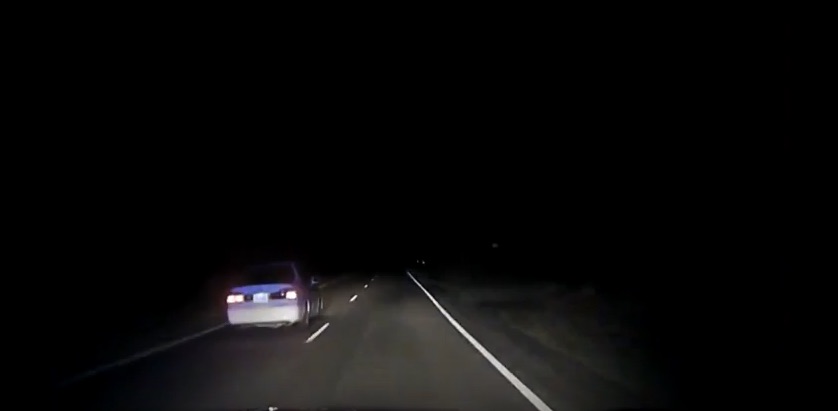
SECONDS BEFORE HIS DEATH - NO CARS, PEDESTRIANS OR PROPERTY IN SIGHT OR OTHERWISE AFFECTED BY HIS TRAVEL.

SECONDS BEFORE HIS DEATH - NO CARS, PEDESTRIANS OR PROPERTY IN SIGHT OR OTHERWISE AFFECTED BY HIS TRAVEL.

From [HERE] The Moore County District Attorney's Office has announced it will not seek criminal charges against the state trooper who initiated a deadly PIT maneuver last year on U.S. 1.

In a news release issued Thursday, the District Attorney's Office said it had reviewed "the circumstances surrounding the forced vehicle stop" and determined that Sgt. James Stahl of the state Highway Patrol "did not use excessive force" when he struck Shonquell Barrett's car on June 29 and forced off the road to his death.

Authorities say 22-year-old Shonquelle Barrett tried to avoid a Booze It and Lose It checkpoint in Southern Pines on June 29, prompting Sgt. James Stahl to give chase.

Stahl performed the PIT maneuver after Barrett fled from a police checkpoint on Morganton Road, leading authorities on a 10-minute chase that reached speeds of 82 mph. The maneuver caused Barrett, 22, to lose control of his vehicle, which careened into a utility pole before hitting a tree in front of a home near Joseph Road.

The news release said Stahl tried unsuccessfully to administer CPR to Barrett, who was pronounced dead at the scene. 

Short for "Precision Immobilization Technique," the PIT maneuver is typically used as a last resort in police chases. The technique allows the driver of a police vehicle to force a fleeing suspect to lose control of their vehicle by ramming the suspect’s bumper.

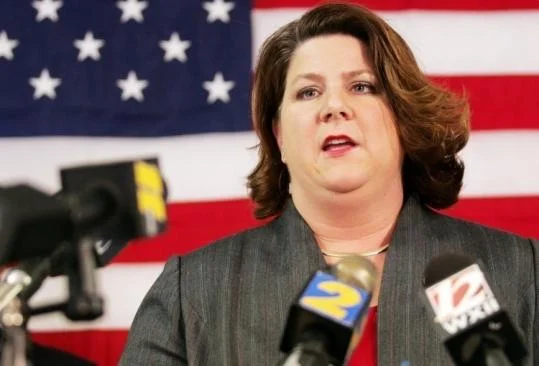
RACIST SUSPECT Moore County District Attorney Maureen Krueger

RACIST SUSPECT Moore County District Attorney Maureen Krueger

The District Attorney’s Office said state troopers were unable to place “stop sticks,” devices used to puncture the tires of fleeing vehicles, in the road to impede Barrett’s car. He was rapidly approaching the commercial districts of Aberdeen and Southern Pines when Stahl initiated the PIT maneuver.

“These portions of U.S. 1 contain many restaurants and businesses, and are heavily traveled, especially on a Friday night,” the release said. “There is also a significant pedestrian presence in the commercial district.”

WHITE COP INTENTIONALLY CRASHES INTO HIM AROUND 9:23

Barrett can be seen on the video running a red light, cutting through a gas station and driving briefly in the wrong lane to get a vehicle.

Nevertheless, on the video the officer says “light traffic” and clearly shows the roads are empty with only few cars appearing during the chase. Additionally, no pedestrians, traffic or property is affected whatsoever. When the officer attacks with his cruiser, both cars are riding side by side.

A crash report obtained by WRAL News shows Stahl and Barrett were both driving 80 mph on U.S. 1 in Aberdeen when Stahl used the PIT maneuver.

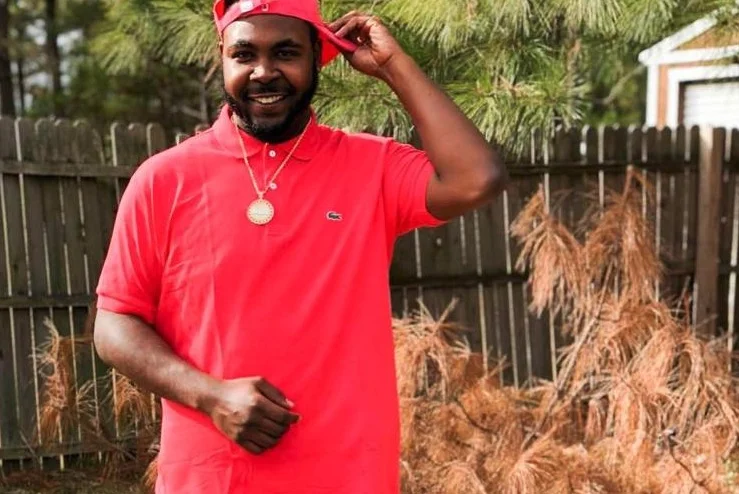
Shonquell Barrett.jpg

"He could have got him way before that. He had his mother's address on the car. He could have come to the house and got him," said his father, Ulysses Barrett.

"You have the tag [number]. It gave you information. It gave you a name. It gave you an address. He wasn't a felon. He didn't murder anybody," his mother, Charlene Ross said, shaking her head. "I don't know. He didn't rob anybody. Their life wasn't at stake. Their life wasn't in any danger. So I'm just not understanding.

According to the District Attorney's Office, [never mind the 4th Amendment], investigators seized gun ammunition, narcotics, two cell phones and $1,978 in cash while searching the wrecked vehicle. Three days later, a Glock .40 pistol was found in the grass at the intersection where the chase began.

Barrett was traveling in a Honda Civic registered to his mother, Charlene Ross. After her son's death, Ross advocated for a law banning PIT maneuvers and organized a demonstration calling for an end to the practice.

The demonstration was held July 17 in front of the state Division of Motor Vehicles building, located on the same highway where Barrett died. Protestors wore shirts displaying a photograph of Barrett. 

”No more dead boys,” they chanted.

Black Cop Falsely Arrested & Beaten by 12 Fellow White NYPD Cops in his Home Settles with NYC for $5 Million After Jury Ruled Against Cops - None Charged or Disciplined

NYPD2_850_567.jpg

WHITE, BLUE LIVES MATTER. From [HERE] A Black NYPD cop who was attacked and beaten by 12 white cops in his home and detained him in 2010 will be compensated for his injuries nearly eight years later.

The city agreed Wednesday to pay Police Officer Larry Jackson a $5 million settlement for the beating and false arrest and detention he endured while off duty in 2010. Jackson was an 18-year NYPD veteran.

“Settling this longstanding case was in the best interest of both parties,” a spokesman for the city Law Department said.

A federal judge recommended the settlement in August — two years after a federal jury awarded Jackson $15 million.

On Feb. 3, 2016, a jury found in favor of Jackson and awarded him $12.5 million in compensatory damages and $2.6 million in punitive damages.

The cops — who had to individually pay $50,000 to $300,000 in the damages out of their own pocket — demanded the judge lower the damage amount, claiming that the jury’s decision exceeded what would normally be granted in a case like Jackson’s.

None of the cops who testified at the trial admitted striking Jackson with a baton or handcuffing him. One officer, John Czulada, said he punched Jackson in the face because he felt threatened by Jackson.

Apparently the jurors did not find the white cops to be credible.

Jackson was beaten by cops and falsely arrested on Aug. 22, 2010, when, during a birthday party for his daughter at his Queens home, his wife called 911 to report that an armed man had crashed the party.

Jackson was off-duty at around 1:40 a.m., winding down a barbecue for his daughter's birthday, when he said a man broke a bottle in the street in front of his house. He and his girlfriend confronted the man and told him they didn't "want any trouble." Then Jackson realized that he he had a gun tucked in his waistband, according to the lawsuit, and a crowd of 15-20 strange men appeared on the block, some armed with sticks and bats. His girlfriend, Charlene Strong, ran inside and called 911, while Jackson talked the group into leaving.

The first two cops who responded from Jamaica's 113th Precinct arrived after the crowd had cleared out, and allegedly ignored Strong and Jackson's statements that Jackson was a fellow officer. The sounds of a fight inside Jackson's house prompted one cop, John Czulada, to run inside, and when Jackson followed, he says the cop told him to "back the fuck up."

Jackson's plea, "Dude, it's my house, and I'm a police officer too," was met with a baton to the throat by Czulada.

From there, a crowd of as many as 70 officers convened on the house as a growing number of cops took shots at Jackson with batons and fists, one placed him in a chokehold, others arrested three partygoers, and finally, officers piled onto him in the street, ignoring his complaint that he was having trouble breathing, and pepper-spraying him. 

He told them that he was “MOS,” meaning a member of the service, and was cooperating.But cops repeatedly struck him with their collapsible batons and lifted him up “with an ASP baton around his neck,” according to court papers.

“(The officer) kept telling (Jackson) to relax, and plaintiff kept responding that he was relaxed, but that he could not breathe,” court papers state.

During the struggle, Jackson and one cop fell onto a couch, knocking Jackson’s 79-year-old mother-in-law unconscious, according to court papers.

The cops struck Jackson “upwards of 20, 30 times” before he was brought outside his home, thrown to the ground on his stomach and handcuffed.

Still, Jackson kept his composure, claiming, “Guys, this was unnecessary...I’m a fellow cop, too,” according to court papers.

"Yeah, you motherfucking dirtbag," Czulada purportedly said as Jackson lay handcuffed. "If you are really a cop, where's your ID?"

When an officer fished out the ID from Jackson's pocket, officers scattered, according to the suit. Jackson was still arrested, ultimately held in custody for 20 hours, and treated for a fractured hand, before being freed without charges. He says that throughout the police riot at his house, no supervising officers intervened, and that despite initial interviews with the NYPD's Internal Affairs Bureau and Queens district attorneys, no investigators ever followed up and no cop involved was disciplined. Jackson remains on the force. A version of his lawsuit filed in 2013 stated that his right hand is still stiff from being broken, and that he would likely never be able to return to full duty, but he has since regained that status, according to his lawyer.

Of the 13 officers named in the suit, jurors found 4 cops directly involved in beating him, and 3 in falsely arresting him, but agreed that 8 were liable for failing to stop the beatdown, and that 12 were liable for damages.

In the lawsuit, Jackson's lawyers claimed that the botched response, which allowed the gunman to go free, was the result of the city's "long history of discriminating against its African-American male police officers" and its 2008 elimination of "Confrontational Situations" training. Several of the responding officers, including Czulada and the other initial responder, were white men, according to the suit. The lack of subsequent accountability showed "an outrageous and systematic pattern of civil rights violations, oppression, bad faith and cover-up," the lawyers wrote.

"They would treat a dog better than they treated Jackson," Jackson's lawyer and former cop Eric Sanders told the New York Times. "I’ve never seen anything like this and I’ve been around law enforcement a long time. It's disgraceful what they did."

 “These cops are still not being held accountable for the damage done to this man. It’s ironic that four years prior to Eric Garner’s death, Larry Jackson survived after being choked and beaten by fellow officers. Councilman Rory Lancman is seeking information from the Civilian Complaint Review Board regarding chokeholds. Well, Councilman Lancman can read abut Larry’s case. He’s the one that survived.”

According to the federal lawsuit, Jackson suffered lasting physical and emotional injuries from the attack and was told he would never recover full strength in one hand.

Jackson, an 18-year veteran, still works in the NYPD’s Transit Bureau. His team was honored last year for arresting a man with a gun.

According to his federal lawsuit, Jackson suffered lasting physical and emotional injuries and was told he would not recover full strength in one hand.

Jackson’s attorney, Eric Sanders, said those officers should be punished.

“The city finally reaffirmed the jury’s and court’s decisions loud and clear about the department’s dirty little secret,” Sanders said about the attack on Jackson. “Now, what’s the department going to do? Hold these out-of-control officers legally accountable for violating Mr. Jackson’s civil rights?”

None of the officers who attacked him was charged criminally or disciplined by the department.

Duluth Community is Powerless to Decline Public Disservice: White Judge Allows Unwanted White Cop who Dragged Handcuffed Native American Man into a Steel Door to Keep His Job on “the Force"

DULUTH+COP+.jpg

From [HERE] A judge refused to overturn a ruling that gave a white Duluth police officer his job back after he was fired for dragging a handcuffed Native American man through the downtown Duluth skywalk system in May 2017.

Sixth Judicial District Judge Eric Hylden denied the city’s motion to vacate an arbitration award reinstating officer Adam Huot. City officials moved to terminate Huot, a nine-year veteran with a history of excessive-force complaints, in wake of the incident, but the Duluth Police Union contested the move.

Hylden, in a 14-page order dated Friday, Dec. 28, was critical of Huot’s actions but said he did not have grounds under existing case law to override the arbitration process that is mandated in the collective-bargaining agreement between the city and its officers.

Judge Eric Hylden .jpg

Duluth City Attorney Gunnar Johnson said the decision will be appealed.

Officer Adam Huot, a nine-year veteran with a history of excessive-force complaints, was terminated by the Duluth Police Department in wake of the May 2017 incident in which he was captured on video pulling an intoxicated man approximately 100 feet through the downtown skywalk system.

The Duluth Police Union later filed a grievance, acknowledging that Huot's actions "were inappropriate and reflected poorly on all police officers," but contending that the incident did not warrant termination.

Arbitrator Mario Bognanno agreed in June, giving Huot his job back, without the benefit of back pay for the year he was on unpaid leave. While calling the officer's actions "unreasonable" and noting his history of disciplinary action, the arbitrator said the department failed to show "just cause" for termination.

The issue came before Judge Eric Hylden on Monday, Sept. 1, with Police Chief Mike Tusken and several union officials in attendance at the St. Louis County Courthouse.

Susan Hansen, a Twin Cities attorney retained by the city, told the judge that Huot has "demonstrated a proclivity" to violate the social contract between police and the community and "undermined the mission of the DPD and his performance as a police officer for the DPD."

"Returning Adam Huot to his position violates the public's trust and subjects them to unreasonable use of force, unreported police misconduct and abuse of authority by those sworn to protect and serve them," Hansen argued.

According to arbitration and court documents, Huot was the subject of 12 complaints during his tenure, six of which were substantiated. Tusken testified that no other officer in his 155-member department necessitated as much oversight, coaching, training and discipline as Huot.

Huot in 2014 received a one-day suspension after repeatedly punching a man who had escaped from a mental health unit. Among other incidents, he was also disciplined for a "confrontational" response to a call involving four of five youths, in which he ended up wrestling one boy to the ground.

In the May 2017 skywalk incident, Huot was one of three officers called to remove two men from the building. Body camera footage shows one man, 30-year-old Brandon Houle, dropping to the ground and telling officers, "I ain't gonna make it easy for you guys."

Within seconds, without consulting his fellow officers, Huot is seen grabbing Houle by the chain on his handcuffs and forcibly dragging him down the hallway. Houle's head narrowly misses one post before striking the door with a loud thud. Houle, who is Native American and was homeless at the time, suffered a bump on the head but was not otherwise injured.

The video does not show Huot checking on Houle or inquiring about his condition. He also did not report the use-of-force incident to his supervisors. His fellow officers, who said they were left "shocked" by Huot's actions, did so later in the same shift. [MORE]

While Cincinnati Authorities Try to Create Standards for the Use of the N-Word by White & Black Cops, the Real Question is How Many Black People has the White Cop Niggerized?

Most white people hate Black people, so if you hear a white person person say “Nigger” you are probably listening to a racist. The Real Question is what does the speaker plan to do with a Nigger? [MORE] and [MORE]

In the absence of white supremacy, niggers would not exist. [MORE]

cincinnaiti cops.jpg

Despite Huge Backlogs, the Government Shutdown Halts Most Immigration Court Hearings

From [NPR] The federal government shutdown — caused in part by disagreements over immigration policy — is delaying immigration court hearings across the country.

Court appointments scheduled during the shutdown will be "reset" to new dates in the future, per a notice from the Department of Justice dated Dec. 26. The only exception are courts operating in immigration detention centers, where federal immigration authorities hold immigrants pending deportation. However, court staff may not be paid while continuing to hear those cases.

In addition, some emergency motions in nondetained cases can still be filed to the judges that are working during the shutdown.

Shutting down the country's massive system of immigration courts will gum up an already congested judicial process, immigration judges and attorneys say.

In federal immigration court, judges often hear cases in quick succession, a process some have compared to hearing "death penalty cases heard in traffic court settings." A swift deportation may become a death sentence if a person is forced to return to a violent homeland.

Each day of the shutdown means thousands of cases will be pushed back indefinitely, according to Ashley Tabaddor, president of the National Association of Immigration Judges. Tabaddor said she currently has around 2,000 cases before her court in Los Angeles, while some judges have upwards of 4,000.

"We don't have time to adequately consider the cases that we do have, much less have to spend extra time to think about what we're going to do with all the cases that have to be rescheduled," she said.

Calls to the U.S. Department of Justice asking for more information about the rescheduling went unreturned, and emails to department press officers returned auto replies saying they were furloughed.

In recent years, the backlog of immigration court cases in the U.S. has swelled, as processing times lagged. The average case making its way through immigration courts today has been there for 718 days, or almost two years, according to the Transactional Records Access Clearinghouse at Syracuse University, which compiles statistics on U.S. immigration. That's up from 430 days a decade ago.

Some administration officials and immigration hard-liners have criticized long processing times as contributing to practices that allow immigrants without strong cases to stay in the U.S. for years, rather than be swiftly deported.

To try to move cases through more quickly, the Trump administration imposed quotas on immigration judges in 2018, requiring them to clear 700 cases a year or get docked points on their performance evaluations. However, under former Attorney General Jeff Sessions, the Department of Justice also changed policy so that more than 300,000 closed immigration cases could be reactivated. If reopened, those claims would swell the backlog of cases from upwards of an estimated 768,000 cases to more than 1 million.

Both policies drew criticism from judges such as Tabaddor, who called the quotas "indefensible" and a sign that immigration court should be made independent of the executive branch.

"It's quite ironic to shut down the immigration courts because of the differences on immigration," she said, referring to President Trump's desire for funding additional barriers at U.S.-Mexico border.

It's hard to generalize how delays generated by the government shutdown could change the outcomes of the cases themselves.

"Rescheduling a case can be devastating for some individuals. For others, it may actually be a blessing in disguise," said Maurice Goldman, an immigration attorney in Tucson, Ariz.

For example, pushing back a hearing could mean an immigrant who qualifies for status now may not in the future if immigration policies are restricted. Or, if an immigrant doesn't have a strong claim for status, a delay means more time in the U.S. and maybe even qualifying for another form of immigration status in the interim.

"Every immigration attorney who is honest will tell you that sometimes getting cases delayed is the best thing for the case," said Philadelphia immigration attorney Matthew Archambeault. In either instance, unexpected delays can be confusing for clients because they have nothing to do with the facts of their cases and because the shutdown could end at any time.

"The thing I tell them is, something's going on, their hearings may not go forward, but to prepare like they're going to go forward," said Archambeault. "I don't get into it too much."