Analysis of 6 Million Traffic Stops Shows that NJ Cops Routinely Destroy the Freedom of Blacks: Despite Making up Only 8% of Drivers, Blacks Accounted for 19% of all Stops and 36% of all Searches
/
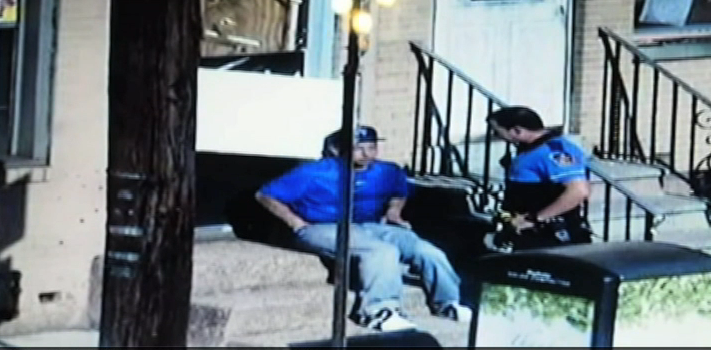
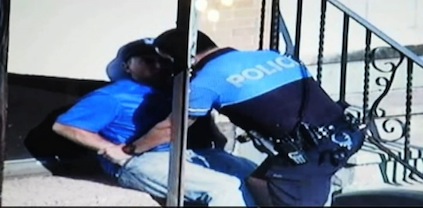
The ACLU of New Jersey is calling on state lawmakers to overhaul the state’s traffic code, arguing that police stops for minor violations like cracked windshields and expired inspections have little bearing on road safety but carry an outsized burden for Black and Hispanic drivers.
The ACLU of New Jersey released a report Tuesday urging the Legislature to restrict so-called non-safety traffic stops for technical infractions that the group says are statistically insignificant contributors to fatal crashes but routinely used as a pretext to investigate drivers for more serious offenses.
“New Jersey should leverage every tool at its disposal to protect its communities, and that includes promoting public safety by addressing dangerous driving,” said Lauren Aung, policy fellow at the ACLU-NJ. “Research has shown that if lawmakers modernize the traffic code and focus law enforcement resources on preventing accidents, lives are saved and racial disparities in traffic stop enforcement improve.”
The report, “New Jersey’s Road to Safety and Racial Justice: Reducing Non-Safety Traffic Stops,” draws on an analysis of more than six million state police traffic stops between January 2009 and May 2021 and makes specific recommendations for legislative action.
Lopsided numbers
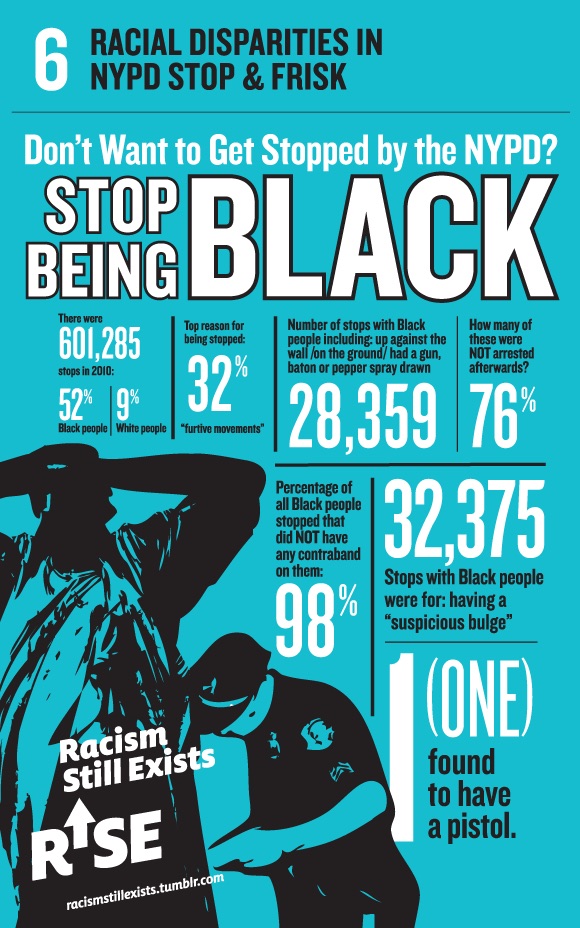
Black drivers accounted for 18.8% of all stops during that period despite making up 8.2% of New Jersey drivers. They comprised 36.5% of all searches.
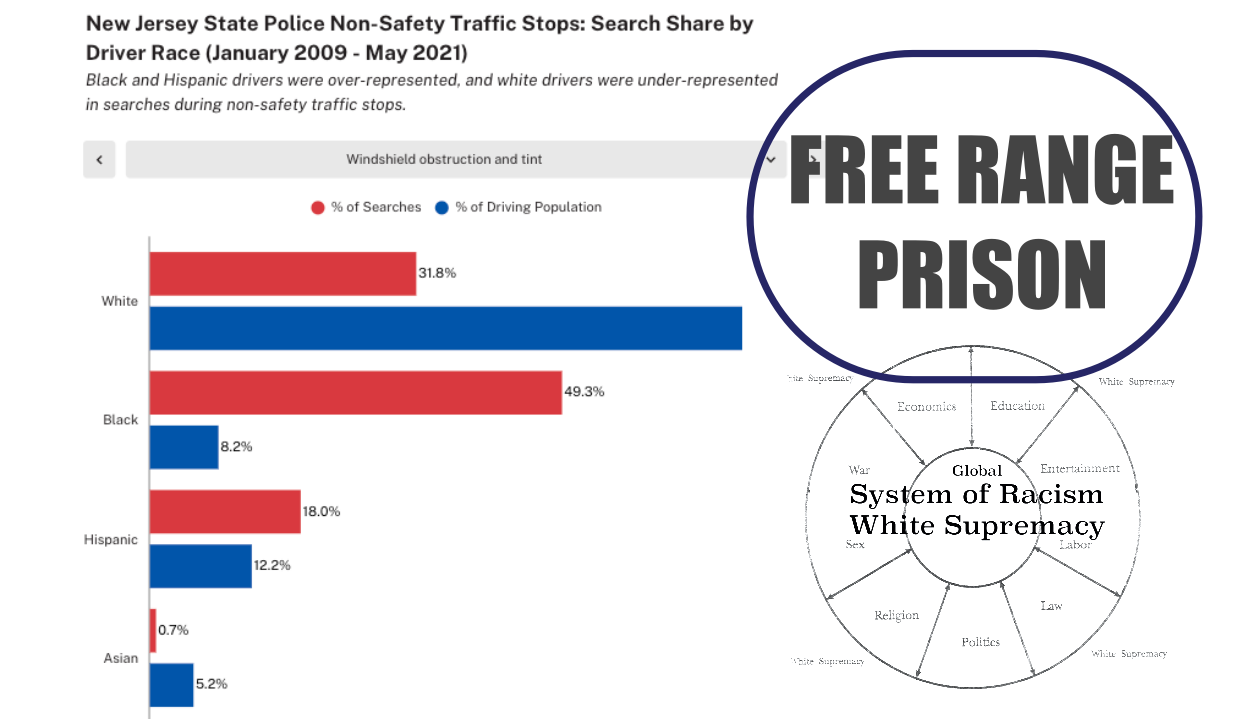
The disparity deepens for non-safety violations. For stops involving windshield obstruction and window tinting, Black drivers accounted for 28.1% of stops and 49.3% of searches, yet were less likely than white drivers to be found with contraband. The report describes the gap between how often drivers are searched and how often evidence is actually found as the “hit-to-search ratio.” For windshield violations, that figure was 0.26 for Black drivers compared to 0.29 for white drivers.
A separate 2023 report commissioned by the New Jersey Office of the Attorney General found that during daylight hours, when officers can more clearly see drivers, Black motorists were 9.3% more likely to be stopped than at night. Hispanic drivers were 16.1% more likely to be stopped. Black drivers were also 89.9% more likely to be searched than white drivers, but 9.7% less likely to be found with contraband.
The findings echo patterns documented elsewhere. In January, the state attorney general filed suit against Clark Township, alleging that police leadership had instructed officers to “keep Black people out of the Township” by targeting them with stops for minor violations. The lawsuit found that the practice created an environment so hostile that non-white residents avoided driving through the township altogether.
Roads and resources
Beyond racial equity concerns, the ACLU-NJ argues that non-safety stops are a poor use of police time.
Out of 11,750 vehicles involved in fatal crashes in New Jersey from 2010 to 2023, only 45 — less than half of 1% — had issues with lights, windows, mirrors, or windshields. By contrast, 22.8% of fatal crashes involved speeding, and 23.3% involved a distracted driver.
Contraband arrests from traffic stops are similarly rare. State police found contraband in just 0.76% of stops over the 12-year study period. [MORE]