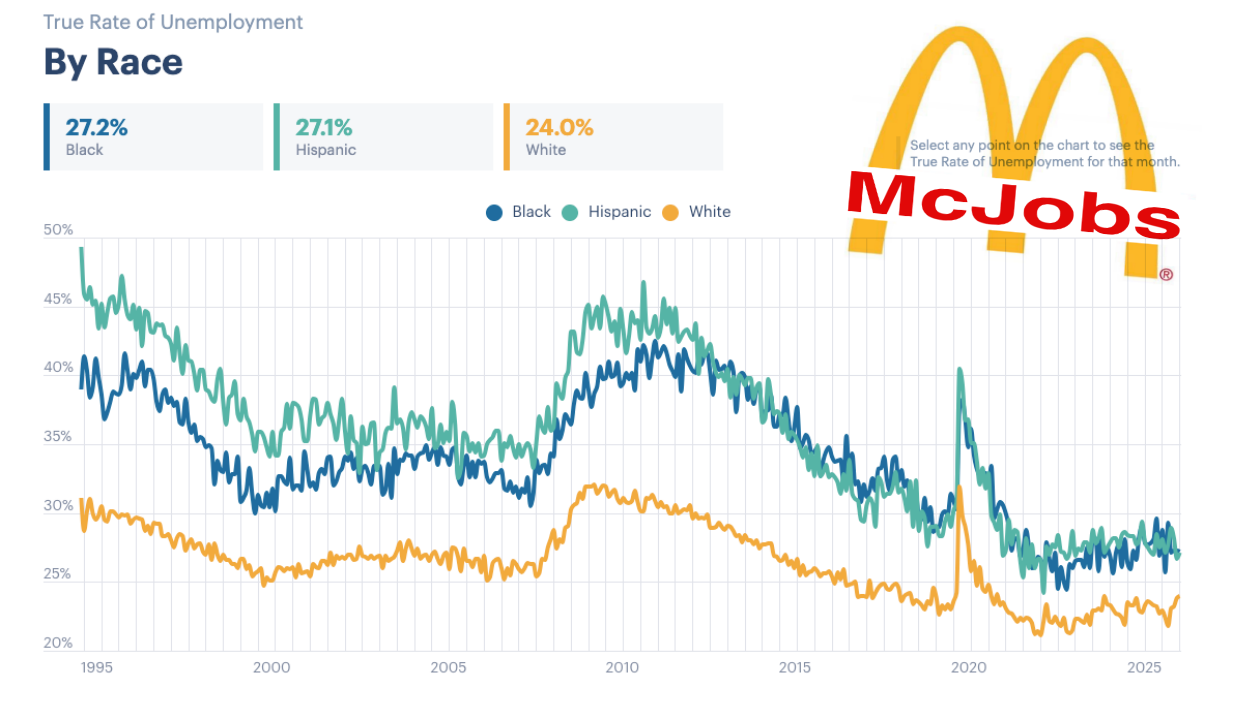
In the McNegro Land Presented in TV/Movies, Blacks are Often Depicted as Rich and Fully Integrated- In Reality 58% of Blacks Can't Afford Basics, Juggle Bills, Work in McJobs and are Burdened by Rent
/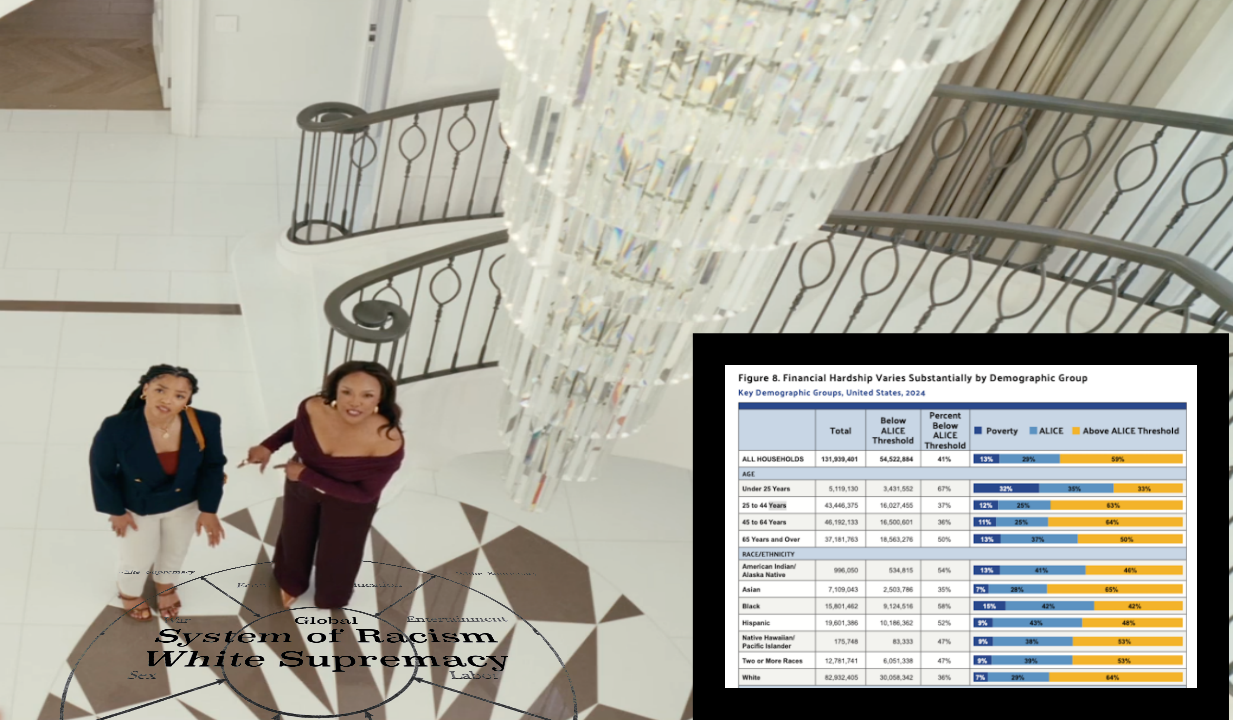
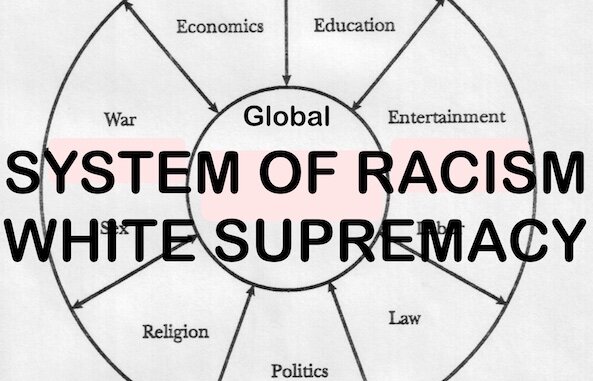
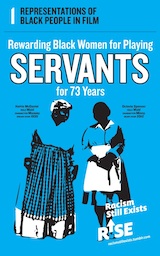
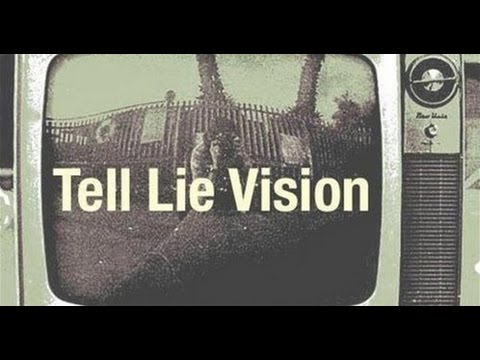
TELLING LIES TO YOUR VISION =TV. In photo above, two “black” women admire a chandelier in the mansion they live in. The screenshot is from the coin-operated SNigger Tyler Perry’s latest shitty movie. YT will make sure Tyler stays paid so long as he keeps making movies that are complementary to the system of racism white supremacy
The McNegro Land Psyop Funded by YT is Always On and Available to Enter Your Mind. A false reality used to create fake relations among deluded people and false consciousness programming to further enslave the Black mind. Similar to the ongoing NBA psy-op in which LeMedia insists that the viewer is witnessing greatness while watching the obvious mediocrity of Lebron James (or more recently the goofy, poor play of ‘WimpyYawna’), YT conceals the true context in which Black people live in, telling lies to your vision and distorting your perception of reality.
According to Dr. Amos Wilson, "It is the White monopoly on psychic violence and their devastatingly ingenious use of it against the minds of Afrikan peoples which represent the greatest threat to Afrikan survival. Through unrelenting psy-ops elite racists have programmed Black people with a falsified Afrikan consciousness.” Maintaining the Black mind in a state of political quiescence to their very low social status and 2nd class citizenship is a political necessity for elite racists.
The Spectacle – a constructed reality; the concrete inversion of life; via the autonomous movement of the apparently non-living. 2) the mirrorization of the noumenon into the phenomenal universe without understanding or overstanding it as such an objectivization in duality. The Spectacle is not a collection of images but a social relation among people mediated by images. The Spectacle is a theoretical construct—a tool for explaining many things about society; how people live vicariously through the dominant images of production, consumption and power relations. It is the thoughtforms in which people create, contemplate and consume mediated by images of what-life-is, so that they will forget how to live radically for themselves. It is the totality of images and illusions that alienate people from living, its the primary production of modern societies. It is ideology materialized. It is the social relations that are mediated by the mass media; it is what makes people apathetic and reduces them to inactivity. It is what prevents people from realizing what their collective problems are and dissolving them. It is what perpetually absorbs people into activities that prolong their misery. It is the mediated stream of unreality that channels desire-energy against itself, producing a separate world, a pseudo-world apart form one’s self-history—from all those powerful institutions of Self-actualization. It is what motivates people to live a pseudo-life in submission to products and machines, basking passively in the acceptance of oppression, to blindly do what is manifestly against their own self-interest, to pollute the land they love and the air they breathe—it is a fundamental sickness of modern societies superimposed over and aided by the “Rolebots” (clones and drones) of Corporate State. It is the mass media and the propaganda from the pure war machine and the military prison industrial police state complex. It is Doggy, the double-bind of not knowing real from unreal, (hypereal) or what you say from what you want. It is the mass objectivization and unholy marriage (union) of the Beasthood with the Syndrome, leaving people fragmented, separated, isolated, alienated, fascinated, pixelated, dilated, intimidated, exasperated, mediated, concatenated, weak, docile, dependent, submissive and uncritical. “The Spectacle is the ultimate commodity in that it makes all others possible.” ~Scott Bukatman. “Without the slightest hint of suppression or intolerance, the spectacle ensures that the appearance of real dissent precludes its real appearance.” ~Sadie Plant. (See: PIC, Commodity, Screen, Maya, Pseudolife, The Passing Show, Rolling Mirror, MEDIA, Materialism, Funktionalize, F-Prime, Meta-Frame, Naïve Realism, “Dream,” Trance, Emergency, Consumers & Doggy)
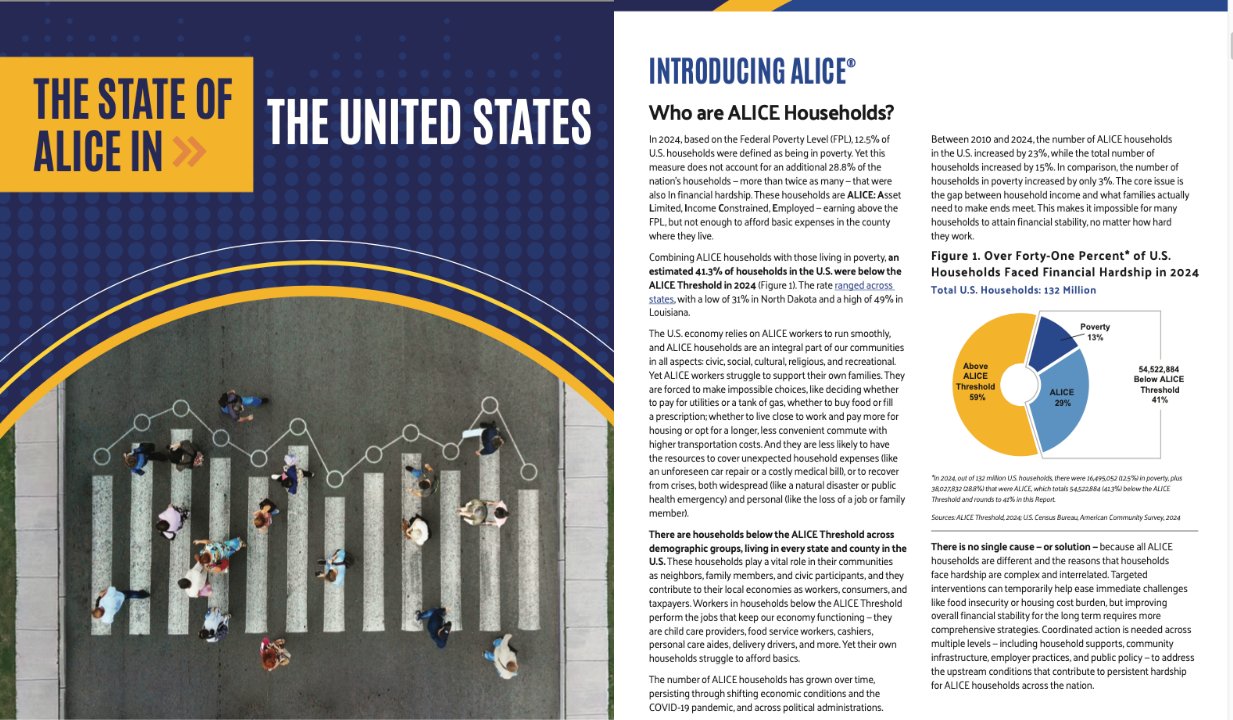
In Reality Federal Authorities Keep the Poverty Line Artificially Low ($15,060 for 1 adult in 2024) to Conceal at Least 36 Million Households who Earn Too Much to Qualify for Welfare and Not Enough to Afford the Basics. United Way of Connecticut President Tepper Bates doesn’t mince words: “The federal poverty line is garbage.”
Although the Census Bureau raises the poverty line each year in step with the Labor Department’s consumer-price index, some poverty experts say the underlying math doesn’t reflect many financial realities. The core assumption that families spend a third of their total income on food, they say, is inconsistent with the fact that on average, housing consumes the largest share of household budgets. And the metric doesn’t adjust for differences in the cost of living across the U.S., which hurts residents of high-cost states such as Connecticut.
The Census Bureau released its own supplemental poverty measure in 2011 that provides a more nuanced calculation. The official poverty line of $15,060 for one adult in 2024, however, remains the baseline for determining most public assistance. Among the benefits: Medicaid and the Children’s Health Insurance Program (CHIP), the Supplemental Nutrition Assistance Program (SNAP) and the National School Lunch Program. [MORE]
The United Way has created a more accurate way to measure financial hardship called ALICE. Their 2026 annual report indicates the following about the reality that an overwhelming number of Black people face:
Definitions used by the United Way to measure “financial hardship:”
ALICE: Asset Limited, Income Constrained, Employed — households with income above the Federal Poverty Level (FPL) but less than the basic cost of living in their county
ALICE Household Survival Budget: Reflects the minimum costs of household necessities (housing, child care, food, transportation, health care, and technology) plus taxes, adjusted for all U.S. counties and various household compositions
ALICE Threshold: Derived from the Household Survival Budget, the minimum average income that a household needs to afford basic costs, calculated for all U.S. counties
Below ALICE Threshold: Includes households in poverty and ALICE households combined
ALICE demographics: There were households below the ALICE Threshold across all Census-reported demographic groups in the U.S. in 2024. And in every state, some populations — by age, race/ethnicity, family type, and location — experienced higher levels of financial hardship. This reflects both longstanding and ongoing policies and discriminatory practices in areas of work, housing, education, and access to community resources that limit financial stability for many families. In 2024, the groups with the highest percentage of households below the Threshold included households headed by people under age 25 (67%) or age 65 and older (50%); Black households (58%), American Indian/Alaska Native households (54%), and Hispanic households (52%); single-parent-headed households (74% single-female-headed, 56% single-male-headed); and households in rural areas (43%).
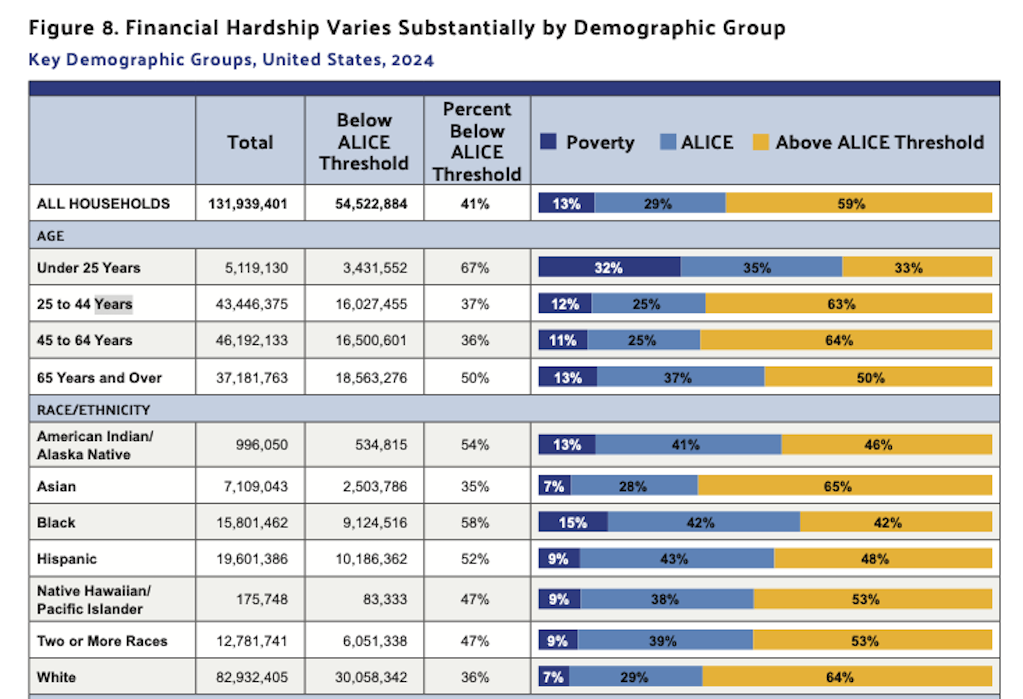
Households by race/ethnicity: Rates of financial hardship differed substantially by race/ethnicity in the U.S. In 2024:
z The largest number of households below the ALICE Threshold were White (30 million), making up 36% of all White households.
z Hispanic and Black households were the next largest groups – there were 10 million Hispanic households below the Threshold (making up 52% of all Hispanic households) and 9.1 million Black households below the Threshold (making up 58% of all Black households).
z There were 6 million households headed by someone of Two or More Races below the Threshold, making up 47% of all households of Two or More Races. Other, smaller groups also had high rates of hardship: 54% of American Indian/ Alaska Native households and 47% of Native Hawaiian/ Pacific Islander households were below the Threshold.
z Asian households had the lowest rate of financial hardship (35%). [MORE]