DREAMers Say Obama's Not Off the Hook for Record Deportations

ColorLines

United We Dream, the country's leading organization of immigrant youth, released a comprehensive list of principles for immigration reform today that outlines a fast and inclusive path to citizenship for all 11 million undocumented immigrants and a rollback of harsh deportations programs.

Leaders of the group said that they are putting their full weight behind comprehensive immigration reform and are energized by President Obama's commitment to getting a bill passed this year. But, on a call with reporters they added that DREAMers are not taking the pressure off the president to slow deportations, which they say continue to tear their families apart.

"DREAMers are not good at accepting NO as an answer," said Lorella Praeli, policy director of United We Dream. "If the president is saying he will not stop the deportation of members of our community, we do not take that lightly."

Last year, the movement to pass the DREAM Act, which would have extended a path to citizenship to young undocumented immigrants, changed their demand from legislation to administrative relief, calling on the president to stop deporting DREAM Act eligible youth. After months of actions, Obama announced the Deferred Action for Childhood Arrivals program, which halted the deportations of many DREAM Act youth.

Yesterday, United We Dream leadership met with President Obama and asked him to halt the deportation of their parents. Data obtained by Colorlines.com in December revealed that the Department of Homeland Security deported 205,000 parents of US citizen kids in a period of just over 2 years.

In the meeting, the president said he would not slow enforcement as reform deliberations move ahead.

"The president was clear in responding to our concerns that there is a huge disconnect between" his vision of immigration reform and enforcement, said Praeli. But, "What he said is that politically he believes that he has more leverage" to pass reform if enforcement remains.

The DREAMers say they will vigorously advocate for a comprehensive immigration reform bill and support the president's efforts to build broad support. But, Praeli warned, "if later on the moving vehicle is something else, whether it be a moratorium [on deportations] or a stronger ask on administrative relief for our parents," they'll shift their demands.

"It is that leverage that our community has built over ten years...that got us to have the leverage to bring to the table both parties," she said, highlighting the group's power.

NYPD Breaks Down 'Stop-Frisk' Data by Precinct and Race

ColorLines

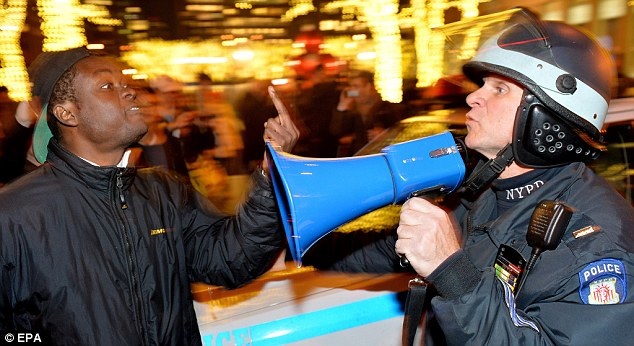
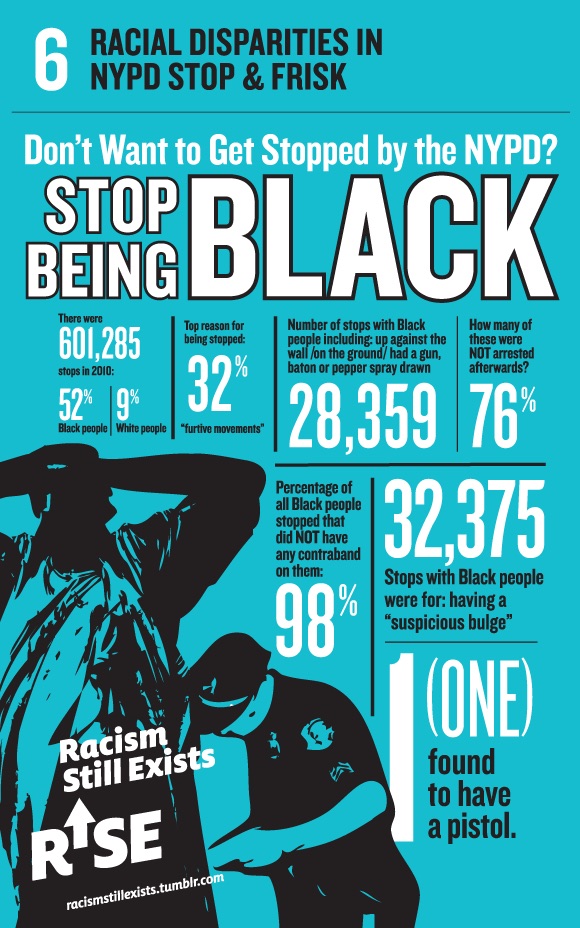
Earlier this week the New York Police Department released a report that breaks down its controversial stop and frisk policy by precinct and race.

CNN breaks down the numbers: > Nearly nine out of 10 people "stopped and frisked" under a controversial New York Police Department policy in 2011 were African-American or Hispanic.

The data comes from a report released by the NYPD Monday, which showed that of the 685,724 stops made by police that year, 53% of those questioned were black, 34% were Latino, 9% were white and 3% were Asian.

The citywide population in 2011 was 23.4% black, 29.4% Hispanic, 12.9% Asian, and 34.3% non-Hispanic white, according to the report.

Brooklyn's 75th precinct, covering East New York and Cypress Hills, had the most stops in the department. Ninety-seven of the more than 31,000 people stopped were black or Latino.

Brooklyn's 73rd Precinct, covering Brownsville, was the next highest, with 25,167 stops. About 98 percent involved people of color.

The 40th Precinct in The Bronx, which covers Mott Haven and Melrose, 'stopped and frisked' 17,690 members of the community-- with 98.5 percent involving people of color.

"While it appears at first blush to be a slick, fact-filled response, nothing in the report can dispute the reality that stop and frisk NYPD-style is targeted overwhelmingly at people of color, so innocent of any criminal wrongdoing, that all but 12 percent walk away without so much as a ticket," NYCLU Executive Director Donna Lieberman said in a statement to the NY Post.

A July 2012 report from the Center for Constitutional Rights also found members of a range of other communities are also experiencing "devastating impact from this [stop-and-frisk] program," including LGBTQ/GNC people, non-citizens, homeless people, religious minorities, low-incomepeople, residents of certain neighborhoods and youth.

The "2011 Reasonable Suspicious Stops: Percent Based Comparison by Stop and Suspect Description" report is published below: is published below:

Rwanda genocide convictions overturned

Aljzeera

A UN appeal court has overturned genocide convictions of two Rwandan ex-ministers who were jailed for 30 years in 2011, and ordered their immediate release.

Appeal Judge Theodor Meron overturned the convictions on Monday for complicity to commit genocide and incitement to commit genocide against Justin Mugenzi, who was trade minister during the 1994 genocide, and Prosper Mugiraneza, former minister in charge of civil servants.

"The convictions were reversed because the ICTR Appeals Chamber believes strongly that there were errors in the trial
chamber's assessment of the evidence," Roland Amoussouga, International Criminal Tribunal for Rwanda spokesperson, told Reuters news agency by telephone from its base in the Tanzanian city of Arusha.

"The appeals chamber has acquitted the accused persons and ordered their immediate release."

The lower court had convicted the two on the grounds that they attended a council of ministers meeting that decided the then prefect of Butare, a region in southern Rwanda, was to be dismissed on the grounds that he was preventing the massacres from starting in his region.

The prefect, Jean-Baptiste Habyarimana, was killed after his dismissal and the massacres promptly started in Butare.

Guilty of complicity

The lower court judges had ruled that the presence of Mugenzi and Mugiraneza at that meeting, and at another meeting two days later where interim President Theodore Sindikubwabo urged the population to kill Tutsis, meant that they were guilty of complicity to commit genocide and incitement to commit genocide.

The appeal judges, however, found that Mugenzi and Mugiraneza did not know that Sindikubwabo was going to make such a speech, and that the dismissal of the prefect could have been decided "for political and administrative reasons" and not necessarily in order to speed up the massacres.

The umbrella of Rwanda Genocide survivors’ associations (IBUKA), however, strongly condemned the acquittal of two genocide suspects who had previously been convicted of genocide crimes and sentenced to 30 years in jail.

In a statement reacting to the release, the president of IBUKA, Professor Jean Pierre Dusingizemungu said: "This acquittal is another nail in the coffin of the victims of the genocide, and a smack in the face for survivors of the genocide too."

During the genocide, about 800,000 of the minority Tutsi ethnic group and moderate Hutus were systematically killed.

Florida’s School-to-Prison Pipeline Is Largest in the Nation

ColorLines

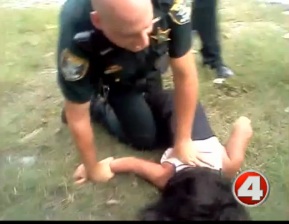
It used to be that getting in a schoolyard fight meant a trip to the principal’s office—detention, maybe. But in Florida, more than any other state, that schoolyard fight can lead to the student’s arrest and even felony charges. Last year 12,000 students were arrested 13,870 times in Florida public schools, the Orlando Sentinel reported. The arrests are meted out unevenly. Black students are just 21 percent of Florida youth, but make up 46 percent of all school-related referrals to law enforcement, according to the Sun Sentinel.

The majority of the arrests, 67 percent, were for infractions like fist fights, dress-code violations, and talking back—schoolyard misbehavior that, in Florida and elsewhere, increasngly results in misdemeanor criminal charges. “The vast majority of children being arrested in schools are not committing criminal acts,” Wansley Walters, secretary of the Florida Department of Juvenile Justice, told the Orlando Sentinel.

While Florida is not alone in turning to police to discipline young people, it has the distinction of being the nation’s leader in school-based arrests. Last year, Florida produced the highest documented number of school-based arrests in the country—and that number was an improvement over previous years. In 2005, Florida made 28,000 arrests in school. It has logged a 39 percent drop in school arrests over the last seven years, according to the Department of Juvenile Justice. (PDF)

In most cases, 69 percent, the juvenile justice system ultimately dismisses or otherwise diverts the charges. But experts say getting hauled away from school in handcuffs nonetheless has a lifelong impact.

David Utter, director of the Florida Youth Initiative at the Southern Poverty Law Center, notes that getting arrested is, at a basic psychological level, a “highly traumatic” experience for young people. It can precipitate the breakdown in trust between young people and the adults in their lives, making what should be a welcoming and nurturing environment a hostile place.

The arrests also carry more measurable costs. Even when the arrest doesn’t go anywhere because, say, the state chooses to drop the case, a child is forever forced to answer affirmatively when asked on job and other applications whether they’ve ever been arrested. Statutes allow a child to have his or her record expunged, but expungements are not automatic, said Utter, and the state still holds onto personal data about a child. “It’s pretty damn permanent,” Utter said.

Convictions are even more damaging. Convicted felons are not allowed to vote in Florida, and are barred from accessing certain benefits like housing or higher education grants, said Alana Greer, a staff attorney at the Advancement Project.

School-based arrests are a byproduct of the growing role of police in schools, a trend that’s developed alongside the rise of so-called “zero-tolerance” school discipline policies since the 1980s. The policies, using language borrowed from the war on drugs, demand swift and harsh punishments as a response to disciplinary infractions. Many observers worry that as school-based shootings shock the country, schools will see a further escalation of zero-tolerance policies and a concordant influx of police in schools. Last month, President Obama unveiled a multi-pronged plan to prevent future school-based shootings. As part of his school security plan, Obama called for more therapists, social workers, counselors—and police officers.

Those police officers, who are not trained in adolescent development, are increasingly being called on to fill a role that school counselors, teachers and other adults used to fill, said Greer. “Disciplinarians are so overwhelmed so much of the time, and there’s someone down the hall who can make the situation go away,” Greer said, “But that person happens to have a badge, a gun and handcuffs.”

“We’ve lost sight of common-sense discipline,” she said.

Florida is not alone in its zealous use of arrests as a disciplinary response, or in its racially disparate application of school-based arrests. More than 68 percent of youth go to U.S. schools with a police officer assigned to their campus. When police officers are around, what they tend to do is arrest kids, juvenile justice advocates have lamented. Late last year the Department of Justice sued Meridian, Miss., for running a school-to-prison pipeline which ushered a disproportionate number of black students out of school and straight into the waiting arms of the juvenile justice system.

But more police don’t necessarily improve school climates. The American Psychological Association’s sweeping 2006 review found that zero-tolerance policies aren’t effective tools for discouraging misbehavior. Nor do they make schools safer. “While the intentions of putting those police officers in schools is good, they come with an extraordinary number of unintended consequences,” said Lara Herscovitch, a senior policy analyst with the Connecticut Juvenile Justice Alliance.

In Florida, where Walters’ Department of Juvenile Justice has committed to reducing the rate of school-based arrests by 10 percent this year, the situation is still urgent. Even with recent improvements, the percent of those arrested for petty misdemeanors “hasn’t budged,” Utter said. “While it’s a good thing that fewer children are being arrested, we’re still arresting kids for utter bullshit.”

Groups like the Southern Poverty Law Center and the Advancement Project, along with local affiliates like the Florida NAACP in Broward County are working with educators, law enforcement and school administrators to address the arresting spree.

But for all the recent improvements, the post-Newtown talk of ramping up school security via more police has advocates on watch. Herscovitch says that especially in this post-Newtown climate, when the impulse is to send even more police officers to schools, juvenile justice and school safety advocates “are working very hard to make sure that the response to Newtown doesn’t create another 10 to 20 years of consequences.”

Designated Django Defender/'Showcase Black' Jamie Foxx Draws Conservative Ire For Calling Black People ‘The Most Talented People In The World’

NewsOne

Actor Jamie Foxx (pictured) is drawing heavy criticism for a remark he made at the 44th NAACP Image Awards on Feb. 1st. “Black people are the most talented people in the world,” are the words that have some conservatives riled up.

Foxx made the remarks during his acceptance speech for “Entertainer Of The Year.” Shortly after the show, conservative news sites took the actor to task. “Can you imagine the heat a white actor would get if he said at a nationally televised awards ceremony, ‘White people are the most talented people in the world?’” wrote Noel Sheppard, penning a reaction piece for NewsBusters, a site that dedicates itself to exposing liberal media bias. “Probably be the end of his or her career.”

Former Fla. GOP (White Party) chief pleads guilty to Theft, Money Laundering

CitizensforLegitGov

The criminal trial of former Republican Party of Florida chair Jim Greer had promised to be embarrassing for party leaders... But Greer's guilty pleas on Monday to four counts of theft and a single count of money laundering ended the trial before it even started and ensured that some state GOP secrets will currently remain confidential. "There were a number of people who did not want this trial to go forward and the trial isn't going forward," Damon Chase, Greer's attorney, said after the former chair entered his pleas in court. "Once again, Jim Greer is falling on his sword for a lot of other folks."

Racist Suspect (desperately wants attention) Ted Nugent Accuses Civil Rights Leaders Of Speaking "Ebonic Mumbo-Jumbo"

Media Matters

National Rifle Association board member Ted Nugent published a column on birther website WND alleging that if a Republican president had the same drone policy as the Obama administration, "Jesse Jackson and Al Not-So-Sharpton would be lisping their ebonic mumbo-jumbo that the policy and the president are racist and bigoted." 

Nugent recently became "an exclusive WND columnist," and told Media Matters that he was attracted to the website's audience of "bold, straight truth-logic celebrants with whom I share honest American common sense."

Among other predictions made by Nugent in his column:

The "99-percenter" crowd of intentionally unemployed Americans would move into Lafayette Park across the street from the White House, where they would pitch their tents and refrigerator boxes, ingest massive amounts of mind-altering chemicals and then try to storm the gates of the White House.

[...]

The residents of East St. Louis, Detroit, Chicago and other cities would burn their own neighborhoods in protest.

[...]

Representatives from NARAL, the pro-abortion group, would say had they known the Republican president was going to issue such an order, they would have wished their parents had aborted them.

Despite Nugent's history of making inflammatory comments, often in the context of race, he has been treated by mainstream media as a credible source of information in the gun policy debate.

In previewing a segment on Nugent's views on firearms on February 1, CNN reporter Deb Feyerick claimed that he had "a very deep connection with the facts and the facts that he needs to make his argument." During the Feburary 4 segment on CNN's Erin Burnett OutFront, Feyerick and host Erin Burnett gave serious treatment to Nugent's conspiracy theory that Obama wishes to confiscate firearms, even discussing what would happen if the government attempted to "take all the guns away tomorrow." Nugent's opposition to gun violence prevention proposals was also praised by Fox News host Bill O'Reilly, who stated on the February 5 edition of The O'Reilly Factor, "Now that kind of straight talk is what the Republican Party needs."

During a January 9 interview with WND, Nugent suggested, "there will come a time when the gun owners of America, the law-abiding gun owners of America, will be the Rosa Parks and we will sit down on the front seat of the bus, case closed."  Civil rights leaders condemned Nugent for his comparison between gun owners and civil rights activist Rosa Parks. Later that month, Nugent told WND that having Vice President Joe Biden and Attorney General Eric Holder head a gun safety task force is "like hiring [serial killer and cannibal] Jeffrey Dahmer to tell us how to take care of our children."

Disparate Impact and Fair Housing: Seven Cases You Should Know

Propublica

Last week, the Obama administration formalized the legal standard it has used to enforce fair housing laws and hold banks accountable for their role in a foreclosure crisis that hit black and Latino homeowners the hardest.

The U.S. Department of Housing and Urban Development issued a regulation on disparate impact,” codifying a long-used legal precedent that says the Fair Housing Act prohibits practices that result in discrimination “regardless of whether there was an intent to discriminate."

After decades of being denied credit, many minority communities were victim to “reverse redlining” during the foreclosure crisis, as mortgage companies pushed risky loans in hopes of profiting from their higher interest rates and fees. With the disparate impact standard, the Department of Justice was able to argue that the disproportionate harm to communities of color put predatory lenders in violation of the Fair Housing Act and the Equal Credit Opportunity Act.

Now, the Supreme Court is considering hearing a challenge to the disparate impact standard. Some say HUD’s new guideline could be “the deciding factor” in whether the standard will withstand the Supreme Court’s scrutiny.

As housing officials and civil rights advocates keep their eye on the high court, we’ve rounded up seven key disparate impact cases you should know about.

United States v. Countrywide Corporation, Countrywide Home Loans and Countrywide Bank

Countrywide, a now-defunct mortgage company owned by Bank of America, gave subprime loans to 10,000 Hispanic and African-American borrowers, while providing prime loans for white borrowers with similar financial situations. (Subprime loans come with higher interest rates to account for a supposed higher risk of default.) A Bank of America spokesperson said the DOJ reviewed loans made before Bank of America purchased Countrywide in July 2008.

As we reported last week, the DOJ reached a $335 million settlement, the US’ largest fair lending settlement on record, using the disparate impact standard. Countrywide has not admitted to any discriminatory practice.

United States v. Wells Fargo

The DOJ case against Wells Fargo over violation of the Fair Housing Act is the second largest fair lending settlement in the DOJ’s history, after the lawsuit against Countrywide Financial. Brokers at the country’s largest mortgage lender were found to have raised interest rates and broker fees for more than 30,000 minority customers. According to lending data, African-American customers in the Chicago area paid on average $2,937 more in broker fees than similarly situated white customers. Hispanic borrowers were charged $2,187 more. Black and Hispanic homeowners also were encouraged to take on riskier subprime loans.

Wells Fargo agreed to a $175 million settlement in July, though the company denies any wrongdoing and says they settled to avoid a “costly legal fight.”

Adkins et. all v. Morgan Stanley

The ACLU, along with the National Consumer Law Center and the law firm of Lieff, Cabraser, Heimann & Bernstein, filed a lawsuit in October against Morgan Stanley claiming the financial services firm encouraged lenders to push high-risk mortgage loans on African-American borrowers. The case centers on Detroit, where from 2004 to 2006, African Americans were 70 percent more likely to receive a subprime loan than white borrowers with the same income and credit background.

The case was the first to charge the secondary mortgage market, and not just mortgage companies themselves, with violating the Fair Housing Act. The plaintiffs contend that Morgan Stanley encouraged now-defunct New Century Financial Corporation to sell predatory loans, which targeted predominantly black communities. Morgan Stanley profited by bundling and selling those loans to investors, allegedly knowing borrowers were likely to default.

Morgan Stanley filed a motion to dismiss the case at the end of December. Oral arguments are scheduled to be heard in March.

United States v. SunTrust Mortgage Inc.

The DOJ found that Sun Trust Mortgage allowed its brokers considerable leeway in determining a customer’s interest rate, resulting in discriminatory prices for minorities. They were charged with violating both the Fair Housing Act and the Equal Credit Opportunity Act in charging more than 20,000 black and Hispanic customers with higher interest rates and fees between 2005 and 2009.

SunTrust denied any wrongdoing, but settled for $21 million in May.

United States v. C&F Mortgage Corporation

The Justice Deptartment charged C&F Mortgage with violating the FHA and ECOA by raising interest rates for black and Hispanic mortgage customers. C&F did not require its loan officers to document reasons for changing a customer's interest rate from the standard rate, and increased compensation for brokers who charged higher loan prices.

Though C&F denied allegations of discrimination, they settled for $140,000 and began reviewing brokers' compliance with nondiscrimination standards, specifically their justification for large interest rate adjustments. The company also agreed to institute new pricing policies and employee training policies.

Greater New Orleans Fair Housing Action Center et. all v. HUD and Paul Rainwater, Executive Director of the Louisiana Recovery Authority

In 2008, New Orleans housing organizations and local homeowners accused HUD and the Louisiana Recovery Authority of discriminating against black homeowners in the aftermath of Hurricanes Katrina and Rita. The Road Home program was supposed to provide storm victims with funding to rebuild their homes, but based their compensation on their house’s original value rather than the cost of damage. Houses in black neighborhoods that were identical to houses in white neighborhoods were given far less money to rebuild. 

In 2011, HUD agreed to pay roughly $62 million under a new Blight Reduction Grant Adjustment program. The funding will serve 1,460 eligible homeowners in four parishes that suffered the most damage.

United States v. PrimeLending

The Department of Justice found that PrimeLending regularly set higher loan prices for African American borrowers. As one of the country’s biggest Federal Housing Authority lenders, PrimeLending provides mortgage loans to low-income customers that are guaranteed by the FHA or the Department of Veterans Affairs. PrimeLending incentivized increasing “overages” (higher interest rates) by providing higher compensation for brokers.

The mortgage company settled for $2 million in 2010, and set new loan pricing policies and employee training requirements.

Keep up with our investigations by following us on Facebook and Twitter, or read more about the Fair Housing Act, and how the government betrayed a landmark civil rights law

First Lady’s State of the Union Guest is a 102-Year Old Black Woman who Endured 3 Hour Line to Vote: Did White Democrats Wait in Line?

ThinkProgress

For Tuesday’s State of the Union address, First Lady Michelle Obama will host 102-year-old Desiline Victor, one of the thousands of Floridians who experienced chaos at the polls and waited in marathon lines to vote in November’s presidential election. Victor, a Haitian immigrant who resides in Miami, stood in line for three hours on the first day of early voting, but had to make a second trip to the precinct in order to finally cast her vote:

Victor voted for the president, but it was not easy. On her first visit to the polls on the morning of Oct. 28, the first day of early voting, she waited in line for three hours. Poll workers eventually advised her to come back later, and she did.

She finally cast her vote that evening. Her story spread around the polling place and inspired some would-be voters to stay in line, too, instead of being deterred by the delays.

Victor will now attend the State of the Union as a representative of all the voters who endured multiple obstacles to vote. These obstacles were man-made; Gov. Rick Scott (R-FL) cut early voting days, added lengthy and unnecessary amendments to the ballot, and enacted several election law changes which other Florida Republicans later admitted were intended to suppress votes. Their efforts largely paid off — one study determined that at least 201,000 Florida residents gave up on voting in 2012 because of the long lines. Black and Hispanic voters waited almost twice as long as white voters to cast their ballot.

According to the Washington Post, the White House chose Victor after specifically searching for someone who could be the face of voting rights during President Obama’s speech. Though this last election is over, several state legislatures are awaiting the fate of the Voting Rights Act, which will be challenged at the Supreme Court on February 27. If the Court invalidates key provisions, minority voters like Victor are likely to face even more difficulties at the polls.

DOJ holds public meeting to discuss Albuquerque Police probe: APD = Another Person Dead

kob


Albuquerque residents had an opportunity to meet with representatives of the Department of Justice Monday night in one of two meetings scheduled for this week.

Representatives from the DOJ stated they are interested in any documented proof that shows an Albuquerque Police Officer may have used excessive force on the job.

The first meeting was held at the Cesar Chavez Community Center and drew in a standing room only crowd. While the lines were long to talk to representatives, many said it was worth the wait for someone to hear their story.

The next meeting is Wednesday at the Alamosa Community Center. Those who cannot make the meetings can file concerns by calling 1-855-544-5134 or email community.albuquerque@usdoj.gov.

Christopher Dorner: LAPD offer $1m reward after manhunt fails

Guardian

Authorities in Los Angeles have offered a $1m (£633,000) reward for information about the rogue ex-police officer suspected of killing three people after a huge manhunt failed to catch him.

Mayors, police chiefs and federal officials announced the bounty at a joint press conference as the trail for Christopher Dorner in the Big Bear ski resort area went cold.

"We will not tolerate this reign of terror that has robbed us of the peace of mind that the residents of southern California deserve," said the mayor of Los Angeles, Antonio Villaraigosa, announcing what was thought to be the biggest reward in state history.

Police unions, government agencies and private donors contributed to the fund, he said, to "bring this tragedy to an end". He urged the public not to engage a fugitive deemed armed and extremely dangerous.

The show of official unity and the unusually large reward underlined anxiety that a dragnet of helicopters and swat teams in Big Bear, a snowy mountain resort north of LA, had failed to net Dorner.

The former navy reservist and trained marksman has declared war on officers and their families in revenge for being sacked from the police. His rampage and the LAPD's blundering response – shooting and wounding innocent people – has transfixed the US and turned Dorner, in some quarters, into a folk hero.

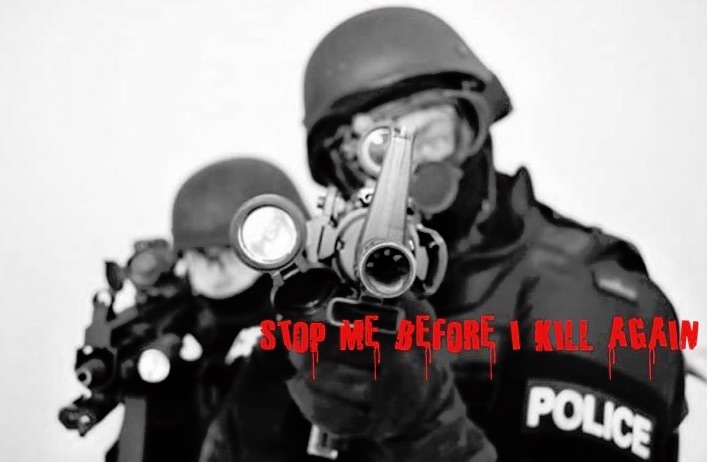
Charlie Beck, the LAPD chief, told a news conference Dorner was engaging in "domestic terrorism" that could not go unanswered: "This is not about capturing a fleeing fugitive, this is about preventing a future crime. Every day that Dorner is loose … [an] attack on a police officer, or family is likely. We ask the public to help us find Dorner before he kills again." Beck said that 50 police officers and their families thought to be on a hit list were under protection.

On Saturday, in a separate development, the police chief ordered a review of the disciplinary case that led to Dorner's dismissal and promised to talk with him if he surrendered. "I do this not to appease a murderer. I do it to reassure the public that their police department is transparent and fair."

In an online manifesto posted before his shooting spree, Dorner alleged that racist colleagues had drummed him out for protesting about a training partner's assault on a homeless man in 2007. An investigation in 2009 found that there was no assault and Dorner had lied.

A joint taskforce involving the LAPD, FBI and other police forces will examine a case that Beck acknowledged had revived concerns about racism within his force. "I feel we need to … publicly address Dorner's allegations regarding his termination of employment," he said.

Police hoped to corner Dorner at Big Bear after his truck was found abandoned, on fire on a back road. Its axle was damaged and weapons and survival gear were inside. Swat teams deployed, battling poor visibility, but after five days there was no sign of the fugitive. Some teams have pulled out, leaving about 50 officers still scouring a smaller area.

In a short video posted on TMZ, the actor Charlie Sheen invited Dorner to get in touch, noting that he had been praised as "awesome" in the fugitive's rambling, 11,000 word Facebook posting. "You mentioned me in your manifesto, so thank you for your kind words," Sheen said. "I am urging you to call me. Let's figure out together how to end this thing. Call me. I look forward to talking to you."

Dorner has vowed to wage "unconventional and asymmetrical warfare" against his former comrades and has put together a "hit list". On 3 February, Dorner allegedly killed Monica Quan, 28, a basketball coach, and her fiance, Keith Lawrence, 27, as they sat in a car in Irvine, south of LA. Quan was the daughter of a police captain who had represented Dorner – negligently, in Dorner's view – at his tribunal.

After reportedly failing to hijack a boat to Mexico he was spotted near Corona, south of LA, last Thursday. He exchanged shots with a patrol, grazing one officer in the head. About 20 minutes later Dorner reportedly ambushed two officers at a red traffic light in nearby Riverside, killing one, Michael Crane, 34, a veteran, and wounding the other, a trainee. A huge security operation is expected at Crane's funeral on Wednesday.

Controversy has continued to grow over the police shooting last Thursday of a pick-up truck mistaken for Dorner's. Officers fired more than 20 bullets at a 71-year-old mother and daughter who were delivering copies of the LA Times. The mother was hit twice in the back but is expected to recover. The daughter escaped with minor injuries. Police also rammed and shot at another pick-up driven by an airport baggage handler. He was concussed but escaped serious injury. The LAPD has apologised to the victims.

Ending Saturday Delivery will Disproportionately Impact Non-Whites at Postal Service: 40% of Employees are Non-White

Examiner

According to Rep. Elijah Cummings (D-Md), the U.S. Postal Service's decision to end Saturday delivery will disproportionally hurt women and minorities, The Hill reported Saturday.

"You're talking about just this reduction … from six days to five days will cut anywhere from 25,000 to 30,000 employees. And with regard to Asian, African-Americans, and Hispanics, they comprise about 40 percent of the Postal Service employees," he told MSNBC's Melissa Harris-Perry on Friday.

"So it's logical to believe if they were to lose that 30,000 jobs, easily 40 percent of them would be African-Americans, Hispanics, and Asian-Americans," he added.

Asian immigrants' kids better off than US population

NYDaily

America's 20 million adult US-born children of Asian and Hispanic immigrants are substantially better off than their parents in household income, college graduation rates and home-ownership levels, according to a new study.

These second generation Americans are also more likely to speak English, have friends outside their racial or ethnic group and view themselves as a "typical American", the Pew Research Centre's Social and Demographic Trends Project found.

Indian Americans are not counted separately in the study and are included among Asian Americans, who together with Hispanics make up about seven-in-10 of today's adult immigrants and about half of today's adult second generation.

The second-generation Hispanics and Asian Americans also place more importance than does the general public on hard work and career success, according to the Pew analysis of US Census Bureau data.

They are more inclined to call themselves liberal and less likely to identify as Republicans, it said. And for the most part they are more likely to say their standard of living is higher than that of their parents at the same stage of life.

The report comes as the US Congress gears up to consider immigration reforms to tackle the problem of over 11 million illegal immigrants, including some 250,000 Indians.

Given current immigration trends and birth rates, virtually all (93 percent) of the growth of America's working-age population between now and 2050 will be accounted for by immigrants and their US-born children, the study projected.

Key findings:

Second generation adults are doing better than the first generation in median household income ($58,000 versus $46,000); college degrees (36 percent versus 29 percent); and homeownership (64 percent versus 51 percent).

They are less likely to be in poverty (11 percent versus 18 percent) and less likely to have not finished high school (10 percent versus 28 percent).

Roughly six-in-10 adults in the second generation consider themselves to be a "typical American," about double the share of immigrants who say the same.

Still, most in the second generation also have a strong sense of identity with their ancestral roots. Majorities say they identify themselves most often by their family's country of origin.

About one-in-six (15 percent) married second-generation adults have a spouse of a different race or ethnicity from themselves, compared with 8 percent of all immigrants and 8 percent of all US adults.

Intermarriage rates are especially high for second-generation Hispanics (26 percent) and Asian Americans (23 percent).

Camping gear found in Dorner's burned truck/ Search is Scaled Back, Police Raising Money to Offer Reward

KRSO

Camping gear was found along with weapons inside the burned-out truck belonging to Christopher Dorner, the former Los Angeles police officer suspected in three killings who is the subject of a manhunt in Southern California's snow-covered mountains, authorities said Sunday.

The Nissan pickup found Thursday in this ski resort town was so charred that investigators couldn't be more specific about the nature of its contents, said Los Angeles police Sgt. Rudy Lopez.

Meanwhile, police also were investigating a taunting phone call that may have been made by Dorner to the father of the woman they believe he killed last week. Two law enforcement officers who requested anonymity because of the ongoing investigation told The Associated Press on Sunday they are trying to determine if the call days after the killing was made by the 33-year-old fugitive or a man posing as him.

SWAT teams with air support and bloodhounds fanned out for the fourth day to search for Dorner, who has vowed revenge against several former LAPD colleagues whom he blames for ending his career.

The effort was significantly scaled back as the weekend went on, with 25 officers and a single helicopter looking for clues in the forest and going door-to-door at some 600 cabins in the San Bernardino mountains, about 80 miles northeast of downtown Los Angeles.

Authorities planned a 1 p.m. news conference in Los Angeles to announce a reward for information leading to the arrest of Dorner.

"Hopefully the reward will motivate people that may be involved with assisting him or might be reluctant to talk to us to call us and to put an end to this," Lopez said. Officials were trying to raise up to $1 million dollars, according to LAPD Cmdr. Andrew Smith.

On Saturday, Chief Charlie Beck said officials would re-examine the allegations by Dorner that his law enforcement career was undone by racist colleagues. While he promised to hear out Dorner if he surrenders, Beck stressed that he was ordering a review of his 2007 case because he takes the allegation of racism in his department seriously.

"I do this not to appease a murderer. I do it to reassure the public that their police department is transparent and fair in all the things we do," the chief said in a statement.

Authorities suspect Dorner in a series of attacks in Southern California over the past week that have left three people dead. Authorities say he has vowed revenge against several former colleagues. The killings and threats that Dorner allegedly made in an online rant have led police to provide protection to 50 families, Beck said.

A captain who was named a target in the manifesto posted on Facebook told the Orange County Register he has not stepped outside his house since he learned of the threat.

"From what I've seen of (Dorner's) actions, he feels he can make allegations for injustice and justify killing people and that's not reasonable," said Capt. Phil Tingirides, who chaired a board that stripped Dorner of his badge. "The end never justifies the means."

Investigators have been examining the truck to determine if it broke down or was set ablaze as a diversion. Police say the truck had a broken axle. Investigators are trying to determine whether it was already broken when they found it, or whether it was damaged when it was towed away.

Also, newly released surveillance video showed Dorner tossing several items into a Dumpster behind an auto parts store in National City on Monday. The store's manager told FOX5 in San Diego that an employee found a magazine full of bullets, a military belt and a military helmet. Majid Yahyai said he and the employee took the items across the street to a police station.

On Friday night, authorities served a search warrant and collected evidence from a Buena Park storage unit as part of their investigation. Irvine police Lt. Julia Engen wouldn't elaborate on the nature of the evidence or say who had rented the unit.

Earlier Friday, another warrant was served at a La Palma house belonging to Dorner's mother. Officers collected 10 bags of evidence, including five electronic items.

In his online manifesto, Dorner vowed to use "every bit of small arms training, demolition, ordnance and survival training I've been given" to bring "warfare" to the LAPD and its families.

Dorner served in the Navy, earning a rifle marksman ribbon and a pistol expert medal. He was assigned to a naval undersea warfare unit and various aviation training units, according to military records. He took leave from the LAPD for a six-month deployment to Bahrain in 2006 and 2007.

The flight training that he received in the Navy prompted the Transportation Security Administration to issue an alert, warning the general aviation community to be on the lookout for Dorner. The extent of his potential flying skills wasn't known, the bulletin said.

Feb. 1 was his last day with the Navy and also the day CNN's Anderson Cooper received a package that contained a note on it that read, in part, "I never lied." A coin riddled with bullet holes that former Chief William Bratton gave out as a souvenir was also in the package.

Police said it was a sign of planning by Dorner before the killing began.

On Feb. 3, police say Dorner shot and killed a couple in a parking garage at their condominium in Irvine. The woman was the daughter of a retired police captain who had represented Dorner in the disciplinary proceedings that led to his firing.

Dorner wrote in his manifesto that he believed the retired captain had represented the interests of the department over his.

Hours after authorities identified Dorner as a suspect in the double murder, police believe Dorner shot and grazed an LAPD officer in Corona and then used a rifle to ambush two Riverside police officers early Thursday, killing one and seriously wounding the other.

The crime spree spanned across a wide swath of Southern California, prompting several police agencies, including the FBI and US Marshall Service, to form a joint investigative task force.

Top Judge Says Bail in New York Isn’t Safe or Fair

NYTimes

Castigating the bail process in New York as unfair to the poor and susceptible to allowing dangerous suspects to be set free, the state’s top judge called on Tuesday for an overhaul of the bail system that would bring the state closer in line with the rest of the country.

In his annual State of the Judiciary speech in Albany, the chief judge, Jonathan Lippman, said New York was one of only four states that did not allow judges to consider public safety when making a bail determination. The main criterion used by judges is the risk of the defendant’s not returning to court for trial.

“As a result, defendants may be put back on the street with insufficient regard to public safety, with possibly catastrophic consequences,” he said. “Few, if any, would seriously argue that judges should not consider the safety and well-being of people on our streets or in our homes when making bail decisions.

“This makes no sense and certainly does not serve the best interests of our communities and our citizens.”

Conversely, Judge Lippman said the bail system was stacked against those accused of minor crimes, keeping them in jail at great personal hardship and weakening their resolve in plea negotiations. The judge called that outcome “unfair” and said it “strips our justice system of its credibility.”

It will take some time to see how Albany lawmakers will react to those proposals. The judge’s past ideas have gained political traction: last year, a law was passed that drew on the recommendations of a task force he created to expand the state’s DNA databank and to ensure defendants’ access to DNA tests.

Most jurisdictions in the country use rigid schedules that set bail or bond amounts based on the crimes charged, said Timothy J. Murray, executive director of the Pretrial Justice Institute in Washington.

Judge Lippman’s proposal is in line with trends across the country to overhaul bail so that it is based more on an analysis of the risk that defendants pose to public safety, rather than their financial well-being. The United States Conference of Chief Justices, of which Judge Lippman is a member, last week adopted a resolution with similar goals.

“There’s clearly a national movement, which has examined our traditional bail practices and has, across the board called, for rational, safe and effective reform,” Mr. Murray said.

There is no way to quantify the precise number of cases where an inappropriately low bail was set for a violent suspect in New York. But those situations — especially if the freed suspect commits another crime while free on bail — are often seized upon by politicians and the news media seeking examples of so-called junk justice.

In 2011, for example, Mayor Michael R. Bloombergcriticized a Brooklyn Criminal Court judge for releasing a suspect in a drug case without bail, even though there was a warrant for his arrest for a shooting in North Carolina. A month later, the suspect, Lamont Pride, was arrested and charged with the fatal shooting of a police officer.

“It’s not a lot of work to do to protect the public,” Mr. Bloomberg said at the time. “It was not done, plain and simple.”

In the city, only 44 percent of defendants offered bail are released before their case concludes, said Jerome E. McElroy, the executive director of the New York City Criminal Justice Agency.

There have been studies on bail conditions for those arrested over low-level crimes.

A report by Human Rights Watch found that there were 19,137 nonfelony defendants arrested in the city who had bail set at $1,000 or less. The report found that 87 percent of the defendants in those cases did not post bail and went to jail to await trial. They remained for an average of 15.7 days.

Carol Brown, 54, was arrested in East New York, Brooklyn, on Jan. 24, when a local police officer said he saw her drop a crack pipe. She said she was innocent, but when a judge set her bail at $1,000, she knew she had no chance to make it.

Ms. Brown was held for 12 days, including eight days on Rikers Island after her bail was reduced to $250, before the case was dropped because a lab test showed there was no drug residue on the pipe, her lawyer, Cory Mescon, said.

“I’m a human being, and I should be treated as so,” Ms. Brown said in a phone interview on Tuesday. “It doesn’t matter if I didn’t have a job. It’s the point that eight days of my life is unaccounted for, and for nothing.”

One of the underlying principles of the system in New York is that bail should not reflexively reflect a presumption of guilt in a serious crime. But critics of the state’s bail mechanism have long said that for poor defendants, it frequently serves as a de facto sentence before trial.

“The bail system in New York is frankly an embarrassment,” said Steven Banks, chief lawyer for the Legal Aid Society. “It’s essentially sentence first, disposition second.”

Judge Lippman was harshly critical of the outsize role he said bail-bond businesses had taken in the process. The judge said bondsmen, who essentially ensure defendants will return to court for a fee and access to collateral, had typically ignored defendants held on low bail amounts because their fees were based on a percentage.

In recent years, the use of bail bonds and pretrial release rates have fallen, he said.

Judge Lippman suggested taking “the profit motive” out of bail bonding by encouraging more involvement of nonprofit organizations, something that was enabled by state legislation that passed last year and that the judge said had been a success in the Bronx.

He also called for the expansion of supervised release programs that monitor defendants awaiting trial and provide them access to social services, like programs to help overcome drug and alcohol abuse. He noted that pretrial detention cost an average of $19,000 per defendant nationally, whereas monitoring a defendant in the community cost less than $4,600.

“You do the math,” the judge said. “There is enormous potential savings if we can figure out how to safely and responsibly keep nonviolent defendants in the community while their cases are pending.”

In a White Supremacy System is a Judge/Juror more likely to believe a Black Defendant or a Lying Police Officer?

NYTimes

Why Police Lie Under Oath

By MICHELLE ALEXANDER

THOUSANDS of people plead guilty to crimes every year in the United States because they know that the odds of a jury’s believing their word over a police officer’s are slim to none. As a juror, whom are you likely to believe: the alleged criminal in an orange jumpsuit or two well-groomed police officers in uniforms who just swore to God they’re telling the truth, the whole truth and nothing but? As one of my colleagues recently put it, “Everyone knows you have to be crazy to accuse the police of lying.”

But are police officers necessarily more trustworthy than alleged criminals? I think not. Not just because the police have a special inclination toward confabulation, but because, disturbingly, they have an incentive to lie. In this era of mass incarceration, the police shouldn’t be trusted any more than any other witness, perhaps less so.

That may sound harsh, but numerous law enforcement officials have put the matter more bluntly.  Peter Keane, a former San Francisco Police commissioner, wrote an article in The San Francisco Chronicle decrying a police culture that treats lying as the norm: “Police officer perjury in court to justify illegal dope searches is commonplace. One of the dirty little not-so-secret secrets of the criminal justice system is undercover narcotics officers intentionally lying under oath. It is a perversion of the American justice system that strikes directly at the rule of law. Yet it is the routine way of doing business in courtrooms everywhere in America.”
The New York City Police Department is not exempt from this critique. In 2011, hundreds of drug cases were dismissed after several police officers were accused of mishandling evidence. That year, Justice Gustin L. Reichbach of the State Supreme Court in Brooklyn condemned a widespread culture of lying and corruption in the department’s drug enforcement units. “I thought I was not naïve,” he said when announcing a guilty verdict involving a police detective who had planted crack cocaine on a pair of suspects. “But even this court was shocked, not only by the seeming pervasive scope of misconduct but even more distressingly by the seeming casualness by which such conduct is employed.”
Remarkably, New York City officers have been found to engage in patterns of deceit in cases involving charges as minor as trespass. In September it was reported that the Bronx district attorney’s office was so alarmed by police lying that it decided to stop prosecuting people who were stopped and arrested for trespassing at public housing projects, unless prosecutors first interviewed the arresting officer to ensure the arrest was actually warranted. Jeannette Rucker, the chief of arraignments for the Bronx district attorney, explained in a letter that it had become apparent that the police were arresting people even when there was convincing evidence that they were innocent. To justify the arrests, Ms. Rucker claimed, police officers provided false written statements, and in depositions, the arresting officers gave false testimony.

Mr. Keane, in his Chronicle article, offered two major reasons the police lie so much. First, because they can. Police officers “know that in a swearing match between a drug defendant and a police officer, the judge always rules in favor of the officer.” At worst, the case will be dismissed, but the officer is free to continue business as usual. Second, criminal defendants are typically poor and uneducated, often belong to a racial minority, and often have a criminal record.  “Police know that no one cares about these people,” Mr. Keane explained.
All true, but there is more to the story than that.

Police departments have been rewarded in recent years for the sheer numbers of stops, searches and arrests. In the war on drugs, federal grant programs like the Edward Byrne Memorial Justice Assistance Grant Program have encouraged state and local law enforcement agencies to boost drug arrests in order to compete for millions of dollars in funding. Agencies receive cash rewards for arresting high numbers of people for drug offenses, no matter how minor the offenses or how weak the evidence. Law enforcement has increasingly become a numbers game. And as it has, police officers’ tendency to regard procedural rules as optional and to lie and distort the facts has grown as well. Numerous scandals involving police officers lying or planting drugs — in Tulia, Tex. and Oakland, Calif., for example — have been linked to federally funded drug task forces eager to keep the cash rolling in.

THE pressure to boost arrest numbers is not limited to drug law enforcement. Even where no clear financial incentives exist, the “get tough” movement has warped police culture to such a degree that police chiefs and individual officers feel pressured to meet stop-and-frisk or arrest quotas in order to prove their “productivity.”

For the record, the New York City police commissioner, Raymond W. Kelly, denies that his department has arrest quotas. Such denials are mandatory, given that quotas are illegal under state law. But as the Urban Justice Center’s Police Reform Organizing Project has documented, numerous officers have contradicted Mr. Kelly. In 2010, a New York City police officer named Adil Polanco told a local ABC News reporter that “our primary job is not to help anybody, our primary job is not to assist anybody, our primary job is to get those numbers and come back with them.” He continued: “At the end of the night you have to come back with something.  You have to write somebody, you have to arrest somebody, even if the crime is not committed, the number’s there. So our choice is to come up with the number.”

Exposing police lying is difficult largely because it is rare for the police to admit their own lies or to acknowledge the lies of other officers. This reluctance derives partly from the code of silence that governs police practice and from the ways in which the system of mass incarceration is structured to reward dishonesty. But it’s also because police officers are human.

Research shows that ordinary human beings lie a lot — multiple times a day — even when there’s no clear benefit to lying. Generally, humans lie about relatively minor things like “I lost your phone number; that’s why I didn’t call” or “No, really, you don’t look fat.” But humans can also be persuaded to lie about far more important matters, especially if the lie will enhance or protect their reputation or standing in a group.

The natural tendency to lie makes quota systems and financial incentives that reward the police for the sheer numbers of people stopped, frisked or arrested especially dangerous. One lie can destroy a life, resulting in the loss of employment, a prison term and relegation to permanent second-class status. The fact that our legal system has become so tolerant of police lying indicates how corrupted our criminal justice system has become by declarations of war, “get tough” mantras, and a seemingly insatiable appetite for locking up and locking out the poorest and darkest among us.

And, no, I’m not crazy for thinking so.

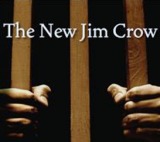
Michelle Alexander is the author of “The New Jim Crow: Mass Incarceration in the Age of Colorblindness.”

Sudanese pyramid sprawl: 35 ancient pyramids discovered in Sedeinga

RT.com

Archaeologists have reportedly discovered 35 small ancient pyramids in Sudan at a site known as Sedeinga dating back around 2,000 years. Scientists are stunned over how densely the pyramids appeared to be heaped together.

­According to a LiveScience report, the closely clustered pyramids were discovered between 2009 and 2012. 

In 2011, archaeologists tracked down 13 pyramids squeezed into an area of 500 square meters.

The pyramids reportedly go back to the days when a kingdom named Kush, which shared a border with Egypt and later with the Roman Empire, was in full blossom in Sudan. The desire of the kingdom's people to build pyramids was apparently influenced by Egyptian funerary architecture, according to the report. 

"The density of the pyramids is huge," a research associate with the American Museum of Natural History in New York, Vincent Francigny, told LiveScience. 

"Because it lasted for hundreds of years they built more, more, and more pyramids and after centuries they started to fill all the spaces that were still available in the necropolis," he noted.

According to researchers, the biggest pyramids discovered at Sedeinga are about 7 meters wide at their base. The smallest, likely constructed for the burial of a child, is only ¾ of a meter long. 

The excavation director Vincent Francigny said that the building continued until there was room to build more pyramids. 

"They reached a point where it was so filled with people and graves that they had to reuse the oldest one," he explained.

Egypt bans YouTube over Innocence of Muslims video

Rt.com

An Egyptian court has ruled to ban video sharing portal YouTube for one month among the other websites hosting the controversial film trailer that mocked Islam and Prophet Mohammed.

­Egypt’s administrative court on Saturday ordered the authorities to block access to YouTube and other websites that have not removed the anti-Islamic trailer. The 14-minute clip made in the US was posted to YouTube in July 2012.

After having been translated into Arabic and partly broadcasted in Egypt last September, this low-budget film sparked a wave of outrage worldwide and anti-American protests in the Middle East that killed more than 70 people and injured hundreds.

The lawsuit against YouTube was filed by Egyptian attorney Hamed Salem amid accusations of the video-sharing service being a “threat to social peace.” Salem demanded YouTube and social media sites linking to the “insulting” video to be banned until all the anti-Islamic content is removed from them.

Egyptian protest movements have condemned the ban, calling YouTube a “vital resource for disseminating information about Human Rights abuses by the security forces,” Cairo-based journalist Bel Trew told RT on Saturday.

US First Lady mourns slain Chicago teenager - White Supremacy/Racism is the Root cause of Black on Black Crime

aljazeera

Michelle Obama, America's First Lady, has attended the funeral of a 15-year-old girl who was killed weeks after performing at President Obama's inauguration celebration.

The high school student was the 46th person to be shot dead in the Obamas' hometown of Chicago this year alone.

Her death has intensified a national debate on gun control.

White Supremacy/Racism is the Root cause of Black on Black Crime

Arkansas Senate approves lethal injection law revision

Jurist

The Arkansas Senate [official website] on Thursday approved revisions to the state's lethal injection law. The Arkansas Supreme Court [official website] struck down the 2009 version of the law [JURIST report] last year, finding that a provision allowing the state department of corrections to choose the drug for lethal injection violates the separation of powers in the Arkansas constitution [text]. Since the Supreme Court ruling, lawmakers have tried to craft more specific death penalty legislation. The proposal approved by the Senate on Friday would require death sentences be carried out with a lethal dose of a barbiturate. Governor Mike Beebe [official website] told reporters that he would sign the law [AP report] if it was passed despite his personal objection to the death penalty.

The shortage of sodium thiopental, a drug used in the lethal injection process, in the US has caused several states to modify lethal injection protocol. In August, a state judge in Arkansas ruled [JURIST report] that a state law provision allowing "any other chemical or chemicals" to be used for lethal injections violates the constitution's protection against cruel and unusual punishment. In March of last year, two Texas inmates requested stays on their executions [USA Today report] to obtain more information on the new protocol and possibly challenge the protocol as unconstitutional. Texas acknowledged that its supply of sodium thiopental had an expiration date of March 1. Arizona, Georgia and Oklahoma have faced similar challenges and are seeking to substitute the sodium thiopental used in the lethal injection "cocktail" with pentobarbital. Kentucky and Tennessee surrendered supplies of sodium thiopental [NYT report] to the Drug Enforcement Administration (DEA) after the agency seized Georgia's supply in order to investigate whether the drug was properly imported.