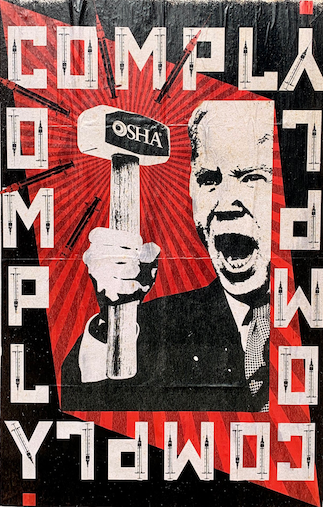
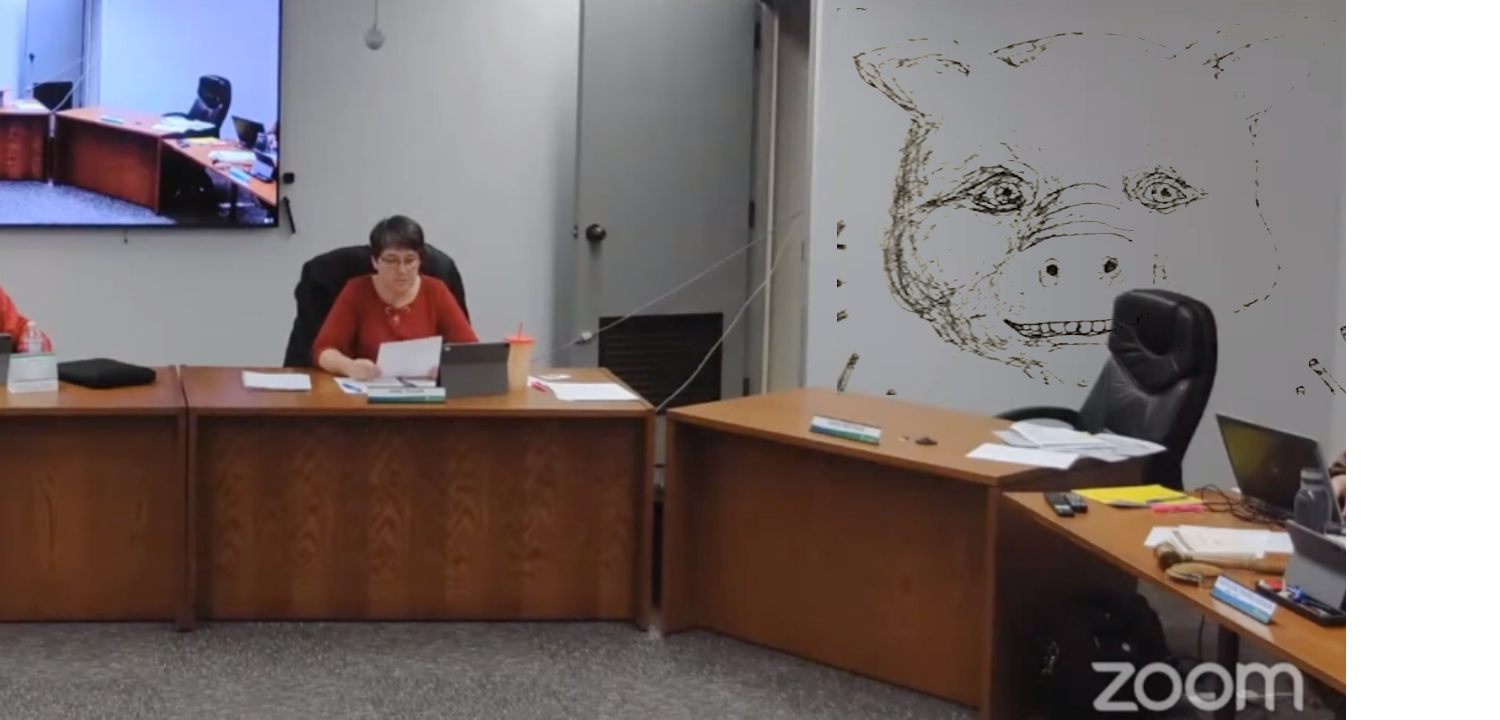
"With all My Heart:" Another Canadian Puppetician Apologizes for Deadly COVID Shot Mandates [here Apologize Means ‘to Trick, to Lay the foundation for a Future Offense’ or to Reform One's Image]

According to FUNKTIONARY:

apologize – to lay the foundation for a future offense or affront. (See: Apologease, Forgiveness & Acceptance)

apology – a plea bargain in disguise. An apology is needed wherever there is no communion, contact or relationship; the “other” is a stranger. Explanation is needed because there is no love. Explanation is a trick to avoid conflict; apology is a device to avoid conflict. Apology is a trick—applied as an anger solvent—you need not be authentic in your apology as it is merely a social device (gesture) to detonate anger. Apologies, like excuses, are not for the benefit of the one to whom they are made, but the one who makes them. Apologizing does not always mean that you are wrong and the other person is right. It simply means that you value your relationship more than your ego. When there is no relationship and no love, both an apology and explanation is expected. When the other cannot understand, only then is apology needed. And if love cannot understand, what good is apology going to do? (See: Explanation, Rationalization, Forgretful, Forgiveness, Excuse, Promise, Regret, Rationalization, Anger, “Other” & Stranger)

biocide – the attempted annihilation of all life, which is the intent of Doggy and CrimethInc. (See: Doggy & CrimethInc.)

The Mask Mandates Did Nothing. Will Any Lessons Be Learned?

From [HERE] But whatever the reason, mask mandates were a fool’s errand from the start. They may have created a false sense of safety — and thus permission to resume semi-normal life. They did almost nothing to advance safety itself. The Cochrane report ought to be the final nail in this particular coffin.

There’s a final lesson. The last justification for masks is that, even if they proved to be ineffective, they seemed like a relatively low-cost, intuitively effective way of doing something against the virus in the early days of the pandemic. But “do something” is not science, and it shouldn’t have been public policy. And the people who had the courage to say as much deserved to be listened to, not treated with contempt. They may not ever get the apology they deserve, but vindication ought to be enough.

White Liberal Boulder County Authorities Target Latinos with Fear Campaign to Coerce and Induce Parental Consent for Dangerous COVID Injections for Young Kids

From [HERE] A Boulder County Public Health (BCPH) campaign to persuade parents — especially Latinos — of children ages 0 to 11 to vaccinate their kids for COVID-19 has some of the Colorado county’s parents up in arms.

The BCPH in May 2022 hired Godot, a “creative” consulting agency, to conduct focus groups and develop the campaign.

The agency’s final report — dated October 2022 and obtained in January by local citizen’s group No Vax Mandates Colorado through numerous Colorado Open Records Act (CORA) requests — describes the agency’s findings and lays out a proposed ad campaign strategy to convince the “vaccine-hesitant” to give their small children the shot.

According to the report, “Vaccine hesitancy is not binary.” So the consultants set out to characterize people on a spectrum, from “anti-vaccine” to “vaccine champions” in order to identify those individuals who may be susceptible to “moving the needle” toward having their young children vaccinated through an effective advertising campaign.

Cindy Baker, a member of No Vax Mandates Colorado for months has been trying to foster a dialogue about the project with BCPH at public meetings.

Baker told The Defender:

“The report is egregious and offensive on many levels. It defines anyone who questions mRNA injections as ‘intentionally ignorant’ and ‘selfish.’

“It aims for innovation but instead comes across as a mishmash of vicious stereotyping, vagueness on detail (such as methodology), Zoom-class arrogance and outright weirdness.”

Much research and many organizations across the country have been dedicated to understanding and overcoming “vaccine hesitancy” — particularly among Latino people — often framing it as a way to fight racial and economic injustice.

The medical establishment often blames this “hesitancy” on factors like “misinformation” and past trauma, claiming these and other issues confuse people’s thought process — instead of acknowledging that some people reject the vaccines on the basis of informed decision making.

According to Colorado’s COVID-19 tracking website, over 85% of white Coloradans have received at least one dose of the COVID-19 vaccine, but less than 50% of Hispanics have — the lowest rate for all racial/ethnic groups.

Approximately 26% of children ages 0 to 9 in Colorado have received at least one shot. Among children ages 11 to 18, that number rises to almost 59%.

The county’s program appears to be moving forward despite a broader trend where local, state and national governments are abandoning vaccine mandates and changing vaccine recommendations for young people.

For example, last month, California dropped its planned vaccine mandate for school-age children. Sweden stopped vaccinating children under age 12. The U.K. no longer recommends COVID-19 boosters for healthy people under age 50.

Despite this trend, the Centers for Disease Control and Prevention (CDC) last month added COVID-19 vaccination to its routine immunization schedule for children and adults.

The report: empathetic, fear-based messaging?

The Godot report described the findings from an unknown number of English and Spanish language focus groups the agency conducted, “exploring the web of influence, emotion, information, and misinformation behind the community’s decision making.”

The document said BCPH had little direct input on the focus groups process, but also that the process between the consultancy and BCPH was “deeply collaborative.”

Godot conducted focus groups with “community members” who were “hesitant” or had questions about vaccines. The goal was “to use empathy and trauma-informed listening skills to translate that feedback into meaningful and truthful messaging that connects with community members.”

Godot focused on communities with “lower full vaccination rates,” and said that vaccination rates among the Spanish-speaking population were lower than that of white adults and their older children in Boulder.

They recruited participants, who were compensated with a $40 gift card, by working with Latino organizations such as El Centro Amistad, which also advertised on Radio La Ley, and at a Latino-focused head start program and food bank.

The agency also had support from Out Boulder County, a client listed on the agency’s website.

The focus groups were held on Zoom due to lack of interest in attending in-person events.

The report did not include details about the number of participants or the number of focus groups conducted, questions asked, metrics for evaluating outcomes or other methodological details.

Marti Hopper, a member of No Vax Mandates Colorado, pointed to the vagueness of the project description in a statement at the Feb. 13 County Board of Public Health meeting.

“I found it very odd that the report has no methodology section. Missing completely is information on how many focus groups were conducted? What was the final make-up of the groups? Who conducted the groups, what questions were asked, what materials were handed out, etc.”

To select participants and analyze their responses, Godot said it worked with BCPH to develop a spectrum of vaccine hesitancy “based loosely on the work and thinking done by the SAGE working group within the World Health Organization.”

SAGE is the World Health Organization’s Strategic Advisory Group of Experts working Group on COVID-19 Vaccines.

SAGE researchers, such as Yale University’s Dr. Saad Omer, have conducted extensive research on “combating vaccine hesitancy” through “tailored message campaigns,” the Defender reported.

Omer is one of many prominent voices in what is known as the field of “infodemiology,” which seeks to limit the circulation of “misinformation” and “disinformation” with respect to vaccines.

Rather than conveying factual evidence to support claims, such research is dedicated to developing messaging designed to persuade people to act in particular ways.

In that spirit, Godot’s spectrum placed people into one of seven categories on a visual chart found in the report.

These categories ranged from the green-colored “vaccine champion” who expresses “outspoken support for immunizations” to the red-colored “anti-vaccine,” defined in the report as: “outspoken, intentional misinformation. Conclusions based on disproven data. Holding beliefs commonly tied to other conspiracies.”

The agency’s target group of people who could potentially be moved by an advertising campaign range from the orange-colored “vaccine resistant” type — characterized by: “statements rooted in intentional ignorance. Foundation of fact vs. fiction is generally not sound. Vocal” — to the light green-colored “vaccine compliant” type who is “willing to get vaccines to access school, work, activities OR are choosing to follow their own vaccine schedule.”

Godot said its role in the focus groups was to “reinforce the core messaging coming from the CDC and WHO,” and to find locally specific themes they could address “truthfully, genuinely, and with empathy.”

To that end, the agency came up with three themes — Knowing the Unknown, Ecosystem, and Ambivalence — and sought to develop “fear-appealing” messaging tied to each theme.

The report explained that the fear-based approach was based on Kim Witte’s Extended Parallel Processing Model (EPPM), also known as the Threat Management or Fear Management model.

According to Witte’s foundational work in this field, “Fear appeals are persuasive messages designed to scare people by describing the terrible things that will happen to them if they do not do what the message recommends.”

The U.S. Agency for International Development also uses this method and describes its logic:

 “The degree to which a person feels threatened by a health issue determines his or her motivation to act, while one’s confidence to effectively reduce or prevent the threat determines the action itself.”

The report concludes with the example of “concept boards” for the potential direction of the advertising campaign.

Several images include a large orange ball that signifies different things in different ads. Another image contains a picture of a wombat’s head on a person’s body. As they explain in the document, the proposals are often intentionally counterintuitive and avoid facts about COVID-19 in a way that is meant to be tied to the fear-appeal model.

The document states:

“These treatments get a little strange, even unintuitive. Beyond the visual intrigue and clickability, the quirkiness here is intentional. It’s a way of softening the push and pull of the EPPM. It makes them feel created for people rather than populations.

“And by not diving too deeply into the hard facts of COVID-19 vaccinations and kids, we keep their thinking high-level and empathetic, understanding that when it comes to a more foundational, global message, the national organizations continue to provide excellent material.”

The Spanish text contains errors that make the Spanish-language examples more difficult to understand.

Trying to communicate with public health policymakers ‘feels like a brick wall’

The report was brought to light through the efforts of some members of the citizen group No Vax Mandates Colorado who told their story to The Defender.

Concerned by the adverse effects of ongoing public health policy regarding COVID-19 in schools, at the University of Colorado and for the general population in Boulder County Colorado, members of the group began attending the monthly BCPH zoom meetings.

When BCPH announced its plan at the May 2022 meetingIndira Gujral, a spokesperson for BCPH said, “For younger children we see some disparities particularly by race and ethnicity that we are concerned about.”

Gujral added:

“The goal is to be able to glean information from vaccine-hesitant parents and as to what would make them feel further confident to move them along the continuum.

“We know that we have a unique population and community in Boulder, and so it’s an opportunity for us to learn and hear from parents about what their concerns are.”

At the June meeting, several citizens gave public comments, voicing their concerns about the program. They presented data on natural immunity, on the limited efficacy for vaccines among children and on vaccine injury among young people.

They argued that experimental vaccines could not be mandated and, legally, people must be apprised of all of the risks and benefits of experimental medicines.

They implored local health officials to respond to their question: “What are your reasons for promoting COVID vaccines for kids and on what scientific and ethical considerations are these policies based?”

Comments were made in “public comments” sections of the meetings, where commenters had three minutes to make their comments. There was no official response.

At the next several meetings, members of the group continued to voice their concerns.

Aware that the focus groups had been ongoing, No Vax Mandates Colorado requested documentation of the focus group findings in October 2022, along with other information about the project, including cost and funding sources from the BCPH.

They made a CORA request, which is similar to a Freedom of Information Act request, but at the state level.

According to No Vax Mandates Colorado, BCPH told them there would be a cost of over $700 to respond to their request. Public agencies are permitted to charge for search time and review time on their requests.

The group said they narrowed their request substantially, but BCPH still required fees of several hundred dollars, which they found prohibitive.

After making four requests, BCPH informed them in December the summary document would be available in mid-January.

BCPH sent them the document — dated October 2022 on the cover, but dated “Final-1-20-23” in pdf itself — in late January and also posted it on its website. [MORE]

UNC Researchers Found a Strong Statistical Relationship between the Level of Racial Resentment in a State and the Number of Death Penalty Sentences Handed Down on Black Defendants

From [HERE] Researchers based at the University of North Carolina found a strong statistical relationship between the level of racial resentment in a state and the number of death sentences handed down on Black people. In particular, racial resentment was a stronger predictor of Black death sentencing rates than conservative ideology, even when controlling for several factors such as homicide and violent crime rates. Writing in the Journal of Race, Ethnicity, and Politics, the authors noted: “[W]e find that racial hostility translates directly into more death sentences, particularly for Black offenders.” 

The research connects the practice of lynching, which is a precursor to current racial resentment, to the prevalence of death sentences in multiple ways: “Our results suggest that the historical legacies of lynchings carry indirect effects for death sentencing through [two] pathways. On the one hand, lynchings indirectly increase death sentences as a function of contemporary racial resentment, consistent with a racial antipathy interpretation. On the other hand, there is also an indirect effect of historical lynchings through contemporary conservative ideologies reflective of antigovernment intervention, consistent with the vigilantism hypothesis.”

Appeals Court says When Police Confiscated a Man's 'Cops Up Ahead' Warning Sign to the Public They Violated His First Amendment Rights

From [HERE] A police officer’s confiscation of two signs reading “Cops Ahead” violated the First Amendment rights of the man who was holding them, a federal appeals court has ruled.

The 2nd U.S. Circuit Court of Appeals at New York revived Michael Friend’s claims that the Stamford, Connecticut, police officer violated his First Amendment right to free speech and his Fourth Amendment right against malicious prosecution. But the appeals court ruled against Friend on his 14th Amendment claims regarding his $25,000 bail.

Friend was alerting drivers to an enforcement operation ahead that targeted cellphone use while driving.

“There was no basis for suggesting that Friend’s speech does not receive the protection of the First Amendment,” the 2nd Circuit said in a Feb. 27 decision.

In addition, the appeals court said, the officer’s actions were not narrowly tailored to serve a compelling government interest. Although the government has an interest in saving lives and enforcing distracted driving laws, the officer has not explained how issuing citations is a compelling interest, the 2nd Circuit said.

The case returns to a federal district court for a determination whether the officer was protected by qualified immunity and whether Friend had satisfied all the elements of his malicious prosecution claim. The American Civil Liberties Union Foundation of Connecticut represented Friend, according to a Feb. 28 press release.

The decision was written by Judge Steven Menashi, an appointee of former President Donald Trump.

Friend had been arrested on a misdemeanor charge of interference with an officer during the April 2018 incident.

A police officer confiscated Friend’s first sign, told him to leave the spot on the sidewalk where he was standing, and said he would be arrested if he returned with a sign.

Friend walked a block further away and held up a second sign with the same message. The police officer arrested Friend and confiscated his two cellphones. He was held on a $25,000 bail until a commissioner reduced it to zero dollars at 1:30 a.m. the next day.

Prosecutors dropped the charge and said Friend had actually helped police because drivers got off their cellphones when they saw the signs.

A federal district judge had said Friend’s speech wasn’t protected because it didn’t rise to the level of an opinion related to a matter of public significance.

“But that is not correct,” Menashi wrote. “The First Amendment does not ‘permit the government to imprison any speaker so long as his speech is deemed valueless or unnecessary.’”

The case is Friend v. Gasparino.

Despite the Fact that Lawsuits or Funding for Police Budgets Have No Impact on Police Brutality, Gullible Reformers Celebrate Record Settlement for Protesters Violently Censored by NYPD in Liberal NYC

Rather than reducing tax dollars budgeted to cops as a remedy to somehow stop police brutality, “Defund cops” could simply mean community hired and fired trained security workers who have a contractual duty to aid people in peril and a natural right to come to the defense of others but who have no right to initiate unprovoked acts of violence on people. Therefore, there would be no need for a police department.

THE IMPLIED RIGHT TO FORCIBLY CONTROL AND RULE OVER OTHERS CANNOT BE REFORMED, “AUTHORITY” HAS NO LEGITIMATE BASIS FOR ITS EXISTENCE - IT IS LIKE REFORMING SANTA CLAUS. [MORE]
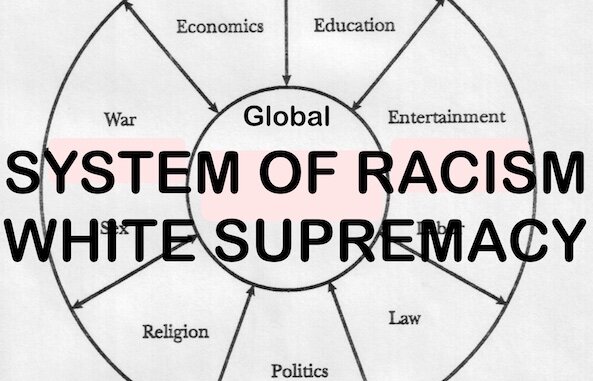
According to FUNKTIONARY

Freedomination – the liberty to choose the commitments, ideologies, covenants, contracts, judgments, and relationships that bind or restrain you within the Matrix. (See: The Matrix, Negative Hallucination, Phfreedom, Freedom & Liberty)

reformers – naïve politicians. They came to do good and stayed to do well. Reformers themselves get reformed into the structure, consciousness and content of the dominant exploitative system—and thus become the system. (See: Revolution)

COPS RETAIN THE RIGHT TO REMAIN VIOLENT. From [HERE] A federal judge signed off Friday on New York City’s highest per-person settlement in a mass arrest class action, awarding $21,500 each to at least 200 protesters who say the police brutalized them during a 2020 demonstration in the Bronx over the murder of George Floyd.

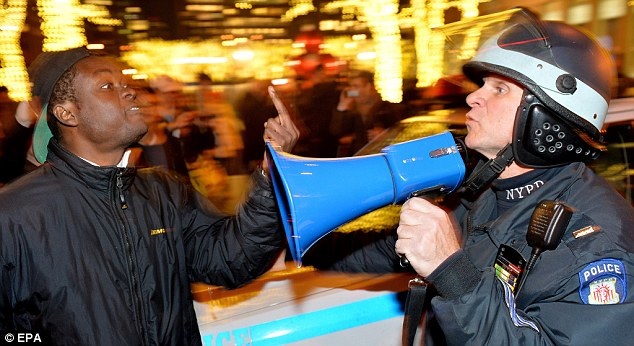
The New York City Police Department was criticized for surrounding protesters and forcing their arrests in a neighborhood called Mott Haven on June 4, 2020, using a technique known as “kettling,” essentially corralling them and giving them no choice but to break a curfew that the city had implemented to stifle fiery public unrest in the wake of Floyd’s death at the hands of the Minneapolis police department.

Members of the class who were given tickets to appear in court are eligible for $21,500 each plus an extra $2,500, meaning total payout from the lawsuit could cost New York taxpayers up to $10 million or more.

The 25-page stipulation approved by Senior U.S. District Judge Colleen McMahon resolves just one of six related NYPD lawsuits consolidated before the Clinton appointee. New York Attorney General Letitia James brought another of the cases, which alleges that the NYPD violated the First, Fourth and 14th Amendments in its handling of protests and demonstrations across the city beginning on May 28, 2020, three days after Floyd’s death.

Friday's settlement resolves a class action filed in December 2020 by attorneys Joshua S. Moskovitz, Lance A. Clarke and Michael L. Spiegel.

During a discovery conference in February 2021, Judge McMahon promised that the parties of the half-dozen consolidated cases were “going to be on a rocket docket moving toward a trial."

Brooklyn-based civil rights attorney Gideon Oliver, who represents protesters in one of the pending putative class action suits — Sow, et al. v. City of New York, et al. — invoked McMahon’s rhyming metaphor in response to the announcement of the judge’s approval of the settlement.

“Despite the City’s boilerplate denials of fault, the hard-fought and historic settlement goes to show how violent and abusive the NYPD’s June 4, 2020 attack on the Mott Haven was,” he told Courthouse News on Friday afternoon. “Those of us on the remaining consolidated actions will continue litigating on the rocket docket the Court has set, seeking both compensation for the many others abused by the NYPD during the summer 2020 protests in the wake of George Floyd’s murder, as well as substantial changes to NYPD protest policing moving forward.”

Human Rights Watch released a report in October 2020 citing evidence that police planned an aggressive crackdown on the Mott Haven protesters. Police used bicycles to form a wall around protesters while officers, including some in riot gear, attacked demonstrators — beating them with batons, kicking and punching them, and spraying them with pepper spray, according to the report from the civil rights organization.

At least 61 people were hurt, with injuries including a broken nose, lost tooth, sprained shoulder, broken finger, split lip, black eyes and bruises.

The New York City Department of Investigation issued a scathing report in December 2020, concluding that standardized, agencywide, in-service training related to policing protests was lacking. 

In 115 pages, the report details “a number of key errors or omissions that likely escalated tensions, and certainly contributed to both the perception and the reality that the Department was suppressing rather than facilitating lawful First Amendment assembly and expression.” 

Attorney General James brought her civil complaint a month later in the Southern District of New York.

In 2014, the city spent $18 million to settle lawsuits related to protests during the 2004 Republican National Convention. 

Organizers Push Back on Police Microphones in so-called "High-Crime Neighborhoods" in (White, Liberal) Portland

From [HERE] More than 100 people tuned in Wednesday for the Town Hall on Gunshot Detection Systems hosted by the Portland Committee on Community-Engaged Policing.

For three hours, nearly all speakers pushed back against the city’s proposal to pilot a gunshot detection system that would place microphones or sensors in high crime areas, alerting police to potential gunshots.

Aje Amaechi, a community organizer with Freedom to Thrive, said that “these alerts could cause a significant backlog, especially since the team is already behind.”

The city’s request for proposal says that where the pilot technology is implemented will be determined in part by PPB data on areas with the most gunshots reported and “community engagement and input gathered from outreach conducted prior to deployment.”

But community members claim there has been little-to-no engagement, and their input is being ignored.

“We all know while we’re sitting here that it is a done deal when y’all even bring it to a table,” one activist said. 

Celeste Carey of PCCEP added, “We don’t want gunshot detection technology, that’s what the public is saying.” 

Amanda Lamb, a law enforcement resource council with Oregon Justice Resource Center, said that community input is “just a box that the city wants to check.”

“They don’t want to meaningfully engage the community to get their opinions on whether or not to move forward with gunshot detection technology, because they’re already so far in the process,” Lamb said.

And while City Rep. Stephanie Howard, the director of community safety, said the concerns are being heard, but did not comment whether the city is willing to abort the problem.

“The question is, will Council just abort this?” Carey asked Howard. “What is the point of saying you will have further input opportunities, when we’ve already indicated we don’t want the technology?”

“I am not in the position to make that statement on behalf of council. No. I am absolutely in the position to report back to council, report to my boss, report to all my colleagues and other council offices and to continue this discussion,” Howard said.

Despite the frustration voiced by community members, Lamb encourages people to continue to engage by testifying before council and making sure their voices are heard.

“If the city does implement gunshot detection technology, continue to hold city leaders accountable for the outcomes of doing that,” Lamb said. “Continue to monitor how this technology is being used by police, whether it is being used to target community members, whether it is being abused, whether it works. This is their tax money. These are their elected leaders, and they do have a voice in this process.”

Contrary to Claims that ‘your privacy is protected’ and ‘your browsing or location data is Anonymous,’ an Internet User’s Real World Identity Can be Very Easily Identified According to Researchers

From [HERE] We’ve noted for a very long while how most of the explanations that corporations use to insist that your privacy is protected are effectively worthless. 

For example, corporations will routinely inform you that it’s no big deal that they’re over-collecting and selling access to your browsing or location data to any idiot with a nickel because that data is “anonymized,” protecting your identity. In reality, that term means nothing, and study after study have shown it’s easy to identify you with only a few snippets of additional information.

With that in mind, a new study about user privacy in the virtual reality and augmented reality era (full study here) tracked 50,000 users in VR and found some interesting data. Most notably, that it takes incredibly little actual data collected from device microphones, cameras, and other tech to accurately identify a user’s real-world identity. 

Like, very little:

The research analyzed more than 2.5 million VR data recordings (fully anonymized) from more than 50,000 players of the popular Beat Saber app and found that individual users could be uniquely identified with more than 94% accuracy using only 100 seconds of motion data.

Even more surprising was that half of all users could be uniquely identified with only 2 seconds of motion data. Achieving this level of accuracy required innovative AI techniques, but again, the data used was extremely sparse — just three spatial points for each user tracked over time.

Researchers found that the data they leave behind in virtual reality is more useful than a fingerprint to identify individuals. It also provides significantly more data to monetize, including a user’s height, handedness, gender, potential disability, strength, personal tics, etc. 

Combine this data with the profiles already commonly being built at major companies and ad brokers, and you could see how this might be a bit of an issue in a country that’s literally too corrupt to pass even a basic privacy law for the internet era (there was just too much money to be made, sorry). 

There have been so many studies at this point (including other previous studies of user VR data) showcasing how “anonymization” is a gibberish term. Yet the next time there’s a hack, breach, or huge batch of public data left unsecured in an Amazon cloud bucket, notice how quickly the term is immediately utilized as a catch all defense for sloppy privacy and security practices.

US Employment Commission Files Discrimination Suit Against ExxonMobil for Taking Almost No Action After 5 Hangman’s Nooses were Found at its Baton Rouge Complex to Intimidate Black Workers

From [HERE] The US Equal Employment Opportunity Commission (EEOC) Thursday filed suit in Louisiana federal court against ExxonMobil for unlawful employment practices based on racial discrimination. The lawsuit, filed in the US District Court for the Middle District of Louisiana, alleged that ExxonMobil violated Title VII of the Civil Rights Act of 1964after the corporation failed to take necessary steps to fix and stop racial discrimination at its chemical plant and oil refinery in Baton Rouge, Louisiana.

The EEOC is seeking relief for former-ExxonMobil employee Milferd McGhee under Title VII, including provisions requiring ExxonMobil to post and keep posted notices of unlawful workplace discrimination and make and preserve all relevant records pertaining to unlawful workplace discrimination or suspicion of such behavior. The organization is also asking the court to prohibit ExxonMobil and those actively participating with the corporation from discriminating against employees on the basis of race and order ExxonMobil to provide McGhee with compensation for injuries he faced resulting from the discrimination he faced.

According to the complaint, between April 2016 and December 2020, at least five hangman’s nooses were found at the Baton Rouge complex, the fourth of which was found by McGhee. Following the initial discovery of the noose at the complex, ExxonMobil reportedly investigated the occurrence and banned two contractors from the site but did not take other remedial measures to mitigate racial discrimination in the workplace, such as the institution of policies or training. The complaint also alleged that after the second incident, a supervisor took possession of the noose and the company’s safety department was notified of the incident. However, the human resources department was not notified and an investigation was not conducted.

Following the third incident, ExxonMobil conducted an investigation but was unable to find the individual who hung the noose on the premises. The company then filed a report that recommended additional measures to remedy workplace harassment, which the EEOC alleges it did not complete by the time the fourth incident occurred. It was the fourth incident that McGhee discovered, and ExxonMobil filed another investigative report with more recommended workplace harassment remedies, which the EEOC stated it did not take before the fifth and final incident.

Bank of America Wants Court to Dismiss Claims that it Deliberately Foreclosed on Mortgage Loans in Conspiracy to Maximize Profits at the Expense of Black and Latino Borrowers

From [HERE] Bank of America defended itself Friday at a motion to dismiss hearing on claims the bank deliberately foreclosed on mortgage loans as part of an extensive conspiracy to maximize profits at the expense of people of color in Hawaii and Florida.

The eight lead plaintiffs in the class action, a majority of whom are people of color, say they have been or are currently being foreclosed on, some for nearly two decades. They first leveled racketeering and Fair Housing Act claims against Bank of America and The Bank of New York Mellon in a July 2022 complaint. Although a majority of the plaintiffs’ foreclosure actions occurred in Hawaii, the suit also includes several plaintiffs who went through foreclosures in Florida. Three of the five Hawaii plaintiffs are of Native Hawaiian descent and the three Florida plaintiffs are women of color.

“Defendants BANA and BONYM devised a scheme or artifice to defraud, that involves the use of many sub-schemes, for the purpose of filing and prosecuting, or causing the filing and prosecution of, thousands of unlawful foreclosures complaints, in this district and nationally," the plaintiffs say in their complaint.

Bank of America attorney Jesse Smallwood of the Washington firm Williams & Connolly came straight out of the gate arguing the plaintiffs had not addressed a majority of the banks' core arguments that the plaintiffs had brought no cognizable claims.

“Grant our motion in full and with prejudice, based solely regarding those arguments without even having to get to the abstention and preclusion arguments that the plaintiffs do contest,” Smallwood told U.S. District Judge Jill Otake.

Smallwood, speaking for both Bank of America and The Bank of New York Mellon in the hearing, argued the plaintiffs could not back up their RICO and Fair Housing Act claims. He said the foreclosure actions are not criminal acts, as required to bring RICO claims, especially those associated with prior litigation.

As for the Fair Housing Act claims, Smallwood said the plaintiffs had failed to adequately plead them "by alleging and repeating several times in their papers that all plaintiffs, both FHA and non-FHA plaintiffs, were subject to the same treatment and the same impact…that all plaintiffs were subject to this alleged foreclosure scheme.”

The arguments revolved around the role of the foreclosures underpinning the lawsuit, some of which are still pending in state court without a final judgement.

The 264-page complaint, which Judge Otake called “way too long, way too confusing” during the hearing, details each of the eight plaintiff’s extensive foreclosure litigation history, only some of which feature Bank of America or The Bank of New York Mellon as direct parties. None of the plaintiffs claim fraud in the first place.

“Isn’t your general allegation regarding RICO about the defendant’s fraud in the state court action? And if that’s the case, then you are acknowledging that they were not involved in the state court action, how can your RICO claim survive?” Otake asked the plaintiffs' Honolulu-based attorney Frederick Arensmeyer.

Arensmeyer said there had been "a mix of both intrinsic and extrinsic fraud" and "an enterprise that precedes any litigation activity,” referring to the claims of false mortgage assignments and document-fixing done by the banks.

The plaintiffs also cite a history of shady foreclosures handled by Bank of America in their complaint, a matter the FBI investigated a decade ago.

“Class plaintiffs allege that while Bank of America did not originate any of the mortgage loans that are the sine qua non of this complaint, that the predatory and discriminatory loans originated by Countrywide and others (e.g. reverse redlining, infra), fit right into Bank of America’s historical mode of discriminatory loan servicing policies, practices and procedures, like a hand in a glove (e.g. redlining, infra),” the plaintiffs say in their complaint.

Arensmeyer also clarified the plaintiffs were not necessarily challenging the foreclosures themselves. “In this case, we are not challenging the assignment, we are not challenging the endorsements. We are pointing to these documents as evidence of a RICO enterprise," he said.

Smallwood pushed back at this, repeating that Arensmeyer had not made any of these arguments before in meetings or in opposition briefs, and that some arguments even contradicted the plaintiffs' complaint.

Bank of America dodged a recently dismissed case in federal court in which a Native Hawaiian advocacy nonprofit accused the bank of denying home loans to Native Hawaiians for property on Hawaiian homelands. The bank had promised millions for the loans that never came to fruition as the bank removed its retail presence in the state before the full amount could be paid out.

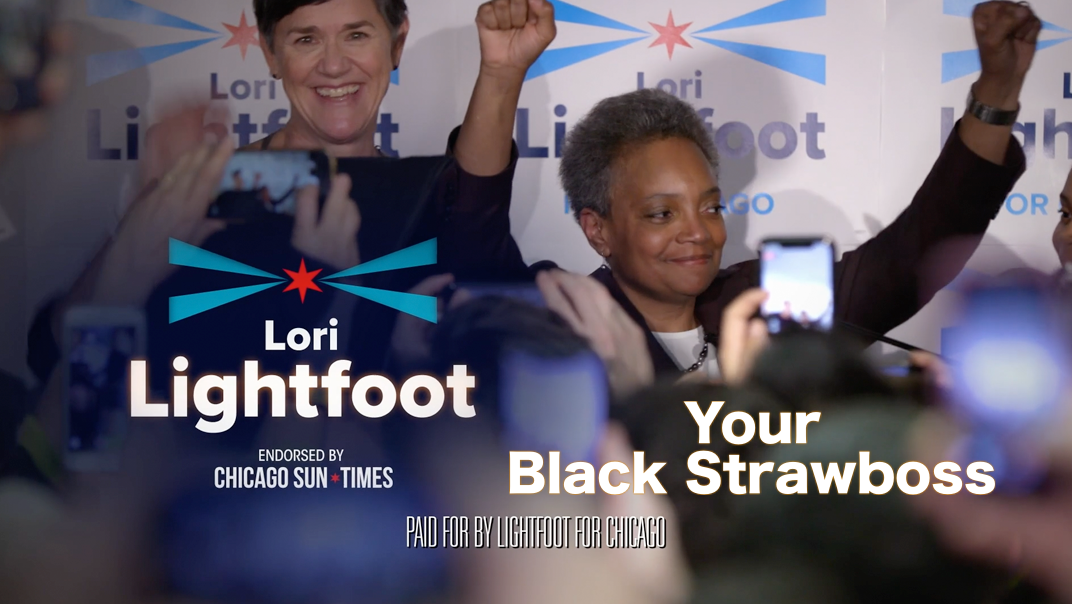
Black Strawboss Lightfoot Out in Chicago: Which Candidate Will Elite White Liberals Select as the New Subvassal in Charge of Locking Up, Surveilling, Miseducating and Failing to Protect Black People?

BLACK BORG OUT. From [HERE] Mayor Lori Lightfoot lost her re-election bid by failing to garner enough votes to make a runoff election, a stunning fall for a candidate who had won all 50 of the city’s wards four years ago but had sparred with a powerful teachers union and been under fire for her response to rising crime.

The Associated Press declared Tuesday night that Paul Vallas, a more moderate Democrat who had won the support of the city’s police union, and Brandon Johnson, a liberal teachers union organizer, secured the two spots in April’s runoff election. 

Ms. Lightfoot, who ran in third place, conceded the race shortly before 9 p.m. local time, well before all votes were counted. It was the first time in 40 years that the city didn’t elect a sitting mayor who sought re-election. Ms. Lightfoot told supporters Tuesday that she had called Messrs. Vallas and Johnson to congratulate them and that she appreciated the love her supporters had shown her during the campaign.

After battling a pandemic, the teachers union and crime in the city, Ms. Lightfoot, 60 years old, faced a large field of opponents, with challengers on the left and right of her politically.

Mr. Vallas, a former public-school executive, Mr. Johnson, a Cook County Board Commissioner, and Jesús “Chuy” García, who currently serves in the U.S. Congress, were her main challengers. Mr. Garcia was in fourth place Tuesday night.“I am a lifelong Democrat,” Mr. Vallas said Tuesday night, listing what he said were his progressive credentials, and reiterating his focus on public safety and changing the city’s public schools as his top priorities.

Mr. Vallas also said if elected he would focus on the entire city, including those areas that have been neglected.

“I will not be a successful mayor until I’ve reversed the generations of disinvestments in Chicago’s poorest communities,” he said.

Mr. Vallas, 69, the grandson of Greek immigrants, served in the state legislature and then in the administration of longtime Mayor Richard M. Daley, including as head of Chicago’s public schools before running schools in other major cities. He has taken a tough-on-crime stance in the election and has staked out the wide-open political space to the right of Ms. Lightfoot. He has the backing of the Chicago police union, the Fraternal Order of Police Lodge 7.

The police union didn’t respond to a request for comment. [MORE]

SNigger Puppetician AOC Under House Scrutiny for Met Gala Participation. Ethics Investigation Centers on hair, makeup, clothing and transportation expenses

From [HERE] House ethics investigators said they have evidence Rep. Alexandria Ocasio-Cortez (D., N.Y.) ran afoul of congressional rules, after she was slow to reimburse vendors for clothing and other expenses tied to her participation in the 2021 Met Gala.

At the event, Ms. Ocasio-Cortez wore a white dress by fashion brand Brother Vellies with the words “tax the rich” scrawled across the back in red ink.

The House Ethics Committee on Thursday released a report by the Office of Congressional Ethics, an internal, nonpartisan ethics office that reviews allegations of misconduct against lawmakers. The probe had been disclosed in December, but neither the ethics committee nor Ms. Ocasio-Cortez’s office had provided details.

The OCE stated in its June 2022 report that Ms. Ocasio-Cortez “may have accepted impermissible gifts” in the form of hair and makeup services, attire for the event and transportation provided by magazine publisher Condé Nast, fashion brand Brother Vellies and other vendors associated with the event. Those services totaled over $5,000, well above the limit on gifts for lawmakers set forth in federal law and congressional ethics rules, according to the OCE investigation. 

The OCE recommended that the House Ethics Committee review the matter, saying there is a “substantial reason to believe that she accepted impermissible gifts.”

The OCE also recommended ethics officials subpoena witnesses who didn’t cooperate with the probe, among them Brother Vellies founder Aurora James and other figures with ties to the company.

Condé Nast and Brother Vellies didn’t immediately respond to requests for comment. [MORE]

Oakland Fires Black Borg Police Chief for Alleged Misconduct Cover-up

From [HERE] The Oakland Police Department lost its seventh head of police in as many years Wednesday over the alleged cover-up of an officer’s misconduct in a scandal that threatens to extend two decades of federal oversight — the longest of any police department in the country.

Democratic Mayor Sheng Thao said at a news conference she was firing Police Chief LeRonne Armstrong after a probe concluded the chief and the department failed to properly investigate and discipline a sergeant who was involved in a hit-and-run with his patrol car and, in a separate incident, fired his service weapon inside an elevator at police headquarters. [MORE]

LA County Settles with Vanessa Bryant for $29M after Racist Suspect Cops and Firefighters Shared Gruesome Photos of Kobe Bryant and his Daughter's Severed Bodies and Remains for Their Amusement

From [HERE] Los Angeles County agreed to settle all remaining claims with Vanessa Bryant over graphic photographs shared by first responders to the helicopter crash that killed her husband, Kobe Bryant, their daughter Gianna, and seven others. The nearly $29 million settlement includes the $15 million awarded to Bryant by a federal jury in August 2022, Los Angeles County attorney Mira Hashmall said in a statement.

Throughout the 11-day trial in federal court in Los Angeles, lawyers for Bryant and Chester documented how the photos spread: They were flashed from a sheriff’s deputy’s phone screen to a bartender in Norwalk. They were shown to firefighters and their spouses during an awards gala at a hotel in Universal City in what amounted, one witness said, to a “party trick.” They were passed from one deputy to another as the pair played video games.

Attorneys for Bryant and Chester argued that it is unknown how far the imagesspread because the county did not thoroughly investigate. It wasn’t until most of the involved deputies had received new phones that officials hired a firm to conduct a forensic examination of employee devices. 

“The truth is, the county has no idea, no idea who had the photos and who they sent them to,” Lavoie said. 

The laptop of one fire captain who took photos, Lavoie said, was missing its hard drive when it was examined. The captain, Brian Jordan, who has since retired, claimed under oath that he did not remember being at the crash site at all.

The phone of Joey Cruz, a deputy who showed graphic photos to a bartender in Norwalk, had been reset before it was turned over to the firm, Lavoie said. When it was turned on, it was as if it was new, with no photos saved. County attorneys argued that Cruz had transferred his data to his new phone, which also had no crash photos saved on it.

And the identity of at least one firefighter who received the photos remains unknown. 

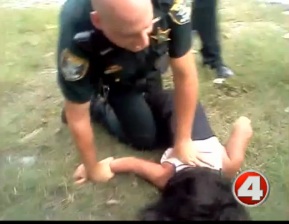
White Federal Judge Niggerizes a Crying 13-Year-Old Latino Girl by Having Her Handcuffed by Cops in Open Court During Her Father’s Probation Hearing

From [HERE] A white Southern District of California federal court judge decided to niggerize a child for attending a public hearing to support her father (article available here (link is external)).
The events arose from a final revocation hearing. After a Latino man admitted to violating his supervised release, he told the judge that he feels he needs to be able to leave San Diego to make a break from his problematic contacts. A reasonable request. He cited his young daughter, seated in the spectator area, as his motivation to build a new life because he feared that she might end up hanging around the wrong people if the family remained in his established San Diego circles.

The sentencing memo details what happened next (link is external).

Several minutes later, Judge [] asked a U.S. Marshal, “You got cuffs?” The Marshal confirmed he did. Judge Benitez then ordered the 13-year-old girl to leave the spectator area, approach the front of the courtroom, and stand next to her father’s lawyer. He told the Marshal to “[p]ut cuffs on her.”
The Marshal did so, cuffing the girl’s hands behind her back. As he did so, she was crying. Judge [] then instructed the Marshal to “put[ ] her over there in the jury box for me for just a minute.” The Marshal complied, placing the girl in the jury box in handcuffs. She continued to cry.
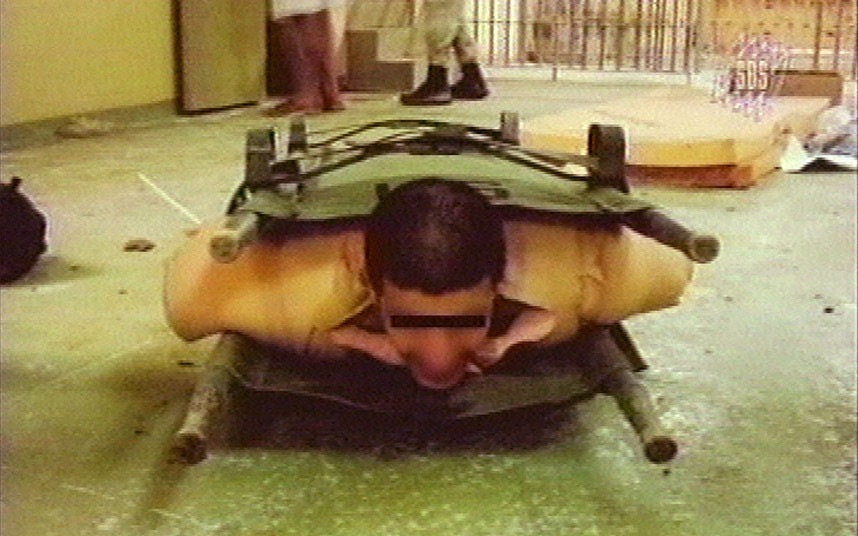
After a long pause, [the] Judge [] released the girl. But he did not allow her to immediately return to her seat. Instead he told her, “don’t go away. Look at me.” He asked her how she liked “sitting up there” and “the way those cuffs felt on you.” Still in tears, she responded that she “didn’t like it.” He told her she was “an awfully cute young lady” but that if she didn’t stay away from drugs, she would “wind up in cuffs” and be “right back there where I put you a minute ago.”

The judge then sentenced the man to 10 months and 2 years of supervised release. The case was transferred to another judge. The man’s lawyer cited the whole being forced to watch his daughter be abused by a federal judge thing in the sentencing memo as evidence that Puente has been punished enough and should be sentenced to time served. The new judge agreed.