The NFL Donates Money to Politicians. Here’s Who Gets It [Hershel Not on the List]

From [HERE] The National Football League’s Gridiron-PAC contributed $624,000 to political committees in the run-up to the 2022 midterms, according to records with the Federal Election Commission.

In 2021 and 2022, the PAC contributed a total of $70,000 to two party committees that aim to get Republicans elected to Congress, and it donated an equal amount to theDemocrats’ Congressional and Senatorial Campaign Committees. While PACs can only donate $15,000 a year to each of those committees, Gridiron-PAC squeezed in an extra $10,000 to each party by kicking in for their senate committees’ office-building expenses.

The parity carried over to the parties’ Congressional leadership. The campaign for then-House Speaker Nancy Pelosi (D-Calif.) received $10,000 from the NFL’s PAC, while the payout to the campaign for Minority Leader Kevin McCarthy’s (R-Calif.) hit $7,500. The Gridiron-PAC ran a reverse in the Senate, with Republican Leader Mitch McConnellreceiving $7,500, and Chuck Schumer (D-N.Y.) taking in $5,000. [MORE]

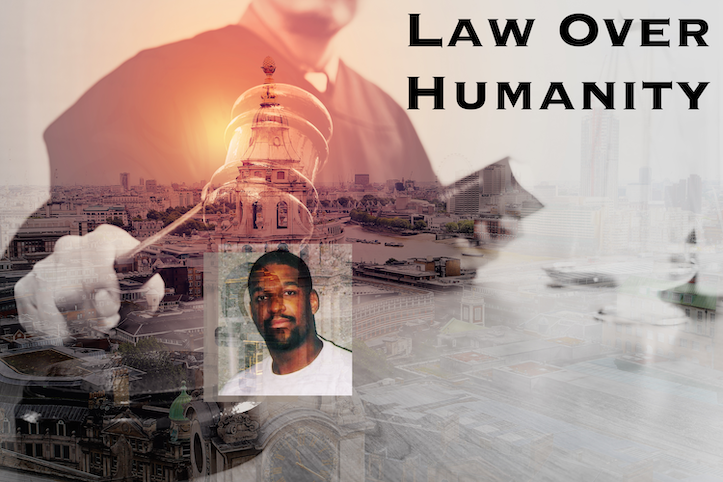
2 South Carolina Laws that Prosecute [mostly black] Kids for Disorderly Conduct by 'Using Obscene Language' or by Acting in an Obnoxious Manner' Near School are Unconstitutional, 4th Circuit says

From [HERE] A federal appeals court on Wednesday struck down two South Carolina laws that punish elementary and secondary school students who act “disorderly,” use “obscene” language or “act in an obnoxious manner” in or near a school.

In a Feb. 22 decision, a three-judge panel of the 4th U.S. Circuit Court of Appeals at Richmond, Virginia, ruled that South Carolina’s disorderly conduct law and disturbing schools law are unconstitutionally vague. The panel said they fail to warn students about what behaviors could expose them to criminal penalties and lack sufficient guardrails to prevent arbitrary enforcement or discrimination.

“Lest there be any confusion: We do not hold that schools are powerless to discipline elementary and secondary school students who disturb the learning environment,” the 4th Circuit said. “But unlike the policy in Tinker [v. Des Moines Independent Community School District] or the codes of conduct maintained in schools throughout the country, the laws challenged here expose minors to criminal prosecution and all the collateral consequences that follow.

“Laws imposing such weighty costs on free expression must define their bounds, so students have fair warning about what is prohibited and the discretion of those who enforce the laws is adequately constrained.”

Several students who had been referred or charged under the disorderly conduct or disturbing schools laws and a nonprofit organization that advocates for at-risk youths brought the lawsuit in 2016.

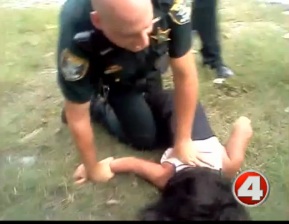
Education Week reports that one of those students, Niya Kenny, had been arrested the previous year after videotaping a school resource officer who took another student from her chair and slammed her into the floor.

A district court dismissed the case for lack of standing, but the 4th Circuit reinstated it in 2018. The district court later certified the challenge as a class action and ruled against South Carolina’s disorderly conduct and disturbing schools laws.

The disorderly conduct law makes it a misdemeanor to “conduct [one]self in a disorderly or boisterous manner” “at any public place” or use “obscene or profane language on any highway or at any public place or gathering or in hearing distance of any schoolhouse or church,” according to the 4th Circuit decision.

Similarly, the disturbing schools law makes it a misdemeanor “for any person willfully or unnecessarily (a) to interfere with or to disturb in any way or in any place the students or teachers of any school or college in this state, (b) to loiter about such school or college premises, or (c) to act in an obnoxious manner thereon.”

The 4th Circuit said “neither law represents an empty threat,” pointing out that 3,735 people between ages 8 and 18 were referred for prosecution under the disorderly conduct law during a six-year period that ended in July 2020. More than 9,500 students—including children as young as age 7—were referred for prosecution under the disturbing schools law during a period of less than six years that ended in March 2016.

“For those who have met—or been—elementary or secondary school students, a question naturally arises: How does this statute objectively distinguish criminally disorderly, boisterous, obscene or profane childhood misbehavior from garden-variety disorderly, boisterous, obscene or profane childhood misbehavior?” the appeals court said. “The [state] attorney general offers no satisfying answer, nor can we discern one for ourselves.”

The 4th Circuit also found that arbitrary enforcement of the laws by school resource officers and other school officials generated disparate outcomes.

“Evidence submitted to the district court shows that between 2015 and 2020, Black youth were charged with disorderly conduct for incidents in schools at roughly seven times the rate of their white peers,” the appeals court said. “The Constitution prohibits this type of inequitable, freewheeling approach.”

Judge Paul V. Niemeyer dissented from the majority opinion, writing that “for years, South Carolina has applied its disorderly conduct statute and disturbing schools statute to address disruption in schools, and there is little evidence that school officials, students and parents have had difficulty in understanding what conduct was prohibited.”

Reuters also has coverage of the decision in Carolina Youth Action Project v. Wilson.

Maryland bill seeks to open jury duty to [mostly Black] people formerly incarcerated

From [HERE] A Maryland bill under consideration for a fourth time in Annapolis would provide an avenue for people formerly incarcerated for a year or more to serve on juries.

The legislation would also enable people to qualify for jury service who have charges pending that could result in at least a year’s imprisonment, according to a nonpartisan outline of the bill. Sponsors and supporters say it would help people formerly incarcerated better reintegrate into society and make Maryland jury pools more representative.

“The status of a person’s current criminal charges and criminal history does not and should not determine their ability to serve on a jury for the rest of their lives,” state Del. Nicole Williams, the bill’s co-sponsor and a Democrat from Prince George’s County, said during testimony earlier this month.

Shrinking cities like Baltimore are burning through their eligible pools of jurors quickly; last year, 247,840 potential jurors were deemed eligible in Baltimore, less than half its population, according to a Maryland Judiciary spokeswoman. Last year, about 20,000 prospective jurors were summoned on average each month, but more than a third of those didn’t show. Another 8% of summons were undeliverable.

In addition to people who have experienced a year or more behind bars, non-U.S. citizens and non-English speakers are disqualified from serving in Maryland. And older adults, active-duty military, elected federal legislators and people with certain disabilities are exempt. [MORE]

California rolls out post-conviction justice unit

From [HERE] California Attorney General Rob Bonta officially opened the state Department of Justice’s first post-conviction justice unit Friday. 

“Whether it’s due to bias, changes in forensics or any other issues, the criminal legal system is not foolproof,” Bonta tweeted Friday. “Every effort must be made to protect the integrity of prosecutions in California."

In a statement, Bonta said the new unit will have broad discretion and work with local district attorneys to conduct investigations and reviews aimed at resolving wrongful or improper criminal convictions. That includes situations where there could be “evidence of significant integrity issues” so that officials can identify cases that may qualify for resentencing. 

He said conviction integrity units typically work to identify and address wrongful convictions — often by reviewing new credible information that may exonerate someone previously convicted of a crime — or take other actions within established law to remedy potential injustices. 

Although there are already avenues through the appellate process to address injustice claims in the current court system, Bonta said conviction integrity units provide an additional opportunity to proactively address issues and look to improve accuracy and legitimacy of prosecutorial conduct. 

“We fight each and every day to protect our communities and hold those who break the law accountable," Bonta said. "Yet, despite our best efforts, we know our criminal legal system is not infallible.”

The unit will be initially staffed by two deputy attorneys general within the Criminal Law Division who will build on existing resources. Subject to Bonta’s discretion, the new attorneys will be empowered to establish formal, finalized protocols and standards before taking external case review referrals. 

Some of their tasks will include reviewing state Justice Department cases and claims of innocence or wrongful conviction, or cases where there may be a significant integrity issue or local authorities do not operate a conviction integrity unit. They will also review cases for potential resentencing where local authorities need assistance, and coordinate leading conviction integrity units to “foster a culture of integrity, transparency, and efficacy that promotes public trust.”

The unit will also provide statewide leadership to support best practices across California, and “seek to remedy cases where there have been miscarriages of justice,” Bonta said. “Whether issues arise as a result of new exculpatory information or advancements in forensic science, it is incumbent on prosecutors to make good faith efforts to correct injustice.”

Elliot Hosman is a case and policy specialist with the San Francisco Public Defender's Office's Freedom Project, which helps individuals get their sentences reviewed by judges. Hosman said there have been about 267 wrongful convictions overturned in California since 1989, but experts estimate that up to 6% of people currently in prison are wrongfully convicted.

"In California, that means there are as many as 5,700 people whose cases await meaningful review and just as many families and communities awaiting reunification," Hosman said.

Hosman said new resentencing laws give DAs the power undo disproportionate sentences and give people second chances.

"Yet despite millions of dollars in targeted budget allocations, very few prosecutors are referring cases for correction," Hosman said. "We hope the attorney general’s office will act not just to review cases but to act swiftly to correct injustice around the state, whether from wrongful conviction, unfair tactics, or overly severe sentencing. We hope the attorney general will join the fight to ensure that public defender's offices — which are integral to representing community members in navigating the post-conviction relief process — continue to receive state funding for this urgent work."

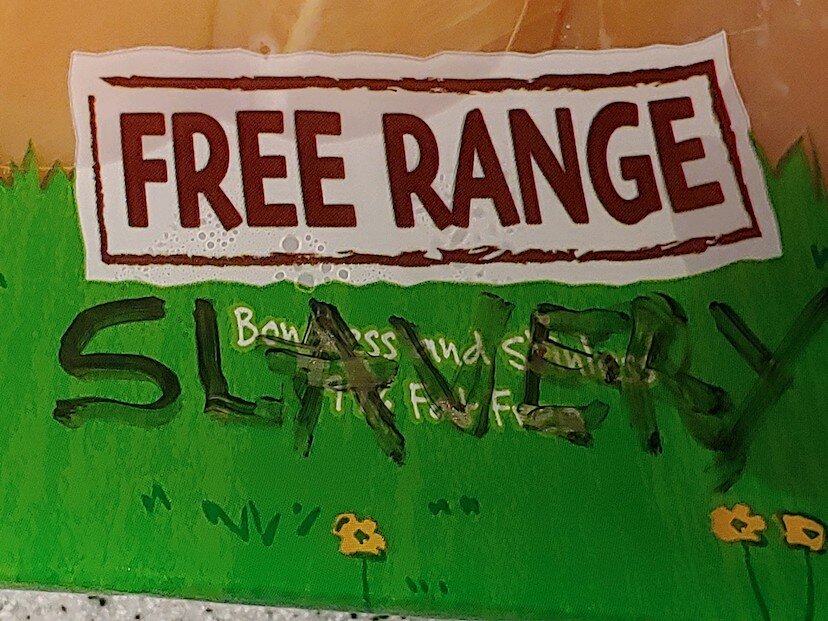
Chinese Government Censoring AI Chatbots that Contradict Any Government Narratives (“disinformation”) with Their "Free Speech" in said More Restrictive Free Range Prison

From [HERE] At this point it should be common knowledge that if it has to do with any kind of speech, there is nothing that China won’t try to control and/or censor. It’s something of an amazing self-contradiction: in order to be large and powerful, the Beijing government believes it has to behave as though it is weak and cowardly. Wherever there might be real or potential speech or action against the government, there is the Chinese Communist Party trying to proactively make sure such speech can never reach a wider audience. Beijing, it would seem, has long desired for its people to be simple, programmable robots.

Or not? See, it turns out that some of our newer “robots” also engage in speech that the Chinese government is afraid of. Beijing officials have recently demanded the country’s tech companies disallow access to robot-poem-generator ChatGPT and its ilk for the populace, and added that any internally developed chat AI go through some form of digital re-education camp before being released to the Chinese people.

Chinese regulators have reportedly told the country’s tech giants not to offer access to AI chatbot ChatGPT over fears the tool will give “uncensored replies” to politically sensitive questions.

That’s according to a report from Nikkei Asia citing “people with direct knowledge of the matter.” Nikkei says Chinese regulators told tech firms Tencent and Ant Group (a subsidiary of e-commerce giant Alibaba) to not only restrict access to the US-developed ChatGPT, but to also report to officials before launching their own rival chatbots.

This is par for the course. Whenever some new avenue for potential unsanctioned speech comes about, Beijing is quick to regulate it. After all, the survival of the current regime appears to rely on that regime’s ability to keep its people from knowing anything that hasn’t gone through the government’s information cheesecloth. At least, that certainly is how the government behaves.

Which is ultimately kind of dumb anyway. Like many other attempts to strictly control its people’s use of technology, the Chinese public has already been able to access ChatGPT through VPNs and all kinds of other proxy platforms. While Chinese tech companies are happily playing whac-a-mole with those platforms, it isn’t working all that well.

“ChatGPT has gone viral in China, but there is growing concern that the artificial intelligence could provide a helping hand to the US government in its spread of disinformation and its manipulation of global narratives for its own geopolitical interests,” said ChinaDaily reporter Meng Zhe.

Here again China faces the same question it always faces in these situations: will it hamper its ability to strictly control its populace in order to advance technologically, or will it hamper its advancement in technology in order to maintain strict control over its populace. The government has and will continue to try to thread the needle in order to get the best of both worlds… and it will continue to fail.

Whatever happens next, Chinese tech giants will find it tricky to navigate such limitations. Restricting the training data for chatbots will hobble their abilities in comparison to Western rivals, and even if their input is tightly controlled, users may still be able to solicit unwanted responses for which the companies will likely be held accountable.

Which will temper any interest Chinese companies have in developing this technology in the first place. So, if AI systems like ChatGPT are to be an important part of the globe’s future, the China is setting itself up to be left behind. 

And if the quality of the poem I had ChatGPT write me about how awesome sausages are, this might not be a train the Chinese government want to miss.

Discover Card Now Tracking Gun Purchases Made by Law Abiding People to "Solve Crimes" where a Criminal Legally Buys a Gun and a Criminal Leaves a Gun @ a Crime Scene; 2 Situations that Rarely Occur

From [HERE] Discover Financial Services will start tracking gun purchases at retailers nationwide this coming April.

Discover is the fourth largest credit card provider after American Express, Visa, and Mastercard and is the first provider to publicly state that it will start tracking gun purchases. The credit card company claims it will begin monitoring gun purchases to help law enforcement agencies investigate gun-related crimes. The announcement comes five months after the International Organization for Standardization (ISO) approved a dedicated merchant code for gun stores.

Credit card companies have been under pressure from Democratic members of Congress to track gun purchases better. These members claim that assigning a different code to firearms sales will somehow help police solve crimes involving guns. They also claim that the data can and should be used for research into firearms-related crimes.

Although the codes will not show what exact guns the patron purchased from a federal firearms licensee (FFL), many in the Second Amendment community worry that these codes can be used to block the lawful purchase of firearms. Others fear that credit card companies will use the data to raise the transaction rates of gun stores, making it more cost prohibited to buy a firearm. Also, many others worry the data recovered will be used to create an anti-gun narrative by cherry-picking data.

These fears might not be unfounded. During the Obama administration, the Justice Department launched “Operation Chokepoint.” The operation designated gun stores as a risk for money laundering even though most, if not all, customers must fill out an ATF Form 4473 and complete a federal background check when buying an item from a gun shop.

Republican members of Congress worry that the data will violate the privacy rights of Americans who purchase lawful goods. Discover was quick to claim to Reuters that those fears were unfounded.

“We remain focused on continuing to protect and support lawful purchases on our network while protecting the privacy of cardholders,” Discover said in its statement to Reuters.

According to Discover, other credit card companies also plan to implement the new codes in April. The company refused to identify which other card companies would start using the “5723 – Gun and ammunition shops” codes. Master Card, Visa, and American Express are mum on the issue and have not responded to media inquiries.

ISO, which is based in Europe, said the merchant codes would be available to card companies by the end of this month. Although available for credit card companies use, they are not required to use the codes. Each company is free to choose whether to adopt the codes or not.

Discover only has 2% of the credit card market in the United States, but the U.S. credit card market is so large that the company processes $191.2 million worth of transactions each year. Gun owners can significantly dent Discover’s market cap by canceling or simply not using their Discover cards. Boycotts have been a successful tool of the left for many years. Using the same methods as the left, gun owners can send a strong message to these companies that Americans do not want their gun purchases tracked.

Discover did not respond to AmmoLand’s request for comment.

Twice a day, every day of the year, weather balloons are released simultaneously from almost 900 locations worldwide

From [HERE] Twice a day, every day of the year, weather balloons are released simultaneously from almost 900 locations worldwide! This includes 92 released by the National Weather Service in the US and its territories. The balloon flights last for around 2 hours, can drift as far as 125 miles away, and rise up to over 100,000 ft. (about 20 miles) in the atmosphere!

Weather balloons, which are made of latex or synthetic rubber (neoprene), are filled with either hydrogen or helium. The sides are about 0.051 mm thick before release and will be only 0.0025 mm thick at typical bursting altitudes! The balloons, which start out measuring about 6 ft. wide before release, expand as they rise to about 20 ft. in diameter! An instrument called a radiosonde is attached to the balloon to measure pressure, temperature and relative humidity as it ascends up into the atmosphere. These instruments will often endure temperatures as cold as -139°F (-95°C), relative humidities from 0% to 100%, air pressures only a few thousandths of what is found on the Earth's surface, ice, rain, thunderstorms, and wind speeds of almost 200 mph! A transmitter on the radiosonde sends the data back to tracking equipment on the ground every one to two seconds. By tracking the position of the radiosonde, we can also calculate wind speed and wind direction. The radiosonde is powered by a small battery. [MORE]

Apartment Rents Fell in Every Major Metropolitan Area in the US Over the Past Six Months

From [HERE] Apartment rents fell in every major metropolitan area in the U.S. over the past six months through January, a trend that is poised to continue as the biggest delivery of new apartments in nearly four decades is slated for this year.  

Renters with new leases in January paid a median rent that was 3.5% lower than they would have paid last August, according to estimates from listing website Apartment List. It was the first time in five years that rent fell every month over a six-month period, according to the same estimates.

Four other market measures by housing-data companies also show that new-lease rents either fell or remained flat in January compared with the previous month, extending a streak of monthly rent declines that began at the end of the summer.

The softening rental market follows an unprecedented run for the apartment and home-rental industry put into motion by the pandemic. Pent-up demand for housingexploded in the months after the introduction of Covid-19 vaccines in late 2020 and a surge in people searching for apartments lifted rents 25% over two years. 

Now, recent declines are a sign that many tenants have maxed out on how much of their income they can devote to rent, while the specter of layoffs has created new concerns for some. Other would-be renters, living with family or friends, remain sidelined by prices that are still far too high for their budgets. 

While some seasonal stalling in rents is normal, the market faces a significant headwind in the biggest delivery of new supply since 1986, according to projections from CoStar Group. Nearly half a million new apartments are coming on line this year as developers seek to cash in on the high rents that tenants have been paying. Many renters are unable to afford to buy a home because of higher mortgage rates and steep prices, so rentals have been in high demand.

Rents have retreated alongside recent declines in home-sale prices, which fell 3.6% between June and November, according to the S&P CoreLogic Case-Shiller National Home Price Index. Higher mortgage rates and softening buyer demand have been weighing on home prices, despite a period this year when lower rates sparked an uptick in buyer interest. [MORE]

Burned Out from McJobs, More Americans are Turning to Part-Time Jobs. The Number of People Working Part Time Rose by 1.2 Million in December and January

From [HERE] Part-time work is exploding. The number of Americans working part time rose by 1.2 million in December and January compared with the preceding months, according to the Labor Department. Most of that increase—857,000 workers—was driven by people who worked part time by choice, not because they were unable to find full-time work or their hours were cut.

The total number of people working part time voluntarily—22.1 million in January—is now almost six times the 4.1 million who are working part time but would prefer full-time hours. That is the highest ratio in two decades. In the first months of the pandemic, when millions of Americans were laid off and couldn’t find full-time jobs, or saw their hours cut, those numbers were about even. In the 20 years before the Covid-19 pandemic, the ratio typically stayed between three to one and five to one.

In total, 16.3% of the 160 million Americans who were employed in January worked part time hours, which the Labor Department defines as anything less than 35 hours in a week. 

The increase in part-time workers reflects changes in the U.S. economy and the historically tight labor market, according to economists, employers and workers. As the pandemic led to burnout among some workers and drove many to reconsider their careers, some have downshifted to part-time roles. [MORE]

Black Owned Businesses Account for Only 3% of All Businesses (the US is 12% Black)

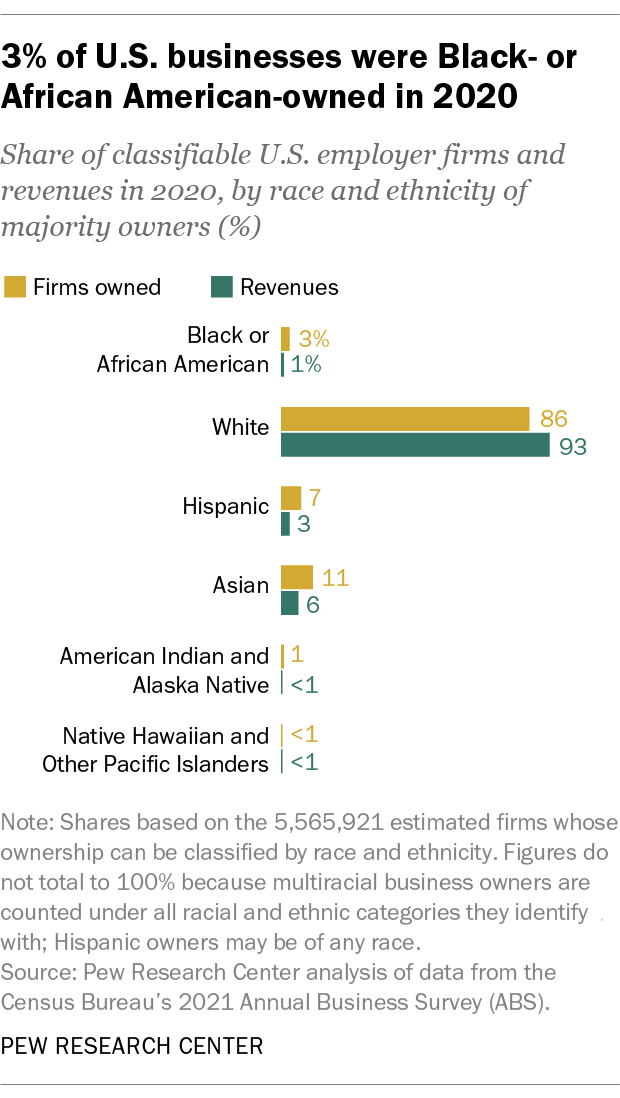
From [HERE] Nearly six-in-ten Black adults (58%) say supporting Black businesses, or “buying Black,” is an extremely or very effective strategy for moving Black people toward equality in the United States. While Black-owned businesses in the U.S. have grown significantly in recent years, they still make up a small share of firms and revenue in the country, according to a Pew Research Center analysis of Census Bureau data.

In 2020, there were an estimated 140,918 U.S. firms with majority Black or African American ownership, up 14% from 124,004 in 2017, according to the latest available data from the Census Bureau’s Annual Business Survey (ABS). Those firms brought in an estimated $141.1 billion in gross revenue in 2020, an 11% increase since 2017. [said numbers are actually probably lower due to government COVID shut down orders that disproportionately destroyed Black businesses]

Despite this growth, businesses majority-owned by Black or African American people accounted for only 3% of all U.S. firms that were classifiable by the race and ethnicity of their owners in 2020. And Black-owned firms accounted for just 1% of gross revenue from classifiable companies that year. By comparison, Black adults comprised 12.4% of the overall U.S. population in 2020, according to the Census Bureau.

As has long been the case, White Americans accounted for a large majority (86%) of firms whose ownership was classifiable by race and ethnicity in 2020. These firms brought in 93% of all revenue from classifiable companies that year.

U.S. firms with Asian majority owners accounted for 11% of all classifiable firms and 6% of revenue in 2020. Those majority-owned by Hispanics accounted for 7% of classifiable companies and 3% of revenue.

It’s important to note that not all U.S. businesses are classifiable by the race or ethnicity of their owners. A business is classified as “majority Black-owned” if a Black owner has at least 51% equity in the firm. (The same is true for business owners of other racial and ethnic backgrounds.) In 2020, only about 4% of all businesses in the U.S. were not classifiable by the race and ethnicity of their owners – but these firms accounted for 62% of total revenue. For that reason, ownership and revenue figures in this analysis refer only to the roughly 5.6 million firms that are classifiable by the race and ethnicity of their owners, most of which are smaller businesses.

Smaller payrolls common at Black-owned businesses

Majority Black- or African American-owned firms provided income for more than 1.3 million workers in 2020, with overall annual payrolls at these businesses totaling an estimated $42.2 billion that year.

Most Black-owned businesses have relatively small payrolls. Roughly two-thirds (66%) had fewer than 10 employees in 2020; 14% had 10 to 49 employees and just 3% had 50 or more. (In the ABS, employment size is determined by the number of paid workers during the March 12 pay period each year, which coincided with the start of the U.S. coronavirus outbreak in 2020. During that 2020 pay period, an additional 17% of majority Black- or African American-owned firms reported no employees.)

For most Black or African American business owners in the U.S., their firm is their main source of income. Among those who reported data about their primary source of personal income in 2020, 69% said their business was their primary income source, while 31% said it was not, according to ABS data.

Black-owned businesses are more common in health care sector and in certain states

The greatest number and share of majority Black- or African American-owned businesses are in the health care and social assistance sector. In 2020, more than 38,000 of the nearly 141,000 U.S. companies with majority Black or African American ownership, or 28% of the total, were in this sector.

Looked at a different way, 7% of all classifiable U.S. businesses in the health care and social assistance sector had Black or African American majority owners that year.

Professional, scientific and technical services was the second-most common sector, accounting for 14% of majority Black- or African American-owned businesses in 2020. Other common sectors included administrative and support and waste management and remediation services (9%) and construction (7%).

An overwhelming majority (88%) of Black- or African American-owned businesses are located in urban areas. Just 6% are in rural areas – that is, places with fewer than 2,500 inhabitants, under the Census Bureau’s definition. Three of the four most populous states also lead in the number of estimated businesses with majority Black or African American ownership: Florida had 15,149 such businesses in 2020, California had 13,729 and New York had 12,636. But majority Black- or African American-owned businesses made up the greatest shareof all classifiable firms in the District of Columbia, Georgia and Maryland.

More than half of Black business owners are men

The gender divide among all U.S. business owners extends to Black or African American business owners, though by a smaller margin. Among all U.S. firms whose ownership is classifiable by gender, 63% were majority-owned by men in 2020, while 22% were owned by women and 15% had equal male-female ownership that year. By comparison, 55% of majority Black- or African American-owned businesses in 2020 had male owners, while 37% were owned by women and 8% had equal male-female ownership.

Roughly half (52%) of Black or African American business owners who reported their age grouping were 35 t0 54 in 2020; an additional 25% were ages 55 to 64. A majority of those who reported their educational background had an undergraduate degree or more education. About a quarter (26%) had a bachelor’s degree, and another 34% had some form of degree beyond a bachelor’s.

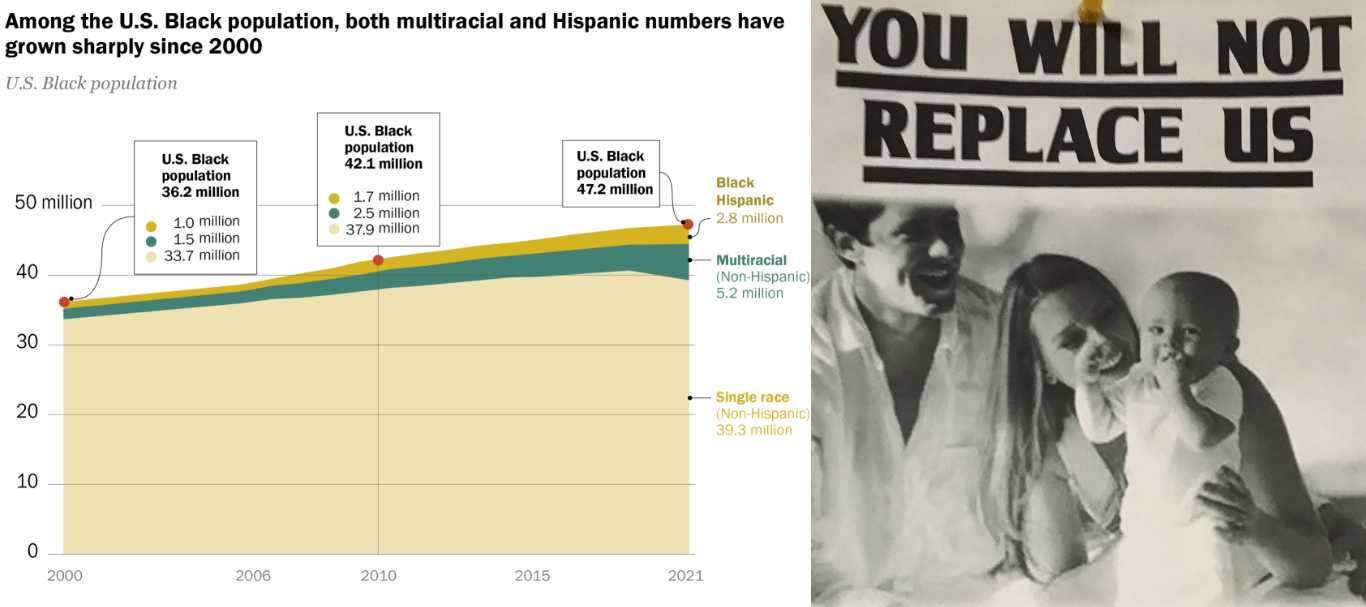
According to Pew, the Number of Blacks in the US Reached a New High of 47.2 Million in 2021 as the White Population Continues to Decline [causing some racists to practice racism and act genocidally]

From [HERE] The number of Black people living in the United States reached a new high of 47.2 million in 2021, according to a Pew Research Center analysis of government data. This group is diverse, with a growing number and share born outside the U.S. and an increasing number saying they are of two or more races. And while the South continues to see growth in its number of Black residents, the Black population is growing in other regions of the country, too.
For Black History Month, here are key facts about the nation’s Black population. In this analysis, the Black population is made up of three main groups: single-race, non-Hispanic Black people; non-Hispanic, multiracial Black people; and Black Hispanics.

The Black population in the U.S. has grown by 30% since 2000, rising from 36.2 million then to 47.2 million in 2021. Notably, the number of people self-identifying as another race in addition to Black has increased nearly 240% since 2000, reflecting a broader national shift in the number of Americans identifying as multiracial as well as changes to how the U.S. Census Bureau asks about race and ethnicity. The number of Black Americans who say they are Hispanic has also risen sharply over this period, up 185% since 2000.
The arrival of new immigrants from Africa, the Caribbean and elsewhere has been an important contributor to Black population growth. In 2021, there were 4.8 million foreign-born Black Americans, up from 2.4 million in 2000, according to a Pew Research Center analysis of Census Bureau data. Immigrants accounted for about 10% of the Black population in 2021, up from 7% in 2000.

More than half of the nation’s Black population (56%) lived in Southern states in 2021, up from a historic low of 52% in 1970.However, the share of Black Americans who live in the South varies by racial and ethnic background. Among those who are Black alone and not Hispanic, roughly six-in-ten (59%) live in the South. By comparison, only 42% of multiracial, non-Hispanic Black people and 35% of Black Hispanics live in the South.

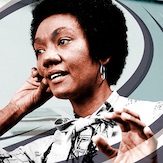
DR FRANCES Welsing explained that most white people consciously or subconsciously understand the following;

White plus Black equals Colored.

White plus Brown equals Colored.

White plus Yellow equals Colored. [MORE]

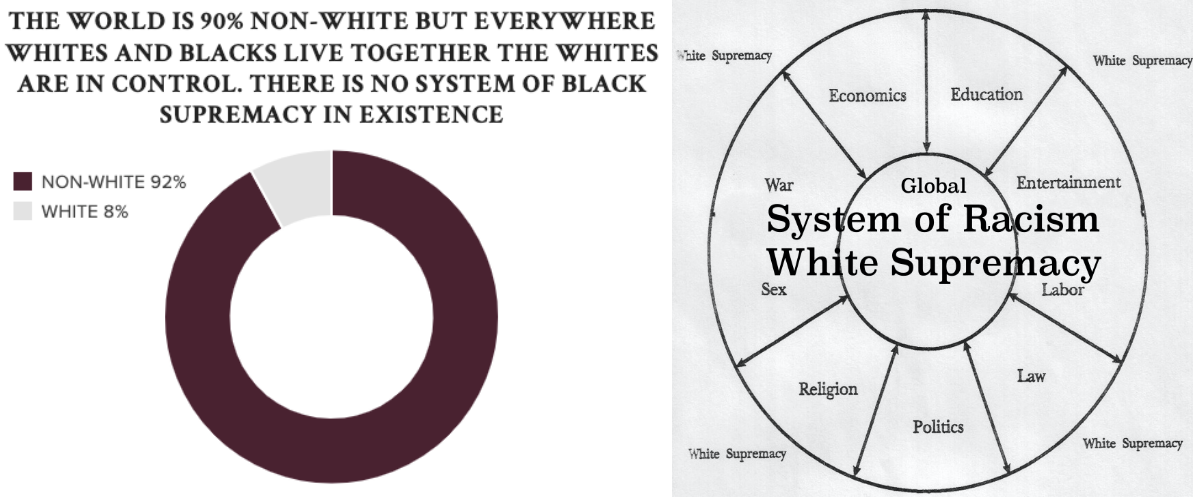
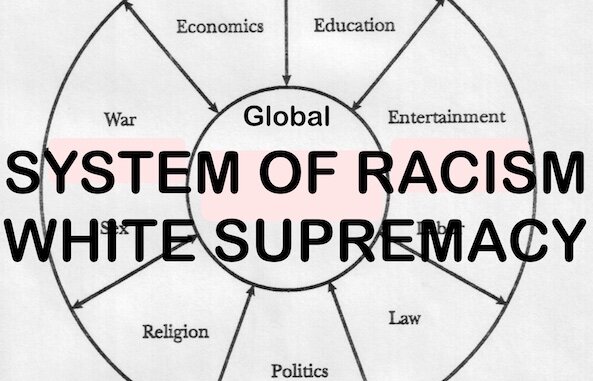
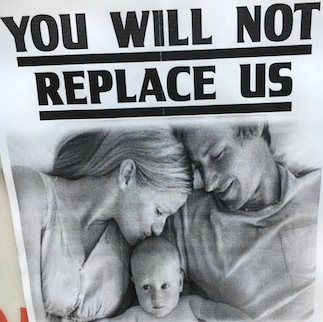
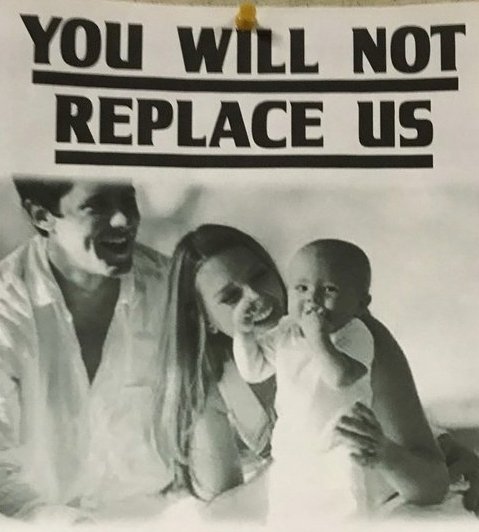
Although rarely discussed, ‘white people’ are genetic recessive. It is scientific fact that Black is a genetically dominant trait. Whenever Black mixes with White, which is a recessive genetic trait, Black will dominate. In general, this means "whites" cannot reproduce a white child when they have sexual relations with non-whites. The so-called white "race" can and eventually will be replaced or "genetically annihilated" through such assimilation or social intermixing with non-whites. As white populations have been consistently declining, Black and Brown populations are surging. According to Welsing, ‘genetic annihilation is the fundamental motivation of racists, whether it is conscious and/or subconsciously determined. [MORE] Said "fear of replacement" and/or the fear of losing control over non-whites fuels the system of white supremacy/racism and motivates racists to act genocidally towards non-whites in their perceived "survival game" with non-whites. Welsing’s color confrontation theory explained that the more the white population shrinks the worse its conduct toward non-whites will get.

“although the world is 90% non-white, everywhere one finds whites and blacks in close proximity to each other, whether it is Chicago or Zimbabwe, the whites are in control. [MORE]

With 4 million Black residents, Texas is the state with the largest Black population. Following Texas is Florida, with 3.8 million, and Georgia, with 3.6 million.

New York has more Black residents than any other metropolitan area.Nearly 4 million Black Americans live in the New York metro area. Other metro areas with large Black populations include Atlanta (2.2 million), Washington, D.C. (1.8 million) and Chicago (1.7 million).

As a share of the population, the Atlanta area is home to a higher percentage of Black people than any other metro area with at least 1 million Black residents. Nearly four-in-ten residents of the Atlanta metro area (37%) are Black, followed by 28% in the Washington metro area, 24% in the Detroit metro area, and 23% each in the Philadelphia and Miami metro areas.

The Black population of the U.S. is relatively young. In 2021, the median age of Black Americans was 33 years, meaning half of the nation’s Black population was younger than that age and half was older. By comparison, the nation’s overall median age was 38 in 2021.

Among Black Americans, median age varies considerably by race and ethnicity: Single-race, non-Hispanic Black Americans had a median age of 35 in 2021, compared with only 22 among Black Hispanics and 20 among multiracial, non-Hispanic Black Americans.

Educational attainment among Black Americans is on the rise. In 2021, 26% of Black adults ages 25 and older – 7.5 million people – had earned a bachelor’s degree or more, up from 15% in 2000.

Growing shares of Black women and Black men have earned a bachelor’s degree or more over the last two decades. However, Black women have seen a larger gain than Black men, leading to a widening gender gap in educational attainment. In 2021, 29% of Black women ages 25 and older had earned at least a bachelor’s degree, up from 16% in 2000. Among Black men of the same age, 22% had earned at least a bachelor’s degree in 2021, up from 13% in 2000.

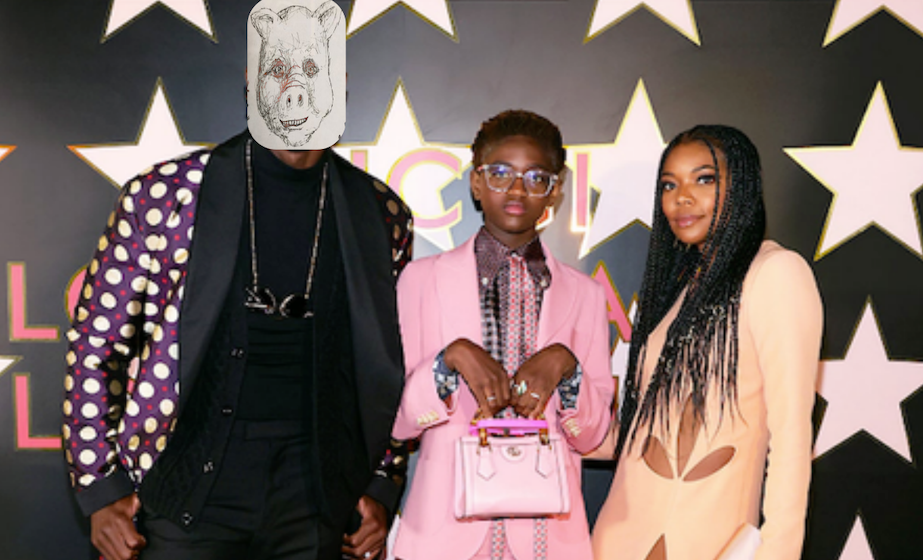
Elite Corporate Whites Who Control the National Association of Confused People (NAACP) Reward D-Wade for Propagandizing Genderplex Confusion and for Making Their Trans Agenda Part of the Black Agenda

NICE FUCKING JACKET DWAYNE

The Hill reported: Former NBA star Dwyane Wade and actress Gabrielle Union-Wade called for increased visibility and advocacy to protect the rights and lives of Black transgender people while accepting the President’s Award at the 2023 NAACP Image Awards.

The couple dedicated the award — which recognizes outstanding achievements in public service — to their child, Zaya, who they describe as transgender in their aggressive efforts to showcase him/her to the public.

Black Preacher Explains - You Can Get Cut Up, Dressed Up And Drugged Up But There Are Only Two Genders

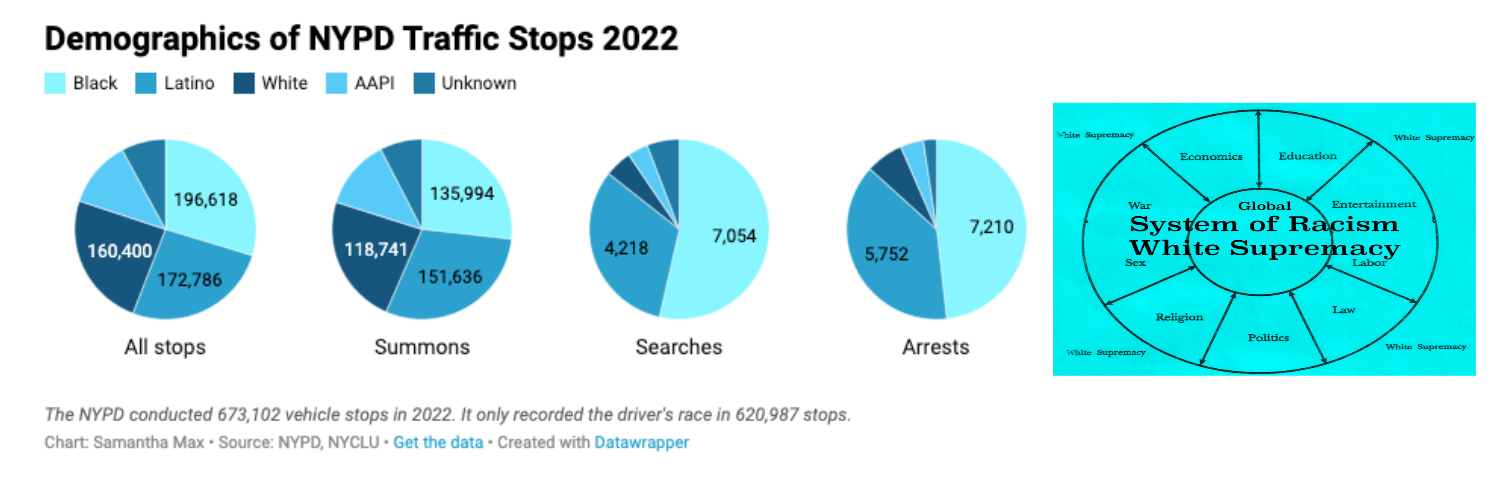
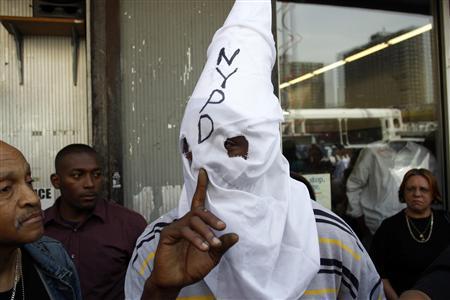
90% of Drivers Searched or Arrested by the Police in 2022 were Black or Latino in NYC, a City Run and Controlled by White Liberals

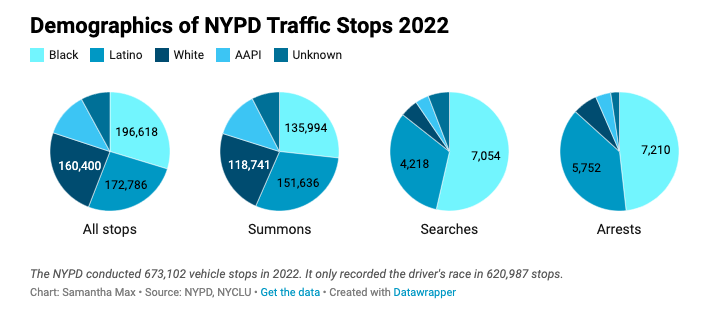
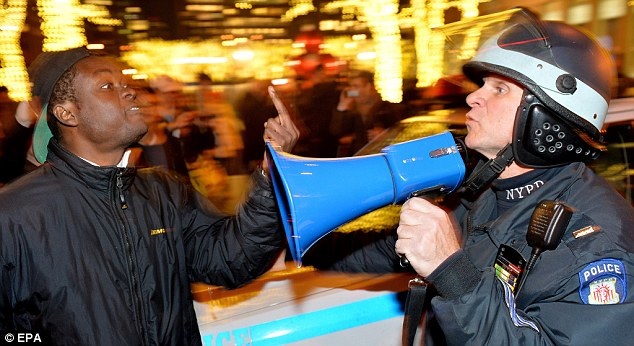
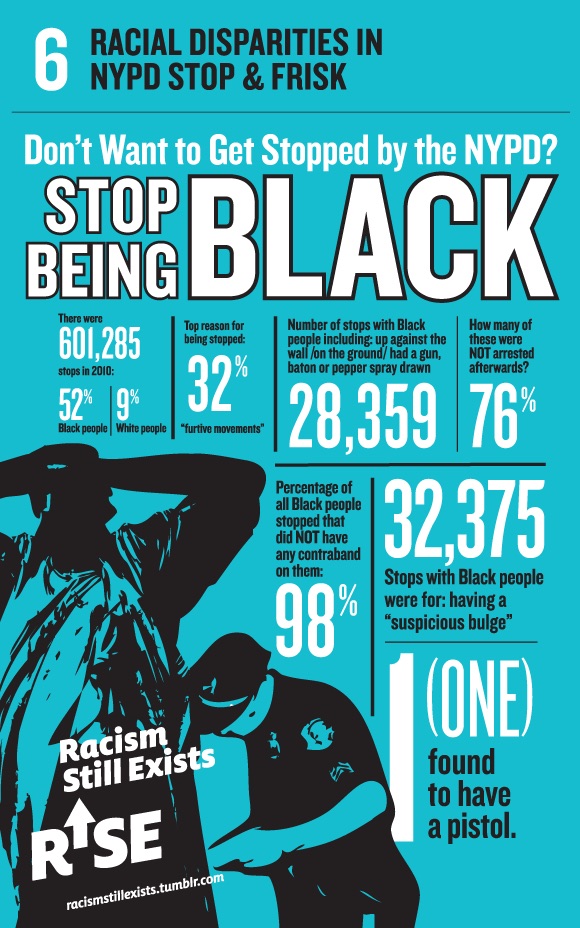
From [HERE] The first comprehensive data set on the NYPD’s use of vehicle stops shows that police pulled over hundreds of thousands of drivers last year — and about 90% of the people searched or arrested in those stops were Black or Latino.

Police stopped a total of more than 670,000 drivers in 2022 — roughly equivalent to the total population of Washington, D.C. That’s about the same number of pedestrians NYPD officers stopped in 2011, at the height of the stop-and-frisk era. The NYPD has never released vehicle stop numbers before, so it’s impossible to know how last year’s data compares to prior years.

While most stops only resulted in a summons for a minor violation, officers searched and arrested Black and Latino drivers at far higher rates than white drivers, according to data obtained by the New York Civil Liberties Union and shared with Gothamist. When police used force during traffic stops and recorded the person’s race, the person they used force against was a person of color about 92% of the time, the data shows.

“As with the pedestrian stops during the height of stop and frisk, we are now seeing numbers where it’s quite clear that Black and Latino drivers are being singled out for the most aggressive police activity,” said Christopher Dunn, the NYCLU's legal director. “That’s a source of a lot of concern.”

The NYPD said the new data is just a “baseline” and that the department is still working to analyze and understand the numbers.

“But make no mistake,” a spokesperson said in a statement. “Whether for street encounters or vehicle stops, both are fundamental tools in a thoughtful and multilayered public safety approach practiced by the NYPD to keep all New Yorkers safe and free from fear.”

Traffic stops are among the most common interactions between police and the public, and departments often tout them as a tool to increase road safety and search for evidence of more serious crimes. But experts and advocates for police reform have noted that the tactic disproportionately affects people of color and can escalate into violence. After the fatal police beating of Tyre Nichols during a traffic stop in Memphis, some are once again casting doubt on the effectiveness of car stops, noting that they put both drivers and officers in danger and rarely turn up evidence of a serious crime.

The new vehicle stop data from the NYPD shows that the department’s hundreds of thousands of vehicle stops in 2022 rarely resulted in arrests. Officers made an arrest only about 2.2% of the time. About 77% of stops resulted in a summons for a minor violation, like driving with a broken tail light.

The most common types of arrests were for license violations and possession of a forged instrument, which is often brought against people who violate license plate rules. In contrast, police made just 631 arrests for second-degree criminal possession of a loaded weapon, accounting for about 4% of arrests.

“We see time and time and time again that traffic stops generate enormous harm, and they do so for very little benefit,” Dunn said.

While pedestrian stops have been the subject of intense scrutiny in New York City in recent years, the new vehicle stops data provides an unprecedented look at a form of policing that, until recently, was used by the NYPD with little transparency. In 2021, the City Council passed a law requiring police to record and share quarterly reports on car stop numbers, broken down by race, gender and several other factors.

A City Council spokesperson called the first batch of numbers “alarming.”

“Police departments across the nation have been moving away from vehicle stops because of the evidence showing they too often escalate and lead to tragic incidents and can extract resources from communities through fines and fees with severe disparities,” spokesperson Rendy Desamours said in a statement. “This first-ever year of data on vehicle stops in New York City shows why this initial transparency was so critical.”

‘Use stops as an investigative moment’

Farhang Heydari, executive director of NYU’s Policing Project, questioned whether vehicle stops are actually making the roads safer.

“Are we finding lots of people with murder warrants and violent, you know, people who have committed violent crimes? Or are we just arresting people who can’t afford to pay traffic tickets or other kinds of fines?” he said. “I’m just very skeptical that this tactic is accomplishing anything.” [MORE]

“I Would Never Take the Vaccine." Decorated Military Virologist Dr Lane Rolling says 'Since Day 1 MRNA Vaccines Have Had No Effect on COVID or Its Mutations. Boosters Don't Prevent Illness or Death'

FUCK YOU TUBE. FUCK THE GOVERNMENT.

see video below

“Drinking Kool Aid w/o Any Sugar."

Why did YouTube remove this video? According to FUNKTIONARY

 censor – a type of strainer that passes everything but the facts, appropriate context, and reality. “A censor is a man who knows more than he thinks you ought to know.” ~Granville Hicks. (See: Oughtism & Transparent)

 censorship – the rape of the human mind. Take away the word “fuck” and you take away the right to say, “fuck the government.” ~Lenny Bruce. Feel free to say nothing. (See: Iron Rule, Patriot Act, Nine-Eleven, Justice & MEDIA)

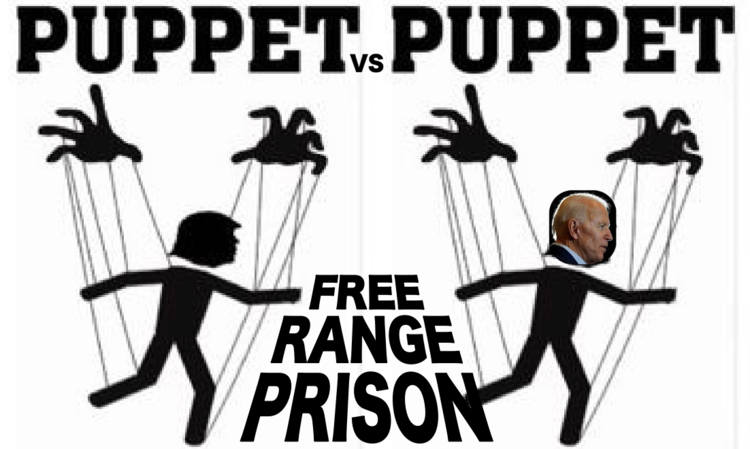
Deluded Black Puppeticians Insist Biden is Helping Blacks- as Cops Murder Blacks w/Impunity, 80% of Black 4th Graders Can Barely Read and Families Look for the Grate Outdoors in Cities Run by Liberals

From [HERE] The Congressional Black Caucus (CBC) applauded President Biden on Thursday for policies that it said have helped address systemic racial inequities. The CBC are Black rolebots from The MoTeaSuh Tribe.

In a press call with members of the administration’s Building Back Together initiative, CBC Chairman Rep. Steven Horsford (D-Nev.) discussed how policies like the Inflation Reduction Act and the bipartisan infrastructure law have been overwhelmingly positive for Black Americans.

“This is all about jobs, small businesses and community impact in all of America’s communities, but especially Black and other marginalized communities,” Horsford said. “We have been intentional to address racial equity in a way that really does ensure that communities that have historically been left out or left behind are prioritized in the funding that Congress passed and that the president has signed.” [MORE]

According to FUNKTIONARY

The Moteasuh Tribe – the miseducated coin-operated buck-dancing, sole-shuffling, politically dis-appointed kneegrows who pander to Massah’s agenda—Mo’ Tea Sir? This tribe of sorry-ass kneegrows follow the dictates and even orchestrates the marching bandits of racism white supremacy as spewed forth from the mouthpieces of political power within the borders of the Witches Castle. It’s the Condi-Clarence-Powell complex—that is, those who do Massah’s bidding as if you weren’t kidding yourself that you were doing otherwise. Keep your eyes on the lies, the liars, and the disguise.

Sleeping Tom – a person of Afrikan descent who has not consciously awakened to fully embrace his or her own asili (connective cultural tissue, heritage, imprimatur, and imperative). 2) a socially unconscious person of Afrikan descent who participates in secret balloting (voting). A sleepin’ Tom lives and reacts out of another culture’s asili or out of the mind of another; not their own. 3) a Negro who is unaware that he is all souled-out. 4) a Negro who isn’t aware that he is in fact and in deed a certified Sambo. 5) a broken, token Negro; a coin-operative. (See: Straw Boss, Asili, Doublemindedness, Sambo, Uncle Tom-Tom, Coin-Operated, Black Flask Brigade & Secret Ballots)

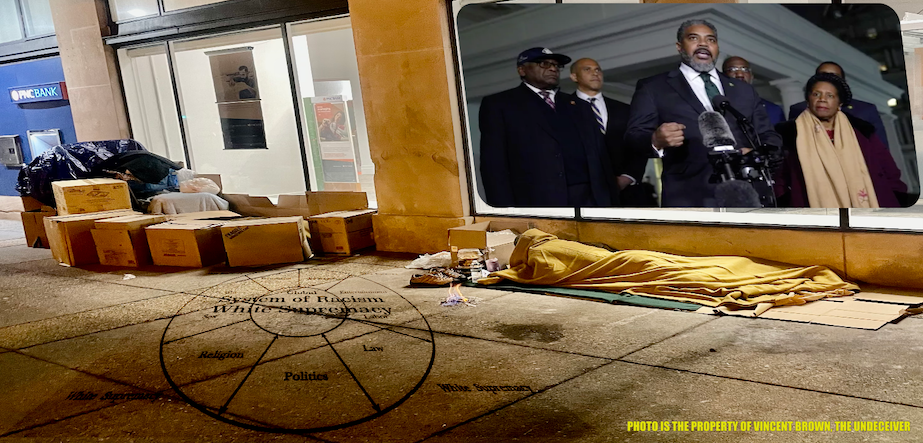
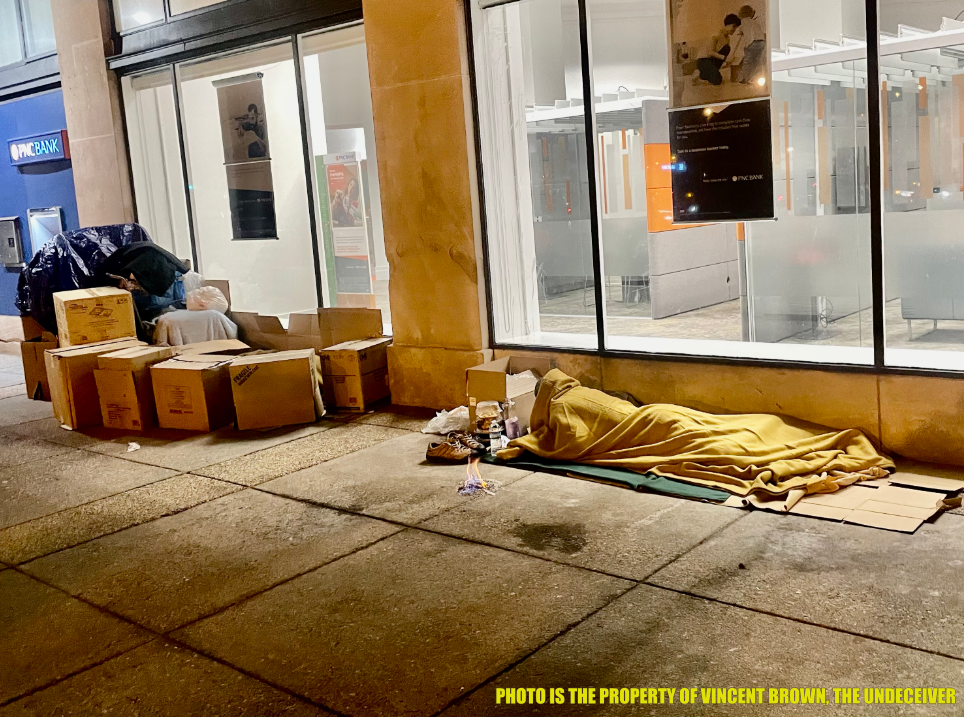
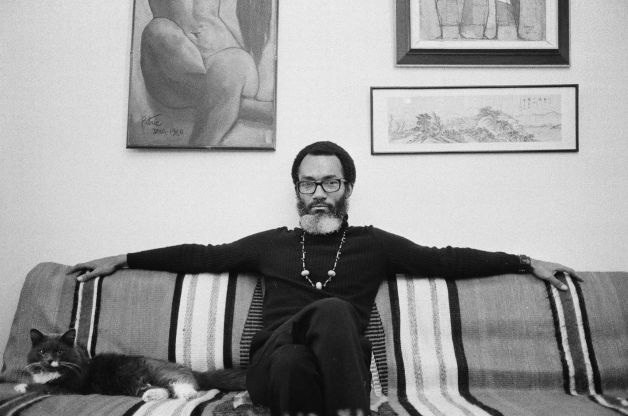
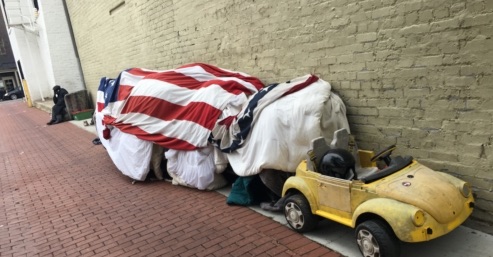
IN PHOTO ABOVE A BLACK PERSON LIVING IN A WHITE NEIGHBORHOOD (DUPONT CIRCLE) IN THE NATIONS CAPITOL, A CITY RUN AND CONTROLLED BY WHITE LIBERALS IN THE SYSTEM OF RACISM WHITE SUPREMACY. PHOTO IS FROM 2/2023 AND IS THE PROPERTY OF VINCENT BROWN, THE UNDECEIVER AND THEORY TESTER.

Led by white liberals black people are going in circles. According to the Urban League’s 2022 State of Black America, Black people haven’t progressed since 1965. The Black-White disparity persists across virtually every line or indicator of life and quality of life in the United States. Black people occupy the bottom of nearly every statistical category of life. [MORE] US Census data reveals that the unemployment gap between whites and blacks is virtually unchanged over the last 50 years. The income and wealth gaps have actually widened. So has the gap in educational attainment. The jobless rate among African-Americans has remained double to whites for over 5 decades. Among other things, according a to a NY Times analysis the race gap in higher education has also widened. The median Black household income was $43,862 versus $63,823 for Whites. Blacks still trail Whites in homeownership, the traditional path to wealth building in the country, and their homes were valued less than Whites. [MORE] Norman Kelley observed that despite Black people’s heavy involvement in the Democratic Party, schools have remained as segregated as before Brown v. Board of Education, which was decided 70 years ago. [MORE] According to NSBA nearly one third of Black students lived in poverty (32%), compared with 10% of white students in families living in poverty. While white liberals whine about Florida AP classes and captivate Blacks with fantasy talk about reparations, 80% of African-American fourth-graders can barely read and understand mathematics and only 19% were scored proficient in math. [MORE] According to the National Assessment of Educational Progress (NAEP) just 18% of Black eighth-graders reach reading “proficiency.” [MORE] And in 2015 NAEP found that only 17% of Black 12th graders were proficient at reading. [MORE] In 2017, Ballou High School in DC came under intense scrutiny for pushing failing students through to graduation in order to achieve a 100% graduation and college acceptance rate. Teachers stated that many of their 12th graders couldn’t read and write. In 2017-18, only 7% of public school teachers and 11% of public school principals were Black. [MORE] and [MORE]

The Black votary automatically presumes that most white liberals are not racist and do not practice racism. Said presumption appears to be the only substance of present day black politics – as “blackness” or authenticity is entirely measured by “non-republican-ness” and although whites are not subject to the system of racism white supremacy or the same socio-economic circumstances, white and black liberals are perceived to have the same common issues. According to this clogic Black voters are comfortable voting for white liberals and complimentary black rolebots without critical examination of their legislative records, campaign proposals or without regard as to whether they even have a particularized set of plans or any messaging for Black people. [MORE]

White Prosecutors Continue to Delay Jam Master Jay's Murder Trial

 From [HERE] Having belatedly entered a request for an anonymous jury in the trial over the 2002 murder of hip-hop legend Jam Master Jay, prosecutors endured a federal judge's wrath Thursday for setting back proceedings by nearly a year. 

Karl Jordan Jr. and Ronald Washington have been charged with killing the iconic Run-DMC member, whose full name was Jason “Jay" Mizell, at Mizell’s Queens recording studio on October 30, 2002. The unsolved murder case sat for nearly two decades before the defendants’ arrest and indictment in 2020. Both have pleaded not guilty. 

Six months after June 2022 motion deadline — Jordan and Washington's trial had been scheduled to start in February — the government requested in January that jurors’ names be kept secret. Picking anonymous juries requires extra time and questionnaire changes, however, so the move would delay the trial until January 2024. 

U.S. District Judge LaShann DeArcy Hall set the new date, only to receive another letter from prosecutors requesting that she move up the proceedings because options in the intervening months “were not fully explored.” 

The Obama-appointed Hall spent 30 minutes Thursday sharply rebuking that notion. 

“I don’t answer to you, so the fact that you don’t believe that I explored the summer months to your satisfaction is of no moment,” Hall said, addressing Assistant U.S. Attorney Artie McConnell, who occupied the first prosecutor chair but remained standing as the judge spoke. 

“This is going to serve you well moving forward,” Hall said. “Why don't you assume that I know how to manage my own docket? Why don’t you assume that I wear the robe and you don’t?”

The judge also criticized how prosecutors phrased their concerns about the delay in the 2-page letter, which says: “The government is also prejudiced by the extended delay, as one key witness has passed away during the pendency of the case and witness intimidation and tampering remain a significant concern.”

Hall asked her deputy to hand both parties a printout of an article from music website AllHipHop.com. She said she faulted prosecutors for its salacious headline: “Key Witness In Jam Master Jay Case Turns Up Dead; Feds Seek To Expedite Trial.”

“Did it not occur to you," Hall asked, "that that might create the impression, the false impression, that that witness died as a result of conduct by either the defendants or someone acting on their behest? That somehow this death was the result of foul play?” 

“No, it did not, judge, and that certainly was not the intent,” McConnell replied. 

“I don’t know if I believe that it was just sloppy,” Hall countered. 

Friends and family supporting Jordan filled several rows of seats of the hushed, and otherwise nearly empty, federal courtroom in Brooklyn. Hall made clear she did not intend to change the January 2024 trial date unless something changes to warrant her reconsideration. 

Defense attorneys had little to add following Hall’s castigation. 

“It really speaks for itself,” said attorney Michael Hueston, who represents Jordan. “I think the judge’s decision is appropriate and correct. 

Washington’s attorney Susan Kellman concurred: “I think the judge said it all.”