Hundreds of ‘Tylenol Lawsuits’ Allege Retailers, Manufacturers Knew Acetaminophen During Pregnancy Could Cause Autism, ADHD

From [HERE] Hundreds of “Tylenol lawsuits” already have been filed against retailers and manufacturers alleging they sold products containing acetaminophen to pregnant women, knowing the medications could harm the developing fetus.

The number of lawsuits could soon reach into the thousands, according to an attorney who spoke to The Defender.

Attorney W. Mark Lanier described the lawsuits — which allege acetaminophen use during pregnancy can cause children to be born with autism spectrum disorder (ASD) and attention-deficit/hyperactivity disorder (ADHD) — as “some of the most important health litigation pending in the United States right now.”

Lanier, founder and CEO of the Houston-based Lanier Law Firm involved in several high-profile product litigation lawsuits, told The Defender:

“Autism and mental health development or mental development issues touch a huge number of Americans. We believe the science indicates that taking Tylenol can cause many of these problems, period. We think the science backs this up, we think the biology backs it up, and we are eager to prove that in a court.

“The goal here is not to take Tylenol off the market. The goal here is to put a warning on it so that doctors and expectant mothers are able to make an intelligent decision of what risks they will expose their child to during pregnancy.”

The U.S. Judicial Panel on Multidistrict Litigation (JPML) late last year appointed Senior U.S. District Judge Denise Cote to oversee the growing number of lawsuits brought by families, resulting in all of the claims being transferred to the U.S. District Court for the Southern District of New York.

Judge Cote last month appointed a special master to preside over all federal Tylenol autism and ADHD lawsuits.

The lawsuits allege retailers, including Walmart, CVS, Walgreens and others, falsely advertised products that contain acetaminophen as being safe for pregnant women and did not warn them about the risks posed to fetal development.

Lawsuits also are expected against Johnson & Johnson for its alleged role in encouraging widespread acetaminophen use during pregnancy, which could send the number into the thousands.

Products that contain the drug include Tylenol, Alka-Seltzer Plus, DayQuil, Excedrin, Goody’s, Mucinex, NyQuil, Robitussin and some generic and store-brand equivalents.

The lawsuits allege the products have been marketed as safe for pregnant women since the 1950s, despite the existence of dozens of peer-reviewed studies showing acetaminophen poses serious risks to pregnant women and unborn children.

Lawsuits are being pursued on behalf of children under age 15 who were diagnosed with ASD between the ages of 1 and 10, and children under age 15 who were diagnosed with ADHD between the ages of 8 and 14.

The Defender examined some of the currently pending lawsuits making such allegations and the scientific literature regarding the risks of acetaminophen during pregnancy and spoke with one of the attorneys involved with the Tylenol lawsuits. [MORE]

"Ever-escalating levels of pain and torture:" Kenneth Smith Describes Alabama Authorities' Cruel, Unusual and Unsuccessful Attempt to Murder Him with Lethal Injection

From [DPIC] Alabama death-row prisoner Kenneth Smith spent four hours on November 17, 2022 strapped to an execution gurney while state prosecutors attempted to lift a stay of execution issued by a federal appeals court and his execution team repeatedly failed in attempts to set the intravenous execution line intended to kill him. He was left strapped to the gurney after prison officials called off the botched execution, unaware that he was not to be put to death that night. 

These revelations, and more, came to light in pleadings filed by Smith’s lawyers in the U.S. District Court for the Middle District of Alabama on November 25, 2022 and reported by The Guardian December 28, 2022. In his Second Amended Complaint, which challenged his execution by lethal injection based on Alabama’s history of failed and botched execution attempts, Smith tells the story of what happened on the night Alabama tried and failed to execute him

The complaint alleges that, “as the night progressed, as Mr. Smith was subjected to ever-escalating levels of pain and torture, no one responded to his pleas to stop the pain, told him of the Eleventh Circuit’s stay, or answered his questions about what they were doing to him. They were — and he thought they were — executing him.”

Maya Foa, joint director of Reprieve, told The Guardian that “The recent spate of disastrous lethal injection executions have shown that whatever the drug, whatever the protocol, condemned prisoners often spend their final hours in agonising pain and distress. With each gruesome scene in the death chamber, we are witnessing the consequences of persisting with a broken method of execution, in real time.”

The Attempt to Execute Kenneth Smith

Smith’s complaint sets forth a detailed timeline of events surrounding the botched attempt to execute him. 

At 7:45 pm, it says, as a motion to stay his execution was pending before the U.S. Court of Appeals for the Eleventh Circuit, counsel for the Alabama Department of Corrections (ADOC) emailed Smith’s lawyers advising defense counsel that ADOC had notified the courts that “we are preparing Mr. Smith for execution.” Guards ended Smith’s phone call with his wife at 7:57 p.m. and immediately placed him in handcuffs and leg irons, took him to the execution chamber, and strapped him to the gurney.

Two minutes later, the Eleventh Circuit issued a stay, which Smith’s lawyers provided to ADOC at 8:02 p.m. ADOC replied, “Noted,” but left Smith strapped to the gurney until midnight — a total of about four hours. During that time, ADOC never informed Smith of the stay or the status of any other legal proceedings and did not permit him to speak with his counsel. Smith, the complaint alleges, believed his execution was imminent.

At 10 p.m., ADOC’s IV team entered the execution chamber and began to attempt to set an IV line. Around the same time, the U.S. Supreme Court lifted the Eleventh Circuit’s stay. It is unclear from the complaint whether the IV team began jabbing Smith’s arms and hands with needles before or after the stay was lifted. At one point in the process, Smith informed an execution team member that executioners were painfully inserting the needle in his muscle. According to the complaint, the team member responded, “No I’m not.” 

The execution team then adjusted the gurney to place Smith into an inverted crucifixion position, then left the room for several minutes. Upon their return, they injected Smith with an unknown substance, which Smith’s counsel believe to be “some sort of sedative and/or anesthetic.” Smith “specifically objected to this injection,” the complaint says, as the State “had been ordered not to use ‘intramuscular sedation’ during his execution.”

Subsequently, an individual of “unknown medical credentials … started repeatedly stabbing [Smith’s] collarbone area with a large needle” in an attempt to begin placing a central line IV, and a prison official “grabbed and held [Smith’s] head away from the area where the needle was being inserted.” Smith describes sharp and intense pain, “as though he were being ‘stabbed’ in the chest” as the individual “repeatedly jabbed him … underneath his collarbone.” Unbeknownst to Smith, around 11:20 pm, “unverified reports that the execution may have been called off started circulating.” 

Smith’s lawyers emailed state officials for confirmation that the execution had been called off, but did not receive a response. Sometime before midnight, the execution team told Smith “it’s over with.” When guards came to remove him from the execution chamber, Smith was trembling, sweating, hyperventilating, dizzy, and could not lift his own arms to be handcuffed or walk unassisted.

The U.S. Supreme Court reversed Smith’s stay of execution around 10:20 pm. ADOC initiated Smith’s execution hours earlier, contravening a court-ordered stay and their own protocol. The attempt to execute Smith was the third consecutive botched execution in Alabama. Following the incident, Alabama Governor Kay Ivey called for a review of the state’s execution process. She also asked the Alabama Supreme Court to amend state court rules governing death warrants to provide ADOC personnel more time to carry out executions, which the court approved January 12, 2023.

Black Man Charged with Murder Moves to Bar Death Penalty, Invoking Kansas Constitution’s ‘Strict Scrutiny’ For Life and Liberty Issues

From [HERE] A Kansas capital defendant is challenging the prosecution’s decision to pursue the death penalty in his case, invoking a heightened standard of review the Kansas constitution applies to infringements of fundamental rights. 

The pretrial challenge, which will be the subject of a hearing in the Sedgwick County District Court beginning February 6, 2023, was filed by the ACLU in the case of Kyle Young, an African-American defendant who faces capital charges in a 2020 double murder at a Wichita hotel. The motion alleges that the Kansas death penalty violates state and federal prohibitions against cruel and unusual punishment because it denies capital defendants a fair and impartial jury, is arbitrarily and discriminatorily applied, and serves no legitimate penological purpose. 

The Kansas Bill of Rights declares that “life, liberty, and the pursuit of happiness” are “inalienable natural rights.” Young’s lawyers argue that a landmark 2019 Kansas Supreme Court ruling on abortion rights that applied a “strict scrutiny” standard of state constitutional review for laws that infringe on fundamental rights should apply to capital punishment. “For the very same reasons liberty applies to reproductive rights, life should apply to the death penalty,” said ACLU Capital Punishment Project senior counsel Henderson Hill. 

In 2022, the Kansas Supreme Court ruled in a different case that the death penalty, as written, did not violate the state constitution’s “inalienable” right to life. It held, “when a person is convicted of capital murder beyond reasonable doubt, he or she forfeits the inalienable right to life … and the state may impose lawful punishment for that crime.” Young, who has not been convicted and is presumed innocent, argues that he is entitled to the benefit of strict scrutiny review and that the death penalty is unconstitutional as it is applied in the state of Kansas.

Racist Suspect Maryland Medical Examiner Who Testified on Behalf Derek Chauvin To Be Audited For Rulings In 100 Police-custody Deaths

From [HERE] Former Maryland state medical examiner Dr. David Fowler testified at the trial of police officer Derek Chauvin in 2021 that the cause of George Floyd’s death ought to be ruled “undetermined.” Hundreds of doctors across the country repudiated Fowler’s testimony and called for his previous rulings to be investigated. After an independent review of Fowler’s handling of 1300 cases of deaths in police custody, the State of Maryland is now reinvestigating 100 of these deaths. The 2018 death of Anton Black, a 19-year-old African American man, is included in the cases to be reviewed. Fowler ruled Black’s death an accident in spite of video footage showing three white police officers and one vigilante chasing the teen, tasering him, and pinning him to the ground for six minutes until he stopped breathing. In the latest episode of Land of the Unsolved, journalists Taya Graham, Stephen Janis, and Jayne Miller dig deeper into Dr. Fowler’s disturbing record, and the patterns it reflects in police killings across the nation. [MORE

Supreme Court Vacates Conviction of Latino man on Texas’ Death Row Based on Faulty DNA evidence

From [HERE] The U.S. Supreme Court has reversed the denial of relief to a Texas death-row prisoner whose request for new trial is supported by local prosecutors. In a two-sentence decision, the Court granted certiorari to Areli Escobar, vacated the judgment of the Texas Court of Criminal Appeals (TCCA), and sent the case back for reconsideration. The Court’s summary reversal relied on Travis County prosecutors’ admission that Escobar’s conviction is based on “flawed and misleading forensic evidence.”

Escobar was sentenced to death in 2011 for the rape and murder of a woman in his apartment complex. No eyewitnesses linked him to the crime, and the prosecution’s case relied heavily on the Austin crime lab’s forensic testing of Escobar’s clothes and items found at the crime scene. After the Austin Police Department crime lab was shut down in 2016 for widespread issues with evidence handling and testing, Escobar sought relief in Texas courts. The Travis County District Attorney’s office initially opposed Escobar’s request, but it changed its position after evidence was presented to a Texas trial court. Despite the office’s support of Escobar’s request, the TCCA denied all relief and the prosecution’s motion for reconsideration. The U.S. Supreme Court’s ruling sends the case back to the TCCA for further proceedings.

Travis County District Attorney José Garza said the Supreme Court’s ruling on January 9th made the day “an important day for justice.” Garza said, “We believe it's really important for someone accused of a crime to have a jury that has access to complete and accurate facts. We’re hopeful that the Court of Criminal Appeals will share that perspective and review the facts of this case.”

Benjamin Wolff, the director of Texas' Office of Capital and Forensic Writs and one of Escobar’s attorneys, pointed out the importance of the case to the legitimacy of the criminal legal system. Wolf said, “No one should be convicted or sentenced to death because of junk science. … And no one should ever be put to death when the prosecution that secured their conviction can’t stand behind it.”

Lawsuit Alleges Federal Death-Row Conditions Violate U.S. Constitution and Human Rights Treaties

From [HERE] A Russian national on the U.S. federal death row has filed a civil rights lawsuit challenging the constitutionality of the federal government’s use of automatic and prolonged solitary confinement to house individuals sentenced to death. 

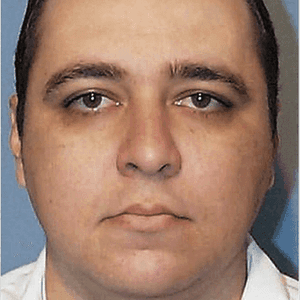
The class action complaint, filed January 12, 2023 in the U.S. District Court for the Southern District of Indiana on behalf of Jurijus Kadamovas (pictured) and 37 other prisoners incarcerated on death row in the United States Penitentiary in Terre Haute, Indiana, alleges that the “severely isolating” and “unrelenting solitary confinement” to which the prisoners are subjected falls below the minimum standard prescribed by international human rights treaties for the treatment of prisoners and violates the U.S. constitutional prohibition against cruel and unusual punishment.

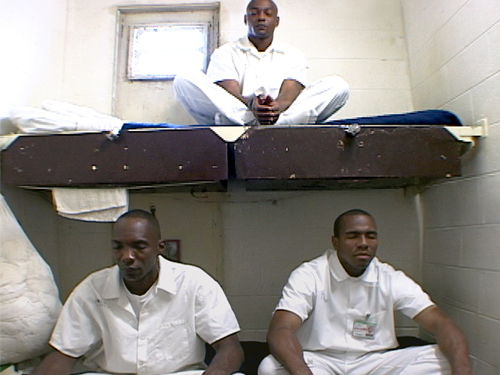
The lawsuit, authored by lawyers from the ACLU of Indiana and the national law firm, Faegre Drinker Biddle & Reath LLP, states that the prisoners on federal death row are automatically assigned to incarceration in the “Special Confinement Unit” (SCU), where they are held in “solitary conditions” in single cells 12 feet, 8 inches deep by 7 feet wide — roughly the size of a parking space. “Each cell contains a table and stool affixed to the floor, a metal sink/toilet unit, and a shower,” leaving even less space for movement. Once assigned to the SCU, a federal death prisoner is likely to be kept in solitary confinement “for decades.”

“It is well known that prolonged isolation and solitary confinement can cause, and predictably will cause, prisoners to suffer serious emotional and psychological injuries,” the complaint states. Bureau of Prisons personnel are “fully aware of the isolated, dangerous, and harmful conditions that exist in the SCU,” the complaint alleges, are “responsible for the conditions there, and allow[ ] them to exist and continue.” 

The prisoners seek an injunction to end automatic solitary confinement and require BOP to allow them “to be out of their cells for multiple hours a day and to engage in congregate activities.” The complaint also seeks unspecified “individual damages” for the harms experienced by the prisoners, plus attorneys’ fees. Kadamovas specifically claims to have suffered “physical, mental, and emotional injuries and harm by the isolated, dangerous, and harmful conditions that exist in the SCU.”

Biden signs bill mandating ‘just and reasonable’ phone rates for prisoners

From [HERE] US President Joe Biden Thursday signed a bill reducing the cost of making calls from prisons into law. The Martha Wright-Reed Just and Reasonable Communications Act of 2021 will direct the Federal Communications Commission (FCC) to enforce guidelines which ensure that payphone providers charge incarcerated people “just and reasonable rates” for phone calls. The signing comes after the FCC attempted to reduce the costs of phone calls in 2017 but was ruled against by the US Court of Appeals for the District of Columbia which held that the FCC did not have the authority to set rate caps on calls.

Congress passed the legislation in December 2022 before it was sent to President Biden to be signed. It aims to establish requirements “related to charges, practices, or regulations in connection with confinement facility communications services.” It also “prohibits providers from assessing a site commission.” The US House of Representatives introduced an early version of the bill, the Martha Prison Phone Justice Act, in April.

The recently passed legislation imposes “private-sector mandates,” congressional directives which require private-sector entities to act in some way. The Unfunded Mandates Reform Act of 1995 (UMRA) defines the boundaries of these mandates. The Congressional Budget Office says that the “total cost of the [new law’s] mandates on private entities would exceed the annual threshold established in UMRA for private-sector mandates.”

Special Assistant to the President for Criminal Justice and Guns Policy, Vanessa Chen, comments that “meaningful communication and connection with loved ones (promotes) rehabilitation and can reduce recidivism,” thereby leading to safer communities. The bill is named after retired nurse Martha Wright-Reed, who advocated for affordable telephone rates after her grandson was incarcerated.

Electronic Warfare Will Dominate ‘the Battlefield of Tomorrow,’ Experts Say

From [HERE] Electronic warfare is a central aspect of the conflict between Russia and Ukraine. Both nations are utilizing cyberattacks, jamming and various other digital aggression tactics to sow disorder on the battlefield and create an advantage. According to top U.S. Army officials, the U.S. sees this demonstration as an indication that it must ramp up and strengthen its EW capabilities.

Lt. Gen. Maria Gervais

“Everything that we are seeing in Ukraine has implications for a unified network, and almost certainly represents the type of threats we will see,” stated Lt. Gen. Maria Gervais, deputy commanding general and chief of staff for the U.S. Army Training and Doctrine Command, at the Aug. 2022 AFCEA TechNet Augusta conference.

Gervais’ comments are a reference to the U.S. Department of Defense’s ongoing effort to establish a data-sharing platform that is aimed to create efficient lines of communication between warfighters on land, in the air, at sea, in space and in the cyber realm, dubbed Joint All-Domain Command and Control.

“A unified network gives our force the ability to succeed in volatile, congested, contested environments, in order to be successful on the battlefield of tomorrow,” Gervais said.

In Major Step, Space Force Takes Over All Military Satellite Communications

From [HERE] The Space Force has taken over all of the Department of Defense's military satellite communication functions, a major step in building the new service.

The Navy and the Army have transferred major satellite communication operations to the Space Force in an effort to consolidate training, operations, acquisition and other activities, according to a news release. The transfer marks the first time all military satellite communication functions have been consolidated under a single military service.

The Army's transfers were expected to include $78 million in operations, maintenance and 500 positions, the release said. As part of the consolidation, the Army transferred the Wideband Global SATCOM and Defense Satellite Communications System to the Space Force in August. The Wideband Global SATCOM system is considered the "backbone of the U.S. military's global satellite communications," according to the Space Force. [MORE]

Police Waging War on Black People: Iranian Foreign Ministry Spokesman says US Authorities Must be Held to Account for the Systematic Deprivation of Human Rights of Blacks

From [HERE] Iran has slammed the death of Keenan Anderson, the cousin of a co-founder of the Black Lives Matter movement, after he was repeatedly tasered by police officers in Los Angeles, saying the United States must be held to account for systematic violation of human rights.

Iranian Foreign Ministry spokesman Nasser Kan'ani said on Saturday that the US government must be held accountable for this "inhumane crime" and its irresponsibility vis-à-vis the repetition of gross and systematic violations of human rights in the country, particularly the rights of minorities and people of color.

Anderson, 31, cousin of Patrisse Cullors, died at a hospital in Santa Monica, California, after suffering a cardiac arrest following the incident on the afternoon of January 3 in Los Angeles’ Venice neighborhood.

According to reports, the school teacher was repeatedly tasered by Los Angeles police officers and restrained following a traffic accident.

In a 13-minute body-cam footage released by LAPD on Wednesday, Anderson is seen begging for help as multiple officers hold him to the ground and one officer presses his elbow along with his body weight onto his neck.

Police killing of Black Lives Matter co-founder’s cousin sparks outcry in US

The death of Keenan Anderson, the cousin of a co-founder of the Black Lives Matter movement, after he was repeatedly tasered by police officers in Los Angeles has sparked a massive outcry in the US.

“They’re trying to George Floyd me. They’re trying to George Floyd me,” Anderson can be heard saying in the footage, in reference to the US police killing of Floyd in May 2020 in  Minneapolis that sparked racial justice protests around the world.

Kan'ani further lambasted the US' hypocritical policies on meddling with other countries' affairs, saying, "The American regime, which hypocritically interferes in the internal affairs of other countries and sheds crocodile tears in order to achieve political goals, remains silent regarding the extreme violence and discriminatory and hate-mongering actions of the country's police against people of color."

The Iranian spokesperson added that the US police's brutal action in murdering Anderson, which was repetition of Floyd's heinous killing, once again shocked the world.

A 2021 study in the medical journal The Lancet recorded 30,800 deaths from police violence across the country between 1980 and 2018, far higher than estimates offered by the US National Vital Statistics System. 

It said more than 55 deaths of deaths from police violence in the US from 1980 to 2018 were misclassified or unreported in official vital statistics reports.

Meanwhile, according to new data released earlier this month, US police killed at least 1,176 people in 2022, making it the deadliest year on record for police violence in the country since experts first started tracking the killings.

5 Memphis Cops Fired and a DOJ Investigation Over Tyre Nichols Death. But Police Fail to Explain How Black Man's Face Got Disfigured and Keep the Public's Video Secret while Cops Get Stories Straight

From [HERE] Five Memphis Police officers involved in the traffic stop that preceded the hospitalization and subsequent death of a 29-year-old man were fired Friday evening.

The police department said in a statement that the officers, who had been on the force between two and a half and five years, violated multiple department policies, including those on use of force, failure to render aid and their duty to intervene. Tyre D. Nichols of Memphis died three days after the traffic stop.

Officers Tadarrius Bean, Demetrius Haley, Emmitt Martin III, Desmond Mills, Jr., and Justin Smith were all fired Friday evening. They had been with the department since Aug. 2020, Aug. 2020, March 2018, March 2017, and March 2018, respectively.

"Earlier today, each officer charged was terminated from the Memphis Police Department," a written statement from Memphis Police Chief Cerelyn "CJ" Davis said. "The egregious nature of this incident is not a reflection of the good work that our officers perform with integrity, every day."

The charges mentioned by Davis are internal, department charges, not criminal ones.

The Department of Justice and FBI on Wednesday announced a civil rights inquiry into a traffic stop in Memphis, Tennessee, that preceded the death of a Black man.

Tyre Nichols, 29, died three days after being taken to a hospital in critical condition following the Jan. 7 stop. The Memphis Police Department said the case was referred to the Tennessee Bureau of Investigation the next day, and an internal investigation was opened into the incident.

The U.S. Attorney's Office of the Western District of Tennessee announced Wednesday that the FBI's Memphis field office and the Civil Rights Division of the Department of Justice have also begun looking into the Nichols' death.

Nichols' family has retained civil rights attorney Ben Crump and have demanded the public release of body camera and any other surveillance footage from the stop.

"Nobody should ever die from a simple traffic stop — the footage is the only way to discern the true narrative of why and how that happened to Tyre,” Crump said in a statement Monday.

Nichols died Jan. 10, three days after he was pulled over in a traffic stop.

According to a statement from the Memphis Police Department, officers pulled Nichols over around 8:30 p.m. on Jan. 7 and a "confrontation" ensued. Apparently he was pulled over for reckless driving. However, the police have described how his driving was reckless. Nichols eventually ran away, but was later arrested. Officers said another "confrontation" happened at that point, but he had already been detained.

It was after this that police say Nichols "complained of a shortness of breath," and was taken to St. Francis Hospital in critical condition. Relatives of Nichols claimed the officers involved were in an unmarked vehicle and that he experienced cardiac arrest and kidney failure because of officers beating him. A cause of death has not been released

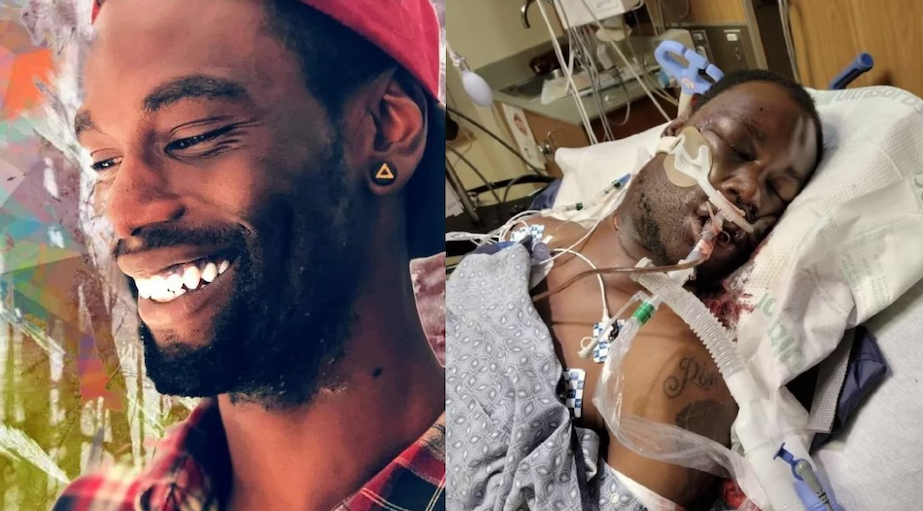
An image of Nichols shared with the public shortly after his death showed an intubated Nichols. His face was disfigured from a combination of significant welts. His nose was nearly bent into an “s” shape. Blood was seen on his intubation tube and on his hospital sheets. [MORE]

Memphis officials, including police Chief C.J. Davis and Mayor Jim Strickland, said Tuesday the footage would be released after the conclusion of the internal investigation. The police department said it anticipates that happening by the end of the week.

St Paul Approves $1.3M for Police Shooting of Marcus Golden. White Supremacy Mystery Remains Unsolved as Footprints and Tire Tracks in the Snow and Bullet Casings Show Cops Murdered Him as He Fled

From [HERE] St. Paul City Council members have approved a $1.3 million settlement with the family of Marcus Golden, eight years after the 24-year-old Black man was shot and killed by police.

The settlement, approved Wednesday, will dismiss officers involved in Golden's death as defendants in the lawsuit while granting his aunt Monique Cullars-Doty $1.3 million in damages, medical liens and attorneys' fees. Since her nephew's death in 2015, Cullars-Doty has been a visible activist in the Black Lives Matter movement and others decrying police brutality.

The city has also agreed to reserve an area for a memorial bench and plaque dedicated to Golden's memory along the lakeside of Como Park. His family must pay for it.

As part of the settlement, Golden's family will recommend one of their family members join the St. Paul Neighborhood Safety Community Council within six months.

Golden died on Jan. 14, 2015, after officers responded to a 911 call of a man texting death threats from an apartment building's parking lot. The caller identified himself as the ex-boyfriend of Golden's ex-girlfriend, and claimed that Golden stalked him before sending threats. He also said that Golden owned a gun but did not know if he was possessing it.

Officers Dan Peck and Jeremy Doverspike found Golden parked in an SUV behind the apartment building around 2 a.m., exited their squad car and ordered Golden to get out of his vehicle. He refused, and police say that Golden accelerated at high speed towards Doverspike — nearly hitting him.

That's when Peck and Doverspike shot at Golden, striking him before his SUV crashed into parked vehicles. Medics gave him aid, but Golden died on the scene. Police claimed he had a loaded gun within reach when he was killed.

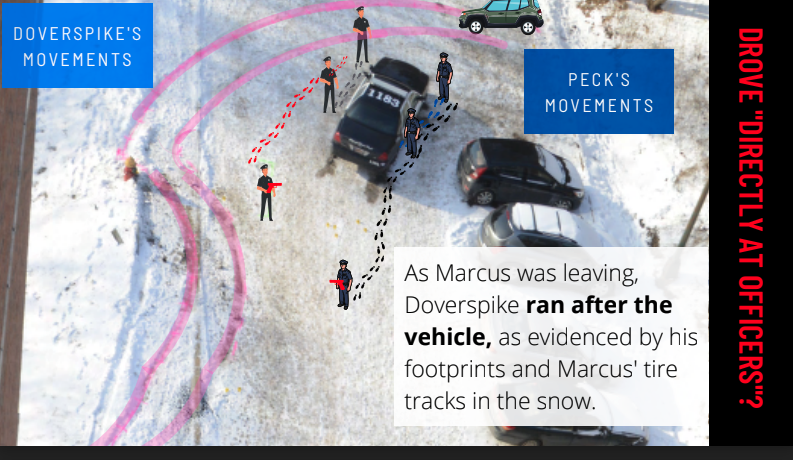
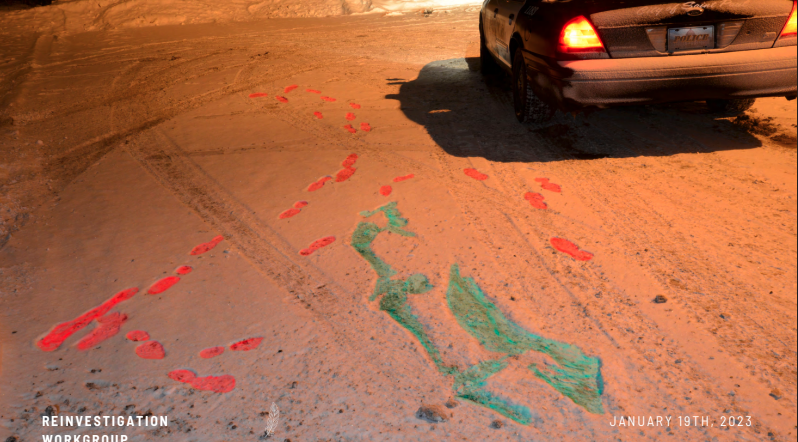
However, the Reinvestigation Workgroup found that it was unlikely that Golden drove towards the cops. The group said that the footprints and snow tracks in the snow demonstrate that he drove around cops and they chased on foot and fired at him. The report also shows that the gun cartridge casings don’t support the police version of events parroted by white media.

The Reinvestigation Workgroup issued an 87-page report on Marcus Golden’s case and summarized some main points at the January 19 press conference, ranging from analyzing prints in the fresh snow, to doctored reports of 911 calls. Golden’s gun was seemingly planted in the car after it was found in a shockingly brazen search of his room at this grandparents’ house right after he was murdered. Police told lies about Marcus’ character and background, manipulating things to try to make him appear unhinged. The exposure of these facts meant, as CUAPB says, “Officers Doverspike and Peck faced the very real possibility of being tried for murder in a civil trial.”

The Reinvestigation Workgroup summary was posted online after the press conference.

The St. Paul NAACP president called for an independent investigation the day of the shooting, saying that the review would "solidify" the relationship between community and police while restoring confidence in the review process. An attorney for Golden's family also called for a civil rights investigation into the case.

Around four months after Golden's death, a Washington County grand jury cleared Peck and Doverspike of wrongdoing. Predictably, the secretive, law-enforcement-driven grand jury process said its cops did not murder Marcus Golden. Doverspike and Peck are still on the force. [MORE]

Communities United Against Police Brutality, a Minnesota organization focused on deterring police violence that investigated the case, say they have unveiled new details about the circumstances around Golden's death. That report will be released Thursday.

"Since the day he was killed, Marcus' family has worked to clear his name from lies told by St. Paul police to justify his killing," CUAPB said in a statement, adding that their own investigation, aided by a hired ballistics expert, "uncovered and documented many new facts about the incident that repudiate the initial investigation and paint a very different picture of what happened to Marcus at the hands of police." [MORE]

2 Butler Cops Caught Repeatedly Punching a Black Woman in the Face. Racist Media Pretends the Incident was About a Missing Order at McDonalds, Not White Supremacy or Uncontrollable, Immoral Authority

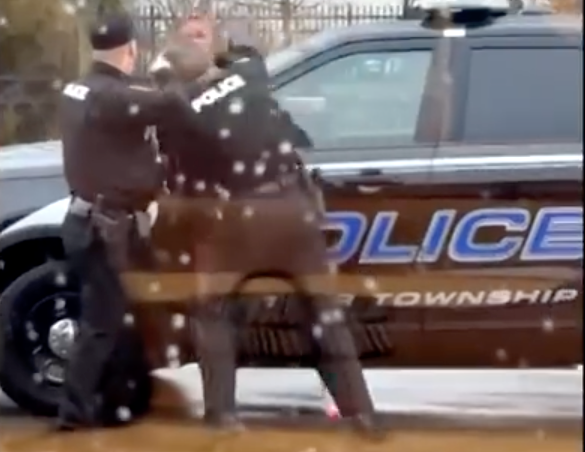
From [HERE] An incident that led to a Butler Twp. police officer hitting a woman multiple times in the face that was caught on video Monday began as a dispute over missing cheese on a Big Mac.

That police officer was placed on administrative leave and the woman, charged with resisting arrest and three other charges, has sought the services of Attorney Michael Wright and the Dayton Unit of the NAACP.

The video, recorded and published by a bystander online after the incident, shows two officers arresting Latinka Hancock, 31 of Dayton and one was seen punching her. Police camera video shown at a Butler Twp. press conference Wednesday gave more details about the incident.

Butler Twp. officers Sgt. Todd Stanley and and Tim Zellers responded at 4:20 p.m. Monday to a call about a disorderly customer at the McDonald’s at 3411 York Commons Blvd., and on arrival, officers approached Hancock, according to a police report.

In body camera footage, Hancock explains the dispute with McDonald’s employees, stating she had entered the restaurant, after initially ordering food through the drive thru. Hancock said she paid for extra cheese and did not receive it.

In their report, the officers said that Hancock was backing out of her parking spot at the McDonald’s when they arrived, but that they had been asked to trespass Hancock. [in other words the police stopped her unlawfully because they did not personally witness her commit any driving infractions or crimes at the time of the stop].

When asked for a driver’s license, Hancock said that she didn’t have one, and refused to provide her identification.

The exchange became more heated, when one of the officers decided to place Hancock under arrest. [Arrest for what? No disorderly was going on when cops were present. Dependent media doesn’t investigate such Issues because it is a tool of authority.]

According to the officers, Hancock then resisted arrest, leading to one of the officers threatening to use a Taser on her, and then the other hitting Hancock on the right side of the face with an “open palm strike.” [Said narrative contradicts the video in which there were repeated strikes to the face with a closed fist.]

Hancock was placed in handcuffs and put into the police cruiser.

According to the report, Hancock was bleeding from her mouth, and a medic was called who cleaned the wound and determined it was superficial.

Hancock was charged with resisting arrest, failure to disclose personal information, driving under suspension and open container of alcohol in a vehicle, the report said.

During the Wednesday Butler Twp. press conference, Chief John Porter said Stanley, who was the officer seen striking Hancock, is on paid administrative leave pending an internal investigation. Stanley has served on the Butler Twp. police force for more than 22 years. Zellers has not been placed on leave, Porter said. He has served the department for around 2 1/2 years.

Hancock, represented by attorney Michael Wright, of Wright and Shultze, and accompanied by Dayton Unit NAACP President Derrick Foward, also held a press event on Wednesday.

“I want to be clear that this incident should have never occurred in the first place. McDonald’s should be ashamed for resorting to calling the police over a disagreement over an order they got wrong,” Wright said. “If they can’t manage basic customer service, opting to potentially put a person’s life in jeopardy over a mishandled Big Mac, it doesn’t seem for Black people to and eat at McDonald’s anymore.”

A visibly shaking Hancock answered questions during the press conference, at times becoming emotional.

“I’m glad that I’m able to be here to be honest. I don’t want people to feel like I’m complaining over a piece of cheese,” she said. “I went in with good intentions. I came with everything; I brought back the sandwich, the fries and the receipt ... I want(ed) either the sandwich or my money back.”

Hancock said she witnessed an interaction between the manager of the store and the employee who had come to the cash register to request she pay the additional fee, during which the manager instructed the employee to remake the sandwich.

“So you went out of your way to not do what was asked, then you want me to leave?” Hancock said, adding that she did subsequently leave to “decompress” in the parking lot prior to police arrival.

“I made sure that I at least tried to show that my demeanor wasn’t threatening,” she said.

Wright said his firm is waiting for additional videos inside McDonald’s and information from the police department before deciding on any potential lawsuits.

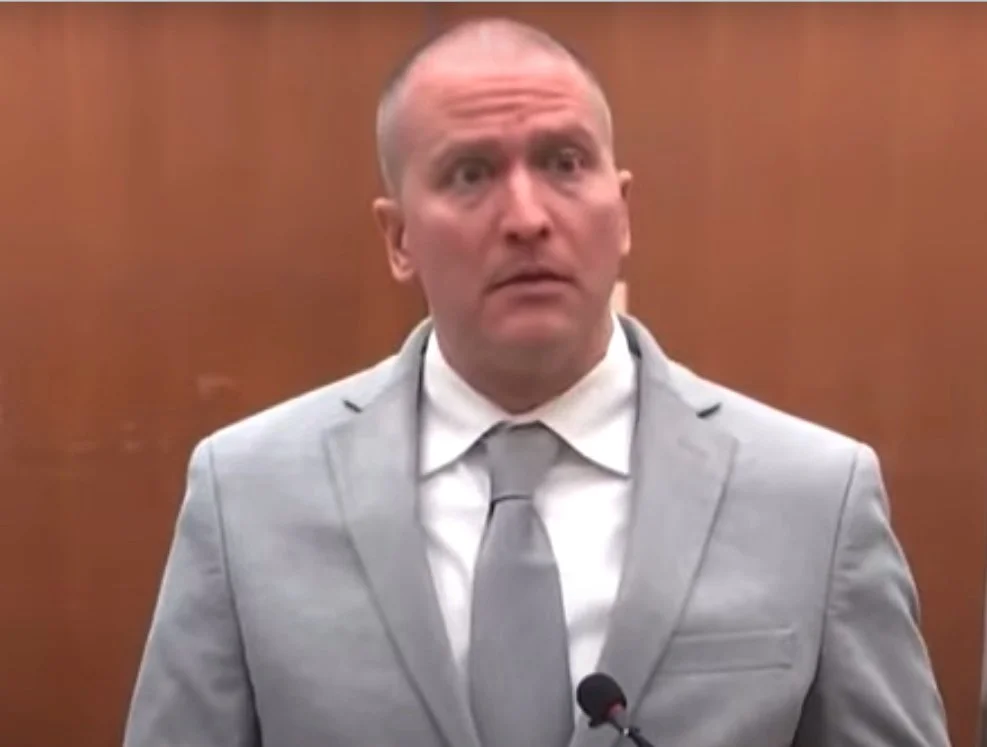
Derek Chauvin Asks Court to Void Verdict After the White Minneapolis Cop Murdered George Floyd in the Street

From [HERE] An attorney for Derek Chauvin asked an appeals court Wednesday to throw out the former Minneapolis police officer's convictions in the murder of George Floyd, arguing that legal and procedural errors deprived him of a fair trial.

Floyd died on May 25, 2020, after Chauvin, who is white, pinned the Black man to the ground with his knee on his neck for 9 1/2 minutes. A bystander video captured Floyd's fading cries of “I can't breathe.” Floyd’s death touched off protests around the world and forced a national reckoning with police brutality and racism.

Chauvin’s attorney, William Mohrman, told a three-judge panel of the Minnesota Court of Appeals that the trial judge should have moved the case out of Minneapolis because of extensive pretrial publicity and unprecedented security precautions due to protest fears.

“The primary issue on this appeal is whether a criminal defendant can get a fair trial consistent with constitutional requirements in a courthouse surrounded by concrete block, barbed wire, two armored personnel carriers, and a squad of National Guard troops, all of which or whom are there for one purpose: in the event that the jury acquits the defendant,” Mohrman said.

But Neal Katyal, a special attorney for the state, said Chauvin got “one of the most transparent and thorough trials in our nation’s history. ... Chauvin’s many arguments before this court do not come close to justifying reversal.”

Hennepin County Judge Peter Cahill sentenced Chauvin to 22 1/2 years after jurors found him guilty of second-degree murder, third-degree murder and second-degree manslaughter. Chauvin later pleaded guilty to a separate federal civil rights charge and was sentenced to 21 years in federal prison, which is he is now serving in Arizona concurrent with his state sentence.

“Judge Cahill managed this trial with enormous care, and even if Chauvin could identify some minor fault, any error is harmless,” Katyal said. “The evidence of Chauvin’s guilt was captured on video for the world to see.”

Appeals Judge Peter Reyes said Wednesday that the court would rule within 90 days. Chauvin did not attend the oral arguments, but Minnesota Attorney General Keith Ellison, who assembled the prosecution team, sat in the front row.

Even if Chauvin wins his appeal, his federal sentence will keep him in prison longer than his state sentence likely would because he would qualify for parole earlier in the state system.

Mike Brandt, a Minneapolis defense attorney who has been following the cases arising from Floyd’s murder, said a victory at appeal “would be functionally meaningless” and that Chauvin’s time in prison is “pretty well locked in stone” given his federal sentence. [MORE]

Although Latino Man Immediately Got on the ground and held his hands above his head, Denver Cops Still Shot Him 19X in the Back. State Attorney Seeks to Have His Jury Verdict Dismissed

From [HERE] Almost 10 years to the day after Denver police shot at Michael Valdez 19 times while he lay on the ground in surrender, lawyers for the city were back in court seeking to throw out his excessive force lawsuit.

This time, Valdez was armed with a jury's verdict finding Denver liable for failing to train its officers on a specific category of deadly force, along with $2.5 million in damages jurors awarded him in 2021. But the city claimed the trial judge so mishandled the case that Valdez's allegations never should have went before a jury in the first place.

During oral arguments on Tuesday before a three-judge panel of the U.S. Court of Appeals for the 10th Circuit, the city argued the single incident Valdez used to illustrate Denver's failure to train its officers — his own January 2013 shooting — was not a viable constitutional violation.

"It’s undisputed that Denver trains on the constitutional limits of the use of lethal force," said Katherine Field of the Denver City Attorney's Office. "And that alone should foreclose any single-incident municipal liability claim."

In Valdez's case, Sgt. Robert Motyka Jr. shot him repeatedly after a vehicle chase in which Motyka himself was shot. The question for Valdez's jurors was whether his injuries were a product of Denver failing to train its officers that deadly force should not be used "out of adrenaline, or anger, after heaving been shot at or struck," or as a means of retaliation.

Some members of the 10th Circuit panel were unsure that question could be resolved solely by looking at the law, and required asking a jury to sort out what actually happened.

"Here you have the officer’s been shot, right? Chasing the truck, getting shot at, getting shot," said Judge Scott M. Matheson Jr. "And officers get involved in chasing fleeing felons — at least maybe not every day, but it’s not an unusual circumstance. So why wouldn’t it be obvious that if you have an officer who's involved in a chase, he gets shot, he needs some guidance on what to do next?"

On Jan. 16, 2013, Valdez accepted a ride in a pickup truck from acquaintances, not knowing police were looking for the truck in connection with multiple reports of violence in the Denver area. An officer spotted the vehicle after it picked up Valdez and a chase ensued. Other occupants of the truck, but not Valdez, shot at officers, hitting one of them in the shoulder.

The wounded officer — Motyka — continued with the pursuit until the truck crashed near 39th Ave. and Osage St. In Valdez's telling, he exited the truck, immediately got on the ground and held his hands above his head. It was undisputed that Motyka began shooting Valdez, joined by Lt. John Macdonald, who shot because he saw Motyka shooting. One bullet destroyed Valdez's finger and another seriously damaged his bowel and spine.

Valdez was taken to the hospital, where he had to be resuscitated. The bullet that entered his back injured his spine, and his finger had to be amputated. He was then charged with fifteen criminal counts, including attempted first-degree murder, for the shootout, and four counts related to Montoya holding up his relatives at gunpoint, even though Valdez never used a gun and wasn't involved in Montoya's previous crime. Valdez spent over two months in jail before Denver District Attorney Mitch Morrissey dismissed all the charges.

The Denver City Attorney's Office has been fighting Valdez in court since the original complaint was filed in 2015. All other officers involved in the chase and shooting have been cleared. [MORE]

Motyka subsequently received an award for his actions, and Denver's then-manager of safety said Motyka "acted appropriately and reasonably to stop the imminent threat posed by Michael Valdez."

In 2015, Valdez sued multiple officers and the city for constitutional violations. Eventually, his claims were pared down to Motyka's use of excessive force and Denver's failure to train its officers.

At that point, U.S. District Court Judge William J. Martínez took over the case. In the city's telling, he made a series of questionable decisions that benefitted Valdez. For example, Martínez permitted Valdez to pitch new theories for holding the city liable, not raised in the original lawsuit. Of those, Martínez green-lit one for trial: Denver's failure to train officers that retaliatory shootings were wrong.

"In other words, a reasonable jury could conclude, through common experience and common-sense," wrote Martínez, "that some police officers, once shot at, will believe that the shooter is inviting a gunfight and is therefore fair game for deadly force no matter what happens next, such that failure to train police officers in this regard 'could properly be characterized as deliberate indifference to constitutional rights.'"

The city contended that Martínez was wrong to deny Denver summary judgment, which a judge may do when the key facts are undisputed and the law allows one party to prevail. It also argued Martínez allowed Valdez to repeatedly change his theory for holding Denver liable, and had failed to properly instruct the jury.

Adam Mueller, the attorney representing Valdez, told the 10th Circuit that it was highly unusual for Denver, in its post-trial appeal, to not rely on the evidence introduced at trial. He defended Martínez's decision allowing Valdez to hold the city liable for its inadequate training on anger-based shootings, even if there was no pattern of similar incidents.

"There is a category of cases where the need for training is so obvious that the failure to give that training is substantially certain to lead to a deprivation of constitutional rights," Mueller said. "The jury was instructed on that theory. And it is a question of fact whether something is so obvious that the city should have known."

"There have to be some limits on when the jury is allowed to determine this is obvious, even though it hadn’t happened before," responded Judge Harris L Hartz. "Human nature is, 'Once it’s happened, it’s obvious. If it happened, it can happen.'"

He elaborated that a similar situation arises in lawsuits seeking to hold jail officials liable for detainee suicides. One such instance arose last year, when Hartz joined a decision granting immunity to Jefferson County sheriff's employees. At the time, he reasoned they may have been negligent in allowing a mentally-troubled woman to remain alone in a room with implements to hang herself, but their conduct was not a constitutional violation.

"In retrospect it’s pretty obvious you don’t leave a rope in a cell or a sheet in a chair," Hartz told Mueller. "But you have so many cases where summary judgment for a defendant, a law enforcement agency, is granted because of evidence that they hadn’t experienced this before. Why is that not enough to say the verdict here can’t stand?"

Yet, the panel also acknowledged Martínez's belief that a jury could find the lack of training to be obvious at the time.

"There was no guidance on what to do if you’ve been shot," Matheson said.

At the same time the city appealed Martínez's handling of the case, Valdez also asked the 10th Circuit to reinstate his claim against Macdonald, the other officer who shot him. The original trial judge, Richard P. Matsch found in 2019 that Macdonald's conduct did not clearly violate Valdez's constitutional rights. Weeks later, Matsch died and Martínez took over the case.

As the final component of the appeal, Denver, now joined by Motyka, challenged Martínez's award of attorney fees to Valdez.

The case is Valdez v. City and County of Denver et al.

Thanks Again for Your Service NGHR: Jury Upholds the Conduct of VA Cops Who Niggerized and Pepper Sprayed Army Lieutenant at Gas Station by Granting Nominal Award of $3,685

From [HERE] A federal jury in Virginia on Tuesday found mostly in favor of two police officers who were sued by a U.S. Army lieutenant after he was pepper-sprayed, struck and handcuffed during a traffic stop.

Video of the 2020 incident in the small town of Windsor got millions of views after Caron Nazario filed the federal lawsuit, highlighting fears of mistreatment among Black drivers and raising questions about reasonable police conduct.

The jury in federal court in Richmond found former Windsor police officer Joe Gutierrez liable for assault and awarded Nazario $2,685 in compensatory damages, according to attorneys on both sides of the case.

The jury also awarded Nazario $1,000 in punitive damages after Windsor police officer Daniel Crocker illegally searched Nazario’s SUV, the attorneys said. A federal judge already ruled last year that Crocker was liable for the search.

The jury found in favor of Crocker and against Nazario’s claims of assault and battery and false imprisonment, the attorneys said. The jury found in favor of Gutierrez regarding the soldier’s claims of battery, false imprisonment and illegal search.

“Having now heard all of the evidence and learning the full picture of this case, we believe the jury reached the correct decision,” one of Crocker’s attorneys, Anne Lahren, said in a statement. “In the present climate, this took a lot of courage and we thank the jury for their service.”

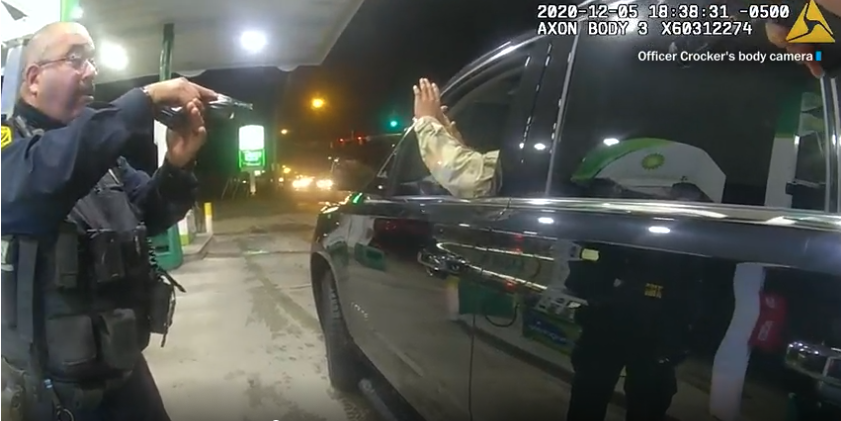
Nazario filed his lawsuit in 2021. Video shows Crocker and Gutierrez pointing handguns at a uniformed Nazario behind the wheel of his Chevy Tahoe at a gas station. The officers repeatedly commanded Nazario to exit his SUV, with Gutierrez warning at one point that Nazario was “fixing to ride the lightning” when he didn’t get out.

Nazario held his hands in the air outside the driver’s side window and continually asked why he was being stopped.

Nazario also said: “I’m honestly afraid to get out.”

“You should be,” Gutierrez responded. [MORE]

Suit Claims Arkansas Jail Authorities Deliberately Starved Larry Price to Death while He Awaited Trial. Homeless Black Man was Confined in Contaminated Solitary Cell. Couldn't Afford $1000 Bail


From [HERE] Iris Price remembers her brother-in-law as a towering figure who despite his size was gentle and loving, especially when it came to his five nieces. Larry Price Jr., 51, was funny, kindhearted and a “big guy” — 6-foot-1 and weighing more than 185 pounds.
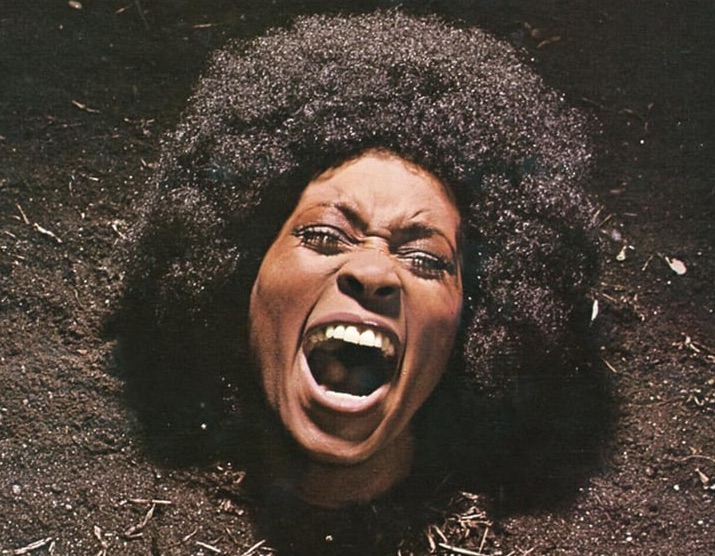
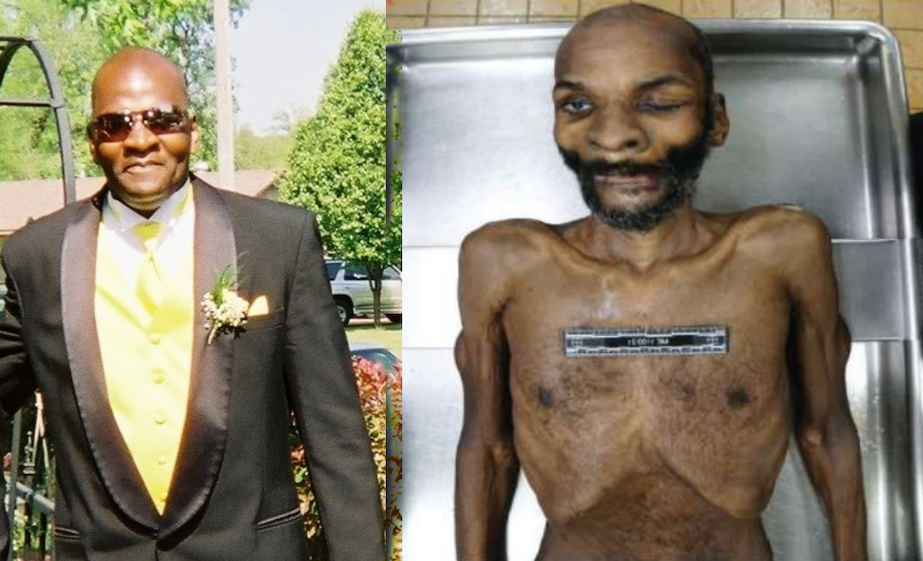
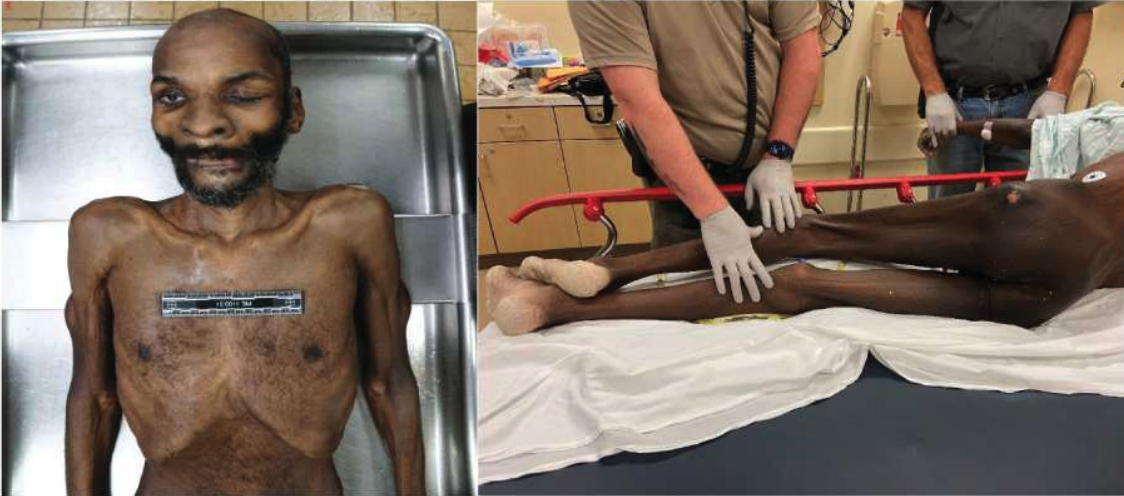
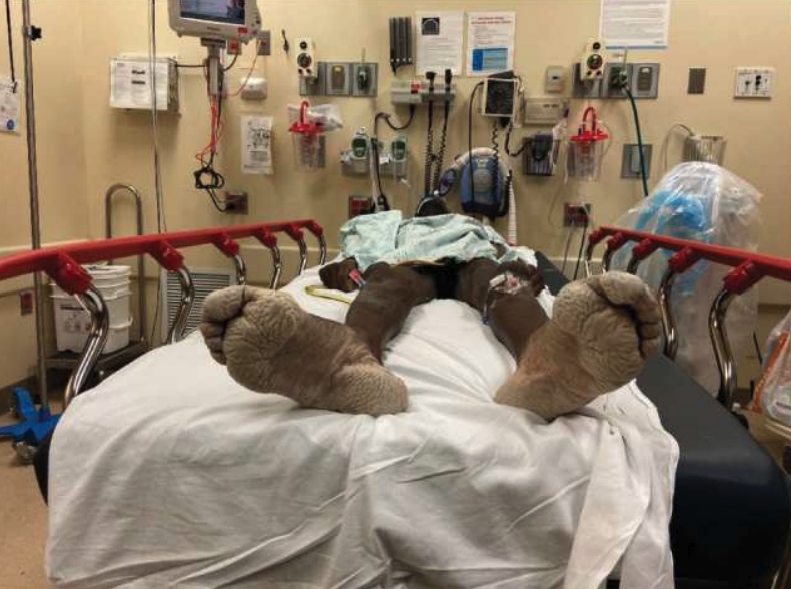
By the time Price died alone in a Sebastian County, Ark., jail cell in 2021, he weighed 121 pounds. Autopsy images show his emaciated body, his cheeks sunken, his collarbones and ribs protruding through his skin and his legs wasted away. The soles of his feet were swollen, white and wrinkled from standing in water in his jail cell.

Price’s relatives allege in a wrongful-death lawsuit filed Friday in an Arkansas federal court that Price, who was unhoused and lived with severe mental illness, was allowed to starve to death over a year in pretrial detention due to neglect by jail staff and its private health contractor. It names the jail, Turn Key Health Clinics and several staffers — both named and unnamed — as defendants.

An administrator with the Sebastian County Jail said in a statement Friday it had medical personnel available to treat inmates in need of care and was conducting an internal review of Price’s case. Representatives for Turn Key Health Clinics did not immediately respond to requests for comment on the complaint.

According to the complaint:

In the early morning hours of August 29, 2021, just over one year after his arrest, a corrections officer found Mr. Price in his isolation cell, lying in a pool of standing water and urine, unresponsive. He was transported to Mercy Hospital by Fort Smith EMTs, where he was pronounced dead. An autopsy performed by the Arkansas State Medical Examiner’s office found that he died from acute dehydration and malnutrition.

When Mr. Price entered the jail, he was a well-nourished, 6’2” tall man who weighed 185 pounds. When EMTs transported him to the hospital, they estimated his weight to be 90 pounds. Photographs taken on the day of his death show Mr. Price’s morbidly skeletal appearance:

There is no excuse for an atrocity like this to happen to a mentally ill man in an American jail. None. In addition to acute dehydration and malnutrition, the medical examiner observed the profoundly shrivelled (or pruned) condition of the soles of Mr. Price’s feet. The following photograph, taken at Mercy Hospital shortly after his death, depicts this shocking observation:

Mr. Price’s grotesquely wilted skin was caused by “prolonged moisture exposure” from the pool of contaminated water on the concrete floor and bunk of his solitary confinement cell. The United States Constitution has long prohibited inhumane conditions of confinement like this. In addition to being cruel and unusual, it was also hazardous. In fact, because of the pooled water in Mr. Price’s cell, the jail’s first responding officers opted not to use the readily available electronic defibrillator, which might have saved Mr. Price’s life.

Larry Price suffered in the tortured throes of his untreated mental disorder for months on end as jail healthcare and security staff watched him waste away—apathetic to his lifethreatening medical and mental health needs and to the cruelty of his confinement. He died not only because of their deliberate indifference and neglect, but also because of systemic deficiencies in the Sebastian County Jail’s policies and practices, which put severely mentally ill people at significant risk of serious harm or death. The constitution mandates better treatment of society’s most vulnerable citizens.

Mr. Price’s estate brings this federal civil rights action under 42 U.S.C. § 1983 to redress the violation of his constitutional rights and to hold the defendants accountable for his unnecessary pain and suffering, the loss of his life, and the grief and anguish of his surviving family members.

To Price’s family, his death is especially painful because of how easily it could have been avoided — starting with the decision to put a man with schizophrenia into a system that was never designed to treat him and then holding him without trial for a year over the $100 bail he couldn’t afford. The pain is compounded, they say, by details like the dozens of prison logs that suggest either no one was watching or no one cared as he wasted away, the logs that continued to list him as “OK” — even after he had died.

The family’s attorney, Erik Heipt, whose Seattle-based practice Budge and Heipt specializes in wrongful death and police brutality, called Price’s death one of the worst he’d seen in almost 20 years of handling these cases. [MORE]

2 Racist Suspect IL Paramedics Charged w/Murder of a Black Man who was Having Difficulty Breathing. Prior to Smothering Him to Death said, “Quit acting stupid. Sit up, Now! I’m not playing today!”

Is it Possible for Racists Provide Public Service to Non-Whites? From [HERE] Two paramedics are facing murder charges after a man died in their care in Springfield, Illinois.

Peggy Finley, 44, and Peter Cadigan, 50, are accused of improperly restraining Earl Moore Jr. in preparation for an ambulance ride leading to his death on Dec. 18.

“They didn’t show any compassion whatsoever,” said Teresa Haley, local NAACP president, during a press conference Tuesday.

The night of the incident, police told WCIA Moore called 911 because “he saw multiple people inside with guns.”  

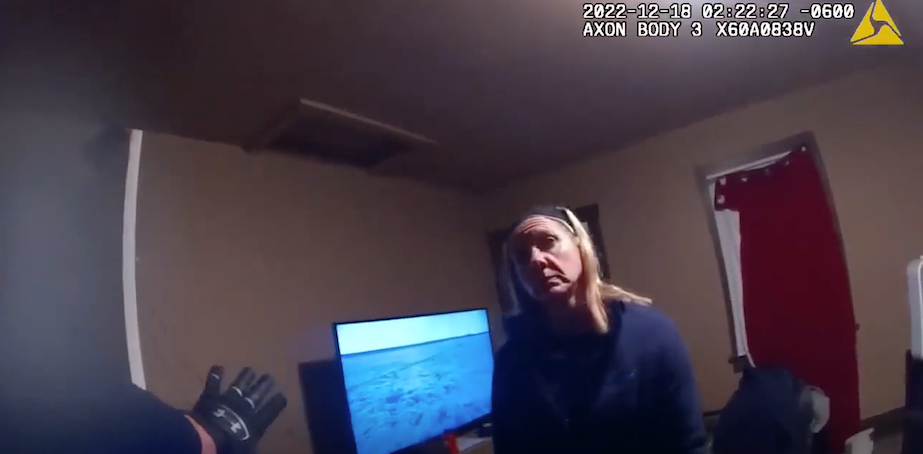
Body camera video shows Springfield police officers arriving at Moore’s apartment. A woman hysterically tells the officers the 35-year-old is hallucinating. The woman then invites the officers inside the apartment and directs them to Moore’s bedroom.

Moore, who is Black, is seen lying in bed on his back, sweating and breathing heavily. As officers gauge his situational awareness by asking him if he knows his name and what year it is, they call for an ambulance.  

About 15 minutes later, Moore rolls onto the floor as Finley and Cadigan, both white, walk into his bedroom. Finley stands over a prone Earl and appears to try to pull him up by grabbing one of his arms

She is heard yelling at a distressed Moore, “Quit acting stupid. Sit up, now! I’m not playing with you today!”

Body-camera video continues to show a frustrated Finley continuing to berate Moore. 

She yells, “you’re going to have to get up and walk because we ain’t carrying you. I’m seriously not in the mood for this dumb s—t,” Finley said.

Police eventually help Moore out of the house and onto an awaiting paramedic gurney, the video shows. Finley and Cadigan then strap him onto the gurney face down and cover him with blankets for the ambulance ride to the hospital.
Moore was transported to HSHS St. John’s Hospital’s emergency room, where he was pronounced dead at 3:14 a.m., NPR reports.
The Illinois State Police launched an investigation into Moore’s death. An autopsy conducted on Dec. 18 determined the cause of death was “compressional and positional asphyxia due to prone facedown restraint on a paramedic transportation cot by tightened straps across the back and lower body.”

Sangamon County Coroner Jim Allmon ruled Moore’s death a homicide.

Sangamon County State’s Attorney Dan Wright charged Finley and Cadigan with first-degree murder. Under Illinois law, first-degree murder is when a person “kills an individual without lawful justification. He or she intends to kill or do great bodily harm or knows that such acts will cause death.”

Wright said Finley and Cadigan should have known, based on their EMS training positioning Moore the way they did could lead to death.  

“Knowing, based on their training, experience and surrounding circumstances, that such as would create a substantial probability of great bodily harm or death,” Wright said during Tuesday’s news conference.

“It’s almost worse than putting your foot on somebody’s neck. This guy was already hyperventilating and having difficulties breathing then he’s put on the stretcher facedown. It was hostile,” Haley said after reviewing the body-camera footage.

A spokesperson for LifeStar Ambulance Service, Inc., Finley and Cadigan’s employer, told Atlanta Black Star by phone, “the case is still under investigation, and we cannot comment.”

Wright said potential penalties include a range of 20 to 60 years in prison if Finley and Cadigan are convicted.