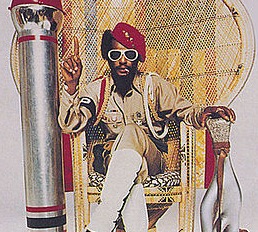
Several Pacific Coast Counties Voted to Secede from the US [but they will still be Subject to a Master. Apparently, Antartica is the Only Land Mass with No Government (no master)]

From [HERE] Three Pacific Coast state counties voted earlier this month to support leaving their respective states in a sign of recent local support for secessionist efforts. Residents in Morrow and Wheeler Counties in Oregon and San Bernardino County in California have voted to leave and either join a pre-existing state or create a new one entirely.

These three counties join a handful of recent locations in the American West that have already expressed support for changing current state borders. These additional counties are all currently located in Oregon and include Malheur, Harney, Lake, Klamath, Baker, Grant, Union, Jefferson, and Sherman Counties. Earlier votes were also held in Oregon’s Josephine, Douglass, and Wallowa Counties but were defeated.

A map of Greater Idaho as proposed by the official movement responsible for greateridaho.org.

Partition and secession are not entirely uncommon in the United States. Various efforts to create new states from pre-existing areas or to adjust current borders have long been a part of American history. Some of these efforts, such as what transpired in Morrow and Wheeler Counties, are part of a more considerable effort known by supporters as Greater Idaho.

For backers of the Greater Idaho movement, addressing the polarized culture of Oregon means readjusting the borders to cede up to fifteen of the more-culturally conservative regions of Eastern Oregon to neighboring Idaho. To its supporters, the simplest way to address the divided political culture is to divide the state—quite literally. For both Morrow and Wheeler Counties, support for reconsidering the border passed by sizable margins. Morrow County saw 60.6% of voters back leaving Oregon for Idaho, whereas Wheeler County saw a slightly lower 58.6% of voters support the same.

Alternatively, voters in San Bernardino County who feel out-of-touch with the rest of California approved Measure EE, signaling support for creating an entirely new state known as Empire State or, at the least, support advocacy for additional resources.

San Bernardino County is significantly more divided, with margins coming in razor-thin. Efforts to leave were born from organized resistance to high taxation and unfunded mandates when a group of local San Bernardino politicians and residents banded together to force the California state government to be more mindful of their needs. However, unlike what transpired in Oregon, San Bernardino County’s support for secession was much more narrow, with only 50.5% of voters backing the measure.

Forming a new state is a challenging task. First, for hypothetical locations like Empire, the California legislature must vote favorably in recognizing the new state. Then, once the legislature approves, Empire still needs to secure congressional recognition as a new state.

In contrast, readjusting a pre-existing border entails challenges of its own. For example, suppose Oregon and Idaho agree to the separation in their respective legislatures. In that case, the two states will still need to develop a mutually agreed-upon interstate compact.

What comes next for Empire is yet to be seen. Efforts to expand Greater Idaho remain underway. Wallowa County, an Oregon county that initially rejected support for Greater Idaho in 2020, will vote again on a future referendum.
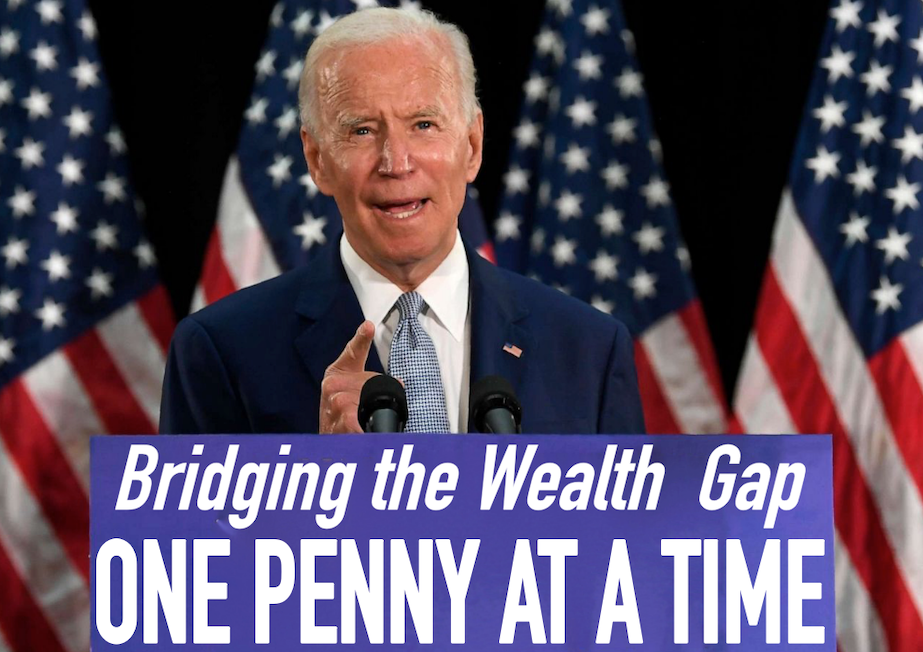
Russian Leader Blames Crisis on the Proliferation of Auto-Coon Entertainers and Showcase Blacks [Psy-ops Characters created and sponsored by Elite Racists to Control, Dominate Blacks in the US]

From [HERE] In a sign of the times for Vladimir Putin’s twisted Russian regime, a regional governor has been backed by the State Duma after saying the “descendants of African-American slaves” are to blame for the country’s growing crisis.

Vadim Shumkov, governor of the Kurgan region, said Russian society was collapsing—as exemplified by the rising rate of suicide and depression among young people—and it can all be traced back to the popularity of Black American stars in the music industry.

In a bizarre rant posted on his official Telegram channel, Shumkov described a gaping hole of emptiness at the center of Russian culture, which he argued was not the result of poverty, war, or rampant corruption, but “an underestimation of the importance of native national culture.”

“Many of our children… are already growing up without knowing or remembering their kindred tribe,” he lamented, claiming that they are instead “singing songs written by the descendants of African-American slaves, often playing the ape and imitating the habits and language, brimming with, frankly, second-rate quasi-cultural vulgarity. Clinging to this secondariness, being proud of it.”

“Hence the growth of overt spiritual emptiness, depression, suicides. The lack of meaning in life,” he wrote.

Though Shumkov did not mention Russia’s war against Ukraine as a possible reason for the bleak mood in the country, he went on to hint at a growing rift between ordinary Russians that he blamed on outside forces, claiming that a “neglect of native culture” has led to a biblical Cain and Abel situation, with brothers pitted against brothers by “foreign ‘well-wishers’” who see them as “expendable.”

While Shumkov’s remarks were simultaneously mocked and criticized on social media, the Russian State Duma found nothing offensive in his argument.

Alexander Sholokhov, the deputy chairman of the State Duma Committee on Culture, told local media there was nothing inflammatory in his comments because he’d used the term “African-American.” [MORE]

The Black Unemployment Rate is 80% Higher Than the Rate for Whites

From [HERE] The Bureau of Labor Statistics released its Employment Situation Summary for November. The unemployment rate nationwide was 3.7%, the same as in October. The economy added 263,000 jobs which was more than expected. One trend was the same as it has been since the BLS started to release the data. The black unemployment rate was much higher than that for whites. In November, the number was 79% higher.

The jobless rate varied considerably by group. Unemployment among Whites was 3.2%. Among men, the figure was 3.4%. It was 3.2% among women. Among Hispanics, the figure was 3.9%. And, among Asians, it was 2.7%. The jobless rate for black Americans was near historic lows, as it has been among all groups measured.

The reasons black Americans have higher jobless rates than whites fall into several categories. The Economic Policy Institute reports that among the primary reasons are “racism” and single adult households where one person tries to care for children and hold a full-time job simultaneously.

The American Progressive reports that the spread between black and white jobless rates goes back to 1972 when the BLS started to gather monthly employment data. It gives incarceration, the rate of which is higher among blacks than whites, as another reason. “Mass incarceration plays a significant role in the lower labor force participation rate for African American men.” Educational attainment is another reason. Whites tend to graduate from high school and college at a higher rate than black people.

None of these reasons can be taken alone, according to many experts. They represent a web of problems black Americans face as they try to enter the workforce. One thing almost all experts agree on is that these problems will not go away.

Cities Dominated by White, Liberal Politics such as Atlanta, NYC and New Orleans Have the Highest Income Inequality btw Blacks and Whites in the Nation

From [HERE] and [HERE] Atlanta has the highest income inequality among large U.S. cities, according to recent data from the United States Census Bureau. Driving much of Atlanta’s income inequality, experts say, is the city’s entrenched racial disparities which took root generations ago.

Even as the city continues to prosper, many Black Atlantans in particular have been left out of its economic success story of the past several years, they add. The persistent economic struggles have been exacerbated by general inflation, especially rising food and gas prices, which are hitting lower-income residents hard.

“When a very large percentage is vulnerable to that kind of economic pressure it says that we have a lot of work to do,” said Kyle Waide, president and CEO of The Atlanta Community Food Bank, which is experiencing soaring demand for services.

The city’s dubious ranking is based on a measure of income inequality, known as the Gini coefficient, used by economists and organizations across the globe. The latest Census data spans a five-year period from 2016 to 2020.

The Gini coefficient measures how equally income is distributed among a population and is expressed in a decimal format ranging from zero to one.

A score of zero represents complete income equality within a community, meaning that every person has equal income. The higher the decimal score, the greater the inequality. A coefficient of one represents the most extreme concentration of wealth at the top: one person holds all of the wealth.

Atlanta has the largest gap between the poor and wealthy among cities with more than 100,000 residents with a Gini coefficient of 0.5786, according to Census data.

By comparison, New Orleans is ranked No. 2 with a coefficient of 0.5655; New York City occupies the No. 7 spot with a coefficient of 0.5470; and Tampa comes in at No. 8 with a score of 0.5426. On the other extreme, Phoenix has a Gini coefficient score of .4710 and more equality, ranking it No. 119 on the list.

Census data going back more than a decade shows Atlanta’s high inequality has persisted through the years. Atlanta has led the nation in this dubious ranking for at least a decade.

Atlanta continues to benefit from strong economic growth, as does Georgia. The metro area has 17 of the state’s 19 Fortune 500 companies, according to the list published earlier this year. And the state continues to rank among the most attractive in the country to do business.

But many Black residents are not seeing the benefits of this success, said Janelle Williams, co-founder of the Atlanta Wealth Building Initiative. The median household income for a Black family in Atlanta is $28,000, while the median income for white families is roughly $84,000. Overall, Black residents account for half of the city’s population.

Within Atlanta, the wealth gap often can be seen in stark geographic terms. Buckhead, in the north, is majority-white and among the city’s wealthiest areas. Thomasville Heights, in southeast Atlanta, is majority Black and among the city’s poorest neighborhoods, according to Census data.

Experts point to several factors in Atlanta’s past and present that have contributed to the wealth gap, including pervasive redlining, mass incarceration, gentrification and the lack of healthcare access within Atlanta — most recently highlighted by the closure of Atlanta Medical Center this month.

“Several of those facts have not translated into new realities for Black people in this city born south of I-20,” Williams said.

Georgia Gwinnett College economics professor Jason Delaney says that the Gini index is a well-tested and widely-used metric among economists. But he notes there are some limitations.

It does not account for different cost of living standards, nor does it account for the geographic distribution of wealth, he said.

In Atlanta’s case, many middle class neighborhoods in Cobb, DeKalb and Stone Mountain are left out of the calculation.

“City boundaries are incredibly political,” Delaney said.

The Census defines metropolitan and micropolitan areas as those which are economically and socially intertwined with the population center (in this case Atlanta). Looking at this broader definition, the picture is rosier for the Atlanta metro area.

The Atlanta metro area ranks as No. 227 for income inequality, with a Gini co-efficient of 0.4708, significantly better than the New York metro area (No. 39) and the Houston metro (No. 117).

But while comparisons between cities are imperfect, so is the definition of the Atlanta metro area, which includes 29 counties stretching to Georgia’s western and northern borders.

Williams and Tene Traylor, Atlanta Wealth Building Initiative’s other co-founder, say a mix of race-neutral and race-explicit strategies, such as providing capital to Black-owned businesses, are needed to address Atlanta’s wealth gap.

“What happened in this city happened with intent. So we want to be intentional about how we address harm and black people being locked out,” Williams said. “We do it with deep love for our city.”

Black Mayors in the 4 Biggest Cities but Blacks Remain Powerless [from Organized Mass Agitation to Electing Sambos from the MoTeaSuh Tribe, Voting Hasn't Solved Black People’s Problems]

From [HERE] When Karen Bass is sworn in next month as the new mayor of Los Angeles, the nation’s four largest cities will be led by blacks simultaneously for the first time.

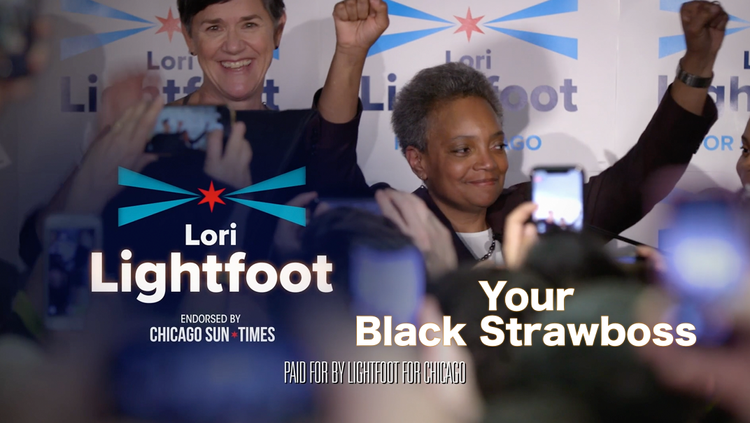
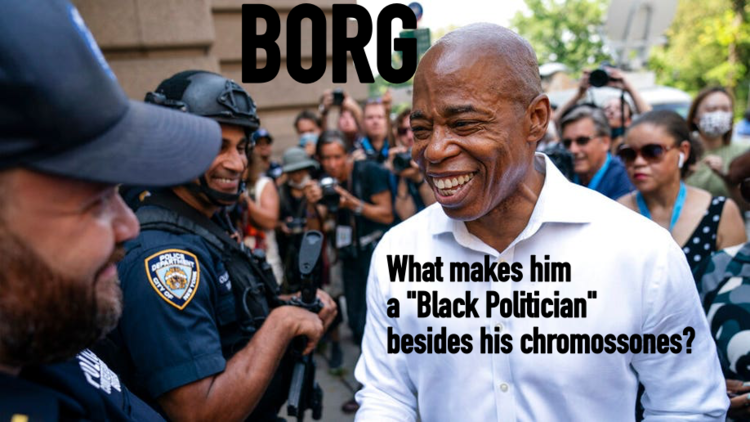
Ms. Bass, a former head of the Congressional Black Caucus, joins Eric Adams, who became New York’s second black mayor in January; Chicago Mayor Lori Lightfoot, who took office in 2019; and Houston Mayor Sylvester Turner, who was first elected in 2015 and is now serving in his second term. Like most black voters, all four are Democrats, but liberals are celebrating more than another partisan victory.

A widely held view on the left is that racial and ethnic political clout is essential to a minority group’s economic advancement. “When you have the top four cities at the table, with the administration, I think that the conversation is definitely going to land where it needs to be,” said Phyllis Dickerson, CEO of the African American Mayors Association, in an interview with CNN. Frank Scott, the mayor of Little Rock, Ark., and president of AAMA, was similarly optimistic in his comments to Politico. “Anytime we get a new mayor, it’s exciting,” he said. “But to have another mayor, a black woman, who’s going to lead one of our nation’s major cities? That’s a big deal.” 

Historically, however, more black political clout hasn’t been a big deal, if the measure is black upward mobility. Black leaders increased their focus on electing more black officials following passage of the Voting Rights Act of 1965. Since 1970, the number of black elected officials has grown from fewer than 1,500 to more than 10,000. Carl Stokes was elected mayor of Cleveland in 1967, the same year Richard Hatcher was elected in Gary, Ind. In 1973, Tom Bradley won in Los Angeles and Coleman Young won in Detroit. “From 1967 to 1993 blacks were elected mayor in eighty-seven cities with a population above 50,000,” the political historian Michael Barone wrote in “The New Americans.” [MORE]

Despite ‘Clear Pattern of Fraudulent Signatures’ Local Official Abandons plan to knock Strawboss Lightfoot off Mayoral Ballot - not enough time to Investigate

From [HERE] Downtown Ald. Brian Hopkins (2nd) on Friday abandoned plans to try and knock Mayor Lori Lightfoot off the ballot — even after uncovering what he said was a “pattern of fraud” that suggested she may not have the 12,500 valid signatures required by law.

After a “cursory review” of all of the roughly 40,000 signatures that Lightfoot filed on Monday and getting “well into a secondary” review to see if those signatures match the signatures of those voters on file, Hopkins said he “got it down to about 17,500 signatures” when he “ran out of time.” 

“Had we had a couple more weeks, there is a clear pattern of fraud. We might have been able to get her under 12,500. But the only way to do that is an individual line-by-line signature comparison. And then to have voters step forward, sign affidavits and say, `That’s not my signature.’ We just don’t have time to do that. So we’re not gonna file a challenge,” Hopkins said Friday.

Hopkins described the “pattern of fraud” in Lightfoot’s nominating petitions as “classic round-tabling” made famous in Chicago.

“You get four to five people sitting at a table passing clipboards around so that fraudulent signatures do not match the one on the line above and below. … It’s three or four, or possibly five lines away, and you have to look for that pattern. … It starts to become apparent that it’s the same small group of circulators signing voters’ names and just guessing what the signatures might look like,” Hopkins said. [MORE]

Black Strawboss NYC Mayor to Involuntarily Remove Mostly Black Mentally Ill People From the Streets and Force Them Into Hospital Prisons. Is this Black Power?

From [HERE] Acting to address “a crisis we see all around us” toward the end of a year that has seen a string of high-profile crimes involving homeless people, Mayor Eric Adams announced a major push on Tuesday to remove people with severe, untreated mental illness from the city’s streets and subways.

Mr. Adams, who has made clearing homeless encampments a priority since taking office in January, said the effort would require involuntarily hospitalizing people who were a danger to themselves, even if they posed no risk of harm to others, arguing the city had a “moral obligation” to help them.

“The common misunderstanding persists that we cannot provide involuntary assistance unless the person is violent,” Mr. Adams said in an address at City Hall. “Going forward, we will make every effort to assist those who are suffering from mental illness.”

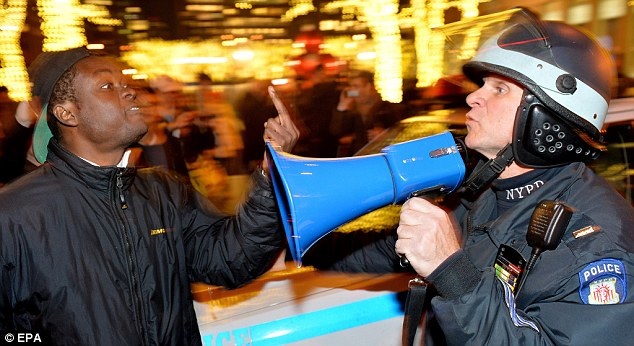
The mayor’s announcement comes at a heated moment in the national debate about rising crime and the role of the police, especially in dealing with people who are already in fragile mental health. Republicans, as well as tough-on-crime Democrats like Mr. Adams, a former police captain, have argued that growing disorder calls for more aggressive measures. Left-leaning advocates and officials who dominate New York politics say that deploying the police as auxiliary social workers may do more harm than good.

Other large cities have struggled with how to help homeless people, in particular those dealing with mental illness. In California, Gov. Gavin Newsom recently signed a law that could force some homeless people with disorders like schizophrenia into treatment. Many states have laws that allow for involuntary outpatient treatment, and Washington State allows people to be committed to hospitals if a judge finds that they pose a threat to themselves or others.

Officials in New York said the city would roll out training immediately to police officers, Emergency Medical Services staff and other medical personnel to “ensure compassionate care.” But the city’s new directive on the policy acknowledges that “case law does not provide extensive guidance regarding removals for mental health evaluations based on short interactions in the field.”

The policy immediately raised questions about who, exactly, would be swept up in it, and some advocates for people with mental illness warned it could face legal challenges.

Existing state laws allow both the police and medical workers to take people involuntarily to a hospital when their behavior poses a threat of “serious harm” to themselves or others. Brendan McGuire, chief counsel to the mayor, said on Tuesday that workers would assess people in public spaces “case by case” to see whether they were able to provide basic needs such as food, shelter and health care for themselves.

The city directive states that “unawareness or delusional misapprehension of surroundings” or “delusional misapprehension of physical condition or health” could be grounds for hospitalization.

The effort will also involve an increase in the use of Kendra’s Law, which lets courts mandate outpatient treatment for those who are a danger to themselves or others and which was expanded by Albany lawmakers in April.

Frequently, homeless people with severe mental illness are brought to hospitals, only to be discharged a few days later when their conditions improve slightly. Mr. Adams said the city would direct hospitals to keep those patients until they are stable and discharge them only when there is a workable plan in place to connect them to ongoing care.

Hospitals often cite a shortage of psychiatric beds as the reason for discharging patients, but the mayor said that the city would make sure there were enough beds for people who were removed from the street. He noted that Gov. Kathy Hochul had agreed to add 50 new psychiatric beds. “We are going to find a bed for everyone,” Mr. Adams said

The number of homeless people with severe mental illness who do not live in shelters is, at the very least, in the hundreds. According to the Coalition for the Homeless, an advocacy group, studies have shown that a large majority of unsheltered New Yorkers have mental illness or other severe health problems. About 3,400 people were living in streets and subways in January, according to an annual estimate that is often criticized as an undercount.

Since the pandemic, a series of random attacks in the streets and subways has left many New Yorkers feeling that the city has become more unpredictable and dangerous. .

Crime has increased sharply in the subways this year, and the mayor said last month, “When you do an analysis of the subway crimes, you are seeing that it’s being driven by people with mental health issues.” [MORE]

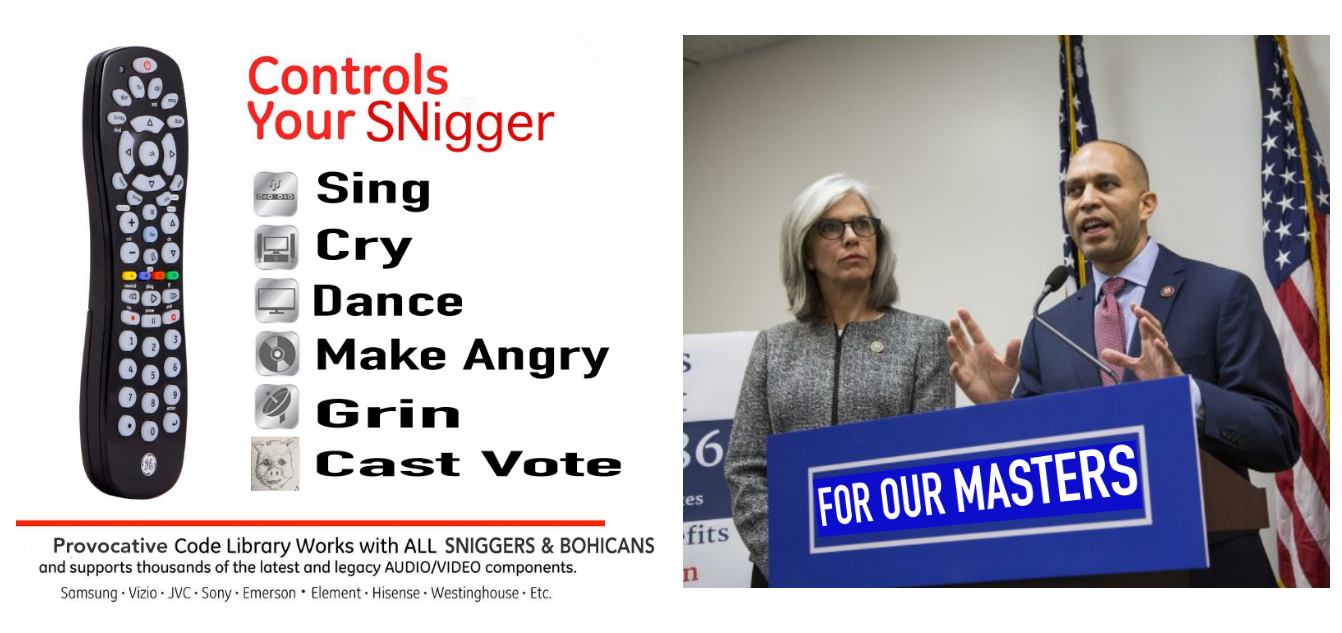
BOHICAN Hakeem Jeffries is "Pro-Black" So Long as that Means 2) Having No Black Agenda or Black Messaging, 2) Parroting and Doing Whatever Elite White Liberals Say and 3) Being Pro-IsrAlien Genocide

ACCORDING TO FUNKTIONARY:

BOHICAN – Bend Over Here It Comes Again Negro. Sniggers are the last of the buck-dancing Bohicans. “I am the last of the Bohicans,” he said, “…and I will never be broken. I am the last and worst of my breed—and the final token.” (See: Snigger, Coin-Operated, Samboism, Uncle Tom, Possumist, Turdistan, Piece-Activist, Niggeroe & GOP)

From [HERE] Rep. Hakeem Jeffries of New York Wednesday became the first Black leader of either major political party in Congress. House Democrats voted unanimously for him to succeed Nancy Pelosi as leader of the House Democrats, and Jewish leaders and pro-Israel groups welcomed their choice. 

The Democratic Majority for Israel called him “a staunch supporter of the critical relationship between the United States and Israel” and the American Jewish Congress noted that Jeffries “has shown himself to be a determined supporter of the Jewish people — one who has never hesitated to call out antisemitism and all those seeking to harm Jews.” 

In a news conference after the caucus vote, Jeffries said Democrats, who will be in the minority beginning in January, will “push back against extremism whenever necessary.”

The ascension of Jeffries, 52, to a top leadership position was swift. Following his election to Congress in 2012, when he defeated an anti-Israel candidate, Jeffries — a lawyer who had represented Brooklyn in the New York State Assembly and worked at the firm Paul, Weiss, Rifkind, Wharton & Garrison — was immediately deemed a rising star by party leaders. 

During that first Congressional campaign, Jeffries was compared to former President Barack Obama, who wowed the Democratic National Convention in 2004 and became president just two years after he won his Senate seat in Illinois

Black Hyundai Executive Suing, Claiming Racism, Retaliation

From [HERE] A former Hyundai executive at the automaker’s Montgomery plant has filed a federal lawsuit, claiming she was fired from her position after being singularly excluded from leadership, with her position diminished because of racism.

Yvette Gilkey-Shuford, who said she was previously the top ranked female and Black executive at the auto factory until her position was terminated in June, earlier filed a complaint with the federal Equal Employment Opportunity Commission.

Her lawsuit was filed today in U.S. District Court for Alabama’s middle district. She is suing for compensatory and punitive damages, back pay and lost benefits.

In a statement, Robert Burns, vice president of human resources & administration at Hyundai Motors Manufacturing Alabama, said the company “respectfully disagrees with the claims outlined by the former employee. The claims will be vigorously defended with information presented during the litigation process.

“HMMA provides a workplace free of discrimination based on race, color, religion, sex, sexual orientation, gender identity, age, national origin or ancestry, citizenship status, physical or mental disability, genetic information, veteran status, uniformed service member status or any other status protected by federal, state or local law,” Burns said.

According to the suit, Gilkey-Shuford worked for Hyundai for 19 years, eventually becoming Director of Administration in 2018. Yet she claims upon assuming the position, she found her responsibilities diminished and was the lowest paid director.

Fourth Circuit Says Infrequent but Repeated Comments Can Create a Hostile Working Environment Based on Race

From [HERE] Over the past decade or so, the Fourth Circuit has gone from requiring a very high demonstration of racially motivated behavior to a standard that allows claims to go to trial based on a considerably lower level of conduct. This pattern continued earlier this week when the court reversed a grant of summary judgment against an employee who alleged that she had been subjected to a sporadic series of racial comments and behavior over a long period of time.

In Laurent-Workman v. Wormuth, the plaintiff was a civilian Department of the Army employee who alleged that she had been exposed to a race-based hostile work environment. She claimed that a white co-worker made several comments disparaging African Americans during the course of her employment. She also alleged that her supervisors ignored her complaints about this behavior, and later retaliated against her. The district court dismissed the claims, concluding that the plaintiff’s allegations of sporadic comments over an extended period of time did not constitute a severe and pervasive hostile work environment based on race.

The Fourth Circuit reversed this decision with the exception of a portion of her retaliation claim, remanding the case for a jury trial. The court noted that in order to reach the threshold for a racially hostile work environment, plaintiffs are not required to show that they were exposed to daily conduct. The court also allowed the case to go to trial despite the fact that the alleged comments made by the plaintiff’s co-worker were general comments about African Americans and were not personally directed at her.

This decision is consistent with the Fourth Circuit’s long-term trend of relaxing the factual and legal standard necessary for plaintiffs to prove hostile environment racial harassment. Employers faced with such suits cannot expect federal courts to dismiss claims on the basis that the racially motivated conduct was upsetting but not severe enough to constitute a hostile working environment. These decisions make it more important than ever for employers to conduct training covering all types of harassment and to enforce their anti-harassment policies when complaints are received from employees.

Are Landlords Colluding to Establish Rental Rates by Using YieldStar Software? Feds Open Inquiry into Rent-Pricing Algorithm

From [HERE] As politicians ask regulators to turn up the heat on data firm RealPage, the Department of Justice has opened an antitrust investigation into the use of its YieldStar software, ProPublica reported Wednesday.

RealPage’s algorithm is widely used by apartment landlords nationwide to establish rental rates. Now the feds are examining whether the software has allowed landlords to collude on pricing.

The inquiry will look into questions about a 2017 merger between RealPage and its largest pricing competitor, ProPublica reported.

An investigation by ProPublica last month said YieldStar eased the way for landlords to impose double-digit rent increases, and the piece spurred a flurry of lawsuits and criticism from lawmakers.

The software uses an algorithm to price apartment rents, based on inputs from a variety of market-specific data sets. The goal is to remove subjectivity from the process – but sources interviewed by ProPublica believe the algorithm artificially inflates rents and recommends increases that most landlords wouldn’t attempt otherwise.

“As a property manager, very few of us would be willing to actually raise rents double digits within a single month by doing it manually,” Andrew Bowen, vice president corporate sales for RealPage, was quoted as saying at a convention last year.

ProPublica’s story led to a flurry of lawsuits against RealPage, along with an outcry from federal lawmakers. U.S. Sen. Sherrod Brown wrote a letter to the Federal Trade Commission that said RealPage’s technology may allow “anticompetitive and potentially unlawful collusion.” Democratic Sens. Amy Klobuchar of Minnesota, Dick Durbin of Illinois Corey Booker New Jersey expressed similar complaints in a letter to the Justice Department.

RealPage couldn’t be reached for comment Wednesday. Last month, the data firm disputed ProPublica’s findings, calling them “misleading and inaccurate.” [MORE]

Feds who work During Government Shutdowns aren’t Entitled to Damages, appeals court rules

From [HERE] Federal employees forced to work without pay during government shutdowns need to be made whole eventually. But the government’s late payments don’t mean those workers are entitled to damages, a federal appeals court ruled Wednesday.

The Court of Appeals for the Federal Circuit sided with the government in two separate lawsuits — one dealing withthe 2013 government shutdown, and another with the partial shutdown in 2018 and 2019. In both cases, employees claimed the government violated the Fair Labor Standards Act by not paying them on time, which would have entitled them to damages — twice the amount of their late paychecks.

Attorneys for both the government and the employees agreed that agencies couldn’t have possibly paid workers while they were shut down, because doing so would have violated another law: the Anti-Deficiency Act, which prohibits agencies from making payments when Congress hasn’t appropriated the funds to do so. But they differed over whether not paying employees on time still violated the FLSA.

The government argued that can’t possibly be the case, because the FLSA “doesn’t require the impossible.” In Wednesday’s rulings, a 2-1 majority of the three-judge panel agreed.

        Insight by Rubrik: During this exclusive webinar, moderator Jason Miller will discuss zero trust in 2023 and beyond with agency and industry leaders.

“If we were to adopt Plaintiffs-Appellees’ proposed interpretation, we would be forcing the government to choose between a violation of the Anti-Deficiency Act or the FLSA. This is an absurd result that we should avoid, if possible,” the majority wrote. “The FLSA requires employers to pay their employees as soon as practicable under the circumstances. Paying federal government wages during a lapse in appropriations is not practicable because the government would violate the Anti-Deficiency Act and could incur civil and criminal liability by making those expenditures.”

The appellate court decisions overturned lower court rulings by the Court of Federal Claims. In 2017, Judge Patricia E. Campbell-Smith found the government was liable for damages to “excepted” employees who worked during the 2013 shutdown. In 2020, the same judge ruled employees who worked during the 2018-2019 shutdown could pursue damages.

Following the 2017 ruling, attorneys for the government and the plaintiffs spent years haggling over how many employees were owed damages, and how much. They were only able to agree on 157 workers by the time the government appealed the decision in its entirety last year.

But Wednesday’s ruling — unless it is overturned by another decision by the full court or the Supreme Court — means no employees would receive damages in connection with past or future shutdowns.

Minneapolis Authorities to Compensate $50k to Each Protester Injured by Cops During Protests Against Police Murders of Black People

From [HERE] The American Civil Liberties Union of Minnesota (ACLU-MN) Wednesday reached a settlement with the city of Minneapolis over police mistreatment of civilians during 2020 protests spurred by the murder of George Floyd. The settlement includes a $600,000 payment, $50,000 to each injured protester, and numerous reforms.

The 12 plaintiffs suffered injuries including bruising from less-lethal munitions, lingering respiratory issues from tear gas and psychological trauma. ACLU-MN Legal Director Teresa Nelson emphasised that, “People who are demonstrating peacefully should never be met with police violence as they were in Minneapolis during protests over MPD’s murder of George Floyd.”

As part of the settlement, approved in federal court, Minneapolis will also reform how police handle demonstrations. Body cameras worn by Minneapolis police must be recording and unobstructed when officers engage with protesters, and the city may not arrest, threaten to arrest or use physical force like chemical agents, flash-bang grenades and foam-tipped bullets against people engaging in lawful demonstrations.

Demonstrations spread across the US after a video emerged showing former Minneapolis police officer Derek Chauvin pressing his knee against Floyd’s neck for more than nine minutes during an arrest over a counterfeit $20 bill on May 25, 2020. Chauvin was later convicted of murder and pleaded guilty to federal charges.

White SAPD Officer Indicted for Attempted Murder, Assault. Cop Wrongly Believed Parked Car was Stolen and Wildly Opened Fire on a Latino Teen. Continued to Shoot as the Boy Fled and Posed No Threat

From [HERE] A white San Antonio police officer has been indicted on attempted murder and assault charges after he shot an unarmed 17-year-old in a McDonald's parking lot in October, prosecutors announced Thursday.

A grand jury handed down the indictment for James Brennand, a San Antonio Police officer. He is charged with one count of attempted murder and two counts of aggravated assault, Bexar County District Attorney Joe Gonzales told reporters. The police apparently fired the cop due to the shooting.

"Justice means making sure that man never works as a member of law enforcement, making sure that that man never has a gun and a badge," Gonzales said. [what difference, if he is easily replaceable with another person with the right to attack people in unprovoked situations?]

Erik Cantu was eating a meal in his parked car outside a McDonald's on October 2 when Brennand approached the vehicle, thinking it was a car that had previously evaded him, according to police. Usually cops check tags to make sure the car is the same - unless it’s driven by a non-white person. Body camera footage shows Brennand opened the door, and a visibly startled Cantu backed up and started to drive away with another passenger inside. Brennand fired his weapon 10 times at the car.

Cantu was critically injured with wounds to vital organs and spent nearly eight weeks in the hospital. His family announced his release last week, saying he still has a long road of recovery ahead. He sustained injuries to his stomach, diaphragm, lungs, liver, bicep and forearm.

“He is cut from the center of his chest down to his stomach, has staples, tubes in his mouth, tubes in his sides,” Cantu Sr. said previously.

It was also revealed that Cantu Jr. had a tracheotomy. Casarez previously stated her son still has a bullet lodged near his heart and said it would do more harm than good to remove it. It’s unclear if that’s still the case.

He is represented by Atty Ben Crump in a civil case.

Brennand was fired from the San Antonio Police Department days after the shooting. Just over a week after the incident, he turned himself in to police and was arrested on two counts of aggravated assault by a public servant -- one for each passenger. He was released from custody after posting $100,000 bond for each count, the Bexar County Sheriff's Office said.

San Antonio Police Chief William McManus said at the time of the arrest, "There is no question in anybody's mind looking at that (body camera) video that the shooting is not justified."

The police chief has said Brennand's actions violated the department's policies against shooting at moving vehicles.

Each count of aggravated assault Brennand faces carries a sentence of five to 99 years, and the attempted murder charge added by the grand jury carries a sentence of two to 20 years.

Asked if he'll be seeking the maximum penalty, Gonzales said, "The maximum punishment appears to be appropriate."

"Rights" or Favors from Master? Video Shows White Cops Drag a Black Woman Out of a Car to Force Her Do Field Sobriety Tests, which are Voluntary for WF in Kansas City, a liberal City

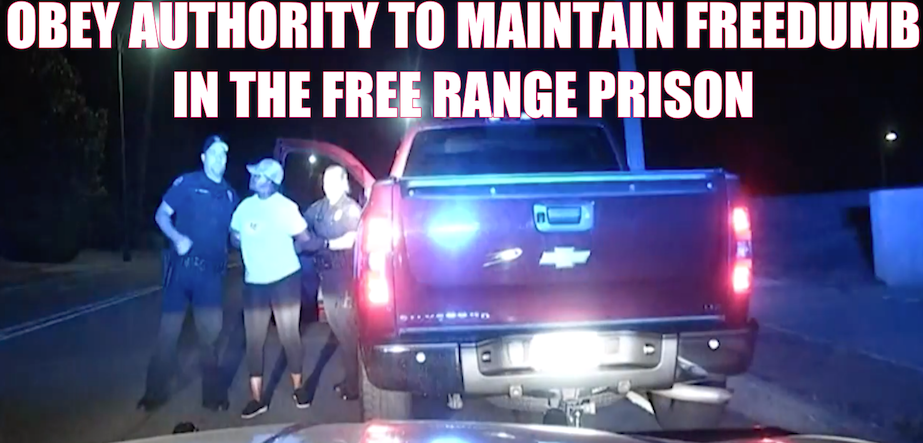
OUT OF YOUR CAR NGHR. WE NEED TO TRY TO GET EVIDENCE OF YOUR IMPAIRMENT SINCE WE DON’T HAVE ENOUGH TO ARREST RIGHT NOW. From [HERE] An Independence police dashboard camera captured the October arrest of a local neighborhood leader who claims she was racially profiled. Rachel Riley was pulled over on Oct. 4 by Officer Brett Schmidli after she allegedly crossed railroad tracks as the safety arms were lowering. The 57 year old has served as president of Kansas City’s East 23rd St. Pac Neighborhood Association for eight years. She’s been involved with the organization for two decades.

Kansas City is a city dominated by white liberal politics. The black votary loves white liberals.

Earlier this month, Riley said she was racially profiled and organized a protest in front of the police department. Attendees then marched across the street to Independence’s municipal court where she had a hearing on the traffic citation and a charge of interfering with police. The video shows Schmidli order her out of the truck so he can check her eyes for impairment. Riley asks for a sergeant.

White liberal reporters, who believe and parrot whatever cops says, omitted: Generally, a driver is not required to partake in a field sobriety test and may refuse to do so. Keep in mind that this is different from refusing to submit to a breath or blood test.

“I fear for my safety,” she says. He then opens the driver’s side door. “Don’t pull me out of the car,” she says. He grabs Riley out of the vehicle and she is handcuffed. As she is being walked to the patrol car, she accuses him of being racist. They go out of view of the video, but Riley can be heard saying, “Why are you manhandling me? Why are you harassing me?” She was taken to jail. Riley said the encounter left her traumatized.

John Picerno, a white Kansas City criminal defense lawyer, said if police make a valid car stop, an officer has the right to ask you to exit the vehicle and you must comply.

Correct; you maintain your freedom through obedience to mindless authority [on a content free basis do whatever you are told] in the free range prison - Otherwise you will be subject to the force continuum. No person can disobey authority - it is supreme above all human affairs in barbaric societies. In reality, your so-called “rights” are actually favors subject to the approval of your public masters, who provide a mandatory public “service” that cannot be declined. Authorities are superhuman individuals or persons given special, greater powers to rule over people.
To be clear, all persons have the natural right to defend themselves and come to the defense of others if they believe another person is in imminent danger from an aggressor. Private security workers and guards also work under said natural law.

In contrast, police officers also have the extra or additional “power” to act offensively as aggressors; the right to attack people or initiate unprovoked acts of violence against people whenever they deem it necessary. Police are said to have such powers when they are acting on behalf of “authority.” As such, police are lawfully empowered to attack (make arrests) people, touch them against their will, assault them, interfere with freedoms in many ways, kidnap people (detain and transport) or imprison them. In turn, “citizens” are said to have a moral and legal obligation to obey police commands and have no right to even resist an unlawful arrest in most states.

The problem is that there is no rational basis for authority. Authority, the basis for all governments and rulership, is a farce. Government “authority” can be summed up as the implied right to rule over people. It is the government’s ability and moral right to forcibly control citizens, its right to be obeyed and the citizen’s corresponding moral and legal obligation to obey.’ Authority requires that government’s laws, commands and orders to be obeyed on a content-neutral basis (regardless of whether they agree or not.) [MORE] Michael Huemer defines political authority as “the hypothesized moral property in virtue of which governments may coerce people in certain ways not permitted to anyone else and in virtue of which citizens must obey governments in situations in which they would not be obligated to obey anyone else.” Said hypothesized moral property makes government the supreme authority over human affairs.
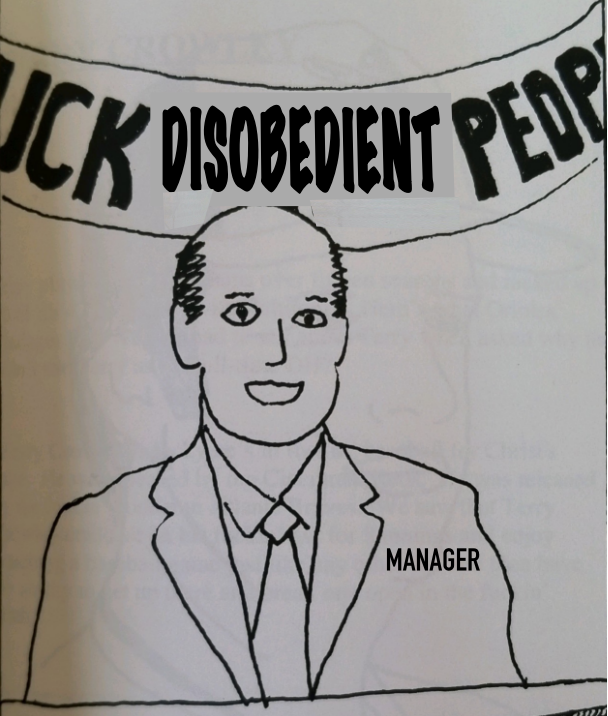
Authority has no meaning in reality because it does not come from people nor is it derived from any natural source. All governmental power allegedly comes exclusively from the people. Citizens delegate their individual power to government and it’s representatives for them to represent citizens. Such representation works much in the same way agents represent their principals in all kinds of business or other contractual relationships. For instance, a manager at McDonalds represents the owner of McDonalds when she carries out the owners business everyday ordering inventory and hiring workers, etc. She is the agent, the owners are the principals. Naturally, an agent only can possess whatever powers the principal gave to her. For instance, you grant the babysitter access and power to use your living room but not the basement. And it goes without saying that an agent cannot have more power than the principal because all said power originated exclusively from the principal.

Inexplicably, the government has granted itself the authority to do things that no individual could do. While citizens have the inalienable right to act in self-defense or come to the defense of others, citizens have no right to initiate unprovoked acts of violence on other people and no right to forcibly control other people. As such, it is logically impossible for citizens to delegate the right to forcibly control others to the government - because citizens cannot possibly delegate rights that they don’t have. In other words, if you don’t have the right to initiate unprovoked acts of violence against other people then you cannot delegate or authorize anyone else acting on your behalf to do so. Clearly for example, your neighbor has no right to stop, search and detain you and put you into handcuffs, kidnap you and lock you in a basement for failing to comply with one his commands. So, how could your neighbor delegate a government representative the power to do so?

Larken Rose explains, ‘in the case of “government,” the people whom the politicians claim to represent have no right to do anything that politicians do: impose “taxes,” enact “laws,” etc. Average citizens have no right to forcibly control the choices of their neighbors, tell them how to live their lives, and punish them if they disobey, So when a “government” does such things, it is not representing anyone or anything but itself.’ As stated, it is a logical and legal impossibility for a representative to have more power than the person he is representing. Larken Rose explains, “you can’t give someone something you don’t have.” There is nothing complicated about this. Rose states;

“Despite all of the complex rituals and convoluted rationalizations, all modern belief in “government” rests on the notion that mere mortals can, through certain political procedures, bestow upon some people various rights which none of the people possessed to begin with. The inherent lunacy of such a notion should be obvious. There is no ritual or document through which any group of people can delegate to someone else a right which no one in the group possesses. And that self-evident truth, all by itself, demolishes any possibility of legitimate “government.”

Rose explains if those in “government” have only those rights possessed by those who elected them, then “government” loses the one ingredient that makes it “government”: the right to rule over others (”authority”). If it has the same rights and powers as everyone else, there is no reason to call it “government.” If the politicians have no more rights than you have, all of their demands and commands, all of their political rituals, “law” books, courts, and so on, amount to nothing more than the symptoms of a profound delusional psychosis. Nothing they do can have any legitimacy, any more than if you did the same thing on your own, unless they somehow acquired rights that you do not have. And that is impossible, since no one on earth, and no group of people on earth, could possibly have given them such superhuman rights.” [MORE]

Utah Court Grants New Trial to Black Man Sentenced to Death after Trial by White Prosecutor who Used False Testimony Coerced by Police

From [HERE] A Utah judge has granted a new trial to death-row prisoner Douglas Carter, finding that prosecutors knowingly withheld from the defense evidence that police coerced false testimony from two key witnesses, coached them to lie, provided them “thousands of dollars in financial benefits” to implicate Carter, and threatened them with deportation and loss of their son if they did not cooperate.

Carter, who is black, was charged with murdering a white woman, Eva Oleson, who was the aunt of the Provo City Police Department police chief. No physical evidence linked him to the crime. He was tried, convicted, and sentenced to death in 1985 based upon a confession to police that Carter said was false and coerced and the testimony of two witness, Epifanio and Lucia Tovar, who were in the country illegally and claimed Carter had confessed to the murder.

Epifanio testified at the trial that Carter had come to him prior to committing the crime and told him that he intended to “rape, break, and drive,” that night, left his house, and returned within a couple of hours, then confessed to him in detail how he had committed the crime and performed a physical demonstration, while laughing. Lucia verified the timeline to which Epifanio had testified and said she had seen Carter acting something out. The weekend before the trial Epifanio also supposedly revealed the location of the murder weapon to the police, after having told the police in several prior meetings that he did not know where the gun was.

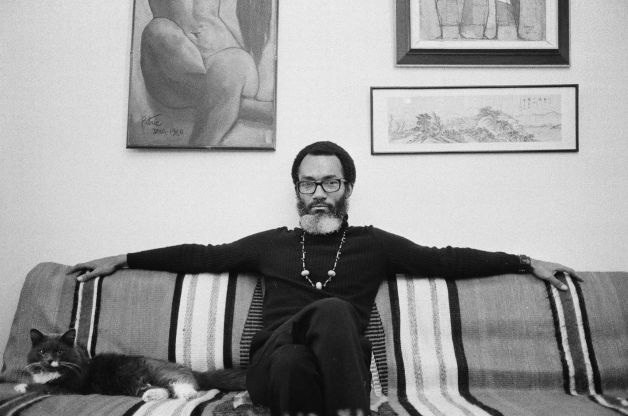
Following depositions and an evidentiary hearing, Utah County District Court Judge Derek P. Pullan(pictured) issued a 115-page ruling on November 23, 2022 granting Carter a new trial. The Tovars testified by deposition that police and prosecutors had offered them gifts and money, coached them to lie in court, and threatened them with deportation if they didn’t cooperate. Pullan found that the false version of events the Tovars provided police prior to trial had become more and more favorable to the prosecution as the payments increased, that prosecutor Wayne Watson was aware of the payments, that Watson knew Epifanio lied when he testified that the sole benefit he had received for his cooperation was a check for $14, and that Watson knowingly failed to correct Epifanio’s lie.

Pullan also found that Provo Police Lieutenant George Pierpont, who had elicited the alleged confession from Carter, had threatened the Tovars before eliciting favorable statements from them, that either Pierpont or Watson told Epifanio to testify that Carter said he was going to go “rape, break, and drive” before the murder, that Watson knew that Epifanio’s testimony was false, and that Watson failed to correct the false testimony once it was given.

Prosecutors announced on November 28 that they will appeal the ruling.

The trial court’s ruling came more than 35 years after Carter was first tried. His death sentence was initially overturned in 1989 because of an unconstitutional jury instruction. The Tovars had disappeared in the interim and prosecutors read their prior testimony into the record of Carter’s resentencing trial in 1992, at which he was again sentenced to death. The Utah Supreme Court upheld that death sentence in 1995. 

Carter’s lawyers located the Tovars in 2011, and the Utah Supreme Court ordered the trial court to conduct an evidentiary hearing based on their “damning revelations” that Provo police had paid their rent and given them groceries and gifts in the months leading up to the trial, told them to lie about the payments, and threatened to deport them or take their infant son from them if they did not continue to cooperate. The court ruled that the new evidence of police and prosecutorial misconduct left the Tovars’ trial testimony “tainted as a whole,” and it ordered the trial court to conduct an evidentiary hearing on Carter’s claims.

In a deposition taken for that hearing, Epifanio testified that he lied about Carter saying he planned to rape anyone, but in a meeting with Pierpont and Watson, “the term ‘rape, break, and drive,’ came up,” and one of the two men told him to use that phrase in his testimony. He testified that the police had instructed him and Lucia not to disclose the payments they had received.

Epifanio also testified at the deposition that he only used the “rape, break, and drive” language at trial because he believed that the police wanted him to say that. He testified that if he did not testify at trial the way the prosecution wanted, “[the police] had told me they would accuse me of being an accomplice, and that they would put me in jail, and that they would deport my wife, and that they would take away my son.” Lucia’s deposition testimony confirmed that the police had threatened to deport them and separate them from their son on multiple occasions.

Both Epifanio and Lucia also testified about police officers paying their utilities, giving them rent and grocery money, and even sending them and their children Christmas presents prior to the trial. Watson was aware of this financial arrangement but did not correct the record when Epifanio testified during trial that he had only received $14 from the state for testifying. 

When deposed, Watson first claimed that he did not remember the Tovars, did not know that they were not legal residents of the United States, and did not believe he had called them to testify. Then, after admitting to knowing that the police made rent payments to the Tovars, he said that he did not correct Epifanio’s false testimony that he had only received $14 because he did not know the exact amount the police had paid for his rent and had assumed Carter’s counsel would correct the record. Watson denied knowing that Epifanio had been coached to say that Carter had planned to “rape, break, and drive.” 

Ultimately, the trial court determined that the State had an obligation to inform Carter’s counsel that the police had threatened the Tovars with deportation, that police officers had been making substantial payments to the Tovars in the lead-up to the trial, and that Watson had committed misconduct by allowing Epifanio to falsely testify that Carter told him that he was planning to “rape, break, and drive” and that he had only received $14 from the state. Judge Pullan found that either Watson or Pierpont had been aware that the testimony was false, and that Watson had a duty to correct the falsehood.

Sandy Hoax Wasn't Real but Default Judgments Against Alex Jones are. Files for Bankruptcy After Failing to Make Parents Actually Prove a Deadly Shooting Took Place at a Contested Trial On the Merits

LIKE MOST FALSE FLAGS, All Emotion AND Few Facts: A Default Judgment Simply Means Alex Jones is Liable, It's Not Proof Sandy Hoax wasn't an Elaborate Hoax. Media Pretends a Default is the Same as a Contested Trial on the Merits. SEE ALSO “NOBODY DIED AT SANDY HOOK.” COMPLETE BOOK [PDF] BANNED BY DO-GOODERS EVERYWHERE AND [MORE]

As Defined in FUNKTIONARY

Sandy Hook – a staged CAPSTONE false flag media psy-ops event. Medical personnel and first responders turned away from the crime scene where 26 people allegedly were murdered. Sandy Hook never happened. Sandy Hoax did.

From [HERE] InfoWars owners Alex Jones filed for Chapter 11 bankruptcy protections in the Southern District of Texas on Friday.

Jones was ordered to pay over $1.4 billion dollars in damages in defamation cases against the pretend victims of the 2012 Sandy Hook Elementary School shooting. The vast majority of Jones’ unsecured debt is in the form of judgements to parents of Sandy Hook victims. Jones also owes $150,000 in credit card debt to American Express.

Jones’ company Free Speech Systems, InfoWars’ parent company, filed for Chapter 11 protections in July.

Contrary to constant media mischaracterization, there were no actual contested trials. The court proceedings only pertained to how much should be awarded in damages.

A default judgment transforms a defending party’s admissions (which occur upon entry of the default) into a final judgment; it usually terminates the litigation by producing an enforceable, final award in favor of the pleader. When the damages amount is not a sum certain, the court may convene an evidentiary hearing. Although the entry of default deprives the defaulting party of the right to contest most of the complaint’s factual allegations, that party may contest the amount of damages. The Dependent media is calling the hearing on damages a “jury trial” to confuse the proceeding with an actual jury trial on the merits.

Default judgments are a drastic action because they confront the judicial preference for disposition on the merits. Default judgments don’t prove that something happened - they just mean someone lost a lawsuit where something was alleged.

If an actual, contested trial defamation trial had taken place the plaintiffs would have had the burden to actually prove that Jones made false statements; not vice-versa. That is, the plaintiffs would have had to show that Sandy Hook was real - with actual authenticated, admissible evidence and testimony subject to cross-examination, credibility determinations and inspection in an adversarial process before a jury who would decide on the merits. But that never happened. In other words, if plaintiffs brought suit because Jones said Santa was fake and thereafter Jones failed to respond to the lawsuit, a default judgment would eventually be entered. Such a judgment wouldn’t make Santy real though. In The Spectacle ,The Dependent Media goes on pretending otherwise.

Once a default judgment was made by the court the only thing left for the jury to do was to determine the amount of damages for the alleged defamation. Jones participated in that part of the proceeding.