Florida Government Sued for Child Trafficking, Destroying Families by Taking Kids Away

From [HERE] Florida is rapidly becoming the go-to State for people fleeing the rapidly decaying mega urban centers in the U.S., and that includes some of the richest and most famous billionaires who have recently moved their residency to Florida, such as former President Donald Trump and Oracle founder Larry Ellison, among others.

Even Ukraine President and alleged billionaire Volodymyr Zelensky has a $35 million dollar mansion in South Florida, where he will undoubtedly retire to if the war in his country doesn’t go his way. (Source.)

And with Wall Street mega-bank criminals now starting their own virtual stock exchange, MEMX, it is probably only a matter of time before South Florida replaces New York’s Wall Street as the new residence of most of the world’s billionaires and bankers who can just work online while hitting the Florida beaches. (More on MEMX here.)

Tragically, one thing that seems to follow the rich and famous in this country is the problem of human trafficking, and specifically child sex trafficking, as even Jeffrey Epstein ran a major portion of his child sex trafficking operation through South Florida. (Source.)

As we have reported numerous times over the years, the #1 source for child trafficking in the United States is the corrupt child welfare program that funds foster care and adoptions in the U.S. You can learn more about this corrupt system of child trafficking that imperils all of the nation’s children every day on our Medical Kidnapping website.

Thanks to some good local reporting in Florida, many families who have had their children taken away from them illegally by the State of Florida are fighting back and suing the State of Florida, naming Florida Governor Ron DeSantis, Secretary of the Florida Department of Children and Families Shevaun Harris, Executive Director of the Florida Department of Health Dr. Joseph Ladapo, Bureau Chief of the Florida Department of Health Child Protection Team Patricia Armstrong, and Executive Director of the Florida Guardian ad Litem Program Attorney Dennis Moore as defendants in the case. (Source.)

Katie LaGrone with WPTV Channel 5 in West Palm Beach reported on a lawsuit with multiple families suing Gov. DeSantis and the State of Florida for medically kidnapping their children back in June this year, and we covered her story then where she interviewed some of the family members who are plaintiffs in the case.

Here is the 8-minute video that WPTV produced about the alleged corruption happening in Florida where children are being kidnapped by the State of Florida:

Since that story broke in June, last month (September, 2022) Katie LaGrone reports that many other families in Florida have now contacted them, and there are now at least 22 families who have joined the lawsuit.

Three months after Investigative Reporter Katie LaGrone and photojournalist Matthew Apthorp were the first journalists to share a new lawsuit accusing Florida’s child welfare system of going out of its way to break families apart, 18 additional families have now joined the suit.

“People saw your story on the news. People said it happened to me,” attorney Valentina Villalobos with Community Law for Families & Children.

Since our initial story aired, Villalobos said her phone hasn’t stopped ringing.

“I can’t even answer my own phone right now, I need an assistant screening my calls,” she said in regards to the volume of calls she’s been getting from families sharing similar stories.

A total of 22 families now claim Florida’s Department of Children and Families, along with its child welfare partners including Florida’s governor, Florida’s Surgeon General and the head of the state’s Guardian Ad Litem Program, have all violated family rights by denying relatives custody of young family members who enter the state’s care. (Full article.)

10-year-old Maya Kowalski (left) was taken away from her Florida parents based on the testimony of a Child Abuse Pediatrician. Image Source.

And Katie LaGrone is not the only one in Florida who is reporting on this problem of corruption in the state child welfare program.

Dyan Neary, writing for The Cut, just published an investigative report about a medical kidnapping case in Pinellas County Florida. [MORE]

The ACLU and Others Urge Authorities to Limit Detention of Non-White Pregnant Migrants on the Imaginary “Border”

From [HERE] One 27-year-old Guatemalan woman said she had no other option but to give birth while holding a garbage can at a Southern California Border Patrol station. A Nicaraguan mother said agents denied her 6-month-old son medical care while he suffered from respiratory problems that caused pneumonia.

These are two cases that the American Civil Liberties Union cited in a letter to the U.S. Customs and Border Protection agency on Friday.

The organization — along with 136 additional advocacy groups and medical professionals — has urged CBP to expedite the intake proceedings for women and others who are pregnant, postpartum or nursing as well as infants.

"Given their reproductive health needs and the acute medical conditions that can come up, they should be prioritized for release on the minimum amount of time necessary for basic processing," Shaw Drake, an ACLU senior policy counsel on border and immigration issues, told NPR. "And in no case should that be more than 12 hours."

Those attempting to enter the U.S. who are taken into custody at the border are usually meant to be in CBP facilities for only a short time while they are processed, given a place in the queue of U.S. immigration court cases, and released. But Shaw said migrants can often be held in CBP detention facilities for more than three days.

Meanwhile, this past year, Immigration and Customs Enforcement, which handles immigration enforcement in the interior of the U.S., revised its own policy. New guidelines call for the agency to no longer detain, arrest or take into custody those who are pregnant, postpartum or nursing except in rare circumstances.

CBP declined to comment on the ACLU's accusations, but told NPR it offers a spectrum of services and support for people who are pregnant, postpartum or nursing in detention facilities. The agency says its practices include conducting welfare check-ins every 15 minutes, providing diaper changing stations and ensuring privacy to mothers who are breastfeeding.

But some doctors say they're still concerned.

Dr. Allison Estrada, a physician in San Diego who joined the ACLU letter, said she would often hear about a lack of access to showers, bathrooms, fresh food, or safe place to care for wounds from her pregnant patients who were held in detention centers.

"When I think about the lack of basic needs for these women and young children in a very delicate time in their lives, detention is absolutely not safe," Estrada told NPR.

Last year, 11 U.S. senators, including Richard Blumenthal of Connecticut, expressed similar concerns to the Department of Homeland Security and asked the agency to limit the time pregnant and postpartum people are held in custody.

This spring, CBP commissioner Chris Magnus said in a letter to Blumenthal that the agency shares the desire and plans to process vulnerable groups "as quickly as possible."

But months later, there has yet to be a formal change in policy, according to the ACLU's Drake.

The ACLU letter has also asked the federal agency to release pregnant and postpartum people, along with their families, after they have been admitted and discharged from an offsite hospital rather than transferring them back to the detention facilities.

Inspector General Says the BOP Should be able to Consider Inmate Statements to Evaluate the Misconduct of Cops and Orderlies. Presently, the Govt Only Uses Inmate Testimony to Convict Black/Latinos

From [HERE] US Inspector General Michael Horowitz Thursday recommended that the Federal Bureau of Prisons (BOP) establish guidelines on the use of inmate statements in administrative misconduct investigations of BOP employees.

In an inquiry by the Office of the Inspector General, the BOP Office of Internal Affairs (OIA) stated it does not rely on inmate testimony when adjudicating misconduct findings that do not rise to the level of criminal prosecution unless there is corroborating evidence like forensic evidence or video. Horowitz claimed that interviews with BOP employees revealed further inconsistencies regarding when to rely on inmate testimony in administrative misconduct investigations.

Inmate testimony is considered without corroborating evidence in criminal and civil trials. Therefore, Horowitz argued, an inmate’s statement is worth less in an administrative investigation than in a criminal or civil trial under current BOP policies. Horowitz explained, “In short, inmates are not disqualified from providing testimony with evidentiary value in federal courts, and there is no valid reason for the BOP to decline to rely on such testimony.”

Horowitz provided three recommendations to the BOP: (1) the BOP should inform all of its employees that inmate testimony does not require corroboration for consideration in misconduct investigations; (2) the BOP should create a policy explaining how to handle inmate statements in administrative misconduct matters; and (3) the BOP should provide training to all of its employees on proper evidence standards and how to handle inmate statements.

Horowitz suggested that, if the BOP does not rely on inmate testimony absent corroboration, employees who engage in misconduct will avoid repercussions, and staff members will engage in misconduct because they believe they will not be held accountable for their actions.

Snitch ‘White Boy Rick’ Sues Feds for Recruiting Him as a Child

From [HERE] A white man employed by the FBI as an underaged drug informant in the mid-1980s filed suit against the federal government Friday, claiming state and federal law enforcement abandoned him to be attacked and arrested at 17, talked him into informing again throughout the 1990s, and went back on promises of immunity again once that investigation was complete. 

Richard Wershe, Jr., dubbed “White Boy Rick” by news media and a 2018 Matthew McConaughey film loosely fictionalizing his life, alleges that FBI agent Jim Dixon recruited him at age 14 after his sister started dating a drug dealer and his father called the FBI. 

This early recruitment, attorney Nabih Ayad wrote in the federal lawsuit, started a chain of events that led to the teenager narrowly escaping multiple murder attempts, being pistol-whipped by Detroit police and ultimately spending over 30 years in prison despite assurances of immunity. 

After the teenaged Wershe was able to identify several individuals Dixon asked about, the agent and other members of a joint task force with the Detroit Police Department began picking him up unannounced, writing in the force’s files that their information came from the boy’s father. [MORE]

Florida Study Documents Disproportionate Exclusion of Black Jurors in Jacksonville Death Penalty Cases

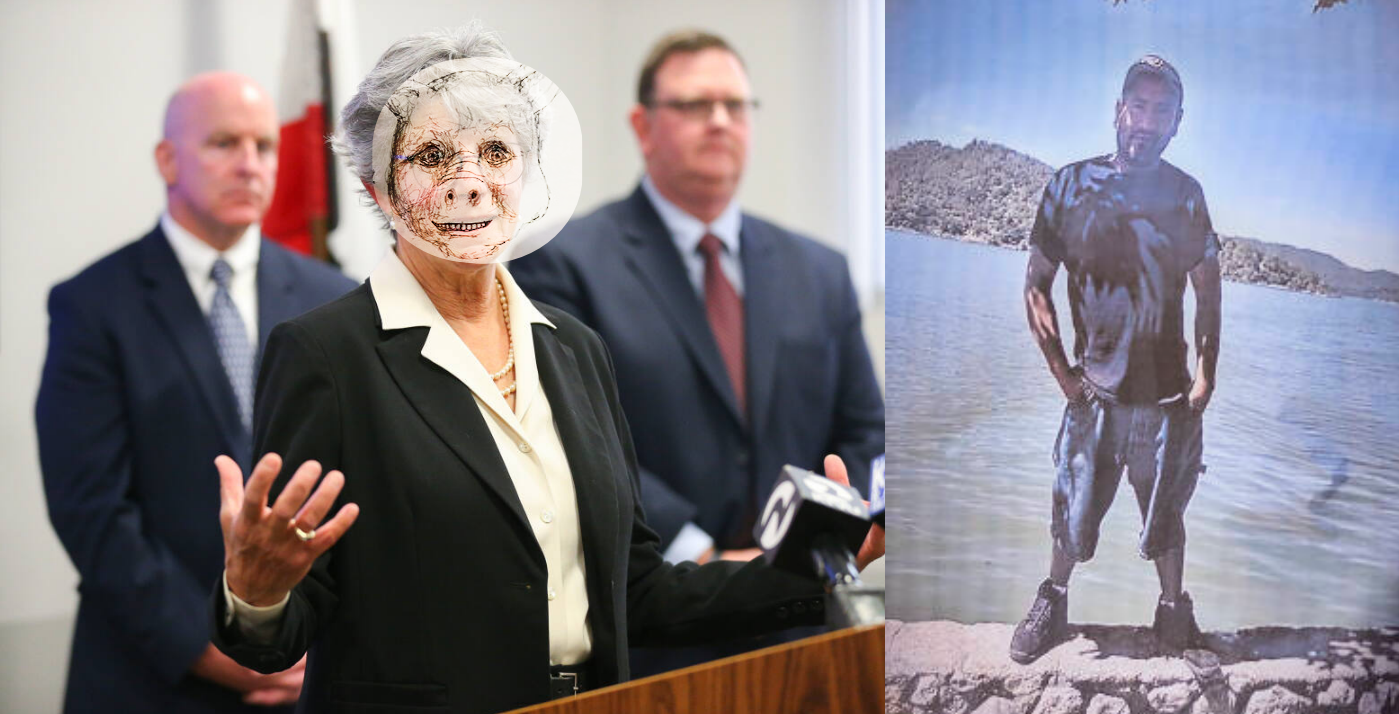
From [HERE] A study of capital jury selection in Duval County, Florida has found that the practice of “death qualification disproportionately excluded people of color, and Black people … in particular.” Attorneys for Dennis Glover (pictured, center), who was sentenced to death by a non-unanimous Duval County jury in 2015, commissioned the study. On October 21, 2022, State Attorney Melissa Nelson agreed to resentence Glover to life without parole.

Discriminatory jury selection was just one of several issues presented in Glover’s case. He has consistently maintained his innocence in the murder of his neighbor, Sandra Allen. His attorneys say that school records and IQ tests demonstrate that he is intellectually disabled and therefore should never have been eligible for a death sentence. His 2015 death sentence was imposed after a 10-2 jury recommendation, but it was overturned in 2017 after the U.S. Supreme Court struck down Florida’s sentencing scheme. For five years, State Attorney Melissa Nelson rejected Glover’s requests to waive the death penalty, insisting that she would only do so if he admitted his guilt.

Death qualification refers to the process of removing potential jurors from service in a capital case because of their expressed opposition to the death penalty. To study its effects, Dr. Jacinta M. Gau, a criminal justice professor at the University of Central Florida, examined all 12 capital jury trials conducted in Duval County since 2010 for which jury information was available. She found that the death qualification process removed Black jurors at more than twice the rate of white jurors. 33.8% of Black potential jurors were eliminated by death qualification, along with 38% of other jurors of color, while only 15.5% of white jurors were eliminated.

Gau also found that the jury selection process overall, including death qualification and peremptory strikes, was particularly discriminatory against Black women. She wrote, “fully two thirds of Black women otherwise eligible, qualified, and willing to serve were excluded by the combination of death qualification and prosecutor peremptory strikes, as were 55% of Black men.”

Gau’s results are consistent with a recent study of death qualification in North Carolina. Researchers from Michigan State University studied jury selection in Wake County (Raleigh) from 2008 to 2019. The researchers found statistically significant evidence of racial disparities in death qualification, with Black potential jurors removed “at 2.16 times the rate of their white counterparts.” That research was submitted as part of a challenge to death qualification on behalf of Brandon Xavier Hill, who is facing capital charges in Wake County.

Marginalized Black and Native American Farmers Sue USDA Over Broken Promises for Debt Relief

From [HERE] As the U.S. Department of Agriculture sidesteps legal concerns over previously promised debt relief targeted at minority farmers in favor of broader measures, some producers have launched a new legal battle to secure the funds they believe they’re due.

Leaders of Native- and Black-led farmer organizations have filed a joint class action lawsuit on behalf of any “socially disadvantaged” farmer who filed for USDA debt relief included as part of the American Rescue Plan Act.

ARPA allocated $4 billion to marginalized producers to pay, in some cases, up to 120 percent of each farmer’s debt. Qualifying farmers received contracts that guaranteed them the money. Some farmers took those contracts or letters of guarantee to their loan institutions, certain their debts would be repaid.

In June 2021, white farmers in several states claimed the program was discriminatory and succeeded in receiving multiple federal court injunctions against the USDA. The resulting cases stymied the USDA’s efforts to issue the debt relief, just weeks before the first funds were scheduled to be paid, leaving producers who applied for the aid empty-handed.

Kara Boyd, president of the Association of American Indian Farmers. (Courtesy photo)“These farmers are facing foreclosures because they didn’t get help,” said Kara Boyd, president of the Association of American Indian Farmers, one of the groups involved in the new case. “They’re trying to stay afloat because they were promised help and now it may not get to them. In the meantime, they’re losing their farms.”

To work around the potential for protracted lawsuits, lawmakers repealed the funding as part of the Inflation Reduction Act, and replaced it with a $3.1 billion fund for “distressed borrowers” of USDA Farm Service Agency loans. The Inflation Reduction Act also included $2.2 billion for farmers who “have suffered discrimination” through USDA programs.

According to a report from the Center for Public Integrity, 33 percent Farm Service Agency direct loans to American Indians and Alaska Natives are delinquent as of this year. 

However, Boyd and other critics of the move say the broader focus of the Inflation Reduction Act funding effectively reduces the amount of money available to socially disadvantaged producers who were previously promised relief. 

The plaintiffs in the lawsuit assert that repealing the ARPA debt relief constitutes a contractual violation and damages disadvantaged farmers’ chances of receiving aid. The lawsuit aims to secure the promised 120 percent debt relief for socially disadvantaged farmers who signed contracts promising them the money.

A moratorium on farm foreclosures remains in place for loans directly offered by the USDA, but not for loans issued by other institutions that the USDA has guaranteed. That has left struggling minority farmers with the “wrong” type of loan in danger of losing everything, Boyd said. 

She recounted heard stories from marginalized producers dealing with potential foreclosures across the country. 

“Some farmers are being forced into bankruptcy, others into foreclosure or selling off land, livestock and/or equipment to make payments on loans that were paid off according to a USDA contract or letter to their guaranteed lender,” Boyd told Tribal Business News. “We have been in constant conversation with farmers from across the United States and U.S. territories trying to calm the hearts and minds of Native American, Black, Asian and other minority farmers to prevent farm foreclosures and even suicides.” [MORE]

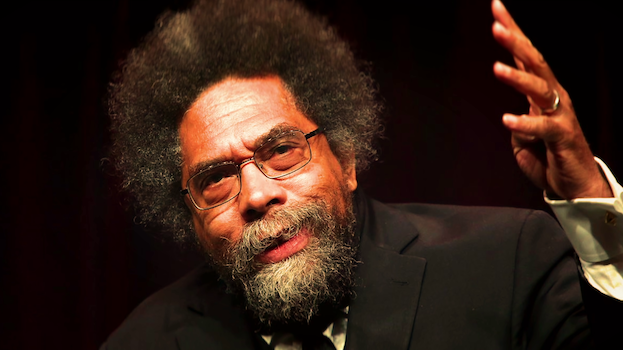
Dr Cornel West Pops Up to Support the Effort to Protect the Graves of Slaves, "free persons" and Native Americans from Being Desecrated in Thoroughfare, Virginia

From [HERE] The Coalition to Save Historic Thoroughfare Monday announced that internationally-respected professor, author and justice activist Dr. Cornel West has offered his support for the effort to protect the graves of slaves, freedmen/freedwomen and Native Americans from being desecrated in Thoroughfare, Va.

That coalition recently filed a lawsuit against International Investments, LLC (IIL), Virginia’s Prince William County, the Prince William County Board of Supervisors and County Executive Elijah Johnson “for their deliberate and egregious actions in the failure to protect and eventual desecration of a private, historically recognized, protected, and culturally significant cemetery belonging to the families of freed slaves and indigenous Native Americans – the Scott Cemetery.” NOTE: International Investments, LLC is also known as “The Farm Brewery at Broad Run.”

In the video, Dr. West said in part:

“We want to put a limelight on the precious folks in the cemeteries…Black cemeteries, Indigenous people cemeteries in the county of Prince William County in Thoroughfare.

“We refuse to standby to see those cemeteries desecrated in any way-- demeaned or degraded in any way. And are willing to do what is necessary in the name of love and justice...and in the name of Allah and God. And in the name of what any decent person would want to do to make sure that those people are treated with dignity and decency in those cemeteries.” [MORE]

Search for Tulsa Race Massacre Victims Uncovers 17 Additional Unmarked Graves in Cemetery

From [HERE] Another 17 unmarked adult burials were found at Tulsa's Oaklawn Cemetery as the city continues its efforts to find the unidentified victims of the 1921 Tulsa Race Massacre.

Eleven fully-exposed graves and one partially exposed grave were found in an area west of headstones belonging to Reuben Everett and Eddie Lockard, the only known marked graves in the cemetery.

Experts then found another five graves, Oklahoma State Archaeologist Kary Stackelbeck said in an update Monday. Hand excavation work is underway to determine which of those burials are candidates for exhumation.

"Much like last year, we're trying to do every step of this process as respectfully as possible," she said.

Multiple experts, including a forensics team, are assisting in the collection of DNA samples from the exhumed remains. A pastor or another member of the clergy will also be present as the remains are transported to the forensic lab.

The excavation is expected to be completed by Nov. 18, the city said in a news release. [MORE]

Black Men Exonerated in Murder of Malcolm X Accept $36M Settlement

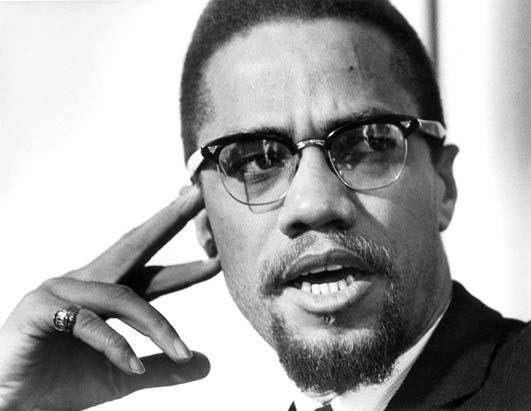
From [HERE] and [MORE] The city of New York is settling lawsuits filed on behalf of two men who were exonerated last year for the 1965 assassination of Malcolm X, agreeing to pay $26 million for the wrongful convictions which led to both men spending decades behind bars.

The state of New York will pay an additional $10 million. David Shanies, an attorney representing the men, confirmed the settlements on Sunday.

“Muhammad Aziz, Khalil Islam, and their families suffered because of these unjust convictions for more than 50 years,” said Shanies said in an email. “The City recognized the grave injustices done here, and I commend the sincerity and speed with which the Comptroller’s Office and the Corporation Counsel moved to resolve the lawsuits.” [MORE]

Feds Charge Black Philadelphia Deputy with Selling Guns, including 2 used in Shooting Near a High School [Contrary to liberal propaganda few criminals lawfully purchase guns]

From [HERE] A deputy with the Philadelphia Sheriff's Office has been arrested and charged with trafficking and selling guns, according to the United States Attorney's office for the Eastern District of Pennsylvania.

Samir Ahmad, 29, of Philadelphia, was taken into custody on October 19 by federal agents.

Court documents say two of the firearms Ahmad sold on Oct. 13 were traced by law enforcement as being used in a deadly ambush shooting after a football scrimmage at Roxborough High School two weeks earlier.

The Sept. 27 shooting killed 14-year-old Nicolas Elizalde of Havertown, Pa. and left four other teenagers wounded.

Officials said Ahmad was employed with the Philadelphia Sheriff's Office beginning in Feb. 2018. He was terminated on Oct. 19 and is in custody.

The FBI said the case began back on April 27.

One of their informants was able to purchase a revolver from Ahmad. The transaction was allegedly recorded on an audio device.

According to court documents, the same informant met again with Ahmad on Oct. 13. The FBI said Ahmad sold him the two semi-automatic pistols used in the Roxborough shooting and ammunition.

During the exchange, the informant said that he was "illegal" and would "get deported" if he was caught in possession of a BB gun.

Officials said Ahmad replied, "You don't got to worry about none of that."

Images were provided from a video recording device planted on the informant.

We also see Ahmad receiving payment for the transaction as well. Ahmad made $3,000 from the sale of the firearms, according to investigators. [MORE]

Black Man Murdered by Firing Squad: $50M Lawsuit says Cops Shot at Porter Burks 38 Times from "Long Range." Detroit Police Refuse to Provide Video, Cops' Names and The Dependent Media Conceals Story

From [HERE] Attorney Geoffrey Fieger filed a $50 million wrongful death lawsuit Tuesday against the city of Detroit and five unnamed Detroit Police officers in connection with the Oct. 2 fatal shooting of 20-year-old Porter Burks, whose mental illness "often caused psychosis," the suit said.

The lawsuit, filed in Wayne County circuit court, claims gross negligence, assault and battery, "wanton & willful misconduct," and a violation of the Americans with Disabilities Act because of Burks' mental illness, which was so severe he often hallucinated, and, during one episode, "thought there was a squirrel living inside him," according to the 18-page filing.

During a press conference in his Southfield office, Fieger, flanked by Burks' relatives, labeled the death "the execution-style killing of Porter Burks," adding: "It's nonsense that something like this could occur in a civilized society." [its nonsense that he thinks this is a civilized society]

Burks, who reportedly suffered from schizophrenia, was killed after a videotaped confrontation with police officers, who repeatedly asked him to drop the small knife he was wielding as he stood many feet away from them. When Burks moved toward the officers, although numerous cops were present, only five of them opened fire, discharging 38 bullets, 19 of which struck Burks, according to an autopsy report from the Wayne County Medical Examiner's Office that was distributed at Fieger's press briefing.

Burks was too far from law enforcement for a taser to be effective, according to the police chief (?)

The autopsy report included a toxicology screen, although the document indicated "part or all of the testing was unable to be performed ... test was canceled due to (quantity not sufficient)."

Fieger said that was "inexplicable," and said he'd never seen that notation on a toxicology report during his career as an attorney. An email to the Wayne County Medical Examiner's Office Tuesday was not immediately returned.

ACCORDING TO FUNKTIONARY:

Probot – a propagandizing programmed robot. A representative from an organization, agency or institution, especially the Internal Revenue Service, Pentagon, State Department, or Blight House, whose assignment is to make prepared statements and answer “cooked” (prepared) questions at news conferences, briefings and the like. A probot is a proxymoron who conveys programmed disinformation in computerized language and bureaucratese jargon. A probot is one who disseminates lies, distortions and convenient mass truths composed by a superior overruling elite. (See: Proxymoron)

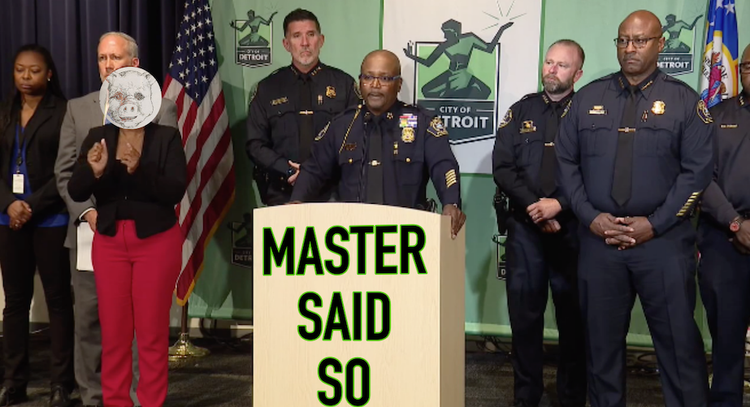
Black strawboss and probot Police Chief James White released a statement Tuesday describing the Burks shooting as "truly a tragic event."

"The Department will continue to advocate for greater resources for the mental health community and will take every opportunity to improve its response to people suffering from mental illness," White said. "We firmly believe that if appropriate mental health facilities and treatment plans had been available, this situation may have been avoided. Regrettably, the DPD remains the primary emergency response service for individuals suffering from mental health emergencies."

In previous statements, White has said publicly that the officers involved in the Burks situation appeared to have followed their training, although he stressed letting the investigation, which is being conducted by Detroit Police and Michigan State Police, run its course.

During the probe, the five officers who pulled their triggers have been placed on administrative leave, per department policy.

Fieger said the police version of events is “propaganda” designed to mislead the public. Burks has no criminal records or arrests. [MORE]

The police chief claimed that the knife Porter had was 8 inches. Attorney Fieger however, said it was a mere foldable pocked knife with a 3 inch blade. Feiger also stated that Porter was “a tremendous distance” from police when he was executed by them. Specifically he said Porter was an estimated 46 feet from the cops when they shot him. He described it as an execution by “firing squad.”

Feiger said Porter was lifting up his arms when he was shot. He also confirmed that police also tased him. The attorney said after shooting the man 38 times the cops handcuffed his corpse in the street. Police then inexplicably took the body to the hospital,. Fieger said the police chief should explain why the body was dropped off there without telling doctors or medical staff what occurred.

Feiger said there should be at least 5 body camera videos and private “ring camera” camera video that police confiscated after the incident.

Feiger said he was treated worse than an animal. [MORE]

Fieger explained on Tuesday there were several other, less-deadly, options officers could have chosen when they encountered Burks in the street carrying the knife in his right hand.

"You could've shot him with a tranquilizer like they'd have done with a wild animal," Fieger said. The attorney said White's claim that the officers followed their training wasn't true, adding: "All I saw on that video was an officer reaching out his hand ... and then they shot (Burks)."

According to the lawsuit, "Mr. Burks' mental illness often caused psychosis. He saw hallucinations and heard voices that were not there. During one of his hospitalizations, Mr. Burks thought there was a squirrel living inside of him. His efforts to extricate the squirrel were to no avail.

"When Mr. Burks was getting regular, effective treatment, he could respond normally," the suit said. "He enjoyed dancing and listening to music like most 20-year-olds.

"When his illness manifested, Mr. Burks became paranoid and many times felt threatened if seeing or hearing things that were not there," the lawsuit said. "When these flare ups of his disease occurred, Mr. Brooks was taken to the hospital by either family or the police. His medications were often adjusted and re-administered."

REMIXED AND EDITED BODYCAM FROM ONE OF THE “NUMEROUS OFFICERS” PRESENT.

The day before his death, "Mr. Burks arrived at the family residence agitated and with a pocketknife in his possession," the lawsuit said. "Mr. Burks' mother told him he could not come into the home with a pocketknife. She called police to request that they help get her son safely to the hospital for treatment. This request was not unusual because the DPD were very familiar with Mr. Burks and have assisted with taking Mr. Burks to the hospital on several prior occasions."

Burks left the home before officers arrived, the suit said. Then, at 4 a.m. on Oct. 2, "Mr. Burks returned to the residence," according to the lawsuit. "He was told he could not return with the pocketknife. Worried about his mental health, Mr. Burks' brother dialed 911."

Four days after the incident, Fieger announced plans to file a lawsuit, but he had to wait until a Wayne County Probate Court judge appointed Burks' mother, Quieauna Wilson, as the estate's representative. Fieger said Tuesday that process had been completed, and added he's considering also filing a federal civil rights lawsuit.

Liberal LA Puppeticians Willing to Pay for Cops Right to Remain Violent: Approve $50M to Cover Settlements for Murdering 4 People and Paralyzing Another in Police Funding Rebate

From [HERE] The Los Angeles County Board of Supervisors have approved a total of nearly $50 million in payments to settle four lawsuits and one legal claim alleging misconduct by sheriff’s deputies in incidents that left four men dead and one paralyzed.

Two of the cases involved how department personnel dealt with people experiencing a mental health crisis.

One of the men died after being tased and beaten by deputies, according to his family’s lawyer. Another was paralyzed after being shot in the back. In both incidents, parents called 911 for help with children experiencing a mental health crisis. And in both incidents, deputies used force inside the men’s own bedrooms.

One settlement settled a suit over the high-profile killing of Andres Guardado. Another resolved a claim regarding a bystander who was shot and killed during a shootout. The fifth payout settled a case involving a man who died in custody.

“This is what a mindblowing lack of accountability looks like,” ACLU attorney Andres Kwon said. “The financial cost is extraordinary, yet it pales in comparison with the human cost.” [MORE]

Lack of Training and Discipline [not the right to attack people] Caused White Sonoma Cops to Fatally Shoot David Peláez-Chavez After He Surrendered, was Hunched Over and Not a Threat. Suit Filed

From [HERE] Sonoma County’s poor supervision, training and disciplining of sheriff’s deputies and a “code of silence” around their use of force contributed to the fatal shooting of David Peláez-Chavez by Deputy Michael Dietrick, a federal lawsuit alleges.

Family members of Peláez-Chavez, who was killed on July 29 after a 45-minute chase through rough terrain, allege his civil rights were violated in the shooting.

The 15-page lawsuit, filed Monday in U.S. District Court Northern District of California, seeks unspecified damages from Sonoma County and Dietrick.

“What’s in doubt and what we alleged is whether there was any possible justification for the killing,” civil rights attorney Izaak Schwaiger, who represents the plaintiffs, said Monday.

A spokesperson for the Sheriff’s Office said officials would not comment on the lawsuit and would respond to its allegations in court. Sonoma County’s chief spokesperson, Paul Gullixson, did not respond to voicemails seeking comment.

The lawsuit also accuses Sonoma County of encouraging excessive force, inadequately training deputies, hiring staff with problematic histories and maintaining poor procedures to report and investigate deputies who misbehave.

“Despite us raising this issue again and again in litigation, pressing little has been done to address it,” Schwaiger said.

Peláez-Chavez was shot three times by Dietrick, who, along with Deputy Anthony Powers chased the 36-year-old farmworker for 45 minutes over rugged terrain near Geyserville on July 29.

Authorities said a barefoot Peláez-Chavez fled into the woods after he tried to break into a home and then stole two vehicles in Knights Valley.

Powers is not named in the lawsuit. Schwaiger noted that Powers attempted to deescalate the situation by trying to communicate with Peláez-Chavez in Spanish.

“I think he was practicing proper police tactics,” Schwaiger said of Powers.

Peláez-Chavez was holding a hammer and a garden tiller when the deputies caught up to him and he appeared to be hunched over when Dietrick shot him, according to video footage captured on the deputies’ body cameras.

According to the lawsuit, one of Dietrick’s bullets struck Peláez-Chavez in the head.

Officials have said Peláez-Chavez did not obey the deputies’ orders to drop what he carried and in his final moments he picked up a rock and made a motion to throw it at the deputies. Still, others who have viewed the footage dispute that claim and say the video is not definitive.

“David’s death was unnecessary,” his family’s lawsuit states. “While his behavior was strange and erratic, he posed no more than a hypothetical threat to anyone. Despite his bizarre behavior, at no time did he try to hurt a soul. He was plainly in an altered mental state — whether because of drugs or because of a mental health crisis is unknown at this time. He was barefoot, exhausted, and had nowhere to go. Time and distance were on the deputies’ side. Deadly force simply was not an option.”

The complaint alleges that Sonoma County policy makers encouraged “a code of silence among deputies, employees, and supervisors” around use of force cases. The complaint goes on to allege that no sheriff deputy has ever reported a colleague for using excessive force and no deputy has been disciplined for using excessive force.

Schwaiger, who has sued Sonoma County over most of deputy’s most harmful or deadly actions against citizens in recent years, said in an interview that the statements were backed by information he’d learned during discovery processes in prior lawsuits.

He provided The Press Democrat with discovery documents from a separate lawsuit he is conducting on behalf of Jason Anglero-Wyrick, a Graton man badly injured by a sheriff K-9 unit in April 2020.

In those documents, the county reported 1,513 uses of force by sheriff’s deputies from December 2016 to April 2022. While all those incidents underwent an administrative review, sheriff’s officials claimed they were unable to identify how many were found to be in violation of departmental policy.

In another set of discovery responses, the county conceded it had not found any deputies in violation of use of force policies from December 2016 to April 4, 2020, the date of the Angelo-Wyrick incident. During the same time frame, officials stated no deputies had reported unreasonable use of force by their colleagues.

“Putting it all together paints a really gnarly picture,” Schwaiger said. “You have (more than a thousand) uses of force and no discipline for it.”

Schwaiger contends a sheriff’s deputy has never been disciplined over a use of force violation.

In two high-profile cases, Sheriff Mark Essick, who today is beginning his last two months in office, has called for officers to be fired following controversial uses of force, but it’s not clear if discipline was ever imposed.

In a 2016 use of force against Sonoma Valley resident Fernando Del Valle, Essick, then a captain, investigated and found then-deputy Scott Thorne violated department policy. He moved for his dismissal from the department and later testified against him in a criminal trial.

The Press Democrat reported Thorne was fired, but department officials declined to confirm his termination at the time. The deputy was on a probationary period when he shocked a man in his bed with a stun gun and later hit him with a baton.

On Nov. 27, 2019, Bloomfield resident David Ward died when Deputy Charles Blount pulled him from his own car using a now-banned choke hold and another officer shot him with a stun gun. Essick quickly called publicly for Blount to be fired, but the deputy retired with his pension before being dismissed. [MORE]

A Store Owner said Andres Guardado 'Got Down on His Knees and Surrendered w/his Hands Behind his Head but Cops Shot him 5X in the Back. Then Cops Removed Video.' LA County to Pay Teen’s Family $8M

AFTER THE SHOOTING COPS REMOVED CAMERAS AND SNATCHED VIDEOS AND THEN CAME BACK WITH A WARRANT. NATURALLY, NOW THEY CLAIM NOTHING WAS ON THE VIDEO AND EXPECT PEOPLE TO BELIEVE THEM. THIS IS THE OPPOSITE OF DUE PROCESS, NO PROCESS BEFORE DEPRIVATION OF RIGHTS AND PROPERTY. [MORE] AND [MORE]

From [HERE] Los Angeles County has agreed to pay an $8 million settlement to the family of Andrés Guardado for the wrongful death of their son.

"While the settlement reached with the County of Los Angeles brings closure to more than two years of the civil lawsuit, it does not bring with it peace to our family or justice for our son, Andrés," said Cristobal Guardado. "Peace and justice will only come when the current investigations are completed, and Deputy Miguel Vega is held criminally responsible for Andrés' death."

Andrés Guardado was an 18-year-old Latino man shot in the back and was killed by a Deputy Sheriff from the Los Angeles County Sheriff's Department near Gardena and West Compton on June 18, 2020. Guardado ran from two uniformed police officers into an alley, where he died after being shot by deputies. Seven shots were fired and Guardado was hit in the upper torso. Store-owner Andrew Heney reported that several cameras at the scene, including a digital video recorder that stored surveillance footage, were taken and destroyed by police.

Guardado’s death prompted an immediate uproar and mass protests. The victim’s family demanded an investigation and the release of all information on the case. At first, the authorities refused to reveal the results of the official autopsy. Guardado’s parents responded by requesting an independent examination of the body. After those results were made public following days of protests, the local coroner relented and, against the wishes of the Sheriff’s Department, shared its conclusions and it confirmed what the family’s autopsy had already found: five chillingly precise gunshot wounds on Guardado’s back.

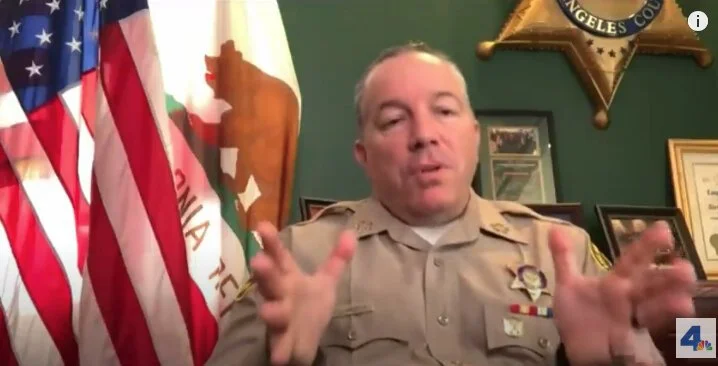
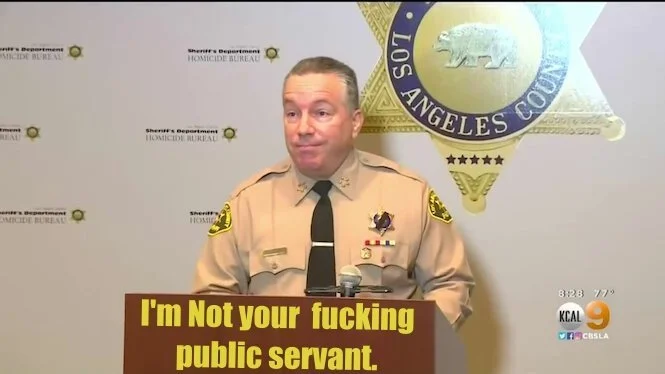
What followed paints a grim picture of the opacity that still surrounds the use of force in Los Angeles, a city with a long history of police brutality. After the results of both autopsies confirmed the killing of a young man who was clearly running for his life, Los Angeles County Sheriff Alex Villanueva went on the defensive. “These things take time, they are not done overnight,” Villanueva said. He then blamed accounts of potential witnesses from social media for slowing down the process, and insisted that “everyone who says that means that’s another potential witness that we have to interview.”

Guardado’s family would have none of it and demanded answers. Andrés, they said, did not own a gun. “My son wanted to be a doctor,” Elisa Guardado said. “He wanted to take care of me. Who’s going to take care of me now?”

Police were reportedly out on patrol when they saw Guardado talking to someone in a car blocking a driveway, so they stopped their vehicle.Police say that Guardado ran away and allegedly produced a firearm at some point in the chase, although this is disputed by his family and employer. The chase was taken southbound on Redondo Beach Blvd. and through a nearby alleyway.

At around 5:53 p.m., Guardado was shot at six times by one or multiple sheriff's deputies and hit in the upper body. Guardado died on scene. Store-owner Andrew Heney stated that Guardado "got down on his knees and surrendered with his hands behind his head but was still shot seven times in the back." The shooting occurred near a business located in the 400 block of Redondo Beach Boulevard near S. Figueroa Street. A gun was reportedly recovered on the scene. The gun recovered at the scene was a "ghost gun" (a term used to describe an illegal firearm with no serial numbers imprinted on the gun) with a standard capacity magazine. Both of those are felonies in the state of California. It was unclear what "prompted the use of force" and what Guardado was "suspected of" to initially prompt the chase.

Heney stated, "the police came up, and they pulled their guns on him and he ran because he was scared, and they shot and killed him. He’s got a clean background and everything. There’s no reason." A witness on the scene stated, "I turned around and saw two male white officers running up into the body shop where not even less than a second later I heard rapid gunshots, [I heard] about four to five shots fired [and] never heard them say ‘freeze’. I never once heard them say 'stop.' Nothing like that."

The deputies reportedly were not wearing body cameras. Lt. Charles Calderaro stated that deputies "are hoping to find surveillance video from nearby businesses."[8] The sheriff's officers are accused of destroying several cameras at the scene and taking possession of the DVR that stored footage filmed by the surveillance cameras. In an interview, Heney is quoted as saying that the deputies "illegally got into everything, then they had the place locked down and then they got the warrant.". [MORE]

According to the family's attorneys, Guardado proceeded to walk away from the deputy and his partner before opening fire. The attorneys said they shot him multiple times in the back.

The Federal Bureau of Investigation and the Los Angeles County District Attorney's office are still investigating the fatal shooting.

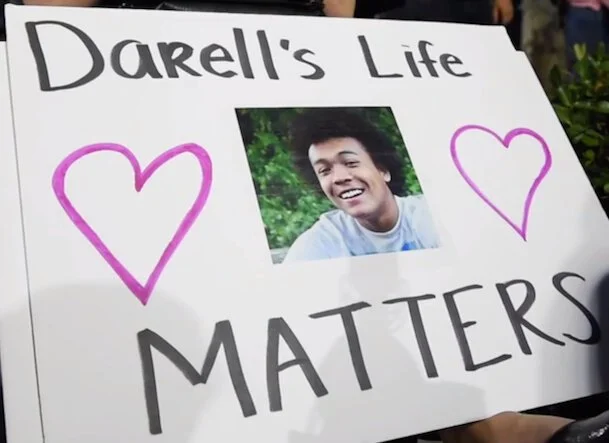
Gangster Sacramento Government Shot Darrell Richards to Death While His Hands Were Up and Then Empanelled an Overwhelmingly White Jury to Decide His Parents Wrongful Death Case. Mistrial Declared

From [HERE] The jury returned a hung verdict in the trial of the police shooting and killing of Darrell Richards, a 19 year old Black man yesterday after three days of deliberation.

Senior U.S. District Judge John A. Mendez declared a mistrial after the jury told him they could not reach a unanimous verdict.

The wrongful death lawsuit against the City of Sacramento and the Sacramento Police Department lasted just over two weeks.

Vang, Richards’ mother, said she doesn’t feel good about knowing she’ll have to go through another trial but is thankful that she has the chance to.

“I feel good to have the opportunity to keep fighting thanks to the one juror who believed in the truth and not the lies,” Vang said.

Melissa Nold, one of the attorneys for Richards’ parents, said the  jury pool really lacked diversity, even more than usual. 

“We had lots of people with close police connections, including at least one of the jurors that was seated for the trial,” Nold said. “It’s very hard to convince people that marry and date police to see fault in them.”

Vang thinks the jury already had their minds made up before the trial began.

“At the end of the day it didn’t matter how good or how many facts were proven. It all lies in the hands of the jury and I knew the majority were undercover bias,” Vang said. “A lot of people are for the police until it happens to one of their loved ones.”

Richards was shot 10 times by police after running from police and an hours-long standoff that ended around 3:00 a.m. in the backyard of a Curtis Park home  on Sept. 6, 2018. Dispatchers received a call about a man wearing a mask and pointing a firearm at people along Broadway near Tower Cafe. “Decedent was not holding a firearm at the time that he was shot to death," the suit states.“I had a bad feeling from the gate because of the selection of the jury we had,” Vang said.

According to the complaint:

Sacramento Police Officers watched Darell jump a fence and then enter a backyard outside of their view. At the same time, a California Highway Patrol (hereinafter CHP) aircraft was on scene assisting the search. From the air, CHP Officer Young was able to observe Darell jump the backyard fence, cross through the backyard and disappear under the cover of tree. The CHP aircraft tracks via heat sensing technology from an elevation of approximately 6,000 feet in the air. During the same timeframe, Sacramento Police Department S.W.A.T. team was deployed to the area and set up a one block perimeter with the assistance of a California Highway Patrol (CHP) aircraft. CHP Officer Young assessed the scene from the air and determined that the one-block perimeter was good, because he did not observe Darell leave that block. Sacramento Police Officers were holding positions around the small, approximately 10 parcel block, to ensure that Darell did not leave that one-block area.

Defendant Lieutenant Sood held a briefing to inform officers of their plan to locate Darell. Prior to Lt. Sood’s briefing, Sacramento Police Officers located Darell’s backpack, which he discarded while running from officers. The backpack contained identifying information, a possible suicide note and a receipt from ‘Big 5 Sporting Goods’ which recorded the sale of a Sig Sauer pellet gun purchased earlier the same day.

The Defendant Officers were informed prior to initiating the search that their fellow officers had found Darell’s backpack and the contents included within it, including the receipt for the pellet gun. Officers were informed about Darell’s possible suicidal ideation and his recent police contacts, which revealed potential organic or drug induced mental health issues.

The Defendant Officers made no efforts to contact and/or involve Darell Richards’ family, despite knowing his identity, address and potential for self-harm.

Defendant Lt. Sood intentionally did not summon assistance from other departments or agencies. Indeed, Lt. Sood made no efforts to obtain the 24-hour a day on-call Crisis Intervention Team, or any mental health experts, despite finding documents in Darell Richards’ backpack indicative of a potential suicidal subject and evidence that Darell purchased a pellet gun earlier the same day. [MORE]

At approximately 3:15 a.m., witnesses saw Officer Yesenia deploy a K-9 unit into the backyard of 2017 1st Avenue, without issuing a warning. The K-9 Officer went into the backyard, urinated and went back to the Officers. Officer Yesenia deployed the K-9 Officer a second time. This time according to witnesses, the K-9 Officer appeared to locate someone under the backyard deck and then returned to the Officers. Nevertheless, Officers entered the yard without announcing themselves or providing Darell an opportunity to surrender.

At this point, Darell had been hiding for approximately three hours. The police had made no attempts, whatsoever to contact him. Inexplicably, none of the officers on scene attempted to make contact with Darell, despite knowing his name and that he wrote a suicide note and was carrying a pellet gun. Moreover, none of the officers on scene attempted to contact Darell’s family, despite knowing that he had recent police contact where the family informed officers they suspected the police contact was due to a mental illness. Furthermore, none of the officers on scene attempted to contact Darell via his cell phone or social media accounts or issue Darell any commands or orders to surrender. Perhaps most egregious, none of the officers on scene identified themselves as police officers or warned Darell that they intended to deploy a police K-9 into the yard.

Immediately thereafter, numerous SWAT Officers, including Defendants Edgerton and Cox, and Officers Yesenia and Tiner entered the backyard in stealth mode and rounded the corner of the home. As they were midway through the yard, Officer Tiner heard a noise and pointed his 1000 lumin rifle light at Darell’s face, ostensibly blinding Darrell, and screamed “show me your hands” while Defendant Cox simultaneously yelled “drop the gun.” The team never assigned specific officers to be the point of contact and deliver commands, which resulted in both officers providing contradictory commands at the same time, after failing to identify themselves as police officers.

Within seconds, Sgt. Todd Edgerton and Officer Patrick Cox opened fire, striking Decedent multiple times in the head and body. Mr. Richards died as a result of his injuries.

None of the officers’ body worn camera show what Darell was doing at the time of the shooting. Defendant Edgerton’s body worn camera would have shown what Darell was doing when he was shot, but he conspicuously failed to activate it during the course of this incident.

Darell Richards had a gunshot entry wound in the palm of his right hand, indicating that he had one or more hands raised during the shooting.

None of the officers on scene ever announced themselves or identified themselves as police officers at any time in the three hours prior to shooting and killing Darell Richards. In fact, no one from the Sacramento Police Department ever notified Darell Richards of the heavy police presence prior to sneaking up on him and shooting him.

Neither of the Defendant Officers identified themselves as police officers or warned Darell Richards of their intent to use deadly force, prior to shooting and killing him.

To date, there has been no disciplinary decisions made regarding this incident and the statute of limitations for employee discipline has passed.

Attorneys for Richards’ parents argued that police did not follow protocols and procedures during a SWAT Team situation.

“The cops sat there on the stand under oath just lying trying to justify their evil act,” Vang said

Attorneys for the City and police never could provide any videos of their claim of Richards pointing a pellet gun at officers.

Deputy City Attorneys Sean Richmond and Deputy City Attorney Matthew Day told the Sacramento Bee that they appreciated the jury’s work on the case.

“We understand it was a tough case to get a verdict on … and respect the conclusion of the jury," Richmond said.

Nold said it was frustrating and emotionally draining to have to take this case back to trial.

“It definitely is, civil rights work isn’t for the faint of heart. It’s really hard to explain to the family because they sat through the trial and felt it went a different way,” Nold said.

Vang thinks the jury already had their minds made up before the trial began.

“At the end of the day it didn’t matter how good or how many facts were proven. It all lies in the hands of the jury and I knew the majority were undercover bias,” Vang said. “A lot of people are for the police until it happens to one of their loved ones.”

Nold said her team will be retrying this case as soon as possible “to get the justice and accountability Darell deserves.”

“They already silenced my son, they will not silence us. They recklessly took his precious life then tried to criminalize his character,” Vang said. “The fight continues and doesn’t end here.”

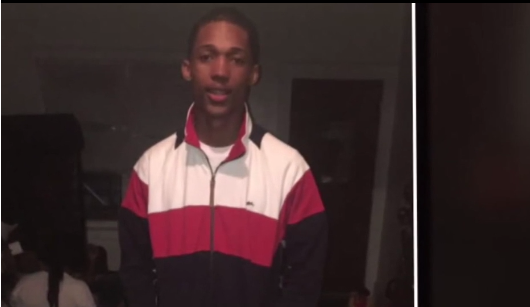
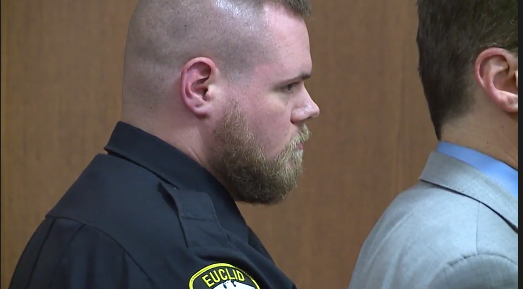
A White Cop Believed a Car was "Suspicious” b/c a Black Man was Sleeping in it. So He Tried to Drag Him Out and then Shot Him to Death. Cuyahoga Jury Awards Luke Stewart's Family $4.4M

From [HERE] A Cuyahoga County jury has awarded a multi-million dollar judgment to the family of a man shot and killed by a Euclid police officer. 

Officer, now Sgt. Matthew Rhodes was cleared of criminal wrongdoing, but this afternoon a jury decided the officer and city were liable for his wrongful death.

The jury awarded the family of Luke Stewart $4.4 million in compensatory damages. 

His family says although the money won’t bring back their loved one, they believe it sends a strong message to the Euclid Police Department.

“I think that Mr. Rhodes got a taste of his own medicine. Stop doing wrong, play by the rules,” said Luke Stewart’s mother, Mary Stewart, after the court hearing downtown at the Justice Center.

The family of the 23-year old says after five years of fighting the legal system, they believe justice has been served. 

Investigators say in March 2017, officers responded to a suspicious vehicle and found Luke Stewart asleep inside his car. 

They say an officer saw a marijuana cigarette and drug paraphernalia. An investigation revealed when Officer Rhodes tried to pull Luke Stewart, who wasn’t armed, from the vehicle to question him, Stewart put the car in drive.

Officer Rhodes said he was hanging onto the vehicle and eventually jumped inside, where he punched Luke Stewart, shot him six times with a taser, then finally three times with his gun, killing him. 

The Stewart family never believed deadly force was necessary.

“It took this family five years of pain and fight to get to this point where members of the jury saw the truth and did what was right to hold this officer accountable for his wrongdoing and we’re grateful to them for doing that,” said Sarah Gelsomino, one of the Stewart family’s attorneys.

Luke Stewart’s mother says the last five years have been difficult and she would exchange the $4.4 million judgment to have her son back.

“He has two boys, they’re 9 and 11. They’re at the age that they understand what’s going on and they really don’t like it at all. They feel Rhodes killed their dad for no reason and they miss their dad, they miss being around him,” she said.

The city of Euclid issued a statement, saying they are disappointed with the outcome of the trial and they’re evaluating their next course of action. 

Black Man’s Lawsuit says White Cops Broke Into His Porch, Piled On Top of Him and then Punched and Choked Him to Make False; Arrest, Imprisonment and Prosecution in Lansing, a White Liberal city

From [HERE] Lansing police officers choked, beat and asked medical providers to administer ketamine to a man during and after a May 2020 arrest, according to lawsuit filed Monday in federal court seeking at least $850,000 in damages.

Glenn Wayne Stewart, of Lansing, in a lawsuit filed Monday, Oct. 31, in the United States District Court for the Western District of Michigan, accused officers Anthony VandeVoorde, Joseph Bacigal, Brandon Russell, Alina Harrington and Jason Murdock of acting illegally when they arrested him on the screened-in porch of his North Martin Luther King Jr. Boulevard residence on May 15, 2020, after claiming he assaulted his sister.

Court records show Stewart was charged May 15, 2020, with resisting and obstructing a police officer, and assault and battery. Officials set his bond at $5,000, which he posted three days later. A preliminary examination took place about four months later on Sept. 17, 2020, at which time Judge Kristen Simmons dismissed both charges.

In the lawsuit filed on Stewart's behalf by attorneys Brendon Basiga and J. Nicholas Bostic, Stewart claims officers used excessive force in violation of his Fourth Amendment rights, failed to prevent the use of excessive force, invaded his privacy, committed a false arrest, subjected him to false imprisonment and malicious prosecution, and said the city of Lansing failed to train and supervise its officers.

Stewart is asking for least $25,000 against each officer for each of six counts in the lawsuit. The city of Lansing also is named in the lawsuit and Stewart is seeking at least $100,000 from the city. In addition to physical injuries and the humiliation of the incident, he claims he has also developed anxiety, particularly when he sees police officers.

"(Stewart) was injured to the extent that he suffered the anxiety, stress, and worry associated with facing criminal charges carrying a possible period of incarceration and out-of-pocket expense," the lawsuit added.

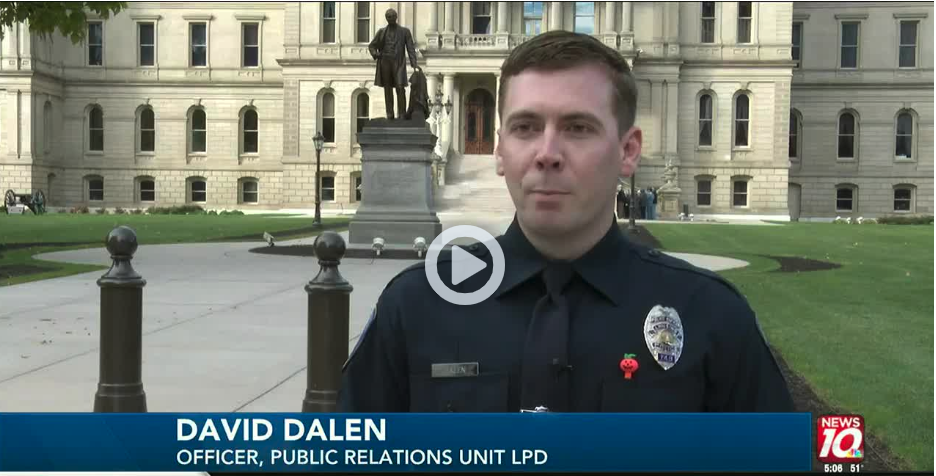
LPD Public Information Director Jordan Gulkis said the city has not been served with the lawsuit, and officials can't comment.

Stewart's suit claims police responded to his home about 12:30 a.m. May 15, 2020, after a neighbor called police claiming Stewart was "being loud and making threats." VandeVoorde and Bacigal began speaking with Stewart, who was standing on his porch next to his sister.

Police used the determination that Stewart assaulted his sister as a reason to break open the enclosed porch's door and detain the man. The suit says police took Stewart to the floor and held his limbs and torso as they struck his neck and ribs. At least one other officer choked him, he said, and his nose began to bleed, soaking his protective COVID-19 facemask in blood.

"Defendants were yelling at plaintiff to put his arms behind his back while he was already on the floor but he was unable because at least two of the defendants had their body weight on his back and his arms were under him," the suit claims.

After being arrested and taken to police headquarters, Stewart complained about injuries and was transferred to a hospital emergency room. While at the hospital, the lawsuit said, Harrington prepared a petition for a "Person Requiring Treatment" that included false and misleading statements.

Stewart had refused medical treatment, according to the lawsuit, but the suit mentions "statements" made by the man as the reason for "chemical restraint."

Basiga did not respond to an immediate request for comment regarding the content of those statements.

"The Person Requiring Treatment petition was provided so the medical staff could give a chemical restraint to Plaintiff and treat Plaintiff without his consent," the lawsuit said, noting the restraints used were the drugs Ketalar and Ativan, also known by their generic names ketamine and lorazepam. The medications left him unable to move and leave the hospital.

When asked whether police officers prepare such petitions, Gulkis said "the police department does not dictate treatment of patients."

He was also placed on a respirator while having difficulty breathing, sustained a contusion on his hand, had multiple abrasions and blood in his urine.

"Plaintiff’s blood work returned with an elevated level of a protein that develops when blood clots break apart and is associated with pulmonary embolism," the lawsuit said. A pulmonary embolism is a sudden blood clot in an artery within a lung. He was discharged from the hospital the next morning.

Black Neighborhood Leader in Kansas City Begs Her White Liberal Masters for Better Treatment After Cops Dragged Her Out of a Car to En-Force Their Traffic Code

From [HERE] A Black Kansas City neighborhood leader says she was racially profiled by an Independence police officer, who she says used excessive force during a traffic stop last month.

Rachel Riley was pulled over on October 4. The 57 year old has been president of Kansas City’s East 23rd St. Pac Neighborhood Association for eight years. She’s been involved with the organization for two decades.

According to Riley, Officer Brett Schmidli reached into her truck, pulled her out and slammed her against the vehicle.

“My face just bounced,” she said in a phone interview Tuesday recounting the incident. “I’m going ‘What did I do? What did I do?’”

She was arrested and taken to jail on a railroad crossing violation and failing to have insurance information. A police report also lists interfering with police.

A court records check shows no charges have been filed. On Thursday, protesters plan to gather in Independence to express their outrage. “What we’re saying is stop the racial profiling,” Riley said.

“Stop the racism. Stop the discrimination.”

Officer Jack Taylor, a spokesman for IPD, said answers about Riley’s allegations concerning racial bias “would come from an internal investigation and to this date, there has not been a complaint made to initiate that investigation.”

He said the officers participate in annual training on racial profiling and bias. ”The Independence Police Department does not permit racial profiling or racial bias when deciding to take law enforcement action in a given incident,” Taylor said.

According to an Independence Police Department report, Schmidli saw Riley go through a railroad crossing as the warning arms started to move down. He activated emergency equipment and she stopped.

“I observed the driver appeared somewhat sluggish or tired,” the police report said. She didn’t have identification on her, but he was able to confirm the driver as Riley, the police report said. It also said she was “irritable during the stop and did not appear to want to speak much with me.”

He wrote the summons and called for backup. He and another officer asked Riley to exit the vehicle so they could check her eyes to make sure she was not impaired.

The police report said Riley was uncooperative and stated she feared for her safety. “I grabbed on her right arm and pulled her from the front seat,” the police report said.
A computer check came back with no warrants. Schmidli wrote in his report that he was unable to administer a field sobriety test because Riley was uncooperative.

She was taken to the detention center. The officer’s report said he gave Riley 20 commands during the encounter including warnings that she would be arrested if she did not comply.

Riley said she was stunned the traffic stop escalated from a ticket to being grabbed out of the vehicle and taken to jail. She also said she was violently searched in sensitive areas by a female officer.

“I’m going ‘Are you kidding me? Are you kidding me?’” she said. After she was slammed into the vehicle, she said she just started praying to God.
In the weeks since, she has felt traumatized and found it difficult to drive without being afraid. She believes her civil rights and due process rights were violated. “We want justice,” Riley said.

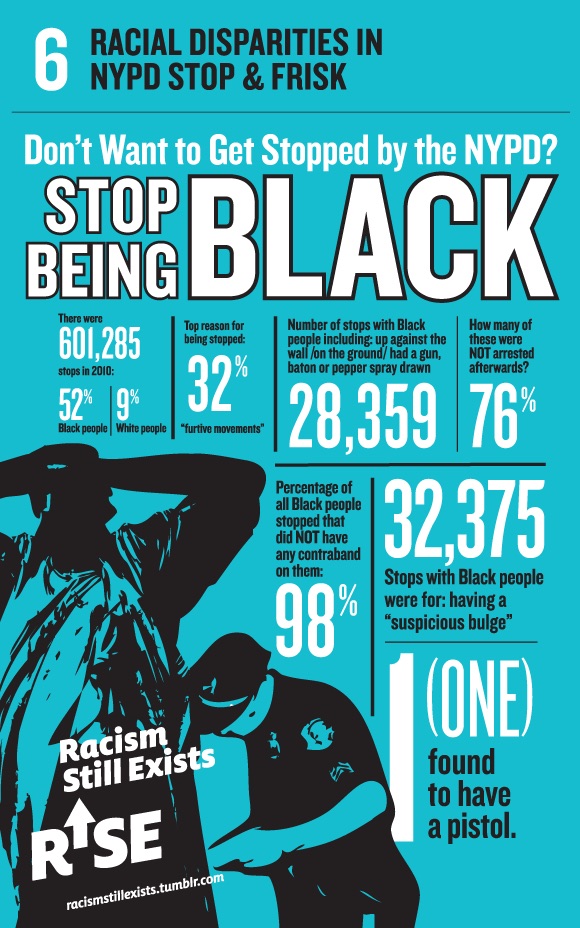
The police department stops, searches and arrests Black drivers at a disproportionate rate, according to a report released earlier this year by the Missouri Attorney General’s Office. That data showed in 2021, Black motorists accounted for 18% of all traffic stops. Missouri is 11.8% Black, according to the U.S. Census. Black and Hispanic drivers were searched 8.5% and 7.9% of the time, respectively, compared to 6.8% of white motorists.