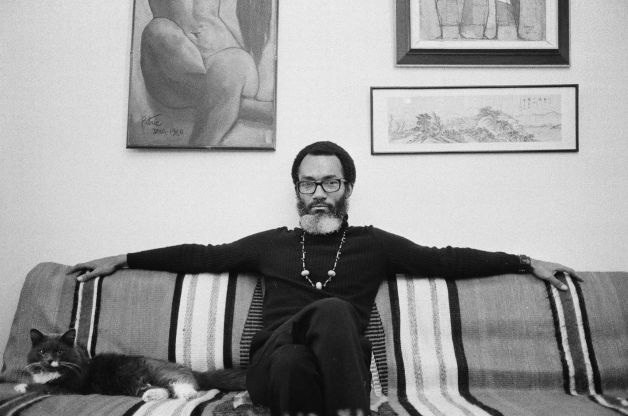
Black Men Exonerated in Murder of Malcolm X Accept $36M Settlement

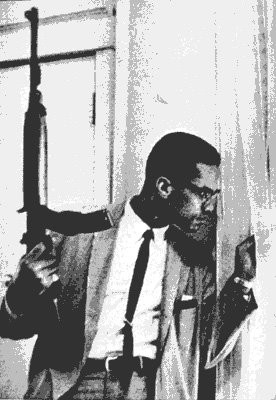
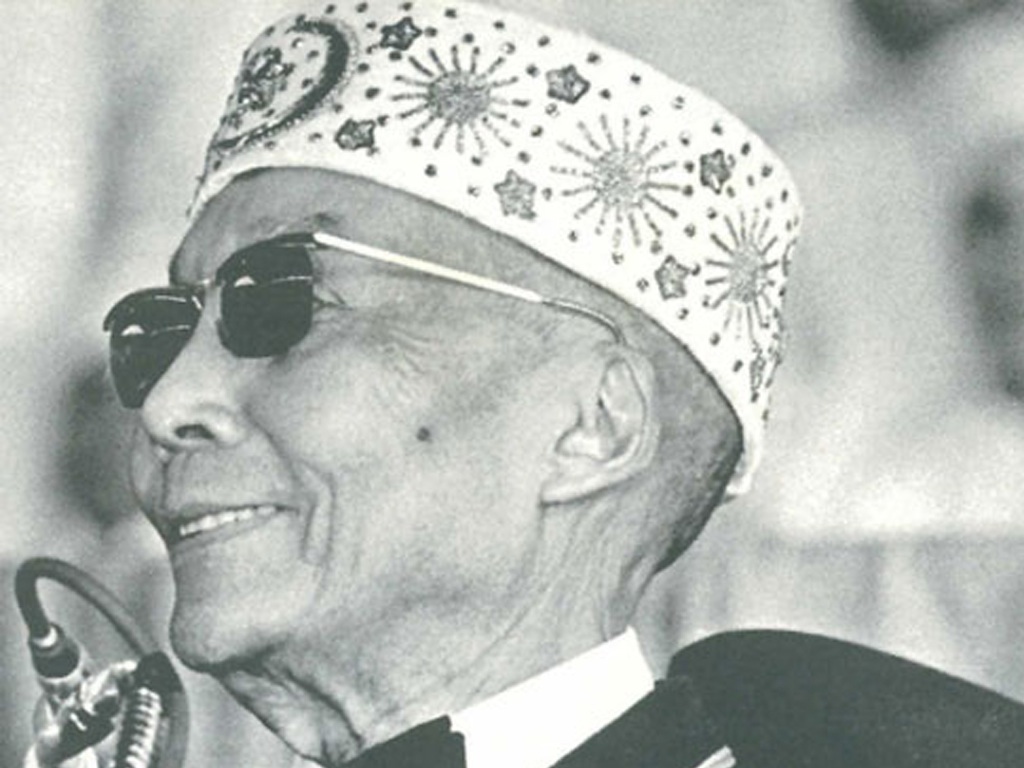
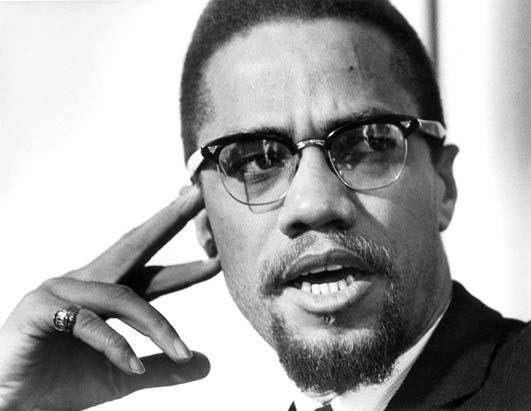
From [HERE] and [MORE] The city of New York is settling lawsuits filed on behalf of two men who were exonerated last year for the 1965 assassination of Malcolm X, agreeing to pay $26 million for the wrongful convictions which led to both men spending decades behind bars.

The state of New York will pay an additional $10 million. David Shanies, an attorney representing the men, confirmed the settlements on Sunday.

“Muhammad Aziz, Khalil Islam, and their families suffered because of these unjust convictions for more than 50 years,” said Shanies said in an email. “The City recognized the grave injustices done here, and I commend the sincerity and speed with which the Comptroller’s Office and the Corporation Counsel moved to resolve the lawsuits.” [MORE]

Feds Charge Black Philadelphia Deputy with Selling Guns, including 2 used in Shooting Near a High School [Contrary to liberal propaganda few criminals lawfully purchase guns]

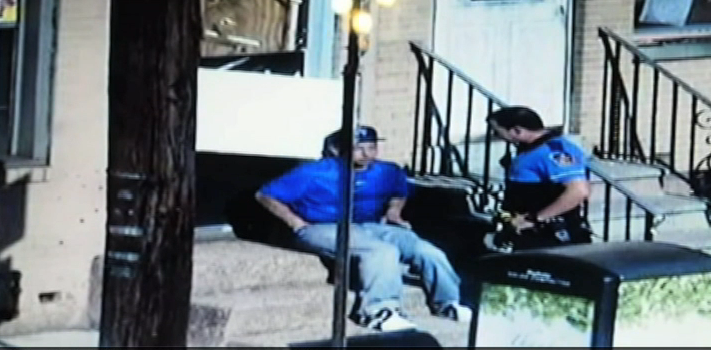
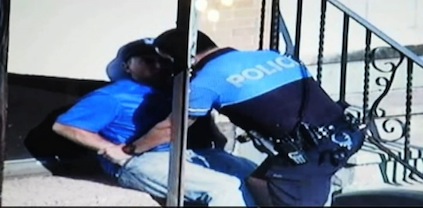
From [HERE] A deputy with the Philadelphia Sheriff's Office has been arrested and charged with trafficking and selling guns, according to the United States Attorney's office for the Eastern District of Pennsylvania.

Samir Ahmad, 29, of Philadelphia, was taken into custody on October 19 by federal agents.

Court documents say two of the firearms Ahmad sold on Oct. 13 were traced by law enforcement as being used in a deadly ambush shooting after a football scrimmage at Roxborough High School two weeks earlier.

The Sept. 27 shooting killed 14-year-old Nicolas Elizalde of Havertown, Pa. and left four other teenagers wounded.

Officials said Ahmad was employed with the Philadelphia Sheriff's Office beginning in Feb. 2018. He was terminated on Oct. 19 and is in custody.

The FBI said the case began back on April 27.

One of their informants was able to purchase a revolver from Ahmad. The transaction was allegedly recorded on an audio device.

According to court documents, the same informant met again with Ahmad on Oct. 13. The FBI said Ahmad sold him the two semi-automatic pistols used in the Roxborough shooting and ammunition.

During the exchange, the informant said that he was "illegal" and would "get deported" if he was caught in possession of a BB gun.

Officials said Ahmad replied, "You don't got to worry about none of that."

Images were provided from a video recording device planted on the informant.

We also see Ahmad receiving payment for the transaction as well. Ahmad made $3,000 from the sale of the firearms, according to investigators. [MORE]

Black Man Murdered by Firing Squad: $50M Lawsuit says Cops Shot at Porter Burks 38 Times from "Long Range." Detroit Police Refuse to Provide Video, Cops' Names and The Dependent Media Conceals Story

From [HERE] Attorney Geoffrey Fieger filed a $50 million wrongful death lawsuit Tuesday against the city of Detroit and five unnamed Detroit Police officers in connection with the Oct. 2 fatal shooting of 20-year-old Porter Burks, whose mental illness "often caused psychosis," the suit said.

The lawsuit, filed in Wayne County circuit court, claims gross negligence, assault and battery, "wanton & willful misconduct," and a violation of the Americans with Disabilities Act because of Burks' mental illness, which was so severe he often hallucinated, and, during one episode, "thought there was a squirrel living inside him," according to the 18-page filing.

During a press conference in his Southfield office, Fieger, flanked by Burks' relatives, labeled the death "the execution-style killing of Porter Burks," adding: "It's nonsense that something like this could occur in a civilized society." [its nonsense that he thinks this is a civilized society]

Burks, who reportedly suffered from schizophrenia, was killed after a videotaped confrontation with police officers, who repeatedly asked him to drop the small knife he was wielding as he stood many feet away from them. When Burks moved toward the officers, although numerous cops were present, only five of them opened fire, discharging 38 bullets, 19 of which struck Burks, according to an autopsy report from the Wayne County Medical Examiner's Office that was distributed at Fieger's press briefing.

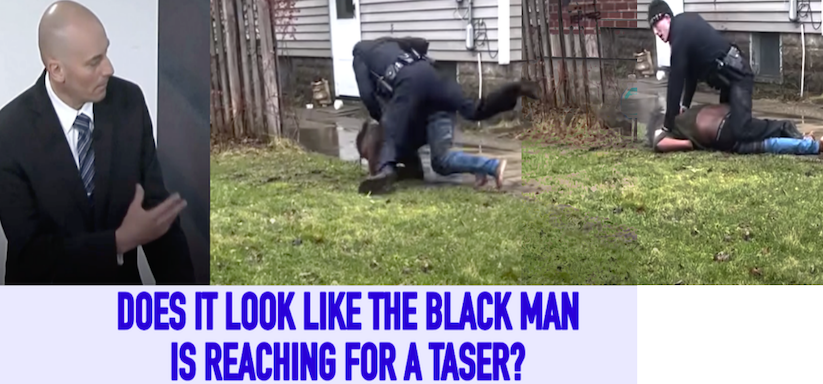
Burks was too far from law enforcement for a taser to be effective, according to the police chief (?)

The autopsy report included a toxicology screen, although the document indicated "part or all of the testing was unable to be performed ... test was canceled due to (quantity not sufficient)."

Fieger said that was "inexplicable," and said he'd never seen that notation on a toxicology report during his career as an attorney. An email to the Wayne County Medical Examiner's Office Tuesday was not immediately returned.

ACCORDING TO FUNKTIONARY:

Probot – a propagandizing programmed robot. A representative from an organization, agency or institution, especially the Internal Revenue Service, Pentagon, State Department, or Blight House, whose assignment is to make prepared statements and answer “cooked” (prepared) questions at news conferences, briefings and the like. A probot is a proxymoron who conveys programmed disinformation in computerized language and bureaucratese jargon. A probot is one who disseminates lies, distortions and convenient mass truths composed by a superior overruling elite. (See: Proxymoron)

Black strawboss and probot Police Chief James White released a statement Tuesday describing the Burks shooting as "truly a tragic event."

"The Department will continue to advocate for greater resources for the mental health community and will take every opportunity to improve its response to people suffering from mental illness," White said. "We firmly believe that if appropriate mental health facilities and treatment plans had been available, this situation may have been avoided. Regrettably, the DPD remains the primary emergency response service for individuals suffering from mental health emergencies."

In previous statements, White has said publicly that the officers involved in the Burks situation appeared to have followed their training, although he stressed letting the investigation, which is being conducted by Detroit Police and Michigan State Police, run its course.

During the probe, the five officers who pulled their triggers have been placed on administrative leave, per department policy.

Fieger said the police version of events is “propaganda” designed to mislead the public. Burks has no criminal records or arrests. [MORE]

The police chief claimed that the knife Porter had was 8 inches. Attorney Fieger however, said it was a mere foldable pocked knife with a 3 inch blade. Feiger also stated that Porter was “a tremendous distance” from police when he was executed by them. Specifically he said Porter was an estimated 46 feet from the cops when they shot him. He described it as an execution by “firing squad.”

Feiger said Porter was lifting up his arms when he was shot. He also confirmed that police also tased him. The attorney said after shooting the man 38 times the cops handcuffed his corpse in the street. Police then inexplicably took the body to the hospital,. Fieger said the police chief should explain why the body was dropped off there without telling doctors or medical staff what occurred.

Feiger said there should be at least 5 body camera videos and private “ring camera” camera video that police confiscated after the incident.

Feiger said he was treated worse than an animal. [MORE]

Fieger explained on Tuesday there were several other, less-deadly, options officers could have chosen when they encountered Burks in the street carrying the knife in his right hand.

"You could've shot him with a tranquilizer like they'd have done with a wild animal," Fieger said. The attorney said White's claim that the officers followed their training wasn't true, adding: "All I saw on that video was an officer reaching out his hand ... and then they shot (Burks)."

According to the lawsuit, "Mr. Burks' mental illness often caused psychosis. He saw hallucinations and heard voices that were not there. During one of his hospitalizations, Mr. Burks thought there was a squirrel living inside of him. His efforts to extricate the squirrel were to no avail.

"When Mr. Burks was getting regular, effective treatment, he could respond normally," the suit said. "He enjoyed dancing and listening to music like most 20-year-olds.

"When his illness manifested, Mr. Burks became paranoid and many times felt threatened if seeing or hearing things that were not there," the lawsuit said. "When these flare ups of his disease occurred, Mr. Brooks was taken to the hospital by either family or the police. His medications were often adjusted and re-administered."

REMIXED AND EDITED BODYCAM FROM ONE OF THE “NUMEROUS OFFICERS” PRESENT.

The day before his death, "Mr. Burks arrived at the family residence agitated and with a pocketknife in his possession," the lawsuit said. "Mr. Burks' mother told him he could not come into the home with a pocketknife. She called police to request that they help get her son safely to the hospital for treatment. This request was not unusual because the DPD were very familiar with Mr. Burks and have assisted with taking Mr. Burks to the hospital on several prior occasions."

Burks left the home before officers arrived, the suit said. Then, at 4 a.m. on Oct. 2, "Mr. Burks returned to the residence," according to the lawsuit. "He was told he could not return with the pocketknife. Worried about his mental health, Mr. Burks' brother dialed 911."

Four days after the incident, Fieger announced plans to file a lawsuit, but he had to wait until a Wayne County Probate Court judge appointed Burks' mother, Quieauna Wilson, as the estate's representative. Fieger said Tuesday that process had been completed, and added he's considering also filing a federal civil rights lawsuit.

Liberal LA Puppeticians Willing to Pay for Cops Right to Remain Violent: Approve $50M to Cover Settlements for Murdering 4 People and Paralyzing Another in Police Funding Rebate

From [HERE] The Los Angeles County Board of Supervisors have approved a total of nearly $50 million in payments to settle four lawsuits and one legal claim alleging misconduct by sheriff’s deputies in incidents that left four men dead and one paralyzed.

Two of the cases involved how department personnel dealt with people experiencing a mental health crisis.

One of the men died after being tased and beaten by deputies, according to his family’s lawyer. Another was paralyzed after being shot in the back. In both incidents, parents called 911 for help with children experiencing a mental health crisis. And in both incidents, deputies used force inside the men’s own bedrooms.

One settlement settled a suit over the high-profile killing of Andres Guardado. Another resolved a claim regarding a bystander who was shot and killed during a shootout. The fifth payout settled a case involving a man who died in custody.

“This is what a mindblowing lack of accountability looks like,” ACLU attorney Andres Kwon said. “The financial cost is extraordinary, yet it pales in comparison with the human cost.” [MORE]

Lack of Training and Discipline [not the right to attack people] Caused White Sonoma Cops to Fatally Shoot David Peláez-Chavez After He Surrendered, was Hunched Over and Not a Threat. Suit Filed

From [HERE] Sonoma County’s poor supervision, training and disciplining of sheriff’s deputies and a “code of silence” around their use of force contributed to the fatal shooting of David Peláez-Chavez by Deputy Michael Dietrick, a federal lawsuit alleges.

Family members of Peláez-Chavez, who was killed on July 29 after a 45-minute chase through rough terrain, allege his civil rights were violated in the shooting.

The 15-page lawsuit, filed Monday in U.S. District Court Northern District of California, seeks unspecified damages from Sonoma County and Dietrick.

“What’s in doubt and what we alleged is whether there was any possible justification for the killing,” civil rights attorney Izaak Schwaiger, who represents the plaintiffs, said Monday.

A spokesperson for the Sheriff’s Office said officials would not comment on the lawsuit and would respond to its allegations in court. Sonoma County’s chief spokesperson, Paul Gullixson, did not respond to voicemails seeking comment.

The lawsuit also accuses Sonoma County of encouraging excessive force, inadequately training deputies, hiring staff with problematic histories and maintaining poor procedures to report and investigate deputies who misbehave.

“Despite us raising this issue again and again in litigation, pressing little has been done to address it,” Schwaiger said.

Peláez-Chavez was shot three times by Dietrick, who, along with Deputy Anthony Powers chased the 36-year-old farmworker for 45 minutes over rugged terrain near Geyserville on July 29.

Authorities said a barefoot Peláez-Chavez fled into the woods after he tried to break into a home and then stole two vehicles in Knights Valley.

Powers is not named in the lawsuit. Schwaiger noted that Powers attempted to deescalate the situation by trying to communicate with Peláez-Chavez in Spanish.

“I think he was practicing proper police tactics,” Schwaiger said of Powers.

Peláez-Chavez was holding a hammer and a garden tiller when the deputies caught up to him and he appeared to be hunched over when Dietrick shot him, according to video footage captured on the deputies’ body cameras.

According to the lawsuit, one of Dietrick’s bullets struck Peláez-Chavez in the head.

Officials have said Peláez-Chavez did not obey the deputies’ orders to drop what he carried and in his final moments he picked up a rock and made a motion to throw it at the deputies. Still, others who have viewed the footage dispute that claim and say the video is not definitive.

“David’s death was unnecessary,” his family’s lawsuit states. “While his behavior was strange and erratic, he posed no more than a hypothetical threat to anyone. Despite his bizarre behavior, at no time did he try to hurt a soul. He was plainly in an altered mental state — whether because of drugs or because of a mental health crisis is unknown at this time. He was barefoot, exhausted, and had nowhere to go. Time and distance were on the deputies’ side. Deadly force simply was not an option.”

The complaint alleges that Sonoma County policy makers encouraged “a code of silence among deputies, employees, and supervisors” around use of force cases. The complaint goes on to allege that no sheriff deputy has ever reported a colleague for using excessive force and no deputy has been disciplined for using excessive force.

Schwaiger, who has sued Sonoma County over most of deputy’s most harmful or deadly actions against citizens in recent years, said in an interview that the statements were backed by information he’d learned during discovery processes in prior lawsuits.

He provided The Press Democrat with discovery documents from a separate lawsuit he is conducting on behalf of Jason Anglero-Wyrick, a Graton man badly injured by a sheriff K-9 unit in April 2020.

In those documents, the county reported 1,513 uses of force by sheriff’s deputies from December 2016 to April 2022. While all those incidents underwent an administrative review, sheriff’s officials claimed they were unable to identify how many were found to be in violation of departmental policy.

In another set of discovery responses, the county conceded it had not found any deputies in violation of use of force policies from December 2016 to April 4, 2020, the date of the Angelo-Wyrick incident. During the same time frame, officials stated no deputies had reported unreasonable use of force by their colleagues.

“Putting it all together paints a really gnarly picture,” Schwaiger said. “You have (more than a thousand) uses of force and no discipline for it.”

Schwaiger contends a sheriff’s deputy has never been disciplined over a use of force violation.

In two high-profile cases, Sheriff Mark Essick, who today is beginning his last two months in office, has called for officers to be fired following controversial uses of force, but it’s not clear if discipline was ever imposed.

In a 2016 use of force against Sonoma Valley resident Fernando Del Valle, Essick, then a captain, investigated and found then-deputy Scott Thorne violated department policy. He moved for his dismissal from the department and later testified against him in a criminal trial.

The Press Democrat reported Thorne was fired, but department officials declined to confirm his termination at the time. The deputy was on a probationary period when he shocked a man in his bed with a stun gun and later hit him with a baton.

On Nov. 27, 2019, Bloomfield resident David Ward died when Deputy Charles Blount pulled him from his own car using a now-banned choke hold and another officer shot him with a stun gun. Essick quickly called publicly for Blount to be fired, but the deputy retired with his pension before being dismissed. [MORE]

A Store Owner said Andres Guardado 'Got Down on His Knees and Surrendered w/his Hands Behind his Head but Cops Shot him 5X in the Back. Then Cops Removed Video.' LA County to Pay Teen’s Family $8M

AFTER THE SHOOTING COPS REMOVED CAMERAS AND SNATCHED VIDEOS AND THEN CAME BACK WITH A WARRANT. NATURALLY, NOW THEY CLAIM NOTHING WAS ON THE VIDEO AND EXPECT PEOPLE TO BELIEVE THEM. THIS IS THE OPPOSITE OF DUE PROCESS, NO PROCESS BEFORE DEPRIVATION OF RIGHTS AND PROPERTY. [MORE] AND [MORE]

From [HERE] Los Angeles County has agreed to pay an $8 million settlement to the family of Andrés Guardado for the wrongful death of their son.

"While the settlement reached with the County of Los Angeles brings closure to more than two years of the civil lawsuit, it does not bring with it peace to our family or justice for our son, Andrés," said Cristobal Guardado. "Peace and justice will only come when the current investigations are completed, and Deputy Miguel Vega is held criminally responsible for Andrés' death."

Andrés Guardado was an 18-year-old Latino man shot in the back and was killed by a Deputy Sheriff from the Los Angeles County Sheriff's Department near Gardena and West Compton on June 18, 2020. Guardado ran from two uniformed police officers into an alley, where he died after being shot by deputies. Seven shots were fired and Guardado was hit in the upper torso. Store-owner Andrew Heney reported that several cameras at the scene, including a digital video recorder that stored surveillance footage, were taken and destroyed by police.

Guardado’s death prompted an immediate uproar and mass protests. The victim’s family demanded an investigation and the release of all information on the case. At first, the authorities refused to reveal the results of the official autopsy. Guardado’s parents responded by requesting an independent examination of the body. After those results were made public following days of protests, the local coroner relented and, against the wishes of the Sheriff’s Department, shared its conclusions and it confirmed what the family’s autopsy had already found: five chillingly precise gunshot wounds on Guardado’s back.

What followed paints a grim picture of the opacity that still surrounds the use of force in Los Angeles, a city with a long history of police brutality. After the results of both autopsies confirmed the killing of a young man who was clearly running for his life, Los Angeles County Sheriff Alex Villanueva went on the defensive. “These things take time, they are not done overnight,” Villanueva said. He then blamed accounts of potential witnesses from social media for slowing down the process, and insisted that “everyone who says that means that’s another potential witness that we have to interview.”

Guardado’s family would have none of it and demanded answers. Andrés, they said, did not own a gun. “My son wanted to be a doctor,” Elisa Guardado said. “He wanted to take care of me. Who’s going to take care of me now?”

Police were reportedly out on patrol when they saw Guardado talking to someone in a car blocking a driveway, so they stopped their vehicle.Police say that Guardado ran away and allegedly produced a firearm at some point in the chase, although this is disputed by his family and employer. The chase was taken southbound on Redondo Beach Blvd. and through a nearby alleyway.

At around 5:53 p.m., Guardado was shot at six times by one or multiple sheriff's deputies and hit in the upper body. Guardado died on scene. Store-owner Andrew Heney stated that Guardado "got down on his knees and surrendered with his hands behind his head but was still shot seven times in the back." The shooting occurred near a business located in the 400 block of Redondo Beach Boulevard near S. Figueroa Street. A gun was reportedly recovered on the scene. The gun recovered at the scene was a "ghost gun" (a term used to describe an illegal firearm with no serial numbers imprinted on the gun) with a standard capacity magazine. Both of those are felonies in the state of California. It was unclear what "prompted the use of force" and what Guardado was "suspected of" to initially prompt the chase.

Heney stated, "the police came up, and they pulled their guns on him and he ran because he was scared, and they shot and killed him. He’s got a clean background and everything. There’s no reason." A witness on the scene stated, "I turned around and saw two male white officers running up into the body shop where not even less than a second later I heard rapid gunshots, [I heard] about four to five shots fired [and] never heard them say ‘freeze’. I never once heard them say 'stop.' Nothing like that."

The deputies reportedly were not wearing body cameras. Lt. Charles Calderaro stated that deputies "are hoping to find surveillance video from nearby businesses."[8] The sheriff's officers are accused of destroying several cameras at the scene and taking possession of the DVR that stored footage filmed by the surveillance cameras. In an interview, Heney is quoted as saying that the deputies "illegally got into everything, then they had the place locked down and then they got the warrant.". [MORE]

According to the family's attorneys, Guardado proceeded to walk away from the deputy and his partner before opening fire. The attorneys said they shot him multiple times in the back.

The Federal Bureau of Investigation and the Los Angeles County District Attorney's office are still investigating the fatal shooting.

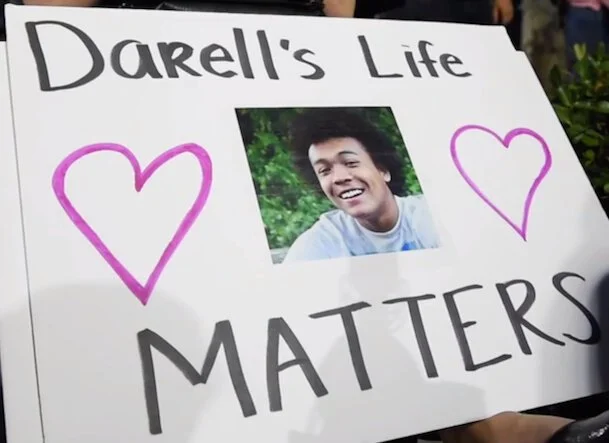
Gangster Sacramento Government Shot Darrell Richards to Death While His Hands Were Up and Then Empanelled an Overwhelmingly White Jury to Decide His Parents Wrongful Death Case. Mistrial Declared

From [HERE] The jury returned a hung verdict in the trial of the police shooting and killing of Darrell Richards, a 19 year old Black man yesterday after three days of deliberation.

Senior U.S. District Judge John A. Mendez declared a mistrial after the jury told him they could not reach a unanimous verdict.

The wrongful death lawsuit against the City of Sacramento and the Sacramento Police Department lasted just over two weeks.

Vang, Richards’ mother, said she doesn’t feel good about knowing she’ll have to go through another trial but is thankful that she has the chance to.

“I feel good to have the opportunity to keep fighting thanks to the one juror who believed in the truth and not the lies,” Vang said.

Melissa Nold, one of the attorneys for Richards’ parents, said the  jury pool really lacked diversity, even more than usual. 

“We had lots of people with close police connections, including at least one of the jurors that was seated for the trial,” Nold said. “It’s very hard to convince people that marry and date police to see fault in them.”

Vang thinks the jury already had their minds made up before the trial began.

“At the end of the day it didn’t matter how good or how many facts were proven. It all lies in the hands of the jury and I knew the majority were undercover bias,” Vang said. “A lot of people are for the police until it happens to one of their loved ones.”

Richards was shot 10 times by police after running from police and an hours-long standoff that ended around 3:00 a.m. in the backyard of a Curtis Park home  on Sept. 6, 2018. Dispatchers received a call about a man wearing a mask and pointing a firearm at people along Broadway near Tower Cafe. “Decedent was not holding a firearm at the time that he was shot to death," the suit states.“I had a bad feeling from the gate because of the selection of the jury we had,” Vang said.

According to the complaint:

Sacramento Police Officers watched Darell jump a fence and then enter a backyard outside of their view. At the same time, a California Highway Patrol (hereinafter CHP) aircraft was on scene assisting the search. From the air, CHP Officer Young was able to observe Darell jump the backyard fence, cross through the backyard and disappear under the cover of tree. The CHP aircraft tracks via heat sensing technology from an elevation of approximately 6,000 feet in the air. During the same timeframe, Sacramento Police Department S.W.A.T. team was deployed to the area and set up a one block perimeter with the assistance of a California Highway Patrol (CHP) aircraft. CHP Officer Young assessed the scene from the air and determined that the one-block perimeter was good, because he did not observe Darell leave that block. Sacramento Police Officers were holding positions around the small, approximately 10 parcel block, to ensure that Darell did not leave that one-block area.

Defendant Lieutenant Sood held a briefing to inform officers of their plan to locate Darell. Prior to Lt. Sood’s briefing, Sacramento Police Officers located Darell’s backpack, which he discarded while running from officers. The backpack contained identifying information, a possible suicide note and a receipt from ‘Big 5 Sporting Goods’ which recorded the sale of a Sig Sauer pellet gun purchased earlier the same day.

The Defendant Officers were informed prior to initiating the search that their fellow officers had found Darell’s backpack and the contents included within it, including the receipt for the pellet gun. Officers were informed about Darell’s possible suicidal ideation and his recent police contacts, which revealed potential organic or drug induced mental health issues.

The Defendant Officers made no efforts to contact and/or involve Darell Richards’ family, despite knowing his identity, address and potential for self-harm.

Defendant Lt. Sood intentionally did not summon assistance from other departments or agencies. Indeed, Lt. Sood made no efforts to obtain the 24-hour a day on-call Crisis Intervention Team, or any mental health experts, despite finding documents in Darell Richards’ backpack indicative of a potential suicidal subject and evidence that Darell purchased a pellet gun earlier the same day. [MORE]

At approximately 3:15 a.m., witnesses saw Officer Yesenia deploy a K-9 unit into the backyard of 2017 1st Avenue, without issuing a warning. The K-9 Officer went into the backyard, urinated and went back to the Officers. Officer Yesenia deployed the K-9 Officer a second time. This time according to witnesses, the K-9 Officer appeared to locate someone under the backyard deck and then returned to the Officers. Nevertheless, Officers entered the yard without announcing themselves or providing Darell an opportunity to surrender.

At this point, Darell had been hiding for approximately three hours. The police had made no attempts, whatsoever to contact him. Inexplicably, none of the officers on scene attempted to make contact with Darell, despite knowing his name and that he wrote a suicide note and was carrying a pellet gun. Moreover, none of the officers on scene attempted to contact Darell’s family, despite knowing that he had recent police contact where the family informed officers they suspected the police contact was due to a mental illness. Furthermore, none of the officers on scene attempted to contact Darell via his cell phone or social media accounts or issue Darell any commands or orders to surrender. Perhaps most egregious, none of the officers on scene identified themselves as police officers or warned Darell that they intended to deploy a police K-9 into the yard.

Immediately thereafter, numerous SWAT Officers, including Defendants Edgerton and Cox, and Officers Yesenia and Tiner entered the backyard in stealth mode and rounded the corner of the home. As they were midway through the yard, Officer Tiner heard a noise and pointed his 1000 lumin rifle light at Darell’s face, ostensibly blinding Darrell, and screamed “show me your hands” while Defendant Cox simultaneously yelled “drop the gun.” The team never assigned specific officers to be the point of contact and deliver commands, which resulted in both officers providing contradictory commands at the same time, after failing to identify themselves as police officers.

Within seconds, Sgt. Todd Edgerton and Officer Patrick Cox opened fire, striking Decedent multiple times in the head and body. Mr. Richards died as a result of his injuries.

None of the officers’ body worn camera show what Darell was doing at the time of the shooting. Defendant Edgerton’s body worn camera would have shown what Darell was doing when he was shot, but he conspicuously failed to activate it during the course of this incident.

Darell Richards had a gunshot entry wound in the palm of his right hand, indicating that he had one or more hands raised during the shooting.

None of the officers on scene ever announced themselves or identified themselves as police officers at any time in the three hours prior to shooting and killing Darell Richards. In fact, no one from the Sacramento Police Department ever notified Darell Richards of the heavy police presence prior to sneaking up on him and shooting him.

Neither of the Defendant Officers identified themselves as police officers or warned Darell Richards of their intent to use deadly force, prior to shooting and killing him.

To date, there has been no disciplinary decisions made regarding this incident and the statute of limitations for employee discipline has passed.

Attorneys for Richards’ parents argued that police did not follow protocols and procedures during a SWAT Team situation.

“The cops sat there on the stand under oath just lying trying to justify their evil act,” Vang said

Attorneys for the City and police never could provide any videos of their claim of Richards pointing a pellet gun at officers.

Deputy City Attorneys Sean Richmond and Deputy City Attorney Matthew Day told the Sacramento Bee that they appreciated the jury’s work on the case.

“We understand it was a tough case to get a verdict on … and respect the conclusion of the jury," Richmond said.

Nold said it was frustrating and emotionally draining to have to take this case back to trial.

“It definitely is, civil rights work isn’t for the faint of heart. It’s really hard to explain to the family because they sat through the trial and felt it went a different way,” Nold said.

Vang thinks the jury already had their minds made up before the trial began.

“At the end of the day it didn’t matter how good or how many facts were proven. It all lies in the hands of the jury and I knew the majority were undercover bias,” Vang said. “A lot of people are for the police until it happens to one of their loved ones.”

Nold said her team will be retrying this case as soon as possible “to get the justice and accountability Darell deserves.”

“They already silenced my son, they will not silence us. They recklessly took his precious life then tried to criminalize his character,” Vang said. “The fight continues and doesn’t end here.”
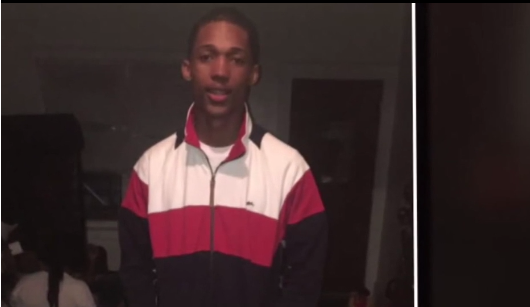
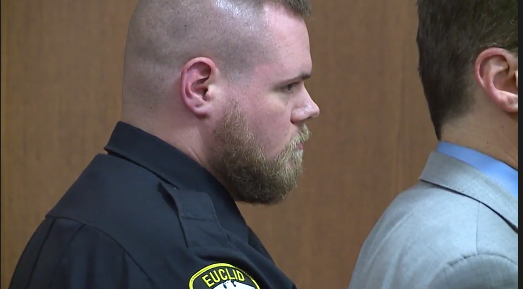
A White Cop Believed a Car was "Suspicious” b/c a Black Man was Sleeping in it. So He Tried to Drag Him Out and then Shot Him to Death. Cuyahoga Jury Awards Luke Stewart's Family $4.4M

From [HERE] A Cuyahoga County jury has awarded a multi-million dollar judgment to the family of a man shot and killed by a Euclid police officer. 

Officer, now Sgt. Matthew Rhodes was cleared of criminal wrongdoing, but this afternoon a jury decided the officer and city were liable for his wrongful death.

The jury awarded the family of Luke Stewart $4.4 million in compensatory damages. 

His family says although the money won’t bring back their loved one, they believe it sends a strong message to the Euclid Police Department.

“I think that Mr. Rhodes got a taste of his own medicine. Stop doing wrong, play by the rules,” said Luke Stewart’s mother, Mary Stewart, after the court hearing downtown at the Justice Center.

The family of the 23-year old says after five years of fighting the legal system, they believe justice has been served. 

Investigators say in March 2017, officers responded to a suspicious vehicle and found Luke Stewart asleep inside his car. 

They say an officer saw a marijuana cigarette and drug paraphernalia. An investigation revealed when Officer Rhodes tried to pull Luke Stewart, who wasn’t armed, from the vehicle to question him, Stewart put the car in drive.

Officer Rhodes said he was hanging onto the vehicle and eventually jumped inside, where he punched Luke Stewart, shot him six times with a taser, then finally three times with his gun, killing him. 

The Stewart family never believed deadly force was necessary.

“It took this family five years of pain and fight to get to this point where members of the jury saw the truth and did what was right to hold this officer accountable for his wrongdoing and we’re grateful to them for doing that,” said Sarah Gelsomino, one of the Stewart family’s attorneys.

Luke Stewart’s mother says the last five years have been difficult and she would exchange the $4.4 million judgment to have her son back.

“He has two boys, they’re 9 and 11. They’re at the age that they understand what’s going on and they really don’t like it at all. They feel Rhodes killed their dad for no reason and they miss their dad, they miss being around him,” she said.

The city of Euclid issued a statement, saying they are disappointed with the outcome of the trial and they’re evaluating their next course of action. 

Black Man’s Lawsuit says White Cops Broke Into His Porch, Piled On Top of Him and then Punched and Choked Him to Make False; Arrest, Imprisonment and Prosecution in Lansing, a White Liberal city

From [HERE] Lansing police officers choked, beat and asked medical providers to administer ketamine to a man during and after a May 2020 arrest, according to lawsuit filed Monday in federal court seeking at least $850,000 in damages.

Glenn Wayne Stewart, of Lansing, in a lawsuit filed Monday, Oct. 31, in the United States District Court for the Western District of Michigan, accused officers Anthony VandeVoorde, Joseph Bacigal, Brandon Russell, Alina Harrington and Jason Murdock of acting illegally when they arrested him on the screened-in porch of his North Martin Luther King Jr. Boulevard residence on May 15, 2020, after claiming he assaulted his sister.

Court records show Stewart was charged May 15, 2020, with resisting and obstructing a police officer, and assault and battery. Officials set his bond at $5,000, which he posted three days later. A preliminary examination took place about four months later on Sept. 17, 2020, at which time Judge Kristen Simmons dismissed both charges.

In the lawsuit filed on Stewart's behalf by attorneys Brendon Basiga and J. Nicholas Bostic, Stewart claims officers used excessive force in violation of his Fourth Amendment rights, failed to prevent the use of excessive force, invaded his privacy, committed a false arrest, subjected him to false imprisonment and malicious prosecution, and said the city of Lansing failed to train and supervise its officers.

Stewart is asking for least $25,000 against each officer for each of six counts in the lawsuit. The city of Lansing also is named in the lawsuit and Stewart is seeking at least $100,000 from the city. In addition to physical injuries and the humiliation of the incident, he claims he has also developed anxiety, particularly when he sees police officers.

"(Stewart) was injured to the extent that he suffered the anxiety, stress, and worry associated with facing criminal charges carrying a possible period of incarceration and out-of-pocket expense," the lawsuit added.

LPD Public Information Director Jordan Gulkis said the city has not been served with the lawsuit, and officials can't comment.

Stewart's suit claims police responded to his home about 12:30 a.m. May 15, 2020, after a neighbor called police claiming Stewart was "being loud and making threats." VandeVoorde and Bacigal began speaking with Stewart, who was standing on his porch next to his sister.

Police used the determination that Stewart assaulted his sister as a reason to break open the enclosed porch's door and detain the man. The suit says police took Stewart to the floor and held his limbs and torso as they struck his neck and ribs. At least one other officer choked him, he said, and his nose began to bleed, soaking his protective COVID-19 facemask in blood.

"Defendants were yelling at plaintiff to put his arms behind his back while he was already on the floor but he was unable because at least two of the defendants had their body weight on his back and his arms were under him," the suit claims.

After being arrested and taken to police headquarters, Stewart complained about injuries and was transferred to a hospital emergency room. While at the hospital, the lawsuit said, Harrington prepared a petition for a "Person Requiring Treatment" that included false and misleading statements.

Stewart had refused medical treatment, according to the lawsuit, but the suit mentions "statements" made by the man as the reason for "chemical restraint."

Basiga did not respond to an immediate request for comment regarding the content of those statements.

"The Person Requiring Treatment petition was provided so the medical staff could give a chemical restraint to Plaintiff and treat Plaintiff without his consent," the lawsuit said, noting the restraints used were the drugs Ketalar and Ativan, also known by their generic names ketamine and lorazepam. The medications left him unable to move and leave the hospital.

When asked whether police officers prepare such petitions, Gulkis said "the police department does not dictate treatment of patients."

He was also placed on a respirator while having difficulty breathing, sustained a contusion on his hand, had multiple abrasions and blood in his urine.

"Plaintiff’s blood work returned with an elevated level of a protein that develops when blood clots break apart and is associated with pulmonary embolism," the lawsuit said. A pulmonary embolism is a sudden blood clot in an artery within a lung. He was discharged from the hospital the next morning.

Black Neighborhood Leader in Kansas City Begs Her White Liberal Masters for Better Treatment After Cops Dragged Her Out of a Car to En-Force Their Traffic Code

From [HERE] A Black Kansas City neighborhood leader says she was racially profiled by an Independence police officer, who she says used excessive force during a traffic stop last month.

Rachel Riley was pulled over on October 4. The 57 year old has been president of Kansas City’s East 23rd St. Pac Neighborhood Association for eight years. She’s been involved with the organization for two decades.

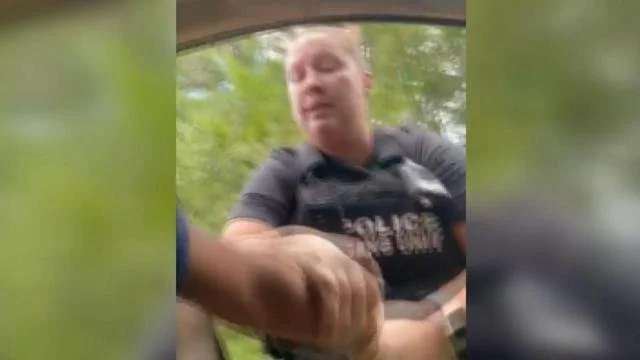
According to Riley, Officer Brett Schmidli reached into her truck, pulled her out and slammed her against the vehicle.

“My face just bounced,” she said in a phone interview Tuesday recounting the incident. “I’m going ‘What did I do? What did I do?’”

She was arrested and taken to jail on a railroad crossing violation and failing to have insurance information. A police report also lists interfering with police.

A court records check shows no charges have been filed. On Thursday, protesters plan to gather in Independence to express their outrage. “What we’re saying is stop the racial profiling,” Riley said.

“Stop the racism. Stop the discrimination.”

Officer Jack Taylor, a spokesman for IPD, said answers about Riley’s allegations concerning racial bias “would come from an internal investigation and to this date, there has not been a complaint made to initiate that investigation.”

He said the officers participate in annual training on racial profiling and bias. ”The Independence Police Department does not permit racial profiling or racial bias when deciding to take law enforcement action in a given incident,” Taylor said.

According to an Independence Police Department report, Schmidli saw Riley go through a railroad crossing as the warning arms started to move down. He activated emergency equipment and she stopped.

“I observed the driver appeared somewhat sluggish or tired,” the police report said. She didn’t have identification on her, but he was able to confirm the driver as Riley, the police report said. It also said she was “irritable during the stop and did not appear to want to speak much with me.”

He wrote the summons and called for backup. He and another officer asked Riley to exit the vehicle so they could check her eyes to make sure she was not impaired.

The police report said Riley was uncooperative and stated she feared for her safety. “I grabbed on her right arm and pulled her from the front seat,” the police report said.

A computer check came back with no warrants. Schmidli wrote in his report that he was unable to administer a field sobriety test because Riley was uncooperative.

She was taken to the detention center. The officer’s report said he gave Riley 20 commands during the encounter including warnings that she would be arrested if she did not comply.

Riley said she was stunned the traffic stop escalated from a ticket to being grabbed out of the vehicle and taken to jail. She also said she was violently searched in sensitive areas by a female officer.

“I’m going ‘Are you kidding me? Are you kidding me?’” she said. After she was slammed into the vehicle, she said she just started praying to God.

In the weeks since, she has felt traumatized and found it difficult to drive without being afraid. She believes her civil rights and due process rights were violated. “We want justice,” Riley said.

The police department stops, searches and arrests Black drivers at a disproportionate rate, according to a report released earlier this year by the Missouri Attorney General’s Office. That data showed in 2021, Black motorists accounted for 18% of all traffic stops. Missouri is 11.8% Black, according to the U.S. Census. Black and Hispanic drivers were searched 8.5% and 7.9% of the time, respectively, compared to 6.8% of white motorists.

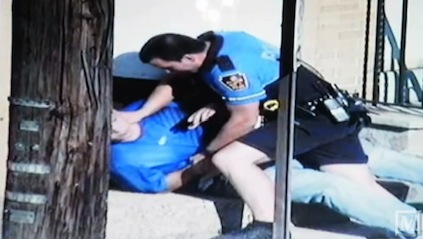
No Right to Resist When Public Masters Attack: 3 White Toledo Cops Punch a Black Man Over and Over While Holding Him Down. Claim He Resisted by Avoiding Blows and Trying to Get His Face Off the Ground

From [HERE] Quantrell Thomas was pulled over by Toledo Police for traffic violations last Monday. When officers ran a record check, they discovered verified warrants and asked him to put his hands behind his back.

Thomas said he stepped away, and the officer proceeded to take him to the ground.

“Yeah, I resisted a little , but nothing to get beat down by a cop. Who is supposed to be my friend, supposed to help me out? But instead, they just beat me,” said Thomas.

Thomas said although he was not completely in the right, the officer’s actions were excessive.

One officer punched Thomas in the face and torso multiple times, leaving scars and a black eye.

“I was telling them like please, man, stop. Everything is going good right now, man. Just talk to me. Then while he was holding me down, this other officer came and punch me in the face twice. And then I was like, dang, you really just socked me, you punch me in my face, and he hit me several more times in my face,” said Thomas.

Thomas said he recognizes that he should not have resisted initially. However, he believes the punching should have never continued.

“All they had to do was come help detain me, just grab me and put my hands behind my back instead of physically punch me in my face,” said Thomas.

OBSERVE HOW THE STUPID WHITE REPORTER THINKS IT’S LAWFUL FOR COPS TO SEARCH THE BLACK MAN’S CAR AFTER A BROKEN TAIL LIGHT STOP. WERE THE PUBLIC MASTERS SEARCHING FOR EVIDENCE PERTAINING TO THE BROKEN LIGHT? ENJOY YOUR SLAVERY

The Toledo Police Department said the officer’s actions were justified. TPD said Thomas was attempting to reach for the officer’s belt, but Thomas said that is not true. TPD told 13abc the officers acted within department policy. Thomas said he’s called the department multiple times to get information on the investigation into the use of excessive force. He’s yet to hear back.

” He was trying to get my hands, but I was already punched several times in the face, and I was beaten. It was wrong, and I don’t think that should’ve happened,” said Thomas.

Black Probot DA Declines to File Charges Against White Danville Cop Who Shot Homeless Black Man to Death

From [HERE] A white police officer already imprisoned for one fatal shooting in a wealthy San Francisco suburb won't face criminal charges in a second slaying, this one of a homeless Black man during a 30-second confrontation, a prosecutor said Friday.

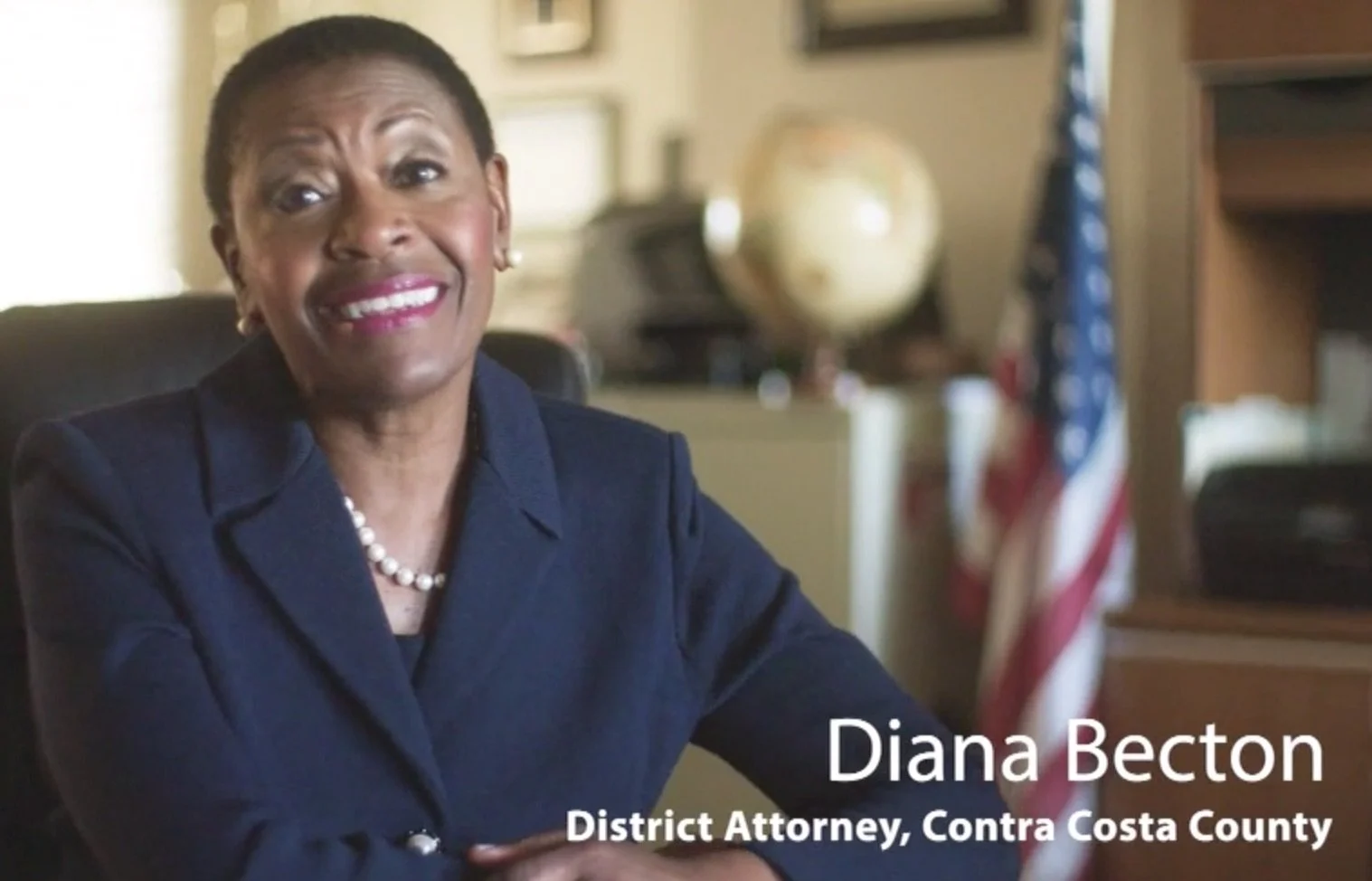
Contra Costa District Attorney Diana Becton said she won't seek to try former Danville officer Andrew Hall in the death of Tyrell Wilson, who was holding a knife at the time of their confrontation in March 2021.

Hall already is serving a six-year prison sentence in the fatal shooting in 2018 of Laudemer Arboleda, 32, during a slow-speed police chase. Hall was convicted last year of assault with a firearm for firing into Arboleda's vehicle as it passed by him. Arboleda, who was unarmed and mentally ill, was hit by nine bullets as he drove away from police.

Becton said she did not have evidence beyond a reasonable doubt that Hall, 33, acted illegally when he killed Wilson last year while responding to reports of a person throwing rocks from an overpass onto a highway.

She called it “a difficult and challenging case” and that she and her legal team “spent a considerable amount of time and resources evaluating the evidence before coming to this conclusion.”

“As a community, we need to find ways to de-escalate law enforcement encounters where the use of force leads to tragic outcomes,” she said in a statement. "The loss of Tyrell Wilson’s life weighs on our community and I express my deepest condolences to the Wilson family.”

An attorney for Hall, Harry Stern, did not immediately respond to telephone and email messages seeking comment.

Becton has been criticized for taking two years to investigate Arboleda's death, leaving Hall on duty long enough to be involved in the second fatal shooting. Becton filed the charges one day after a jury convicted Minneapolis police Officer Derek Chauvin of killing George Floyd.

Had she charged Hall more quickly in the earlier shooting, “this never would have happened,” said John Burris, an attorney for Wilson’s family. "This young man would not have been killed.”

Critics have also questioned whether race played a factor: Hall is white, Wilson is Black, and Arboleda of Filipino descent. Danville is a town of multimillion-dollar homes and predominantly white residents.

Video taken by a nearby motorist showed Hall standing feet away and facing Wilson before the officer appeared to move toward Wilson, as Wilson appeared to step backward. The motorist’s video doesn’t appear to show Wilson make any sudden moves toward Hall.

Becton's office said that before the shooting Wilson told Hall not to touch him, then took a folding knife from his jacket and held it by his right thigh, the blade pointing forward. He took five steps away from Hall while saying twice, "Touch me and see what’s up.”

Hall drew his gun and pointed it at Wilson, telling him to drop the knife three times. Wilson then took two to three steps toward Hall, raised the knife to his chest, looked up at the sky and said “Kill me,” according to the report by Becton's office.

Hall took about three steps backward and shot Wilson once in the head, firing just 32 seconds after he first spoke to Wilson. Wilson died at a hospital two days later.

Police previously released still photographs showing Wilson holding a bag in his left hand and a folding knife in his right hand.

A juror could reasonably conclude that Hall was in imminent danger, particularly if Wilson was “potentially engaging in ‘suicide by cop,’” Becton's report concluded.

Burris said in his view “there was sufficient evidence to justify prosecution here."

Wilson suffered from schizophrenia and Burris said he was obviously mentally impaired when Hall approached him.

“That should have been a clue right then that there was something going on with this young man,” Burris said.

“But the officer didn't back up and reassess. He became very aggressive,” Burris said. “The officer created this confrontation.”

He said the family could ask the state attorney general or U.S. attorney to review the case, noting that California law requires that police killings not only be reasonable, but necessary. Wilson's death doesn't appear necessary, given the circumstances, Burris said.

Becton charged Hall with manslaughter and assault in Arboleda's death a month after he fatally shot Wilson, but a jury deadlocked on the voluntary manslaughter count while convicting him of assault.

Hall is serving his six-year sentence at nearby San Quentin State Prison.

The Contra Costa Sheriff’s Office provides police officers to Danville under a contract, and the county has paid more than $9 million to the families of the two slain men to settle civil rights lawsuits. The sheriff's office had cleared Hall of misconduct into Arboleda’s death after its own nine-month investigation.

Latino Man Describes ‘Brutal Beating' by 5 Cops at Miami-Dade Detention Facility

From [HERE] In an exclusive interview with NBC 6, Luigi Cruz described a “brutal attack” at the hands of five corrections officers at Miami-Dade Metro West Detention Center. 

“My left eye was battered, black eye … my whole mouth was bruised up and I couldn't eat for like a day and a half,” Cruz said.

Cruz spent 60 days in custody for allegedly violating probation months after he was convicted of DUI and child neglect. He shared with NBC 6 photos showing the injuries he says he sustained during his altercation with the officers. 

“Even if you are a prisoner or inmate, at the end of the day, we're human,” Cruz said.

Cruz filed a complaint with the Miami-Dade Department of Corrections and Rehabilitation Department. In it, he said the incident happened on August 26 during a “sweater exchange” in his unit. He told NBC 6 Officer Delman Lumpkin initiated the attack. 

“He (Lumpkin) said, ‘Everybody shut the f--up, get in line.’ So I look back and everybody is in line. So I'm like, ‘who are you talking to?’ and he's just like, ‘shut the f-- and get in line.’ And I thought, who are you talking to again? After that, he launched a punch,” Cruz said.

In his complaint, Cruz claims what followed was a “brutal beating,” writing, “I gave my arms up and counted 23 blows in total while handcuffed.”

"It was brutal, the blows to the head and to the neck continued, continued, did not stop,” he told NBC 6.

Two other inmates also provided witness statements supporting Cruz’ accounts.

One called the incident an “injustice” saying “a brutal beating occurred” once Cruz was handcuffed. He added, “blood was everywhere.”

The other inmate said he witnessed “officer Lumpkin strike inmate Luigi Cruz…with unnecessary force.”

Their allegations are included in Cruz’ complaint, which he provided to NBC 6.

Previous Allegations 

This isn’t the first time Lumpkin faces similar allegations.

Video obtained by NBC 6 shows the officer at the same facility punching another inmate repeatedly in 2019 until another officer stepped in.  

MDCR determined officer Lumpkin used excessive force in that incident and suspended him for 30 days. 

The Miami-Dade State Attorney decided not to file charges against the officer and asked him to be evaluated by a physiologist instead. She noted the same inmates filed over 700 complaints in a five-year period and approximately a dozen of those involved allegations of misconduct by staff. 

Attorney Victor Ruiz is representing Cruz.

"What's most concerning is that officer Lumpkin was made a part of a shakedown team after having had prior incidents of violence with other inmates,” Ruiz said.

"We're animals to them and we're not human beings at the end of the day. We, on the outside, don't see what's on the inside,” Cruz said. 

At a disciplinary hearing in September, Cruz was found not guilty of the rule violation officer Lumpkin filed against him. 

Cruz said the officers should face criminal charges and he plans to file a civil lawsuit.

Delusional Grand Rapids Police Argue that Shooting Patrick Lyoya in the Back of the Head Doesn’t Establish Probable Cause for Murder. Will the White Judge Agree?

From [HERE] Footage shown in court of Patrick Lyoya’s fatal encounter with a now-former Grand Rapids police officer has been emotionally difficult on relatives present, an attorney for the Lyoya family said.

“It’s terribly taxing for the family,” said Tom Waun, a managing partner with Ven Johnson Law, the firm representing the Lyoya family. “They’re obviously very sad that they have to see this video over and over and over again of their son, and their brother, being killed. It’s terrible for them.”

But Wuan said it’s important to the family that they’re present for the proceedings.

“They’re here for justice,” he said. “They want to make sure that the right thing happens. They want people to know that they’re very involved, that they care, so that’s why they’re here.”

Wuan spoke with reporters Friday, Oct. 28, at the conclusion of the second and final of testimony in the preliminary examination to determine if probable cause exists to bind former police officer Christopher Schurr over for trial on a murder charge in Kent County Circuit Court.

Footage shown a handful of times over the preliminary examination showed the moment Schurr shot Lyoya in the back of the head.

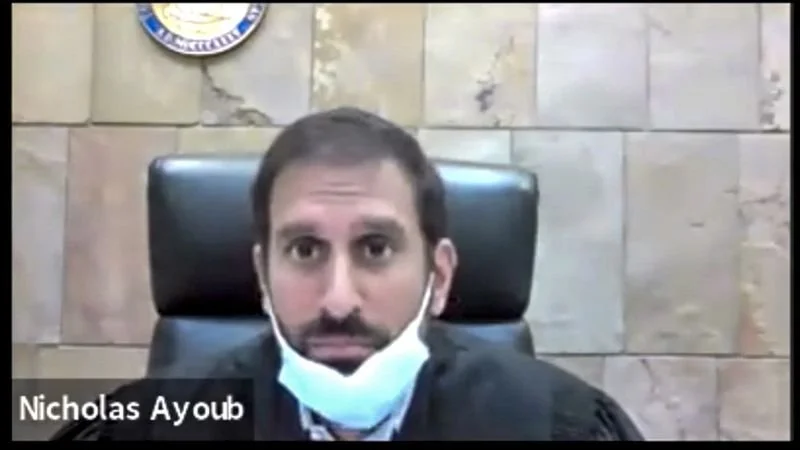
Grand Rapids District Judge Nicholas Ayoub, who presided over the hearing, will issue a written opinion Monday, Oct. 31, on whether or not he will bind Schurr over.

Schurr, 31, is charged with second-degree murder for the April 4 shooting death of Lyoya.

Then a Grand Rapids police officer, Schurr shot Lyoya after a traffic stop on Nelson Avenue SE, just north of Griggs Street, during a struggle for control of the officer’s Taser. Schurr was on top of Lyoya and yelled “drop the Taser” before he pulled his gun and shot Lyoya in the head.

The final witness of the hearing – brought in by the defense – was a Grand Rapids police captain who testified the shooting was justified and that Schurr followed department policy.

Wuan pushed back on the captain’s assessment, saying his firm has retained other experts who dispute it.

“We have already retained two different police policy practices and procedure people who talk about excessive force who say he’s dead wrong,” Wuan said.

Lyoya’s family, through Ven Johnson Law, plans to file a civil lawsuit in the death. [MORE]

Families of Black People Killed by Atlanta Cops Forced to Pass Out Flyers, Hang Up Signs and Beg for "Service" from Fani Willis. Strawboss DA Too Busy Serving Her Liberal Masters Targeting Trump

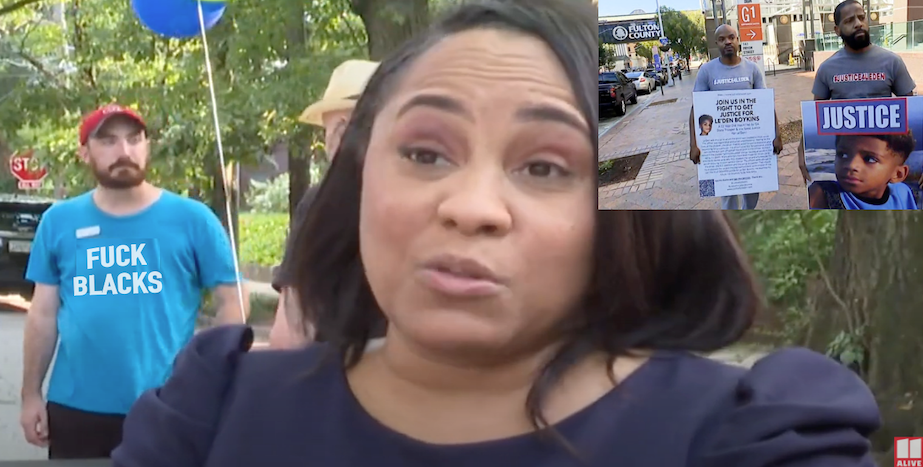
From [HERE] Through the crowd of lawyers and people on their way to court, 60-year-old Jimmy Hill walks the same downtown Atlanta street every week. He’s been doing this for the last three years to get justice for his son.

In January 2019, Hill’s son Jimmy Atchison was shot and killed by an Atlanta police officer. Atchison was unarmed when he was shot in the face after a foot chase. For three years Atchison’s case has languished amidst the backlog of an estimated 11,000 cases in Fulton County caused in part by the Covid-19 pandemic.

With his son’s case still unresolved, Hill shows up every week, sometimes multiple days in the same week, to pass out fliers about his son’s death. And he makes sure to stand right below the office window of the one person he says has the power to do something: Fulton County District Attorney Fani Willis.

Jimmy Hill hands out fliers in downtown Atlanta.

“I stand on the corner, and her window is right there, and I stand right there to make sure she sees me every day. And it’s not to prove a point to her because I’m going to fight anyway because that’s my son, and I love him,” he said.

An investigation by the previous administration at the Fulton County DA’s office found the shooting to be unjustified and recommended the officer who killed Atchison be charged with felony murder. The officer, who has since retired, said he thought Atchison was armed, but investigators later confirmed he wasn’t, the Atlanta Journal-Constitution previously reported. Officers were pursuing Atchison at an apartment complex while trying to arrest him on a warrant.

Though Hill says Willis could have presented his son’s case to a grand jury “long ago,” Hill believes the DA is instead more focused on notoriety.

CNN reached out four times to the Fulton County DA’s office, but never heard back.

Shortly after taking office as the newly elected DA, Willis announced she would be opening an investigation into the alleged election meddling by former President Donald Trump.

“What about police brutality? Wrong is wrong, murder is murder, crime is crime, wrong is wrong no matter who does it,” Hill said.

A familiar pain

Hill’s pursuit of justice may not be getting the attention he wants from the DA’s office, but it has inspired others.

In the last two years, other Black families who have lost their children at the hands of police have joined the weekly demonstrations. They include parents like Anthony Boykins, whose 12-year-old was killed in a crash when a Georgia State Trooper executed a pit maneuver on the car in which his son was a passenger.

“To be honest, it’s heart aching, to have to even come out here and even ask for justice. You know what I mean. Because if I would have flipped that car with the officers’ kids in it, I would be in jail right now,” Boykins said.

The trooper involved in the incident, which happened in a neighboring county, returned to work, and the incident is pending litigation.

Standing next to Hill while holding a poster with his son’s face on it, Boykins said it is “encouraging” to be alongside families who are going through similar pain. Joining Hill and Boykins every week is Venithia Cook. Her 17-year-old was shot in the back twice by a police officer in Cobb County, Georgia, in 2020.

“I’ve been told several different stories by [the] police about what happened,” Cook told CNN. “The video speaks for itself. Two seconds after he jumped out the vehicle he was shot twice in the back. He never had a chance,” she said.

The officer who shot and killed her son was cleared of wrongdoing – but Cook said she will continue to show up to demonstrate every week. Just like for Boykins and Hill, for Cook showing up on a weekly basis is “therapy.”

“Some of these families are barely holding on to their sanity. People don’t understand what police brutality does to the family and the community. It challenges your mental health,” Hill told CNN.

A backlog of cases

In April, a letter sent by Willis to the President of the NAACP chapter of Georgia and reviewed by CNN said in addition to the backlog of 11,000 cases, there was also an estimated 55,000 cases that were not properly closed by the previous administration. The NAACP says it has not heard from the DA’s office.

“Our concern is if you’re going to prosecute without fear or favor, you need to go after law enforcement who violate the public trust with the same veracity that you’re going after rappers, artists, and potentially the former president of the United States,” Georgia NAACP Chapter President Gerald Griggs told CNN.

Griggs estimates there are “dozens” of Black families in Atlanta, just like Hill, who have not yet had their cases addressed by the DA’s office.

Ramsey CTY Cops were Looking for a Black Man in his 30’s w/black hoodie, black pants and a cap But They Stopped and Attacked a 67 Yr Old Black Man with white Shirt, No Hat, Using a Walker. Suit Filed

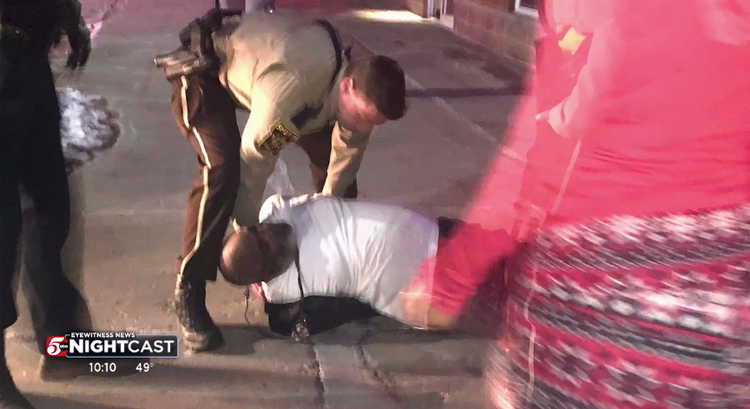
From [HERE] and [MORE] A Black man has filed a federal civil rights lawsuit against Ramsey County and its sheriff's office, accusing deputies of using excessive force and violating his civil rights during a 2020 mistaken identity incident.

Michael Torrey-White, 67, and his attorney Paul Bosman allege that four officers named in the lawsuit mistook Torrey-White for a suspect in his late 30s, knocking him unconscious and allegedly assaulting him while making a wrongful arrest.

After the arrest, Torrey-White stated he was going to file a complaint against the arresting officers. He then found out an allegedly falsified police report was filed against him in the February 2020 incident, charging Torrey-White with obstructing the legal process and disorderly conduct nine days after he filed a complaint against the deputies.

Body camera footage of the arrest was requested as Torrey-White fought the charges. In July, the charges were dropped due to authorities not turning in video evidence from that night. Torrey-White and is attorney are accusing the deputies of malicious prosecution as a result.

According to the lawsuit, on Feb. 28, 2020, the sheriff's office received information about a fight taking place in a parking lot near an apartment complex where Torrey-White and his daughter live separately in Falcon Heights. The description of the suspect police were looking for was given as "African American, in his late 30s, wearing a black hoodie, black pants and a hat with the letters LSW on it."

Torrey-White went outside to the parking lot at the time to check on his daughter's truck, after she called Ramsey County Dispatch to report someone "dodging a vehicle in the parking lot." The 67-year-old went outside without his hearing aids inserted, according to federal court documents.

It's noted in the filing that Torrey-White was wearing "a white shirt and brown windbreaker jacket" at the time, with no hat. None of the 911 callers reported the suspect using a walker, either.

One of the deputies responding to the area "pushed Mr. Torrey-White into a brick wall, hitting his head and back against the wall." That's when Torrey-White lost consciousness, according to the lawsuit. He then woke up to being handcuffed with the officer allegedly putting weight on the man's back, making it difficult for Torrey-White to breathe.

When he asked what he had done wrong, the arresting officer told Torrey-White to "shut up." Three other deputies responded to the scene, stating that the man "was being detained." Torrey-White also claimed that one of the female officers at the scene inappropriately touched him in his private parts, asking him "what's this?" 

After scattering his belongings from his walker and finding nothing, one of the deputies eventually took handcuffs off of Torrey-White and let him go. He suffered head and back injuries during the incident, according to the lawsuit.

After Torrey-White filed a complaint with Internal Affairs, he faced charges "without probable cause and without reasonable belief that the prosecution will succeed."

Which Nigger = Any NGHR Will Do: Suit Says 2 Fayetville Cops Were 'in Pursuit of a Black Man Fugitive' So They Demanded ID from a Black Woman and Dragged Her from Car When She Didn't Give It to Them

From [HERE] and [HERE] A Black woman is suing a city, its police department and its officers for false imprisonment and negligence for an incident she said left her traumatized and bruised.

Two civil rights attorneys have filed a federal lawsuit against the Fayetteville Police Department for constitutional violations on behalf of a 22-year-old woman who was arrested in her car on private property.

Video taken by the woman arrested, Ja'Lana Dunlap, from Fayetteville, shows her being yanked out of her vehicle by officers, slammed against her vehicle and being asked for her I.D. The federal lawsuit alleges she was then placed in handcuffs.

Dunlap was arrested and then eventually let go because police did not find that she did anything wrong, according to Fayetteville Police Chief Gina Hawkins.

Hawkins said police were looking for a "potentially" dangerous man at the time and in the area where Dunlap was taking photographs in a vacant lot.

Dunlap said she taking pictures of the lot for her employer. She was in her parked car when police approached her, according to her two attorneys, Harry Daniels and Carnell Johnson.

Hawkins made a request to the N.C. Superior Court to release the two officers' body camera footage. In North Carolina, police departments have to petition the court to release their officers' body camera footage.

The lawsuit filed on Tuesday alleges that the two Fayetteville police officers who detained Dunlap — Ryan Haddock and Amanda Bell — did not have enough "reasonable suspicion" to do so.

Johnson and Dunlap had harsh words for law enforcement during Tuesday's press conference, asserting that the officers, who were both white, would not have used violence against Dunlap if she was also white.

"You never know, being African-American, if your life can end by police, even if you didn't do anything wrong," she said.

Dunlap said she hopes by suing the Fayetteville Police Department, she can speak up for others who can't. She knows that violence from police against the Black community is a persistent problem and hopes to usher change into Fayetteville.

“I really just want to speak up for people who can’t speak up for themselves,” said Dunlap-Banks at a press conference on Tuesday, Oct. 25.

“I just want to make it clear that you have to speak up for yourself. You have to demand respect. Whether they wear a badge or whether they’re just in regular clothes. And if you’re wearing that badge, if you’re wearing a uniform, then you’re supposed to protect us not harm innocent people.” "You're supposed to protect and serve, not harm innocent people."

On Sept. 6, Dunlap-Banks was in an empty lot taking photos of the grounds for a property management company where she works. She paid for garbage pickup on the property and was taking pictures to show her boss. The video Dunlap took only shows about one minute of the police encounter, and Daniels and Johnson are pushing for more.

The lawsuit says her Fourth Amendment rights were violated when officers "wrongfully and unjustifiably stopped, seized, and arrested [Dunlap] when Bell and Haddock surrounded and interrogated [Dunlap], thereby restricting her movement, and subsequently dragged her out of her vehicle, took her vehicle keys, and her placed in her handcuffs."

Dunlap said her refusal to provide the Fayetteville police officers with her I.D. prompted the officers to be more aggressive in questioning her. According to the federal lawsuit, police took her phone and threw it on the ground, ending her recording.

Under North Carolina law, individuals are not required to identify themselves except under certain circumstances, like a traffic violation, Johnson pointed out.

The federal lawsuit is seeking damages of more than $75,000 for injuries and degradation Dunlap suffered during the arrest.

After being pushed against her vehicle and handcuffed, the lawsuit says Dunlap began to have trouble breathing. She has an underlying condition of sickle-cell anemia, which contributed to her being unable to breathe.

She started breathing irregularly and began vomiting, the lawsuit says, and tried to bend down and vomit.

"Bell and Haddock continued yanking on [Dunlap] for her to stand upright," according to the lawsuit. "[Dunlap] pleaded with and begged officers to let her kneel down to vomit, but they continued to hold her against the vehicle."

"As [Dunlap] was vomiting in pain, officers opened [her] fanny pack without her consent and took out [her] identification card," the lawsuit continues.

Johnson wants the police body camera video to be released to show this incident and shed light on what happened to Dunlap when her phone turned off.

The lawsuit says that Fayetteville Police Sgt. Kempf arrived to the scene and saw Dunlap in pain. When he did, he immediately uncuffed her and spoke with the two officers on the scene. Dunlap was eventually given her keys back and allowed to leave, according to the lawsuit.

Fayetteville Police Chief Gina Hawkins, who is also named in the federal lawsuit, said the officers were pursuing a fugitive in the area and wanted to check to see if Dunlap-Banks was involved.

Attorney Harry Daniels said the officers treated Dunlap-Banks aggressively because of her skin color.

The lawsuit, filed on Tuesday, Oct. 25, argues that North Carolina is not a “stop and identify” state, so Dunlap-Banks was not required to show proof of identification and had already given officers her full name.

“She wasn’t required to do that. But she did. That wasn’t good enough,” Daniels said at Tuesday’s press conference. “They wanted identification. You know, some people say where I’m from a long time ago, they wanted to slave papers. You need to show who you are.”

The woman’s attorneys said the violent interaction triggered a sickle-cell crisis. Dunlap-Banks was so afraid for her life that she started hyperventilating and vomiting, it alleges. However, the officers would not give the woman room to vomit and continued “yanking” her upright, the lawsuit says.

A Cumberland County judge on Tuesday granted Hawkins’ request for permission to release body-worn camera footage of the incident. Dunlap-Banks captured one minute of the interaction on her cell phone. Both officers asked the woman multiple times to get out of the vehicle that attorneys said she had just sat back in without starting the ignition. Bell also asked Dunlap-Banks to show her identification card, which was visible in her transparent fanny pack across her waist.

“You’re not getting it because I haven’t did anything wrong,” she told the officers.

The lawsuit alleges that officers tried to pull the woman out of the car because they realized she was recording them. The video also shows that Bell eventually released Dunlap-Banks’ arm, allowing her to get out of the vehicle. Court documents allege the woman was “forcefully placed” in handcuffs and slammed against her vehicle.

The video Dunlap took only shows about one minute of the police encounter, and Daniels and Johnson are pushing for more. According to the federal lawsuit, police took her phone and threw it on the ground, ending her recording.

The lawsuit says the “illegal and prolonged restraint of” the woman in handcuffs “amounted to false imprisonment” under North Carolina law. In addition, officers fail to meet their duty of care, and the city and its police agency are negligent by failing to vet, train and supervise its officers properly.

Dunlap-Banks’ attorney Xavier Torres de Janon said the department has a reputation for police brutality against Black people. Fayetteville police officers shot and killed Jada Johnson on July 1 after she called 911 to report a home invasion. When police arrived on the scene, Johnson had a gun to her head. Police officials said Johnson was shot while they tried to disarm her.

Torres de Janon named Johnson and four other African-Americans harmed during encounters with the police agency.

“This is not an issue of a couple of bad apples because we’re seeing that the tree is rotting. We are seeing that the roots are rotten,” he said. “And so when we demand justice for Ms. Ja’Lana, we demand justice for these other people and for the other Black and brown people in Fayetteville who might suffer when they meet a police again and again and again.”

Which-Nigger [‘guilty by simply being, not association’]: Lamonte McIntyre, an Innocent Black Man, Spent 23 Years in Prison. His Release Exposed Decades of Police Corruption in Liberal Kansas City

 According to FUNKTIONARY:

Which-Nigger – any native Black American who is routinely racially and spatially profiled for arrest as a likely target-suspect. A “Which Nigger” is never guilty by association—but guilty by simply being—a Black man in the wrong place at the wrong time near any alleged or actual crime, waiting for the “justice” railroad (oncoming train) and unaffordable legal representation thereby leaving him with a public defender that will ensure he will be afforded some extra time in prison.
Dr AMOS WILSON WROTE: In its oppression of Black America, White America faces a major dilemma. The White ruling class seeks to project a self-image and public image which are liberal and nonviolent. It wishes to assume the appearance of being faithfully committed to protecting the constitutional and civil rights guarantees of all residents — regardless of race, color, creed, or condition of previous servitude — and to be perceived by them as inherently humane. At the same time the ruling class wishes to retain its power to rule, to maintain its tremendous wealth, power, hegemony and privileges. Thus it is confronted with a major contradiction: it cannot actualize its projected image and commitments without destroying the bases of its identity and power.[MORE]

From [HERE] Chapter 2: The Wrong Lamonte. In 1994, Kansas City, Kansas, police arrested Lamonte McIntyre for a double homicide he didn’t commit — sending him to prison for more than two decades before he was finally exonerated. Except McIntyre was a mile away from those Hutchings Street murders. As it turns out, the only evidence police had to charge McIntyre was his first name, and the coerced testimony of two eyewitnesses.

Lamonte McIntyre stepped into the sunshine as a free man for the first time in 23 years on October 13, 2017. An innocent man, he'd spent more than half of his life in prison. But his release was about much more than how he'd been set up for a double murder he didn’t commit.

Two years after McIntyre’s release, a federal grand jury began investigating the many claims his case brought to light.

And this September, five years later, FBI agents arrested one of the men who’d helped send him to prison: former Kansas City, Kansas, Police detective Roger Golubski.

Golubski is now awaiting trial on six counts of depriving two women of their civil rights by sexually assaulting and kidnapping them.

Residents of Kansas City, Kansas, have called for the U.S. Department of Justice to conduct a full-scale investigation of the police force. The case has generated so much attention that Jay Z’s Team Roc took out a full-page ad in the Washington Post urging a federal investigation and donated $1 million to the Midwest Innocence Project, which helped with McIntyre’s case.

Long before all this attention, plenty of people in Kansas City, Kansas, understood all too well how it felt to live in a place where one cop, or one prosecutor, had enough unchallenged power to railroad a 17-year-old kid. [MORE]