Japanese Company, Shionogi, has Started Human Trials of the First Once-a-day Pill for COVID. Pill Aims to Neutralize the Virus 5 days after a Patient takes it w/o Vaccine

shinogi.jpg

From [HERE] A Japanese company has started human trials of the first once-a-day pill for Covid-19 patients, joining Pfizer Inc. PFE 0.51% and Merck MRK 1.32% & Co. in the race to find treatments for the disease.

Osaka-based Shionogi 4507 3.20% & Co., which helped develop the blockbuster cholesterol drug Crestor, said it designed its pill to attack the Covid-19 virus. It said the once-a-day dosing would be more convenient. The company said it is testing the drug and any side effects in trials that began this month and are likely to continue until next year.

Shionogi is months behind Pfizer and Merck, which have started later-stage tests of pills to treat Covid-19. Pfizer has said its twice-daily pill could be ready to hit the market as soon as this year. It is preparing to enroll more than 2,000 patients in a test of the antiviral pillcombined with a booster antiviral drug against a placebo.

All three companies aim to fill one of the biggest gaps in fighting the pandemic. Vaccines remain effective at preventing serious illness from known strains of the Covid-19 virus including the contagious Delta strain, studies have shown. But some people don’t want to get vaccinated, and cases can occur for those who do get their shots. 

Existing treatments, including Gilead Sciences Inc.’s infused antiviral drug remdesivir, generally have to be administered in hospitals and work only some of the time. Other drugs that can be given in hospitals include monoclonal antibody drugs such as one made byRegeneron Pharmaceuticals Inc. and the steroid dexamethasone.

Drugmakers are looking for a pill that those who get a positive Covid-19 test could take at home while their symptoms are mild. Such medicines already exist for influenza, includingRoche Holding AG’s Tamiflu and Shionogi’s Xofluza, although they don’t work for all patients and might be prescribed too late to do much good. Xofluza is marketed in the U.S. by Roche.

“Our target is a very safe oral compound, like Tamiflu, like Xofluza,” said Isao Teshirogi, Shionogi’s chief executive officer. He said Shionogi’s Covid-19 pill aims to neutralize the virus five days after a patient takes it.

Dr. Teshirogi said Shionogi expects to enroll 50 to 100 healthy subjects in its trial in Japan. A larger trial comparing the drug with a placebo in Covid-19 patients could begin in Japan later this year, he said.

The failure rate for drug trials is generally high. Any side effect, even a relatively mild one such as nausea, could make a Covid-19 pill impractical for home use. It isn’t yet known whether getting rid of the virus in patients would translate into reducing serious complications such as low oxygen that land people in the hospital, researchers working on Covid-19 treatments said. [MORE]
Pfizer and BioNTech Raise Price on COVID Vaccines Sold to US Government from $19 to $24 a Shot on Latest Purchase of 200 Million Vaccines. So Far US has Bought 1 Billion Doses

obey++(1) (1).jpeg

From [HERE] The U.S. has purchased 200 million additional Covid-19 vaccine doses from Pfizer Inc.PFE 0.51% and partner BioNTech SEBNTX 0.35% at a higher price than previous deals.

The U.S. is paying about $24 a dose, according to Pfizer, up from the $19.50 that the government paid in its earlier deals to supply the country. The deal brings the total purchased from the U.S. to 1 billion doses.

The companies said they expect to deliver 110 million of the additional doses by the end of the year, with the rest by the end of next April. Pfizer said the U.S. has the option to acquire an updated version of the vaccine targeting variants, should they be available and authorized by regulators. Pfizer is testing one targeting the Beta variant, which was first identified in South Africa. 

“The price for this order accounts for the additional investment necessary to produce, package and deliver new formulations of the vaccine, as well as the increased cost associated with delivering the vaccine in smaller pack sizes to facilitate delivery at individual provider offices, including pediatricians,” a Pfizer spokesman said in a statement.

White House press secretary Jen Psaki confirmed that the Biden administration’s purchase could be used to inoculate children or serve as booster shots should health regulators deem them necessary.

“We’ve always prepared for every scenario,” Ms. Psaki said, noting that the additional shots will be delivered between the upcoming fall and the spring of 2022.

Officials from the Food and Drug Administration and Centers for Disease Control and Prevention have yet to say that booster shots are necessary. Pfizer said earlier this month it would seek clearance from U.S. regulators to distribute a booster shot of its Covid-19 vaccine. 

More than 86 million people in the U.S. ages 12 and up have received the two-dose shot, the most among the three shots cleared by regulators for use, according to federal figures.

Study Shows Border Patrol Has a Policy of Targeting Blacks and Uses a Skin Color Chart to Target Non-Whites Perceived to be Undocumented. Agency Retaliates Against Black Cops who Protest the Policy

Above Chart from ACLU’s groundbreaking report, The Border's Long Shadow Report.pdf

Above Chart from ACLU’s groundbreaking report, The Border's Long Shadow Report.pdf

From [HERE] With nonstop tension along the Mexican border, it’s easy to forget the relatively tranquil boundary with Canada can also be the scene of serious problems.

study by the Michigan ACLU shows how the Border Patrol operates far from the border and considers the entire state of Michigan to be within the agency’s operational zone. The report accuses the agency of using that broad reach “to instill fear in Michigan’s immigrant communities” through racial profiling and over-policing.

This report was issued just two weeks after a March racial profiling lawsuit lodged by three Customs and Border Protection officers in Port Huron, Mich. It charged the agency with targeting African American drivers, while discriminating and retaliating against Black officers who protested that treatment.

The ACLU, along with the Michigan Immigrant Rights Center, Geoffrey Alan Boyce of Earlham College and Elizabeth Oglesby of the University of Arizona, obtained thousands of pages of documents through a 2015 Freedom of Information Act request, followed by years of litigation. Among the documents were 13,239 Detroit-sector daily apprehension logs from 2012 to 2018.

Researchers found that 85 percent of noncitizens apprehended by the Border Patrol in Michigan in that period were from Latin America — even though more than 70 percent of those arrested in the state attempting to enter the United States without authorization from Canada were Canadian citizens or originally from Europe.

Driving while Brown or Black is a key reason for being stopped by the Border Patrol, according to the report.

“Whatever people of color do when driving near a Border Patrol vehicle is used as a pretext to pull them over,” it said, citing a “close evaluation” of the documents. In more than three-quarters of roving patrol arrests, “no matter how drivers of color react — whether they look at and acknowledge an agent, or do not look at or acknowledge an agent, or whether they speed up or slow down — that action is recorded as ‘suspicious’ and is used to justify an investigatory vehicle stop.”

The agency’s color consciousness bolsters its “blatant racial profiling,” according to the ACLU. A 2015 CBP chart printed in the report has 13 categories of skin color, listed alphabetically from albino to yellow. “Tellingly,” the report says, “more than 96% of those apprehended” were identified as “Black,” “Dark Brown,” “Dark,” “Light Brown,” “Medium Brown,” “Medium,” or “Yellow.” Among those stopped by roving patrols and transit checks, the discrepancy was even sharper, with only 1.5 percent of those cases involving a “Light” complexion person. The remaining 98 percent had “Medium” or “Medium Brown” complexion.

In nearly one-fifth of roving patrol and transit arrests, agents used speaking Spanish or another foreign language as the reasonable suspicion behind an investigation or arrest, the ACLU found.

Despite its name, the Border Patrol is active well beyond the border. It can board and search vehicles within 100 miles of U.S. boundaries. Yet the Border Patrol deems the entire state of Michigan within the 100 miles because Lake Michigan is considered an international waterway even though it does not border Canada or any foreign country. CBP did not explain why.

Nationally, only 1.8 percent of Border Patrol agents were African American, as of July 3, according to agency data. Nearly half, 47.9 percent, were Hispanic or Latino.

Responding to the ACLU report, a Border Patrol statement said it is agency policy “to prohibit the consideration of race or ethnicity in law enforcement, investigation, and screening activities, in all but the most exceptional circumstances. As such, CBP is fully committed to the fair, impartial and respectful treatment of all members of the trade and traveling public.”

Despite the policy, the Border Patrol nationally suffers “a persistent culture of racism,” according to a February American Immigration Council report. It cited text messages from a Border Patrol agent who was sentenced only to probation after running over a migrant with a pickup truck near Nogales, Ariz. The agent’s texts described Latinos as “savages,” and “subhuman s---” and the controversial “tonks.” His lawyer simultaneously defended the agent and unwittingly supported racist accusations against the agency by saying “tonk,” which has various interpretations, “is commonplace throughout the Border Patrol’s Tucson Sector, that it is part of the agency’s culture.”

The ACLU is working with CBP to change that image. ACLU attorney Monica Andrade, a co-author of the report, said the two organizations are engaged in discussions over ACLU recommendations, which include developing constitutional guidance for agents on reasonable suspicion for traffic stops.

The ACLU has already seen action from the Michigan State Police, which often works with the Border Patrol. The State Police issued a policy directive in April instructing its agents not to inquire about a person’s immigration or citizenship status or initiate or prolong a traffic stop to determine a person’s status unless that information is needed for another legitimate purpose, such as a criminal investigation.

“No one should have to live in fear of being targeted by law enforcement agencies because of the color of their skin or the language they speak,” Andrade said, “but, as the report reveals, that is exactly what’s happening in Michigan because of Border Patrol’s rampant use of racial profiling.”

'Black Man, Yellow Shirt.' White Cops Had No Other ID Info When They Shot Marquez Smart in the Back 5 Times, 3X at Close Range. He was Unarmed and Hadn't Committed a Crime. Wichita to pay $900K

wichita cops murder.jpg

From [HERE] The family of an innocent 23-year-old Black man who was fatally shot by police in 2012 has reached a $900,000 settlement in their lawsuit against the city of Wichita. He was unarmed.

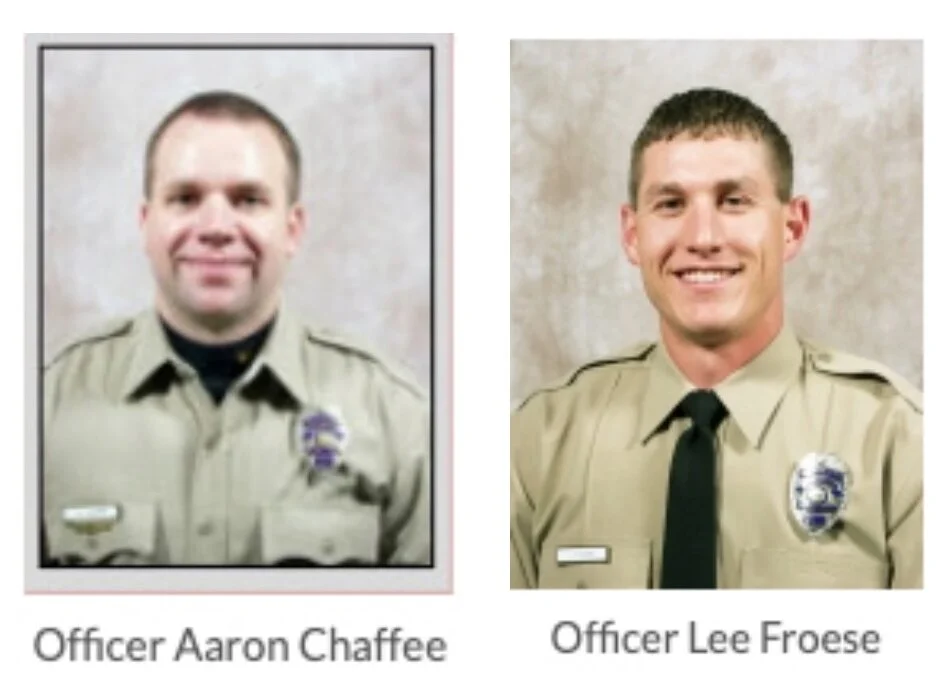
The settlement comes just weeks before claims in an excessive force lawsuit filed by the parents of Marquez Smart were set for jury trial in federal court. Smart’s parents, Brenda and Randall Smart, sued the city over the shooting in 2014, alleging Wichita police officers Lee Froese and Aaron Chaffee violated their son’s Constitutional rights.

Marquez Smart was shot to death by officers Aaron Chaffee and Lee Froese. in March of 2012. Police allege that Smart, a man with no criminal record and no ties to gangs, opened fire on a crowd of people as they left the clubs in the area. However, there is no physical evidence tying Smart to the gun.

The only evidence the police department has against Smart is that he was wearing a yellow shirt, and the shooter was also wearing a yellow shirt. That is, at the time of shooting the white cops had no other corroborating details, such the suspect's height, weight, build, complexion, hair style/length, tattoos, facial hair, age or what color pants or whether the suspect had a hat on, a hoodie etc. He was black with a yellow shirt and that was good enough to these white public masters.

The white police officers, in their attempt to subdue the shooter, wounded multiple people, but Smart was the only fatality. One of the other people wounded that night was also wearing a yellow shirt, according to a lawsuit filed by Smart’s family. Witnesses claim that officers opened fire on Smart and then shot him “execution style”, while he was lying on the ground. Their testimony was not included in the DA’s report.

Evidence suggests three of the bullets hit Smart in the back while he was unarmed and lying face down on the ground with his arms outstretched. He died later at a Wichita hospital.

Three years ago, in 2018, a federal court judge ruled the lawsuit should be dismissed because the officers were protected by qualified immunity [means law of the jungle legal standard]. But a three-judge U.S. Court of Appeals panel reversed the decision last year, saying a jury should decide whether the officers violated Smart’s rights.

The Wichita City Council on Tuesday voted 5-1 to approve the $900,000 settlement following two 10-minute executive sessions. Council member Bryan Frye voted against approving the settlement. Council member Jeff Blubaugh was absent.

An attorney representing Smart’s parents in the case said while “the family is relieved a settlement was reached, they deeply miss their son.”

According to the complaint

‘Marquez Smart spent the entire day with his cousin. At no time during the day did his cousin see that Marquez Smart had a weapon of any type. He was wearing a yellow shirt. That evening, several clubs in addition to Doc Howards in the Old Town district in Wichita were having concerts. Pleasure P was expected to draw a large crowd of young people. Anyone who went to the concert at Doc Howards had to submit to search by the club to make sure they had no weapons on them.

Marquez Smart and his cousin went to the concert at Doc Howards, and were admitted into the club after submitting to the search for weapons.

The police report they were especially concerned about the possibility of gang-related violence. Therefore, officers were paying particular attention to any known gang members and their associates.

Police had significant uniform and undercover officer presence to help manage the crowd at closing time. Officer Chaffee arrived at Mosley between 12:00 a.m. and 12:30 a.m.

Several minor disturbances had already occurred, but had been resolved, that evening, mostly having to do with crowd control and congestion.

The concert let out of Doc Howards at 1:45 a.m. There were about 400-500 people in the entire immediate district attending the various concerts, and an estimated 100-200 in the immediate vicinity of the Old Town Hotel parking garage.

Suddenly, there was a short scuffle, a yell, and a shot fired in the crowd north of the sculpture. Officers Froese saw a black male with a yellow shirt holding a handgun with his right hand, and, with his arm extended, he fired again.

When the shooter started firing, someone called out, “It’s the guy in the yellow!” The large crowd in the immediate vicinity started scattering in all directions.

m smart.jpg

The shooter then ran through the panicked crowd, north on the west side of Mosley toward the parking garage, fumbling with his handgun. A loaded magazine to a .45 caliber handgun was later discovered lying on the sidewalk north of the sculpture. There was a cartridge incorrectly loaded backwards in the magazine.

Froese gave chase, running northwesterly across Mosely after the shooter, firing repeatedly as the man in the yellow shirt ran through the crowd toward Froese’s parked patrol car.

Shortly before the shooting, Marquez Smart and his cousin were walking south, talking with friends on the sidewalk east of the parking garage and near the sculpture on the west side of Mosley.

Suddenly, Marquez Smart was knocked down from behind and fell into his cousin. The force of the blow was so hard that Marquez dropped and broke his glasses.

The two cousins fell together to the sidewalk as a shot was fired close to them. Marquez Smart and his cousin began running as quickly as they could get to their feet, both northward toward the parking garage northeast entrance and exit and the alleyway.

Marquez’s cousin ran behind Froese’s patrol car into the parking garage and exited on the west side, losing sight and contact with Marquez. Marquez ran in front of Froese’s parked patrol car, sitting in the parking garage northeast entrance, and in the alleyway.

After Chaffee reached the street level, he regained sight of a yellow shirt worn by a man running into the alleyway. Officer Chaffee maintained, however, that even though he had turned his back, he
could see “that yellow shirt moving through the crowd.”

Officer Chaffee has stated he did give commands for the man to stop and drop the gun. A witness has stated that Officer Chaffee fired, and the man in a yellow shirt fell face down, his arms outstretched and his head nodding, as if in complete surrender.

A witness who was near Officer Chaffee states that there was no handgun in or near the hands of the wounded man Chaffee had shot.

The witness further states that he observed Officer Chaffee fire his handgun “2-3” times into the back of the wounded man in the alleyway, despite the man being completely submissive.The witness states that the distance from Chaffee to the man he killed when he fired his handgun was approximately from five to seven feet.

When the witness questioned Officer Chaffee’s actions in shooting the man, the witness and another person who had been standing nearby were told by Officer Chaffee, in a profane manner, to leave the area.
60. The two witnesses complied with the order and were never interviewed or contacted by anyone from the Wichita Police Department in the investigation following the event.

An autopsy was performed. Marquez Smart had suffered five bullet wounds, three of which were back to front, with trajectory indicating that the body was prone when the bullets entered.’

Shouldn’t the Dog Listen to You? 4 White IL Cops Not Enough to Handle Small Black Teen During Unlawful Seizure So They Used an Uncontrollable K-9 to Attack for 8 Minutes. Had to Tase the Dog to Stop

POLICE CANINES ARE BRED AND TRAINED BY AUTHORITARIANS TO ENSURE THAT THEIR BITE IS FAR MORE SEVERE THANA NORMAL DOG BITE. THE PRESSURE FROM A POLICE CANINE BITE HAS BEEN LIKENED BY ONE COURT TO THE FORCE OF BEING RUN OVER BY A CAR. FOR DECADES, THE CANINE-INDUSTRY CONTENDED THAT POLICE DOGS USUALLY CAUSE ONLY MINOR INJURIES AND BITE FOR 10 TO 15 SECONDS. THE ERA OF BODY CAMS AND CELLPHONE RECORDINGS SHOWS THEY OFTEN BITE FOR MUCH LONGER AND CAUSE SIGNIFICANT INJURY. UNLIKE NORMAL DOGS, POLICE CANINES ARE TRAINED TO BITE HARD, USE ALL THEIR TEETH AND BITE MULTIPLE TIMES. STUDIES HAVE FOUND THAT OVER 3,500 POLICE CANINE BITESANNUALLY RESULT IN EMERGENCY ROOM VISITS, AND THAT CANINE FORCE RESULTS IN A HIGHER PROPORTION OF HOSPITAL VISITATIONS THAN ANY OTHER TYPE OF POLICE FORCE. ON RARE OCCASIONS, POLICE CANINES HAVE KILLED PEOPLE, INCLUDING A SUSPECTED BURGLAR, A LIKELY TRESPASSER AND A HOMELESS WOMAN.

THIS LEVEL OF VIOLENCE CANNOT BE JUSTIFIED BY THE THREAT POSED. POLICE DOGS ROUTINELY USE FORCE THAT UNQUESTIONABLY WOULD BE UNLAWFUL IF USED DIRECTLY BY A POLICE OFFICER. THE DOGS ARE OVERWHELMINGLY SET ON PEOPLE SUSPECTED OF CRIMES LIKE BURGLARY, CAR THEFT, TRESPASSING, TRAFFIC VIOLATIONS OR “FLEEING”FROM THE POLICE, AND OFTEN USED DURING POLITICAL PROTESTS AND ON NON-WHITES IN IMMIGRATION RAIDS. [MORE]
From [HERE] An Illinois teen is recovering at home after he was bitten by a Granite City police dog on Monday during a traffic stop. When the dog latched onto the teen’s leg and would not let go, officers tased the animal in order to get the K-9 to let him go. 

Devondrea Williams told KMOV after he was bitten by the animal, “I ain’t never screamed like that a day in my life.”

At around 2:30 a.m. on Monday, Williams was in a vehicle with his cousin when they were pulled over by police. Williams did not know why they were being stopped and said officers didn’t give a reason. Police said they pulled the vehicle over because an individual had been involved with a fight. Williams’ cousin, who was the driving, corroborated the claim about his involvement in a fight. Williams was in the back seat of the truck.

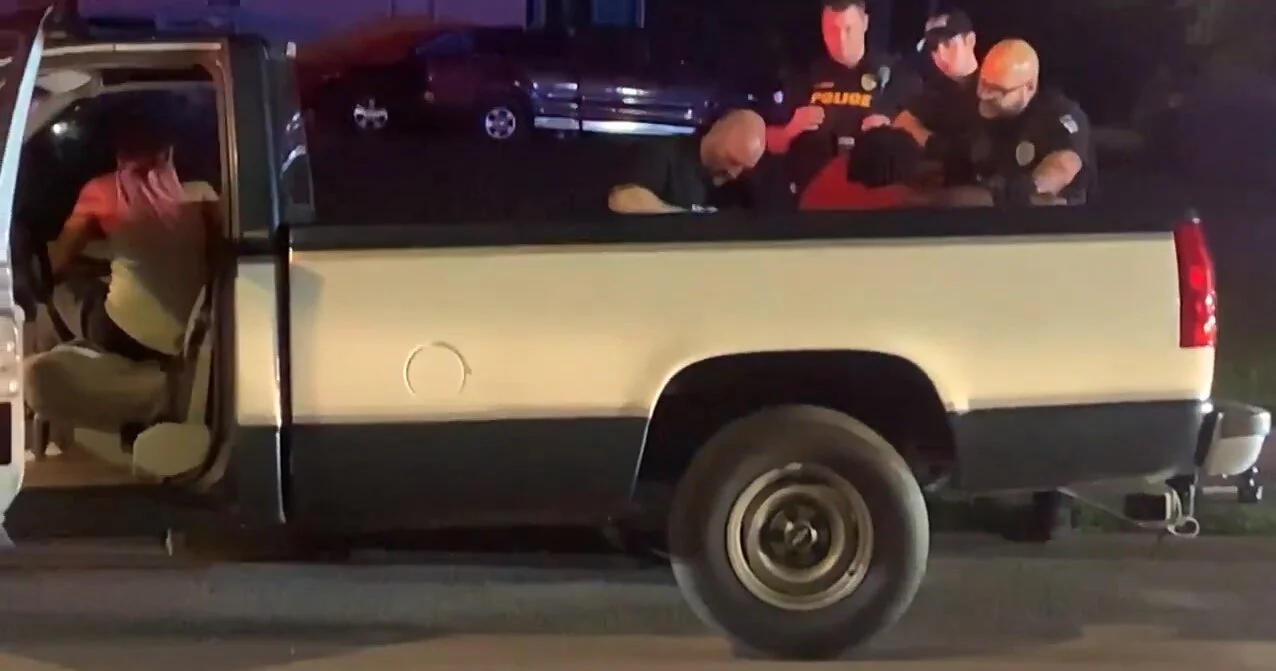
According to Williams, police asked for his information and asked him to get out of the truck. Before Williams could do much he said an officer grabbed his arm and several other officers pushed him against the truck.

Williams explained, “and then I see the dog out of the corner of my eye and then the dog bites me.” The teen said he was bitten by the dog four or five times. 

Regeana Canada, who lives close to where the incident took place, saw police lights and filmed the encounter on her phone. She said the dog was latched onto Williams for eight or nine minutes. Repeated commands for the dog to release Williams can be heard on the recording of the incident. 

Ultimately, the dog had to be tased but only several minutes after latching onto Williams, who suffered injuries to his leg and hand. “They had to tase the dog,” asked the confused young man. “If you have a K9, shouldn’t the dog listen to you?”

metro east white cops.jpg

The Supreme Court has explained that a driver may be stopped based on reasonable, articulable suspicion. Also the driver and passengers may be ordered from the vehicle for officer safety. However, unless the officer has a reasonable articulable suspicion, he may not further detain a passenger. Pennsylvania v. Mimms, 434 U.S. 106, 98 S.Ct. 330, 54 L.Ed.2d 331 (1977)(driver); Maryland v. Wilson, 519 U.S. 408, 117 S.Ct. 882, 137 L.Ed.2d 41 (1997)(passengers).

As such, based on what has been reported the white cop had no lawful basis to seize the Black teen. BW.

To answer the young man’s question: Authority is not required to listen to anyone who is not a higher authority. The force continuum is uncontrollable by “citizens,” such as yourself.

If a “public servant," such as a police officer, is uncontrollable, unaccountable, can’t be hired or fired by you, has irresponsible power over you and provides a compulsory “service” then he is actually your Master. Lysander Spooner, explained “It is of no importance that I appointed him, and put all power in his hands. If I made him uncontrollable by me, and irresponsible to me, he is no longer my servant, agent, attorney, or representative. If I gave him absolute, irresponsible power over my property, I gave him the property. If I gave him absolute, irresponsible power over myself, I made him my master, and gave myself to him as a slave. And it is of no importance whether I called him master or servant, agent or owner. [MORE] Dr. Blynd makes it plain;

"The child who is taught to believe the law will be his protection is the child who will become the victim of its own beliefs."  "Unquestioned beliefs own you."


In the end, after the cops interfered with his freedom and physically assaulted him no one was arrested during the unlawful stop. 

Granite City Police Capt. Gary Brooks stated, “During the traffic stop, an individual obstructed the investigation and resisted arrest. They were taken into custody with the assistance of a police K-9. This investigation is still ongoing and as a result, no further information can be given at this time regarding this matter.”

Canada, however, refuted the captain’s claims of resistance. “No, he did not resist arrest at all,” said Canada

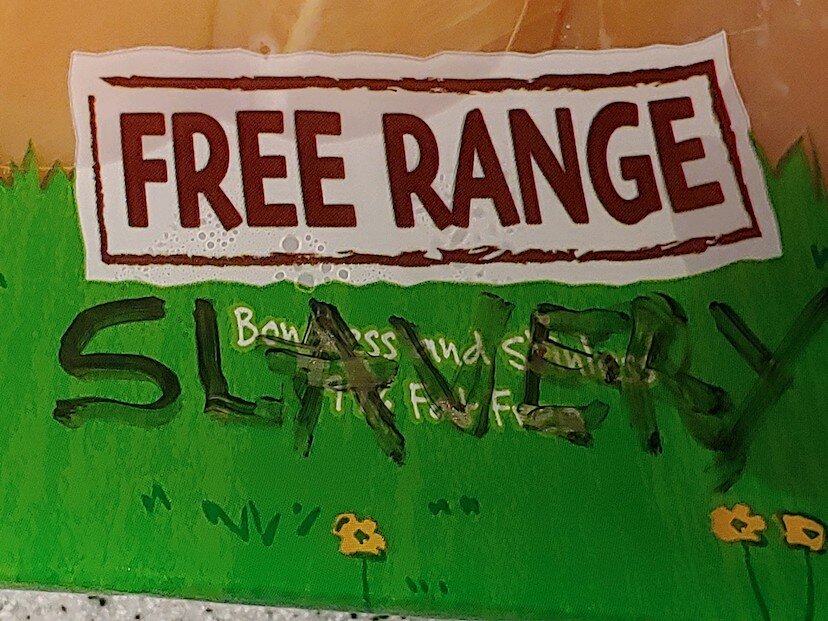
'I’m going to frisk you b/c you look like you were going to break into cars and avoided looking at me' Black Man Stopped, Searched and Niggerized by a White KBPD Cop while Walking in Free Range Prison

Legal truths must give way to reality on the street. Cops so frequently abuse their power that no Black shopper, pedestrian, motorist, juvenile, adult or Black professional of any kind—could make a compelling argument that so-called constitutional r…

Legal truths must give way to reality on the street. Cops so frequently abuse their power that no Black shopper, pedestrian, motorist, juvenile, adult or Black professional of any kind—could make a compelling argument that so-called constitutional rights afford any real protection from cops.

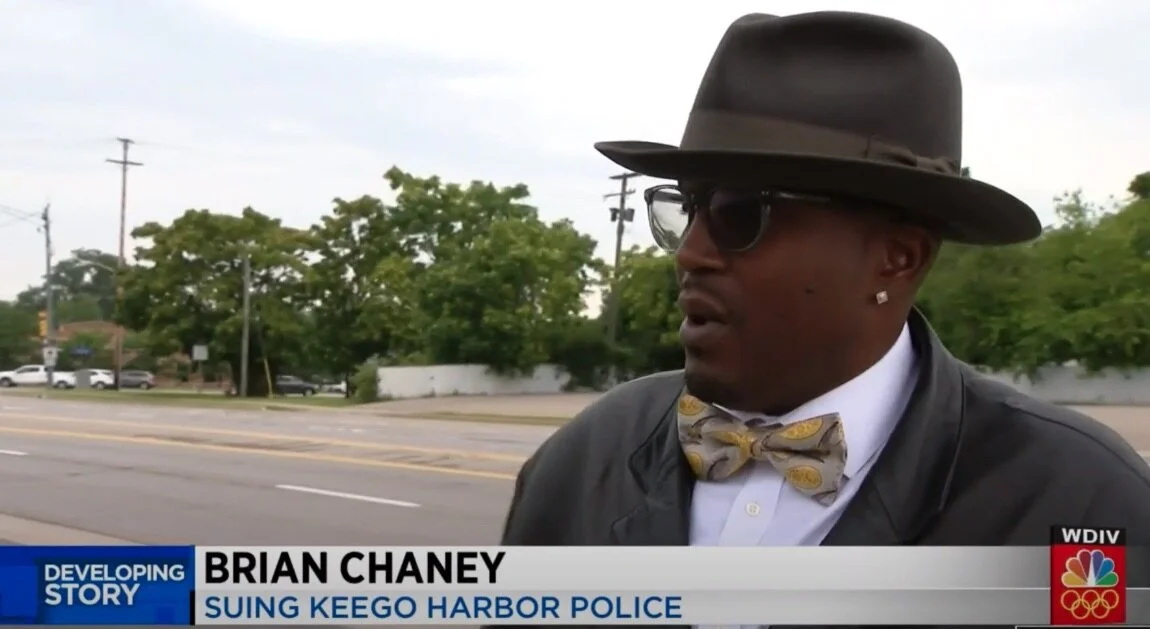
From [HERE] A Black man has filed a $10 million civil rights lawsuit against a suburban Detroit police department and an officer on the force after he was stopped and detained, then injured, while walking along a road earlier this month. The suit says “he was detained and arrested on the basis of his race. “

Brian Chaney, a 48-year-old Farmington Hills, Michigan, man, filed the suit on Monday against the Keego Harbor Police Department (KHPD) and Officer Richard Lindquist, alleging he was wrongfully detained while walking along the commercial street.

The suit says the “KHPD has adopted a custom policy, pattern and practice of racial discrimination against African Americans, other persons of color and the deprivation of the Constitutional and Statutorily protected Civil Rights of citizens in general.“

a 48-year-old black male, dropped his kids off for weight training at PHYX gym in the City of Keego Harbor. Plaintiff had followed this routine with his children 3- days a week for the prior two months.

To make good use of time, while his kids trained, Plaintiff would engage in exercise himself by walking along Orchard Lake Rd. to return to PHYX gym at the conclusion of his kids weight training sessions. According to the complaint:

Plaintiff was listening to a podcast through his headphones while he was walking. Plaintiff was walking Southbound on the Eastside of Orchard Lake Road. As Plaintiff was walking, he noticed Defendant Lindquist inside of his Police vehicle parked in a driveway facing Orchard Lake Road. Plaintiff walked for another block or so Southbound on Orchard Lake Road. Plaintiff then turned around and began walking back Northbound on Orchard Lake Road. At that time Lindquist had pulled out of the driveway and began to drive Southbound on Orchard Lake Road in the direction of Plaintiff. As Defendant Lindquist drove his vehicle toward Plaintiff, he suddenly alighted from his vehicle, began walking toward Plaintiff while shouting at him ordering Plaintiff to “get your hands out of your pockets”.

Officer Lindquist told Plaintiff to “stop moving” and further told Plaintiff, “I’m going to frisk you because you look like you have a weapon and were going to break into cars.” Lindquist also stated to Plaintiff “You avoided looking at me.”

Officer Lindquist asked Plaintiff “where do you live?” Plaintiff answered “Farmington Hills”, Lindquist then stated “Oh, so you walked your ass all the way out here, huh?”

Plaintiff told Lindquist that he walks in the area (3) three-times per week after he drops children off for their workouts at the PHYX gym which was a short distance down the street.

Officer Lindquist then told Plaintiff to turn around while simultaneously violently shoving Plaintiff in the back and violently pushing Plaintiff up against a nearby car, injuring Plaintiff’s groin and put handcuffs on Plaintiff tightly and jerking the handcuffs injuring Plaintiff’s wrist.

After Lindquist handcuffed Plaintiff, Plaintiff asked Lindquist what had Plaintiff done wrong to justify being detained, arrested, handcuffed and physically battered as there was no basis for Lindquist to stop, detain, arrest, handcuff, or put his hands on Plaintiff. Lindquist did not respond to Plaintiff’s question. Lindquist then asked Plaintiff for his driver’s license. Plaintiff stated that his driver’s license was in his car which was parked down the street. Lindquist then asked Plaintiff for the spelling of Plaintiff’s name. Plaintiff spelled his name and provided from memory his drivers license number to Lindquist.

Plaintiff constantly asked both Officer Lindquist and the other officers that arrived at the scene of the arrest what he was being arrested for and the Officers simply ignored Plaintiff. Plaintiff requested several times that officer Lindquist call his supervisor to the scene. Officer Lindquist ignored each of Plaintiff’s requests. When an officer, who identified himself as “Clement” arrived at the scene, Lindquist stated to Plaintiff that “Clement” was his supervisor. “Clement” later stated to Plaintiff that he was not Lindquist’s supervisor.

While Plaintiff was in KHPD’s custody, Officer Lindquist called Plaintiff a “Dog” and Plaintiff responded by telling Lindquist not to call him a dog, and that to do so, was offensive. Officer “Clement” then made the statement “I have a black Labrador dog but he’s actually smart.”

Plaintiff again asked for Lindquist’s supervisor. Lindquist continued to lie to Plaintiff stating to Plaintiff that “Clement” was his supervisor. Plaintiff repeatedly asked Lindquist why he was arrested and detained. Lindquist continued to ignore Plaintiff and did not answer Plaintiff’s question. Plaintiff repeatedly requested that he be released and no longer unlawfully detained/arrested. Lindquist and the other officers ignored Plaintiff’s requests.

Officer Lindquist began poking Plaintiff in the back to force Plaintiff to talk to him. Plaintiff refused to talk to Lindquist, stating that he will only speak with Lindquist’s supervisor. Plaintiff asked Lindquist, “What are you going to do next, put your knee into my neck?”

Officer Lindquist then took the hand cuffs off of Plaintiff and stated to Plaintiff without any apologies, “You can go”.

Plaintiff was detained by KHPD and Officer Lindquist for over 20 minutes.

Lindquist was aware that Plaintiff was a black male at the time he stopped, detained, handcuffed, arrested and battered him. Lindquist knew or should have known that he had no valid basis for stopping, detaining, handcuffing, arresting or battering Plaintiff.

As a result of the physical and psychological abuse Plaintiff suffered at the hands of the KHPD and Officer Lindquist, Plaintiff had to be taken to the Emergency Room at Beaumont Hospital.

Immediately after the arrest, Plaintiff began having migraines and vomiting episodes. Plaintiff immediately drove to his personal/family physician’s office. His family physician would not release him due to an extreme and dangerously elevated blood pressure reading. Plaintiff’s family physician called an ambulance by which Plaintiff was transported from his family physician’s office to the emergency room at Beaumont Hospital, Royal Oak, where plaintiff stayed and was not released until the following day.

Chaney told reporters that Wednesday that bringing up the incident that led to Floyd’s death wasn’t something he wanted to do. “I hate that I had to say that, though. I went from being scared and upset at that point to just really angry. I’m cuffed like an animal for walking, drinking my coffee.”

The lawsuit says the defendants “Failed to train and or adequately train, supervise, and/or discipline officers and other employees and agents of Defendant KHPD, with regard to racial discrimination and racial harassment and the constitutional and statutorily protected Civil Rights of citizens.”

San Francisco to Pay $8 Million to Maurice Caldwell, a Black Man Wrongly Convicted for Murder and Imprisoned for 20 years

maurice caldwell.jpg

From [HERE] The city of San Francisco will pay $8 million to settle a lawsuit with a man who spent 20 years in prison for a murder he did not commit after a police officer allegedly falsified evidence against him.

Maurice Caldwell was released from prison on March 28, 2010, a few months before San Francisco County Superior Court Judge Charles Haines overturned his conviction on a finding that Caldwell's counsel had been ineffective.

In 1991, Caldwell was found guilty of the 1990 murder of Judy Acosta on Ellsworth Street in the Alemany Projects in San Francisco. A guilty verdict was obtained primarily based on the testimony of one eyewitness, who was allegedly tainted by "suggestive" police tactics.

Throughout his 20 years in prison, Caldwell refused multiple plea deals that would have secured his immediate release. He continued to insist on his innocence despite having to serve further time behind bars, he claimed in his federal lawsuit.

Caldwell said a key witness who identified him as the shooter was manipulated by suggestive police tactics and promised financial incentives, including a trip to Disneyland, in exchange for her testimony.

His lawsuit claims now-retired police commander Kitt Crenshaw, who was a sergeant at the time, handcuffed him and presented him to a key witness before a photo lineup to influence the witness's identification of him as a suspect. The witness initially described the suspect as not precisely matching Caldwell's appearance and said the suspect was someone she did not know, unlike Caldwell, who was a neighbor she knew as "Twone."

Caldwell also claims Crenshaw fabricated notes saying Caldwell admitted he was dealing drugs and present during the shooting, even though Caldwell actually said he was at his uncle's house during the shooting.

In an emailed statement Friday, San Francisco City Attorney's Office spokesman John Coté said Crenshaw "played no role" in Caldwell's trial and that this involvement in the murder investigation "was limited to a single interaction with Caldwell on a singe day in the summer of 1990."

Coté emphasized that Caldwell's conviction was overturned based on ineffective counsel and not based on any alleged misconduct in the murder investigation. According to the City Attorney's Office, courts had rejected four previous attempts to overturn the guilty verdict based on alleged false testimony, newly discovered evidence, cumulative errors that denied him due process and the claim that he is actually innocent. 

"Two different courts rejected Mr. Caldwell’s petition for a finding of actual innocence," Coté  said, adding that prosecutors chose not to retry Caldwell because the key witness had died in 1998.

According to Caldwell's lawsuit, Crenshaw had a motive to doctor evidence because Caldwell had filed a complaint against him with the city's police watchdog agency, the Office of Citizen Complaints (OCC), now known as the Department of Police Accountability. Caldwell claimed Crenshaw, who was a narcotics officer at the time, had assaulted him. During the OCC investigation, Crenshaw admitted that he threatened to kill Caldwell during a previous interaction.

A federal judge ruled in 2016 that while Caldwell had raised legitimate questions about Crenshaw’s motive to frame him, a prosecutor “broke the chain of causation” by reviewing all the evidence before independently deciding to charge Caldwell with murder.

But that ruling was overturned two years later by the Ninth Circuit Court of Appeals, which said a jury should decide whether evidence was fabricated and whether the prosecutor relied on alleged falsehoods to charge Caldwell. 

The manner in which police first presented Caldwell to the trial's key witness was highly prejudicial, according to Caldwell's lawsuit. While another officer was interviewing the witness on July 13, 1990, Crenshaw allegedly found Caldwell outside, handcuffed him and "dragged him up" to the witness’s front door. While presenting a handcuffed Caldwell to the trial's future star witness, Crenshaw said something to the effect of, "This is Maurice Caldwell, Twone, the guy I've been telling you about. I need the keys to put him in the patrol car,” according to the complaint.

Caldwell had also accused two other officers, Arthur Gerrans and James Crowley, of improperly prejudicing the witness during a photo lineup, but the Ninth Circuit found the officers could not be sued because they never confirmed the witness picked the "correct suspect," apart from stating Caldwell's name after he was identified.

The city previously offered Caldwell $2.5 million to settle the lawsuit, an offer that was rejected by him and his attorneys.

Caldwell’s lawyers announced the settlement during a court hearing this past April, nearly nine years after the suit was filed on April 16, 2012.

The $8 million dollar figure was revealed this week in the agenda for the San Francisco Board of Supervisors’ July 27 meeting. The board’s Government Audit and Oversight Committee will consider the proposed settlement before it goes to the full board for a vote. It would then have to be approved by San Francisco Mayor London Breed.

Caldwell’s attorney Terry Gross, of the firm Gross & Belsky, said his client is pleased with the settlement, but he declined to comment further until the deal is approved by the city and accepted by the court.

“We are very happy to reach this excellent settlement with the city for our client, but we’re not at liberty to speak about it until it becomes final,” Gross said in a brief phone interview.

Coté, of the City Attorney's Office, framed the settlement as good deal for the city. He said Caldwell was seeking more than $21 million in damages. 

"Settling this for a fraction of that avoids the cost of further litigation in a case about police practices from the 1980s where evidence and witnesses are no longer available more than 30 years later," Coté said. "Nothing about this settlement should be read as an admission that the officer did anything other than his job when he stopped and took a statement from Caldwell during the investigation."

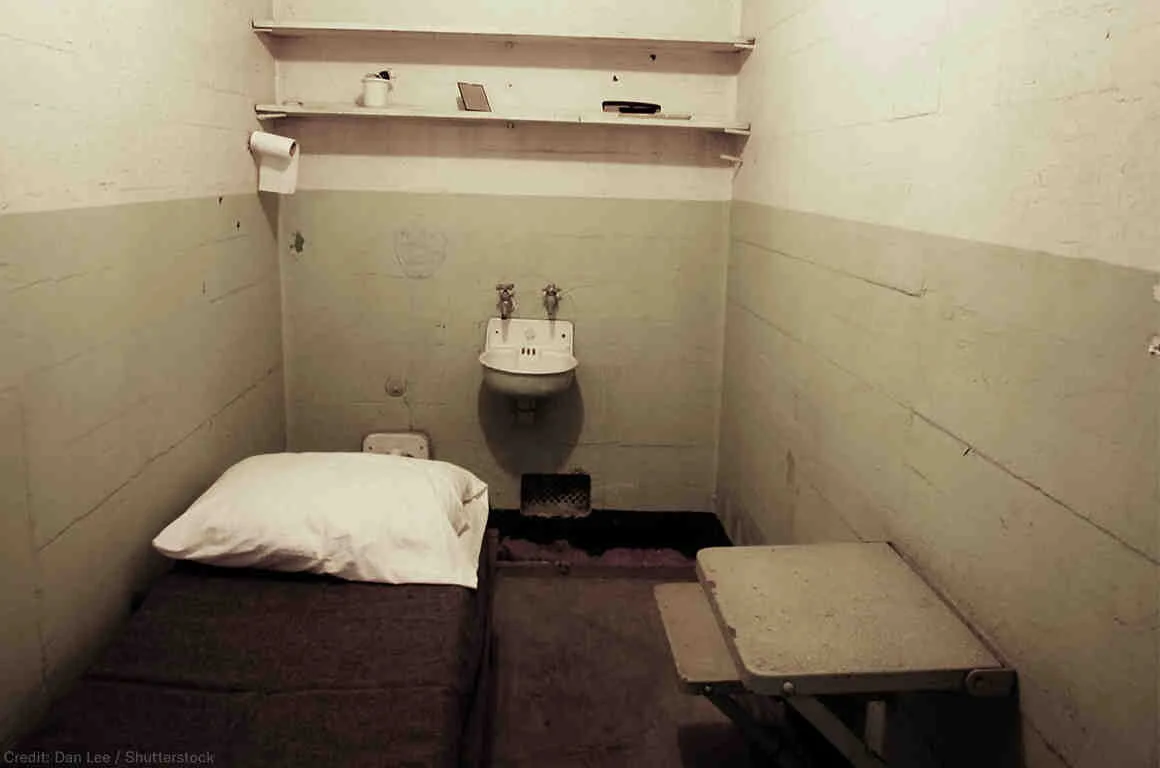
VA Corrections Dept says 'Restrictive Housing' has ended but ACLU claims Liar Authorities Keep Inmates in Solitary Confinement for 20 or More Hours Per Day and for Lengths of 2 to 20 Years

From [HERE] The Virginia Department of Corrections said Thursday that it has ended what it calls “restrictive housing” in prisons. The ACLU of Virginia and other advocates for prison inmates — who call the practice “solitary confinement” — disagree.

Harold W. Clarke, director of the DOC, announced in a statement that on Jan. 6, 2020, the department began “a progressive revision of its restrictive housing program by offering at least four hours of out-of-cell time for inmates in restrictive housing.”

“By offering a minimum of four hours of out-of-cell time each day to all inmates in these programs, the Department no longer operates anything that meets the American Correctional Association definition of restrictive housing,” Clarke said.

Effective Aug. 1, the effort will culminate with the adoption of what the department calls “restorative housing.”

“The Department will continue to enhance this reform effort by maintaining a high level of safety and security while offering meaningful programming opportunities for inmates on a pathway to a successful future within the program and beyond,” Clarke said in his statement.

The ACLU of Virginia and Interfaith Action for Human Rights responded that the claimed elimination of restrictive housing is not true.

“Solitary confinement by any other name is still solitary confinement,” the ACLU said. Restrictive housing is defined by the American Correctional Association as the confinement of a person to a cell for 20 or more hours per day.

“The Virginia Department of Corrections claims that for the last 18 months, everyone in ‘restrictive housing’ has received more than four hours a day out of their cell, and that the Department ‘no longer operates anything that meets the American Correctional Association definition of restrictive housing.’”

The organization alleged that numerous people have complained of the department’s use of solitary confinement.

“A report filed earlier this year by an independent, court-appointed monitor concluded that Fluvanna Correctional Center for Women routinely isolates people with mental illnesses for 23 hours or more a day,” the ACLU said.

The ACLU said that earlier this year when lawmakers introduced a bill to end solitary confinement, requiring that every incarcerated person be given four hours out of cell per day with few exceptions, the department claimed it would cost $23 million per year to implement, effectively killing the bill’s chances of passage.

Last month, a federal court allowed the ACLU to continue its class-action lawsuit against the department over its use of long-term solitary confinement in Virginia’s Red Onion and Wallens Ridge state prisons. The lengths of stay in solitary confinement of the 12 named plaintiffs in the case range from two to 24 years, the ACLU said.

The Department of Corrections, contends the ACLU, “is able to make these unsubstantiated claims because there is no system of independent oversight over Virginia prisons, and therefore the public has no way to verify its alleged reforms, including whether the new so-called Restorative Housing unit will operate as another version of solitary confinement.”

“The state legislature has killed bills aimed at improving prison conditions and ending solitary confinement. Governor Ralph Northam could end the barbaric practice with the stroke of his pen,” the ACLU said.

Gay Gardner, with Interfaith Action for Human Rights, wrote in an email that the group is aware that it has been the department’s official policy since early 2020 to allow four hours of out-of-cell time for prisoners in restrictive housing.

“However, this policy has not been widely or consistently implemented. Particularly since the onset of the coronavirus pandemic, we have heard from even prisoners in general population who have not been getting four hours outside their cells each day,” she wrote.

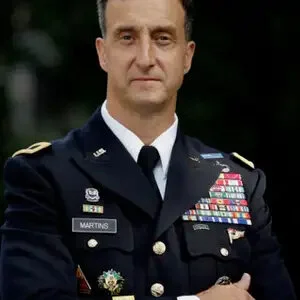
[plantation better under new master] Chief Guantánamo Prosecutor Quits Under Protest b/c Military is No Longer Permitted to Use Statements Obtained by Torture Under Biden Administration

CHIEF ROCKA .jpg

From [DPIC] After clashing with Biden administration officials over the propriety of using statements obtained through torture from Guantánamo detainees, Army Brigadier General Mark S. Martins (pictured), the chief prosecutor in the Guantánamo Military Commission trials, will retire from the military on September 30, 2021. Martins, who had served as the commissions’ chief prosecutor throughout the Obama and Trump administrations, abruptly submitted papers on July 7 providing notice of his early retirement. Gen. Martins had recently sought and obtained an extension of his Guantánamo assignment until January 1, 2023. 

Citing “senior government officials with knowledge of the disputes,” the New York Times reported on July 9 that Martins had “repeatedly butt[ed] heads with Biden administration lawyers over positions his office had taken on the applicable international law and the Convention Against Torture at the Guantánamo court.” The Biden administration opposed the use of statements obtained by torture.

During the Trump administration, Martins had taken the position that the due process clause of the U.S. Constitution did not apply to Guantánamo detainees, a position that raises significant constitutional and human rights issues. The Biden Justice Department has since backed off Martins’ view, though not overtly repudiating it. In briefs filed by civilian lawyers July 9 in the case of Abdulsalam al-Hela — a Yemeni detainee who has been incarcerated at Guantánamo since 2004 without being charged with any offense — the Justice Department said it took no position on the issue.

Martins also filed pretrial pleadings using statements obtained by torture from detainee Abd al-Rahim al-Nashiri, who is being capitally prosecuted as the alleged mastermind of the USS Cole bombing that killed 17 U.S. sailors in 2000. Although a military judge ruled that such statements were admissible in pretrial proceedings, under pressure from administration officials, military prosecutors filed a motion on July 16 to remove those statements from the record. 

“Was he asked to resign or did he quit in protest?,” Nashiri’s lead counsel Navy Captain Brian L. Mizer said to The Times. “I don’t know.” But, Mizer added, “[r]emoving the sentences citing evidence obtained by torture, but not [withdrawing] their motion saying the judge is free to use torture pretrial, or the judge’s ruling saying that it is lawful to do so, accomplishes little.”

Johnson and Johnson Hits the Jackpot w/COVID: Vaccine Should Notch $2.5 Billion in Revenue for the Year, according to Chief Financial Officer

doggy+wit+mask.jpg

From [HERE] Greater demand for medical devices, drugs and consumer-health products helped boost sales and profit for Johnson & Johnson JNJ 1.06% in the latest quarter, a sign people are returning for healthcare services they deferred earlier in the pandemic.

Sales of J&J’s medical devices climbed 63% year over year, the company said Wednesday. Higher sales of the company’s skin-care and beauty products helped lift J&J’s consumer-health revenue by 13% compared with a year earlier.

The New Brunswick, N.J.-based company, a bellwether for the healthcare industry because its products span several categories, logged sales of $23.31 billion—a 27% increase year over year—and adjusted earnings of $2.48 a share.

Wall Street analysts had forecast adjusted earnings of $2.29 a share and revenue of $22.49 billion, according to FactSet.

Shares of Johnson & Johnson were largely flat Wednesday.

J&J executives expressed confidence the return to healthcare use would continue, saying they didn’t expect the spread of the Delta variant of the coronavirus would have an impact.

“Our outlook for the rest of the year really remains strong for our sector regardless of what happens with emerging variants and any continued blips as it relates to Covid,” said Jennifer Taubert, who runs J&J’s pharmaceuticals business.

Ashley McEvoy, J&J’s medical devices chief, said hospitals appear better than earlier in the pandemic at handling any surges in Covid-19 cases while keeping elective surgeries going. Yet she said some hospitals in the U.S. are beginning to delay elective procedures as Covid-19 cases mount.

The company raised its guidance for full-year performance. J&J forecast sales of $93.8 billion to $94.6 billion and adjusted earnings of $9.60 to $9.70 a share, up from the maximums from its previous forecast of $91.6 billion and $9.57 a share.

J&J said sales of its Covid-19 vaccine, which generated $164 million in revenue in the second quarter, would pick up during the latter parts of the year. The shot should notch $2.5 billion in revenue for the year, most of it in the fourth quarter, Chief Financial Officer Joseph Wolk said.

Copitalism: After Stomping on a Restrained Black Man's Head a Fired Cleveland Cop Gets His Job Back, Community Unable to Decline His Compulsory Service or Resist His Uncontrollable Conduct; Suit Filed

east cleveland cop stomp.jpg

From [HERE] A Black man who was seen on police body camera video getting stomped on by an East Cleveland police officer has filed a lawsuit alleging the department has failed to turn over public records relating to the “brutal assault.”

Redrick Ward filed the lawsuit in Cuyahoga County Common Pleas Court on Thursday.

Ward’s attorney, David Nacht, said the suit was filed, “In order to bring to light the truth about the East Cleveland Police Department.”

“Not only does the city of East Cleveland have a terrible record with regard to police abuse of Ohio citizens, not only have they reinstated an officer, Nicholas Foti, who is on video kicking a handcuffed and face down citizen over and over in the head, but they withhold information and records that they are legally obligated to provide, information that belongs to the people of Ohio,” Nacht said. “ I believe the city’s efforts to withhold this information is part of a calculated strategy to sweep allegations of abuse and police brutality under the rug.”

East Cleveland Law Director Willa Hemmons  told the I-Team Friday that the attorney did not pay $20.25 for the public records and that’s why the information was not sent to him.

The excessive force incident happened on April 1, 2020. City officials learned about the matter in March of this year after a public records request was made for the video. The officer involved, Nicholas Foti, was fired but earlier this month an arbitrator ruled Foti should get his job back.

The incident began about 2 a.m. when officers saw Ward driving on the sidewalk, Gardner said. He noted that the pursuit speeds were “very slow,” and officers “believed him to be intoxicated.”

The video shows an officer telling a supervisor that Ward was going about 35 mph to as low as 10 mph during the pursuit with no traffic or pedestrians present.

“It is my opinion that the lag in time compromised the due process rights of the grievant,” attorney Bruce  B. McIntosh’s ruling stated. “Even though there were five officers at the scene, allegations of excessive force were not discovered for almost a year. It is hereby ordered that the grievant be returned to the city’s employ as an officer with the East Cleveland Police Department.”

Nacht said after they receive the public records, they plan to file a civil rights lawsuit in federal court.

“If he’s going that slow see if somebody can get in front of him with the stop sticks,” the supervisor said over the radio.

Shortly after, Foti got in front of Ward’s car and stopped it using the stop sticks on Euclid Avenue near Alvason Road, according to police records.

Officers surround the car and immediately smashed Ward’s driver’s window. It is not clear why that was necessary. Two police officers pulled him out and threw him face-first onto the road. The cops hold him face down in the street with a knee into his upper back ala George Floyd with the man’s hoodie over his head, appearing to smother him. At that point Foti comes up and kicks him in the head. In the video Ward is not seen resisting or moving much at all.

Ward shouted at the officers, and while it’s not visible, the body cam footage contains audio of the officers tasing Ward.

Foti then kicked Ward in the head, Gardner said.

Paramedics took Ward to University Hospitals for medical treatment, records say.

Gardner said his department found that no other officers violated the use-of-force policy in the encounter with Ward.

Garnder said the officer who punched Ward, as seen in the video, was trying to get Ward’s hands behind him so an officer could handcuff him, Gardner said.

“The investigation will hopefully show if officers were aware of officer Foti’s use-of-force and, if so, why they failed to report it,” Gardner said.

The encounter left Ward injured, and he now has a permanent scar on his head.

“I have difficulty imagining how the officer who engaged in the kicking could imagine why he had legal justification for it,” he said. “I viewed it as a lawyer: ‘What was the officer thinking when he did that?’”

NYPD Cop Charged for Attacking 2 Handcuffed Black Men in Separate Incidents, Punching 1 in the face While in a cell and Kneeling on the Back of Another who was shouting “I can’t breathe”

NYPD arrested .jpg

From [HERE] A New York police sergeant was charged on Thursday with attacking two handcuffed suspects in separate arrests, punching one in the face when he was in a cell and kneeling on the back of another who was shouting “I can’t breathe” from a subway station floor.

Authorities claim the sergeant, Phillip Wong, acted after being spit at in one instance and taunted with anti-Asian slurs in the other. But the provocations did not justify his responses, Cyrus R. Vance Jr., the Manhattan district attorney, said.

“When N.Y.P.D. officers head into the field each day to face unknown and potentially life-threatening situations, they do one of the most difficult jobs in the world,” Mr. Vance said in a statement. “But having sworn an oath to protect and serve their communities, those difficult jobs need to be carried out with the utmost integrity and professionalism.”

That was especially true, he added, for officers in supervisory roles. “This sergeant grossly violated his training — and the law — during the arrests of these two individuals, whose conduct did not justify these violent responses,” he said.

In a brief court appearance on Thursday afternoon, Sergeant Wong, in handcuffs, pleaded not guilty to third-degree assault and attempted third-degree assault, both misdemeanors.

Police Department guidelines have long prohibited officers from using chokeholds, including “any pressure to the throat or windpipe, which may prevent or hinder breathing or reduce intake of air,” except in extremely limited circumstances, and they are trained not to sit, kneel or stand on people’s heads, backs or chests.

The department’s rules also forbid officers from using force as retaliation and against handcuffed detainees, except to prevent injury, stop an escape or overpower someone who is resisting.

The rules have not kept New York officers from employing the banned practices. The charges against Sergeant Wong, 37, were announced a day after it emerged that the city had agreed to pay $575,000 to settle a lawsuit brought by a man who said an officer had put him in a chokehold and shot him 13 times with a Taser over a suspected noise violation.

The district attorney’s office gave the following account of the arrests that prompted the charges against Sergeant Wong, a 15-year department veteran who has been suspended without pay.

In the first, in October 2019, he was among a group of officers who took a 48-year-old man and two other people to a Harlem precinct for arrest processing. Once there, he and two other officers put the man, who was handcuffed, into a holding cell.

As the officers closed the cell door, the man kicked it and began to spit at them. Sergeant Wong pushed past the two other officers, opened the door and punched the man in the face. The man was taken to a hospital, where he got stitches for a cut above his right eye.

The second arrest occurred at the subway station at Broadway and West 96th Street in April 2020. An officer there under Sergeant Wong’s supervision arrested a 35-year-old man after seeing him punch someone on an arriving train.

As officers led the man out of the station, he yelled obscenities and anti-Asian slurs at Sergeant Wong, and then kicked him in the leg. Sergeant Wong and a second officer took the man, his hands cuffed behind him, to the ground, with the man on his stomach and Sergeant Wong kneeling on his back.

They claim the man continued to taunt Sergeant Wong, and then shouted, “I can’t breathe.”

Sergeant Wong, using an obscenity for emphasis, responded that he did not care “if you can breathe or not” and punched the man in the side of his face. He then placed both of his knees on the man’s back and bounced on him repeatedly.

The man was taken to a hospital, where staff members determined that he had not sustained any injuries.

An assistant district attorney, Carolina Nevin, told Judge Curtis Farber of State Supreme Court on Thursday that Sergeant Wong’s supervisor had reported the 2019 episode to the Police Department’s Internal Affairs Bureau.

The Legal Aid Society said it was representing the man involved in one of the arrests, but declined to provide further details. Jennvine Wong, a Legal Aid staff attorney, called the charges against Sergeant Wong “a step in the right direction.”

“But it is merely one case in many where police officers believe they are above the law,” she said. “For too long, officers have gotten away with brutally assaulting our clients, lying on the witness stand, planting evidence and other egregious acts of misconduct.”

ACLU sues Chicago Police for Release of Social Media Monitoring Records. Instead of Preventing Murders, Cops and Probotic Black Mayor Monitored Social Media Sites 24 Hours a Day

doggy portrait.jpg

From [HERE] The American Civil Liberties Union (ACLU) of Illinois sued the Chicago Police Department (CPD) Thursday to turn over records related to the department’s social media monitoring task force that was formed last summer. After an initial public records request, the CPD turned over all requested records except for the social media records.

Chicago Mayor Lori Lightfoot and CPD Superintendent David Brown announced the formation of the social media monitoring task force in August 2020. This announcement followed months of protests after a police officer killed George Floyd. The task force was implemented to monitor social media sites 24 hours a day for the planned activity. “As we’ve seen over these past few months, social media platforms have repeatedly been used to organize large groups of people to engage in illegal activity,” Lightfoot stated when announcing the task force.

The ACLU alleges that the CPD violated the Illinois Freedom Act when it did not release the requested social media records. Ariana Bushweller, part of the legal team filing the lawsuit, stated that:

CPD must provide public records that answer basic questions about why the City is monitoring social media accounts, who has access to the information collected, and how that information is being used. The public needs this information to learn whether this latest surveillance is wrongfully targeting Black and Brown people, as has too often been the case across the country, including the surveillance of Black activists.

CPD explained that releasing the social media records would “compromise the vulnerability assessments, security measures, and response policies and plans that are designed to respond to potential attacks upon the city of Chicago.”

One by One, More Civilized Governments in Africa Dismantle Colonial-Era Death Penalty Laws. Sierra Leone is the 23rd Nation to Prohibit Official Government Murders

From [HERE] Lawmakers in Sierra Leone voted unanimously on Friday to abolish the death penalty, a momentous step that made the West African country the 23rd on the continent to prohibit capital punishment.

The decision was one more step in a long-sought goal of civil society organizations and legal practitioners who see the death penalty as a vestige of Africa’s oppressive colonial history.

“This is a horrible punishment and we need to get rid of it,” said Oluwatosin Popoola, a legal adviser at the rights group Amnesty International, a leading critic of capital punishment.

A vast majority of the 193 member states of the United Nations have either abolished the death penalty or do not practice it.

“It’s a dream come true in terms of criminal justice, to actually remove such a heinous penalty,” said Simitie Lavaly, a member of Sierra Leone’s Human Rights Commission and a lawyer who has represented people on death row.

Kanteh Yumkella, a lawmaker and former presidential candidate, called the decision “momentous.”

“I can tell you that we had to reflect on it quite a bit,” he said. “We thought of the political use of the death penalty, which has dogged us.”

He added: “We’ve had a history here where people have been charged with treason. Some have been hanged.”

The vote in Sierra Leone came against the backdrop of a steady march in Africa to discard brutal laws imposed by past colonial masters. In April, Malawi ruled the death penalty unconstitutional. In May of 2020, Chad did the same.

Tribe Loses Claim to Key Maine Waterway - All Land in the Free Range Prison is Owned by the Government Unless It Deems Otherwise

law over humanity 32.jpg

From [HERE] A Native American tribe that claimed the right to regulate fishing, boating and other recreation on one of Maine’s most important rivers lost Thursday in a contentious 3-2 decision by the en banc First Circuit.

The Penobscot Nation owns a number of islands in a key 60-mile stretch of the main stem of the Penobscot River near Bangor. But it also claimed to own the river itself — an assertion that the court tossed out in a mammoth 136-page decision that sifted through the history of Native American treaties going back to 1715.

The Penobscot tribe once claimed a legal right to two-thirds of the state of Maine but it settled its dispute in 1980 in return for land, federal recognition and some $40 million in trust funds. While the agreement gave the tribe the islands along the 60-mile stretch, it didn’t specifically say who controlled the river itself. 

Following some incidents in which tribal members confronted people using the river, the Maine attorney general issued a 2012 opinion saying the river wasn’t part of the tribe’s reservation. The tribe sued, and the U.S. intervened on its behalf. A number of local businesses and towns also intervened to support the state. 

In 2017 the First Circuit sided with the state in a 2-1 panel decision, but it later agreed to reconsider the issue en banc.

Thursday’s en banc majority said the 1980 agreement gave the tribe the right to the islands in the river and the plain meaning of “islands” is the land itself and not the waters surrounding them.

Because the 1980 agreement was unambiguous, it wasn’t necessary to consider whether the tribe had any other historical claim to the waters, wrote U.S. Circuit Judge Sandra Lynch, a Clinton appointee.

But U.S. Circuit Judge David Barron dissented and said the 1980 agreement had to be read in light of a treaty it referenced from 1818, two years before Maine became a state. [MORE]

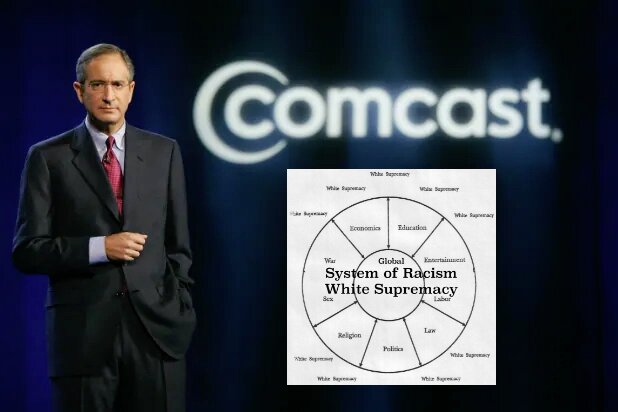
Comcast Condemned GA's Racist Voting Law, then Gave Thousands to its Racist Backers [racism white supremacy is conducted by deception and Black people's belief in many, many lies told by racists]

comcast rws 1.jpg

From [HERE] Three months ago, Comcast responded to the passage of Georgia’s sweeping voting law by saying, “Efforts to limit or impede access to this vital constitutional right for any citizen are not consistent with our values.”

That was then.

On June 30, the telecommunications giant contributed $2,500 to Georgia’s attorney general, Chris Carr, who has vigorously defended the law, which critics say will curtail voting access, including by limiting use of drop boxes for absentee ballots and making it a crime for third-party groups to hand out food and water to voters standing in line. President Biden’s Justice Department sued Georgia over the measure last month, saying it discriminated against Black voters, while the bill’s proponents maintain it is necessary to shore up confidence in the state’s elections.

Comcast was one of several companies that raised alarm about the voting restrictions but then contributed more than $20,000 collectively between April and June of this year to Georgia politicians who voted for or publicly defended the legislation, according to an examination by Advance Democracy, a nonprofit research group headed by Daniel J. Jones, a former FBI analyst who led the Senate investigation into the CIA’s use of torture after the 9/11 terrorist attacks.

The findings are based on new campaign finance disclosures. They highlight how businesses have been thrust into a roiling debate over race and voting access, compelled by their customers to present themselves as bulwarks against GOP-led crackdowns inspired by former president Donald Trump’s false claims about widespread voter fraud.

Georgia was the epicenter of Trump’s quest to use those falsehoods to invalidate the results of the 2020 election. As a result, the state became particularly fraught terrain for corporations, testing their long-standing alliance with the GOP. Many responded by condemning the law.

Chief executives of Atlanta-based Delta Air Lines and Coca-Cola both called the measure “unacceptable,” following an outcry from Black Lives Matter, the national community-organizing group, which urged big business to speak out more strongly against the law. In the furor, Major League Baseball moved its summer All-Star Gameout of the state.

In April, hundreds of major companies and corporate leaders released a statement under the heading, “We Stand for Democracy,” calling voting the “lifeblood of our democracy.”

The statement stopped short of promising to end donations to politicians who advanced the voting restrictions. Nonetheless, many of the corporations that aired concerns have since withheld donations to supporters of the legislation, despite previously helping to finance them. Neither Delta nor Coca-Cola, for instance, has contributed to Georgia lawmakers who voted for the restrictive voting law, according to Advance Democracy’s analysis of filings made public by mid-July.

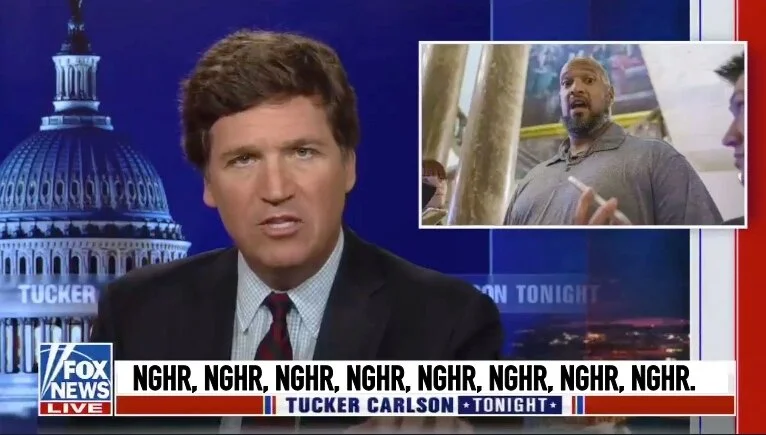
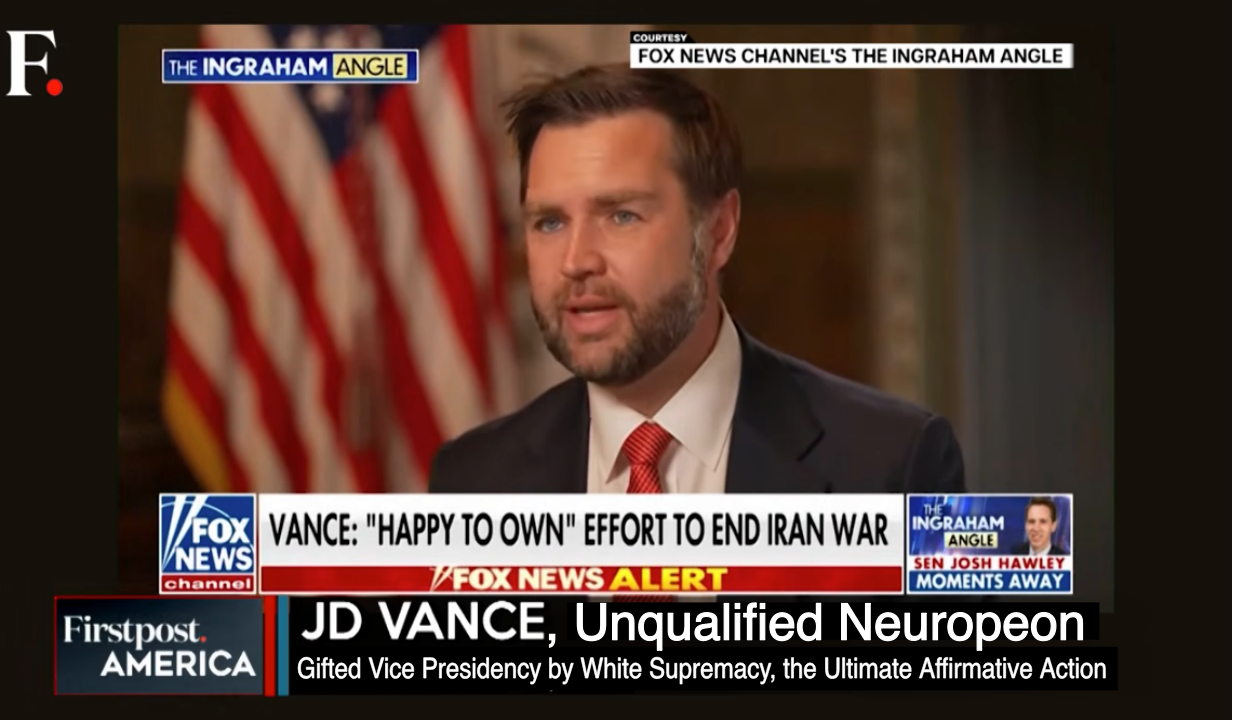
Neuropean Tucker Carlson Reassures Neuropeons that that Nigger Capitol Police Cop Only Speaks for Other Nigger Cops and the FAGA Mob had a Right to Make Felony Threats During Jan 6 Honkey Kong Riot

FUCKING AMERICA GOOD AGAIN. FUNKTIONARY EXPLAINS: Neuropeans - (Neurotic Europeans) - neurotic, ignorant, narcissistic and self-deluded white supremacist Caucasians operating at the mythic and rational levels of consciousness only. 2) Fascists. (See Weitko Disease, White Supremacy and Yurungu.)Neuropeons - neurotic, stupid and self deluded poor white trash. 2) skin heads 3) Nazis, neo-Nazis and Theo-nazis (See KKK, WOTAN, Weitko Disease, Fasxism, Racism White Supremacy, Stupidity, Ku Klux Klan & Yurungu).  

FUCKING AMERICA GOOD AGAIN. FUNKTIONARY EXPLAINS:

Neuropeans - (Neurotic Europeans) - neurotic, ignorant, narcissistic and self-deluded white supremacist Caucasians operating at the mythic and rational levels of consciousness only. 2) Fascists. (See Weitko Disease, White Supremacy and Yurungu.)

Neuropeons - neurotic, stupid and self deluded poor white trash. 2) skin heads 3) Nazis, neo-Nazis and Theo-nazis (See KKK, WOTAN, Weitko Disease, Fasxism, Racism White Supremacy, Stupidity, Ku Klux Klan & Yurungu).  

From [HERE] Fox News host Tucker Carlson called a Black police officer who said he was called the N-word while defending the Capitol on Jan. 6 an "angry, left-wing political activist" on Wednesday.

In April, Capitol Police Officer Harry Dunn told MSNBC's "The ReidOut" host Joy Reid that Black officers fought a "different" battle than everybody else as they endured both physical trauma and racist slurs while fending off supporters of former President Donald Trump who stormed the Capitol.

Dunn is among the first people set to testify on Tuesday before a new House committee created to investigate the Capitol riot. Ahead of Dunn's testimony, Carlson verbally attacked the officer's impartiality as a witness, citing past social media posts that involved Democratic lawmakers.

“Dunn will pretend to speak for the country's law enforcement community, but it turns out Dunn has very little in common with your average cop,” Carlson said on his show. “Dunn is an angry, left-wing political activist.”

Backlash on social media was swift.

"Forever grateful to officers like Harry Dunn," Rep. Eric Swalwell, D-Calif., tweeted Wednesday. "He put his body between lawmakers and an armed mob."

Dunn's attorneys also responded, posting a lengthy statement on Twitter.

"Tonight Fox News allowed its host Tucker Carlson, who has not served a day in uniform, whether military or law enforcement, to criticize the heroism and service of African-American U.S. Capitol Police Officer Harry Dunn," David H. Laufman and Mark S. Zaid said in the statement. [MORE]

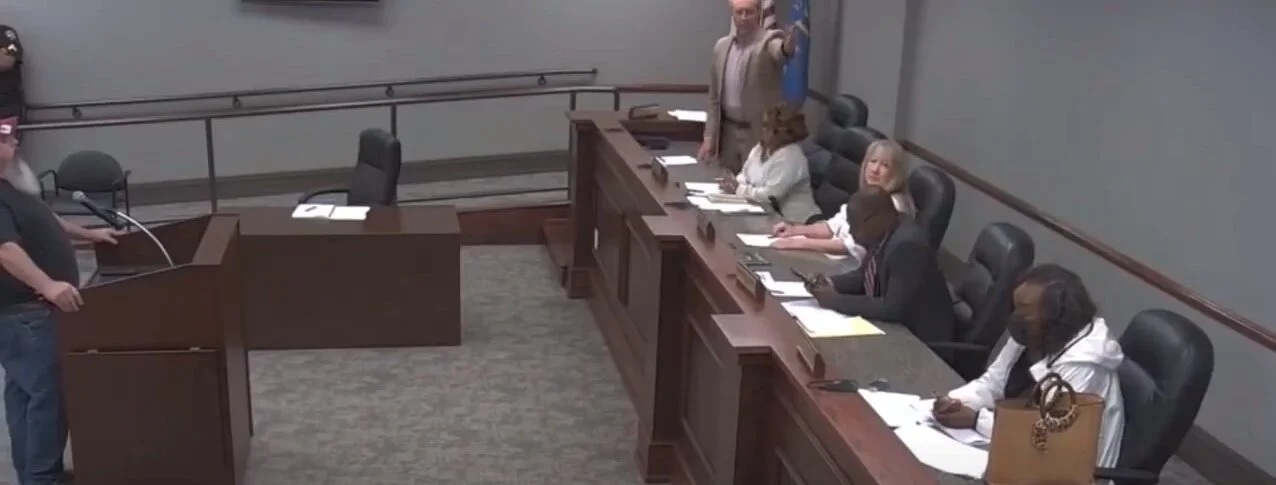
During Meeting Racist City Councilman Asked 'Do We Have a House Nigger In Here?' ['answer probably depends upon What Whites Plan To Do To a NGHR (racism) Not on What They Say About a NGHR (bigotry)']

From [HERE] A white Alabama city council member is facing backlash after using a racial slur during a city council meeting earlier this week, the Associated Press reports.

At some point during Monday’s meeting which was broadcasted on Facebook Live, Tarrant City Council member Tommy Bryant stood up and, while referring to Black female council member Veronica Freeman, he asked “Do we have a house n****r” in here?”

Halfway through the meeting, an unidentified attendee stated that Bryant’s wife used the n-word on Facebook, to which Bryant responded saying, “Let’s get to the n-word”.

He then asked the question “Do we have a house n****r in here?” which led many people in the audience to gasp. [MORE]

Tarrant City Council .jpg