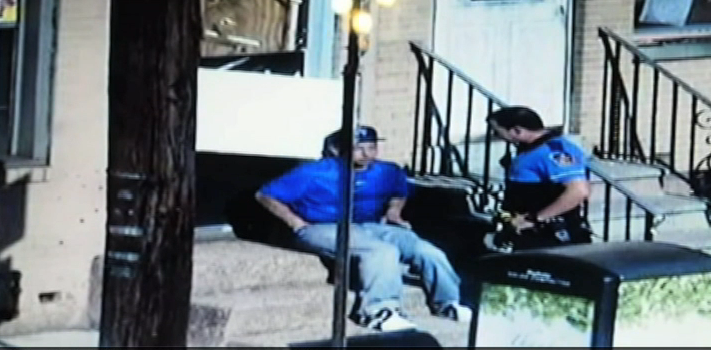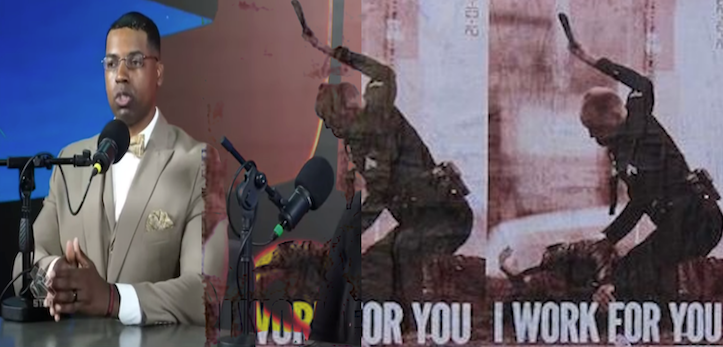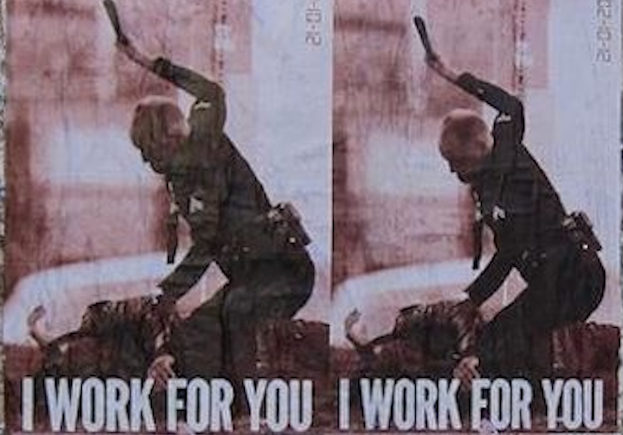
Gang Assault on Black Man by NYPD in Their Feelings b/c He Said "Fuck the Police" and Disobeyed Commands to Get Off Train [Most Laws are Backed by the Threat of Violence in System Based on Violence]

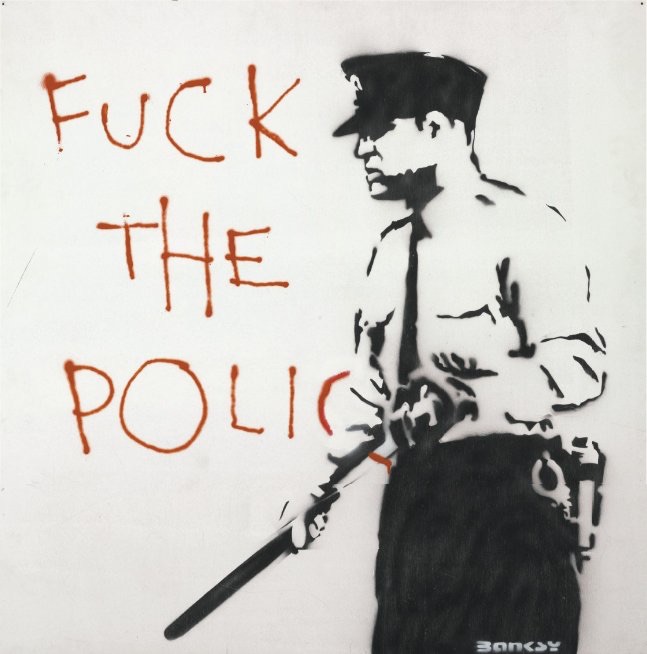
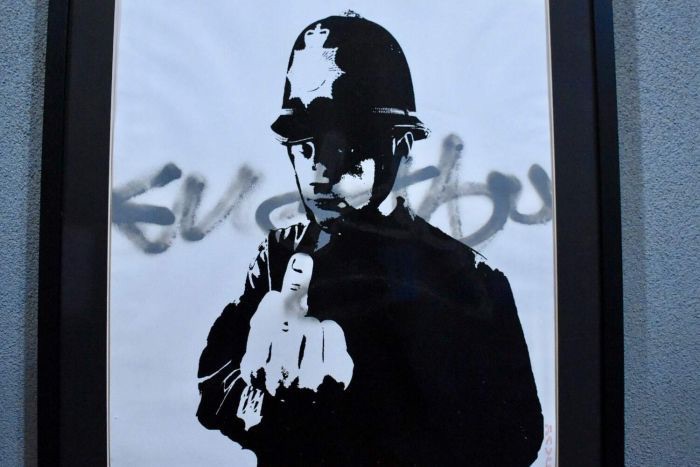
fuck the police  NYPD.jpg

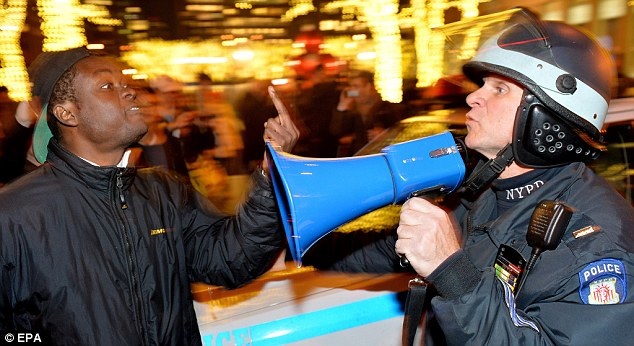
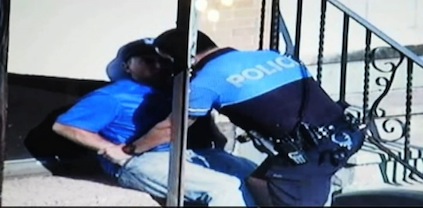
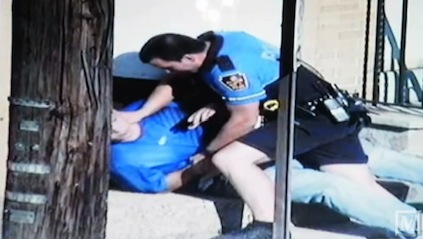
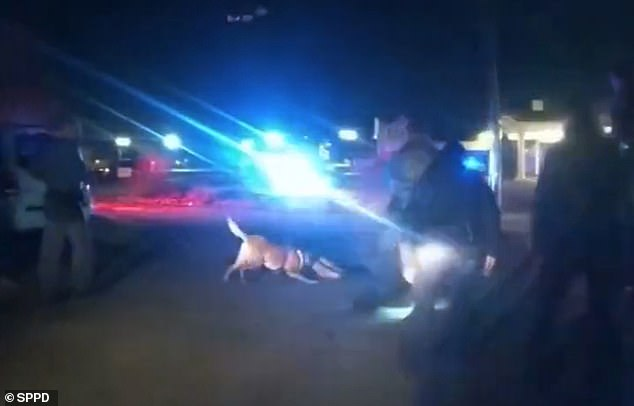
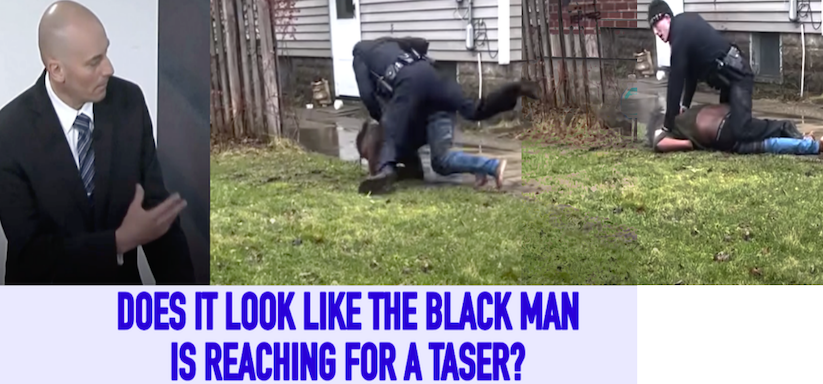
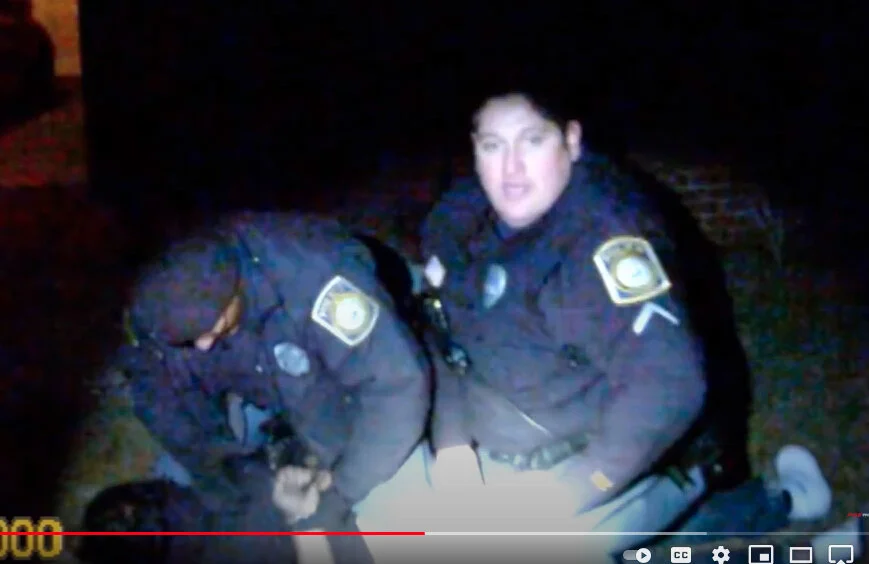
From [HERE] and [HERE] Police body cam footage was released late Wednesday showing what led up to an incident involving fare evasion that led to a Black man being assaulted, piled on and tased by a large group NYPD officers who swarmed onto the subway to enforce disobedience of their orders to get off the train.

The video shows an Eric Garner style gang of cops run onto the he train and surround Crowell, attempting to handcuff him. Crowell again tells the officers that he paid his fare, before attempting to push them away. As the officers assault and pike on him and prepare to handcuff his arms behind his back, one of the officers deploys a Taser, shooting Croswell in the back and causing him to fall to the floor.

The NYPD tweeted video showing what happened leading up to a confrontation between police and a man at the 116th Street and Lenox Avenue station in Harlem on July 6. The man, identified as David Crowell, can be seen on the bodycam footage cursing at officers and refusing to leave the 2 train.

Police said the incident started after Crowell, who paid his fare, opened the emergency gate for someone else. When officers approached, that other man apologized and paid up, but police said that Crowell then started taunting officers. A criminal complaint stated that he threatened police with fists raised, saying "I'm going to rush you. F--- the police."

However, said statement by police is not accurate and the video speaks for itself. While the cops are on the platform the cops order him to get off the train and Crowell, who is standing in the middle of a subway car over 20 feet from the cops, says “suck my dick” and “fuck the police.” Crowell then, in so many words he tells them he will defend himself if they put their hands on him. He said ‘if you come in here to get me I am going to rush you.’ Under the circumstances it is reasonable to conclude that Cromwell thought the subway door was getting ready to close and the train was getting to leave the station, taking him out of there. Any alleged criminal threat case would be weak because the statements under the circumstances to the cop do not appear to put the cop in imminent fear of serious bodily injury and the statement is not a threat if he is merely saying he will defend himself if cops initiate violence against him. The “threat” is used as justification for making an arrest, making cops look like victims or maintaining false relations with the law abiding citizenry. He was under arrest for failure to obey their orders and/or fare evasion and they put their hands on him because he disobeyed their commands. Watch the video for yourself and never believe anything cops say where you can easily verify.

Also the sensitive, self-righteous NYPD cops were in their feelings because he called them names. As noted by Larken Rose ‘law enforcers quickly become angry, even violent, when an average citizen simply speaks to the “officer” as an equal, instead of assuming the tone and demeanor of a subjugated underling. Again, this reaction is precisely the same – and has the same cause – as the reaction a slave master would have to an “uppity” slave speaking to him as an equal. . .They often resort to open violence, simply because someone they approached spoke to them as one adult would speak to another instead of speaking as a subject would speak to a master. Cops refer to this lack of groveling as someone having an “attitude.” In their eyes, someone treating them as mere mortals, as if they are on the same level as everyone else, amounts to showing disrespect for their alleged “authority.’

In general courts have recognized that police officers are trained to be more patient than the average person in the face of hostile words: police officers are trained to deal with unruly and uncooperative members of the public. A police officer is expected to have a greater tolerance for verbal assaults, . . . and because the police are especially trained to resist provocation, we expect them to remain peaceful in the face of verbal abuse that might provoke or offend the ordinary citizen.’ In re W.H.L., 743 A.2d 1226, 1228 (D.C. 2000).

Liberal statists have misunderstood this incident as simply being an over the top reaction by cops. In reality most laws regardless of whether they be minor or serious are backed by the threat of violence - violation of law may require arrest or it carries a punishment of physical detention or payment of a fine and detention if you fail to pay the fine. Also, all commands by police are backed by the threat of violence. Your compliance will either be voluntary or involuntary in a legal system anchored in physical harm or violence. It is a false choice, you can either obey or go to jail. In our legal system cops are authorized to use violence to force compliance whenever they deem it necessary. Here, cops ordered the black man to do something and when he didn’t they forced him to. Don’t bullshit yourself, that is the way a society based on physical coercion operates.

If you ordered someone off the train and they disobeyed you could you drag them off? If all government power comes from the people by way of delegation, then where did get cops acquire their special powers to initiate violence? Clearly, it couldn’t from the people, right?

FUNKTIONARY states “All so-called "authority" is based in unilateral coercion“ and “At its root, government is based on violence and coercion.” Dr. Blynd also explains, “Ignoring or belittling authority does not mean people are either good or bad, whether or not they are punished for their insubordination. Healthy people do not need authority figures to tell them what to do, but only the knowledge of themselves.” “There is no freedom in the presence of so-called authority.” [MORE] Undeceiver Michael Huemer explains:

Government is a coercive institution. Generally speaking, when the state makes a law, the law carries with it a punishment to be imposed upon violators. It is possible to have a law with no specified punishment for violation, but all actual governments attach punishments to nearly all laws.  Not everyone who breaks the law will in fact be punished, but the state will generally make a reasonable effort at punishing violators and will generally punish a fair number of them, typically with fines or imprisonment. These punishments are intended to harm lawbreakers, and they generally succeed in doing so.

     Direct physical violence is rarely used as a punishment. Nevertheless, violence plays a crucial role in the system, because without the threat of violence, lawbreakers could simply choose not to suffer punishment. For example, the government commands that drivers stop before all red lights. If you violate this rule, you might be punished with a $200 fine. But this is simply another command. If you didn’t obey the command to stop before all red lights, why would you obey the command to pay $200 to the government? Perhaps the second command will be enforced by a third command: the government may threaten to revoke your driver’s license if you do not pay the fine. In other words, they may command you to stop driving. But if you violated the first two commands, why would you follow the third? Well, the command to stop driving may be enforced by a threat of imprisonment if you continue to drive without a license. As these examples illustrate, commands are often enforced with threats to issue further commands, yet that cannot be all there is to it. At the end of the chain must come a threat that the violator literally cannot defy. The system as a whole must be anchored by a non-voluntary intervention, a harm that the state can impose regardless of the individual’s choices.

     That anchor is provided by physical force. Even the threat of imprisonment requires enforcement: how can the state ensure that the criminal goes to the prison? The answer lies in coercion, involving actual or threatened bodily injury, or at a minimum, physical pushing or pulling of the individual’s body to the location of imprisonment. This is the final intervention that the individual cannot choose to defy. One can choose not to pay a fine, one can choose to drive without a license, and one can even choose not to walk to a police car to be taken away. But one cannot choose not to be subjected to physical force if the agents of the state decide to impose it.

     Thus, the legal system is founded on intentional, harmful coercion. To justify a law, one must justify imposition of that law on the population through a threat of harm, including the coercive imposition of actual harm on those who are caught violating the law. In common sense morality, the threat or actual coercive imposition of harm is normally wrong. This is not to say that it cannot be justified; it is only to say that coercion requires a justification. This may be because of the way in which coercion disrespects persons, seeking to bypass their reason and manipulate them through fear, or the way in which it seems to deny the autonomy and equality of other persons. [MORE]
Family files $30M Suit Over NC Deputies' Execution of Andrew Brown. White Cops Were Not in Imminent Danger When They Shot Him 14X, Video Shows a Cop Move Into His Path as He Drove Away from Police

andrew brown murder.jpg

From [HERE] The family of Andrew Brown Jr., a Black man who was fatally shot by police in April, filed a civil rights lawsuit on Wednesday over his death. The family is seeking a judgement in excess of $30 million for "emotional distress, humiliation, loss of enjoyment of life, and other pain and suffering." 

"We believe that finally Andrew Brown can get justice because he did not get justice in life and, so far, he hasn't even gotten justice in death," attorney Bakari Sellers said Wednesday at a press conference. 

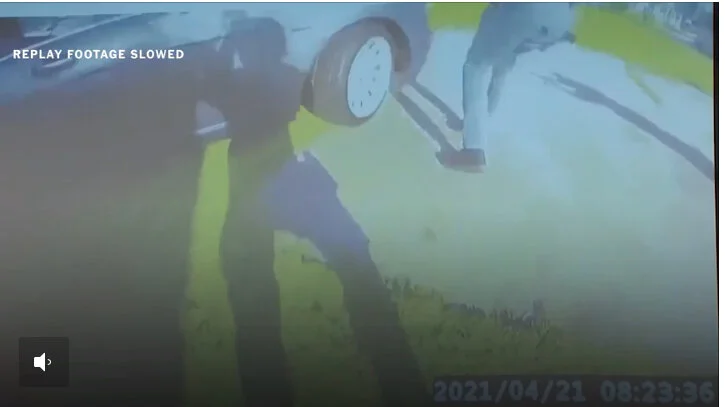
Brown, 42, was killed in Elizabeth City, North Carolina, after sheriff's deputies serving felony warrants and a search warrant surrounded his car. Partial video of the shooting released in May shows Brown attempting to drive away from the scene, by first backing up and then turning left to drive between officers. Deputies then opened fire, shooting a total of 14 times. Brown was hit several times, and the car crashed shortly afterwards. 

In June, a state autopsy report labeled his death a homicide, attributing it to a gunshot wound to the back of his head.  

Brown's family has consistently called for the full body camera footage of his death to be publicly released. The family was allowed to view 18 minutes of the footage in May, and said it showed Brown did not hit officers with his car before they started shooting.

In the lawsuit, Brown's family claims he did not pose a risk to officers when he tried to flee the scene, and that as a result, deputies from the Pasquotank County Sheriff's Office and the Dare County Sheriff's Office used "objectively unreasonable, excessive and conscious shocking" force in violation of his Fourth Amendment rights. 

Seven Pasquotank County Sheriff's Office deputies were placed on leave following Brown's death. But in May, District Attorney Andrew Womble said deputies were "justified" in shooting at Brown's car because he used his car as a "deadly weapon" and made contact with an officer. He said police body-camera videos “clearly illustrate the officers who used deadly force on Andrew Brown Jr. did so reasonably” and only when their lives were in danger.

Mr. Brown’s family members and their lawyers have described the shooting as an “execution.”

A review of slowed-down bodycam footage by The NY Times shows that 13 of the 14 gunshots — including the fatal one — were fired as Mr. Brown was driving away from officers, not at them. The footage was presented by the district attorney at a press conference and is from four officers’ cameras.

Here’s what the videos of the 20-second interaction show.

The police officers arrive in a Pasquotank County Sheriff’s Office pickup truck at Mr. Brown’s house at 8:23 a.m. on Wednesday, April 21, to execute search and arrest warrants. According to the prosecutor, the police team had been briefed that morning that Mr. Brown, 42, had previous convictions and a history of resisting arrest.

Mr. Brown is sitting in his vehicle outside his house after returning from a drive that morning, the prosecutor added. The officers approach him with their weapons drawn, shouting orders at him.

Mr. Brown does not comply with officers’ orders. The situation escalates.

As two officers reach the driver’s-side door, Mr. Brown backs up the vehicle, and grazes but does not injure an officer.

Mr. Brown ignores officers’ repeated commands to stop the car, and lurches the vehicle forward while steering it sharply to the left, putting officers at risk.

The car initially moves toward the same officer who had been grazed moments earlier. This officer does not move away from the vehicle, but takes a step into Mr. Brown’s path. It’s unclear if the officer is trying to obstruct Mr. Brown’s escape, or trying to evade the car.

The officer briefly places his left hand on the hood of the car, and this is when another officer fires a shot that Mr. Womble said “entered the front windshield” of the car and was not fatal. That contradicts a preliminary internal investigation report, which found that no bullet went through the windshield.

The video shows that there is a brief pause in shooting while Mr. Brown steers his car between two officers. At this point, as Mr. Brown accelerates and drives away, three officers fire 13 more shots into the side and rear of Mr. Brown’s car. One of the shots is fatal, hitting Mr. Brown in the back of his head. His car crashes into a tree 50 yards from his home.

In justifying the police's use of lethal force, Mr. Womble said Mr. Brown “drove recklessly and endangered the officers." He also argued that “they could not simply let him go.”

But the legalities around this can get complicated. “The Supreme Court has never authorized the use of deadly force simply because someone is resisting arrest or fleeing,” Paul Butler, a law professor at Georgetown University and former federal prosecutor, said in an interview about the footage. He also said that “sometimes the best policing is to let the suspect go.” [MORE]

The lawsuit names several officers who allegedly fired their weapons during the incident as defendants, and also accuses Pasquotank County Sheriff Tommy Wooten and Dare County Sheriff Doug Doughtie of enabling a culture of excessive force, indifference and silence. 

"All individual Defendants acted with a depraved indifference to human life and conscious disregard for the safety of the general public, constituted an intentional unwelcome and unprivileged touching of Brown, and was undertaken in bad faith and with actual malice," the lawsuit alleges. 

The family is seeking compensatory, consequential and punitive damages, as well as attorneys' fees and other costs of the case — but stressed at the press conference that the case is not about money. 

Columbus (GA) Settles Suit. 3 Large White Cops Sat on a Handcuffed Latino Man w/a Knee in His Back for Over 6 Minutes. He Said 'I Can't Breathe' at Least 13X Before Cops Killed Him

From [HERE] A local government in Georgia agreed Tuesday to pay $500,000 to settle a lawsuit brought by the family of a Hector Arreola an unarmed, handcuffed Latino man who was killed by police officers 2017.

Columbus Council members met in closed session and approved the settlement with the family of Hector Arreola, news outlets reported.

“Council decided that it was in the best interest of everyone involved, to include the Arreola family, the law enforcement personnel involved, the citizens of Columbus, Georgia,” Mayor Skip Henderson told WRBL-TV after the vote. “It gives us an opportunity, maybe to begin some healing on this.”

Council member Walker Garrett, an attorney who made the motion to settle the suit, said the settlement is unrelated to any criminal case that a district attorney might pursue against the officers.

“We think that the judge had made a pretty emphatic statement about the fact that there was precious little evidence to warrant a murder charge in this instance,” Garrett said. “We are focused now on the civil aspect, and it allows the family to begin the healing process.”

Hector Arreola.jpg

According to the complaint:

At 3:40 A.M. on January 9, 2017, Hector Arreola (Arreola) contacted the Columbus Police Department via their 911 system for assistance. At that time, Arreola was at the Efficiency Lodge Hotel in Muscogee County, Georgia.
Officer Brian Dudley, 1-Adam 25, and Officer Michael Aguilar, 1-Adam 28, were sent to 760 Moss Drive, Columbus, Muscogee County, Georgia, to check on the welfare of Concepcion Arreola.

Officers Dudley and Aguilar knocked on Concepcion Arreola’s door, waking her. Concepcion Arreola said she was fine and the officers left.

Arreola placed another call to Columbus 911 at 4:55 A.M., on January 9, 2017, explaining he left his hotel room earlier before the police arrived because he needed to check on his mother. Arreola asked Columbus 911 dispatch to send police officers back to 760 Moss Drive, Columbus, Georgia, to check on his mother again.

Officers Dudley and Aguilar went back to 760 Moss Drive to meet with Arreola. Officers Dudley, Aguilar, and Evrard each had a recording device (body cam) attached to their body which captured audio and video of the events on January 9, 2017, at 760 Moss Drive, 747 Moss Drive, and some portion of the subsequent events relevant hereto. All three had recording devices affixed to their patrol cars too.

When Officers Dudley and Aguilar returned to 760 Moss Drive, they met Arreola. Arreola exited his car to speak with the officers. Arreola acted strangely, and Officers Dudley and Aguilar quickly suspected that he suffered from drug use, a mental health problem, or both.

At 5:14:20 A.M., less than five minutes after his arrival, Officer Aguilar asked Arreola if “[he had] ever been diagnosed with anything. Like paranoia, schizophrenic – anything?” Arreola denied mental illness and alcohol abuse.

Officers Aguilar and Dudley attempted to determine why Arreola believed his mother was in danger. Eventually, Arreola’s mother came out to the road in twenty-degree weather to reason with her son in an attempt to get him inside. Arreola declined.

Arreola questioned the motives and identities of Officers Dudley and Aguilar and indicated that he would go stay with a friend in the neighborhood. Then Arreola walked into a neighboring yard. Officer Aguilar asked Arreola to return to the street.

At 5:21:04 A.M., Officer Dudley requested EMS respond to 760 Moss Drive for a “psych eval”, whereupon Officers Dudley and Aguilar decided to detain Arreola. 36.

Then, Officer Dudley asked, “You got gloves?” In response, Officer Aguilar remarks, “Dude. He’s gonna fight like hell. At this point, why don’t we just let him... let him settle down.”

Officers Dudley and Aguilar walked toward Arreola who had approached the residence at 747 Moss Drive knocking on the door. Officers Dudley and Aguilar instructed Arreola leave the yard at 747 Moss Drive or face jail. Arreola disregarded the officers’ instructions. Arreola also ignored his mother’s entreaties to return home.

At 5:24:30 A.M., as the officers and Concepcion Arreola continued to reason with Arreola, Officer Aguilar radioed, “28, dispatch. If you could have EMS just come, routine. No lights, no sirens. Hard no siren.”

Then, Officers Aguilar and Dudley approached Arreola to place him in custody. Officers Dudley and Aguilar struggled with Arreola as Arreola protested, “I didn’t do nothing”

At 5:25:15 A.M., Arreola’s struggle with Officers Dudley and Aguilar began. As the struggle unfolded, all three men fell to the ground in the front yard at 747 Moss Drive, Arreola screamed, “Ma! They’re gonna kill me!” and continued to resist the officers’ efforts to handcuff him by holding his hands under his body.

The officers instructed Arreola to roll over on his stomach as he asked whether the events were being recorded. Officers Dudley and Aguilar put Arreola on his stomach with his face in the dirt, and they sat on his back. They also put their knee(s) in Arreola’s back and upper torso. At 05:26:50 A.M., Officer Aguilar told Officer Dudley, “Just flatten him out,” while Arreola continued to scream, “Ma! They’re going to kill me!”

In his audio recorded January 10, 2017, statement to the Columbus Police Department’s Office of Professional Standards (OOPS) investigators, Officer Aguilar said he weighed 300 lbs. or more when he struggled with Arreola, and he sat in the middle of Arreola’s back so that he could flatten him out.

After Officer Aguilar indicated to Officer Dudley that the strategy was to flatten Arreola, and immediately after Officer Aguilar said, “I’m flattening him,” Arreola first said that he could not breathe, crying, “Ow. I can’t breathe,” at 5:27:17 A.M.

Arreola said that he could not breathe at least 13 times after he first complained that he could not breathe.

Arreola’s complaints that he couldn’t breathe became progressively weaker. In agony, Arreola sobbed. As he audibly choked, gasped, and struggled to breathe, Arreola begged for help.

At 05:27:38 A.M., in response to Arreola’s complaint that he couldn’t breathe, and when Concepcion Arreola expressed concern, Officer Aguilar said, “He can breathe.” Four seconds earlier, Officer Aguilar reported to dispatch that they had Arreola “contained” but not handcuffed.

At 05:29:09 A.M., Officer Dudley alerted Officer Aguilar that he had secured the last handcuff.

At 5:29:16 A.M., Officer Aguilar reported, “28 to Dispatch. We finally got him in handcuffs. You can slow down all the units.”

After he was handcuffed, Arreola continued to sob, beg, and plead for help, and he ceased resisting and struggling with the police. At 5:29:28 A.M., Arreola again cried, “I can’t breathe in!”

Responding to a call for additional officers, Officer Aaron Evrard arrived on scene. At 5:29:24 A.M., he turned off his siren and exited his patrol car. At 05:29:54 A.M., Officer Evrard arrived in the yard at 747 Moss Drive and approached Officers Dudley and Aguilar.

At 05:30:01 A.M.,1 as Officer Evrard approached Arreola, Dudley, and Aguilar, his body cam captured footage of Officer Aguilar seated with his full weight on Arreola’s upper buttocks/lower back and Officer Dudley with his left knee in Arreola’s mid-back. Arreola was face-down, on his stomach with his hands securely cuffed behind his back.

At 05:30:03 A.M., Officer Aguilar remarked to Officer Evrard, “Minimal force used.” Then,

Officer Evrard asked if they need a break. Thereafter, relieving Officers Aguilar and Dudley, Officer Evrard positioned himself on Arreola’s back.

A few seconds after Officer Evrard sat on Arreola’s back, Columbus Police Department Police Officer Ronnie Oakes (Officer Oakes) arrived. Officer Evrard asked Officer Oakes to hold Arreola’s legs. Officer Oakes did.

Officer Evrard remained on Arreola’s back until 5:31:17 A.M. when he stood up to pat Arreola down and search him.

Arreola was continuously face-down, on his stomach for almost six minutes with a police officer or officers applying substantial force to his back and neck by sitting on him or by putting a knee into his back, or both. Even after Arreola was handcuffed, he remained face-down on the ground with heavy weight and substantial force applied to his back by police officers for over two minutes.

Arreola was on his stomach, face down for over six minutes before Officer Aguilar, finally, heaved Arreola into a sitting position. When Arreola was placed in a sitting position, at 5:33:03 A.M., he was obviously unresponsive and in distress.

Arreola posed no threat to any person or himself once he was contained. Arreola posed no threat to the safety of any person or himself after he was handcuffed. Arreola did not resist or struggle with the police after he was handcuffed.

No less than 5 times after he was handcuffed and while a police officer remained on his back, Arreola sobbed, “I can’t breathe.”

After he was handcuffed, Arreola continued to beg for his life and was in obvious physical distress. Arreola’s mother expressed concern to the police officers repeatedly. Nevertheless, despite Arreola’s obvious serious medical condition, Officers Dudley, Aguilar, and Evrard failed to alert Columbus EMS or anyone else that an emergency situation had developed requiring immediate medical care for Arreola.

Even though the police officers noticed that Arreola was unresponsive and that his eyes were fixed and dilated, they failed to seek emergent treatment for Arreola’s serious medical condition.

After the police officers alerted dispatch that the scene was “clear for EMS,” they stood around talking while they waited for EMS to respond “routine” as requested earlier. They rendered no aid to Arreola.

The police officers briefed Columbus EMS personnel when they arrived on scene but failed to mention the extreme and prolonged force applied to Arreola’s back, head, and neck. The police officers did not tell Columbus EMS personnel that Arreola complained of an inability to breathe until he became unresponsive.

The agreement maintains the police officers did nothing wrong, and says the city offered the settlement without the officers’ consent. The officers “expressly deny any and all liability, responsibility and potential liability,” and the settlement “shall not be construed as an admission of liability,” the agreement states.

NAACP leaders in Columbus have likened Arreola’s death to that of George Floyd in Minneapolis. Columbus NAACP branch President Wane Hailes has said Arreola said 16 times that he couldn’t breathe as an officer sat on him for more than two minutes while Arreola was handcuffed.

The officers were put on administrative leave during an investigation, but have returned to duty.

In June, U.S. District Judge Clay Land ruled that he would not halt the wrongful death lawsuit against officers Michael Aguilar, Brian Dudley and Aaron Evrard, despite their concerns that the district attorney is seeking to indict them on criminal charges. Land said he doesn’t believe they can be successfully prosecuted for a crime.

The officers sought a postponement in the civil case after Muscogee County District Attorney Mark Jones named private attorney Christopher Breault as a special prosecutor investigating Arreola’s death. Jones said he hoped Breault would be ready to present the case for possible indictment during the current court term, which ends in August.

The officers’ attorneys argued the criminal investigation hampered their defense in the civil suit, saying they could testify if they weren’t compelled to use their Fifth Amendment right to avoid self-incrimination.

Land wrote that the statute of limitations has run out on all possible state charges except murder, and that the evidence he has seen shows it’s unlikely that prosecutors could prove that officers acted with premeditated malice or that they killed Arreola while committing a separate felony. Those are the grounds for murder under Georgia law. Why is this racist suspect judge making prosecutorial decisions?

Jones last month said he respects Land’s ruling, but that the criminal case should be heard by a grand jury.

Lawsuit Says Latino Man Posed No Threat When Sacramento Police Shot Him 20 Times. Video Shows Adan Martinez Slowly Drove Around Cops as They Opened Fire w/o Warning

sacramento Police.jpg

From [HERE] A new federal lawsuit accuses Sacramento police officers of using excessive force in shooting at an unarmed man more than 20 times earlier this year.

In February, Adan Martinez was alerted to come to the house of his children’s mother because his vehicle was on fire and his belongings were being burned, the lawsuit alleged. When he arrived, he found the car in ashes and police waiting for him, and he drove away, the lawsuit alleged.

A police chase took place. In the videos Martinez can be seen in the Police dash cam video being pursued by Sacramento Police Officers while he tried to drive within the vehicle code by signaling his turns, and stopping at stop signs as much as practicable with Officers behind him trying to ram his vehicle. After a few miles of being chased by Sacramento Police Offices Martinez pulled into a parking lot of an industrial complex and was cornered by officers who rammed into the back of his car.

According to the complaint;

“With his windows rolled all the way up began a slow and safe 3-point turn in the corner of the industrial complex and attempted to slowly drive around the officers that were parked and outside of their vehicles pointing high powered firearms at the Plaintiff. When he attempted to drive around the vehicles the Sacramento Police Officers fired more than 20 shots into the front and side windshield of the mini-van causing 9 or more shots to strike him in the shoulder, arm, chest, stomach, pelvic area, hand and wrist. As Martinez lay in the vehicle bleeding to death another round of assault weapons were fired at him busting out the glass in all his windows and causing glass fragments to be absorbed into his bullet wounds making his condition worsen.”

He was unarmed. Police did not give any warning that deadly force would be used.

Martinez was transported to the hospital where he underwent surgeries to remove the bullets and glass fragments, and has lost the use of his left hand, the lawsuit alleged.

According to a police account of that night, a woman called 911 to report her ex-boyfriend, against whom she had a restraining order, had burned their vehicle, threatened to kill her and was possibly armed. As officers were talking to the victim, they observed the suspect, later identified as Martinez, drive by in a minivan, according to police.

Martinez was later charged with false imprisonment, arson, fleeing from a police officer, drug possession, stalking and violating a restraining order, according to Sacramento County Superior Court records. He pleaded no contest to false imprisonment and fleeing from a police officer. The rest of the charges were dismissed.

The lawsuit alleges Martinez did not pose an immediate threat of death or serious bodily injury and never verbally threatened anyone prior to the shooting.

The lawsuit, filed Monday in federal court, names the city and officers Eric Toomey and Nicholas Caro as defendants. It claims unreasonable or excessive force, unreasonable search and seizure, failure to train, false arrest, battery, and negligence. It requests more than $10 million in damages.

Although Wash Cops Had No Articulable Reason to Believe a Black Man Bought Drugs They Stopped Him Anyway. Then Cops Pretended a Screw Driver in the Car was a Weapon and Shot Him Dead. No Charges Filed

From [HERE] and [HERE] A team of prosecutors on Monday found that Clark County Deputy Sean Boyle was justified in the shooting death of 30-year-old Jenoah Donald during a traffic stop on Feb. 4.

The determination that Deputy Boyle acted in "good faith" was the result of a first-of-its-kind review involving prosecutors from five counties: Lewis, Pend Oreille, Yakima, Pierce and Snohomish [yep all racist suspects] .

A $17 million wrongful death lawsuit was filed on his behalf in June. Tacoma-based Herrmann Law Group said Donald “was the target of an illegal ‘pretextual stop’ ”by Deputy Sean Boyle on Feb. 4 in Hazel Dell.

The law firm cited a 1999 Washington Supreme Court case that found it’s unconstitutional for police to use a traffic stop as an excuse to investigate suspected criminal activity. [MORE]

The court has explained in a “pretextual traffic stop” “the police are pulling over a citizen, not to enforce the traffic code, but to conduct a criminal investigation unrelated to the driving. Therefore the reasonable articulable suspicion that a traffic infraction has occurred which justifies an exception to the warrant requirement for an ordinary traffic stop does not justify a stop for criminal investigation. . . "Although federal courts construing the Fourth Amendment have concluded pretextual traffic stops may be accomplished without a warrant, we are not bound by that result under our state constitution which provides unique and substantially greater protection."

“We have observed that ultimately our state constitutional provision is designed to guard against "unreasonable search and seizure, made without probable cause." State v. Fields, 85 Wash.2d 126, 130, 530 P.2d 284 (1975). However, the problem with a pretextual traffic stop is that it is a search or seizure which cannot be constitutionally justified for its true reason (i.e., speculative criminal investigation), but only for some other reason (i.e., to enforce traffic code) which is at once lawfully sufficient but not the real reason. Pretext is therefore a triumph of form over substance; a triumph of expediency at the expense of reason. But it is against the standard of reasonableness which our constitution measures exceptions to the general rule, which forbids search or seizure absent a warrant. Pretext is result without reason” .State v. Ladson, 979 P.2d 833, 138 Wn.2d 343 (Wash. 1999)

“The deputies believed Jenoah was leaving a drug house, but they did not have probable cause to pull him over for a drug crime. So, instead, the deputy pulled him over using the excuse of a defective rear light,” Lindquist said.

Deputy Boyle said during an interview that Donald was initially cooperative before other deputies arrived on scene. When Boyle went back to his vehicle to run the ID, another white deputy, Holly Troupe, had arrived and saw what she described as a “ball-handled” sharp object — later determined to be a screwdriver. [“a ball-handled” sharp objected?? Only a liar cop would describe a screw driver in such a novel way. And if she lied she could also ]. A third deputy, Greg Agar, also arrived for the broken headlight stop.

During the unlawful stop deputy Troupe claimed she saw a weapon in Donald's car, when there wasn't one. She saw a screwdriver. While in his patrol car, Deputy Boyle heard another deputy tell Donald, "show me your hands."

When Boyle returned, he ran up Donald's car, opened the door and told him he needed to get out and he threatened to use a police dog on him. He eventually punched Donald in the nose, investigators said, and Troupe attempted “pain compliance” techniques with her hands under Donald’s jaw.

That lead another officer to attempt to forcefully remove the 30-year-old from the vehicle.

jenoah donald 2.jpg
According to FUNKTIONARY:Corporate Police State - the enforcer of the commodification of life within the Spectacle Surveillance Society. Anyone who thinks that he or she is immune to the baseless destruction of his or her life (including immediate family members) by a "government" or corporation does live in a happy menagerie—enjoy your illusions. (See: GUPI & Judicial Victimization)

According to FUNKTIONARY:

Corporate Police State - the enforcer of the commodification of life within the Spectacle Surveillance Society. Anyone who thinks that he or she is immune to the baseless destruction of his or her life (including immediate family members) by a "government" or corporation does live in a happy menagerie—enjoy your illusions. (See: GUPI & Judicial Victimization)

According to prosecutors, Donald grabbed Deputy Boyle's outer vest, making his taser inaccessible. Meanwhile, the engine of the sedan Donald drove remained on. During the assault on Donald, deputies said they heard the engine revving. Boyle told investigators Donald grabbed him by the ballistics vest and pulled him toward the car.

No body camera footage exists from the encounter, so investigators relied heavily on the accounts of the officers involved.

Prosecutors claim the car started to move forward while Donald reportedly still had a grip on Deputy Boyle. Prosecutors claim unable to grab his taser, Deputy Boyle fired two shots, hitting Donald. Another deputy was in the process of drawing her weapon when the shooting happened.

After the shooting the police told Donald’s family he was dead but he had actually survived. He died a week after the shooting, after he was taken off life support. [MORE]

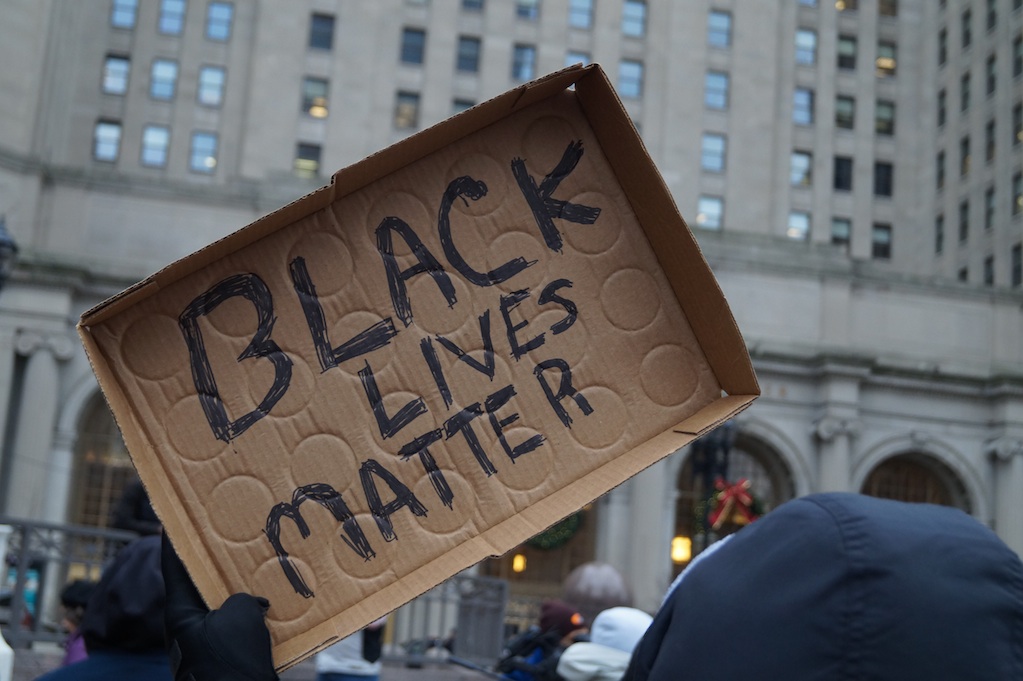
Doorbell Cam Captures Yurugu Doing His Thing; Smearing Feces on a Black Lives Matter Sign in NC for the Collective White Struggle and Perceived Survival Game Against Blacks, his permanent enemy

According to "FUNKTIONARYYurugu - a mythological figure within the Dogon tribe (Africa) who is "the incomplete being" (fiend without a face) referring to Neuropeans (neurotic Europeans) within the European asili. 2) a regressive (degenerative) state of consciousness where the soul is cut off from itself. 3) the inability to recognize or abate unacknowledged destructive capabilities. Yurugu also expresses itself and manifests as the pathological condition that utterly fails to convince those in geographical proximity of its harmlessness, therefore has to kill them. Yurugu is in a vicious spiral increasingly at odds with his own humanity—as fragmented, pathological, and distorted as it is. (See: Asili, Caucasian, Racism White Supremacy, Elite, Western Civilization, Neuropean, WASP, Privilege, Oppression, Scarcity, Violence, Genocide, Manifest Density & Ma'afa)

According to "FUNKTIONARY

Yurugu - a mythological figure within the Dogon tribe (Africa) who is "the incomplete being" (fiend without a face) referring to Neuropeans (neurotic Europeans) within the European asili. 2) a regressive (degenerative) state of consciousness where the soul is cut off from itself. 3) the inability to recognize or abate unacknowledged destructive capabilities. Yurugu also expresses itself and manifests as the pathological condition that utterly fails to convince those in geographical proximity of its harmlessness, therefore has to kill them. Yurugu is in a vicious spiral increasingly at odds with his own humanity—as fragmented, pathological, and distorted as it is. (See: Asili, Caucasian, Racism White Supremacy, Elite, Western Civilization, Neuropean, WASP, Privilege, Oppression, Scarcity, Violence, Genocide, Manifest Density & Ma'afa)

From [HERE] An unidentified male racist took a Black Lives Matter sign from a North Carolina family’s front lawn and then smeared it with feces, according to police.

It happened last Thursday in Holly Springs.

Police released the video from a doorbell cam of the incident.

In the video, the man is seen walking up to the front door of a home carrying the sign.

He then appears to reach for another object on the home’s porch and kneels down as he uses the object to smear the feces on the sign.

Neighbors in the community said they are completely shocked over what happened.

“As Americans, we still try to hide the fact that there’s a terrible history that comes with it,” a neighbor said. “Racism’s still alive and well.”

The man who lives at the home where the incident happened said he’s never been disrespected like this before.

And, he shared the doorbell video in hopes the person responsible is caught.

Police say they are investigating the case as a possible hate crime.

The suspect is described as a taller white male with red/auburn hair with sideburns and a full beard, weighing approximately 250-300 pounds.

One of Five White St Louis Cops Sentenced to 4 Years in Prison for Stomping and Beating an Undercover Black Cop w/Batons after Mistaking Him as Black Protester

st louis cops .jpg

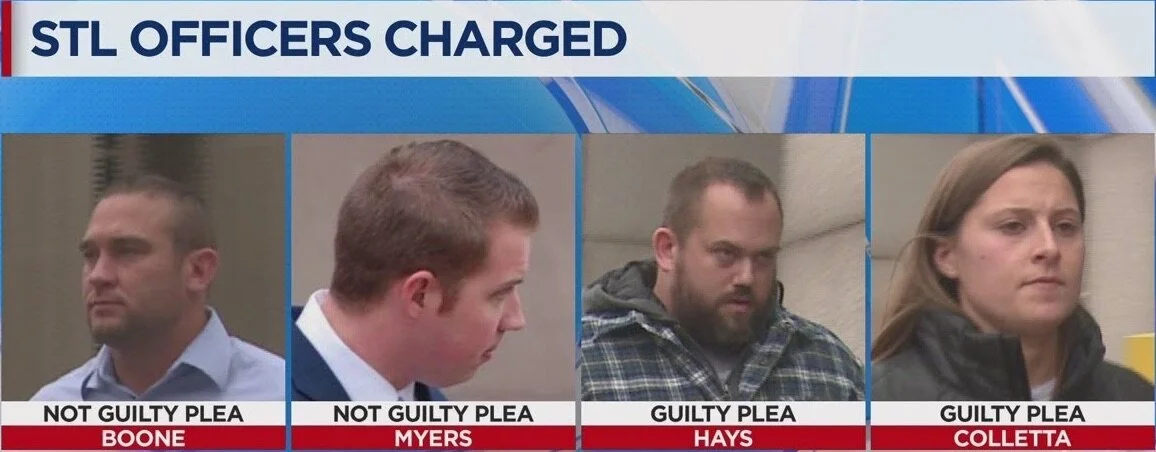
From [HERE] and [HERE] United States District Court Judge E. Richard Webber sentenced former SLMPD Police Officer Randy Hays to a 52-month term of imprisonment on today’s date. The 34-year-old St. Louis, Missouri resident pleaded guilty in November 2019 to using unreasonable and excessive force against a fellow St. Louis Metropolitan Police Department officer whom Hays mistakenly believed was a protestor.

As a result of the 2017 acquittal of a former police officer on a state murder charge, protests were taking place in downtown St. Louis. In an effort by the St. Louis Metropolitan Police Department to keep peace and order, the victim, Detective Luther Hall, an undercover officer was assigned to the protest detail. Hays was also assigned to the protest detail in his capacity as a police officer.   Hays, who mistakenly believed the victim undercover officer was a protestor, assaulted the victim in a manner that constituted unreasonable and excessive force.  The assault left Hall with permanent neck injuries, and had to undergo several surgeries as a result.

st louis cops attack .jpg

Hays’s co-defendant, Bailey Colletta, pleaded guilty to making false statements before a federal grand jury that was charged with investigating the assault of the victim undercover officer. Her sentencing hearing is set for July 15, 2021.

Co-defendant Dustin Boone was found guilty in June of aiding and abetting the deprivation of the victim’s civil rights under the color of law. His sentencing hearing is set for September 15, 2021. 

Co-defendant Christopher Myers faces a charge of destruction of evidence related to the arrest and assault of the victim police officer.  Christopher Myers is presumed innocent and the charge that he presently faces is merely an accusation and does not constitute proof of guilt. 

According to prosecutors, the assault came after the officers expressed that they wanted to arrest and attack protestors. [MORE]

The case is being investigated by the Federal Bureau of Investigation. First Assistant United States Attorney Carrie Costantin and Assistant United States Attorney Rob Livergood are handling the matter.

ACLU Suit Says Indiana Prison Brutalitarians Kept Inmates in Total Darkness for Weeks and Inmates were Shocked by Exposed Live Wires Hanging from the Ceiling

doggy portrait.jpg

From [HERE] Six inmates at a maximum-security Indiana prison are suing the facility's administrators, alleging that they were kept in total darkness for weeks at a time and shocked by live wires in conditions amounting to "torture." 

Six lawsuits, all but one of which were filed on July 1, were brought by the American Civil Liberties Union of Indiana on behalf of inmates at the Miami Correctional Facility in Bunker Hill. The lawsuits name Warden William Hyatte and Deputy Warden George Payne Jr. as defendants.

All six men were housed in isolation in cells that had no light, according to the lawsuits. Some of the inmates were cut with glass from broken windows, or shocked by hanging, exposed live wires while they tried to navigate in the dark, the ACLU attorneys wrote in the lawsuits.

The first ACLU lawsuit was filed in March on behalf of Jeremy Blanchard, who alleged he was placed in a restrictive housing cell from September 3, 2020 to October 5, 2020 where the only window was completely obstructed by a sheet of metal and the only light was broken.

"This left Mr. Blanchard in darkness except for the short period of time that he was let out for a shower every few days," the suit says. "Defendants were aware of the conditions under which Mr. Blanchard suffered, yet allowed him to remain in near-total darkness for more than a month."

The ACLU filed the other lawsuits on behalf of inmates William Anderson, Charles Lyons, Anthony Parish, Gerald Reed, and Jeffrey Wagner, who alleged they were kept in similar conditions.

Wagner said he was held in a dark cell from September 3, 2020 through November 3, 2020.

"Live electrical wires hung from the ceiling and on a number of occasions he received painful shocks as he tried to navigate in his dark cell," the lawsuit alleges. 

The suit alleges these conditions were a form of punishment, and that Wagner's mental health deteriorated as a result. Wagner's anxiety and depression worsened and he "suffered from auditory hallucinations urging him to harm himself," according to the lawsuit.

"Placing a person in prolonged, isolated darkness for an extended period is a form of torture," the ACLU wrote in the lawsuit.

A spokesperson for the Indiana Department of Correction declined to comment to Insider on the pending litigation.

She said the Indiana Attorney General's office would represent and Department of Correction employee involved in the case. A spokesperson for the AG's officer told Insider that it had not yet been served.

"We will review the allegations contained in the suit and make a determination about next steps in due course," the spokesperson said.

The Miami Correctional Facility houses about 3,150 inmates, according to data from the Department of Correction.

Chicago Service Workers [nearly all Black and Latino] End Strike After 18 Days. New Contract Includes an 8.5% Pay Raise over 4 Years

From [HERE] After 18 days on the picket line, workers with Chicago’s Service Employees International Union Local 73 reached a deal to return to work Tuesday.

The strike ended with a tentative agreement between Cook County and the 2,500-odd county service workers who form part of the union's Chicago-area branch membership. It was the longest strike in the union's 100-year history.

The standoff began when more than 10 months of negotiations between the union and the county broke down in June. SEIU Local 73's collective bargaining contract with the county expired on Dec. 1, 2020, and union members have been working without the protection of a contract since then.

The new contract has not yet been finalized, but a press release put out by union leadership Tuesday said it included much of what the striking workers wanted.

The four-year deal includes a base pay raise over that time – the 8.5% offered by county officials, according to local news reports – as well an expanded health care plan, Covid-19 pandemic hazard pay and the prioritization of senior union members for hiring and promotions.

SEIU officials said negotiators will resolve the remaining issues within the week as union members go back to work.

"Cook County workers showed real bravery by going out on strike to demand respect from the county. This contract has real wins for workers that they should be proud of as it turns the page on decades of Local 73 members being considered second-class citizens at the county,” said Dian Palmer, president of SEIU Local 73, in a statement.

She added, ““These are the essential, frontline workers that kept our county running during the worst pandemic of our lifetime who stood up for themselves, their families, and the communities they serve, during this strike to demand better.”

Local 73 is overwhelmingly made up of Black and brown workers, especially women of color. Its members work in county hospitals, public offices, schools and the Cook County Jail. Though they are not medical or education workers per se – most are employed as custodians, technicians, counselors and clerks – they work closely with nurses and teachers. [MORE]

New TX Law Eliminates Chokeholds [but Cops Retain "Authority" to Initiate Unprovoked Acts of Violence, Kill Citizens in Numerous Ways and Interfere w/Their Rights in Their Sole Discretion]

cops murder .jpg

From [HERE] Chokeholds will be eliminated and officers will be required to intervene when they see another using excessive force under a bill ceremonially signed into law Monday by Texas Gov. Greg Abbott.

The Dallas Police Association was represented at the signing, which president Michael Mata described as a win for citizens statewide due to better training and transparency.

HB 3712 changes the basic officer training course, teaching officers they’re prohibited from using chokeholds or similar restraints unless it’s necessary to prevent serious injury or death. It also requires officers to intervene to stop another officer from using excessive force.

“Maybe it forces one of those towns that maybe didn’t want to take that progressive move to get body cameras, to get tasers, it forces them to do that because it restricts some of the actions they were authorized to do prior,” Mata said.

Another bill, which Gov. Abbott officially signed in mid-June, required departments to review the personnel files and termination reports before hiring an officer.

SB 24 is aimed at preventing problem officers from simply moving city to city.

“Its 100% true that we don’t want somebody wearing this uniform and serving citizens out there violating their oath and even more hurting citizens and violating their civil rights,” Mata said. “That does nothing good for the department or this organization.”

Bill to Remove “Bad Cops" in California Proceeds

From [HERE] Senate Bill 2, which would allow California to decertify police officers who show persistent misconduct or incidents of excessive force, passed an Assembly committee Tuesday morning, clearing another hurdle in what appears to be an all-but-certain trip to Governor Gavin Newsom’s desk. 

Widely regarded as the most aggressive police reform bill to be introduced in this legislative cycle, Senate Bill 2, authored by Senator Steven Bradford, a Democrat from Gardena, would create a process whereby police officers can have their certification removed in the instance where serious misconduct is revealed. 

“A sensible decertification bill benefits us all,” Bradford said on Tuesday, in front of the California Assembly’s public safety committee. “It will encourage officers to do their job properly and with respect and move us all along toward better policing in our communities.”

Republican lawmakers threw support behind the effort to decertify police officers who commit wrongdoing while on the job but objected to portions of the process stipulated by the bill, particularly as it related to an advisory group comprised of at least seven non-law enforcement citizens. 

“The inclusion of two people to the advisory board who have either been subjected to the use of force or have family members who have been injured by police is especially egregious,” said Tom Lackey, a Republican California Assemblymember. “Victims of malpractice do not have substantial representation on medical boards.”

Well, maybe they should, said Bill Quirk, a Democratic member of the committee. 

“It’s the best thing you’ve done,” Quirk said regarding the advisory board’s inclusion. 

But several representatives of police unions also took issue with select provisions of the bill. 

“No one wants to see bad officers removed from law enforcement more than good officers do,” said Edgar Hampton, president of the Anaheim Police Officer’s Association. “But SB 2 is not the right approach.”

Hampton said the definition of misconduct in the bill is “vague and overly broad,” that the process is biased against officers and that parts of the process violate the officers’ rights to due process. 

“There are six steps in deciding whether an officer is decertified and then the officer can appeal to an administrative appeal judge,” Bradford said. “I wish the general public had that many bites before they were convicted.”

Others argued the process was fair and represented an appropriate correction from the past several decades when law enforcement was given the benefit of the doubt over members of the general public. 

“We are forced to take action as a legislature because anyone paying attention has witnessed a breakdown in trust between law enforcement and communities across this nation,” said Reggie Jones-Sawyer, the Democratic chair of the committee. “Police officers seem to escape accountability for the violence they commit.”

Jones-Sawyer and Bradford also noted that California is one of a few states that does not have a decertification process for misbehaving police officers, as the Democratic-controlled Legislature has long acted deferentially to all public unions, including that of the police. 

“We should be embarrassed there are 46 other states that have this process in place,” Bradford said. “California likes to brag about being ahead of the game on police reform, but 46 other states are ahead of us and it’s time to do something.”

The public safety’s approval on Tuesday means the bill is headed to appropriations. Should it pass that committee it will proceed to a floor vote. The Senate has already approved the vote, so Assembly’s approval means it would next head to Newsom's desk. 

Civil Rights Lawyer Lee Merritt Running for Texas Attorney General Seat held by Racist Suspect Ken Paxton

From [HERE] North Texas civil rights Lee Merritt announced Tuesday that he’s running against incumbent Republican Ken Paxton for Texas attorney general.

Merritt, known nationally for his work in the civil rights and anti-police brutality movements, will run for attorney general in the Democratic primary, where he’ll be opposed by former Galveston Mayor Joe Jaworski, also a lawyer.

“Texas Republicans have launched an all-out assault on voter rights and civil liberties,” Merritt said in a prepared statement. “General Paxton, Governor Abbott and the Republican dominated Texas Legislature are blatantly attempting to turn back progress in the Lone Star State using the familiar tactics of voter suppression, divisive rhetoric and corporate money.”

Making his first run for statewide office, Merritt faces an uphill battle. A Texas Democrat hasn’t won a statewide office since former Attorney General Dan Morales was reelected in 1994. And before challenging Paxton or another Republican nominee, he must beat Jaworski, who has been campaigning for the post much longer.

If elected, he would be the first Black attorney general in the history of Texas.

“Our campaign will also focus on fixing Texas’ failing power grid, reigning in soaring property taxes, ending mass incarceration and challenging gubernatorial overreach,” the news release stated.

"Can't Be Soft on [Managing the Blacks] Crime:" Crime is Not Surging but Racists Imagine Otherwise So Biden Met w/City Strawbosses to Promote the Illusion that Cops Primarily Exist to Prevent Crime

NOT IN ORDER: ric Adams Brooklyn borough president, DC Mayor Muriel Bowser, San Jose Mayor Sam Liccardo, Memphis Police Chief C.J. Davis, Chief David Brown of Chicago and Lt. Anthony Lima of the Newark police. [MORE] RESPONDING TO RACIAL PERCEPTIONS OF CRIME IN A SYSTEM OF RACISM WHITE SUPREMACY.Racists Are obsessed with crime AND USE IT to quantify myths of innate black criminality, BLACK INFERIORITY, make Destruction of Black Communities Appear Self-Imposed and Big-Up Their Imaginary "White" Identity. Dr. Amos Wilson explains "Alleged Black criminality, while evoking White American fear and loathing, reassures them of their vaunted self-worth, their assumed innately superior moral standing, of their self-congratulatory self-constraint in contrast with presumed Black American unworthiness, innate inferior moral standing, inherent criminality, lack of self-constraint and self-control.” [MORE]  A SENTENCING PROJECT STUDY FOUND THAT WHITE AMERICANS ARE MORE PUNITIVE THAN PEOPLE OF COLOR, WHITES MISJUDGE HOW MUCH CRIME IS COMMITTED BY AFRICAN AMERICANS AND LATINOS, WHITES WHO MORE STRONGLY ASSOCIATE CRIME WITH RACIAL MINORITIES ARE MORE SUPPORTIVE OF PUNITIVE POLICIES, MEDIA CRIME COVERAGE FUELS RACIAL PERCEPTIONS OF CRIME AND RACIAL PERCEPTIONS OF CRIME HAVE UNDERMINED PUBLIC SAFETY. [MORE]SIMILAR TO THE JUDENRAT, WHICH WAS A thriving professional class of Jewish leaders selected/approved of by Germans in power DURING NAZI GERMANY, STRAWBOSSES ARE NECESSARY TO MAINTAIN CONTROL OVER BLACKS in the US. According to FUNKTIONARY:   Straw-Boss - a Sambo who is appointed a certain oversight role for the white power Overseer. It is the job of the Straw Boss to establish a formal organization to effectively and systematically carry out the wishes of the white supremacist power matrix while serving his own personal needs and ends through patronage power. 2) a ranking SNigger. 3) Toby. 4) "Safe Negro." 5) responsible (to the white supremacist ideology) Negro. 6) the gatekeeper for black professional positions gained through (acquiesced) to various sexual positions. 7) Pork Chop Boy. (See SNigger & McNegro). [MORE]

NOT IN ORDER: ric Adams Brooklyn borough president, DC Mayor Muriel Bowser, San Jose Mayor Sam Liccardo, Memphis Police Chief C.J. Davis, Chief David Brown of Chicago and Lt. Anthony Lima of the Newark police. [MORE]

RESPONDING TO RACIAL PERCEPTIONS OF CRIME IN A SYSTEM OF RACISM WHITE SUPREMACY.Racists Are obsessed with crime AND USE IT to quantify myths of innate black criminality, BLACK INFERIORITY, make Destruction of Black Communities Appear Self-Imposed and Big-Up Their Imaginary "White" Identity. Dr. Amos Wilson explains "Alleged Black criminality, while evoking White American fear and loathing, reassures them of their vaunted self-worth, their assumed innately superior moral standing, of their self-congratulatory self-constraint in contrast with presumed Black American unworthiness, innate inferior moral standing, inherent criminality, lack of self-constraint and self-control.” [MORE] A SENTENCING PROJECT STUDY FOUND THAT WHITE AMERICANS ARE MORE PUNITIVE THAN PEOPLE OF COLOR, WHITES MISJUDGE HOW MUCH CRIME IS COMMITTED BY AFRICAN AMERICANS AND LATINOS, WHITES WHO MORE STRONGLY ASSOCIATE CRIME WITH RACIAL MINORITIES ARE MORE SUPPORTIVE OF PUNITIVE POLICIES, MEDIA CRIME COVERAGE FUELS RACIAL PERCEPTIONS OF CRIME AND RACIAL PERCEPTIONS OF CRIME HAVE UNDERMINED PUBLIC SAFETY. [MORE]

SIMILAR TO THE JUDENRAT, WHICH WAS A thriving professional class of Jewish leaders selected/approved of by Germans in power DURING NAZI GERMANY, STRAWBOSSES ARE NECESSARY TO MAINTAIN CONTROL OVER BLACKS in the US. According to FUNKTIONARY:   

Straw-Boss - a Sambo who is appointed a certain oversight role for the white power Overseer. It is the job of the Straw Boss to establish a formal organization to effectively and systematically carry out the wishes of the white supremacist power matrix while serving his own personal needs and ends through patronage power. 2) a ranking SNigger. 3) Toby. 4) "Safe Negro." 5) responsible (to the white supremacist ideology) Negro. 6) the gatekeeper for black professional positions gained through (acquiesced) to various sexual positions. 7) Pork Chop Boy. (See SNigger & McNegro). [MORE]

 From [HERE] President Biden said on Monday that Americans owed law enforcement and community leaders “big time” as he met with mayors and police chiefs from some of the nation’s largest cities, sending a clear signal to progressives in his party and Republican critics that he would crack down on crime.

In a meeting at the White House, Mr. Biden urged the local officials to invest in police departments and establish community-based programs that could help rebuild trust between people of color and law enforcement.

“We know when we utilize trusted community members and encourage more community policing, we can intervene before the violence erupts,” Mr. Biden said.

The president and Attorney General Merrick B. Garland, who also attended the meeting, have “been at this a long time,” Mr. Biden said. “A long time. Most of my career has been on this issue.”

For Mr. Biden, the meeting was part of an increasingly urgent effort by the White House to demonstrate that the president is aggressively confronting gun violence as homicides rise in cities across the country and Republicans accuse his administration of being soft on crime. The president has called on Congress to pass measures that would close background-check loopholes, restrict assault weapons and repeal gun manufacturers’ immunity from lawsuits, but his call for a bipartisan gun control effort is stalled.

Last month, Mr. Biden called on states and local governments to use money from the American Rescue Plan to hire more police officers and beef up enforcement.

But the get-tough language is tricky for Mr. Biden, who risks alienating liberals in Congress and voters who are pushing for criminal justice reform after police killings of Black people last year. Some of the most vocal Democrats in Congress continue to demand that lawmakers defund police departments that employ racist tactics and instead invest in education, mental health or other social services.

Among those at Monday’s meeting was Eric Adams, the Brooklyn borough president who won the Democratic nomination for New York City mayor in part by making public safety a centerpiece of his campaign.

By inviting Mr. Adams, who is heavily favored to win the general election in November, Mr. Biden is showing a desire to strike the same balance that Mr. Adams, a former New York City police captain, did in the primary — satisfying liberals on reform efforts but also demonstrating that he will do something about what the president called the “first responsibility of democracy: to keep each other safe.”

Mr. Biden’s plan, which he reiterated on Monday, includes urging communities to use $350 billion in funds from his $1.9 trillion coronavirus relief package to surge hiring at departments as well as support more community-focused organizations. More than a dozen local leaders across the United States have already proposed using the funds to expand law enforcement, invest in social services or develop technology used to prevent gun violence.

There’s been a wave of media coverage this summer about an increase in homicides and crime across the United States. However according to FBI data crime is actually down and while murders are up, much of the coverage is overblown and exaggerated relative to crime rates in the 1990’s.even after an estimated 25% single-year increase in homicides, Americans overall are much less likely to be killed today than they were in the 1990s, and the homicide rate across big cities is still close to half what it was a quarter century ago.New York City saw more than 2,200 killings in a single year in 1990, compared with 468 last year, according to city data. In the bigger picture, that’s a nearly 80% decrease.Los Angeles saw more than 1,000 homicides a year in the early 1990s, compared with fewer than 350 last year.But what’s happening with homicides is not part of some broader “crime wave.” In fact, many crimes, from larcenies to robberies to rape, dropped during the pandemic, and continued to fall during the first few months of 2021. “Crime” is not surging. Even the broader category of “violent crime” only increased about 3% last year, according to the preliminary FBI data from a large subset of cities. It’s homicide in particular that has increased, even as other crimes fell. [MORE]

There’s been a wave of media coverage this summer about an increase in homicides and crime across the United States. However according to FBI data crime is actually down and while murders are up, much of the coverage is overblown and exaggerated relative to crime rates in the 1990’s.

even after an estimated 25% single-year increase in homicides, Americans overall are much less likely to be killed today than they were in the 1990s, and the homicide rate across big cities is still close to half what it was a quarter century ago.

New York City saw more than 2,200 killings in a single year in 1990, compared with 468 last year, according to city data. In the bigger picture, that’s a nearly 80% decrease.

Los Angeles saw more than 1,000 homicides a year in the early 1990s, compared with fewer than 350 last year.

But what’s happening with homicides is not part of some broader “crime wave.” In fact, many crimes, from larcenies to robberies to rape, dropped during the pandemic, and continued to fall during the first few months of 2021.

“Crime” is not surging. Even the broader category of “violent crime” only increased about 3% last year, according to the preliminary FBI data from a large subset of cities. It’s homicide in particular that has increased, even as other crimes fell. [MORE]

After the meeting, Mr. Adams praised the administration for encouraging investment in both traditional law enforcement and community-based solutions that should begin to repair the breach of trust between the police and many communities of color.

“They call me ‘the Biden of Brooklyn,’” Mr. Adams told reporters outside the West Wing after the meeting in the Roosevelt Room.

“One thing I’m clear about: The prerequisite to prosperity is public safety and justice,” Mr. Adams said. “And if we don’t have them both together, it doesn’t matter how many police officers you put on the street. We can’t continue to respond to symptoms. It’s time to respond to the underlying causes of violence in our city.”

But it is unclear whether the president will succeed in reshaping the perception of his party as he tries to balance rising crime and police reform.

Americans are concerned about Mr. Biden’s handling of crime. A Washington Post-ABC News poll released this month showed that just 38 percent approved, 48 percent disapproved and 14 percent offered no opinion.

On Monday, Senator Charles E. Grassley, Republican of Iowa, wrote a letter to the Justice Department criticizing Mr. Biden’s strategy for its focus on cracking down on gun dealers.

“Increased firearm acquisition is fueled by rising crime rates, not the other way around,” Mr. Grassley wrote.

Already, advocates of robust overhauls of the criminal justice system are expressing anxiety that raising alarm over the increase in violent crime will undermine efforts to rein in police departments.

“What I’m deeply concerned about is now that we have a little uptick in crime, that will shift the debate and people will say: ‘Forget police reform. We need the police to be unleashed,’” Representative Karen Bass, Democrat of California and one of the sponsors for the police legislation that is now stalled in the Senate, said last month.

Other progressives continue to call for an effort to starve police departments of funding as a way to force change. But the Biden administration is hoping the availability of the stimulus funds will give more mainstream Democratic candidates a way to argue that they are not part of that movement, a White House official said.

Cedric Richmond, a senior aide to Mr. Biden, last month turned the tables on Republicans — accusing them of wanting to defund the police because they did not vote for the coronavirus relief package that sent the $350 billion to local governments.

Republicans who opposed the stimulus package did not vote to specifically cut the funding of police departments, but Mr. Richmond’s argument appears to be part of the strategy to neutralize the Republican attacks.

Mr. Biden is “not only sending a message to Democratic candidates, he’s also trying to provide cover to the Democratic candidates because he too is vulnerable of being soft on crime,” said Brian Sanderoff, of Research and Polling Inc. in Albuquerque.

The Main Purpose of Due Process is to Minimize the Risk of Error. So What Could Go Wrong w/Police Putting Kids in a Secret Gang Database? Docs Show DC/Boston Cops Maintain Info on Black Kids Age 1 -6

gang database 2.jpg

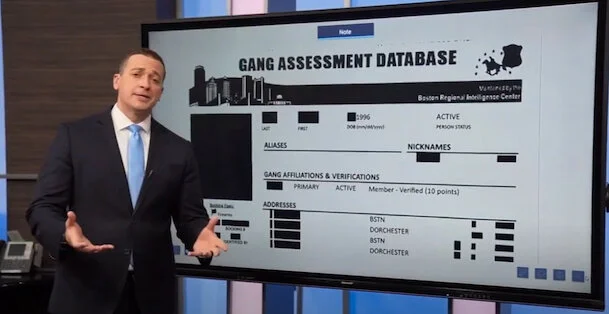
From [massprivateI] Recent documents from the Metropolitan Police Department in D.C. (MPD) and the Boston Police Department (BPD) show that Regional Intelligence Centers (RIC) are encouraging police officers to put children and adults in secret gang databases.

Last month an article in The Intercept showed that police gang databases are riddled with civil rights violations and errors. It revealed how police used civilian analysts to create flawed RIC (Fusion Center) gang member databases.

"A spreadsheet of the MPD database shared internally the next month included a supposed gang member who was less than 1 year old, as well as 2, 3, 5, and 6-year-olds. The 2,575 names in the spreadsheet also included children as young as 14."

As the video explains, RICs are entering shooting victims names into their gang databases. Law enforcement uses "hazy criteria" to justify entering 1 to 14 year-old kids names.

"Documents reviewed by The Intercept, show how the MPD identifies supposed gang members by using hazy criteria typical of other gang databases in the United States and how the department pushes officers to frequently add names to the database. The emails also reveal that the MPD shares information from the database — including full spreadsheets of its contents — with outside agencies and larger regional gang databases and that the department uses it to inform its aggressive policing initiatives."

For the past eleven years, all the Metropolitan police officers had to do to justify entering juvenile names into their gang database was to use the term "reasonable suspicion."

"Officers can add a gang member if they have a reasonable suspicion that the person checks two of seven boxes, including associating with validated gang members, being identified as a gang member by an unproven informant, and having been arrested in a gang area for an offense that is part of the gang’s criminal enterprise. Officers can forgo the two-criteria requirement if someone credibly admits to being in a gang — a workaround other departments have been shown to falsify or abuse — or if a reliable informant pegs them as a gang member."

This is almost the same gang database system that the BPD's Boston Regional Intelligence Center (BRIC) uses.

A BPD "Gang Assessment Database" document released to the public is nearly an exact duplicate of the MPD's gang database. 

BRICs "Point-Based Verification System" allows police officers to put suspicious people in their gang database simply because they are wearing the wrong color clothing or are frequenting a specific area. (Sec. 4.1)

It only takes 10 points to place person in BRICs gang database.

"The BRIC will analyze the validity of the supporting documentation for each individual criteria used to verify an associate and maintain the discretion to decline to use the information towards any criterion. The BRIC will maintain the discretion to decline to enter individuals into the database who meet the 10 point criteria but are determined to not be engaged in gang-related criminal activity."

PHOTO OF WASH DC 5/21 BY UNDECEIVER VINCENT BROWN

PHOTO OF WASH DC 5/21 BY UNDECEIVER VINCENT BROWN

The following list of items or activities may result in an individual’s verification for entry into the Gang Assessment Database (Sec.5):

  • Contact with Known Gang Associate (FIO) (2 points per interaction) FIOs shall not be used as the sole verification criteria for any individual.

  • Court and Investigative Documents (9 points)

  • Documented Association (Police Incident Report) (4 points per interaction)

  • Group Related Photograph (2 points) Information Developed During Investigation and/or Surveillance (5 points)

  • Information from Anonymous Informant or Tipster (1 point)

  • Information from Reliable, Confidential Informant (5 points)

  • Known Group Tattoo or Marking (8 points)

  • Membership Documents (9 points)

  • Named in Documents as a Associate / Member(8 points)

  • Participation in Publications (8 points)

  • Possession of Documents (8 points if not in custody or incarcerated; 3 points if in custody or incarcerated)

  • Possession of Gang Publications (2 points)

  • Prior Validation by a Law Enforcement Agency (9 points) The Law Enforcement Agencies validation process must be at least as rigorous as that used by the Boston Police Department.

  • Published News Accounts (1 point)

  • Self Admission (8 points)

  • Use and or Possession of Group Paraphernalia or Identifiers (4 points)

  • Victim/Target Affiliated with Associate of Rival Group (8 points if not in custody or incarcerated; 3 points if in custody or incarcerated)

All it takes to put a person in the gang database is for an RIC analyst or the Commander, or the Commander of the Youth Violence Strike Force or their designees to sign off on it.

"Authorized Users will be able to submit an individual for consideration for admission into the Gang Assessment Database. All submissions for verification shall include documentation to support the individual’s entry into the Gang Assessment Database using the Point-Based Verification System. Submissions can be made to the Commander of the BRIC or his/her designee or the Commander of the Youth Violence Strike Force or his/her designee. All submissions for verification will be manually reviewed by a BRIC analyst and supervisor to determine compliance with this rule prior to entry into the database."

In Springfield, Massachusetts the school committee allows their Real Time Crime Center to monitor students live. Across the country, RICs use private security officers, hotel workers, mall employees, teachers, trash collectors, ministers, priests, rabbi's and even counselors to secretly report people to fusion centers. Maine's fusion center secretly collects information on political activists, anti-government groups, gun owners and alleged domestic extremists.

Fusion centers are also giving our homes color-coded risk assessments based on food deliveries.

"The database goes through all public information for the call’s location — from arrest records to pizza deliveries — and gives the address a rating. Green means minimal threat, yellow a possible threat and red a major threat. This is all done in a few seconds."

The futility of fusion center gang databases can best be explained by Boston Police spokesperson Sgt. Det. John Boyle who said in the video, "the majority of firearms violence in Boston is driven by gang dynamics, with a small number of people causing a disproportionate amount of violent episodes." 

If only a few people are responsible for gun violence, why do we have secret fusion center gang databases? If only a few thousand people stormed the White House why do we have a secret, RIC "red book" and "red flag" system for domestic terrorists? [MORE]

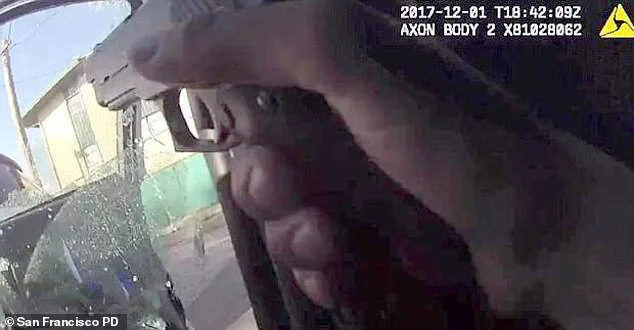
Dependent Media and SF Police Pretend "Officer's 4th Day on the Job" was Justification to Shoot an Unarmed Black Man in the Head as He Fled Past Cops; Cop's Trial for Murdering Keita O'Neil is Set

sfpd murder 1.jpg

From [HERE] and [HERE] A jury must decide if a San Francisco police officer being prosecuted for manslaughter used excessive force when he shot and killed an unarmed Black man fleeing from an alleged stolen van, a federal judge ruled Monday.

The dependent media explains that “It was rookie officer Chris Samayoa’s fourth day on the job on Dec. 1, 2017, when he shot and killed 42-year-old Keita “Iggy” O’Neil" from the passenger seat of a squad car.” O’Neil had jumped out of a stolen California State Lottery minivan and tried to run away in Samayoa’s direction when other patrol cars blocked his path. [the dependent media has been parroting the SF Police’s narrative about ‘first day on the job blah blah’ since day one- as if senseless shootings by newly hired cops are not senseless because they are newly hired and the targets are Black or Brown. Most white “journalists” believe whatever cops tell them to believe about Black people they interact with. In the system of racism white supremacy most white people are racist. 'White collective power exists where white judges, prosecutors, jurors, media, police chiefs, fellow officers & other white citizens support, defend, finance and/or promote a white cop's right to harm or deprive a non-white person of so-called "rights" or otherwise practice racism against them.' [MORE]]

In November last year, San Francisco District Attorney Chesa Boudin, a former public defender who ran on a progressive platform vowing to hold police accountable for misconduct, charged Samayoa with manslaughter.

In a separate civil lawsuit filed by O’Neil’s mother, Judy O’Neil, the city of San Francisco argued that Samayoa is entitled to qualified immunity because he reasonably suspected O’Neil was reaching for a gun when he put his hands near his waistband as he ran in the officer’s direction.

In a 43-page ruling issued Monday, U.S. Magistrate Judge Joseph Spero concluded that a jury is better suited to decide if Samayoa acted reasonably or used excessive force when he shot and killed O’Neil.

“A jury could conclude that O’Neil did not ‘reach’ for his waistband, that his hands were in the vicinity of his waist only as part of a natural running motion, and that any reasonable officer in Samayoa’s position would have recognized that O’Neil was merely trying to run away,” Spero wrote.

sfpd murder .jpg

Spero also denied Judy O’Neil’s motion for summary judgment on her claim of excessive force against Samayoa.

The judge said neither surveillance camera footage nor video from Samayoa’s body camera offered a clear picture of what O’Neil did with his hands as he darted from the van. Samayoa’s training officer and co-defendant, Edric Talusan, testified that he saw O’Neil’s hands near his waistband but did not say if it looked as though O’Neil was reaching for a gun.

“The court cannot say with certainty that no reasonable jury could deduce from that footage, in conjunction with Talusan’s deposition testimony, that O’Neil more likely than not reached towards his waistband in a manner that a reasonable officer in Samayoa’s position would perceive as a threat,” Spero wrote.

On Judy O’Neill’s claim that her son’s Fourteenth Amendment due process rights were denied, the judge ruled in favor of the city. To prevail on that claim, a plaintiff must show there was an abuse of power that would shock the conscience. In this case, the judge found Samayoa had only a split second to decide whether to shoot O’Neil or give chase on foot. That means the evidence does not support a claim for deliberate indifference because the officer had inadequate time to deliberate before firing the bullet, Judge Spero concluded.

The judge also denied the city’s motion for summary judgment on claims of negligence and state law violations, but he ruled in favor of the city on claims that the alleged violations rights stemmed from an official police department policy or custom. Judy O’Neil did not oppose the city’s motion for summary judgment on that claim.

O’Neil also sued Samayoa’s training officer, Edric Talusan, for failing to intervene when his partner allegedly used excessive force on her son.

Spero ruled in favor of the city on those claims, finding no evidence that Talusan “would be required to intervene to prevent Samayoa from shooting, when Talusan did not know either whether Samayoa would shoot or if O’Neil might take action that would justify deadly force.”

Following a review by the city’s police watchdog agency, the police department found Talusan failed to adequately supervise his trainee Samayoa and demoted him from patrol and field training officer to inspecting commercial trucks for compliance, according to Talusan’s deposition.

Spero also granted the city’s request to keep a Department of Police Accountability report on the shooting confidential while a criminal case is pending, citing its potential to “prejudice the jury pool” in Samayoa’s criminal trial.

However, the judge denied the city’s request to keep other evidence — including a dispatch log, dispatch call audio recording and another officer’s body camera footage of the incident — under seal. The city must file those pieces of evidence publicly with the court by July 22.

Additionally, the judge ruled the bulk of the city’s expert witness opinion by Michael Pickett inadmissible. The former parole officer, jail guard and prison administrator opined that O’Neil was a “career criminal with a long history of narcotic, weapons and violent behavior.” The judge found Pickett, who has not worked as a parole officer since 1978, was unqualified to offer those opinions and failed to explain what “method” he used to reach his conclusions.

Mr. O’Neil, who was Black, was suspected of having stolen a California State Lottery minivan. Mr. Samayoa and Officer Talusan chased him for a few blocks in the Bayview District when the van reached a dead-end street, at which point Mr. O’Neil jumped out and began to run.

Other patrol cars closed in and blocked Mr. O’Neil’s path, at which point he ran past the police car where Mr. Samayoa was seated in the passenger seat. The rookie officer shot Mr. O’Neil as he was running by, killing him. Officer Samayoa pointed his gun and shot Mr. O’Neil in the head through the passenger side window of the patrol car, killing Mr. O’Neil.

Mr. O’Neil had no weapon on him.  His cause of death was determined to be a homicide. [MORE]

Samayoa did not turn his body camera on until after the shooting, but the incident was still captured on video because the cameras automatically record 30 seconds prior to activation.

Body camera footage released after the showed O’Neil exit the vehicle and Samayoa open fire from inside the moving patrol car as it came to a stop next to the van. The bullet shattered the patrol car window.

“Officer Samayoa took careful aim through the sight of his handgun and waited for Mr. O’Neil’s head to come into view,” Burris said. “As soon as Mr. O’Neil was lined up with the sight of Officer Samayoa’s gun, the rookie opened fire with deliberation and premeditation.” [MORE]

Three months after the shooting, Police Chief William “Bill” Scott fired Samayoa. [MORE]

O’Neil’s attorney, John Burris, and the San Francisco City Attorney’s Office did not immediately return emails and phone calls requesting comment Monday evening.

Jury Finds White Petersburg Cop Liable for Assaulting a 4′ 9,″ 100lbs Black Woman During a Traffic Stop and Searching her Vehicle/Purse Even Though Neither Could Have Contained Evidence of Speeding

Monica Cromartie 1.jpg

From [HERE] A Black woman was awarded $300,000 because a white Virginia cop violated her civil rights when pulling her over for speeding in 2015, a jury ruled this week.

Monica Cromartie, then 54, was pulled over by Brian Lee Billings, a cop in Petersburg, on Feb. 12, 2015. Minutes later, she was bleeding from her mouth and had suffered several injuries.

At first, Cromartie immediately got out of her car, but Billings told her to get back in, and she complied, according to body-camera video.

Billings asked Cromartie to roll down her window. Cromartie ignored his request, continued talking with someone on the phone and asked Billings to leave her alone.

When Billings stated “I need you to roll down your window” and “Ma’am” knocking on the window a second time, she stated “Hey officer, leave me alone.” With mere seconds passing, Officer Billings overreacted in a hostile and violent fashion, opened the driver’s door and ripped Ms. Cromartie from the car and forced her face-down onto the payment and placed his weight on her back with such force that he injured Ms. Cromartie’s forehead, teeth, lip, right eye and right knee before she was handcuffed and then shackled by the legs by other officers. Officer Billings testified under oath to the magistrate that he “opened the car door, instructed her to get out” which the police videos did not support in order to obtain a warrant for obstruction of justice against her which was later dismissed. The court found the fact that a neutral magistrate issued a warrant was not in this case a clear indication that an officer acted in an objectively reasonable manner, stating “when ‘it is obvious that no reasonably competent officer would have concluded that a warrant should issue,’ the “shield of immunity” otherwise conferred by the warrant will be lost.’”

Cromartie, who is 4-foot-9 and weighs about 100 pounds, was bleeding from her lip when she was handcuffed and forced to sit on the curb, according to images released by her lawyers.

She sued Billings, and a Virginia jury awarded her $23,499 in 2017 but ruled Billings had qualified immunity and therefore certain parts of the lawsuit were invalid, according to the Associated Press. However, Cromartie appealed the ruling and the Supreme Court of Virginia sided with her in 2020, ruling Billings unlawfully searched her vehicle and her purse after handcuffing her.

Monica Cromartie 2.jpg

“Neither her vehicle nor her purse could have contained evidence of speeding,” the court wrote, deciding that Cromartie’s Fourth Amendment rights against unlawful search and seizure had been violated and ordering the case back to a lower court.

A jury then awarded Cromartie $300,000 for the civil rights violation, the AP reported.

Cromartie said that after the incident she had twice avoided calling the cops because she feared their response, once during a potential domestic assault from her estranged husband and once when a neighbor approached her house with a baseball bat after arguing with her grandchildren.

Billings retired from the Petersburg Police Department shortly after the incident and was not disciplined by the force in the city of 30,000 people about 25 miles south of Richmond.

Judge Blocks NYC Govt's PR Scheme to Promote Business/Tourism by Disappearing Homeless People [90% Non-White, Mostly Black] Off the Streets and Push Them into Contagious, Dangerous Shelters

African-American and Latino New Yorkers are disproportionately affected by homelessness. Approximately 58 percent of New York City homeless shelter residents are African-American, 31 percent are Latino, 7 percent are white, less than 1 percent are Asian-American, and 3 percent are of unknown race/ethnicity. PHOTO OF DWNTWN WASH DC MARCH 2021 COURTESY OF UNDECEIVER VINCENT BROWN.

African-American and Latino New Yorkers are disproportionately affected by homelessness. Approximately 58 percent of New York City homeless shelter residents are African-American, 31 percent are Latino, 7 percent are white, less than 1 percent are Asian-American, and 3 percent are of unknown race/ethnicity. PHOTO OF DWNTWN WASH DC MARCH 2021 COURTESY OF UNDECEIVER VINCENT BROWN.

From [HERE] In a boutique hotel near the Empire State Building that has served as a shelter for disabled women during the pandemic, Michelle Ward braced for the order to send her to a barracks-style shelter in the Bronx where 10 people share a single room.

Ms. Ward, 49, is one of 8,000 homeless people whom the city has housed in hotels for the past 16 months under a program that is ending. She uses a walker and said she has severe sciatica, asthma, bipolar disorder, post-traumatic stress disorder, anxiety and depression. She had applied for a waiver that would allow her to stay in the hotel but was told she would be moved anyway. 

“I can’t take this no more,” she said last Friday.

On Tuesday, Ms. Ward and potentially thousands of others got a reprieve when a federal judge ruled against the city. According to the Legal Aid Society, which challenged the transfers in court, the ruling effectively blocks the city from moving anyone out of hotels for at least a week, though the city did not immediately comment on whether it agreed with that interpretation.

The ruling on Tuesday was the latest turn in a back-and forth that has unfolded in recent weeks, with converted school buses pulling up outside hotels in Times Square and Chelsea, on the Upper West Side and elsewhere in New York City, and shuttling the homeless people living in them to group shelters far from the center of the city.

Hours before the judge’s decision, six people were arrested at a demonstration in the lobby of 4 World Trade Center, where the city’s Department of Homeless Services has offices, according to the Port Authority of New York and New Jersey, which patrols the building. 

The hotel transfers are key to an all-fronts effort by the city to get homeless people out of hotels and off the streets and subway in Manhattan, the core of both business and tourism, as it struggles back from the economic devastation caused by the pandemic. 

The measures also include frequent removals of encampments where homeless people stay and an expansion of the 311 system to let subway riders call in complaints about panhandlers and report the presence of homeless people so that outreach workers can come to them.

City officials say the moves out of hotels are necessary to lure workers and visitors back to Manhattan and are in the best interests of homeless people. Some City Council members and other local leaders have asked Mayor Bill de Blasio to help address what they say are threats to public safety posed by homeless people, several of whom have been charged this year in high-profile, vicious, random attacks in the streets and on the subway.

But advocates for homeless people see the push as a public-relations campaign that seeks simply to make thousands of people disappear. They charge that it is reckless to move people back to group, or congregate, shelters even as contagious coronavirus variants are circulating and an unknown number of homeless people remain unvaccinated.

In its filing, the Legal Aid Society accused the city of violating the rights, and endangering the lives, of homeless New Yorkers with serious health problems and disabilities — the most vulnerable of the vulnerable — by refusing to grant legally required waivers that would let them stay in hotels. Ms. Ward and the others at her hotel were in the process of being moved last Friday when the city halted the program abruptly in the face of the legal challenge. 

The judge, Gregory Howard Woods, ruled that the city could not transfer people who might qualify for waivers for extended hotel stays for at least 14 days, unless it gives them at least seven days’ notice and meets with them at least five days before a transfer and determines whether or not they qualify for the waiver, Mr. Goldfein said.

Because the city effectively has no way of knowing whether someone might qualify for a waiver, Mr. Goldfein said, the entire transfer program must pause until the city figures out who it is allowed to transfer. 

New York’s effort comes as other cities around the country grapple with worsening homelessness crises. In Los Angeles, the City Council voted last month to prohibit homeless people from camping near in or near parks, schools and libraries. In Sacramento, officials are considering a measure that would guarantee housing for every homeless person but would also require homeless people to accept housing when it is offered.

In New York, which is unique in offering shelter to anyone who is eligible, the pandemic has been a remarkably contradictory chapter in a decadeslong, and mostly losing, battle against homelessness.

The coronavirus both laid bare and worsened inequalities of health and income, as the poorest New Yorkers experienced the highest death tolls, the steepest job losses and the most ravaged support networks. More than 120 homeless people have died of Covid-19 and more than 4,100 have been infected.

New Internal Poll Shows Nina Turner's Lead Shrinking in Ohio Special Election - Pro “Isralien" Lobby is Funding her Opponent

nina turner.jpg

From [HERE] Nina Turner opened an early lead in this summer’s hotly contested Ohio special election — but the progressive heavyweight might not be running away with it.

new internal poll by her top competitor, Cuyahoga County Democratic Chair Shontel Brown, suggests the Democratic primary race has tightened. In the survey, conducted in early July, Turner led with 43 percent, followed by Brown with 36 percent.

That 7-point gap is a much closer spread than earlier polling from both candidates. An April survey from Brown's campaign found her trailing Turner by 32 points, 42 percent to 10 percent. And Turner’s late May poll showed her with 50 percent of the vote, up 35 points over Brown.

But the election has been ramping up ahead of the Aug. 3 primary, as the candidates and their allies launch competing TV ads and endorsements. Both women are vying to replace Marcia Fudge, who left the deep-blue northeast Ohio seat to join the Biden administration.

The race has drawn outsized national interest because it has split along several of the most prominent fault lines in the Democratic Party.

Turner, a former state senator who co-chaired Sen. Bernie Sanders' presidential campaign, has the support of many leading liberals. Reps. Alexandria Ocasio-Cortez (D-N.Y.), Cori Bush (D-Mo.) and Jamaal Bowman (D-N.Y.), as well as Sanders and the Justice Democrats, are all backing her.

Meanwhile, Brown has the backing of House Majority Whip Jim Clyburn (S.C.), the political arm of the Congressional Black Caucus, Hillary Clinton and Fudge’s mother.

She also has help from an outside group, Democratic Majority for Israel. Its ads have gone negative on Turner; a recent spot noted that Turner once “said voting for Biden was like eating s---.”

Democratic Majority for Israel has spent nearly $475,000 on TV, according to the ad-tracking firm AdImpact. Turner has spent more than $1.2 million on the air so far, compared to Brown's $617,000.

Brown’s early ad echoed a similar theme, suggesting that Turner would not be a strong ally to President Joe Biden, citing comments she made during her role as a top surrogate for Sanders.

Turner went negative on the air recently, dropping an ad warning that Brown and her “out-of-state special interests” are misrepresenting her record. “I’ve spent my career fighting for the Democratic Party,” Turner says in the spot.

This recent poll from Brown's campaign included 400 likely voters in the Democratic primary and was conducted July 6-8 by Normington Petts with a margin of error of 4.9 percent. Just 7 percent of voters said they were voting for a candidate besides Brown or Turner, while 14 percent were undecided.