New Suit Claims LMPD and Other KY Orderlies Lied About the Existence of Bodycam Video to Cover Up Breonna Taylor's Murder. Family Asks Court to Order the Release of the Public's Video

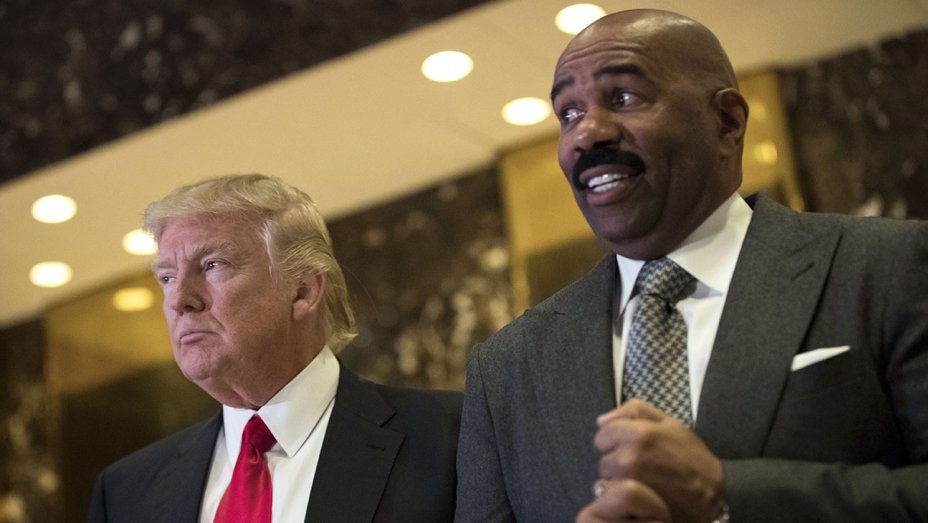
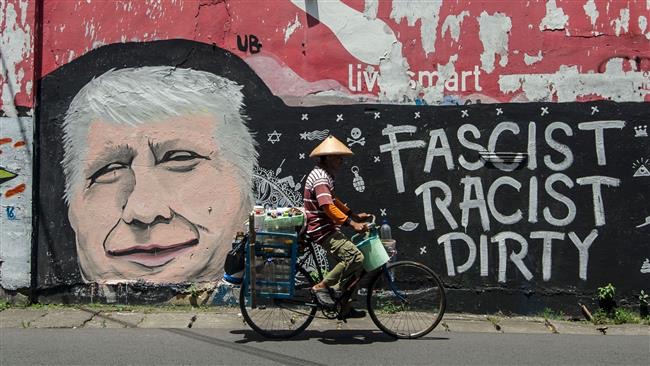
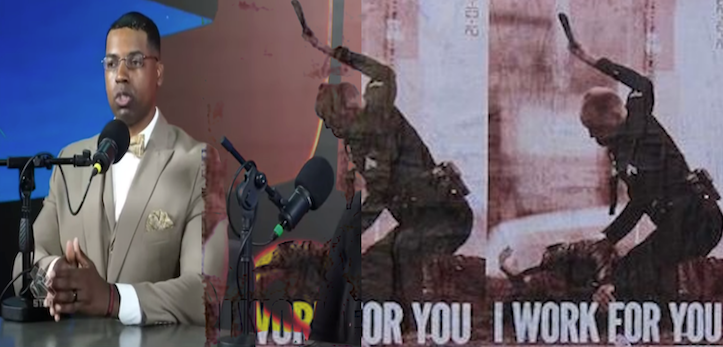
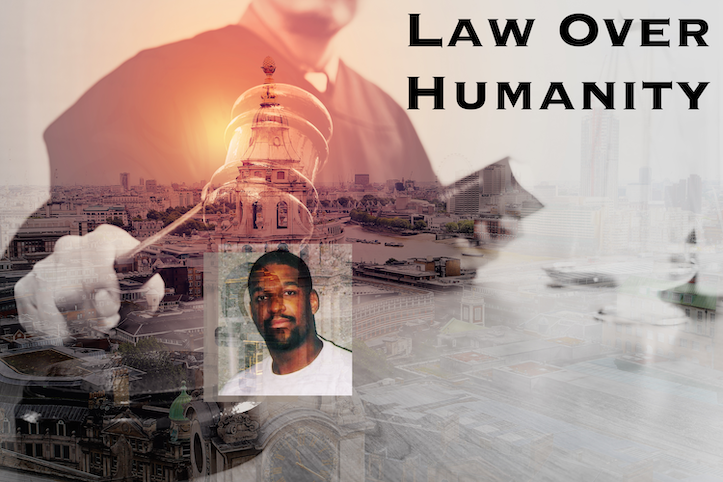
Racists Often Put Unqualified Negros in High Positions So that Matters of Importance to Blacks will be Handled Frivolously. IN PHOTO BLACK STRAWBOSS PROBOT Daniel Cameron, 34, who is the first African-American Attorney General of Kentucky. HIS grand jury decided not to charge any police officer with a crime for killing Breonna Taylor. EVIDENCE IS MOUNTING THAT HIS PRESENTATION TO the GRAND JURY WAS BASED ON LIES. Said sambo is a so-called Black conservative who was endorsed and heavily promoted by racists Donald Trump and Mitch McConnell. In fact, McConnell “hand-picked” his former SNIGGERING staffer Cameron to run for Attorney General to strengthen his own political empire before his re-election in 2020.Prior to Cameron’s election as AG in 2019 he had never tried a case of any kind, never represented an actual client in a court case and had no courtroom experience. He also never argued a legal brief before either the appellate court or the Supreme Court — at the state level or federal level. Cameron’s only experience was working as general counsel for Senate Majority Leader Mitch McConnell for 2 years, working as a law clerk and working for a law firm that focused on lobbying - positions that have no meaningful relevance to prosecutorial trial and appellate work. [MORE]

Racists Often Put Unqualified Negros in High Positions So that Matters of Importance to Blacks will be Handled Frivolously. IN PHOTO BLACK STRAWBOSS PROBOT Daniel Cameron, 34, who is the first African-American Attorney General of Kentucky. HIS grand jury decided not to charge any police officer with a crime for killing Breonna Taylor. EVIDENCE IS MOUNTING THAT HIS PRESENTATION TO the GRAND JURY WAS BASED ON LIES. Said sambo is a so-called Black conservative who was endorsed and heavily promoted by racists Donald Trump and Mitch McConnell. In fact, McConnell “hand-picked” his former SNIGGERING staffer Cameron to run for Attorney General to strengthen his own political empire before his re-election in 2020.

Prior to Cameron’s election as AG in 2019 he had never tried a case of any kind, never represented an actual client in a court case and had no courtroom experience. He also never argued a legal brief before either the appellate court or the Supreme Court — at the state level or federal level. Cameron’s only experience was working as general counsel for Senate Majority Leader Mitch McConnell for 2 years, working as a law clerk and working for a law firm that focused on lobbying - positions that have no meaningful relevance to prosecutorial trial and appellate work. [MORE]

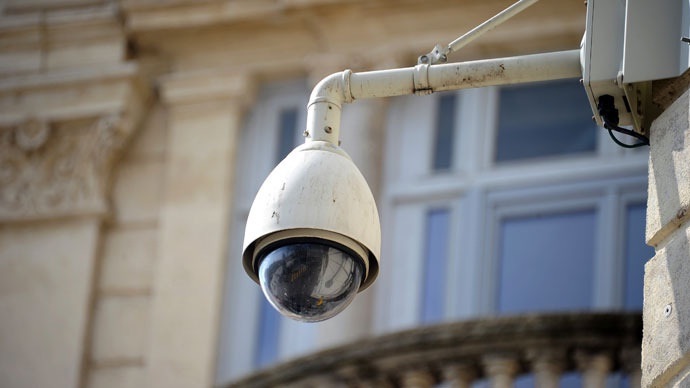
From [HERE] A new lawsuit filed on behalf of Breonna Taylor’s family alleges police may be withholding information about bodycam footage taken the morning the 26-year-old ER worker was shot and killed by cops in her Louisville, Kentucky, home.

WDRB in Kentucky reports that an attorney for Taylor’s family, who navigated a $12 million wrongful death settlement with the city, claims that Louisville Metro Police might have provided “misinformation” when they said there is no footage of the March 13, 2020, raid that left Taylor shot dead and did not produce the narcotics for which they were searching.

According to that suit, cops are also withholding public records that could prove there’s video of the killing, which the LMPD has denied. The police department claims the only officer involved in the raid who was wearing a bodycam had turned it off.

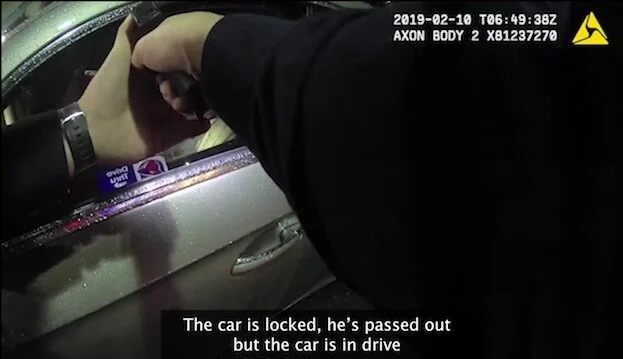
The lawsuit claims multiple law enforcement several officials at the scene — before and after the shooting — had been given body cameras. There is some footage from after the killing.

WDRB reports Taylor’s family’s lawsuit also alleges that flashing sirens at the scene of the shooting would likely have switched on body cameras that hadn’t been voluntarily activated. The case, filed Thursday, seeks information on an “audit trail” would help determine whether or not footage from before or during the raid was taken.

Police have previously said that body camera footage from the incident does not exist, explaining that some officers within the department that executed the warrant do not wear body cameras and that any cameras that were worn may have not been activated at the time. 

However, attorney Sam Aguiar argued in this week’s lawsuit that one of the officers, Myles Cosgrove, was photographed wearing a body camera harness the evening the shooting took place, though he has said it contained no camera at the time. 

Attorney Aguiar said at least 18 videos exist from officers executing the search warrant at a home on Elliott Avenue – not Taylor’s home. [MORE]

In the lawsuit, he accuses Metro Police of violating the Open Records Act.

Additionally, the attorney argued that the cameras used by department officers, known as Axon Flex 2 cameras, are designed to activate when the lightbars of a police vehicle illuminate. 

Aguiar said in the court filing that several police cars at Taylor’s apartment that evening had their lightbars on at the time of the raid. 

"Simply put, it would have been difficult for most of the LMPD members with body cameras and who were associated with ... events at Breonna’s ... to not have had their Axon body cameras activated at one point or another,” he argued. 

Aguiar explained that the police department has not fulfilled requests for information on body camera footage. 

"The plaintiffs, and the public, have an uncompromised right to know whether undisclosed body camera footage exists, or otherwise previously existed, from LMPD Axon Cameras which relates to the events surrounding the death of Breonna Taylor," he wrote, calling on a judge to demand that Louisville police respond to his inquiry. 
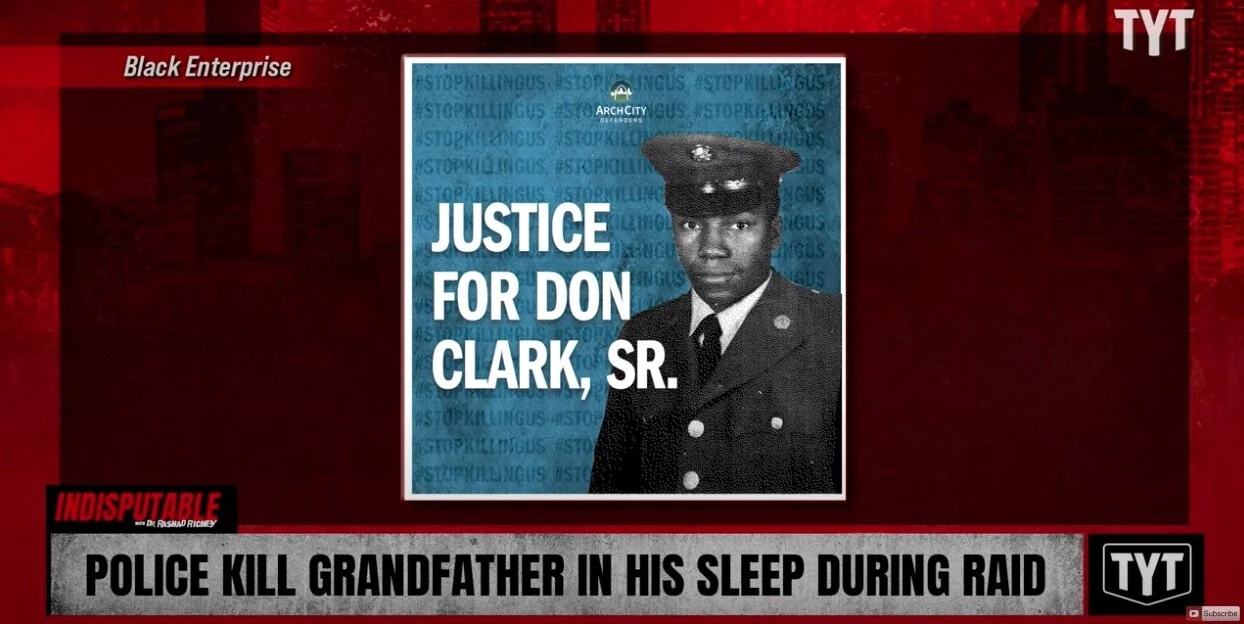
A Black Man was Sleeping when St. Louis Cops Snuck Up, Broke Into His House and Fatally Shot him 9X. To Get Warrant Suit says Liar Cops Claimed the 63 Yr Old Grandfather w/No Prior Record Sold Drugs

Don Clark .jpg

From [HERE] Don Clark Sr., a 63-year-old Army veteran, was fast asleep in his St. Louis home in February 2017 when more than a dozen SWAT team members rammed down his door and threw a stun grenade device inside.

As Clark was startled awake, one of the police officers allegedly began shooting without warning, striking Clark nine times, according to a new lawsuit filed by the man’s family. As blood pooled underneath his body, Clark died almost immediately.

Four years after the incident, Clark’s children are suing the police department for monetary damages and changes to law-enforcement policy, alleging that St. Louis Metropolitan police officers unlawfully executed a “no-knock” warrant on their father’s home, used excessive force and robbed the grandfather of his life.

The lawsuit claims that Clark, who was Black, was unarmed. He was sleeping when police detonated a “diversionary device,” documents add, which caused a flash and loud bang. He was then allegedly shot and killed without knowing it was police officers who entered his home, according to the lawsuit.

“Ultimately, I think that Don Clark Sr.’s death was a preventable tragedy,” attorney Jerryl Christmas said in a news release after the lawsuit was filed last week. “Had the police done their due diligence, this would have never happened.”

But the lawsuit’s assertions conflict with statements initially made by police following the 2017 incident.

Sam Dotson, the St. Louis police chief at the time, said the SWAT team knocked on the door and announced they were police. He then said police were met with a gunshot fired from inside Clark’s home, the St. Louis Post-Dispatch reported.

Raids in which police provide little or no warning to occupants have faced criticism in recent years. In March 2020, Breonna Taylor was shot and killed by Louisville police officers during a botched raid at her apartment after midnight. That June, as protests grew over her death and police brutality nationwide, the Louisville city council banned no-knock warrants. In December, Virginia followed with a no-knock warrant ban of its own, and other states and cities have tried to pass similar prohibitions.

How St. Louis police obtained the no-knock warrant to raid Clark’s home late on Feb. 21, 2017, is central to his family’s lawsuit, which claims Officer Thomas Strode, a detective, used bad information and “lied” to get clearance to enter the house.

In an affidavit, according to the lawsuit, Strode alleged that Clark “sold illegal drugs and harbored both illegal drugs and illegal firearms in his home.” They were allegations he supported with “confidential informants,” the lawsuit states. The officer also claimed he observed “foot and vehicle traffic consistent with narcotic trafficking activity” at Clark’s home, documents add.

“Mr. Clark did not store any drugs in his home and had never been convicted of a crime,” the lawsuit states, alleging Strode falsely assigned activity from Clark’s neighbors to his home.

The only visitors Clark saw, the lawsuit says, were his children, grandchildren and a home health care provider.

But the raid went forward on the night of Feb. 21, 2017. Earlier that day, Clark had a doctor’s appointment. He took public transit, which “sapped extra energy” from the 63-year-old, according to the documents.

Clark told his son he was looking forward to getting a good night’s rest, but after he had fallen asleep at about 8 p.m., 17 police officers rammed through his door and set off the diversionary device — without warning they were law enforcement and they would enter, the lawsuit alleges.

One police officer, Nicholas Manasco, then “shot a barrage of bullets from an assault rifle,” the lawsuit says. “At least nine bullets entered Mr. Clark’s body, nearly ripping his forearm from his elbow joint.”

Clark fell face down beside his bed. “The officers never tried to stanch the blood,” the lawsuit alleges. “Mr. Clark tried to speak, but all that came out was an unintelligible mumble.”

Clark died soon after.

“Upon information and belief, Mr. Clark was unarmed when Defendant Manasco began shooting him, never shot at the officers, nor did anything that would give any reason to believe that he was an immediate threat to the Defendant Officers or the public,” the lawsuit says.

Yet, immediately following the incident, police told a different story: Clark shot at officers as they entered, and police recovered a gun and at least one shell casing at the scene, the Post-Dispatch reported. Dotson, then the chief, said a six-month investigation had led police to the three homes they raided on the block that night, including Clark’s.

At the time, however, neighbors told the newspaper they were surprised Clark, known as “Pops,” would be raided for possession of drugs and guns. Lekeysha Tate, a longtime resident on the block, told the Post-Dispatch that Clark spent much of his time working on cars and often sat on his porch in the evening with a beer.

“He didn’t bother anybody,” she said.

Prosecutor says it was Reasonable for Hon Cops to Run Up On a Black Man @ Night w/o ID’ing Themselves and Use Lethal Force in Self-Defense During Their Unprovoked Assault and Arrest for Civil Trespass

steve alm fuck the people, govt rules.jpg

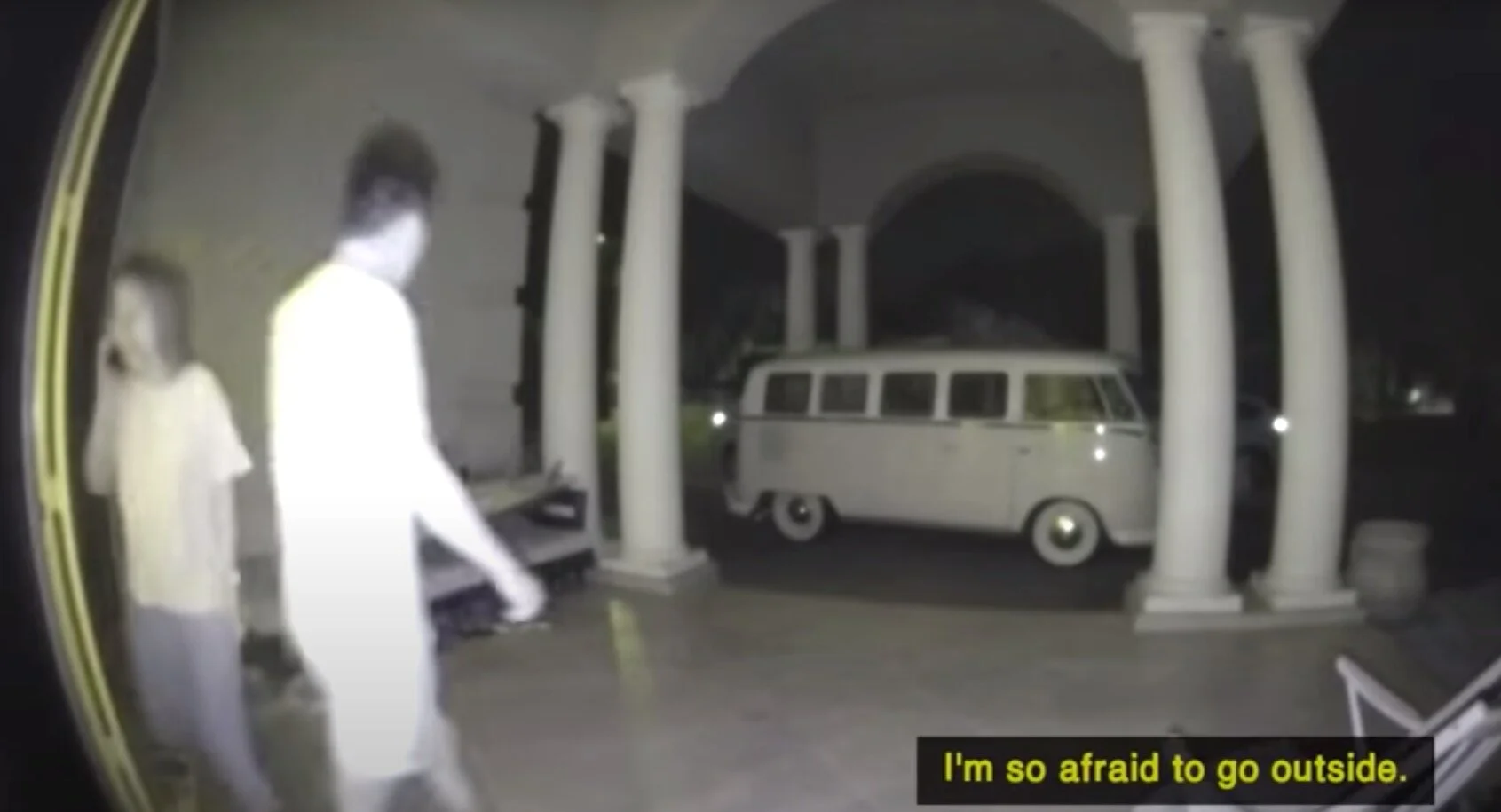
From [HERE] Three police officers in Honolulu won't be charged for the fatal shooting of Lindani Myeni, a 29-year-old Black Man from South Africa, after prosecutors said their use of force was justified.

The officers had responded to the scene of an alleged unlawful entry call in April after Lindani mistakenly entered a house which was an Airbnb where an Asian couple was staying. Lindani, who was a tourist on vacation with his wife and 2 children, believed it to be the temple next door.

When he entered he alarmed the couple. A doorbell video shows the 29-year-old arriving at the house, taking off his shoes before entering through an open door and then quickly leaving after his presence confused the Asian couple. In the video Myeni is heard repeatedly apologizing to them as he exited. The couple frantically overreacted and called 911 and during an emotional call reported him as dangerous and claimed to be terrified. 

Police responding to the 911 call immediately approached and then shot and killed him a short time later outside the house. 

The video reveals the fact that cops never announced themselves in a very dark area at night as they shined a bright light into the Black man’s face. As the cops quickly ran up on him and put their hands on him he defended himself.

A lawsuit filed on his behalf said he likely mistook the home for a temple next door that’s open to the public. Unarmed, the Black man from South Africa was wearing a traditional Zulu headband with a tuft of fur at the forehead.

City Prosecutor Steven Alm said Wednesday they officers were justified in their shooting. He also said that after a months-long investigation, prosecutors had determined race wasn't a factor in the shooting. 

Doorbell and police bodycam camera footage had shown Myeni ignoring commands to get on the ground. The camera then shows a stun gun fired by police either malfunctioning or having no effect on Myeni.  

Most importantly the video also shows that an officer fired several gunshots at Myeni before identifying themselves as 'Police!' 

Myeni was taken to the hospital where he died. The exact time lapse between Myeni arriving at the Airbnb and the fatal shooting is not clear.

Acting Deputy Police Chief Allan Nagata has acknowledged police did not initially identify themselves but said: 'They were in the fight for their lives. They were very brave. They didn't shoot or discharge the firearm right away. This was not a case of overreaction.' 

Alm said officers tried to use non-lethal, non-deadly force before they fired.  

'Officer 1 was justified in shooting Mr. Myeni in self-defense. Officer 2 was justified in shooting Mr. Myeni in defense of another.' 

Alm said that police had little choice but to shoot Myeni, after attempting to subdue him by non-lethal means. 

Among the findings, he noted that after the officers arrived, Myeni was acting strange and told them he 'was not afraid' [of his unidentified assailants] after they told him to lie on the ground. Police claim Lindani tried to open the door to their cruiser and engaged in a violent scuffle.

Additionally, he said, Myeni was stronger than any one of the responding officers and was able to overpower them in the scuffle, with the most seriously injured officer suffering a concussion. He has yet to return to work.

Myeni continued to fight with the officers despite being shot with a taser and once with a firearm. He was then shot another three times, killing him.  

—————————————————————————————————————————————

doggy portrait.jpg

Witness the government’s perversion of self defense. First of all self defense is concerned with the right to protect oneself from an aggressor. Secondly, “deadly force” is only justified in self-protection if the actor reasonably believes that its use is necessary to prevent imminent and unlawful use of deadly force by the aggressor. Additionally, a person cannot use deadly force against an aggressor if he knows that he has a safe avenue of retreat available. Also, self-defense is unavailable to those who respond with violence while laboring under an honest but unreasonable belief in the necessity for self-preservation and also unavailable to those who come to the rescue of the aggressor (defense of others).

Here, the cops were the aggressors who initiated a violent assault in the dark on a Black man without announcing themselves. The Black Man was unarmed and apparently trying to get away from his unknown assailants. Thus, deadly force, which was already unavailable to them because they were the aggressors, could not have been applied because the cops were not facing an imminent, deadly attack from an unarmed Black man defending himself against their aggression and trying to flee.

We are told the above the natural laws concerning human behavior and self-defense do not apply to cops because they have authority to initiate violence against citizens or the moral right to forcibly control citizens who are required to obey commands. It is axiomatic that all the power belonging to the government and its agents comes from the people. All the power the government has is only what people have given it, there is no other source of power. If citizens don’t have the power to initiate unprovoked acts of violence against others then how could citizens delegate police officers the power to do so? If delegation is not possible then How exactly did government representatives and police acquire such magical, super-human powers [the moral right forcibly control others and to initiate unprovoked acts of violence]??

—————————————————————————————————————————————

SO SHOOK BY SKIN COLOR THEY DON’T REALIZE THEY ARE OUTSIDE and THEY DON’T LOOK SCARED. ASIAN COUPLE HELPED TO GET A BLACK MAN MURDERED

SO SHOOK BY SKIN COLOR THEY DON’T REALIZE THEY ARE OUTSIDE and THEY DON’T LOOK SCARED. ASIAN COUPLE HELPED TO GET A BLACK MAN MURDERED

The officers haven't been named throughout the course of the investigation -- naturally, because they are “public servants” their names must be kept secret to foster unaccountability and worsen public relations.

Sabine and Dexter Wang, visiting Hawaii from New Jersey for more than a month, were “freaked out” when a stranger walked into the Honolulu home where they were staying and acted oddly, Scot Brower, an attorney representing the homeowner and the tourists said.

“He didn’t get no permission. He didn’t get any consent. He went in that house,” Brower said.

Exactly counselor - that is called a “trespass,” which is a civil tort not a crime. He entered the house through an open door and immediately left the premises when the Asian couple asked him to do so. As such, his conduct was not against the will of the occupant and he appeared to mistakenly enter, not knowingly enter the house unlawfully and did not remain unlawfully in or upon premises to meet the elements of misdemeanor trespass in Hawaii. The cops could have learned the above information if they had simply asked a few questions to corroborate details from the 911 call.

The Wangs have provided inconsistent stories about what happened, said Bridget Morgan-Bickerton, an attorney for Myeni’s wife, Lindsay Myeni.

“Nothing the Wangs have said justifies the way that officer approached Lindani or justifies that they did not announce themselves as police,” she said. 

Myeni wouldn’t have known it was police shining bright lights in his eyes on a dark night, the lawsuit said. 

Myeni's wife, Lindsay, has filed a wrongful death lawsuit against the city, and her attorney Jim Bickerton said the announcement would not impact the civil case, and that the prosecutors' conclusions had left many questions unanswered, Hawaii News Nowreported. 

'Mr. Alm's focus on the shooting ignored the first action of ordering an unarmed person to lie on the ground at gunpoint,' Bickerton said in a statement. 'When you avoid addressing the very first wrongful act committed, your analysis of what comes afterwards should not be accepted by the public.'  {When they ordered him to lay on the ground what was he under arrest for? As stated, there was no probable cause for unlawful entry because his entry through an open door was not against the will of the couple and he immediately exited when they told him to go]

Would it Be "Criminal" if Cops Bit Into a Black Man's Neck, Mauling Him for 30 Seconds? New Prosecutor Reviewing Incident where 3 White LPD Cops Attempted to Murder Richard Bailey Using a Police Dog

POLICE CANINES ARE BRED AND TRAINED BY AUTHORITARIANS TO ENSURE THAT THEIR BITE IS FAR MORE SEVERE THANA NORMAL DOG BITE. THE PRESSURE FROM A POLICE CANINE BITE HAS BEEN LIKENED BY ONE COURT TO THE FORCE OF BEING RUN OVER BY A CAR. FOR DECADES, THE CANINE-INDUSTRY CONTENDED THAT POLICE DOGS USUALLY CAUSE ONLY MINOR INJURIES AND BITE FOR 10 TO 15 SECONDS. THE ERA OF BODY CAMS AND CELLPHONE RECORDINGS SHOWS THEY OFTEN BITE FOR MUCH LONGER AND CAUSE SIGNIFICANT INJURY. UNLIKE NORMAL DOGS, POLICE CANINES ARE TRAINED TO BITE HARD, USE ALL THEIR TEETH AND BITE MULTIPLE TIMES. STUDIES HAVE FOUND THAT OVER 3,500 POLICE CANINE BITESANNUALLY RESULT IN EMERGENCY ROOM VISITS, AND THAT CANINE FORCE RESULTS IN A HIGHER PROPORTION OF HOSPITAL VISITATIONS THAN ANY OTHER TYPE OF POLICE FORCE. ON RARE OCCASIONS, POLICE CANINES HAVE KILLED PEOPLE, INCLUDING A SUSPECTED BURGLAR, A LIKELY TRESPASSER AND A HOMELESS WOMAN.THIS LEVEL OF VIOLENCE CANNOT BE JUSTIFIED BY THE THREAT POSED. POLICE DOGS ROUTINELY USE FORCE THAT UNQUESTIONABLY WOULD BE UNLAWFUL IF USED DIRECTLY BY A POLICE OFFICER. THE DOGS ARE OVERWHELMINGLY SET ON PEOPLE SUSPECTED OF CRIMES LIKE BURGLARY, CAR THEFT, TRESPASSING, TRAFFIC VIOLATIONS OR “FLEEING”FROM THE POLICE, AND OFTEN USED DURING POLITICAL PROTESTS AND ON NON-WHITES IN IMMIGRATION RAIDS. [MORE]

POLICE CANINES ARE BRED AND TRAINED BY AUTHORITARIANS TO ENSURE THAT THEIR BITE IS FAR MORE SEVERE THANA NORMAL DOG BITE. THE PRESSURE FROM A POLICE CANINE BITE HAS BEEN LIKENED BY ONE COURT TO THE FORCE OF BEING RUN OVER BY A CAR. FOR DECADES, THE CANINE-INDUSTRY CONTENDED THAT POLICE DOGS USUALLY CAUSE ONLY MINOR INJURIES AND BITE FOR 10 TO 15 SECONDS. THE ERA OF BODY CAMS AND CELLPHONE RECORDINGS SHOWS THEY OFTEN BITE FOR MUCH LONGER AND CAUSE SIGNIFICANT INJURY. UNLIKE NORMAL DOGS, POLICE CANINES ARE TRAINED TO BITE HARD, USE ALL THEIR TEETH AND BITE MULTIPLE TIMES. STUDIES HAVE FOUND THAT OVER 3,500 POLICE CANINE BITESANNUALLY RESULT IN EMERGENCY ROOM VISITS, AND THAT CANINE FORCE RESULTS IN A HIGHER PROPORTION OF HOSPITAL VISITATIONS THAN ANY OTHER TYPE OF POLICE FORCE. ON RARE OCCASIONS, POLICE CANINES HAVE KILLED PEOPLE, INCLUDING A SUSPECTED BURGLAR, A LIKELY TRESPASSER AND A HOMELESS WOMAN.

THIS LEVEL OF VIOLENCE CANNOT BE JUSTIFIED BY THE THREAT POSED. POLICE DOGS ROUTINELY USE FORCE THAT UNQUESTIONABLY WOULD BE UNLAWFUL IF USED DIRECTLY BY A POLICE OFFICER. THE DOGS ARE OVERWHELMINGLY SET ON PEOPLE SUSPECTED OF CRIMES LIKE BURGLARY, CAR THEFT, TRESPASSING, TRAFFIC VIOLATIONS OR “FLEEING”FROM THE POLICE, AND OFTEN USED DURING POLITICAL PROTESTS AND ON NON-WHITES IN IMMIGRATION RAIDS. [MORE]

From [HERE] and [HERE] A special prosecutor cleared three uncivilized white Lafayette police officers after a K-9 mauled a Black man last year. Special prosecutor Mary Hutchison said their actions "were not criminal in nature." But the former Madison County deputy prosecutor left her post in the middle of the investigation, so Judge Sean Persin last week threw out the report, saying she "no longer had authority to act as special prosecuting attorney in this case."

Now a new special prosecutor,  David Thomas, is investigating the K9 mauling from May 2020, which left Richard Bailey Jr. in a coma for six days.

Bailey was a suspect in a fight at a Lafayette home. However, when the white officers arrived no confrontation was going on and police apparently did not bother to corroborate any details from the 911 call prior to initiating a stop and seizure of Bailey. In other words, the detention and arrest of Bailey appear to have been in violation of his so-called 4th Amendment rights.

Lafayette Police Department claim Bailey resisted arrest but the video speaks for itself. The Black man's attorneys say he was targeted because of his race - all the cops were white. Despite video showing cops release a K-9 on Bailey and allowing it to maul the man by the neck for over 30 seconds, nearly killing him, none of the officers were charged.

The LPD cleared the officers in its own internal investigation. In a statement last year to News 18, the agency said Bailey was resisting arrest and his "non-compliance created a physical altercation that did not need to occur."

LPD Chief Patrick Flannelly also posted a Youtube video debriefing the body camera footage, saying it exonerates the officers.

Bailey's attorneys called the use of the dog, which mauled Bailey's neck for 30 seconds, “extraordinarily violent” and said the three white officers used excessive force because Bailey is Black, according to the Journal & Courier. They said the 46-year-old Bailey spent days in a medically-induced coma after the attack and could have died.

As the dog viciously mauls his neck the white cop has the audacity to order “put your hands behind your back.” When the Black man stops moving the white cop grabs the dog to stop him from biting. He says, “good job.”

According to police, as reported by WLFI, officers responded to a 911 call at 12:24 am about a reported fight happening at a home on Brampton Dr. When they arrived they found 46-year old Richard Lee Bailey Jr., who they came to arrest for suspected battery and intimidation. According to police he fought with and threatened to stab the three people living in the home on Brampton Dr.

Bailey’s attorneys disagree, however, and say that the 911 dispatch gets the story wrong, and that Bailey himself was the one who was attacked.

As the video shows, when police stop him, Bailey is clearly agitated but he is non-violent and sitting on his scooter that is not even running.

“I was loud and everything because I was scared a little bit,” Bailey said of his encounter with Klimek and Sikorski. “… I was trying to plea my case to the police.

“I was on my moped trying to leave. The moped wasn’t even started yet,” Bailey said.

When Saxton arrived at the scene, Bailey is heard on the video loudly asking, “What probable cause do you have, sir?”

“He’s a suspect in a battery,” Saxton said, according to his body cam. “If he’s going to act like that, he can be detained.”

Saxton said, “Hey. There’s a dog in that car. If you fight, you’re going to get dog bit.”

Officers then pry Bailey’s hands from the scooter’s handlebars and throw him to the ground.

Before Bailey could even react, police released the dog who went straight for the man’s neck.

“Here! Here! Here!” Saxton called to his dog. “Right here!”

The dog latched on and tore into Bailey’s neck for over 30 seconds — easily enough time to kill the man. Bailey tried to stop the dog from tearing apart his neck, but he was unsuccessful.

“Stop moving!” the officer yells at a man whose neck is being shredded by the K-9.

“I wasn’t fighting the dog,” Bailey insisted. “All I did was reach up and grabbed the dog’s mouth ‘cause he’s on my throat. That was the natural reaction. I’m not fighting the dog or trying to hurt the dog. The dog’s hurting me.”

That’s about all Bailey remembers. He would wake up six days later after slipping into a coma with a tube in his throat.

Bailey recorded what the doctor told him during a follow up and the description is chilling to say the least.

“The dog, when he bit you, lacerated your windpipe, … and it had hit the main artery that goes to your brain on this side (left). And that’s completely blocked off,” the doctor said on the recording.

“You had a tear in your trachea,” the doctor said. “What I did, I fixed where they put the tube in so you could breathe. Then we put this in through the injury site.

“Then the rest was just muscle and other tissue that had been torn apart, and we put that back together again.”

“They must have been trying to kill Richard Bailey that night, they must have been,” said one of his lawyers, Fatima Johnson. “If a dog bites your neck, its obvious what’s going to happen.”

“The force was just extraordinarily violent,” another of Bailey’s attorneys, Swaray Conteh, said in an exclusive interview with the Journal & Courier. “They didn’t have to do that. Two of them could have placed him in handcuffs and took him wherever they wanted to. They didn’t need the assistance of a K9.”

Compulsory "Public Service" from Unwanted “Servants:" NY Laws Allow Cops Stripped of Training Credentials to be Rehired at other departments and Public Safety Agencies, records show

Undeceiver Larken Rose states: In this system, it is patently obvious who commands and who obeys. The people are not the “government,” by any stretch of the imagination, and it requires profound denial to believe otherwise. But other myths are also used to try to make that lie sound rational. For example, it is also claimed that “the government works for us; it is our servant.” Again, such a statement does not even remotely match the obvious reality of the situation; it is little more than a cult mantra, a delusion intentionally programmed into the populace in order to twist their view of reality. And most people never even question it. Most never wonder, if “government” works for us, if it is our employee, why does it decide how much we pay it? Why does our “employee” decide what it will do for us? Why does our “employee” tell us how to live our lives? Why does our “employee” demand our obedience for whatever arbitrary commands it issues, sending armed enforcers after us if we disobey? It is impossible for “government” to ever be the servant, because of what “government” is, To put it in simple, personal terms, if someone can boss you around and take your money, he is not your servant; and if he cannot do those things, he is not “government.” However limited, “government” is the organization thought to have the right to forcibly control the behavior of its subjects via “laws,” rendering the popularly accepted rhetoric about “public servants” completely ridiculous. To imagine that a ruler could ever be the servant of those over whom he rules is patently absurd. [MORE]

Undeceiver Larken Rose states: In this system, it is patently obvious who commands and who obeys. The people are not the “government,” by any stretch of the imagination, and it requires profound denial to believe otherwise. But other myths are also used to try to make that lie sound rational.

For example, it is also claimed that “the government works for us; it is our servant.” Again, such a statement does not even remotely match the obvious reality of the situation; it is little more than a cult mantra, a delusion intentionally programmed into the populace in order to twist their view of reality. And most people never even question it. Most never wonder, if “government” works for us, if it is our employee, why does it decide how much we pay it? Why does our “employee” decide what it will do for us? Why does our “employee” tell us how to live our lives? Why does our “employee” demand our obedience for whatever arbitrary commands it issues, sending armed enforcers after us if we disobey? It is impossible for “government” to ever be the servant, because of what “government” is, To put it in simple, personal terms, if someone can boss you around and take your money, he is not your servant; and if he cannot do those things, he is not “government.” However limited, “government” is the organization thought to have the right to forcibly control the behavior of its subjects via “laws,” rendering the popularly accepted rhetoric about “public servants” completely ridiculous. To imagine that a ruler could ever be the servant of those over whom he rules is patently absurd. [MORE]

From [HERE] DOMINIC CAPRARIO LAY handcuffed on the asphalt as the punches came down. The first officer hit him repeatedly in the back of the head, Caprario recalled, leading him to shield his face against the rubber tire of the squad car. A second officer walked over and stomped Caprario’s face with the heel of a steel-toed Timberland boot.

According to interviews with Caprario, along with medical records and documents from a subsequent civil rights lawsuit, the 2011 incident began when two Staten Island police officers pulled Caprario from his double-parked car and accused him of buying drugs. It was Officer Anthony J. Egan who initiated the violence, Caprario recalled, attempting to shut the trunk on Caprario’s fingers, throwing him against the hood of his car, and punching the 24-year-old as he lay restrained. “Egan went nuts,” Caprario said.

Egan denied the allegations in court and did not respond to requests for comment.

Across a 10-year career at the New York Police Department, Egan cost New York City over $437,000 in seven separate civil rights lawsuits, including the one filed by Caprario, accusing the officer of excessive force, false arrests, and false testimony.

In 2018, Egan was decertified under a New York regulation designed to strip police training credentials from officers who have been fired for cause or resign while under a disciplinary investigation.

But within months, Egan was working again — first for a high-end private security company and then for the City University of New York’s Hunter College, where he worked as a campus peace officer authorized to make arrests. Today, he is employed as a correctional officer at the Metropolitan Detention Center, a federal jail in Brooklyn.

Documents obtained by The Intercept and New York Focus under New York’s Freedom of Information Law show that Egan is one of 27 former law enforcement officers to be decertified by state regulators and then rehired by another police department or public safety agency. In some instances, new employers were unaware that the officer they were hiring had previously been decertified. These rehires point to the lack of oversight of so-called wandering officers and the limitations of the current decertification system in New York.

“It fits into a broader pattern that we’ve seen in police getting away with misconduct,” said Michael Sisitzky, who leads the New York Civil Liberties Union police accountability campaign. “The fact that they may not have violated any laws or rules by going through this process is another example of police departments not taking rules violations by officers on the job — that led to the loss of their jobs and loss of certification — all that seriously.”

An Inadequate System

In 2016, two years after the police killing of Eric Garner, administrators at New York’s Division of Criminal Justice Services enacted regulations to revoke the training certificates of problematic police officers. Under the regulation, officers who are fired for cause by police departments or resign during disciplinary processes must be reported to the DCJS, which then invalidates those officers’ training certificates.

But the law does not prevent decertified officers from being rehired; officers can undergo retraining by new employers and become recertified to resume police work. Because New York does not decertify officers permanently, and because regulators don’t track police decertifications as closely or transparently as they do for doctors or lawyers, experts call the state’s current system a half-measure.

“It’s better than nothing. But it’s still inadequate,” said Roger Goldman, a professor emeritus at Saint Louis University School of Law and a leading expert on police licensing.

Forty-five other states have adopted statutes that allow officers to be decertified. Many of those statutes are far stricter than New York’s, Goldman said, and make it more difficult for an officer with a problematic record to be rehired. In Arizona and Connecticut, for example, regulators publish the names and offenses of decertified officers publicly. In Kansas, officers are required to petition a state board to be reinstated, allowing regulators rather than police departments to decide whether a cop returns to work. In Oregon, police decertifications are final.

But in New York, DCJS regulators function largely as record keepers. They cannot investigate or fire officers themselves; instead, they decertify officers whose names police departments give them, leaving most regulatory responsibilities in the hands of local police chiefs. Police chiefs can set their own thresholds for what constitutes a fireable offense and rehire officers fired for misconduct if the officer retrains. [MORE]

In Disbelief Over Her Inability to Control or Communicate w/a Disfluent White TX Cop a Black Lady Called 911 for Help During a Traffic Stop but More Public Masters Arrived to Provide Mandatory Service

FUNKTIONARY explains that Disbelief is when something we believe should exist does not agree with our perceptions of what actually exists. Disbelief can be shocking but awe-full (full of awe) and, is the key to the door of disillusionment which is the threshold of enlightenment—the porch of paradise. [MORE]
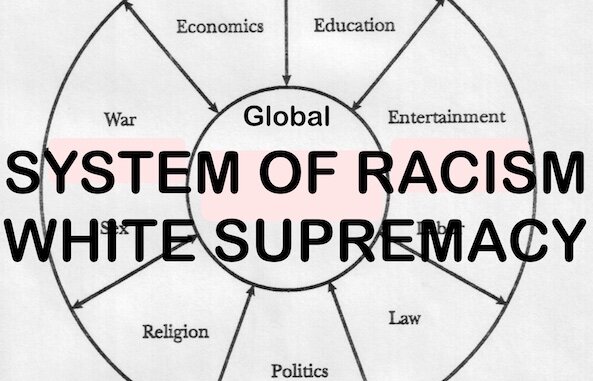
MASTER SERVANT RELATIONS IN THE FREE RANGE: “I’m Black, he’s white, and we already know what the issue is.” [Really? Is Racism White Supremacy the only thing at play here?] From [HERE] A Fort Worth woman filed a lawsuit against the city after she was handcuffed for 17 minutes in the back of a police car during a traffic stop in which she says a Fort Worth police officer racially profiled her.

When Shamika Whitfield was pulled over in 2019, the officer who approached the driver’s side window was immediately aggressive, according to a lawsuit she filed against the city in federal court on May 17. She called 911 out of fear when the officer demanded she get out of the car after she informed him she had a legal handgun in the vehicle, the suit says.

“I cannot calm down because he is way too aggressive,” she told the 911 operator. “I’m Black, he’s white, and we already know what the issue is.”

The officer who pulled Whitfield over, Officer Thomas Shelton, was suspended for 30 days without pay for his actions during the traffic stop, according to disciplinary records. An internal affairs investigation concluded that Shelton failed to follow the department’s policies of de-escalation, professional conduct, handcuffing prisoners and traffic arrests.

The suit does not name Shelton or the police department as defendants, but says the city of Fort Worth is at fault for fostering an unofficial policy of excessive force within its police force. Whitfield also accuses the city of unlawful seizure because she was arrested and put into a police car.

In a response filed by the city of Fort Worth on May 28, the city denied any allegations of wrongdoing.

Whitfield has a valid concealed carry license, the lawsuit says. According to the lawsuit, an officer told her, “This is what happens when you say you have a gun in the car.”

The citation, which was the entire basis of the stop, was ultimately dismissed, according to the lawsuit.

Legal scholar Charles Epps explains:  “Police stops matter, No form of direct government control comes close  to these stops in sheer numbers, frequency, proportion of the population  affected, and, in many instances, the degree of coercive intrusion. The  police make some eighteen million traffic stops per year in the United  States. Nationally, 12 percent of drivers are stopped per year by the police.  Among racial minorities the rate is considerably higher: 24 percent  or more by some estimates. . .   Police stops convey powerful messages about citizenship and equality.  Across millions of stops, these experiences are translated into common  stories about who is an equal member of a rule-governed society and  who is subjected to arbitrary surveillance and inquiry.”Similarly,  law professor Frank Baumgartner states that “It is no exaggeration to say that traffic stops are the epicenter of police-citizen interactions. Perceptions about their fairness will go a long way toward shaping citizens’ opinions of the police and even the government more broadly. . . If officers are apologetic, hesitant, grateful, and formal in their addresses to white drivers, but informal, disfluent, negative, and commanding in their interactions with blacks, then there should be no surprise that the two population groups express different levels of satisfaction following such interactions.”Such talk only concerns managing relations and people’s perceptions in the free range prison toward the lex-icon’s goal [“law as image - (the form) over the substance of justice via truth and law over humanity.”] of the appearance of justice. The appearance of justice is the only product the criminal justice system produces; make it look right even though its rigged. The purpose is to maintain legitimacy of rulership to obtain your cooperative control and consent to oppression.As FUNKTIONARY explains legal truths must give way to reality on the street. In real life rights are myths. If rights have any existence perhaps so solely upon the thought standard; you have them if a government agent believes you do. Cops so frequently abuse their power that no Black shopper, pedestrian, motorist, juvenile, adult or Black professional of any kind—could make a compelling argument that so-called constitutional rights afford any real protection from cops. The possession of "rights”  given to you by a government is cult belief . Drop it like a wooden coin.
Legal scholar Charles Epps explains: “Police stops matter, No form of direct government control comes close to these stops in sheer numbers, frequency, proportion of the population affected, and, in many instances, the degree of coercive intrusion. The police make some eighteen million traffic stops per year in the United States. Nationally, 12 percent of drivers are stopped per year by the police. Among racial minorities the rate is considerably higher: 24 percent or more by some estimates. . . Police stops convey powerful messages about citizenship and equality. Across millions of stops, these experiences are translated into common stories about who is an equal member of a rule-governed society and who is subjected to arbitrary surveillance and inquiry.”

Similarly, law professor Frank Baumgartner states that “It is no exaggeration to say that traffic stops are the epicenter of police-citizen interactions. Perceptions about their fairness will go a long way toward shaping citizens’ opinions of the police and even the government more broadly. . . If officers are apologetic, hesitant, grateful, and formal in their addresses to white drivers, but informal, disfluent, negative, and commanding in their interactions with blacks, then there should be no surprise that the two population groups express different levels of satisfaction following such interactions.”

Such talk only concerns managing relations and people’s perceptions in the free range prison toward the lex-icon’s goal [“law as image - (the form) over the substance of justice via truth and law over humanity.”] of the appearance of justice. The appearance of justice is the only product the criminal justice system produces; make it look right even though its rigged. The purpose is to maintain legitimacy of rulership to obtain your cooperative control and consent to oppression.

As FUNKTIONARY explains legal truths must give way to reality on the street. In real life rights are myths. If rights have any existence perhaps so solely upon the thought standard; you have them if a government agent believes you do. Cops so frequently abuse their power that no Black shopper, pedestrian, motorist, juvenile, adult or Black professional of any kind—could make a compelling argument that so-called constitutional rights afford any real protection from cops. The possession of "rights” given to you by a government is cult belief . Drop it like a wooden coin.

According to FUNKTIONARY:"rights" - useful fictions declared in order to make agents of another type of fiction ("government") have to play along in their deadly theatrical (tragicomedy) game. 2) mere fictions, the contemplation of which leads only to a progressive social, personal, racial and jurisprudential separation from reality. Discussion and debates about "rights" merely evades the FAQ, i.e., the frequently avoided question of who is to enforce any "right" and who will benefit from the pretense. "Rights" are separated into two categories—those flowing from "negative liberties" and those flowing from "positive liberties." In law, rights are remedies and if a person is without a remedy (as is with citizens of the United States) he is without a right, and only a 'thing' is without rights. (See: Negative Liberties, Positive Liberties, Bill of Rights, Civil Rights, Human Rights, Ma'at & Justice) [MORE]

According to FUNKTIONARY:

"rights" - useful fictions declared in order to make agents of another type of fiction ("government") have to play along in their deadly theatrical (tragicomedy) game. 2) mere fictions, the contemplation of which leads only to a progressive social, personal, racial and jurisprudential separation from reality. Discussion and debates about "rights" merely evades the FAQ, i.e., the frequently avoided question of who is to enforce any "right" and who will benefit from the pretense. "Rights" are separated into two categories—those flowing from "negative liberties" and those flowing from "positive liberties." In law, rights are remedies and if a person is without a remedy (as is with citizens of the United States) he is without a right, and only a 'thing' is without rights. (See: Negative Liberties, Positive Liberties, Bill of Rights, Civil Rights, Human Rights, Ma'at & Justice) [MORE]

FLA Gov Signs Use-of-Force Bill yet the Force Continuum is Uncontrollable: Chokeholds on Citizens are Now "Limited" but Cops Retain Powers to Forcibly Control/Kill People Whenever They Deem Necessary

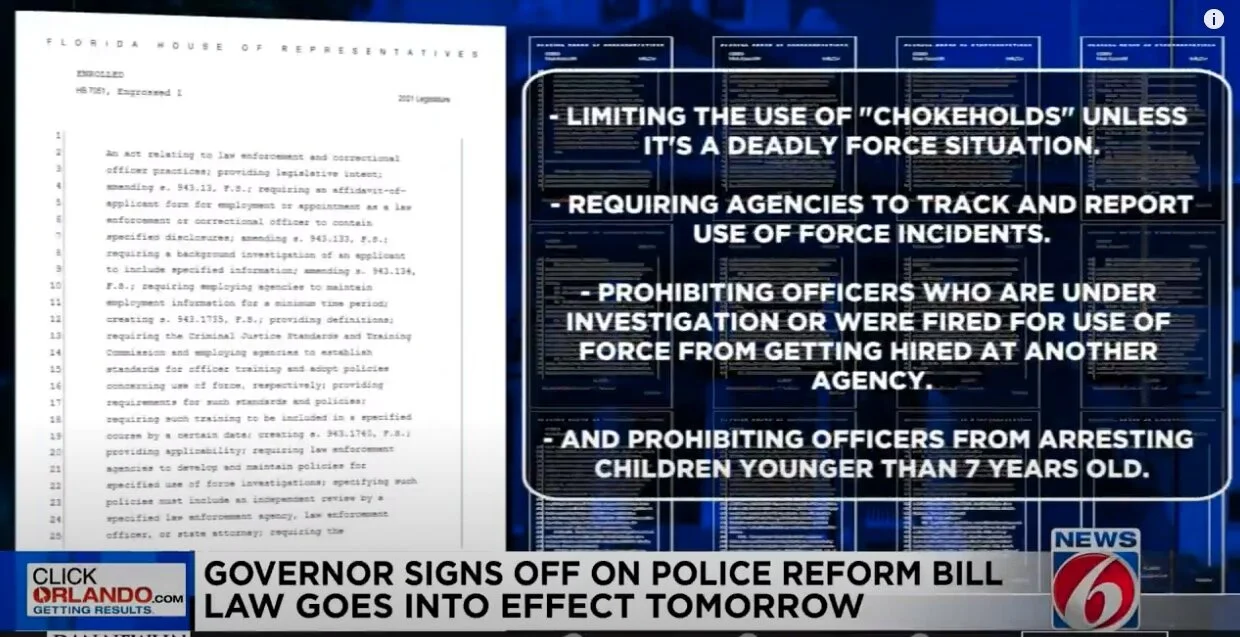
SOUNDS GREAT BUT WE’RE ALREADY DOING THAT. From [HERE] After a year of intense scrutiny of policing, Gov. Ron DeSantis on Tuesday signed into law a bill that includes new use-of-force training requirements for officers.

The measure (HB 7051), which DeSantis formally received Monday, moved swiftly through the Legislature at the end of this spring’s session after negotiations on the measure by House Republicans and Democrats.

“We can look at 7051 and be proud that now there will be more robust and uniform basic training standards throughout the state,” said state Rep. Fentrice Driskell, who sponsored the legislation. 

It came after scrutiny of policing that followed the death last year of George Floyd, a Black man who was killed by ex-Minneapolis police officer Derek Chauvin. Chauvin, who was captured on video kneeling on Floyd’s neck, was found guilty by a jury of murdering Floyd and sentenced to prison.

FUNKTIONARY defines:Force - the source or sources of all possible actions of the particles or materials of the universe(s). 2) the manipulation of a man or woman in disregard of its own volition or nature. 3) the use of an outside physical coercion of any kind by one or more humanoids against another or others in order to make him/her or them obedient and compliant to higher or their will. 4) the basis of all social evils and can only be used in the sense of attack not defense. 5) You must! In the way I say! 6) the social disease. "Force (coercion) and fraud are the foundation of all social systems and the source of the aroma which they exhale." --Max Nomad. "Force" operates to remove personal volition from opportunity to act or not act. Someone '`makes" you behave in a certain way by threatening to injure or enslave you, someone you love, or something you prize, if you do not behave in that way. Force operates to obtain an intended behavior when the forced party would otherwise have exhibited a different behavior. Punishment, pain, suffering, and discomfort characterize force. Unfortunately, governments only function by force. Once established, they put laws into effect by threatening persecution, imprisonment, fine, or death against all who don't comply with those laws--including the use of the force continuum. [MORE]

FUNKTIONARY defines:

Force - the source or sources of all possible actions of the particles or materials of the universe(s). 2) the manipulation of a man or woman in disregard of its own volition or nature. 3) the use of an outside physical coercion of any kind by one or more humanoids against another or others in order to make him/her or them obedient and compliant to higher or their will. 4) the basis of all social evils and can only be used in the sense of attack not defense. 5) You must! In the way I say! 6) the social disease. "Force (coercion) and fraud are the foundation of all social systems and the source of the aroma which they exhale." --Max Nomad. "Force" operates to remove personal volition from opportunity to act or not act. Someone '`makes" you behave in a certain way by threatening to injure or enslave you, someone you love, or something you prize, if you do not behave in that way. Force operates to obtain an intended behavior when the forced party would otherwise have exhibited a different behavior. Punishment, pain, suffering, and discomfort characterize force. Unfortunately, governments only function by force. Once established, they put laws into effect by threatening persecution, imprisonment, fine, or death against all who don't comply with those laws--including the use of the force continuum. [MORE]

New standards aimed at limiting officers’ use of chokeholds are included in the legislation. Chokeholds will be limited “to circumstances where the officer perceives an immediate threat of serious bodily injury or death to himself, herself, or another person.”

Training also will instruct officers on a “duty to intervene in another officer’s excessive use of force,” and a “duty to render medical assistance following use of force.”

For the first time, there will be a state database to keep track of use of force incidents that result in serious bodily injury, death or the discharge of a firearm at a person.

“Perhaps we can keep a closer eye on what’s happening at these law enforcement agencies, identify any hot spots,” Driskell said.

In addition, officers applying for a new job must disclose if they left the previous job under a cloud, and that previous agency has to be truthful when it’s contacted about a background check.

The legislation also bans the arrest of anyone under age 7 unless the violation is a forcible felony.

[Plantation Less Restrictive Under New Master] Biden's Department of Justice Formally Pauses Federal Executions [scheduled government murders] to Review Trump Death-Penalty Regulations

From [HERE] In a memorandum that left to Congress the task of addressing systemic questions of arbitrariness, racial discrimination, and wrongful convictions affecting the administration of the federal death penalty, U.S. Attorney General Merrick Garland (pictured) issued a directive formally pausing federal executions while the Department of Justice (DOJ) undertakes a review of executive branch policies adopted in the last two years of the Trump administration.

Garland’s memorandum, issued late in the day June 30, 2021, prior to the federal government's closure for the July 4th holiday weekend, was as expansive in touting constitutional guarantees as it was narrow in its focus for action. “The Department of Justice must ensure that everyone in the federal criminal justice system is not only afforded the rights guaranteed by the Constitution and laws of the United States, but is also treated fairly and humanely. That obligation has special force in capital cases,” Garland wrote.

Garland said, “[s]erious concerns have been raised about the continued use of the death penalty across the country, including arbitrariness in its application, disparate impact on people of color, and the troubling number of exonerations in capital and other serious cases.” However, while describing these issues as “weighty concerns,” Garland said they “deserve careful study and evaluation by lawmakers.” While others address those issues, Garland said, the Department of Justice must “take care to scrupulously maintain our commitment to fairness and humane treatment in the administration of existing federal laws governing capital sentences.” 

The Attorney General said DOJ would review three changes to the department’s death-penalty policies and procedures that were adopted under attorneys general William Barr and Jeffrey Rosen. Those changes are: an addendum to the federal execution protocol, announced on July 25, 2019, that replaced the previous three-drug lethal injection procedure with a single-drug execution using the barbiturate pentobarbital; manner of execution regulations that, in certain circumstances, authorize the federal government to carry out executions by electric chair, firing squad, nitrogen hypoxia, or cyanide gas; and lame-duck revisions to DOJ’s Justice Manual that Garland said were “a departure from longstanding practice” and would “expedite the execution of capital sentences.”

Garland’s directive does not prevent federal prosecutors from seeking the death penalty in new cases, pursuing the death penalty in cases in which the Trump administration authorized capital prosecution, opposing appeals brought by current federal death-row prisoners, or seeking to reinstate death sentences that have been overturned by federal appeals courts. Most recently, the Garland Department of Justice argued in the U.S. Court of Appeals for the Fourth Circuit that the court should uphold the death sentences imposed on Dylann Roof for the murders of nine African-American worshippers at the Emanuel African Methodist Episcopal Church in Charleston, South Carolina and filed a brief in the U.S. Supreme Court seeking to restore the death sentence imposed on Dzhokhar Tsarnaev for his role in the Boston Marathon bombing.

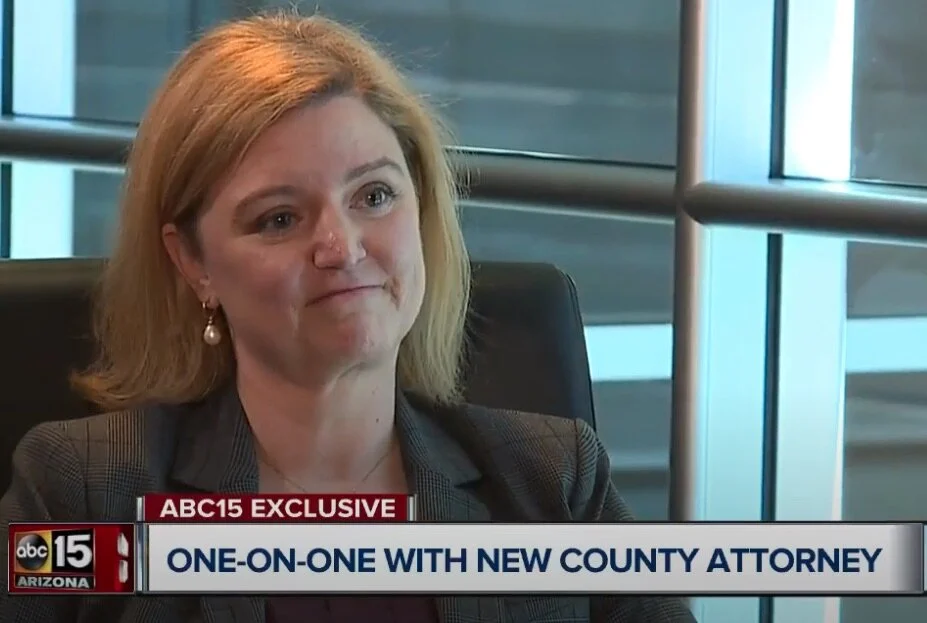
Class Action says Racist Suspect Maricopa County Attorney’s office threatens [mostly Brown] criminal defendants w/more severe sentences to coerce them into waiving their right to a preliminary hearing

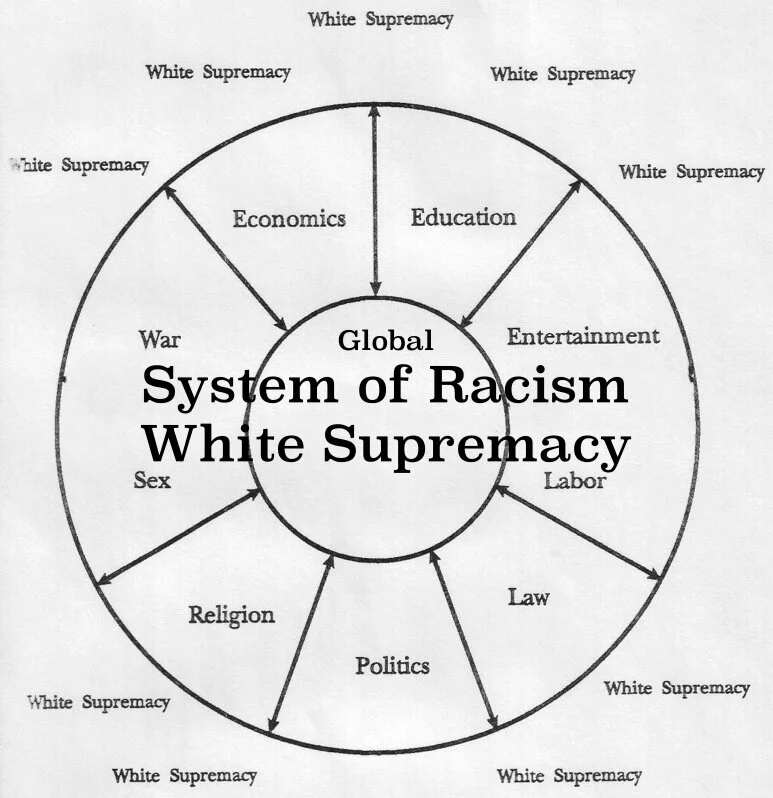
According to FUNKTIONARYracist suspect - any white person who is capable of practicing racism against non-whites. In general, if a Caucasian is able to be a Racist (White Supremacist), he or she may be one and should be presumed to be racist. According to Neely Fuller, as long as white supremacy exists, every person classified as 'white' should be suspected of being Racist (White Supremacist). Since all whites are able to practice racism in a white supremacy system if they choose to do so, it is correct (and logical) to use the term "racist suspects" to identify whites who do not openly function as white supremacists (racists). Caucasians who do nothing to oppose white supremacy are its silent partners benefiting from this worldwide social political economic arrangement of domination. Those who do nothing about it or cooperate with it are also racist/white supremacist. Noted psychiatrist, Dr. Francis Cress Welsing, has stated, "people who classify themselves as White, who wish to be taken seriously, and who are righteous and responsible, will only talk about ending White Supremacy (Racism) and replacing it with Justice." (see: Justice)

According to FUNKTIONARY

racist suspect - any white person who is capable of practicing racism against non-whites. In general, if a Caucasian is able to be a Racist (White Supremacist), he or she may be one and should be presumed to be racist. According to Neely Fuller, as long as white supremacy exists, every person classified as 'white' should be suspected of being Racist (White Supremacist). Since all whites are able to practice racism in a white supremacy system if they choose to do so, it is correct (and logical) to use the term "racist suspects" to identify whites who do not openly function as white supremacists (racists). Caucasians who do nothing to oppose white supremacy are its silent partners benefiting from this worldwide social political economic arrangement of domination. Those who do nothing about it or cooperate with it are also racist/white supremacist. Noted psychiatrist, Dr. Francis Cress Welsing, has stated, "people who classify themselves as White, who wish to be taken seriously, and who are righteous and responsible, will only talk about ending White Supremacy (Racism) and replacing it with Justice." (see: Justice)

From [HERE] Arizona's Maricopa County Early Disposition Courts process more than 32,000 criminal complaints each year. And according to a class action filed Wednesday, in order to process more cases faster the county attorney’s office threatens criminal defendants with more severe sentences to coerce them into waiving their right to a preliminary hearing.

“Maricopa County Attorney’s Office has sabotaged the intended purpose of the Early Disposition Courts and has used it to their advantage to secure quick convictions without regard for the constitutional rights of people who are accused of crimes,” said Jared Keenan, senior staff attorney for the ACLU of Arizona in a statement. 

“These coercive pleas have serious consequences beyond sending people to prison — a felony conviction bans people from public housing, makes it difficult to secure a job, and can even bar people from voting," Keenan, the lead class attorney, added.

According to the U.S. Census Bureau, Maricopa County, which includes the capital of Phoenix, is home to some 4.4 million people. While Early Disposition Courts were created following the 1996 passage of Proposition 200, which banned jail time for first-time drug possession charges, the putative class contends the Maricopa County Attorney’s Office instead uses these courts to coerce convictions from criminal defendants.

From 2017 to 2021, the Early Disposition Courts heard one in five of the county's criminal cases. Instead of sending drug users to treatment programs, county data cited in the complaint indicates only 6.7% of cases presented in the last five years resulted in diversion.

"It does not matter what the charges are or what the accused person’s criminal history is, if any. It does not matter if the person simply wants more time to investigate their case. It does not even matter if the person might be innocent. ‘County Attorney policy dictates’ that deputy county attorneys will punish that person simply for exercising their rights,” the class says in its complaint.

Prosecutors ask criminal defendants in Early Disposition Courts to waive their right to a preliminary hearing before reviewing discovery including witness statements, bodycam footage and drug test results. Without the preliminary hearing, defendants are additionally denied the opportunity to negotiate pretrial release. In some cases, the preliminary hearing presents the opportunity for a judge to dismiss the case entirely based on lack of probable cause.

Because eligibility for a public defender is determined at the initial appearance, the preliminary hearing is often a defendant's first opportunity to be represented by an attorney in court.

Once a defendant waives their preliminary hearing, they can either accept the plea deal offered or continue to trial.

“For too long, too many prosecutors have used pressure tactics and threats to extract quick, low-cost pleas and keep the crooked assembly line of mass incarceration moving,” said Somil Trivedi, senior staff attorney for the ACLU’s Criminal Law Reform Project, in a statement. “These tactics — like Maricopa County Attorney's Office’s policy of punishing people simply for asserting their rights — mock the Constitution and hit marginalized communities the hardest.”

The plaintiffs comprise two proposed classes: current and future defendants who are asked to waive their right to a preliminary hearing, and current and future defendants who face harsher penalties for pursuing a preliminary hearing. The Maricopa County Office of Public Defender estimates the Early Disposition Courts hold 3,500 active cases each day.

Plaintiff Michael Calhoun, 61, was "staring down the barrel of the retaliation policy” when the complaint was filed.

Despite having no violent criminal history, the county attorney's officer offered the Phoenix resident 9 1/4 years in prison on a charge of selling $20 worth of drugs to an undercover officer. If Calhoun rejected the offer and proceeded with a preliminary hearing, he was told the prosecutor would pursue an even harsher sentence.

The class claims the practice violates 14th Amendment due process rights and places an excessive burden on the right to trial in violation of the Sixth Amendment.

The plaintiffs seek a permanent injunction prohibiting the Maricopa County Attorney's Office from continuing the practice of making threatening plea offers and to cover attorneys fees.

A spokesperson for the Maricopa County Attorney’s Office declined to comment citing pending litigation.

Hospitals Often Charge Uninsured People the Highest Prices, New Data Shows

fuck poor people.jpg

From [HERE] Raul Macias was rushed to an emergency room last November, with pain shooting from his back to his legs. His breathing was shallow. 

Doctors at Avera St. Luke’s Hospital in Aberdeen, S.D., discovered a potentially life-threatening tear in the lining of his largest artery. They moved him to Avera Health’s heart hospital, where he stayed for three days.

Avera then billed Mr. Macias, who was uninsured, some of the highest prices the hospitals charge to any payer, the Wall Street Journal found in an analysis of Avera’s previously confidential hospital price data. 

Journal study of thousands of prices at hundreds of hospitals revealed that many charge top prices to patients like Mr. Macias, who must pay cash out of pocket, compared with the prices the hospitals have negotiated with insurance companies.

The 32-year-old’s abdominal and pelvic scan at Avera St. Luke’s cost $6,422, the highest out of a wide range of rates the Avera hospital charges for that service based on the new data. The price billed to Mr. Macias was roughly three times the best deal negotiated by an insurance company. 

Another scan of his chest came to $4,194, approximately $280 to $2,800 more than any prices negotiated between St. Luke’s and an insurer. The prices for identical scans performed at Avera’s heart hospital were also among the highest that the hospital charged.

His total hospital bills came to $59,800.

Hospitals typically charge different customers different prices for the exact same service, with big discounts for some but not others. 

Those rates—and wide pricing differences—were confidential until Jan. 1, when a new federal rule required hospitals to make prices public.

The newly public prices allow for the first time a comparison of what deep-pocketed insurers pay hospitals versus rates that hospitals set for patients who pay cash. Time and time again, the Journal’s analysis revealed, cash payers are charged among the highest prices.

Patients typically pay these cash prices either because they are uninsured or because some services aren’t covered by their health plans. Hospitals generally offer financial aid, but policies vary widely and can be poorly promoted, leaving many uninsured, who are often also low-income, to struggle with unmanageable bills.

Cosby Free After Niggarmarole: To Get a Civil Judgement the Gov Forced Cosby to Testify by Promising to Never Prosecute Him. Then the DA ReNigged on the Promise and Used His Statements to Convict Him

risa ferman 233.jpg

From [HERE] Pennsylvania’s highest court tossed out former showcase black Bill Cosby’s sexual assault conviction and ordered his release from prison Wednesday, finding the comedian’s 2005 agreement with a prosecutor prevented him from being charged over the same conduct.

“When a prosecutor makes an unconditional promise of non-prosecution, and when the defendant relies upon that guarantee to the detriment of his constitutional right not to testify, the principle of fundamental fairness that undergirds due process of law in our criminal justice system demands that the promise be enforce,” Justice David Wecht wrote in the 79-page majority opinion Wednesday.

Pennsylvania officials have made no statement yet about whether they plan to appeal. The decision comes nearly three years into the 83-year-old Cosby’s sentence of 3 to 10 years stemming from his being found guilty of the drugging and assaulting Andrea Constand, whom he met through his trusteeship at Temple University where Constand was on the women’s basketball administration. 

Cosby’s conviction was based on his testimony in a civil case in 2005. At that time prosecutors forced Cosby to testify about incriminating information in the civil case after the government promised not to prosecute him, thereby removing his 5th Amendment right of self incrimination (the 5th Amendment right of self incrimination no longer exists where the government promises to never prosecute- also known as a grant of full use immunity).

Nevertheless, for unknown [stupidity aka authoritarianism, racism white supremacy] reasons, the prosecutor’s successors did not believe they were bound by the office’s promise not to ever prosecute and decided to prosecute Cosby notwithstanding that prior undertaking. The fruits of Cosby’s reliance upon the previous DA’s decision-Cosby’s sworn inculpatory testimony- were then used by D.A. Castor’s successors against Cosby at Cosby’s criminal trial.

The court stated,

In 2005, Montgomery County District Attorney Bruce Castor learned that Andrea Constand had reported that William Cosby had sexually assaulted her in 2004 at his Cheltenham residence. Along with his top deputy prosecutor and experienced detectives, District Attorney Castor thoroughly investigated Constand’s claim. In evaluating the likelihood of a successful prosecution of Cosby, the district attorney foresaw difficulties with Constand’s credibility as a witness based, in part, upon her decision not to file a complaint promptly. D.A. Castor further determined that a prosecution would be frustrated because there was no corroborating forensic evidence and because testimony from other potential claimants against Cosby likely was inadmissible under governing laws of evidence. The collective weight of these considerations led D.A. Castor to conclude that, unless Cosby confessed, “there was insufficient credible and admissible evidence upon which any charge against Mr. Cosby related to the Constand incident could be proven beyond a reasonable doubt.”

Seeking “some measure of justice” for Constand, D.A. Castor decided that the Commonwealth would decline to prosecute Cosby for the incident involving Constand, thereby allowing Cosby to be forced to testify in a subsequent civil action, under penalty of perjury, without the benefit of his Fifth Amendment privilege against self-incrimination. 2 Unable to invoke any right not to testify in the civil proceedings, Cosby relied upon the district attorney’s declination and proceeded to provide four sworn depositions. During those depositions, Cosby made several incriminating statements. D.A. Castor’s successors did not feel bound by his decision, and decided to prosecute Cosby notwithstanding that prior undertaking. The fruits of Cosby’s reliance upon D.A. Castor’s decisionCosby’s sworn inculpatory testimonywere then used by D.A. Castor’s successors against Cosby at Cosby’s criminal trial.

We granted allowance of appeal to determine whether D.A. Castor’s decision not to prosecute Cosby in exchange for his testimony must be enforced against the Commonwealth

With regard to the reason the DA’s office renigged on its promise not to prosecute Cosby the former DA Bruce Castor wrote an email to his successor Risa Vetri Ferman (now a judge, a RWS promotion), after he learned that she had re-opened the case. The letter, which was included in the court’s opinion, was attached to a 2005 press release stating the government would never prosecute Cosby, stated as follows;

Dear Risa,

I certainly know better than to believe what I read in the newspaper, and I have witnessed first hand your legal acumen. So you almost certainly know this already. I’m writing to you just in case you might have forgotten what we did with Cosby back in 2005. Attached is my opinion from then. Once we decided that the chances of prevailing in a criminal case were too remote to make an arrest, I concluded that the best way to achieve justice was to create an atmosphere where [Constand] would have the best chance of prevailing in a civil suit against Cosby. With the agreement of [Attorney] Phillips and [Constand’s] lawyers, I wrote the attached as the ONLY comment I would make while the civil case was pending. Again, with the agreement of the defense lawyer and [Constand’s] lawyers, I intentionally and specifically bound the Commonwealth that there would be no state prosecution of Cosby in order to remove from him the ability to claim his Fifth Amendment protection against self-incrimination, thus forcing him to sit for a deposition under oath. [Attorney Phillips] was speaking for Cosby’s side at the time, but he was in contact with Cosby’s civil lawyers who did not deal with me directly that I recall. I only discovered today that [Attorney Phillips] had died. But those lawyers representing [Constand] civilly, whose names I did not remember until I saw them in recent media accounts, were part of this agreement because they wanted to make Cosby testify. I believed at the time that they thought making him testify would solidify their civil case, but the only way to do that was for us (the Commonwealth) to promise not to prosecute him. So in effect, that is what I did. I never made an important decision without discussing it with you during your tenure as First Assistant.

Knowing the above, I can see no possibility that Cosby’s deposition could be used in a state criminal case, because I would have to testify as to what happened, and the deposition would be subject to suppression. I cannot believe any state judge would allow that deposition into evidence, nor anything derived therefrom. In fact, that was the specific intent of all parties involved including the Commonwealth and the plaintiff’s lawyers.

Knowing this, unless you can make out a case without that deposition and without anything the deposition led you to, I think Cosby would have an action against the County and maybe even against you personally. That is why I have publicly suggested looking for lies in the deposition as an alternative now that we have learned of all these other victims we did not know about at the time we had made the go, no-go decision on arresting Cosby. I publicly suggested that the DA in California might try a common plan scheme or design case using [Constand’s] case as part of the res gestate in their case. Because I knew Montgomery County could not prosecute Cosby for a sexual offense, if the deposition was needed to do so. But I thought the DA in California might have a shot because I would not have the power to bind another state’s prosecutor. Some of this, of course, is my opinion and using Cosby’s deposition in the CA case, might be a stretch, but one thing is fact: the Commonwealth, defense, and civil plaintiff’s lawyers were all in the agreement that the attached decision from me stripped Cosby of this Fifth Amendment privilege against self-incrimination, forcing him to be deposed. That led to Cosby paying [Constand] a lot of money, a large percentage of which went to her lawyers on a contingent fee basis. In my opinion, those facts will render Cosby’s deposition inadmissible in any prosecution in Montgomery County for the incident that occurred in January 2004 in Cheltenham Township.

Bruce

As explained by the Court, “Despite her predecessor’s concerns, D.A. Ferman and the investigators pressed forward, reopening the criminal case against Cosby. Members of the prosecutorial team traveled to Canada and met with Constand, asking her to cooperate with their efforts to prosecute Cosby, even though she had specifically agreed not to do so as part of the civil settlement. Investigators also began to identify, locate, and interview other women that had claimed to have been assaulted by Cosby.“ [MORE]

Pennsylvania officials have made no statement yet about whether they plan to appeal. The decision comes nearly three years into the 83-year-old Cosby’s sentence of 3 to 10 years stemming from his being found guilty of the drugging and assaulting Andrea Constand, whom he met through his trusteeship at Temple University where Constand was on the women’s basketball administration.

Montgomery County Judge Steven O’Neill ultimately presided over two lengthy trials of Cosby, his first having ended in a hung jury. Critical to his 2018 conviction was the 2005 deposition transcript in which Cosby admitted that he would buy quaaludes to give to women before having sex with them. O’Neill also admitted testimony from five other self-identified victims of Cosby.

But the Pennsylvania Supreme Court ruled 4-3 Wednesday that the prosecution was barred by his 2005 agreement with Castor.

Justice Wecht noted in the ruling Wednesday that Cosby was unable to invoke his Fifth Amendment rights against self-incrimination during deposition for Constand’s civil suit because Castor had removed the threat of criminal charges.

The transcript of Cosby’s deposition testimony included not only the blockbuster quaalude admission but his assertion that he gave Constand three half-pills of Benadryl. He said he did this to help her relax as she had complained about having difficulty sleeping and that afterward they had begun consensually kissing and touching each other.

On the road to trial, Judge O’Neill had ruled that any purported immunity offer from Castor was defective because a “press release, signed or not, was legally insufficient to form the basis of an enforceable promise not to prosecute.” The court had also faulted Cosby’s attorneys for failing to demand written documentation that the state had promised not to prosecute.

O’Neill had said that Cosby showed his intentions when he gave the pills to Constand in his “own words about his use and knowledge of drugs with a depressant effect.” Because of his testimony about the effects of quaaludes, Cosby “either knew [Constand] was unconscious, or recklessly disregarded the risk that she could be,” the judge had ruled. 

The Pennsylvania Supreme Court heard Cosby’s appeal in December after a unanimous panel of the Superior Court ruled against him in 2019.

“The law is clear that, based upon their unique role in the criminal justice system, prosecutors generally are bound by their assurances, particularly when defendants rely to their detriment upon those guarantees,” Wecht wrote.

While prosecutors can employ discretion in charging decisions, Wecht added that they are “not exempt from basic principles of fundamental fairness.” 

The opinion also emphasizes that Castor did not note anywhere in his public announcement of the decision not to prosecute Cosby that such decision could be reevaluated at a future date or could be overturned by a future district attorney.

“There is nothing from a reasonable observer’s perspective to suggest that the decision was anything but permanent,” Wecht wrote.

The Pennsylvania Supreme Court heard Cosby’s appeal in December after a unanimous panel of the Superior Court ruled against him in 2019.

“The law is clear that, based upon their unique role in the criminal justice system, prosecutors generally are bound by their assurances, particularly when defendants rely to their detriment upon those guarantees,” Wecht wrote.

While prosecutors can employ discretion in charging decisions, Wecht added that they are “not exempt from basic principles of fundamental fairness.” 

The opinion also emphasizes that Castor did not note anywhere in his public announcement of the decision not to prosecute Cosby that such decision could be reevaluated at a future date or could be overturned by a future district attorney.

“There is nothing from a reasonable observer’s perspective to suggest that the decision was anything but permanent,” Wecht wrote.

To Reform It’s Image Baltimore Police Strawboss Apologizes for Putting an Entire Black Neighborhood in Greater Confinement: Imposed Movement Restrictions, ID Checks and Seizures after a Cop was Shot

michael harrison.jpg

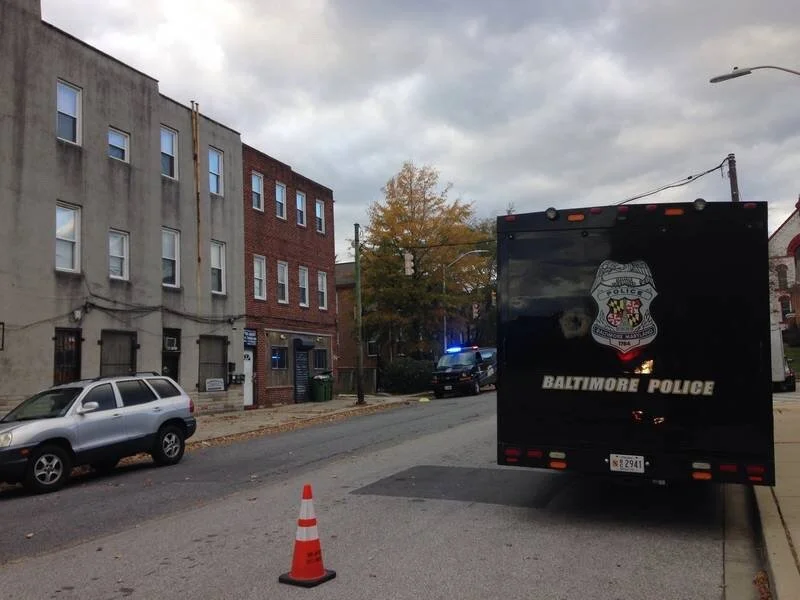
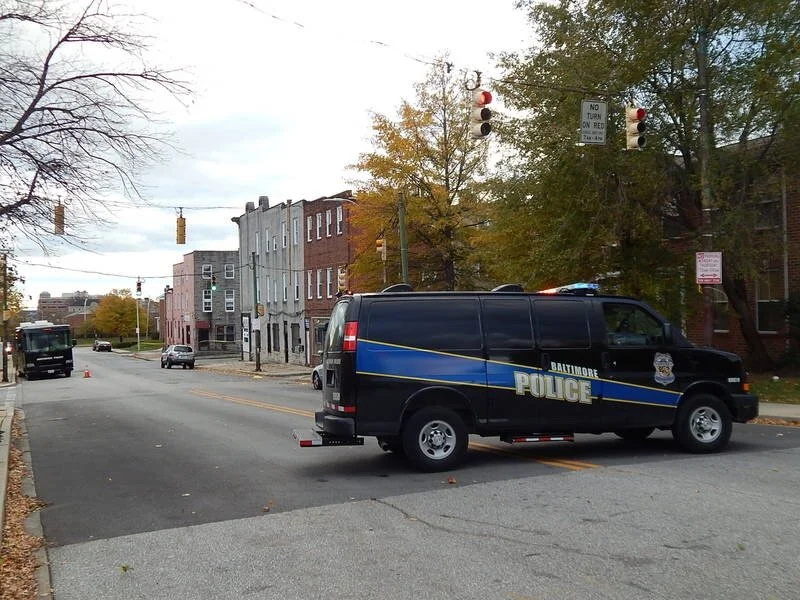
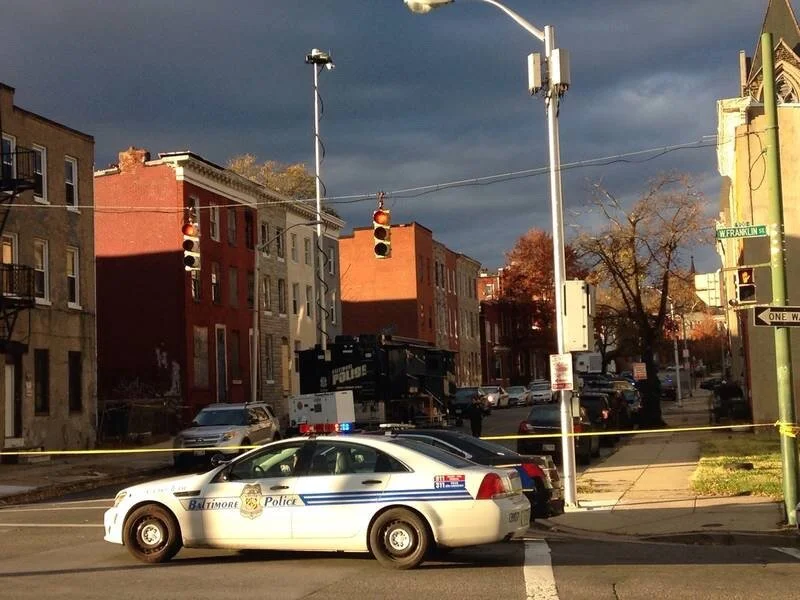
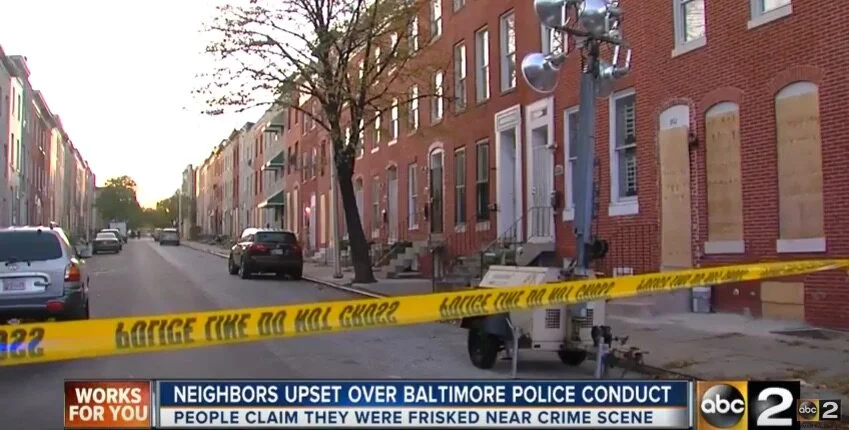
From [HERE] After a black cop was killed [apparently by another Baltimore cop or suicide], the City turned Harlem Park into a crime scene and the entire neighborhood was cordoned off. For a week, mostly Black residents and persons entering or leaving the area were subject to interrogations, unlawful seizures, stops, pat down searches, ID checks and non-residents have been barred from entering the area. Residents have said they were being required to show identification to get past the police tape to enter their homes. They complained about helicopters flying above their homes, flashing lights from police cars, and being subject to harassment [MORE] Said police conduct violated the so-called 4th Amendment rights of all the citizen’s in the neighborhood. That is, if you believe in such things as the existence of constitutional rights.

In the kind of “emergency” climate that exists after a public servant [ruler] is killed anything goes with regard to your so-called rights in a racist legal system based on physical coercion.

The dependent news media looked the other way. That is, “white liberal” news media such as the Washington Post, MSNBC and CNN ignored the nazi like occupation of a Black neighborhood in a large US city.

According to FUNKTIONARY:

Corporate Police State - the enforcer of the commodification of life within the Spectacle Surveillance Society. Anyone who thinks that he or she is immune to the baseless destruction of his or her life (including immediate family members) by a "government" or corporation does live in a happy menagerie—enjoy your illusions. (See: GUPI & Judicial Victimization) [MORE]]

Baltimore’s straw boss [ a high ranking SNIgger appointed by elite racists] police commissioner has apologized for the department’s six-day lockdown of the city’s Harlem Park section following a detective's 2017 shooting death, saying the controversial law enforcement action was grossly improper and damaged the public’s trust, according to attorneys for four residents of the largely Black neighborhood. Because police consider law abiding citizens to be their enemies Baltimore cops naturally assumed that Detective Sean Suiter had been shot by a citizen. Apparently however the cop had been either killed by another officer or he committed suicide.

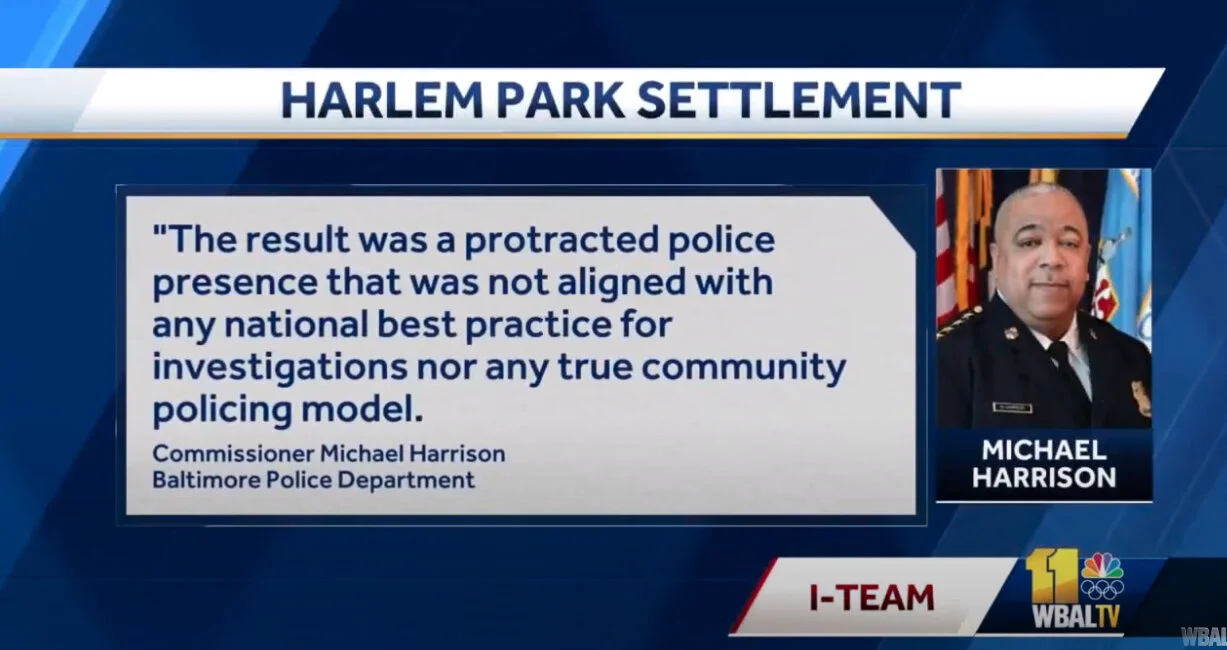
The city of Baltimore has reached a settlement with four residents of the Harlem Park neighborhood in a lawsuit over a 2017 lockdown in their neighborhood following the shooting death of police Detective Sean Suiter. The settlement agreement included the following a public apology from police Commissioner Michael Harrison:

On behalf of the City of Baltimore and the Baltimore Police Department, I would like to express our sincere regret and apology for the disruptive events that you and your family experienced as a result of the prolonged police perimeter in the Harlem Park neighborhood, from Wednesday, November 15, to Monday, November 20, 2017. The BPD acknowledges that this was a negative experience for you and other members of the Harlem Park community, and sincerely hopes that this apology will help facilitate the healing process between the BPD and Harlem Park residents.

doggy portrait.jpg

Amid the investigation of the tragic death of Detective Sean Suiter, the BPD men and women tasked with maintaining the crime scene perimeter were not guided by adequate supervision to reinforce constitutional requirements for stops and searches. Executive decisions did not give appropriate weight to the impact of sustained law enforcement presence on the community in making decisions about where and how long to hold the crime scene. The result was a protracted police presence that was not aligned with any national best practice for investigations nor any true community policing model. Negative interactions between the BPD and members of the public like yourself are not necessary or useful to professional policing work, and in fact are detrimental to the community trust that is essential to effective crime reduction. I am deeply saddened and troubled that these events have shaken your faith and trust in the police who are sworn to serve and protect the City’s residents, and that you feel a diminished sense of comfort and security, to which all Baltimore City residents are entitled.

I would like to personally assure you that we are working tirelessly to regain your trust through enhanced training of personnel, and improved policies, protocols, and practices. The Baltimore Police Department is committed to ensuring that the constitutional rights of all its residents are upheld and protected. To that end we have collaborated or, in the case of the Consent Decree process, will collaborate, with your attorneys, the ACLU-MD, the United States Department of Justice, and the Consent Decree Monitoring Team to revise the BPD’s policies to reflect nationally recognized best practices. While we understand that may not fully regain your trust, we will remain steadfast toward realizing our larger goal and hope you see this as a significant step. [MORE]

No Indictment for White GA Cop who Said He Had to Shoot and Kill a Black Man b/c He Drove Towards Him; White DA's Grand Jury Ignored the Fact that the Car had a DISCONNECTED BATTERY and was INOPERABLE

jacob thompson.jpg

From [HERE] A grand jury has declined to indict a former Georgia state trooper who shot and killed a Black man last year during a traffic stop over a broken taillight.

Relatives of the victim, Julian Edward Roosevelt Lewis, 60, said they were disappointed in the decision and urged the district attorney to impanel a new grand jury in order to pursue charges again against the former trooper, Jacob Thompson.

Lindsay Milton, the victim’s mother, implied race was a factor in the grand jury’s decision on Monday not to indict Mr. Thompson, who is white. “They’re going to let this young man go free ’cause my child was a Black man; no this is not going to work,” she told reporters at a news conference on Tuesday. “We are going to push this to the very end.”

Francys Johnson, a lawyer for Mr. Lewis’s family, said the family also wanted a meeting with the district attorney, and for officials to release police video of the shooting. “The public deserves it — they paid for it,” Mr. Johnson said at the news conference. Then, referring to the grand jury members, he said, “And it’s been shown now to 22 citizens in Screven County, but it has not been shown to Julian’s mother or his wife or his attorney.”

Mr. Thompson, 27, was arrested and charged with felony murder and aggravated assault days after the Aug. 7 traffic stop and fatal shooting of Mr. Lewis.

At around 9:20 p.m., according to a report from the Georgia Bureau of Investigation, Mr. Thompson spotted Mr. Lewis near Sylvania, Ga., which is about 60 miles northwest of Savannah, driving with a broken taillight. The state trooper followed Mr. Lewis and tried to pull him over, but he continued driving and Mr. Thompson used his patrol vehicle to force Mr. Lewis’s car to turn sideways, causing him to stop in a ditch, the report said.

Mr. Thompson drew his gun as he got out of his vehicle, he told investigators, and said he saw Mr. Lewis trying to maneuver his vehicle toward him, prompting him to fire his weapon. Mr. Lewis was struck once and pronounced dead at the scene, the report said.

But Dustin Peak, a Georgia Bureau of Investigation agent, testified in September that this would have been impossible, because Mr. Lewis’s vehicle was inoperable after it hit the ditch and the car battery disconnected, The Associated Press reported.

The Georgia Department of Public Safety said in a statement that Mr. Thompson had been fired for his “negligence or inefficiency in performing assigned duties; or commission of a felony.”

Mr. Johnson said Georgia law allowed district attorneys to impanel new grand juries if a prior one declined to pursue charges. “We believe that this was a very strong case,” Mr. Johnson said. “The evidence was there and still is.”

Mass DA Claims White Man Appeared to be Motivated by Racism White Supremacy when He Randomly Murdered a Black Man and Woman; "He walked by several people that were not Black and they were not harmed"

nathan allen 1.jpg

From [HERE] and [HERE] Authorities are investigating a Massachusetts shooting that left two Black people dead as a hate crime after investigators found "some troubling white supremacist rhetoric" in the gunman's handwriting, officials said Sunday.

Suffolk County District Attorney Rachael Rollins, who identified the suspected gunman as 28-year-old Nathan Allen, said during a press conference on Sunday that investigators found "antisemitic and racist statements against Black individuals."

"There was hate in this man's heart," she told reporters Monday.

Allen was killed by police officers on Saturday afternoon shortly after stealing a plumber's truck, crashing it into a house and shooting two Black bystanders multiple times in Winthrop, just outside Boston, according to Winthrop Police Chief Terence Delehanty.

The slain bystanders, who were both Black, were identified as David Green, 58, a retired Massachusetts State Police officer; and Ramona Cooper, 60, an Air Force veteran who still worked with the military, according to Rollins. Allen shot Green four times in the head and three in the torso, and Cooper three times in the back.

"He walked by several people that were not Black and they are alive. They were not harmed," she said. “They are alive and these two visible people of color are not."

The dramatic scene unfolded in the quiet Massachusetts suburb of just more than 18,000, about six miles east of Boston. Now, authorities are investigating the killings as hate crimes, citing a preliminary investigation that found “troubling white supremacy rhetoric” by Allen, who wrote of the “superiority of the white race” and drew swastikas, Rollins said in a statement Sunday.

mass hate crime.jpg

The incident comes as acts of violence fueled by hate and white supremacy are on the rise in the United States. Since 2015, there have been 267 plots or attacks by right-wing extremists and 91 fatalities, according to an analysis by The Washington Post. In March, FBI Director Christopher A. Wray acknowledged a rising tide of domestic terrorism and called it a “top concern.”

At about 2:40 p.m. Saturday, police responded to the intersection of Shirley and Cross streets after a man, later identified as Allen, allegedly stole a box truck owned by a plumbing company and then crashed into a residence near the intersection, police said. A witness told NECN he looked out his window and saw a man emerge from the truck disoriented and shoeless. He then saw the man run down the street, he said, before hearing gunshots.

“He started jogging, then I heard the boom boom boom boom. I looked down and the next thing I saw is the body in the middle of the street,” Robert Harrington, a witness, told NECN.

Nick Tsiotos, the friend whom Green had visited before the incident, said he believed the former state trooper rushed out to the scene of the crash and tried to help, WCVB reported. It’s unclear whether Green knew Allen was armed or whether he tried to intervene. He was nevertheless “shot in the head, neck, and torso repeatedly,” Rollins said.

There was little indication in Allen’s public life that he would be accused of carrying out such a rampage. He had a license to carry a firearm, was married, had a PhD and no criminal record, according to Rollins. For a time, he attended the University of Massachusetts Dartmouth, where he met his wife, according to a Globe article published last August about Allen’s marriage plans during the pandemic.

One of Allen’s neighbors said he offered to help her multiracial son, who had a sensory-processing disorder, the Globe reported on Sunday. She said Allen would sit outside the building and write as though he was “taking notes” and that he received a lot of packages.

Allen was “so nice,” the neighbor told the Globe, “but there was something a little off about him.”

'You Can't Walk Where I Walk:' Prominent attorney Billy Murphy takes case of Black teens Violently Arrested by White Cops on Ocean City Boardwalk for [being present] Ignoring Commands to Stop Vaping

From [HERE] When Brian Anderson wakes in the morning, it all rushes through his head again.

The feeling to gasp for breath beneath the officers. The force of the cop’s knee driving into his ribs. The panic that he might die.

“I don’t know how me or my family will fully recover from this,” said Anderson, tears welling in his eyes.

The 19-year-old from Harrisburg, Pennsylvania, appeared with his lawyers Tuesday outside Baltimore’s federal courthouse to demand accountability of Ocean City police. Prominent Baltimore attorney William H. “Billy” Murphy Jr. has taken on the teen’s case.

In both incidents, officers approached the teens over vaping, but the encounters escalated. Their violent arrests were recorded by onlookers with cellphones and shared widely online.

“I watched in total fear as the Ocean City police and boardwalk patrol officers manhandled my brother simply because he was using a vape,” Tayvin Griffin, Taizier’s younger brother, told reporters outside the courthouse.

Murphy, who won a $6.4 million settlement for the family of Freddie Gray, whose death from injuries sustained in Baltimore police custody sparked the city’s unrest in 2015, said he’s sent Ocean City notice that he intends to sue. He called for the charges to be dismissed against the two teens. He also wants the police officers to be suspended without pay and investigated for criminal charges such as assault.

“This is a situation that should have been de-escalated and instead they escalated it,” Murphy said.

The Murphy, Falcon & Murphy firm claims to have won more than $75 million in police misconduct cases around the country.

No lawsuit has been filed yet.

“We don’t file anything until we have completed our own thorough investigation,” Murphy told everyone.

Ocean City Police spokeswoman Ashley Miller said she was aware of the news conference but declined to comment, citing an ongoing investigation by the department into the officers’ conduct.

Police arrested Griffin June 6 and Anderson June 12, charging the teens with a series of crimes such as failure to show identification, disorderly conduct, resisting arrest and second-degree assault.

Their families expressed outrage over the way police handled the arrests. Ocean City Police said they approached the teens because they were smoking or vaping outside the designated area, an infraction that typically brings a citation and fine.

In charging documents, Officer Michael Jupiter wrote that he gave Anderson one warning about vaping on the boardwalk, but the teen ignored him. He wrote that he asked the teen for his identification at least four times before attempting to arrest him.

“I then observed Anderson place his hands in front of him towards [Officer] Stoltzfus with closed fists. I believed this to be a fighting stance,” Jupiter wrote. “Anderson began to actively resist arrest by pulling away.”

The video begins with the officers on top of Anderson on the ground and shouting at him to give up his hands. One officer rams his knee repeatedly into Anderson’s ribs.

In the second video, Griffin holds his hands in the air, reaches for a backpack strap, and he’s immediately shot with a Taser. 

The videos ignited a firestorm of criticism against Ocean City police.

“The officers instructed Taiz to try and take off his backpack. But when he tried to do that, they shot him anyway,” his brother said.

Griffin himself did not speak.

Democratic state Sen. Jill P. Carter of Baltimore, co-counsel for the teens, stood with them and called the officers’ actions “grossly inappropriate.” She said the cops flouted the police reform bills passed this year by the General Assembly. The lawmakers passed sweeping measures, such as changes to the legal justification for officers to use force and requirements that all cops wear body cameras, but many provisions have not yet taken effect.


$10 Million Suit Filed after White KC City Cop Shot Black Man to Death w/o Warning While He was Talking on Cellphone in Car in His Own Driveway; Ofc also faces Involuntary Manslaughter Prosecution

Detective Eric DeValkenaere.jpg

IN THE PRESENCE OF COLOR WHITE COP ACTED GENOCIDALLY From [HERE] Police tracking a car involved in a traffic incident in December 2019 followed Cameron Lamb as he was pulling his red pickup truck into the garage of his backyard in Kansas City, Mo. Without a warrant or permission allowing them on the property, two plainclothes detectives “stormed around the side of the house” and demanded to know where he was, according to a federal lawsuit.

Then, while Lamb, a Black man, allegedly had one hand on the steering wheel and the other on his cellphone, Detective Eric DeValkenaere, who is White, offered no warning before shooting him four times while the man was still in his truck in the driveway, hitting him twice and killing the 26-year-old, attorneys say.

Now, a federal lawsuit filed Monday on behalf of Lamb’s four young children accuses the Kansas City Board of Police Commissioners and DeValkenaere of violating Lamb’s civil rights when they entered the property without permission and fatally shot him in his truck.

The 20-page lawsuit, filed in the Western District of Missouri, seeks $10 million in damages and alleges that the police board “failed to properly train, supervise, screen, discipline, transfer, counsel or otherwise properly equip and control officers” to avoid the use of deadly force against Lamb.

“The Kansas City Police Department has a well-documented, continuing, widespread, and persistent pattern of utilizing excessive and often deadly force,” the family’s attorneys wrote in the lawsuit, obtained by The Washington Post.

The 42-year-old DeValkenaere, who was charged with first-degree involuntary manslaughter and armed criminal action last year, has pleaded not guilty before his criminal trial scheduled for September. A member of the force since 1999, DeValkenaere says that he fired after Lamb pointed a gun at Detective Troy Schwalm. But prosecutors say in the lawsuit that Schwalm told a grand jury that he did not see Lamb with a gun.

The lawsuit comes as Lamb’s family has sought answers for more than 18 months in a fatal shooting that the former officer’s criminal attorneys say was not reckless and that the police union argues was a justified use of force. Family and activists have repeatedly questioned DeValkenaere’s account. Prosecutors have noted how authorities had refused to give a probable cause statement in the investigation and did not inform them how DeValkenaere’s former supervisor was conducting the probe.

Lamb’s story took on a national scope when civil rights attorney S. Lee Merritt, who has represented families of victims of police brutality including relatives of George Floyd, became co-counsel for the 26-year-old’s children. Merritt described the fatal shooting to the Kansas City Star as a “warrantless search” that “violates one of the highest protections that is anticipated in the court.”

“That’s a really important reason why Cameron’s case is a central case in terms of where we are today in policing,” Merritt told the newspaper.

Police were investigating a crash on Dec. 3, 2019, when an officer who saw the incident reported a red pickup chasing a purple Ford Mustang, authorities said in a news release. Officers in a police helicopter located the truck driven by Lamb and followed the vehicle shortly after 12:20 p.m.

Lamb had his left hand on the steering wheel and his right hand on his cellphone, in the middle of leaving a voice-mail message, the family’s attorneys say in the lawsuit.

DeValkenaere’s criminal defense attorneys said in a recent court filing that Lamb was slowly backing his truck down the driveway into the garage when the detectives yelled at him to show his hands. Though he did at first, the detective’s defense team said Lamb pointed a handgun at Schwalm.

“He’s got a gun!” DeValkenaere shouted, court documents show.

After the detective fired his weapon and killed Lamb, DeValkenaere and Schwalm “hurried for cover,” the defense attorneys wrote in a motion.

The detective’s attorneys have argued that Lamb pulled a gun with his left hand. Police said their investigation found Lamb “with his left hand hanging out the truck’s window with a gun on the ground underneath it.”

But that detail has been disputed by prosecutors, who say that Lamb was right-handed and that a prior injury left him unable to fully use his left hand. Schwalm, who is not facing charges, told a grand jury last year that there was no gun in Lamb’s left hand.

Police were criticized after assigning Kansas City Police Chief Rick Smith, a former supervisor for the detectives, to investigate the shooting, the lawsuit says.

DeValkenaere was indicted by a Jackson County grand jury in June 2020. The involuntary-manslaughter charge carries a punishment of three to 10 years in prison, while armed criminal action has a minimum penalty of three years.

“The defendant’s reckless behavior began by entering the victim’s property without consent, without a warrant, knocking over the fence to gain entry into that backyard, and firing his weapon, killing Cameron within seconds of entry,” Jackson County Prosecutor Jean Peters Baker said in a news conference last year.

DeValkenaere has found support from the Kansas City chapter of the Fraternal Order of Police, which called the shooting justified and denounced the grand jury’s indictment as “political overreach by a failing prosecutor.” The case received additional attention in December when Sandy Osmond, the wife of “Leave It to Beaver” actor Ken Osmond, said she would donate all royalties from a book her husband co-wrote to help raise money for DeValkenaere’s legal defense.

A judge in April denied the motion from DeValkenaere’s criminal defense team to dismiss the charges.

Sleeping Black Man Posed No Threat but White Cops Acted Like He Did to Justify Shooting Him 55 Times. Claim that Vallejo Cops Conspired to Murder Willie McCoy as He Slept in a Car Allowed to Proceed

IF YOU’RE BLACK AND POSSESS A GUN THEN COPS CAN MURDER YOU ANYTIME, ANYPLACE REGARDLESS OF WHETHER YOU ARE A THREAT.

IF YOU’RE BLACK AND POSSESS A GUN THEN COPS CAN MURDER YOU ANYTIME, ANYPLACE REGARDLESS OF WHETHER YOU ARE A THREAT.

From [HERE] A  federal judge ruled Tuesday that a lawsuit filed on behalf of Willie McCoy, a young Black man fatally shot by a group of white police officers in Vallejo, California, in 2019 can proceed on its claim that officers conspired to harm him, an allegation that rarely sticks in cases involving use of force.

U.S. District Court Judge John Mendez in Sacramento denied Vallejo's attempt to have the conspiracy claim dismissed in the McCoy family's lawsuit, writing that "the Court finds that an agreement or meeting of the minds could be inferred to support the agreement element of a conspiracy."

In addition, Mendez found that "the allegations support a potentially unlawful use of force against McCoy."

The 20-year-old's death at a Taco Bell drive-thru on Feb. 9, 2019, set off demands by residents of the Bay Area city of Vallejo for police accountability amid an alleged pattern of racial profiling and paved the way a year ago for the California Department of Justice to undertake an "expansive review" of the police department, which is ongoing.

Legal experts say judges rarely allow conspiracy claims of this nature to move forward because it requires plaintiffs to present evidence that two or more people essentially planned to commit a wrongful act.

"It almost amounts to a charge of premeditated murder," Robert Weisberg, a professor of criminal law at Stanford University, said. "If this is a case about alleged excessive force by cop, then this is even more extreme."

McCoy, who was Black, became the 16th person to die at the hands of Vallejo officers since 2011 — the highest rate of people shot by police per capita in Northern California. The majority of those killed have been Black and Latino men.

Employees at the Taco Bell called police for a welfare check after they found McCoy unresponsive in his silver Mercedes in the drive-thru.

After officers arrived at the scene, they said they discovered that the car was locked and in drive, and that McCoy had a gun on his lap.

The officers suggested trying to open the door to grab the gun. In police bodycam video, one officer said, "If he reaches for it," then nodded his head. The other officer replied, "Yep." But the door was locked.

The officers on scene also devised a plan to block off McCoy's car inside the drive-thru to prevent any erratic movement if he woke up.

The footage showed that Mr. McCoy appeared to be asleep for at least several minutes, and that he was shot about 10 seconds after he began to move. It was unclear whether he was reaching for a gun. [MORE]

McCoy then woke up and they claim he appeared to reach down. Officers shouted, "Show me your hands!" Then, they fired 55 shots at McCoy in 3.5 seconds, according to an independent use-of-force report ordered by the city.

Last fall, the city fired Ryan McMahon, one of the six officers involved in the shooting, for violating department policies by "engaging in unsafe conduct and neglect for basic firearm safety during the incident." Further details about how he violated policies were not disclosed.

McMahon, along with the five other officers, a sergeant and a lieutenant, are named in the judge's ruling and subject to the conspiracy claim along with the city. Mendez also noted that "none of the officers identified themselves prior to opening fire ... nor did they provide warning that they would shoot."

Mendez ruled in favor of the city on other points, including that there was insufficient evidence tying then-Vallejo Police Chief Andrew Bidou to the alleged conspiracy. Bidou announced his retirement in the weeks after McCoy's shooting.

The lawsuit remains one way the McCoy family says it can hold the city accountable after a special prosecutor in January concluded that criminal charges against the officers were not warranted and that they had acted in self-defense.

Melissa Nold, an attorney for the McCoy family, said she was pleased with the judge's ruling and is moving forward in the suit's discovery phase.

"The court doesn't let you willy-nilly go around claiming a conspiracy cause of action, so it's good to see that it does actually work when you have a situation like this where there was an intent to do something unlawful," she said.

Supreme Court Declines to Lift National Eviction Moratorium, Request Made by Racist Suspect Landlords and Real Estate Companies

From [HERE] A divided Supreme Court on Tuesday declined to lift a national moratorium on the eviction of tenants who have fallen behind on their rent during the Covid-19 pandemic.

The court rejected an emergency request by landlords and real-estate companies to clear the way for evictions after a federal judge in Washington ruled last month that the moratorium was legally unsupportable. The judge who issued that ruling stayed the effect of the decision, while litigation continues.

The moratorium has protected millions of tenants but created financial hardships for landlords. Last week, the Centers for Disease Control and Prevention extended it for one final month through July. The moratorium had previously been set to expire Wednesday. 

The issue split the high court on a 5-4 vote, with Chief Justice John Roberts and Justice Brett Kavanaugh joining with the court’s three liberal justices to leave the moratorium in place. The court’s action came in a brief order. As is typical in emergency appeals, the court didn’t explain its reasoning.

Justice Kavanaugh issued a one-paragraph concurrence explaining his views, saying he believed the moratorium was unlawful but was willing to leave it in place for July. He said the moratorium would allow for “additional and more orderly distribution” of rental-assistance funds appropriated by Congress.

The four other conservative justices— Clarence Thomas, Samuel Alito, Neil Gorsuch and Amy Coney Barrett —indicated they would have lifted the moratorium.

Tenant advocates welcomed the Supreme Court’s action. 

“Allowing evictions to proceed when there are tens of billions in resources to prevent them would be wasteful and cruel,” said Diane Yentel, president and chief executive of the National Low Income Housing Coalition.

The National Association of Realtors, which helped fund the legal challenge, said it looked forward to the moratorium expiring. “With the pandemic waning and the economy improving, it is time to restore the housing sector to its healthy, former function,” the group’s president, Charlie Oppler, said in a statement.

The moratorium, which originated from an executive order signed by President Donald Trump last August, shields tenants who have missed monthly rent payments from being forced out of their homes if they declare financial hardship. They still owe the back rent.

The moratorium is based on public-health concerns. The CDC found that mass evictions could accelerate the spread of Covid-19 because displaced tenants would likely move in with friends and family if not into shelters or settings in proximity with others.

The moratorium was originally set to expire Dec. 31, 2020, but Congress extended it until late January, and the CDC has extended the order three times.

At the center of the case is a ruling by U.S. District Judge Dabney Friedrich in Washington that found that the CDC didn’t have the power under current public-health law to issue such a broad prohibition on evictions. The judge, however, granted a government request to stay her ruling pending appeal, citing public-health concerns.

A Washington federal appeals court also chose to leave the moratorium in place, saying the government had strong arguments that the moratorium was lawful.

Lower courts across the country have reached conflicting rulings on whether the moratorium is on solid legal footing.

In their emergency appeal to the Supreme Court, the moratorium’s challengers said landlords have been losing $13 billion a month in unpaid rent and won’t ever recover all of that money. They said the ban on evictions is less justifiable now that the U.S. is easing Covid-19 protocols in light of declining case numbers and the growing vaccinations of Americans.