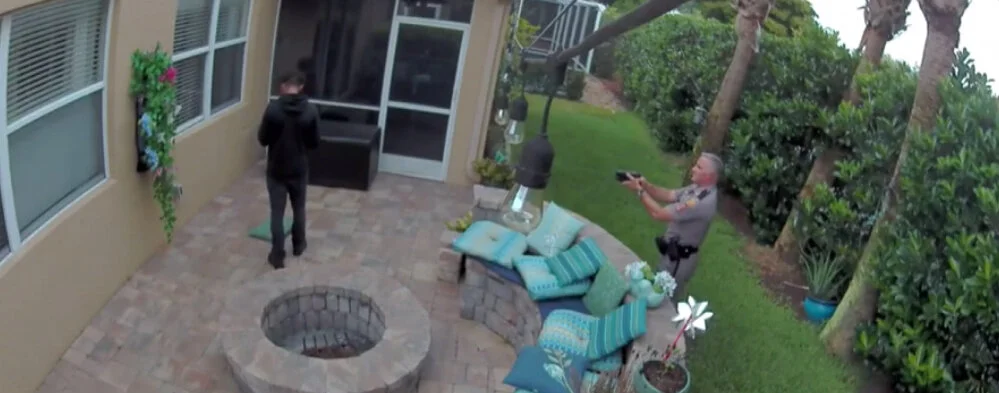
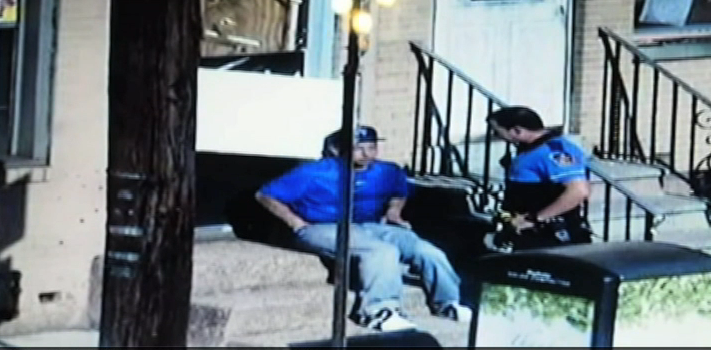
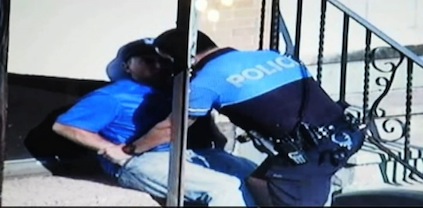
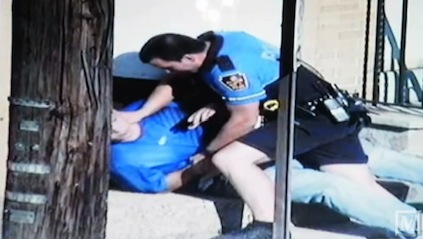
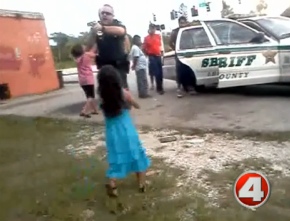
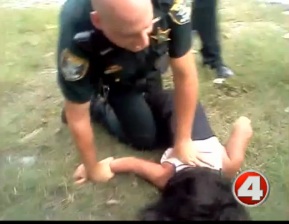
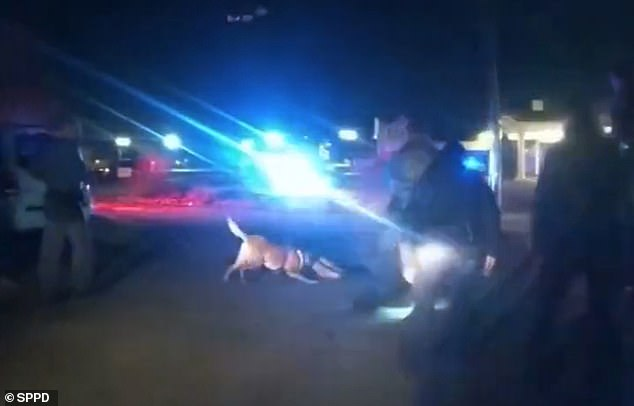
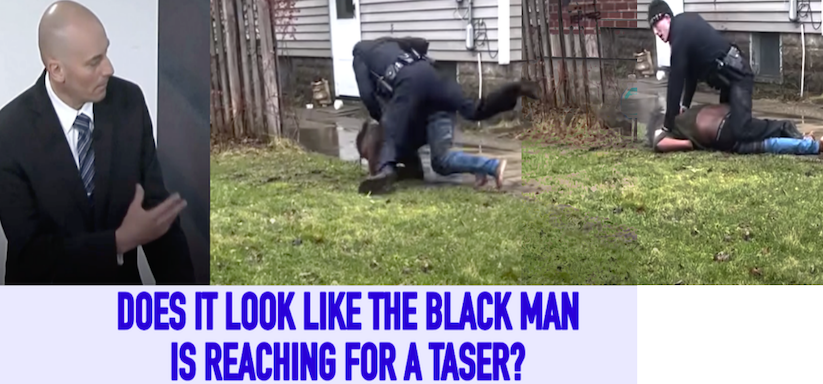
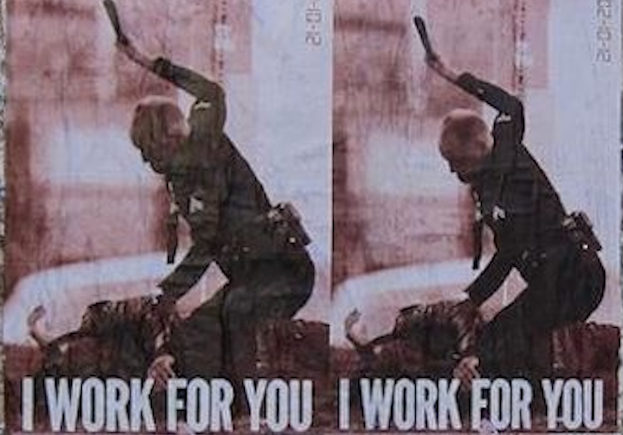
No Investigation or Additional Detail Necessary: Video Shows a White AR Cop Immediately Detain and Attack a Black Teen in a Parking Lot after a White Mall Cop says "kid in the black hoodie is the one"

From [HERE] The Police Department announced Tuesday that it’s conducting an internal investigation of two of its officers after the arrests of two juvenile offenders Monday.

Officer Garett Ford and detective Andre Arnoldi arrested two boys after a security officer at Central Mall reported that one of them had threatened to kill him and others with a gun.

Ford and Arnoldi are seen in body camera footage of the arrest struggling with, then forcibly restraining the two in the mall parking lot.

The investigation will consider whether the officers used racial bias in the arrests, said police Lt. Don Cobb. Both of the youths are Black, and one accused Ford of arresting him only because of his race, according to the arrest report. Ford and Arnoldi are white.

Around 6 p.m. Monday, one of the youths threatened in front of multiple mall employees to return to the mall with a gun and kill people when he was asked to leave after causing trouble, according to police. He fled when Ford approached him in the parking lot, according to video. Not clear who exactly said what to whom but all Blacks should be arrested under the circumstances of course b/c they are all guilty by their very existence. The logic behind this racist idiocy is that "there is no innocent Black male, just Black male criminals who have not yet been detected, apprehended or convicted." [MORE]

white cop fort smith .jpg

The video shows Ford approaching the youth, who is sitting on a curb outside the mall, and telling him he did something and telling him “yes you did” when the youth says “I didn’t do anything, what do you want?” The officers tells him to turn around so that he can place him under arrest. But the boy sets off running through the parking lot. Once Ford reaches him, the youth repeatedly asks what he did as Ford tries to place him in handcuffs.

Ford said in his incident report that he was arresting the youth on felony terroristic threatening counts because of the boy’s earlier statements. Ford didn’t tell the youth why he was detaining him before he placed him in handcuffs. The youth later is heard denying the accusations when the security guard repeats them to Ford.

When the youth resisted arrest, Arnoldi pinned him to the ground, the video shows. The youth is screaming in the video that he can’t breathe and telling the officers to get off him. Ford repeatedly tells the youth to calm down.

Ford says in the report that he didn’t apply pressure to the youth’s neck.

A woman who said she was the aunt of the youth accused of threatening mall security posted on Facebook on Tuesday, asking why the police didn’t check his identification or call his father. She accused police of treating him “like an animal.”

The Facebook post includes a 38-second video of Ford and Arnoldi struggling with the youth and then taking him to the ground and a 14-second video of the youth screaming “I can’t breathe” as the officers pin him to the ground.

The woman who posted the videos couldn’t be reached through social media Wednesday.

A 15-second video clip of the arrest posted to social media was “lacking considerable context [referring to the system of physical coercion and RWS] ,” the release states, prompting the Police Department to release to media a 14-minute clip from Ford’s body camera.

To Biden "Defund the Cops" Means Hire More Cops. Says $350B in Covid Aid is to Prevent Crime [as opposed to Cops targeting/surveilling Law Abiding Black People under the Guise of catching criminals]

NON-AUTHORITARIAN SECURITY. RATHER THAN REDUCING TAX DOLLARS BUDGETED TO COPS AS A REMEDY TO SOMEHOW STOP POLICE BRUTALITY, “DEFUND COPS” (THE OTHERWISE MEANINGLESS PHRASE) COULD SIMPLY MEAN COMMUNITY HIRED AND FIRED TRAINED SECURITY WORKERS WHO HAVE A CONTRACTUAL DUTY TO AID PEOPLE IN PERIL AND A NATURAL RIGHT TO COME TO THE DEFENSE OF OTHERS BUT WHO HAVE NO RIGHT TO INITIATE UNPROVOKED ACTS OF VIOLENCE ON PEOPLE. THEREFORE, THERE WOULD BE NO NEED FOR A POLICE DEPARTMENT. SECURITY WORKERS HAVE THE SAME RIGHTS THAT PEOPLE HAVE BECAUSE ALL PERSONS HAVE THE NATURAL RIGHT TO DEFEND THEMSELVES AND COME TO THE DEFENSE OF OTHERS IF THEY  BELIEVE THE OTHER PERSON IS IN IMMINENT DANGER FROM AN AGGRESSOR. HOWEVER, IN THE US LEGAL SYSTEM PEOPLE HAVE NO GENERAL LEGAL DUTY TO RESCUE OR AID OTHER PEOPLE IN DANGER. THUS, SECURITY WORKERS CAN BE CONTRACTUALLY OBLIGED TO AID FOLKS IN PERIL AND COULD BE HELD ACCOUNTABLE DIRECTLY TO THE PEOPLE WHO HIRE AND FIRE THEM. AN ESSENTIAL DIFFERENCE BETWEEN PRIVATE SECURITY WORKERS AND POLICE OFFICERS IS THAT SECURITY  WORKERS POSSESS NO GOVERNMENT AUTHORITY OR RIGHT TO INITIATE UNPROVOKED ACTS OF VIOLENCE ON OTHER PEOPLE. FUNKTIONARY EXPLAINS THAT UNPROVOKED VIOLENCE AGAINST OTHERS OR THE USE OF “FORCE” IS THE BASIS OF ALL SOCIAL EVILS AND CAN ONLY BE USED IN THE SENSE OF ATTACK NOT DEFENSE [MORE]

NON-AUTHORITARIAN SECURITY. RATHER THAN REDUCING TAX DOLLARS BUDGETED TO COPS AS A REMEDY TO SOMEHOW STOP POLICE BRUTALITY, “DEFUND COPS” (THE OTHERWISE MEANINGLESS PHRASE) COULD SIMPLY MEAN COMMUNITY HIRED AND FIRED TRAINED SECURITY WORKERS WHO HAVE A CONTRACTUAL DUTY TO AID PEOPLE IN PERIL AND A NATURAL RIGHT TO COME TO THE DEFENSE OF OTHERS BUT WHO HAVE NO RIGHT TO INITIATE UNPROVOKED ACTS OF VIOLENCE ON PEOPLE. THEREFORE, THERE WOULD BE NO NEED FOR A POLICE DEPARTMENT.

SECURITY WORKERS HAVE THE SAME RIGHTS THAT PEOPLE HAVE BECAUSE ALL PERSONS HAVE THE NATURAL RIGHT TO DEFEND THEMSELVES AND COME TO THE DEFENSE OF OTHERS IF THEY BELIEVE THE OTHER PERSON IS IN IMMINENT DANGER FROM AN AGGRESSOR. HOWEVER, IN THE US LEGAL SYSTEM PEOPLE HAVE NO GENERAL LEGAL DUTY TO RESCUE OR AID OTHER PEOPLE IN DANGER. THUS, SECURITY WORKERS CAN BE CONTRACTUALLY OBLIGED TO AID FOLKS IN PERIL AND COULD BE HELD ACCOUNTABLE DIRECTLY TO THE PEOPLE WHO HIRE AND FIRE THEM.

AN ESSENTIAL DIFFERENCE BETWEEN PRIVATE SECURITY WORKERS AND POLICE OFFICERS IS THAT SECURITY WORKERS POSSESS NO GOVERNMENT AUTHORITY OR RIGHT TO INITIATE UNPROVOKED ACTS OF VIOLENCE ON OTHER PEOPLE. FUNKTIONARY EXPLAINS THAT UNPROVOKED VIOLENCE AGAINST OTHERS OR THE USE OF “FORCE” IS THE BASIS OF ALL SOCIAL EVILS AND CAN ONLY BE USED IN THE SENSE OF ATTACK NOT DEFENSE [MORE]

From [HERE] President Biden laid out his crime-prevention strategy Wednesday amid a rise in gun violence in many cities, as Republicans seek to tie the increase in crime to calls for cuts to police departments.

Mr. Biden emphasized that state and local officials in areas experiencing surges in gun violence can use $350 billion in Covid-19 relief funding to hire more law-enforcement personnel, even if it raises the total number beyond its pre-pandemic level.

They also can use that money to invest in programs that try to identify and mediate potentially violent conflicts. The administration will work with 14 cities, including Atlanta, Baltimore and Detroit, that are increasing investments in such programs, known as community violence intervention.

“It means more police officers, more nurses, more counselors, more social workers or community violence interrupters to help resolve issues before they escalate into crimes,” Mr. Biden said.

The Labor Department will use existing funding for summer workforce development programs for young people and will help connect formerly incarcerated people with jobs, administration officials said. The Justice Department will take additional steps to crack down on gun trafficking and revoke licenses for gun dealers who willfully violate federal law.

“We will make sure you can’t sell death and mayhem on our streets,” Mr. Biden said.

Administration officials said cities can use funds from the $1.9 trillion Covid-19 relief package passed in March for law enforcement because the administration views the rise in gun violence as a secondary impact of the pandemic. The administration had previously told cities they could use the funds to retain public employees, including police officers, but hadn’t encouraged them to add law enforcement personnel.

NYC’s Police Chokehold Ban is Struck Down by Court as Too Unclear to Apply. NYPD May Still Use its Uncontrollable Power to Forcibly Control People as They See Fit [especially non-white persons]

An NYPD cop who had been sued multiple times for using excessive force placed a Latino man in a chokehold and then shot him with a Taser gun IN 8/2018 while responding to a noise complaint. IN A "Lawless Society” WHAT IS "The Significance of Coercion and the Reach of Authority?” [MORE]

An NYPD cop who had been sued multiple times for using excessive force placed a Latino man in a chokehold and then shot him with a Taser gun IN 8/2018 while responding to a noise complaint. IN A "Lawless Society” WHAT IS "The Significance of Coercion and the Reach of Authority?” [MORE]

From [HERE] In a victory for the city’s powerful police unions, a state Supreme Court judge struck down a city law banning police officers’ use of chokeholds and other physical restraints on Tuesday, saying the wording of the law was “unconstitutionally vague.”

The law, passed last summer, had been met with fierce resistance from police unions, who sued the city last fall over its passage. The language of the statute — which forbids officers from compressing a suspect’s diaphragm — was overly broad, the suit said, and made it nearly impossible for officers to physically engage suspects, even if the use of force was in good faith.

Justice Laurence L. Love agreed: “The phrase ‘compresses the diaphragm’ cannot be adequately defined as written,” he wrote in his ruling in State Supreme Court in Manhattan.

The judge encouraged the city to revise its law, and Mayor Bill de Blasio, at his daily news conference on Wednesday, urged lawmakers to move quickly to do so.

Hank Sheinkopf, a spokesman for the coalition of police unions that filed the suit, said that having such a vague standard hindered police officers from effectively doing their jobs. “That’s not only dangerous for cops — it’s bad for public safety,” he said. “This ruling makes clear that protecting the public and the ability of public safety civil servants to do their work are inseparable.”

The law had been part of a flurry of reforms that the City Council passed in the wake of widespread protests — including huge demonstrations in New York — following the death of George Floyd at the hands of Minneapolis police officers last summer.

The use of chokeholds by police officers is already a felony crime under New York State law and is against New York Police Department policy. The City Council law forbade broader methods of restraint, saying any application of pressure to a person’s neck or kneeling on a person’s back or torso could be prosecuted as a misdemeanor.

Nearly since its inception, the language of the law was the subject of controversy. Even advocates for police reform said it might have been too broad and would be difficult to hold up in court.

Cyrus R. Vance Jr., the Manhattan district attorney, said when the law passed that it would most likely be difficult to bring a case to court under the new statute. And the Staten Island district attorney, Michael McMahon, vowed not to prosecute officers who accidentally violated the law in the course of their jobs.

Facing criticism and a wave of shootings, some city lawmakers moved to revise the law last August, clarifying that the force had to be “recklessly” applied to be illegal, an effort that never made it to a vote. 

Applauding the judge’s ruling on Tuesday, Edward D. Mullins, the head of the sergeant’s union, said in an email to members that it “sends a clear message to the City Council and the mayor that their anti-police policies will be challenged and defeated.”

But Justice Love did not completely side with the unions. He rejected their arguments that the city law was pre-empted by the state’s chokehold ban, saying that the unions had failed to show that the city law banned conduct permitted under state law or that it interfered with state regulations.

In his ruling, Justice Love acknowledged that the city and police department “have taken great pains to reduce the risks” of chokeholds by implementing new policies and training that restricts officers from sitting, kneeling or standing on the chest or back of a person under any circumstances.

“It is this court’s sincere hope that the New York City Council will revisit this issue to address this vital matter,” he said.

Mr. de Blasio said the best way to address the court’s concerns was to refine the law and pass an updated version quickly.

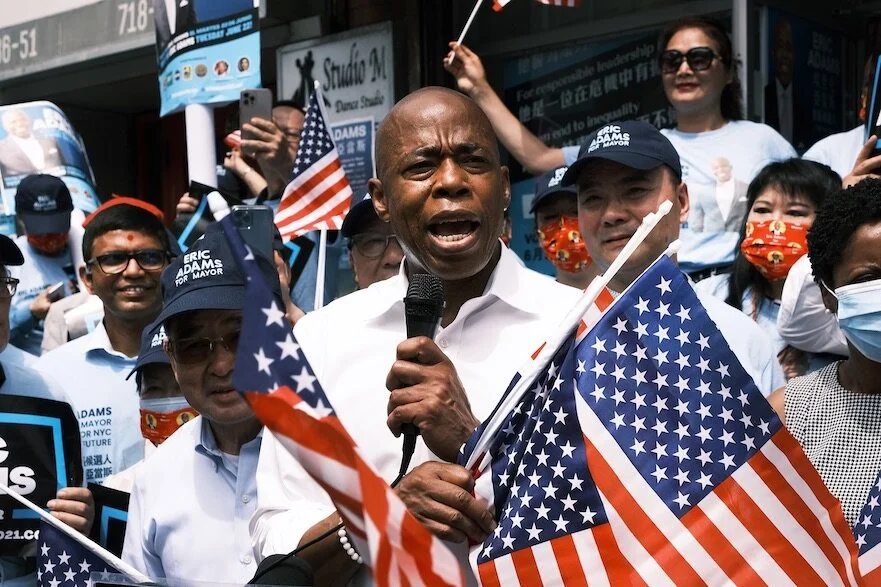
Ex-Cop Eric Adams Leads NYC Race; Can a Black Mayor of a City w/the largest population of blacks, Dominated by Dems, Stop Cops From Murdering Blacks in Broad Daylight or Interfering w/Rights at Will?

eric adams blah blah.jpg

NO. The Democratic Party has dominated NYC city politics for decades. There are Blacks and non-white representatives at all levels of government. Yet Blacks still had and have no power to get justice for Eric Garner or other Black people murdered in broad daylight by cops or power to prevent cops from surveilling, targeting, stopping and searching or otherwise interfering with law abiding Black people’s so-called rights on a daily basis. This is what powerless class means. So called “voting power” is an illusion. Voting heavily for Black and friendly White politicians’ has not helped Black people solve their problem of neutralizing white supremacy and the system of authority.

Amos Wilson states, ‘The dependent media is ever quick to remind the Black electorate of the historical struggles necessary to achieve their right to vote. It indicts the community for its electoral apathy and seeks to evoke guilt feelings in those who do not participate in the electoral process — making such ritualistic participation emblematic of democracy and first-class citizenship. This is of special interest when it is realized that very few, if any, of the major political, economic and social goals achieved by Black America, including the Voting Rights Act, were accomplished through Black voting prowess. The ballot box has been a relatively impotent weapon in the achievement of major victories by the Black community. Suddenly vigorous protest and direct-action legal suits and extralegal processes such as boycotts, sit-ins, and the like, which were used so effectively by the community to achieve its sociopolitical ends and to fight injustice and oppression, have fallen far behind the election of Black politicians to achieve the same ends. [MORE]

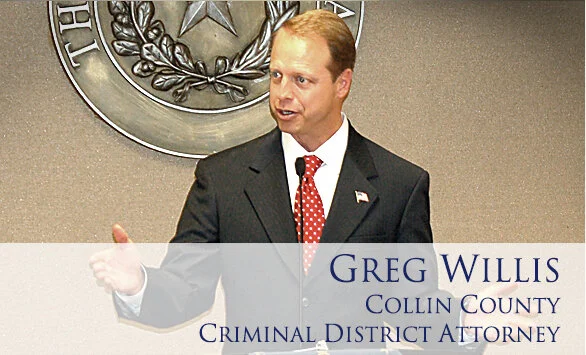
Racist Suspect DA's Grand Jury Finds No Crime in Death of Black Man in TX Jail: Cops say Marvin Scott was Erratic after Weed Arrest So they Restrained, Pepper-sprayed and Put a Spit Hood over his head

doggy greg willis.jpg

From [HERE] and [HERE] A grand jury in Texas has declined to indict eight former jailers on criminal charges in the death of Marvin Scott III, a 26-year-old Black man who died after being restrained and pepper-sprayed at the Collin County jail in March.

Greg Willis, the Collin County district attorney, said in a statement on Tuesday that the grand jury had reviewed video footage of the episode and heard testimony from witnesses before coming to its decision that the former detention officers — Andres Cardenas, Alec Difatta, Blaise Mikulewicz, Rafael Paradez, Justin Patrick, James Schoelen, Christopher Windsor and Austin Wong — would not be charged.

The jury said in a statement that it found “no probable cause exists to charge any person with a criminal offense related to the death of Mr. Scott.”

Mr. Scott’s family and protesters had been demanding that the jailers be arrested and that the authorities release footage that would show what transpired inside the jail. Seven of the jailers were fired by Sheriff Jim Skinner of Collin County and the eighth resigned, but protests outside the jail went on for weeks. On Tuesday night, dozens of people rallied at the courthouse, protesting the grand jury’s decision.

Mr. Scott had been arrested on March 14 on a misdemeanor marijuana possession charge.

The police said earlier this year that they took Mr. Scott to a hospital because he was acting erratically. Mr. Scott was then taken to the county jail, where detention officers restrained and pepper-sprayed him. A spit hood was placed over his head, and he died later that night.

The county’s medical examiner said Mr. Scott’s death was caused by “fatal acute stress response in an individual with previously diagnosed schizophrenia during restraint struggle with law enforcement,” The Dallas Morning News reported.

Amy Gruszecki, a forensic pathologist who performed a second autopsy on Mr. Scott after his body was examined by the Collin County medical examiner, said at the news conference that according to her preliminary findings, it was possible that asphyxiation, as well as a physical struggle against his restraint, might have contributed to Mr. Scott’s death. [MORE]

Mr. Scott was exhibiting signs of a “mental health crisis” when detention officers entered his cell to restrain him, said S. Lee Merritt, his family’s lawyer. Mr. Merritt said in April that Mr. Scott had schizophrenia and sometimes used marijuana as a form of self-medication when his prescription medication did not work well.

The grand jury recommended that a work group be convened to study what occurred inside the jail on the day of Mr. Scott’s death “in an effort to avoid any similar future tragedy.” The work group, it said, would consist of community leaders, criminal justice and law enforcement stakeholders, local hospitals and mental health providers. “The goal of this work group should be finding the best solutions for the treatment of individuals with mental illness who come into contact with the criminal justice system,” the jury said in a statement.

Mr. Willis said in a statement that he shared the grand jury’s concern for “the treatment of individuals suffering from mental illness,” and he pledged to honor Mr. Scott “by taking the lead in assembling a working group to look for lessons learned so that his tragic in-custody death will not have been in vain.”

Mr. Merritt said on Twitter that the family was “extremely disappointed” in the jury’s decision.

The evidence, he said, “provides more than sufficient probable cause for indictments.”

Mr. Merritt said the family looked forward to a review by a federal grand jury.

“The failure of prosecutors to secure indictments in this matter reflects a trend in Texas of undervaluing the lives of African Americans suffering mental health crisis,” Mr. Merritt said.

Zach Horn, the lawyer representing six of the officers, said in a statement that the sheriff’s firing of the officers “was nothing more than a frightened politician sacrificing the livelihoods of dedicated public servants for political expediency,” adding that he would try to get his clients reinstated.

Robert Rogers, a lawyer representing Mr. Cardenas, declined to comment when reached by phone.

The death of Mr. Scott came almost a year after the murder of George Floyd, which prompted nationwide calls for improved policing, specifically when it comes to interactions with people of color.

Suit says a Black Man in Solitary Confinement Had been Yelling Out for Help "For Hours." FBOP Cops Flooded his Cell w/pepper spray causing Heart Failure. He Died Strapped to a Chair, Denied Assistance

jamal floyd.jpg

From [HERE] The mother of a 35-year-old Black man who died last year after being pepper sprayed in a federal prison in Brooklyn is suing the government and unnamed correctional officers for wrongful death, according to court documents.

The suit was filed Wednesday morning by Jamel Floyd's mother, Donna Mays, who is the administrator of his estate, at federal court in the Eastern District of New York, and names the US and 30 unnamed correctional officers and staff for the federal Bureau of Prisons as defendants. CNN has reached out to the Bureau of Prisons for comment on the suit.

"A year has passed since Jamel was taken from me. The pain is as real today as it was on June 3, 2020," Mays said in a statement to CNN. "Jamel was loved by me, his father, brother, sister, and the rest of our family. We will not rest until the officers who killed my son are held accountable for what they did."

Floyd had been held at the Metropolitan Detention Center since October 2019, according to the suit. He was placed in solitary confinement on May 30, 2020, after receiving medical treatment following a physical altercation with officers and on June 3 he began having a "severe mental health or medical crisis," and began yelling out for help "for hours," the suit said, repeatedly saying his chest was hurting and that he couldn't breathe.

Floyd, a Long Island native, had been treated for bipolar disorder and schizophrenia, the suit said. At one point that morning, the suit said, Floyd broke a piece off his sink and used it to break his window, prompting correctional officers to come to his cell, some carrying riot shields.

"Instead of assisting Mr. Floyd, dozens of correctional officers flooded the unit where Mr. Floyd was confined. Officers sprayed several canisters of pepper spray directly into his locked cell," the suit said. "This grossly excessive use of force caused Mr. Floyd to collapse and experience a life-threatening heart condition."

The suit claims officers failed to call for or give medical assistance and instead pinned Floyd down and eventually strapped his limp body to a restraint chair.

"By the time the officers and a medical staff member finally attempted to resuscitate Mr. Floyd, while he was still strapped to the restraint chair, it was too little too late," the suit said.

Floyd never regained consciousness and died that morning, the suit said.

Mark Desire, a spokesman for the New York City Office of Chief Medical Examiner, said Floyd's autopsy report listed his manner of death as an "accident (substance abuse)" and that his cause of death was "cardiac arrythmia due to hypertensive cardiovascular disease in the setting of probable proarrhythmic gene mutation" -- or irregular heartbeat due to high blood pressure. The office also said a contributing factor of his death was "recent synthetic cannabinoid use."

CNN requested a copy of the autopsy report from the New York City medical examiner's office which said it would only release copies to families or their authorized representatives. Mays' attorney Katherine Rosenfeld declined to provide a copy to CNN.

Dr. Lee Ann Grossberg, a board certified forensic pathologist, said she believes the medical examiner's assessment of Floyd's cause of death was that he had an "abnormal heart rhythm due to an enlarged heart caused by longstanding high blood pressure, which could have been related to a gene mutation."

"Based on the wording of the cause and manner of death statements, pepper spray was not a contributory factor in his death," Grossberg told CNN. "It appears that the reason the manner was certified as 'accident' was because the drugs in his system may have contributed in some way to his death."

Nick Bourland, one of Mays' attorneys, said "there is no indication that any drugs caused Jamel Floyd's death."

"Our understanding is that if the Medical Examiner's Office finds any traces whatsoever of a synthetic cannabinoid during an autopsy, they will list it as a contributing factor," Bourland said. "The evidence in this case will prove that Mr. Floyd died of a cardiac arrythmia that was caused by grossly excessive force and a lack of medical treatment and care."

The day after Floyd died, the Department of Justice Office of the Inspector General said it would investigate the circumstances surrounding his death. Stephanie Logan, a spokeswoman for the office, said the investigation is ongoing and would not comment further.

The complaint contradicts what a Justice Department statement said at the time of his death. According to the statement, Floyd was barricaded inside his cell and "breaking the cell door window with a metal object," the department said in a press release.

"He became increasingly disruptive and potentially harmful to himself and others," the release said. "Pepper spray was deployed, and staff removed him from his cell."

Medical staff determined that Floyd was unresponsive and "instantly initiated life-saving measures," the department said.

The lawsuit alleges correctional officers used excessive force, were deliberately indifferent to Floyd's serious medical needs, battery, wrongful death and negligence by failing to provide adequate medical care. The suit asks for compensatory and punitive damages.

$50M Suit says a VA Beach Cop Gunned Down Donovon Lynch as He Posed No Threat. Cop Never Attempted to Determine His Identity and Couldn't Have Confused Him w/Someone Else Due to His Large Size

 From [HERE] and [HERE] The legal team for the family of Donovon Lynch, the Black man who was fatally shot by a Virginia Beach officer on March 26 while multiple shootings were happening at the Oceanfront, have filed a complaint against the City of Virginia Beach.

They said the complaint is about the tragic shooting and killing of Lynch. The shooting gained national attention due to the victim’s relation to Pharrell Williams, who shared news of Lynch’s death in a since-deleted Instagram post and spoke at Lynch’s memorial service in April. The documents state the family is suing for $50 million in damages and $350,000 in punitive damages against Simmons.

The legal team said the complaint provides some additional context around the shooting as well as the police response. It also names for the first time the officer involved - Solomon Simmons.

The legal team went on to say, "Counts brought against the city and the officer involved include wrongful death, failure to properly train and supervise, gross negligence and more."

Previously, the Virginia Beach NAACP branch also called for change after the officer's body camera was not activated during the shooting.

Following these calls, the Virginia Beach Police Department announced changes to their body camera policy and training. The department has now implemented a new policy that as soon as an officer is en route, they must activate their body camera. The older policy stated that an officer only had to activate the camera once they were on scene.

The legal team's press release said, "A youth volunteer and member of Faith World Ministries, Donovon Lynch was fatally shot by Officer Simmons on March 26 at the Oceanfront in Virginia Beach while walking back to his car after leaving a restaurant with a friend. Officer Simmons' body camera was not activated at the time, and the police department has not been forthcoming with additional information about the shooting. The officer has been placed on administrative leave pending the outcome of the investigation."

Donovan Lynch.jpg

Below are some key points from the legal filing:

  • Upon information and belief, the officer failed to attempt to stop or otherwise determine the identity of Mr. Lynch prior to firing his police-issued firearm

  • During the incident, the officer failed to activate the body camera that he was wearing. The body camera should have been activated pursuant to Virginia Beach Police policies, procedures, and/or protocols

  • Upon information and belief, the officer failed to render life-saving medical aide and/or failed to cause others to render life-saving medical aide to Mr. Lynch after shooting him twice.

Police have previously claimed that Lynch was “brandishing” a handgun at the time of the shooting, an allegation that his family and a witness have sharply denied.

Lynch was at the Oceanfront with his friend Darrion Marsh on March 26. They were inside a nightclub during a shooting in which they had no involvement. They then left and walked toward their cars when they encountered Simmons, according to the lawsuit.

“Immediately, unlawfully and without warning, Officer Simmons fired his police-issued firearm at Mr. Lynch, shooting him twice and killing him,” the lawsuit reads. It claims that Simmons acted with gross negligence and used excessive force when killing Lynch.

Lynch, one of two people killed that night in addition to eight others being injured, did not speak or act in any way that suggested that he posed “any threat, let alone a deadly threat, to Officer Simmons or anyone else,” the lawsuit says. The complaint states:

Upon information and belief, it was while Mr. Lynch and Mr. Marsh were walking towards their cars that they encountered Officer Simmons. Immediately, unlawfully, and without waning, Officer Simmons fired his police-issued firearm at Mr. Lynch, shooting him twice and Killing him. 24. At the time of his death, Mr. Lynch was 6’5” and weighed 305 Ibs. A former offensive lineman for the University of Virginia College at Wise, he stood out due to his enormous size. He was unmistakable as anyone else.”

Virginia State Police are currently investigating the shooting.

The lawsuit also alleges that Virginia Beach “had a custom or policy of failing to properly train, instruct, and/or supervise its police officers, including Officer Simmons, as to the proper circumstances under which to draw a firearm and/or use deadly force.”

Attorney Alex Spiro, who has represented high profile people like Jay-Z, Robert Kraft, Elon Musk and more, has joined the legal team for the case as well, they announced.

Cop Claimed Leonard Parker was Accelerating toward him when he opened fire but Multiple Witnesses Say Black Man's Car Crept to a Complete Stop Prior to being Shot to Death for No Reason; Suit Filed

leonard parker 2.jpg

From [HERE] The wife of Leonard Parker, a Georgia man shot and killed by a Gulfport police officer last year, is seeking unspecified damages in a wrongful death lawsuit filed against the officer, the city of Gulfport and five other officers.

The lawsuit claims Officer Jason Cuevas, who shot Parker, used excessive force. It also alleges the five other officers failed to intervene and that the city of Gulfport is responsible for Parker’s wrongful death.

On Feb. 1, 2020, Parker was driving away from a house party on a quiet block of 25th Street. According to investigative documents obtained by the Sun Herald, Cuevas, who was responding to a 911 call about a domestic disturbance at the party, was walking toward Parker’s truck and believed Parker was accelerating toward him when he opened fire, striking Parker once in the head.

In addition, the lawsuit alleges Parker was unaware that Cuevas was nearby, that Cuevas failed to identify himself as an officer, and that officers had not activated lights or sirens to alert people of their presence. It also states Parker was not attempting to flee or to strike Cuevas with his truck.

“The actions of defendant Jason Cuevas were objectively unreasonable and were undertaken intentionally with willful indifference to Leonard Parker, Jr.’s constitutional rights,” says the lawsuit filed by Jackson attorney Charles Mullins.

The lawsuit also says five other officers were with Cuevas as he approached the residence before shooting Parker.

The other officers, the suit says, “knew or had reason to know that the use of deadly force was disproportionate and excessive” and should have intervened to protect Parker.

But the investigative file the Sun Herald reviewed in May, including video footage of investigators’ interview with Cuevas, indicates other officers arrived on the scene only after Cuevas had shot Parker.

The lawsuit seeks compensatory and punitive damages, attorneys’ fees, and costs to cover medical and funeral expenses and other relief.

The family is demanding a jury trial.

A Harrison County grand jury cleared Cuevas of criminal conduct in March. The Parker family’s attorneys, which include attorneys who represented the family of George Floyd in their civil suit against Minneapolis, announced their intent to sue Gulfport in April.

Mullins is the Mississippi-based lawyer working on the case with the other out-of-state attorneys.

UnidosUS Report says an Estimated 2,600 Latinos were Killed by Police or Died While in Custody over the Past 6 years

doggy portrait.jpg

From [HERE] While the true scope of the impact of police brutality is difficult to quantify, a new report indicates that more than 2,600 Latinos were killed by police or died while in custody in recent years.

The report released Thursday by UnidosUS in partnership with a group of researchers, scholars, activists and family members of Latinos killed by police, indicates that deaths of people of color are severely undercounted and much more needs to be done to produce an accurate database that collects ethnicity information.

As part of its initial effort and awareness of the limitations of its method, the newly formed group, the Raza Database Project, analyzed eight national databases that track police killings and use a combination of news reports and public records. Researchers took a closer look at entries that were identified as “White,” “Other,” or “Unknown” and compared the names to the surname datasets from the 2010 US Census to spot any individuals who may have been misidentified.

Between 2014 and May 9 of this year, there were a total of 15,085 people who died in police custody or were killed in encounters with officers, according to the report.

After the group’s analysis, the number of Latinos increased about 24% from 2,139 to 2,653, the report states.

The number of deaths of Asian Americans/Pacific Islanders and Native Americans also increased significantly.

But these findings should not be considered final as its method may lead to both overcounting and undercounting, the report said.

Roberto Rodriguez, the project’s director, said that the group’s estimates are not comprehensive but they offer a more accurate look, especially because of the gaps in government-level data collection.

The group noted the numbers likely still undercount Latinos and other people of color because they may not have surnames of Hispanic origin.

In recent years, a number of activists and media outlets have taken it upon themselves to collect data of police violence because there is no federal database of information.

But they have found that law enforcement agencies often lump individuals into broader racial categories and not ethnicities.

“There’s no standardization of how people are labeled and there’s no centralization,” said Rodriguez, who is also an author and former associate professor at the University of Arizona. “All of these groups are doing the government’s work.”

Janet Murguía, president and CEO of UnidosUS, said the group’s findings are a “disturbing” indication that over-policing in communities of color might be more widespread than previously thought.

“The numbers we already knew about are unacceptable; these new numbers are unconscionable,” Murguía said in a statement. “This data demands immediate consideration by those in Congress who are working on much-needed law enforcement reform legislation to ensure that their solutions truly reflect the scope of the problem.”

Rodriguez said the group plans to expand the findings released Thursday and launch more efforts to delve into the issue of Latinos killed by or while in custody of law enforcement.

The report was released as calls for police accountability among the Hispanic community have increased in recent months following the deaths of Latino boys and men in police encounters.

In Chicago, 13-year-old Adam Toledo and Anthony Alvarez, 22, were killed by officers at the end of separate foot chases in March.

The two deadly shootings sparked outrage and protests in Chicago, with community members demanding changes to the Chicago Police Department’s practices and policies, and prompted Mayor Lori Lightfoot to announce last month the city’s police department must implement a foot pursuit policy by the summer.

Meanwhile in California, the family of Mario Gonzalez Arenales seeks justice for the 26-year-old who died on April 19. He died in police custody in Alameda, California, after being restrained for about five minutes at a local park. Officers were answering separate calls about a man who appeared to be intoxicated and a possible theft.

Next week, the family of Sean Monterrosa will host a series of events to honor his life and raise awareness to the issue of police brutality among Black and brown people. Monterrosa, 22, was shot and killed by an officer in Vallejo, California, last year, just a week after George Floyd’s death in Minneapolis.

California Attorney General Rob Bonta recently announced the state will review Monterrosa’s case.

153 Houston Hospital Workers Fired or Quit over COVID Vaccine Requirement

doggy wit mask.jpg

From [HERE] More than 150 workers at a Houston hospital quit or were fired on Tuesday after being suspended for refusing to get vaccinated against the coronavirus.

The Houston Methodist Hospital system suspended 178 unvaccinated employees without pay two weeks ago for missing a June 7 deadline to get jabbed.

Whoever didn’t comply or resign during the suspension period was let go on Tuesday, system spokeswoman Gale Smith told The Post.

“The employees who became compliant during the suspension period returned to work the day after they became compliant,” Smith said.

A group of 117 staff members had sued the hospital in May, claiming the COVID-19 vaccines were “experimental” and required inoculations made workers “guinea pigs.” The lawsuit compared the vaccine requirement to medical experiments inside Nazi Germany concentration camps.

But US District Judge Lynn Hughes tossed out the suit on June 12, condemning the Nazi comparison and saying it was false to label the vaccines as experimental.

The judge made a distinction in her ruling between an employment requirement and a forced inoculation.

“If a worker refuses an assignment, changed office, earlier start time, or other directive, he may be properly fired,” the judge wrote in her ruling.

“Every employment includes limits on the worker’s behavior in exchange for remuneration. That is all part of the bargain.”

The case has been appealed.

Witnesses Describe a Brutal "Gang-Like" Beating by 7 LA Cty Cops: Deputies Struck a Non-Resisting Black Man 86 Times, Shattering Bones in His Face, Knocking Out Teeth, Causing Blindness. Suit Filed

chris bailey 2.jpg

‘HE DIDN’T LOOK HUMAN.’ From [HERE] Seven deputies with the Los Angeles County Sheriff's Department are being accused of beating a man who was left with serious injuries and is still suffering more than a year later.

Attorneys for Christopher Bailey on Monday announced a civil rights lawsuit against the department and the seven deputies involved in the alleged May 2020 beating.

Recently-surfaced cellphone video of the aftermath of the incident shows Bailey being lifted into an ambulance, with someone heard saying "He doesn't even look human."

"He sustained 64 to 86 total body and face hits. He was pummeled in the face approximately 35 to 44 times," civil rights attorney Toni Jaramilla said during a news conference.

chris bailey .jpg

Attorneys representing Bailey say he was on his way home from work, a private company that sorts mail for the U.S. Postal Service, when he was pulled over for allegedly straddling the lane in Inglewood around 2 a.m.

They say Bailey did everything he was asked to do, but the police report says he resisted arrest.

Bailey's attorneys say he was initially charged with three felony counts of resisting arrest, but that those charges were later dropped.

"I was screaming out (that) I wanted to live. I really feared for my life, I thought I was going to die," Bailey said.

Jaramilla says Bailey is now unable to see out of his left eye, adding that doctors said "the punches to his eye were so severe that it dislodged the eyeball slightly."

Bailey's teeth were also knocked out and bones in his face were shattered.

"Mr. Bailey recalls that he heard deputies say 'Pull his pants down' and he could feel tugging in his pants, and he was Tasered in the lower abdomen near his groin area," Jaramilla said.

LA COUNTY SHERIFF FUCK CITIZENSs.jpg

The L.A. County Sheriff's Department released the following statement: "All use of force incidents which result in injury are unfortunate. Due to this pending litigation and under advice of counsel, we are unable to offer further details at this time."

Bailey's attorney say they want the seven deputies involved in the alleged beating fired and charged with crimes.

"This was just a beatdown. This was a gang-like beatdown of a Black citizen," Jaramilla said.

Instead of Issuing a Ticket a White NY Trooper Peppered Sprayed into a Black Family's SUV. After They Fled He Forced Them to Crash Causing the Murder of an 11 Yr Old Girl who was Ejected from the Car

Trooper Christopher Baldner.jpg

From [HERE] and [HERE] A white trooper on I-87 upstate pulled a Black man and his family over, maced them, and then rammed their car twice at high speed before the crash that took his daughter’s life, Goods and his lawyer say.

It began while Tristin Goods, 39, who lives in both Queens and Long Island, drove his wife, April, and his daughters, Monica, 11, and Tristina, 12 to visit relatives. The trooper, Christopher Baldner, stopped Goods for speeding at 11:40 p.m., in the town of Ulster, about 95 miles north of the city.

Goods says the trooper yelled at him during the stop.

“He was screaming at me, ‘You were going 100 miles per hour and you shook my car!’ Goods recalled.

“I said ‘The tractor trailer in front of me shook your car.’ I had my hands on the steering wheel. I didn’t get out of the car. I was no threat him,” Goods said. “I asked for a supervisor.”

The two argued — with the trooper demanding to know if there were “guns or drugs” in the car, Goods recounted.

“My wife said she was tired, and he said, ‘I don’t give a s–t if you’re tired,’” Good recalled.

The trooper returned to his cruiser — and when he returned, he flooded Goods’ SUV with pepper spray. Goods said the trooper was well aware there were young girls in the car when he sprayed.

“He didn’t warn us he was going to use pepper spray,” Goods said. “He didn’t say ‘Get out of the car’ or ‘You’re under arrest.’”

Goods said his daughters were crying, and he feared for his family’s safety. Instinctively, he said, he drove off.

“I didn’t know what he was going to do next,” Goods said. “I was like, ‘Holy s–t. This guy is going to kill me now.’”

monica goods.jpg

What happened next was a senseless loss, as the trooper, identified as Christopher Baldner, rammed his cruiser into the back of Good’s SUV not once but twice.

Baldner, records show, gave chase — and used his state police car to ram the back of Good’s SUV. About eight seconds later, Goods said, Baldner rammed his car a second time.

After the second hit, Goods’ SUV — a 2017 Dodge Journey — hit a guardrail, flipped and rolled.

Monica was ejected from the car, and died at the scene.

Making matters worse, Goods couldn’t even go search for and potentially help Monica immediately afterwards because he was too busy having a *gun* pointed at him by Baldner, who was still gung-ho on finding imaginary guns and drugs in the car.

Handcuffed in the back seat of a New York State Trooper’s car, Tristin Goods could only seethe quietly and watch helplessly as his 11-year-old Brooklyn daughter was taken away in a body bag after the police confrontation he says led to her needless death.

Later, he said, troopers interviewed his surviving daughter Tristina for four hours without a family member present.

The girls’ mother, Michelle Surrency previously told The News she had to free Tristina from the troopers’ barracks.

“We are confident that our clients’ accounts of what happened are consistent with the scientific evidence and the forensic evidence from the scene,” said Goods’ lawyer, Joseph O’Connor.

”What did I do? What threat did I pose?” Goods said, his voice cracking with emotion as he gave his first interview about the case to the Daily News.

“It is just so hurtful. The guy was crazy,” he said of the trooper. “It’s illegal what he did.”

Attorney General Tish James’ office is conducting a criminal investigation into the deadly encounter Dec. 22 between Goods, his family and Trooper Christopher Baldner on the highway in Ulster County.

“This should have been a traffic ticket,” said O’Connor.

The News obtained the State Police pursuit policy through a Freedom of Information request, though it was partially redacted by the agency. The policy says high speed pursuits should be “minimized” and bars using “reckless or hazardous measures” even if the civilian driver is doing the same.

“The pursuit must be terminated when it becomes apparent to the officer that the immediacy of apprehension is outweighed by a clear and unreasonable danger to the public,” the policy reads.

William Duffy, a spokesman for the state police, said Baldner remains assigned to desk duty. He declined further comment citing the investigation and an internal probe.

[your Fed Government has uncontrollable power over you and won't be held Accountable unless it says so] CT Dismisses Claims that Trump Used Violence to Harm Black Protesters @ Lafayette Sq Last Year

trump racist church .jpg

From [HERE] A federal judge in Washington on Tuesday dismissed claims former President Donald Trump, former Attorney General Bill Barr and other officials conspired to violate the rights of Black people and their supporters by using violent force to remove protesters from Lafayette Square last year.

Black Lives Matter D.C. and individual protesters who were assembled in the park across from the White House on June 1, 2020, claim in four civil lawsuits against several federal individual and agency defendants that law enforcement officials illegally broke up their peaceful demonstrations against racial injustice with tear gas, flash-bang grenades, smoke bombs and rubber bullets — just before Trump walked through the area for a photo op in front of St. John’s Church.

In its complaint, Black Lives Matter said many demonstrators were injured and the defendants’ “professed purpose” for clearing the square — to allow the president through — was not a legal reason for violating protesters’ constitutional rights. 

According to a special report released on June 9 about U.S. Park Police actions at the square that day, the USPP said it cleared the park so that a contractor could install anti-scale fencing and that they made the decision to clear the park “several hours” before they knew of a potential presidential visit. However, U.S. Department of Interior Inspector General Mark Lee Greenblatt said there were “weaknesses with the operation to clear the park,” including that the U.S. Secret Service was deployed before Park Police began making dispersal warnings, the warnings weren’t loud enough, and protesters weren’t told where they could exit before the clearing began.   

The plaintiffs claim Trump, Barr and then-Secretary of Defense Mark Esper directed the conspiracy to target racial justice protesters and other defendants participated in the conspiracy and “willfully or negligently” failed to prevent it. 

But U.S. District Judge Dabney Friedrich, a Trump appointee, said in her 51-page ruling that the plaintiffs’ allegations did not prove an agreement existed between the defendants to violate their rights. 

“Rather, they demonstrate only that these officials were communicating with each other on June 1, prior to and after the clearing of Lafayette Square,” Friedrich wrote.

Friedrich also dismissed the plaintiffs’ claims for monetary damages against Barr and other federal officials for alleged violations of First, Fourth and Fifth Amendment rights, finding that an “extension of the Bivens remedy to this ‘new context’ is unwarranted.”  

“In this case, several special factors counsel hesitation. First, national security — specifically, the country’s national-security interest in the safety and security of the President and the area surrounding the White House — strongly weighs against creating a Bivens remedy here,” Friedrich wrote. 

“In this context, it matters not whether the national security risk actually justified the particular action taken,” the judge added.

The plaintiffs do have standing, the judge ruled, to seek an injunction against continued restrictions to access Lafayette Square, and they may pursue their claims against Arlington County and District of Columbia officials for alleged First Amendment violations relating to the dispersal tactics. 

“As alleged, the defendants prohibited all expressive activities in Lafayette Square without any basis at all; they left open no alternative channels; and they forcibly dispersed protestors because of the plaintiffs’ exercise of their protected First Amendment rights. Reasonable officers would have known that such alleged actions violated clearly established law,” Friedrich wrote.

The plaintiffs were represented by attorneys with the ACLU of the District of Columbia, the Washington Lawyers’ Committee for Civil Rights and Urban Affairs, Lawyers’ Committee for Civil Rights Under Law, and law firm Arnold & Porter. 

ACLU D.C. Legal Director Scott Michelman said in a statement that the plaintiffs’ attorneys plan to evaluate all legal options to protect the rights of protesters. 

“Today’s ruling essentially gives the federal government a green light to use violence, including lethal force against demonstrators, as long as federal officials claim to be protecting national security,” Michelma said. 

“The blitzkrieg unleashed against civil rights demonstrators in Lafayette Square is a stain on our nation’s commitment to the Constitution, and slamming the courthouse doors in the face of the demonstrators because the defendants are federal, rather than state or local officials, sends exactly the wrong message about what our country stands for,” he added. 

Video Shows White San Bernardino Cop Kick a Black Man in the Head 2 Times After he had Surrendered and was Laying on His Stomach

San Bernardino white cop.jpg

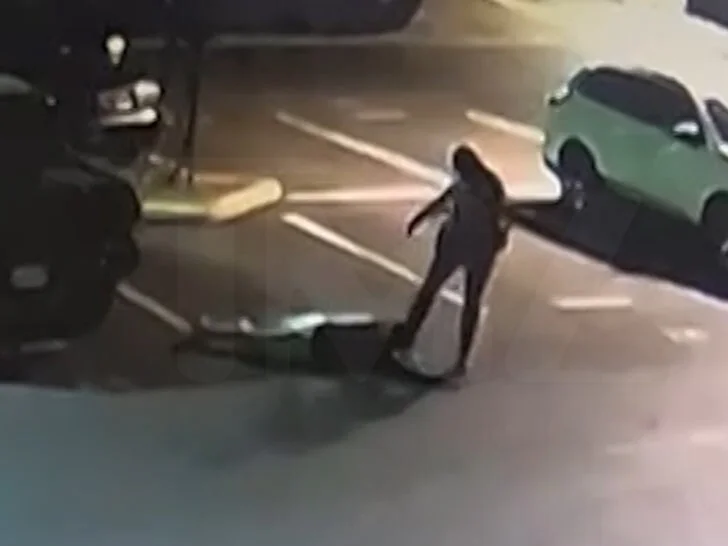
From [HERE] A Southern California sheriff's deputy is under criminal investigation after surveillance video showed him kicking a pursuit suspect in the head after the man surrendered, an incident that one official called "alarming" and "disturbing."

The incident occurred early Wednesday in Victorville, about 85 miles northeast of Los Angeles, after a motorcyclist failed to stop for a traffic violation, the San Bernardino County Sheriff's Department said in a statement.

The driver, identified as Willie Jones, 33, led deputies on a high-speed pursuit through city streets and on Interstate 15, "narrowly missing several head-on collisions with oncoming vehicles," the sheriff's department said.

The pursuit ended around 12:45 a.m. PT when Jones ditched his motorcycle near a car dealership and fled on foot, according to the sheriff's department.

Video obtained by TMZ from the car dealership shows a man hide under a truck, then get up, turn around and put his hands in the air as he faces an approaching deputy.

The man is then seen appearing to surrender by laying on his belly. A deputy approaches the prone suspect and appears to kick him swiftly in the head two times. The man is motionless as other deputies arrive to cuff him. He is assisted to his feet and limps away, cuffed, with a deputy escorting him.

"A supervisor arrived on the scene and discovered Jones' arrest was captured on surveillance cameras from a nearby business. Once the supervisor reviewed the surveillance footage, there was immediate concern about a deputy's actions," the sheriff's department said in Friday's statement.

Authorities said the deputy has been a member of the department since April 2016, working at the Victorville station since September 2017.

Jones was provided medical care before he was booked on suspicion of felony evading with disregard for public safety, the sheriff's department said. According to public jail records, Jones was released on bail and is no longer in custody.

CNN is seeking comment from Jones. It was unclear Monday whether he has a lawyer.

"This incident raises concerns," Sheriff John McMahon said in a news release. "I expect my deputies to remain professional while engaging the public.

"A full investigation is underway, and the involved deputy has been placed on Administrative Leave while detectives from our Specialized Investigations Division complete their investigation into the use of force. Once the investigation is completed, it will be submitted to the District Attorney's Office for their review."

In a videotaped statement, San Bernardino County Undersheriff Shannon Dicus called the footage "alarming" and "disturbing."

"It's unfortunate when incidents like these occur because it causes turmoil within our communities and equally amongst our deputies who pride themselves on providing professional service," he said. "We take these matters seriously and want to assure you that a thorough investigation will be conducted."

While Being Led to the Jail a Hawthorne Cop For No Reason Shoved a Handcuffed Latino Man Face First into a Row of Lockboxes Causing a “Metal Object” to Rupture his Eye. Cops Denied Medical Help

Hawthorne Cops.jpg

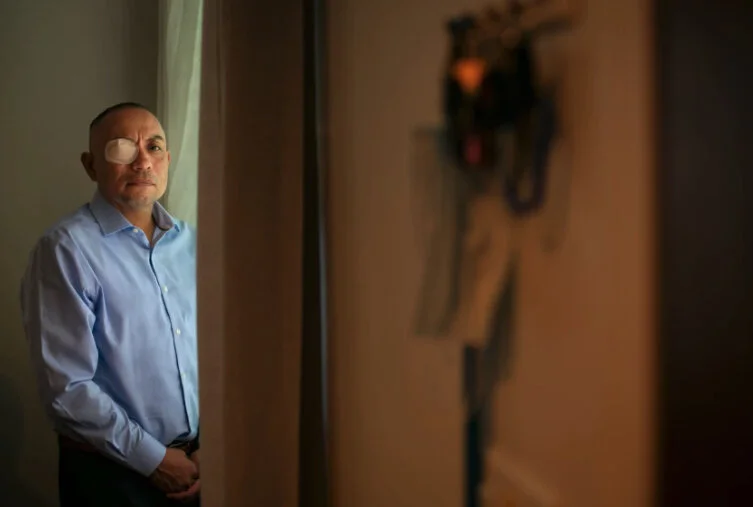
From [HERE] The pain radiating from Rafael Salgado’s right eye is making it hard to sleep. But the discomfort isn’t the only thing keeping him up at night.

Wearing a patch that’s covered the eye for weeks, the 42-year-old single father wonders whether he’ll ever be able to work again. Or drive. Or care for his teenage son and daughter.

Salgado has not been able to see out of the eye since May 3. On that night, Hawthorne police arrested him on suspicion of misdemeanor domestic violence at his home. Minutes later, while being led in handcuffs from a police cruiser to the city’s municipal jail, Salgado says, an officer shoved him toward a row of lockboxes for no reason.

According to hospital records, Salgado slammed into a “metal object,” suffering a laceration to his cornea. His right eyeball was described as “ruptured.”

Pictures taken that night show Salgado’s eye quickly ballooned into an angry purple oval, with crusted blood staining his cheek. He underwent surgery the next morning, but doctors warned it was unlikely he’d ever see out of the injured eye again, according to hospital records.

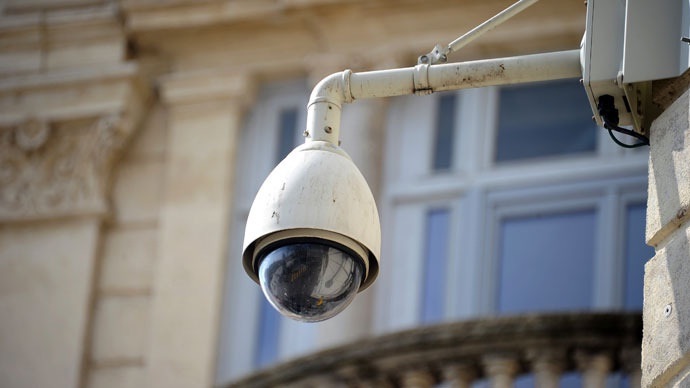
The gruesome injury was captured by a surveillance camera in the Police Department’s garage, according to Salgado’s civil attorney, Wesley Ouchi. He said the footage shows a police officer shoved his defenseless client face-first into a row of metal lockboxes, where officers are supposed to place their belongings before entering the city’s municipal lockup.

“We see the officer wind up with two arms and shove my client, who is handcuffed,” said Ouchi, who said he was allowed to view the footage by Hawthorne city officials but not given a copy of it. “He goes face-first into the lockboxes, and one of the metal keys goes through his eyelid and into his eye.”

Hawthorne police have described Salgado’s injury as an accident but have yet to release video of the incident or provide details of it to The Times in response to a public records request.

“We are aware of the accident which occurred while Mr. Salgado was in our custody, during which he suffered an injury to his right eye,” the department said in a statement. “The City has been in communication with Mr. Salgado’s attorney regarding this. In addition, an administrative investigation into the circumstances of this incident has been initiated.”

Ouchi has filed a notice of claim, the first step toward a lawsuit against the department.

Salgado and Ouchi allege the incident amounted to police brutality. Greg Risling, a spokesman for the Los Angeles County district attorney’s office, said the agency is aware of the incident, but declined to elaborate.

The office’s Justice Systems Integrity Division, which prosecutes law enforcement misconduct, is “looking into” the case, though it is unclear whether they have initiated a formal criminal investigation or sought copies of the video of Salgado’s injury, according to a law enforcement source with knowledge of the situation. The source spoke on the condition of anonymity to discuss the matter candidly.

Salgado told staff at Harbor-UCLA Medical Center that he’d consumed several drinks at a neighborhood bar before coming home and getting into an argument with his girlfriend, hospital records show. A short time later, several police officers arrived at his home, according to Salgado, who said neither he nor his girlfriend called them. Salgado said an officer then placed him under arrest, but refused to say why or identify himself.

Salgado and Ouchi declined to identify the woman or provide contact information for her, but denied all allegations of domestic violence. Beyond their initial statement, the Hawthorne Police Department declined to answer most questions posed by The Times about the case due to pending litigation. Police did not not say whether the woman was injured when they arrived on scene, or disclose who called them alleging domestic violence.

Jail records show Salgado was booked on suspicion of domestic violence and resisting arrest. Police officials said the Hawthorne city attorney’s office is reviewing Salgado’s case for possible prosecution. Interim Hawthorne City Atty. Robert Kim did not respond to a call seeking comment.

After slamming into the lockbox, Salgado says, he was in “excruciating” pain and bleeding profusely from his right eye. He said he begged to be taken to a hospital, but instead an officer led him to a jail cell and offered him an ice pack.

“I had my eyes closed the whole time. I’m still in handcuffs, looking down, because I was afraid something else was going to happen,” Salgado said.

In his notice of claim against the city, Ouchi identified the officers involved in Salgado’s arrest as Jeffrey Tysl, George Bukhin and Michael Jenks. Hawthorne police declined to identify the officers, but did not deny that the names included in Ouchi’s filing were accurate. Multiple attempts to contact each officer were unsuccessful.

Ouchi said a representative for the city attorney’s office told him the officer who shoved Salgado was Tysl, a Hawthorne police officer since 2009, who previously faced serious brutality allegations.

In 2014, Tysl was one of several officers named in a lawsuit filed by a deaf man who alleged Hawthorne police repeatedly hit him with a Taser, beat him and ultimately choked him unconscious while responding to a report of a suspicious person.

Tysl and other officers found Jonathan Meister carrying items out of a yard toward his car, court records show. Meister had previously lived at the location and had permission to be there, but he was unable to communicate that to the officers, who did not understand sign language, according to the suit.

Officers attempted to grab Meister’s arms, causing him to panic and struggle in response, the lawsuit alleged. During the ensuing scuffle, Tysl allegedly punched Meister several times and placed him in a chokehold, while other officers repeatedly struck him with the stun gun, according to the lawsuit.

Tysl later admitted that he was aware Meister might have been deaf, but also said he was concerned Meister was lying about that to “get out of” being arrested, according to a copy of a deposition taken in the case. He also said he elbowed the man five times and did not deny choking him.

Criminal charges against Meister were dismissed and the city settled the case for $350,000, according to John Burton, a civil attorney who represented Meister.

Tysl said he was not disciplined nor did he receive any internal criticism for his tactics, according to the deposition. He also said he felt he did nothing wrong and would not have apologized to Meister.

From 2016 to 2019, the Hawthorne Police Department received 24 complaints from citizens alleging officer misconduct, but sustained only one, according to data reported to the California Department of Justice.

Salgado and his family have questioned why nearly seven hours elapsed between his injury and the moment he was seen by an eye surgeon. He was shoved into the lockboxes around 8:05 p.m., according to a time stamp on the footage reviewed by his attorney. But he did not arrive at a hospital until 9:30 p.m., records show.

Ouchi says jailhouse video shown to him by the city showed officers ignoring Salgado’s cries for help and, at one point, laughing at him.

Salgado was first taken to Centinela Hospital in Inglewood, where he says he was left handcuffed and shirtless in a hallway for roughly five hours. Several of Salgado’s relatives, some of whom work in hospital administration, said that police should have taken him to Harbor-UCLA Medical Center, the closest trauma ward in the area.

In a statement to The Times, a spokeswoman for Centinela Hospital declined to comment specifically on Salgado’s case but noted the facility “is not a designated trauma facility, so when patients present with injuries and a higher level of care is required, a transfer is initiated.” Salgado did not arrive at UCLA until 3:23 a.m., records show.

“The injury to the [right] eye is severe and will result in permanent visual loss,” one physician wrote. “Without surgery, patient will likely lose the eye to infection.”

Medical experts said Salgado’s eyesight was probably damaged beyond repair upon impact.

Dr. Philip R. Rizzuto, clinical spokesperson for the American Academy of Ophthalmology who now teaches at Brown University, pointed to a study that showed injuries to the “globe” of the eye such as those sustained by Salgado “should be repaired” within 24 hours.

While an eye injury should always be treated as soon as possible, Rizzuto said, the “catastrophic” nature of Salgado’s injury probably played more of a role in his vision loss than the speed with which he was treated.

Salgado had previously been arrested by Hawthorne police on suspicion of driving while intoxicated in 2019, but said he held no ill will toward police before the night he lost sight in his right eye. He said he hopes by speaking out, he can prevent anyone else from experiencing the panic and pain he says he did.

“I just want justice. I don’t want him to continue to do the same thing to other people,” he said. “Maybe he’s done it in the past.”

Salgado said his wife died of complications related to epilepsy in 2017, and now he’s worried his kids will suffer even more with him seriously injured. His younger sister, Ester, said the incident brought the realities of viral videos of police abuses into their family home.

“It’s just so sad to know your life can change in an instant. You hear the stories … but you never think it’s going to happen to you. To your family,” she said. “There was no reason for him to get treated like that.”

'Guilty Until Proven Innocent' So It Took Two Black Men Months to Prove that Cough Drops Didn't Have Cocaine Inside Them. MA Troopers Targeting Blacks Initiated False Prosecution and Incarceration

doggys gavel .jpg

From [HERE] It started as the most mundane of Saturday mornings. Imran Laltaprasad had just picked up his buddy Francisco Torres Jr. in Weymouth, and the two were heading out to move some furniture for Laltaprasad’s brother. But they wouldn’t get very far. As Laltaprasad merged his Nissan Altima onto Route 3, he noticed a state police cruiser behind him.

It was a familiar sight. Since getting home from prison a year and a half before, Laltaprasad, who is 37 and Black, says he had been pulled over more times than he could remember. The stops—almost always for minor traffic violations—had become such a nuisance that he had once called a lawyer asking if anything could be done. There wasn’t. “You can’t exactly take out a restraining order against the police,” the lawyer said. Now, as Laltaprasad saw the cruiser’s blue lights flash in his rearview mirror, all he could think was, Here we go again.

Laltaprasad watched in his side mirror as two state troopers stepped out of the cruiser and strode toward his car. “License and registration,” he recalls John Dailey, an eight-year veteran of the force at the time, saying to them. Apparently, Laltaprasad had committed a marked-lanes violation, crossing over a double yellow line with both driver’s-side wheels. Laltaprasad wasn’t surprised. It was just the kind of minor and impossible-to-disprove infraction that he believed the police often used as a pretext to pull him over.

Meanwhile, the other trooper, Michael Gagnon, spoke with Torres through the passenger-side window. Fresh out of training for new recruits, Gagnon was doing a so-called left-seat, right-seat patrol with Dailey, the state police’s term for a ride-along with a veteran trooper. “When that’s happening,” one state trooper says, “they’re on the hunt to stop anything and everything just to give the new kid experience.” From the passenger side of the car, Gagnon asked Torres, who is Latinx, for his identification, and Torres told him his name and birthday and then watched as the two troopers returned to their cruiser.

A moment later, they were back. “Step out of the vehicle,” Dailey ordered Laltaprasad, according to Laltaprasad’s and Torres’s recollection of events. (A police document filed later backs up their account, although it does not specify which trooper gave the exit order.) Laltaprasad complied, but questioned the order as he stood up. “Why am I getting out of the car?” he recalls saying. “I ain’t do nothing.”

“Officer safety,” Laltaprasad remembers Dailey saying, adding that he had seen Laltaprasad shifting from side to side in his seat. Dailey and Gagnon had also run background checks on the two men from inside their cruiser and discovered that both had prior firearms convictions.

According to Laltaprasad, Dailey asked if he had any weapons. “Just my pocket knife,” Laltaprasad said, and handed it to him. (Laltaprasad, who has only one leg and still has some old enemies from his life before prison, says he just feels safer carrying a knife.) Dailey also patted him down and discovered $1,120 in cash; Laltaprasad was heading to Vegas for a boys’ trip later that day. Dailey walked Laltaprasad to his cruiser and placed him in the back seat. Next, he frisked Torres and sat him down next to Laltaprasad. Then, Dailey returned to the car to search it.
There had been a time in Laltaprasad’s life, before going to prison, when a search of his car would have been disastrous. He had been dealing drugs then. But now, after completing his prison sentence, he was living on the right side of the law: working a steady job, taking care of his daughters, and staying out of trouble. The cops were being punks, he thought. He felt they just wanted to mess with him. But he was confident that once they got it out of their system, he and Torres would be on their way.

A minute later, Dailey approached Laltaprasad holding a small black plastic bag of pills and asked what the bag contained, according to a police document. Now Laltaprasad was irritated. “Man, those are my dick pills!” he said, according to the document. “I’ve got a flight to catch. I don’t have time for this shit.”

But Dailey didn’t seem to believe him, Laltaprasad recalls, adding that the trooper said the pills looked like they contained fentanyl.

Laltaprasad was shocked, and growing more anxious by the minute. Hastily, he told Dailey to look in the glovebox, where he’d find the medicine’s original packaging and the rest of the pills. When Dailey asked if he could search the rest of the vehicle, too, Laltaprasad told him to go ahead. After all, he had nothing to hide.

A moment later, after going through the trunk, Dailey strode back toward him. He had found something, he claimed: a white powdery substance in a backpack. Dailey said it looked like cocaine, Laltaprasad and Torres recall. “What?” Laltaprasad exclaimed. “Listen, man, there’s no drugs in my car unless you put it in there,” he recalls saying. Then, Laltaprasad and Torres say, Dailey revealed another detail: The cocaine was wrapped inside Halls cough-drop wrappers. That’s when Gagnon read the men their rights. They were under arrest.

If what was happening hadn’t been so terrifying, Laltaprasad might have laughed at the absurdity of it all: That bag of Halls had been in his backpack for months, and the cough drops were mint flavored, so they were white and a little chalky. Still, Laltaprasad thought, there was no way anyone, let alone a cop, could believe the lozenges were cocaine. Unless, he said to himself, the officer intended to lie.

It was a cruel irony for Laltaprasad and Torres to find themselves handcuffed side by side. For the past year, the glue that held together their friendship was a resolve to never put themselves in this situation ever again. Both men had committed crimes in the past—and paid a heavy price. While dealing drugs in his twenties to make a living, Laltaprasad had survived a murder attempt that cost him his leg. He was left for dead after being shot multiple times, and he never found out who did it. Later, he was convicted of possession with intent to distribute heroin and cocaine and spent three and a half years in prison before his release in 2018.

Torres’s criminal record, by contrast, was the result of “one really bad night,” he says. In his mid-twenties, he went out drinking, blacked out, led police on a car chase, and fired shots into the air from a gun he owned illegally. He didn’t resent the punishment that followed: 18 months in prison. Frankly, he thought, it fit the crime.

Now both men were beating the grim odds that face ex-cons. They had steady jobs—Torres was a cook and Laltaprasad worked at an auto-body shop. Torres had found religion and was converting to Islam with Laltaprasad’s guidance. And they were dedicated fathers. Laltaprasad was in the process of gaining full custody of his two daughters, and Torres paid child support to the mother of his three children and saw his kids on weekends. They were leading decent, productive lives. But now here they were again, back in handcuffs for a crime that had never even occurred.

As the cruiser drove toward the state police’s Norwell barracks, the troopers asked where Laltaprasad was staying in Vegas. When he couldn’t say—his friends had made the arrangements—the troopers concluded he might be lying, according to a statement from state police spokesman David Procopio. Laltaprasad pleaded his case to them. He told the troopers how he’d been flying straight and was about to buy a house to live in with his children. He was so certain of his innocence that he implored Dailey, over and over again, to test the “drugs.” But Dailey said that would not be possible. “It seemed the more I said, the more determined he was to lock me up,” Laltaprasad later recalled.

At the barracks, Torres says, Gagnon placed the men in holding cells and then called in a K9 unit to search Laltaprasad’s car. Around 11:30 a.m., Sergeant David Nims and his K9 partner, Echo, a drug-sniffing dog, pulled up to the Norwell barracks, according to police records. Echo sniffed Laltaprasad’s car and found nothing. Next, Nims led the dog inside to a desk area, where Dailey had placed Laltaprasad’s backpack in a filing cabinet. Now Echo sniffed the area around the cabinet and indicated that it had detected drugs. The dog never sniffed the backpack itself. Still, in his written report, Gagnon included the dog’s positive indication near the cabinet as evidence implicating Laltaprasad and Torres.

Then there was the matter of weight. The precise quantity of cocaine can have life-altering consequences. Anything 18 grams or more is considered trafficking, a crime that can result in two decades of prison time. The police document claims that when Dailey weighed the Halls cough drops, the scale displayed a weight of 19.09 grams.

Back in the cellblock, Torres recalls, Sergeant Nims told them they would be charged with trafficking cocaine. Laltaprasad snapped. He kicked the door of his cell and yelled that the police would not get away with setting him up. Torres felt sick to his stomach. He had been holding out hope that the whole situation could be cleared up as a misunderstanding. But now he knew that wasn’t happening. “This is wrong,” he said.

Nims unlocked Torres’s cell and led him to the booking area. As Nims described the evidence against him, specifically the dog’s positive indication near the filing cabinet, Torres recalls repeating that detail back to him: “It hit on a filing cabinet?” What Nims was saying seemed crazy to Torres. A dog sniffing a cabinet was evidence of drug trafficking? He gave Nims a quizzical look, which seemed to set him off. “Put your hands against the wall,” Torres recalls Nims telling him. Then Nims reached between his legs from behind and grabbed Torres’s testicles. Torres knew that searches could feel invasive, but this didn’t seem normal.

“What are you doing?” he said.

“Searching for drugs,” he recalls Nims responding.

Then Nims squeezed his testicles hard and Torres doubled over in pain.

“Stop resisting,” he says Nims told him. “Stop resisting or I’ll put your head through the wall.”

“Y’all are dirty cops,” Torres shot back. (In interviews, four people said that Torres recounted this incident to them shortly after it occurred. In an emailed response, Procopio said, “Sergeant Nims’s frisk was an appropriate attempt to search for concealed narcotics.” Procopio also said that there is no video footage documenting Torres’s booking.)

When they were finished, Dailey and Gagnon loaded the two men into their cruiser again and set off for the Norfolk County Correctional Center, where they were put in adjacent cells, connected only by an air vent near the ceiling. They could hear but not see each other. That evening, they dropped to the floor at the same time and prayed. [MORE]

A White State Trooper Trolled a Black Teen Following Him to His White Girlfriend's Doorstep. Video Shows Cop Falsely Accuse Him of Loitering and Tase Him to Make Unlawful Arrest. Teen Held 21 days

co trooper 1.jpg

“FOR SOME REASON YOU THINK YOU [are free] CAN DO EXACTLY WHAT YOU WHAT YOU WANT TO DO BUT YOU CAN’T” [b/c this is a free range prison]. From [HERE] A white mother is angry and distraught after what she believes was racial profiling of her Black son when he was tased before being arrested by a white Florida Highway Patrol trooper.

The racist suspect Trooper George Smyrnios was caught on surveillance video tasing 16-year-old Jack Rodeman more than once on the back deck of the teen’s girlfriend’s home, where he had permission to be.

The surveillance video of the arrest was not provided to or seen by the judge before initially appearing in court. Right now, Jack is still in jail where he’ll remain for 21 days.

The surveillance video shows Jack outside of his girlfriend’s San Carlos Park home waiting for her to answer the door after texting her.

According to the report Trooper Smyrnios tased him after “he failed to comply”.

“My girlfriend that lives here is going to come outside. I didn’t do nothing,” Jack said, in the surveillance video.

He told his girlfriend via text, “Great, a state trooper just turned around and followed me,” and she replied “It’s OK. You’re not doing anything wrong,” according to Jack’s mother Kristina Rodeman who read the text messages to us.

But the Smyrnios didn’t see it that way. He asked Jack to put his hands behind his back.

“I didn’t do nothing,” Rodeman reiterated. The taser fired and Jack screamed as the trooper continued to shock him with the taser.

“I mean my son was just standing there on his phone. He wasn’t reaching in his pockets. The officer? There was no threat to that officer,” Kristina said.

“I just don’t understand. I just don’t understand, and then for him to keep zapping my son after he hit like that. I just think something needs to be done.”

WINK News showed her the official Florida Highway Patrol report. Trooper Smyrnios wrote that:

the defendant described as a ‘suspicious person’ dressed in black pants, a black sweater/hoodie and black tennis shoes looked up and saw the trooper in his patrol car and immediately ‘darted’ and hid in thick shubbery.

“What?” Kristina said, shaking her head.

Smyrnios said in the report that he followed Jack into his girlfriend’s backyard and tased him when he refused to put his hands behind his back.

You can hear Smyrnios talking to Jack in the video; “You think you can just do whatever you want but you can’t,” he said.

Kristina told WINK News that her son has been in pain since being tased and she plans to sue FHP for excessive force.

“My opinion… If that would have been a white boy walking down the street, he probably would have been flipped around,” Kristina said.

His mom wants the trooper who tased her son to pay for what he’s done. “I just want justice for my son. I want him to know that I am going to fight for him.”

Kristina isn’t the only person upset by Smyrnios’ actions. While none of the Timber Lakes neighbors wanted to talk on camera for fear of retaliation, they do say Jack didn’t deserve what happened to him.

Trooper Smyrnios, a 20 year veteran, has not been suspended. However, his actions are under investigation by FHP supervisors.

WINK News took the video to a local attorney Chris Brown and former officer Dave Thomas who trains police officers on the use of force. Both of these experts say the actions of this trooper are egregious and that the teen’s arrest was unlawful.

Brown, an attorney for more than 20 years, said he’s never seen someone arrested for a public order crime, failing to obey, saying, “It falls under the traffic statutes for disobeying and officers lawful command and a traffic situation,” he said.

There was no traffic situation [here the “journalist” is attempting to describe a violation of the young man’s so-called 4th Amendment right to be free from unreasonable stops, seizures, detentions and arrests] other than that it started when Smyrnios saw Jack walking down the street in the middle of the day. Then, the trooper saw him dart behind some bushes.

Smyrnios described it in the report as “behavior, demeanor, and body language appeared to be a burglar.”

Thomas, our second expert, is a longtime officer turned professor who trains current and future police officers. “My question is what does a burglar look like? Unless you catch somebody, like, prowling, there’s something that has to distinguish that. There’s nothing that distinguishes that other than being a Black kid in black clothing, that’s it,” Thomas said.

He said the trooper’s narrative and the fact that the teen walked away from him and didn’t put his hands behind his back does not justify the tasing, adding, “You don’t just take out a Taser and shoot somebody when there’s no active resistance; he’s not in a fighting stance, he’s not being verbally abusive.”

Brown was surprised the teen was only originally charged with the odd traffic charge and resisting arrest. There is a Florida statute that says you can detain someone under loitering and prowling to determine if their reason to be there is lawful.

A day after the original arrest, FHP added a loitering and prowling charge and updated that original narrative. Updated or not there was no probable cause to detain or arrest.

“So they amended the charge because they’re trying to go back and cover their bases,” Thomas said.

But, in both Thomas’ and Brown’s opinions, the facts still don’t justify this arrest.

“This was more than just a bad arrest, it was a bad arrest with a significant amount of force and injury.”

Thomas, being a former officer, normally leans on the side of giving officers the benefit of the doubt, but this interview was different. Why?

“Because the actions were egregious,” he said.

Black Basketball Pro Spent 8 Months in “residential surveillance" or Secret Detention in China. Not Charged w/a Crime but locked in a room with a rancid mattress and a chair cut off from atty and fam

From [HERE] When Chinese police detained American professional basketball player Jeff Harper in Shenzhen last year, they didn’t formally arrest him, he says, but instead kept him locked in a room with a rancid mattress and a plastic chair for eight months.

That form of Chinese detention, called “residential surveillance in a designated location,” is used by authorities to hold a suspect for interrogation in a secret location before any arrest or charge. Human-rights groups describe it as a frightening situation that sometimes features violence and leaves the subject cut off from lawyers and family. Mr. Harper says he wasn’t physically abused but was tormented by the uncertainty around what authorities planned for him.

An unaffiliated basketball pro who had played in 12 countries, Mr. Harper had been in Shenzhen for five days for a tournament when he was detained after an altercation he says he was later told led to a man’s death. He was eventually released and permitted to leave China in September 2020 without ever being charged with any crime or appearing in court.

The residential-surveillance system has received international attention because of a number of high-profile cases involving political opponents of Beijing’s leadership and sometimes foreigners such as Mr. Harper.

The benign term “residential surveillance” denotes the system’s origins as a type of house arrest. But accounts by detainees and findings by human-rights groups suggest it may be a more systematized process that can feature purpose-built jail-like facilities with dedicated staff, sometimes referred to as black jails. Mr. Harper says he was held in what appeared to be a residential building for police officers.

According to research by a team of human-rights groups led by Madrid-based Safeguard Defenders, a nonprofit focused on human rights in China, some 5,810 cases of residential surveillance were recorded in open-source Chinese court records for 2020, up 91% from the year before. The group, which has tracked rising mentions of the practice in nine years worth of court records, estimates the use of residential surveillance is closer to double that or more.

“This is used at a mass level,” says Peter Dahlin, director of Safeguard Defenders, who in the past ran a legal-aid nonprofit in China before being detained in 2016 and deported. State media at the time accused him of endangering state security by funding Chinese human-rights lawyers. Safeguard Defenders, founded after he left China, has submitted its findings to human-rights bodies at the United Nations that have criticized China’s residential-surveillance practices. [MORE]