Cops Punched a Latino Man Hanging From a Window and Tased Him After He Fell. They Got Qualified Immunity [b/c Only the Law of the Jungle Governs the Masters in their Relations w/Citizens]

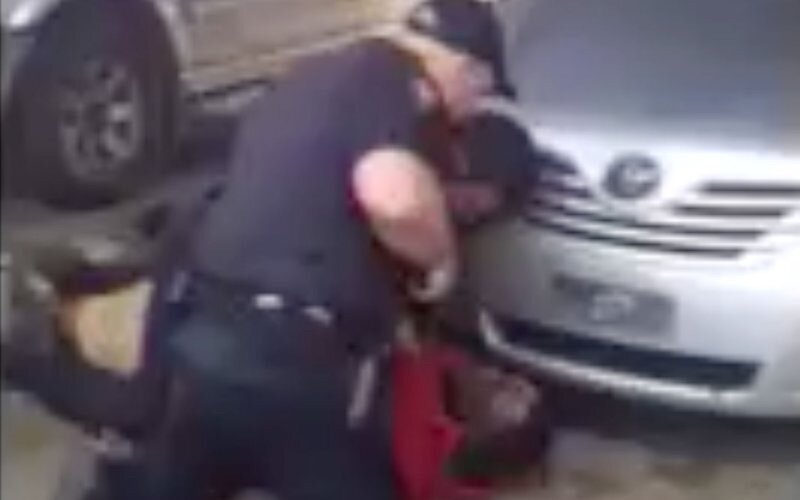
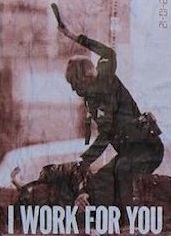
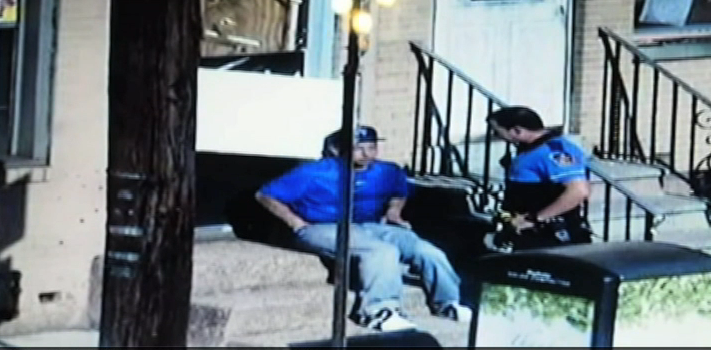
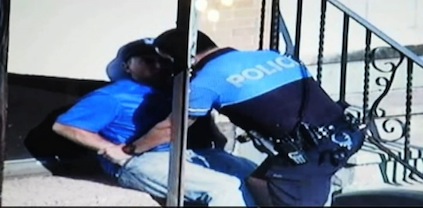
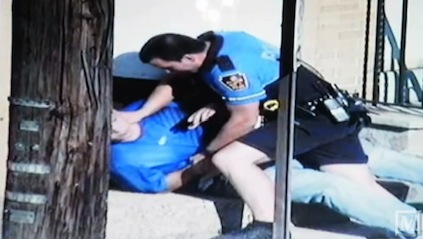
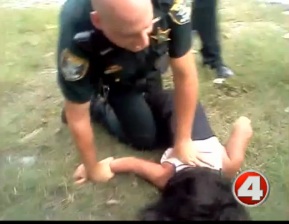
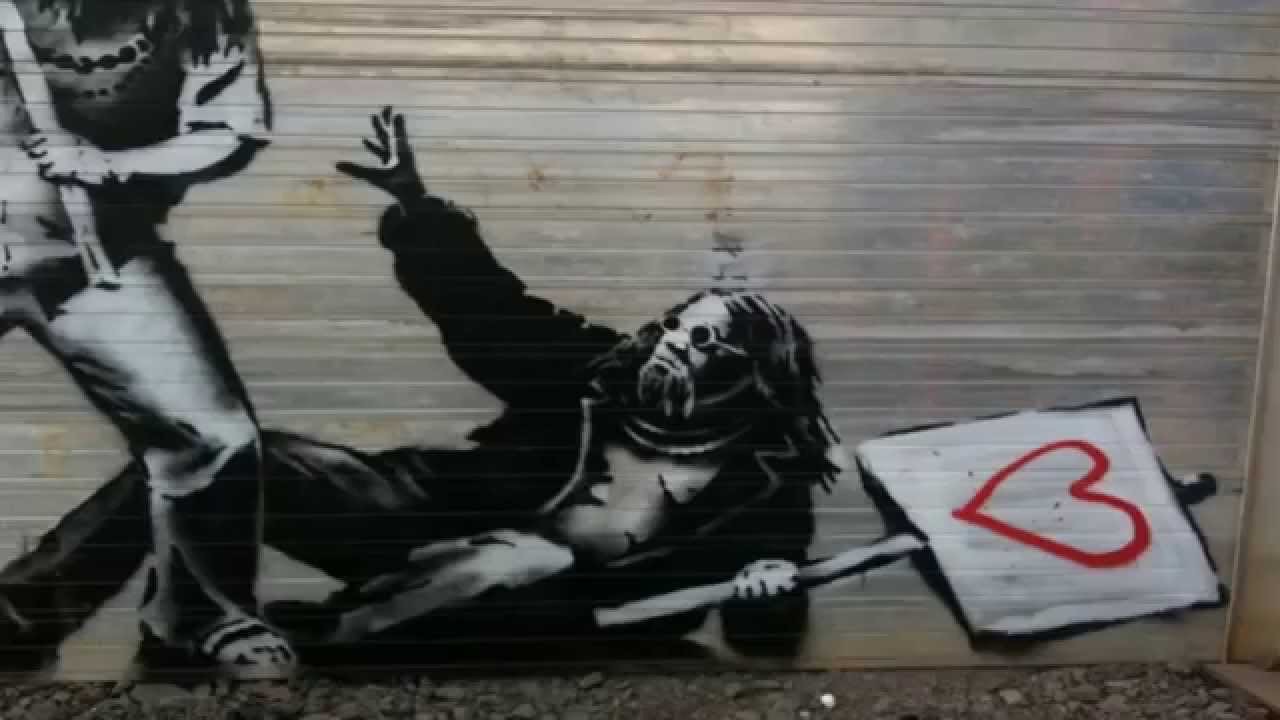
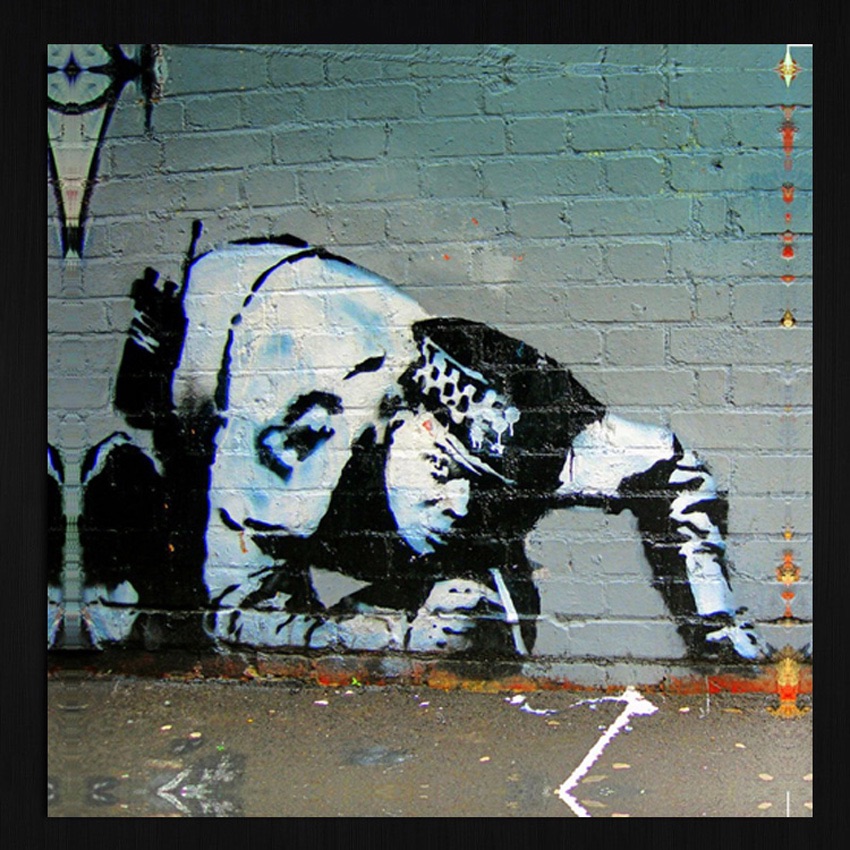
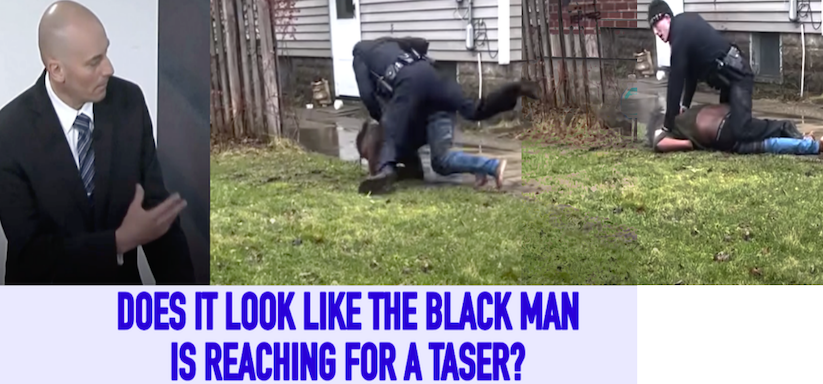
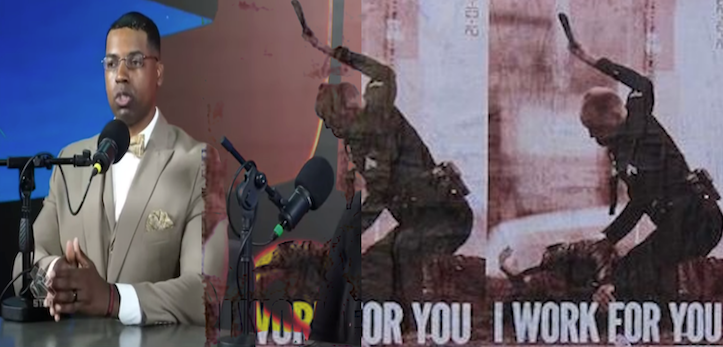
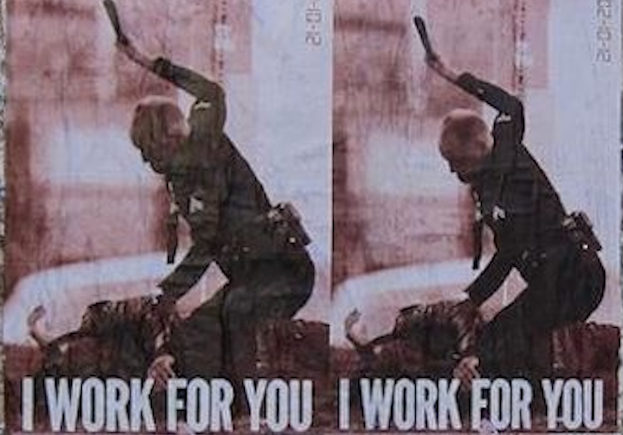
From [HERE] Jose Peroza-Benitez was asleep in his Pennsylvania apartment when the police broke through his door, executing a warrant for a drug raid. Startled, he fled. The officers went on to chase him through the neighborhood, into an abandoned building, and out a window. As Peroza-Benitez dangled from the ledge, one cop punched him in the head, allegedly causing him to fall to the concrete. Another officer then reportedly tased him as he lay on the ground.

Those cops—Kevin Haser of the Drug Enforcement Administration and Daniel White of Reading Police Department, respectively—were originally awarded qualified immunity, the legal doctrine that shields government officials from federal civil rights suits if the specific way they violated your constitutional rights has not yet found its way into a court precedent. In other words, a jury of Peroza-Benitez's peers could not decide if damages were appropriate for the surgeries he received to address a broken leg and arm injuries.

In April, a federal court categorically rejected that argument. It was already "clearly established," it said, that state actors may not beat an unarmed man hanging from a building and then tase him when he is unconscious.

"Here, Peroza-Benitez was unarmed, injured, covered in his own blood, and hanging from a second-story window by his hands, feet dangling, when [Criminal Investigator] Haser—knowing Peroza-Benitez to be unarmed—punched him 'repeatedly' in the head with a closed fist," wrote Circuit Judge Luis Felipe Restrepo of the U.S. Court of Appeals for the 3rd Circuit. Prior court rulings explicitly note that it is unconstitutional for police to "tase an individual who is positioned on an elevated surface at a height that carries with it a risk of serious injury or death, causing the individual to fall."

As a testament to how granular qualified immunity can be, Haser responded that he opted to punch the suspect instead of tasing the suspect. The court declined to indulge that distinction. But qualified immunity cases often turn on minute factual differences. Consider the group of prison guards who were originally awarded qualified immunity for locking a naked inmate in two filthy cells—one covered in "massive amounts" of human feces, the other with a sewage leak bubbling up on the floor—because the exact amount of time the man lived in those cells had not been etched out in pre-existing case law.

The 3rd Circuit similarly reversed Officer White's grant of qualified immunity. "There is a 'robust consensus of cases' that support the proposition that tasing a visibly unconscious person—who just fell over ten feet onto concrete—is a violation of that person's Fourth Amendment rights," noted Restrepo.

It is entirely possible that a jury will refuse to give Peroza-Benitez any damages whatsoever. There are disputes between the various officers' accounts and Peroza-Benitez's telling. Officer Michael Perkins, who was also on the scene, testified that the suspect "made a [lunging] motion like he was going to start running again" after he fell two stories, hitting a porch railing, and landing on the concrete stairwell. White says that Peroza-Benitez merely started to "sit forward." Peroza-Benitez says he was briefly knocked unconscious. All concede that he was "tased either immediately or almost immediately upon landing."

The important thing is that jurors will decide whether such force was justified. That's their role. It is not the role of a few bigwigs on the judiciary. The Founders "viewed citizen juries as indispensable to the civic life of a liberal democracy," Clark Neily, senior vice president for legal studies at the Cato Institute, told me last month. "The extent to which judges have almost completely marginalized [that], I think, is one of the most remarkable, and yet unremarked, developments of the modern judiciary." This time, the court agreed with the Founders' principle.

Rich Neuropeon Couple who Made Felony Threats to Murder Black Protesters by Pointing Guns at Them Get Misdemeanor Treatment from White Prosecutor: No Jail time, Minimal Fines and Retain Law Licenses

McCloskeys+human+resources.jpg

From [HERE] Mark and Patricia McCloskey agreed to give up the guns used in the 28 June confrontation in St Louis, Missouri. However, the wealthy neuropeons remain free purchase new guns.

The couple, both lawyers, made national news when footage of them went viral, launching them to a cameo at last year's Republican National Convention.

Mr McCloskey defended his reaction to what he called an "angry mob".

"I'd do it again," he said outside court on Thursday, US media report. "Any time the mob approaches me, I'll do what I can to put them in imminent threat of physical injury because that's what kept them from destroying my house and my family."

Mr McCloskey, 63, pleaded guilty to misdemeanour fourth-degree assault and was fined $750. His wife, 61, pleaded guilty to misdemeanour harassment and was fined $2,000.

Because the charges are misdemeanors, the personal injury lawyers can keep their law licences and continue to own firearms.

Judge David Mason accepted their guilty pleas, but rejected their request to donate Mr McCloskey's rifle in a fundraiser, US media said.

A grand jury had indicted the couple on felony charges, which would have sent them to jail if convicted. But special prosecutor Richard Callahan said in a statement he opted for misdemeanour charges for a series of factors including "the age and lack of a criminal record for the McCloskeys, the fact they initially called the police, and the fact that no-one was hurt and no shots were fired".

In April 2021, Mark McCloskey said in a brief interview with Politico that he was considering entering the 2022 Missouri Senate election as a Republican. On May 18, he announced his bid.

Mr Callahan described the demonstrators as a "racially mixed and peaceful group, including women and children", who had made a wrong turn on the way to their protest. There was no evidence the group was armed, he said.

Participants had marched past the couple's $1.15m mansion on their way to the home of then-St Louis Mayor Lyda Krewson.

The protest came weeks after George Floyd's death while in police custody in Minneapolis, Minnesota. His murder incited a wave of demonstrations worldwide, with participants demanding racial equality and an end to police brutality.

The McCloskeys have since branded themselves as conservative defenders against left-wing rioters.

In May, Mr McCloskey announced he would run as a Republican in a bid for a US Senate seat in Missouri.

'You Have the Right to a Secret Trial.' Since COVID Courts Have Excluded the Public by Holding Virtual, Criminal Hearings. A petition in VA Fed court asks the Masters for Access to its "Public" Trials

From [HERE] A new petition in Virginia federal court is seeking to gain video access to virtual proceedings, the latest effort to obtain access while courthouses remain under pandemic restrictions.

The petition, filed in the Eastern District of Virginia this week on behalf of reporter Aaron Cantú, asks that a general order issued last year by the court’s chief judge be changed “to allow non-parties such as himself reasonable visual access to criminal proceedings” run by video in the court. The legal challenge cites a First Amendment right of access to the proceedings.

“There is no doubt that the pandemic provides a compelling reason for remote courtrooms. It does not, however, provide a reason to exclude the public from watching what happens in those remote courtrooms, a practice that therefore violates the First Amendment,” the filing reads.

One of the petition’s drafters, Judith Miller of the University of Chicago Law School’s Federal Criminal Justice Clinic, said in an interview that while this filing was made in the context of the pandemic, it’s important to ensure that video access is granted in the future, particularly as some say they would like to see those virtual hearings remain an option once courthouses are fully open and functional.

Supreme Court Rules Cargill, Nestle Can’t Be Sued over Child Slavery on African Cocoa Farms.

From [HERE] and [HERE] The Supreme Court ruled Thursday that Nestlé USA and Cargill Inc. can’t be sued in U.S. courts for abuses allegedly committed in Ivory Coast, where plaintiffs accused the food-processing giants of obtaining cocoa from plantations that relied on the forced slave labor of children.

The court, in a decision by Justice Clarence Thomas, said the plaintiffs’ case didn’t have enough of a connection to the U.S. to proceed.

“Nearly all the conduct that they say aided and abetted forced labor—providing training, fertilizer, tools, and cash to overseas farms—occurred in Ivory Coast,” Justice Thomas wrote.

The decision was the latest in a series of cases curbing the reach of the Alien Tort Statute, a 1789 law authorizing foreign citizens to sue in federal court over violations of international law.

Justice Thomas said the plaintiffs were impermissibly seeking to apply that law beyond U.S. borders. The court’s central holding came on an 8-1 vote, though justices splintered on some of the finer points of the case.

According to the plaintiffs, children between the ages of 12 and 14 were trafficked from Mali to Ivory Coast, where they were forced to work up to 14 hours daily, six days a week. “They were not paid for their work and were given only scraps of food to eat,” plaintiffs’ lawyers alleged. The children “were beaten with whips and tree branches when the guards felt that they were not working quickly enough.”

Cargill and Nestlé didn’t operate the plantations themselves, but the lawsuits allege the companies relied on a supply chain they knew used the forced labor of children to produce cocoa at low prices.

The companies say they oppose exploitation of children, didn’t own the farms where the abuses allegedly occurred and aren’t responsible for mistreatment. They argued that under international law, only individuals could be held liable for violations, not corporations.

“Nestlé never engaged in the egregious child labor alleged in this suit, and we remain unwavering in our dedication to combatting child labor in the cocoa industry and to our ongoing work with partners in government, NGOs and industry to tackle this complex, global issue,” a company spokeswoman said.

“We do not tolerate the use of child labor in our operations or supply chains and we are working every day to prevent it,” Cargill said.

Paul Hoffman, the Hermosa Beach, Calif., lawyer who argued for the plaintiffs, said he would seek to amend the lawsuit to demonstrate the allegations are sufficiently connected to the U.S. and can proceed to trial. 

“Our claim is that the companies did more than engage in general corporate oversight from the U.S., so the decision leaves open the possibility that we can satisfy the court’s standard,” he said, adding that the ruling “allows human rights victims to continue to pursue remedies in U.S. courts” in some circumstances.

The high court previously has ruled that foreign corporations are immune from suit under the statute, in part because it found such liability could complicate diplomatic relations and expose American companies to similar legal actions overseas. The cocoa case, however, involved a Minneapolis-based company, Cargill, and the U.S. subsidiary of Switzerland-based Nestlé SA.

The case originally was filed in 2005 over alleged misconduct that began in the 1990s. At arguments in December, the plaintiffs’ lawyer said if the child-labor allegations had occurred since 2008, victims potentially could obtain damages under more recent legislation that targets human trafficking.

Louisiana governor signs bill eliminating jail time for possession of marijuana

From [HERE] Louisiana governor John Bel Edwards signed a new law on Tuesday that eliminates prison time for the possession of modest amounts of marijuana.

The new law is the latest move away from Louisiana’s traditionally strict stance on the drug. The bill makes the possession of 14 grams or less a misdemeanor in all cases and limits the fine for possession to $100 with no jail time. This is significantly smaller than the current Louisiana law, which imposes criminal penalties upon the first conviction of possession of 14 grams or less, a fine of up to $300, and imprisonment for 15 days.

The Louisiana Senate voted 20-17 to lift penalties for people charged with possession of marijuana for recreational use earlier this month. The bill was originally introduced by Rep. Cedric Glover.

Edwards, a Democrat who is often aligned with the state’s sheriffs and has long opposed legalizing marijuana, released a statement Tuesday following his signing of the bill:

This is not a decision I take lightly. In addition to carefully reviewing the bill, I also believe deeply that the state of Louisiana should no longer incarcerate people for minor legal infractions, especially those that are legal in many states, that can ruin lives and destroy families, as well as cost taxpayers greatly.

He noted that the bill passed Louisiana’s legislature with bipartisan support following a robust discussion of the toll of over-incarceration on the people of Louisiana. However, Edwards and other lawmakers backing the bill disputed that the legislation amounts to “decriminalizing” marijuana since those who violate the law can still be given penalties.

The National Conference of State Legislatures advises lawmakers around the US and defines decriminalization as making possession of small amounts of marijuana a civil infraction or the lowest class of misdemeanor, with no possibility of jail time.

This is the next step forward in the reform of Louisiana’s traditionally punitive criminal justice efforts. The new law will take effect on August 1.

Judges Orders California Authoritarians to Halt the Prolonged Detention of Inmates with Mental Illness

From [HERE] A California appellate panel has rejected the state’s policy of detaining individuals with psychiatric and intellectual disabilities in county jails — often for months or even years — while waiting for them to be declared competent to stand trial.

Thousands of such people are currently being held in jails across the state because they’ve been found incompetent to stand trial, yet have not received treatment which could enable them to do so. The ruling comes in response to a lawsuit filed in 2015 against the California Department of State Hospitals and Department of Developmental Services by the family members of county jail detainees.

“This case deals with people accused of crimes who are so severely mentally ill or disabled that a judge decided they cannot meaningfully participate in their own proceedings,” said ACLU attorney Michael Risher, in a telephone interview. “The judge suspends proceedings, meaning they don’t have the right to a trial, only to receive treatment, and that treatment occurs while in custody — in a jail or hospital.”

Under the law, individuals charged with a crime cannot be tried or sentenced if they’ve been found incompetent to stand trial after a mental health evaluation. After such a decision the trial process is suspended and the person is detained until they receive treatment and a subsequent evaluation shows their condition has sufficiently improved to carry on with proceedings. That’s the impetus behind this case — treatment for mentally unwell individuals detained while awaiting trial is taking far too long, according to the plaintiffs.

They argue that treatment is being delayed to an unreasonable degree, forcing mentally ill inmates to languish behind bars for months or longer before they’re transferred to a treatment facility — effectively denying their right to due process. Because state hospital beds are limited relative to the number of people who need them, the ACLU said treatment for these individuals should be allowed to occur in community treatment centers where space is more readily available.

According to the petition, California should stop delaying mental health treatment for people who remain locked away while awaiting care.

“Instead of being promptly admitted to DSH [Department of State Hospitals] or DDS [Department of Developmental Services], these defendants often remain in county jails for extended periods of time while awaiting transfer,” the plaintiffs say in their petition. “These delays have continued for many years, despite previous court orders and defendants’ own attempts to reduce them.”

Risher said the number of people considered incompetent to stand trial has been on the rise for a decade or longer and the state hasn’t kept pace by adding treatment beds and staff. He described a 1,600-person backlog of inmates awaiting care and said these people are sitting in jail for months at a time without treatment, often in segregated units — solitary confinement — because of their mental health status. [MORE]

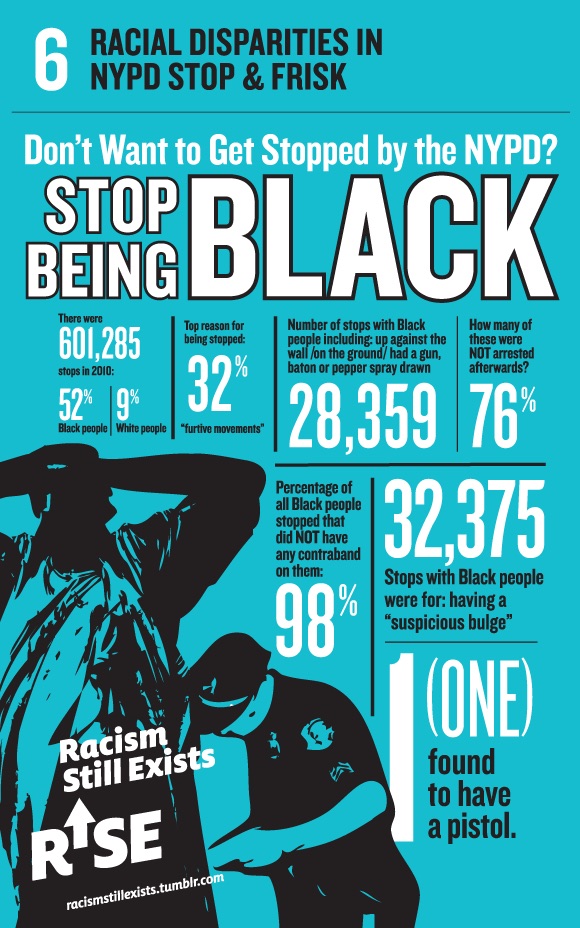
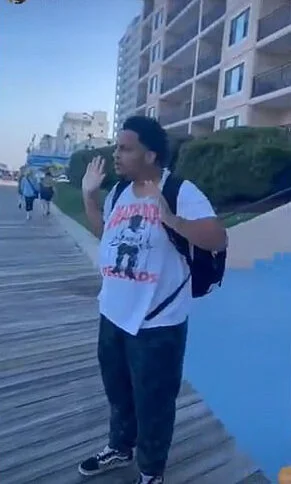
Violent Crime by Cops Against Blacks On the Rise: Video Shows 5 White Cops Tase and Remove a Surrendering Black Teen b/c He [was Present on the Ocean City Boardwalk] Ignored Commands to Stop Vaping

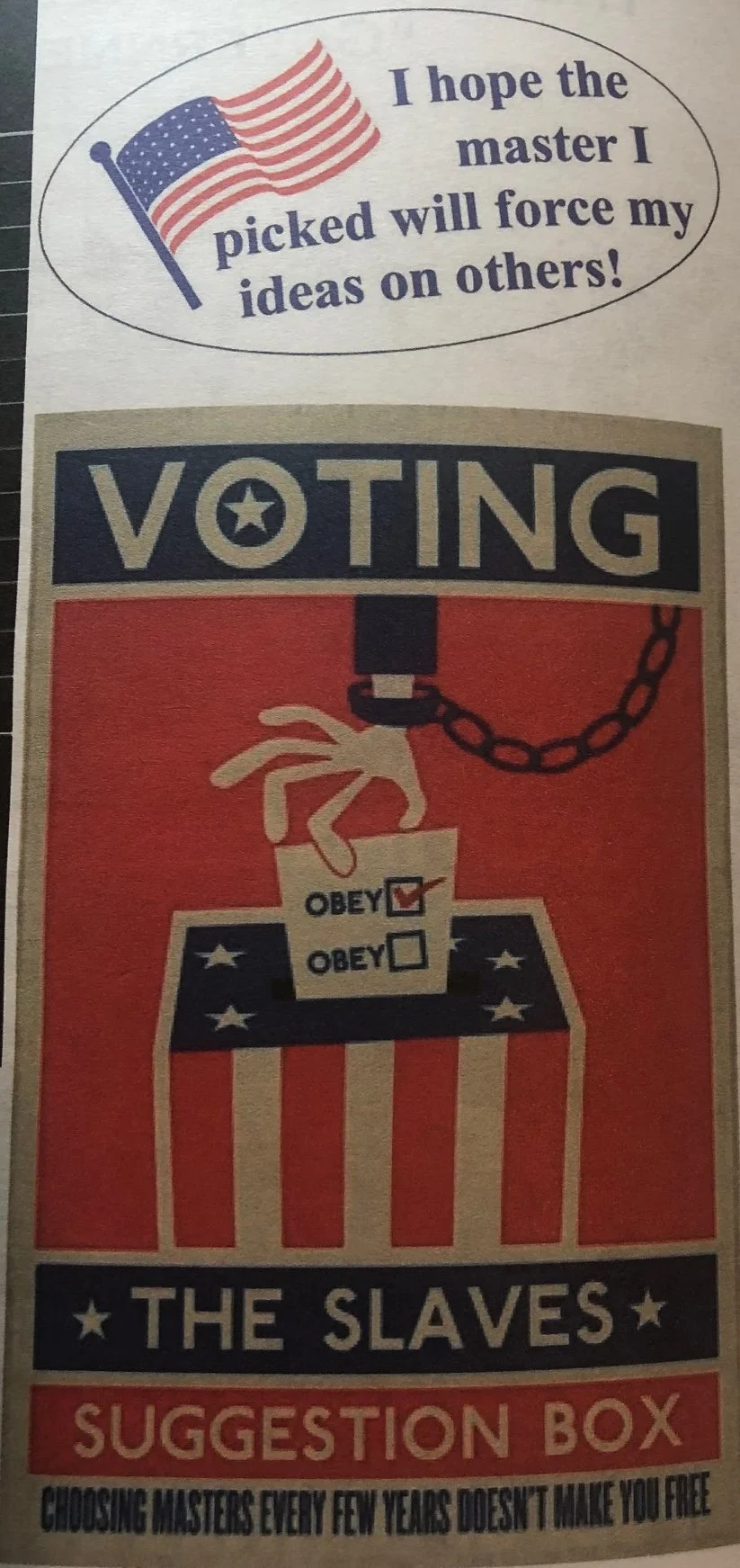
“Government is a coercive institution.” All laws are backed by the threat of force. MICHAEL HUEMER EXPLAINS, “AS THESE EXAMPLES ILLUSTRATE, COMMANDS ARE OFTEN ENFORCED WITH THREATS TO ISSUE FURTHER COMMANDS, YET THAT CANNOT BE ALL THERE IS TO IT. AT THE END OF THE CHAIN MUST COME A THREAT THAT THE VIOLATOR LITERALLY CANNOT DEFY. THE SYSTEM AS A WHOLE MUST BE ANCHORED BY A NON-VOLUNTARY INTERVENTION, A HARM THAT THE STATE CAN IMPOSE REGARDLESS OF THE INDIVIDUAL’S CHOICES.

“Government is a coercive institution.” All laws are backed by the threat of force. MICHAEL HUEMER EXPLAINS, “AS THESE EXAMPLES ILLUSTRATE, COMMANDS ARE OFTEN ENFORCED WITH THREATS TO ISSUE FURTHER COMMANDS, YET THAT CANNOT BE ALL THERE IS TO IT. AT THE END OF THE CHAIN MUST COME A THREAT THAT THE VIOLATOR LITERALLY CANNOT DEFY. THE SYSTEM AS A WHOLE MUST BE ANCHORED BY A NON-VOLUNTARY INTERVENTION, A HARM THAT THE STATE CAN IMPOSE REGARDLESS OF THE INDIVIDUAL’S CHOICES.

From [HERE] A black teenager was filmed being surrounded by five white police officers and tasered after he allegedly ignored a request to stop vaping on a Maryland boardwalk.

Brian Anderson, 19, was zapped with the device in Ocean City, Maryland, on Saturday, despite his apparent cooperation with the five officers surrounding him, and was filmed tumbling to the ground moments later.

Anderson, who was seen holding his hands up at the start of the clip, was struck by the taser as he reached for the strap of his backpack. One eyewitness claimed Anderson had been asked by police to remove the bag from his back, although that order was not captured on the video since shared online. 

Anderson was one of four teens arrested on Saturday after being stopped by cops about vaping on the beach resort's boardwalk. Ocean City Council has banned smoking and vaping on its boardwalk, and only allows people to do so on several designated areas of its beach. 

Police told the the teenagers, all from Harrisburg, Pennsylvania, that vaping was prohibited on the boardwalk, except in designated areas. 

The group walked away but police said they continued to vape.  

The viral clip, which has been viewed more than 1.9 million times on Twitter as of Monday, begins with Anderson standing standing a few feet away from officers with his hands up. 

An officer yells 'get down on the ground,' and Anderson appears to reach for the strap of his backpack but is instantly tasered by an officer and falls to the ground clutching his stomach in pain.  

The town of Ocean City said in a release that Anderson was arrested for failure to provide necessary identification for vaping. 

Police said Anderson resisted arrest and was charged with disorderly conduct, resistance and interference with an arrest, second-degree assault, and failure to provide proof of identity. He has since been released on his own recognizance, and has not commented on the arrest. 

Three other teens were arrested after 'a large crowd of people began to form around the officers,' including Kamere Day, 19, who was arrested for yelling profanities and approaching officers during Anderson's arrest, the release said. 

Jahtique Lewis, 18 was also arrested for allegedly pushing an officer in the chest while yelling profanities and trying to throw a bike at an officer and Khalil Warren, 19, was arrested for becoming disorderly after being warned that he was standing on private property, the release said. 

Additional footage captured Warren's arrest in front of a large crowd as several officers were filmed on top of the teen attempting to handcuff the teen. 

Judge Says TX Hospital's Requirement Making Employees Take COVID Shot or Get Fired is ‘Not Coercion but a Choice.’ Despite the Lack of FDA Approval Judge says the "Vaccine" is "Not Experimental"

ROBERT HIGGS EXPLAINS, “DIRECTING FEAR IN A SOCIETY IS TANTAMOUNT TO CONTROLLING THAT SOCIETY.” LARKEN ROSE STATES, “ALMOST ALL OPPRESSION VIA PROPAGANDA IS BASED UPON SCARING PEOPLE, AND THEN PRESENTING A FALSE CHOICE WHERE THE PEOPLE CAN CHOOSE EITHER TO DO WHAT YOU WANT THEM TO DO, OR FACE SOME UNKNOWN (OFTEN PURELY FICTIONAL) HORROR.” LYSANDER SPOONER EXPLAINS THAT ALL GOVERNMENTS RULE THROUGH AND CREATE LAWS THROUGH SOME FORM OF “EMERGENCY” OR CONSPIRACY.

ROBERT HIGGS EXPLAINS, “DIRECTING FEAR IN A SOCIETY IS TANTAMOUNT TO CONTROLLING THAT SOCIETY.” LARKEN ROSE STATES, “ALMOST ALL OPPRESSION VIA PROPAGANDA IS BASED UPON SCARING PEOPLE, AND THEN PRESENTING A FALSE CHOICE WHERE THE PEOPLE CAN CHOOSE EITHER TO DO WHAT YOU WANT THEM TO DO, OR FACE SOME UNKNOWN (OFTEN PURELY FICTIONAL) HORROR.” LYSANDER SPOONER EXPLAINS THAT ALL GOVERNMENTS RULE THROUGH AND CREATE LAWS THROUGH SOME FORM OF “EMERGENCY” OR CONSPIRACY.

From [HERE] and [HERE] A Texas hospital system’s mandatory COVID-19 vaccination policy for employees can stand after a federal judge on Saturday dismissed a closely watched lawsuit from workers refusing to get the shot.

Southern District of Texas Judge Lynn Hughes made his decision days after Houston Methodist Hospital suspended 178 workers for not getting vaccinated by a June 7 deadline.

The court’s pre-trial ruling was made without the benefit of receiving testimony or other actual evidence.

The hospital system’s policies were not coercion against staff, Hughes said. They were a choice the hospital system made “to keep staff, patients, and their families safer.”

The 117 suing workers, including plaintiff Jennifer Bridges, a nurse for almost seven years at the hospital system, had their own choices to make, the judge said. Bridges and other plaintiffs had every right to accept or refuse the vaccine. “If she refuses, she will simply need to work somewhere else,” the decision said.

Hughes wrote that employers could impose consequences for noncompliance on all sorts of rules, far beyond vaccination.

“If a worker refuses an assignment, changed office, earlier start time, or other directive, he may be properly fired. Every employment includes limits on the worker’s behavior in exchange for his remuneration. That is all part of the bargain.”

But Jared Woodfill, the lawyer for the suing workers, vowed to appeal the case all the way up to the Supreme Court. “This is just one battle in a larger war to protect the rights of employees … All of my clients continue to be committed to fighting this unjust policy.” [MORE]

The complaint states “None of the currently available experimental vaccines for COVID-19 has received final approval from the FDA. Rather, each one of the COVID-19 experimental vaccines is an unapproved product that has been granted EAU. The FDA refers to the COVID-19 experimental vaccine as “investigational products”, meaning they remain classified as experimental.“ It further explains:

It is undisputed that the vaccine being forced upon Plaintiffs is “unapproved”. Even though the FDA granted emergency use authorization for the Pfizer/BioNTech and Moderna vaccines in December 2020, the clinical trials the FDA will rely upon to ultimately decide whether to license these and other COVID-19 experimental vaccines are still underway and are designed to last for approximately two (2) years to collect adequate data to establish if these vaccines are safe and effective enough for the FDA to approve. The abbreviated timelines for the emergency use applications and authorizations means there is much the FDA does not know about these products even as it authorizes them for emergency use, including their effectiveness against infection, death, and transmission of SARS-CoV-2, the virus that is allegedly the cause of the COVID disease. Given the uncertainty about the COVID-19 experimental vaccines, the FDA requires that each dose of the experimental vaccine shall have a label that states that the product is an emergency use authorization, that the EAU is explicit that each is “an investigational vaccine not licensed for any indication” and that all “promotional material relating to the Covid-19 Vaccine clearly and conspicuously…state that this product has not been approved or licensed by the FDA, but has been authorized for emergency use by FDA”.

The complaint also explains that the COVID “vaccine” has caused an extraordinarily high number of reports of illness to be reported in the VAERS system which under normal circumstances would cause it from being pulled off the market. It states;

In 1990, the Vaccine Adverse Event Reporting Systems (“VAERS”) was established as a national early warning system to detect possible safety problems in U.S. licensed vaccines. VAERS is a passive reporting system, meaning it relies on individuals to voluntarily send in reports of their experiences to CDC and FDA. VAERS is useful in detecting unusual or unexpected patterns of adverse event reporting that might indicate a possible safety problem with a vaccine. This way, VAERS can provide CDC and FDA with valuable information that additional work and evaluation is necessary to further assess a possible safety concern.

There were 4,434 death reports and over 12,619 serious injuries reported to the CDC's VAERS database from COVID-19 vaccines through May 10, 2021. By comparison, from July 1, 1997, until December 31, 2013, VAERS received 666 adult death reports.3 The flu vaccines are linked to 20–30 death reports a year, according to Dr. Peter McCullough, and those 20–30 death reports come with considerably more vaccines administered. Arguably, if the experimental vaccine was any other vaccine or drug, it would already have been removed from the market. Usually, a new drug is withdrawn after 50 deaths, which is not typical because the FDA has a strict approval process. The COVID-19 vaccines have been exempted from the approval process, instead being temporarily "authorized" for emergency use.

Thirty-five hundred plus (3,500 +) reports is 70 times the normal threshold for pulling a drug from the market. Although this is raw data, previous VAERS studies have shown that only 1-10% of vaccine-related deaths are reported to VAERS —or less. The COVID vaccines are adding a year's worth of VAERS reports every week. In just four months, more adverse reports were added to the VAERS database than any single vaccine has had cumulatively over the past 31 years. This is clearly a safety signal, further studies need to be done and Plaintiffs should not be forced to participate in these dangerous trials as a condition for employment. [MORE]

[Mostly White] Landlords in NYC Lose Suit: Covid Eviction Ban Remains in Effect for Mostly Non-White Tenants

From [HERE] Citing a 1905 Supreme Court decision regarding smallpox vaccination, a federal judge held that public health eclipses individuals’ challenges to legislative acts, and denied an attempt from New York landlords to block the state’s eviction ban during the Covid-19 pandemic. 

U.S. District Judge Gary Brown consolidated the landlords’ motion for preliminary injunction with the merits of the case, ruling in favor of defendant Chief Administrative Judge Lawrence Marks and dismissing all other defendants — which included county sheriffs and other court officials — from the case. 

At the top of his ruling, Brown pulled an excerpt from Jacobson v. Massachusetts, a Supreme Court ruling from 1905 that held that requiring smallpox vaccination does not violate the due process rights of an individual.

“Whatever may be thought of the expediency of this statute, it cannot be affirmed to be, beyond question, in palpable conflict with the Constitution. Nor, in view of the methods employed to stamp out the disease of smallpox, can anyone confidently assert that the means prescribed by the state to that end has no real or substantial relation to the protection of the public health and the public safety,” reads the ruling, as quoted by Brown. 

In his 29-page order, Brown tossed out the plaintiffs’ allegations that the eviction moratorium is too vague, and that its requirement of landlords to provide tenants with a financial hardship declaration form constituted compelled speech

'Everyone pays their fair share and the richest Americans pay the most taxes?' Trove of Never-Before-Seen IRS Records Reveal that Wealthy, Elite White People Avoid Paying Income Tax

ProPublica has obtained a vast trove of Internal Revenue Service data on the tax returns of thousands of the nation’s wealthiest people, covering more than 15 years. The data provides an unprecedented look inside the financial lives of America’s titans, including Warren Buffett, Bill Gates, Rupert Murdoch and Mark Zuckerberg. It shows not just their income and taxes, but also their investments, stock trades, gambling winnings and even the results of audits.

Taken together, it demolishes the cornerstone myth of the American tax system: that everyone pays their fair share and the richest Americans pay the most. The IRS records show that the wealthiest can — perfectly legally — pay income taxes that are only a tiny fraction of the hundreds of millions, if not billions, their fortunes grow each year.

Many Americans live paycheck to paycheck, amassing little wealth and paying the federal government a percentage of their income that rises if they earn more. In recent years, the median American household earned about $70,000 annually and paid 14% in federal taxes. The highest income tax rate, 37%, kicked in this year, for couples, on earnings above $628,300.

The confidential tax records obtained by ProPublica show that the ultrarich effectively sidestep this system. [MORE]

The Wisconsin Institute for Law & Liberty, an Advocacy Group for Neuropeans, Convinces White Federal Judge to Halt Debt Relief Program for Non-White Farmers

Wisconsin Institute for Law & Liberty.jpg

From [HERE] A decision from a federal judge late Thursday put the brakes on a government program offering loan forgiveness only to farmers of color, which a lawsuit says is unconstitutionally discriminatory against white farmers.

As part of the American Rescue Plan Act signed in March, President Joe Biden’s administration rolled out a loan forgiveness program intended to provide billions of dollars in debt relief to socially disadvantaged farmers and ranchers, namely those who are Black, Hispanic or Latino, American Indian, Asian American or Pacific Islander.

The Wisconsin Institute for Law & Liberty, a conservative advocacy group also known as WILL, sued Biden’s Agriculture Secretary Tom Vilsack and Zach Ducheneaux, chief of the Farm Service Agency, in April on behalf of a group of white farmers claiming they are being unlawfully denied a government benefit solely due to the color of their skin.

white judge.jpg

The number of plaintiffs has grown to a dozen since the complaint was filed, including white farmers and ranchers from Wisconsin, Minnesota, South Dakota, Missouri, Ohio, Iowa, Arkansas, Oregon and Kentucky, who claim denying them the program’s benefits– including payment of up to 120% of a socially disadvantaged farmer’s debt– violates their constitutional rights. 

Among the plaintiffs are Joseph Schmitz, a first-time farmer of 50 acres of corn and soybeans in western Ohio with a direct loan from the FSA, and Adam Faust, a double-amputee who owns a dairy farm in Calumet County, Wisconsin, featuring 200 acres of land to grow feed for the farm’s 70 Holstein milking cows.

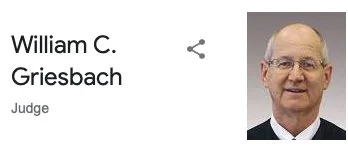
U.S. District Judge William Griesbach’s ruling released late Thursday is receptive to the white farmers’ argument, stating the Biden program lacks a compelling interest for its racial classifications based on vague assertions of discrimination against minority farmers and ranchers in the past. The judge said the temporary restraining order blocking the program is necessary to protect the white farmers from irreparable harm. [MORE]

Arizona Prepares to Carry Out Its Official Government Murders ["Executions"] with Cyanide Gas, the same Gas used by the Nazis in Holocaust Death Camps

From [HERE] Arizona reportedly has “refurbished” its gas chamber and has spent more than $2,000 to acquire ingredients to execute prisoners with cyanide gas, the same gas used by the Nazis to murder more than one million men, women, and children during the Holocaust. 

Records obtained by The Guardian show that the Arizona Department of Corrections Rehabilitation and Reentry purchased a solid brick of potassium cyanide in December for $1,530. The state also purchased supplies of additional ingredients for producing hydrogen cyanide gas, including sodium hydroxide pellets and sulfuric acid. Initially developed as an insecticide and known by the Nazis as “Zyklon B,” the gas was the signature method by which the Nazis carried out their genocide against European Jews, the Roma, and local populations at the Auschwitz-Birkenau, Majdanek, and other concentration camps and killed Soviet prisoners of war and anti-Nazi resistance fighters.

Executions in Arizona have been on hold since 2014, when the state botched the lethal-injection execution of Joseph Wood. As Arizona officials attempt to restart executions, they spent $1.5 million to obtain lethal injection drugs, even as the Department of Corrections faces a budget crisis.

In August, the state tested its gas chamber, built in 1949, to determine whether it can be used for executions. After initial tests found “slow drainage” and “overflowing,” corrections officials had the seals and gaskets replaced. Corrections staff then tested the chamber for airtightness by passing the flame of a candle slowly near the seals of the chamber. 

Arizona last used its gas chamber in 1999, for the execution of Walter LaGrand. Eleven people in five states were executed in the gas chamber since executions were permitted to resume in 1976. LaGrand’s was the last execution by lethal gas anywhere in the United States. The Tucson Citizen reported “agonizing choking and gasping” during the execution. “The witness room fell silent as a mist of gas rose, much like steam in a shower, and Walter LaGrand became enveloped in a cloud of cyanide vapor,” the Citizen reported. “He began coughing violently — three or four loud hacks — and made a gagging sound before falling forward.” LeGrand took 18 minutes to die.

“Despite Arizona's efforts to present their planned execution method as acceptable and reputable,” The Jerusalem Post reported, “the name Zyklon B is inextricably linked to the horrors of the past, when over a million Jews and others were murdered in Nazi gas chambers using the lethal gas between 1942 and 1945.” 

Death Penalty Information Center executive director Robert Dunham told The Guardian: “You have to wonder what Arizona was thinking in believing that in 2021 it is acceptable to execute people in a gas chamber with cyanide gas. Did they have anybody study the history of the Holocaust?”

GA Court Upholds ‘Uniquely High and Onerous’ Burden of Proof Beyond a Reasonable Doubt of Intellectual Disability to be Declared Ineligible for the Death Penalty [reserved for Mostly Blacks [58%]]

From [HERE] The Georgia Supreme Court has denied a constitutional challenge to the state’s statutory requirement that a capital defendant must prove beyond a reasonable doubt that he or she is intellectually disabled before being declared ineligible for the death penalty.

In an 8-1 ruling issued on June 1, 2021, the Georgia high court affirmed the conviction and death sentence imposed on Rodney Young. Young had argued that requiring a capital defendant to meet the beyond-a-reasonable-doubt standard — the harshest in the country — created an unacceptable risk that Georgia would execute individuals whose intellectual disability should protect them from capital punishment. 

Three justices issued a concurring opinion disassociating themselves from the reasoning of the lead opinion but agreeing with the outcome. One justice concurred only in the result. Justice Charles J. Bethel dissented.

Young’s lawyer, Brian Stull, from the ACLU Capital Punishment Project, called the Georgia court’s ruling “devastating.” 

In an email to the Associated Press, Stull said that “Georgia’s uniquely high and onerous burden means that people with intellectual disability will be executed.” Stull indicated that Young intended to seek review of the case in the U.S. Supreme Court to “ask it to correct the injustices coming out of Georgia once and for all.”

Since Georgia adopted its high burden of proof in 1988, only one of 379 capitally charged defendants tried before a jury has ever been found to be guilty but intellectually disabled. No Georgia jury has ever found a defendant charged with an intentional killing to be intellectually disabled.

Liar Philadelphia Cop Caught on Bodycam allegedly Deleting Black Man's Cell Phone Video of the Arrest

Phila cops lie and steal.jpg

From [HERE] A police officer in Philadelphia is facing legal action after allegedly deleting a suspect’s cell phone video of his arrest. According to TMZ, the arrest occurred back in March when officer Burnett noticed a pickup truck idling at a gas station for 10 to 15 minutes. After running the car’s plates, Burnett identified the driver as Jacob Giddings.

According to a police report, Giddings had an active warrant for his arrest for an assault charge, so Burnett and the other responding officers attempted to detain him. Police say that Giddings, who was sitting inside the car with another man, resisted arrest.

During Burnett’s body-worn camera video, which was released to the public on Wednesday (June 9), Giddings can be seen holding his phone up to the police officers and telling them that he is recording the incident. Burnett then forcibly removes Giddings from the car, during which the phone is dropped and a struggle can be heard.

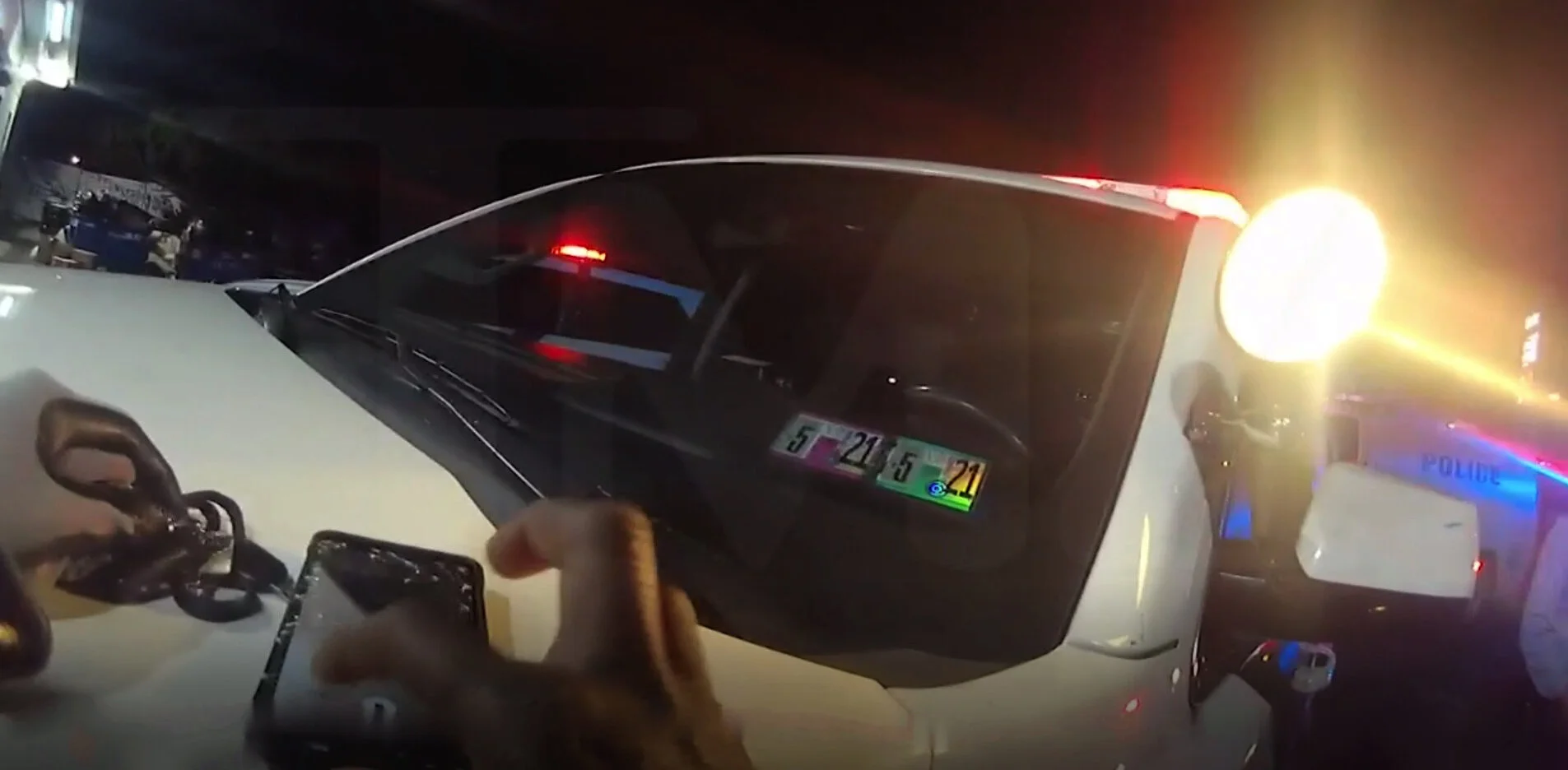
Later, Burnett is seen picking up Giddings’ phone and accessing its videos. Giddings says the video he recorded was deleted from his phone. The police report has no record of Giddings even taking the video, but the officer’s handling of the phone was caught on his body-worn camera. In the footage, Burnett later returns the phone to Giddings while he was sitting in the back of the cop car. Giddings asks Burnett, “Is my video still on there?” to which Burnett replies, “I don’t know.”

According to police, Giddings was found to have possession of marijuana during their search and he was arrested and charged with resisting arrest and drug possession. The man also suffered cuts to his wrists from the struggle and was later taken to a hospital for treatment.

Giddings has now hired a legal team and is suing the Philadelphia Police Department for excessive force and assault, tampering with evidence, false arrest and malicious prosecution. Giddings’ lawyer, Donte Mills of Mills &. Edwards LLP, was able to recover the deleted video of his arrest through Giddings’ iCloud account.

The Philadelphia Police Department said in a statement that they are investigating the accusations against Burnett. So far, TMZ reports that no disciplinary action has been taken.

Court Rules GA Cops who Wrongly Raided 78 Yr Old Black Man's House Can’t Be Sued. 'The rules of morality don't apply to Cops and their actions can only be judged by the law of the jungle standard'

STUPID GA COPS 23.jpg

NO REMEDY. A Police Officer’s Authority Comes from the People…. Yet No Person Could Have Possibly Delegated Superhuman Rights to Them.

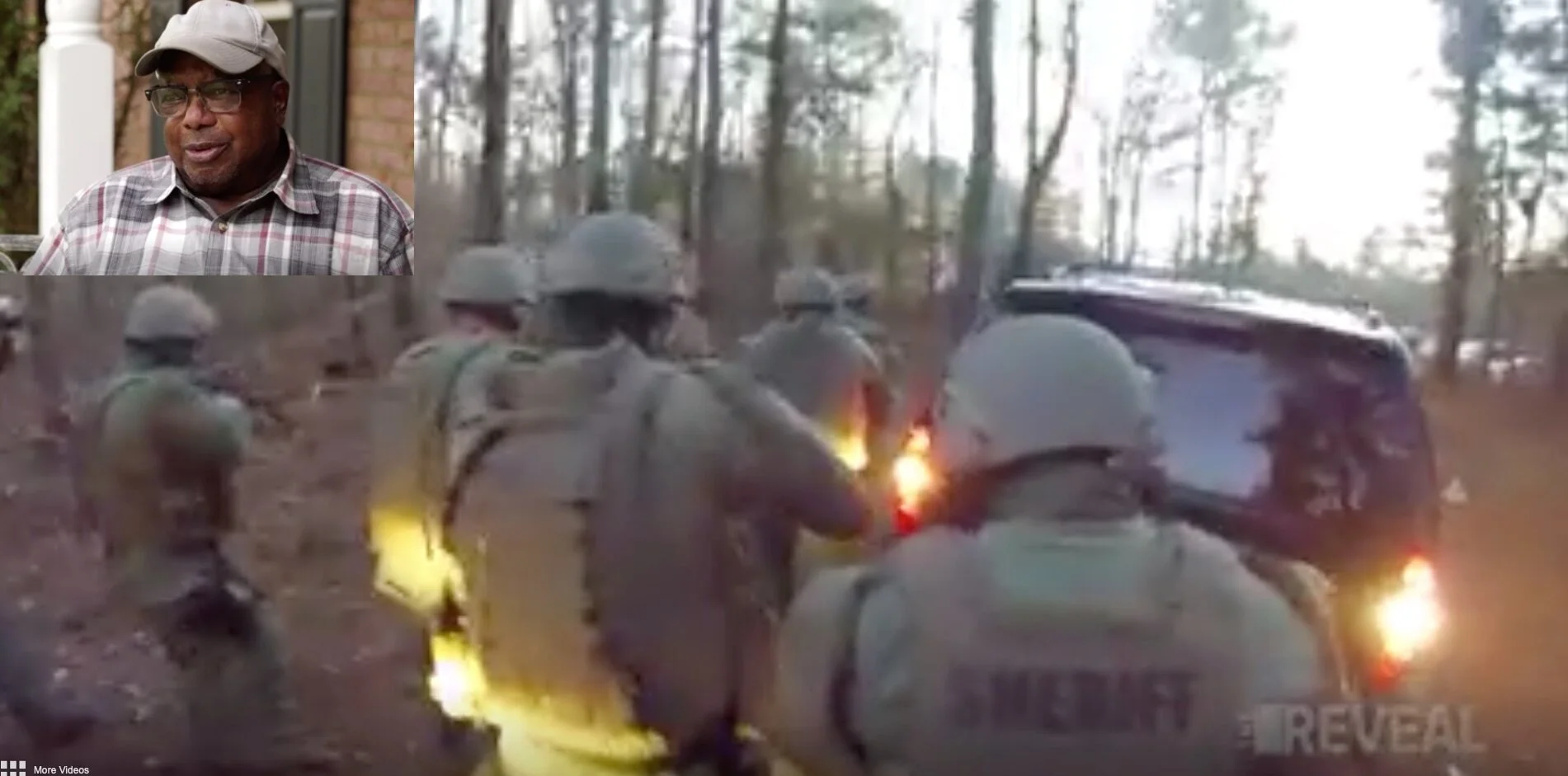
From [HERE] It was a police raid John Oliver called “almost cartoonishly idiotic.” Looking to apprehend a violent drug dealer at his home in McDonough, Georgia, more than two dozen officers executed a no-knock warrant in February 2018. Smashing the door open with a battering ram, before tossing a flash grenade inside, officers stormed in with guns drawn, and quickly subdued the home’s lone resident, forcing him down on the ground.     

But it wasn’t their man—police raided the wrong house. Instead, officers had just handcuffed Onree Norris, then a 78-year-old grandfather with heart trouble. At the time, Norris was simply watching TV in his bedroom when he heard a “thunderous sound:” Members from the Henry County Sheriff’s Office Special Response Team had just knocked down all three doors to his house. When Norris moved into his hallway, he was greeted by multiple officers “wearing military style gear pointing assault rifles at him,” who threw him to the floor.    

Until that day when police mistakenly broke down the doors to his house, Norris never had any trouble with the law. But since his next-door neighbor turned out to be a drug dealer, Norris was effectively punished for the police’s mistakes. 

Lambasting the raid as a “blatant constitutional violation,” Norris initially sued multiple officers as well as Capt. David Cody, who led the Henry SRT and exercised “overall tactical control” for the no-knock raid. But the other officers were soon shielded by qualified immunity, leaving the captain as the sole defendant. 

As Norris alleged in a complaint, Capt. Cody “did not check to make sure Henry SRT members were going to the correct address or otherwise perform adequate precautionary measures to ensure the search warrant was properly executed.” Although the captain did review the search warrant, he admitted he didn’t read it “all the way through,” and that he usually doesn't review the property's description prior to a raid. 

For instance, the no-knock warrant described the suspect living at 305 English Road, which had “off white siding” and “a black roof.” In contrast, Norris’ home at 303 English Road (which he had owned for more than half a century) is yellow with a grey roof. Yet despite those clear differences, footage from eight separate body cameras showed the officers all walking past the correct house and heading towards Norris’ home. 

Even when officers began raiding Norris’ home, Capt. Cody later testified he “wasn’t sure” this second house was actually their target and just assumed his subordinates “acquired information that justifiably led them to proceed to the second structure.” Those actions, Norris argued, “were not consistent with a reasonable effort to ascertain and identify the place intended to be searched.”

But last month, his civil rights lawsuit was blocked when the Eleventh Circuit U.S. Court of Appeals ruled that the captain was entitled to qualified immunity. Citing a 2019 ruling where the Eleventh Circuit upheld qualified immunity to a deputy who accidentally shot a 10-year-old while aiming for the family’s dog, the court noted that qualified immunity protects “all but the plainly incompetent or those who knowingly violate the law.”

With qualified immunity providing such a broad shield, Norris could only prevail if he showed that “Capt. Cody’s actions during the raid—not commanding his team to stop heading towards Norris’s home and then following his team into Norris’s home—violated the law clearly established” in previous decisions.

Because the team had “‘announced’ their presence with flash grenades,” they were “especially limited in their ability to respond,” the court noted, and “our precedent allows some latitude for such ‘honest mistakes...made by officers in the dangerous and difficult process of making arrests and executing search warrants.’” Although the Eleventh Circuit acknowledged that “the mistaken raid of Norris’ home was no doubt traumatic,” it nevertheless held that “Norris failed to meet his burden to show that Capt. Cody violated clearly established law.”

Yet back in 2016, the Eleventh Circuit did deny qualified immunity to a law enforcement officer who was accused of “unlawfully seizing and detaining [the residents] at gunpoint” after he “had entered their home by mistake; he was supposed to execute a search warrant two doors down.” In that decision, the court ruled that the officer violated “clearly established constitutional rights” by failing “to engage in reasonable efforts to avoid erroneously executing the search warrant.” 

Unfortunately for Norris, that 2016 decision was unpublished, meaning it's not technically binding, and in the Eleventh Circuit, “we look only to binding precedent to determine clearly established law.” Adding to the Kafkaesque absurdity, the ruling against Norris is also unpublished, meaning that in the Eleventh Circuit, it’s still not “clearly established” that raiding the wrong home at gunpoint is unconstitutional.

$4.5M Settlement in Alton Sterling Case: Black Man Murdered by Cops During Unlawful Arrest for Possessing a Gun They Never Saw in an Open Carry State, White 911 Caller, No Cops Charged

baton+rouge+murder.jpg

From [HERE] The family of Alton Sterling, a Black man who was shot and killed by a white police officer outside a convenience store in Baton Rouge, La., has reached a $4.5 million settlement with the city, nearly five years after his death, the family’s lawyers said.

The settlement, which came after the family had filed a lawsuit against Baton Rouge and others, “will allow the city to heal and provide a pathway for Mr. Sterling’s children to be provided for financially,” the lawyers said in a statement.

The announcement came after a state district court judge in East Baton Rouge Parish approved the settlement and closed the case in mid-May, The Advocate reported.

Mr. Sterling, 37, a father of five, was fatally shot on July 5, 2016, after two white Baton Rouge police officers, Blane Salamoni and Howie Lake II, responded to a 911 call by a white man that a Black man who was selling CDs outside a convenience store had brandished a gun and threatened someone. [MORE]

Two officers arrived and confronted him about 12:35 a.m.

In the cellphone video shot by a bystander Sterling was standing alone, his arms outstretched at his sides, when a police officer rushing Mr. Sterling onto the hood of the car and then tackling him to the ground. A second cop quickly joined and, moments later, Sterling lay bleeding to death from multiple gunshot wounds to the chest and back.

He did not fight. He made no threats.

Cellphone video recorded by a bystander shows an officer pushing Mr. Sterling onto the hood of a car and tackling him to the ground. Mr. Sterling is held to the pavement by two officers, and one appears to hold his gun above Mr. Sterling’s chest.

Someone on the video can be heard saying: “He’s got a gun! Gun!” An officer can be seen pulling his weapon. After some shouting, what sound like gunshots can be heard, and the camera shifts away, and there are more sounds that could be gunshots.

After the incident local officials refused to say definitively whether Sterling was armed. A state report later said that Mr. Lake had found a .38-caliber handgun in Mr. Sterling’s pocket after the shooting. However, the alleged gun, if it even existed, according to the police was not visible to them when they arrived or during the interaction.

Louisiana is an open carry state. Possession of a firearm without a permit is permissible under state law, by anyone who is at least 17 years of age legally able to possess a firearm under state and federal law.

Additionally, when police arrived Sterling was not selling cd’s and they did not see a gun. Prior to interacting with him the cops did not attempt to corroborate any details provided by the white 911 caller by communicating with the store owner or questioning Sterling or any other person present. When the cops arrived Sterling was no engaged in any crime. In other words, at the time of his arrest and seizure there was no reasonable articulable suspicion within the meaning of the so-called 4th Amendment. As such, the arrest was unlawful. The dependent media could give zero fucks about these imaginary rights.

The episode was partially captured on video. However, police confiscated the store’s surveillance footage that the store owner said would have captured every second of the violent death outside his store.

In early 2017, Trump’s Justice Department decided not to bring federal charges against Mr. Salamoni and Mr. Lake, and Louisiana’s attorney general [also white] announced almost a year later that the officers would not face state charges.

Several days after that, Mr. Salamoni, who had fired six shots at Mr. Sterling, was fired from the Baton Rouge Police Department, and Mr. Lake was suspended for three days.

After announcing those disciplinary actions, the Baton Rouge police released footage of Mr. Sterling’s arrest and his killing.

The body-camera video shows Mr. Salamoni repeatedly shouting profanities at Mr. Sterling, slamming him into a car, ordering Mr. Lake to use his Taser and threatening to shoot Mr. Sterling with a gun pointed at his head.

In September, the Baton Rouge Metro Council rejected a proposed $5 million settlement to resolve a lawsuit that Mr. Sterling’s children had filed against the city in 2017, which contended that the killing was part of a longstanding pattern of racism and excessive force within the Baton Rouge Police Department, The Advocatereported.

[In White Supremacy System Only Racists are Allowed to Weaponize 911 ] Latino Woman Sentenced for ‘Swatting’ Calls That Led to Deadly TX Police Raid of White Family's Home, Black Cops Face Charges

L to R in this courtroom illustration, Patricia Ann Garcia, 53; Ofc Steven Bryant; Ofc Gerald Goines; Nicole DeBorde; U.S. Magistrate Judge Dena Hanovice Palermo. [MORE]A BROWN PEOPLE WATCH. Similar to Nazi Germany, with regard to non-whites, especially Black people, racists function as an auxiliary police force. They are watching YOU. As recent episodes demonstrate If Anything you do makes them feel uncomfortable they will call the cops or they may dial 911 for pure genocidal amusement, SEE Tamir Rice or alton sterling. RACISTS USE THE SYSTEM OF AUTHORITY TO ABUSE NON-WHITE PEOPLE. WHITES ONLY.

L to R in this courtroom illustration, Patricia Ann Garcia, 53; Ofc Steven Bryant; Ofc Gerald Goines; Nicole DeBorde; U.S. Magistrate Judge Dena Hanovice Palermo. [MORE]

A BROWN PEOPLE WATCH. Similar to Nazi Germany, with regard to non-whites, especially Black people, racists function as an auxiliary police force. They are watching YOU. As recent episodes demonstrate If Anything you do makes them feel uncomfortable they will call the cops or they may dial 911 for pure genocidal amusement, SEE Tamir Rice or alton sterling. RACISTS USE THE SYSTEM OF AUTHORITY TO ABUSE NON-WHITE PEOPLE. WHITES ONLY.

From [HERE] A woman whose false statements in 911 calls led Houston police to fatally shoot her neighbors in a raid was sentenced Tuesday to 40 months in federal prison.

Houston police started investigating Dennis Tuttle, 59, and his wife Rhogena Nicholas, 58, after their neighbor, Patricia Ann Garcia, called 911 three times on Jan. 8, 2019, and pleaded for police to come get her fictitious daughter “Melissa” out of the couple’s home.

Garcia, 54, told the 911 operator the couple were heroin dealers, and she could see them messing with her daughter through their home’s windows.

She also claimed they had a machine gun and would not answer their door if police knocked.

“She wanted officers to barge into her neighbors’ home with their guns drawn to take her daughter out, her daughter who did not exist, who was not there,” federal prosecutor Alamdar Hamdani said Tuesday in Garcia’s sentencing hearing.

“On the night of Jan. 8, 2019, when she dialed 911 she intended to use those three numbers as a weapon,” Hamdani added.

He urged U.S. District Judge George Hanks to sentence Garcia to 48 months, an upward variance from sentencing guidelines that called for Garcia to receive 10 to 16 months based on her criminal history, the circumstances of her crime and her guilty plea.

Garcia has been detained in a federal prison in downtown Houston since December after her bond was revoked, which occurred after she hit a car while driving under the influence and tested positive for cocaine.

Garcia’s attorney, chief federal public defender Marjorie A. Meyers, focused on Garcia’s long-term struggles with mental illness and substance abuse.

She urged Hanks to sentence Garcia to home confinement where her family could help her with these problems and she could care for her elderly mother.

Meyers said Garcia had a protracted dispute with Nicholas, so intense that they often argued on their neighborhood street.

Garcia dialed 911 amid a drug-infused haze, Meyers said. The defense attorney said the government had requested an upward variance based on the tragic events that happened 20 days after Garcia made the calls.

“Ms. Garcia is not responsible for what happened. What happened was some rogue and corrupt police officers created false information, executed a search warrant and killed her neighbors,” Meyers said.

Garcia’s statements led Houston police to open an investigation that culminated with them barging into the couple’s home on Jan. 28, 2019, with a no-knock warrant.

Several officers opened fire, exchanging gunshots with Tuttle, a Navy veteran.

They hit Tuttle and Nicholas multiple times, killing them, and even killed their dog with a shotgun blast, according to court records. Four officers were shot in the chaos.

The raid has tarnished the reputation of the Houston Police Department, revealing deep dysfunction in an HPD narcotics squad whose leader, now retired Officer Gerald Goines, 56, is facing state murder and federal civil rights charges after investigations by HPD, local prosecutors and the FBI reportedly revealed he had obtained the warrant by lying in an affidavit he had witnessed a confidential informant buy heroin from a man at the couple’s home.

In addition to Goines, 11 retired and current Houston police have been indicted in the fallout from the raid.

Garcia was only civilian to be charged over the raid. A federal grand jury indicted her in November 2019 for false information and hoaxes.

She made a short statement during Tuesday’s hearing conducted via videoconference software.

“When I made the false phone calls to 911 … I wasn’t in my right mind,” she said. “I made a bad decision. I’m sorry for it. I never meant for anyone to die the way they did. I’m so sorry for my 911 telephone call, my false phone call that I made, your honor. That’s it.”

But her apology fell flat with Hanks.

“I don’t believe that what you did was just a thoughtless act, I think it was very callous and I think it was a very sophisticated attempt to use 911 as a weapon,” the judge said. “It didn’t happen that day that the neighbors were killed and injured, but there’s no question in my mind, Ms. Garcia, that you wanted something bad to happen to them.”

Hanks said what spoke most tellingly of Garcia’s intentions was she told the 911 operator her neighbors would not answer their door for police.

“If you didn’t intend for harm to come to your neighbors as a result of this event you would have called in and said, ‘They’re parking in my driveway,’ or ‘They’re harming my cat,’ or ‘They’re trespassing on my property,’” he said.

The judge also agreed with prosecutors, who described Garcia’s crime as a “classic case of swatting,” that her sentence should deter others from this type of conduct.

The Texas Legislature just passed a bill increasing the penalty for swatting — placing fake emergency calls intended to trigger an aggressive police response — to a Class A misdemeanor, punishable by up to one year in jail. It is awaiting Governor Greg Abbott’s signature. The penalty increases to a third-degree felony, with a maximum 10-year state prison sentence, if a person is seriously injured or killed as a result of the hoax call.

 “I don’t believe you are truly remorseful for what you’ve done,” Hanks told Garcia.

He sentenced her to 40 months in federal prison, followed by three years of supervised release, and ordered her to undergo drug and alcohol counseling.

While the first criminal trial for the law enforcement defendants involved in the raid is not scheduled to start until this fall, retired HPD officer Steven Bryant, 47, pleaded guilty June 1 to a federal records tampering charge and his sentencing is set for Aug. 24.

Bryant, who retired from HPD two months after the raid, is reportedly cooperating with prosecutors in their cases against the other defendants and is expected to receive a federal sentence of no more than four years, but he is also facing state records tampering charges.

In the federal indictment, Bryant was accused of lying in an offense report supplement that he had helped Goines with Goines’ investigation of Tuttles and Nicholas the day before the raid.

The slain couple’s families also filed federal civil rights lawsuits, which have been consolidated, against the city of Houston, former HPD Chief Art Acevedo and the narcotics squad officers involved in the raid.