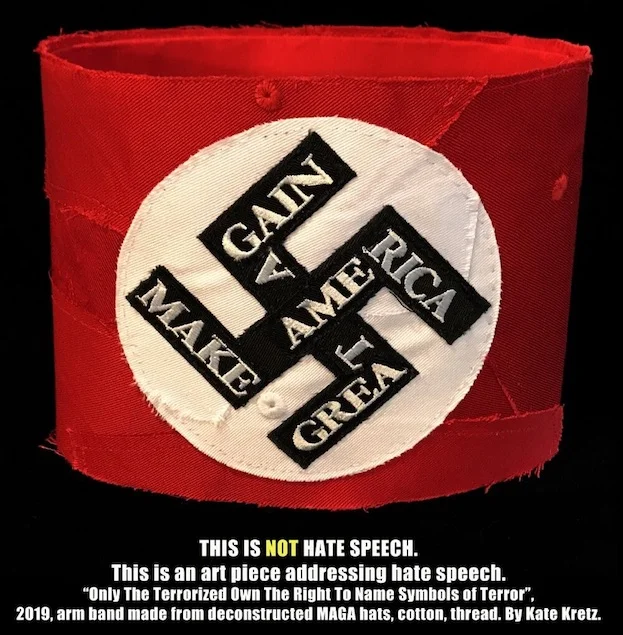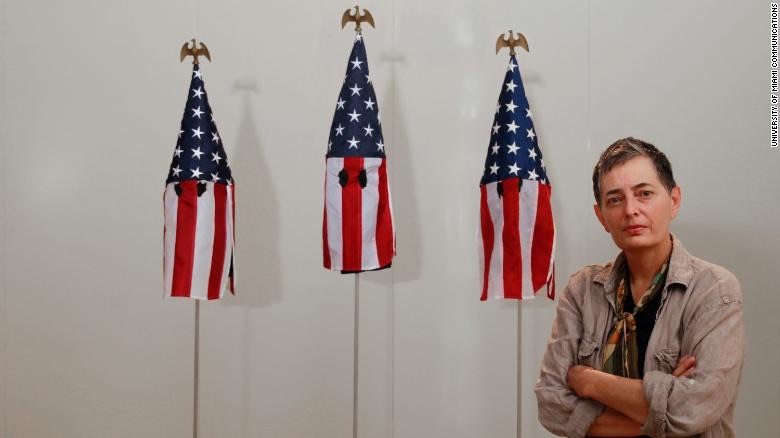
Facebook Bans Political Artist for Posting an Image of a Sculpture Depicting MAGA "Hate Hats" as KKK Hoods

hate hat s 2.jpg

From [MintPress] Facebook has a longstanding tradition of stifling dissenting and alternative voices, including those of journalists. Now, artists’ careers are being hurt by the strongarm of the social media behemoth.

Earlier this month, artist Kate Kretz — who employs a multitude of techniques, including silverpoint, wood burning, drawing, painting, embroidery and sculpture — had her account disabled for posting images of her latest work.

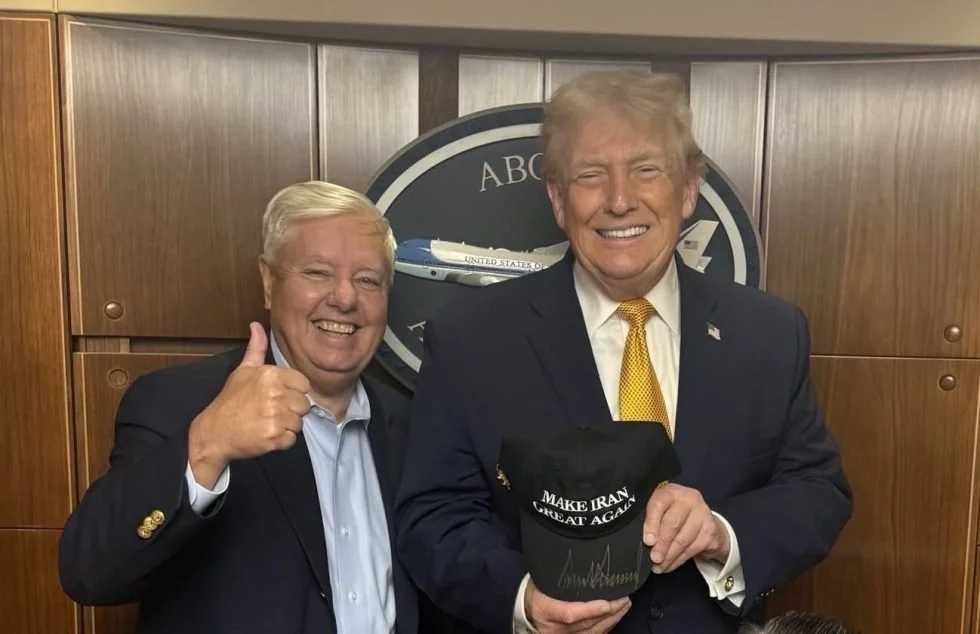
The offending image was of her recent piece, entitled “Hate Hat,” which resembles the hoods made infamous by the Ku Klux Klan. It’s red and made out of “Make America Great Again” hats (knockoffs, she insists), and features the slogan above the eyes. The provocative display is a clear dig at President Donald Trump, meant to highlight his bigotry.

Kretz’s work wasn’t always political, she says. It wasn’t until eight years ago, when she had a child, that she began to think about the world her daughter would grow up in. She writes:

My practice is now devoted to calling out injustices against disparate parts of our community, investigating overlaps to suggest that, although the victims may change, the perpetrators are often the same. I have named the ongoing series ‘#bullyculture,’ because I believe that the U.S. cultivates aggression and entitlement in a myriad of ways, both overt and subtle.”


Privatizing the public square

The implications of Kretz’s ban from Facebook are many. The First Amendment protects freedom of expression in public. But Facebook and other social media companies have formed monopolies over the world’s most traveled avenues for dialogue. Indeed, the public square has become privatized, and there is little recourse for those silenced as a result.

Kretz’s article on the removal of her Facebook page is worth reading in its entirety: she hits on many issues relating not just to the tech giant but also to the precarious position of artists under capitalism. “All but the top one percent of artists are struggling,” she writes, continuing:

Social media has been a tremendous help in this area: I can create a new work, post it, get instant feedback, and often, within a few weeks or months, get offers to exhibit it. While a few hundred to a few thousand people might see my art ‘in real life’ during the course of an exhibition, a strong, well-photographed image placed on social media can reach ten times as many eyes through multiple ‘shares.’”

An image Kretz altered for Facebook after her first one was removed.

The ease of using Facebook to promote her work has allowed her to balance her passion with a teaching job and mothering of a child. Beyond now losing the ability to share her work, she has also been robbed of an extensive network of supporters she had cultivated over the years. She writes:

My Facebook archive, more extensive than a scrapbook, contains a decade of my artistic creations, exhibitions, reviews, and people’s responses to them, as well as articles and references that have fueled the content of my work, and the shared work of artists I admire. A third of my career history is now owned by someone else and is being withheld from me, the content provider. I feel invisible, like I have been ‘disappeared’ in some nightmarish dystopian novel.”

Regarding the idea of appealing her ban, she notes, “Facebook is an impenetrable fortress, completely disempowering to any user who feels they have been wronged.”
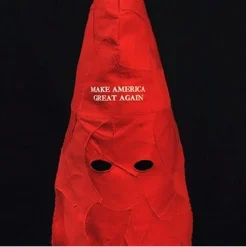
kkk hate hat.jpg

 Workarounds to Kafkaesque censorship

Despite the blow to her business, Kretz argues that the real issue is “much bigger” and highlights how Facebook’s community standards have been weaponized against well-meaning people. She notes that a “Dyke March” was canceled on the platform because the term was considered a slur.

There is also the instance of a Facebook event page to coordinate a counter-protest to a demonstration of white supremacists in Washington, celebrating the anniversary of activist Heather Hyer’s murder by neo-Nazi James Fields. The page was shut down days before the event because of supposed Russian infiltration.

For her part, Kretz urges her readers not to self-censor in the face of a Kafkaesque censorship regime. “Instead, find creative workarounds for sharing it.”

For this reason, MintPress News is active on Minds.com, an open-source social-media platform “for internet freedom.”
NYPD Loses Legal Fight to Prevent Public Release of Body Camera Footage without a Court Order or Cop Consent. Cops Argued Footage is a “personnel record"

From [JD Supra] A new decision from a New York appeals court could make it easier for members of the public to obtain footage from police body cameras. 

Background:  In this case, In re Patrolman’s Benevolent Association of the City of New York v. Bill DeBlasio, et al., (2019 NY Slip Op 03265), the union representing the members of the New York City Police Department challenged the decision of City leaders to release body worn camera footage without a court order or without the applicable officer’s consent. The union had argued that the City was prohibited from releasing the footage because it was a “personnel record,” used to evaluate officers, and protected from public disclosure under N.Y. Civil Rights Law Section 50-a.

New York’s Appellate Division, First Department disagreed, concluding that body worn camera footage was not primarily intended to act as a personnel record or tool to evaluate officers, but rather was intended to promote “transparency, accountability and public trust building,” which are goals of the body worn camera footage program.

The Court further noted that, while supervisors may sometimes be required to review camera footage for the purpose of evaluating performance, “…the footage being released here is not primarily generated for, nor used in connection with, any pending disciplinary or promotional processes.”

Takeaway: Although this case does not involve a request for police body camera footage made pursuant to the Freedom of Information Law (“FOIL”), it has the potential to affect FOIL requests. In particular, local municipalities that do not want to release police body camera footage may now have a tougher time withholding it on the basis that it is a “personnel record” prohibited from release under New York law. However, this does not mean the footage will now be released upon request. There are other exceptions to disclosure under FOIL, including an exception for certain law enforcement records. Municipalities will likely cite this exception as a basis for withholding the footage, although, depending on the nature of the footage, they may be required to release it if and when a related criminal investigation or trial has concluded.

Mostly White School District in NY (Lockport) will be the First to Use Facial-Recognition System
From [HERE] Until the New York State Department of Education stepped in to stop the bad press from spreading, the Lockport (New York) City School District announced that it would become the first public school in the country to fire up a facial-recognition system that would scan its students, staff, and faculty. The district’s eight schools are scheduled to start using the facial-recognition system when the new school year begins in September.
Local media reported that Lockport City School District Superintendent Michelle Bradley announced that she planned to start the “initial implementation phase” of the policy in a few days.

Additional details were provided by the Lockport Union-Sun and Journal:

This will involve testing the facial and object recognition system to make any necessary adjustments. District officials will be looking at camera angles and lighting and doing training.

In addition, district officials will engage in conversations with local law enforcement to coordinate responses in the event the system detects an issue that requires the issuance of an alert.

“We’ll just work through those things,” Bradley said. 

Did you catch that? The superintendent of the country’s first public school to use facial recognition technology to surveil the students and teachers told the media that if any problems crop up the administration will “work through” them. Work through them.

The story in the Union-Sun and Journal recounts how the school district afforded the technology:

The cameras and software suite were installed this past September, according to Bradley. Old cameras were replaced and new ones were added.

The district used $1.4 million of the $4.2 million allocated to it through New York’s Smart Schools Bond Act to install one of the first facial and object security surveillance systems in an American school. The district’s system will rely on the Aegis software suite, created by Canadian-based SN Technologies.

In other words, taxpayers are footing the bill for the privilege of putting students and teachers under the never-blinking eye of some faceless (pun intended) Canadian corporation with access to a “database of individuals.”

I wonder if Superintendent Bradley could inform concerned parents where the database comes from, whose face is stored on the database, how the faces got there, who sells the database to Aegis, or, most importantly, how she plans to make the end-run around the Fourth Amendment.

Putting off the constitutional questions for a moment, it seems an ill-chosen time for a public school to install and implement a facial-recognition system when that technology is under scrutiny all over the country and the databases that make the devices functional have been shown to be stocked full of photos taken from government services without the consent or even knowledge of the individual whose image is stored on the servers.

BuzzFeed News reported on the opposition to the district’s disturbing announcement:

After Lockport’s initial announcement, the New York Civil Liberties Union investigated the effort and wrote letters to the New York State Education Department, asking it to intervene and block the project. “This is opening the floodgates,“ Stefanie Coyle, education counsel for NYCLU, told BuzzFeed News in an interview. “San Francisco banned this tech, and it’s this major city closest to all the people who understand this tech the best. Why in the world would we want this to come to New York, and in a place where there are children?”

Meanwhile, New York State Assembly Member Monica Wallace has introduced a bill that, if passed, would force Lockport to stop the use of facial recognition for a year while the State Education Department further studied the tech.

A few months ago, I reported on the rapid rise of facial recognition technology deployment in school districts around the country. As published by The New American in October 2018:

RealNetworks provides its facial-recognition technology to schools free of charge in order to help make the country’s schools safer.

The handbook has six policy sections: notice, consent, security, retention, transparency, and management. It includes information intended to assuage any potential concerns about privacy, and assures administrators, parents, and teachers that the purported security benefits delivered by the cameras and the facial-recognition software they use far outweighs any second thoughts about the children’s rights.

“Facial recognition is a new technology for schools. Parents, teachers, and students have an interest in balancing privacy with security so we wanted to offer an introductory guide for schools to develop policies that meet all their needs,” Mike Vance, senior director of product management at RealNetworks, writes. “Through our early partnerships with schools and school districts we’ve developed this set of key best practices for creating safer and more secure K-12 campuses. This guide delivers that knowledge to the public, for free.”

While I certainly don’t claim the ability to see into the future, part of that prior article hit the bullseye. SAFR, by the way, is a competitor of Aegis in the facial-recognition technology market.

In this brave new world in which we live, I imagine most school district superintendents or school board bureaucrats will sense nothing eerie in the following paragraph promoting the power of SAFR:

“SAFR from RealNetworks is highly accurate facial recognition software powered by artificial intelligence. It works with existing IP cameras and readily available hardware to match faces in real-time. Schools can stay focused and better analyze potential threats such as expelled students, and those who pose a threat from within and outside the school.”

You read that right, Mom and Dad. Soon, if your cash-strapped local public school can come up with enough funding to buy surveillance cameras, then RealNetworks will happily send some software that will not only keep the kids under the close eye of administrators, but will also positively identify their faces and upload them to a database for future reference. You know, in case little Johnny ever gets in trouble.

Constitutionally, public schools have for decades been classified as “state actors,” that is to say, the restrictions of the Bill of Rights, including the Fourth Amendment, apply to them. 

The Fourth Amendment of the U.S. Constitution guarantees that “The right of the people to be secure in their persons, houses, papers, and effects, against unreasonable searches and seizures, shall not be violated, and no Warrants shall issue, but upon probable cause, supported by Oath or affirmation, and particularly describing the place to be searched, and the persons or things to be seized.” [MORE]

Students 4th Amendment "Rights" in Public Fool System Basically Non-Existent: Considerations When Implementing Randomized Drug Dog Searches in Schools

From [JD Supra] One of our favorite sources for Franczek email alerts is our readers, and we recently received a question from a Twitter follower about the legal considerations related to randomized dog searched in public schools. We all know from Law & Order™ that the Fourth Amendment of the United States Constitution protects individuals from “unreasonable” searches and seizures by the police, but we also know that student rights are more limited in the school context. How does this intersection of rights play out with canine searches in schools?

The Illinois School Code allows schools to use trained canines to search student lockers and other school property. The Illinois School Code states that schools may search lockers, desks, parking lots, and other school property and equipment owned or controlled by the school for illegal drugs, weapons, or other illegal or dangerous substances or materials, including searches conducted through the use of specially trained dogs. Moreover, the School Code says that, if a dog sniff of school property produces evidence that a student is violating the law or a school rule, the school may seize the evidence and turn it over to the police. Finally, the School Code warns students that they have no reasonable expectation of privacy in school property such as lockers, desks, and parking lots, or in personal belongings left in such property.

Although this School Code authority seems to settle the question, canine searches and searches conducted after a canine alerts must still be constitutional under the Illinois and United States Constitutions. A student may argue that a dog sniff or post-alert search of his or her person or belongings is unreasonable under the Fourth Amendment, for instance, because there was no individualized suspicion that the student engaged in illegal conduct before the search.

There is a two-step test for determining the reasonableness of a search conducted by a school official:

  1. Is the search justified in its inception—meaning that there is a reasonable suspicion that a crime is being committed or that the search is needed to enforce school policy?

  2. Is the search reasonable in its scope?

Neither the Illinois Supreme Court nor the United States Supreme Court has specifically addressed the constitutionality of random dog sniffs or post-alert searches in the school setting. At least one case in the Federal Court of Appeals for the Seventh Circuit, which has jurisdiction over Illinois, has addressed the issue head on. It determined that a dog search of students in a classroom and the searches of a student after a dog alerted on the student did not violate the Fourth Amendment.

In the Seventh Circuit case and at least one case from another jurisdiction, the court was persuaded that a dog sniff was constitutional because there was evidence of a recent increase in the use of drugs among students at the school preceding the dog sniff. Case law from other jurisdictions suggests, however, that a search of school property when students are not present is different from the search of student’s person. This suggests that so long as students’ persons are not searched, there need not be evidence of recent increased drug use or possession by the student body. Because this theory is untested in any court with jurisdiction over Illinois, the most conservative approach would be to conduct dog sniffs of school property only with reasonable evidence of increased drug use or possession among the general student population. However, case law from other jurisdictions suggests that dog sniffs of school property may not violate the Fourth Amendment when students are not present.

There are a myriad of other questions that come up in this area: Who can carry out dog sniffs for a school? Can a school be put on lock-down to conduct dog sniffs and post-alert searches? What notice, if any, must—or should—be given before searches are conducted? Given the complexity and individualized nature of this area of law, it is prudent to involve legal counsel when determining whether to employ random searches at your school or district.

PA Court says Cops Cannot Stop & Frisk on the Mere Belief that You Unlawfully Possess a Concealed Gun [in a concealed carry state]. There Must be Other Facts of Criminality

From [4thAmend] Officer’s belief of possession of a concealed firearm is not reasonable suspicion of unlawful use of a firearm. Prior case law from 1991 is disapproved. Commonwealth v. Hicks, 2019 Pa. LEXIS 3064 (May 31, 2019):

Since 1991, in circumstances where a police officer encounters a person carrying a concealed firearm, our Superior Court has applied the inverse of this bedrock rule. Specifically, in Commonwealth v. Robinson, 600 A.2d 957 (Pa. Super. 1991), the Superior Court held that the “possession of a concealed firearm by an individual in public is sufficient to create a reasonable suspicion that the individual may be dangerous, such that an officer can approach the individual and briefly detain him in order to investigate whether the person is properly licensed.” Id. at 959 (hereinafter, the “Robinson rule”). In the instant case, the Superior Court applied the Robinson rule to deem lawful the seizure of an individual based solely upon his possession of a concealed handgun, even though he was licensed in Pennsylvania to carry a firearm in such a manner.

We granted allowance of appeal in order to consider the viability of the Robinson rule. Because we conclude that the rule contravenes the requirements of the Terry doctrine, and thus subverts the fundamental protections of the Fourth Amendment, we overrule Robinson and its progeny. The Superior Court’s decision in the instant case having descended from Robinson’s erroneous proposition of law, and there being no other lawful basis for the seizure at issue, we reverse the order of the Superior Court.

. . .

Under Pennsylvania law, there can be no doubt that a properly licensed individual who carries a concealed firearm in public engages in lawful conduct. Indeed, millions of people lawfully engage in this conduct on a daily basis, both within this Commonwealth and across the nation. The Pennsylvania State Police reports that, in Pennsylvania, 237,344 licenses to carry firearms were issued in 2015; 300,565 were issued in 2016; and 290,958 were issued in 2017.

. . .

Conclusion

Although our discussion of the arguments and legal principles has been extensive, the question presented ultimately involves a straightforward application of Terry. A police officer in the field naturally relies upon his or her common sense when assessing criminal activity. When many people are licensed to do something, and violate no law by doing that thing, common sense dictates that the police officer cannot assume that any given person doing it is breaking the law. Absent some other circumstances giving rise to a suspicion of criminality, a seizure upon that basis alone is unreasonable.

In the United States of America, it is not a trivial matter to be detained under the color of state authority. Although the “stop and frisk” is a commonplace and essential law enforcement practice, it nonetheless is a significant intrusion upon citizen liberty, and it carries with it as well a risk of danger to both the police officer and the suspect. As this Court previously has noted: “Unnecessary police intervention, by definition, produces the possibility of conflict where none need exist.” Hawkins, 692 A.2d at 1071 (plurality).

A police officer is trained to assess people and situations for danger. An officer responding to a dispatch such as the one in this case is capable of responding in a manner not amounting to a seizure by observing the suspect and the circumstances, by determining whether anyone appears to be in danger or whether a crime appears to be occurring, and by interviewing witnesses about any crimes that may have occurred before the officer’s arrival. See Jackson, 698 A.2d at 575 (reasoning that, where the available information does not give rise to reasonable suspicion, “the police must investigate further by means not constituting a search and seizure.”). Such activities preserve peace, law, and order, and do so without depriving anyone of his freedom unless there is cause to do so.

This is not a “special needs” situation, or a seizure “carried out pursuant to a plan embodying explicit, neutral limitations on the conduct of individual officers” so as to “assure that an individual’s reasonable expectation of privacy is not subject to arbitrary invasions solely at the unfettered discretion of officers in the field.” Brown, 443 U.S. at 51. This is the targeting of an individual, forcibly seizing and disarming him at gunpoint, removing him from a car and handcuffing him, solely to ascertain whether he might be committing a crime.

Undoubtedly aware of the vast number of citizens licensed to carry firearms, police officers surely will not find anything otherwise suspicious about many of the particular individuals who fall within the Robinson rule’s sweep. But with no other criterion beyond the fact of an individual’s possession of a concealed firearm necessary to justify a seizure, the Robinson rule allows a police officer to base the decision to detain a particular individual upon an “inchoate and unparticularized suspicion or ‘hunch'” that the individual is unlicensed and therefore engaged in wrongdoing. Terry, 392 U.S. at 27. This reflects precisely the “kind of standardless and unconstrained discretion,” Prouse, 440 U.S. at 661, that lends itself to “arbitrary invasions solely at the unfettered discretion of officers in the field.” Brown, 443 U.S. at 51. The result is an unjustifiable risk of disparate enforcement on the basis of an individual’s appearance alone, while the rights of others go unquestioned.

Crime and violence are ever-present threats in society, and it can be tempting to look to the government to provide protection from “dangerous” people with constant vigilance. However, the protections of the Fourth Amendment remain an essential bulwark against the overreaches and abuses of governmental authority over all individuals. Notwithstanding the dangers posed by the few, we must remain wary of the diminution of the core liberties that define our republic, even when the curtailment of individual liberty appears to serve an interest as paramount as public safety. “Experience should teach us to be most on our guard to protect liberty when the government’s purposes are beneficent. Men born to freedom are naturally alert to repel invasion of their liberty by evil-minded rulers. The greatest dangers to liberty lurk in insidious encroachment by men of zeal, well-meaning but without understanding.” Olmstead v. United States, 277 U.S. 438, 479 (1928) (Brandeis, J., dissenting).

In light of all of the foregoing, it has become clear that the Superior Court patently has erred in concluding that the “possession of a concealed firearm by an individual in public is sufficient to create a reasonable suspicion that the individual may be dangerous, such that an officer can approach the individual and briefly detain him in order to investigate whether the person is properly licensed.” Robinson, 600 A.2d at 959. This holding facially contravenes established law as set forth in Terry and its progeny, demands no suspicion of criminal activity—let alone individualized suspicion—and countenances a sweeping and unjustified expansion of the authority of law enforcement to seize persons upon the basis of conduct that, standing alone, an officer cannot reasonably suspect to be criminal. Indeed, the Robinson rule does not contemplate a Terry stop at all, but rather a wholly distinct species of police intrusion, untethered from the law upon which it ostensibly is premised, and ultimately lacking any justification in the basic principles of the Fourth Amendment.

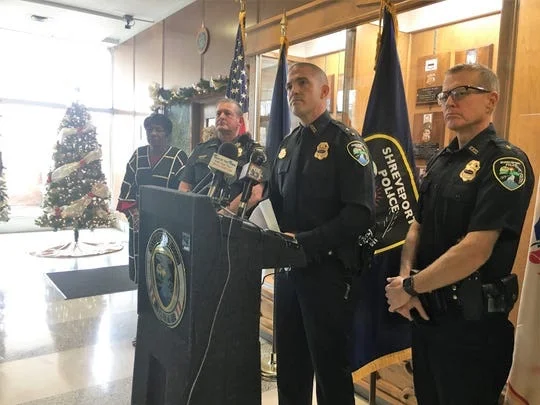
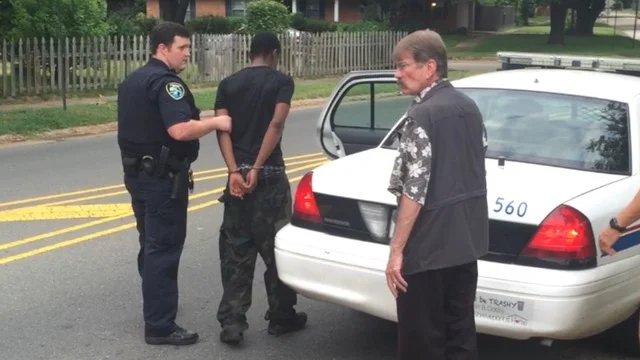
Data Shows Shreveport Cops are Using “Sagging Pants" Law to Target Black Men, who make up 96% of all such Arrests

shreveport cops 2.jpg

From [HERE] Black men made up 96 percent of the 726 arrests for sagging in Shreveport since 2007, according to statistics provided by the Shreveport Police Department.

Since the law against wearing pants below the waistline passed 12 years ago, a total of 699 black men were arrested for sagging, while 12 white men were arrested.

Adding 13 black women to the number of black men arrested made a total of 712 black people out of 726 arrests. The total number of white people arrested was 13, including one woman and 12 men. Black people made up 98 percent of arrests for wearing pants below the waist line.

Tuesday, City Councilwoman LeVette Fuller proposed to abolish the law prohibiting the public wearing of pants below the waist, exposing the skin or undergarments. At least three national news outlets reported on the proposal in connection with the death of Anthony Childs that occurred during an officer-involved shooting.

According to ordinance 50-167 sponsored by Calvin Lester, violators of the law can be cited and summoned to court, but the legislation was passed with an amendment. The amendment specified that violation of the law "shall itself not be grounds for an arrest or for a full search of the persons cited." 

shreveport cops 1.jpg

"Since 2007, 726 individuals have been issued a summons or have been taken into custody for violating City Ordinance 50-167," Public Information Officer Christina Curtis wrote in an email to The Times on May 22.

Curtis also sent The Times a data set labeled "Arrests for Violation of City Ordinance 50-167" and the bottom of the data set had an explanation that said, "Some individuals received a summons and some were taken into custody."

The Times asked Curtis about the amendment to the ordinance that said violation of the law "shall itself not be grounds for an arrest." Curtis confirmed she didn't know whether any violators had been taken into custody only for sagging.

"We don't believe anyone was booked directly into the city jail solely for sagging. We have to read through 726 reports to know that for sure," she said.

Anyone who violates the sagging law can be issued a fine not to exceed $100 and up to one eight-hour day picking up trash or refuse, or performing other court-approved community service activities. For the second offense, a person can be issued a fine up to $150 and two days of community service. 

The Caddo Parish Commission passed an identical ordinance that banned saggy pants parish-wide in 2012. The ban applies to unincorporated areas and rural areas because Shreveport already has its own ordinance that covers the city. 

“You’re Telling Me to Turn My Car Off So You Can Shoot Me." Black Man says Disobeying the Orders of a Racist Suspect Cop Saved His Life = the Robotic Application of Dogma to Reality May Get You Killed

Ed Truit.jpg

DOGMA IS A BITCH.’ Many victims of racism, civil rights advocates, true believers and attorneys preach that you must always comply with cops and provide instructions on exactly what to say and what magical legal phrases to recite. But there can be no set plans for dealing with a racist cop draped in the authority of the state. It’s like making a plan to deal with falling out of a tree; the moment is too quick and you must be able to respond, not react to it. You never know who are dealing with in the street. If you are indeed dealing with a psychopathic racist cop it would be stupid to expect him to treat you humanely. Automatic obedient compliance with his incriminating questions and orders would be mindless complicity with racism/white supremacy and your own destruction. The robotic [without awareness] application of codes or rules or “instructions on what to believe and how to believe it” or dogma to the actual reality of a dynamic, living situation can get you killed in these streets, but you are “free” to delude yourself otherwise. Mr. Truit, below, appears to understand this. FUNKTIONARY explains, “Dogma is the bug (fatal flaw) and true believers are the replicating viruses that propagate and distort the internal model of the nature of reality directly experienced within nondual consciousness.

arkansas cop ready to murder.jpg

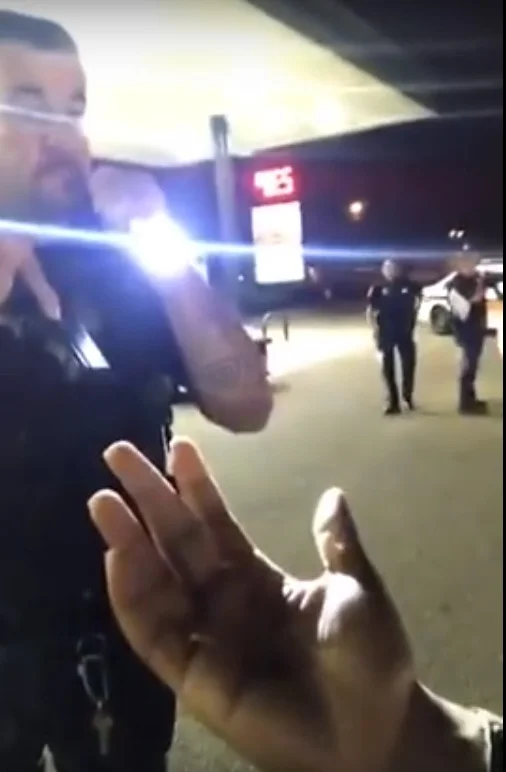
"If I would have complied, I would have got killed. He Was Trying to Shoot Me." From [HERE] With his weapon cocked to the side, the white Arkansas police officer repeatedly gives Ed Truitt a simple command: "shut your car off."

An apprehensive Truitt, using his left hand to live-stream the early Sunday encounter on Facebook, begins to move his right arm.

"He's got a gun!" the officer yells before repeating the last word. "Gun!"

"Where? My hand's in the air!" Truitt replies, panning the camera to his empty hand. "Come shut the car off, I ain't moving my hands. He's trying to shoot me."

Video of the incident, which took place outside a convenience store in the eastern Arkansas city of Helena-West Helena, has garnered thousands of views online and raised questions about the officer's intentions. For some, Truitt's experience illustrated the painstaking steps people of color feel they must take to survive run-ins with law enforcement.

"Given the history of these types of videos, I heard 'gun' and I flinched," said Phillip Atiba Goff, whose advocacy group, Center for Policing Equity, promotes police transparency and accountability. "I thought I knew what was going to happen next."

Truitt argues he survived by ignoring the officer's instructions, telling WREG that he "played it safe" by keeping his hands visible and refusing to move.

"[The officer] was like, 'That's a failure to comply,'" Truitt told the Memphis, Tennessee-based CBS affiliate. "But if I would have complied, I would have got killed."

COP ARTIST {Many cops are sophisticated, masterful liars who are taught how to testify and create persuasive, detailed police reports. Mixing actual facts with nonsense sounds & looks real in court and white judges, jurors and prosecutors are predisposed to believe anything foul they say about Black victims. Such cop-artists also now know how to perform when they are aware their bodycam is rolling. In the video above It appeared the white cop-artist was attempting to create a false narrative for the body camera audience; making statements similar to “don’t make me have fear for my safety” or “stop resisting” in order to manufacture evidence in order to justify a violent confrontation with a Black man. We have seen this pattern of emerging video behavior for the past few years, most recently in Colorado and Sacramento. Here, the white Arkansas cop said, ‘my camera is on too.’ As explained by Pastor Jedediah Brown ‘police have learned what to say when they want to get away with excessive force and malicious policing.’]


Reached Wednesday, he referred questions to his attorney, who did not return multiple requests for comment.

Helena-West Helena police told WREG the convenience store's parking lot was a hotbed of criminal activity. Police are seen in the background of the video talking with others at the scene.

According to Truitt, several police officers arrived Sunday morning and ordered everyone to clear out, causing another car to block him in. In the video, the officer claims Truitt didn't leave the premises when asked. In an apparent change of course, he then alleges Truitt had "come back."

"I'm not going to shoot you, but you're not going to move those hands," the officer says.

"My hands in the air," Truitt replies. "You're telling me to shut my car off so you can shoot me. C'mon now."

As the video circulated on Twitter and Instagram, where it was reposted by comedian D.L. Hughley and others with large followings, commenters accused the officer of looking for reasons to shoot Truitt. Others questioned why the officer involved, who has not been named by the department, would yell out "gun" when Truitt's hands were shown to be empty.

Helena-West Helena Police Chief James Smith, who did not return multiple requests for comment from The Washington Post, told WREG that officers found a rifle inside the vehicle. Truitt appears to say in the video the weapon is registered in his name. Under Arkansas law, rifles do not require registration.

Body camera footage published by the network Wednesday shows police holding a rifle after placing Truitt in handcuffs. Truitt has indicated the gun was not easily accessible from where he sat in the vehicle.

Smith said the department was working to determine if the officer responded properly. The chief sought the facts, he said, including whether the officer felt "imminent danger" before pulling out his weapon.

"We don't want this to be a racial thing," he added. "We want to make sure this officer did the right thing and that he is accountable for his actions."

Goff said it's important to note the officer's finger was not placed on the trigger during the encounter, and that he remained calm after initially reacting to the rifle. He attempted to explain the reactions of those who may think the officer responded with appropriate urgency after spotting the weapon, and others who see an armed policeman needlessly escalating the situation.

"Hero cop or hero bystander? Ridiculous citizens or unnecessarily goonish officer?" Goff said. "Very quickly, these become characters that are written in historical stereotypes. That's part of the toxins in how we handle race and law enforcement today."

Since 2015, The Washington Post has kept a database of fatal officer-involved shootings in the United States, which has shown that black men are shot at disproportionately high rates.

In 2017, the Minnesota police officer who fatally shot Philando Castile as he sat in his vehicle was acquitted on all charges. A year prior, the officer had opened fire on Castile within seven seconds of learning the man had a weapon in the car. That incident - the aftermath of which was posted to Facebook Live by Castile's girlfriend - sparked protests across the country.

The woman said Castile was simply reaching for his gun permit and driver's license.

For many discussing Truitt on social media, he was the clear hero. They commended his demeanor as he stared down the barrel of a police officer's gun.

"Way to keep your cool, brother. You didn't get emotional," one woman commented on his Facebook video. "That takes you off your game. You stayed rational."

According to WREG, Truitt was arrested for loitering and disregarding an official order. Police also told the network Truitt was charged with having a gun in his vehicle. The Post was unable to confirm any charges late Wednesday.

In the video's waning moments the officer is seen forcibly removing Truitt from the car, sending the phone he recorded with tumbling to the ground. Grateful to be alive, Truitt said he has no regrets about how he handled the interaction.

"What I did saved my life," he told WREG. "That's why I'm here talking to y'all. If not, y'all would be covering a story about how I got shot."

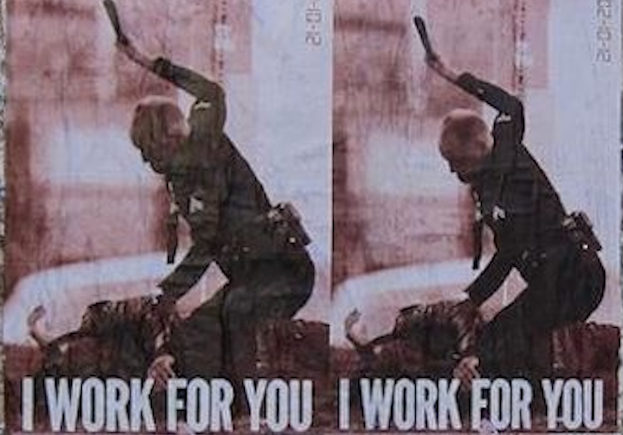
White DeKalb County Cop Finally Indicted for Aggravated Assault After Repeatedly Striking Black Woman w/Baton on the Floor of a Store as Black People Looked On

“Black People What Y'all Gon' Do?” JUST WATCH WHILE COPS DO THIS SHIT TO YOUR WOMAN OR YOUR MOTHER? LARKEN ROSE EXPLAINS the belief in “authority” makes people hesitate to get involved in a conflict WITH COPS, not just out of fear but out of a deep …

“Black People What Y'all Gon' Do?” JUST WATCH WHILE COPS DO THIS SHIT TO YOUR WOMAN OR YOUR MOTHER? LARKEN ROSE EXPLAINS the belief in “authority” makes people hesitate to get involved in a conflict WITH COPS, not just out of fear but out of a deep psychological aversion to going against “authority.”

From [HERE] and [HERE] A white cop initially cleared in the brutal assault of a Black homeless woman inside an Atlanta-area convenience store has been indicted on felony charges.

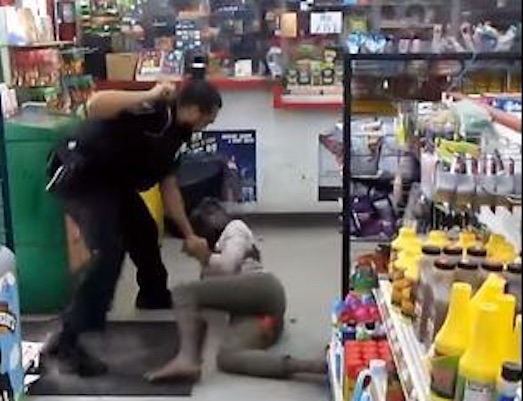
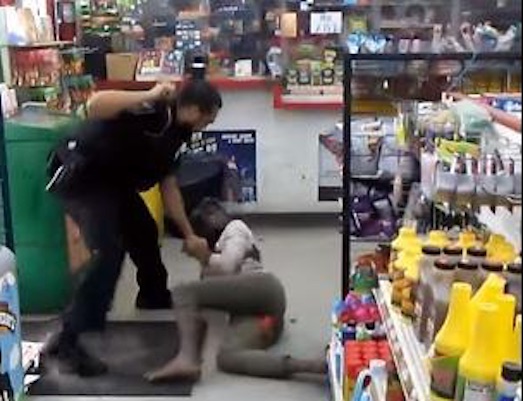
On Thursday, the DeKalb County District Attorney’s Office announced charges against 29-year-old officer Phillip Larscheid, who was caught on video repeatedly striking Katie McCrary with his baton during a June 2017 incident. A grand jury voted to indict Larscheid on aggravated assault and violation of oath charges — both of which are felonies.

In the footage, the Black woman is seen on the ground as DeKalb County Officer Phillip Larscheid viciously strikes her with his baton. The Associated Press reported that McCrary is homeless.

Larscheid, 29, was called to a gas station in DeCatur, Georgia, in June 2017 for a call about McCrary shoplifting and loitering at a convenience store, District Attorney Sherry Boston said at a news conference on Thursday. When Larscheid arrived, McCrary was trying to leave the store but Larscheid told her to stay so he could talk to her, Boston said.

Larscheid then pulled out his baton and "repeatedly struck Ms. McCrary across her legs, her arms, her back and once in the head," according to Boston.

McCrary was handcuffed and arrested on felony obstruction of a police officer. She was taken to the county jail, but they refused her because of her injuries, Boston said. McCrary was taken to the hospital for an evaluation, where doctors said she had a laceration on her leg and multiple contusions on her arms and legs "consistent with those baton strikes," the district attorney said.

She was later booked and released on bond. Boston said her office will not pursue charges against McCrary stemming from that arrest.

In video of the incident, Larscheid is seen hitting the homeless woman with his baton multiple times while holding her down on the floor. She attempts to block some of his wild blows as he strikes various parts of her body. Her blood stains can be seen on the floor.

As the white cop [suffering from psychopathic racial personality disorder] has his maniac episode, Black people in the store just watch & film and yell stop resisting as he is beating the shit out of her.

When she could take the blows from the metal baton no longer, Katie McCrary asked a simple question.  “What did I do?” 

“It is just disgusting to watch her get beaten like that,” said Francys Johnson, president of the Georgia NAACP. “If she were an animal…if she were a dog, the officer would have already lost his job.” [more]

Pursuant to the Georgia Code:

§ 16-5-21. Aggravated assault

(a) A person commits the offense of aggravated assault when he or she assaults:

(1) With intent to murder, to rape, or to rob;

(2) With a deadly weapon or with any object, device, or instrument which, when used offensively against a person, is likely to or actually does result in serious bodily injury;

(3) With any object, device, or instrument which, when used offensively against a person, is likely to or actually does result in strangulation; or

(4) A person or persons without legal justification by discharging a firearm from within a motor vehicle toward a person or persons.

(b) Except as provided in subsections (c) through (k) of this Code section, a person convicted of the offense of aggravated assault shall be punished by imprisonment for not less than one nor more than 20 years. GA. Code 16-5-21 Aggravated assault (Georgia Code (2018 Edition))After its review, the GBI turned over its findings to the DeKalb DA’s office.

“We determined that the case warranted proprietorial action and presented the case today to the grand jury for one count of aggravated assault and one count of violation of oath of office, both felony charges,” DeKalb district attorney Sherry Boston said.

According to the district attorney, her office decided charges against Larscheid were warranted after cell phone video taken by a witness in the store surfaced online. [bullshit. video went viral in 2017 and has been available online]

A warrant has been issued for Larscheid’s arrest, Boston said, and the officer has until 5 p.m. Saturday to turn himself into police.

How Many Lies Did THIS White Cop Tell These Black Folks For Them to Stand & Smile with Him Like That?

How Many Lies Did THIS White Cop Tell These Black Folks For Them to Stand & Smile with Him Like That?

“He was Officer of the Year for 2014 for the entire Dekalb County Police Department and has received more than nineteen commendations during his eight years with the department,” LoRusso said in a statement provided to WSB-TV. “He certified with an ASP baton in the Dekalb Police Academy and seven times after that during annual training. He is understandably deeply concerned and taking these charges very seriously.”

The county confirmed Thursday that Larscheid is still employed by the Dekalb County Police Department and has remained on desk duty since July 2017.

LA County Cop Charged w/Manslaughter After Fatally Shooting Unarmed Latino Man who Posed No Threat - Cop Opened Fire into a Car Slowly Moving Away From Him

la county cops kill.jpg

From [HERE] and [HERE] For the first time in nearly two decades, a Los Angeles County law enforcement official has been ordered to stand trial for a fatal shooting.

Sheriff’s Deputy Luke Liu is charged with voluntary manslaughter in the Feb. 24, 2016, shooting death of Francisco Garcia at a Norwalk gas station.

A Los Angeles County sheriff’s deputy was ordered Friday to stand trial on a voluntary manslaughter charge stemming from the fatal on-duty shooting of a man in Norwalk.

After a hearing that stretched over portions of three days, Superior Court Judge Michael E. Pastor denied the defense’s motion to dismiss the case against Luke Liu, 40, who was charged last December with the Feb. 24, 2016, shooting of 26-year-old Francisco Garcia at a gas station in the 10900 block of Alondra Boulevard.

Liu was on patrol when he spotted a potentially stolen vehicle at the gas station and pulled up behind it, according to prosecutors. [in support of the authoritarian state white media rarely explains facts leading up to a 4th Amendment intrusion]

The sheriff’s deputy walked up to the driver’s side door, then walked to the rear of the car, and when he returned to the driver’s side door, Garcia began to drive away at about 5 mph, prosecutors said.

Liu allegedly drew his 9 mm gun, ran alongside the car and fired seven shots within 20 seconds of first approaching the vehicle.

The cop was never in any imminent danger because the car was not headed towards him as Garcia drove away from him at a slow speed.

Garcia was hit by four of the rounds — two to the lower back and once each to the shoulder area and knee — and died at a hospital.

When Liu asked Garcia whether the vehicle belonged to him, Garcia responded, “It’s none of your business,” according to a sheriff’s report.

Court documents indicate Liu stood near the driver’s door before walking to the rear of the car. As Liu returned to the front of the car, Garcia, 26, began slowly driving away at approximately 5 mph. Liu said he saw Garcia’s right hand reaching into the back seat and feared he was grabbing a firearm, according to sheriff’s records.

Prosecutors say that as Garcia pulled away, the car struck Liu along both knees. The deputy drew his service weapon, ran alongside the vehicle and fired seven shots at Garcia, who was struck four times.

Liu’s attorney, Michael D. Schwartz, told the judge that he did not believe there was sufficient evidence to prove that the shooting was unlawful.

Deputy District Attorney Oscar Plascencia countered that Garcia’s killing was “completely unnecessary” and that the unarmed man should have never been shot. He told the judge that there were “many, many other options” of how Liu could have reacted when Garcia tried to drive away.

The judge said he paid “extreme attention to the video evidence,” referring to surveillance video that partly captured the shooting. He also noted that the standard of proof required for the hearing is lower than that required at trial.

Sheriff’s officials said shortly after the shooting that the deputy was in fear for his life. They said then that the deputy suffered minor injuries when he was struck by the vehicle.

The judge ordered Liu, who is free on a $1.1 million bond, to return to the downtown Los Angeles courthouse June 14 for arraignment.

He could face up to 21 years in state prison if convicted of the charge, which includes an allegation that he personally and intentionally discharged a firearm.

Liu, a more than 10-year veteran who was assigned to the sheriff’s Cerritos station, was placed on administrative leave last December, according to the sheriff’s department. His current status with the department was not immediately available.

Los Angeles county agreed last year to pay Garcia’s family $1.75 million to settle a wrongful-death lawsuit.

In a written statement released shortly after the criminal case was filed against Liu last Dec. 11, Los Angeles County District Attorney Jackie Lacey said, “We believe the officer’s use of deadly force was unjustified and unreasonable under the circumstances.”

The district attorney has come under fire recently from some Southland civil-rights leaders for failing to prosecute police officers and sheriff’s deputies for on-duty shootings.

The last Los Angeles County law enforcement officer to be prosecuted for an on-duty shooting was Los Angeles Police Department Officer Ronald Orosco, according to the Los Angeles Times. Orosco was sentenced to five years in prison after pleading no contest to a felony count of shooting into a motor vehicle, wounding a man who survived being struck in the back in June 2000.

Suit says Video Proves San Mateo Cops Lied About Murdering Chinedu Okobi. Black Man was Smothered & Beaten to Death by a Gang of Cops after Unlawful Jaywalking Stop

okubi+murder+4.jpg

From [HERE] and [MORE] The family of Chinedu Okobi sued San Mateo County on Friday (May 31) alleging that sheriff’s deputies conducted an illegal stop and used excessive force resulting in Okobi’s death last October when they stopped him for jaywalking and used a Taser, batons and pepper spray.

“This was a shocking example of racial profiling and the devastation that can occur when a minor stop, an illegal stop, results in someone’s death,” said John Burris, an attorney for Okobi’s mother, Amaka Okobi, at a news conference in Oakland to announce the lawsuit.

Separately, Los Angeles attorney Carl Douglas filed another suit on behalf of Okobi’s daughter, 12-year-old Christina Okobi.

Chinedu Okobi, the 36-year-old son of Nigerian immigrants, died after sheriff’s Deputy Joshua Wang attempted to stop him while he was walking in the 1400 block of El Camino Real on Oct. 3, 2018. There appeared to be no legal basis for the stop by cops.

Police claimed Okobi, a resident of Redwood City, was “running in and out of traffic” on a busy street around 1 p.m., according to an Oct. 3 press release from the San Mateo County Sheriff’s Office, when a deputy tried to make contact with him. The press release stated that Okobi “immediately assaulted the deputy,” who then called for backup.

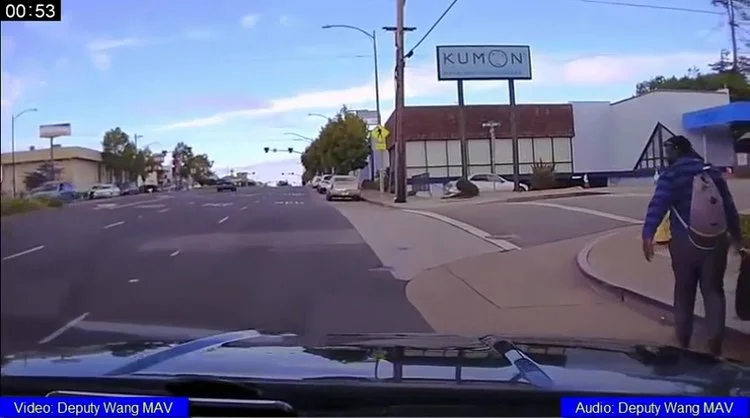
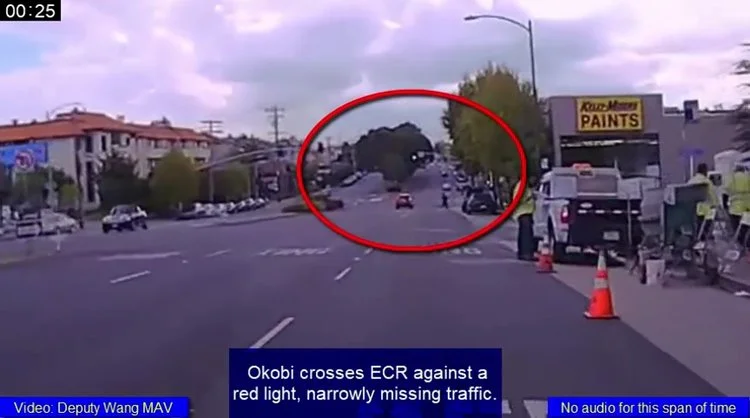
Contrary to police reports and media accounts the video speaks for itself and clearly contradicts the police accounts. The district attorney's office posted the footage of Chinedu Okobi’s arrest on the county website. Wagstaffe said that footage is the same as what Okobi’s family saw in November, but arranged in chronological order. The black man was not running in and out of traffic and did not immediately assault any cops. On the video a car passes him and he safely crosses the street. There appears to be no traffic on the 4 lane street. He then stops on the median and waits for vehicles going the other direction to pass before he crosses the street.

On the video he is seen calmly walking on the sidewalk when he is approached by an officer in a police cruiser. On the entire video he is never seen “running in and out of traffic.” When the cop initially approaches him he says something inaudible and calmly walks away from the cop and crosses the street.

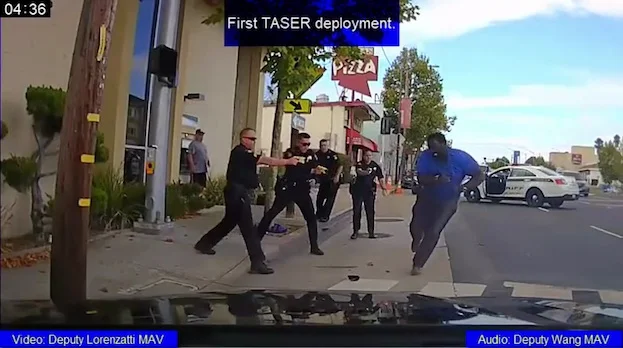
While he is walking down the sidewalk cops approach him from both directions. Cops rushed out of their vehicles and began lunging at him. A white cop attempts to grab him [under arrest for what? jaywalking] and then another white cop pushes him into a sign while he has his hands up. Cops start yelling “stop resisting” as he moves away from them to get away. Cops yell “get on the ground” and then tase him. The 330-pound man then dropped to the ground screaming.

Other sheriff’s deputies arrived and a chaotic scene ensued, with deputies shouting at Okobi to turn over on his stomach, while Okobi cried, "What did I do? Someone please help me!"

After writhing on the ground Okobi then attempts to flee as cops give a slow trot chase. After the Black man punches an Asian cop in the face the cops then believe they have justification to use deadly force and begin to do so - as all 5 punch, pounce and smother him in the street.

"All of the original coverage was that my brother was running wildly through the street, he was darting in and out of traffic," Okobi’s sister, Ebele, said in a recent interview. "But what we saw is my brother walking on the sidewalk."

Ebele says the footage also refutes the description of her brother’s behavior during the arrest.

"When he was stopped, there was no assault at all, and when they tase him there's no assault," she said.

"The whole thing seems strange to me. Why you would tase someone who didn't represent a physical threat and wasn't doing anything?"

"They were so afraid of an unarmed bystander that they had to use the kind of force that turned out to be lethal. But they expect the person who's being attacked to be completely calm and understand," Ebele said.

EVEN THE POLICE VIDEO CONTAINS NARRATIVE BASED ON LIES. HERE THE CAPTION SAYS HE NARROWLY MISSES ONCOMING TRAFFIC. YET HE IS NOT EVEN VISIBLE IN THE SCREE SHOT! [see above]. He crosses after the car has SAFELY passed him - he is one lane away. see p…

EVEN THE POLICE VIDEO CONTAINS NARRATIVE BASED ON LIES. HERE THE CAPTION SAYS HE NARROWLY MISSES ONCOMING TRAFFIC. YET HE IS NOT EVEN VISIBLE IN THE SCREE SHOT! [see above]. He crosses after the car has SAFELY passed him - he is one lane away. see pic below.

okubi+murder+3.jpg

District Attorney Steve Wagstaffe, a racist suspect, announced in March he would not pursue criminal charges against the five involved deputies, identified as Wang, John DeMartini, Alyssa Lorenzatti, Bryan Watt and Sgt. David Weidner.

An internal review, which would determine whether the deputies acted within department policy, is ongoing, and the sheriff’s office has declined to provide a timeline for its conclusion.

Deputies returned to duty as of Oct. 31 and Weidner was assigned to a contentious county Board of Supervisors meeting where Chinedu Okobi’s family and friends attended in protest.

Burris again reiterated that the video contradicts the version of events initially described by the sheriff’s office, including that Okobi was “running in and out of traffic” as the initial justification for the stop.

“Police did not have reasonable suspicion or probable cause to believe he committed a crime,” Burris said. But despite the lack of justification for the initial stop, when Okobi continued walking, Wang called for backup on an emergency code.

“What was the emergency?” Burris said. “They were like a pack of wolves on him.”

okubi+murder+1.jpg

Burris has called for a moratorium on Taser use in San Mateo County, as Okobi’s was the third death that involved the use of stun guns last year.

He said it appeared the deputies were not trained in proper use of Tasers, as Wang deployed one seven times, despite that multiple deployments of Tasers can increase the risk of cardiac arrest.

Ebele Okobi said at Friday’s news conference that the decision not to prosecute “shocks the conscience.”

“It should not be that a human being can be killed, can be violently killed, can be tortured to death with impunity,” she said.

Ebele Okobi extensively described the pain of her family, how her mother had to watch her child “brutally executed” on video.

“Imagine being told that the life of your child doesn’t matter,” Ebele Okobi said, adding that if the deputies had taken similar action against a dog, more would have been done about it.

$500K Settlement Reached: Ramsey County Race Soldiers Caught on Video Beating, Torturing a Black Man Chained to a Wheelchair Begging For His Life in Jail after Misdemeanor Arrest

ramsey+county+cops.jpg

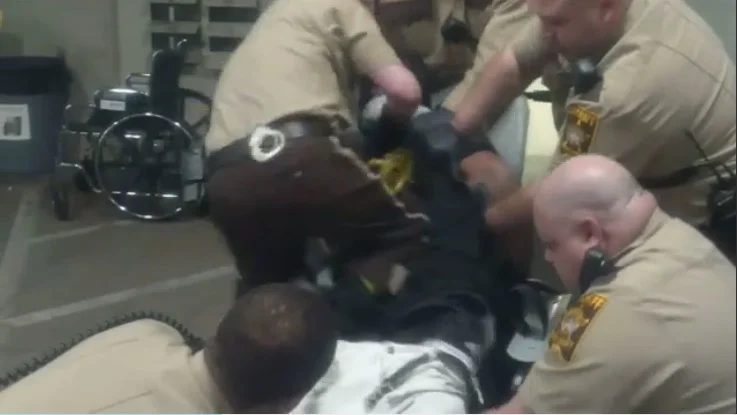
From [HERE] A Black man beaten while handcuffed and restrained by a group of white cops at the Ramsey County jail will receive more than $500,000 as part of a settlement reached with the county, according to a KMSP-TV  report Thursday.

A  video of the April 13, 2016, incident shows Terrell Wilson being punched in the chest and kneed in the crotch by white Ramsey County sheriff’s correctional officer Travis VanDeWiele while he was being held down by several other officers in a transport chair.

Wilson’s attorney Mike Padden said in March that the 27-year-old would pursue a claim for compensation, attempting to negotiate a resolution before possibly pursuing litigation.

Reached Thursday night, Padden said that no lawsuit had been filed and that he could neither confirm nor deny that a settlement had been reached.

An agenda for the Ramsey County Board meeting Tuesday shows the following: “Executive Session **CLOSED TO PUBLIC** Re: Claim of Terrell Isaiah Wilson.”

According to the video of the incident, while officers tried to secure Wilson into a transport chair, VanDeWiele kneed Wilson in the crotch several times and then when he pushed on the restrained man’s head and neck, Wilson complained of excessive force.

VanDeWiele responded, “You ain’t seen excessive force yet” and punched the restrained man four times in his abdomen or chest area, according to the criminal complaint against VanDeWiele.

Johnson, previously known as Terrell Johnson, was having a hard time talking, but he managed to say, “Please don’t kill me,” the complaint continued.

The video also shows that while Wilson is bent forward at the waist in the chair, VanDeWiele forcibly presses Wilson’s head down into his legs. At the time, Wilson had a “spit hood” over his mouth, which officers had placed on him earlier.

VanDeWiele resigned in February, a year after he pleaded guilty to a misdemeanor in connection with his treatment of the inmate.

Ramsey County Sheriff Bob Fletcher, who was not working at the sheriff’s office at the time of the incident, called the events captured on video “extremely disturbing to me and other members of the Ramsey County Sheriff’s Department.”

An acting correctional sergeant recorded the incident — they’ve been videotaping at the Ramsey County jail for years to ensure only the necessary amount of force is used when responding to an uncooperative detainee, Fletcher said.

Fletcher said the video was not only troubling because of VanDeWiele’s actions: “Equally disturbing is the fact that no one else in that video, whether it was the six correctional officers or the two police officers, were willing to step forward and put a hand on Mr. VanDeWiele and say, ‘Hold on, I’ve got it from here’ and intervene in that cycle,” Fletcher said.

In addition to VanDeWiele’s departure, the sergeant on duty at the time of the Johnson case left the sheriff’s office in March 2017, a month after VanDeWiele was charged.

Fletcher said the video“demonstrated failed supervision and poor training.”

“The supervisor present and all employees witnessing these actions had a duty to intervene to stop the assaultive tactics and the use of excessive force,” Fletcher wrote in a statement. “The conduct captured on the video will not be tolerated under my watch. Misconduct will be investigated expeditiously and if personnel are found at fault, discipline will be swift and thorough.”

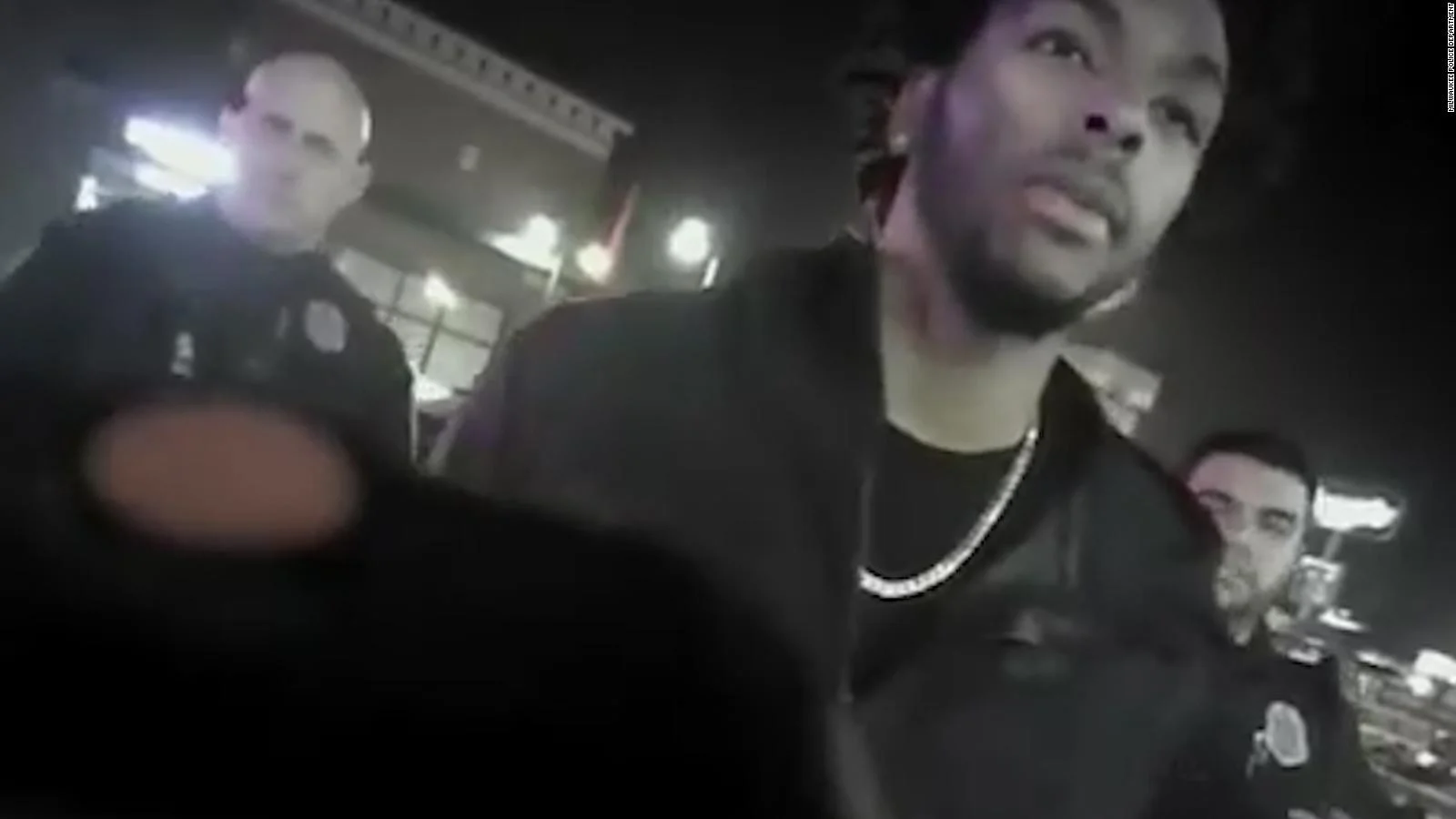
Milwaukee Offers $400K to Settle Sterling Brown Suit: White Cops Surrounded & Attacked Black Man after He Questioned their Motives for En-Forcing Parking Regulations at 2AM in Empty Parking Lot

From [HERE] Milwaukee police officers have testified under oath in a lawsuit from Bucks player Sterling Brown that they violated his civil rights when they used a stun gun to arrest him over a parking violation last year, Brown’s attorney said Friday.

The comments from attorney Mark Thomsen came in response to a report from The Journal Sentinel saying the city’s attorneys want to offer Brown $400,000 to settle the lawsuit he filed accusing police of excessive force and targeting him because he’s black.

The Common Council had scheduled a vote on the proposed settlement on June 10.

Talking to reporters in front of City Hall, Thomsen appeared irked at the offer and the fact that he found out about it while deposing a police sergeant “who admitted under oath that he failed to protect Mr. Brown’s safety.”

“Several officers have admitted to violating Mr. Brown’s constitutional rights,” he said, referring to the depositions he’s taken for the lawsuit.

Thomsen said Brown has not seen the offer and they haven’t discussed it.

The suit alleges Brown parked in a handicapped parking spot outside a drug store about 2 a.m. on Jan. 26, and was approached by a white Milwaukee officer who shoved Brown and subsequently called for backup. The player was never charged with anything in the incident. The lot appeared to be completely empty.

Several other white officers surrounded Brown as they questioned him and one pulled out a gun after two policemen noticed what appeared to be targets from a gun range in the player’s car.

Brown, a 23-year-old reserve player on the NBA team, was unarmed.

sterling brown .jpg

While law enforcement sources initially claimed Brown had been the aggressor, videos show police escalated the situation rapidly while Brown spoke in a frustrated tone of voice but never raised his volume or moved toward officers.

The suit claims one of eight police officers named as defendants in the suit pulled his gun and another used a stun gun on Brown after he was already subdued and being held on the ground by several other officers.

“It’s simply outrageous that someone would pull their gun” in this situation where Brown posed no serious danger to any of the officers, Thomsen told Reuters.

The suit says that Brown, who was 22 at the time of the incident, “was kneed in the groin by one of the officers” before being thrown to the cold pavement during a night when the wind chill temperature was 26 degrees Fahrenheit (-3 degrees Celsius).

Brown was already on the ground held by officers when he was shocked with the stun gun in the back, the suit claims.

The suit also claims that several of the officers switched off body cameras to conceal their actions and some of them conspired to synchronize their stories after the incident.

Police Chief Alfonso Morales announced last year in May that 11 of the officers involved in Brown’s arrest were disciplined or retrained. Morales also said he had apologized to Brown for the officers’ behavior. One officer who was at the scene of the arrest but not involved in it was fired for racist social media posts about the incident.

Brown did not ask for a specific monetary amount in his lawsuit. His attorney said when he filed the lawsuit that more than money Brown wanted “the city (to) actually admit to the wrongs, admit that his constitutional rights were violated.”

But Thomsen said the city is still unwilling to do that, noting that a witness designated to speak on behalf of the city in a deposition denied that Brown’s civil rights were violated. Thomsen said that until there is that admission, “We’re not really talking money.”

Thomsen also said what’s important to Brown is that the department enacts reforms.

“Mr. Brown said I want to help change what happens on the streets with every person in Milwaukee,” Thomsen told reporters.

Police have said they have enacted several reforms since Brown’s arrest, including more training for officers on fair and impartial policing.

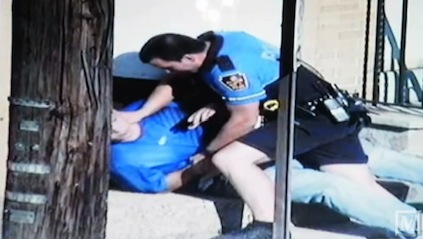
Video Shows Orderlies Pepper Spray & Punch a Black Woman in the Face while she’s Restrained in a Chair, Detained at Cuyahoga County Jail for FTA in Traffic Court

New surveillance camera from the Cuyahoga County Jail in Cleveland  recorded disturbing events that took place last July 2018 after an arrest of Chantelle Glass, who was wearing a white gown. Glass had reportedly been brought to the jail after a heated argument with her sister, but was never charged. Instead, she was held in the jail for failure to appear in traffic court. Although she kicks at the white cop in the video when the officer punches her in the face it is clearly not in self-defense but retaliation.

cayuga jail criminals.jpg

Black State Atty who Vowed to Never Seek the Death Penalty Will Not Seek Re-Election- Retiring from Her Rolebotic, Token Participation in System Designed to Create Only the Appearance of Justice

UNDERSTANDING HER SERVANT ROLE IN CORRUPT SYSTEM [ALL GOVERNMENT IS CORRUPT]. In 2017, White Orlando Cops Pulled STATE ATTORNEY Aramis Ayala Over b/c she WAS Black [video below] THE 4TH AMENDMENT PROVIDES NO MEANINGFUL PROTECTION FROM COPS FOR ANY B…

UNDERSTANDING HER SERVANT ROLE IN CORRUPT SYSTEM [ALL GOVERNMENT IS CORRUPT]. In 2017, White Orlando Cops Pulled STATE ATTORNEY Aramis Ayala Over b/c she WAS Black [video below] THE 4TH AMENDMENT PROVIDES NO MEANINGFUL PROTECTION FROM COPS FOR ANY BLACK PEOPLE, INCLUDING THOSE WHO DIRECTLY SERVE THE GOVERNMENT.

From {DPIC] Aramis Ayala the first African American elected as a state attorney in Florida, will not seek re-election as Orange-Osceola County State Attorney. Citing conflicts with the Florida Supreme Court’s pronouncements on capital prosecutions, Ayala announced in a Facebook video on May 28, 2019 that she would not pursue a second term as state attorney. “It’s time for me to move forward and to continue the pursuit of justice in a different capacity,” she said.

Ayala gained renown — and in other circles, notoriety — for her announcement early in her tenure that her office would never seek the death penalty, saying it “is not in the best interests of this community or in the best interests of justice." Then-Governor Rick Scott responded by removing Ayala from 29 murder cases and reassigning them to Lake County State Attorney Brad King, an avid death-penalty supporter. The Florida Black Caucus and the family of a murder victim in one of the reassigned cases opposed Scott’s decision, which had both racial and political implications. Scott, who lost the popular vote in both Orange and Osceola Counties, was criticized for substituting his views for those of the local predominantly Democratic electorate, taking decision-making authority away from a duly elected African American woman, and reassigning that power to a white-male Republican.

Ayala challenged Scott’s action in court but, in August 2017, the Florida Supreme Court upheld his reassignment of the cases. The court ruled that Scott had acted “well within the bounds of the Governor’s broad authority.” In the video announcing her reelection decision, Ayala said that after that decision, “it became abundantly clear to me that death penalty law in the state of Florida is in direct conflict with my view and my vision for the administration of justice.”

In response to the Florida Supreme Court’s decision, Ayala created a death penalty review panel to evaluate cases and decide whether to seek a death sentence. The first capital prosecution authorized by that panel resulted in a plea deal in which Emerita Mapp received a sentence of life without parole. None of the new murder cases that Scott removed from Ayala’s office has resulted in a death sentence. Ayala’s announcement video highlighted her accomplishments as prosecutor, including “rais[ing] the standard of prosecutorial accountability” and improving the diversity of the prosecutor’s office. Two candidates have announced plans to run for state attorney in Ayala’s district in 2020: Democrat Ryan Williams and Republican Kevin Morenski.

Scott’s action in removing cases from Ayala drew comparisons to New York Governor George Pataki’s removal of Bronx District Attorney Robert Johnson in 1996 after Johnson said he would not seek the death penalty in the killing of a Bronx police officer. Johnson was the state's only African-American District Attorney at the time and had indicated his opposition to using the death penalty. Pataki took no action in any cases prosecuted by Robert Morgenthau, the long-time Manhattan District Attorney, who was white and also had announced he would never seek the death penalty.

Persons Scheduled to Be Murdered by Florida Authoritarians by "Race"

[more]

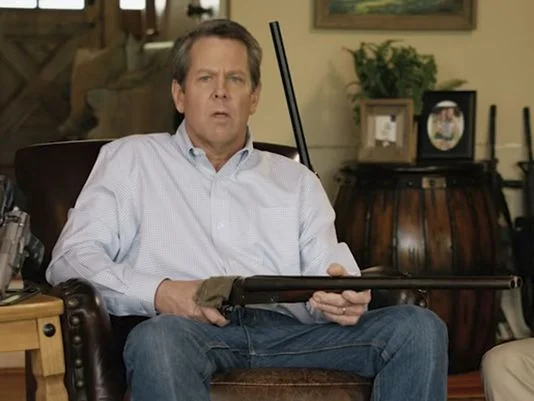
[Shrinking White Population Believes it Must Rig Elections to Survive] Racist GOP in GA Prevents Thousands of Blacks from Participating in It’s Agreed Upon Illusion [Election] w/Moral Turpitude Law

brian kemp racist troll.jpg

From [HERE] and [HERE] The state of Georgia has become a key battleground for black voting “rights.”

In 2018, Democratic candidate Stacey Abrams, the nation’s first-ever major-party African-American woman nominee for governor, allegedly “lost” to Secretary of State Brian Kemp after thousands of black voters saw their absentee ballots thrown out, polling places consolidated, and voting machines warehoused in their precincts. These incidents led to a sharp outcry and questions of legitimacy, because Kemp, a racist suspect, was administering [counting the votes] the same election he was running in. Nonetheless, the election was extremely “close” — a margin of just 50,000 votes decided the outcome in a state of over 10 million people.

The debate in Georgia has all but ignored the voting rights of felons, even as the issue has gained traction nationally. A sweeping elections bill recently passed by Democrats in the U.S. House would allow felons to vote in federal elections as soon as they leave prison.

Ex-convicts regain their rights after completing their sentences, but remain ineligible while on probation or parole, which leaves some 250,000 people, or 3 percent of the entire voting-age population, disenfranchised — five times the margin with which Kemp carried the gubernatorial election in 2018. 58 percent of these disenfranchised ex-convicts are African-American.

Georgia law prohibits voting by anyone convicted of a “felony involving moral turpitude,” a legal phrase rooted in the state’s Reconstruction-era constitution of 1877. The phrase has endured several revisions, including the latest version from 1983.

“It’s a vague concept,” said Julia Simon-Kerr, a University of Connecticut law professor who’s spent the past decade researching the legal history of the phrase “moral turpitude.” “It can be used basically in discriminatory ways because it has very little solid, definitional meaning.”

State lawmakers have never defined which felonies involve “moral turpitude.” Georgia election officials have long interpreted the state constitution to mean all felonies trigger the loss of voting rights.

Not everyone agrees.

“If the constitution states felonies ‘involving moral turpitude,’ then there must be felonies not involving moral turpitude,” said Sean Young, Georgia legal director for the American Civil Liberties Union. “We should be asking Georgia politicians why they’re so eager to restrict the franchise beyond what the constitution allows.”

Georgia election officials say court rulings support denying voting rights to all felons. Secretary of State Brad Raffensperger’s spokeswoman, Tess Hammock, said the state Supreme Court has “directly weighed in on this question.” She cited a 1998 ruling that states “in Georgia, all felonies are crimes involving moral turpitude,” and a similar decision from 1979.

Neither of those cases dealt with voting rights. One upheld the disbarring of an attorney over a felony conviction. The other addressed whether a trial witness’ criminal record could be used to attack his credibility.

The ACLU’s Young said it’s significant that neither case dealt with felons’ voting rights because “the same words can have different meaning in a different context.”

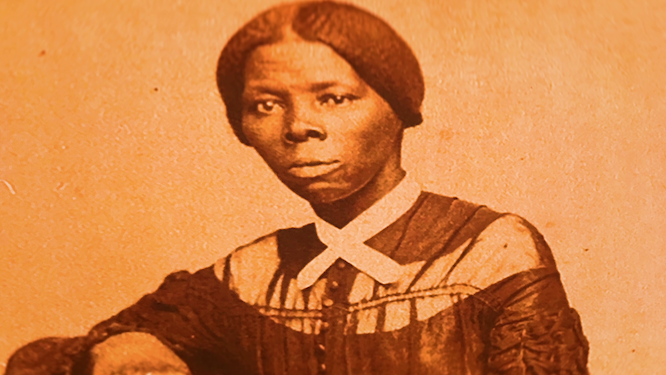
Racist President Refuses Symbolic Replacement of Slave Owner Andrew Jackson w/Image of Harriet Tubman on Make Believe “Dollars" Created Freely Out of Thin Air & Exchanged for Our Labor

According to "FUNKTIONARY, THE KEY HOLDERS ENPSYCHLOPEDIA"

The Dollar - a bad check circulating and accepted as a good check, never presented for payment; it is accepted as the final payment itself. "Backing" for the dollar historically has always meant "redemption," i.e., returning paper to receive the wealth purportedly backing it. Stating that the dollar is "backed" by the Gross National Product (G.N.P.) of the country or the nation betrays the fact that there is no G.N.P. stored that is held in reserve for the redemption of "dollars." Our sensibilities are assuaged (duped) because we can use "dollars" to purchase wealth and services (production and human exertion we desire) even when redemption is refused. The "dollars" of today are only accepted as "purchasing units" because of the confidence of the people that is partly based on residual memory of their past worth in redemption (backing). Today, the "dollar" is a euphemistic expression for an abstract unit measurement (mental appraisal of the mathematical relativity of exchange value) to induce and facilitate an invalid cross-reference between wealth and credit—imaginary demand—inflation—political money—seignorage and hidden taxation (theft) per se. When we pledge wealth to the bankers to get "dollars" we feel that since it cost us wealth pledges to receive "dollars" from them, they must be work that wealth, or why are we doing it? We pledge the wealth to the bankers to get "dollars," but we use them to purchase production from our fellow producer-consumers, etc. No one can return those "dollars" to the banker, demand production from him, and get it. There isn't any product produced by the banker or held M him in reserve for the redemption of "dollars" so why do we pledge wealth to him to obtain "dollars"? We believe that it is the "dollars" that were deposited by other producer-consumers that we are actually borrowing and therefore we think that the I wealth we pledge to the bank is our guarantee the repayment of those "dollars" to the depositors of the bank. It is our lack of knowledge of the fractional reserve system that allows for this mistaken idea The depositor's "dollars" are the "fractional reserve" "backing" for the "numbers" written by the banker (newly created "dollars"). It is these newly created "dollars" (numbers) that we actually "borrow", not the ones deposited by the producer-consumer-depositors of the bank. The new "dollars" cost the banker nothing to create so why should we pledge him anything to obtain them; why don't we pledge our wealth to the producer-consumer that will give up wealth in exchange for those "dollars"? The meaning of the word dollar has changed, from being a word to describe a portion of wealth held in reserve for the redemption of its tokens, to the use of the word and its representative tokens today as being the "wealth" itself in imagination. Today we pledge wealth, to the prestidigitator, creating and sustaining the illusion, with pen and ink purchased with the illusion, to obtain the illusion from him. k is such a diabolical procedure to define that we do it and accept a belief that somehow the banker is performing a service when in fact he is expropriating our wealth as fast as he can create the "dollars" and exploit our lack of knowledge of what he is really doing. The "dollar" is not "backed," it is not redeemable and therefore it is worthless (Title 26 USC) regarding dollar-denominated Federal Reserve notes boldly emblazoned with "One Dollar" or "Fifty Dollars," etc., inked on its cotton-linen material) and if accepted in exchange, it is in ignorance of its true nature. People not free to trade with wealth (or self-created and controlled claims against same) become slaves to the "money" creators. Today, only one entity (Federal Reserve) has the power to create "dollars" by the mere entry in a book (ledger). People's labor produces wealth, and any wealth borrowed can be repaid with "new" wealth produced. Not so with bank-created-only "dollars." Money confers all its power upon its creator! Acceptance of political monetary units (out of the control of the producers of wealth) enslaves labor to the will and caprice of the money creator and the policies it dispenses to control people while expropriating their assets. The "dollar," in reality, is a record of imaginary debt (owed to itself, i.e., the Fed), used as a means of obfuscating the true nature of exchange in lieu of wealth. (See: Dollar, Legal Tender, "Money," Currency, Seignorage, Quantity Theory of Money, Gangbanking, Federal Reserve Notes, Federal Reserve System, Loan, Capital, Rent, Interest, Slavery, Second Tax, Federal Real Tax, Usury, Cultural Induction, Free Coinage, Public Debt, Tokens, Expropriation, Taxation, Labor, Property, Cost, Income, Wealth, Parity, Supply, Demand, Fractional Reserve System, Fictional Reserve System, Coin, Imaginary Demand, "Credit," Debt & "Monetized Debt")

dollar - "A weight of gold or silver." -Encyclopedia Britannica, 1962; "412 1/2 grains of silver." -World Dictionary, 1959; "A silver coin." -Webster's Encyclopedic Dictionary, 1980; "Not a Federal Reserve note." -John. E. Burke, (former) Acting District Director, IRS. Dollar is an abstract concept which cannot be described in physical (perceptual) or mental (conceptual) terms. The term 'dollar,' by law, is the unit of monetary measurement by weight of the money of account. The term 'dollar' is widely accepted and believed as being the commodity and its unit of measurement simultaneously. Taken to its logical conclusion, ending up in the oxymoronic statement of there is a "dollars' worth of dollars." 2) not a thing that exists in and of itself, not even as a unit of weight measurement since there is nothing, (i.e., no substance) remaining or identified by law to replace gold and silver to be measured by weight in dollar terms. The dollar is unit of weight measurement limited to silver coin as the money of account in the United States per the Coinage Act of 1792. "The eye hath not seen nor the hand toucheth a thing called a 'dollar.'" ~T. Imms, Banking Law Journal 1920. A dollar is an IOU. The owner's name is not on the dollar—it's at the bank on a balance sheet. The bank gives you a bunch of IOU's and charges you interest for "borrowing" unearned token units! You don't think of it as a loan because you can transfer (pass off) the debt (legal counterfeit) conveniently. (See: Money of Account, Monetized-Debt, Credit, Money, GEO-Dollars, Token, Coin, Cash, Energy, Labor, Income & IRS)

dollar - an expression of weight measurement used as rhetorical artifice to facilitate (and conflate) a cross-reference between wealth and credit-imaginary demand-inflation-money-siegnorage. 2) a numeric record of imaginary debt conjured into existence sustained by belief and held in human thought only. Whatever during an exchange is accepted as a medium of exchange in lieu of wealth is imaginary demand ("money"), (credit) and (inflation). You won't find the word 'dollar' defined in most textbooks. (See: Credit, Inflation, Money, Political Money, Siegnorage, Errorist, Federal Reserve Notes & Wealth)

"dollar" - a word applied to physical tokens (i.e., coins, metal slugs & pieces of cotton-linen rag called 'paper') that represent a deliberately conjured and accepted belief (confidence) that somewhere, somehow, there is a thing called "money" and the transferable tokens represent "units" of it. How can there be any relation between a non-existent object and a reference to it? (See: "Money," Ghost Dollars, GEO-Dollars, Semantics, Fiction, Unreality, Token, Coin, "Monetized Debt" & "Credit")

"dollars" - the de-facto unit measure of the imagination, the "thing" imagined is the faux "value" called "money," it is not real, it is a non-entity (it's an abstraction), it exists in the mind (psychogenic in nature) and remains (a naked symbol within a recursive context and a circular argument until something is re-introduced to be a substance with which to measure by weight \ thereby giving the term isomorphic mapping and reality again as in 5 dollars of silver or X dollars of gold. "Federal Reserve notes are not dollars." -Russell L. Munk, former Asst. General Counsel, Department of Treasury. "Dollars" are not the money—but the expression of the money. Similarly, concrete is expressed in cubic yards, but there are no foundations built out of cubic yards of cubic yards. Concrete (the entity) is expressed in cubic yards (unit of measure) and nobody would expect to pay a concrete company for cubic yards without getting the concrete. You can have dollars—but you're better off with sense.

harriet tubman dollar.jpg

monetary realism - the science of exposing banking fraud and economists. 2) Exchange by bilateral barter, value for value at the point of transaction, thus a completed one. 3) the penultimate stage of grasping the true concept of money; the ultimate being the relativity of values by way of a split barter transaction via valueless accounting devices, mechanisms and automated clearinghouse systems where the ignitiators of what is used as money, all have the power to "create" in relation to the extent or capacity to redeem; not based on someone's promise to pay (which is debt) but the promise to accept (which is non-debt based with no interest possible). (See: Monetary Theorealist)

monetary realist - one who overstands that in reality there is no objective money, taxes, interest, revenue, taxpayers or anything associated with the objectivization of money. Money is a concept not an actual item of anything. A dollar is a system of weight measurement in the decimal system. When there is no longer anything (any substance, i.e., silver or gold) being measured in dollar quantities to be used as money, then all related activities are as illusory as the money itself. (See: "Monetized Debt," Dollar, Fictional Reserve, Gangbanking, Usury, Deposit Dynamics, Bank Loan, S&M Banking & "Money")

Monetary REGIME - Retarding Economic Growth Inhibiting Monetary Expansion. The Economic War on the made poor by policy and design carried out through O.G.D. (Official Government Doctrine). (See: Quantity Theory of Money)

monetary regulation - an oxymoronic concept because to regulate (control) money would mean to control values which are the product of opinion, obviously an impossibility; although a necessity for a debt-based bank-monopolized mind-controlled confidence game/operation called finance economy. [MORE]

[file under "Baseless Destruction of Life" by Government] Black Man Dies From Stroke, Pneumonia & PTSD After Exoneration from Wrongful Conviction & 16 Yrs on Death Row in Solitary Confinement

According to FUNKTIONARY:Corporate Police State - the enforcer of the commodification of life within the Spectacle Surveillance Society. Anyone who thinks that he or she is immune to the baseless destruction of his or her life (including immediate f…

According to FUNKTIONARY:

Corporate Police State - the enforcer of the commodification of life within the Spectacle Surveillance Society. Anyone who thinks that he or she is immune to the baseless destruction of his or her life (including immediate family members) by a "government" or corporation does live in a happy menagerie—enjoy your illusions. (See: GUPI & Judicial Victimization) [MORE]

From [DPIC] Harold Wilson, exonerated in 2005 sixteen years after his wrongful conviction and death sentence for a triple murder in a Philadelphia crack house, has died. He had recently suffered a series of strokes that were further complicated by pneumonia. His risk of stroke and the complications that followed had been worsened by the Posttraumatic Stress Disorder he developed as a result of the 17 years he faced the death penalty, most spent in solitary confinement on death row. He died on May 18, 2019. He was 61 years old.

After his exoneration, Mr. Wilson became a vocal advocate for the abolition of capital punishment, working with the death-row exoneree group Witness to Innocence and speaking at events across the country. Kirk Bloodsworth, the nation’s first death-row DNA exoneree and now executive director of Witness to Innocence, called the 6’4” Wilson “a mountain of a man, not just in stature. That was his heart. The way he’d speak and the passion he had in his heart made him twice the size he was.”

In June 1996, Wilson came within eight days of execution when Pennsylvania Governor Thomas Ridge scheduled his execution for July 11. DPIC executive director Robert Dunham, then director of the Pennsylvania Capital Case Resource Center, obtained a stay of execution and recruited counsel to represent Wilson in his challenge to his conviction and death sentence. At the time Wilson was tried, the Philadelphia public defenders were not authorized to represent defendants in homicide cases and defendants were represented by notoriously underfunded and unprepared court-appointed lawyers, Dunham said. A Philadelphia court overturned Wilson’s death sentence in August 1999, finding that his appointed lawyer had failed to investigate and present available mitigating evidence.

While Wilson’s appeal was pending, District Attorney Lynne Abraham released a jury selection training videotape in which Jack McMahon—Wilson’s trial prosecutor and then a candidate for D.A. against Abraham—taught Philadelphia prosecutors techniques to exclude African Americans from jury service. Wilson became the first Philadelphia death-row prisoner to challenge his conviction based on the evidence in the training tape. The trial court refused to consider that challenge because he had presented a jury discrimination claim (before the tape was known to exist) in his direct appeal. However, the Pennsylvania Supreme Court returned the case to the trial court for a hearing on the issue, and on January 17, 2003 the court granted Wilson a new trial.

By then, the Defender Association of Philadelphia was handling capital cases and its homicide unit represented Wilson on his retrial. DNA testing of the killer’s jacket revealed blood from four people — the three victims and an unidentified person who was not Wilson. Philadelphia prosecutors retried him anyway. The first retrial ended in a mistrial when prosecutors left inflammatory crime scene photos on the bar of the jury box in clear view of the jurors. The second trial ended in an acquittal on November 15, 2005.

Wilson began advocating for criminal justice reform and the abolition of the death penalty. “The criminal justice system has a lot of problems, and Harold knew that,” Bloodsworth said, “and [he] knew there were many others left behind.” “The death of this wonderful, gentle man is another reminder of the lifetimes that have been lost and the lives that have been destroyed by a broken policy that, as currently administered, has proven itself incapable of reliably distinguishing between the innocent and the guilty or of eliminating arbitrary factors such as race, geography, and poverty from the calculus of who lives and who is sentenced to die,” said Dunham in a statement. Wilson, Dunham said, “believed [the death penalty] was fatally flawed, irredeemably unfair, and immoral. He brought that message powerfully to the world and it is a message he told me he wanted others to continue to shout from the rooftops.”

“We Sleep and Breathe Mold." Instagram Photos from Inside DeKalb County Jail Reveal Foul Conditions at White Authoritarians' Debtors Prison for Poor Black People Held Pre-Trial

Dekalb County Jail 2.jpg

From [HERE] and [IGD] It started with a photo on social media. During a video visitation last month at the DeKalb County Jail in Decatur, Georgia, people detained at the jail tried to show some of its conditions to their loved ones.

Malaya Abdullah-Tucker, who said her son is in the jail, took screenshots and posted them on Instagram.

Last month, photos and videos of inmates in the Dekalb County Jail, located outside of Atlanta, Georgia, were posted to the internet and went viral. The photos included messages written on the bottom of Styrofoam food trays, as Atlanta Anarchist Black Cross documented:

Inmates who sent photos pleading for help for inhumane conditions were abused and put in the hole as retaliation on April 11, according to the mothers of the two men. Their relatives had posted screenshots from an April 7 video visit on a jail device that the inmates are allowed to use. The posts began going viral on social media April 10 with the hashtags #JusticeForInmates and #DekalbCountyJail.

“Dekalb jail is mistreating us!!!”, “We sleep & breathe mold”, and “Please help we dying! Need food!!!!”. They included The hashtag #Justiceforinmates.

Inmates also produced the following message:

“Inmates in the DeKalb County Jail is actually dying and being subjected to unhealthy conditions; breathing and sleeping with mold, having skin break outs, being assaulted by correctional officers in areas of the jail where there are no cameras etc. STAND FOR THESE YOUNG MEN! they are caged away with no voice. No matter what they are incarcerated for, they do not deserve to live in such treacherous conditions! most of them are there awaiting trials or traffic tickets… They are innocent until PROVEN guilty. But judge ye not! Repost and share! Let our voices be heard for them to get attention of officials who can have this facility investigated and fix the conditions.”

Across the US, many people are unable to leave the county jail system simply because they cannot pay to bail themselves out and remain stuck inside the system, regardless of if they are innocent or not, or have even gone to trial. During the 2016 prison strike, It’s Going Down interviewed the partner of one inmate that has been stuck in Merced County Jail for years. A recent article in the Chicago Tribune wrote:

As of Feb. 13, the most recent data available, there were 5,736 inmates in Cook County Jail; 5,390 were pretrial, according to the Cook County sheriff’s office. Of that number, 48 percent either cannot afford their monetary bail or lack a residence for electronic monitoring…

Wisconsin Public Radio noted:

Such pretrial incarceration is common throughout the United States. About half a million U.S. residents are held in jail on any given day awaiting trial — a trend that has grown sharply since the 1980s, according to the Prison Policy Initiative, which researches and advocates against mass incarceration.

Some defendants spend longer in jail awaiting trial than their sentences ultimately call for. In Louisiana, the problem is so acute that some indigent defendants — who under the law are presumed innocent — can wait four years or more for their day in court.

Coupled with crumbling infrastructure, guards angry and stressed about increasingly volatile environments pushed beyond capacity, and a lack of any sort of accountability for abuse, county jails have increasingly become violent cesspools for the poor who cannot afford to bail out.

According to an Instagram account covering the situation inside, soon after the photos and video first appeared on social media, the men in the photos were quickly put in isolation. Then, guards raided their cells and attacked inmates associated with the photos. [MORE]