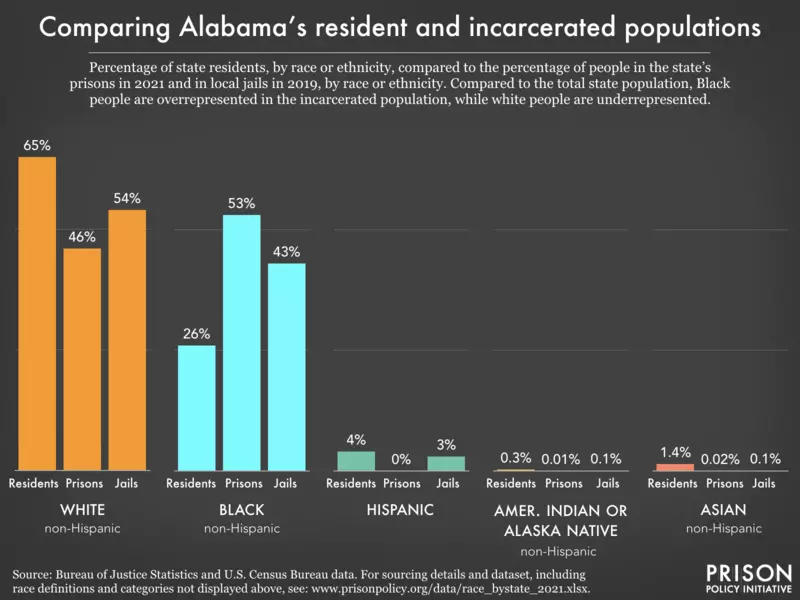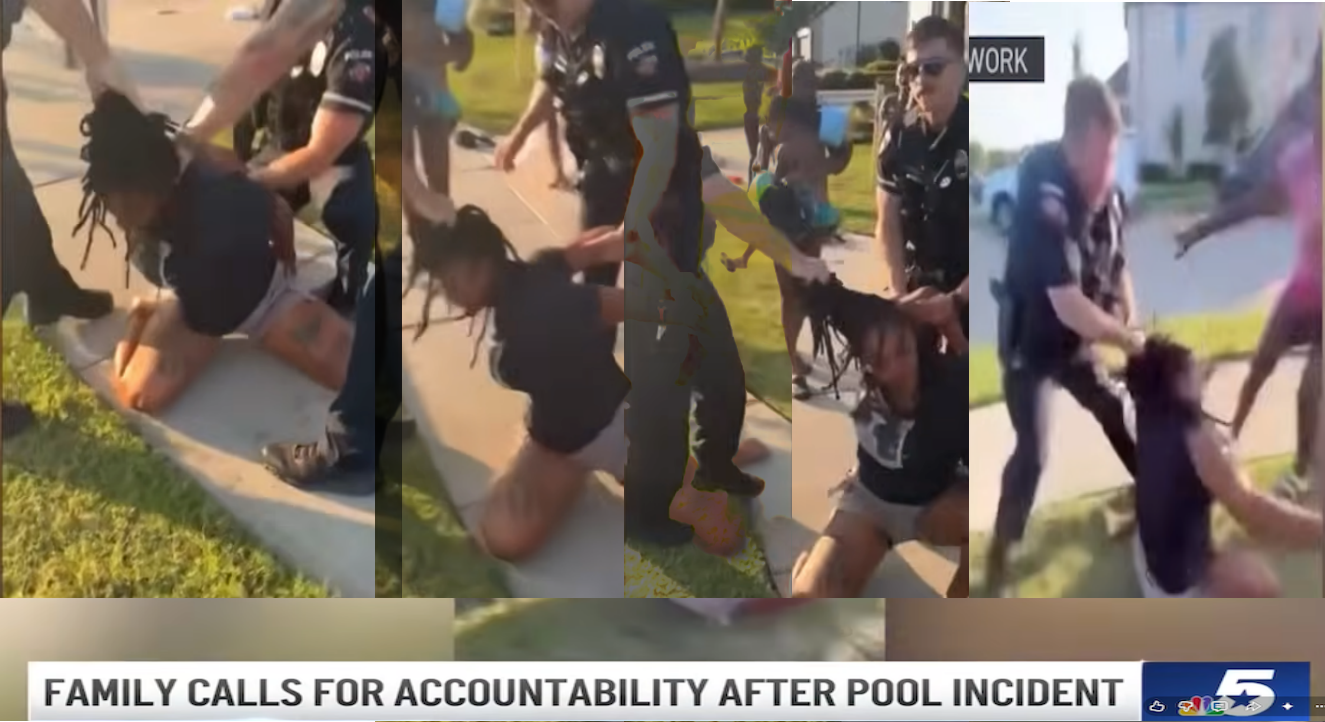
New Study says Pay Day Lenders [elite whites] Target Black Communities & Prey-Day Loans are Precursors to Poor Physical & Mental Health

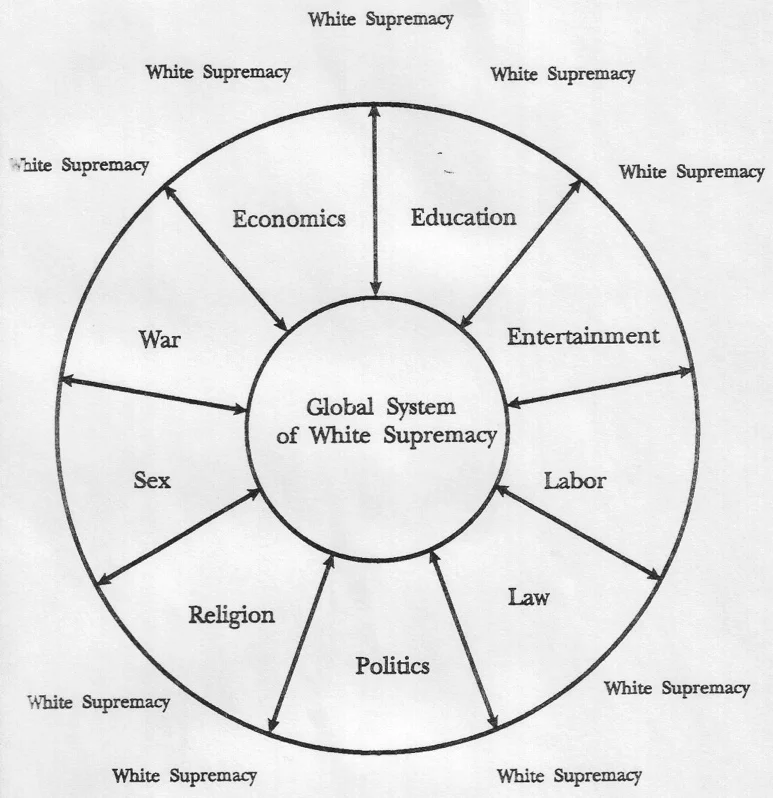
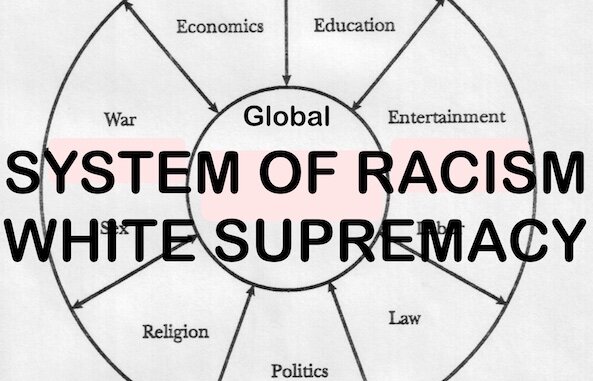
IN THE SYSTEM OF RACISM WHITE SUPREMACY Black people are motivated through created anxiety and other "white instigated social controlS. DR. AMOS Wilson explains, "Anxiety is the whip in the hand of the oppressor used to drive the oppressed to comple…

IN THE SYSTEM OF RACISM WHITE SUPREMACY Black people are motivated through created anxiety and other "white instigated social controlS. DR. AMOS Wilson explains, "Anxiety is the whip in the hand of the oppressor used to drive the oppressed to completion of their appointed rounds”

SOUP = Society of Oppressed Underdeveloped People. From {HERE] It takes a complex ecosystem of policies to nurture a thriving society in which everyone has the opportunity to make ends meet stress-free, to save for a rainy day, and to find additional financial support at a reasonable cost. Access to these circumstances is a big driver of our personal and family health and well-being. Yet the reality is that nearly half of American adults experience financial fragility. In other words, faced with an unexpected $400 expense, two out of five people in the United States would need to borrow money or sell something in order to cover it. One result is that every year about 12 million people in the United States turn to short-term, high-cost loans — such as payday loans. The high fees that come with these predatory loans trap many in a debt cycle. The consequences go beyond the stress of personal finances: research shows that living with financial fragility — having low income, unstable work, and no cushion for unexpected expenses — is a precursor to poor health.

The average loan amount in Missouri is $315, and a lender can charge up to 1950% APR on that amount.

This is especially true in Missouri, where use of payday loans is twice the national average and where lending laws are among the most permissive in the country. In this report, we focus on understanding the landscape of payday lending in Missouri and how payday lending impacts the health of individuals, families, and communities.

The Presence of Payday Lenders in Missouri Is Deep and Broad

As of May 2018, there were 600+ payday lending storefront and online licenses issued across 91 of Missouri’s 114 counties and the independent city of St. Louis. The seven most populous jurisdictions have the greatest number of payday stores, representing one-third of all stores in the state. While communities of color and urban areas have a disproportionate share of lenders, White and rural neighborhoods have them as well.

People Turn to Payday Loans Due to Low Wages and Financial Exclusion

Low wages and exclusion from financial institutions are root causes that lead people in Missouri to use payday loans. While less than 1% of borrowers are unemployed, the average income of borrowers is only $24,607, and nearly one in four Missourians is “unbanked” or “underbanked.” Missouri’s minimum wage (which will gradually increase) is $8.60 an hour, among the lowest in the country.

Payday loans exacerbate financial stress by increasing the likelihood someone will miss bill payments, delay health care spending, or use food stamps, or even file for bankruptcy.

People Turn to Payday Loans Due to High Costs of Housing, Medical Debt

Research shows a two-way relationship between debt and health: heavily indebted, low-income people are more likely to have poor health, making it harder to hold on to a job. On the flip side, being able to finance immediate debts greatly raises the odds of good health.

We found that the 10 Missouri counties with the worst health rankings have a much higher density of payday lenders than do the 10 counties with the highest health rankings. Unsurprisingly, focus group participants overwhelmingly reported physical and mental health effects from the experience of using payday loans. They also reported their children and family members being adversely affected by the payday experience.

While payday lenders are located throughout Missouri, their presence is disproportionately experienced among people of color and urban residents[

Table 1 indicates that the three 17 HumanImpact.org/paydaylendingmo jurisdictions with the largest number of payday lenders (Jackson County, St. Louis County, and the independent city of St. Louis) have the three largest non-White populations in the state (35%, 32%, and 52%, respectively) and represent nearly a third of the state’s population. According to the Missouri Department of Health and Senior Services, these three geographic areas account for 78% of the total Black/non-Hispanic population in the state of Missouri and the largest population of Hispanics (MDHHS, 2016–2017).

These Missouri data align with national data that storefronts, practices, and advertising disproportionately target communities of color (notably African Americans more than Hispanics), lower-income people, renters, and people with lower levels of education (Gallmayer, 2009; Barth, 2015; Prager, 2009). Indeed, the Ferguson Commission cited the impact of predatory lending on Missouri’s black residents (Ferguson Commission, 2015).

And although a Pew survey showed that the majority of payday loan borrowers (55%) were White, they were less likely to have used a payday loan than people of color. Specifically, 12% of African American respondents and 6% of Hispanic respondents had used a payday loan, compared with 4% of White respondents (Pew Charitable Trusts, 2012).

Payday Loans Capitalize on People’s Vulnerabilities People in St. Louis and Springfield who participated in our focus groups described in great detail the predatory nature of lender practices in Missouri. They felt that lenders misrepresented loan terms, manipulated contracts, demeaned them in the process, and used harassing practices to collect repayment. Many participants said that lenders offered them the option to apply for a second short-term loan to pay for an initial loan. [MORE]
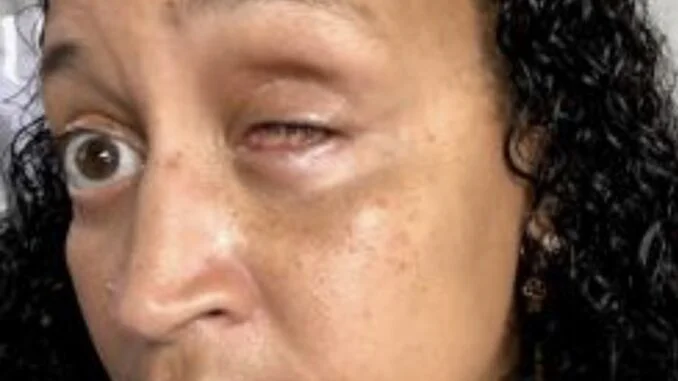
Never Put Your Hands on the Rulers: After Latino Woman Lightly Touched NYPD Cop’s Back Shoulder to Ask a Question, Said Cop Repeatedly Punched Her w/a Key in between her Knuckles, Causing Lost Eye

officer-theresa-lustica.jpg

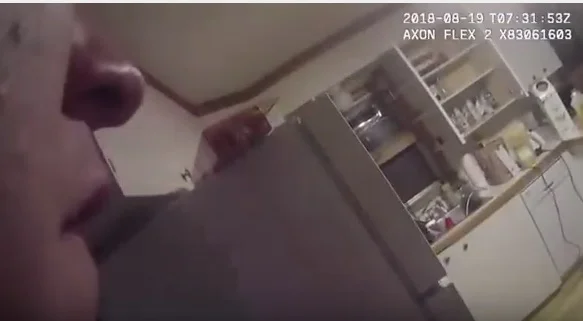
From [HERE] and [HERE] The Legal Aid Society on Monday called on Bronx District Attorney Darcel Clark to drop criminal charges filed against a woman who lost an eye during what she says was an unjustified beating by an NYPD officer.

Johanna Pagan-Alomar, 45, of the Bronx, is charged with assault, harassment, and obstructing government administration for allegedly accosting Officer Theresa Lustica from behind while Lustica’s partner was arresting Pagan’s friend, Andy Rodriguez, 35, for heroin possession on June 7.

The confrontation began when Pagan-Alomar, a mother of two, saw Lustica and her partner, Officer Konti Markvukaj, arresting her friend, Andy Rodriguez, 35, near East Burnside and Jerome Aves. on June 7.

Pagan-Alomar says she asked Lustica what Rodriguez had done wrong and that Lustica responded with a string of obscenities and held up the heroin she allegedly found on Rodriguez. In the video the cop appears to wave it in her face.

“Back up. Back up,” Lustica said, according to court papers.

According to the criminal complaint, Pagan-Alomar ignored Lustica’s orders and came up on Lustica as the cop and her partner moved to take Rodriguez to their partrol car and “pushed her forward causing her to lose her balance.”

Video obtained by The News shows no such shove. It instead appears that Alomar-Pagan may have tapped Lustica on the back -- at which point the cop spun around and went at Alomar-Pagan, who put up her hands.

Pagan-Alomar said she never touched Lustica and that she only came up behind her to complain about how Lustica had responded to her question.

“She was cursing me,” Pagan-Alomar said. “And I said, ‘Why are you disrespecting me? I’m not disrespecting you.’” That set Lustica off, Pagan-Alomar says.

Pagan-Alomar says that Lustica threw her to the ground and straddled her, using her legs to hold down her arms. The officer then repeatedly punched her in the face with her right fist -- as she held her handcuff key between the fingers of the hand she used to throw the punches, Pagan-Alomar says. The cop punched her multiple times in the face-while the key to her handcuffs was wedged between her knuckles. She says the key was allegedly what caused the severe damage to Pagan-Alomar’s left eye.

A witness later located by an investigator for her criminal lawyer said the cop attacked Pagan-Alomar for about 45 seconds.

By that point, Pagan-Alomar said, her left eye was hanging out of the socket. That didn’t stop Lustica from arresting her and loading her into her police car.

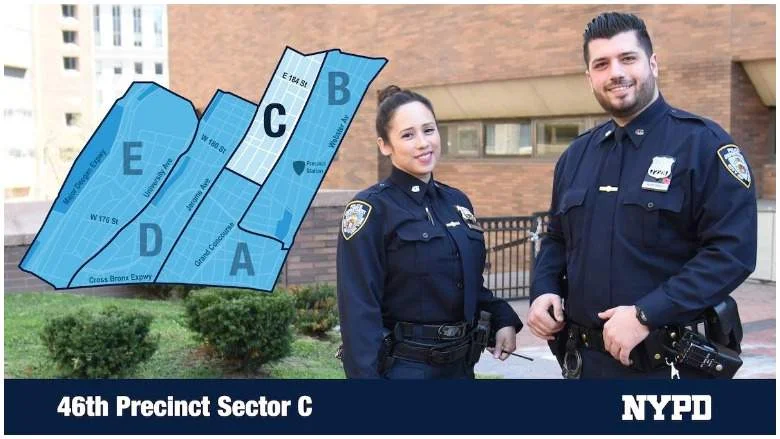
At the 46th Precinct stationhouse, a captain asked why EMS hadn’t been called, and ordered the partners to get Pagan-Alomar to the hospital right away, Pagan-Alomar says.

The Daily News obtained partial video of the encounter, which you can see here. Pagan-Alomar appears to reach toward Officer Lustica, but in the video, it is unclear whether she touched the officer because the women move out of the frame.

The blows knocked Pagan’s left eye from its socket and broke her orbital bone, her lawyers said. Doctors removed the eye three months later.

Pagan-Alomar says Officer Markvukaj did not intervene and that the violence only ceased when a third officer approached and told Officer Lustica to get off of her. Pagan-Alomar was placed under arrest. She says the officers took her back to the precinct and only later was she taken to a hospital for treatment.

Pagan-Alomar told the Daily News that Officer Lustica apologized after placing her under arrest, reportedly saying, “Forgive me. I didn’t want to do this to you.” Pagan-Alomar says while at the hospital, police had her sign a form that voided her complaint against the officers, but says she was on painkillers at the time and does not actually recall signing the form or realizing what it was.

A surveillance camera in the area captured part of the incident on video. It shows Pagan-Alomar, a mother of two, exchanging words with officers before appearing to reach toward Lustica’s back.

Lustica then wheels around and engages Pagan near the intersection of East Burnside Avenue and Jerome Avenue.

“This is one of the most egregious acts of brutality that I have been involved with," her civil lawyer, Michael Braverman, told the Daily News.

The NYPD says it cleared Lustica after an internal probe.

“For the rest of her life, Ms. Pagan-Alomar will be reminded daily of that morning in June when Officer Lustica attacked her so viciously that she lost her left eye,” her criminal  attorney, Nicolas Schumann-Ortega of The Legal Aid Society’s Bronx Criminal Defense Practice, told Bronx Justice News. “It is shameful that the Bronx District Attorney continues to drag this case on, and that Officer Lustica continues to walk the beat endangering the people of this community she supposedly serves. In the interest of justice, this case must be dismissed immediately, and Officer Lustica must be fired and charged criminally for this horrific assault.”

In a letter sent to Bronx District Attorney Darcel Clark Monday, Schumann-Ortega called on Clark to drop the charges against Pagan.

“Given the severity of Ms. Pagan’s life-altering injuries, we are asking that your office immediately dismiss the charges against her, and to Charge Officer Lustica criminally for this horrific assault,” the attorney wrote.

Although the video shows that Alomar barely touched or never touched the officer the NYPD on Monday again pushed back against Pagan’s version of events.

PARTIAL VIDEO IS HERE

PARTIAL VIDEO IS HERE

Sergeant Jessica McRorie, a department spokesperson, said Pagan “physically accosted a uniformed police officer, from behind, without provocation, while the officer was effecting an arrest for heroin possession. The Internal Affairs Bureau conducted an investigation and determined that the officer’s actions were appropriate under the circumstances and neither excessive nor unnecessary.”

Polite, White Kansas Cops Unlawfully Detain and Search a Black Man Moving into his New Home b/c Constitutional “Rights [myths]" Do Not Provide Black People Any Meaningful Protection from Cops

From [HERE] The Kansas chapter of the American Civil Liberties Union on Thursday asked state officials to investigate after a black man was detained by police while moving into his home, then allegedly harassed for weeks and blocked by the police chief from filing a racial bias complaint with the department.

Karle Robinson, a 61-year-old Marine veteran, was held at gunpoint and handcuffed in August as he was carrying a television out of a rented moving van into the home he had bought a month earlier in Tonganoxie, about 30 miles west of Kansas City.

“I’d like to see those cops and that chief lose their jobs because this was uncalled for — this is strictly racial profiling,” Robinson told The Associated Press in an interview Thursday.

He added that if he were white “we wouldn’t even be having this conversation right now.”

The ACLU of Kansas said in a news release that it was a case of “moving while black” and that the organization asked Kansas Attorney General Derek Schmidt to investigate the matter or refer the group’s complaint to the Kansas Commission on Peace Officers’ Standards and Training. The attorney general’s office said in an emailed statement that it has reviewed the ACLU’s letter and forwarded it to the commission in accordance with Kansas law.

“Mr. Robinson believes his detention was motivated by his race rather than a reasonable suspicion that he was committing a burglary,” Lauren Bonds, legal director of the ACLU of Kansas, said in the group’s release. “It also appears that the Chief of Police prevented Mr. Robinson from filing a credible, legitimate complaint and that is not in compliance with reporting and intake standards. He must not interfere with citizens registering complaints.”

The incident involving Robinson is one of the latest examples of situations in which law enforcement officers have had encounters or confrontations with African-Americans over their own belongings. In the Chicago suburb of Evanston, Illinois, city officials approved a $1.25 million settlement with a black man who sued after police tackled him and arrested him for stealing a car that turned out to be his own.

FUNKTIONARY explains;

rights - fantasmatic or fictitious objects having no reality in actuality by those imagining as an identity being in possession of them. Rights are cultural gratuities perceived through various fantasy frames, recognized, and sometimes even created, by man's system of law to provide a modicum or pretense of civility under a system whereby their very undermining and violation is vouchsafed. Rights are merely rites unless you know how to assert and defend them in order to enjoy them. 2) things people are free to do whether they are able to or not. 3) conditions of existence required by hue-man's nature for their potential survival (primarily against the cartoon that kills, i.e., the wholly unconscionable entity called the "State"). It is a mistaken notion that rights are enjoyed by one at the expense of the many—that is the realm of privilege. Enjoyment of rights in a neo-imperialistic world controlled by Yurugu through the Greater System (Symbolic Order), paradoxically, entails not only a recognition of their inevitability but, equally, their impossibility. How can we be endowed with rights, or even know what rights are when they are based on binary considerations? Rights, as ontological ephemera, cannot be universally observed, recognized, realized or, enforced—and paradoxically, act also as its own eternal source for its assertion and vessel for its fulfillment in our imaginary enjoyment of them. While the law reads rights referentially, what is universally needed in the praxis of rights discourse today is a particular re-inscription, demystification or reontologising of rights (revivified and convivial) by the pan-gendered subject-citizen-decoder—taken symptomatically rather than seriously. Most people rarely experience the cognizance of being property of corporate fictions because as long as you don't violate the rules of society your real status as feudal-property-slave is not involved or revealed. If there is no 'I,' to what and to whom do rights as objects accrue? Those who are confused by suffering (and the subject of same) require a re-onotoligisation of rights through the trajectory of meaning independent of their existence. Rights and even 'lefts' (i.e., what remains after all of our imaginary rights are traced to their inception as figment) for that matter, like good and evil, are human inventions which humans treat as non-human realities. While fantasy frames invent rights, romanticism reinvents them. Enjoy your symptoms and play with your syndrome—the symptom is the solution. Read carefuly the holding in the supreme Court case of U.S. v. Babcock. Rights are myths—obedience to servitude or jail is the reality. (See: Abilities, Bill of Rights, Monoright, Servitude, Fantasy, Jurisdiction, Human Resources, Citizenship, Frankenstein, Autonomy. Rule of Law, Surrogate Power, Indigenous Power, Yurugu, Jouissance, Privilege, Disobedience, Duty & Willpower)
If You Shot a Fleeing Cop in the Back Would You be Convicted of Murder? [Yes b/c the Law of the Jungle Only Applies to Public Rulers] White Pittsburgh Cop Acquitted after Shooting Antwon Rose to Death

Michael Rosfeld copy.jpg

JURY REMINDS BLACKS: IN A CORPORATE POLICE STATE YOU CAN BE EXECUTED ANYTIME, ANYPLACE. From [HERE] and [HERE] The mother of an unarmed black teenager fatally shot by a white police officer as he fled a traffic stop has expressed her anger and devastation over a jury’s decision to acquit the officer.

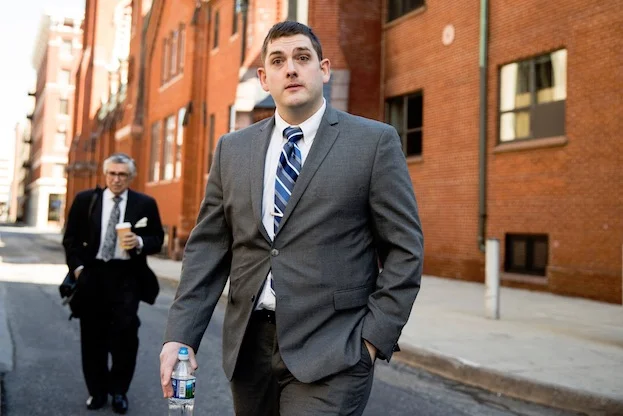
Former East Pittsburgh police officer Michael Rosfeld was charged with homicide for shooting Antwon Rose II last June in one of the many high-profile killings of black people by white police officers.

The teenager was a passenger in a car that had been pulled over because it matched the description of a vehicle that fled an earlier shooting in which a 22-year-old man was wounded, the Allegheny County Police Department said in a statement.

A video that recorded the fatal shooting and was posted on Facebook shows two people running from police vehicles as three shots are fired. One of the people, later identified as the 17-year-old, falls to the ground after getting shot in the back.

“Why are they shooting at him?” the woman recording the video says. “All they did was run and they’re shooting at them!”

Mr. Rosfeld shot Antwon, a passenger, three times — in his back, face and elbow.

Prosecutors say Mr. Rosfeld, 30, gave inconsistent statements about the shooting, including whether he thought Antwon had a gun.

On Thursday, Mr. Rosfeld testified in his own defense for 90 minutes. “It happened very quickly,” he said. “My intent was to end the threat that was made against me.”

He said on the stand that he thought he saw one of the two teenagers who ran from the car point a gun at him. He said he did not know which teenager made the motion.

The video, led to weeks of unrest and angry protests in the Pittsburgh last year, including a late-night march that shut down a major motorway.

On Friday, a panel of seven men and five women, including three black jurors, reached their verdict after less than four hours of deliberations.

The Allegheny County Police Department said that two firearms were found on the floor of the car. However, police found the guns after the shooting was over. The location of the guns in the car or proximity to the passengers was not disclosed. When asked if the teenager was found with a weapon on his person, Coleman McDonough, the department’s superintendent, said he was not. No police saw him with a gun at any time. 

The Pittsburgh Post-Gazette on Wednesday quoted Mayor Louis Payne of East Pittsburgh as saying that the officer who shot Antwon was hired in mid-May and had been formally sworn in hours before the shooting.

S. Lee Merritt, a lawyer for Antwon’s family, condemned the verdict in a tweet. “A Pennsylvania jury just concluded shooting an unarmed black child in the back as he ran away is not Murder, it’s not even criminal,” he wrote. “I will never be able to make peace with that. Everything has to change.” The family’s legal team has filed a federal lawsuit in the matter.

Merritt said: “We know that he was not armed at the time he was shot down, that he posed no immediate threat to anyone, and that, significantly, the driver of the vehicle he occupied was released from police custody.”

Late Friday night, a few dozen protesters marched in Pittsburgh, chanting, “Three shots in the back, how do you justify that?”

Reacting to the verdict, Rose’s mother, Michelle Kenney, said of Mr Rosfeld: “I hope that man never sleeps at night. I hope he gets as much sleep as I do, which is none.”

Rose, 17, had been riding in the front seat of an unlicensed cab when Zaijuan Hester, in the back, rolled down a window and shot at two men on the street.

A few minutes later Mr Rosfeld pulled the car over and shot Rose in the back, arm, and the side of the face as he ran away.

He told the court he thought Rose or another suspect had a gun pointed at him.

Neither teen was holding one when Mr Rosfeld opened fire, though two semi-automatic handguns were later found in the car.

Antwon’s family’s lawyer had pushed for a murder conviction, saying it had been “pretty obvious” the teenager posed no threat to the police officer, who had only been sworn in to the police department hours prior to the fatal shooting.

Fred Rabner told the jury: “Make no mistake, there is nothing reasonable or appropriate about the manner Officer Rosfeld took Antwon’s life.”

Defence lawyer Patrick Thomassey told reporters Mr Rosfeld was “a good man” and the case had “nothing to do with the kid’s colour”.

Prosecutors claimed the new recruit gave inconsistent statements about the shooting, including whether he thought Rose was armed.

During the four-day trial witness John Leach told the jury he heard Mr Rosfeld crying and hyperventilating after the shooting and repeatedly saying: ‘I don’t know why I shot him. I don’t know why I fired.’ 

However, a defence expert testified Mr Rosfeld was justified in using lethal force to protect himself and the community if he thought a suspect had just been involved in a shooting. 

In his closing argument assistant district attorney Jonathan Fodi declared Mr Rosfeld had acted as “judge, jury and executioner,” and the video evidence showed “there was no threat” to the officer.

Rose’s mother added she was unsurprised by the verdict: “It isn’t what I hoped for, but it’s what I expected. 

Her family will now pursue the federal civil rights lawsuit they filed last August against Mr Rosfeld and East Pittsburgh police.

FUNKTIONARY defines "Tyrannolaw" as a peremptory (beyond debate or recall) system of law held to be superior to humanity, such that whenever the two are in conflict, humanity must yield.

FUNKTIONARY defines "Tyrannolaw" as a peremptory (beyond debate or recall) system of law held to be superior to humanity, such that whenever the two are in conflict, humanity must yield.

Tyrannolaw - a peremptory (beyond debate or recall) system of law held to be superior to humanity, such that whenever the two are in conflict, humanity must yield. Typified by too many self-propagating laws, contrived complexity, debatable interpretations, encroachment, abuse, corruption, symbolaeography, and overdeveloped unrelenting and violent enforcement. Tyrannolaw subjugates humanity to unyielding, despotic, blind and arbitrary authority—resulting in constraint, conformity and fear. Tyrannolaw is the by-product from the myth that truth and law came from God. Reflect for a minute and realize that if people can't manage themselves, how can they possibly manage law. Law cannot prevent its abuse. Tyrannolaw operates under command mentality that breeds irresponsibility and can only flourish in a predatory legalistic world where profit drives the legal structure. People crave reality's uncertainty. Unwittingly, law makes fatal opportunities for which the law renders witless. So we have law and order before freedom—imprisoned for trying to find a way out. (See: Noble Law, Holodeck Court, Justice. Equality, Power, Control, Language, Government, Corporate State, Terms, "The Law" & Police)

Read More

Venezuela President: US Government is Withholding $5 Billion of Medical Supplies in ‘Criminal’ Measure

trump puppet gangster .jpg

From [HERE] The US government is withholding US $5 billion which was meant for the purchase of medicines and raw materials used in medical production, President Nicolas Maduro claimed Wednesday.

Speaking from Miranda State, Maduro denounced that US authorities “have ‘kidnapped’ US $5 billion [in] one of the most criminal, brutal, fascist economic measures which has been seen in the economic history of the world.” “Trump is the person responsible,” he added.

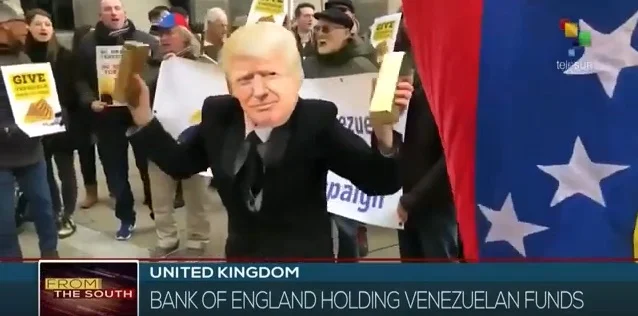
US and European governments have been working on freezing Venezuelan assets in recent months, including CITGO, the US-based subsidiary of state oil firm PDVSA, as well as US $1.2 billion worth of gold held in the Bank of England. According to Washington, these assets are being held to finance a “future government” led by self-declared “Interim President” Juan Guaido and to avoid alleged corruption on the part of the current government. US Vice President Mike Pence recently urged other countries to apply similar measures against Venezuelan assets.

The asset freezes have come alongside sanctions, with an oil embargo imposed in late January and sanctions against the mining sector announced earlier this week.

Maduro’s accusations coincided with a visit by a delegation from the office of the United Nations High Commissioner for Human Rights. The delegation is in Venezuela doing preliminary investigative work and meeting with pro- and anti-government actors in preparation for a possible future visit by UN High Commissioner Michelle Bachelet.

While conclusions have yet to be announced, Bachelet did state this week that US-led financial measures, including the withholding of assets and sanctions “contribute to the worsening of the economic situation [in Venezuela] and will impact on human rights and wellbeing of the people.”

Bachelet also expressed her “great concern for the magnitude and gravity of the repercussions of the actual crisis on human rights, which also constitutes a dynamic factor in regional destabilization” and underlined the “deteriorating” condition of the health system. In addition to condemning US-led sanctions, Bachelet also took aim at the Maduro government, criticizing what she termed legal irregularities in the detention of citizens by certain branches of the state security forces.

On Thursday, the UN Human Rights Council in Geneva also approved a resolution presented by the Non-Aligned Movement regarding the negative impact of sanctions on Venezuelan human rights.

Pharmaceutical sector re-launched

Speaking from the Jipana automatised medical supply warehouse, Maduro announced the revamping of the public-sector pharmaceutical industry as the government looks to overcome severe shortages in the country’s medical sector. Maduro had previously identified the pharmaceutical industry as playing a key role in any solution to the current economic crisis.

Jipana is the largest of five warehouses built with Chinese assistance that help supply the Barrio Adentro health program, public hospitals, dental clinics and pharmacies. The other four are located in Barinas, Lara, Aragua and Anzoátegui States.

As part of his plans to stimulate the industry, Maduro announced the creation of a public-private workgroup which will look to fix consumer prices and cost structures, as well as iron out distributive and productive bottlenecks in the sector, hinting at the expansion of a subsidy program based on the Homeland Card program for “those who need it.”

Likewise, the president once again urged the Venezuelan pharmaceutical industry to work towards replacing imports with nationally produced goods. Venezuela’s medical industry is heavily dependent on imports, especially of raw materials and active principles used in medicine production. Access to the global financial system has been hindered by US-led sanctions limiting the country’s ability to pay for imported medicine and exasperating pre-existing shortages in the industry.

In this context, Maduro highlighted international support and trade deals in supplying Venezuelan hospitals and pharmacies, particularly from Cuba, China, Russia, Iran, Turkey, Belarus, as well as the World Health Organisation (WHO).

The Venezuelan leader told the nation that “various” tonnes of medicine to supply the public sector medical network are due to arrive next week from Russia as part of the new bilateral agreements. In late February, 7.5 tonnes of medicine arrived from Moscow with the support of the WHO and the Pan-American Health Organisation, while weeks before over 900 tonnes of medicine from Cuba and China also arrived at Venezuelan ports.

Russian authorities have continued to back the elected Venezuelan government despite mounting pressure from Washington for Moscow to recognise Guaido. Both countries held talks centered on Venezuela this week in Rome, but no concrete agreements were reached.

“No, we did not come to a meeting of minds,” U.S. special representative Elliot Abrams told reporters. “Who gets the title of president” in Venezuela is still a point of contention between the countries, he added. Russian spokespersons agreed that the meeting had been unsuccessful, telling the press, “We failed to narrow positions.”

ACLU Sues FBI for “Improperly Withholding" Information Requested About Its Surveillance of Black Activists

From [HERE] The American Civil Liberties Union (ACLU) and the Center for Media Justice (CMJ) filed a complaint on Thursday accusing the FBI of “improperly withholding” information sought in a Freedom of Information Act (FOIA) request from the organizations in October regarding surveillance of black activists.

The organizations sought to obtain information related to the surveillance of black people on the basis of a “purported shared ideology.” The request was made in response to a 2017 FBI report titled “Black Identity Extremists Likely Motivated to Target Law Enforcement,” in which connections are drawn between alleged police brutality against African Americans and an increase in ideologically motivated violence toward law enforcement.

The FBI, after reviewing 552 pages of documents, released 320 pages of information on February 22 with heavy redactions asserting multiple exemptions under the FOIA. However, the complaint takes issue with the heavy redaction of the documents and alleges that the FBI failed to provide “any description of the withheld information sufficient to permit [the ACLU and CMJ] to determine whether [the FBI] properly withheld information under the specified FOIA exemptions.”

The ACLU and CMJ also released an analysis of the alleged deficient disclosure of records on Thursday which details specifically what ways the organizations allege the disclosure was deficient. The alleged insufficiencies with the FBI’s disclosure include a failure to explain why certain documents referenced within the disclosed information were so heavily redacted or omitted entirely, a failure to conduct an adequate search for records, and a concern that the lack of internal emails within the requested period suggests an improper withholding of public records.

The analysis further alleges that the FBI’s creation of the term “Black Identity Extremist” appears to build on a “shameful history” of the agency’s efforts to discredit activism by Black-led organizers, and is meant to “group unconnected Black people together for the purpose of surveillance, infiltration, and disruption of their racial justice advocacy.”

According to an Indictment, After a Baltimore Cop "Deliberately Ran Over" a Black Man, a Conspiring White Cop-Artist Planted a BB Gun Near His Body to Justify Abuse, False Arrest & Prosecution

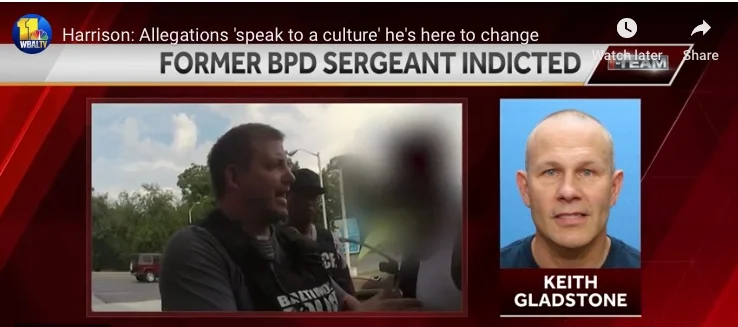
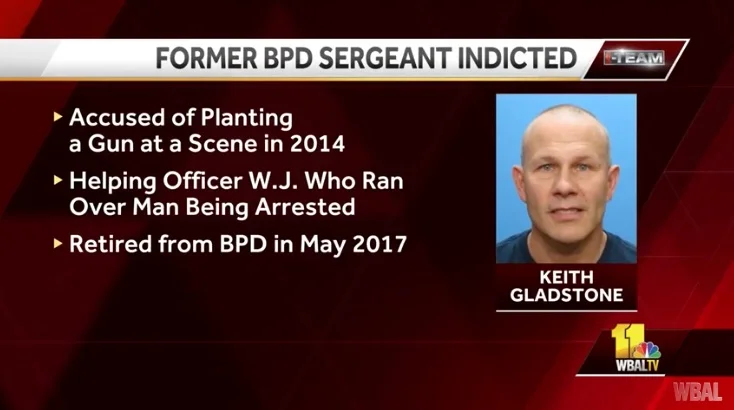
From [HERE] A white Baltimore police sergeant linked to the Gun Trace Task Force has been indicted on federal charges including civil rights violations and witness tampering.

Keith Allen Gladstone, 51, had his initial appearance and arraignment in federal court on Tuesday. The indictment was returned on Feb. 27 and sealed until the Tuesday hearing.

“Prosecuting criminals who work in police agencies is essential both to protect our communities and to support the many honorable officers whose reputations they unfairly tarnish,” U.S. Attorney Robert K. Hur said in a statement. “This is not about policing, it is about a criminal conspiracy.”

Acting Commissioner Michael Harrison said that based on the indictment and other information available to him, three officers will be suspended pending the outcome of an internal investigation. A fourth officer was already suspended, and will also be investigated.

“The allegations outlined today in court are beyond disturbing, and speak to a culture that I am here to change," Harrison said in a statement. "We are working with our federal partners on this ongoing investigation."

BPD gladstone.jpg

Prosecutors point to one incident on March 26, 2014, when Gladstone was having dinner with another officer when he got a call on his cell phone from a "W.J." That officer is not directly named in the indictment, but is likely a reference to Sgt. Wayne Jenkins, a racist suspect who later pleaded guilty in the wide-ranging Gun Trace Task Force scandal.

According to the indictment:

On the evening of March 26,2014, GLADSTONE, who was on duty, was having dinner with Officer 1 at a restaurant in Southeast Baltimore. GLADSTONE received a call on his cell phone from W.J., who was in a panic.

GLADSTONE answered the call but left the restaurant to speak on the phone out of Officer 1 's presence. W.J. had just deliberately run over an arrestee, D.S., in the front yard of a home in Northeast Baltimore.

GLADSTONE went back inside the restaurant and asked Officer 1 if he had a BB gun and when Officer 1 told him he did not, GLADSTONE asked Officer 1 to call Officer l's partner, Officer 2. Officer 1 did as directed but Officer 2, who was not working that day, told Officer 1 he did not have a BB gun either.

Officer 1 told GLADSTONE that Officer 2 did not have a BB gun either. GLADSTONE then left the restaurant a second time and went to the trunk of the BPD vehicle he was driving where he retrieved a BB gun.

GLADSTONE went back into the restaurant and told Officer 1 that they had to leave immediately. GLADSTONE then drove at a high rate of speed to the site of the D.S.'s arrest on Anntana Avenue and Belair Road in Northeast Baltimore City.

Once there GLADSTONE exited his vehicle and carried a BB gun to the front yard of the house where D.S. had been run over. GLADSTONE dropped the BB gun near a pickup truck where D.S. lay injured on the ground unable to use his legs.

GLADSTONE then walked over to W.J. and Officer 3. GLADSTONE told W.J. in Officer 3's presence "it's over by the truck," or words to that effect and GLADSTONE told W.J. to have someone search by the truck. GLADSTONE then left the scene and drove away with Officer 1.

W.J. told Officer 4 that a gun was in the grass and told Officer 4 to move it under the pickup closer to the victim. Officer 4 retrieved the BB gun from the grass and placed the BB gun near the front driver side wheel underneath the pickup truck.

The BB gun was then seen by another BPD officer and ultimately recovered by the BPD's crime lab unit. D.S. was taken from the scene to the hospital in custody where drugs were recovered from him.

He was then taken from the hospital to BPD's Central Booking where he was charged. Those charges included possession, use and discharge of a gas or pellet gun, for the BB gun that GLADSTONE planted at the scene of D.S.'s arrest, and a number of drug offenses.

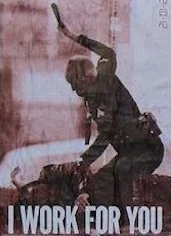
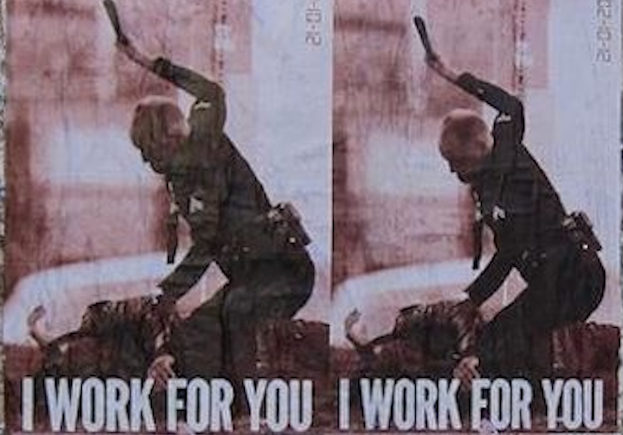
W.J. wrote a false statement of probable cause in the name of Officer 5, which Officer 5 agreed to submit in support of those charges. W.J. approved the false statement of probable cause as Officer 5's supervisor. D.S. was detained on those charges until at least April 2, 2014. The charges against D.S. arising out of his arrest on March 26, 2014, were disposed of by nolle prosequi, which is a form of dismissal on January 16, 2015. [MORE]

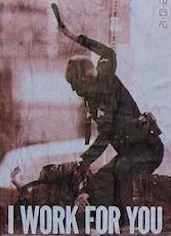
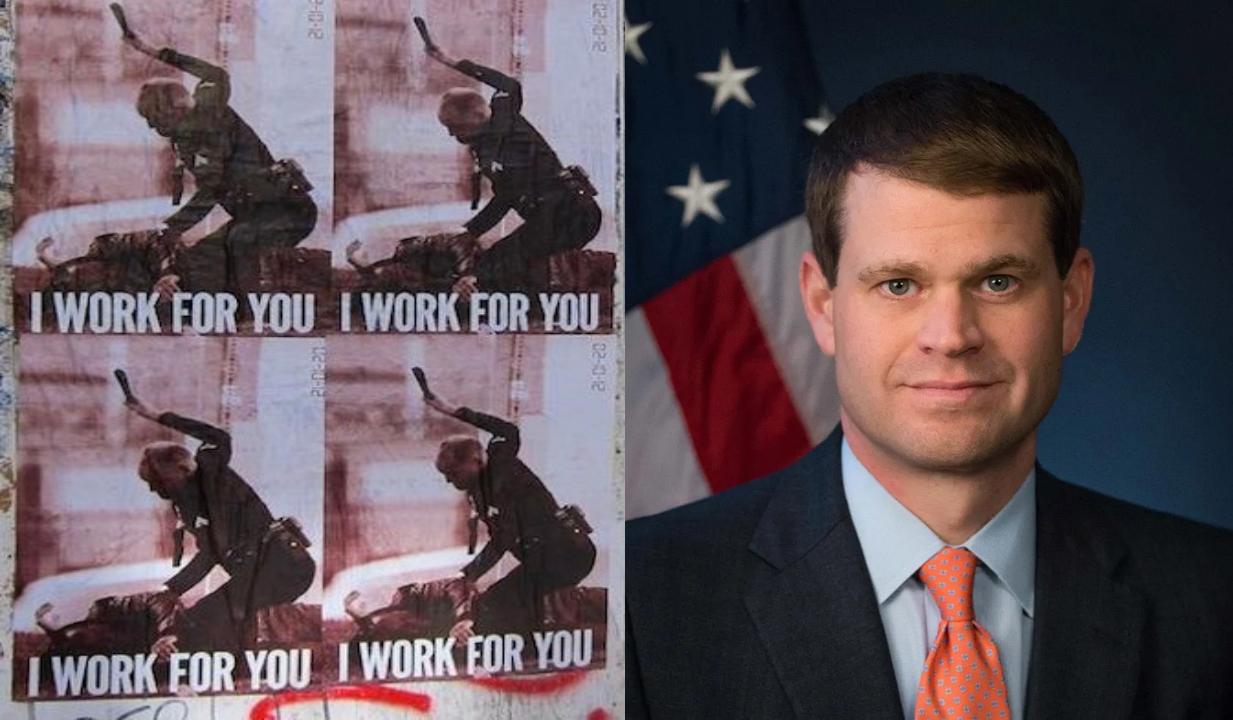
i+work+for+you (1).jpg

An attorney said Gladstone entered a plea of not guilty, and that his client is "not like" the defendants who have already pleaded guilty or who have been convicted in the GTTF cases.

Gladstone joined the force in 1992 and was promoted to sergeant in 2011. He retired the following year, but was reinstated in 2013. He led a special enforcement section unit assigned to the Western District until he retired a second time in 2017.

The indictment also alleges that after W.J. and six other officers were arrested on federal racketeering charges, Gladstone told the officer he had been dining with that night that, if questioned about the night's events, he should tell investigators that they were there for "scene security."

Last June, Gladstone was named in a $40 million lawsuit that alleged he supplied the drugs that were planted in a different arrest. That suit also named Jenkins, Officer Ryan Guinn and the estate of Detective Sean Suiter. In January of last year, a jury awarded $75,000 to a man who alleged Gladstone and another officer used excessive force while arresting him.

If convicted, Gladstone could face up to 35 years in federal prison. U.S. Magistrate Judge Beth P. Gesner ordered him released under supervision of U.S. Pretrial services.

Although Black Teen Didn’t Fit the Description a White Cincinnati Cop Unlawfully Detained Him & Then Tasered Him in the Back b/c the Cop Feared for His Safety as the Teen Fled, $2M Suit Filed

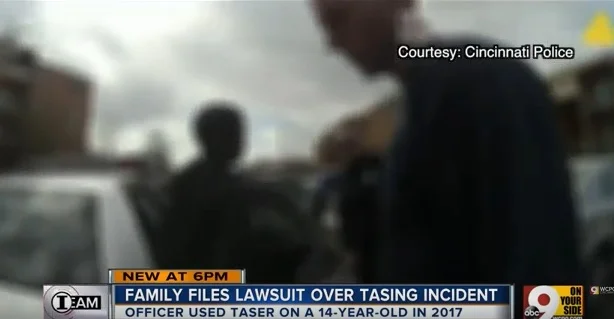
Cincinnati Police taser blacks.jpg

[like the 4th Amendment says, If You’re Black You Can Be Stopped Anytime and If You Flee, Cops Can Gun You Down. images blurred by white media to protect the system of racism white supremacy] From [HERE] and [HERE] The family of a teenage boy who was stunned with a Taser twice and who broke his clavicle in a fall while he ran from a police officer two years ago filed a lawsuit against the officer, the Cincinnati Police Department and the city.

The 16-year-old's family is alleging that Officer Kevin Kroger violated the department's use-of-force policy, used excessive force, violated the boy's civil rights and caused him emotional distress. Diondre Lee and Antionette Lee along with their son, now 16, filed a lawsuit in Hamilton County Common Pleas Court. They're seeking $2 million in the lawsuit.

The boy was 14 years old, 5'5" and about 120 pounds on March 2, 2017 when he ran from Officer Kroger. Police reports and police body camera video show Kroger was in a Price Hill apartment complex at about 6:30 p.m. when he spotted "a previously stolen vehicle" that had been used in an attempted shooting earlier that day just a few blocks away. Kroger also spotted "five black male teenagers walking together, one of which matched the description of the suspects from the felonious assault."

Kroger was patting down the 14-year-old — who didn't fit the description of the shooting suspect, but was the first one detained — "for possible weapons" when the boy started running. He later told police he ran because he had marijuana in his pocket. Kroger took off after him, and said he didn't give a verbal warning before using a Taser because he thought the teen might have a weapon and he didn't want to give the boy "time to react."

The 14-year-old "fell hard on the pavement" after being hit with the Taser, breaking his collar bone, according to the lawsuit.

"Yeah, he bounced," Kroger said on police body camera. "He hit real hard."

Kroger used his Taser on the boy a second time, while the teen already "was on the ground and writhing in pain," and "without reasonable provocation or threat of harm." Kroger never told the teen to stop, the suit states. The cop also threatened to use it two more times while he was handcuffed, according to the lawsuit.

Cincinnati police policy says officers should give warning before using their Tasers whenever possible. The policy also states that fleeing alone is not enough justification to use a Taser.

Before the incident, the boy played football, basketball and baseball, but has since stopped playing sports because of residual pain and a hit to his confidence caused by the injury, according to the lawsuit. It also states that he suffers from PTSD and anxiety associated with adult authority figures.

Lee's attorney said the then 14-year-old was not armed and never posed a threat to police.

"They certainly were looking for a suspect related to a stolen car, but my client did not in any way meet the description of that suspect," Cummings said.

"Number one, he never told my client to stop when he had ample opportunity to tell my client to stop. Number two, he Tased him from behind. My client fled from him. He was afraid of Officer Kroger. We don't think it's reasonable that Officer Kroger believed, truly, that he was in danger of his life or harm," Cummings said. [MORE]

"Suspect or not, he’s still a human being," the boy's father, Diondre Lee, told WCPO in December. "The professionalism is out the door. And it’s evident. It’s on tape. How do they justify that? They got body cams on and they’re still carrying on like this. They don’t care. How do we tell our children not to be afraid of these people behind the badges, acting the way they’re acting?"

Cincinnati's police union president Dan Hils told The Enquirer Kroger was cleared of wrongdoing by an internal investigation, the police administration and the Citizen Complaint Authority.

Hils said in a Facebook post the teen had been in a stolen car, had drugs in his possession and refused to stop for police [therefore, like the Constitution says, he lost all his rights] "It was a legitimate use of force," Hils said. "This lawsuit is outrageous." [facism is here] The union will provide legal counsel to defend Kroger in the lawsuit. "I consider him possibly the best street policeman I've ever had work for me," Hils said.

"You researched dozens and dozens of uses of force looking for something to sensationalize and now the taxpayers will have to defend a bull crap lawsuit," Hils wrote criticizing a WCPO reporter on Facebook Tuesday.

In October, Black cop Kevin Brown was given a seven-day suspension after he used a taser to stop an 11-year-old girl who fled after she was caught allegedly shoplifting. The City of Cincinnati also agreed to pay the family of that girl $220,000.

In that case, internal reviews of the incident did not clear Brown of wrongdoing. Federal authorities are also now investigating whether Brown violated the girl's civil rights.

Supreme Court Allows $4 Million Award to Stand: LA Deputies Broke Into a Homeless Latino Couple's Shack, Shot Man 10X Causing Lost Leg & Shot Pregnant Woman in the Back

melendez shack la.jpg

From [HERE] and [HERE] The U.S. Supreme Court Monday let stand a nearly $4 million award to a formerly homeless Lancaster couple for a raid by Los Angeles County sheriff’s deputies that caused the man to lose a leg.

In declining to take up the case involving Angel and Jennifer Mendez, the nation’s highest court upheld an appellate panel’s finding that the deputies were liable for the warrantless raid while searching for a parolee-at-large.

Angel Mendez and his wife sued Los Angeles County eight years ago, alleging excessive force and federal civil rights violations.

Angel Mendez was shot approximately ten times and suffered severe injuries. He lost much of his leg below the knee, and he faces substantial ongoing medical expenses. Jennifer Lynn Garcia (now Jennifer Mendez,) who was pregnant, was shot in the upper back and left hand. On the afternoon of the shooting, both were sleeping in their modest home, a small one room structure on the property of Paula Hughes. Two Los Angeles County Sherriff's deputies, Conley and Pederson, unlawfully entered the structure. In doing so, they roused the sleeping Mr. Mendez. In rising from the futon on which he had slept, Mr. Mendez picked up a BB gun that was on the futon to place it on the floor. In the process, the gun was pointed in the general direction of Conley and Pederson. The deputies, believing that the BB gun threatened them, quickly opened fire.

Before the shooting, deputies of the Los Angeles Sheriff's Department were searching for a parolee-at-large, Ronnie O'Dell. A confidential informant had seen someone resembling O'Dell riding a bicycle in front of Paula Hughes' home. After a briefing during which officers were told that a couple resided in a shack behind Hughes' home, officers were dispatched to the scene and entered Hughes' house. Officers Conley and Pederson, who were among the officers informed about the couple living in the backyard of the Hughes property, were charged with searching the area to the rear of the house. Conley and Pederson, guns drawn and on alert because they believed O'Dell to be armed and dangerous, approached the structure in which the Mendezes resided. There were many apparent signs that the structure was a residence, including: an electrical cord was running to it; an air conditioner was installed; and some storage lockers were nearby. Conley and Pederson nevertheless entered the structure without announcing their presence, and a split second later, misperceiving the threat posed by the BB gun, shot the Mendezes, which caused their grave injuries. [MORE]

melendez shooting la deputies.jpg

U.S. District Judge Michael W. Fitzgerald handed down his ruling for the plaintiffs in Los Angeles federal court in August 2013, awarding $3.8 million to Mendez and $222,000 to his wife, for damages resulting from Fourth Amendment violations by the deputies.

JudgeFitzgerald found that their constitutional rights to privacy were violated when deputies subjected them to an unlawful search and seizure. Fitzgerald found the deputies didn’t have legal grounds to search the background and therefore are responsible for damages.

“It’s hard to imagine how two people could be at fault for lying in a shack on a bed doing nothing,” said Gerald Ryckman, one of the couple’s attorneys.

Angel and Jennifer Mendez were living on, in a backyard shed behind a front house. The couple had fallen on hard times and were practically homeless, said the judge. A friend of Angel Mendez allowed them to stay in the shack-like structure till they got back on their feet. [MORE]

The deputies appealed to the U.S. 9th Circuit Court of Appeals in 2016, unsuccessfully arguing that the dilapidated wooden shack did not appear to be a residence and consequently a warrant was not required.

Affirming Fitzgerald’s finding, the appellate panel determined that the deputies should have known that the shack was occupied, since it was “surrounded by an air conditioning unit, electric cord, water hose, and clothes locker.”

County lawyers then appealed to the Supreme Court, which overturned the appellate ruling. However, the 9th Circuit upheld the ruling last year, again finding the deputies liable. This time, the Supreme Court declined without comment to consider a further appeal.

Infected with Racism Mental Virus, White Sacramento DA Needlessly Smeared Stephon Clark & His Family [She has Not Charged Any Cop in Over 30 Separate Shooting Investigations]

From [ThinkProgress] Stephon Clark’s family didn’t have any real hope that Sacramento County District Attorney Anne Marie Schubert would charge the police who killed the unarmed 23-year-old in his grandparents’ backyard in 2018.

But Schubert’s press conference on Saturday managed to shock them anyway — not in her detailed explanation of the evidence that the officers sincerely believed Clark’s cellphone was a gun, but in what came next.

After first insisting that her investigation’s sole question was whether or not Clark’s killing was a crime, Schubert suddenly moved the goalposts 45 minutes in. With that question already thoroughly answered, Schubert additionally revealed that Clark had been accused of domestic assault two days prior to his death, that he’d threatened to kill himself, and that his children’s mother gave a “very negative” response to the last text Clark ever sent her: a question, attached to a picture of his own hand holding 10 prescription pills.

Schubert had not given family members advance notice about her plans to portray these legally-irrelevant aspects of Clark’s final days, close family friend Jamilia Land told ThinkProgress Monday.

We were realistic about what the likely outcome would be, that there would be no charges,” Land said. But the family was taken aback by “the lowness of where she stooped to with putting out all this information,” she said — a move that “completely blindsided” them after Schubert did not mention the information during a brief private meeting with Clark’s mother just hours before the press conference.

Schubert, through a spokesperson, declined to clarify her intent or legal logic, or to address Land’s claim that her office hadn’t shared the same details with Clark’s own family members before she revealed them on camera.

Locals protested Schubert’s decisions in downtown Sacramento on Monday night, with marchers blocking a strip of highway they had repeatedly commandeered in the immediate aftermath of Clark’s killing last year. Police showed less patience with the activists this time, arresting more than 80 people who refused to disperse from a roadway that is closely linked to the racial segregation that shaped the city and neighborhood where Clark grew up and died.

Schubert’s smear wasn’t necessary, legal experts told ThinkProgress. The current courtroom rules in the United States, combined with the facts Schubert laid out over the first 45 minutes of her press conference, supported her conclusion that Clark’s killers had been justified.

Jonathan Blanks, a research associate at the Cato Institute’s Project on Criminal Justice. “She was under no obligation to share her theory as to why he was acting out in the way he was and could have simply let it go without saying in her public comments.”

American Civil Liberties Union of California legislative advocate Lizzie Buchen agreed, calling it “excessive and unnecessary” and noting that Schubert has now declined to charge any officer in more than 30 separate on-duty shooting investigations during her career.

“She is again bending over backwards to find a reason not to prosecute, and to exonerate herself and her office from anyone finding fault with these decisions in part by painting this picture of this person who the officers killed,” Buchen said.

The law requires jurors and prosecutors to rely on what the officers “honestly and reasonably believe[d],” as Schubert correctly stated. The officers’ body cameras captured a flash of light near Clark’s hands that is consistent with the officers’ separate explanations for why they thought the cellphone he was holding was actually a gun. And their “spontaneous statements” about a gun in the seconds after they killed Clark are “considered inherently reliable” by the courts, Schubert said.

It isn’t just outside observers who say Schubert could have stopped there. Schubert made the same point herself, repeatedly and less than an hour before she shared Clark’s phone records.

“Our question in this review is limited to one question: Was a crime committed?” she said five minutes into the press conference, repeating the query twice more in the next minute. Two minutes later, she repeated it again, saying that determining whether police officers had committed a crime was “the single question we have today in our review.”

Yet Schubert dropped that single-minded focus in the final 20 minutes of her presentation, detailing lurid snapshots of Clark’s final 48 hours punctuated with apologies for the pain she knew she might be causing. When reporters dutifully connected the dots she’d laid out by asking if Clark had intended to commit “suicide by cop” that night, Schubert demurred and moved on to other questions.

“Some of the details that came out during the course of that press conference were unbeknownst to anyone except the parties directly involved with the exchange of messages,” said Land, the Clark family friend. “His mother made it very clear that she had an incredible relationship with her son and that there was not much that was happening in his life that she was not privy to [but] there was no knowledge about the depth of those text messages.”

PROVIDING FACTS IN ACCORD WITH THE APPETITE OF THE RACIST LISTENER NOT THE REALITIES OF LIFE. Dr. Amos Wilson explains, “In the context of White American domination there is no innocent Black male, just Black male criminals who have not yet been det…

PROVIDING FACTS IN ACCORD WITH THE APPETITE OF THE RACIST LISTENER NOT THE REALITIES OF LIFE. Dr. Amos Wilson explains, “In the context of White American domination there is no innocent Black male, just Black male criminals who have not yet been detected, apprehended or convicted. Their mere presence inspires in White Americans, fears of being assaulted, raped, robbed, or some other indefinable dread of being criminally victimized. Fantasies of the sexual molestation of White females by rapacious Black males are common to the White American male and female consciousness, and are frequent themes of their literary, cinematic, and pornographic productions.


For a very large percentage of White Americans, young Black males, sexual promiscuity, and criminality are synonymous. In the dominant White American consciousness the African male is existentially guilty, (i.e., he is guilty by his mere existence) for merely having the audacity of being alive. There is a pervasive feeling among many White Americans that their world would be much more secure if all young Black males were imprisoned, solitarily confined to their ghettos, or kept under constant surveillance.”

After SeQuette Clark watched her son’s character questioned on television, she told national reporters it was “a smear campaign.” Land then stepped in at her request to field all other questions for the family.

Land said the family now hope to change the legal standards governing police use of deadly force. The state legislature is due to consider a measure this spring — AB 392 — that would tweak the rules in a fundamental way that advocates say would not increase the dangers officers face.

Under the current standards, Buchen said, “an officer can kill someone in any situation where it is reasonable to do so. It doesn’t matter if they had access to a taser, or if they could have retreated safely.” AB 392 would retain the prohibition on evaluating officer actions through information they didn’t have at the time. But it would require officers to exhaust all other reasonable and safe options before they resort to deadly force.

“We’re using the same vantage point but asking a different question,” Buchen said. “Instead of ‘Was it reasonable for an officer to do this?,’ the question is, ‘Was it necessary?'”

Such a change in law would modify the question prosecutors like Schubert get charged with answering in cases like Clark’s. But it wouldn’t change the dynamics surrounding her separate choice to invite the press to further scrutinize Clark’s personal conduct in their coverage of the city’s reaction to her decision.

The information Schubert opted to share on camera immediately began to recast Clark in the court of public opinion. {White] Reporters took up the prosecutor’s invitation to chase the sorts of “he was no angel” stories that often dog families of color grieving a loved one struck down by cops in questionable circumstances.

The Clarks saw an immediate effect from Schubert’s choice, Land said, as national media pumped them for reaction quotes over the ensuing 48 hours.

“Now what are people reporting? What are people curious about? People want to know about the text messages, about the drugs, about was he in fact suicidal, the comments on social media,” said Land.

According to Land, the Clark family now worries the public conversation will follow the press conference’s lead, painting Clark’s character with an overly broad brush: “He was a thug, he was a woman-beater, he was this that and the other.”

Those tawdry simplifications, Land said, encourage the public to look past harder and broader pieces of Clark’s story. “He was 23 years old. He was in a community that has been economically disenfranchised. And oftentimes there is this vacuum, this feeling that there is no way out.”

Brookings Institute Study says Cities with Majority Black Populations are on the Rise: there are 1,262 Black-majority cities, an increase of more than 100 cities Since 2010

According to a report from the Brookings Institute, American cities in which blacks constitute a majority of the population—what they call “black-majority cities”—are on the rise. They include the core cities of metropolitan areas like Detroit, Baltimore, and Memphis as well as smaller suburban municipalities like East Cleveland, Ohio,Wilkinsburg, Pa., and Ferguson, Mo. Black-majority cities (which include cities, towns, and other census-designated places) numbered 460 at the 1970 census, and 1,148 by the 2010 census. And, as of the latest census estimates (2017), there are now 1,262 black-majority cities, an increase of more than 100 such cities during this decade alone.

Black-majority cities are rising amid a national conversation surrounding whether they can improve and develop while retaining their black majority. With these places often beset by white flight and home devaluation, which totals $156 billion in losses nationally, planners and sociologists use ominous words like “gentrification,” “merger,” “annexation,” “bankruptcy,” and “de-annexation” to convey a positive strategy for renewal and growth in black-majority cities.

Yet black-majority cities have assets worth building upon, investing in, and fighting for. Black-majority neighborhoods hold $609 billion in owner-occupied housing assets and are home to approximately 10,000 public schools and over 3 million businesses, according to a recent Brookings-Gallup analysis on home values. But none of these assets are greater than the people and culture within black-majority cities. Black-majority cities matter like the black lives in them. The fight for leaders to retain autonomy and sovereignty—while demanding respect—reflects their recognition of the value in black-majority cities.

HOW DID THE NEW BLACK-MAJORITY CITIES COME ABOUT?

From 1970 to 2010, the total number of census-recognized cities grew by nearly 50 percent. But most of today’s black-majority cities—more than 800 of the 1,148 in 2010—already existed in some form in 1970. Moreover, the black share of the U.S. population rose only slightly over this period, from 11.1 percent in 1970 to 12.6 percent in 2010. Therefore, the emergence of black-majority cities reflects more than anything else a changing demographic landscape between and within cities. A new great migration and intra-metropolitan movement have reshaped urban, suburban, and rural communities, facilitating the rise of today’s black-majority cities.

An existing city’s transition to a black-majority can occur as both black and non-black populations either increase or decrease. To better understand the demographic dynamics giving rise to black-majority cities, Figure 1 below indicates where these cities fall within a typology based on the direction in which total black and non-black populations have trended. Each dot represents an individual black city. We apply this typology to all U.S. cities in which population figures exist for each decennial census from 1970 to 2010, and the median total population of those figures exceeds 2,500. However, only the black-majority cities (as of 2010) are shown in Figure 1. [report & graphs are [HERE]

  • Cities in the Boomtowns quadrant gained both black and non-black population from 1970 to 2010.

  • Cities in the White Flight quadrant gained black population, but experienced a decrease in non-black (largely white) population.

  • Cities in the Suburbanized quadrant lost both black and non-black population.

  • Cities in the Gentrified quadrant lost black population, but gained non-black population. [MORE]

Cleveland Police Union Appeals Firing of White Cop who Shot Tamir Rice to Death in an Effort to Force His Unwanted "Public Service" Back Onto the Community

tamir+rice+cop.jpg

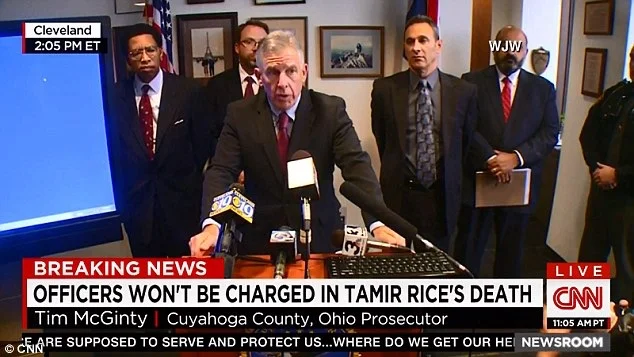
From [HERE] Nearly five years after Tamir Rice was killed by an overzealous cop, the police union involved was looking to vindicate the officer who fired the fatal shots into the 12-year-old boy. The Cleveland Police Patrolmen’s Association (CPPA) on Friday filed an appeal to overturn the termination of former officer Timothy Loehmann, arguing that he was fired for something not related to the shooting.

“Officer Loehmann has been treated unfairly by the city and the arbitration,” Police Union president Jeff Follmer told a local Fox affiliate after the appeal was filed. “We are hoping whatever county judge receives this appeal will go on the merits of fact and not political pressure.” 

In 2017, Loehmann was fired when it came to light that he had resigned from a previous department after six months when several supervisors determined he was unfit to be a police officer. That information was not disclosed on his application with the Cleveland Police Department, which an arbitrator determined was a lie and upheld the city’s decision to fire the disgraced officer in December. 

Loehmann had only been with Cleveland for eight months when he shot Rice, who was playing in a park with an Airsoft pellet gun, in November 2014. A racist suspect resident called 9-1-1 and gave the dispatch the misleading impression that an adult Black man, possible a military veteran, was at a park filled with people, threatening them with a gun. Loehmann and his partner Officer Frank Garmback responded to the dispatch’s subsequent call. Video of the incident caused widespread outrage not just because of Rice’s age, but also because he was shot within 4 seconds of police arriving on the scene. The police cruiser was still moving when Loehmann shot Rice on the spot. It is myth repeated by white media that he was holding a toy gun. Tamir died with the toy gun still in his waistband and no other people were present in the park. The toy was not out or visible when the cops were present. As such, no perceived crime was ongoing when they arrived and the cops did not have reasonable suspicion to stop, seize and shoot Tamir. When the cops arrived they could see they were in not in danger. But racist suspects have stories to tell. [MORE]

“I hope that justice prevails and the arbitrator’s ruling is reversed,” Henry Hilow, CPPA attorney told Cleveland.com on Sunday.

tamir+rice+prosecutor+.jpg

Garmback was merely suspended and Loehmann was cleared from any charges in the shooting. Another police department in Ohio hired Loehmann last year. Bellaire Police Chief Richard Flanagan said at the time that he hired Loehmann because he believes “he deserves a second chance. He was cleared of any and all wrongdoing. He was never charged. It’s over and done with.”

The attorney for the Rice family, Subodh Chandra, released a statement following news of the appeal. 

“It is most unfortunate that the CPPA continues to insist it’s okay for a law enforcement officer to lie on his employment application—that is, continues to embrace lawlessness in law enforcement,” Chandra said. “Until the police union comprehends its officers are not above the law, none of us are safe. And Tamir? With a police union as lawless as that, the child never stood a chance.” 

With Crime Low in DC, the Police Chief's Call for the Use of Stop & Frisk Reveals that "Police Work" is Not Primarily About Safety but Managing Blacks & Controlling Their Freedom of Movement

bowser stupid strawboss.jpg

Sean Blackmon, an organizer and communications director for Stop Police Terror Project DC. wrote in a letter to the [WashPost] that “D.C. Police Chief Peter Newsham’s [racist suspect in photo] Feb 24 letter, “MPD: Stop and frisk is essential,” was a mass of inconsistencies, untruths and fear mongering.

In February, Mr. Newsham testified under oath that the Metropolitan Police Department does not practice stop and frisk, then repeatedly used the same term to describe incidents with community members. In his letter, he said, in essence, “Yes, D.C. police use stop and frisk, but in a legal manner.” Yet the public doesn’t know exactly how MPD uses stop and frisk because the department is ignoring the law requiring detailed data collection and reporting.

What we do have is a mountain of evidence suggesting MPD uses stop and frisk in the same racist, unconstitutional manner as in New York. For instance, U.S. District Judge Emmet G. Sullivan recently dismissed a gun possession case because MPD “randomly trawl[ed] high crime neighborhoods asking occupants who fit a certain statistical profile.” Over six years, courts dismissed about 40 percent of D.C. gun possession cases, suggesting pervasive unconstitutional behavior by MPD. In the nearly 50 years since the Supreme Court allowed for limited stop and frisks, the evidence has shown the practice is racist and ineffective and actually makes people less safe.”

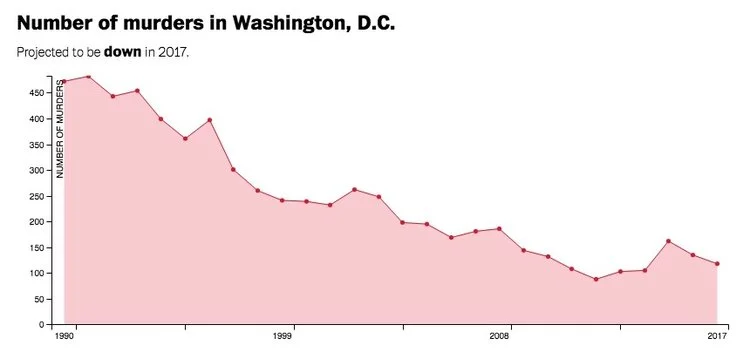
Driven to please her white masters desires Black strawboss Muriel Bowser is oblivious to reality. Violent crime in the District is down overall. [MORE]. The elite white media makes much of the fact that the year 2018 ended with 160 homicides on the books —a 38 percent increase from the previous year. [MORE] However, such statistics are taken out of context: the DC murder rate hit historic lows in 2017 with only 116 homicides. Yet this is nothing compared to what it was; in 1991 there were 482 murders and 443 and 454 murders respectively in 1992 and 1993. These numbers are on a substantial downward decline in general. See Chart below. 

murder+chart+dc+2017+2.jpg

But elite racist suspects have white supremacy & Black inferiority to sell. As explained by Dr. Amos Wilson,

Black criminals function as a negative reference group vital to maintaining the White American self-image. The Black criminal is used to support the White American community's self-serving, self-justifying judgments of itself. White America's preoccupation with Black criminality betrays its own need for reassurance; betrays its own basic insecurity regarding its projected moral purity. Consequently, the higher the incidence of reported Black criminality, the more exceptionally righteous White America feels itself to be. The more righteous it feels itself to be the more intensely and guiltlessly it promulgates and justifies its domination and exploitation of African peoples at home and abroad. [MORE]

The push for stop and frisk while crime low is further proof that our so-called “Constitutional rights” are just mere belief held in our minds. Rights exist if you believe they exist and an authoritarian shares in the illusion. Brazen cops so frequently abuse their power that no Black or Brown motorist, juvenile, adult, professional of any kind—could make a compelling argument that constitutional rights afford any real protection from the state on the street. In so far as Constitutional rights were designed to keep us free of government interference and intrusions as we go about our daily business on the streets in our homes, “your writes” are just words on paper – believe in them at your own risk. What we perceive as rights are really master’s privileges with his free range prison.

The racist suspect police chief’s advocacy as an unelected official to impose unwanted “public services” onto Black people also reveals the true nature of policing and authority in a so-called democracy. Alex Vitale explains “It is largely a liberal fantasy that the police exist to protect us from the bad guys.” He states, racist suspect liberals project 

“a fantasy of color blindness that says the police response is merely a professional technocratic response to where the crime is, but ignore the ways in which our society has been structured along racialized lines and the ways in which poverty in the United States is growing and becoming more entrenched. This includes a lot of white rural communities that are suffering from opioids and other kinds of crime problems.

Our political leaders have chosen to define those communities as criminal rather than as communities that are in deep distress because of entrenched joblessness, discrimination, geographic isolation, etc. If they were to admit that the problems in those communities were the result of market failures, rather than individual moral failures, then they would have to intervene in markets in ways that those who put them in office don’t want them to. To address the problems of inequality in any way other than policing is politically unacceptable in our current political environment. . . . The reality is that the police exist primarily as a system for managing and even producing inequality by suppressing social movements and tightly managing the behaviors of poor and non-white people: those on the losing end of economic and political arrangements. [MORE] 

Police “authority” is used to manage the behaviors of non-white people within this free range prison. Any protection or service from cops is incidental and random - making us safe is not their primary goal.

It is also largely a “fantasy” that governments represent us. In the real world, “representative governments” are constantly doing things their subjects do not want them to do. [MORE]

In a system of injustice, Dr. Blynd observes, "people who are awake see cops as mercenary guards that remind us daily through acts of force, that we are simultaneously both enemies and slaves of the Corporate State - colonized, surveilled and patrolled by the desensitized and lobotomized drones of the colonizers." Their authority is not legitimate because none is - it is a main source of your oppression. It is rule through your coerced participation and nothing more.

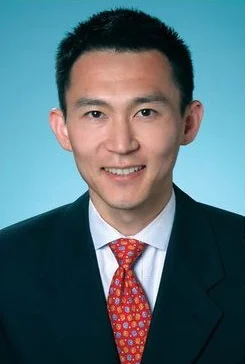
Korean Proxymoron Atty Rewarded by Trump w/Judicial Nomination for Parroting White Lies, said ‘most crimes committed are black-on-black crimes" [Most crimes committed are Caucasian on Caucasian]

From [HERE] and [MORE] Two nominees to federal district courts in Texas breezed through their nomination hearing Tuesday morning, hours after Democrats on the Senate Judiciary Committee raised concerns about a Ninth Circuit nominee’s past writings on race.

Tuesday’s hearing before the Senate Judiciary Committee was a rare one that did not include a circuit court nominee. Instead, the committee heard from Sean Jordan, who is up for a seat on the U.S. District Court for the Eastern District of Texas, and Texas Second Court of Appeals Justice Mark Pittman, who is nominated to a position on the U.S. District Court for the Northern District of Texas.

Like most nominees to federal district courts, Jordan and Pittman faced few contentious questions from senators.

Running in the background of the hearing was the nomination of Kenneth Lee, a California attorney who is up for a spot on the Ninth Circuit. Senators Dianne Feinstein and Kamala Harris, both California Democrats who sit on the Judiciary Committee, said in a statement Monday night that committee staff had late last week uncovered new controversial writings Lee did not initially turn over to the committee.  

Taylor Reidy, a spokeswoman for the Judiciary Committee, said Tuesday that the administration did not “turn over all of the routine nominations paperwork in time for Mr. Lee to be a witness” at Tuesday’s hearing. Reidy said the information was related to background checks, and not to the writings Feinstein and Harris mentioned Monday.

THE REWARDS OF WHITE SUPREMACY. ACCORDING TO FUNKTIONARY:Black-on-Black Crime - a psycho-political euphemism, unwittingly used and abused by African-Americans and deliberately by Caucasians, describing demographic criminal activity in general, as pe…

THE REWARDS OF WHITE SUPREMACY. ACCORDING TO FUNKTIONARY:

Black-on-Black Crime - a psycho-political euphemism, unwittingly used and abused by African-Americans and deliberately by Caucasians, describing demographic criminal activity in general, as people commit violent crimes on people who live in closest proximity to them, and the violence mostly occurs by those and to those who are held hostage under chronic and cyclical economically disadvantaged circumstances and environments. Do you ever hear of the slogan "White-on-White" crime? Most violent crimes (by number and by percentage of population) take place by Caucasians against Caucasians. Where's the associated terminology? (See Gangbanking & Racism." [MORE]

Trump initially tapped Lee to the Ninth Circuit in November, but the Senate did not take action on his nomination before the end of the Congress. Trump announced at the end of January that he would be renominating Lee to the same position. 

Most of the articles Lee wrote that Harris and Feinstein mentioned in the statement are from his time as an undergrad at Cornell University, though one comes from 1999, when Lee was attending Harvard Law School. The senators said Lee turned over the articles only after Democrats requested them.

They also said Lee did not turn over a batch of writings to their judicial nominating commission and that he has not provided one article from 1996 that the committee requested on Friday.

“Not only does this indicate an intention to obstruct the vetting process, it indicates Lee may continue to hold extreme and troubling views on race, which would place him out of step with the mainstream legal community in California,” the senators said in a statement Monday. “The committee should not be moving forward with a hearing at any date.”

The articles Feinstein and Harris mentioned Monday appear similar to those that sank the nomination of Ryan Bounds, a Trump pick for the Ninth Circuit the White House withdrew after Senator Tim Scott, R-S.C., and other Republicans objected to racially insensitive writings from Bounds’ time as an undergrad.

According to the statement released Monday, Lee in one article wrote that “liberals rarely fault a black criminal for his crime, lest they appear racist.” Lee, who is a Korean immigrant, went on to write that the “majority of the crimes committed today are black-on-black crimes” and that “by having this lax attitude toward black crime, white liberals are allowing the majority of law-abiding African Americans to be continually victimized.”

In the other article, Lee defended The Cornell Review for publishing a parody of Ebonics.

"If the Oakland School Board provides politically correct, feel-good nonsense to poor urban blacks, Cornell University does the same for middle-class and affluent blacks," Lee wrote during his time as an undergraduate at Cornell. "The university has justly garnered a notorious reputation for championing racial group-think and multicultural dogma."

Democrats may also grill Lee over his college writings on AIDS and LGBT people. In an articlein The Cornell Review, Lee wrote that “homosexuals generally are more promiscuous than heterosexuals” and that to avoid AIDS “one has to only abstain from drug-use and promiscuity.”

“So simple, yet so hard to grasp,” Lee wrote.

Lee currently works as a partner at the Los Angeles firm Jenner & Block, a job he has held since 2009. He also spent time in the George W. Bush administration, working as associate counsel and special assistant to the president from 2006 to 2009.

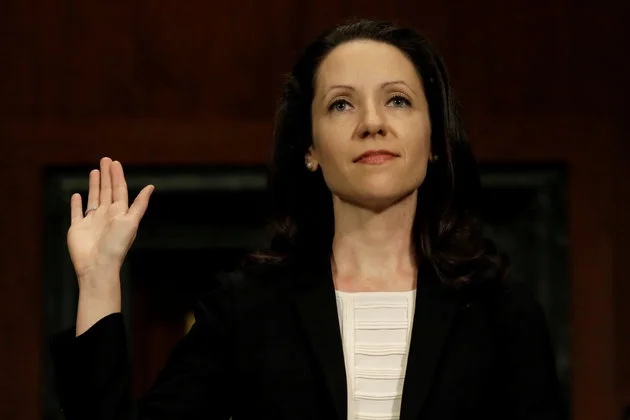
[White Privilege in a System of White Presumacy] Although She has Never Tried a Case, Senate Approves White Woman to Federal Judgeship on the 4th Circuit Ct of Appeals w/a Lifetime Appointment

FUNKTIONARY explains:White privilege - an invisible package of unearned assets bequeathed to all Caucasians. 2) an invisible weightless knapsack of advantages including but never limited to: special provisions and dispensations, over-passports, code…

FUNKTIONARY explains:

White privilege - an invisible package of unearned assets bequeathed to all Caucasians. 2) an invisible weightless knapsack of advantages including but never limited to: special provisions and dispensations, over-passports, code words, maps, signs, codebooks, visas, clothes, vistas, tools, etc. of which most Caucasians are oblivious to wearing or utilizing.

From [HERE] The Senate on Tuesday confirmed a Washington, D.C., lawyer to a position on the Fourth Circuit, as she overcame concerns from Democrats who raised questions about her relatively limited time practicing law.

Approved by a 53-44 vote, Allison Jones Rushing has been out of law school since 2007 and is shy of the 12 years of legal experience the American Bar Association Standing Committee on the Federal Judiciary suggests for nominees to federal judgeships. Despite falling short of this guideline, Rushing received a qualified rating from the organization.

Since 2011, Rushing has worked at the Washington, D.C., firm Williams & Connolly, becoming a partner at the firm in 2017. Her work there focuses on Supreme Court and appellate litigation and she has filed more than 45 briefs to the Supreme Court and worked on 50 appeals in courts across the country.

While Rushing told senators she has handled cases in the Fourth Circuit, she is not currently licensed to practice law in her native North Carolina, even though she is tapped for a North Carolina seat on the court. She told senators who raised questions about this fact that most of her work is in appellate courts, which do not require an attorney to be licensed with a given state bar to practice.

A member of the right-wing Federalist Society, Rushing’s resume also boasts clerkships with three conservative judges – then-10th Circuit Judge Neil Gorsuch, D.C. Circuit Judge David Sentelle and Supreme Court Justice Clarence Thomas. However, clerkships do not qualify anyone to practice to law.

Rushing told the Senate Judiciary Committee her experience practicing before appellate courts and her time working closely with experienced judges has left her prepared for a seat on the federal bench, despite being out of law school for less time than many other judicial nominees.

“My experience in the federal courts of appeals and the Supreme Court are why I’m qualified,” Rushing said at her nomination hearing in October. “Not only the depth of that experience, but the variety. The judges on the courts of appeals get a wide variety of cases and I have that experience. In criminal law, prison petitions, product liability, intellectual property, commercial disputes, constitutional issues, a vast array of federal statutes. I’ve litigated all of those cases on appeal and I will be ready when those cases come before me if I am so fortunate as to be confirmed.” “Litigation” is actual legal work done in trial courts by trial lawyers in bench or jury trials on behalf of client. Appellant work consists mostly of writing court filings and legal research in cases that have already been decided.

Rushing also faced questions about her time as an intern at the Alliance Defense Fund. Now known as the Alliance Defending Freedom, the Southern Poverty Law Center has listed the organization as an anti-LGBT hate group.

She told senators that she never saw anyone at the group “expressing or advocating hate,” and noted many people affiliated with the organization have gone on to prominent careers.

“Members of Congress, including members of this committee, have filed amicus briefs in the Supreme Court supporting ADF’s positions,” Rushing told Senator Sheldon Whitehouse, D-R.I., in response to questions submitted in writing after her nomination hearing. “I do not think members of this committee or large reputable law firms would work with a hate group. I certainly would not.” 

After confirming Rushing, the Senate advanced the nomination of Chad Readler, who is up for a seat on the Sixth Circuit, setting up a confirmation vote later this week.

After Unjustly Enriching Itself from Slavery, Ripping Off Inmates and Facilitating Trump's Family Destruction Policy, JP Morgan Announces It "Will No Longer Bank the Private Prison Industry"

In 2004 JP Morgan Chase admitted that it profited from the enslavement of Blacks. It acknowledged owning 13,000 slaves. COO Jamie Dimon [racist suspect in photo] said J.P. Morgan was sorry for contributing to a "brutal and unjust institution" and ou…

In 2004 JP Morgan Chase admitted that it profited from the enslavement of Blacks. It acknowledged owning 13,000 slaves. COO Jamie Dimon [racist suspect in photo] said J.P. Morgan was sorry for contributing to a "brutal and unjust institution" and outlined how it planned to repair the damage. [MORE]

Wells Fargo & JP Morgan are the Chief Financiers of Private Prison Companies [CoreCivic & GeoGroup] Profiting Off the Incarceration of Non-White Immigrants [MORE]

JPMorgan Chase & Co rarely lends money to Black people. [MORE] and has charged them more for car loans. [MORE]

JP Morgan also got paid exploiting inmates released from prison using their debit cards/ [MORE]

From [HERE] JPMorgan Chase & Co has decided to stop financing private operators of prisons and detention centres, which have become targets of protests over Trump administration immigration policies.

“We will no longer bank the private prison industry,” a company spokesman told Reuters. The decision is a result of the bank’s ongoing evaluations of the costs and benefits of serving different industries, he said.

JPMorgan is one of several banks that have underwritten bonds or syndicated loans for CoreCivic Inc and GEO Group Inc, the two major private prison operators in the United States. In 2018, banks, including Bank of America Corp and Wells Fargo & Co, raised roughly $1.8 billion in debt over three deals for CoreCivic and GEO Group, according to Refinitiv data.

Wells Fargo said in January it was reducing its relationship with the prison industry as part of its “environmental and social risk management” process.

“Our credit exposure to private prison companies has significantly decreased and is expected to continue to decline, and we are not actively marketing to that sector,” Wells Fargo said in its “Business Standards Report” for 2018.

Prison finance is a small business for JPMorgan, the biggest bank in the United States by assets. JPMorgan was a leader in 1,153 loan deals worth $354 billion across all industries, according to Refinitiv data.

Prison companies account for about 10 percent of federal and state prison beds, according to Moody’s Investors Service. But about two-thirds of people held by U.S. Immigration and Customs Enforcement are in private detention centres, S&P Global Ratings estimated last year.

Moody's and S&P Global have speculative grade, or junk, credit ratings on CoreCivic and GEO Group partly because their revenues are at risk to changes in government policy and public scrutiny of companies profiting from detention. (reut.rs/2H4JOf5)

After the Obama administration in August 2016 directed the Bureau of Prisons to phase out federal use of private prisons, shares of both companies plunged more than 40 percent. One month after Donald Trump became president, the order was rescinded and the stocks rebounded.

Activism against the financing of private prisons heated up after revelations that undocumented minors were being separated from their adult parents.

TRUMP REVERSES POLICY

The Trump administration reversed its separation policy after a public outcry.

CoreCivic spokesman Steven Owen called JPMorgan’s decision “disappointing.” He said in an email that “decisions like this are being based on false information spread by politically motivated special interests, who completely mischaracterize our company.”

None of CoreCivic’s immigration facilities house children who are not under the supervision of a parent, Owen said.

A GEO Group spokesman said in an email that the company “has never managed facilities that house unaccompanied minors.” He added, “We welcome the opportunity to have an open dialogue with all financial institutions to address the common mischaracterisations of our company’s role and record as a government services provider.”

CoreCivic changed its name from Corrections Corporation of America in October 2016. It said the rebranding was to highlight its strategy to transform its business “from largely corrections and detentions centres to a wider range of government services.”

In 2018 prisons and detention centres still accounted for 87 percent of CoreCivic’s net operating income, according to a recent presentation from the company to investors. It had 72,833 beds in prisons and detention centres.

JPMorgan’s move away from the industry comes after activists have challenged Chief Executive Officer Jamie Dimon at the bank’s last two annual meetings over its financing of prison companies.

Protest groups have also appeared regularly outside of Dimon’s Manhattan apartment. On Valentine’s Day, a group appeared with a mariachi band and signs that begged the executive to “break up with prisons.”

At the May 2017 annual meeting, Dimon promised to look in to prison finance. In June, Dimon and the Business Roundtable, a group of CEOs that he chairs, issued public statements calling for immigration reform and an end to the Trump administration policy of separating minors from their parents. [MORE]