Seymour Hersh on the Nord Stream Pipeline Attack

From [HERE] The New York Times called it a “mystery,” but the United States executed a covert sea operation that was kept secret—until now

The U.S. Navy’s Diving and Salvage Center can be found in a location as obscure as its name—down what was once a country lane in rural Panama City, a now-booming resort city in the southwestern panhandle of Florida, 70 miles south of the Alabama border. The center’s complex is as nondescript as its location—a drab concrete post-World War II structure that has the look of a vocational high school on the west side of Chicago. A coin-operated laundromat and a dance school are across what is now a four-lane road.

The center has been training highly skilled deep-water divers for decades who, once assigned to American military units worldwide, are capable of technical diving to do the good—using C4 explosives to clear harbors and beaches of debris and unexploded ordnance—as well as the bad, like blowing up foreign oil rigs, fouling intake valves for undersea power plants, destroying locks on crucial shipping canals. The Panama City center, which boasts the second largest indoor pool in America, was the perfect place to recruit the best, and most taciturn, graduates of the diving school who successfully did last summer what they had been authorized to do 260 feet under the surface of the Baltic Sea.

Last June, the Navy divers, operating under the cover of a widely publicized mid-summer NATO exercise known as BALTOPS 22, planted the remotely triggered explosives that, three months later, destroyed three of the four Nord Stream pipelines, according to a source with direct knowledge of the operational planning.

Two of the pipelines, which were known collectively as Nord Stream 1, had been providing Germany and much of Western Europe with cheap Russian natural gas for more than a decade. A second pair of pipelines, called Nord Stream 2, had been built but were not yet operational. Now, with Russian troops massing on the Ukrainian border and the bloodiest war in Europe since 1945 looming, President Joseph Biden saw the pipelines as a vehicle for Vladimir Putin to weaponize natural gas for his political and territorial ambitions.

Asked for comment, Adrienne Watson, a White House spokesperson, said in an email, “This is false and complete fiction.” Tammy Thorp, a spokesperson for the Central Intelligence Agency, similarly wrote: “This claim is completely and utterly false.”

Biden’s decision to sabotage the pipelines came after more than nine months of highly secret back and forth debate inside Washington’s national security community about how to best achieve that goal. For much of that time, the issue was not whether to do the mission, but how to get it done with no overt clue as to who was responsible.

There was a vital bureaucratic reason for relying on the graduates of the center’s hardcore diving school in Panama City. The divers were Navy only, and not members of America’s Special Operations Command, whose covert operations must be reported to Congress and briefed in advance to the Senate and House leadership—the so-called Gang of Eight. The Biden Administration was doing everything possible to avoid leaks as the planning took place late in 2021 and into the first months of 2022.

President Biden and his foreign policy team—National Security Adviser Jake Sullivan, Secretary of State Tony Blinken, and Victoria Nuland, the Undersecretary of State for Policy—had been vocal and consistent in their hostility to the two pipelines, which ran side by side for 750 miles under the Baltic Sea from two different ports in northeastern Russia near the Estonian border, passing close to the Danish island of Bornholm before ending in northern Germany.

The direct route, which bypassed any need to transit Ukraine, had been a boon for the German economy, which enjoyed an abundance of cheap Russian natural gas—enough to run its factories and heat its homes while enabling German distributors to sell excess gas, at a profit, throughout Western Europe. Action that could be traced to the administration would violate US promises to minimize direct conflict with Russia. Secrecy was essential.

From its earliest days, Nord Stream 1 was seen by Washington and its anti-Russian NATO partners as a threat to western dominance. The holding company behind it, Nord Stream AG, was incorporated in Switzerland in 2005 in partnership with Gazprom, a publicly traded Russian company producing enormous profits for shareholders which is dominated by oligarchs known to be in the thrall of Putin. Gazprom controlled 51 percent of the company, with four European energy firms—one in France, one in the Netherlands and two in Germany—sharing the remaining 49 percent of stock, and having the right to control downstream sales of the inexpensive natural gas to local distributors in Germany and Western Europe. Gazprom’s profits were shared with the Russian government, and state gas and oil revenues were estimated in some years to amount to as much as 45 percent of Russia’s annual budget.

America’s political fears were real: Putin would now have an additional and much-needed major source of income, and Germany and the rest of Western Europe would become addicted to low-cost natural gas supplied by Russia—while diminishing European reliance on America. In fact, that’s exactly what happened. Many Germans saw Nord Stream 1 as part of the deliverance of former Chancellor Willy Brandt’s famed Ostpolitik theory, which would enable postwar Germany to rehabilitate itself and other European nations destroyed in World War II by, among other initiatives, utilizing cheap Russian gas to fuel a prosperous Western European market and trading economy. [MORE]

ACLU Lawsuit Claims Kansas Highway Patrol Unlawfully Stop, Detain and Search Drivers with Out-of-State License Plates or Persons Traveling to or from Colorado

From [HERE] Curtis Martinez stood on the side of Interstate 70 with his brother, shaking his head as a police canine sniffed out his car. 

The Denver, Colorado, resident said he was commuting to Kansas City, Missouri, for work when he was stopped by a Kansas Highway Patrol (KHP) trooper for an expired license plate. 

He was given a ticket and assumed that would be the end of it.

Instead, as Martinez started to pull away, he says the officer pivoted back to Martinez and asked if he could question him further.

“He said, ‘Do you have any drugs or guns in your car?’” Martinez said. 

Martinez said he told the trooper he did not have any drugs in the car.

“‘Well, you don’t mind if I take a look in your car then,’” Martinez recalled the trooper saying. “I said, ‘Yes, I do mind if you take a look in my car. I don’t have time for that,’ and he said, ‘Well, go ahead and pull over. You’re being detained.’”

Martinez and his brother would be detained for more than an hour after that original stop without yielding any additional charges or tickets. That’s why he called FOX4 Problem Solvers in September.

Class action lawsuit against ‘Kansas Two Step’

According to a lawsuit filed by the American Civil Liberties Union, the trooper used a tactic referred to as the “Kansas Two Step,” in which troopers target motorists with out-of-state license plates or those traveling to or from Colorado, where recreational marijuana is legal.

The “Kansas Two Step” involves unlawfully detaining drivers with questions about travel plans without consent or reasonable suspicion of criminal activity after the initial purpose of the stop was resolved, the lawsuit states.

The lawsuit says the technique is designed to break off the initial traffic detention and re-engage the driver in what could be interpreted as a separate consensual encounter.

“They use traffic stops in order to get to bigger issues,” said Jay Norton, a criminal defense attorney in Johnson County, Kansas. “That’s kind of the game that they’re playing.”

Ultimately, Martinez was given a ticket and released, but he said officers never explained their reasonable suspicion for searching his vehicle in the first place, something he said made him feel targeted and discriminated against.

Martinez said he started recording the encounter on his own phone once the canine unit arrived. However, the footage doesn’t show the highway patrol trooper that pulled him over performing the alleged two-step tactic.

“He (one of the officers) wanted to put us in handcuffs and take our phones away so we couldn’t record,” Martinez said. “Luckily, that didn’t happen.”

FOX4 Problem Solvers requested body camera and dashboard camera footage of the traffic stop after Martinez attempted to request it, but was denied. 

Both KHP and the Riley County Police Department refused to release the video, claiming the footage is considered a criminal investigative record under the Kansas Open Records Act.

“Specifically, if the footage were released, it would reveal confidential investigative techniques or procedures that are not known to the general public,” Riley County stated in an email.

But what police tactics are Kansas officers using that they don’t want the public to know about? And what is it about these procedures that makes them so secretive?

“It just makes no sense to me,” Martinez said. “What are they trying to hide?”

Problem Solvers contacted KHP twice via email for a statement but they said they cannot comment on ongoing litigation or the processes and procedures that relate to pending litigation.

The unlevel playing field

Martinez said the trooper who stopped him claimed he was apprehensive because Martinez took an exit onto a desolate country road. Martinez said he was unfamiliar with the area and simply looking for a place to get gas.

“I felt harassed,” Martinez said. “I felt, you know, demoralized. I felt like he just invaded all of my rights, all of my personal rights at that point.”

He said he was then told to wait 30 more minutes as KHP called the Riley County Police Department for backup, who eventually arrived with canines to perform a vehicle search.

Attorney Norton said traffic law is rigged in favor of law enforcement.

“Freedom is an illusion. It’s a story that we tell ourselves about our society, but the bottom line is, it is a game and the game is completely rigged,” Norton said.

“It’s completely rigged against the little person, the citizen, and the only way that an average citizen can hope to possibly, maybe get a level playing field is to hire an attorney and have next to unlimited resources to go fight the government, who does have unlimited resources, tooth and nail over these minor issues.”

Norton said he believes troopers are anticipating interactions with citizens who don’t fully understand their own rights.

“They want to protect the game that they’re playing,” he said. “They want to make sure that your average citizen is in the dark as much as possible as to what their rights are, and in the dark as to what techniques and tactics law enforcement is gonna use to try to get them to give up those rights.”

Josh Pierson, senior staff attorney with the ACLU, said the bar for reasonable suspicion is incredibly low.

“It’s a very low bar, and the courts actually generally defer to the officers,” Pierson said. “But it’s not just whatever they say it is, and the Fourth Amendment does impose a limitation, as it was designed to do, on officers’ ability to just keep people detained without probable cause or without a warrant.”

Norton said confusion surrounding reasonable suspicion leads to confusion among both parties, the officer and the citizen, during a traffic stop. It’s something he considers dangerous.

“Nobody knows really what the contours of the Fourth Amendment are going to be in any given situation, including the police. They don’t always know what they can and can’t do, and I think that that is bad for the Fourth Amendment,” he said.

“There are other constitutional amendments that people adamantly and fiercely protect, like the Second Amendment. Nobody’s sitting around saying, ‘Well, this should be nuanced, whether you have the right to possess and bear arms.’ Everybody’s saying that’s a firm, clear, bright line, constitutional rule. Why is the Fourth Amendment different?”

Kansas civil forfeitures

The ACLU lawsuit suggests that the two-step technique serves as a fishing expedition for money.

The lawsuit alleges 96% of KHP’s civil asset forfeitures in 2019 involved out-of-state motorists driving on Interstate 70. In 2017, drivers with out-of-state plates comprised 93% of KHP traffic stops.

“The state troopers in western Kansas know that there are people going to Colorado, buying marijuana and taking it through Kansas to other states or to somewhere in Kansas,” Norton said. “When it becomes legal in Missouri, it’ll be the same situation.”

Norton said traffic stops are a profitable business for troopers because when officers confiscate property from a driver’s vehicle, they sell the items, and use the money to fund law enforcement.

“They’re fishing, and the idea is to catch fish and, you know, now they’ve got good bait,” he said.

Pierson said what happened to Martinez is happening to others as well, something that can breach the relationship between law enforcement and the people.

“I would like to think that we could have a transparent relationship — we, the public, with law enforcement — and that there wouldn’t be need for tricks and devices and strategies like this for them to do their job,” he said.

What are my rights during a Kansas traffic stop?

Norton said every citizen has the right to remain silent and not answer questions during an encounter with law enforcement. But he acknowledged there’s often a power dynamic that makes people feel like they can’t.

“Nobody feels like they can ignore a police officer and just drive away or walk away from a police officer that’s asking, ‘Can I talk to you?’” he said.

Pierson said officers have to have an articulable reasonable suspicion to detain you, but that doesn’t necessarily mean they have to communicate their suspicion to the driver.

“There’s nothing (in the law) that requires the officer to tell you what the reasonable suspicion is either and who are you to ask? If an officer were to volunteer it, that would be fine, and in fact, it’s not even a subjective standard,” he said.

“What I mean by that is the officer can be wrong or mistaken or be using factors that they’re not supposed to be using even, but so long as a lawyer can come in after the fact and say objectively ‘any reasonable officer would have found reasonable suspicion here,’ then the courts will generally say that that’s OK.”

Norton said the majority of drivers will never have a chance to seek justice for an illegal detention, as there are too many barriers associated with litigation.

This makes the potential for illegal detainment during a traffic stop all the more daunting.

“You can file a lawsuit, but who has time for that?” he said. “Usually people just go home and are glad they didn’t get thrown into jail, that there wasn’t something found or planted or whatever.”

In the meantime, people like Martinez, and the other two individuals represented in the ACLU’s lawsuit, are doing just that — spending a lot of time and a lot of money trying to navigate a way to vindicate their rights.

“You feel like you’re an ant standing next to a human, you know, because you try to be as calm as you can and you try to say what you think is right and it’s never right, you know?” Martinez said.

“The justice system is, unfortunately, backwards, you know, and you think you can count on these cops and troopers to do right and they still want to hit that quota or whatever the case may be, you know, to make themselves look better and to catch something that’s not really there.

“It’s like, it’s just demoralizing. It makes you feel like less of a human being just because they have a badge and a gun.”

Documents Show Pipeline Companies Paid Minnesota Police Millions of Dollars to “Police” Protests Against Them

From [HERE] The morning of June 7, 2021, Sheriff’s Deputy Chuck Nelson of Beltrami County, Minnesota, bought water and refreshments, packed his gear, and prepared for what would be, in his own words, “a long day.” For over six months, Indigenous-led opponents of the Line 3 project had been participating in acts of civil disobedience to disrupt construction of the tar sands oil pipeline, arguing that it would pollute water, exacerbate the climate crisis, and violate treaties with the Anishinaabe people. Officers like Nelson were stuck in the middle of a conflict, sworn to protect the rights of both the pipeline company Enbridge and its opponents.

Nelson drove 30 minutes to Hubbard County, where he and officers from 14 different police and sheriff’s departments confronted around 500 protesters, known as water protectors, occupying a pipeline pump station. The deputy spent his day detaching people who had locked themselves to equipment as fire departments and ambulances stood by. A U.S. Customs and Border Protection helicopter swooped low, kicking dust over the demonstrators, and officers deployed a sound cannon known as a Long Range Acoustic Device in attempts to disperse the crowd.

By the end of the day, 186 people had been detained in the largest mass-arrest of the opposition movement. Some officers stuck around to process arrests, while others stopped for snacks at a gas station or ordered Chinese takeout before crashing at a nearby motel.

These latter details might be considered irrelevant, except for the fact that the police and emergency workers’ takeout, motel rooms, riot gear, gas, wages, and trainings were paid for by one side of the dispute — the fossil fuel company building the pipeline, which spent more than $79,000 on policing that day alone.

When the Minnesota Public Utilities Commission gave Enbridge permission in 2020 to replace its corroded Line 3 pipeline and double its capacity, it included an unusual condition in the permit: Enbridge would pay the police as they responded to the acts of civil disobedience that the project would surely spark. The pipeline company’s money would be funneled to law enforcement and other government agencies via a Public Safety Escrow Account managed by the state.

By the time construction finished in fall 2021, prosecutors had filed 967 criminal cases related to pipeline protests, and police had submitted hundreds of receipts and invoices to the Enbridge-funded escrow account, seeking reimbursement. Through a public records request, Grist and the Center for Media and Democracy have obtained and reviewed every one of those invoices, providing the most complete picture yet of the ways the pipeline company paid for the arrests of its opponents — and much more.

From pizza and “Pipeline Punch” energy drinks, to porta potties, riot suits, zip ties, and salaries, Enbridge poured a total of $8.6 million into 97 public agencies, from the northern Minnesota communities that the pipeline intersected to southern counties from which deputies traveled hours to help quell demonstrations.

By far the biggest set of expenses reimbursed from the Enbridge escrow account was over $5 million for wages, meals, lodging, mileage, and other contingencies as police and emergency workers responded to protests during construction. Over $1.3 million each went toward equipment and planning, including dozens of training sessions. Enbridge also reimbursed nearly a quarter million dollars for the cost of responding to pipeline-related human trafficking and sexual violence. [MORE]

“Right To Movement Palestine” Commends South African Rugby Union for Disinviting Israel Team Due To Its Apartheid State: Palestinians are Denied the Right to Train, Play and Compete in Racist Country

From [HERE] Dear South African Rugby Union,

We are writing to you as athletes and sports lovers from Right to Movement Palestine - a grassroots campaign that uses sports to demand an end to the apartheid regime that we are forced to live under in colonized Palestine. 

We understand that the South African Rugby Union (SARU) has withdrawn the invitation to a team representing Apartheid Israel – the Tel Aviv Heat – which was to participate in the upcoming Mzansi Challenge in South Africa, kicking off on 24 March 2023. We are writing to affirm SARU did the right thing!
Sports in general and rugby specifically upholds values of solidarity and respect and it continues to be a driving force for people around the world to play, watch, and support. However, these values are profoundly contrast with a team that aims to sportswash and represents Israel’s apartheid regime which imposes a “cruel system of domination” by treating Indigenous Palestinians as an inferior racial group, as documented by Amnesty International. 

Palestinian athletes, like all Palestinians, are forced to live in exile or under the brutal oppression of Israel’s apartheid regime. Across all sports, we are denied the right to train, play, and compete together due to apartheid Israel-imposed fragmentation. Palestinians are killed and maimed by Israeli soldiers, arrested at military checkpoints, and prevented from traveling to matches and tournaments, whether within Palestine or abroad. Palestinian sporting matches are raided by armed Israeli soldiers and our facilities are bombed by Israeli fighter jets. Our own marathon must be run in laps because Israel’s apartheid infrastructure denies us the space to run freely.

And this was all before Israel’s most openly racist, far-right and fundamentalist government came into power, already keeping its promise to escalate the violent oppression of Palestinians.

As South Africans, you know how oppressive regimes cynically use sports in an attempt to whitewash and divert attention away from their human rights violations. Apartheid South Africa was engaged in sportswashing in its own day. Apartheid Israel uses that same playbook today. 

As South Africans, you also know just how important effective global solidarity was in defeating the apartheid regime in your own country. As Palestinians, we are asking for that same effective solidarity and we are grateful about your decision.  We are inspired by the South African people’s longstanding support for people's rights everywhere.  We are equally inspired by the unprecedented number of active teams and athletes across the world who are standing on the right side of history and refusing to sportswash Israeli Apartheid.

We extend our gratitude to you on behalf of all Palestinians especially the athlete community.

Right To Movement Palestine

[isn’t so-called ‘disinformation’ and the Right to Be Wrong covered by the 1st Amendment?] Ad Network Blacklist Excludes Only Conservative Media and Promotes Reality Concealment by The Dependent Media

From [HERE] Following an assessment of American media, UK-based think tank the Global Disinformation Index released its Dynamic Exclusion Lists, which are used by advertisers to blacklist news websites. GDI ranked left-leaning media outlets more favorably than conservative media.

The list is used by ad networks, including Microsoft-owned Xandr, to refuse to display ads on conservative outlets’ websites.

In December, GDI released a report on “disinformation risk” in the US online media market. The think tank reviewed 69 news outlets and listed 10 that it found least likely to share disinformation and 10 that it found most at risk of spreading disinformation.

The outlets found most at risk of sharing disinformation are:

  • New York Post

  • RealClearPolitics

  • Reason Magazine

  • The Federalist

  • The Daily Wire

  • The Blaze

  • One America News Network

  • The American Conservative

  • Newsmax

  • The American Spectator

Outlets found least at risk of spreading disinformation are:

  • HuffPost

  • New York Times

  • The Washington Post

  • AP News

  • NPR

  • ProPublica

  • BuzzFeed News

  • USA Today

  • Insider

  • Wall Street Journal

According to The Daily Caller, the GDI receives US taxpayers’ money from the State Department’s Global Engagement Center.

GDI said that the outlets on its list of most at risk to spread disinformation “published content with far fewer fact-based Ledes and far more Bias, Negative targeting and Sensational language than the rest of the sample.” It said that disinformation is not necessarily false reporting, it is adversarial, targeting, and sensational reporting.

It defined disinformation as “adversarial narratives, which are intentionally misleading; financially or ideologically motivated; and/or, aimed at fostering long-term social, political or economic conflict; and which create a risk of harm by undermining trust in science or targeting at-risk individuals or institutions.”

Released Files Show Between October 2019 and February 2021 alone, FBI Paid Twitter $3.4M to Silence Certain Views and Stories on Its Behalf

STORY AT-A-GLANCE

  • Twitter documents released by Elon Musk reveal the lawlessness of our intelligence agencies and the psychological warfare against the American public is far worse than expected

  • Between October 2019 and February 2021 alone, FBI paid Twitter 3.4 million to censor certain views and stories on its behalf, including the damning Hunter Biden laptop story, which likely would have sunk Joe Biden’s bid for the presidency had it received the attention it deserved

  • The FBI, Twitter and Facebook even ran a tabletop exercise about “hacked” information relating to Hunter Biden one month before the real story broke. During that exercise, they practiced the narrative that weeks later became “official truth”

  • A large number of current and/or former FBI agents work at and with Twitter to keep the online narrative in check. More than 100 supposedly “former” intelligence agents also work in Facebook’s content moderation department

  • While hunting down and banning covert propaganda accounts tied to foreign governments, Twitter worked with the U.S. Department of Defense to promote and protect American propaganda accounts, and aided U.S. intelligence agencies in their efforts to influence foreign governments using fake news, computerized deepfake videos and bots

From [HERE] If you're still under the naively mistaken belief that there is no Deep State, the Twitter file dumps 1 from Elon Musk detailing how Twitter, before his acquisition of the company, was coerced into doing the FBI's bidding, with actual FBI agents on its staff to control the online narrative, ought to set the record straight.

In fact, the lawlessness of our intelligence agencies and the psychological warfare against the American public is far worse than most people ever expected.

FBI paid Twitter huge sums of money — your tax dollars, might I add — to censor certain views and stories, such as the damning Hunter Biden laptop story, which likely would have sunk Joe Biden's bid for the presidency had it received the attention it legitimately deserved.

The FBI even ran a tabletop exercise about "hacked" information relating to Hunter Biden ONE MONTH before the real story broke. During that exercise, they practiced the narrative (i.e., lies) that weeks later became "official truth."

There is a Deep State running the show, and they're doing whatever they damn well please, without regard for the law or the U.S. Constitution. They're acting completely outside the rules of our Constitutional Republic and the laws of the land, and they've weaponized the very agencies that are supposed to protect us and act in the public's best interest and turned them against us.

The Twitter files saga is expanding by the day, so I won't be able to cover every last detail here. Books will be needed to cover this scandal in depth. In the meantime, I suggest you review the references cited and keep your eyes peeled for later updates.

FBI Used Twitter to Track and Spy on Americans

In the video above, investigative journalist Glenn Greenwald reviews how Washington has expanded the war state and the Democrat’s censorship regime. About 39 minutes in, he begins reviewing evidence showing the FBI was not only censoring social media content, but the agency was also, on a regular basis, asking Twitter to reveal the location of specific Twitter users — for what purpose, no one knows. As noted by independent journalist Matt Taibbi in a December 17, 2022, Twitter post:

"What 'law enforcement' objective is served by asking for Billy Baldwin's location information? Why is the FBI/DHS [Department of Homeland Security] in the business of analyzing and flagging social media content at all? When were these programs created and who approved them?"

These are all good questions. Historically, the FBI's job has been to monitor and address criminal activity, not "misinformation." Somewhere along the way, and it's unclear exactly when the mandate changed and by whom, the DHS/FBI (the FBI supports the DHS by investigating threats) and other agencies tasked themselves with illegally suppressing free speech and shaping public narratives through public-private partnerships with Big Tech.

The Biden administration's Orwellian "Ministry of Truth," revealed in the summer of 2022, was one of the first indicators we had that something was horribly amiss. And even though that agency was quickly disbanded after public outcry (and no small amount of mockery), the policing of mis- and disinformation was simply shifted elsewhere within the federal government.

Moreover, as reviewed by Greenwald, internal DHS memos, emails and documents show the DHS has worked on expanding its influence over tech platforms for YEARS. So, government censorship is not something that "just happened" in response to the COVID crisis.

Nor is the censorship limited to COVID or public health information in general. We now have evidence showing the FBI has actively interfered in multiple elections, for example — activity that Sen. Josh Hawley (R-MO) accurately warns is "the biggest threat to our constitutional democracy today." 2 [MORE]

Liberal Dumbocrats Admire from Afar as Egyptian Authorities Arrest Social-Media Influencers for Terrorism if They Contradict Government Narratives in Their Free Range Prison Disguised as a Democracy

From [HERE] Last month, Mohamed Hossam El-Din, an Egyptian content creator, posted a satirical video of himself that received 7.5 million views on Facebook.

Now, he, along with four other Egyptian actors in the video, has been arrested on terrorism charges, despite the fact that the video contained no overtly political message.

Egyptian authorities are arresting social-media influencers whose content goes viral, even if that content is apolitical, as part of a crackdown on free speech by President Abdel Fattah Al Sisi. As the country faces a mounting economic crisis and pressure on the government grows, human-rights activists say Mr. Sisi is seeking to cow Egyptians who have large social-media followings into toeing the government’s line.

Ordinary Egyptians, as well as some officials, have begun to question Mr. Sisi’s handling of an economic crisis that has exacerbated already high inflation by impeding imports in order to hoard dwindling foreign-currency reserves. Rising prices have in turn left many Egyptians struggling to afford staples like bread and meat.

“There’s a very palpable anger with people blaming Sisi for mismanagement of the economy for the first time in nine years,” said Hossam Bahgat, an activist from the Egyptian Initiative for Personal Rights, a rights group based in Cairo. “Authorities are clearly getting more nervous and keen to rein in conduct.”

Neither the Interior Ministry nor a government spokesman responded to requests for comment.

Under Mr. Sisi, Egypt has detained tens of thousands of people for political reasons, according to human-rights groups. Thousands of Egyptians were rounded up in 2019, when the government quashed mass street protests calling for Mr. Sisi to step down.

The digital space has been one of the last relatively free areas for expression since then, but now appears to be closing.

In a satirical video entitled “The Visit,” Mr. Hossam, who produces online videos and has over 1.6 million followers on Facebook, wears a yellow jumpsuit and, from a fake jail cell, makes elusive references to getting out and seeking retribution against an opponent.

Lawyers representing Mr. Hossam and the other actors said the group was simply trying to gain followers and wasn’t seeking to make a political statement. Still, authorities charged the actors with joining a terrorist group, funding terrorism, publishing false news and using social-media accounts to spread false content, they said.

Egypt’s public prosecutor didn’t respond to requests for comment.

Other videos by Mr. Hossam feature skits with actors playing soccer stars Cristiano Ronaldo and Lionel Messi, as well as male students joking during a fake exam. [MORE]

One Of The Deadliest Federal Prison Units Is Closing

From [HERE] The federal Bureau of Prisons is closing the notorious Special Management Unit at Thomson penitentiary in Illinois, after frequent reports of violence and abuse (article available here(link is external)). Previous coverage available here.

An investigation last year by NPR and The Marshall Project found that Thomson had quickly become one of the deadliest federal prisons, with five suspected homicides and two suspected suicides since the unit opened in 2019. The report also uncovered conditions that stoked violence, where volatile prisoners were locked down together in small cells(link is external) for nearly 24 hours a day, often despite repeated warning signs.

A Bureau of Prisons spokesperson said in an email on Tuesday that they "recently identified significant concerns with respect to institutional culture and compliance with BOP policies" at Thomson, requiring "immediate corrective measures."

Officials would not comment on where those previously held at the SMU at Thomson were being transferred. Those housed in the general population and the minimum security camp will remain.

The move comes just weeks after another man at Thomson, 32-year-old Victor Gutiérrez(link is external), was found unresponsive in the prison and died, according to a Justice Department press release. The department has not released his cause of death.

Men at Thomson have also reported abuse at the hands of staff(link is external), including being placed in painful four-point restraints for hours or days at a time.

The special management unit was originally housed at Lewisburg Penitentiary in Pennsylvania, a facility known for similarly high rates of violence among prisoners and shackling by staff. It's unclear whether the unit, which is meant to separate the most disruptive people in federal prison from the general population, will reopen elsewhere.

Thomson was built in 2001 as an Illinois state prison, but sat empty for years until it was bought by the Justice Department.

Illinois Abolishes Life Without Parole Sentences for Children

From [HERE] Illinois Gov. J.B. Pritzker signed a new law on Friday that extends parole eligibility for people convicted of offenses when they were under 21, making Illinois the 26th state to abolish life-without-parole sentences for children.

Illinois provided parole review for most young people in 2019, but that Youthful Parole Law did not apply to people sentenced to natural life imprisonment, people convicted of first degree murder of a law enforcement officer, or people convicted of predatory criminal sexual assault.

The new law, Public Act 102-1128, eliminates the first two exceptions and, because people under 18 cannot be sentenced to natural life for predatory criminal sexual assault, it finally abolishes all life-without-parole sentences for children under 18.

It also means that most people sentenced after June 1, 2019, for offenses when they were under 21 will now become eligible for parole after 10 years for most offenses, 20 years for first degree murder and aggravated sexual assault, and 40 years for natural life sentences.

Rep. Rita Mayfield (D-Waukegan) co-sponsored the bill in the House. “Even when a crime is particularly severe, it should be recognized that a legal minor with their whole life still ahead has the potential to be reformed,” she said.

“[P]rison should be a place where people have the opportunity to transform themselves and become better people and productive members of society. I believe that giving everyone a chance at redemption is a moral duty.”

The bill passed the House with bipartisan support in 2021 before arriving in the Senate, where Sen. Don Dewitte (R-St. Charles) called on his colleagues from the Senate floor to offer hope to youthful offenders.

“I consider myself a law-and-order Republican, but I also believe in rehabilitation,” he said. “[I]f you believe that, given guidelines and benchmarks, these convicted young people can reach to prove that they can become contributing members of our society, then don’t just vote your conscience, vote your Christian conscience. Vote that people can redeem themselves.”

The bill passed the Senate with three-quarters of the vote on January 10, 2023.

Last week, lawmakers introduced Senate Bill 2073, which would make both the 2019 and the new law retroactive to people currently in prison. Restore Justice says that would provide parole eligibility to 3,253 people who are incarcerated for offenses committed when they were under 21.

If It's Not Immoral When the Government Murders People Why Is it Bothering Government Workers? ‘Relentless Pace’ of Murders by Oklahoma Executions Traumatized Corrections Staff

From [HERE] Oklahoma’s “nonstop executions” traumatized corrections staff, leaving them vulnerable to mental health distress and botched procedures, nine former Department of Corrections officials warned last month (article available here(link is external)).

“Reports from the Oklahoma State Penitentiary describe near-constant mock executions being conducted within earshot of prisoners’ cells, staff offices, and visiting rooms,” according to a letter to state Attorney General Gentner Drummond. “Correctional staff have communicated privately with visiting defense mental health experts about the distress they are experiencing due to the nonstop executions.”

The letter, dated Jan. 13, asked to petition courts for a revised execution schedule “spacing them a minimum of several months apart to ensure the safety and well-being of the state’s correctional employees.”

“That relentless pace of executions means the prison never really returns to normal operations after the emotional and logistical upheaval of an execution,” the former DOC officials wrote in the letter.

The letter from former corrections officials cited statistics showing an increased risk of suicide, Post Traumatic Stress Disorder and substance abuse for those who carry out executions. 

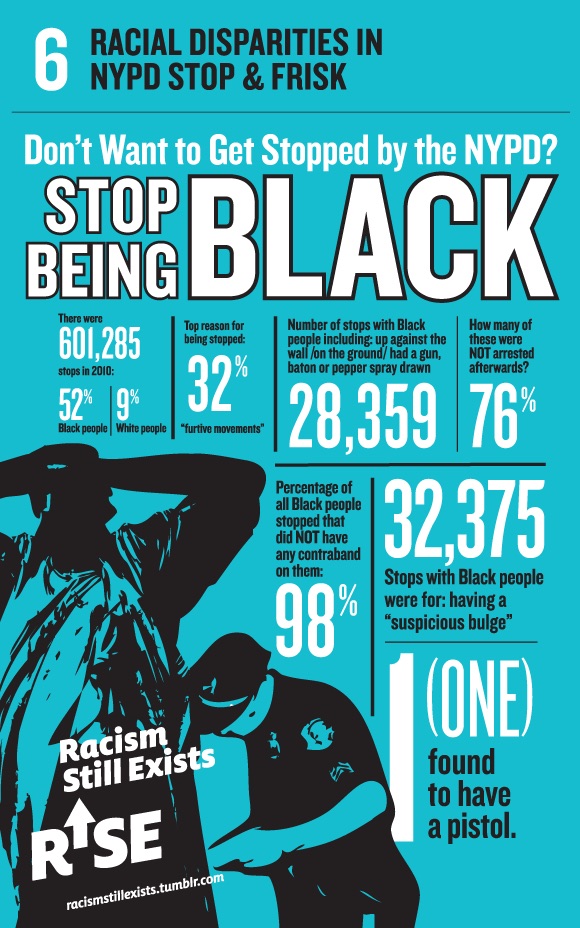
All 26 Criminal Charges Against a Corrupt NYPD Narcotics Detective Dismissed because Prosecutors Withheld Evidence

From [HERE] NYPD detective Joseph Franco developed a late career habit of letting perps walk. Very late career. He was fired. But not before wreaking enough havoc, prosecutors were forced to toss nearly 100 convictions.

Franco spent two decades working for the NYPD. How much of that was honest work is unknown. He was charged with perjury in 2019. That was just the beginning. The Manhattan DA’s office decided to look into other investigations Franco contributed to. Investigators found several more instances where Franco’s reports and statements did not match recordings of drug buys Franco claimed to have witnessed. The end result was Franco being hit with 26 criminal charges, including perjury and official misconduct.

Franco is just one of several habitual liars working for the NYPD. Hundreds of convictions and cases have been tossed in the last couple of years because some officers preferred their wins to be unearned. 

Ironically, Detective Franco is once again the beneficiary of official misconduct. His prosecution has been dismissed with prejudice because prosecutors decided to do a little cheating themselves.

A New York State judge, Robert M. Mandelbaum, found that prosecutors with the Manhattan district attorney’s office had failed to turn over evidence to the detective’s lawyers on three occasions, a major ethical violation, and dismissed the charges.

“As you have heard,” Justice Mandelbaum told jurors, “to date there have been two different occasions that you have heard about where the prosecution failed to disclose certain evidence.”

“It now turns out that the prosecution failed to disclose additional evidence only learned about today,” he added.

This is not an unusual occurrence. For years, it has been common knowledge that prosecutors tend to withhold evidence that won’t help their cases. In 2013, then Chief Judge Alex Kozinski (Ninth Circuit Appeals Court) called out the common practice of screwing defendants to obtain easy wins

There is an epidemic of Brady violations abroad in the land. Only judges can put a stop to it.

“Brady” evidence is exculpatory evidence, something prosecutors love to withhold from defendants. Far too many prosecutors feel the criminal justice system offers too much justice to accused criminals. To ensure a steady stream of victories, prosecutors simply withhold anything that might poke holes in their own cases. Self-interest is a powerful motivator. Forcing people to defend themselves with inadequate resources is just part of the process.

This misconduct has produced some immediate action, however. Prosecutor Stephanie Minogue was immediately booted from her position as deputy chief of the Police Accountability Unit. This move suggests something more unseemly than the standard operating procedure of withholding exculpatory evidence from the detective’s defense team. Minogue’s removal from the Accountability Unit hints that she wasn’t all that interested in holding Detective Franco accountable.

If so, then this wasn’t prosecutorial cheating meant to give the DA’s office an unearned win. This may have been prosecutorial tanking: easily discovered misconduct meant to allow Detective Franco to walk away from criminal charges this prosecutor possibly didn’t feel like pursuing. Cops and prosecutors work hand-in-hand and enjoy an extremely incestuous relationship. A successful prosecution would just create friction in this mutual admiration society — one that could result in fewer prosecutions and convictions in the future.

Whatever it actually is, it’s ugly all over. The DA’s office has shown it can’t be trusted any more than the cops who have cost it dozens of convictions.

How an FBI Informant Derailed Denver’s BLM Movement

From [HERE] An outlandish guerrilla militant who drove a silver Hearse to Denver-area Black Lives Matter protests in 2020 was secretly a federal informant with a sex crime conviction, a new podcast reveals.

The informant, Mickey Windecker, pushed an activist to buy a gun for him, resulting in the activist’s guilty plea on weapons charges. Other Denver-area activists accuse Windecker of inflaming otherwise-peaceful demonstrations, encouraging people to break windows, and leading marches directly into police traps. Windecker’s informant status was first reported this week on the podcast Alphabet Boys, which explores Windecker’s case and FBI involvement in the Colorado protests.

The Alphabet Boys podcast shared some of its documents, including recordings and an FBI summary report, with The Daily Beast, which corroborated those documents through court records and with other Colorado activists who’d encountered Windecker.

The FBI’s national and Denver offices declined to comment. Windecker did not return The Daily Beast’s requests for comment. He spoke on the phone to the Alphabet Boys podcast, after its host, Trevor Aaronson, left notes at his old apartment.

An American Fighting ISIS Is Convicted Sex Offender

“If you post something, a story about me saying supposedly I work for the FBI, I will sue the shit out of you,” Windecker told Aaronson in a voicemail. “I will take you to court and I will break you off in court for defamation of character and slander. I have already notified my attorney about this. My previous landlord notified me and sent me these papers that you put on the old door that I used to live at, stating that I work for the FBI. I do not work for the FBI. I’ve never worked for the FBI. You get proof of me working for the FBI, then I’ll say otherwise, but there’s no proof because I didn’t work for them.”

Rolebotic Black Atlanta Mayor Announces Police Training Facility will Move Forward Despite ‘Stop Cop City’ Protests

From [HERE] Nearly a year and a half after the Atlanta City Council approved plans to build a controversial new police and firefighter training center in one of the city’s largest forests — and just two weeks after a protester was fatally shot by police at the site — Atlanta officials announced on Tuesday that they have struck an agreement clearing the way for the construction of “Cop City.”

Atlanta Mayor Andre Dickens and DeKalb County CEO Michael Thurmond said during a press conference Tuesday that an agreement has been reached between the city and the county to issue a construction permit for the $90 million Atlanta Public Safety Training Center, which has been the subject of a year-long protest movement.

The training center will be built on 85 acres of land in the South River Forest, which is owned by the city of Atlanta but located just outside the city limits in DeKalb County. The plan has faced fierce public opposition since it was announced, including by a group of protesters who lived in tree encampments on the site until the forest was cleared by police earlier this month.

The self-described “forest defenders” say the construction would be a severe blow to Atlanta’s tree canopy and result in irreparable environmental damage.

“They’re trying to harp on the fact that it’s only 85 acres and allegedly the rest will be left for public use,” said Jasmine Burnett, organizing director of the mutual aid group Community Movement Builders. “But that’s 85 acres too much.”

One activist who protested outside City Hall after the press conference said it would be “a tragedy” to lose even a portion of the forest.

“We’re the city in the forest,” Francesca, 18, said, referencing the city’s nickname. “Atlanta’s canopy is a big part of who we are. If we lose that, we lose a part of our city’s identity and we lose a significant part of what lets us breathe every day. It’s ridiculous.”

On Tuesday, Dickens appeared to respond to those concerns by saying that the area contains only invasive species, weeds, softwood trees and rubble from old structures. The mayor pledged that 300 acres of the land parcel not slated for use to build the facility will be preserved as a public greenspace.

“This essentially is a huge park about the size of Atlanta’s largest park and it will be a park that will have a training center on a modest footprint within it,” Dickens said. “This is Atlanta and we know forests. This facility will not be built over a forest.”

memorandum signed by Dickens and Thurmond agreed to recommendations made by a “community advisory committee” for environmental protections at the site and safety upgrades to a nearby residential neighborhood.

The environmental commitments include a reforestation effort to replace every tree impacted by the construction with 100 hardwood trees and a mandate to implement “double erosion control” to ensure the viability of Intrenchment Creek, the main waterway in the South River Forest Basin.

DeKalb County commissioner Ted Terry appeared skeptical of the plan on Tuesday. Speaking to reporters at City Hall, Terry noted that damage to the creek by construction disruptions might be unavoidable.

“Intrenchment Creek has already maxed out its sediment control permits. It’s one of the most endangered creeks in Georgia. And of course, it flows into the South River, which is another endangered rivershed,” Terry said. “This again speaks to whether this site is the best site for any type of development to take place.”

The environmental protections included in the agreement are also unlikely to appease environmental activists.

One local organizer associated with the Stop Cop City movement called the agreement “bogus on its face.”

“You’re gonna protect the environment by tearing down trees? It’s insulting,” Micah, 26, said. “They’re taking us for fools if they think anyone would believe that tearing down trees and putting cement over it is protecting the environment.”

The news was announced as a group of about two dozen protesters, who were blocked from entering the press conference by police, clustered outside the mayor’s office and shouted calls for his resignation.

“Andre Dickens — blood on your hands!” protesters chanted, referring to the Jan. 18. death of activist Manuel “Tortuguita” Teran.

The Georgia Bureau of Investigation says Teran, 26, opened fire on state troopers, injuring one, and was killed by return fire. The claim by authorities that the troopers fired in self-defense has been disputed by protesters who have noted that there is no body camera footage of the shooting.

Teran’s death sparked protests throughout downtown Atlanta on Jan. 21, culminating in the burning of a police vehicle and fireworks being launched at the building that houses the Atlanta Police Foundation. Six people were arrested and charged with domestic terrorism in connection with the protests.

Officials on Tuesday did not say when construction on the training center will begin. [MORE]

Blue Lives Matter Much Much More: Texas Authorities Murder Latino Man to Obtain Revenge/Justice for the Murder of a White Cop After Supreme Court Denies Appeal

From [HERE] The State of Texas Wednesday executed Wesley Ruiz after the US Supreme Court denied Ruiz’s petition to for a stay. Ruiz, convicted of fatally shooting a Texas police officer, filed an application with the court on Tuesday to stay his execution and consider his petition for a writ of certiorari. The court denied both the application for stay of execution and Ruiz’s petition for writ of certiorari. 

In his petition to the court, Ruiz alleged issues of racial bias amongst the jurors who sentenced him to death. Ruiz provided an affidavit from the jury foreman describing Ruiz as an “animal” and a “mad dog.” The foreman also stated that Hispanic individuals in the audience were “gang members” that scared the jury. According to Ruiz’s petition, the foreman managed to persuade an unsure juror into the death penalty by saying Ruiz could be dangerous. Another juror stated that racial integration had changed her neighborhood. The same juror’s sister had been victimized by a man the juror thought to be Hispanic and involved in the “smuggling” of undocumented people. 

Ruiz was executed utilizing lethal injection, a method which he had challenged in state court. Ruiz filed a lawsuit in December, claiming that the state was utilizing expired and unlawfully obtained pentobarbital in lethal injections. The Texas Department of Criminal Justice denied that the drugs were expired. The state’s Attorney General filed a writ of prohibition to prevent the case from being heard. The Texas Court of Criminal Appeals (TCCA) granted the writ of prohibition in early January. 

Ruiz’s execution comes only days after another Texas death row prisoner, Terence Andrus, took his own life, after multiple appeals to the Supreme Court. In 2020, the court found in Andrus’s favor, remanding the case to the TCCA. However, the TCCA reaffirmed their earlier decision.

Industrial Gas Distributor Airgas Will Not Supply Nitrogen to Authorities to Murder Inmates ("execution")

From [HERE] Airgas, an industrial gas distributor that is one of Alabama’s largest suppliers, has announced it will not supply gas for executions. “[S]upplying nitrogen for the purpose of human execution is not consistent with our company values,” the company said in a statement.

Alabama lawmakers added nitrogen hypoxia as an alternative execution method to lethal injection in 2018, following Oklahoma and Mississippi.

Oklahoma became the first state to adopt a measure allowing prison staff to use nitrogen gas to execute people after the botched lethal injection execution of Clayton Lockett in 2014 led to a halt in executions.

Oklahoma State Rep. Mike Christian reportedly saw a documentary about killing humans that included a segment on nitrogen inhalation, and he and two others with no scientific or medical knowledge presented a report on nitrogen to the state legislature in 2014. Lawmakers passed a bill allowing nitrogen hypoxia as a backup method to lethal injection, and then-Gov. Mary Fallin signed it into law in 2015.

Despite the absence of scientific evidence on executing people with nitrogen, Mississippi passed a similar law in 2017, and on March 22, 2018, Alabama Gov. Kay Ivey signed legislation making Alabama the third state in the country to allow executions by nitrogen gas.

Using nitrogen gas to execute a person is untested and has never been done in the U.S.

The American Veterinary Medical Association has long rejected nitrogen gas as an acceptable method for euthanizing animals, and nitrogen is not used for terminal patients in states where medically assisted dying is legal.

Nitrogen, which kills by replacing oxygen, has killed people in industrial and medical accidents, including a liquid-nitrogen leak at a Georgia poultry plant that left six people dead just last year.

ADOC has acknowledged in court that nitrogen gas presents “the dangers of inert-gas asphyxiation to employees.”

Airgas said in December that it “has not and will not supply Alabama nitrogen or other inert gases to induce hypoxia for the purpose of human execution.” A company spokesperson said in a statement that it contacted the State of Alabama to “reinforce the point and ensure that there was no confusion regarding Airgas’ position.”

The company’s CEO further stated that Airgas is not “working with the state of Alabama, or anyone else, to develop nitrogen hypoxia as an execution method.”

Airgas, now owned by the French company Air Liquide, has become the largest U.S. distribution network in the packaged gas industry, according to its website.

With 24 branches in Alabama, Airgas is one of the state’s largest suppliers of gas. State agencies including forensic sciences, conservation and natural resources, transportation, and public health collectively spent over $287,000 with Airgas in fiscal year 2022, al.com reports.

The Alabama Department of Corrections purchased $1,634 in products or services from Airgas, but al.com reported there are no details about what was purchased. Airgas said ADOC does not currently have nitrogen cylinders from the company.

Airgas is not the first company to refuse participation in Alabama executions. Last year, a Tennessee company, FDRsafety, terminated its contract to help ADOC create a gas chamber after a public outcry led by faith leaders.

DC Circuit Court Orders Bureau of Prisons to Disclose the Supplier of the Lethal Agent Pentobarbital, which is Used by Authorities to Murder Inmates on Death Row

The District of Columbia Circuit ruled that the Bureau of Prisons did not justify its decision to withhold the identities of companies that will supply its new lethal agent, pentobarbital, for federal executions that had been on a 20-year hiatus from a watchdog group that sought a Freedom of Information Act request for that information. Read the ruling here.

New Report: 4 Giant Chemical Companies’ [Bayer (Monsanto), BASF, Corteva and Sinochem] Control of Global Food System Threatens Health, Environment and Access to Food

From [HERE] The four largest agrochemical companies — Bayer (Monsanto), BASF, Corteva and Sinochem (which recently acquired ChemChina/Syngenta) — are exerting increasing leverage over an agricultural system where the concentration of power and wealth threatens health, the environment and access to food, according to a new report.

The report, by Philip H. Howard, Ph.D., updates previous Howard’s previous work (see here and here) on these trends during the past couple of decades, focusing on the most recent (2018-2022) developments.

Howard, a food system researcher, is a member of International Panel of Experts on Sustainable Food Systems and a professor at Michigan State University.

The machinations of these industries for profit, power, market penetration and privatization of aspects of the natural world are hardly new. The National Sustainable Agriculture Coalitionsummarizes some aspects of the situation:

“Land and seed once belonged to no one and were shared by all, replicating the giving essence of the natural world. Today, these precious resources are tightly controlled and commoditized inputs.

“The modern U.S. food and agriculture system is designed to maximize a narrow concept of economic efficiency which fails to prioritize the well-being of small family farmers, rural communities, or the land.”

Increasing mechanization, industrialization, consolidation and privatization of genetic information and data all contribute to the dynamic and entropic world in which conventional agriculture currently operates.

Aspects of the shifting paradigms in agriculture during the past 75 years can be traced to multiple factors, including World War II innovations in materials science, chemical weapons development and other technologies; the so-called “Green Revolution”; advances in genetic science and biotechnology in the last couple of decades; and most recently, the advent of uses of Big Data and the technologies that enable it.

To begin with one of those: the dawn of genetically modified seed that would resist the assaults of applied herbicides was a game changer for the agrochemical industry and ratcheted up sector consolidation (see below).

Glyphosate-resistant seed meant that farmers could plant the seed and use Roundup (glyphosate) liberally because it would not harm the plant — but would knock down weeds.

National Sustainable Agriculture Coalition writes:

“To create and mass produce a seed that would resist Roundup, Monsanto needed a captive supply of germplasm [seed].

“‘One of their main strategies,’ noted [Kiki] Hubbard [of the Organic Seed Alliance], ‘was to buy up smaller [seed] firms to access their varieties and simply insert their GE traits without needing to do any of the breeding work themselves. …

“Monsanto thus began to acquire small and regionally based seed companies, exponentially multiplying their supply of germplasm and restricting the distribution of these varieties which had been carefully bred to possess ideal traits.

“These foundations enabled Monsanto to become the first company to genetically engineer a plant cell and eventually mass produce a Roundup Ready line of seed.”

The company promoted the heck out of this pairing of proprietary seed plus herbicide, and competitors took note.

With Monsanto’s development of its flagship glyphosate herbicide (Roundup), and its acquisition of seed companies that resulted in the 1996 debut of “Roundup Ready” soybean seed, the consolidation that now characterizes most parts of the food supply system was off and running.

Now, several huge companies (see below) sell genetically modified (GM) seed for use with their herbicide products.

Not so many years ago, there were six large agrochemical companies that sold pesticides and (in some cases) synthetic fertilizers and seeds to agricultural operations.

Beyond Pesticides has covered several of the huge mergers of the past decade-plus that have reduced that number to four, including Bayer’s acquisition of Monsanto, the Dow–DuPont merger(which then reconfigured to DuPont and Corteva) and the ChemChina acquisition of Syngenta(with ChemChina subsequently acquired by Sinochem in 2021).

ChemChina had already been scooping up many smaller seed companies over the past decade; multiple of Bayer’s seed divisions were also sold off to BASF, another chemical giant, in 2018.

Bayer, DowDupont, Sinochem and BASF now control more than 60% of global proprietary seed sales. Globally, sales are dominated by Corteva and Bayer.

Notably, Bayer is the inheritor of the beleaguered but ubiquitous glyphosate herbicides, most notably Roundup, that are still in extensive use around the world and often paired with GM seeds for important commodity crops, such as corn, soy, cotton, and increasingly, wheat and oat crops.

Howard — a faculty member in the Department of Community Sustainability at Michigan State University, and member of the International Panel of Experts on Sustainable Food Systems — points out in his 2016 book, “Concentration and Power in the Food System: Who Controls What We Eat?,” that control of much of the world’s food supply system by so few entities has enormous impacts on human health, biodiversity, the environment broadly, agricultural workers and rural communities.

In his book, Howard notes that the impacts on people:

“Tend to disproportionately affect the disadvantaged — such as women, young children, recent immigrants, members of minority ethnic groups, and those of lower socioeconomic status — and as a result, reinforce existing inequalities.”

Indeed, a year ago, a report — written by the Open Markets Institute and submitted to the U.S. House of Representatives Judiciary Committee Subcommittee on Antitrust, Commercial and Administrative Law — begins with this: “Food system consolidation is a danger to all Americans.”

It goes on to say:

“Just a handful of corporations control critical junctures in the U.S. food supply chain, from seeds and fertilizers to processing to grocery shelves. This concentration of capacity and control increases supply chain fragility by putting more production in fewer hands and fewer places.

“This consolidation is also what gives these corporations the market power necessary to dictate prices paid to producers and push down workers’ wages, even while they charge consumers more.”

Beyond Pesticides would add that this consolidation makes the products agrochemical companies offer, and the harmful practices they engender, even more entrenched in the operations of most conventional farming.

These large companies’ size gives them more influence on governmental and commercial decision makers; more leverage in supply chains and their sector marketplace, and thus, more control of what products are available to producers; and deeper pockets with which to fight challenges to their products and business models.

This is true in the U.S. and much of the so-called “developed” world, and increasingly, these companies are making inroads into less-Western, less-mechanized, and heretofore less “agrochemically saturated” agricultural areas around the globe. (See more below.)

Behind the retail food outlets (which are themselves being gobbled up by larger and larger “parent” companies) are these behemoth actors in the food system. These entities exist to make money; they do not, unless forced (or sometimes incentivized) to do so, center human or environmental or community health, or equity concerns, in their business models.

The interest of these corporations is now expanding beyond the production and sale of synthetic pesticides and fertilizers, and seeds, often genetically modified.

In the face of the issue of developing organismic resistance to agricultural chemicals’ efficacy, increasing public distaste for the noxious products these companies offer, and more governmental regulation of their products’ use, some have begun investing in firms that specialize in “biologicals” for pest control.

SyngentaCorteva and Bayer have all entered into this business realm.

Syngenta’s website characterizes this emerging sector as “harnessing nature to protect and promote plant growth effectively and sustainably,” and notes its entry into both biocontrols (i.e., use of natural pest enemies) and biostimulants (i.e., products with substances or microorganisms to improve growth and boost yield).

The company describes biologicals as “derived from or inspired by nature,” which is the “tell.”

The companies are likely uninterested in selling what organic farmers use — largely, naturally occurring substances — but rather, once again, in creating genetically modified organisms and/or synthetic versions of natural “substances or microorganisms” to deploy in agriculture and into the environment.

Syngenta speculates that the biologicals market will double in a few short years, and that the company expects to “secure market leadership” by 2025.

In addition, some companies are exploring and/or expanding into the digital agriculture space (i.e., the application of robotics, software, automation and sophisticated data analysis to agricultural operations).

The 2023 report notes some corporate aspirations: “Executives at agricultural machinery firm John Deere, for example, said they want to ‘build a world of fully autonomous farming by 2030,’ and Dan Rykhus, CEO of precision agriculture company Raven Industries, is certain that autonomous machinery is ‘the future of farming.’”

A recently published book by Kelly Bronson, Ph.D., “The Immaculate Conception of Data” suggests, according to Howard, that “the site of power in the food system has moved from seed and chemicals (or seeds paired to be useful only with chemicals) to data.”

Critics note that the agrochemical and agro-biotech industries have used the myth of the “Green Revolution” of the mid-20th century in their promotion of “the next big things” in agriculture, whether GM seeds paired with herbicides, or synthetic “biologicals” or über-mechanized and digital farming.

Glenn Davis Stone, of Washington University, revises our understanding of the Green Revolution, and comments:

“Today the biotechnology industry and its allies zealously promote the legend as a flattering framing for the spread of genetically modified crops. A Monsanto chief even recounted the aging Borlaug [Norman Borlaug, credited with the short-stalked wheat with very high yield potential when heavily fertilized that was the linchpin of said revolution in India] tearing up because while he lived through the Green Revolution, he would not live to see the ‘Gene Revolution’ which might save Africa. …

“… The push for a ‘Green Revolution for Africa’ today is very real.”

(Note, e.g., China’s investment in “industrializing” agriculture in multiple African countries. See also, pushback against UN cooperation with industry, in order to protect agroecological activity.)

Taken together, Howard writes in this 2023 report, the trends cited above:

“Have blurred previously distinct boundaries between seeds, agrochemicals, and biotechnology, and more recently, between other sectors, including biologicals (‘plant protection and strengthening products that are derived from or inspired by nature’) and digital agriculture (the growth of robotics, software, automation, and sophisticated data analysis in agriculture).”

Taken together, these trends reflect intensifying industrialization of agriculture and a landscape that some economists might readily deem an “oligopoly.” Control over more parts of the food supply system translates to more power to set prices, dictate practices and more.

Howard adds:

“Such high levels of concentration can also threaten political sovereignty, or lead to additional consequences, including negative impacts on communities, labor, human health, animal welfare, and the environment.”

The Open Markets Institute report is not a fan of consolidation; it asserts:

“Food companies and some economic analyses argue that decades of consolidation promoted efficiency and brought down food prices. Recent supply chain disruptions reveal the tradeoffs of prioritizing efficiency over resiliency, diversity, and safety nets. …

“Rebuilding a resilient, sustainable, and equitable food supply chain requires rules of fair competition that encourage businesses to focus on socially beneficial innovation and investing in workers and infrastructure rather than exploiting their brute bargaining power to wring cash out of other people’s pockets.

“It requires strict assurances of safety and dignity on the job as well as a living wage for workers. And it requires changes in corporate governance to hold corporations accountable to invest in capacity and act in the interests of the public rather than the interests of financiers.”

These industrialization and consolidation trends continue to be very concerning. As long ago as 1999, scientist-researchers at the University of Missouri, led by William Heffernan, wrote this:

“New firm names emerge, often the result of new joint ventures, and old names disappear. But underlying these changes is a continuing concentration of ownership and control of the food system.

“These structural changes are so strong that they often undermine the desired and expected outcomes of much of the agricultural policy developed over the past couple of decades.

“These structural changes, often referred to as ‘the industrialization of agriculture,’ have progressed to the point that some agricultural economists now refer to the agricultural stage of the food system as ‘food manufacturing.’ …

“One often hears the statement that agriculture is changing and we must adapt to the changes. Few persons who repeat the statement really understand the magnitude of the changes and the implications of them for agriculture and for the long-term sustainability of the food system.

“It is almost heresy to ask if these changes are what the people of our country really want or, if they are not what is desired, how we might redirect the change. The changes are the result of notoriously short sighted market forces and not the result of public dialogue, the foundation of a democracy.”

In the face of these trends, and the power of the corporations that shape how agriculture is deployed, both in the U.S. and globally, the importance of protecting and promoting alternative approaches is greater than ever.

Beyond Pesticides works for the advancement of organic regenerative agricultural strategies that genuinely work with natural systems, do not use synthetic petrochemical inputs (fertilizers and pesticides), and have at their heart the health and welfare of people, communities, soil, environment, biodiversity and more.

It is critical that small- and medium-scale organic agriculture holds true to its origins and principles, and serves as an increasingly robust and viable alternative and counterpoint to the agrochemical and agro-biotech industries, which do not serve or protect consumers, farmers, the environment or planetary sustainability.

A recent Substack post by Charles Eisenstein offers relevant inspiration:

“The core of the old story is hollowing out. … The void beneath the power, the wealth, the control, the comfort grows intolerable.

“Cracks spread through the superstructure. Truths long denied seep out through the cracks. Contradictions erupt through the broken crust. People stop believing the stories that held the world in place. …

“… all of us were born with a biologically encoded Great Expectation which the modern world falls far short of. Yet that expectation never truly dies. It can go dormant for years, for decades, but its ember stays alive at the center of the cold ash of innumerable disappointments. Today many of us are gently brushing away the ash and blowing on the coal within. It bursts back into flame. It is the flame of hope — not the false hope of wishful thinking and ignorance of reality, but the true hope that is a premonition of an authentic possibility, a possibility we have agency in creating. …

“… there are two basic kinds of work we may [do] … The first is to dismantle the structures, habits, beliefs, and powers of the old story.”

“The second is to grow the structures of the new story” — which can build, as he writes, “the more beautiful world our hearts know is possible.”

Help us build that world in agriculture and the food system, and amplify the message, by protecting and growing organic — join usorganize and advocate and buy organic!