Biden signs bill mandating ‘just and reasonable’ phone rates for prisoners

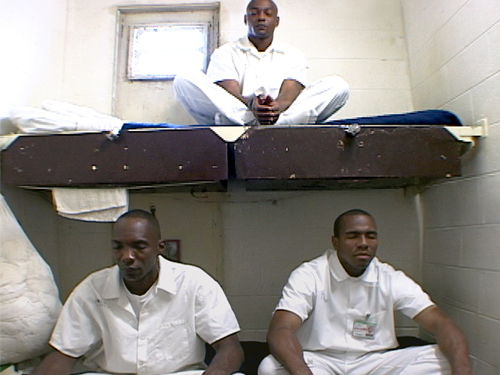
From [HERE] US President Joe Biden Thursday signed a bill reducing the cost of making calls from prisons into law. The Martha Wright-Reed Just and Reasonable Communications Act of 2021 will direct the Federal Communications Commission (FCC) to enforce guidelines which ensure that payphone providers charge incarcerated people “just and reasonable rates” for phone calls. The signing comes after the FCC attempted to reduce the costs of phone calls in 2017 but was ruled against by the US Court of Appeals for the District of Columbia which held that the FCC did not have the authority to set rate caps on calls.

Congress passed the legislation in December 2022 before it was sent to President Biden to be signed. It aims to establish requirements “related to charges, practices, or regulations in connection with confinement facility communications services.” It also “prohibits providers from assessing a site commission.” The US House of Representatives introduced an early version of the bill, the Martha Prison Phone Justice Act, in April.

The recently passed legislation imposes “private-sector mandates,” congressional directives which require private-sector entities to act in some way. The Unfunded Mandates Reform Act of 1995 (UMRA) defines the boundaries of these mandates. The Congressional Budget Office says that the “total cost of the [new law’s] mandates on private entities would exceed the annual threshold established in UMRA for private-sector mandates.”

Special Assistant to the President for Criminal Justice and Guns Policy, Vanessa Chen, comments that “meaningful communication and connection with loved ones (promotes) rehabilitation and can reduce recidivism,” thereby leading to safer communities. The bill is named after retired nurse Martha Wright-Reed, who advocated for affordable telephone rates after her grandson was incarcerated.

Since 2019 1.4 Million Students Have Left the Public Fool System, Causing Closings Throughout US

From [HERE] Government schools in America “have lost more than a million students since the start of the pandemic,” reports the Wall Street Journal, leading to school closures “across the country.” The article goes on to document dozens of those closings and lists “a rise in home schooling” as one of the causes for the drop in enrollment. In total government schools lost “1.4 million students from the fall of 2019 to the fall of 2020.”

3.7 million homeschooled children

Homeschooling numbers have swelled to 3.7 million children as government schools lose students, according to WhatToBecome in an article entitled, “Homeschooling Statistics You Shouldn’t Ignore".

Why?

Project Forever Free suggests COVID measures and frustration with poor education may be responsible for the move away from government schooling.

Maybe it’s the continued disruptions to learning in public schools — from poorly-devised remote classes to indoor mask mandates — that have forced many parents to search for schools teaching in person or meeting away from COVID risks. 

Or perhaps these pandemic problems were just an occasion for parents to act on frustrations they’ve had for years. Many public schools have been consistently incompetent when it comes to meeting children’s educational needs.

WhatToBecome also points to educational success as one of the reasons for the growing popularity of homeschooling.

15% to 30% higher scores on achievement tests [including] 72 points more (out of 1600) than the national average on the SAT. 

Higher scores are not the top reason parents choose to homeschool, though. Safety is. 

80% of parents choose to educate their children at home because of safety concerns…Parents in the States are becoming more worried about their children’s safety at school, primarily because of drugs, bullying, and negative peer pressure.[MORE]

Alabama Supreme Court Eliminates Critical Safeguard Against Wrongful Convictions in Death Penalty Cases

From [HERE] When appellate lawyers read the transcript of Samuel Ivery’s capital murder trial in Mobile, Alabama, they were stunned to read that the prosecutor, in his closing argument, rebutted evidence that Mr. Ivery, who is Black, suffered from mental illness by telling jurors “this is not another case of niggeritous.” They were even more stunned that Mr. Ivery’s lawyer did not object.

At Judy Haney’s capital murder trial, appellate lawyers discovered that her attorney at trial was so intoxicated during the proceedings that the trial judge stopped the trial midway through and ordered the lawyer to be incarcerated in the city jail overnight.  The next day, the trial resumed with no objections and Ms. Haney was sentenced to death.

Under Alabama Rule of Appellate Procedure 45A, known as the “plain error” rule, the Alabama Court of Criminal Appeals is required to review on appeal whether incidents like these necessitate a new trial, even if there were no objections at trial.

Last week, the Alabama Supreme Court announced, without input from the Alabama Appellate Rules Committee, that it is eliminating mandatory plain error review, effective immediately. The decision will have a profound impact on death penalty litigation and the reliability and fairness of capital convictions and sentences in Alabama.

In most criminal cases, Alabama appellate courts will address errors or issues on appeal only if the defense lawyer objected at trial. Rule 45A provided that, because death penalty cases require the highest possible level of reliability and scrutiny, the Alabama Court of Criminals is required to address errors or issues raised for the first time on appeal. It applied a higher standard to claims that were not preserved at trial, but it could not refuse to consider those claims.

As the Court of Criminal Appeals described Rule 45A in Ms. Haney’s case:

This rule requires that we notice any plain error or defect in the proceedings under review, whether or not brought to the attention of the trial court, and take appropriate action whenever such error has or probably has adversely affected the substantial rights of the appellant.

Rule 45A allowed appellate attorneys to identify and correct unconstitutional conduct that has occurred in capital trials throughout the state. As a result, many wrongful convictions and illegal sentences have been brought to light.

Mandatory plain error review has been responsible for nearly 40% of all reversals in Alabama death penalty cases. 

In a state with no statewide public defender system where, for decades, appointed defense lawyers were paid less than minimum wage for representing defendants in capital trials, the plain error rule has been critical in addressing and identifying wrongful convictions and illegal sentences in death penalty cases. Eliminating the rule raises serious questions about the reliability of Alabama’s capital system moving forward.

Plain error has been especially important for addressing illegal racial discrimination in jury selection. Prosecutors have routinely excluded Black prospective jurors from serving on capital trial juries in Alabama.  At the capital murder trial of Joe Henderson, the prosecutor struck all 10 Black potential jurors from serving on Mr. Henderson’s jury, but his defense lawyer did not object. 

After he was convicted and sentenced to death by an all-white jury, Mr. Henderson’s appellate lawyers argued that the prosecutor had illegally discriminated against Black jurors. The plain error rule required the Alabama Court of Criminal Appeals to address the claim even though there was no objection at trial. The court agreed that the conviction was infected by illegal racial bias and granted a new trial.

Similarly, the prosecutor at Maxine Walker’s trial struck 11 of the 15 Black potential jurors.  The prosecutor used various pretexts for removing Black jurors.  He claimed that some Black jurors did not appear “well kept,” or were “slow” and “dumb,” or had “no teeth,” or were “country,” “hefty,” or “effeminate.” 

Again, the defense lawyer in the case did not object to the prosecutor’s conduct and again the plain error rule required the appellate court to address the claim on appeal. The Court of Criminal Appeals corrected the injustice and granted a new trial due to illegal racial discrimination in jury selection.

The Alabama Court of Criminal Appeals implements and enforces Rule 45A. Both of the Alabama Supreme Court justices who previously served on the Alabama Court of Criminal Appeals—Hon. Kelli Wise and Hon. Greg Shaw—were among the three justices who objected to the court’s order changing the rule last week.

Alabama has an Appellate Rules Committee comprised of outstanding appellate practitioners from across the state who represent parties on all sides of both civil and criminal litigation. Committee members devote a great deal of time to researching and evaluating proposed changes to the appellate rules and offer important perspectives on how proposed rules will impact appellate practice in Alabama. 

Proposed rule changes typically are researched and evaluated by the committee, which makes recommendations to the Alabama Supreme Court before the court makes a final decision about whether to adopt proposed new rules or change existing rules.

But the court changed Rule 45A last week without notifying the committee or seeking its recommendation about the rule change, which is unprecedented, especially for a critical and longstanding appellate rule that impacts the most serious cases.

Twitter Files Demonstrate the FBI and DOD Coordinated with Twitter to Censor Americans

STORY AT-A-GLANCE

  • Between the documentation obtained through a recent lawsuit against the White House and the Twitter files released by Elon Musk, it’s become quite clear that every facet of the U.S. government, including its intelligence agencies, are involved in illegal and unconstitutional censorship

  • We now have proof that the FBI has been acting as the key instigator and implementer of the government’s illegal censorship of Americans. The FBI has also actively interfered in multiple elections — all while inventing the narrative that foreign nations were interfering

  • Twitter has worked hand in hand with the U.S. Department of Defense to aid U.S. intelligence agencies in their efforts to influence foreign governments using fake news, computerized deepfake videos and bots

  • The Twitter files also reveal members of Congress have a direct line to Twitter and have had accounts suspended on their behalf and content removed at their whim

  • Discovery documents from a lawsuit against the White House filed by the attorneys general of Missouri and Louisiana show at least 67 federal employees across more than a dozen agencies are also engaged in illegal censorship activities. This includes aides to President Biden, who pressured social media companies to change their policies to fit White House demands for censorship

FROM [MERCOLA] Between the documentation obtained through a recent lawsuit against the White House and the Twitter files released by Elon Musk, it's become quite clear that every facet of the U.S. government, including its intelligence agencies, are involved in illegal and unconstitutional censorship.

In the video above, Fox News host Tucker Carlson interviews independent journalist Matt Taibbi, who has spent weeks sifting through the released Twitter files and reported on the contents.

FBI Has Gone Off the Rails

Importantly, we now have proof that the FBI has been acting as the key instigator and implementer of the government's illegal censorship of Americans' political and medical views. The agency has also, on a regular basis and for unknown purposes, asked Twitter to reveal the location of specific Twitter users, such as actor Billy Baldwin.

What's more, internal Department of Homeland Security (DHS) memos, emails and documents show the DHS has worked on expanding its influence over tech platforms for years, so, government censorship is not something that came about in response to the COVID crisis. Nor is the censorship limited to COVID or public health information in general.

Evidence shows the FBI has actively interfered in multiple elections — all while inventing the narrative that foreign nations were doing the interfering.1 As noted by Sen. Josh Hawley, R-Mo., these kinds of activities are "the biggest threat to our constitutional democracy today."2

As just one example, we now know the FBI plotted to quench the Hunter Biden laptop story well before the first report about it was published. In collaboration with Twitter, Facebook and the Aspen Institute, the FBI held a tabletop exercise to practice the shaping of the media's coverage of a potential "hack and dump" operation involving Hunter Biden material.3,4 As reported by the New York Post:5

"[The] drill was put into practical use weeks later, when The Post broke the news about Hunter Biden's infamous laptop — which was either ignored or downplayed by most mainstream news outlets and suppressed by both Twitter and Facebook."

There's also evidence showing the FBI has been shielding Hunter Biden and working with social media to censor bad press about him as far back as 2018.6 That job was probably made easier by the fact that reportedly former FBI agents work at both Twitter and Facebook.

For example, Jim Baker spent three decades with the FBI before becoming Twitter's head lawyer,7and Facebook employs no less than 115 "former" employees of the FBI, CIA, NSA and other intelligence agencies, most of whom now work in Facebook's content moderation department.8

Twitter Paid to Censor Americans and Promote US Propaganda

Disturbingly, we now also have evidence showing that while Twitter insisted it was cracking down on covert government propaganda accounts, they only tracked down and banned foreign government-affiliated propaganda while working hand in hand with the U.S. Department of Defense to aid U.S. intelligence agencies in their efforts to influence foreign governments using fake news, computerized deepfake videos and bots.9 As reported by The Intercept:10

"Behind the scenes, Twitter gave approval and special protection to the U.S. military's online psychological ops. Despite knowledge that Pentagon propaganda accounts used overt identities, Twitter did not suspend many for around two years or more. Some remain active …

In 2017 a U.S. Central Command (CENTCOM) official sent Twitter a list of 52 Arab language accounts 'we use to amplify certain messages.' The official asked for priority service for six accounts, verification for one and 'whitelist' abilities for the others."

Whitelisted accounts have a "validated" status similar to that of the blue check mark, which ensures they are promoted in searches. These accounts also don't get shadow-banned or limited by other means. Adding insult to injury, the FBI has been using taxpayer dollars to pay Twitter for their censorship and propaganda services — more than $3.4 million between October 2019 and February 2021 alone.11

Congressional Members Involved in Censoring Americans

The FBI has not acted alone, however. Far from it. The Twitter files reveal members of Congress have a direct line to Twitter and have had accounts suspended on their behalf and content removed at their whim. As reported by MSN:12

"… Taibbi … reported that Twitter 'received an astonishing variety of requests from officials asking for individuals they didn't like to be banned.' An example he shared was one sent in November 2020 by [Rep. Adam] Schiff's office, who contacted Twitter hoping the tech giant would take action regarding 'alleged harassment from QAnon conspiracists' against Schiff's staff, including aide Sean Misko.

'Remove any and all content about Mr. Misko and other Committee staff from its service — to include quotes, retweets, and reactions to that content,' the request to Twitter read. 'Suspend the many accounts, including @GregRubini and @paulsperry, which have repeatedly promoted false QAnon conspiracies.'"

Other government leaders have been less clandestine in their censoring operations. Sen. Elizabeth Warren, for example, wrote an open letter to Amazon demanding they ban my book, "The Truth About COVID-19."

Similarly, two state attorneys general, Letitia James and William Tong, publicly threatened social media companies with legal ramifications if they refused to censor the "Misinformation Dozen." President Joe Biden also publicly called on social media platforms to ban my accounts. But it gets worse.

Government Has Been Weaponized Against the People

Discovery documents from a lawsuit against the White House13 filed by the attorneys general of Missouri and Louisiana (Eric Schmitt and Jeff Landry) show at least 6714,15 federal employees across more than a dozen agencies are engaged in these kinds of illegal censorship activities. This includes officials from: [MORE]

"Search everyone first, Identify suspects later:” Attorneys Claim Colorado Cops Forced Google to Provide Information on Anyone who Made Particular Keyword Searches, Leading to Arrest from Dragnet

From [HERE] Lawyers in Colorado are questioning the legality of keyword-search warrants. According to a newly filed motion, after failing to find any leads in an arson case in Colorado in 2020, the police served Google a warrant demanding information on anyone that had searched the address of the location of the fire.

Google refused to comply with the first two warrants but complied with the third, helping the police find suspects. As a result, three teenagers were charged with murder.

However, the keyword-search warrant has been legally challenged by the lawyers of one of the defendants, Gavin Seymour. They describe these warrants as “a digital dragnet of immense proportions.”

In a filing at the Supreme Court of Colorado, the defense argued that a keyword-search warrant “is profoundly different from traditional search warrants seeking data belonging to a suspect,” Bloomberg first reported.

“Instead, the process operates in reverse — search everyone first, and identify suspects later.”

The lawyers argued that while responding to keyword-search warrants, Google has to search billions of users, which raises privacy concerns.

“This is a really significant new legal issue with tremendous implications for not only Mr. Seymour but for everyone in the country who uses Google to run searches,” said Michael Price, one of the lawyers representing Seymour.

The lawyers want the Supreme Court to review the issue, following a ruling by a judge to deny their motion to suppress the evidence.

WSJ says Secret Surveillance Program Records Money Transfers Between People in the US and 20 Countries. All Police Dept’s Have Warrantless Access

From [HERE] Hundreds of federal, state and local U.S. law-enforcement agencies have access without court oversight to a database of more than 150 million money transfers between people in the U.S. and in more than 20 countries, according to internal program documents and an investigation by Sen. Ron Wyden.

The database, housed at a little-known nonprofit called the Transaction Record Analysis Center, or TRAC, was set up by the Arizona state attorney general’s office in 2014 as part of a settlement reached with Western Union to combat cross-border trafficking of drugs and people from Mexico. It has since expanded to allow officials of more than 600 law-enforcement entities—from federal agencies such as the Federal Bureau of Investigation, the Drug Enforcement Administration, and Immigration and Customs Enforcement to small-town police departments in nearly every state—to monitor the flow of funds through money services between the U.S. and countries around the world. 

TRAC’s data includes the full names of the sender and recipient as well as the transaction amount. Rich Lebel, TRAC’s director, said the program has directly resulted in hundreds of leads and busts involving drug cartels and other criminals seeking to launder money, and has revealed patterns of money flow that help law-enforcement agencies get a broader grasp on smuggling networks. 

“It’s a law-enforcement investigative tool,” Mr. Lebel said. “We don’t broadcast it to the world, but we don’t run from or hide from it either.”

After this article was published, a spokesman for the Arizona attorney general said: “Courts have held that customers using money transmitter businesses do not have the same expectation of privacy as traditional banking customers.”

Mr. Wyden, an Oregon Democrat, said TRAC allows the government to “serve itself an all-you-can-eat buffet of Americans’ personal financial data while bypassing the normal protections for Americans’ privacy.” 

Internal records, including TRAC meeting minutes and copies of 140 subpoenas from the Arizona attorney general, were obtained by the American Civil Liberties Union and reviewed by The Wall Street Journal. They show that any authorized law-enforcement agency can query the data without a warrant to examine the transactions of people inside the U.S. for evidence of money laundering and other crimes. One slideshow prepared by a TRAC investigator showed how the program’s data could be used to scan for categories such as “Middle Eastern/Arabic names” in bulk transaction records. 

“Ordinary people’s private financial records are being siphoned indiscriminately into a massive database, with access given to virtually any cop who wants it,” Nathan Freed Wessler, deputy director of the ACLU’s Speech, Privacy, and Technology Project, said. “This program should never have been launched, and it must be shut down now.” [MORE]

Central Bank Digital "Money" is Coming b/c the Government Fears the Use of Cryptocurrencies and Losing Control of Currency and People

From [HERE] “Central-bank digital currency” doesn’t exactly roll off the tongue. But you might want to get used to saying it. These so-called CBDCs, or digital versions of dollars, yuan, euros, yen or any other currency, are coming, say those who study them. And depending on how they are designed and rolled out, their impact on the banking system could be profound.

One hundred and fourteen countries are exploring digital currencies, and their collective economies represent more than 95% of the world’s GDP, according to the Atlantic Council’s Central Bank Digital Currency tracker. Some countries, including China, India, Nigeria and the Bahamas, have already rolled out digital currencies. Others, like Sweden and Japan, are preparing for possible rollouts. The U.S. is studying the issue and has run trials of various technologies to enable a digital currency, although Fed chair Jerome Powell has indicated the U.S. central bank has no plans to create one, and won’t do so without direction from Congress.

Debates about the necessity, utility and potential pros and cons of digital currencies are often confusing, and confused, in part because every country rolling out a digital currency is doing it in its own way.

Generally, however, CBDCs can be roughly divided into two types: those designed for use by financial institutions and those designed for use by the general public.

Old vs. new

The first type is just a new way for central banks to transfer money to commercial banks.

More specifically, some central banks are testing whether money transfers between financial institutions—which in some cases can take days to settle—might be made safer and more efficient under a system in which central-bank money is represented by digital tokens and transactions are settled on a shared distributed ledger, concepts borrowed from cryptocurrency and blockchains. One such system is being tested by the New York Fed and a range of big U.S. banks and financial institutions.

The second type of CBDC is a digital version of fiat money made available to the general public through accounts held by a central bank or a commercial bank. From the perspective of a regular person or business, this kind of CBDC isn’t any different from the electronic money in their bank accounts today—it’s just a digital dollar. What makes these kinds of CBDCs special is that they are created, and held, in accounts that a central bank has direct access to. If another pandemic happened, for example, the Fed could just deposit stimulus “checks” into every U.S. citizen’s digital-currency account.

This type of CBDC represents a departure from the way money is created and distributed today, in that everyday people would now have accounts, or “wallets” that contain money created by their country’s central bank itself, instead of by their commercial bank. It represents a profound shift for central banks, from their traditional role as providers of money to a country’s banking and financial system, to connecting directly with everyday people.

China’s digital yuan is one such currency, and it can be used by everyday Chinese people through existing, and very popular, digital payment services like Alipay and WeChat Pay. India’s digital rupee is an equally bold experiment in allowing the country’s citizens to transact with a digital version of their currency in a way that could bypass traditional banks.

Question of control

At this point, the average person is probably wondering why, in a world in which billions of people have become accustomed to paying for things with electronic payment systems already, anyone needs a digital version of their currency.

The answer to that question depends on the motivations of the central banker, analyst or academic you ask. Many who study digital currencies argue that at the most basic level, a digital currency is all about control. The rise of cryptocurrencies—which are another form of digital money, but one that isn’t controlled by a government or other central authority—and the potential of one nation’s digital currency to eat away at the dominance of others’ has driven interest in official digital currencies.

“There’s a worry that if we don’t launch a digital currency in the U.S. or Europe, China will set all the standards for them, and then we’ll be at a disadvantage,” says Megan Greene, global chief economist at the risk and financial advisory firm Kroll. “Also, digital currencies like crypto really scared the bejeezus out of central bankers.”

What central bankers and other interested parties—like the Biden White House, which in a September report outlined the possibilities of a digital U.S. dollar—fear is the potential of cryptocurrencies to wrest control of the creation and transfer of money from central banks, leaving them without the tools they currently have for preventing their respective economies from running too hot or too cold.

All of these threats remain entirely hypothetical for now, says Eswar Prasad, an economist at Cornell University. In his book “The Future of Money,” he outlines the other reasons that policy makers give for wanting to create digital currencies.

Perhaps the most noble of those reasons is financial inclusion. In the U.S., only about 5% of people don’t have a bank account. But in other countries, such as the Bahamas, which was the first country in the world to implement a digital currency, the figure is much higher—around 18%, according to the country’s central bank. If everyone had access to an account with their country’s central bank, and could use it to transact instantaneously with others using a digital currency, for a minimal or no fee, the idea is that it would bring many more people into the regional and even global financial system, with all the benefits that attend.

Less privacy

Advertisement - Scroll to Continue

On the other hand, the potential downsides of a digital currency, even one initially intended for only the most benign purposes, could be profound, says Dr. Prasad.

First, there is the obvious issue of privacy. A digital currency could allow governments to track every transaction a person makes, no matter how minute. This level of transparency would be a powerful disincentive to using these currencies for crime or fraud, but it could also open the door to new kinds of social control, especially in countries with already-scant protections for human rights.

For example, says Dr. Prasad, a government could make it impossible to spend the digital currency on things the ruling party deems problematic, like alcohol or pornography. The government also could make transacting with certain people difficult or impossible—China already has a social credit system that ranks citizens algorithmically, and punishes them in various ways.

“Throughout history, I think you see many examples where you see tech that seems very benign get perverted into much more malign uses,” says Dr. Prasad.

Even less-malign applications of digital currencies could lead to all sorts of unintended consequences. One, which the crypto industry has run afoul of many times in the recent past, is that the more complex and capable designers of a digital currency make their system, the greater the possibility that it could be manipulated in ways its designers didn’t anticipate.

Set aside FTX, which appears to be a straightforward case of the misuse of depositors’ funds. Set aside also the many hacks and thefts of cryptocurrency that have taken place of late. Plenty of crypto projects have failed or lost huge amounts of money even when they were functioning exactly as they were designed. For example, the crypto exchange Mango Markets saw $114 million in funds siphoned out by a trader who didn’t break any of the rules of the exchange, and simply exploited a feature of the behavior of the exchange that its designers didn’t anticipate.

Then there are the failures of various “algorithmic stablecoins”—that is, cryptocurrencies that are supposed to be pegged to the U.S. dollar—which collapsed as soon as the overall value of cryptocurrencies was no longer rising.

Ironically, one of the biggest dangers of central-bank digital currencies could be that they succeed. Buried in the code and systems that dictate how they function could be a liability that a country doesn’t discover until it’s too late.

It’s impossible to know what that liability might be, but the example of the many and varied experiments in new kinds of financial structures and products from the crypto industry should inspire designers of more-complicated digital currencies to tread carefully.

“I think it is inevitable there will be unintended consequences as a result of CBDCs,” says Ms. Greene. “The Fed and the Bank of England are moving pretty slowly on digital currencies, which has made them the subject of criticism—but I actually think it is smart they’re being methodical, because there are so many different decisions they have to make.”


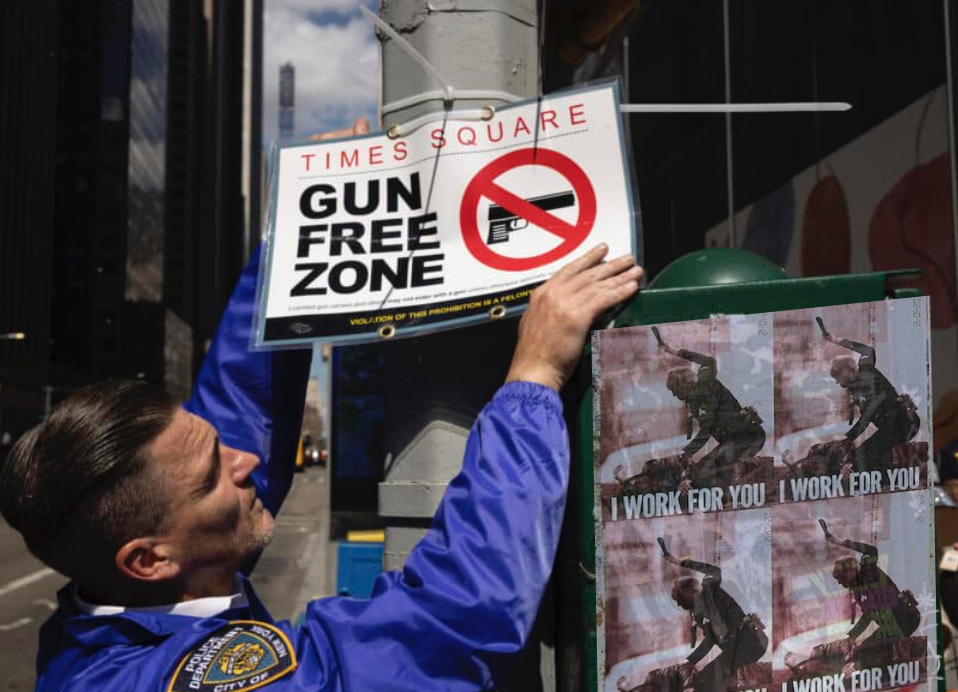
NYPD Post Gun Free Zone Signs Notifying Criminals that Law Abiding Citizens Will Be Unable to Defend Themselves in the Area, Marking the Top Places to Commit Crimes

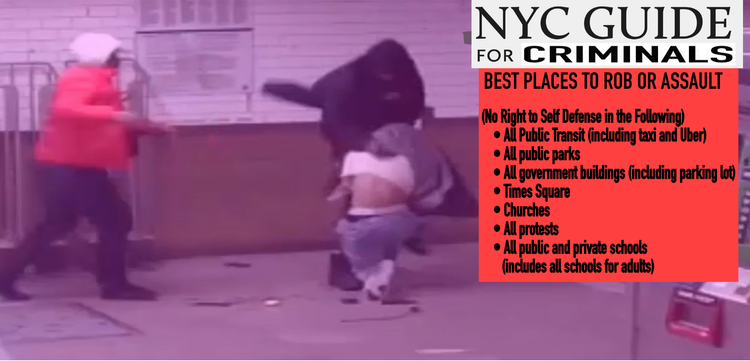
NYPD SENDS MESSAGE TO NYC CRIMINALS: ALL THE LAW ABIDING PEOPLE YOU ROB OR ASSAULT IN TIMES SQUARE WILL BE UNARMED

The Supreme Court made it clear that the 2nd Amendment protects an individual’s right to keep and bear arms for self-defense in public. The public includes unsafe, crowded places like “Times Square.” The court clearly stated;
Nothing in the Second Amendment’s text draws a home/public distinction with respect to the right to keep and bear arms. As we explained in Heller, the “textual elements” of the Second Amendment’s operative clause— “the right of the people to keep and bear Arms, shall not be in- fringed”—“guarantee the individual right to possess and carry weapons in case of confrontation. Heller further confirmed that the right to “bear arms” refers to the right to “wear, bear, or carry . . . upon the person or in the clothing or in a pocket, for the purpose . . . of being armed and ready for offensive or defensive action in a case of conflict with another person.”

This definition of “bear” naturally encompasses public carry. Most gun owners do not wear a holstered pistol at their hip in their bedroom or while sitting at the dinner table. Although individuals often “keep” firearms in their home, at the ready for self-defense, most do not “bear” (i.e., carry) them in the home beyond moments of actual confrontation. To confine the right to “bear” arms to the home would nullify half of the Second Amendment’s operative protections.
Moreover, confining the right to “bear” arms to the home would make little sense given that self-defense is “the central component of the [Second Amendment] right itself.” Heller, 554 U. S., at 599; see also McDonald, 561 U. S., at 767. After all, the Second Amendment guarantees an “individual right to possess and carry weapons in case of confrontation,” Heller, 554 U. S., at 592, and confrontation can surely take place outside the home.

Although we remarked in Heller that the need for armed self-defense is perhaps “most acute” in the home, id., at 628, we did not suggest that the need was insignificant else- where. Many Americans hazard greater danger outside the home than in it. See Moore v. Madigan, 702 F. 3d 933, 937 (CA7 2012) (“[A] Chicagoan is a good deal more likely to be attacked on a sidewalk in a rough neighborhood than in his apartment on the 35th floor of the Park Tower”). The text of the Second Amendment reflects that reality.

The Second Amendment’s plain text thus presumptively guarantees petitioners Koch and Nash a right to “bear” arms in public for self-defense.

The sensitive places doctrine is an exception to the general right to the peaceable possession and carry of arms. The Court has explained that schools and government buildings are “sensitive places.” Whether a place is a “sensitive place” is determined by historical record and/or particular place’s sensitive government interests or vulnerabilities. A longstanding history exists if there ‘are no disputes regarding the lawfulness of such prohibitions.” Constitutional law professor David Kopel explained that ‘factors which make places “sensitive” might be a place where most persons therein are minors (K-12 schools), places that concentrate adversarial conflict and can generate passionately angry emotions (courthouses, legislatures, polling places), or buildings containing people at acute personal risk of being targets of assassination (many government buildings). However, the answer cannot be that the places are crowded. Sometimes they are, but no more so than a busy downtown sidewalk, and sidewalks are not sensitive places.’ As explained by the Court in a big city such as Chicago,

“[A] Chicagoan is a good deal more likely to be attacked on a sidewalk in a rough neighborhood than in his apartment on the 35th floor of the Park Tower”). The text of the Second Amendment reflects that reality.”

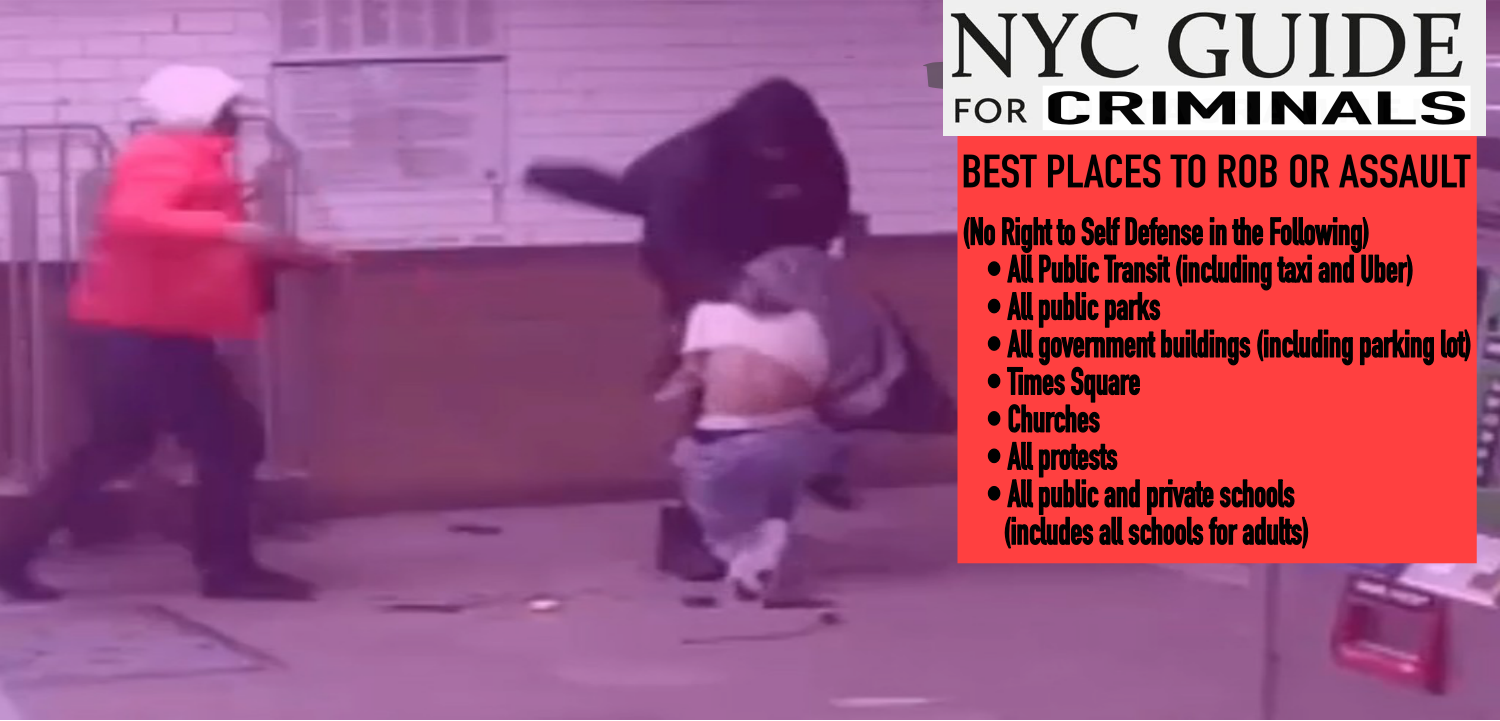
The Court also specifically stated that a place is not a sensitive place simply because it is crowded. Nevertheless, the new NY law bans handguns in places of a “sensitive nature,” which overbroadly includes all churches/places of worship, government buildings, all public parks, all kinds of schools, all public transit (apparently including all vehicles for hire (cabs/Uber/limo)), hospitals, shelters, residential group homes, nursing homes, and medical facilities, among others. It also prohibits law abiding citizens from carrying a handgun in Times Square.

Said prohibition is an obvious middle finger to the Court’s opinion and to anyone who desires true freedom and values unalienable rights, because the court already said so - a crowded place is not a sensitive place simply because it is crowded or busy. In fact, it is common sense among unwilling slaves that in a busy, crowded place a law abiding citizen is more likely to be confronted by criminals.

According to FUNKTIONARY:

Freedomination – the liberty to choose the commitments, ideologies, covenants, contracts, judgments, and relationships that bind or restrain you within the Matrix. (See: The Matrix, Negative Hallucination, Phfreedom, Freedom & Liberty)

freedom peddlers – political agitators who fail to address the structured incapacity of most people for freedom and their inclination towards freedumb. Freedom peddlers talk about how free things are—but fail to mention the price of upkeep.

freedom seeker – those who realize they are not free, earnestly seeking those who really have control, or are their masters, but have not yet identified just who they are (much less, how they are being enslaved) in order to secure from them the freedom they so desire. The impulse to be free is not for the few. All are called, many hear, few respond. You are not a mistake or a problem to be solved. You are not the ego. You are the consciousness beyond the ego. Your search will remain in limbo or you will reach despair until you realize that you are always-already the singular sought-seeking pair. (See: Seeker, “I,” My, Ego, True Self, I-AM, False Self, Chapel Perilous, Bedside Baptist, Meditation & Seeking)

freedumb – the state of unrecognized psychological captivity (brain hemispheric hostage) that sheeple remain in because they don’t speak the language of reality nor constantly edit truth from perfecting heart to perfecting power—and when truth is spoken around them, refrain from being open, or impervious to it thus being forever chained to its distortions and limitations. 2) the mindset that proposes “since we are liberated, we are also free.” 3) the mindset that operates upon the notion that you can have individuality without accountability or responsibility. 4) the pretense that reality is truth and viceversa. People cherish unwarranted assumptions and relish their freedumb because they have been socialized into selfcensorship along with misidentification with the ego-mind—the absence of knowledge of Self. (See: Phfreedom, Truth, Unfreedom, Dumbelievers, Self, Belief Systems, Objective Truth, Individuality, Objective Reality, True Self & Reality)

Last Year the Federal Government Took Over $4.6 Billion in Business Taxes from Gun Makers

From [HERE] America's gun industry is booming. Over 11.3 million firearms were manufactured in the United States in 2020, more than double the 5.6 million produced in 2010, and nearly triple the 3.9 million guns manufactured in 2000, according to the Bureau of Alcohol, Tobacco, Firearms, and Explosives. Surging demand for firearms has been a boon not only for the balance sheets of American gun makers, but also government coffers.

Between sporting arms and ammunition companies and supporting sectors, the American firearm industry generated $70.5 billion in economic output in 2021, according to the advocacy group The Firearm Industry Trade Association. The federal government also levied $4.6 billion in business taxes from the gun industry in 2021, up 84% from a decade earlier. The firearm industry in some states accounts for a far larger share of government firearm tax revenue than others.

The federal government collected $155.8 million in business tax revenue from the firearm industry in New York in 2021. Adjusting for population, this comes out to about $8 per state resident, the 11th lowest among the 50 states.

Overall, New York's firearm and ammunition industry, including supporting sectors, employed 10,150 people in 2021. The industry generated $2.5 billion in total economic output, or $128 per capita, the eighth lowest per capita figure among states.

All data in this report is from the 2022 Firearm and Ammunition Industry Economic Impact Report from The Firearm Industry Trade Association.

$900k Settlement after Houston Cops Shot Unarmed, Naked Black Man in Hospital Room. Suit Claimed Hospital Authorities and Police Conspired in Cover up and Filed False Charges to Justify their Actions

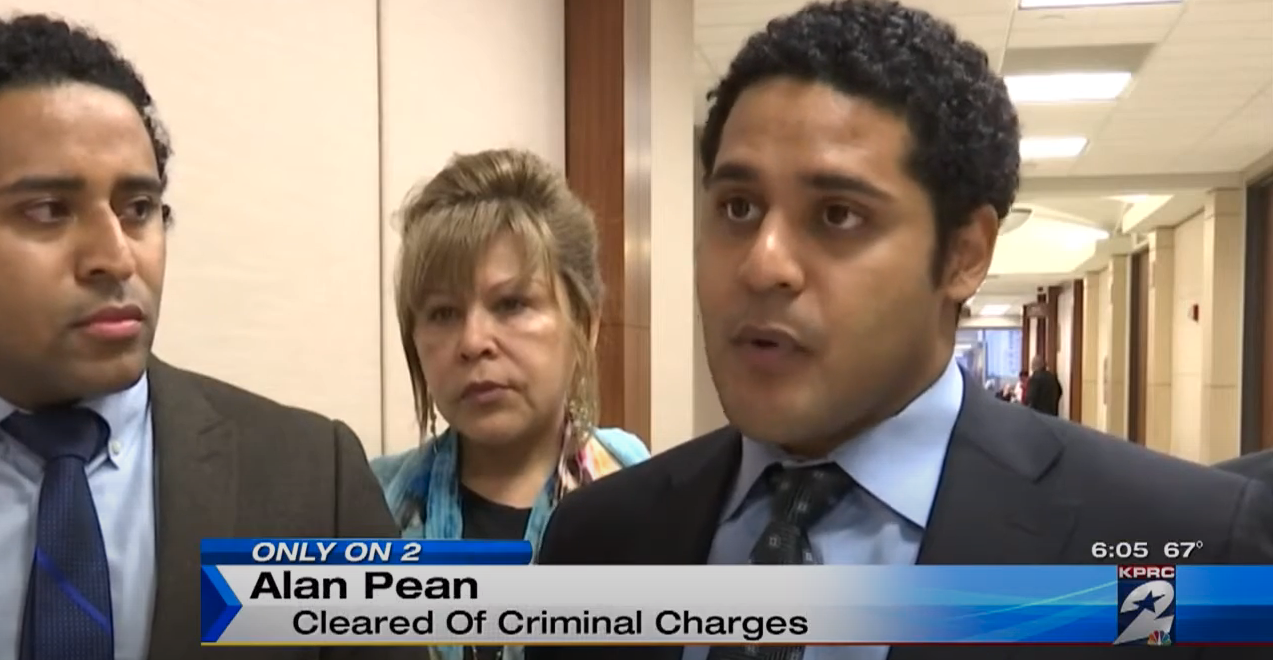
From [HERE] When Alan Pean drove himself to Houston’s St. Joseph Medical Center in August 2015, he got into a minor car accident. He wasn’t thinking straight—he was trying to check himself in for mental health treatment. He had a history of bipolar disorder and, according to court documents, was seeking help for acute emotional distress—he’d hallucinated that men were trying to invade his apartment. But in the hospital, things would only get worse. The day after he was admitted, Pean was shot in the chest in his room. 

Pean was unarmed and naked at the time of the shooting. He survived after emergency surgery, only to be hit with criminal charges for alleged assault of the armed guards who charged into his hospital room. His lawyers later described that ultimately unsuccessful prosecution effort as a calculated conspiracy to absolve the man who had shot and nearly killed Pean: an off-duty Houston Police officer. In October, the City of Houston agreed to pay out $902,500—one of the highest settlement amounts in the city’s recent history—to Pean, whose father and two brothers are working as or training to be physicians, and who identifies as Black.  

Pean and his lawyers filed suit in 2016 naming the City of Houston, the officers involved in the shooting who worked extra jobs as hospital security guards, two others involved in the investigation, the hospital and its parent company, and the security company. The civil case against the hospital is ongoing.

Houston Police Department records show there have been 371 officer-involved shootings in Houston since 2010. In 120 of those, the suspect was killed. None resulted in an indictment, according to city staff.  

But Houston PD’s system policy of investigating officer-involved shootings was previously found lacking after a civil rights suit against the department was filed by Audry Releford, a Black Houstonian whose unarmed son was killed by a police officer in front of his house in 2012.

The case drew national headlines in 2015 after Houston authorities criminally charged Pean and attempted to justify the off-duty officers’ decision to shoot an unarmed man in his hospital room.

After Pean checked into the hospital that night, he continued behaving erratically. Video available in the Paen case shows that he had been dancing naked in the doorway of his hospital around the time a nurse called security for assistance.

“THEY HAD SIGNIFICANT LIABILITY BEYOND JUST THE OFFICERS’ LIABILITY … BECAUSE THEIR DE FACTO POLICY IS ESSENTIALLY A LICENSE FOR HOUSTON POLICE OFFICERS TO KILL.”
Off-duty Houston Police Department Officers Roggie Law and Oscar Ortega responded. They were working as paid security for the hospital at the time. The officers entered Pean’s hospital room and closed the door. There were no hospital staff members or cameras in the room with them.

According to the lawsuit, the officers then “initiated a physical confrontation with Alan,” who was naked and unarmed and in the midst of a mental health crisis. The officers, unable to subdue Pean, escalated the situation. First, Officer Law used his Taser on Pean. When that failed to defuse the confrontation, Ortega shot Pean in the chest with his service pistol. As Pean lay on the floor bleeding, the officers handcuffed him, the lawsuit says. When they radioed others about the incident, they allegedly failed to mention Pean had been shot. A hospital employee examined Pean and rushed him to the intensive care unit. As he recovered, he remained handcuffed in his hospital room. 

During this time, the lawsuit alleges the hospital and police concocted a plan to “cover up and falsely justify their actions” by slapping Pean with charges of aggravated assault against a public servant and reckless driving. “HPD’s notorious blue wall of silence also operates as a blue wall of sound to protect HPD officers against outside scrutiny,” the lawsuit alleges. 

None of these charges would stick—a Harris County grand jury dismissed the assault charges, and the Harris County Criminal Court nixed the reckless driving charge. But Pean was still forced to post bond. He later had to travel from New York back to Texas to surrender himself when he found out about the reckless driving charge.

THE HOUSTON POLICE DEPARTMENT’S INTERNAL AFFAIRS DIVISION CLEARED THE OFFICERS WITHOUT INTERVIEWING THE VICTIM OR CONSULTING MEDICAL RECORDS.

An investigation by the Houston Chronicle after the fact showed the Houston Police Department’s internal affairs division reviewed the officers and quietly cleared them—without interviewing the victim or consulting medical records. 

Houston Police Department’s current use of force policy requires officers to take someone’s “mental capacity” into account before using force. Officers are also required to request emergency medical services when they come across someone who is injured (whether or not they’re the cause of the injury). The policy also requires officers to “provide first aid to their level of training without any unreasonable delay” while they await medical personnel. 

Pean’s legal saga is far from over, as he, his family, and his attorneys continue to seek damages from the medical facility for its handling of his crisis. His father and brother, as physicians, have spoken out to medical groups too.

Did Another Prosecutor Undermine Their Own Grand Jury to Uphold Cop Murder? Charges Dropped Against Tucson Cop who Shot a White Man in the Back 9X as He Fled in a Wheelchair

From [HERE] A second grand jury in Pima County, Arizona, has decided not to recommend charges of manslaughter against a former Tucson cop who shot a wheelchair-bound suspect nine times in a mall parking lot, killing him. 

Ryan Remington, 32, shot Richard Lee Richards, 61, in the parking lot of a mall in the city while off duty. Richards pulled a knife on a Walmart employee as he was leaving the store with a stolen tool box on November 30, 2021.

Richards was headed to a Lowe's across the parking lot when Remington, who was working security for Walmart at the time, ordered Richards to drop the knife and not to enter another store. 

The suspect ignored the officer before Remington opened fire, causing Richards to fall out of his scooter and die. 

The Pima County Superior Court jury on Wednesday came back with a no bill vote on charging Remington. Despite the grand jury's decision, the state could still opt to bring charges. 

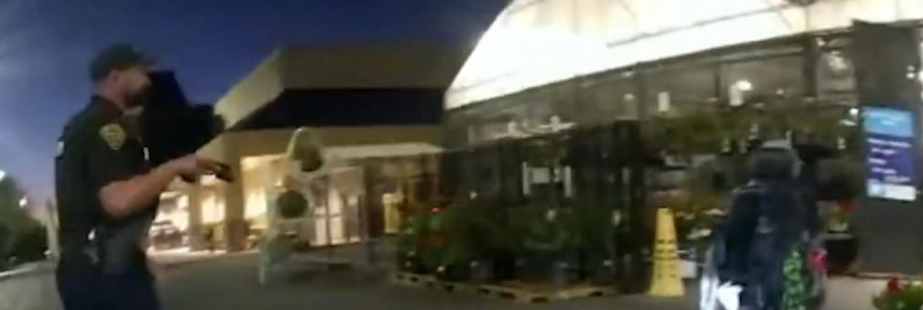
Police bodycam video shows the officer pursuing the suspect and yelling, “Do not go into the store, sir,” as Richards continued to the entrance of a Lowe’s Home Improvement store. The officer fired nine shots and hit the man in the back and side causing Mr. Richards to hunch over and fall in front of a display of pink and red flowers.

A store surveillance video shows Officer Remington placing handcuffs on a motionless Mr. Richards.

Defense attorneys alleged state prosecutors presented misleading statements to the first grand jury. Pima County Superior Court Judge Danelle Liwski agreed but believed they did not do it deliberately. 

Liwski last month granted the defense request to remand the case to a grand jury again.  

In a statement, Pima County Attorney Laura Conover said 'victim notification is our focus and top priority at this time, as the matter continues under our review.'

Remington was fired in January 2022 for what police determined was excessive use of force.

A civil rights lawsuit filed by Richards’ family against Remington and the City of Tucson remains tied up in federal court. 

During the theft, Richards allegedly flashed a knife at the store employee who asked for a receipt for the product.

'Here's your receipt,' Richard reportedly told the clerk, showing the weapon. He apparently flashed the weapon and put it away.

'He's got a knife in his other hand,' someone can be heard on the bodycam video as Richards wheels up to the entrance of the big box store.

Seconds later Remington can be seen unloading his weapon on the shoplifter.

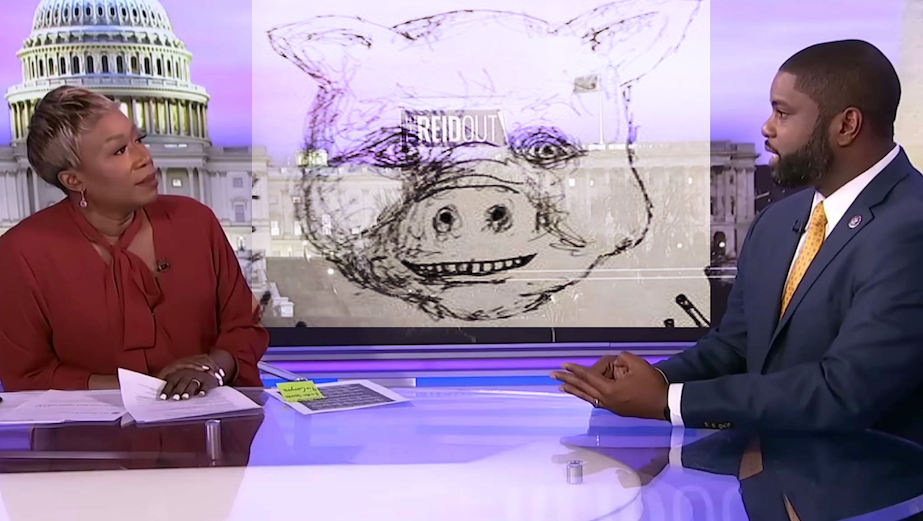
Joy Reid, a Token Black Commentator in the Jim Crow Media, Attacks Byron Donalds for Being a Token Puppetician in Congress. Both Claim to Have the Best Master and Reside on the Best Plantation

FOR MORE read “The Return of the Nigger Breakers” by the legend, Ishmael Reed.

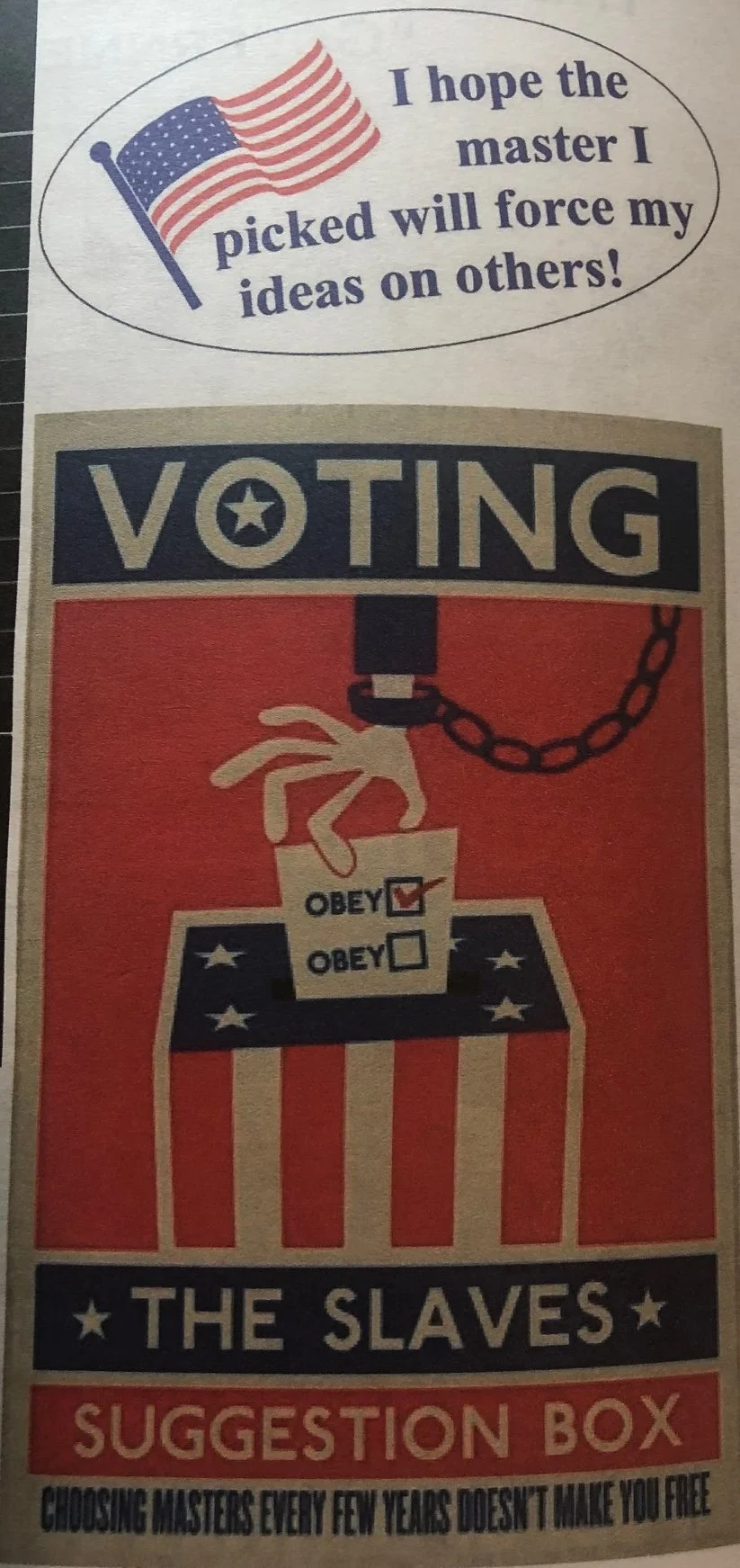
Black conservatives call the Democratic party a plantation because it is - but so is the GOP. Elite whites maintain both plantations for all people. All statists (dems, GOP, libertarians, green, whatever believe in “authority”) very much want and need a master to obey. FUNKTIONARY explains,

Statism - the belief "citizens"' and "states" exist and the memetic thought patterns supporting such beliefs. 2) the religion of oppression and domination coupled with the science of exploitation and sociopathic control. 3) the opiate of the so-called Elites. 4) a philosophy that idealizes majority rule gang force (authority) over individual authenticity (autonomy). 5) servitude over liberty and statutes over humanity. [MORE]

Undeceiver Larken Rose explains, “There is a big difference between striving for a new, wiser, nobler master, and striving for a world of equals, where there are no masters and no slaves. Likewise, there is a big difference between a slave who believes in the principle of freedom, and a slave whose ultimate goal is to become the new master. And this is true, even if that slave truly intends to be a kind and generous master . . . As long as the people believe in the myth of “authority,” every downfall of one tyrant will be followed by the creation and growth of a new tyrant.“

Larken Rose further explains; 

"Among those who vote Democrat or Republican – or for any other party – no one recognizes the underlying problem, and as a result, no one ever gets any closer to a solution. They remain slaves, because their thoughts and discussions are limited to the pointless question of who should be their master. They never consider – and dare not allow themselves to consider – the possibility that they should have no master at all. As a result, they focus entirely on political action of one kind or another, But the foundation of all political action is the belief in “authority,” which is the problem itself So the efforts of statists are, and always will be, doomed to fail.

Unfortunately, this is also true of the less mainstream, supposedly more pro-freedom “political movements,” including Constitutionalists, the Libertarian party, and others. As long as they think and act within the confines of the “government” game, their efforts are not only completely incapable of solving the problem but actually aggravate the problem by inadvertently legitimizing the system of domination and subjugation which wears the label of “government.”

The Rules of the Game

Even most people who claim to love liberty and to believe in “unalienable” rights allow the superstition of “authority” to drastically limit their effectiveness. Most of what such people do, in one way or another, consists of asking tyrants to change their “laws.” Whether activists campaign for or against a particular candidate, or lobby for or against a particular piece of “legislation,” they are merely reinforcing the assumption that obedience to authority is a moral imperative.

When activists try to convince politicians to decrease “taxes,” or repeal some “law,” those activists are implicitly admitting that they need permission from their masters in order to be free, And the man who “runs for office,” promising to fight for the people, is also implying that it is up to those in “government” to decide what the peasants will be allowed to do. As Daniel Webster put it, “There are men in all ages who mean to govern well, but they mean to govern; they promise to be good masters, but they mean to be masters.” Activists spend huge amounts of time, money and effort begging their masters to change their commands. Many even go out of their way to stress the fact that they are “working within the system,” and that they are not advocating anything “illegal.” This shows that, regardless of their displeasure with those in power, they still believe in the myth of “authority,” and will cooperate with “legal” injustice unless and until they can convince the masters to change the rules – to “legalize” justice. While the intended message of dissenters may be that they disapprove of what the masters are doing, the actual message that all political action sends to those in power is “We wish you would change your commands, but we will continue to obey whether you do or not.” The truth is, one who seeks to achieve freedom by petitioning those in power to give it to him has already failed, regardless of the response. To beg for the blessing of “authority” is to accept that the choice is the master’s alone to make, which means that the person is already, by definition, a slave.

One who begs for lower “taxes” is implicitly agreeing that it is up to the politicians how much a man may keep of what he has earned. One who begs the politicians not to disarm him (via “gun control”) is, by doing so, conceding that it is up to the master whether to let the man be armed or not. In fact, those who lobby for politicians to respect any of the people’s “unalienable rights” do not believe in unalienable rights at all. Rights which require “government” approval are not unalienable, and are not even rights. They are privileges, granted or withheld at the whim of the master. And those who hold positions of power know that they have nothing to fear from people who do nothing but pathetically beg for freedom and justice, However loudly the dissenters talk about “demanding” their rights, the message they actually send is this: “We agree, master, that it is up to you what we may and may not do.”

That underlying message can be seen in all sorts of activities mistakenly imagined to be forms of resistance. For example, people often engage in protests in front of “government” buildings, carrying signs, chanting slogans, sometimes even engaging in violence, to express their displeasure with what the masters are doing. However, even such “protests,” for the most part, do little more than reinforce authoritarianism. Marches, sit-ins, protests, and so on, are designed to send a message to the masters, the goal being to convince the masters to change their evil ways. But that message still implies that it is up to the masters what the people may do, which becomes a self-fulfilling prophecy: when the people feel beholden to an “authority,” they are beholden to an “authority.” Those in “government” derive all of their power from the fact that their subjects imagine them to have power.

Legitimizing Oppression

The harder people try to work within any political system to achieve freedom, the more they will reinforce, in their own minds and the minds of anyone watching, that the “system” is legitimate. Petitioning politicians to change their “laws” implies that those “laws” matter, and should be obeyed. Nothing better shows the power of the belief in “authority” than the spectacle of a hundred million people begging a few hundred politicians for lower “taxes.” If the people truly understood that the fruits of a man’s labor are his own, they would never engage in such lunacy; they would simply stop surrendering their property to the political parasites. Their trained-in desire to have the approval of “authority” creates in them a mindset not unlike the mindset of a slave: they literally feel bad about keeping their own money and making their own choices without first getting the master’s permission to do so. Even when freedom is theirs for the taking, statists continue to grovel at the feet of megalomaniacs, begging for freedom, thus ensuring that they will never be free.

The truth is, one cannot believe in “authority” and be free, because accepting the myth of “government” is accepting one’s own obligation to obey a master, which means accepting one’s own enslavement. Sadly, many people believe that begging the master, via “political action,” is all they can do, So they forever engage in rituals which only legitimize the slave-master relationship, instead of simply disobeying the tyrants. The idea of disobeying “authority,” “breaking the law,” and being “criminals” is more disturbing to them than the idea of being a slave.

Those who want a significantly lower level of authoritarian control and coercion are sometimes accused of being “anti-government,” an allegation most vehemently deny, saying that they are not against “government” per se, but only want better “government.” But by their own words they are admitting that they do not believe in true freedom, but still believe in the Divine Right of Politicians and the idea that a ruling class can be a good and legitimate thing. Only someone who still feels an abiding obligation to obey the commands of politicians would want to avoid being labeled “anti-government.” Since “government” always consists of aggression and domination, one cannot be truly pro- freedom without being anti-”government.” The fact that so many activists reject that label (”anti-government”) shows how deeply ingrained the superstition of “authority” remains, even in the minds of those who imagine themselves to be ardent advocates of individual liberty.

Reformers Unable to Stop Police from Murdering a Record Number of People in 2022. But Cops' Uncontrollable, Immoral Power to Initiate Unprovoked Violence and Forcibly Control Citizens is Unreformable

Treadmilling Reformers are Seeking Nicer Masters: They Believe Cops Should Have Authority to Forcibly Control Us & Take Our Lives So Long as They “Do the Right Thing” WHILE DOING SO & Reduce their Budgets

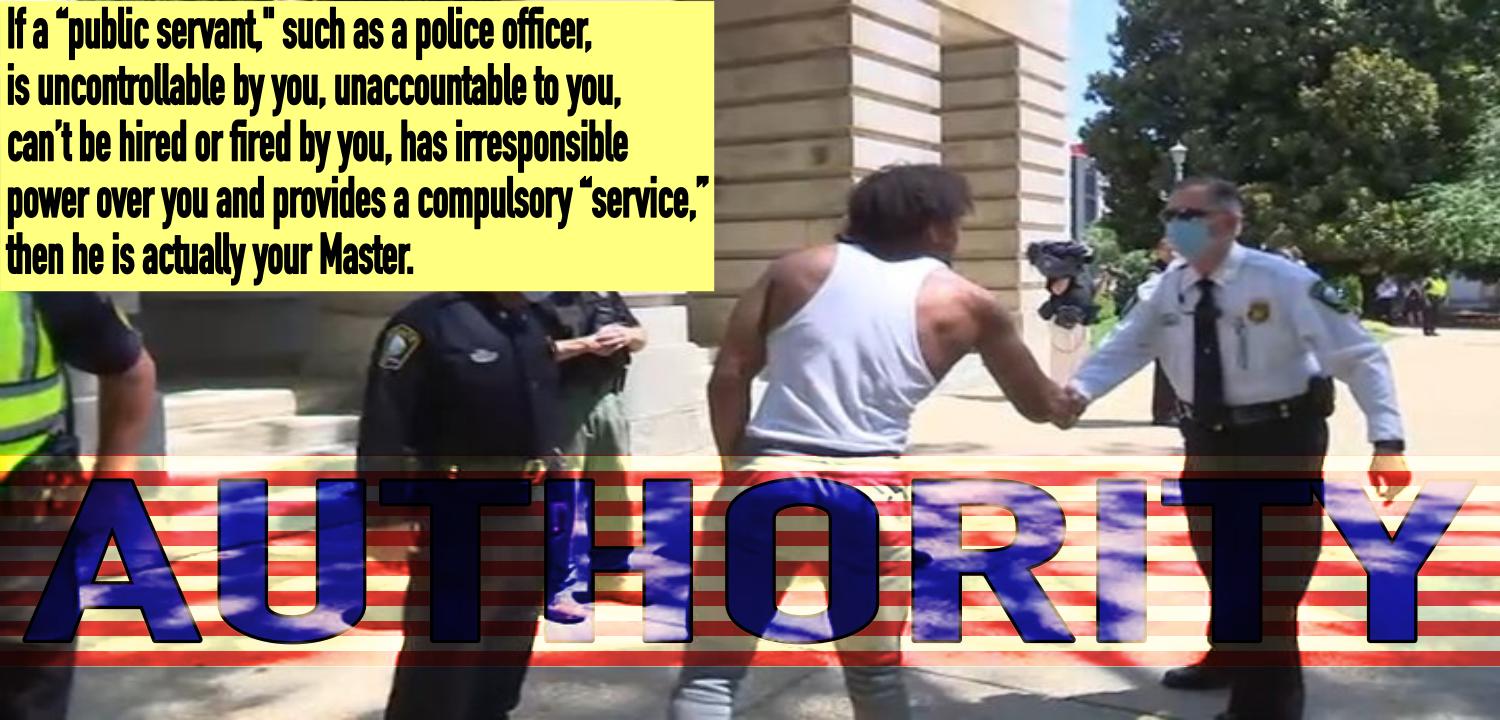
An essential difference between private security workers and police officers is that security workers possess no government authority or right to initiate unprovoked acts of violence on other people. FUNKTIONARY explains that unprovoked violence against others or the use of “force” is the basis of all social evils and can only be used in the sense of attack not defense. It explains that authority, the right to rule over other people, is not a force but a farce, literally not real or “make believe.”

Allegedly governmental power comes from the people. That is, we delegate our individual power to the government for it to act on our behalf. However, it goes without saying that people cannot delegate powers or rights that they do not possess. So if people have delegated their powers to lawmakers and lawmakers have empowered police officers to act on our behalf, how did police acquire the moral right to commit acts of unprovoked violence on people? Asked differently, if you don’t have the right to initiate unprovoked acts of violence against other people then how can you delegate or authorize police officers or anyone else acting on your behalf to do so? How did government representatives and police acquire such extra or super-human powers? [MORE]

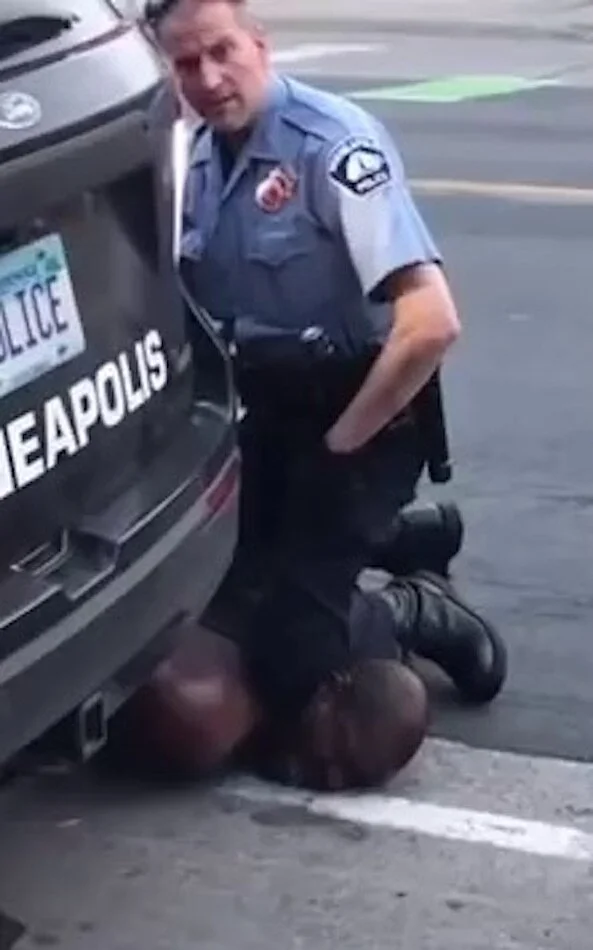
From [HERE] Nearly three years after the police killing of George Floyd in Minneapolis sparked worldwide protests demanding far-reaching reforms to stop law enforcement agents from perpetrating violence against the communities they're meant to protect, new data shows 2022 was the deadliest year on record for people who had police encounters in the United States.

At least 1,176 people were killed by police officers last year, according to the project Mapping Police Violence—the most since experts began tracking police violence and the use of deadly force.

The number represents the killing of more than three people per day on average by police officers, or nearly 100 per month last year.

In 2020, he year Floyd was killed, at least 1,152 people were killed by police officers, and in 2021 1,145 people were killed.

As researchers showed in a study published in The Lancet in 2021, about half of killings by law enforcement agents go unreported, so the true number of people killed by the police last year may be double the figure reported by Mapping Police Violence.

People killed by the police in 2022 included Jayland Walker, who was killed by Akron, Ohio police officers after they chased him following an alleged traffic violation; Donovan Lewis, who was fatally shot by a Columbus, Ohio officer in August after police came to his house with a warrant; and Patrick Lyoya, who was killed by Grand Rapids, Michigan police after he ran away from an officer who grabbed him during a traffic stop due to an issue with his license plate.

In 32% of the cases documented by Mapping Police Violence, the victim was fleeing the police before they were killed. Legal experts say police are almost always unjustified in shooting people when they are running away from law enforcement, particularly after being suspected of committing nonviolent crimes.

"These are routine police encounters that escalate to a killing," Samuel Sinyangwe, a data scientist and policy analyst who founded Mapping Police Violence, told The Guardian. "What's clear is that it's continuing to get worse, and that it's deeply systemic."

Only 31% of police killings took place after an alleged violent crime, while 46% did not involve people who had been accused of violence. Nine percent took place during mental health or welfare checks, 8% involved traffic violations, 18% involved allegations of nonviolent offenses, and 11% involved no alleged offense.

While Black people make up 13% of the U.S. population, they accounted for 24% of the people killed by the police last year.

Bianca Austin, the aunt of Breonna Taylor, who was killed in March 2020 by police officers in Louisville when they executed a warrant in the middle of the night, demanded to know what more advocates can do to stop police violence, especially as lawmakers reject calls for far-reaching reforms and greater investments in communities—rather than police departments—as a way of making people safer.

"It just never stops," Austin told The Guardian. "There was a movement and uproar across the globe, and we're still having more killings? What are we doing wrong? It's so disheartening."

Since the killings of Floyd and Taylor sparked mass protests, legislators have passed police reforms in at least 20 states, including new restrictions on the use of force against fleeing suspects in Colorado, Illinois, and Massachusetts, and bans on chokeholds and neck restraints in California, Nevada, and New York.

According to FUNKTIONARY:

reform - superficial change in form and formalities (fictitious change) which only further lubricates the status quo by renovating and painting old society in new colors. 2) appearance of change sans the change. Reform is always in the service of the status quo and the politician: it serves the privilege of the past not the promise of the future. Reform creates hypocrisy as a matter of course. Reform is the first stage in the three "P,'s" in hue-man evolution; the other two being revolution and rebellion. There are two basic types of reformists: those who are preparing the ground for Third Eye revolution and those who are trying to prevent the conscious revolution. (See: Revolution, Status Quo, Barbarian, Meme & Change)

reformers - naive politicians. They came to do good and stayed to do well. Reformers themselves get reformed into the structure, consciousness and content of the dominant exploitative system--and thus become the system. (See: Revolution)

Under the Guise of Preventing Criminal Gun Violence, Illinois Authorities Pass Law that Prevents Law Abiding People from Defending Themselves Against Criminals and Government Tyranny w/Assault Weapons

CONTRARY TO DUMBOCRAT CLOGIC, ASSAULT WEAPONS DON’T MAKE PEOPLE LESS SAFE AGAINST CRIMINALS OR GOVERNMENT TYRANNY. TYRANNY PREVENTION IS A CORE PURPOSE OF THE SO-CALLED 2ND AMENDMENT, IT IS A PRE-EXISTING RIGHT THAT AUTHORITIES MUST DISCARD TO IMPOSE TYRANNY. PRE-EXISTING HERE MEANS IT IS AN INHERENT, Inalienable right that exists without regard to any government. People Must Be Able to Obtain Assault Weapons for this "Pre-Existing Right" to be Meaningful

With No Gun "Rights" Freedoms Can Be Shut Off Like a Light (see Canada/Ireland/UK/New Zealand) Historical Analysis Shows Disarmed Formerly Free People Have No Defense Against Slavery or Govt Violence

ACCORDING TO FUNKTIONARY:

gun ban - the precursor to servitude. [MORE]

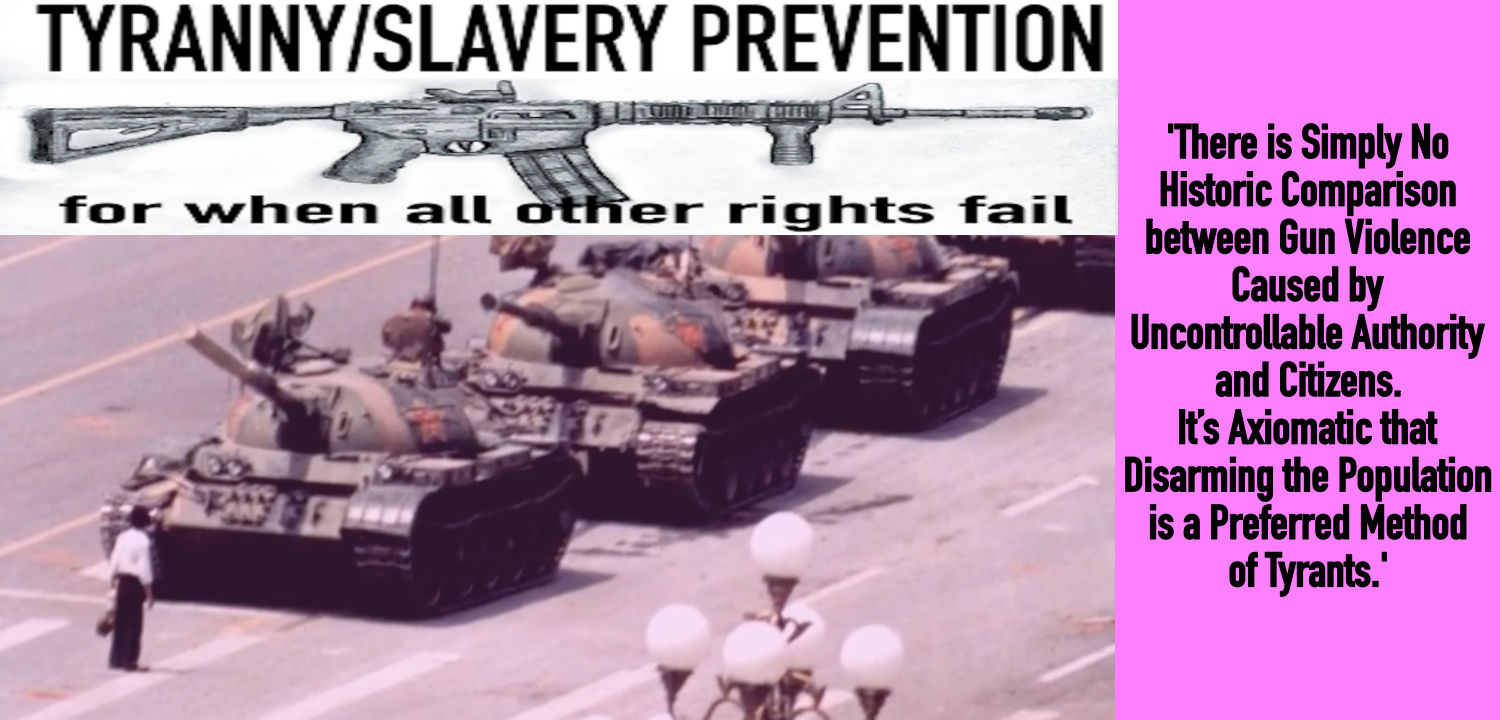
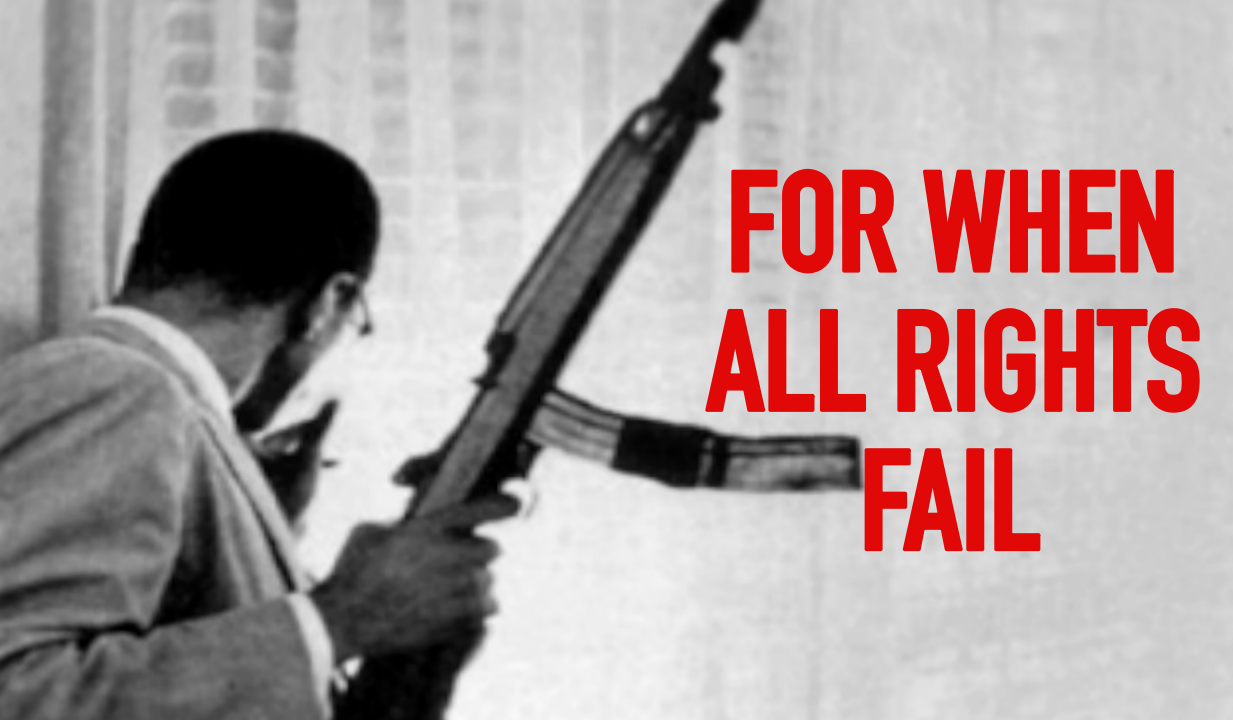
Second Amendment - (to the Constitution for the United States)—is only intended for a militia to enforce the First Amendment if and when deemed necessary. Every non-felon in the street has the guaranteed right to be packin' heat. Slave states (the overwhelming majority) are those that have criminalized openly carrying firearms. In the case of Silveira v. Lockver, Ninth Circuit Judge Alex Kozinski summed up the importance of the right to keep and bear arms: "The prospect of tyranny may not grab the headlines the way vivid stories of gun crime routinely do. But few saw the Third Reich coming until it was too late. The Second Amendment is a doomsday provision, one designed for those exceptionally rare circumstances where all other rights have failed—where the government refuses to stand for reelection and silences those who protest; where courts have lost the courage to oppose, or can find no one to enforce their decrees. However improbable these contingencies may seem today, facing them unprepared is a mistake a free people get to make only once." The right to keep and bears arms actually serves as more than an insurance policy, it also serves as a deterrent. For when would-be tyrants know that the citizenry is well-armed, they think twice about imposing tyranny. (See: Gun Control & Militia)

From [HERE] Illinois Governor JB Pritzker Tuesday signed a bill into law that institutes a statewide ban on the sale and manufacturing of assault rifles. Pritzker signed the bill after it passed the Illinois Senate Monday in a vote of 34-20.

The bill, known as the Protect Illinois Communities Act, also prohibits the sale and manufacturing of assault weapon attachments, .50 caliber cartridges, any .50 caliber rifle and certain pistols. The bill defines assault rifles as any rifle that carries more than 15 rounds of ammunition. Pistols that carry more than 10 rounds of ammunition are also banned. Under the bill, anyone in possession of newly outlawed weapons will have until October 1 to report their ownership to the state government.

Pritzker previously stated that this is a bill he will be “proud” to sign in order to stop the sale of automatic weapons as soon as possible. Pritzker stated, “No Illinoisan, no matter their zip code, should have to go through life fearing their loved one could be the next in an ever-growing list of victims of mass shootings.” Pritzker said the bill is a part of his joint effort with leaders in the Illinois General Assembly to get “the most dangerous weapons” off of Illinois’s streets.

Pritzker, House Speaker Emanuel “Chris” Welch and Senate President Don Harmon issued a joint statement supporting the bill’s passage. The statement read in part:

Gun violence is an epidemic that is plaguing every corner of this state and the people of Illinois are demanding substantive action. With this legislation we are delivering on the promises Democrats have made and, together, we are making Illinois’ gun laws a model for the nation.

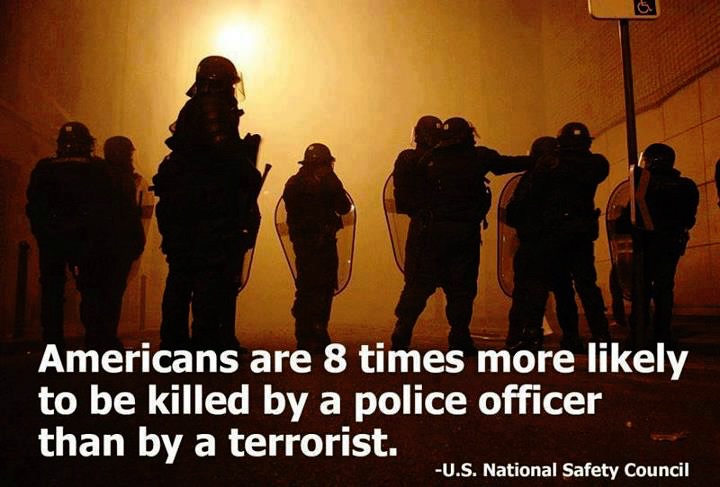
[FUCKING JOKE] What is my chance of being victimized in a mass shooting or active shooter incident? Almost 0%. According to the FBI, this type of shooting is the rarest of all types of shooting. [MORE] An American’s lifetime odds of dying in a mass shooting committed in any location is 1 in 11,125; of dying in a car accident is 1 and 491; of drowning is 1 in 1,133; and of choking on food is 1 in 3,461). You’re 55 times more likely to be killed by a police officer than a “terrorist.” [MORE] 

Public Transit Ridership Down in Liberal Cities Due to Crime-Ridden Buses/Trains Where Authorities Have Banned Law Abiding Citizens from Keeping and Bearing Arms for Self-Defense Against Criminals

ALL LAWS ARE VIOLENCE. THE REBEL LARKEN ROSE EXPLAINS, “IN TRUTH, EVERY AUTHORITARIAN “LAW” IS A COMMAND BACKED BY THE THREAT OF RETALIATION AGAINST THOSE WHO DO NOT COMPLY. WHETHER IT IS A “LAW” AGAINST COMMITTING MURDER OR AGAINST BUILDING A DECK WITHOUT A BUILDING PERMIT, IT IS NEITHER A SUGGESTION NOR A REQUEST, BUT A COMMAND, BACKED BY THE THREAT OF VIOLENCE, WHETHER IN THE FORM OF FORCED CONFISCATION OF PROPERTY (I.E., FINES) OR THE KIDNAPPING OF A HUMAN BEING (I.E., IMPRISONMENT), WHAT MIGHT BE CALLED “EXTORTION” IF DONE BY THE AVERAGE CITIZEN IS CALLED “TAXATION” WHEN DONE BY PEOPLE WHO ARE IMAGINED TO HAVE THE RIGHT TO RULE. [MORE]

From [HERE] Several of the nation’s largest urban mass-transit systems are at a crossroads, with ridership still depressed three years into the pandemic and federal aid running out. 

While offices have largely reopened and travel has resumed, many commuters are only coming in a few days a week. That shift has left subways, buses and commuter trains operating at well below capacity—particularly on Mondays and Fridays.

The ridership shortfall is forcing transit authorities to question their decades-old funding models for public buses, subways and trains, which are based on a combination of rider fares and public money. On average, fares provided about a third of the operating income for transit systems nationwide in 2019, according to the Federal Transit Administration. 

In major cities such as New York and San Francisco, transit authorities have been leaning on emergency funding to plug budget holes and prop up operations. In all, Congress approved about $69 billion in three separate Covid-19 relief packages in 2020 and 2021.

But those funds are dwindling, leaving transit officials grappling with budget shortfalls and seeking new ways to fund existing service. 

The ridership drop also has fueled an increase in transit crime, which in turn has pushed away more riders.

“The more you lose a ridership base, the more difficult it becomes to maintain a level of service that people are used to,” said P.S. Sriraj, director of the Urban Transportation Center at the University of Illinois, Chicago. “It’s becoming a vicious cycle.”

In New York City, the Metropolitan Transportation Authority has disclosed plans to cut some Monday and Friday service and increase rider fares this year. New York’s subway system has regained about two-thirds of its pre-pandemic ridership with about 91 million trips in November, according to the MTA. But that is about 50 million fewer rides than in November 2019. Officials worry usage has stalled out at that level.

In San Francisco, the Bay Area Rapid Transit, or BART, recorded 3.7 million trips in November—a little more than one-third of the ridership before Covid. 

Systems in Chicago, Philadelphia and Boston also remain short of their pre-pandemic user numbers, deepening financial strains. In cities such as Dallas and Cincinnati, where public-transit budgets are mostly funded through sales tax revenue and more people commute by car, user declines haven’t hit as hard. 

In the U.S. overall, there were 883 million fewer public-transit trips in the third quarter of 2022 compared with the same period in 2019, according to federal data gathered by the American Public Transportation Association. [MORE]

Court Blocks Much of New Jersey Law that Prevented Law Abiding Citizens from Possessing Guns in Public

From [HERE] A federal judge ruled on Monday that a central component of a new law that limited where handguns may be carried in New Jersey was unconstitutional, severely undercutting the state’s effort to create gun-free zones in public places where crowds gather.

In a sharply worded decision, Judge Renée Marie Bumb of the U.S. District Court of New Jersey concluded that a half-dozen restrictions in the legislation, adopted less than three weeks ago, were “so extensive and burdensome” that they rendered the right to “armed self-defense in public a nullity.”

New Jersey, like New York, established an extensive list of places where handgun owners were not permitted to carry weapons in response to a Supreme Court ruling in June that loosened restrictions on carrying guns in public.

Judge Bumb’s order at least temporarily blocks New Jersey from enforcing much of the new law, and immediately permits licensed handgun owners to carry weapons in nightclubs, theaters, arenas, concert halls, racetracks and museums, among other places, pending further court action.

“As plaintiffs lament, the challenged provisions force a person permitted to carry a firearm in New Jersey to ‘navigate a veritable minefield,’” wrote Judge Bumb, who was nominated to the lifetime position in 2006 by President George W. Bush.

“The court knows of no constitutional right that requires this much guesswork by individuals wanting to exercise such right,” she added.

Portions of the law that were not challenged in court, including rules that make it illegal to carry weapons into schools, day care centers and hospitals, remain in place. [MORE]

Third Circuit To Consider Whether Nonviolent Felons Lose Second Amendment Rights

From [HERE] Pennsylvania man convicted of making false statements to obtain food stamps challenged a federal law that prevented him from buying a hunting rifle, saying it violated his Second Amendment rights. Third Circuit panel:(link is external) Based on history and tradition, we conclude that "the people" constitutionally entitled to bear arms are the "law-abiding, responsible citizens," so it excludes those who have demonstrated disregard for the rule of law through the commission of violent or non-violent felony and felony-equivalent offenses. En banc Third Circuit: we'll see about that. The entire court will now consider the matter. And for now, the panel opinion is vacated (as is always done when the court agrees to hear a case en banc)

The case is Range v. Attorney Gen. of the U.S., 21-2835 (3d Cir. Jan. 6, 2023).